




















In this article
You bought the narrow shelf that looked right in the photo, loaded it with a semester’s worth of books, and by winter the middle shelf had a visible dip in it. That is not bad luck, and it is not something you did wrong. Sagging shelves have a mechanism behind them, and it comes down to three numbers you can read off a product listing before you spend anything: span, thickness, and material.
Even IKEA ran into it. In 1988 the Billy bookcase went from 90cm wide down to 80cm because customers kept complaining the shelves bent under books. So here is what “small” actually means in inches, the two families of bookshelf worth buying for a tight room, and the one measurement that decides between them.
Quick Answer
The best bookshelves for small spaces stay under 12 inches deep and go tall instead of wide. Four formats do the job:
- Narrow freestanding units, 8 to 12 inches deep, no drilling required
- Wall-mounted and floating shelves, which cost zero floor space
- Corner units, which use floor you were never walking on anyway
- Tree-style towers, for a nook a rectangle can’t fit
What “Small” Actually Means for a Bookshelf
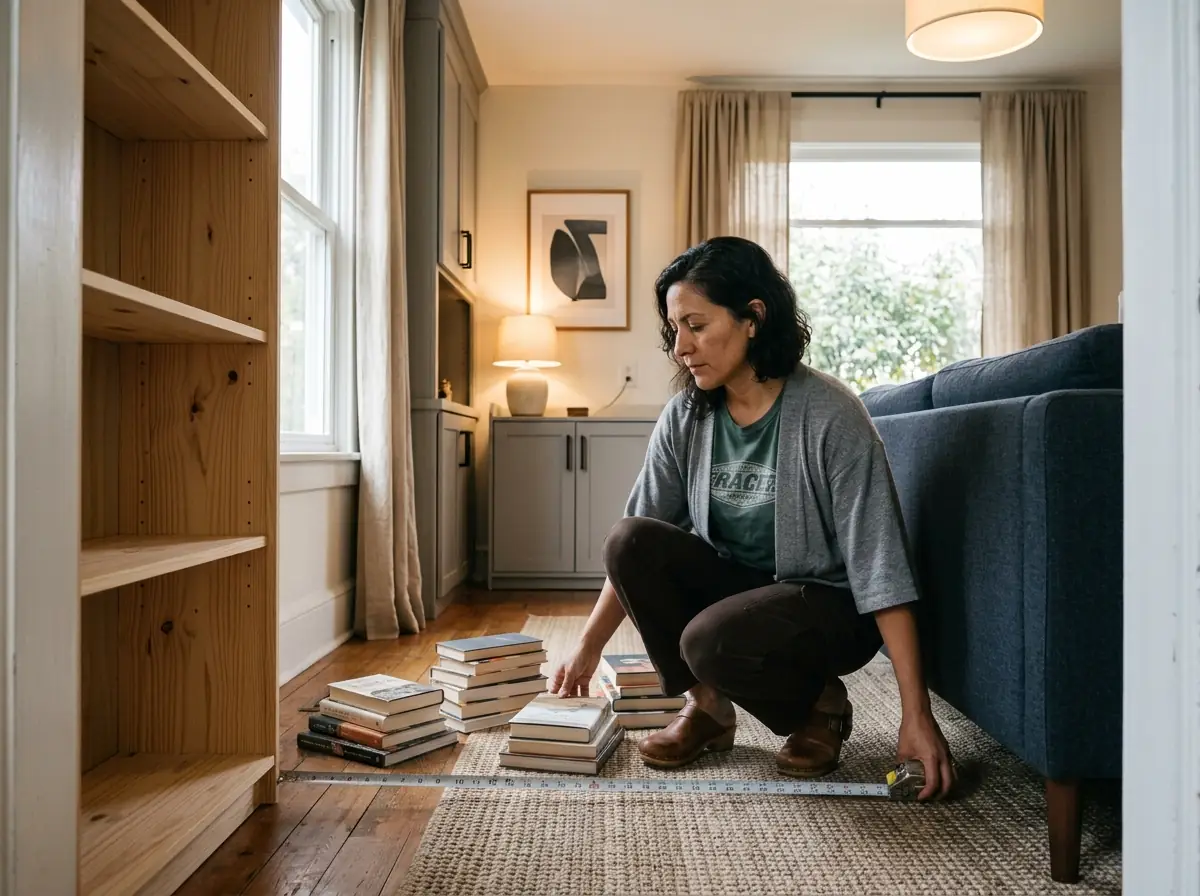
Everyone measures the wall. Almost nobody measures the walkway, and the walkway is the measurement that actually gets violated. The shelf fits the wall perfectly, you congratulate yourself, and then you spend the next two years turning sideways to get past it.
Start with the working numbers. A small bookcase is under 30 inches wide and under 12 inches deep. A standard one runs 30 to 36 inches wide by 10 to 12 inches deep, which does not sound like much of a difference until you put it in a studio. The ideal depth for a small room is 8 to 10 inches, and that is not a compromise number.
Paperbacks are about 5 inches deep. Hardcovers run 6 to 8. Anything past 10 inches is storing air, and it charges you floor space for the privilege.
Here is the calculation to run before you open a shopping tab.
Measure the gap between the wall you want the shelf on and whatever sits opposite it: the couch, the bed, the other wall. Subtract the shelf depth.
What’s left is your real walkway clearance, and if it isn’t a comfortable pass-through for an adult carrying a laundry basket, you have the wrong shelf, not the wrong room. This is the same clearance math that governs a small living room layout, just applied to one piece of furniture instead of the whole floor plan. Two inches of shelf depth you didn’t need is two inches of hallway you gave away permanently.
Before you buy, tape the shelf’s footprint on the floor with painter’s tape and live with it for two days. You will find out fast whether that depth is something you can walk around or something you will resent.
Height is the free variable, and it is the whole argument for vertical storage in a room that has no floor to give. Going taller costs you nothing, which is why the community answer to “I’m already low on space” is consistently a taller unit rather than a wider one. One reply in a bookshelf thread put it plainly: tall shelves from a budget retailer, three of them, over 300 books, and the floor barely noticed. That is the trade you want. Vertical is free. Horizontal and deep are not.
Depth also changes the physics, and this is the part nobody mentions. Doubling a shelf’s front-to-back depth cuts its deflection in half. So a shallow shelf isn’t just smaller, it is structurally the weaker direction.
That means the material rules in the sag section below matter more on a narrow shelf than they would on a deep one. Shallow is the right call for your room. It just means you can’t cheap out on the board.
Wall-Mounted and Floating Shelves for Books
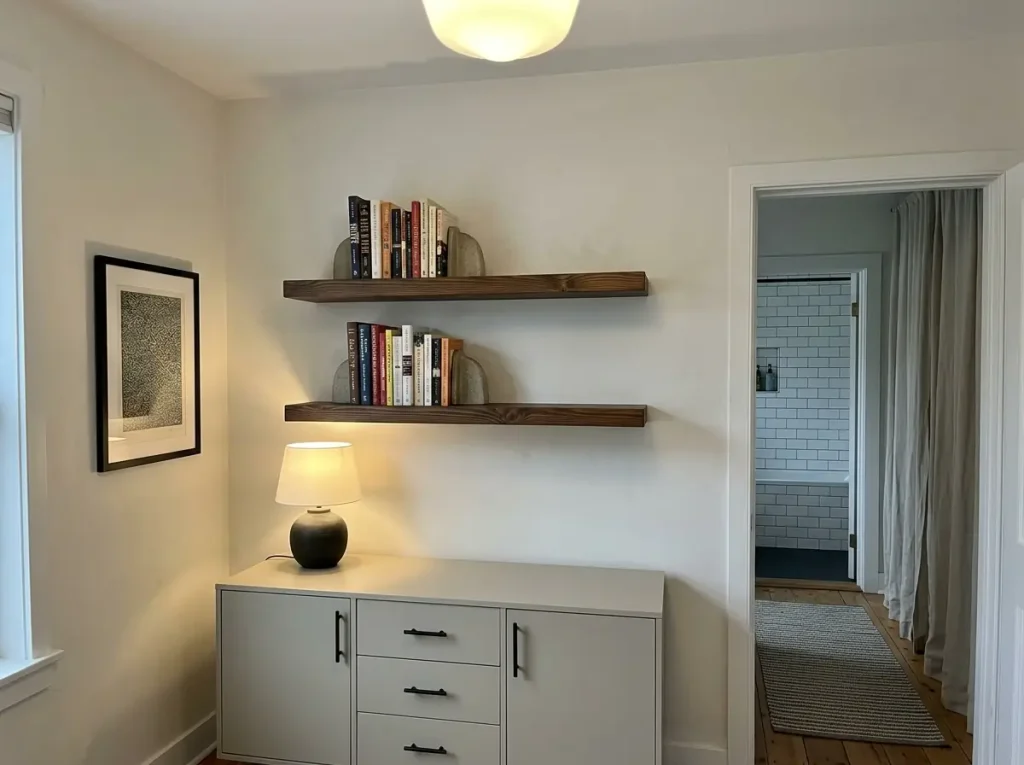
Wall-mounted shelves are the only bookshelf that costs zero floor space, which makes them the obvious answer in a small room. Right up until you find out what a run of hardcovers actually weighs and what that plastic anchor in the box is rated to hold.
The trade is clean and worth stating out loud: a floor-standing unit carries its own load, and a wall shelf makes the wall carry it. You bought back the entire footprint, and you transferred the whole problem to four fasteners in plasterboard.
Books are heavy per linear foot in a way almost nothing else you’d put on a shelf is. This is the one furniture category where the stated weight rating is not decorative, and a shelf rated for a picture frame and a candle is not rated for your paperbacks. It’s worth knowing what wall-mounted shelves actually hold before you commit a wall to the idea.
Solid wood over engineered wood matters more here than anywhere else in the article.
Particle board and MDF both behave the same way under a long unsupported run: they hold their shape until they don’t.
A floor-standing bookcase has side panels and a back panel stiffening every shelf. A floating shelf has none of that. The board is alone, doing all the work, held at one edge. Whatever the material’s weakness is, a floating installation will find it.
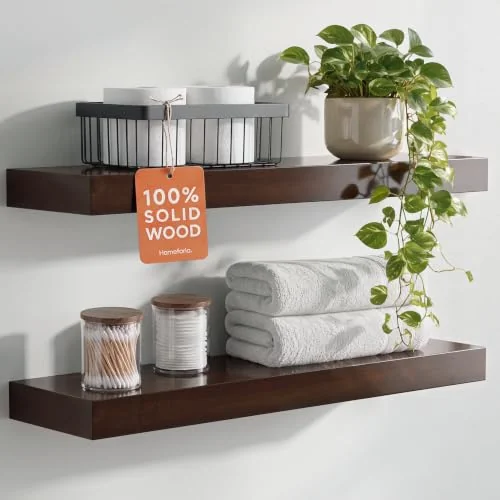
If you want the format for more than books, the wider floating-shelf picks for small spaces cover the same install problem across bathrooms, kitchens and entryways.
Now the renter question, answered honestly. Full drilling is fine. Renters do it constantly, community threads treat it as normal, and a patched screw hole is a five-minute job with spackle and a putty knife. What nobody accepts is skipping the wall anchor and hoping.
The no-drill and no-stud systems exist for a narrower problem than “I rent”: they exist for when the studs are simply not where the books need to be. Standard framing puts them 16 inches apart, and books don’t care about that grid.
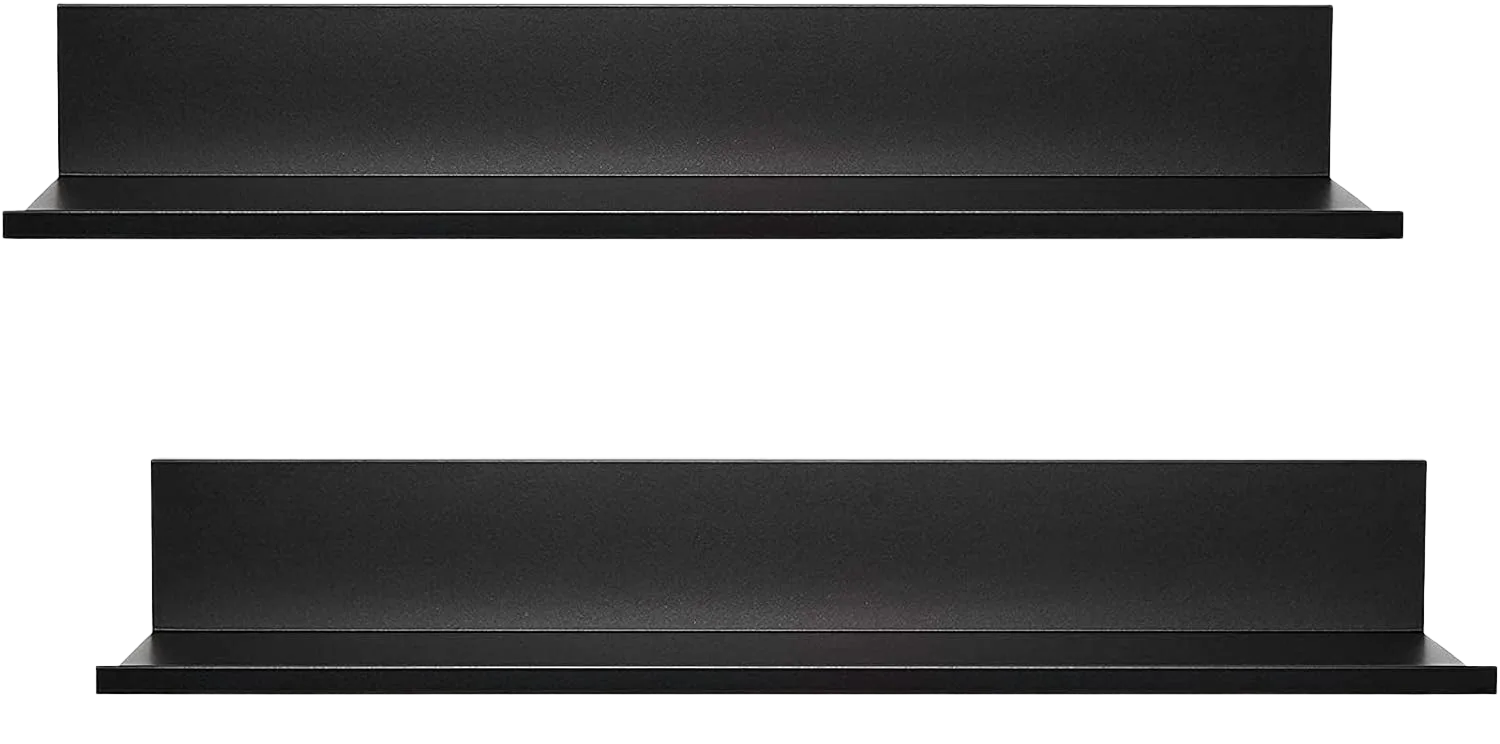
Before you buy any of this, do the free thing first: run a stud finder across the wall you’re eyeing and see whether the studs land where the books need to go. If they do, the cheapest bracket screwed into solid framing beats the cleverest hardware in drywall, every time. No product on this page outperforms a stud.
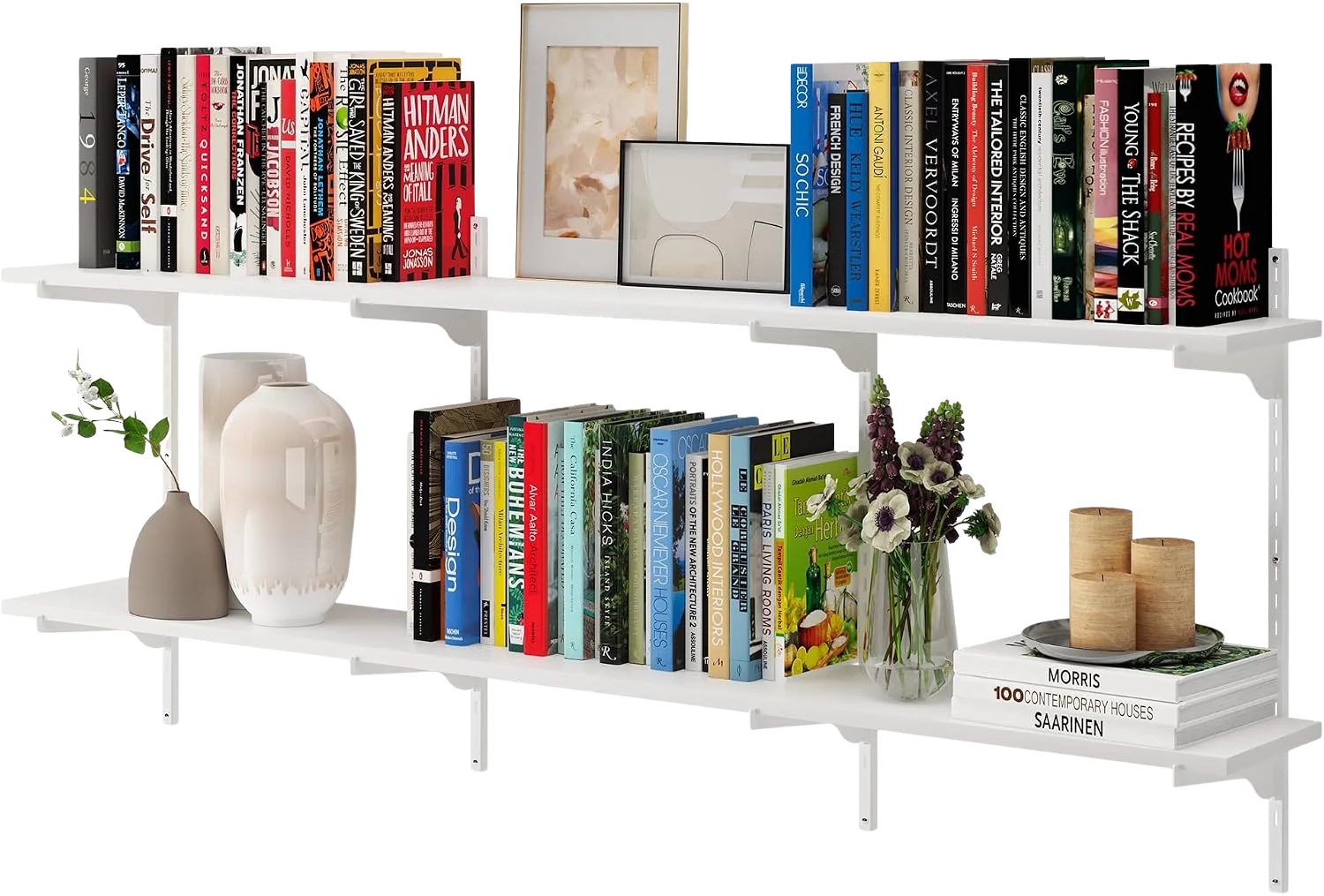
And if one shelf isn’t the plan, if what you actually want is a wall of books, a single floating shelf is the wrong tool. That’s a rail system.
Narrow, Corner and Tree Bookshelves That Don’t Need a Wall
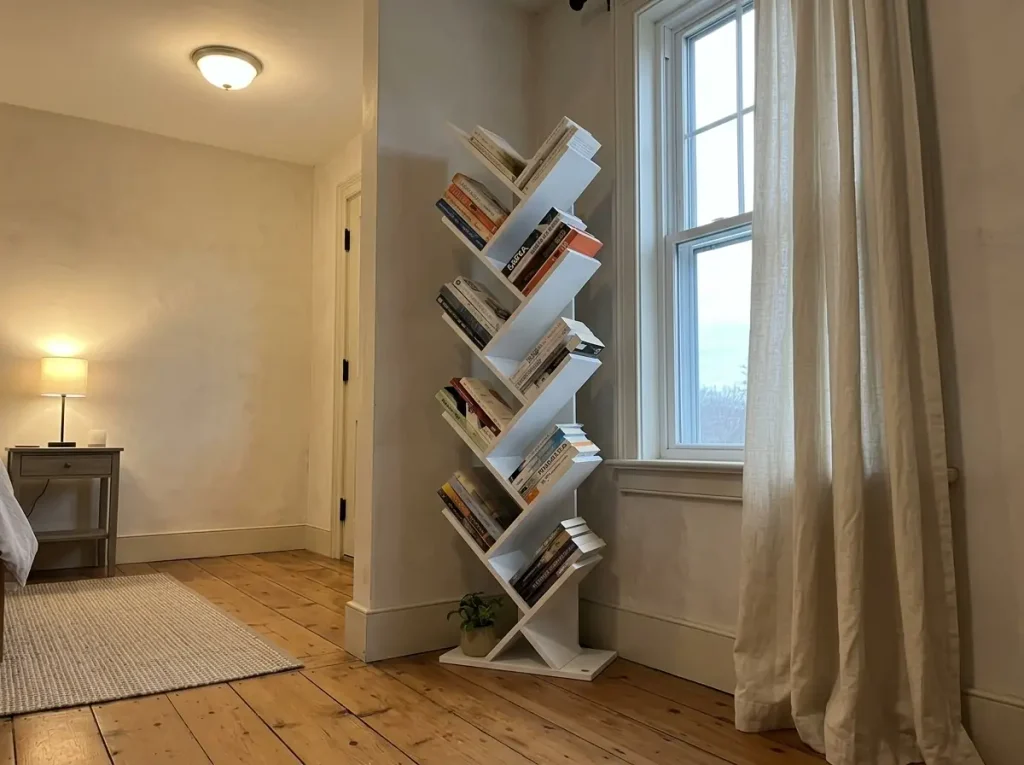
This is the honest renter answer, and it is not a consolation prize. A narrow freestanding shelf doesn’t solve the anchoring problem, it deletes it. In a rental where you have no idea what is behind the drywall and no interest in finding out with a drill bit, deleting a problem beats solving one.
Watch what happens when somebody posts in an organizing forum that they’re already low on space and need bookshelf recommendations. The replies are Kallax, Billy, Facebook Marketplace.
A freestanding bookcase, secondhand where possible. Nobody’s first answer is a wall install, and that consistency is worth trusting. It’s the same instinct behind freestanding units that stay put: no fasteners means no failure mode involving your ceiling.
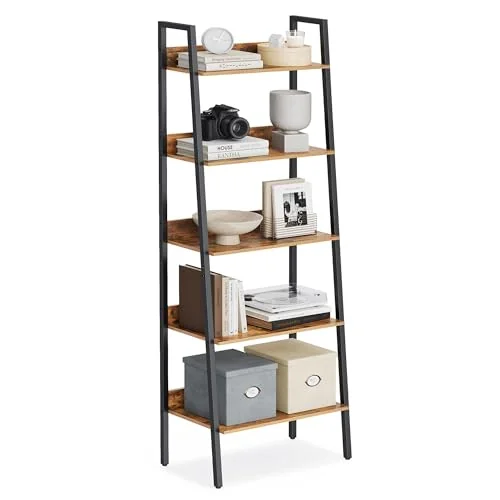
Narrow ladder and tower shelves are the workhorses here, and the whole point is the footprint. Get under the 12-inch depth threshold and the shelf occupies a strip of floor rather than a piece of the room. There’s a psychological component that’s hard to overstate: an 11-inch-deep unit reads as part of the wall, and a 14-inch one reads as furniture standing in your way.
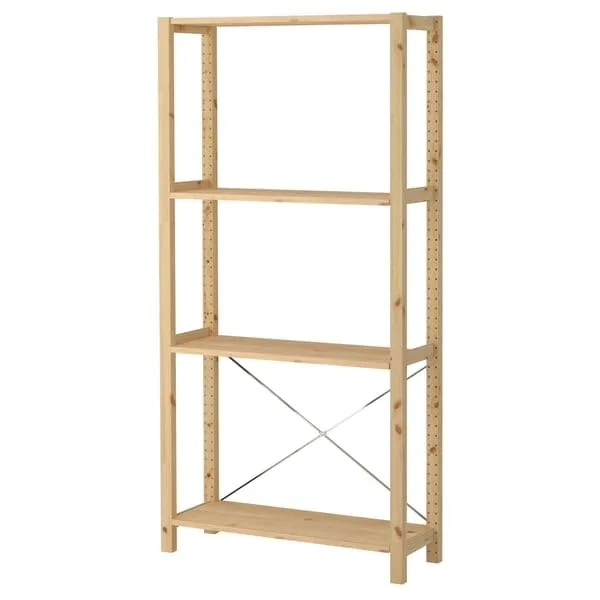
I used to point people straight at solid wood in this category and stop there. After enough threads where somebody’s budget genuinely tops out below the pine tier and the only alternative on offer was particle board, I changed the recommendation: a steel frame is the better cheap answer, because steel doesn’t sag and the shelf boards it carries are held at both ends.
Corners are the other free real estate. In a small room the corner is already dead floor: you don’t walk through it, you can’t put a couch in it without losing the whole wall, and it usually collects a lamp and a pile of things nobody has decided about. A corner bookshelf converts space you were never using into storage that costs you nothing you were actually using.
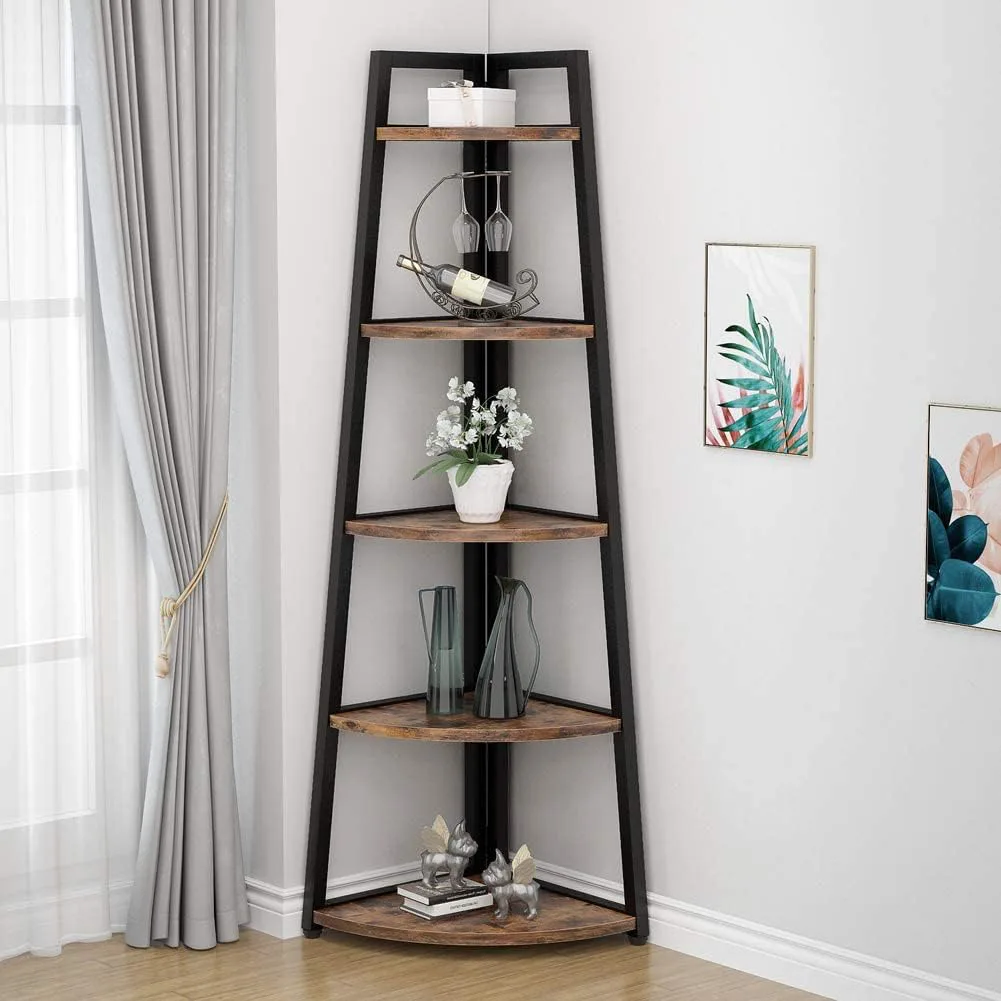
If the corner is the only real estate you’ve got left, there are more ways to use a corner that’s currently doing nothing than a single tall unit.
Then there’s the tree-style shelf, which is the odd-looking one that actually works. Staggered tiers on a narrow trunk, alternating left and right up the height of the unit. It looks like a design object and functions like a solution to a specific geometry problem: the nook that defeats a rectangle.
A slot beside a doorway, the wedge between a radiator and a window, the awkward gap at the top of a staircase. A rectangular bookcase either fits those or it doesn’t, and usually it doesn’t.

One more thing before you buy any of these new, and it’s the advice the community gives more consistently than any product recommendation: check Marketplace first. As one poster put it, bookshelves are heavy and bulky, so a lot of people are just trying to get rid of them. That’s the whole economics of it. A used solid-wood shelf regularly costs less than a new particle-board one and will still be flat in ten years, because moving a bookcase across town is enough hassle that sellers price it to disappear.
This is where a secondhand ladder bookcase or an older etagere beats anything new at the same money. If you’re not committed to a specific finish or a specific silhouette, spend twenty minutes scrolling local listings before you spend anything at all.
When you’re looking at a secondhand shelf, press down on the middle of the longest empty shelf with one hand. If it flexes visibly with nothing on it, walk away. Whatever it does empty, it will do three times worse full of books.
Why Cheap Bookshelves Sag and What Stops It
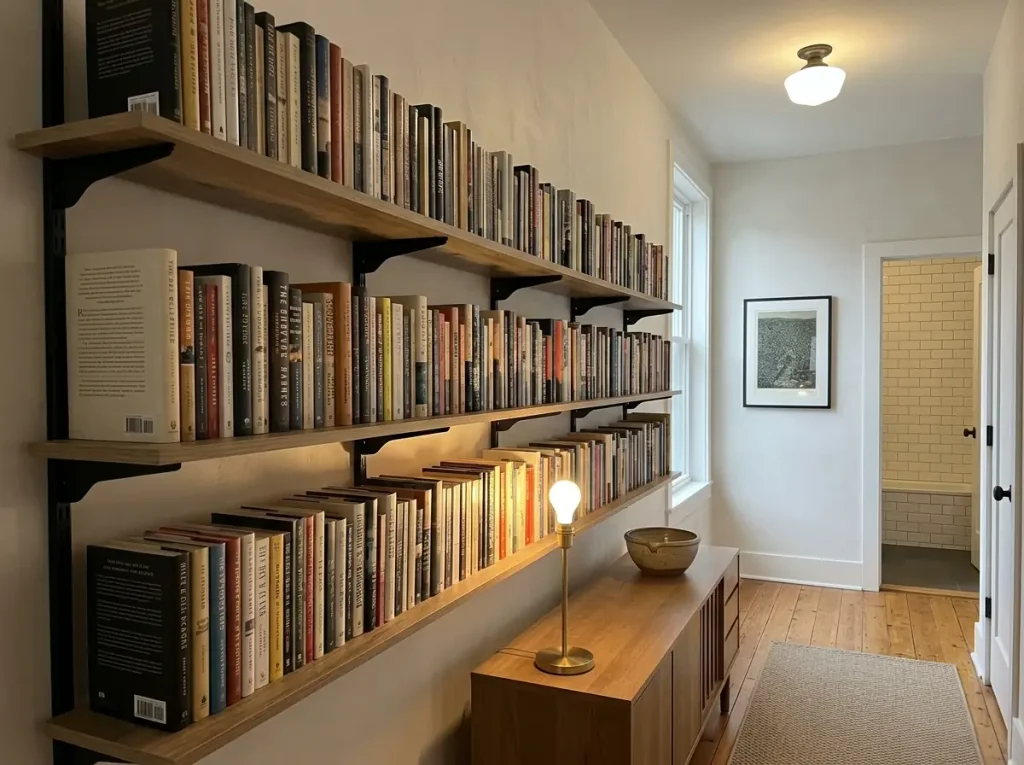
“Bends over time” is how the forums put it, and people say it the way they’d talk about weather. As if it just happens. It doesn’t. Three variables decide it, and you can check all three from a product listing before you spend a cent.
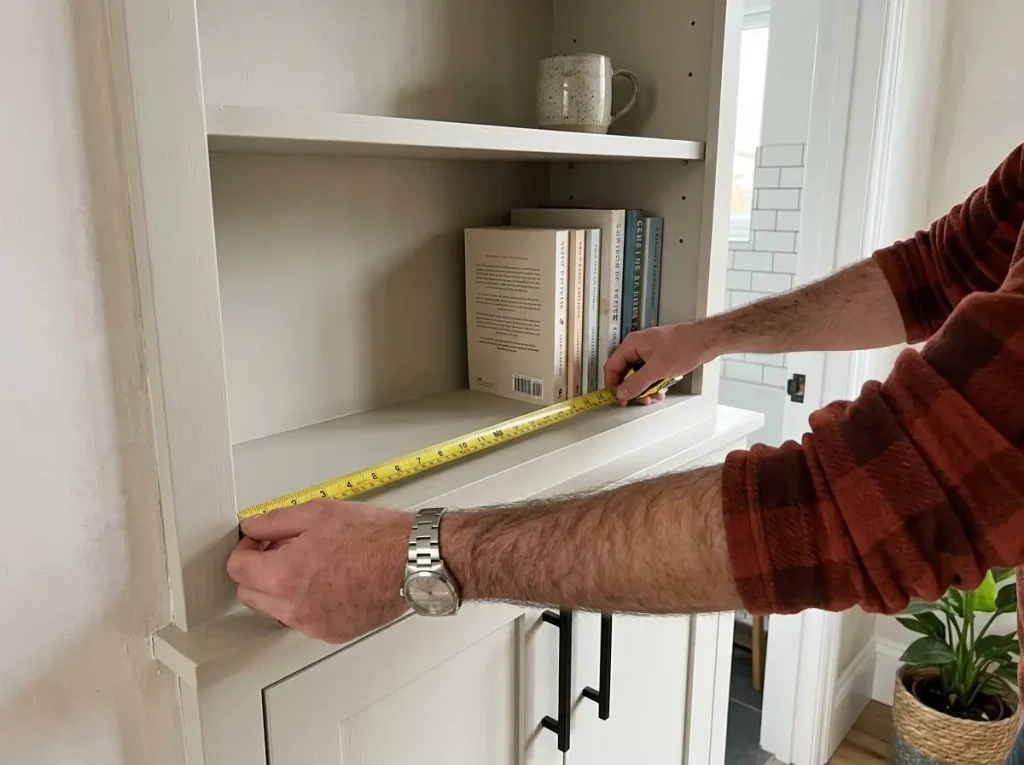
Shelf span is the big one, and the relationship isn’t gentle. Doubling a shelf’s width makes the sag eight times worse. Not twice, not four times. Eight. So a 36-inch shelf and an 18-inch shelf cut from the same board are not the same product with different amounts of storage, they are structurally different objects. This is why the small-space pick has a real advantage that has nothing to do with your floor plan: narrow shelves survive in materials that would visibly fail at full width. If you want to see the math run on your own dimensions, a shelf-deflection calculator built on standard beam-engineering formulas will tell you what a given board does under a given load.
Thickness works the same way in the opposite direction. Doubling it cuts deflection to an eighth. Which is why the standard advice about particle board has an actual number behind it: anything thinner than 5/8 inch sags under books within a year, and solid wood at 3/4 inch stays flat. A wood veneer face hides all of it, which is what the veneer is for. Manufacturers who cheap out don’t cheap out on the finish. They cheap out on the eighth of an inch you can’t see once the shelf is on the wall.
The weight capacity printed on the box is the tell that saves you from all of this. Solid wood sections run 30 to 60 pounds per shelf; cheap board equivalents run 10 to 15. That is not a small gap, and no listing photo will show it to you, but the spec sheet gives away the material before you’ve touched the product. A 15-pound rating on a shelf you intend to fill with hardcovers is the manufacturer telling you, quietly, in the fine print, that this is not a bookshelf.
There’s even a number for what counts as acceptable.
Woodworkers target 0.02 inches of sag per foot, and the eye starts catching a curve at about 0.03 inches per foot. Put that together and it means something practical: if a shelf visibly bows before you’ve loaded it, it’s already past the point a professional would accept, and books will only take it further. Sight along the edge in the store. It takes five seconds.
And there’s precedent for all of this at the largest possible scale.
IKEA narrowed the Billy from 90cm to 80cm in 1988 specifically because shelves were bending under books. The fix for sag was less span. Not thicker board, not better brackets. Less span, which is exactly what the math predicts.
If you already own a shelf that’s starting to dip, flip it. Most shelf boards are symmetrical, and turning one over lets gravity work against the existing curve instead of with it. It buys you time, not a cure, but it’s free and takes about a minute per shelf.
Then there’s the wall side of the problem, which is where most people quietly cut the corner. For any of the wall-mounted picks above, the rule is simple: at least one bracket lands on a stud, and the side with no stud gets a toggle bolt, not the plastic anchor that came in the box. The gap is not subtle. Toggle bolts in half-inch plasterboard hold roughly 90 pounds each; a plastic drywall anchor holds 10 to 20.
A 15-pack of spring toggle bolts costs about what a sandwich does and covers every shelf in this article with spares left over. Buying the shelf and not the anchors is the single most common way a good pick turns into a hole in the wall. If you’re hanging a long run and the studs cooperate, a French cleat or a lag bolt straight into framing is stronger than any anchor, because it skips the anchor entirely.
Freestanding units have the mirror-image version of this problem, and the answer is the same hardware philosophy: strap tall units to the wall.
The CPSC’s Anchor It! campaign is credited with cutting tip-over injuries by roughly half over ten years. Anchoring is not renter paranoia. It’s federally-backed practice with measured results behind it.
Once the shelf is up and holding, styling ideas that survive real life will keep it from turning back into a pile with a frame around it.
Matching the Shelf to Your Room and Your Budget
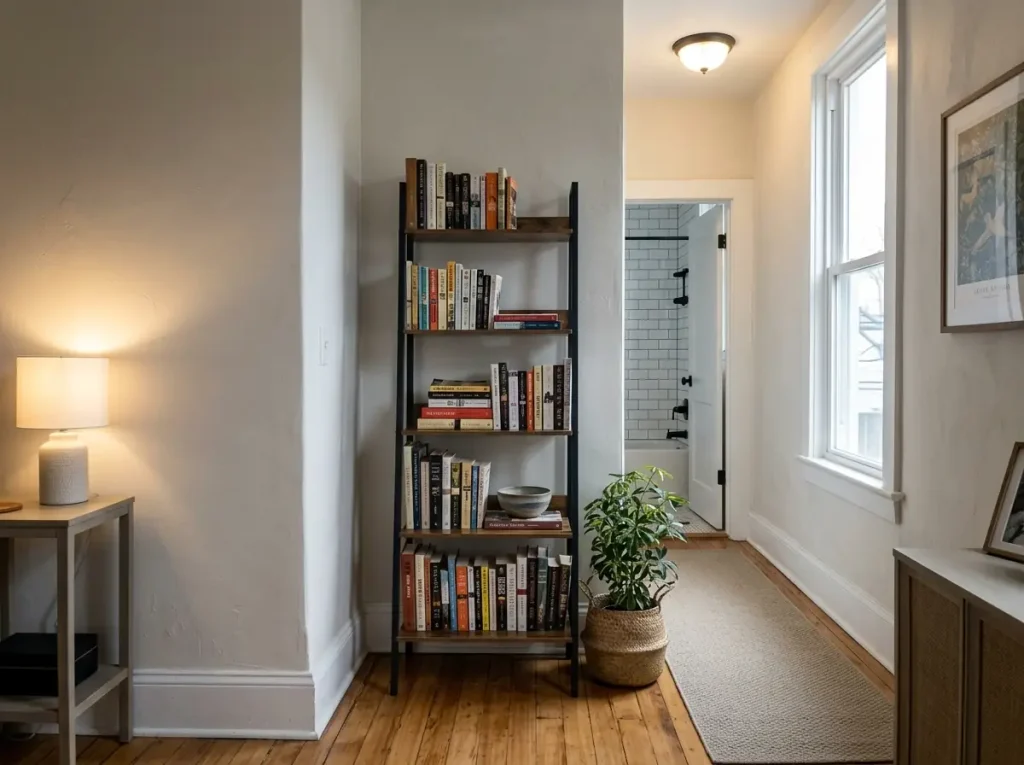
Four formats, one room, and the answer is usually decided by things you already know. Can you drill? Where is your dead space? How many books are actually going on this thing?
The room weights the answer more than the format does. A studio apartment has no wall to spare and no walkway to give, so depth settles it, and studio apartment storage almost always means going up.
A home office can usually surrender a corner. A dorm room rules out drilling and rewards anything that comes apart again in May. A hallway shelf and a kids room bookshelf both push you shallow for the same reason: people walk past them all day.
Run it as a short decision tree. Can’t drill, or don’t know what’s behind the wall and don’t want to find out: freestanding, narrow, under 12 inches deep. Studs where you need them and no floor to spare: wall-mounted.
An unused corner: corner unit, and strap it. An awkward nook a rectangle won’t fit: tree-style.
That’s the whole thing. If two answers apply, pick the one that doesn’t put holes in a wall you don’t own. It also helps to see the shelf as one piece of the rest of the small-living-room storage picture rather than as the solution by itself.
The budget ladder, stated without a single dollar figure, goes: secondhand solid wood at the budget-friendly end, steel-frame ladder shelves next, solid pine above that, and splurge-worthy rail systems at the top. But the ladder isn’t linear, and pretending it is would be dishonest. A used solid-wood shelf beats a new budget one at a similar price, every time, which is exactly why the community answer keeps circling back to Marketplace instead of a store.
What the premium end actually buys is worth naming, because it isn’t strength.
At the designer tier the money goes into finish, brand, and format variety. A leaning shelf from a design retailer holds no more books than a pine unit at a fraction of the price. It looks better in a room you’ve thought carefully about, and that is a real thing to want. It is just not a structural upgrade, and nobody selling it will say so.
One thing that gets left out of every buying guide: the books want conditions too, not just a shelf. Keep them out of direct sun, away from damp walls and radiators, and dust the shelf now and then. The material argument is only half of what damages a collection over ten years. The other half is a sunny window and a bookcase pushed against an exterior wall in a humid apartment.
One thing the listings bury: nearly everything here is assembly required, and the taller freestanding units are honestly two-person assembly whatever the box says. A tall carcass is stable once it’s upright and strapped, and unwieldy until then.
The real test arrives around month three. Once the shelf is full, can you still get a book out with one hand? If you can’t, the shelf is either too deep or too full, and neither of those is fixed by buying a second shelf. When that’s the answer, the measurement-first system for organizing a bookshelf is where to go next.
Conclusion
Measure the walkway, not just the wall. Depth is what makes a small room feel small, and 8 to 10 inches holds every book you own without charging you a hallway.
Span and thickness decide whether a shelf sags, and both are readable from a listing before you buy. The stated per-shelf weight capacity is the fastest material tell there is: 30 pounds and up is solid, 15 and under is board with a nice photo.
And if you can’t drill, that isn’t a downgrade. Narrow freestanding, corner and tree-style units are the picks here, not the consolation prizes, and the renter constraint pushes you toward the shelves that hold up better anyway.
In three months, pull a book from the middle of the longest shelf and sight along the edge. If a dip is starting, move the heaviest run to a shorter span before the curve sets permanently.
Measure the walkway first. That one number rules out half the options and turns the rest into an easy call.
Frequently Asked Questions
01What is a good bookshelf that doesn’t take up much space?
A narrow freestanding unit under 12 inches deep, or a wall-mounted shelf if you have studs where you need them. Depth is what costs you room, not height. A tall narrow shelf holds far more books per square foot of floor than a wide short one.
02Is it cheaper to buy or build bookshelves?
Building is cheaper on materials and usually sturdier, because you choose the thickness and the span yourself. Buying wins on time and finish. The community middle path is neither: a used solid wood shelf costs less than new budget board and outlasts it.
03What to use instead of bookcases?
Floating shelves, cube storage units, corner shelving and tree-style towers all handle book storage without a traditional bookcase footprint. Removable fixes like a tension rod or command strips are rated for light items, not a run of hardcovers.
04What is the bookshelf rule?
The one that matters for a small space is the span rule: the wider a shelf, the more it sags, and doubling the width makes it eight times worse. Keep the runs short and the shelf stays flat, whatever it is made of.
05Do narrow bookshelves hold enough books?
Yes. Paperbacks are only about 5 inches deep and hardcovers 6 to 8, so anything past 10 inches of shelf depth is storing air. A narrow shelf loses nothing in capacity, it just stops wasting your floor space.