























In this article
Every time you open that closet, the towel stack leans a little further left, a shampoo bottle has worked one corner of itself down between the wires, and the bin you bought specifically to fix this rocks when you pull anything out of it. You have organized this closet before.
Maybe twice. It went back to a pile both times, and somewhere along the way you decided the problem was you. It isn’t.
The linen closet organization ideas below are sorted by what the shelf is physically doing wrong, not by what photographs well, because the fix is almost never a better bin. If you want the whole system built from scratch, linen closet organization that survives a guest covers it; this is the idea bank you pick from once a closet already exists.
Quick Answer
Five fixes that work on a standard wire-shelf linen closet, no tools required:
- Lay a drop-in liner over the wire so bins stop rocking and small items stop falling through
- Measure shelf depth before buying any bin, because a linen closet runs shallower than a bedroom closet
- Swap opaque baskets for clear, open-front bins on the deep shelves you cannot see into
- Split one wide shelf into independent stacks with vertical dividers so a pile cannot topple into its neighbor
- Put a turntable in the back corner so the deep shelf gives its contents back
Why Your Linen Closet Keeps Falling Apart (It’s the Shelf)
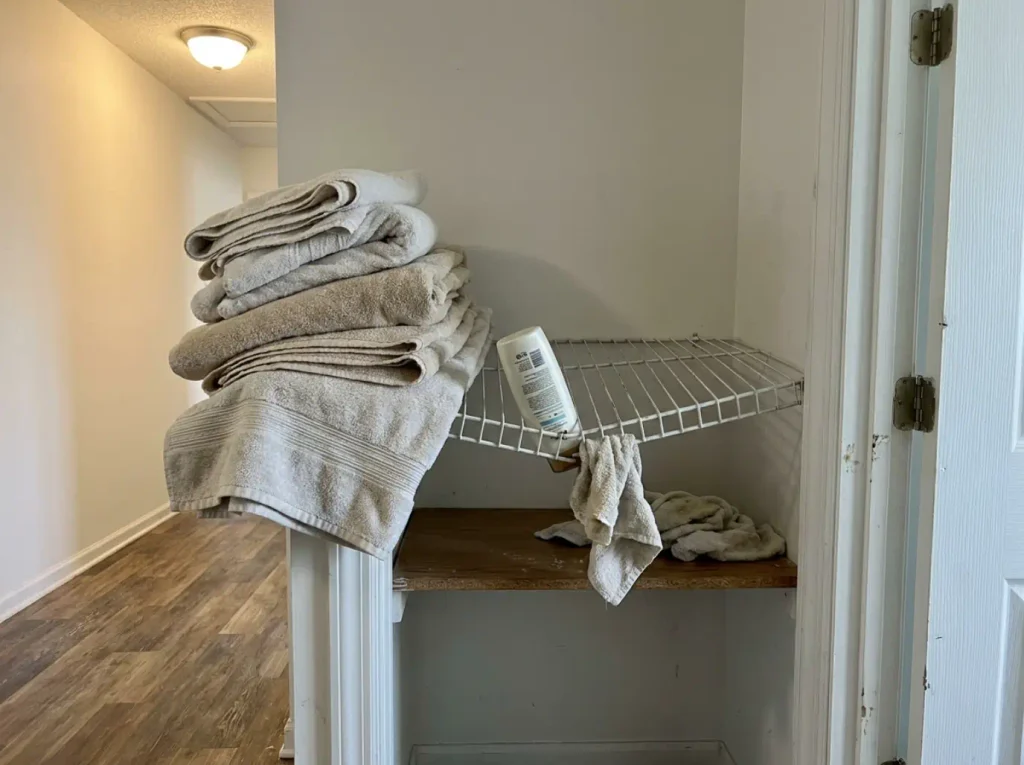
Almost everyone blames themselves. The closet reverts, and the story people tell is about discipline: they got lazy, the family doesn’t care, they were never organized to begin with. The people who fix it permanently stop reorganizing and start measuring. Your shelf has two properties that matter, and nearly every linen closet failure traces back to one of them.
The depth problem nobody measures for
Linen closet shelves typically run 12 to 16 inches deep, with 12 to 15 the usual sweet spot. That number decides everything downstream. A bin deeper than the shelf either overhangs the front edge until the door will not close, or sits back flush and hangs off into nothing. Either way you bought storage that fights the closet instead of using it.
The overall closet is shallow too. Front to back, most linen closets measure 16 to 20 inches, which is why bins that worked beautifully in your bedroom closet arrive here and refuse to sit right. It helps to know the difference between a linen closet’s 16 to 20 inch overall depth and a clothes closet’s 24 inch minimum: a clothes closet is sized around a hanger’s shoulder width, a linen closet around a folded stack. Two different pieces of furniture that happen to share a name.
One version of this shows up constantly in organizing threads, phrased almost identically every time: the closet is deep but narrow, and the complaint is “I never find things in the back because I can’t see them, or I have to take everything out to get to it.” Somebody always suggests baskets. A commenter’s blunt reply is the whole diagnosis: “putting everything in baskets would still hide stuff.” Containment does not fix a depth problem. It gives the depth problem a nicer container.
What wire shelving does to everything you put on it
Wire shelving is the rental standard, and it is a genuinely useful surface for airflow. As a base for containers it is close to hostile. The gaps let small items fall through, so a travel-size bottle works its way down between the wires over a few weeks. Bins sit on a ridged, uneven surface, so they rock every time you pull something out, and a rocking bin trains you not to use it.
Wire also presses itself into your linens. Anything soft on the bottom of a stack takes the shape of what is underneath it. You notice later, when you shake out a bath towel and it has a faint grid on one face.
The two-minute diagnostic before you buy anything
Stand in front of the open closet and name which of the two is biting you. Are you fighting depth, where things vanish into the back and you excavate to find a pillowcase? Or the wire, where nothing sits flat and small things disappear downward? Most closets have some of both, but one is the reason you are annoyed today.
Every idea below attaches to one of the two.
Do the sorting before you shop. A NAPO-certified organizer’s approach to emptying and sorting before you buy a single bin puts that step first for a practical reason, not a philosophical one: until the shelf is bare, you are guessing at how many bins you need and what size. Buy first and sort second and you end up with containers sized for the closet you imagined instead of the one you own.
Measure the shelf depth at the front edge and again at the back wall. Older homes settle, and closet framing is rarely square. If those two numbers differ by more than half an inch, size your bins to the smaller one or the back row will never sit flush.
If you want the ordered sequence rather than a menu of upgrades, the full empty-sort-refill walkthrough covers it start to finish. Everything below assumes a closet that already has things in it.
Give the Wire Shelf a Flat Surface First
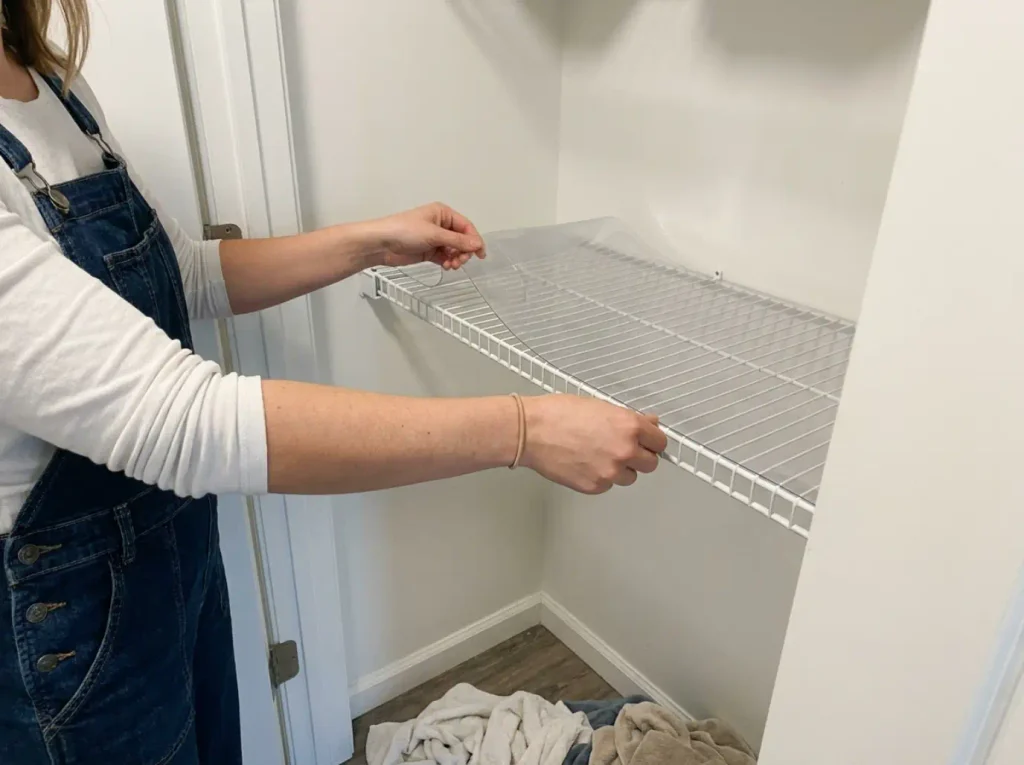
Everyone’s instinct on a wire shelf is to buy containers. It feels like progress: the shelf looks tidier, something happened. But a container sitting on wire is still a container sitting on a rocking, gapped surface. You moved the problem into a box.
The flat surface is the cheapest change in this article and it quietly makes every later idea work better.
The free version, done first
Before you buy anything, cut a piece of cardboard to the shelf’s exact footprint (the budget-friendly organizer move before any purchase) and lay it over the wire. A flattened shipping box does this, and so does shelf paper doubled over. Repurposed containers and flattened boxes are the free version of the whole idea. It does most of the job for nothing: bins stop rocking, small bottles stop falling through, towels stop taking the grid pattern.
Live with that for a month. If the cardboard buckles, sags in the middle, or absorbs the first drip from a damp towel, that is your answer about whether a wipeable surface earns its cost. Cardboard fails specifically in the humid closets that share a wall with a bathroom, which is a good number of them.
Why a liner beats replacing the shelving
Here is where this article disagrees with most of the search results. The standard advice for wire shelving is to replace it: rip it out, install a BOAXEL or an Elfa system, get real shelves. That advice is written for homeowners with a free Saturday. For a renter it is a landlord conversation, a pile of removed hardware you store until move-out, and holes in the wall you pay for later.
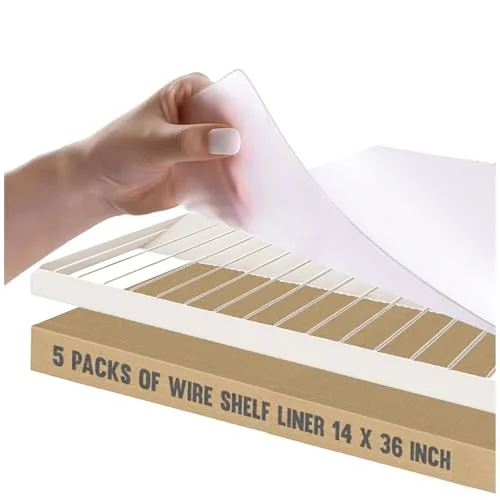
Drop-in liners sit on top of the wire with no fasteners, no adhesive, and no cutting tools beyond scissors. They lift off cleanly the day you move, which is the same no-drill logic that keeps a rental closet deposit intact everywhere else in a rental. Nothing is permanent, nothing is modified, and if you can’t stand it you have lost an afternoon.
I used to treat wire shelving as something you tolerate until you own a place. Enough renter threads land on the same drop-in liner fix that I changed my mind: the wire is not the problem, the surface is, and that is solvable for the price of lunch.
What changes the day after you lay it down
Three things. Bins stop rocking, so you stop bracing them with one hand while you dig with the other. Small items stay where you put them instead of migrating through the gaps. And stacked linens stop getting the ridge pressed into them.
That last one is the tell. If you already have faint parallel lines running across the bottom towel of every stack, you needed a liner a year ago and did not know the problem had a name.
Fix the Sightline Before You Buy More Baskets
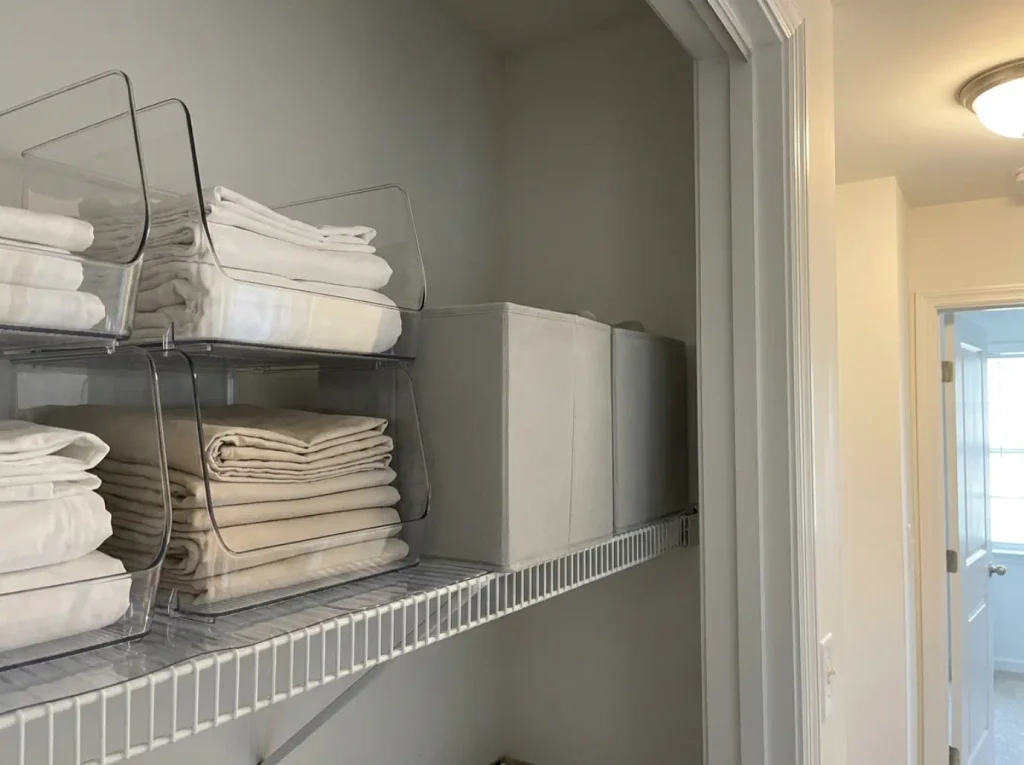
Search for linen closet ideas and you get the same photo twenty times: a wall of identical woven baskets, everything beige. It looks resolved. And that exact look produces the most repeated complaint in real organizing threads, which is that you cannot tell which basket holds the queen sheets without opening four of them.
Containment and visibility are two different jobs
A commenter pushing back on aesthetic-first advice in a linen closet thread put the mechanism plainly: round baskets do folded squares no favors, and “They’re also opaque and identical.” That is not a taste complaint. It describes a system working against the person using it.
Containment means stopping things from spreading across a shelf. Visibility means knowing what is inside without opening anything. Most people buy for the first while assuming they are getting the second. Opaque bins do containment well and work against visibility, and on a deep shelf that trade is a bad one, because the shelf was already hiding things before you put a box in front of them.
Clear on the deep shelves, opaque where you look straight in
The resolution is not picking a winner. It is assigning each type to the sightline it suits. Anything at eye level, where you see the contents the moment the door opens, can be opaque. Anything on a deep shelf or above your head, where you read contents at an angle or from underneath, should be clear and open-fronted.

Then the other half of the same decision. The eye-level shelf is where fabric bins genuinely belong, because you are not asking them to be see-through. You are asking them to keep four categories from spilling into each other.
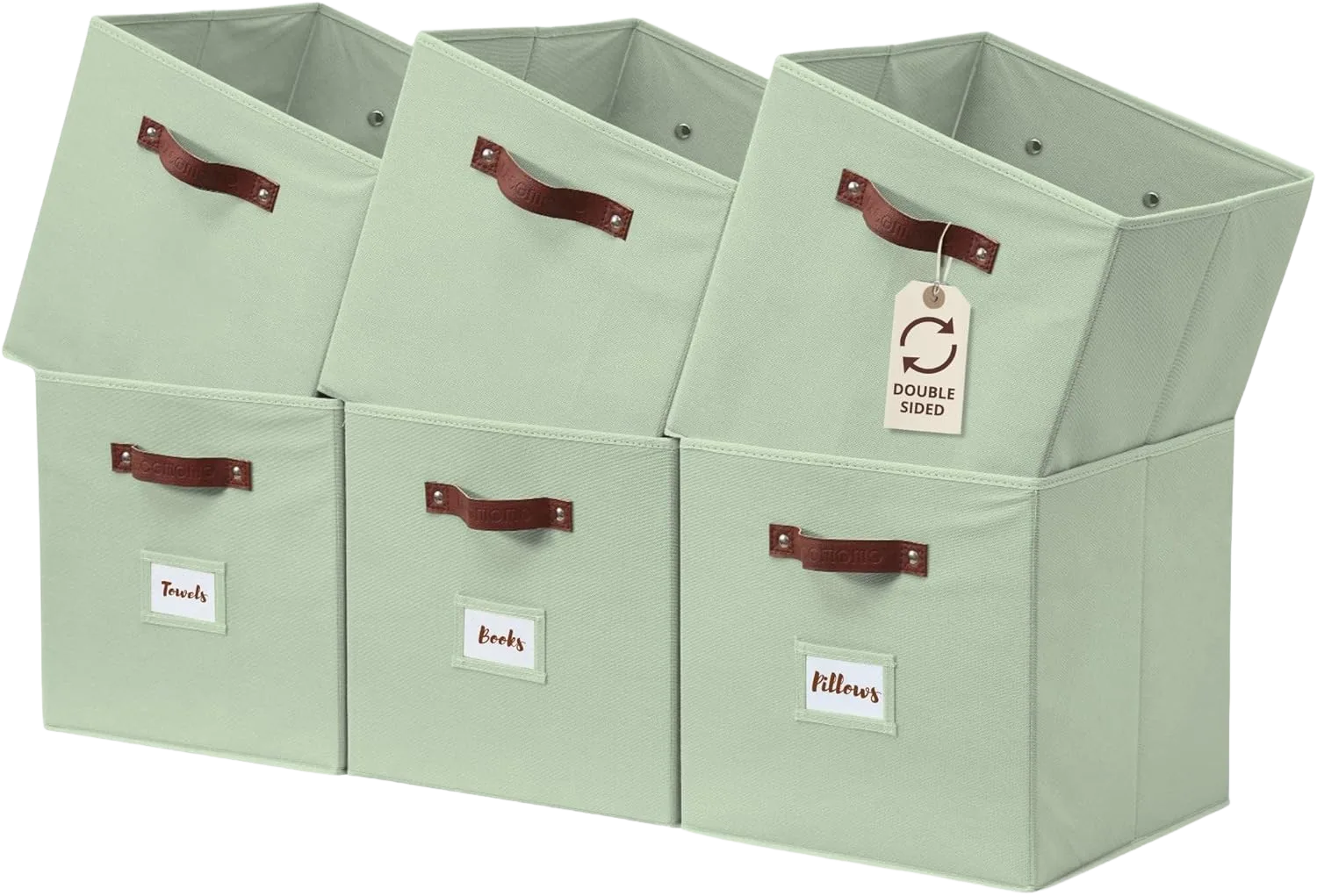
Before you commit, stand where you actually stand when you open the closet, not directly in front of it. Most linen closets sit in a hallway, so you approach at an angle and read the shelves sideways. A bin that is perfectly legible head-on can be unreadable from the doorway you actually use.
The label is what makes an opaque bin honest
Labeling is the bridge between the two jobs. An opaque bin with a real label contains and tells you what is inside without opening. An opaque bin without one is a box of mystery that matches its neighbors.
A label is not decoration. It is the instruction manual for shared household organization, and the difference between a system and a private arrangement. Without labels the closet exists only in the head of the person who built it, and it reverts the first time somebody else puts a towel away and guesses wrong. That is the same mechanism behind why budget closet makeovers revert: the system was never externalized, so it survived only while one person maintained it by memory.
And give every bin a rule you can state in two words. Bath towels. Queen sheets. Guest linens.
If one bin has no rule, it becomes the miscellaneous bin, and the miscellaneous bin always wins. Give it three weeks and it will have eaten the shelf around it, because everything you cannot immediately categorize now has somewhere frictionless to go.
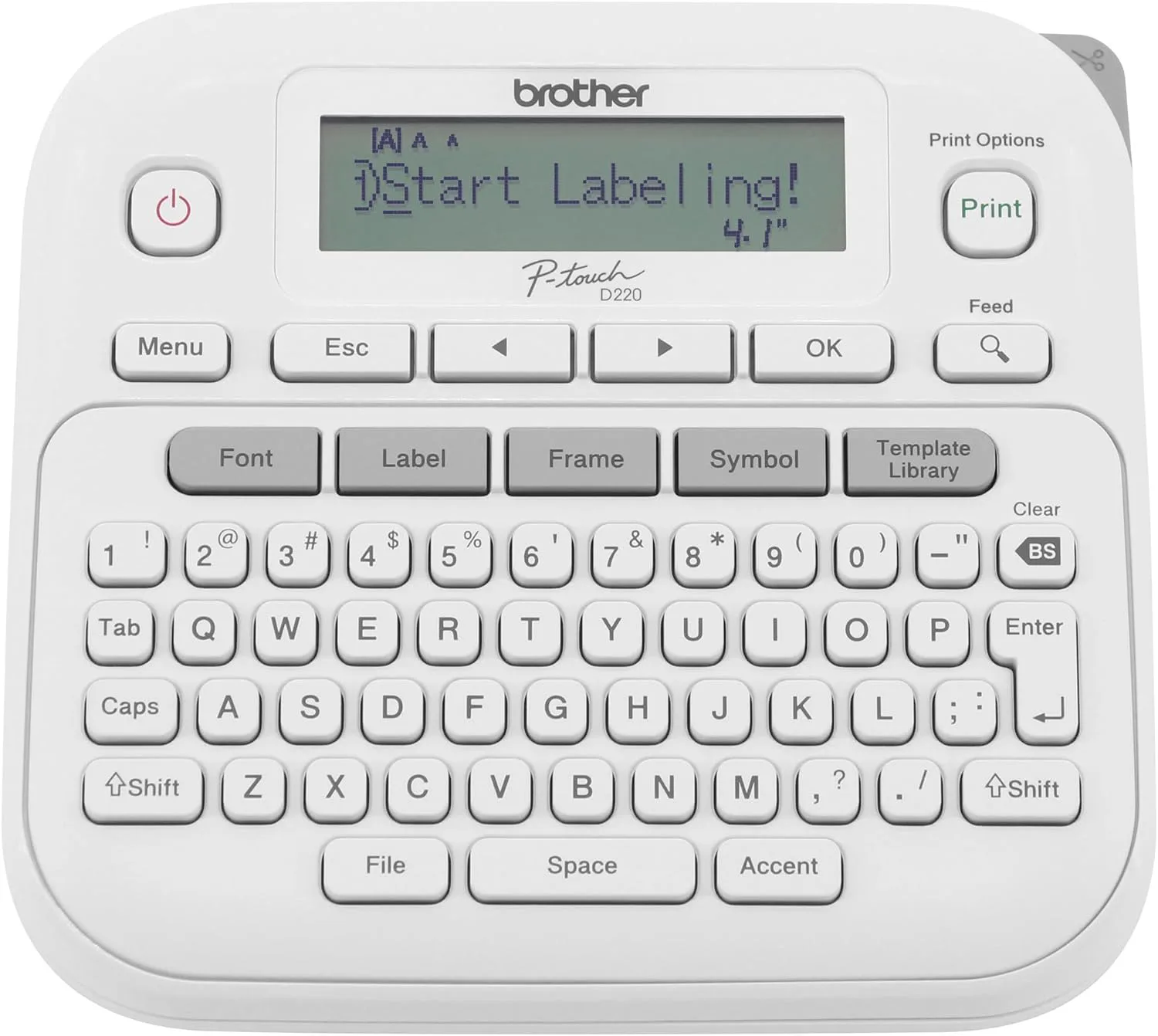
For most people, chalkboard label stickers and a paint pen do this for pocket change. Buy the label maker when you are labeling more than one closet, or when handwriting on tape has peeled off twice and you are tired of it.
The giveaway that a closet is visibility-broken rather than messy is a usage pattern: the same two bins come out every time and the back two have not moved since the day you filled them. Nothing in them went bad or became unnecessary. You stopped being able to see them, so they stopped existing. The sightline test travels well beyond this closet, and it is worth running the same zone-by-zone thinking applied to the rest of a small bathroom.
Split the Shelf So One Pile Can’t Take Down Another
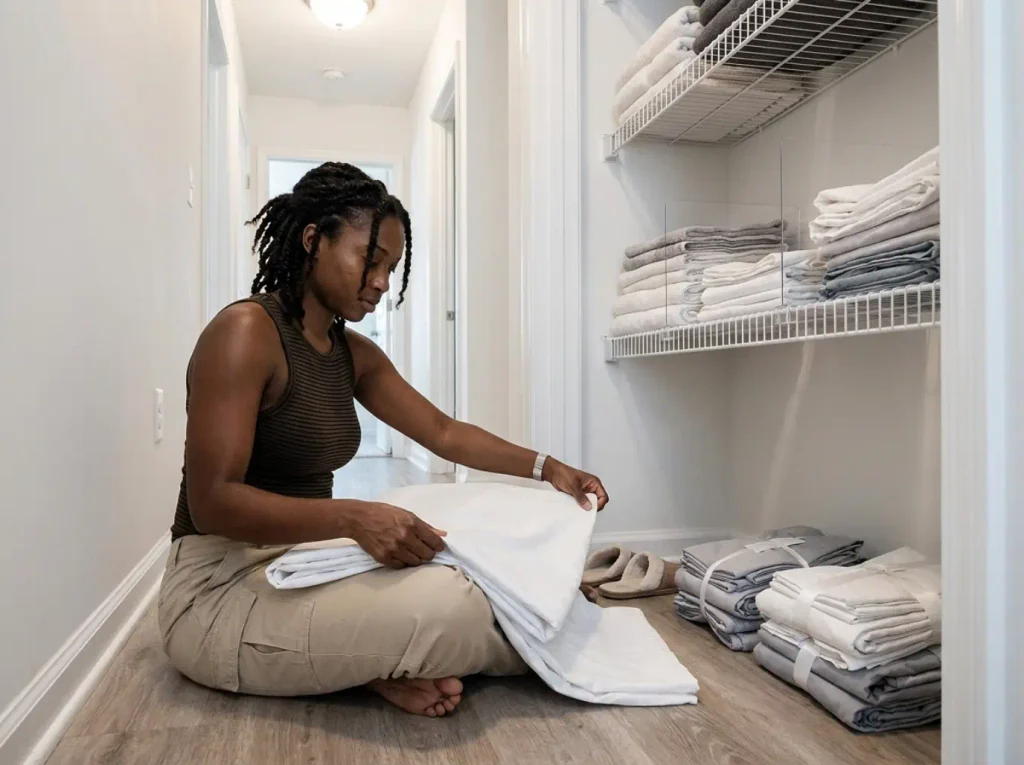
A wide shelf carrying nothing but folded stacks is a physics problem with a delay on it. Pull the third towel from the left stack and the one beside it leans into the space that just opened. Do that a dozen times over two weeks and there are no stacks anymore. There is one shelf-wide pile with a topography.
Group by bed size, not by item type
The instinct is to sort by what things are: all the sheets here, all the blankets there. It looks logical and it costs you every time you change a bed. If queen and twin sheets share a shelf, you re-sort them by hand at eleven at night while holding a mattress corner.
Group by bed size instead. One zone per bed in the house, and everything that bed needs lives in it. It looks less tidy in a photograph because the sizes differ and the colors do not line up. It means you grab one thing and walk away.
The one-bundle sheet set
Fold the fitted sheet and the flat sheet, add one pillowcase, and slide all three inside the matching pillowcase. Three loose pieces become one grabbable unit that cannot separate on the shelf. Store sheets in sets this way and the shelf stops being an inventory problem.
This ends the “which flat sheet goes with this fitted sheet” hunt permanently, and it does something quieter too: a bundled set has a defined edge, so it stacks like a book instead of like laundry. A shelf of bundles holds its shape for months. A shelf of loose folded pieces starts sliding the first time somebody is in a hurry.
Bundle sets so the pillowcase opening faces the back of the shelf. Facing forward, the opening gapes every time you slide the bundle out and the contents start creeping loose. Turned around, the folded edge presents to you and the bundle stays a bundle.
Dividers, and the free version you may already own
If you already own a tension rod doing nothing, turn it vertically and wedge it between the shelf and the one above. That is a free shelf divider, it works on wire and solid shelves, and it involves no drilling. The catch is that a rod is round, so it gives a stack a line to lean against rather than a flat wall to sit against.
Buy dividers when the free version keeps slipping, or when you need three divisions on one shelf and cannot fit three rods. Dividers are recommended specifically for wide, deep shelves, because that is where the failure is worst: one uninterrupted 36-inch run becomes two or three stacks that physically cannot topple into each other.
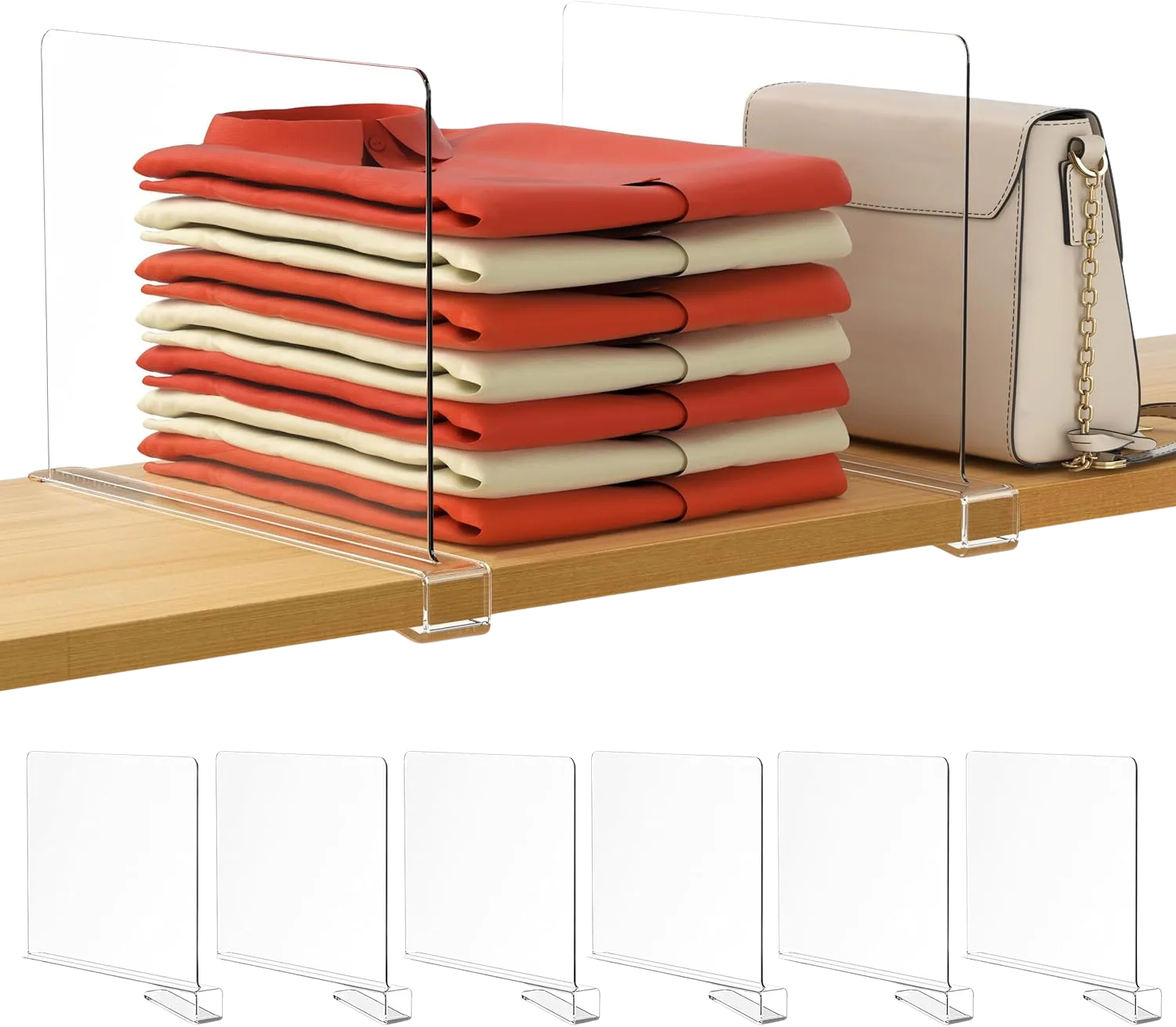
Divider style matters more than people expect, because a wire-clip divider and an acrylic slide-on fail on opposite shelf types. If you are unsure which divider type actually fits your shelf, check before ordering rather than after.
The rule underneath all of it: the stacks that survive have a hard edge on both sides. A stack bounded by nothing but air is a stack with a deadline.
Use the Air: the Dead Space Above, Below, and at the Back
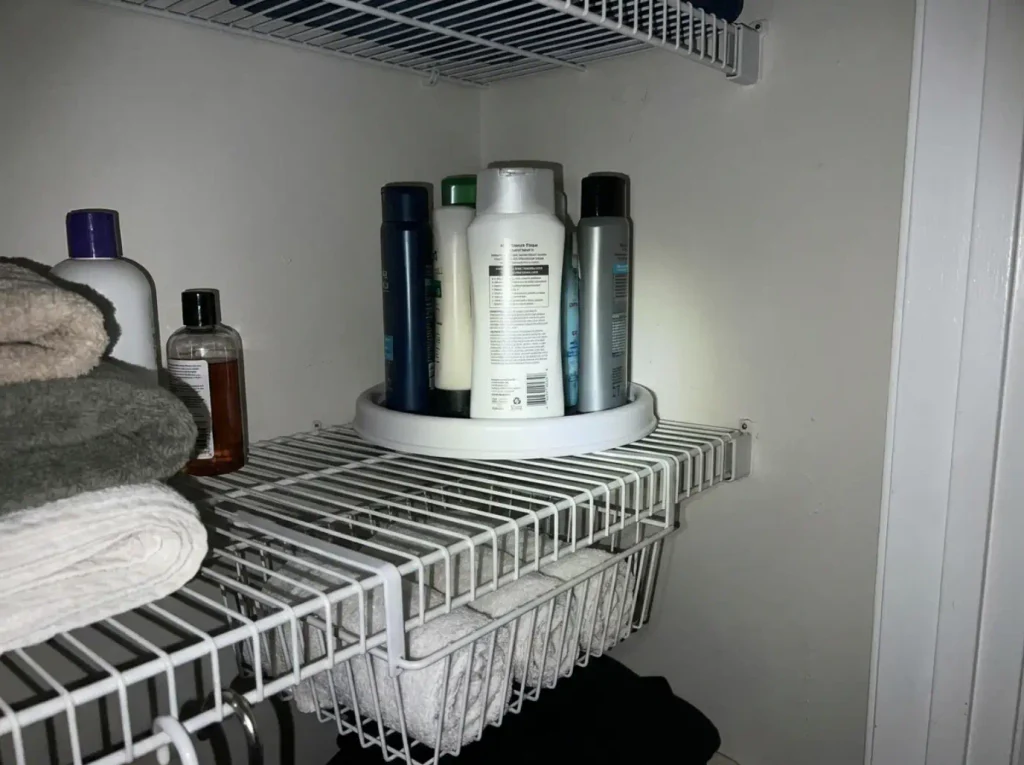
Most linen closets run well under their actual volume, and the unused part is not hidden anywhere clever. It is the empty air between the top of a towel stack and the shelf above it. It is the strip under each shelf. And it is the back third of every deep shelf, the part your arm reaches but your eyes never do.
Put the everyday things where your eyes already are
Zone by frequency of use, not by looks. This is the vertical storage decision that matters more than any container you add. Seasonal bedding, the guest set, the beach towels you touch twice a year: highest shelf. Everyday hand towels and the sheets for the bed you sleep in: eye level.
Fold towels and fold sheets to the same width once and the stacks stop fighting each other; loose small items travel better in a mesh bag or a soft tote than loose on the shelf. If you are on tiptoe reaching for a washcloth you use daily, the zones are backwards and no container fixes that.
The top shelf in a rental linen closet follows a specific pattern: it is usually the emptiest and the least useful. Not because it is out of reach, but because nothing up there has a category. Things go up to get them out of the way, so nothing goes up on purpose, so it becomes a horizontal junk drawer at ceiling height. Assign it one job, in words, and it stops being that.
The strip of air under every shelf
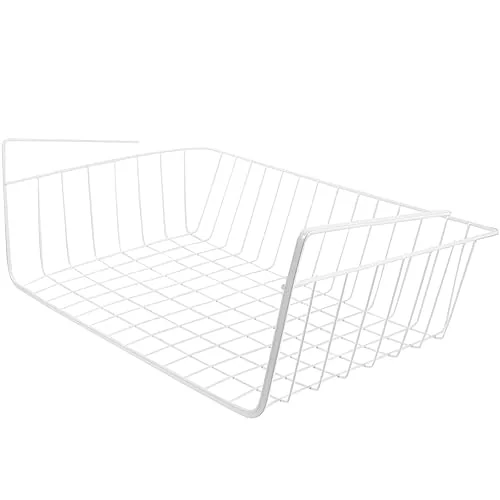
Look at the shelf spacing, the gap between the top of what is on a shelf and the shelf above it. On most linen shelves that is several inches of nothing. An under-shelf basket slides onto the shelf edge and hangs into that gap, adding a layer without adding a shelf.
This is the right home for things that do not stack: toiletry backstock, spare soap, washcloths, the travel bottles that were falling through the wire before you fixed the surface. Keep linens out of it. A hanging basket has an open mesh base, and folded linens sag through it in a way that undoes the folding.
Turning the back corner into usable space
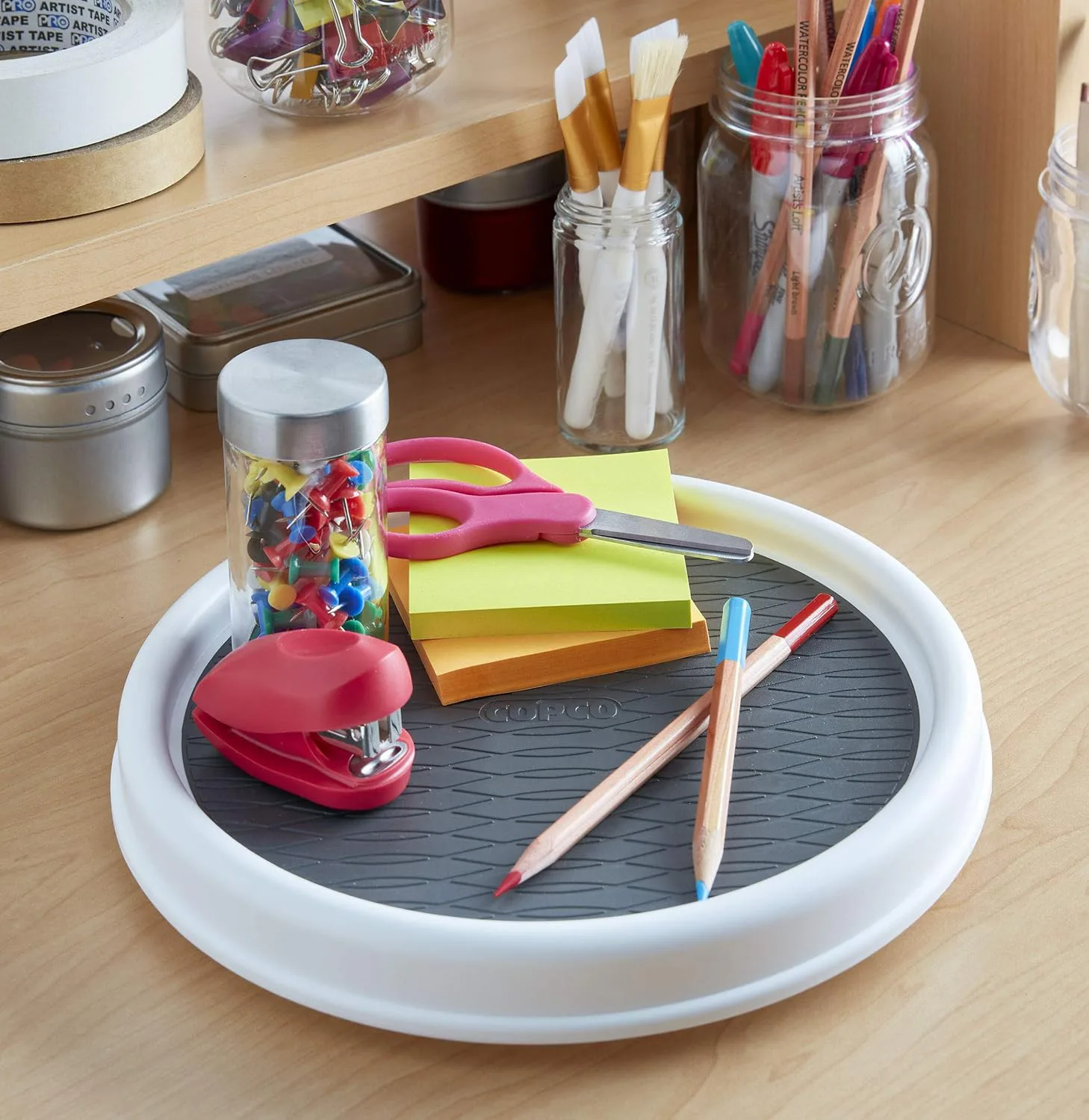
Now the back of the shelf, where we started. A turntable in the back corner is not another container. It is a structural answer to the depth problem from the first section: instead of excavating the back, you rotate the back to the front. The reach never gets longer, the shelf brings things to you.
Use it for toiletries storage and backstock, not linens. Bottles, jars, sunscreen, the second deodorant, the shampoo you bought on sale. Those hide behind each other and expire unnoticed, and they are the right shape for a round tray. Folded linens are not.
One diagnosis before you add any of this. If your linen closet has quietly become the overflow bathroom cabinet, more containers is the wrong move. The fix is moving that category out, usually onto an over-the-door rack on the bathroom side, which adds storage without touching a shelf. A closet holding two unrelated jobs loses at both.
And the cheapest fix is the one people arrive at on their own. The line that comes up over and over in organizing threads is “a lot of organizing is editing,” usually aimed at the stack of old sheets nobody has used since the mattress before this one. Nothing you buy performs as well as a real purge of what the closet stores out of habit. Declutter first, buy second: that order is the whole maintenance routine, and a light version done quarterly is what holds the system together.
Keep one shelf deliberately half empty. Every closet takes in a surprise at some point: a guest’s bedding, a comforter that came off a bed in June, a shipment of towels. Without slack, that surprise gets set on top of a stack and the whole shelf loses its shape in an afternoon.
The Three Ideas That Do the Most Work
Measure the shelf before you buy the bin. Depth is the constraint every failed linen closet has in common, and nobody checks it until the door will not shut.
On wire, fix the surface before the system. A flat shelf makes dividers sit straight, bins stop rocking, small things stop disappearing downward. Everything else here works better on top of it.
Match the container to the sightline. Clear and open-fronted where you cannot see, opaque and labeled where you can. The bin that looks best in a photograph is frequently the one you stop opening.
In three months, open the closet and find the bin nobody has touched. Whatever is in it either moves to the top shelf with a real category on it or leaves the house. That single decision is what stops the slow drift back to a pile.
Pick the shelf that annoys you most. Fix that one. The rest of the closet can wait a week.
Frequently Asked Questions
01What is the best way to organize a deep linen closet?
Work the depth, not the width. Put a turntable in the back corner so the rear of the shelf rotates forward instead of needing excavation, use clear open-front bins rather than opaque baskets, and keep the front strip of each shelf for what you reach for daily.
02What are some ideas for organizing a small linen closet?
In a small closet the win is vertical, not horizontal. Add an under-shelf basket to use the dead air beneath each shelf, split wide shelves with dividers so stacks stay independent, and bundle each sheet set inside its own pillowcase. On wire shelving, lay a liner down first.
03How deep should linen closet shelves be?
Most linen closet shelves run 12 to 16 inches deep, with 12 to 15 the usual sweet spot. That is shallower than a clothes closet, which needs 24 inches minimum for hangers. It is why bins bought for a bedroom closet often overhang a linen shelf and stop the door closing.
04How do you organize a linen closet with wire shelving?
Start by laying a drop-in liner over the wire so bins stop rocking and small items stop falling through the gaps. Then treat it like any other shelf: dividers to keep stacks apart, clear bins on the deep shelves, everyday items at eye level. Drop-in liners need no adhesive or tools.
05Should you fold or roll towels in a linen closet?
Fold for a linen closet, and roll only when you are storing towels in a basket or open cubby. Folded stacks use shallow shelf depth efficiently and sit flat; rolled towels waste the vertical gap and unroll when you pull one from the middle. Keep whichever you choose consistent.