

You bought the shelf dividers with the best reviews, clipped them on, and a week later a stack of sweaters shoved them sideways again. The problem usually isn’t the divider. It’s that the one you bought was never built for the shelf you own. The failure story that keeps coming up in organizing threads is always the same: someone grabs the popular pick without checking whether their shelf is wire or solid, and half of them end up returning it. One product in this category is literally named “Measure Before You Buy,” which tells you how common the mistake is. This guide sorts shelf dividers by the only thing that decides whether they actually hold, the shelf you’re clipping them to, plus the thickness numbers competitors skip, a no-drill install, and a free fix worth trying first.
Here’s the quick version before we get into your specific shelf.
| Divider Type | Best Shelf | Grip Method | Watch Out For |
|---|---|---|---|
| Slide-on acrylic | Solid or laminate with a flat lip | Sits over the front edge | Slides on smooth melamine |
| Clamp-on | Both wire and solid | Jaw tightens onto the edge | Check jaw range vs. thickness |
| Clip-on wire | Wire shelving only | Prongs seat into the grid | Won’t grip a flat shelf |
| Wood with brackets | Solid or thick custom wood | Bracket clamps top and bottom | Fit varies, measure width |
The Three Shelf Divider Types (and What Each Is Actually Good At)
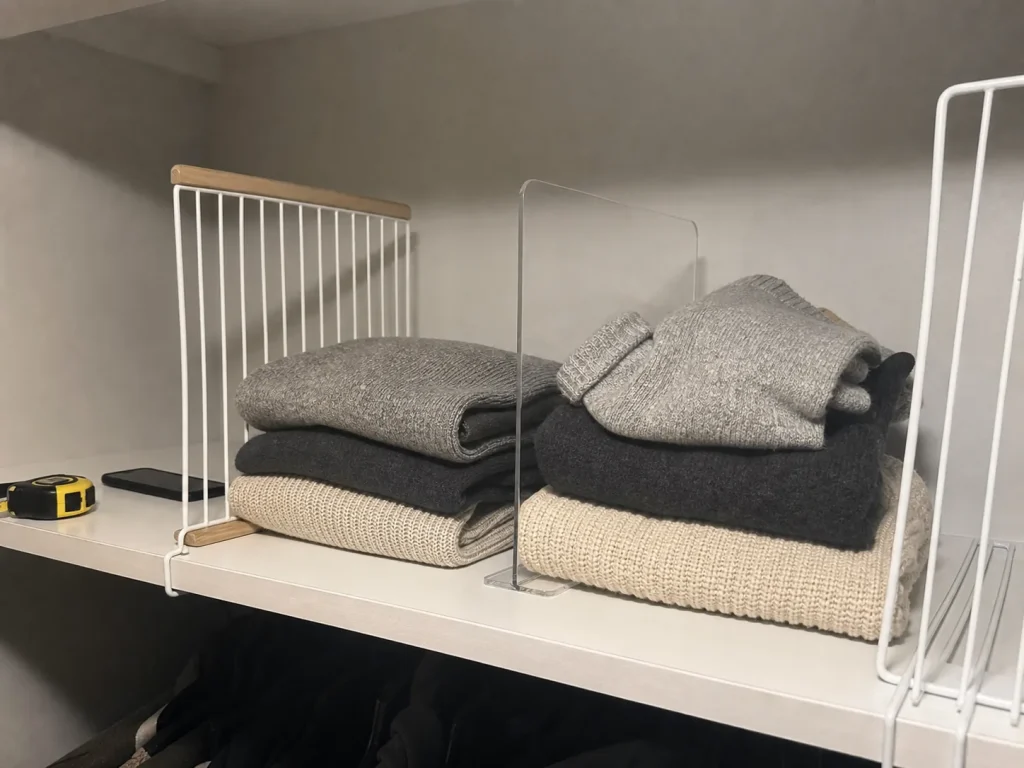
Most people shop these by looks. Clear versus metal, which one blends in better on the shelf. The better question is how the thing grips, because that’s what decides whether it survives a real week of hands pulling stacks out. There are three grip mechanisms worth knowing, and once you can name them, the shopping gets a lot faster.
Slide-on acrylic dividers
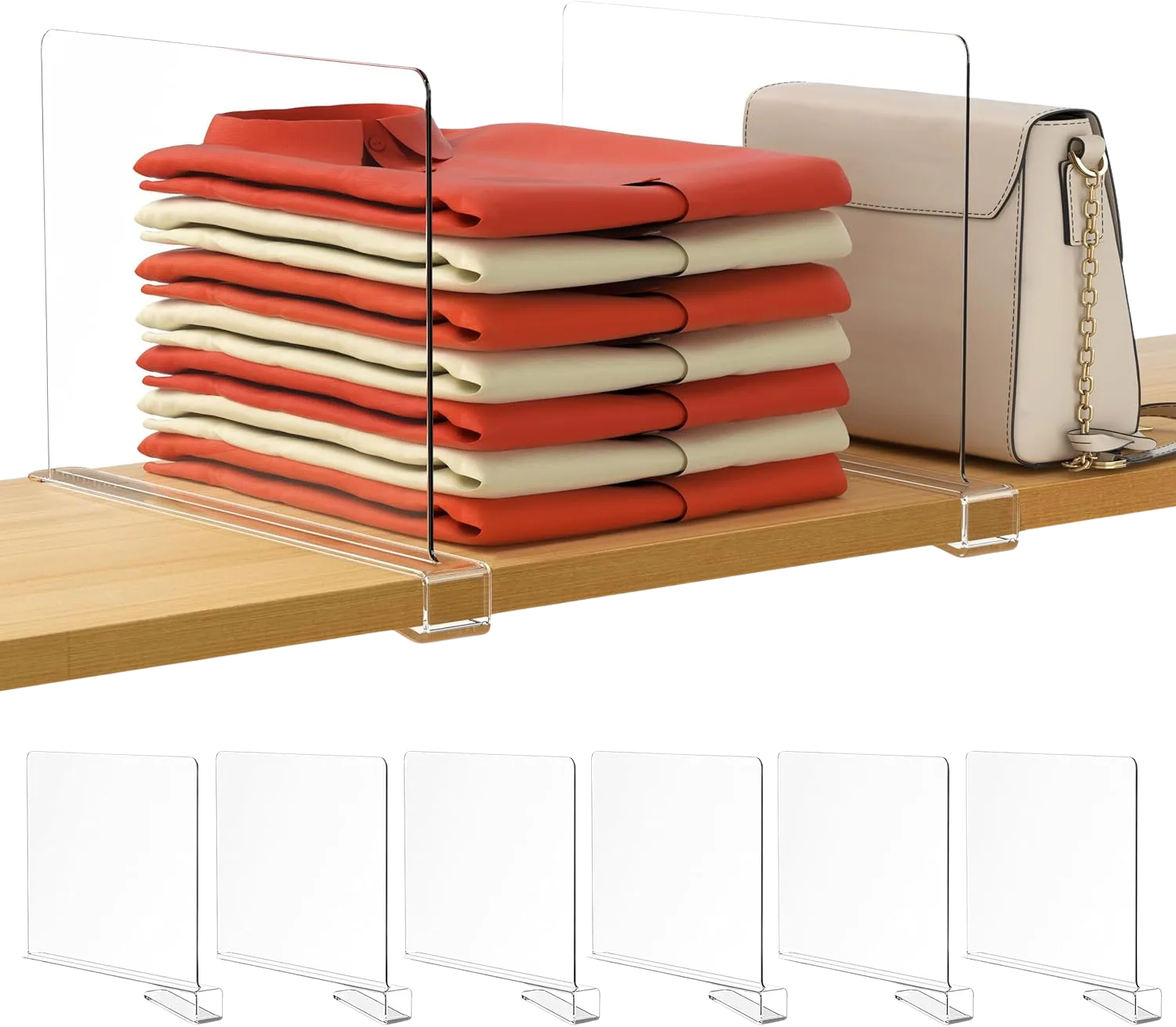
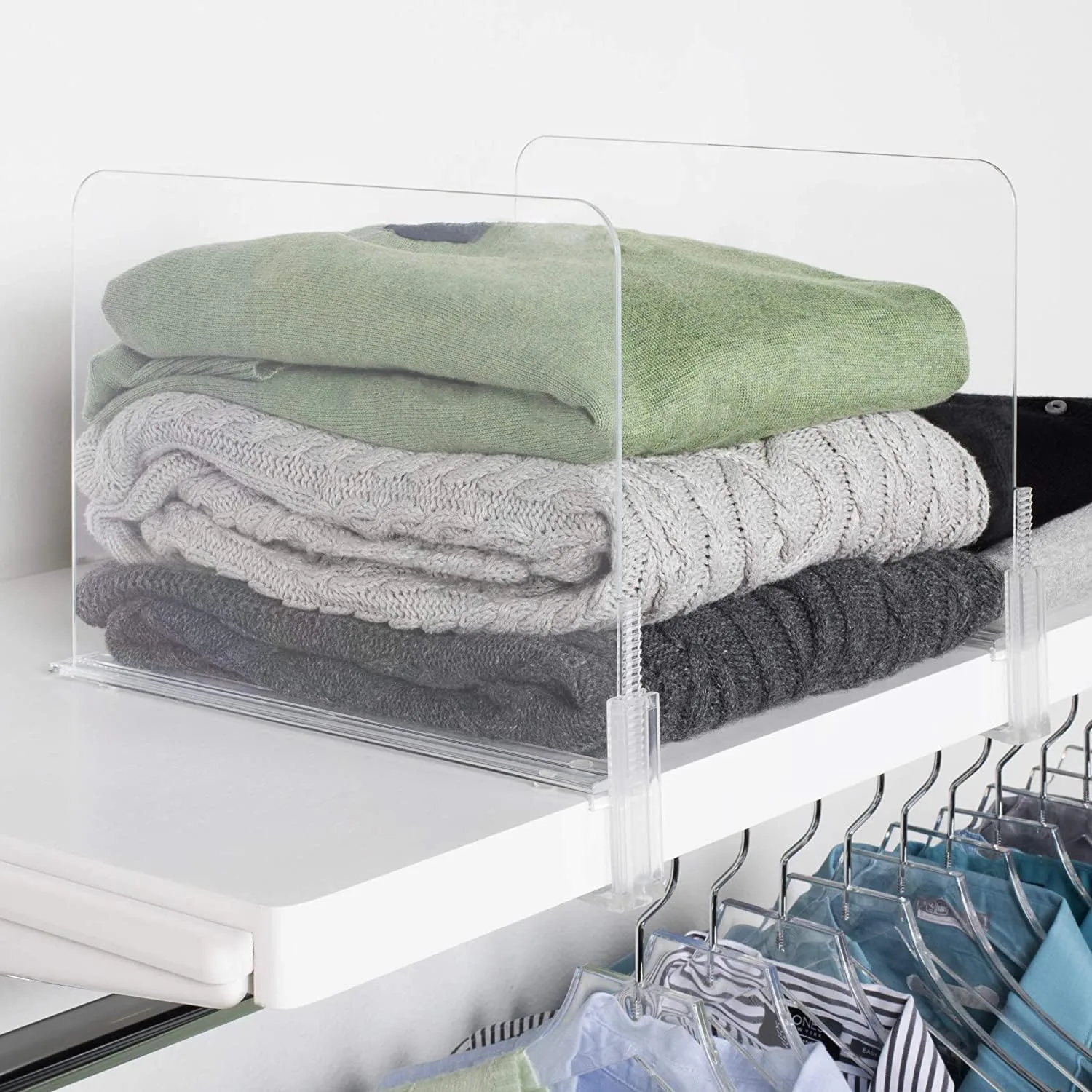
Slide-on acrylic dividers are the near-invisible option. They’re a clear panel with a hooked foot that sits over the front edge of your shelf, so on a white linen shelf they practically disappear. That’s the appeal, and it’s real.
The default advice everywhere is to buy the clear ones because they look like nothing. And they do. But on a smooth melamine shelf with no real lip to catch, acrylic slides the first time a folded stack shoves against it. The clear look is worth having when your shelf has a defined front edge for the foot to hook. When it doesn’t, you’re fighting physics.
The HBlife Acrylic Shelf Dividers are the set worth reaching for here. They’re sized for standard laminate and melamine closet shelves, and the clear panel keeps a linen or sweater shelf looking uncluttered while still sectioning it into upright columns. The one honest caveat: acrylic shows every fingerprint and scuff after a season of hands reaching past it, so the “invisible” look does not stay showroom. Function holds, appearance ages.
Clamp-on dividers
Clamp-on dividers use a screw or ratchet jaw that bites down onto the shelf edge. This is the most shelf-agnostic style, because the jaw grips whatever you tighten it onto, wire or solid. If you’re standing in the aisle unsure what your shelf even counts as, this is the safe default. It adjusts to fit rather than assuming your shelf matches a spec.
The trade-off is that a clamp adds a small visible bracket at the front of the shelf, so it never disappears the way acrylic does. You’re buying grip over looks. For most people sectioning a working closet, that’s the right swap.
Clip-on wire and wood-with-brackets
The last two are specialists. Clip-on wire dividers have prongs that seat down into a wire grid, which makes them perfect on wire shelving and useless on a flat wood shelf. There’s nothing for the prongs to grab on a solid panel. Wood dividers with brackets go the other direction: they clamp top and bottom onto a solid shelf and hold heavier, more structured stacks, like folded denim or chunky knits, without flexing the way a thin acrylic panel can.
You can read how acrylic holds up over time if the scuffing question is a dealbreaker for you, since it comes up with every clear organizer.
Wire Shelf vs. Solid Shelf — Match the Divider to What You Have
This is the section that saves you a return. The single biggest buying mistake with shelf dividers isn’t spending too much or picking the wrong brand. It’s grabbing a style that doesn’t fit the shelf you actually own. The wire clip that snaps perfectly onto a wire pantry shelf is the exact wrong pick for a smooth melamine closet shelf, and nobody flags that for you before checkout.
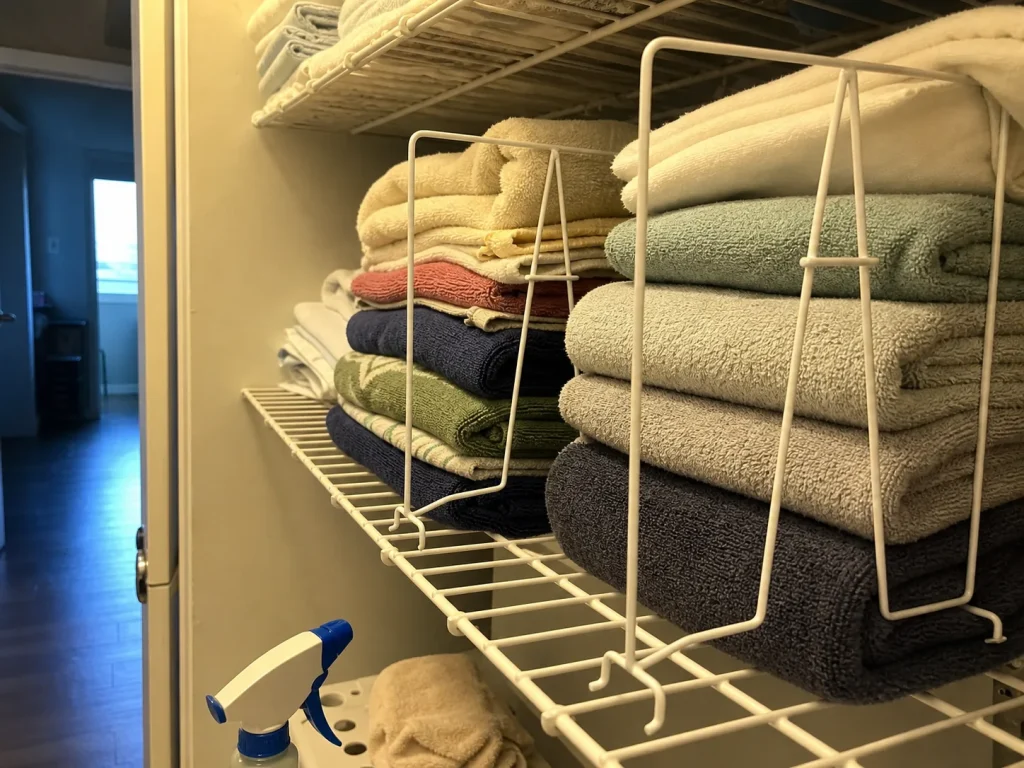
If you have wire shelving
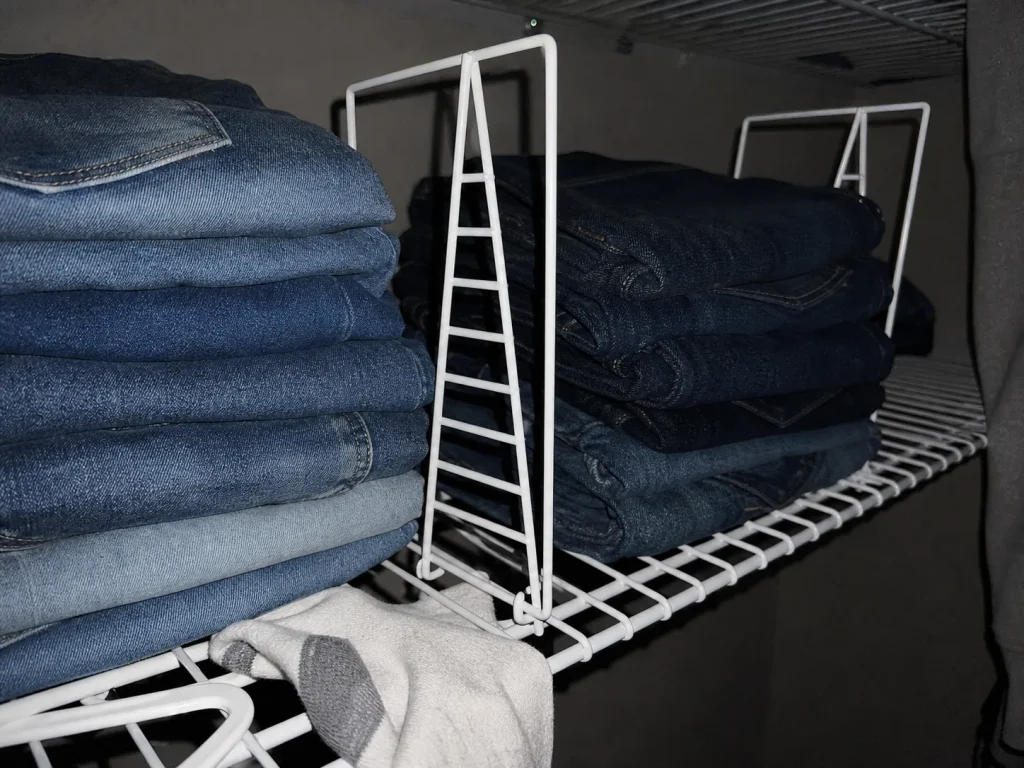
Wire shelving gets its strength from the metal rod grid, not from a thick panel. That’s the detail that changes everything about dividers. A clip-on wire divider seats its prongs down into that grid and stands up on its own, which is exactly what you want. A clamp-on works too, as long as the jaw closes onto the coated rod. What mostly fails here is slide-on acrylic, because a wire shelf has no continuous flat lip for the acrylic foot to hook over.
The Evelots Tall Wire Shelf Dividers are built for this. They click directly onto standard wire shelving sections, and being solid coated steel, they keep their grip on the grid far longer than a thin plastic clip. If your linen closet or coat shelf is the white wire kind, this is the match. The video below shows the prongs seating into the grid, which is the one motion that’s hard to picture from a product photo.
If you want the exact rod spacing and depth of a standard wire shelf before you order, ClosetMaid’s own wire shelving spec sheet lays out the real numbers.
If you have a solid, melamine, or wood shelf
A solid shelf opens up your options. Both slide-on acrylic and clamp-on styles work, because there’s a flat front edge to hook or clamp. If your shelf is a thick, structured wood slab and you’re stacking heavier folded items, a bracketed wood divider gives you more backbone. The Xabitat Vertical Closet Wood Shelf Dividers use welded top-and-bottom support brackets for that job. Worth knowing before you buy: their reviews split between people who report a perfect fit and people who say the divider is too wide for their shelf. That’s not a defect, it’s a measuring problem, and it’s the whole reason the next section exists.
What almost always fails on a solid shelf is the clip-on wire style. Those prongs need a grid to bite into, so on flat melamine they have nothing to hold and slide right off. It’s the most repeated wrong-shelf story in organizing threads: the divider that worked on grandma’s wire pantry shelf does nothing on a laminate closet shelf. Material match beats brand every single time.
Not sure whether your shelf counts as wire or solid enough for a clip? Default to a clamp-on. It’s the one style that grips both, so if you buy a mixed closet’s worth of dividers and only want to remember one rule, that’s it.
When you’re not sure
If you genuinely can’t tell what will hold, buy a clamp-on and skip the guessing. Every style here is no-drill, so the renter risk was never holes in the wall. The real renter risk is buying twice after a shelf-type mismatch, then having a bag of returns to drive back. If your whole setup needs to come off the wall cleanly when you move, the same logic runs through no-drill closet setups renters can take with them.
Measure Your Shelf Edge First — The Numbers Nobody Publishes

Every guide says “measure your shelf” and then never tells you what number you’re checking for. So you nod, skip it, and order anyway. Here’s the actual number, and where to put the tape measure, so the measuring is thirty seconds instead of a coin flip.
What to measure
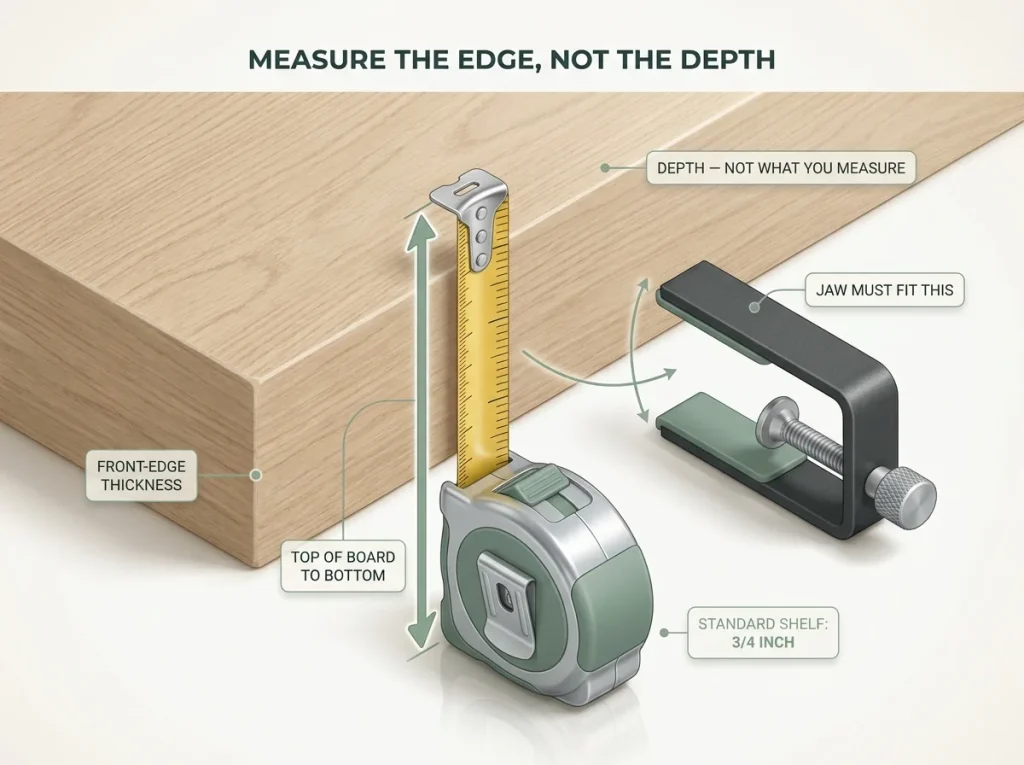
Measure the thickness of the shelf’s front edge, not the depth. This is the part people get wrong. The depth of the shelf (front to back) tells you how long your folded stacks can be. The thickness of the front edge (top to bottom of the board or rod) is what the clamp or the acrylic foot has to fit over. A divider fails to fit because of the edge thickness, not the depth, so that’s the measurement that decides your purchase.
The numbers that matter
Standard solid, melamine, and particleboard closet shelving runs about three-quarters of an inch thick. That’s the number most slide-on and clamp dividers are designed around, so if your shelf is the ordinary residential kind, almost anything fits. The exceptions are thick custom wood slabs, which run well past that and defeat a standard clamp.
For those thick shelves, you want a wide-jaw clamp. The Richards Homewares Acrylic Dividers open onto shelves up to about two and a half inches thick and have a run of adjustment tracks, which is the widest published clamp range in this category. On the budget end, slide-on sets tend to cover roughly a quarter-inch up to just under an inch, which is fine for standard shelving. The point isn’t to memorize the ranges, it’s to measure your edge once and check it against the number before you click buy.
Matching a divider to your measurement
Once you have the edge number, checking compatibility is simple. Standard three-quarter-inch shelf, almost any slide-on or standard clamp works. Thick slab, wide-jaw clamp. Wire, a clip or a rod-friendly clamp. And if a stack ever starts to sag, don’t blame the divider. A properly bracketed three-quarter-inch shelf holds far more than a stack of folded sweaters, so sagging is a bracket-spacing problem, not a divider problem. Worth noting too: the CPSC’s clothing-storage safety standard covers freestanding dressers, not open shelving, so with a shelf the real question is how well it’s mounted, not a tip-over rating. If you want the compatibility figures spelled out, the shelf-thickness ranges we published for apartment closets line up with what’s here.
No-Drill Installation — and Why the Grip Fails After a Few Months
The install takes about ten seconds. That part nobody struggles with. What nobody warns you about is the part two months later, when the divider is leaning again and you assume you bought junk. You probably didn’t. It’s usually one of three fixable things, and once you know them, the fix is faster than the complaint.
The 10-second no-drill install
Every style here is tool-free. Slide-on acrylic slides over the front edge. Clamp-on tightens with a thumbscrew or a ratchet. Clip-on wire prongs press down into the grid. Nothing permanent, no adhesive residue, no holes, which is the whole renter selling point. If you’re stocking a deeper wire shelf, the Neatly Made Tall Wire Shelf Dividers come sized for the wider sixteen-inch wire shelves that the standard twelve-inch dividers leave hanging, and yes, that’s the set whose name openly tells you to measure first.
Why the grip creeps loose
Here’s the honest mechanism behind the leaning divider. On a clamp, repeated sideways pulls loosen the jaw a little at a time, so-called screw-clamp creep, and a month of grabbing the bottom item off a stack walks it loose. On slide-on acrylic, a slick melamine shelf lets the whole divider skate forward when a stack shoves it. And on any style, the real culprit is someone yanking a garment out sideways instead of lifting the stack, which knocks the divider off its line in one motion.
I used to point people straight to clamp-on dividers for everything and call them set-and-forget. After enough “it went crooked again” stories in organizing threads, I stopped using that phrase. They’re excellent, but they need a look every few weeks, not never.
The fixes
The fixes are cheap and fast. Put a strip of grip tape or a thin shelf liner under a slide-on divider and the skating stops. Re-tighten clamp dividers once a month as part of a quick closet reset, the same way you’d straighten hangers. And space your dividers so nobody has to yank a stack sideways to get to it, which mostly means leaving a lift-out gap. In a shared closet this matters double, because you’re not the only one grabbing things; the same reset habit that keeps a shared shelf from sliding back into chaos applies here.
A clamp divider that keeps creeping loose usually isn’t over-worn, it’s over-tightened on a soft melamine edge, which lets the jaw bite in and then slip. Snug is enough. Crank it and you dent the edge and get less grip, not more.
How Many Dividers Per Shelf — Spacing, and the Free Fix to Try First

Before you buy a six-pack and fill the shelf edge to edge, there’s a decent chance something already in your house does the job for a trial run. Shelf dividers are cheap and low-stakes, which is exactly why it’s worth testing whether sectioning even helps on that shelf before you spend anything at all.
Try this free first
The zero-cost move is a pair of sturdy bookends, or even a rigid cereal box cut down, wedged between stacks to see whether a divider would actually keep your piles upright. It’s the swap budget-organizing threads bring up first, and it answers the real question, which is whether your stacks topple because they need a divider or because the shelf is just overloaded. If bookends hold your sweater stack straight for a week, you know a real divider will. If they don’t, you have a decluttering problem, not a divider problem. The short video below runs through repurposed and dollar-store divider alternatives in the same spirit.
How many per shelf
The conventional move is to buy the six-pack and line the whole shelf. In practice, two or three dividers per shelf usually does the work, because you only need one divider per stack you actually want to keep upright. Space them by what’s stacked: wider gaps for folded sweaters, narrower for linens or clutches. Leave enough room in each section to lift the stack out without scraping your knuckles or knocking the next divider. Cramming eight dividers onto one shelf just gives you eight tiny slots nothing fits in.
When you do buy, the Cq Acrylic Vertical Dividers are the safe budget pick, mostly because their compatibility range is wide, so they’re forgiving if you measured your shelf edge a little loosely. They slide on without tools and sit at the low end on price, which is what you want for a first purchase you’re still testing placement on. Check why your closet shelf piles keep falling over if the toppling is the whole reason you’re here, and the budget shelf fixes that actually stick for the wider cheap-closet playbook.
What dividers can’t section
Here’s the limit nobody mentions. Dividers keep stacks upright, and that’s all they do. Scarves, purses, clutches, soft bags, and anything that won’t stand on its own flops right past a divider, because there’s no stack to hold. That’s a bin job, not a divider job. And if a stack is toppling because it’s simply too tall for the gap above it, a shelf riser fixes that, not another divider. A Simple Houseware Under Shelf Basket clips under the same shelf to catch small items a divider can’t corral, and a set of fabric storage bins with labels handles the soft, non-stackable goods on the top shelf where dividers are useless. Pairing the two, dividers for stacks and a bin for everything else, is what actually finishes a shelf instead of half-organizing it.
Section the shelf before you fold everything, not after. If you set the dividers first and fold stacks to fit the slots, the sizing comes out right the first time. Fold first and you’ll spend the next ten minutes shuffling dividers around finished piles.
The Bottom Line on Shelf Dividers
Pick by shelf type first, not by star rating. A wire shelf wants a clip-on or a rod-friendly clamp, a solid shelf takes acrylic or a clamp, and a thick custom slab needs a wide-jaw clamp. Measure the thickness of your shelf’s front edge before you order, because that one number is what decides the fit. And space one divider per stack, after you’ve tested the whole idea with a couple of bookends you already own.
In three months, re-tighten any clamp dividers and glance at whether a stack has started shoving one sideways. That lean is the shelf telling you the spacing needs one more divider, or that the stack got too tall. Start with the one shelf that annoys you most. Measure its edge, try a bookend, and only buy once you know the sectioning actually helps.
Frequently Asked Questions
01Do shelf dividers work on wire closet shelves?
Yes, but only the right style. Clip-on wire dividers that seat into the grid, or a clamp-on whose jaw fits the coated rod, both work. Slide-on acrylic dividers need a flat shelf lip and usually slide off wire shelving.
02How many shelf dividers do I need per shelf?
Plan on one divider per stack you want to keep upright, which is usually two or three on a standard shelf. Space them by what’s stacked, wider for sweaters, narrower for linens, and leave room to lift items out without knocking the divider.
03Will shelf dividers damage my shelves?
No-drill styles leave no holes and no adhesive residue, so they’re renter-safe. The only real risk is over-tightening a screw clamp on a soft melamine edge, which can dent it. Snug is enough.
04What’s the difference between shelf dividers and drawer dividers?
Shelf dividers stand vertically to section an open shelf and keep folded stacks upright. Drawer dividers sit inside a drawer to partition small items horizontally. They solve different problems and aren’t interchangeable.
05Are acrylic or wire shelf dividers better?
Neither is universally better, it depends on your shelf. Acrylic slide-on dividers suit smooth solid shelves with a lip. Wire clip-on dividers are made for wire shelving. Match the divider to the shelf, not the other way around.
Disclaimer: ClutterlessNest is a participant in the Amazon Services LLC Associates Program. As an Amazon Associate we earn from qualifying purchases. This article may contain affiliate links — if you buy through them, we may earn a small commission at no extra cost to you. We only recommend products we have tested or genuinely believe in.