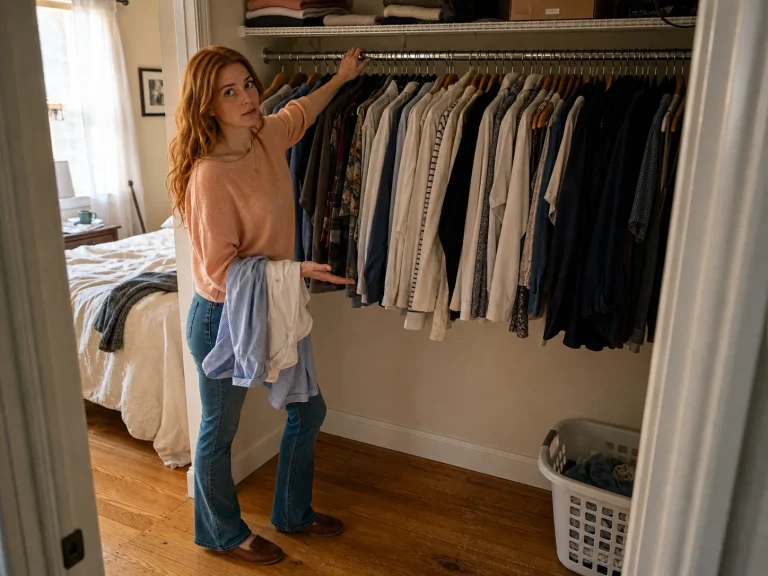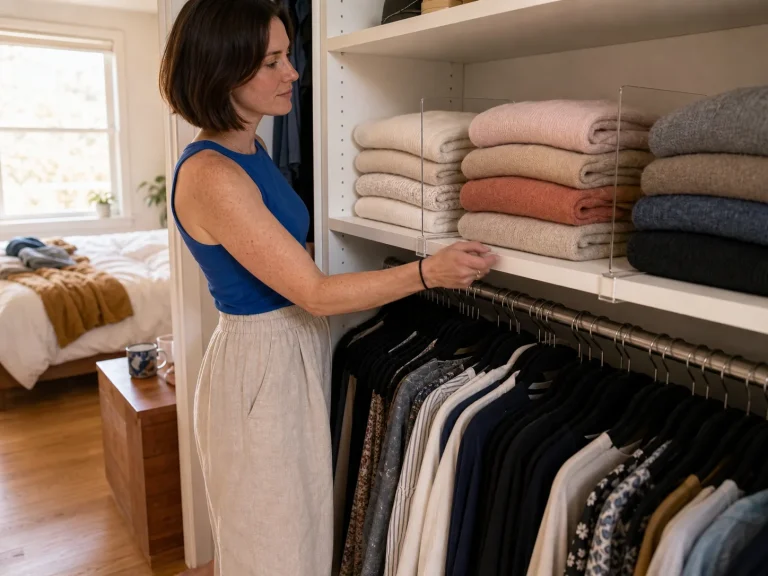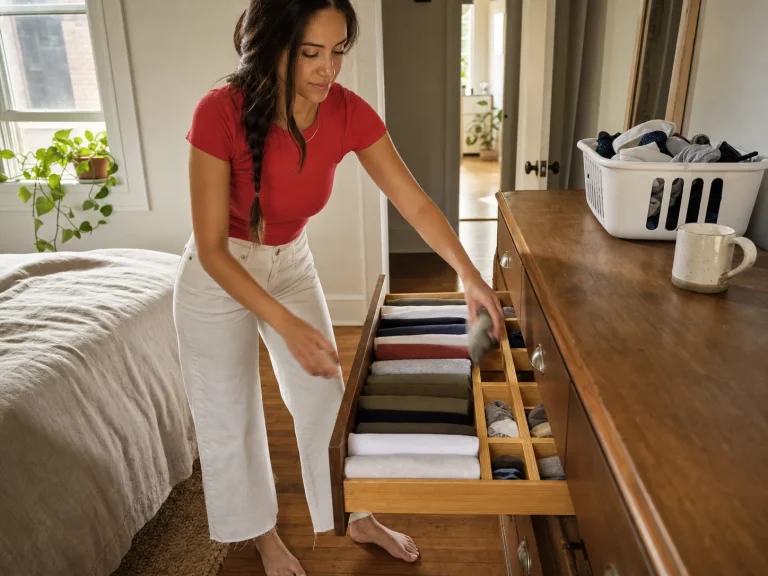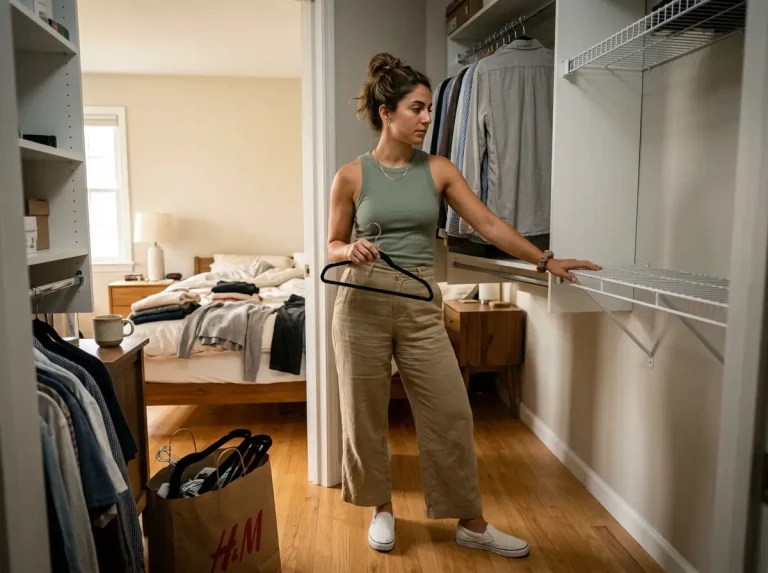
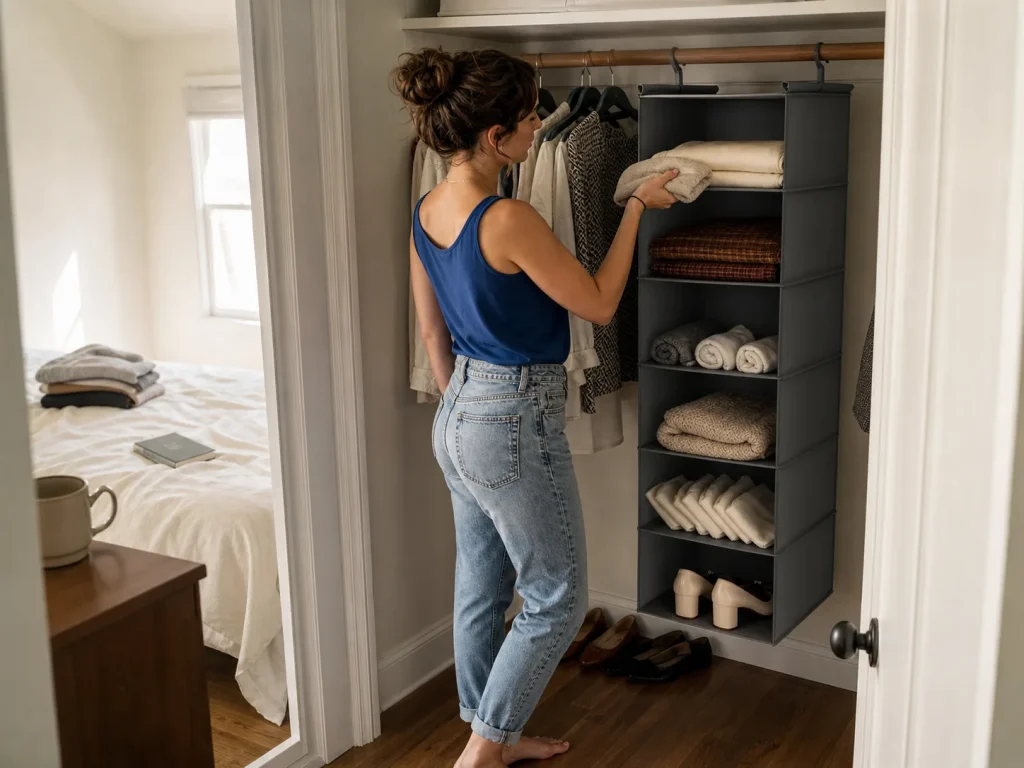
You bought the well-reviewed six-shelf organizer, hung it from the rod, and loaded it up. Week one, it looked great. By month three, the middle shelves are dipping in the center and the whole soft-sided stack leans a little to one side. It didn’t break, exactly. It crept. The story repeats across organizing threads with almost boring consistency, and the frustrating part is that it’s rarely the fabric’s fault. It’s weight math and mounting that nobody checked before buying. The best hanging closet organizers are the ones matched to your rod height, your rod type, and the actual weight you plan to put on them. Here’s how to pick one that still holds its shape past the season, plus the top picks by need.
Quick Answer
There’s no single winner, only the right pick for your closet and your load. Match the unit to the need:
- Best overall and renter-friendly: YOUDENOVA 5-Shelf
- Best budget with more tiers: MAX Houser 6-Tier
- Best for small or low closets: GRANNY SAYS 3-Shelf
- Best for accessories and heavier items: X-cosrack Wire
- Best for folded clothes with drawers: Vailando 6-Shelf
- Best for shoes: MISSLO over-door pockets
What Actually Counts as a Hanging Closet Organizer
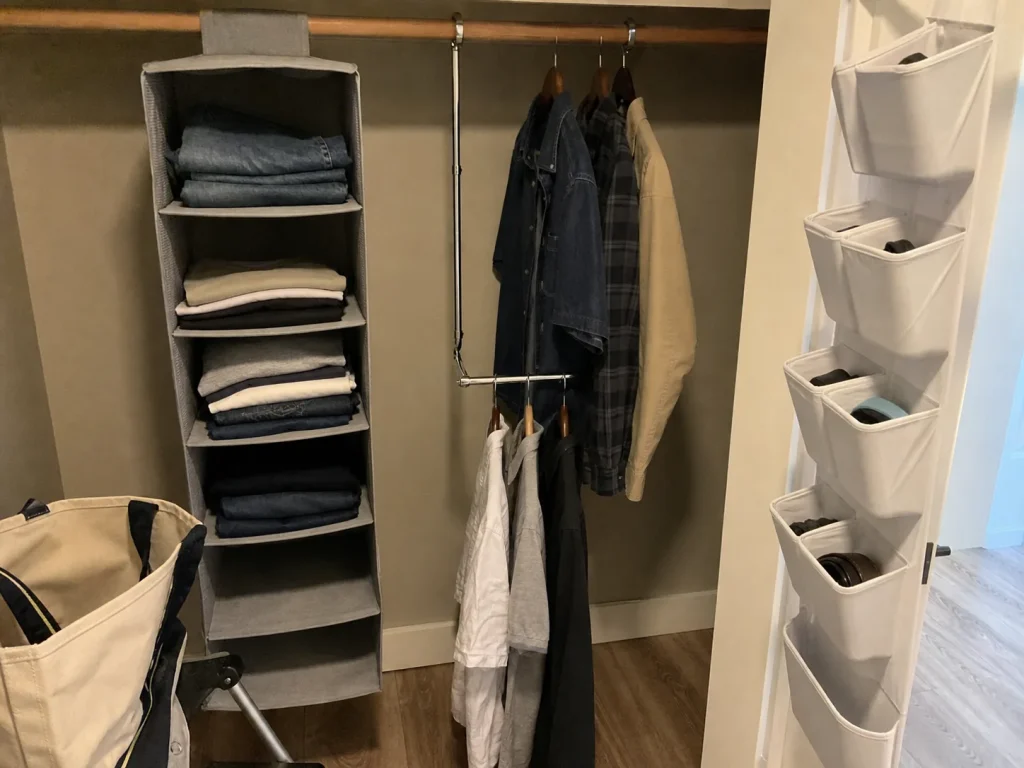
Type “hanging closet organizer” into a search bar and you get four different products back, all wearing the same name. That mix-up is where most disappointment starts. People buy a shelf tower when what they actually needed was more hanging space, then blame the tower for not fixing a problem it was never built to solve.
The fabric shelf tower (the real thing)
The core product is a soft-sided, multi-tier shelf unit that hangs from your closet rod by a velcro or strap collar. It drops down into the vertical dead space under your hanging clothes and gives you a stack of shelves for folded items: sweaters, jeans, tees, the stuff that lives better folded than hung. That’s the product this guide is about, and it’s the one that sags when you get the weight wrong.
The three products people confuse it with
The other three each do a different job. If what you actually want is more room for hanging clothes, that’s a rod doubler, not a shelf tower — it adds a second, lower rail instead of shelves. If your solid shelf’s sweater stacks keep toppling into each other, shelf dividers keep a solid shelf’s stacks upright. And if the mess is inside your dresser, you want drawer organizer inserts that live inside a dresser, not anything that hangs. There’s also the over-the-door cousin, which hangs on the door rather than the rod and skips the rod-weight question entirely (more on that later).
Which one your problem actually calls for
Run a quick gut check before you buy. Short on hanging space? Doubler. Stacks toppling on an existing shelf? Dividers. Need folded storage in the air under your clothes? That’s the shelf tower. Getting this right in the first two minutes saves you a return, and it’s worth knowing whether you need a full closet system or just one accessory before you spend anything at all.
Measure Your Closet Before You Buy
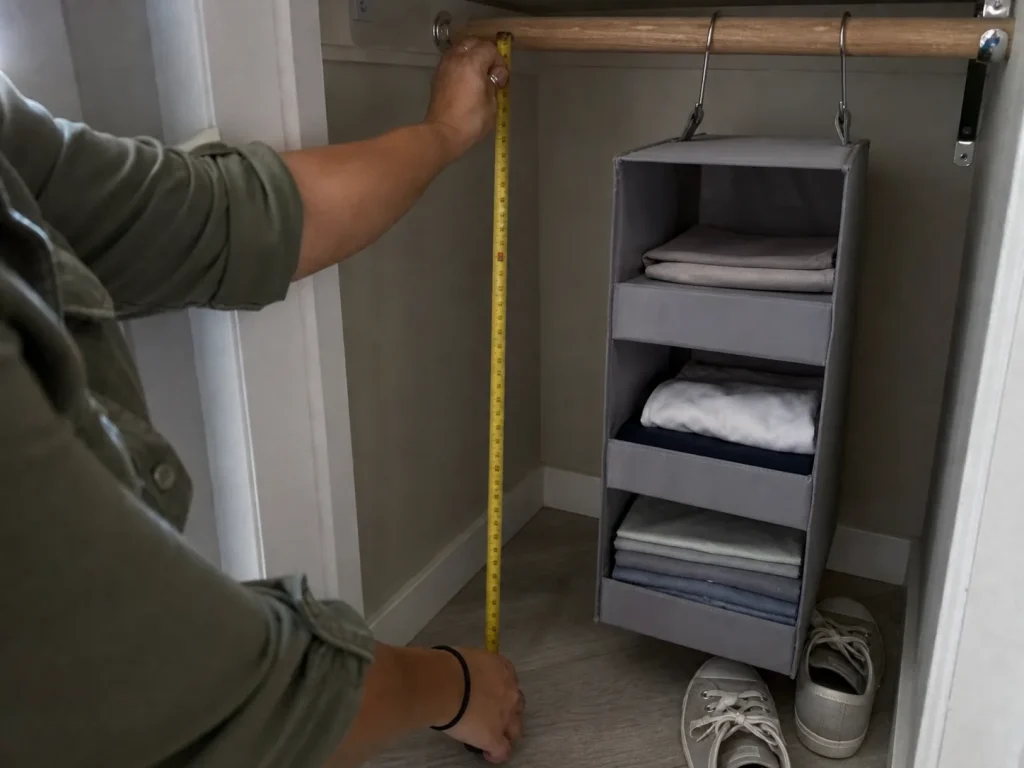
The most common return isn’t a bad product. It’s a good product in a closet that couldn’t fit it. A full six-tier unit needs more vertical room than people expect, and rental reach-in rods often sit lower than the closets these organizers were designed for. Two numbers decide whether a unit works: your rod-to-floor clearance and your rod type.
Rod-to-floor clearance caps your tier count
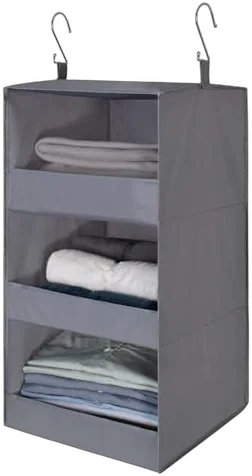
Measure from the underside of your rod straight down to the floor before you choose anything. A full five or six-tier unit generally needs around 62 inches or more of clearance to hang without pooling on the floor. A compact three-shelf unit runs closer to 29.5 inches tall. The reach-in where someone’s “best” six-tier pick ended up dragging on the carpet is a recurring disappointment in closet threads, and it’s completely avoidable. The conventional move is to buy the unit with the most shelves. In practice, the shorter unit that actually fits your clearance beats the taller one that drags, so buy the tier count that fits the room you measured, not the capacity you wish you had.
Measure your clearance tonight and write the number on your phone. When you’re staring at listings later, that one number rules out every unit that won’t physically fit, and it’s the single fastest way to shortcut a bad purchase.
For closets where the math says a tall unit won’t work, a short collapsible one is the honest answer.
Solid rod vs. tension rod changes everything
Rod type matters as much as height, and most people never think about it. A solid rod mounted into brackets has a higher load rating per foot than a hollow telescopic or spring-tension rod, and a thicker rod diameter flexes less under a loaded organizer. According to This Old House, a solid mounted rod carries more load per foot than a hollow tension rod, which means hanging a loaded organizer from the wrong kind of rod roughly doubles your sag risk. You’ll usually find out your rod is hollow the first time the whole rail tilts under the weight. Check whether yours is solid or a spring-tension tube before you load anything onto it.
Shelf width and the door-clearance trap
The last measurement is depth. Shelves on these units run roughly a foot square, which is fine until the loaded unit sticks out past your door frame and you can’t close the closet. It happens to almost everyone exactly once. Before you switch to a bulkier unit, switching to slimmer velvet hangers first can free the vertical room you’re short on and sometimes removes the need for a deep organizer entirely.
Why Hanging Organizers Sag, Bow, and Give Out
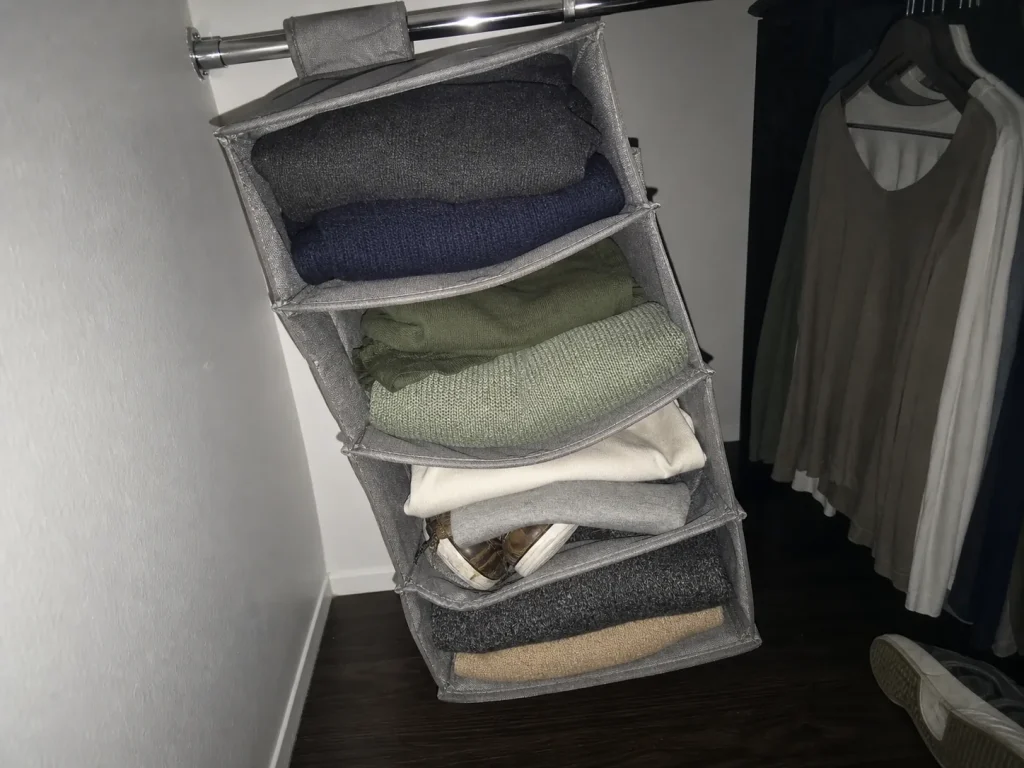
Here’s the section that actually saves you money, because it explains the failure most reviews skip. “It held for the first month” is the trap. These units almost never fail on day one. They fail slowly, through four separate mechanisms, and once you understand them you can read a product listing for durability instead of gambling on star ratings.
The weight math nobody runs
Start with your rod, not the organizer. Wall-mounted rod brackets safely hold around 35 pounds, and a rod already carrying a section of shirts plus a couple of jackets can sit at 20 to 25 pounds before you add anything. That can leave only 10 to 15 pounds of real headroom. Now the organizer: a loaded six-shelf fabric unit runs roughly 8 to 12 pounds once it’s full of folded sweaters, which is about 6 to 10 average sweaters before you hit its limit. Pile in more and you’ve quietly gone past what both the rod and the shelves were built to hold.
There’s no safety label to catch you, either. The CPSC’s clothing storage safety standard covers dressers and chests but stops short of rod-mounted shelving, so the weight capacity printed on a hanging organizer is the manufacturer’s own number, not a certified one. Treat it as a guideline, not a promise.
Mounting failure vs. product failure
A huge share of “this organizer is junk” complaints are actually installation problems in disguise. Anchors pulling out of drywall, screws that missed the studs, and no center support on a rod span wider than 48 inches drive most visible sagging. Most reach-in closets are wider than 48 inches, so if yours has only two end brackets and nothing in the middle, that’s your real point of failure. The rod moved, and the shelves just came along for the ride.
I used to assume a sagging unit meant a cheap unit. After enough “the rod pulled out of the wall” stories in organizing threads, I stopped blaming the fabric first and started checking the brackets.
Creep is why it looks fine, then doesn’t
This is the reframe that explains your month-three sag. Creep is permanent deformation under steady load, and humidity makes it worse. A shelf that never looked overloaded on any single day can slowly bow after months of constant weight, which is exactly why the “it held for the first month” test isn’t good enough. The load doesn’t have to spike for the shelf to give. It just has to sit there long enough.
Because creep is slow, catch it early. At the first sign of a shelf starting to dip in the center, redistribute the weight down to the bottom shelf. Deformation that’s caught in week two often relaxes back; deformation you ignore for two months sets permanently.
How to read a listing for durability
Now you can shop like someone who knows what breaks. Look at the top and bottom shelves specifically. Rigid board (MDF or similar) at the very top and bottom of the stack, plus sturdy side sticks, is what stops the whole tower from racking side to side. The shelves themselves are usually non-woven polyester, which is fine for light knits but has no structural rigidity on its own, so pure fabric-and-string construction leans first. And if you’re storing heavier single items like folded jeans, boots, or a handbag, a wire-basket shelf beats stretched fabric under those point-loads, because the weight rides on rigid wire instead of sagging cloth. One more warning that comes up again and again from reviewers: keep shoes off the fabric shelves. Shoes are the single item people most often cram in, and the one that breaks these units down fastest.
The Best Hanging Closet Organizers for Every Need
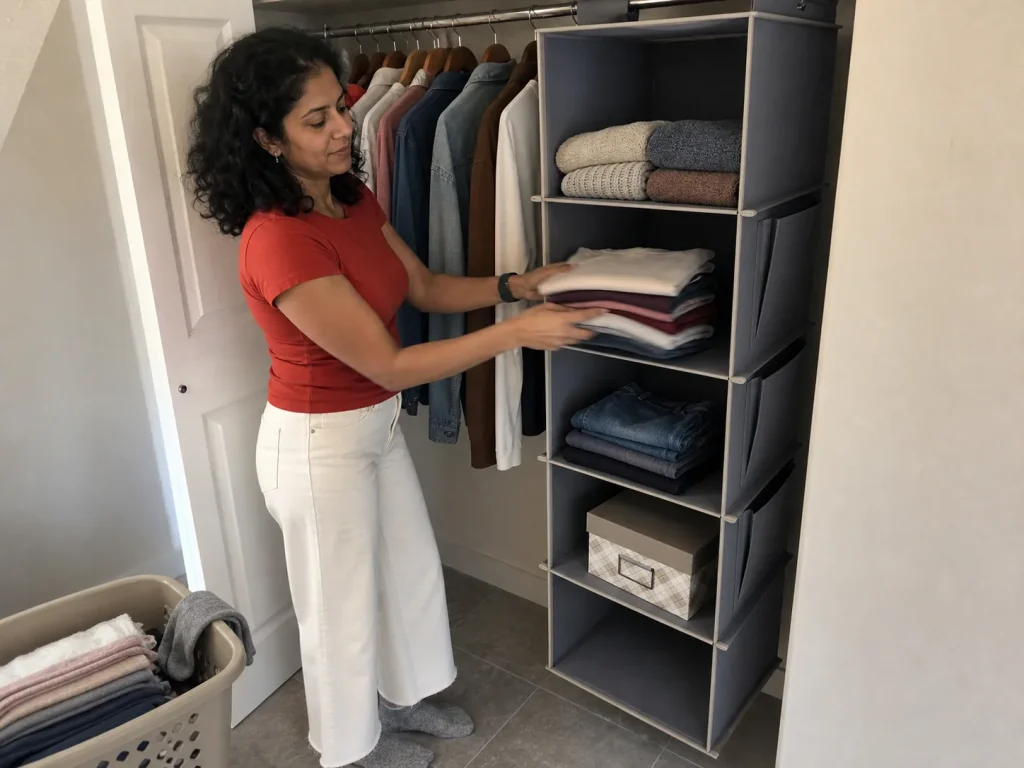
There’s no universal best. There’s the best for your clearance, your load, and whether you’re renting. Here’s the pick for each situation, with the cheaper option flagged where it genuinely does the job. Scan the table first, then read the pick that matches your closet.
| Organizer | Best For | No-Drill Renter Fit |
|---|---|---|
| YOUDENOVA 5-Shelf | Best overall, reinforced shelves | Yes |
| MAX Houser 6-Tier | Budget, most tiers | Yes |
| GRANNY SAYS 3-Shelf | Small and low closets | Yes |
| X-cosrack Wire 6-Tier | Accessories, heavier loads | Yes, check rod load |
| Vailando 6-Shelf + Drawers | Folded clothes needing drawers | Yes |
Best overall (YOUDENOVA 5-Shelf)
If you want one pick that holds its shape and works in a rental, this is it. The reason it earns the top spot ties directly back to the sag section: bamboo side-sticks plus rigid board at the top and bottom shelves resist the racking that flattens flimsier towers. It hangs no-drill from the existing rod, which is why it also earns its spot in tighter apartment closets. Just confirm your rod-to-floor clearance clears a five-shelf unit before ordering.
Best budget with more tiers (MAX Houser 6-Tier)
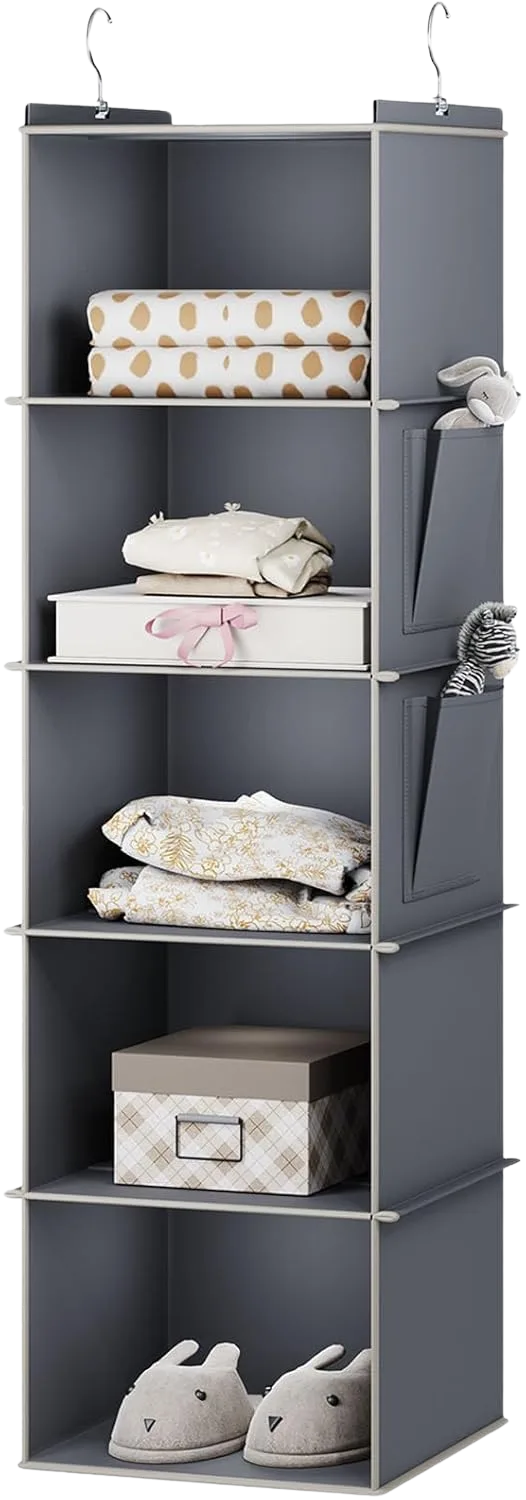
Want the most shelves for the least money? The MAX Houser gives you six tiers, folds flat for storage, and installs tool-free. It’s the “cheap combo” backbone renters keep landing on: a basic shelf tower plus slimmer hangers beats an overbuilt system for most closets. If you want to go even cheaper, the no-frills Simple Houseware 6 Shelf does roughly 80% of the same job for less; it drops the extras but keeps the six shelves. Honestly, for a first apartment where you just need folded storage off the floor, the budget version is enough.
Best for accessories and heavier loads (X-cosrack Wire)
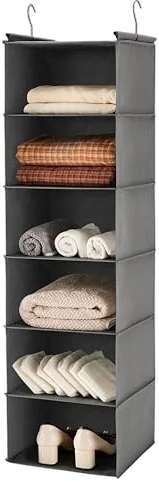
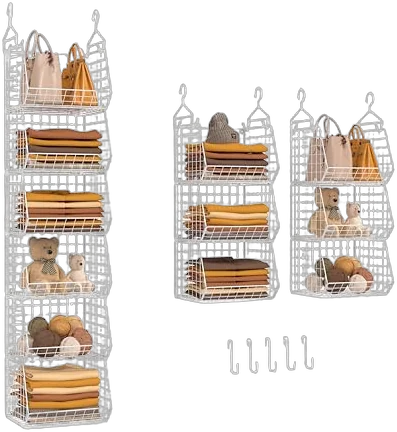
If you’re storing point-loads (folded jeans, a handbag, a stack of bags) rather than light knits, switch materials. The X-cosrack uses wire baskets instead of fabric shelves, so heavy single items ride on rigid wire rather than stretched cloth. It’s the structural answer to the sag problem from earlier. The one caveat: wire plus heavier contents means more total weight on your rod, so this is the pick where the rod-load math matters most. Check what’s already on the rail before you load it up.
Best for folded clothes that need drawers (Vailando 6-Shelf)
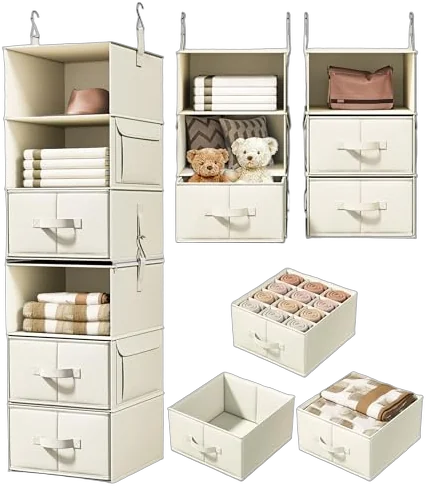
Loose piles on an open shelf create the exact point-load that starts sagging. Drawers fix that by giving small folded items (socks, underwear, workout tees) a contained home instead of a slumping stack. The Vailando pairs six shelves with three fabric drawers and splits into two three-shelf sections if you need to fit around a rod bracket. If you don’t have a dresser at all, these shelves and drawers can replace one without adding a piece of furniture to the room.
Best for shoes (MISSLO over-door)
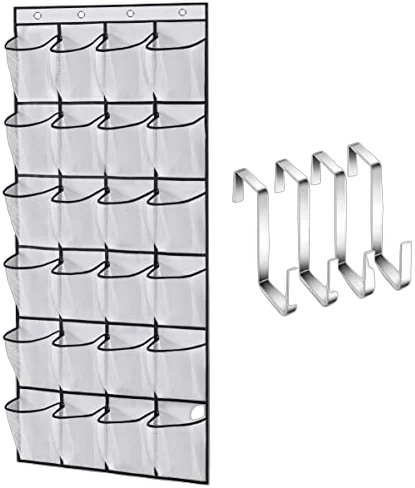
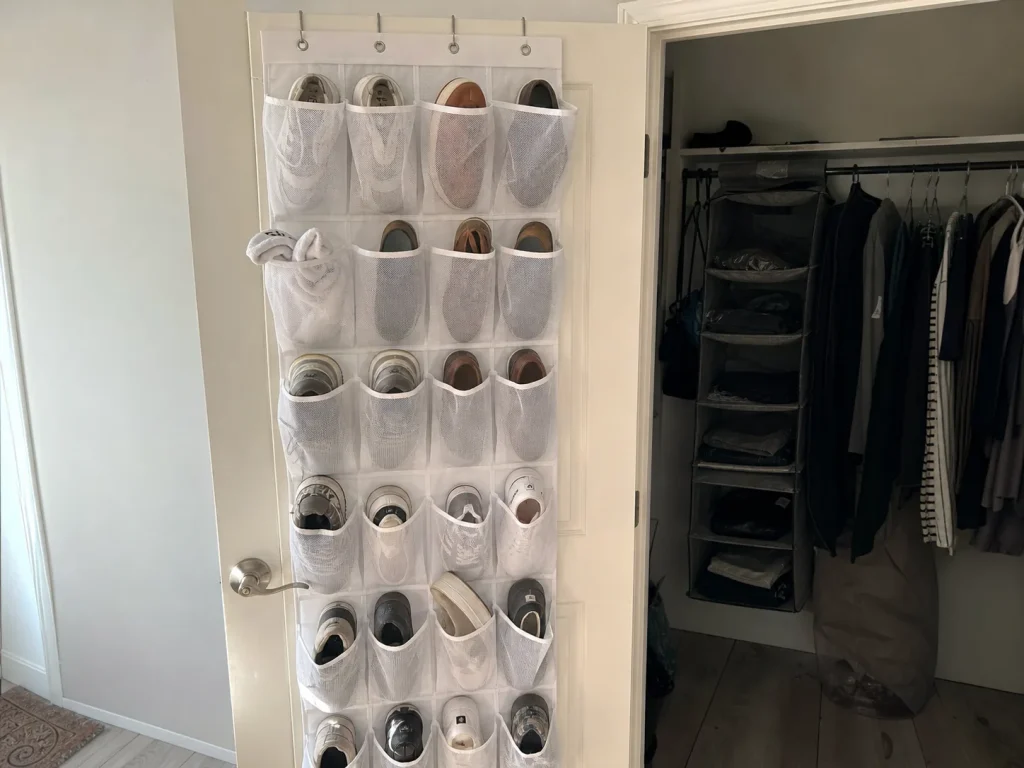
Whatever you do, don’t put shoes on the fabric shelves. It’s the fastest way to break a unit down, and it’s the mistake reviewers flag most. Give shoes their own home on the door instead. The MISSLO hangs over the top of the door on mesh pockets, so the load goes to the door edge, not your rod, and your folded-clothes shelves stay light and flat. It’s the cleanest split: clothes on the rod unit, shoes on the door.
The No-Drill Move for Renters
The whole appeal of a hanging organizer for renters is that it needs zero hardware. The strap collar wraps your existing rod, nothing gets mounted, nothing gets a hole. That makes it some of the safest deposit-friendly storage you can add, and it’s a big reason these units stay popular in rentals where the walls are off-limits.
Why these are inherently deposit-safe
Nothing here touches the wall. You’re borrowing space that already exists (the dead air under your hanging clothes) with a unit that comes off in seconds when you move. Compare that to a mounted system and the appeal is obvious for anyone whose lease says no drilling. If you want the whole no-drill closet format rather than just one piece, that’s a broader closet system for renters, but for most people a single hanging unit covers the need.
The over-door escape hatch for weight-nervous rods
If your rod is already near capacity, or you just don’t trust it, move the load to the door. An over-door organizer hangs on the door hinge and frame, which sidesteps the rod-weight math from earlier entirely. It’s the honest workaround when you’ve done the math and the headroom isn’t there. You trade a rod-capacity worry for a door-clearance one, and for a lot of closets that’s a good trade.
The three-part renter kit
The setup that keeps coming up in no-drill threads is a three-piece combo: a hanging shelf unit for folded clothes, a rod doubler for more hanging space, and an over-door organizer for shoes or accessories. None of the three drills or damages anything, and together they cover most of what a built-in system would, at a fraction of the commitment. The full no-drill setup that won’t cost your deposit walks through how the pieces fit. One more trick: a cubby-style hanging unit can double as a rail divider in a shared closet, splitting one rod between two people with no hardware at all. If you own your place and want maximum capacity, a mounted system still wins, but for renters this gives most of the payoff with none of the risk.
Keeping It Sag-Free Past Month Three
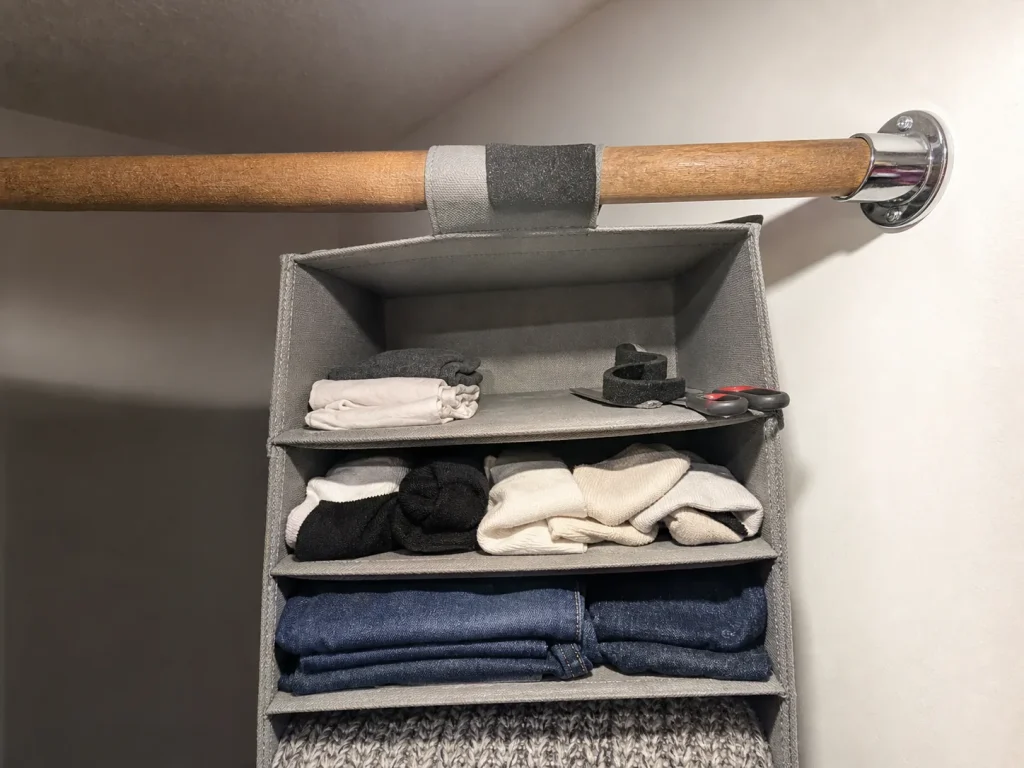
Buying the right unit is only half the job. Whether it’s still holding its shape at the season change comes down to a few habits that never make it into the product listing. This is the three-month test in practice: a good pick is only good if it still works in three months of normal use. None of them take more than a minute.
Load order and weight distribution
Put the heaviest items on the bottom shelves and the lightest on top. It lowers the center of gravity and cuts the racking that pulls a tower sideways. Keep shoes off the fabric entirely and route them to the door unit, which is the single biggest move for longevity. And add a strip of felt or foam tape (or a set of non-slip pads) where the collar wraps the rod, so the unit can’t creep sideways and abrade the rod over time.
When a fabric shelf gets grubby, spot clean it in place with a damp cloth rather than pulling the whole unit down to hand wash it. Most non-woven shelves lose their shape once soaked, so the gentler you are with water, the longer the unit holds its structure.
The month-three check
Set a reminder for the next season change and look at the shelves. If any shelf has started to dip in the center, redistribute the weight down before the deformation sets in permanently, because that early bow is creep starting. While you’re in there, recheck the rod brackets, and on a wide span add a center support if there isn’t one. Most “the organizer failed” stories are really the rod moving, so a two-minute bracket check is worth more than any upgrade to the organizer itself.
Conclusion
Three things carry the whole decision. Measure your rod-to-floor clearance and check your rod type before you even look at tier count, because the wrong number turns the “best” pick into a floor-dragging return. Durability lives in the top and bottom rigid shelves and in the mounting, not in the brand name. And renters get most of the payoff with none of the holes, especially when they move heavy items and shoes off the fabric.
At the next season change, look for any shelf starting to bow and redistribute the weight before creep locks it in. That one habit adds months to any unit you buy. Start by measuring your rod-to-floor clearance tonight. That single number rules out half the mistakes before you spend a dollar.
Frequently Asked Questions
01How much weight can a closet rod hold before a hanging organizer is too much?
Wall-mounted rod brackets safely hold around 35 pounds, and a rod already full of shirts and a couple of jackets can sit at 20 to 25 pounds. That often leaves only 10 to 15 pounds of real headroom, so check what’s already on the rod before adding a loaded organizer.
02Can hanging closet organizers work in a small or narrow reach-in closet?
Yes, but match the tier count to your clearance. A full six-tier unit needs roughly 62 inches or more of rod-to-floor room, while a compact 3-shelf unit is about 29.5 inches tall and fits low rental rods. Measure before you buy.
03What’s the difference between a hanging shelf organizer and a closet rod doubler?
A hanging shelf organizer adds folded-storage shelves in the space under your clothes; a rod doubler adds a second hanging rail for more hanging clothes. If you’re short on hanging space, you want the doubler. Different product, different job.
04Do hanging closet organizers damage the closet rod?
The organizer itself doesn’t, since its strap collar just wraps the rod. Damage comes from overloading a rod whose brackets aren’t anchored into studs or that lacks a center support on a wide span. Adding felt tape where the collar sits also prevents abrasion.
05How do you keep a fabric hanging organizer from sagging?
Load heavy items low, keep shoes off the fabric shelves, and pick a unit with rigid board at the top and bottom shelf. Sag is usually creep, a slow deformation under steady weight, so redistribute weight at the first sign of bowing before it sets permanently.
Disclaimer: ClutterlessNest is a participant in the Amazon Services LLC Associates Program. As an Amazon Associate we earn from qualifying purchases. This article may contain affiliate links — if you buy through them, we may earn a small commission at no extra cost to you. We only recommend products we have tested or genuinely believe in.