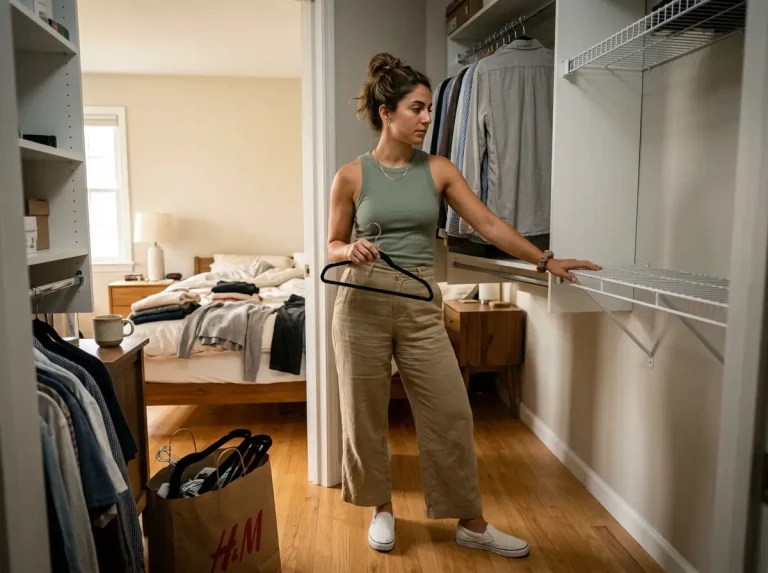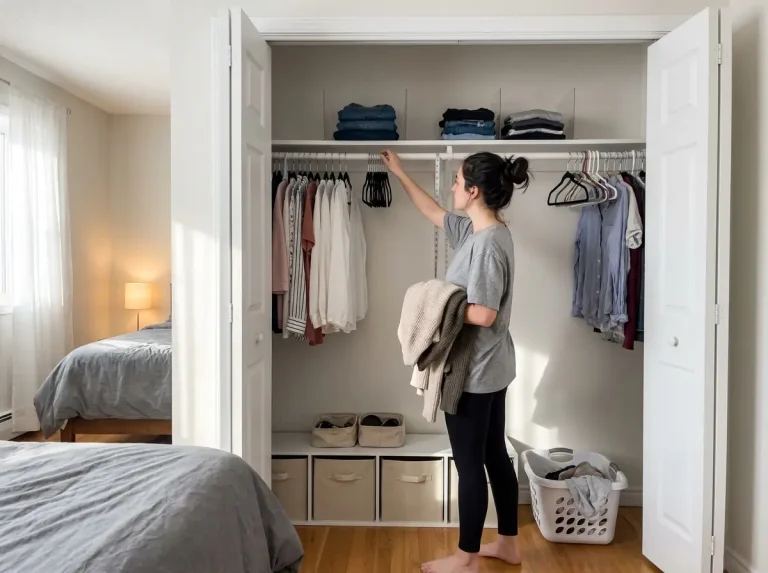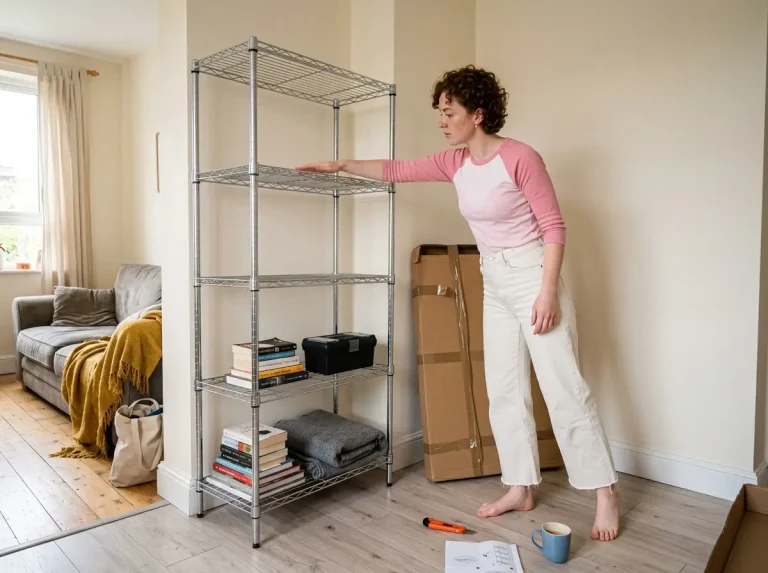

Your closet has one bent rod, one warped shelf, and a lease that says no holes in the walls. Every “closet system” you find online seems to assume a drill and a wall you actually own. The good news is that the best closet systems for renters skip the drill entirely, and the honest news is that “no-drill” isn’t one product. It’s three different formats, and each one fails in its own way if you pick wrong. This guide sorts out which format your specific closet can take, the pick that holds up in each, and the part every roundup skips: what happens on move-out day, when you find out whether “renter-friendly” was ever true. If you’re still deciding whether you need a full system at all, start with whether a few accessories would fix your closet instead.
Quick Answer
No-drill closet systems come in three formats. Match yours to your closet before you match it to your taste:
- Tension-rod systems work on smooth, solid ceilings with lighter loads. Cheapest and fully reversible.
- Freestanding units stand on any floor, fully portable, never touching the wall. The safest bet.
- Floor-mounted towers suit standard-height reach-ins. The most storage, but they need a wide, low base for stability.
The Three No-Drill Formats and How to Tell Which Your Closet Takes
Here’s the buying mistake that plays out over and over in renter threads: someone orders the tall floor-mounted tower because it holds the most, gets it home, and discovers it either blocks the sliding door or won’t clear a low ceiling. The tower goes back. The weekend is gone. The question that would have prevented all of it, which format can my closet physically support, is the one nobody asks first.
There are three no-drill formats, and it helps to picture how each one stays up. A tension-rod system wedges itself in place with pressure, either floor-to-ceiling or wall-to-wall, held by friction alone. A freestanding unit stands on its own feet and touches nothing but the floor. A floor-mounted tower rests on the floor and leans lightly against the wall without a single fastener. All three are genuinely renter-safe. They just fit different closets.
Measure Three Numbers Before You Buy Anything
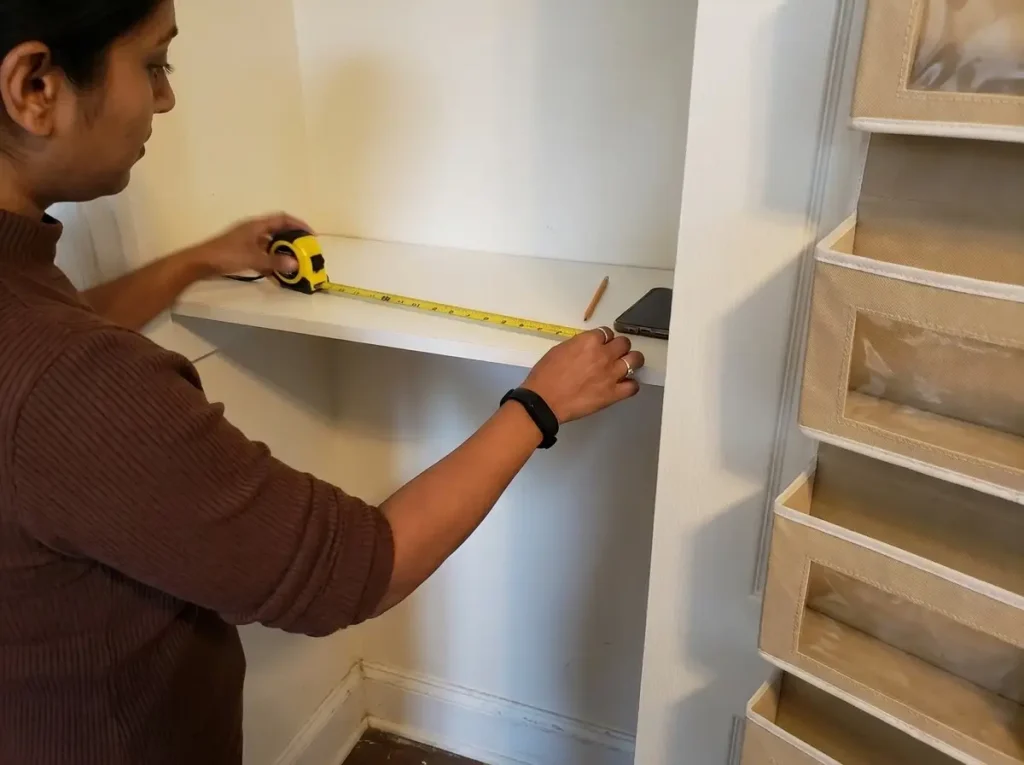
Before you fall for any product photo, measure three things: depth, width, and ceiling height. A standard reach-in closet runs about 24 inches deep, but plenty of rentals come in shallower, closer to 20 inches, which is exactly the depth where a system marketed for a “walk-in width” starts jutting past the door frame. Width usually falls between 36 and 96 inches, with around 72 inches (6 feet) being the size manufacturers treat as default. Ceiling height is typically 84 to 96 inches, which matters the moment you consider a tall floor tower.
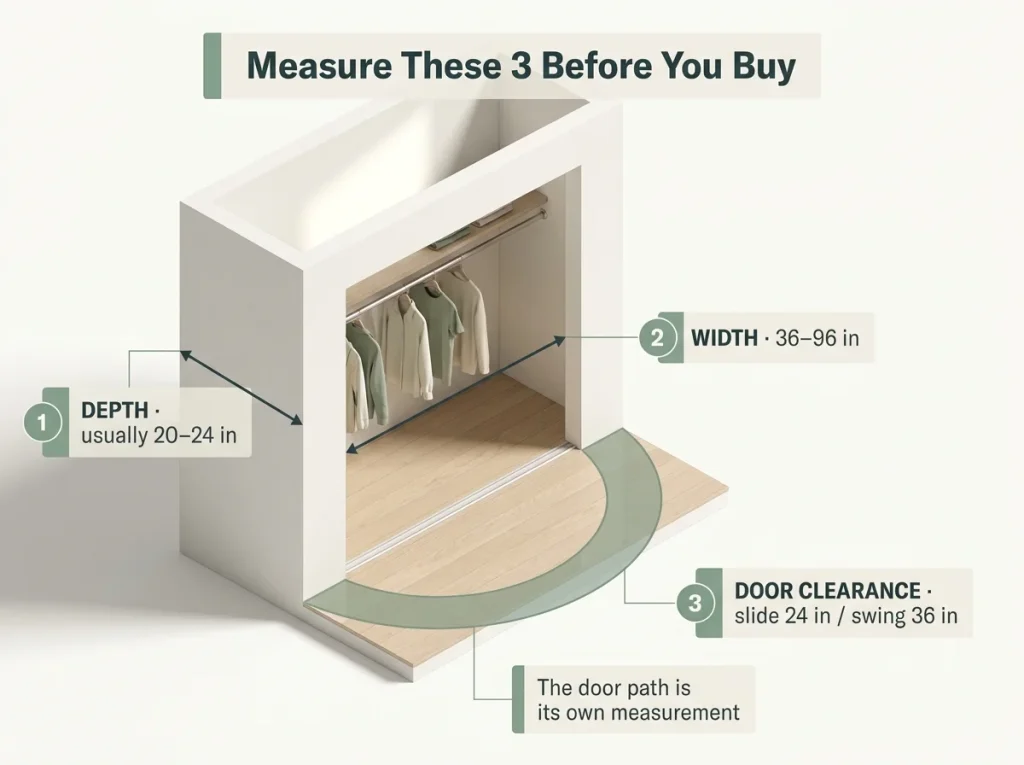
Write those three numbers down before you shop, not after. Eyeballing closet depth is how you end up returning a unit that looked perfect on the page and overhangs your door in real life.
The Door Clearance Everyone Forgets
The measurement almost nobody takes is the door path. A sliding closet door needs roughly 24 inches of clearance in front of the interior to run properly, and a swing door needs about 36 inches to open. A floor tower can fit the closet cavity perfectly and still jam the door because it eats into that clearance zone. Measure the swing or slide path as its own number, not just the space between the walls.
Tape a paper outline of the unit’s footprint to your closet floor before ordering. Open and close the door over it. If the door catches the paper, it’ll catch the real thing.
When No Full System Fits
Some closets are too shallow, too narrow, or too oddly shaped for any of the three formats to work cleanly. That’s not a dead end. A no-drill over-door organizer supplements whatever you do fit inside, and in a really tight closet it can carry the overflow on its own. The SimpleHouseware Crystal Clear Over-the-Door Hanging Closet Organizer hangs on a standard door with clear pockets you can actually see into, and it comes off without a mark when you leave. It won’t replace a hanging system for a full wardrobe, but it buys back the dead space on the back of the door. For the closet itself, reach-in closets waste half their space precisely because renters never reclaim that vertical and door-mounted zone.
If you do own your place and can drill, the math changes and permanent wall-mounted shelving becomes the stronger option. This guide assumes you can’t, or won’t.
Tension-Rod Systems — Cheapest to Install, Easiest to Get Wrong
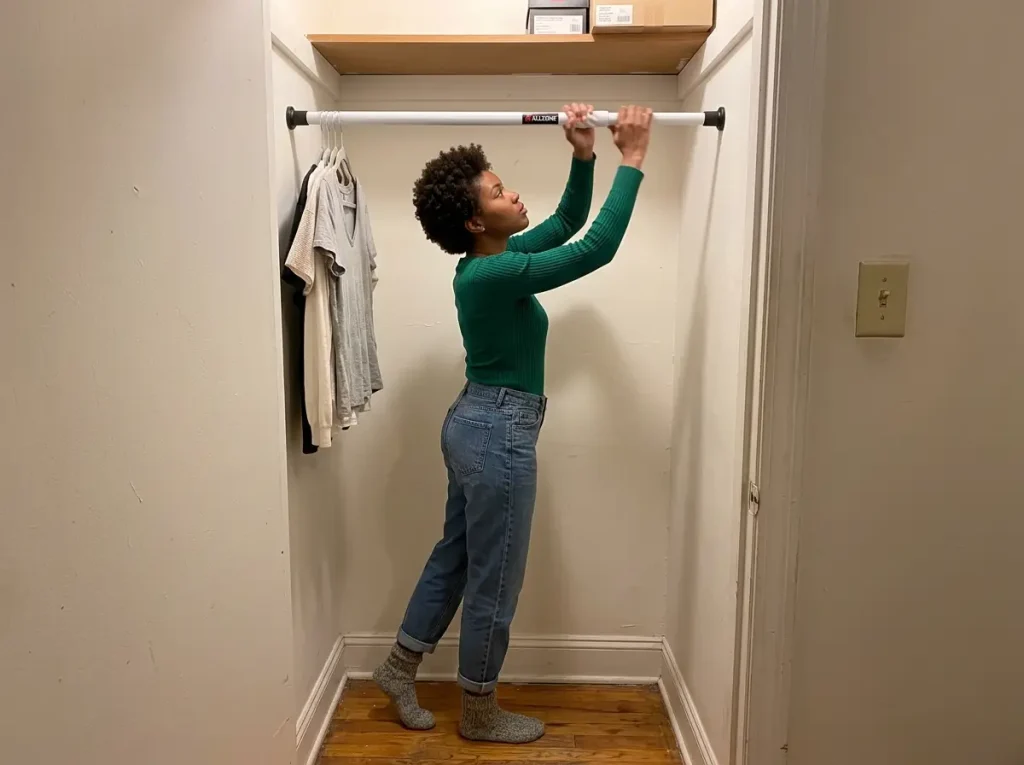
Tension rods are the format renters reach for first, and for good reason: they’re the cheapest, they go up in minutes, and they truly leave nothing behind. They’re also the format most likely to end up as a heap of clothes on the closet floor at 2 a.m. if you ignore one detail. I used to point renters straight at tension systems as the default answer. After enough slippage stories piled up in organizing threads, I stopped leading with them and started leading with the ceiling.
How Tension Rods Actually Hold (And Let Go)
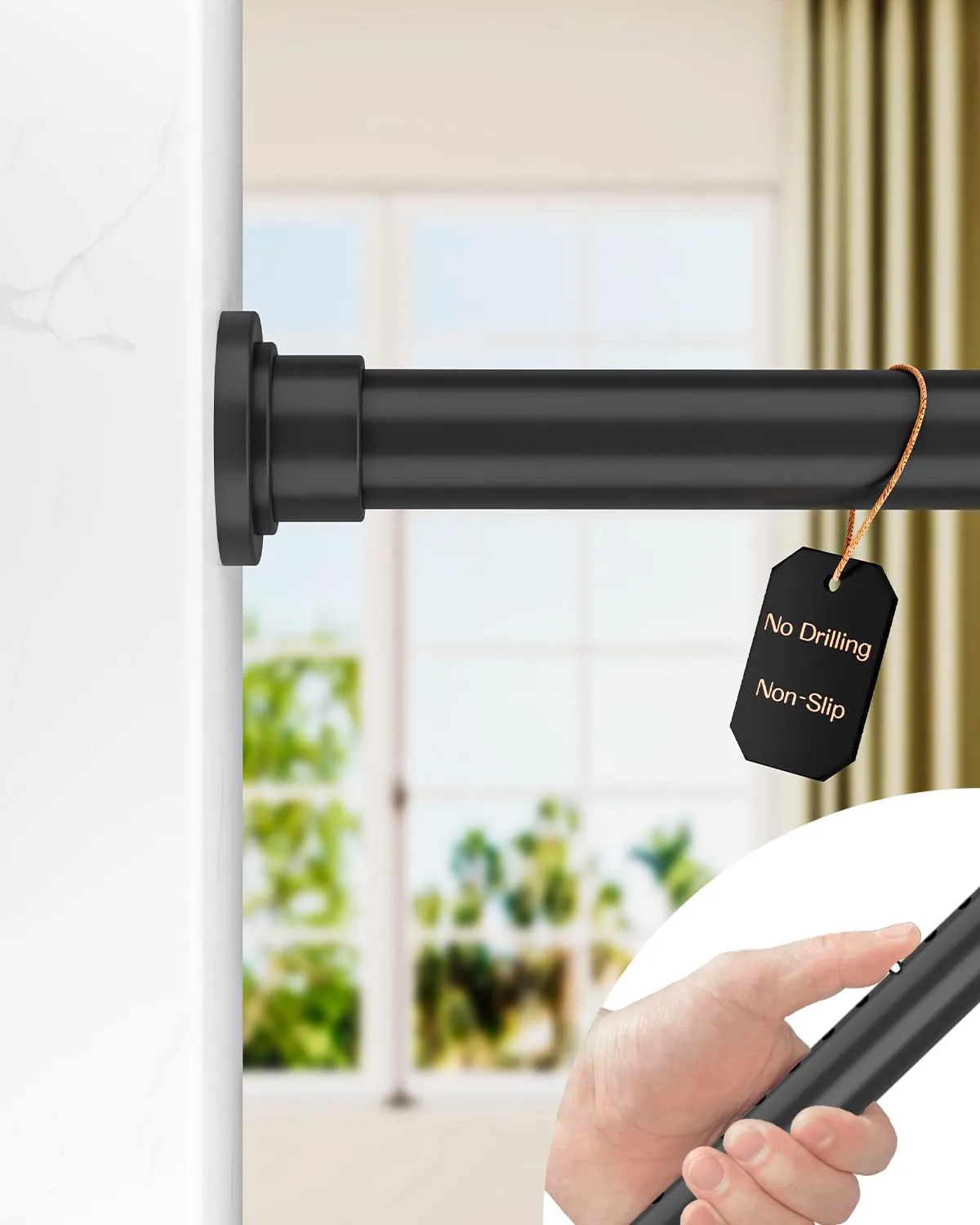
A tension rod holds by friction. Rubberized end caps press against two surfaces, and that pressure is the entire mounting system. No fastener is why it leaves no mark, and it’s also why it can quietly give up. The grip is strong on smooth painted drywall less than about five years old. It’s weak on popcorn ceilings and acoustic tile, where the textured surface never lets the cap seat fully. This is the piece competitors skip: the format doesn’t depend on your walls, it depends on your ceiling surface. Check what you’re pressing against before you buy.
The most repeated failure in renter threads is the rod that felt rock-solid on move-in day and crept down a few inches over the following weeks. It didn’t fail suddenly. The friction slowly lost the fight with gravity and the weight of a loaded rod. Treat a tension system as a monthly re-check, not a one-time install.
Load a tension rod with a few light items first and leave it 48 hours before you trust it with a full wardrobe. If it hasn’t moved, you’re clear. If it has, reposition it now, not after it dumps your coats.
What to Hang and What to Keep Off
Closet-rated tension rods commonly list capacities around 100 pounds, and that number sets people up to fail. Listed capacity is a ceiling, not a target. A friction mount is not a bolted one, so the safe real-world load for hanging clothes sits well below the sticker. Keep tension rods for lighter loads, folded knits, off-season pieces, a row of shirts, and split the heavy winter coats onto a lower freestanding rod or a shelf instead. For a short closet with a smooth, solid ceiling, though, a single quality rod is the entire system you need. No tools, pocket change, done.
Freestanding Units — The One Format That’s Structurally Renter-Proof
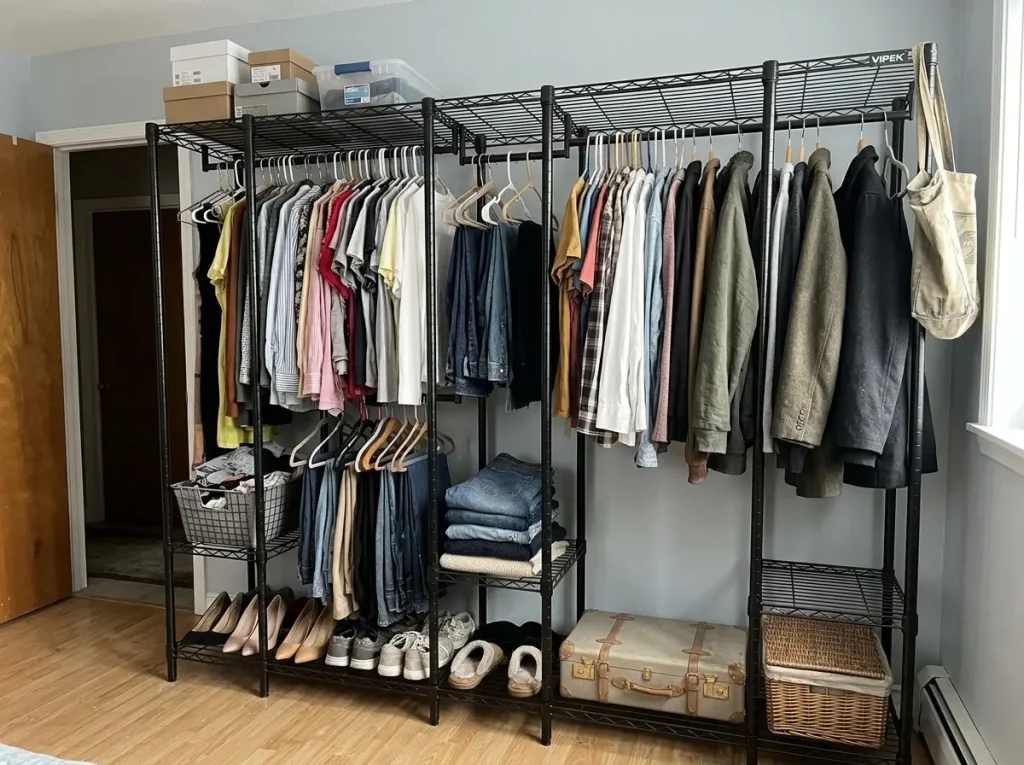
If you want to buy once and carry it through the next three apartments, start here. Freestanding is the only format where “renter-friendly” isn’t a marketing line. The unit never touches the wall, never needs a fastener, and disassembles into a box when you move. There’s nothing to patch, nothing to slip, and nothing a landlord can dock you for.
Why Freestanding Is the Safe Default
The whole appeal is structural. A freestanding steel unit stands on its own feet, so there’s no ceiling texture to worry about and no wall anchor you’re not allowed to install. That independence also makes it the format that handles real weight. A loaded coat section is exactly what a heavy-duty steel frame is built for, where a tension rod would sag and slip. Most of these units go up with tool-free assembly, so setup and teardown stay simple. The VIPEK V50 Closet Organizer System is the buy-once pick in this category, a wide carbon-steel frame with multiple rods and shelves that takes a full hanging load without leaning on anything. It’s heavier to build than a tension rod, and it claims floor space rather than hovering above it, so measure your footprint first.
If the VIPEK is more system than you need, the Amazon Basics Expandable Metal Hanging Closet Organizer System does about 80 percent of the job for less and lies nearly flush to the wall. It’s the option other renter roundups keep naming for a reason: it expands to your closet width and installs with zero hardware. It won’t take the punishment a heavier steel frame will, so it’s better for a normal wardrobe than a packed one.
Matching the Unit to Your Closet and Your Load
The specs that matter for freestanding are width and weight capacity. Match the unit’s width to your closet so it doesn’t overhang the door line, and be honest about how much you actually hang. A wide, low unit is also more stable than a tall, narrow one, which comes back around in the next section. If your storage needs shift from apartment to apartment, the Rubbermaid Configurations Custom Metal Closet System uses modular metal pieces and teardrop hanger rods that you can reconfigure to a different closet each time you move, which is a genuinely useful trait for someone who relocates often.
What you load onto the rods matters more than most people expect. The hangers you choose can add or erase inches of usable rod space, and on a freestanding unit where width is finite, that space is the whole game.
Assemble a freestanding unit outside the closet, then walk it in. Building it inside a tight reach-in means fighting the walls the whole way, and you can’t check that it’s square until it’s already wedged in place.
Floor-Mounted Towers — Most Storage, One Real Safety Catch
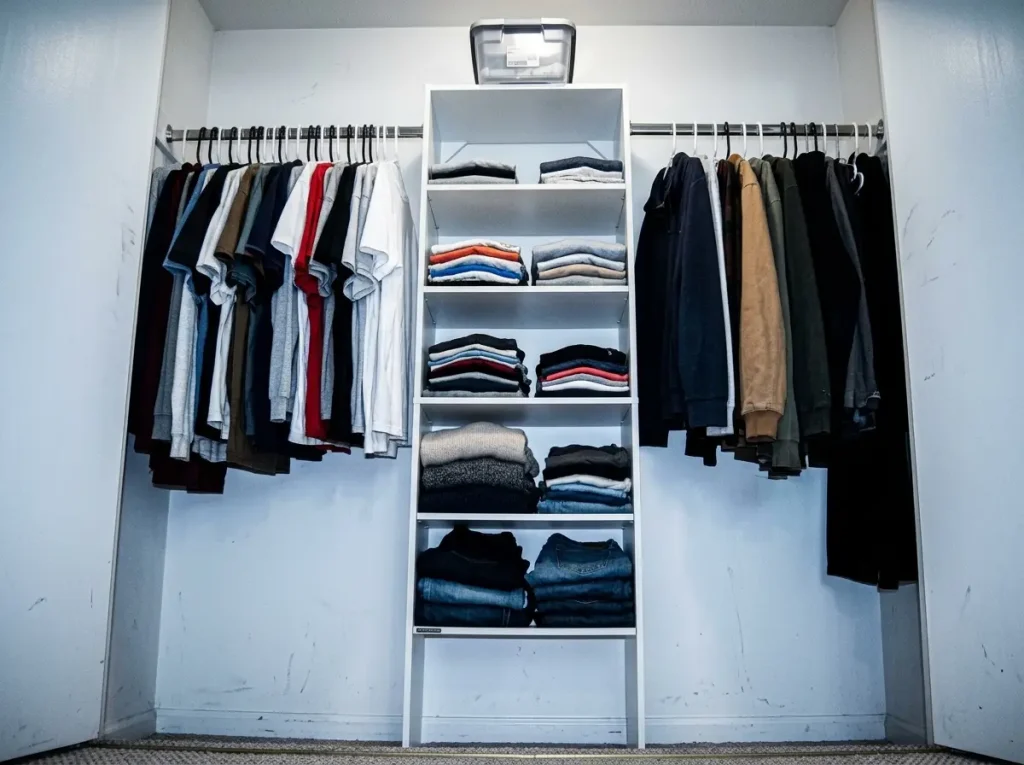
Floor-mounted kits get you the closest thing to a built-in closet without a single hole: stacked shelves, hanging rods, sometimes drawers, all in one structure that rests on the floor and leans lightly on the wall. Floor towers get called the renter upgrade everywhere. And they are, unless your ceiling is low or your floor slopes, in which case they turn into a problem the roundups never warn you about.
The Tip-Over Risk You Can’t Anchor Away
Here’s the catch nobody mentions. A tall tower loaded with clothes is top-heavy, and the standard fix for that is an anti-tip strap screwed into a wall stud. As a renter who can’t drill, you don’t get that fix. This isn’t a fringe worry. Tip-over of tall clothing-storage furniture is serious enough that it’s federally regulated, and the CPSC’s mandatory tip-over stability standard for clothing storage furniture exists precisely because these units fall on people, children especially.
So the renter fix isn’t hardware, it’s geometry. Choose a wide, low-profile tower over a tall, narrow one, because a broad base is self-stabilizing without an anchor. Keep the heaviest items on the lowest shelves to drop the center of gravity, and never let a kid treat it like a ladder. The same tip-over math applies to any tall freestanding shelving, so it’s worth internalizing once. Real-world reports add one more failure: towers wobble on uneven old-building floors or thin carpet over concrete, so level the base before you load it.
Wire, Laminate, or Wood
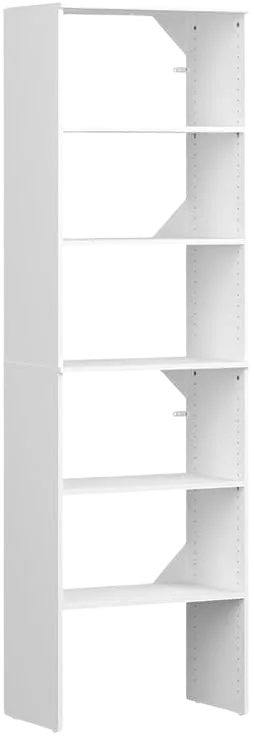
Floor-mounted towers come in three material tiers, and the right one depends on your closet more than your taste. For a shallow or narrow closet that a fixed-width tower won’t fit, the ClosetMaid ShelfTrack Adjustable Wire Closet System is the budget answer, because the wire shelves adjust to widths a rigid tower can’t handle. If you want the built-in look and have the space, the ClosetMaid SuiteSymphony Wood Closet Organizer Kit is a two-piece stacking engineered-wood tower that reads more like furniture than a rack, at a step up in price.
The Move-Out Reality Check Nobody Runs
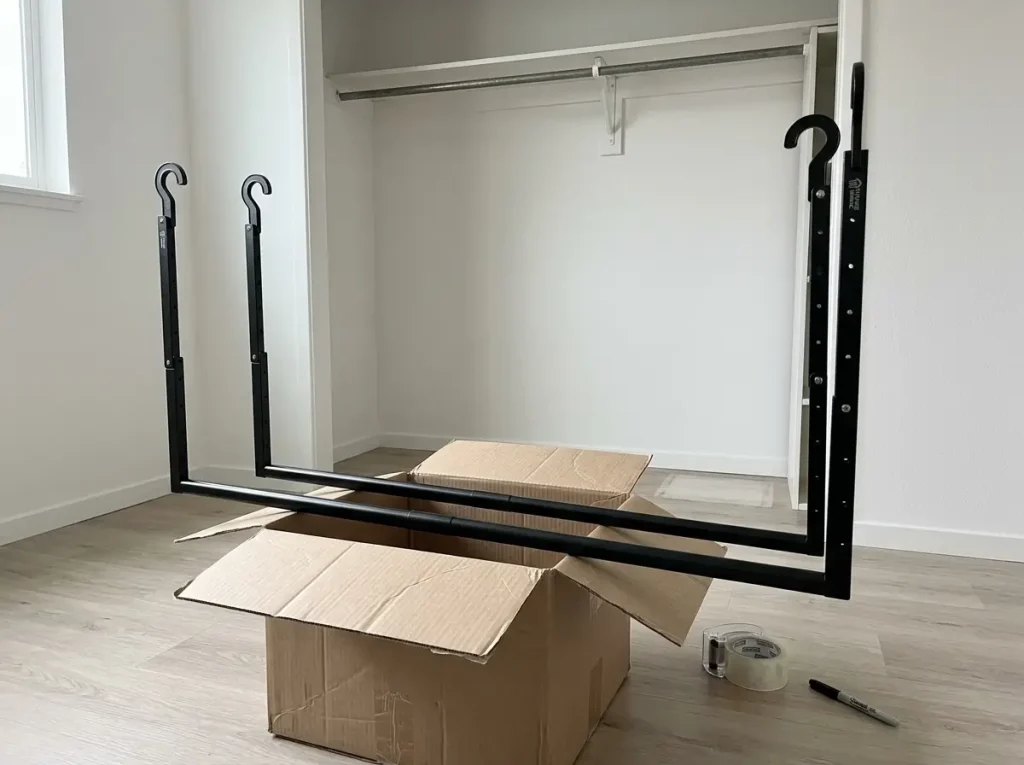
The whole reason you went no-drill was to protect your security deposit. So the real test of a closet system isn’t install day. It’s the twenty minutes on move-out day when you take it apart and find out whether “renter-proof” was ever true. This is the part every roundup skips, and it’s the part that decides whether the system cost you money or saved it.
How Each Format Comes Down
Each format leaves a different trace, and knowing them ahead of time is how you avoid a surprise at the walkthrough. A freestanding unit disassembles with zero wall contact, so there’s nothing to patch and nothing to explain. A floor-mounted tower leaves no holes either, but check the carpet under its feet, because months of load can press a visible indentation into the pile that you’ll want to fluff back before inspection. A tension rod comes down in under a minute, but if it’s been pressed against a textured ceiling for months, it can leave a faint compression ring or a paint-adhesion mark, so wipe-check the spot before your landlord does.
That’s the “renter-proof” test people use in threads: zero marks, zero tools. If a system fails either half, it isn’t renter-proof no matter what the box promised. The full no-drill playbook for keeping your deposit goes even further on protecting every surface a system touches.
Snap a photo of the empty closet the day you move in, before anything goes up. If a system leaves a faint mark later, the move-in photo is your proof it was already spotless, and it settles a deposit dispute fast.
What’s Worth Taking to the Next Place
The pieces that pay for themselves are the portable accessories, because they travel across moves while the closet stays behind. A rod doubler and a set of shelf dividers will outlast two or three apartments, which is the quiet reason renters who buy accessories instead of built-ins come out ahead. The STORAGE MANIAC Adjustable Closet Double Rod clips on to double your hanging space and lifts right back off with no marks, and the HBlife Acrylic Shelf Dividers slide onto any shelf to keep stacks upright, then come with you when you leave. Neither is glamorous, and both keep working in the next closet. And the cheapest move-out win of all is usually something you already own: a level base, a quick wipe-down, and half an hour of care.
Conclusion
Match the format to your closet before you match it to your taste. Measure depth, width, ceiling height, and the door path, then pick the one format your closet can actually take: freestanding for the safest, most portable bet, tension for the cheapest reversible setup on a solid ceiling, or a floor-mounted tower for the most storage on a wide, low base. Whichever you choose, the move-out test is the one that counts, and it’s the same two words every time: zero marks, zero tools.
Re-check your tension-rod grip and your tower’s base level after three months of real load. That’s exactly when slippage and wobble show up, and catching them early is the difference between a quick adjustment and a pile on the floor.
Measure your closet tonight and pick the one format it can take. One rod and one shelf done right beats a full system that doesn’t fit.
Frequently Asked Questions
01Can you install a closet system without damaging the walls?
Yes. Freestanding units and floor-mounted towers never touch the wall with a fastener, and tension-rod systems hold by friction, so all three are genuinely no-drill. Freestanding is the surest bet because it stands entirely on its own feet.
02How much weight can a freestanding closet system hold?
Steel freestanding units handle a full hanging load, which is why they’re the pick for a closet packed with coats and jeans. Match the unit’s rated capacity to how much you actually hang, and keep the heaviest items on the lower shelves.
03Are tension-rod closet systems sturdy enough for hanging clothes?
For lighter loads on a smooth, solid ceiling, yes. Grip weakens on popcorn or acoustic-tile ceilings and drops over time, so treat the listed capacity as a ceiling, not a target, and re-check the tension monthly.
04How do you remove a closet organizer when you move out?
Freestanding and floor-mounted units disassemble in about twenty minutes with no holes to patch, and tension rods come down in under a minute. Check floor towers for carpet indentations and tension rods for a faint ceiling mark before your walkthrough.
05What’s the best closet system for a small rental closet?
For a shallow or narrow reach-in, an adjustable wire system or a tension-rod setup beats a fixed-width floor tower that won’t fit. Measure your depth and width first, since many rental closets are shallower than the 24 inches most kits assume.
Disclaimer: ClutterlessNest is a participant in the Amazon Services LLC Associates Program. As an Amazon Associate we earn from qualifying purchases. This article may contain affiliate links — if you buy through them, we may earn a small commission at no extra cost to you. We only recommend products we have tested or genuinely believe in.