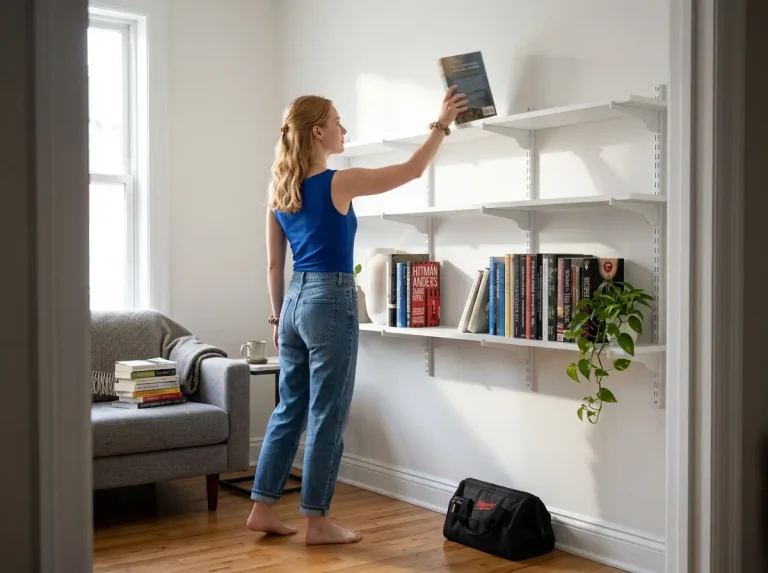
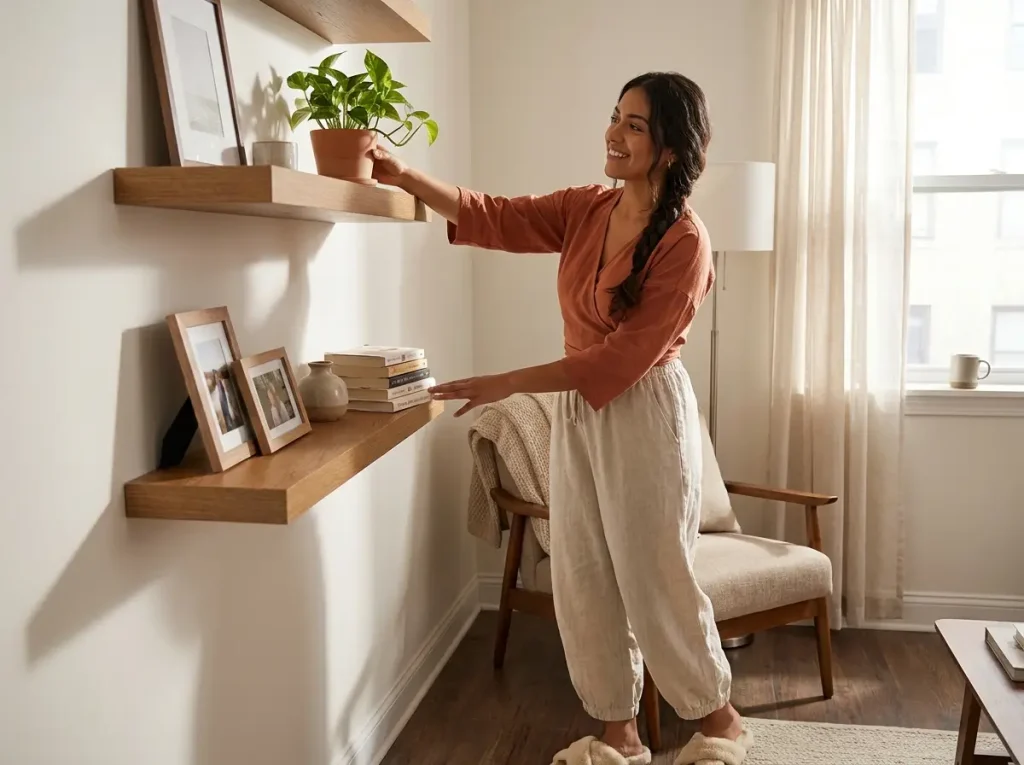
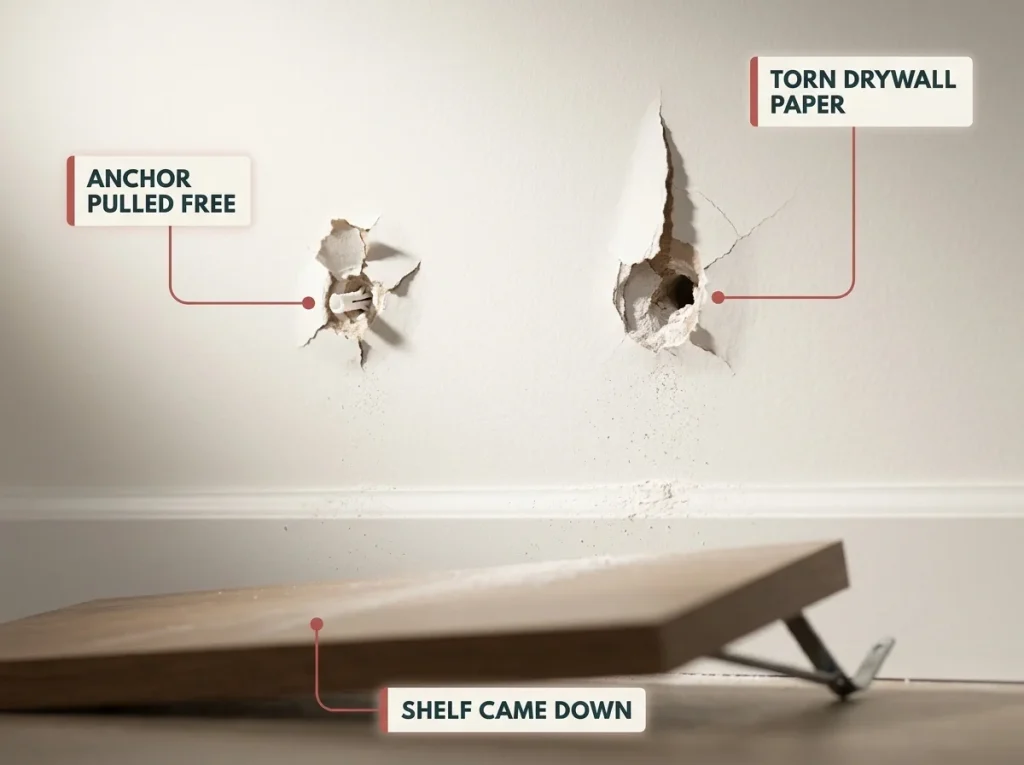
Someone you know has a version of this story. They mounted a nice 12-inch shelf, loaded it with cookbooks, felt great about it for two weeks, then woke up to the whole thing on the floor with two dime-sized craters torn in the drywall. The shelf didn’t fail because it was cheap. It failed because of where the weight was sitting and what the wall behind it could actually hold. That’s the part the “15 prettiest floating shelves” roundups skip, so this guide picks floating shelves for small spaces by what your wall can carry, sorted by room and by how much you’re allowed to drill.
Quick Answer
The best small-space floating shelf is the one matched to your wall and your load:
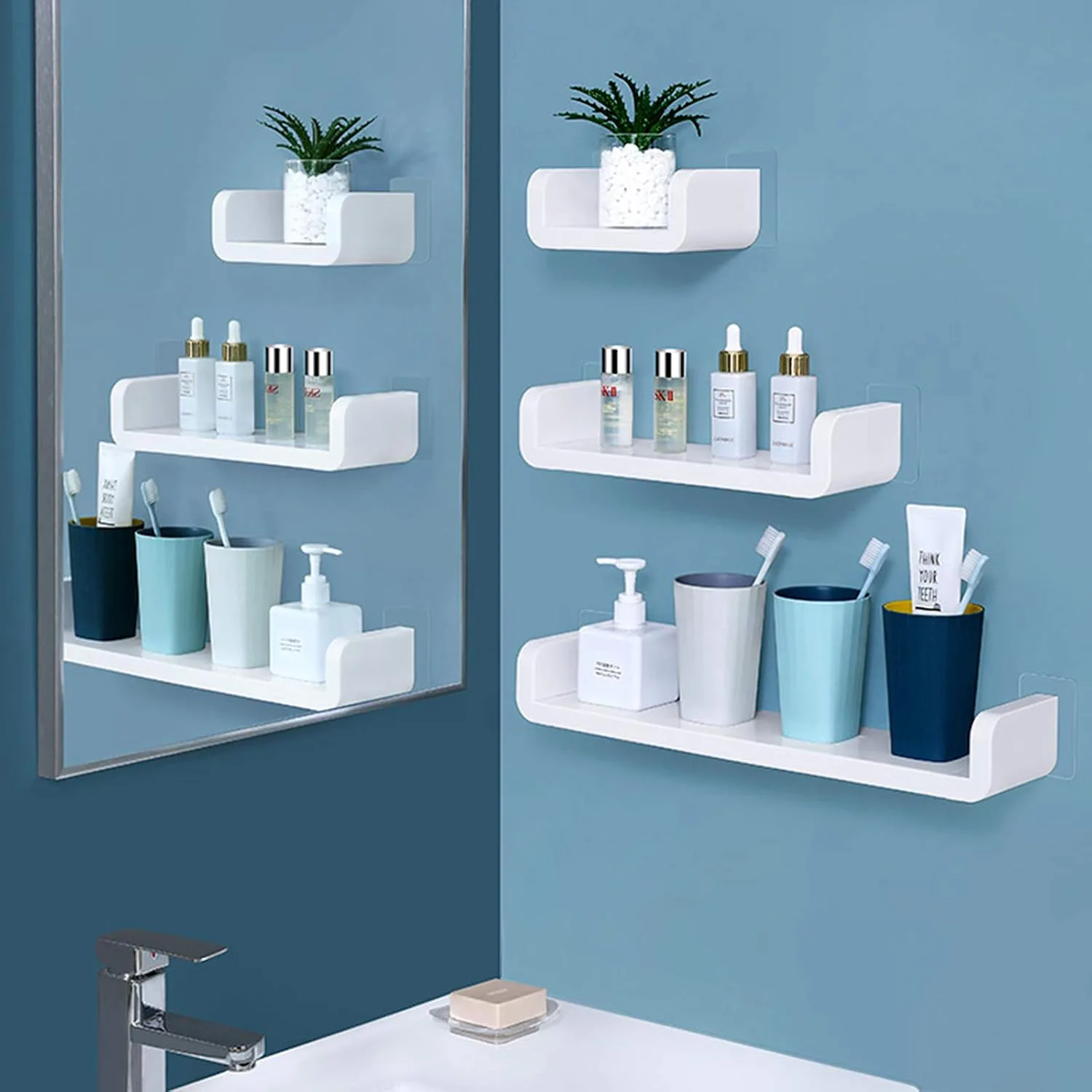
- Best for renters on tile or smooth walls: a no-drill adhesive shelf
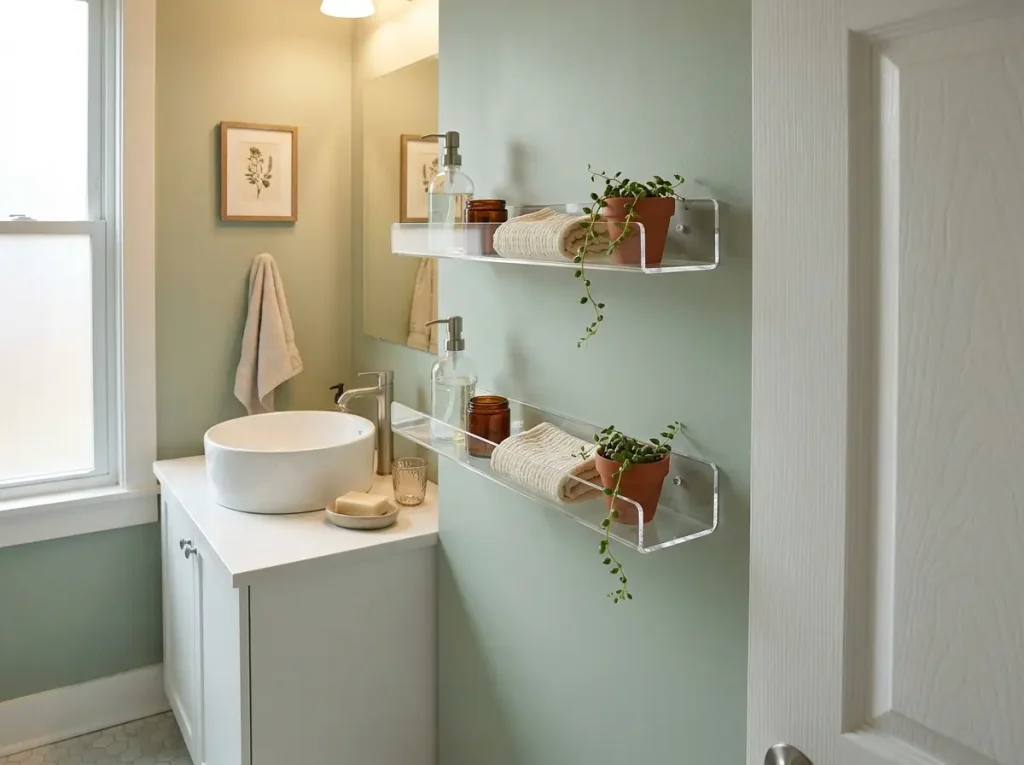
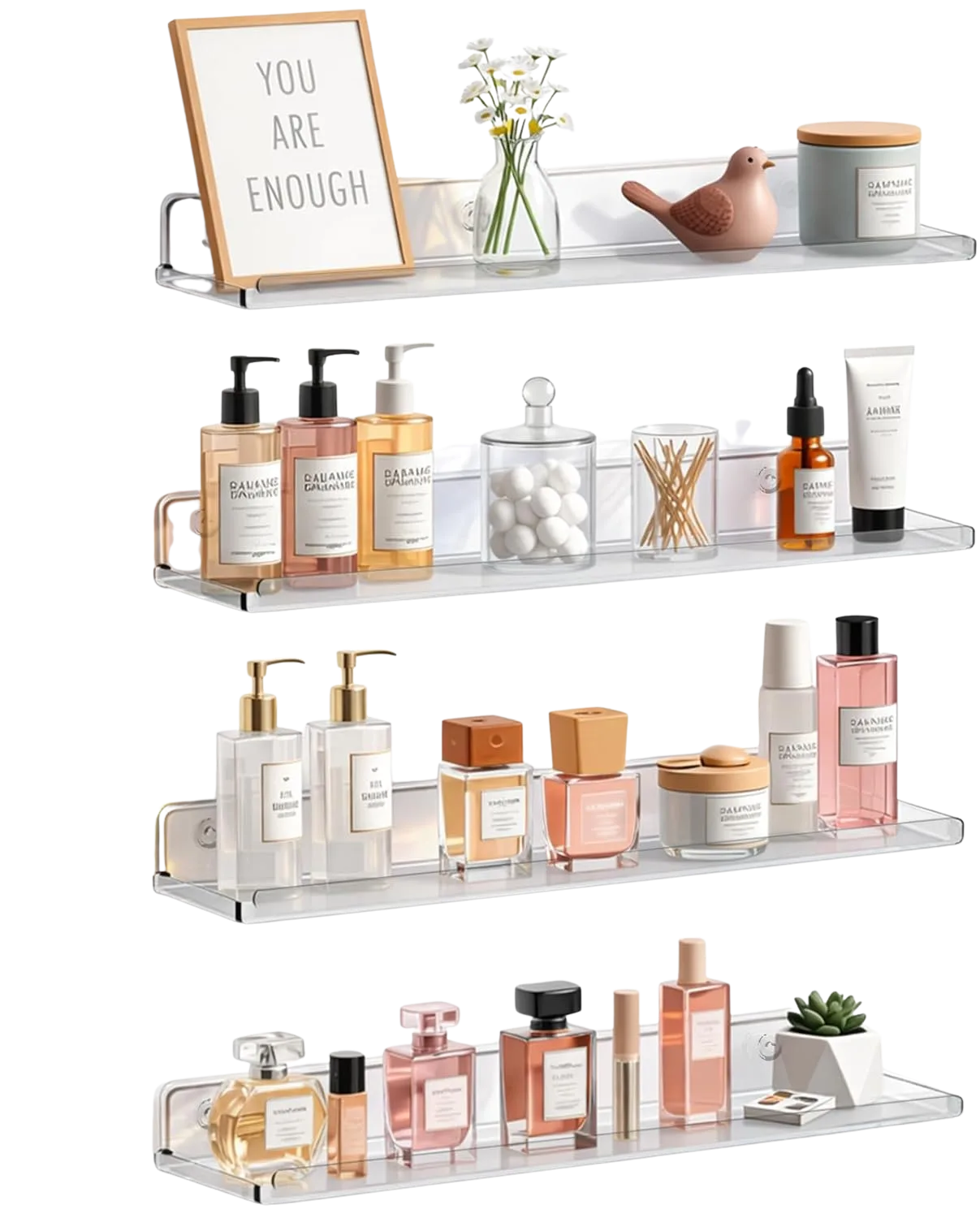
- Best for a steamy bathroom on a budget: a clear acrylic 4-pack
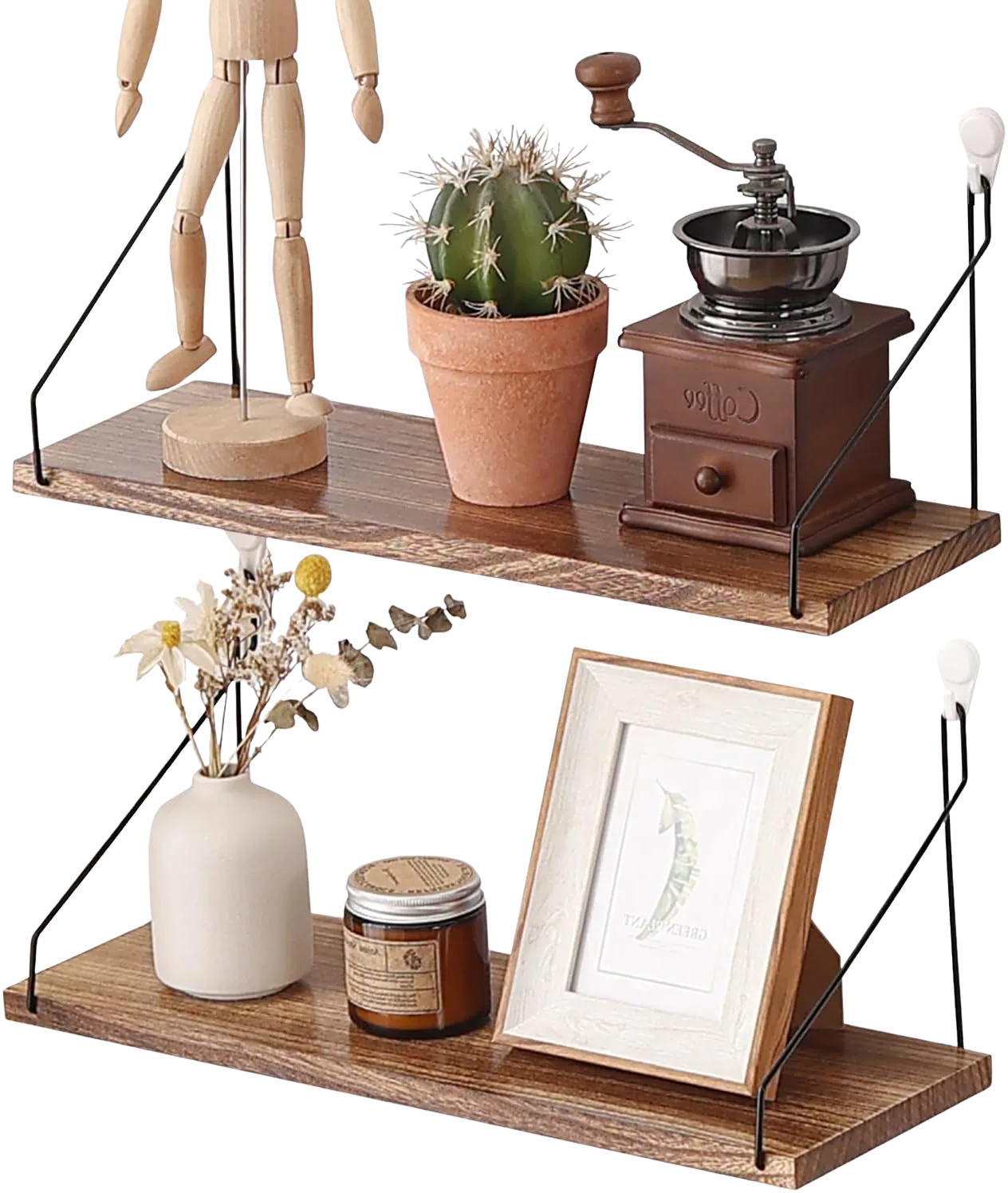
- Best for books and real weight: solid wood mounted into studs
- Best when you can’t drill at all: a narrow freestanding tower
How Deep Should a Floating Shelf Be in a Small Space?
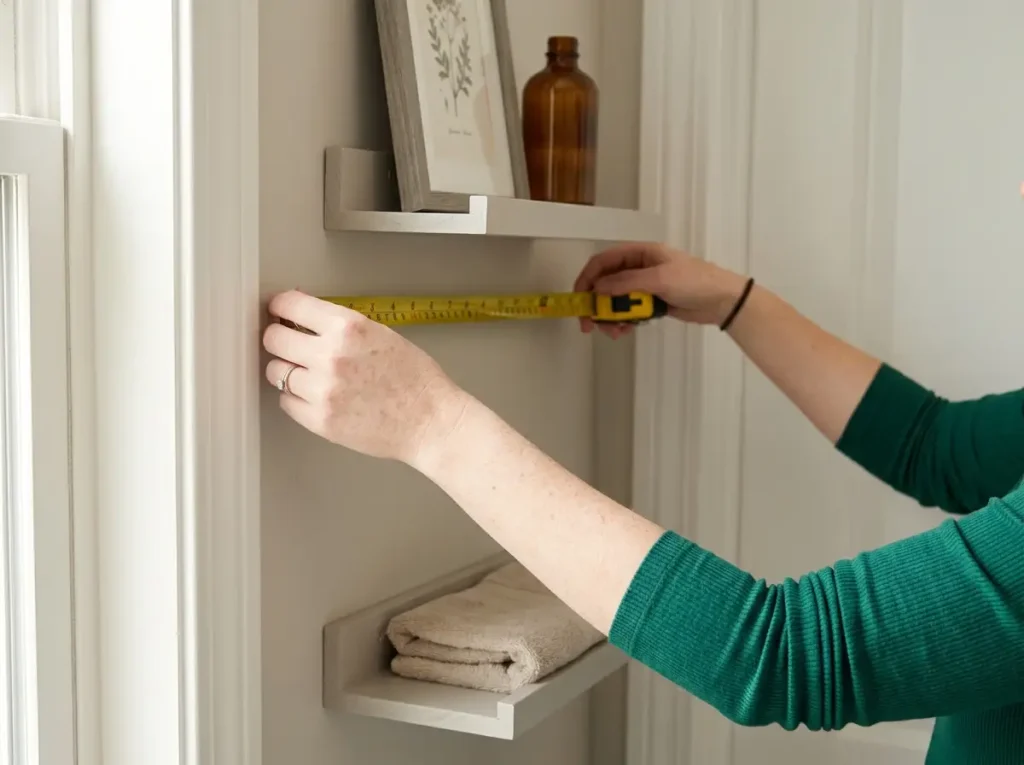
A floating shelf is really just a wall-mounted shelf with a hidden bracket doing the work, which is exactly why depth and weight decide everything. The first mistake in a small space isn’t picking an ugly shelf. It’s buying a deep one. A shelf that looks generous in the product photo is the same shelf that juts past your door frame, hangs over the toilet tank into your shin space, or eats into the narrow walkway you already fight for every morning. Depth is a fit decision before it’s a looks decision.
The 6-to-8-inch sweet spot
For most small-space walls, 6 to 8 inches of depth is the range that works, and 8 inches is the most popular bathroom depth for a reason. That depth holds toiletries, a short plant, and a couple of framed photos without reaching into the room. A desk shelf can go even shallower, around 6 inches, because anything deeper just steals elbow room you need for actually working. Match the depth to what you’ll set on it, not to whatever number sounds roomier.
Does it actually fit your wall?
This is the question nobody answers: can the shelf physically exist on your wall without getting in the way? In a small bathroom, an 8-inch shelf clears the toilet tank; a 12-inch one starts competing with your knees. Beside a door, the shelf can’t stick past the trim or you’ll catch a shoulder on it. Treating the empty strip above eye level as storage works beautifully, and it’s the same logic behind reclaiming the vertical dead space above eye level anywhere in a small home, as long as the shelf doesn’t intrude into the path you walk.
When you actually need to go deeper
There’s one real reason to go deep: books. A row of paperbacks needs 10 to 12 inches to sit flat without tipping forward, and hardcovers want every bit of that. But here’s the catch that sets up everything below. A deeper shelf at the same weight is harder on the wall, not easier. So if you need book depth, you also need a book mount, which is a different conversation entirely.
Before you buy, hold a tape measure out from the wall to the depth you’re considering and look at it from the side. If the end of the tape reaches past the door trim or the toilet tank, size down. It’s a ten-second check that saves a return trip.
Weight Capacity, Drywall vs Studs, and Why Floating Shelves Fail
Back to the cookbook shelf on the floor. The failure wasn’t bad luck and it wasn’t a flimsy product. It was a load the wall was never holding in the first place. Name the failure before you fix it, because almost every floating-shelf disaster in a small space traces back to one of two things: the mount or the depth.
Drywall anchors are a decor-only number
Plastic drywall anchors on their own hold somewhere around 10 to 25 pounds, and most manufacturers quietly say they’re not recommended for shelving at all. That’s a decor number. A plant, a candle, two frames, fine. Load a stack of books and the anchors pull straight out of the wall, taking a chunk of drywall with them. The craters they leave are far worse than a clean screw hole, which is its own special insult when you were trying to be careful.
Why depth is the real reason shelves fail
Here’s the physics nobody explains. The same 20 pounds sitting 8 inches out from the wall barely tugs at the mount, but that same weight sitting 12 inches out pries the anchors loose like a crowbar. It’s leverage, and depth multiplies it. So a shelf doesn’t fail just because of the pounds on it; it fails because of the pounds times how far they sit from the wall. This is why a deep shelf on anchors is a trap, and why an 8-inch shelf of toiletries holds for years while a 12-inch shelf of books comes down in a fortnight.
Studs, solid wood, and a real book load
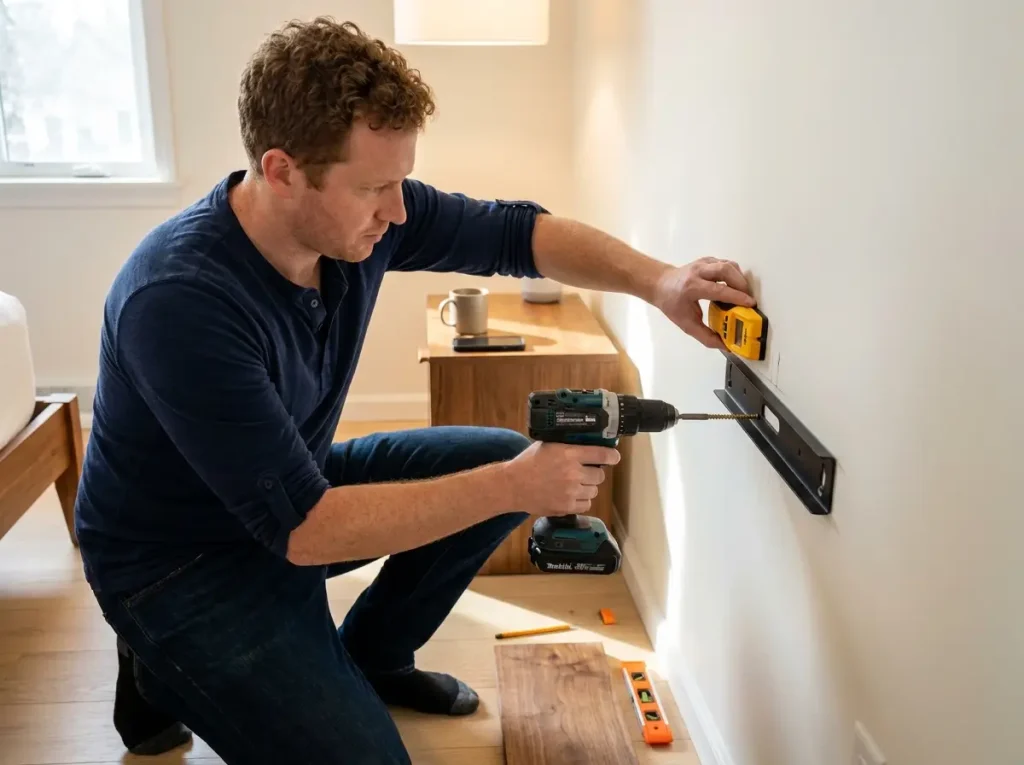
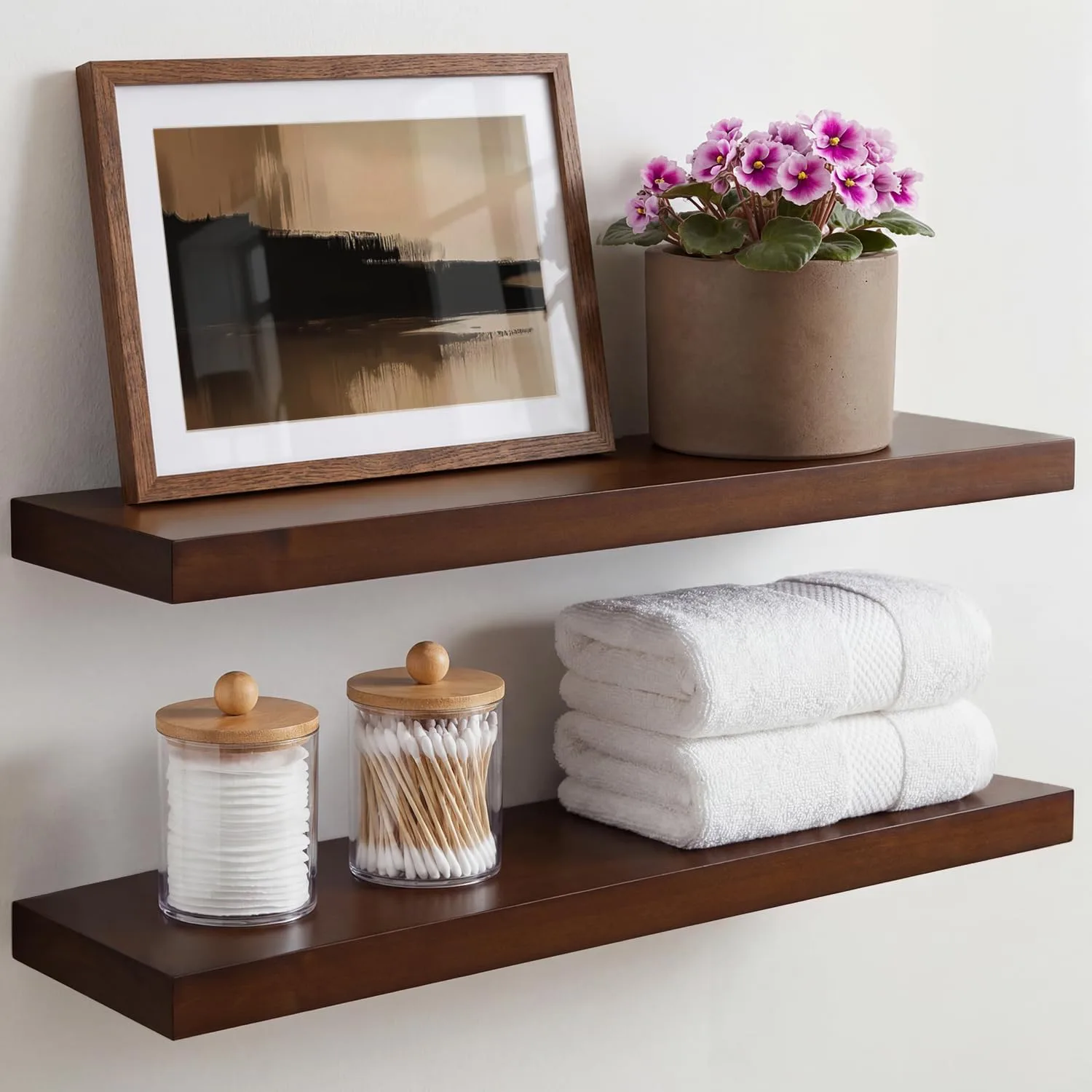
If you want books, you mount into studs. Each stud a bracket hits carries roughly 45 to 50 pounds, so a shelf landing two studs safely holds around 90 to 100 pounds, which is a genuine hardcover load. That’s the only mount that does it. It’s worth using a stud finder to locate at least two studs before you mount anything heavier than decor, as This Old House recommends, because guessing here is how the craters happen.
The shelf material matters too: solid wood carries more than hollow MDF, and a cheap MDF shelf will bow in the middle under sustained weight even when the brackets hold perfectly. The conventional wisdom is that any shelf is fine as long as you stay under its weight rating. In practice, shelves loaded to half their rating still peel out of drywall, because the rating assumes the load sits at the wall, not a foot out in front of it.
For the broader picture of matching the shelf to your wall, your weight, and your lease, the rest of the shelving guide breaks down every mount type. Here we stay on floating shelves.
Best Floating Shelves by Material
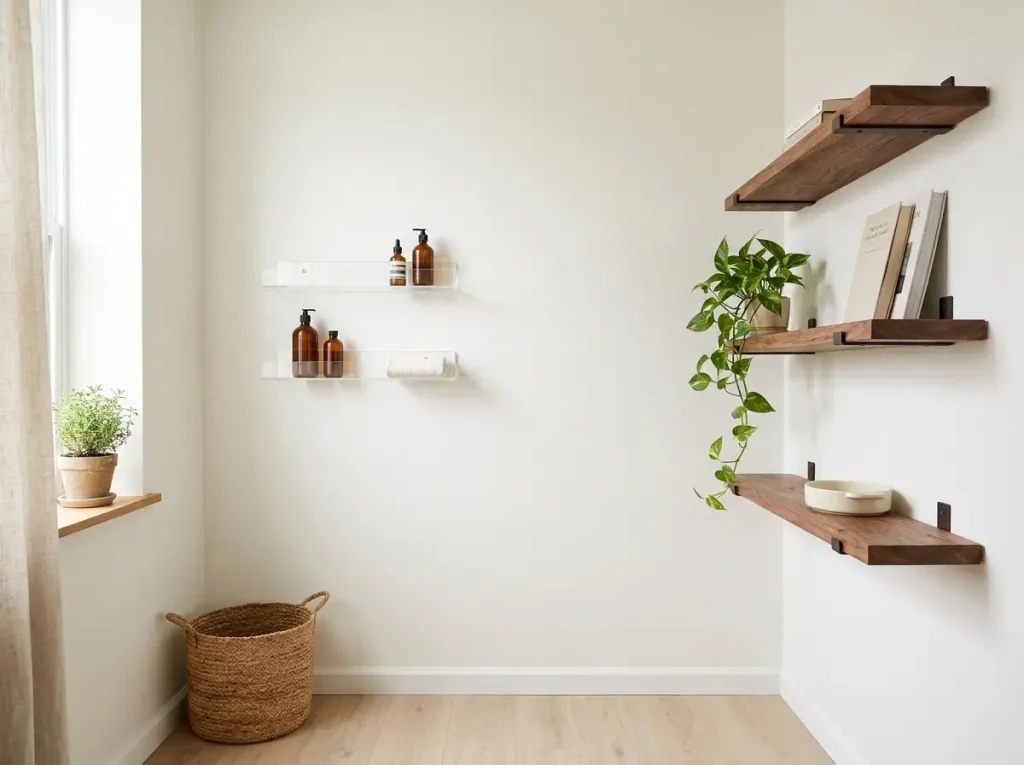
Material decides two things at once: how much the shelf can hold and how it survives the room it lives in. The prettiest option on the wall is often the worst one in a steamy bathroom, and the cheapest multipack sometimes outlasts the splurge. Here’s how the small-space picks stack up before we get into each one.
| Floating Shelf | Best For | Mount / Renter |
|---|---|---|
| Homeforia 24″ Solid Walnut | Books, real weight | Studs only |
| upsimples Acrylic 15″ (4-Pack) | Steamy bathrooms, budget | No-drill on tile |
| Floating Wall Shelf No-Drill 16.5″ | Renter decor, smooth walls | No-drill |
| LAIGOO Adhesive Ledge (Set of 3) | Light decor display | Tile / glass only |
| VASAGLE 5-Tier Narrow Tower | Can’t drill, needs real load | Freestanding |
Acrylic, the budget bathroom winner
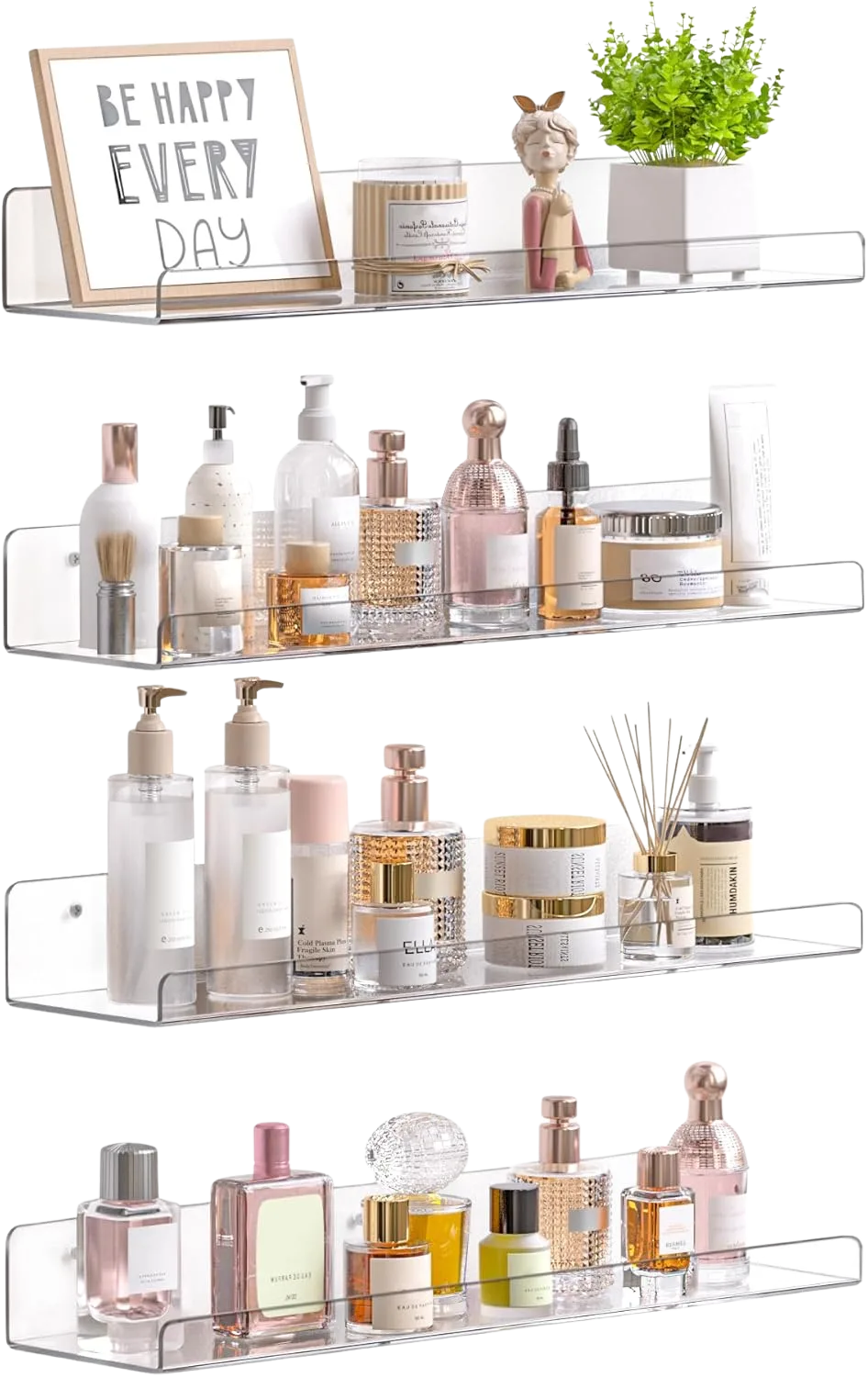
Clear acrylic is the quietly smart, affordable choice for a small bathroom, and it’s where the anti-sell really matters. A 4-pack of acrylic shelves costs less than a single boutique oak shelf, it shrugs off humidity that would warp solid wood, and it visually disappears against the wall so a tight room keeps its sightlines. You’re also not heartbroken when one eventually scratches, the way you would be over an expensive single shelf. For a steamy bathroom, that math is hard to argue with.
Solid wood and MDF, looks versus load
Solid wood is the material that makes a statement and carries a real load, but only into studs and only if you accept that it costs the most and can warp in a humid room. MDF is the cheapest, and it’s fine for a single frame, but it bows in the middle under any sustained weight even when the brackets hold. The middle ground for a bedroom or living room is a budget wood set that gives you the look without the boutique price.

Best No-Drill Floating Shelves for Renters (and What They Can’t Do)
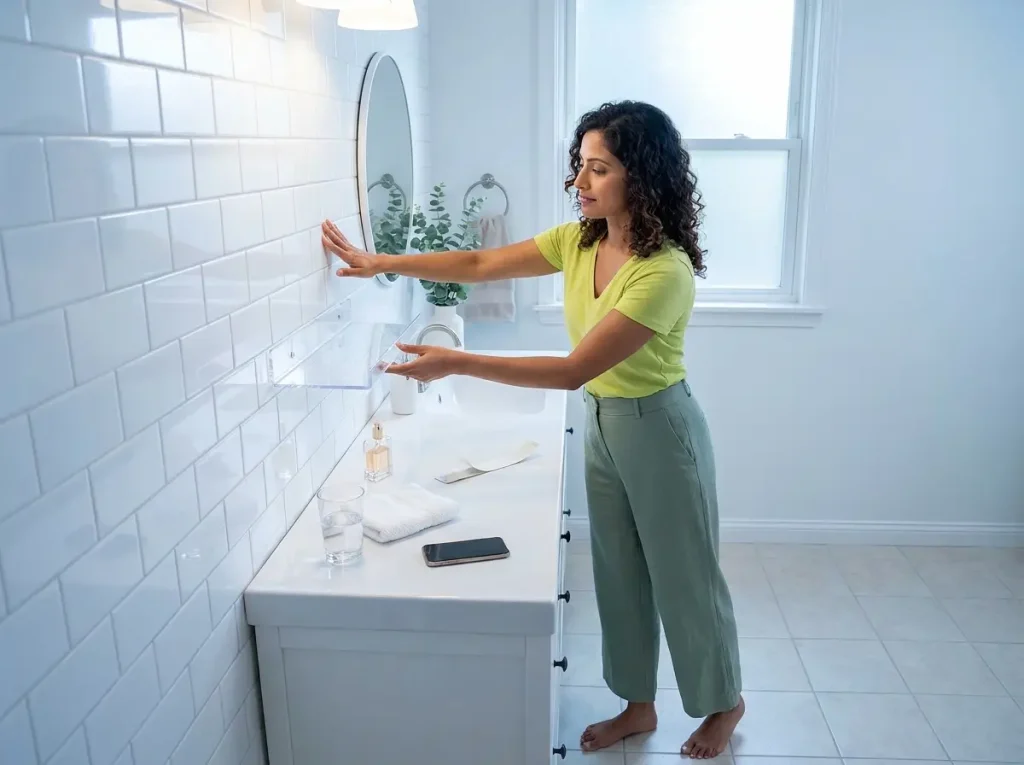
Here’s the renter irony that opens this section. Someone picks adhesive shelves specifically to protect their security deposit, then peels a strip of paint off the wall pulling them down at move-out. The exact damage they were avoiding, caused by the thing they bought to avoid it. No-drill shelves are real and useful, but only if you know their limits going in.
What no-drill shelves actually can’t do
Be clear-eyed about the ceiling here. Command picture-hanging strips top out around 16 pounds, and Consumer Reports tested adhesive strips and warns plainly that none of them should be used to mount shelves. These peel-and-stick shelves themselves hold roughly 11 pounds and adhere safely only to tile, glass, or smooth unpainted surfaces. On painted drywall, they pull the paint when removed. So the no-drill option can’t hold books and can’t go on a painted bedroom wall without risking your deposit. Bathroom tile, though? That’s exactly where they shine.
The renter picks that work, on the right wall
On tile or a smooth, unpainted surface, a no-drill shelf is genuinely the right call. The trick with any of them is the removal: pull the tab slowly, straight down and parallel to the wall, never out toward you. What you mount it with matters too, and in a damp bathroom the honest companion is a set of Command Bath Large Water-Resistant Adhesive Strips, which are built for moisture and rated for frames and light decor, not for a loaded shelf. Use them for what they’re for and they hold.
When the answer isn’t a floating shelf at all
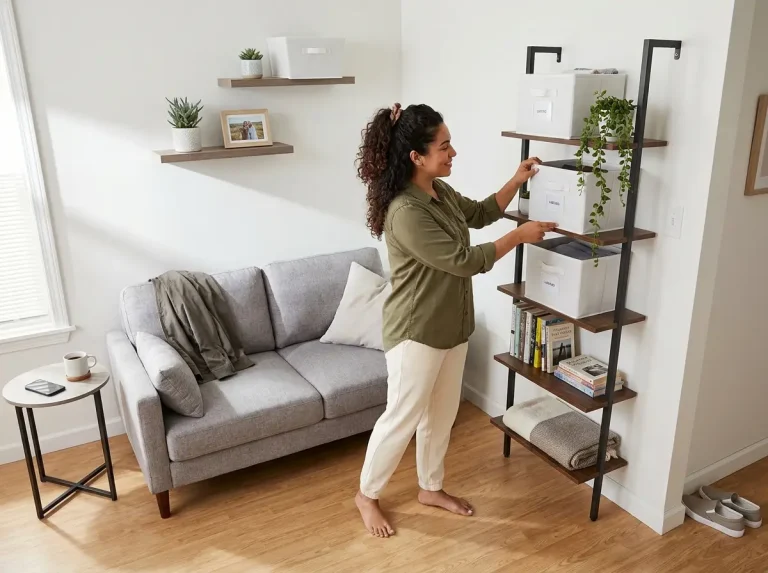
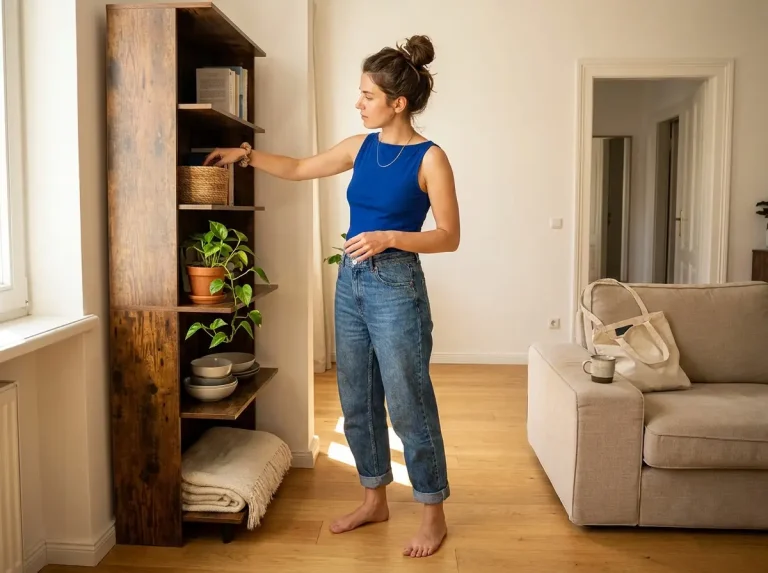
Sometimes the smartest move is to stop fighting the wall. When you can’t drill and you can’t trust adhesive with the weight you’ve got, a narrow freestanding tower carries the load damage-free, with zero holes in the wall, which is the whole reason it exists. The VASAGLE 5-Tier Narrow Bookshelf is slim enough to tuck into a tight corner, holds real books across its tiers, and anchors with an anti-tip strap instead of a bracket. It’s the same logic behind the deposit-damage math that decides every renter mounting choice: sometimes the shelf you can’t drill for shouldn’t be a floating shelf in the first place.
Before you stick an adhesive shelf anywhere, run a fingertip over the wall. If it’s glossy tile or glass, you’re good. If it’s painted and even slightly textured, the adhesive will grab the paint, not the wall, and the paint loses when you pull it off.
Best Floating Shelves by Room
A bathroom wall and a bookshelf wall want opposite shelves, so it helps to choose by the room you’re actually filling. Pick by the load and the humidity in front of you, not by the prettiest staged photo you saw.
Small bathroom
A small bathroom is where narrow and clear earns its place. You want a shelf that clears the toilet tank and the door trim, survives steam, and doesn’t visually crowd an already tight room. A 14-inch acrylic shelf threads that needle, fitting past a vanity where a wider one would hit the trim. For the full wall plan around it, the rest of the small-bathroom wall plan covers what goes where.
Bedroom and living room
These are the rooms where books and heavier decor live, which means studs and solid or budget wood if you own the place. If you rent, keep the wall shelves to light decor and let a freestanding piece carry the books. The shelf you choose here is really a question of whether you can drill, not which finish you like best.
Desk and workspace
A desk shelf has one job: get small things off the work surface without crowding your arms. Six to eight inches of depth is plenty, mounted high enough to clear a monitor. Anything deeper and you’ll knock it every time you reach for a pen.
Floating Shelves for Corners and Dead Space
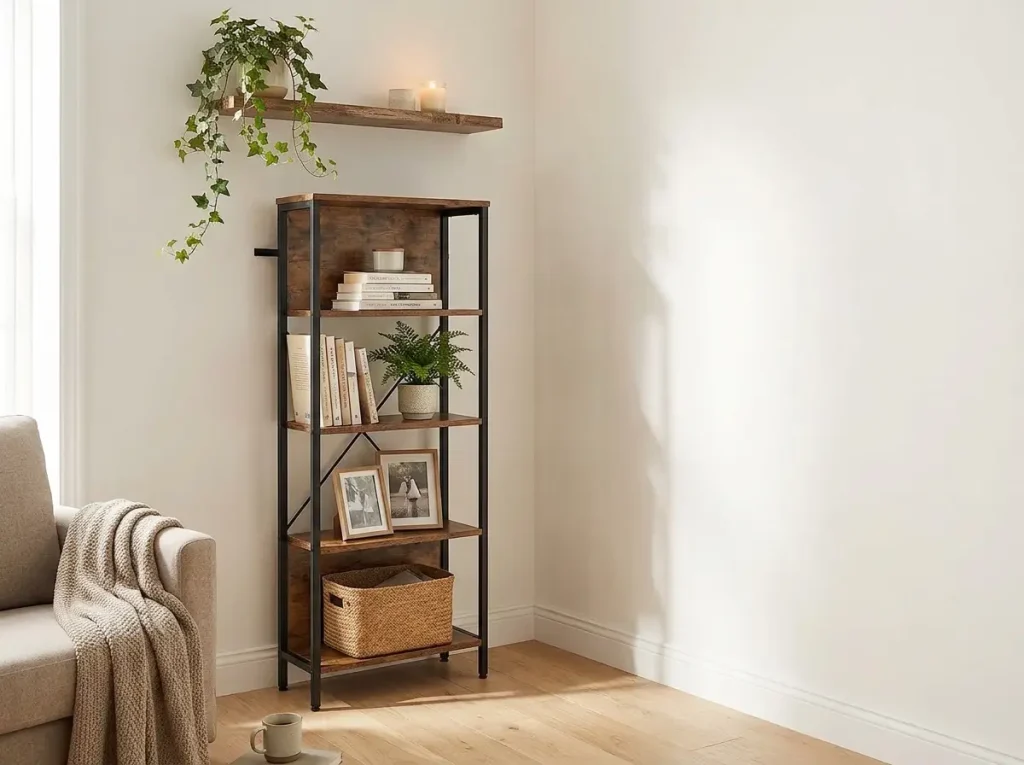
The most useful wall in a small home is usually the one nobody uses. The corner, the strip above the door, the space over the toilet tank is all vertical storage you haven’t claimed yet, and a narrow shelf is how you cash it in. It’s the same instinct behind treating every empty vertical strip as storage you haven’t claimed yet anywhere in a cramped floor plan.
The corner nobody uses
A small corner shelf turns an awkward dead angle into display or storage without eating any floor space. Keep the depth shallow so it doesn’t poke into the room, and remember the same mount rules apply: light decor on adhesive, anything heavier into studs. If the corner needs to carry real weight and you can’t drill, that narrow freestanding tower from earlier slots into a corner better than almost anything.
Above the door and above the toilet
The band of wall above a door or above the toilet tank is prime dead space, and it’s the single most common reclaim in a small bathroom. A shallow picture ledge up there holds backup supplies or light decor where it’s out of the way but easy to reach. Just keep whatever you set up high genuinely light, because a shelf you can’t see is a shelf you won’t notice sagging until it’s too late.
What to Put on a Floating Shelf Without Overloading It
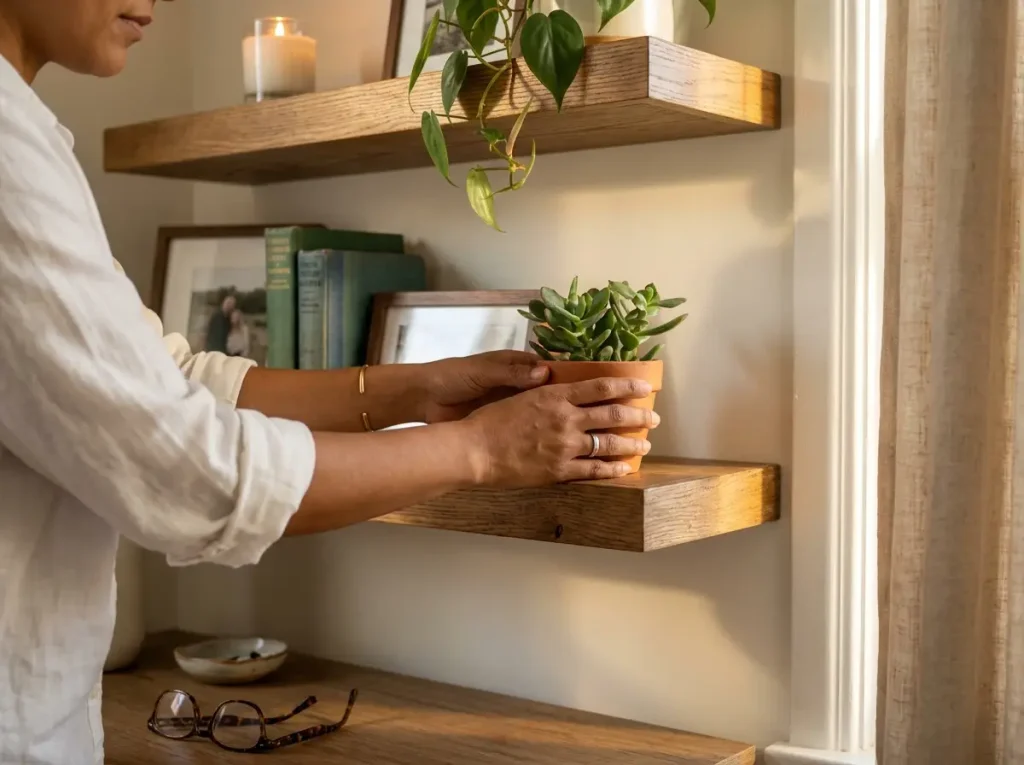
A shelf doesn’t only fail all at once. It fails slowly too: the adhesive creeps in humidity, the MDF bows under a week of weight, your partner stacks one more thing on top of the pile. Style it for month three, not for the after-photo.
Spacing and what to display
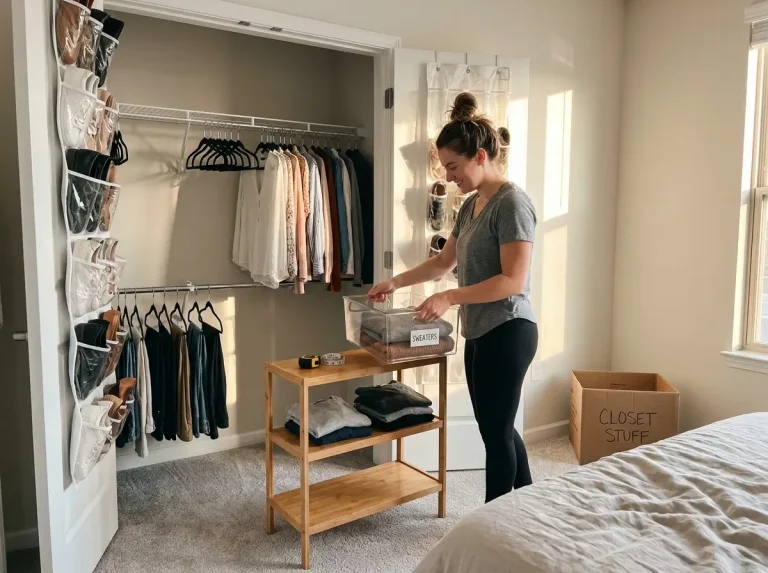
Leave 8 to 10 inches between shelves for decor and 10 to 12 for books, which is the same shelf-spacing math that keeps stacks from toppling. It’s the same shelf-spacing math that keeps closet stacks from toppling, just on a wall. Keep the display light and varied, a couple of books, a plant, a frame, and set the heavier items toward the wall side rather than out at the front lip, where leverage works against you. If you want more glow without more weight, an LED strip tucked under the shelf adds zero load.
Knock on a wood shelf before you mount it. A solid board gives a dull, low thud; a hollow MDF one rings back lighter and is the one that bows in the middle first. Your knuckles tell you what the listing won’t.
The three-month test
Here’s the check almost no one does. Three months after you mount a shelf, press it flat to the wall and look closely. Is the adhesive still gripping or has it started to creep? Is the middle of the shelf bowing under what you piled on? Catch a sag early and you re-anchor or lighten the load before it ends up on the floor. Wait, and you’re back to the cookbook story.
Conclusion
The right small-space floating shelf isn’t the prettiest one in the roundup. It’s the one matched to your wall and your load: depth chosen for what you’ll display and what the room can clear, books only into studs, decor on anchors, and renters on tile-only adhesive or a freestanding tower that skips the wall entirely. And for a steamy bathroom, the cheap acrylic 4-pack genuinely beats the boutique oak shelf, no contest.
Three months from now, press each shelf flat to the wall and check for adhesive creep or a bowed middle, then re-anchor or lighten before anything lets go. Measure the wall and weigh what you want to display before you buy a single shelf. That one step prevents nine out of ten of these failures.
Frequently Asked Questions
01How deep should a floating shelf be for a small space?
For most small-space walls, 6 to 8 inches is the sweet spot, and 8 inches is the standard for bathrooms. That depth holds toiletries, plants, and frames without jutting into the room. Only go to 10 to 12 inches if you need books to sit flat.
02How much weight can a floating shelf really hold?
On drywall anchors alone, only about 10 to 25 pounds, which is decor weight. Mounted into two studs, a shelf safely carries roughly 90 to 100 pounds. A deeper shelf holds less, because the weight sits farther from the wall and pries harder on the mount.
03How do you hang floating shelves without drilling, and is it renter-safe?
Adhesive shelves and Command strips work, but only on tile, glass, or smooth unpainted surfaces. On painted drywall they risk peeling paint. They hold light decor, not books, so remove them slowly and straight down to protect your deposit.
04Are acrylic or wood floating shelves better for a small bathroom?
Acrylic, for most people. A clear acrylic multipack ignores humidity, disappears on the wall, and costs a fraction of a boutique wood shelf that can warp in steam. Choose wood only if you want a statement shelf and can mount it into studs.
05Do floating shelves make a small room look bigger?
They can. Because floating shelves show the wall beneath them and skip bulky legs or cabinets, they keep sightlines open and the floor clear. Narrow or clear acrylic shelves do this best, which is why they suit tight rooms.
Disclaimer: ClutterlessNest is a participant in the Amazon Services LLC Associates Program. As an Amazon Associate we earn from qualifying purchases. This article may contain affiliate links — if you buy through them, we may earn a small commission at no extra cost to you. We only recommend products we have tested or genuinely believe in.