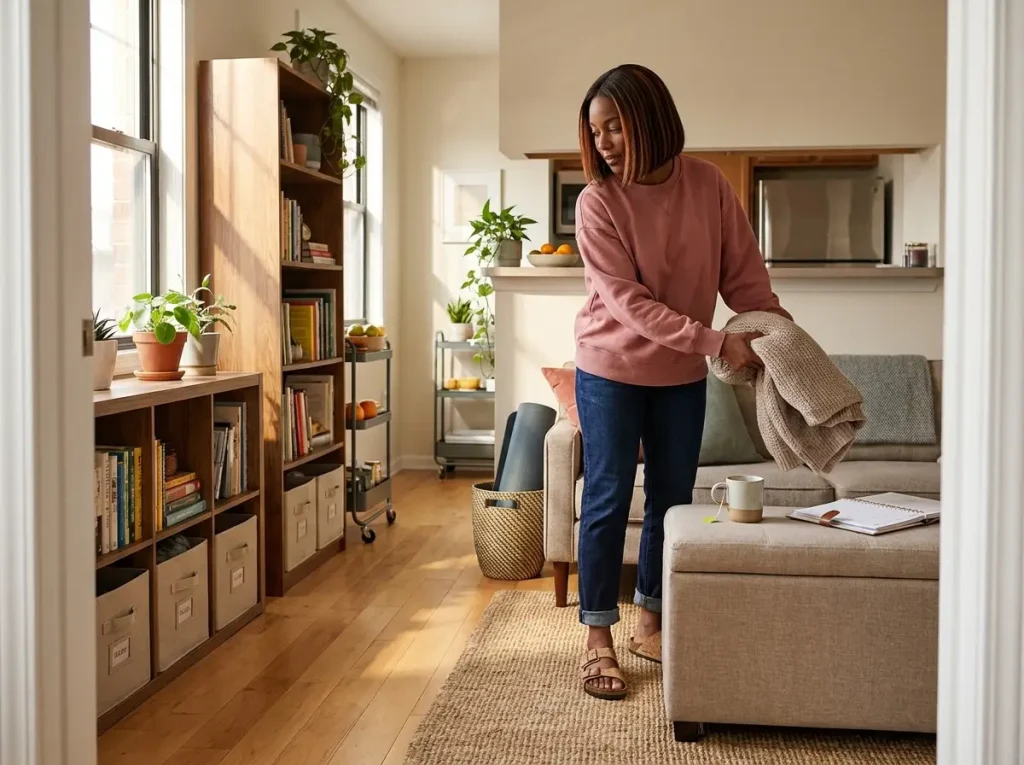
The average one-bedroom apartment in the US gives you 735 square feet. The average studio gives you 457. That’s not a lot of room to work with, and most of it is already eaten by furniture you can’t remove. After organizing dozens of small apartments with the same tight layouts and the same single-rod closets, I’ve found that the difference between a cramped apartment and a functional one comes down to specific decisions about how you use the space you already have. This guide covers the exact measurements, methods, and products that make small apartment organization actually work — without a single hole in the wall.
Quick Answer: Here’s how to maximize space in a small apartment:
- Measure every gap, shelf, and clearance before buying anything
- Go vertical with freestanding shelves and over-the-door organizers
- Make furniture double as storage (under-bed, ottomans, seating)
- Convert your closet into a full storage system with a double rod
- Zone open-plan rooms so each area serves one function
- Run a 10-minute monthly reset to prevent your system from reverting
Know Your Numbers Before You Buy an Organizer
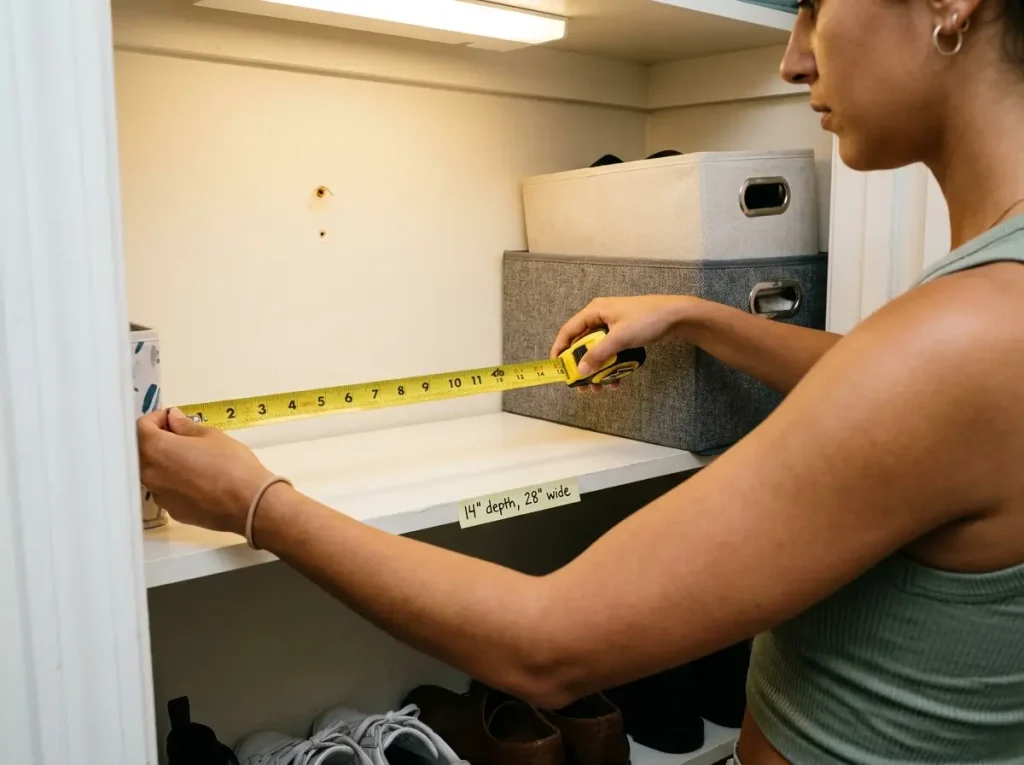
Every wasted purchase in a small apartment starts the same way: you bought something without measuring first. That bin looked right on your phone screen, but it sticks out past the shelf edge by two inches. Those drawer dividers are a quarter-inch too wide. The storage ottoman doesn’t fit between the sofa and the wall.
If you’ve been organizing apartments long enough, you learn to reach for the tape measure before you reach for your wallet. We’ve covered apartment organization ideas that last before — the ones that stick all share one common first step.
Map Every Dead Zone in Your Apartment
Walk through your apartment with a tape measure and a notepad. You’re looking for dead zones — spaces that exist but aren’t holding anything useful. The gap between your fridge and the counter. The 4-7 inches under your bed frame. The back of every closet and cabinet door. The top 18 inches of your closet above the shelf. These aren’t bonus storage — they’re the primary space gains in any small apartment.
Write down each gap with its three dimensions: width, depth, and height. This takes about 20 minutes for a studio, maybe 30 for a one-bedroom. Every organizer you buy from this point forward gets checked against those numbers.
Declutter Before You Organize (The Non-Negotiable Step)
Organizing clutter is just rearranging clutter. If you skip the edit and go straight to buying bins, you’ll end up with neatly stored things you don’t use, in an apartment that still feels full. Spend one hour pulling everything out of one area — just one — and sort it into keep, donate, and trash. You’ll free up more space by removing things than any product will ever create.
Pro tip: Start with the bathroom. It’s the smallest room, the decisions are the easiest (expired products, duplicates, samples you’ll never use), and finishing one room in under an hour gives you momentum for the rest.
The One Measurement That Prevents Wasted Purchases
The single number that matters most in small apartment storage is shelf depth. Standard upper kitchen cabinets are 12 inches deep. Closet shelves in rentals run 11-14 inches. Under-sink cabinets sit at 22-24 inches. Every bin, basket, and organizer you buy needs to match or fall under that depth. When a container is deeper than the shelf, it sticks out past the edge, the door won’t close, and you’ve just created a new problem.
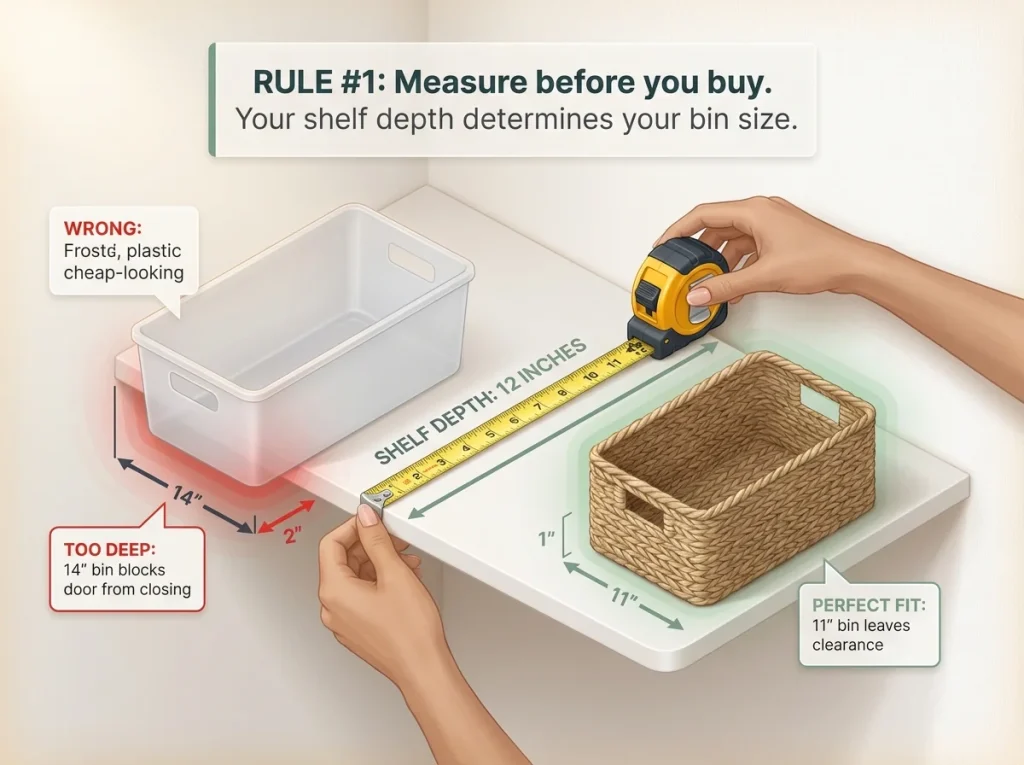
Measure the shelf, write it down, and check it against the product listing before you order. This one step will save you more returns and frustration than any organizer on the market.
Go Vertical — You’re Only Using Half Your Wall
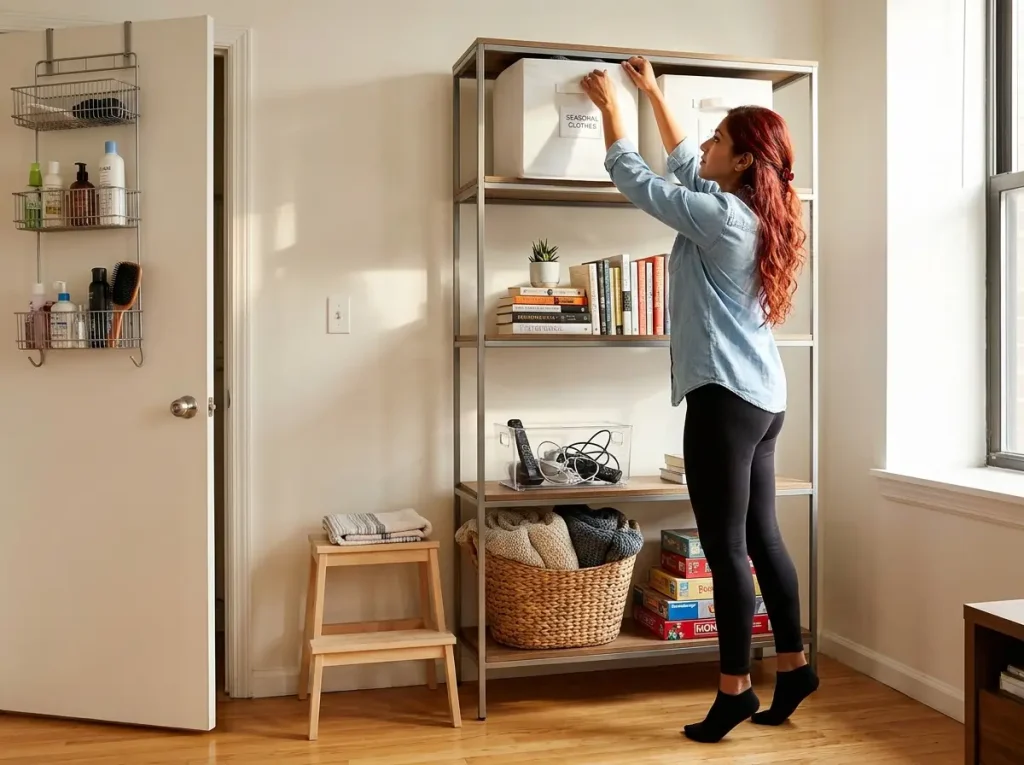
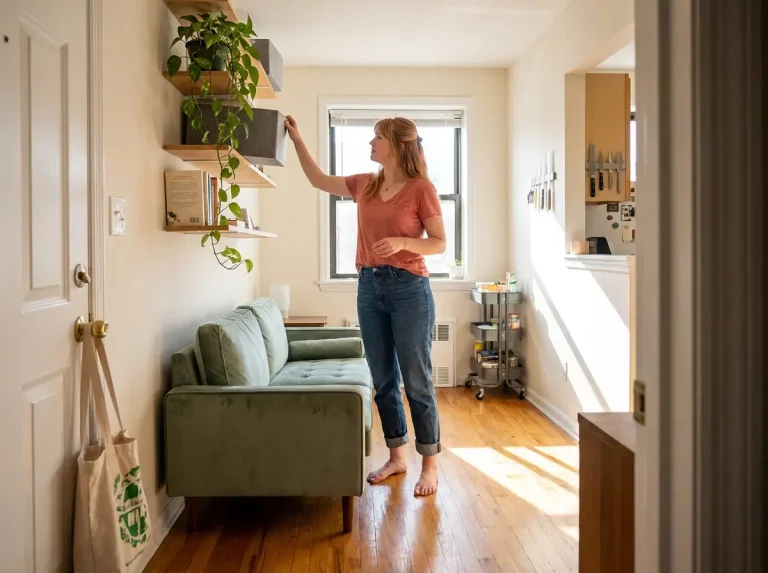
Most small apartments have 8-foot ceilings, but everything you own sits below 5 feet. That’s 3 feet of empty wall above every piece of furniture, every closet shelf, and every door frame. In a 500-square-foot apartment, that adds up to dozens of cubic feet of usable storage that nobody touches. Vertical storage is the single biggest space gain in any small apartment, and most of it doesn’t require a drill.
Freestanding Shelves vs. Wall-Mounted (Renter Decision)
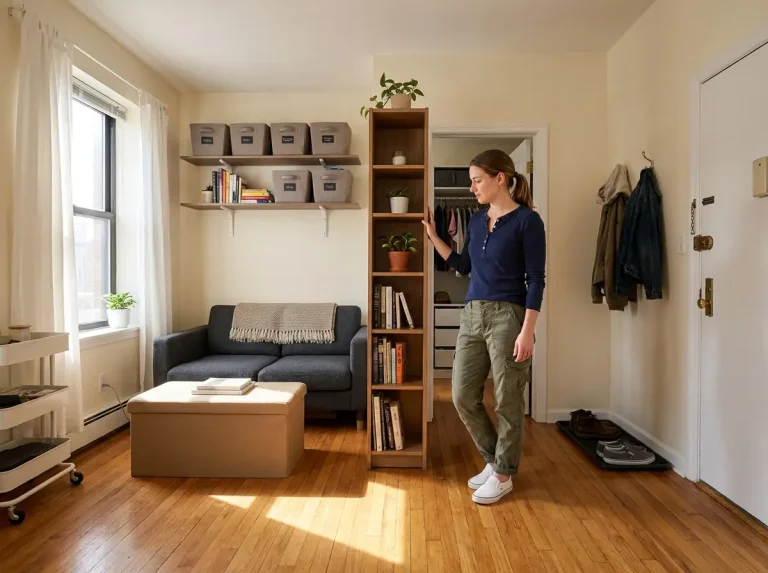
If you rent, your options start with freestanding floor-to-ceiling shelving. A 72-inch bookcase gives you six tiers without touching the wall. Put everyday items at eye level and seasonal storage up top in labeled bins. The shelf does the same job as a wall-mounted system, and you take it with you when you move.
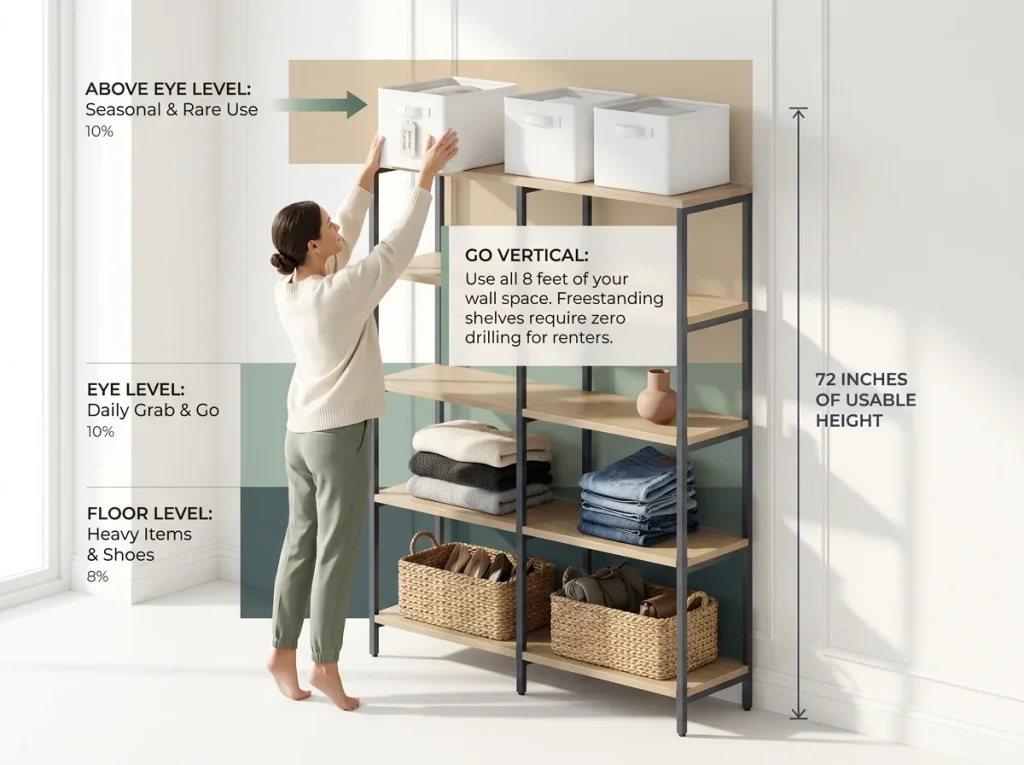
Wall-mounted shelves work better if you own the place — they open up floor space completely. But for renters, the freestanding route is the realistic one. Heavy-duty Command strips hold up to 16 pounds per pair, which handles small floating shelf loads if you want to add a single display shelf. For anything heavier, stick with freestanding units.
Over-the-Door Zones You’re Ignoring
Every door in your apartment has a back, and that back is doing nothing. The SimpleHouseware Over-The-Door Organizer (5-tier) hooks over any standard interior door and converts it into five tiers of storage with zero drilling.
Pantry door for spices and snacks. Bathroom door for toiletries. Closet door for accessories and cleaning supplies. Each tier handles a different category, and you get usable storage on a surface that was completely wasted before.
The one thing to check first: measure the gap between your door and the adjacent wall when the door is open. If it’s less than 2 inches, the organizer will prevent the door from closing flush. This catches people by surprise, and it’s the number-one complaint you’ll find in reviews. Check the clearance before you buy, not after.
The Above-Eye-Level Rule
Anything you store above your eye line should be something you access once a month or less. Seasonal clothes, holiday decorations, extra bedding, luggage. If you need it daily, it belongs at arm level. If you put daily items up high, you’ll stop reaching for them within a week, and the system fails because you built it against how you actually move through the space.
Pro tip: Label every bin that goes above eye level. You won’t remember what’s inside a white fabric bin on a shelf you can’t see into. A label reading “winter scarves” or “extra sheets” saves you from pulling down three bins to find one thing.
Make Every Piece of Furniture Earn Its Floor Space
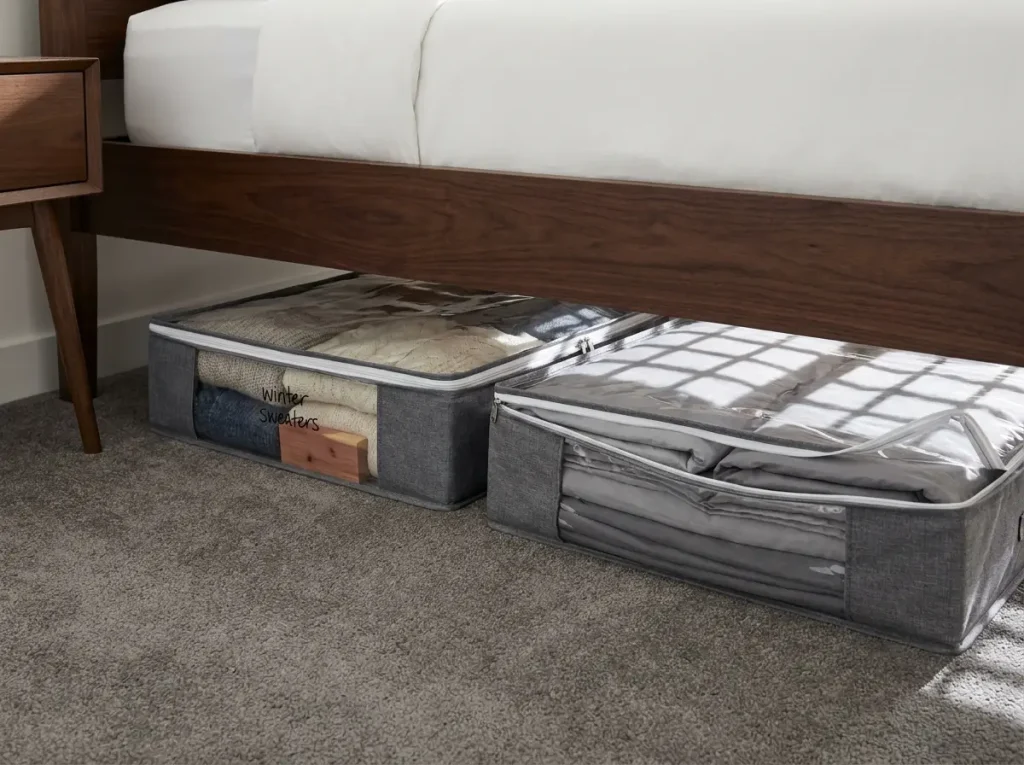
In a small apartment, any piece of furniture that only does one job is costing you square footage. Your bed should store things underneath it. Your seating should have compartments. The 7-inch gap beside your fridge should hold a cart. Once you start seeing furniture as multi-functional storage, you stop needing extra furniture to hold your things.
Under-Bed Clearance Math
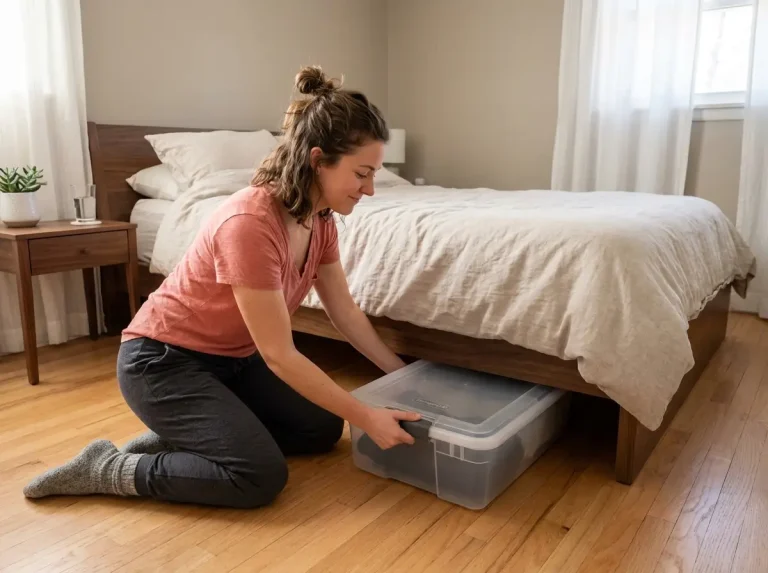
Platform beds typically leave 4-7 inches of clearance between the floor and the frame. Metal frames give you 7-13 inches. Measure yours. That number tells you exactly what fits underneath.
With 5 or more inches of clearance, the storageLAB Under Bed Storage Container (33 × 17 × 4.5 inches) slides right in. Its 4.5-inch profile is flat enough for most platform beds, and the clear lid lets you see contents without pulling it out. The rigid walls hold their shape better than the collapsible fabric bags that cost less but sag and collapse after a few months of use.
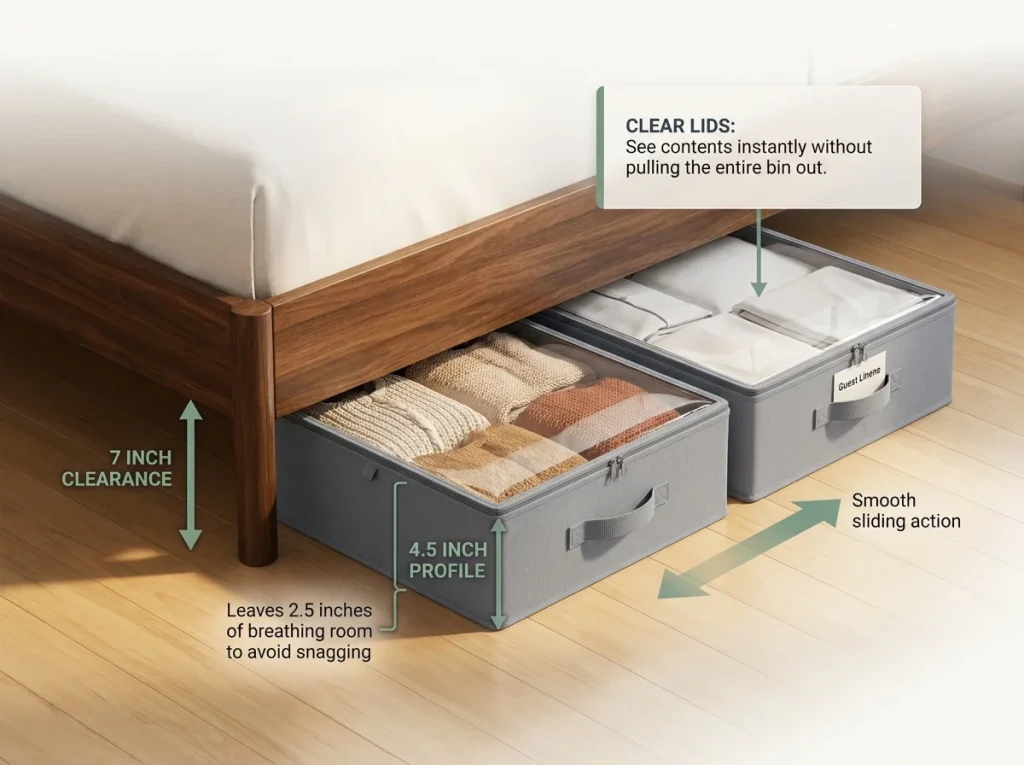
If your clearance is under 5 inches, the EclatBain Bed Risers (adjustable 3, 5, or 8 inches) sit under each bed leg and add height without drilling or permanent modification. Even the shortest 3-inch setting takes a 4-inch clearance to 7 inches — enough for the storageLAB container with room to spare. For a deeper guide on what fits under different bed types, see our under bed storage ideas for small bedrooms guide.
The first time you pull a container out and a sock from three months ago is stuck to the zipper, you’ll learn to fold items flat and check that nothing catches the lid edge before sliding it back under. That’s the maintenance detail nobody mentions in the product listing.
Seating That Stores
A storage ottoman replaces a coffee table and holds blankets, board games, or seasonal items inside. A bench with a lift-up seat does the same in an entryway. The rule is straightforward: if it sits on your floor and people sit on it, it should open up and hold things. You’re paying for the hidden cubic feet inside, not just the seat itself.
Skip the decorative ottomans without storage — in a small apartment, every piece of furniture that doesn’t pull double duty is taking space from one that could.
The 7-Inch Gap
Almost every small kitchen has a narrow gap between the fridge and the counter, or between the washer and dryer. These gaps run 5-8 inches wide and nobody uses them. The Slim 3-Tier Rolling Storage Cart (approximately 7 inches wide × 13 inches deep × 26 inches tall) rolls into that gap and gives you three tiers for produce, cooking oil, spices, or cleaning supplies. It rolls out on casters when you need access and tucks back in flat.
Before you buy any slim cart, measure your gap at the floor and again at counter height. Some gaps narrow by half an inch where the counter overhangs, and that’s enough to block a cart from sliding in. A stack of small bins works as a budget alternative but loses the rolling access that makes these carts practical in tight kitchens and bathrooms.
The Closet Is Your Apartment’s Hidden Storage Room
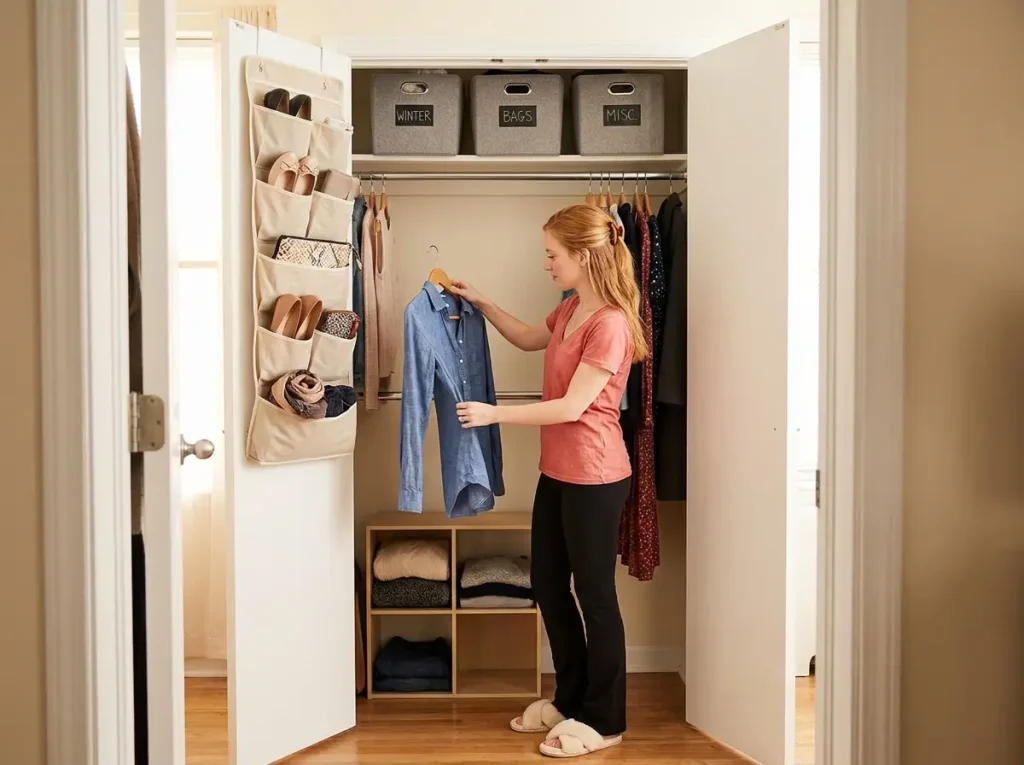
The standard rental closet is 24-36 inches wide with a single rod at about 66 inches and one shelf above it. That layout wastes roughly half the closet’s volume. Below the hanging clothes, the floor is a pile. Above the rod, one shelf holds whatever fits. The space between the bottom of your shortest garment and the floor — usually 30-40 inches — is completely dead. Fixing this is the single highest-return project in most apartments.
The Single-Rod Problem
A single rod at 66 inches forces you to hang everything at one height. Long dresses and coats need that full drop. But shirts, blazers, and folded jeans draped over hangers only need 30-35 inches of vertical space. You’re losing the entire lower half of the closet for items that don’t need it. The fix is a second rod.
Double Rod, No Drill
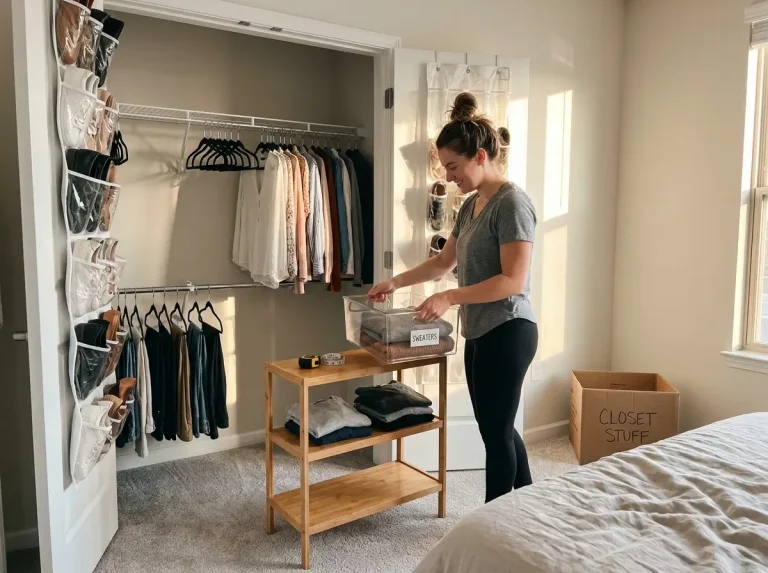
The STORAGE MANIAC Adjustable Closet Double Rod (2-Pack, 110 lb capacity) hooks directly onto your existing rod — no drilling, no screws, no wall damage. It adds a second rod at about 40 inches, creating an upper zone for long items and a lower zone for shirts, blouses, and folded pants. The 110 lb capacity handles real clothing loads, not just scarves and belts. Installation takes under 2 minutes, and it fits any closet rod between 1.25 and 2 inches in diameter.
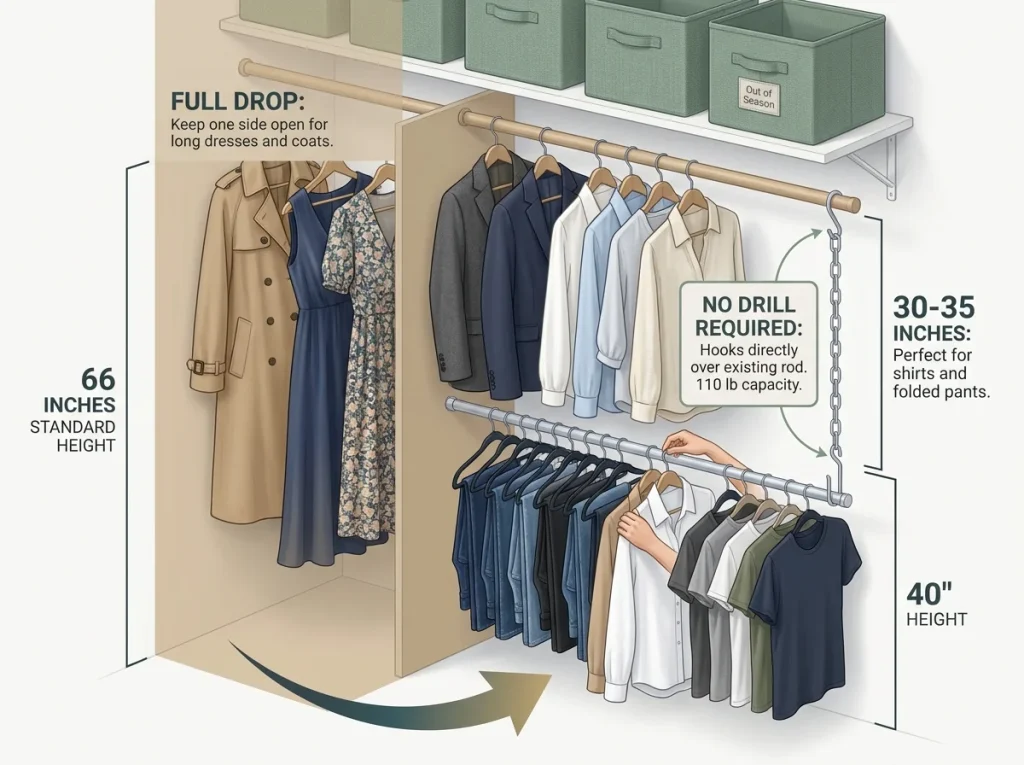
If your closet rod is thinner than 1.25 inches (rare, but some older apartments have slim rods), the hook won’t grip properly. Test it: wrap your hand around the rod. If your fingers overlap significantly, measure the diameter before ordering. A tension rod at the lower height works for lighter loads but won’t hold jeans or heavier garments. For a full renter closet system, our guide to no-drill closet organization for renters covers every piece.
Over-the-Door Zone + Seasonal Rotation
The closet door is another ignored surface. The SimpleHouseware Over-the-Door Shoe Organizer (24 Pockets) hangs over the door and gives you 24 individual compartments. Despite the name, it’s more useful for small items that waste shelf space: socks, belts, scarves, charging cables, cleaning supplies. Each pocket holds one category, and you see everything at a glance without digging through a bin.
For seasonal rotation, move out-of-season clothes to under-bed containers and give your closet’s prime real estate to what you’re wearing this month. Swap once per season — the closet shouldn’t hold your entire wardrobe at once. For more product recommendations matched to apartment closets, check our best closet organizers for apartment renters roundup.
Zone Your Space So It Works Like Multiple Rooms
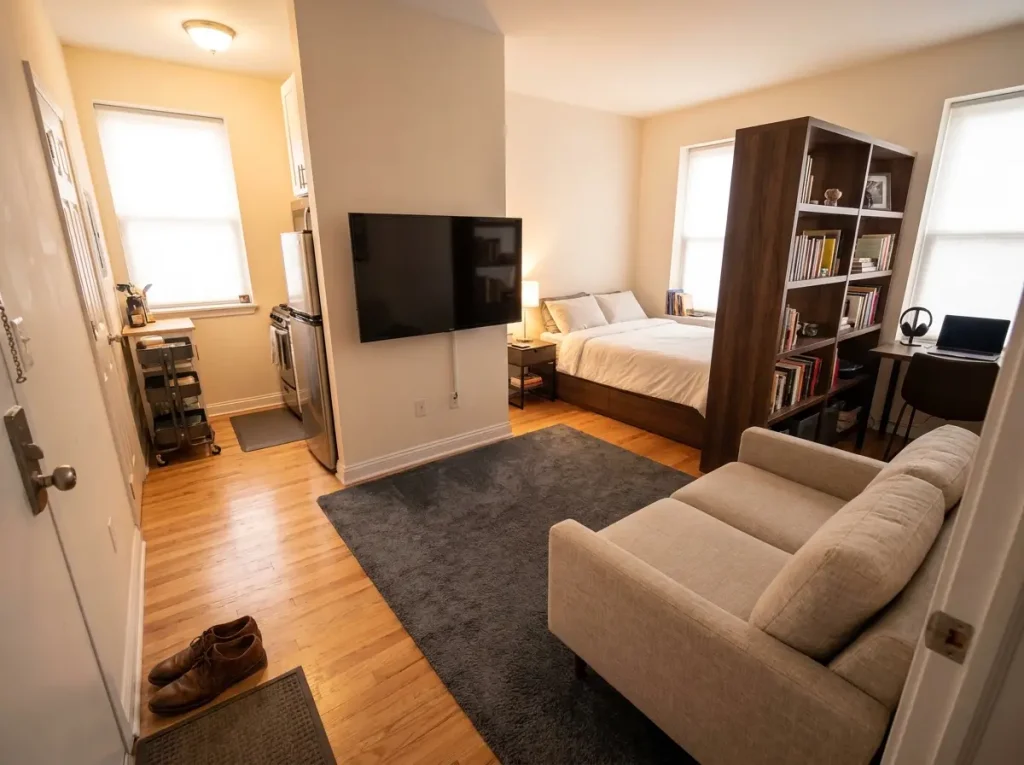
Studios and open-plan one-bedrooms have one big problem: without boundaries, every activity bleeds into every other area. You eat on the couch, work from the bed, and store kitchen overflow in the bedroom. Within a month, every surface serves every purpose and nothing has a clear function. NAPO (the National Association of Productivity and Organizing Professionals) recommends designating specific zones for each activity, and in a small apartment, those zones need physical boundaries, not just mental ones.
Why Open-Plan Fails Without Boundaries
When nothing separates your sleeping area from your working area, your brain treats the whole apartment as one zone. You work from bed because there’s no visual cue that says “this is the office.” You bring snacks to the desk because the kitchen is right there. The problem isn’t discipline — it’s that open floor plans give your brain zero signals about what belongs where.
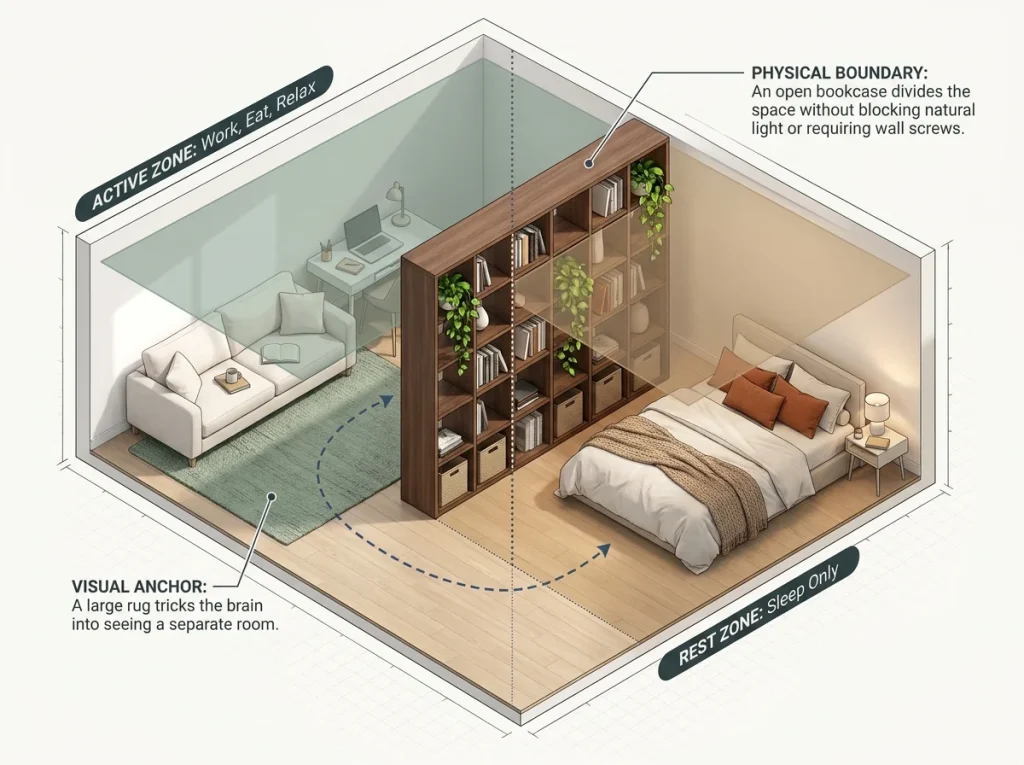
The fix is simple: create at least one physical boundary between your two main activity zones. Even a rug on the floor signals “this is the living area” and “that is the sleeping area” to your brain. It sounds small. It changes how you use the space.
The One-Spot Rule
Every item in your apartment gets one spot. Your keys live in one bowl by the door, not wherever you emptied your pockets. Your laptop charger plugs in at the desk, not on the nightstand, not on the couch. When every item has a single home, zones enforce themselves because things migrate back to their spot — there’s only one spot to migrate to.
Pro tip: If you share your apartment, each person needs their own landing zone near the door — a hook, a small tray, a shelf section. Shared landing zones become everyone’s junk pile within the first week.
Renter-Friendly Dividers That Double as Storage
A bookcase turned perpendicular to the wall is a room divider and storage unit in one piece of furniture. A large area rug defines a living zone visually without touching the walls. A clothing rack marks the boundary between bedroom and living space while holding tomorrow’s outfit. None of these require installation, and all of them come with you when you move.
The best divider is always the one that stores or displays something. A blank partition that holds nothing is wasting floor space in an apartment that can’t afford to waste any.
Why Your System Will Revert in 90 Days (And How to Stop It)
You can set up the best system in the world, and 90 days from now, your apartment will look like it did before. This happens to everyone. It’s not a failure of willpower — it’s a failure of maintenance design. Most small apartment organization advice stops at the setup and never addresses what happens when real life starts eroding the system one misplaced item at a time.
The Real Reason Isn’t Laziness — It’s Unmade Decisions
A professional organizer once put it well: clutter isn’t always about having too much — sometimes it’s about having too many unmade decisions. That pile on the kitchen counter exists because you haven’t decided where the mail goes. The clothes on the chair exist because you haven’t decided if they’re clean enough to hang or dirty enough to wash. Every item without a defined home becomes a deferred decision, and deferred decisions stack up until your system is buried under them.
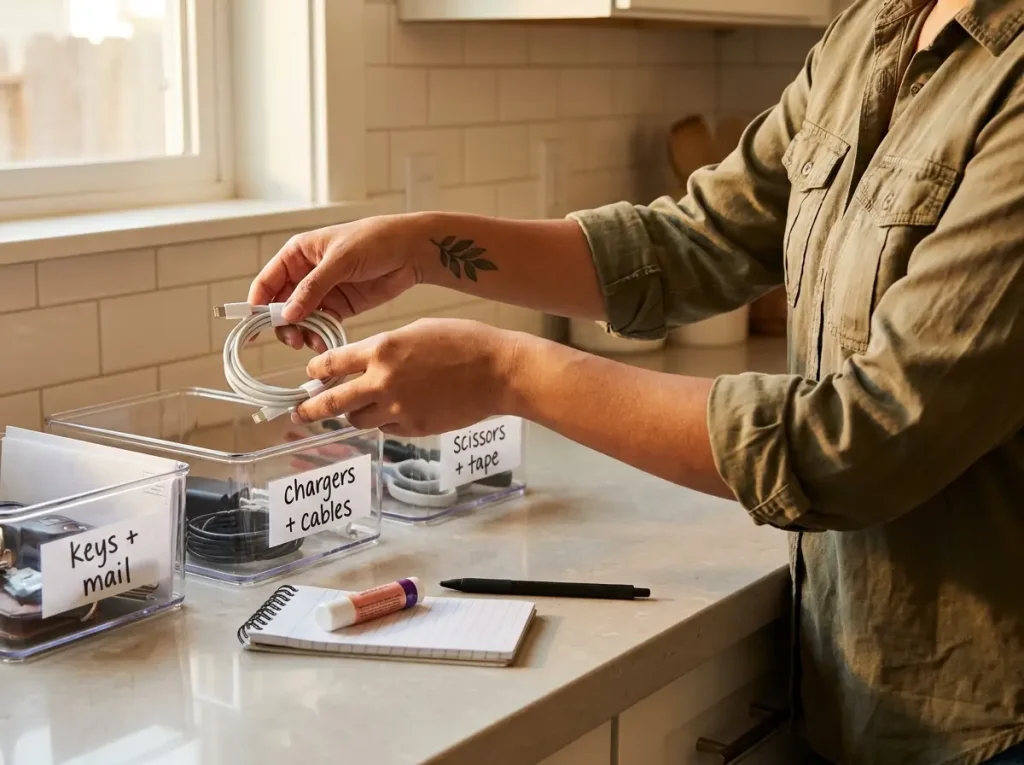
The fix is strict but simple: every item in your apartment gets a labeled spot. If something doesn’t have a spot, either make one or get rid of the thing. The pile on the counter disappears the day you put a small labeled bin there that says “mail — process weekly.”
The 10-Minute Monthly Reset
Set a recurring calendar reminder. Once a month, walk through every zone in your apartment with one question: is everything in its assigned spot? Pull the under-bed containers out and check that nothing shifted. Open the closet and make sure the lower rod items didn’t creep onto the upper rod. Check the over-door organizer pockets for items that wandered into the wrong slot.
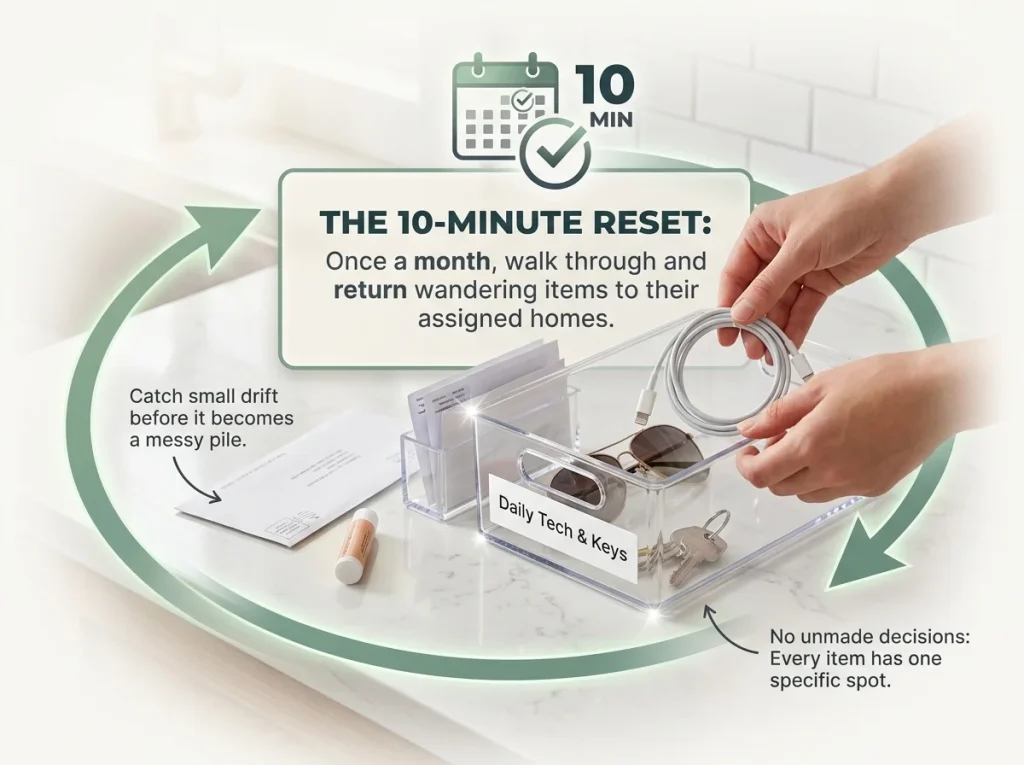
This takes 10 minutes. It catches small drift before it becomes full reversion. The systems that survive past the first month are the ones with a built-in maintenance step. This is yours.
The Floor Rule
If you can see every inch of floor space in a room, that room is organized. The second something sits on the floor that doesn’t belong there — a bag, a box, a pair of shoes outside their spot — the floor becomes a storage surface. And once the floor is storage, the system is already reverting. Use the floor as your visual check. If it’s clear, you’re holding. If it’s not, your small apartment organization system needs a 10-minute reset.
Conclusion
Three things to take away:
- Measure first, buy second. Every successful small apartment setup starts with a tape measure and a list of dead zones. The numbers tell you what fits — guessing is how you end up with a drawer full of organizers that don’t fit your drawers.
- Go vertical and go double. Freestanding shelves to the ceiling, over-the-door organizers on every door, a second rod in the closet. You’re recovering space that was always there — you just weren’t using it.
- Build the reset into the system. The 10-minute monthly walk-through is the difference between a system that lasts and one that looks great for the first photo but falls apart by the third month.
Three-Month Check: Revisit your apartment with this article open. Check that every zone still holds, the under-bed containers are still accessible, and the closet double rod hasn’t sagged. Adjust anything that slipped.
Start with one dead zone. Measure it, find what fits, and set it up. Get that one zone right before you move to the next. You don’t organize an apartment in a weekend — you organize it one solved problem at a time.
Q1 How do you maximize space in a one-bedroom apartment?
Measure every dead zone (under bed, closet, behind doors), add a double rod to the closet, use freestanding vertical shelving, and zone your rooms by activity. Monthly 10-minute resets keep the system from reverting after the first month.
Q2 What furniture saves the most space in a small apartment?
Storage ottomans, platform beds with under-bed containers, and slim rolling carts for narrow gaps save the most usable space. Each piece doubles as storage, reducing the total number of furniture items you need on your floor.
Q3 How do you organize a small apartment with no storage?
Even without built-in storage, vertical surfaces give you usable capacity: freestanding floor-to-ceiling shelves, over-the-door organizers, and under-bed containers all add space without permanent installation. Convert closet doors and cabinet doors into active storage zones with pocket organizers and hooks.
Q4 What are the best no-drill storage solutions for renters?
Over-the-door organizers, freestanding shelving units, bed risers with under-bed containers, hook-on closet double rods, and heavy-duty Command strips (rated up to 16 lbs per pair) all work without touching your walls. Every product in this guide removes cleanly when you move.
Disclaimer: ClutterlessNest is a participant in the Amazon Services LLC Associates Program. As an Amazon Associate we earn from qualifying purchases. This article may contain affiliate links — if you buy through them, we may earn a small commission at no extra cost to you. We only recommend products we have tested or genuinely believe in.