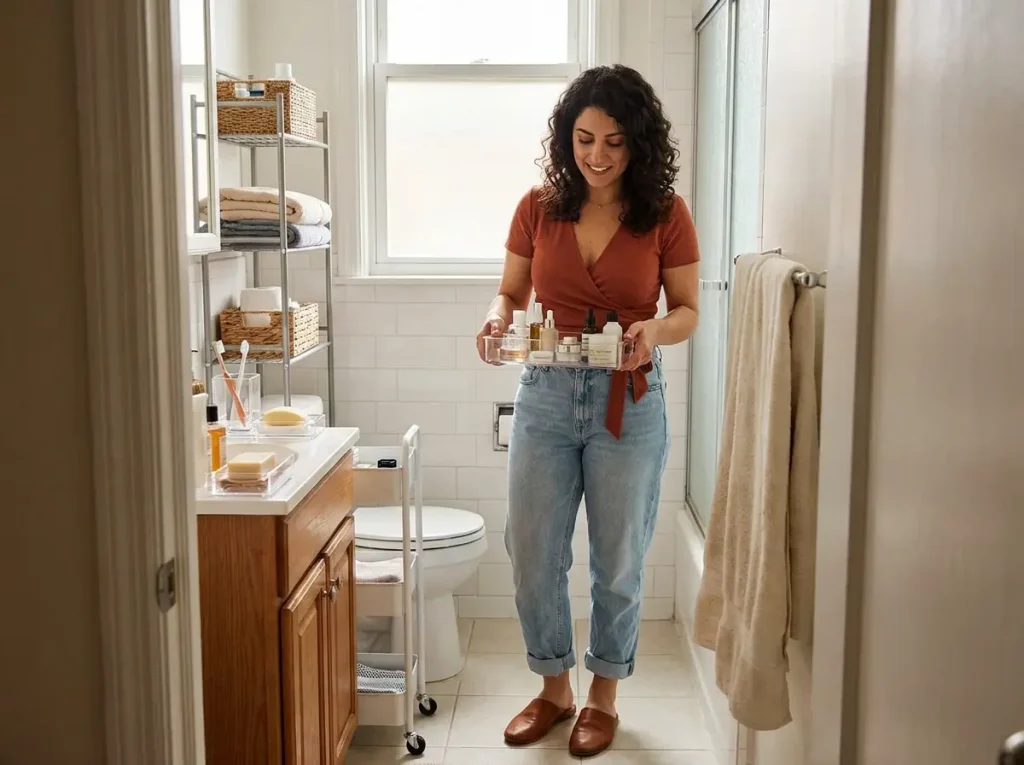
Most bathroom organizers end up in a donation pile within six months. The shelf wobbles, the suction cup caddy crashes at 3 AM, the bamboo tray molds at the base. After organizing dozens of bathrooms with real constraints — small vanities, rental rules, tight budgets — the pattern is always the same: the organizer didn’t match the space it was going into. This guide covers what works zone by zone, what to skip, and the four measurements you need before you buy anything.
Quick Answer: The best bathroom organizers solve specific zones, not general clutter.
- Under sink: expandable shelf that wraps around the pipe, plus a drip mat underneath
- Counter: one clear tray to corral daily items, plus a turntable for the back row
- Shower: tension pole caddy — skip suction cups, they always fall
- Over toilet: freestanding shelf with adjustable feet, no drilling required
- Hidden zones: slim rolling cart for the toilet gap, over-door organizer for the back of the door
Here’s how the top five compare at a glance.
| Product | Best For | Key Size | No Drill | Budget |
|---|---|---|---|---|
| simplehuman Tension Pole | Shower | 6–9 ft pole | Yes | Splurge |
| UTEX Over-Toilet 3-Tier | Over toilet | 25″W × 65″H | Yes | Mid-range |
| SimpleHouseware Under Sink 2-Tier | Under sink | 14–24″W expand | Yes | Budget |
| mDesign Counter Tray | Counter | 12 × 8 × 2 in | Yes | Budget |
| Slim Rolling Cart 7″W | Toilet gap | 7″W × 13″D | Yes | Budget |
What to Know Before You Buy Any Bathroom Organizer
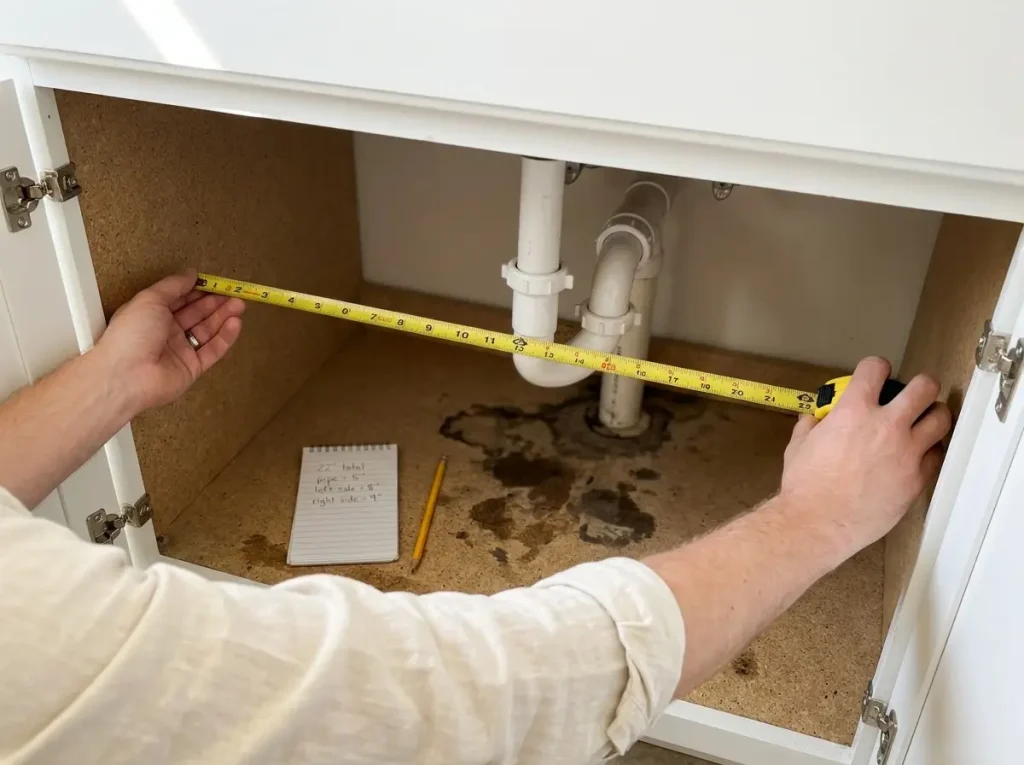
Every bathroom organizer you’ve returned had the same root problem: you bought it before measuring the space it was going into. That’s not a personal failing — it’s how these products are marketed. They show you a perfect photo of an organized bathroom without mentioning the shelf only fits cabinets wider than 22 inches or that the shower caddy needs 8 feet of ceiling height.
Measure These Four Spaces First
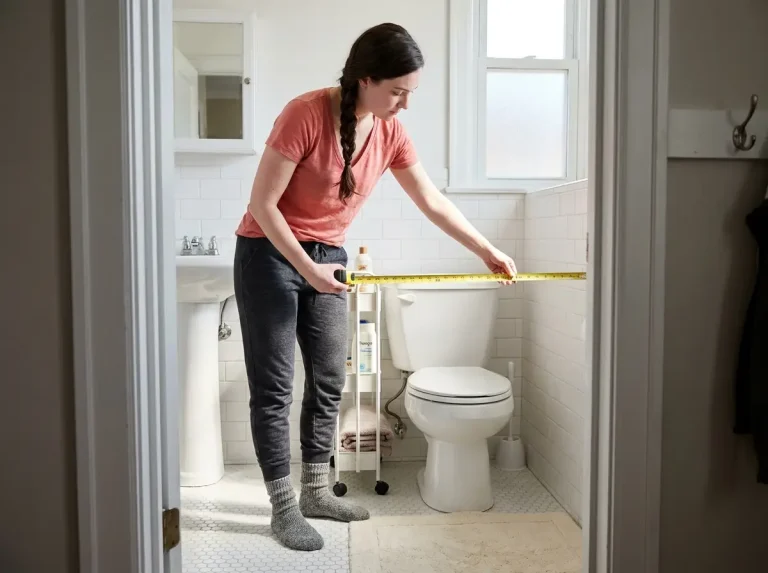
Before you open Amazon, grab a tape measure and write down four numbers: the width inside your vanity cabinet (wall to wall, in front of the pipe), the counter space between the sink edge and the wall, the floor-to-ceiling height in your shower, and the gap between your toilet and the nearest wall or vanity. These four measurements eliminate most return-worthy mistakes.
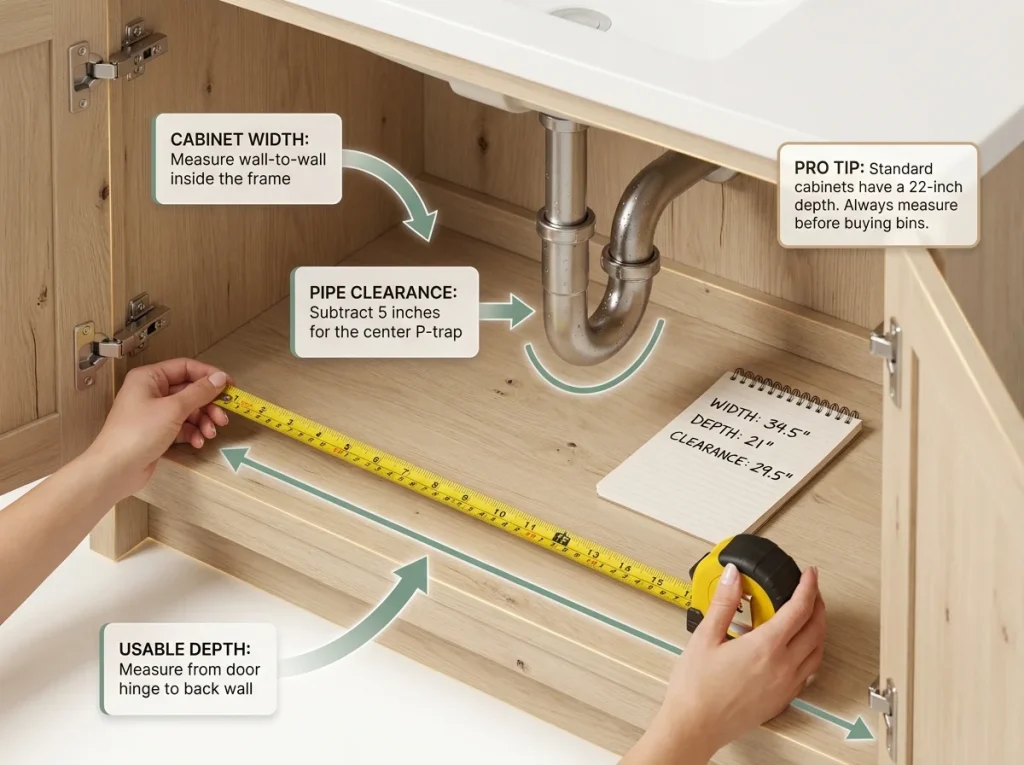
The under-sink measurement matters most because every vanity has a P-trap pipe in the center that eats roughly 5 inches of width. A 22-inch cabinet gives you about 8 inches on each side of the pipe — not 22 inches of usable space. Standard bathroom vanity widths run 24 to 30 inches per NKBA planning guidelines, but rental bathrooms tend toward the smaller end. The toilet-to-wall gap is the measurement nobody thinks to take, and it’s often the best hidden storage in a small bathroom — most gaps run 6 to 10 inches wide.
Pro tip: Write your four measurements on a sticky note and keep it in your phone case. You’ll need them at least three times before your bathroom is fully organized.
Materials That Survive Bathroom Humidity
Bathrooms wreck organizers that work fine in every other room. The humidity cycle — steam from showers, condensation on cold surfaces, standing water around the sink — attacks different materials in different ways. Particleboard shelves swell at the joints and warp within months. Untreated bamboo darkens and eventually molds at the base where it contacts wet surfaces. Cheap chrome-plated wire starts showing rust spots wherever the coating chips, usually at the joints where shelves connect to posts.
What holds up: stainless steel, anodized aluminum, powder-coated steel, molded plastic, and silicone. For over-toilet shelves, powder-coated steel or solid wood with a polyurethane seal are your safest bets. For shower organizers, stainless steel or anodized aluminum are the only materials that genuinely resist rust long-term. Everything else is a matter of when it fails, not if.
Renter-Friendly Means No Drill and No Damage
Every organizer in this guide is renter-friendly — freestanding, tension-mounted, adhesive-mounted, or over-door. No drills, no screws into walls, no holes to patch when you move out. If you own your bathroom and want to mount shelves permanently, these same products still work — you just have more options, not different ones. For no-drill solutions that work across rooms, the renter closet guide covers adhesive weight ratings and Command strip limits in detail.
Best Under-Sink Bathroom Organizers
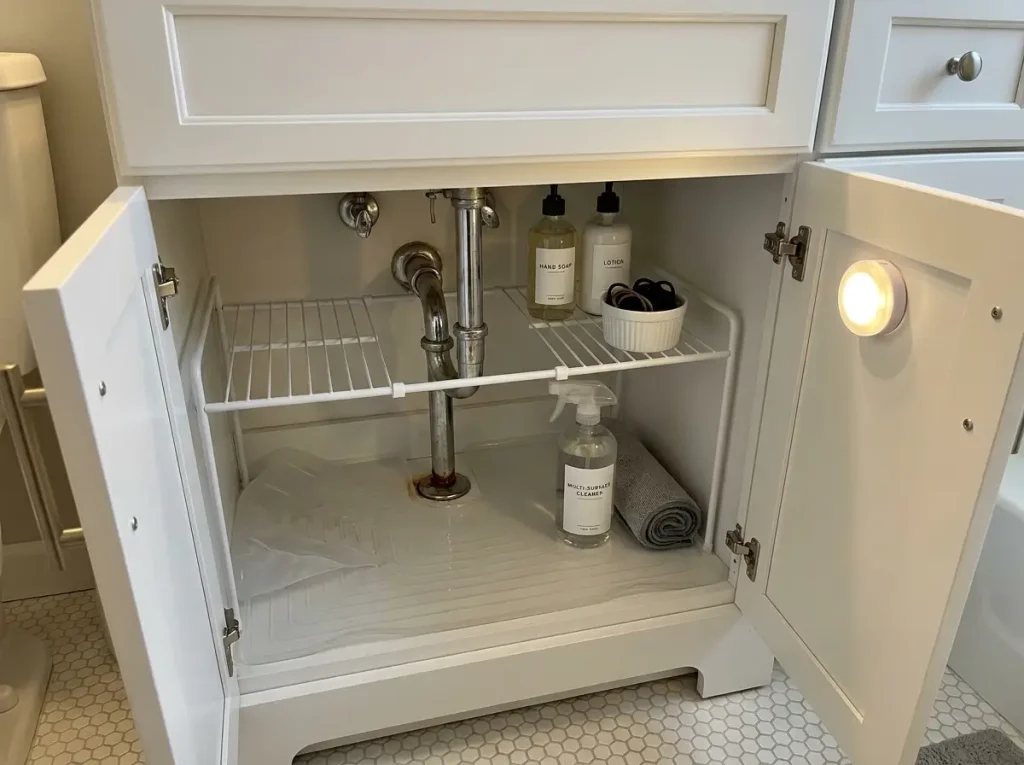
The space under your bathroom sink is the most wasted zone in most bathrooms. Everything slides around when you open the cabinet door, bottles fall behind the pipe where you can’t reach them, and slow drips from the P-trap ruin anything stored on the cabinet floor. Fixing this zone requires two things: something that organizes around the pipe, and something that protects the floor from water.
The Pipe Problem and How to Organize Around It
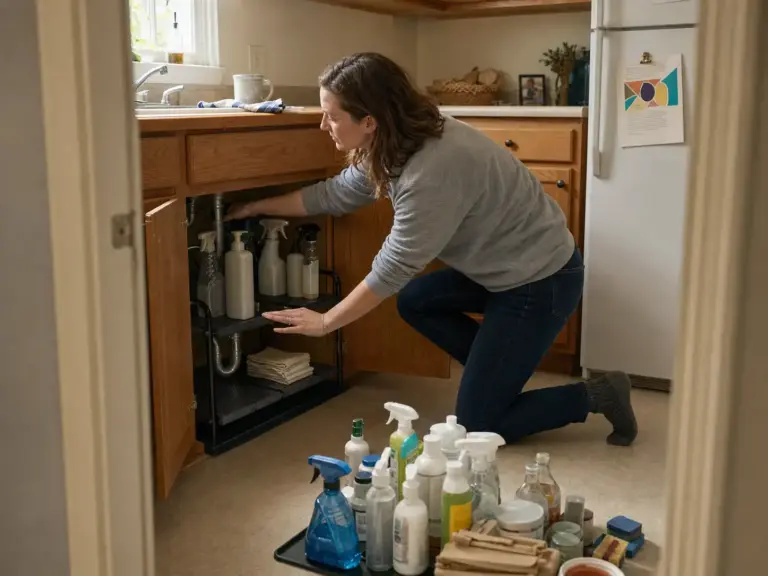
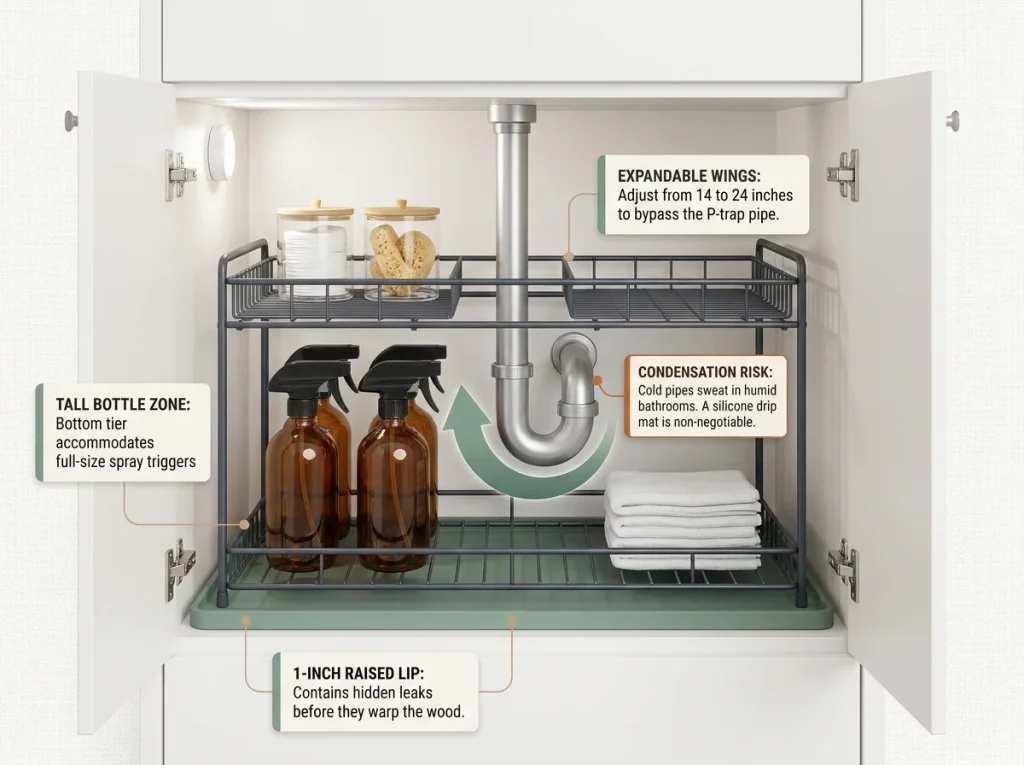
The P-trap pipe in the center of your vanity cabinet isn’t going anywhere, so the organizer has to go around it. Standard bins and shelves don’t account for this — they either don’t fit or leave dead space on both sides. What works is a two-tier expandable rack with adjustable side wings that angle around the P-trap while giving you usable storage on both tiers.
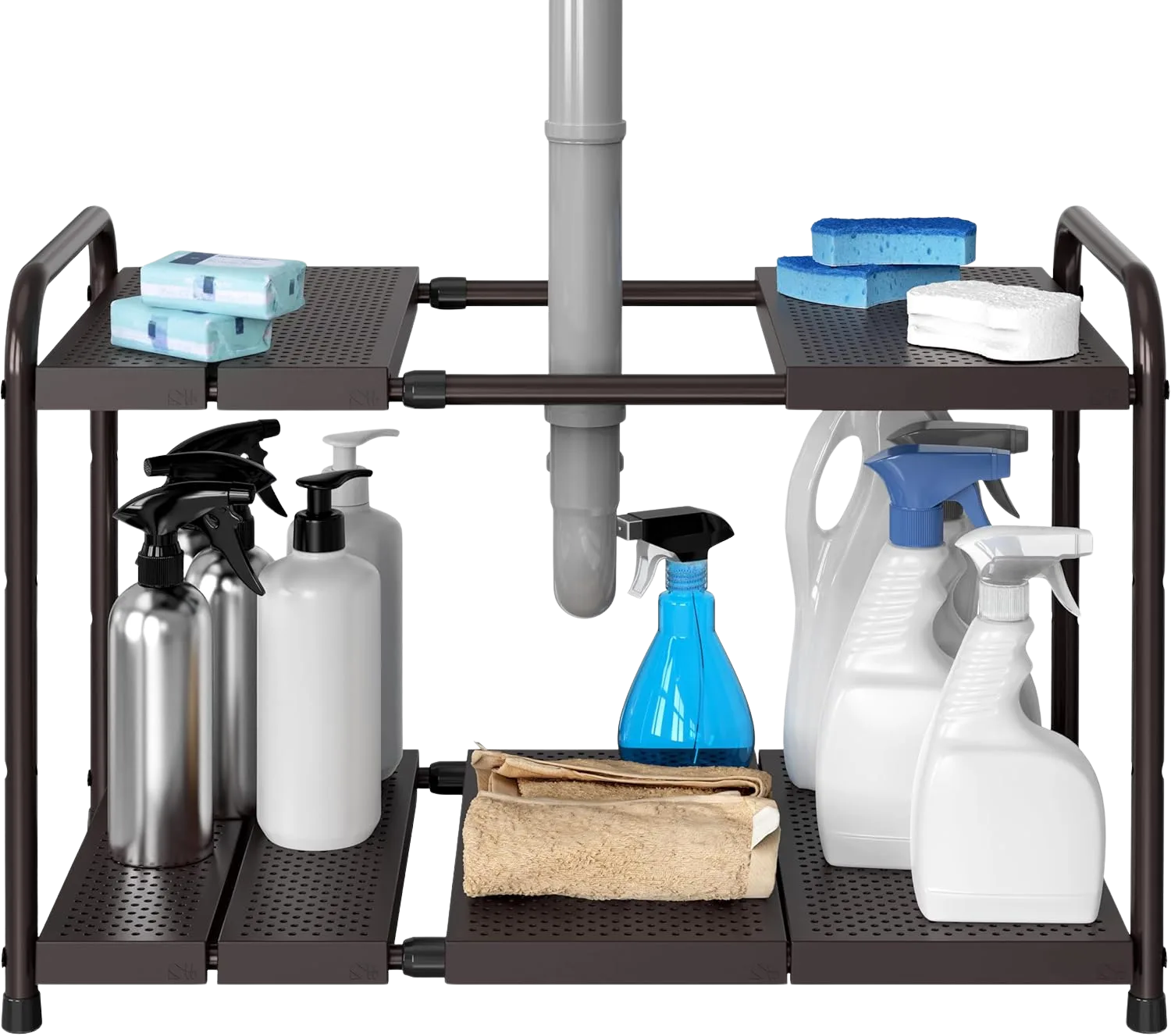
The budget alternative is even simpler: a tension rod spanning the cabinet width with spray bottles hung by their triggers. It costs almost nothing and works if you only need to store a few cleaning bottles. If you’ve dealt with the same pipe-wrapping challenge under your kitchen sink, the approach is identical — the bathroom version just scales for a narrower cabinet.
Why You Need a Drip Mat Under Everything
Here’s the thing nobody mentions until it’s too late: bathroom pipes sweat. Even when nothing is actively leaking, the temperature difference between cold water pipes and warm bathroom air creates condensation that drips onto whatever’s sitting below. A single slow drip over six months will warp a particleboard cabinet floor and ruin anything stored on it. You won’t notice until you pull everything out and find the floor is soft and discolored.
The Silicone Under-Sink Drip Mat (34×22″, 1″ raised edges) catches drips before they become water damage. The raised lip keeps water contained, and the silicone wipes clean in seconds. Lay it down first, then put your organizer on top. There’s no budget alternative here because this already is the budget solution.
Pro tip: Check your drip mat once a month. If you find standing water, you don’t have a condensation problem — you have a leak. Tighten the P-trap connections or call maintenance before it gets worse.
Best Bathroom Counter Organizers
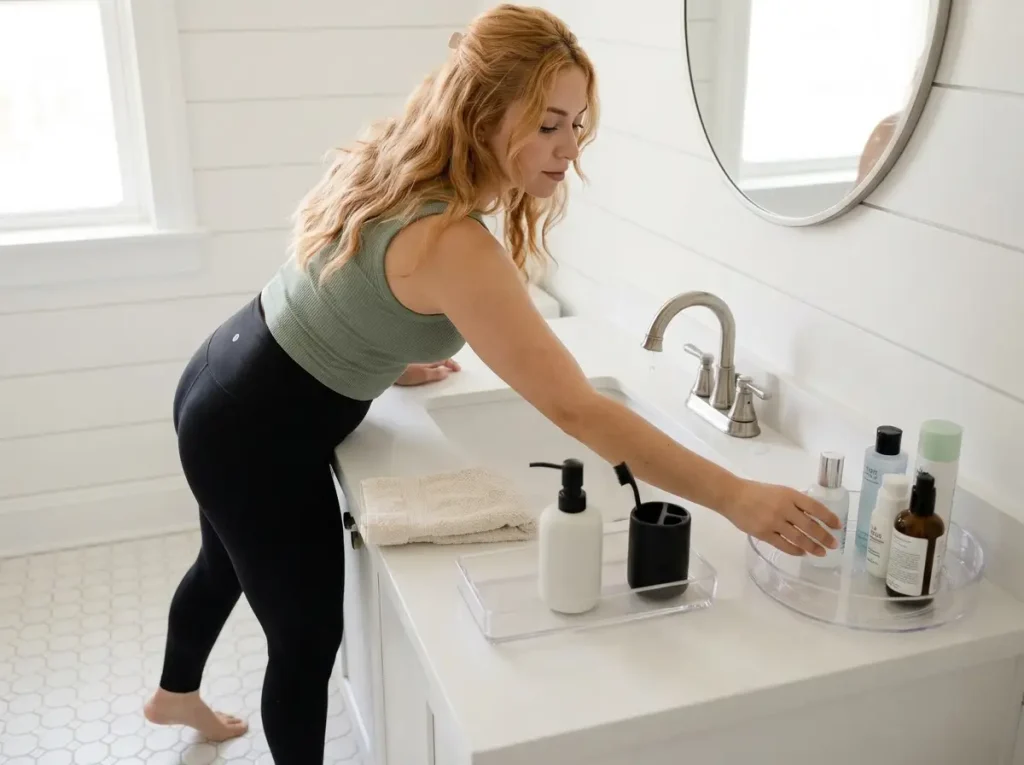
Bathroom counters get cluttered because everything that touches your face or hands ends up there — toothbrush, soap, moisturizer, vitamins, hair ties, and whatever migrated from the medicine cabinet last week. The fix isn’t more storage on the counter. It’s containment.
One Tray, One Rule: Contain the Counter
The one-tray rule works like this: everything that lives on your counter has to fit inside one tray. If it doesn’t fit, it doesn’t stay on the counter. This isn’t minimalism — it’s a visual boundary that prevents the slow creep of items across the entire surface. A tray with a small rim gives you a pickup-and-wipe zone: lift the tray, wipe the counter underneath, set it back. You’ll be surprised how much toothpaste splatter collects under there once you start checking.
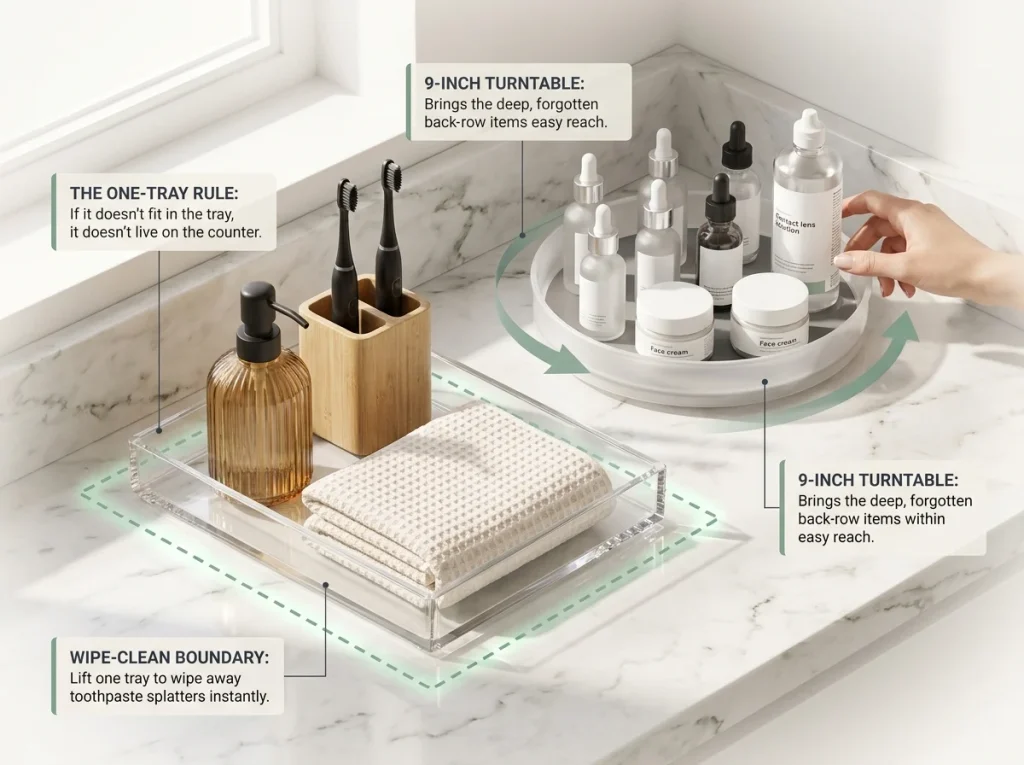
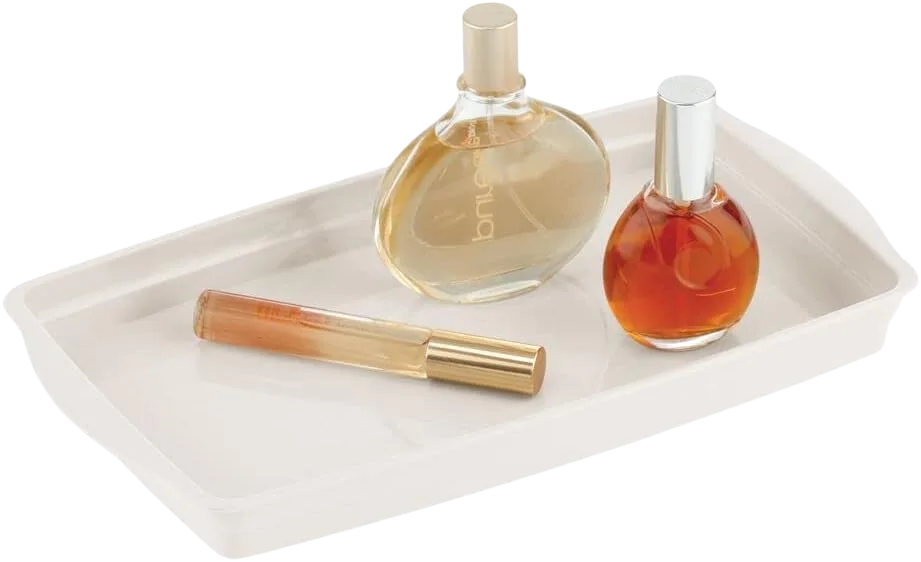
If you don’t want to buy anything, a small shallow baking dish or decorative plate you already own does the exact same job — same containment, same wipe-underneath function, same visual boundary. The tray just looks more intentional on a bathroom counter.
The Turntable Fix for Deep Vanities
If your vanity counter is deep enough that items get pushed to the back row and forgotten, a turntable brings everything within reach with a spin. The Copco Non-Skid Turntable (9″ diameter, 1″ depth) is sized for tight bathroom counters — the non-skid base keeps it from sliding when you turn it. Use it for items you rotate through but don’t grab every single day: vitamins, skincare bottles, contact lens solution.
Nine inches is the max turntable diameter that works on most bathroom counters without eating into your sink clearance. If your counter is wider, a 12-inch version works too — but measure from the sink edge to the wall first. If you’ve already got a lazy susan in the pantry that’s collecting dust, try it in the bathroom before buying a new one.
Best Shower Organizers
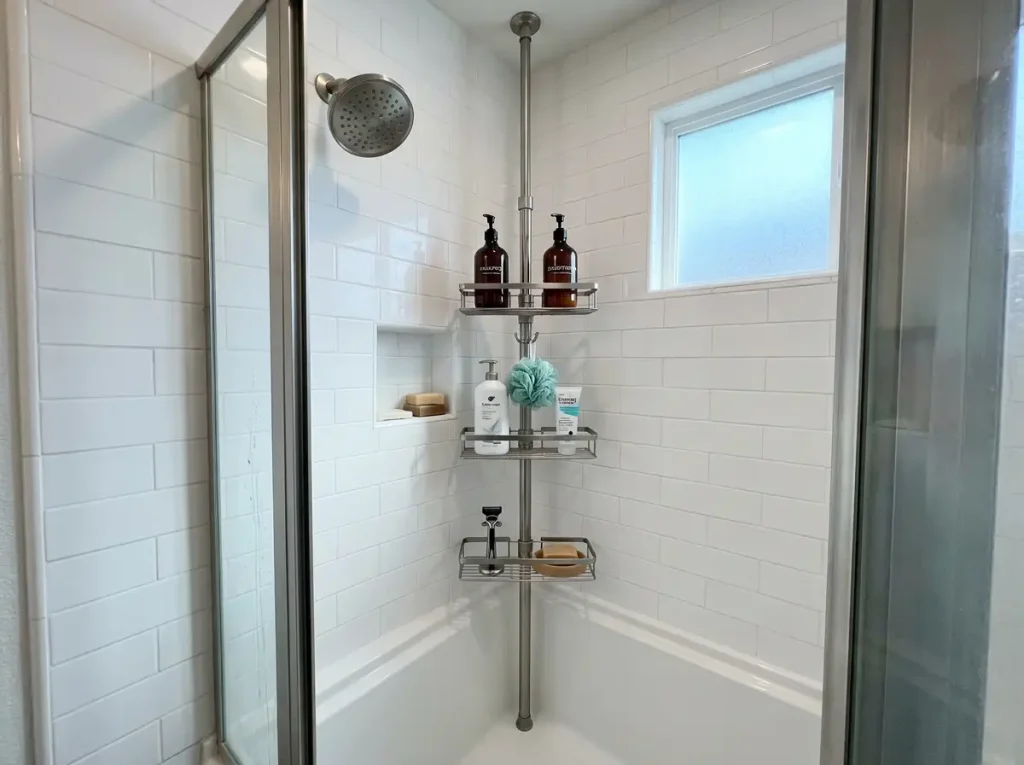
Shower organizers are where most people waste the most money. Suction cup caddies. Plastic corner shelves that pop off the wall. Adhesive hooks that peel in humidity. You’ve probably bought and thrown away at least two of these already.
Why Suction Cups Always Fail
Suction cups fail in showers for a reason that has nothing to do with the cup quality: soap residue. Shampoo, conditioner, and body wash leave a thin film on tile and glass that breaks the seal. You can clean the surface, reattach the cup, and it’ll hold for a week — then slip again once the film builds back up.
It’s not a quality problem — it’s a physics problem. Stop buying suction cup organizers for your shower.
Tension Pole vs. Adhesive Corner Shelf
A tension pole caddy is the most reliable shower organizer because it doesn’t touch your walls. Floor-to-ceiling tension means no adhesive to degrade, no suction cups to slip, and no drilling into tile. The shelves adjust up and down the pole to fit tall bottles, and the whole thing comes out clean when you move.
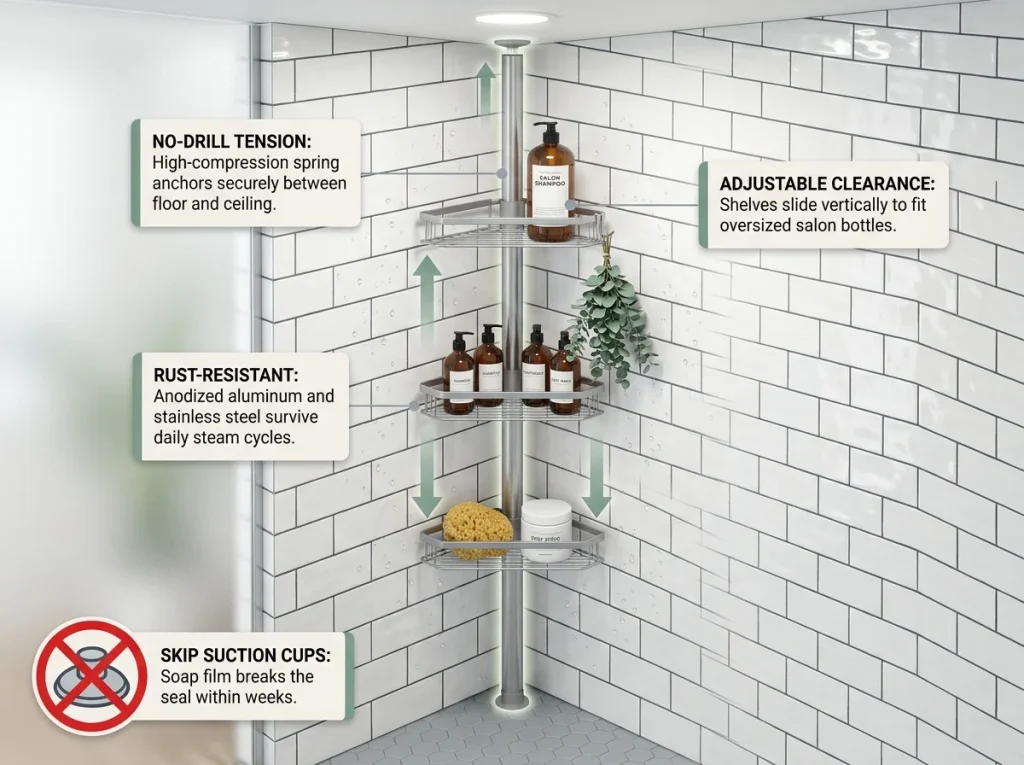
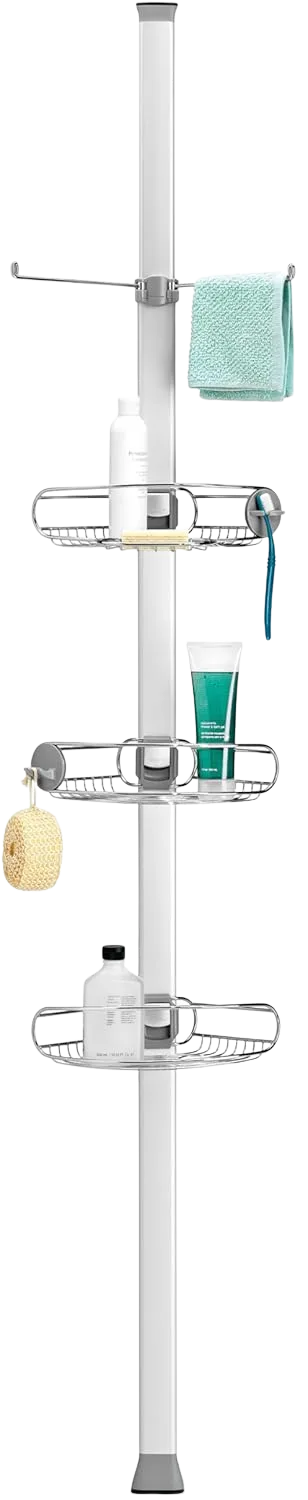
The budget alternative is an adhesive corner shelf with waterproof adhesive (not suction cups). It costs roughly a third of the tension pole setup, but the adhesive is semi-permanent. Fine for homeowners, worth checking your comfort level if you’re renting and want to leave no trace when you move out.
Best Over-Toilet, Door, and Wall Organizers
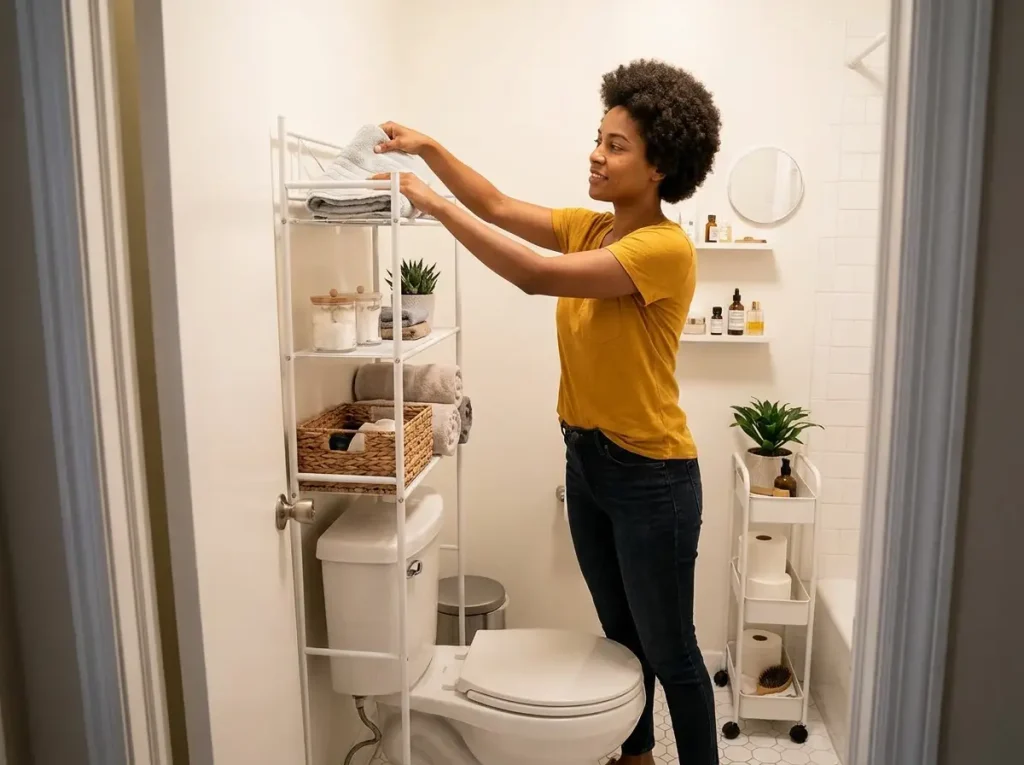
The space above your toilet, the back of your bathroom door, and the empty walls are the three zones most small bathroom storage plans overlook entirely. Together they can add more usable storage than your vanity cabinet provides — without taking up a single square inch of floor space.
Over-Toilet: Freestanding Beats Wall-Mounted
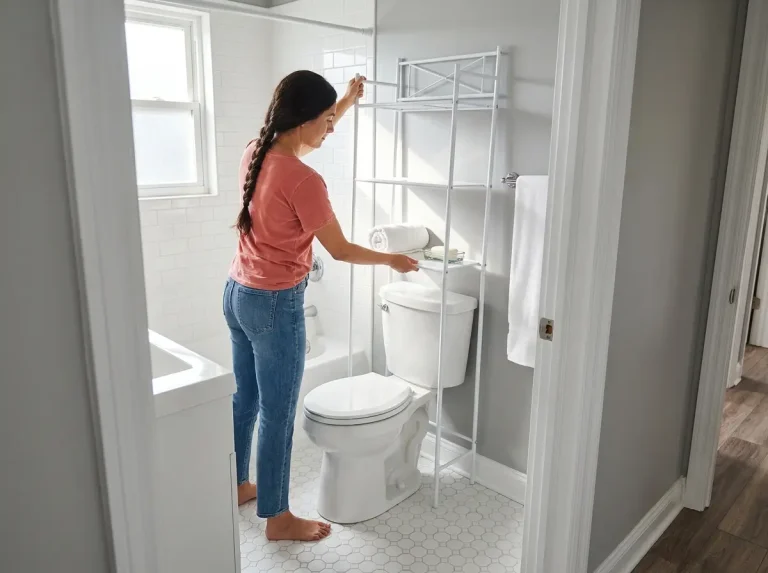
Wall-mounted over-toilet shelves require drilling into tile or drywall behind the toilet — awkward to install, impossible for most renters, and if you miss a stud you’ve got a heavy shelf on drywall anchors you’ll never fully trust. Freestanding units sit on the floor and lean against the wall. No hardware, no risk, no landlord conversation.
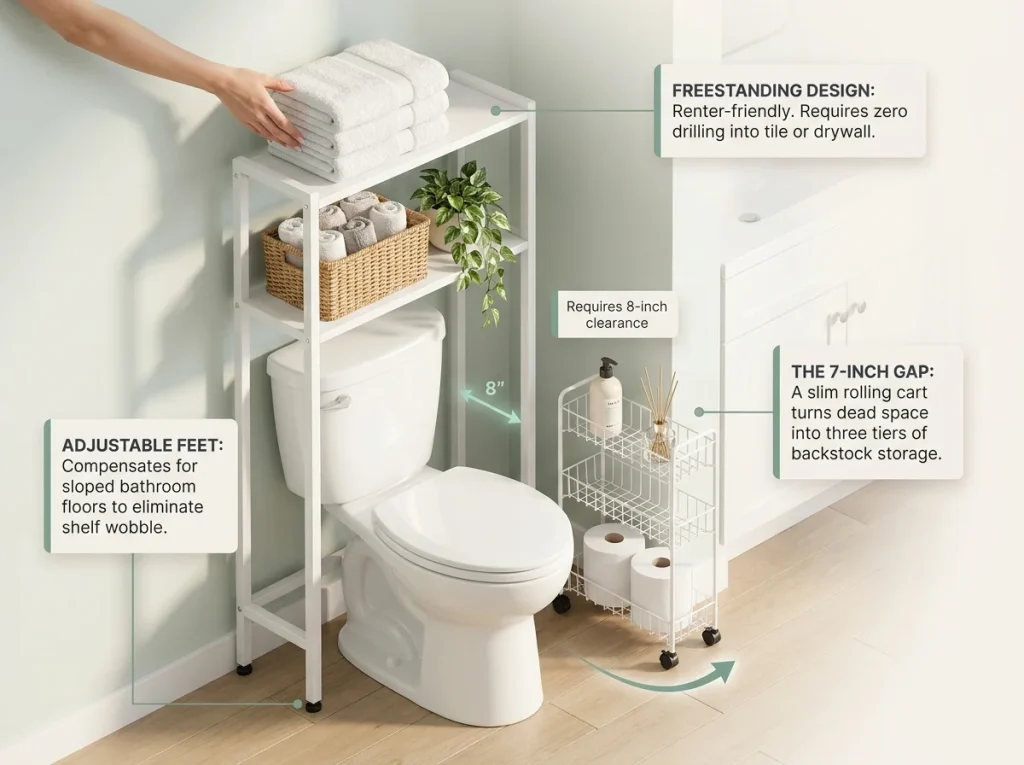
The detail that separates a good freestanding unit from a wobbly one is adjustable feet. Bathroom tile is almost never perfectly level — it slopes toward the drain, old buildings settle unevenly, and sometimes the grout lines create tiny height differences. Adjustable feet eliminate the wobble that makes you nervous about putting anything on the top shelf. I covered six over-toilet options in the over-toilet shelf comparison — the UTEX held up best.
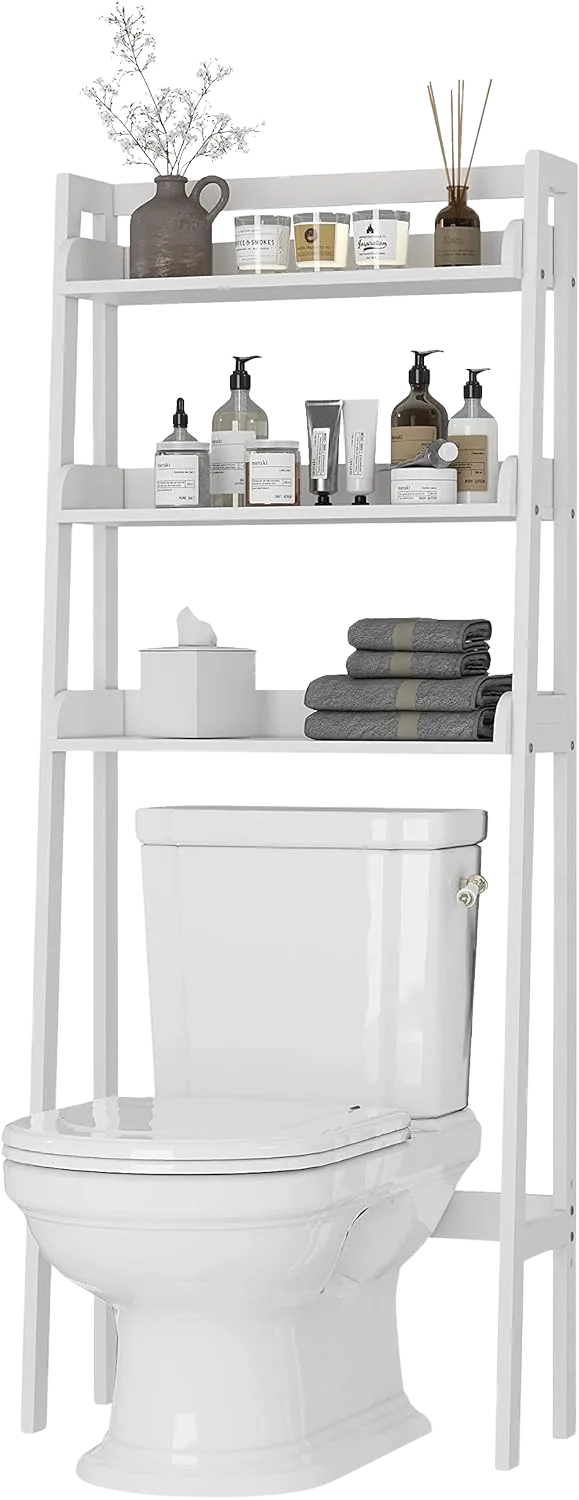
The budget alternative is a simple ladder shelf leaned against the wall behind the toilet. Less storage capacity, but zero assembly — and free if you already have one elsewhere in the house.
The Toilet Gap Is Free Storage
That narrow gap between your toilet and the wall or vanity — typically 6 to 10 inches — is free storage that most people walk past every day without thinking about. A slim rolling cart turns this dead space into three tiers of accessible storage that rolls out when you need something and rolls back to nearly disappear.
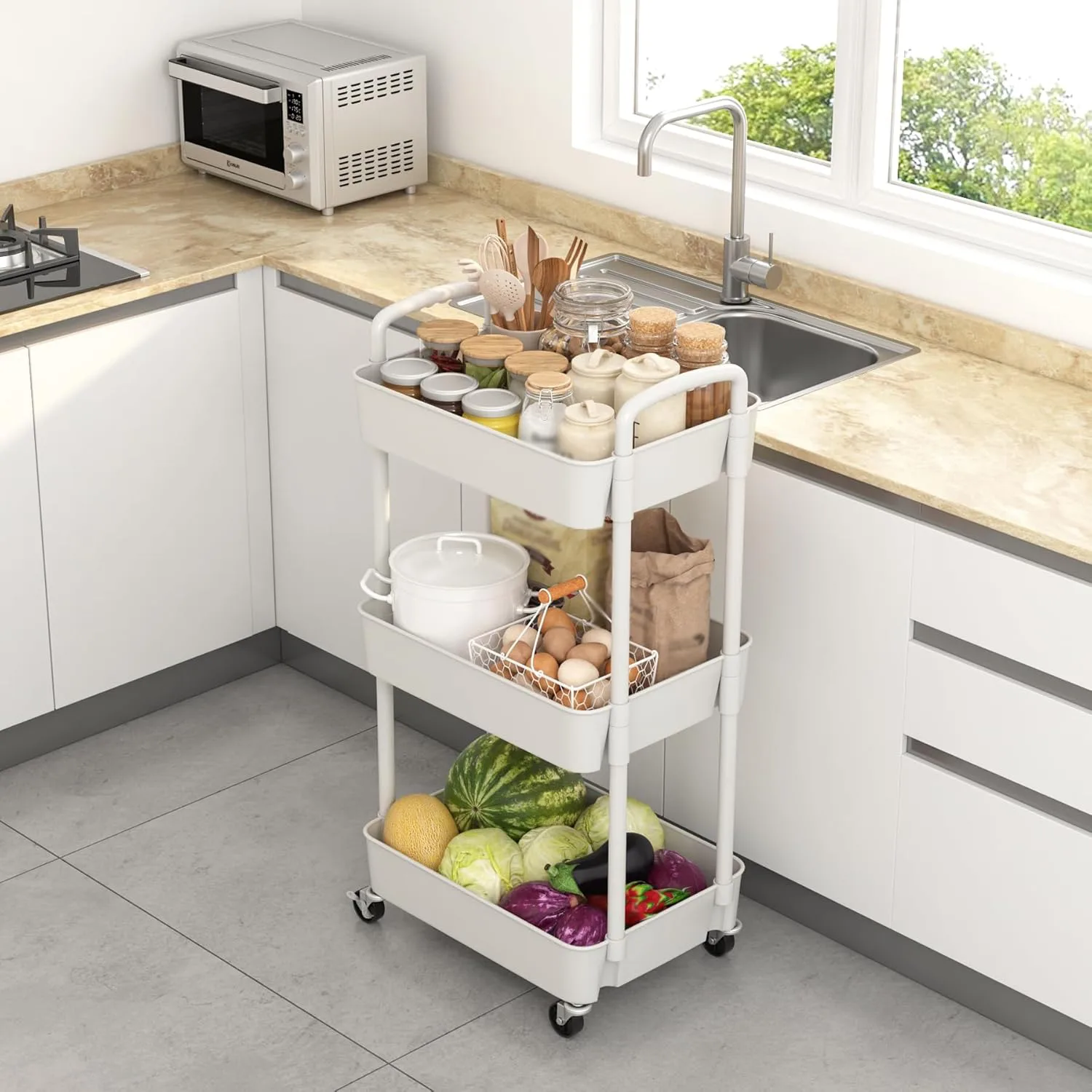
Measure the gap before you buy. The cart needs to slide in and out freely, so leave at least half an inch of clearance on each side. A 7-inch cart needs a gap of at least 8 inches to operate smoothly.
Pro tip: Put the item you reach for most — hand lotion, air freshener, or a phone charger — on the top tier of the rolling cart. Reserve the bottom tier for toilet paper backstock you only grab every few days.
Doors and Walls: When You’ve Run Out of Floor
Once your floor space and counter are maxed out, the back of your bathroom door and the empty wall sections are the last zones to put to work. Both add real storage — the trick is matching the organizer to the surface.
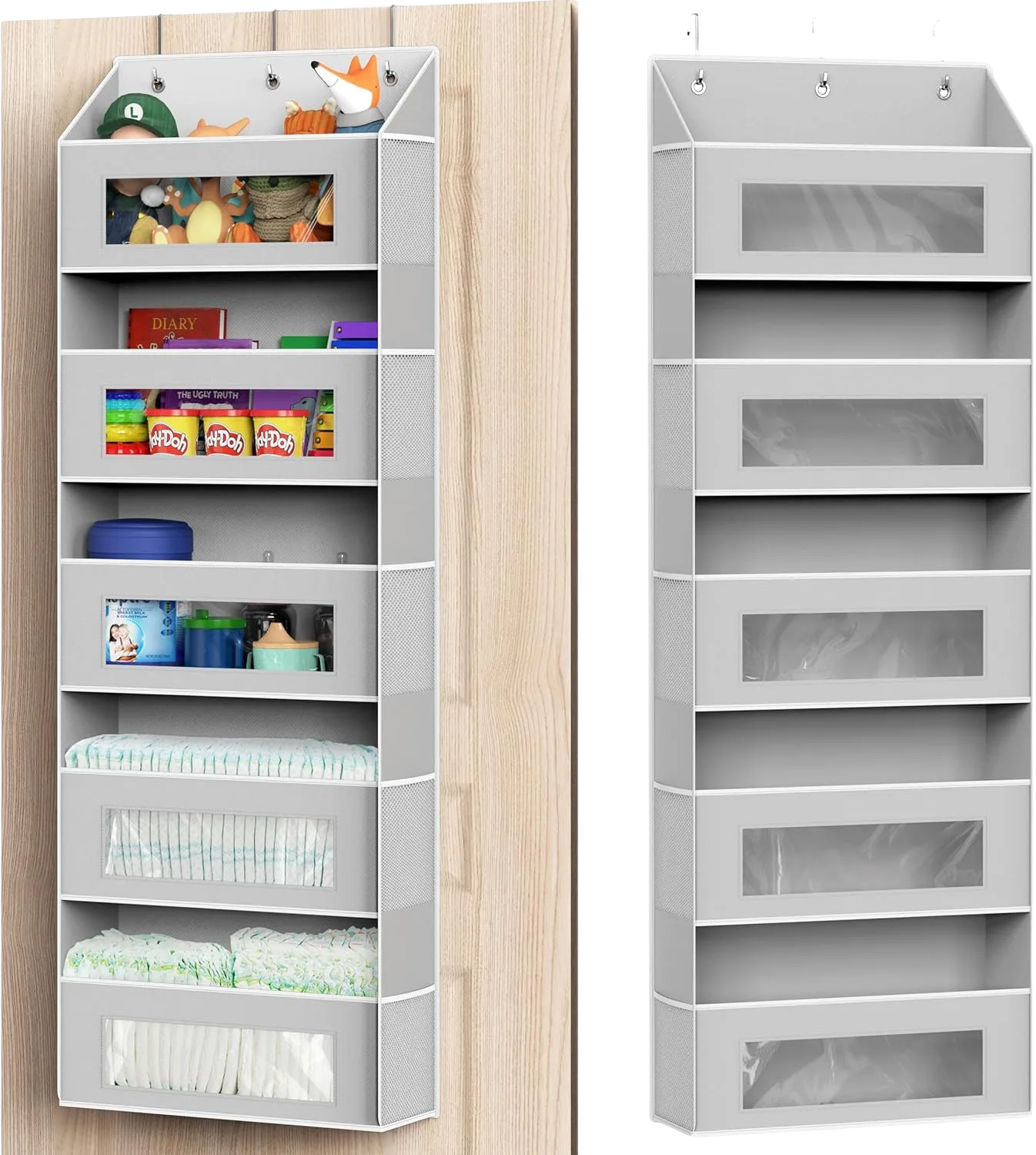
For the bathroom door, an over-door organizer hooks onto the frame without any hardware. The SimpleHouseware Over-The-Door Organizer (5-tier) needs about 2 inches of clearance between the back of the door and the nearest wall or toilet — measure this before buying, or the door won’t close. Wire mesh tiers let damp items drain and dry, which matters more in a bathroom than in a closet.
For walls, adhesive floating shelves are the renter-friendly option. The Floating Wall Shelf No-Drill 16.5″ (2-Pack) uses bathroom-rated adhesive strips and holds small toiletries, a candle, or a plant. Place them above the toilet area or beside the mirror for storage that takes zero floor or counter space. If your adhesive strips are rated for humid conditions (Command Bath strips, for example), they’ll hold for years without damaging the wall. For more storage ideas matched to specific small bathroom zones, the 11-idea guide covers this in detail.
Conclusion
Three takeaways:
- Measure before you buy. Four numbers — under-sink width, counter depth, shower height, toilet gap — prevent most returns and most frustration.
- Organize by zone, not by product. Each bathroom zone has different constraints and needs a different type of organizer. An under-sink rack won’t fix your counter, and a counter tray won’t help your shower.
- Skip suction cups. Tension-mounted, freestanding, and adhesive organizers are the only ones that hold up in bathroom humidity long-term.
Three-Month Check: Pull out the drip mat and look for standing water. Re-tension any shower pole that has slipped. Empty the counter tray and remove anything you haven’t touched in 90 days — it belongs somewhere else or nowhere at all.
Start with the zone that frustrates you most every morning. Get that one right. Then move to the next.
thly five-minute check: wipe the drip mat, toss empty bottles, and remove anything from the counter tray you haven’t used in the last 30 days.
Q1 What is the best way to organize a small bathroom?
Organize by zone — under sink, counter, shower, over toilet, door, and walls — instead of buying products at random. Measure each zone first, then pick one organizer per area that fits those exact dimensions. Start with whichever zone causes the most daily friction.
Q2 How do I organize my bathroom without drilling?
Use freestanding shelves, tension-mounted caddies, adhesive strips rated for humidity, and over-door hooks. Every organizer in this guide works without tools or wall damage, making them all safe for renters who want their full deposit back.
Q3 Are suction cup shower caddies worth buying?
No. Soap residue on tile and glass breaks the suction seal within days, regardless of the brand. A tension pole caddy or waterproof adhesive corner shelf stays put permanently without the inevitable midnight crash onto your shampoo bottles.
Q4 What should I put under the bathroom sink?
An expandable shelf organizer that wraps around the P-trap pipe, placed on top of a silicone drip mat. Keep daily items on the top tier and cleaning supplies or backstock below. Avoid particleboard organizers — they swell and warp from bathroom humidity within months.
Q5 How often should I reorganize my bathroom?
A well-built system needs no full reorganization. Run a monthly five-minute check: wipe the drip mat, toss empty bottles, and remove anything from the counter tray you haven’t used in the last 30 days.
Disclaimer: ClutterlessNest is a participant in the Amazon Services LLC Associates Program. As an Amazon Associate we earn from qualifying purchases. This article may contain affiliate links — if you buy through them, we may earn a small commission at no extra cost to you. We only recommend products we have tested or genuinely believe in.