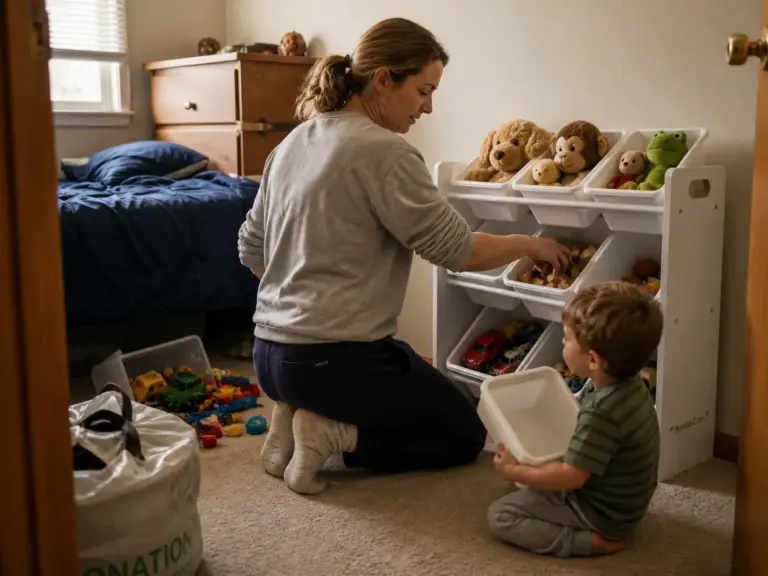
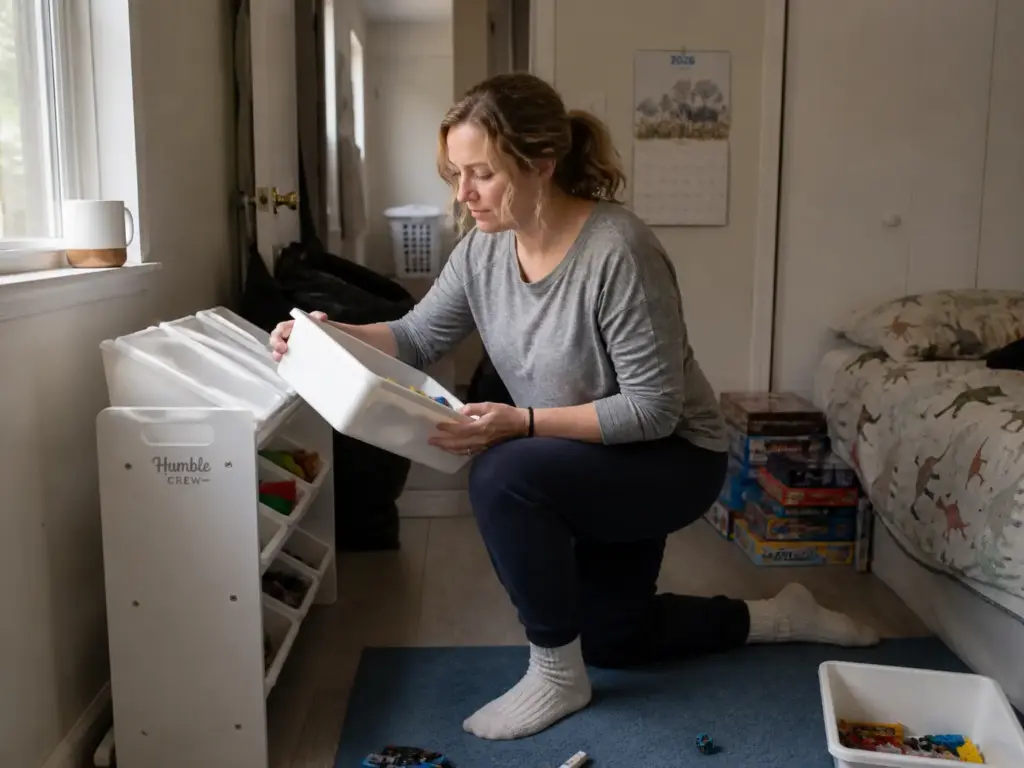
You bought the bins. You sorted everything by category. It held for about a week, and now the floor looks exactly like it did before, except now there are also bins on it.
The problem usually isn’t your system, and most toy storage ideas for small spaces skip right past the reason: you ran out of wall. A storage plan that works beautifully in a room with eight feet of clear wall collapses in a room where windows, a closet swing and a radiator chop that wall into three useless segments. This article treats the square footage as the actual constraint being solved, with the numbers competitors leave out: cubby dimensions, door weight limits, reach lines. We’ll go vertical first, then into furniture that hides toys, then containment by toy category, then the renter track, then the shared bedroom.
Quick Answer
In a small room, floor space is the scarce resource and every container standing on it competes with the play surface. Five approaches carry most of the weight:
- Go vertical before you go wider. Walls and doors cost zero floor footprint
- Pick furniture that hides toys instead of furniture that announces them
- Match the container to the toy category, not one big bin to everything
- Rotate the inventory so the room never holds all of the toys at once
- Measure the clear wall segment before buying any cube unit
Why One Big Toy Box Fails in a Small Room
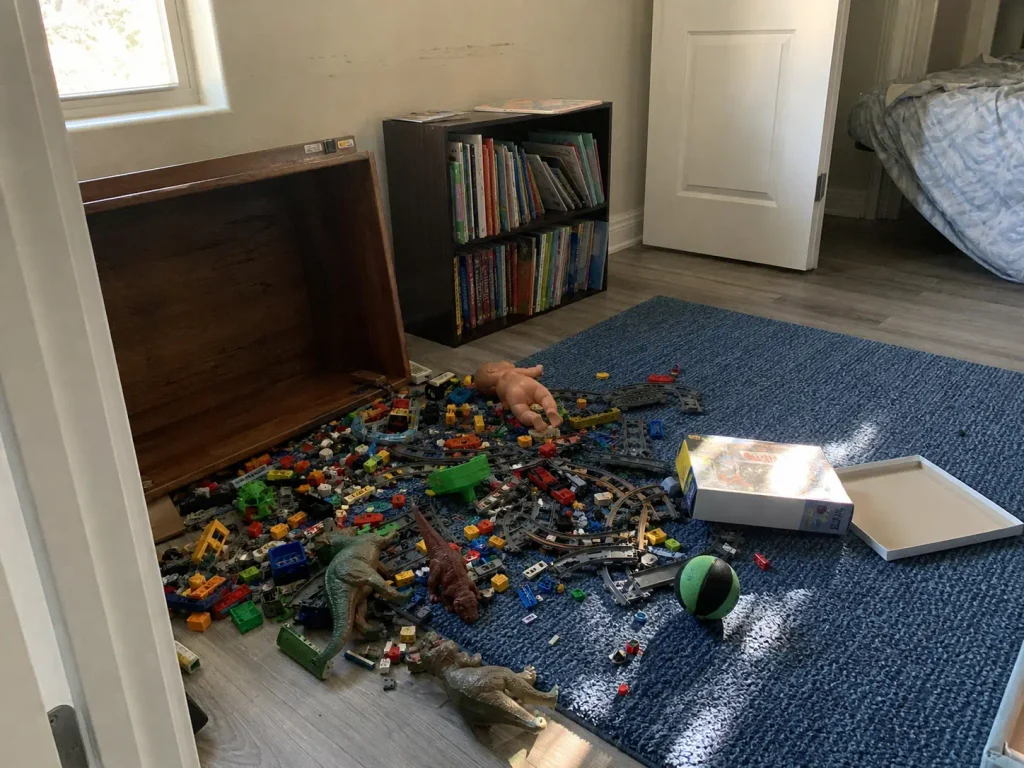
There’s a story that gets told over and over in organizing communities, and one version of it comes from a family who moved five times with the same IKEA cubby-and-bin toy system. It worked in four houses. In the fifth it fell apart within weeks, and not because the kids changed or the bins wore out.
The new room had windows, a fireplace and built-ins carving up every wall, so there was no run of blank wall long enough to hold the grid the system was built around. That’s a spatial failure wearing an organizational failure’s clothes, and it’s the single most useful thing to understand before you buy anything else.
Here’s the math nobody publishes. A standard cube storage organizer cubby runs about 13 inches per side, with 11-inch and 15-inch versions also common. That means a 2×2 unit is roughly 26 by 26 inches, and the tidy 4×4 grid photographed in every toy storage article needs more than four feet of clear, uninterrupted wall.
Go measure the longest unbroken wall segment in your kid’s room right now. Once you subtract the door swing, the window, the closet and the bed, most small bedrooms come up well short of that four-foot run. The 4×4 unit was never going to fit. A single row or a 2×2 was always the real answer.
Depth is the second trap, and it’s the one that makes a single large toy box quietly hostile. Put everything in one deep container and the toy your kid wants is, statistically, near the bottom. So the box gets dumped. Every time.
That dump isn’t the kid being messy. It’s the container working exactly as its shape dictates, which is why “get a bigger toy box” makes the problem worse rather than better. Shallow beats deep in almost every small-room scenario, even when the shallow option holds less.
Then there’s visual load, and this is the part that only shows up below a certain square footage. In a dedicated playroom, ten open bins read as organized because the room’s whole job is holding toys. Put those same ten bins in a small bedroom that also has a bed, a dresser and a person sleeping in it, and they read as clutter at identical capacity.
No separate room means every container sits in the sightline permanently. Nothing is hidden by default. That’s why small-room storage has to answer a question a playroom never asks: what does this look like when nobody’s playing?
Before you spend anything, though, do the free fix: declutter the room’s active inventory down, then rotate the rest. Toy rotation, meaning you keep a subset of toys in the room and box the remainder elsewhere, is what a toy rotation system recommended by NAPO-affiliated professional organizers points to ahead of any purchase, and organizers make the case that a smaller number of toys out at once does more for imaginative play than a full inventory does.
The spatial version of that argument is blunter. A small room physically cannot hold a complete toy collection, no matter how good the bins are. You can buy your way to better containment. You cannot buy your way to more cubic feet. If the room is over capacity, every storage purchase is just relocating the overflow.
This article stays on the spatial question. For the reach heights, labeling and reset routine that make the whole space work, the whole-room system that keeps a kids’ bedroom working past week three covers the framework this sits underneath.
Vertical Storage That Reclaims the Floor
In a small kids’ room the floor is the play surface. That’s the thing the room actually exists for, and every bin standing on it is stealing from that. Height is the one dimension a small room still has to spare, and almost nobody uses the dead space above knee level except for a bookshelf that’s too tall to reach anyway.
The trade is straightforward: a floor bin costs footprint, a wall-mounted organizer costs none. Mesh and net versions get pitched as reclaiming roughly 70% of the floor space a bulky floor bin eats for the same stuffed animal storage volume, and that ratio is about right for anything soft and light.
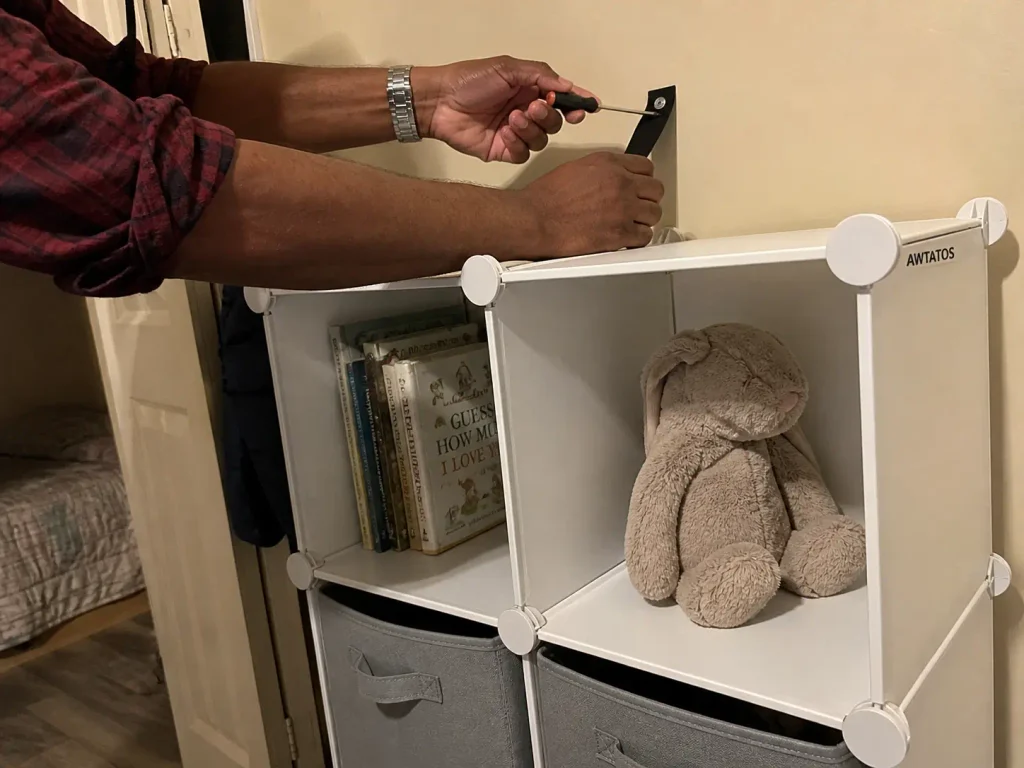
Before a single thing goes on a wall, though: anchor it. Any freestanding unit taller than it is deep gets an anti-tip strap, no exceptions and no negotiating.
The CPSC’s Anchor It! campaign, which tracks furniture tip-over injuries in children reports that a child dies roughly every 11 days in the US from a TV, furniture or appliance tip-over, and the agency has recorded 234 clothing-storage-unit tip-over fatalities between 2000 and 2022, 199 of them children. A cube organizer loaded with toy bins is exactly the shape and weight distribution that failure mode describes. Straps cost less than one bin.
The anchoring guidance carries a placement rule that runs against instinct, and it matters more in a small room than anywhere else. CPSC advises keeping appealing items off the top shelves so kids aren’t tempted to climb. But in a cramped room, the tall unit is almost always where the good stuff ends up. Up high, out of reach, out of the way.
Invert it. Daily-use bins go low, where the kid can actually reach them, and the rarely-touched things go up top on the anchored unit. That single swap fixes the climbing hazard and the put-away problem at once, because anything a child is expected to tidy has to be reachable without a foot on a shelf. Child-height storage is the only storage a child maintains. Shelves above that reach line are parent storage: call them that and stop expecting the four-year-old to use them.
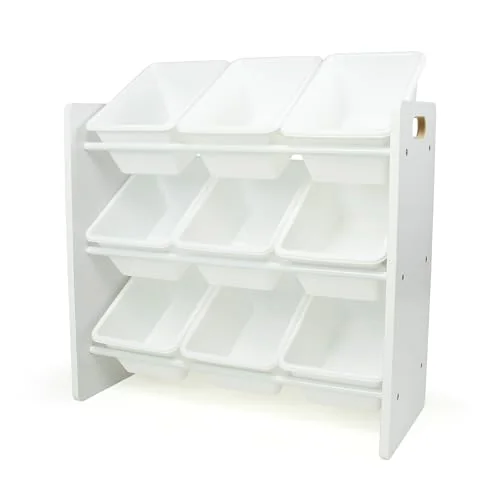
When the wall run is broken up and no single unit fits cleanly, freestanding and stackable beats fixed. The AWTATOS 6 Cube Storage Organizer can be stood upright against a narrow segment, turned on its side under a window, or split into two shorter stacks flanking a doorway, which is the flexibility a chopped-up wall needs. Lower profile also means less tipping leverage, though a stack of two still gets strapped. Its weakness is the same as every open cube: whatever goes in has to look tolerable, because it’s all visible all the time.
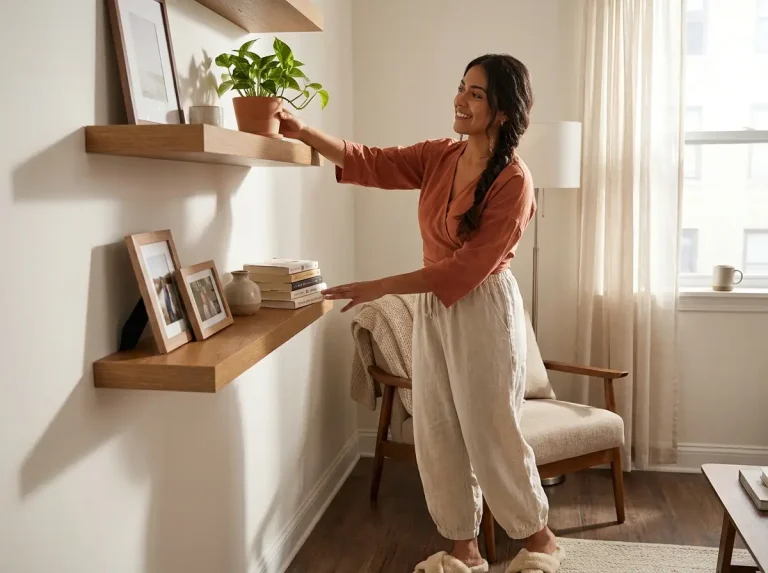
For the wall itself, shelves are where the real reclaimed footprint lives, as long as you’re honest about weight. Floating shelves that hold real weight in a small room walks through the mounting side of that, including the no-drill picks that overlap with the rental track further down this page.
Measure your wall segment in cubby units before you shop, not in inches. Divide the clear run by 13 and round down. If you get 2, you’re shopping for a 2×2 or a 2×4 vertical, and every 4×4 photo you see from here on is irrelevant to you. It saves the return trip.
Furniture That Hides Toys Instead of Announcing Them
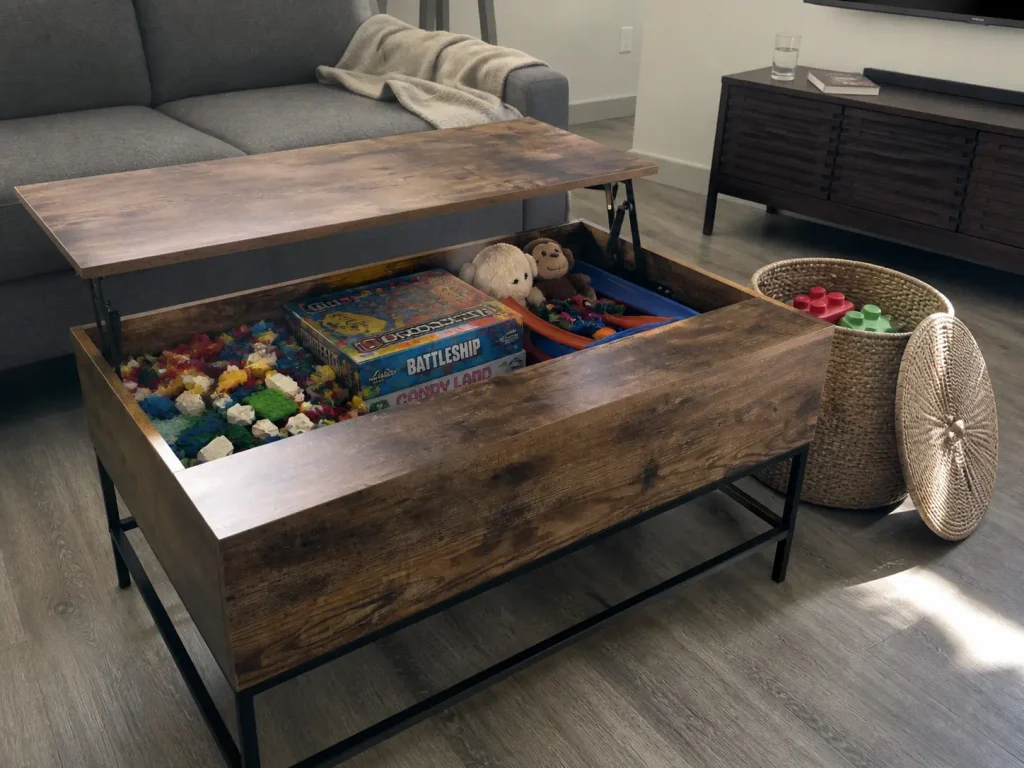
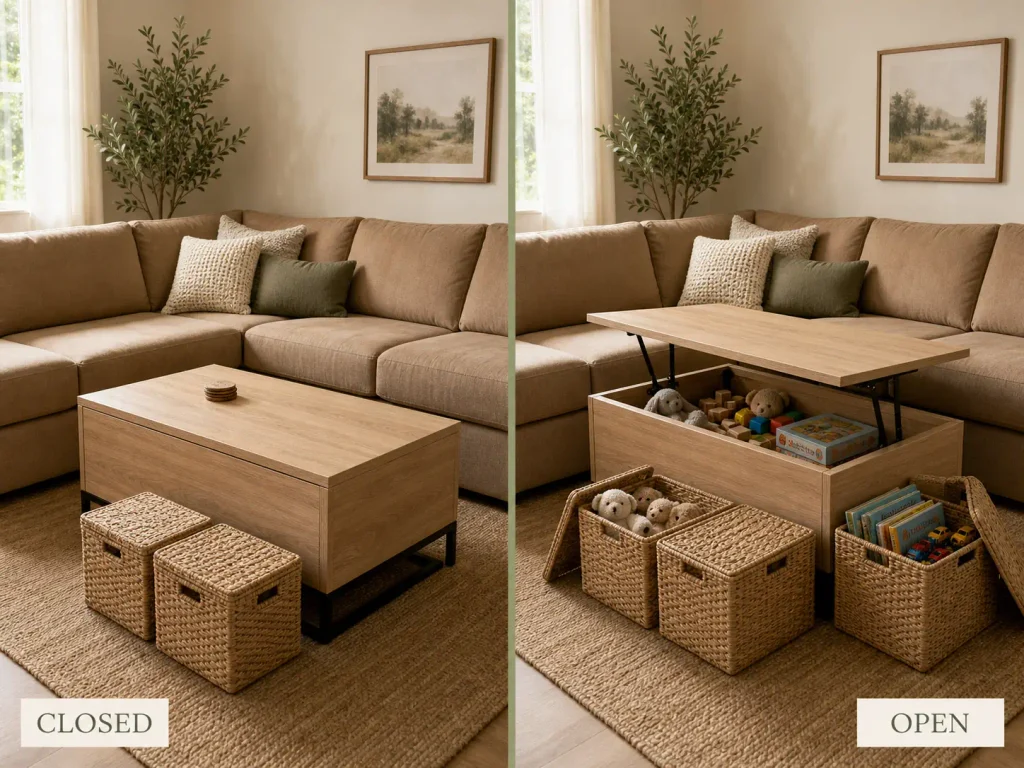
The goal in a room adults also live in is a room that looks like it has no toy storage at all. Competitors call it the “can you spot the toys” reveal: the space reads as a normal living room or a normal bedroom until the cabinet doors open and the basket lids come off, and then it turns out the toys were in the room the entire time. That’s a fundamentally different target than a playroom, and it changes what you buy.
The community shorthand for it is “real furniture”, meaning pieces that aren’t visually coded as kids’ storage. No primary colors, no cubby-and-bin silhouette. In a shared room, that coding is the difference between a living room with toys in it and a nursery annex with a couch.
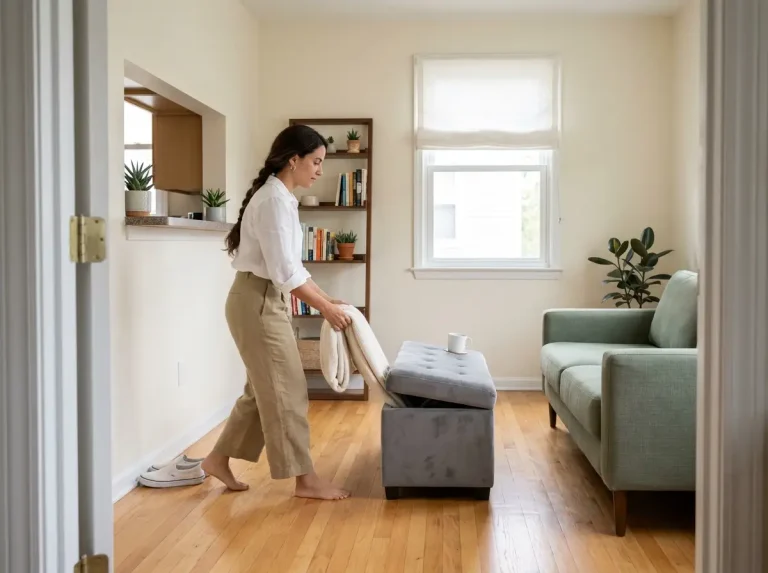
Now the correction, and it’s the one thing on this page I’d most want a parent to read twice. The storage ottoman gets recommended as the universal small-space fix. It’s in every article. And it works, right up until the room also has to be the play space.
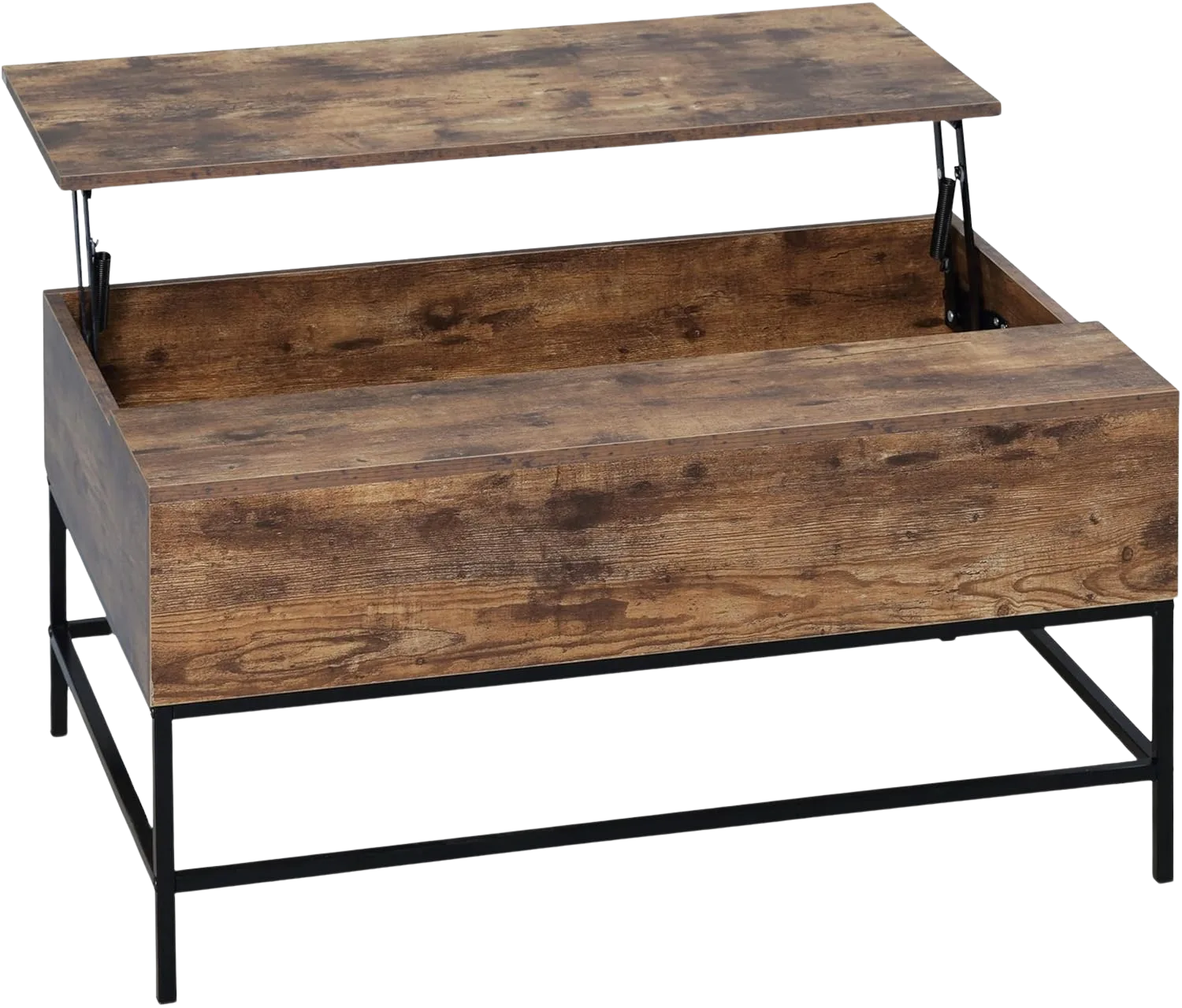
Field testing by one small-space blogger landed on the opposite of the standard advice: a soft-topped ottoman used as the coffee table actively hurts play, because kids need a hard surface for building, puzzles and board games. A padded lid gives them nothing to build on, so all of that migrates back to the floor, which is the exact mess the ottoman was purchased to contain. The ottoman stores toys and displaces play in the same move. For coffee table storage in a room that doubles as a play space, a hard lift-top table with a compartment underneath does both jobs off one footprint.
Before replacing any furniture, audit what already has a cavity. The TV console with doors. The storage bench under the window. The gap under an existing side table, which will happily swallow a basket. A basket slid under a table you already own costs nothing and does most of what a purpose-bought storage piece does.
In a room that’s short on space, adding furniture to solve a storage problem is a trade, not a win. If the free version covers it, take the free version and spend the money elsewhere. The same logic runs through furniture that earns its footprint twice in a small apartment if you’re weighing a bigger swap into genuinely multi-functional furniture.
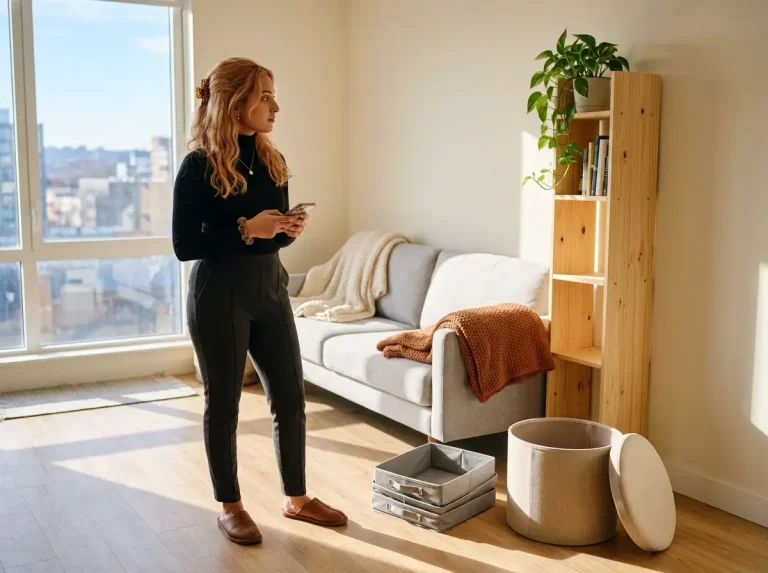
Material matters more than volume once every container is permanently in view. Woven baskets and wicker baskets read as decor; fabric bins land in between; bare stackable bins in clear plastic read as mess, at identical capacity holding identical toys. That’s not an aesthetic preference, it’s how a small room’s visual budget works — the same reason decorative baskets are the default on any shelf an adult also looks at.
The HONCESTA 18 x 18 x 14-inch storage basket with lid is sized for bulk building toys on open shelving, where a clear bin of the same volume would announce itself from the doorway. Worth knowing: a soft-sided basket that big will slump when it’s under half full, so it wants a category that actually fills it.
Which brings up lids, where a lot of systems quietly die. The obvious rule is to lid everything, since a lid is what makes a container read as furniture instead of storage — well, that’s the rule right up until a four-year-old meets it. A lidded basket a child can’t open one-handed becomes a decorative object within a month, and whatever was supposed to go inside it lives on the floor instead. So the rule that actually holds up is narrower: lids on the storage the adult manages, open containers on the storage the kid manages. If your child is meant to put something away without help, do not put a lid between them and the task. And if the toys in question have colonized the couch area rather than the bedroom, keeping a small living room’s storage from reading as clutter goes deeper on the shared-room version of this problem.
Matching the Container to the Toy Category
One bin for everything fails for a reason that has nothing to do with discipline: the categories fail at different rates and in different directions. Building bricks grow. Stuffed animals multiply without anyone buying any. Tiny accessory pieces vanish into carpet. A single container can’t serve all three, and a small room punishes the mismatch faster because there’s no slack anywhere to absorb it.
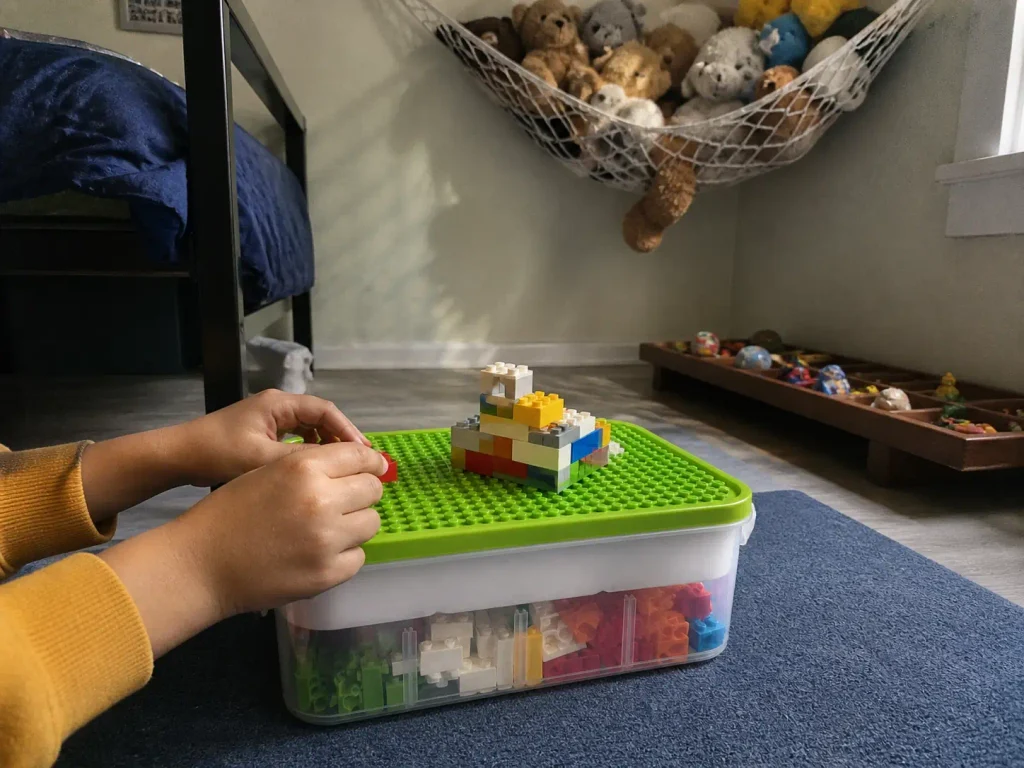
Start with building blocks, because they’re the category that breaks the plan first. LEGO and DUPLO collections routinely outgrow whatever closed cabinet was budgeted for them and end up needing a larger open container within a year. Plan for the category to grow rather than for its current volume, and accept that closed cabinet storage is usually a stage, not a destination. There’s also a neat two-birds option here: the LEGO storage organizer with baseplate lids uses a buildable baseplate as the lid, so the container is the build surface and you skip needing a separate table in a room with space for neither. The trade is capacity: two stackable layers is a starter-set volume, not a five-year collection, so it’s a sorting-and-building station rather than the whole storage answer.
Stuffed animals are the opposite problem. Nothing about them is small-part-sensitive, they’re light, and they grow purely by gift-giving. They’re also the ideal candidate for dead vertical corner space, which is the one thing a small room has going spare and no floor bin ever touches.
The large Lilly’s Love stuffed animal hammock expands to roughly 67 x 47 x 47 inches across a room corner and is rated to hold up to 12 pounds, which is a lot of plush. Two honest limitations: it needs hardware in the wall or ceiling corner, which rules it out in strict rentals, and animals stored at ceiling height stop being played with. Use it for the overflow tier, not the favorites.
Small toy pieces (doll shoes, game tokens, tiny figures, the parts that end up underfoot) need compartments, not volume. A shallow divided tray beats a deep bin every time here, because depth is precisely what makes small pieces disappear. Anything more than a few inches deep and the pieces migrate to the bottom in a layer nobody sifts through. Drawer dividers do the same job inside a dresser drawer you already have, and mesh bags work for the sets that travel between rooms, since you can see the contents without opening anything.
Flat categories go the other way. Board games and puzzle boxes are the natural under-bed storage tenants, though why under-bed toy storage reverts within a week covers the clearance measurements that decide whether a rolling bin or a flat one is the right call under your frame.
Books stand up, toys lie down. For book storage in a small room, a front-facing ledge holds a fraction of what a bookshelf holds and gets used far more, because a small child picks a book by its cover and not by a half-inch of spine text. The ledge earns its wall.
One more signal to watch for, because it saves you a wasted purchase. There’s a widely shared version of this beat where a dress-up collection grew past what a single corner basket could hold, and the instinct was to buy a bigger basket for the same corner. The bigger basket is almost never the fix. When a category outgrows its container, that’s the cue to re-zone the whole category somewhere else, whether that’s a section of closet or a hook rail on the back of a door, not to scale up the same container in the same spot. Scaling up in place is how a small room turns into a room with one enormous bin in it.
The Renter Track and the Shared Small Bedroom
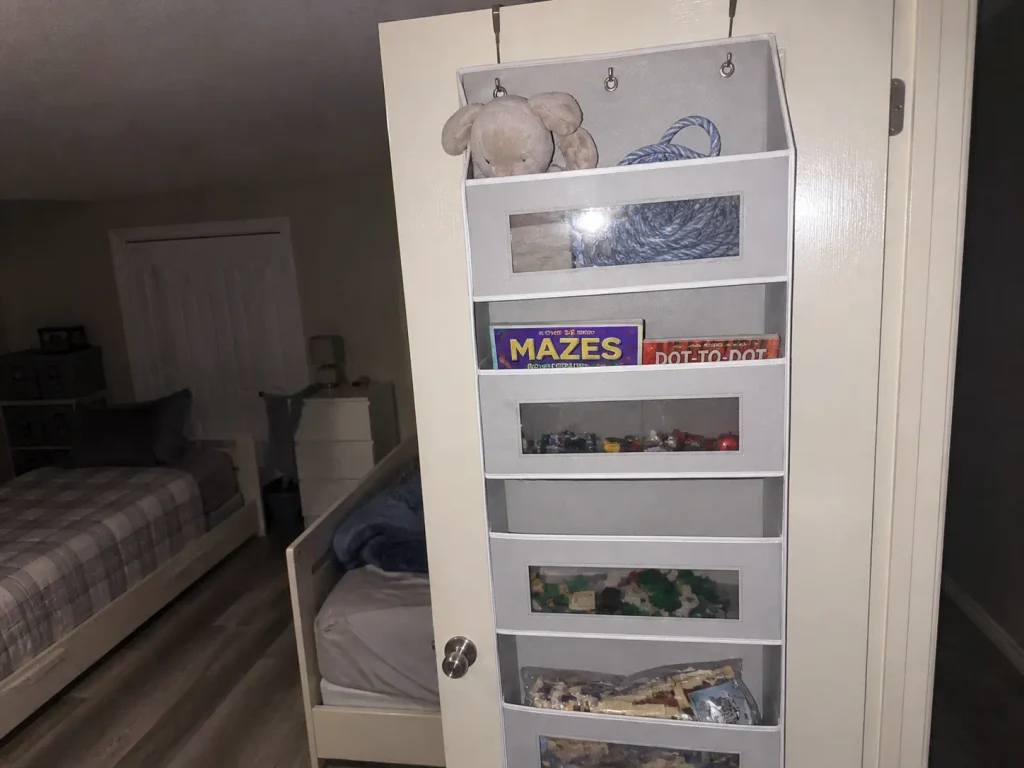
Every “just mount it to the wall” recommendation quietly assumes you own the wall. And the whole small-room problem doubles when two kids split the space: same square footage, two full toy inventories, and a sibling boundary dispute layered on top.
When You Can’t Drill
Over-the-door organizers are the default no-drill answer, and they’re a good one, but they get recommended as though the door has no opinion. It does. Hollow-core interior doors, the standard in rentals, are typically rated for only about 20 to 40 pounds of total hanging weight, and unless a bracket screw lands within roughly half an inch to an inch of the door’s top, bottom or side edge, there’s no internal frame in there to grip. The middle of a hollow-core door is cardboard honeycomb and air. That’s the ceiling you’re working under, not whatever the organizer’s box says.
The organizer’s own rating deserves the same skepticism. Standard over-door units are commonly rated 10 to 25 pounds total, heavy-duty versions claim up to 50, and budget models frequently underperform their stated rating once real weight goes in. Treat the number as a ceiling rather than a target, and load the heaviest bins on the bottom rows so the leverage works with you instead of against the door’s top edge. A five-pocket organizer stuffed with building bricks is heavier than anyone estimates.
With those numbers attached, the Simple Houseware 5-pocket over-the-door organizer is the workhorse version of this: cheap, no tools, and the pockets are shallow enough that small-piece categories stay visible instead of sinking. It’s not a free lunch, though. The pockets sag with heavy loads, and on a door that gets slammed by a six-year-old, contents will migrate.
Photograph the door before and after you install an over-door organizer. It takes thirty seconds and it settles a move-out damage argument that would otherwise be your word against the landlord’s. Do the same for any wall you strap furniture to.
Two Kids, One Small Room
The shared small bedroom has a solution most people miss because they split the room the obvious way, left half and right half, and then fight about the middle. Split it by height instead. Assign shelf heights by child: the younger sibling gets the low reach, the older one gets the vertical space above the line the little one can’t get to. It solves the reach problem and the ownership argument in a single decision, and it has the useful side effect of putting age-inappropriate small pieces out of a toddler’s range without anyone having to police it.
For the horizontal split, a low furniture line between two matched beds (a pair of nightstands, a low shelf unit, a bench) divides the room without walling it in or blocking light. Bunk beds with built-in drawers do the same trick vertically, buying back the floor two separate beds would have consumed and adding storage in the volume under the mattress that would otherwise be dead. Storage that works in a bedroom with no floor left covers the clearance math for walkways once you start pushing furniture into the middle of a room.
The anchoring rule from earlier applies double in a shared room, and it’s worth saying plainly: two kids means two climbers, and the one who climbs is usually the one who wants what the taller sibling was given the high shelf for. Strap everything. Once the layout is set and the containers match the categories, the afternoon process for resetting a kids’ room is the step-by-step for actually running the purge and getting things into their zones.
Conclusion
Measure your clear wall segment before you buy the unit. The 4×4 cube grid in every photo needs more than four feet of uninterrupted wall, and a small kids’ room almost never has it — a 2×2 or a single row is what actually fits, and knowing that before you order saves a return.
Go up and into furniture before you go wider. Wall space, door space and the cavities inside furniture you already own cost zero floor footprint, and floor is the resource the room is genuinely short on. Then rotate the inventory, because no container plan survives a room being asked to hold every toy at once.
In three months, look at which containers are still being used the way you intended and which have quietly become dumping grounds. The failures are almost always the deepest container or the one with a lid a kid can’t work one-handed. Swap those two. Leave the rest alone.
Start with the single category that annoys you most. For most families it’s the bricks or the stuffed animals. Get that one container right and let it prove itself for a month. Then move to the next one.
Frequently Asked Questions
01What is the best way to organize toys in a small space?
Reduce the number of toys in the room first, then store what’s left vertically on walls, doors and corners rather than in floor bins. Floor space is what a small room is short on, so every container standing on it competes with the play surface. Match each toy category to a container shape that fits it instead of buying one large box for everything.
02How do you store toys in a living room without it looking like a playroom?
Use furniture that isn’t visually coded as kids’ storage (a lift-top table, a console with doors, a bench with a cavity) and choose woven or fabric baskets over bare plastic tubs on open shelving. At identical capacity a basket reads as decor and a plastic tub reads as clutter, which matters in a room where every container is permanently in view.
03What can I use instead of a toy box?
Several shallow containers beat one deep box, because a single deep toy box guarantees the toy a kid wants is at the bottom, so the whole box gets dumped. Removable bins on a low three-tier unit, a lidded basket per category, or a lift-top table compartment all avoid that failure while holding similar volume.
04How much wall space does a cube organizer actually need?
A standard cubby runs about 13 inches per side, so a 2×2 unit needs roughly 26 inches of wall and the 4×4 grid shown in most photos needs over four feet of clear, uninterrupted wall. Measure your longest unbroken wall segment first, because windows, doors, radiators and closet swings eat the run that grid needs.
05Can renters hang toy storage on the door without damaging it?
Over-the-door organizers are the standard no-drill option, but hollow-core interior doors hold only about 20 to 40 pounds of total hanging weight, so treat the organizer’s stated capacity as a ceiling and load the heaviest bins on the bottom rows. Photograph the door before and after installation in case a move-out damage dispute comes up.
Disclaimer: ClutterlessNest is a participant in the Amazon Services LLC Associates Program. As an Amazon Associate we earn from qualifying purchases. This article may contain affiliate links — if you buy through them, we may earn a small commission at no extra cost to you. We only recommend products we have tested or genuinely believe in.