























In this article
You pull one towel and two more come down with it. The closet you organized four months ago looks like it never was, and somewhere behind the sheet stack there are pillowcases you have not seen since spring. The failure is not discipline, it is sequence: most guides show you what a finished linen closet looks like and skip the order the work has to happen in, which is why the finished photo lasts about three weeks. Knowing how to organize a linen closet means emptying it, sorting against a real quantity rule, measuring before you buy a single bin, placing things by how often you reach for them, and building the reset into the system instead of hoping one appears.
Quick Answer
Organize a linen closet in this order, and only this order:
- Empty the closet completely onto a bed or the floor.
- Sort against a real number: 2 to 4 sheet sets and 2 to 4 towels per person or bed.
- Measure shelf depth and shelf spacing before buying any container.
- Group by category, then contain each category so the stacks stop collapsing.
- Place by frequency: daily items at chest height, backstock up top.
- Label the containers, not the shelf edges.
- Attach one five-minute reset to laundry day.
Why Your Linen Closet Reverts Every Few Months
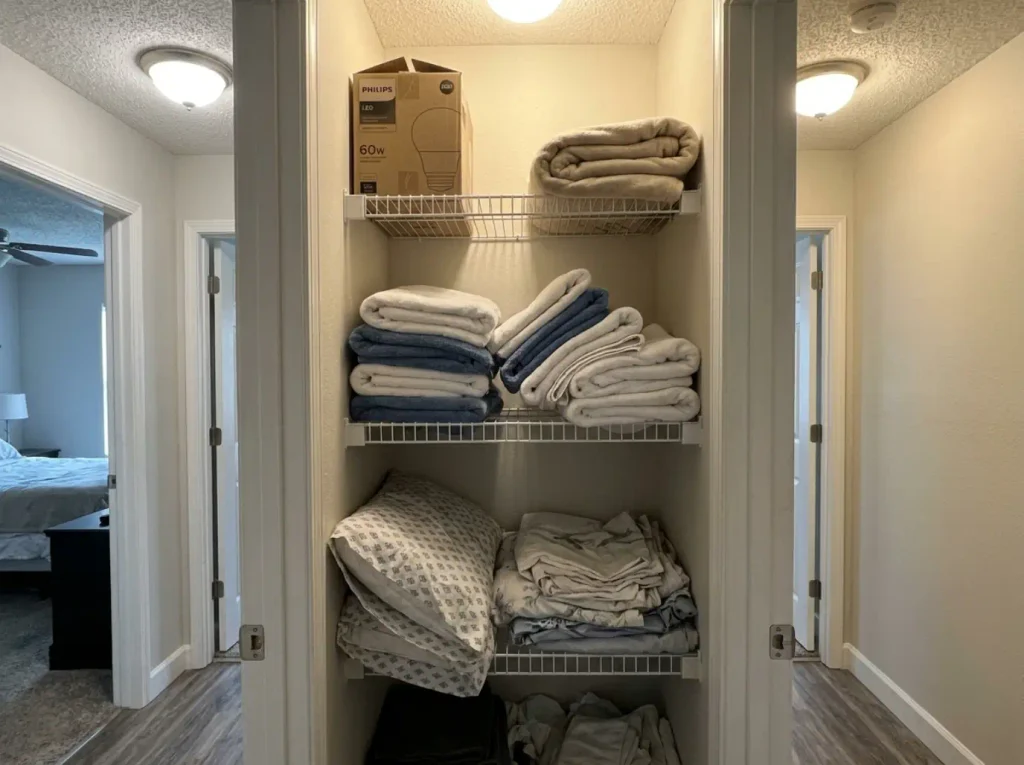
The version of this closet you organized in the spring did not fall apart because you stopped caring. It fell apart because it had three structural holes, and every one of them is mechanical.
The first is the stack itself. A folded towel column has no side walls, so it is held up entirely by friction and luck. Pull one towel from the middle at 7am and the top half of the column tips into the sheets next to it. Do that twice a week for a month and the shelf reverts to the pile it was before, with nobody having made a single bad decision.
That is a containment problem, not a willpower problem, and it has a physical fix: vertical dividers, which is where this walkthrough ends up.
The second hole is quantity drift, which is invisible until somebody counts. Household linens stay roughly stable because they wear out and get replaced one for one. Guest linens do not: nobody retires the old guest set when a new one arrives, so the guest pile only ever grows.
One commenter’s mother-in-law had accumulated twelve guest towel sets for a household that cycles four. Twelve sets of towels nobody uses do not sit politely in a corner. They take the prime shelf and push the everyday towels somewhere worse.
The third hole is the items with no category. Sheet sets get a home because they are obvious. Pillowcases do not, and neither do washcloths, the spare curtain liner, or the sample-size shampoo from a hotel.
In one linen closet reveal that looked genuinely finished, the first question in the comments was where the pillowcases were stored, and the answer was a catch-all spot the system never formally accounted for. Anything without an assigned home goes wherever there is room, and “wherever there is room” spreads. If you want the full frame behind why zones fail before the containers do, the zone system behind a linen closet that survives a guest covers the philosophy this walkthrough deliberately skips.
Then there is the expensive one: buying containers first. Standing in the store aisle before you have emptied the closet means guessing at both the volume and the dimensions. You come home with bins for towels you are about to donate, or a bin an inch too deep to let the door swing shut. The closet gets worse and you have a receipt.
Most linen closets sit in a hallway, which makes them the closest storage to every room in the house. That is why they collect spare bulbs, batteries and medicine backstock that belong nowhere in particular. Decide now whether those categories get a labeled home here or get evicted to a different closet. Undecided is how the shelf fills up again.
Empty It Out and Sort Against a Real Number

Everyone tries to skip the full empty. Shelf by shelf feels faster and makes less mess, and it also guarantees you reorganize the same excess you started with, because volume is invisible while it is stacked three deep behind a door. So take it all out, onto a bed or the hallway floor. The point of this step is a headcount, not tidiness.
Then sort against an actual number, because “do I need this?” has no answer and everything stays. The rule that makes the decision possible: 2 to 4 sheet sets and 2 to 4 towels per person or per bed. Count the beds, count the people, multiply, and anything over that range leaves the keep pile before you measure anything.
Two sets per bed means one on the bed and one clean in the closet; four means you can go a while between washes and still have a spare after a spill.
Count guest linens as their own category while you do it. That is where the drift lives, and it is almost always the fastest volume cut available. If you have more guest sheet sets than you have had overnight guests in the last two years, the math is already telling you something.
This is the declutter step, and doing it as one hard purge beats trimming a shelf at a time.
Sort into three piles, not two: the keep pile, the donate pile, and the toss pile for what is past saving. Towels too thin to dry anybody become cleaning rags, and animal shelters take worn towels and blankets year-round. That distinction matters more than it sounds, because people keep threadbare towels specifically to avoid the waste of binning them. Give them somewhere to go and the pile actually moves.
Here is the part nobody states out loud, and it is why sorting comes before measuring. You cannot know how much containment you need until you know what is left. Buy bins for the pre-sort pile and you will own bins that store air. Sort first and the containment question answers itself: the number of bins becomes something you count rather than something you estimate.
Wipe the shelves while the closet is empty. It takes four minutes and it is the only time in the next two years the shelves will be reachable. Check for a sagging shelf or a loose bracket while you are in there, before 40 pounds of folded cotton goes back on top of it.
Measure Before You Buy a Single Bin
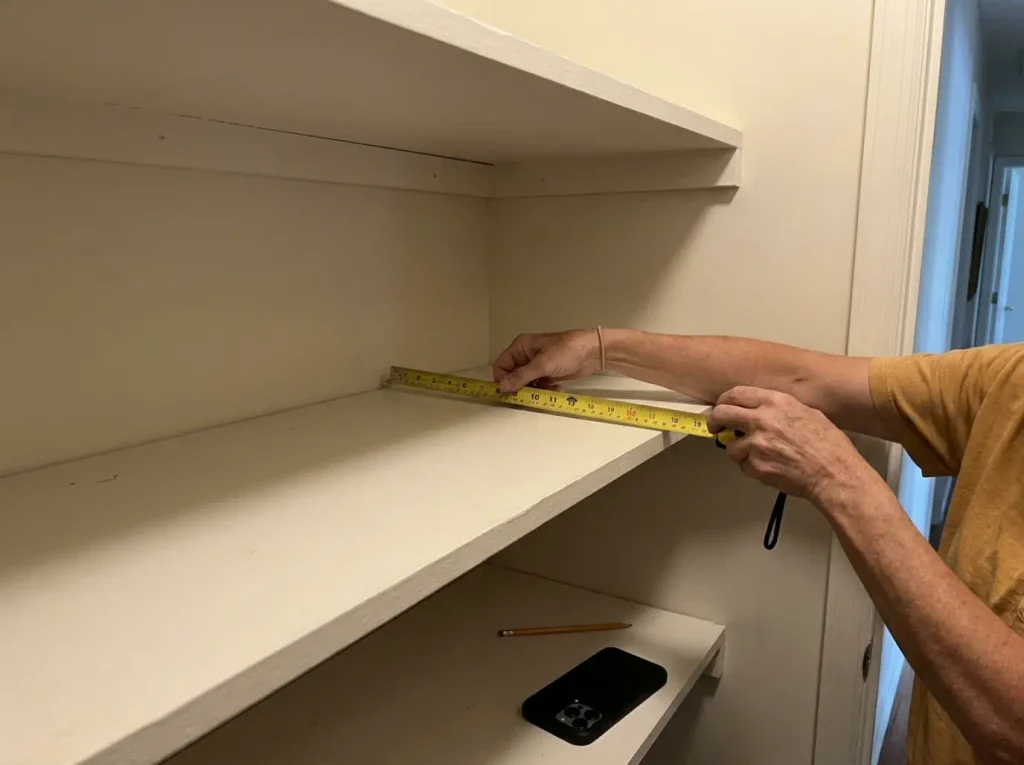
Every guide says measure your space, and none of them say what closet depth is supposed to come out at. Almost none tell you what the number is supposed to be, which leaves you standing in a hallway with a tape measure and no benchmark to compare it against. So you go to the store and buy the bin that looked right in the photo. Here are the numbers.
Standard linen closet shelves run 12 to 16 inches deep. Closets built specifically for bedding and towels run deeper, 16 to 18 inches. Treat 12 inches as your hard ceiling for bin depth on a standard shelf. A bin as deep as the shelf leaves zero clearance, and a linen closet door swings inward past the shelf edge, so a bin flush with the front stops the door. For that fit math applied to actual products, which clear bins actually fit a rental shelf walks through the depth problem specifically.
Vertical spacing matters as much as depth. Plan 12 to 15 inches between shelves for folded towels and sheets, and 18 to 20 for blankets and bulky bedding. The first shelf usually sits 18 to 20 inches off the floor. A bin taller than the gap does not “mostly fit.” It does not go in.
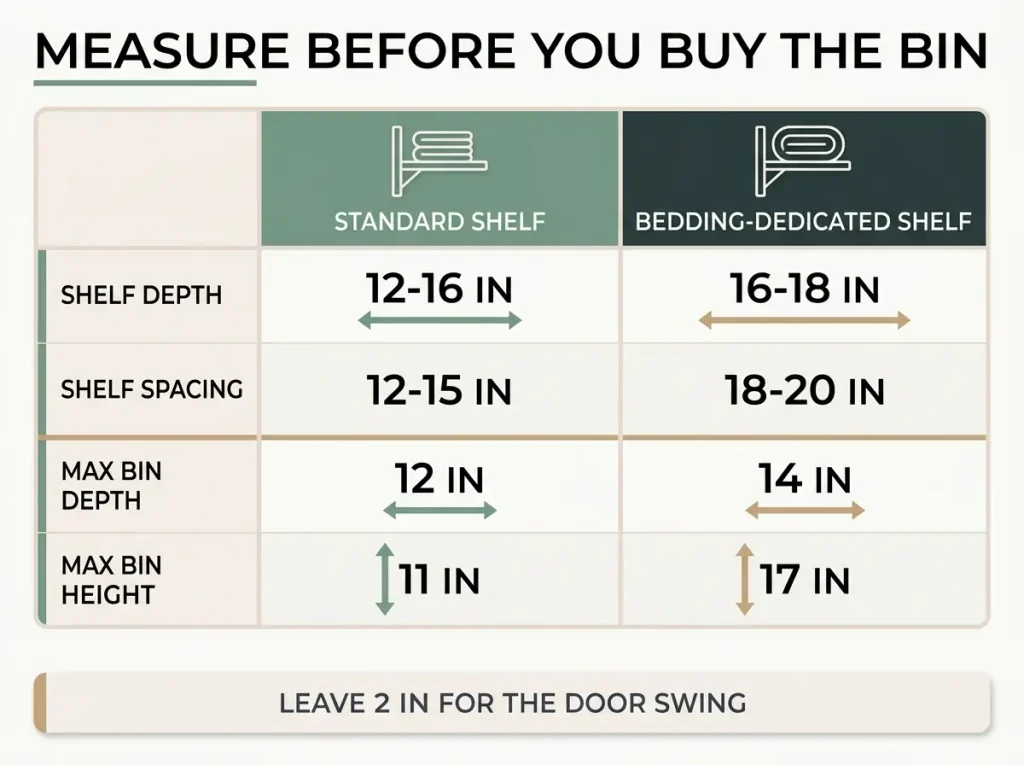
If your shelves are adjustable, do not space them evenly. Even spacing is the default because it looks orderly, and it wastes the most space of any layout. Give the bulky-bedding shelf its 18 inches of headroom and steal it back from the shelf holding washcloths, which needs almost none. One tall shelf plus one short shelf beats two medium shelves every time.
Three measurements go on your phone before you shop: shelf depth, the gap between shelves, and the door swing clearance. The third is the one nobody takes and the one that turns a good bin into a returned bin.
There is also a weight rule, and it comes from the load guidance professional organizers work from: keep top shelves under roughly 15 pounds and middle shelves under about 22. In practice, pillows and spare comforters live up high and the heaviest folded stack never does. It matters most on wire shelving and on older wooden shelves with a single center bracket, both of which sag long before they break.
Adjustable wire shelving deserves its own paragraph, because it is what most rentals have and it fights you two ways. Small items fall through the gaps, so rolled washcloths and travel toiletries end up on the shelf below. And bins wobble on the ribs, because a flat bin bottom on parallel wires is balanced on maybe six contact points. A drop-in shelf liner fixes both at once, costs less than a single bin, and lifts out at move-out with nothing left behind.
Before buying anything, do a cardboard test fit. Cut a box to the bin dimensions you are considering, set it on the shelf, and close the door. Ten minutes with a box beats a return trip, and it catches the door-swing problem that a tape measure alone will not.
Contain, Categorize, and Place by How Often You Reach for It
This is the part people picture when they imagine an organized linen closet, and it does the least good without the two steps before it. The volume is cut and the numbers are known, so most of the containment decisions from here are close to obvious.
Divide the Stacks So They Stop Collapsing
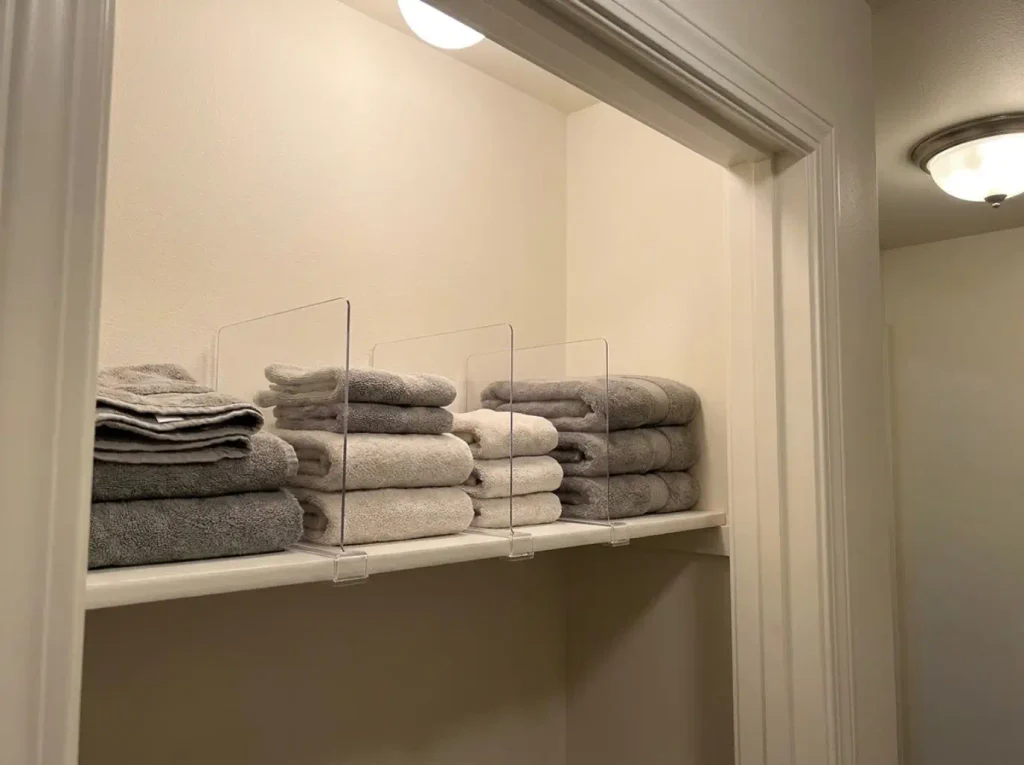
Back to the tipping column from the top of this article. A folded stack falls over because it has no side walls, so the fix is to give it side walls. That is the entire job of a shelf divider, and it is the highest-return purchase in a linen closet.
Try the free version first. If your stacks are short, four or five items high, and shallow enough to lean against the back wall, folding tighter and stacking lower may be enough on its own. Two short columns are more stable than one tall one. Test that for a week before buying anything.
If the stacks still tip, dividers. There are two types, and which one you need is decided by your shelf, not your preference. For solid shelves, slot-in acrylic is the straightforward answer.
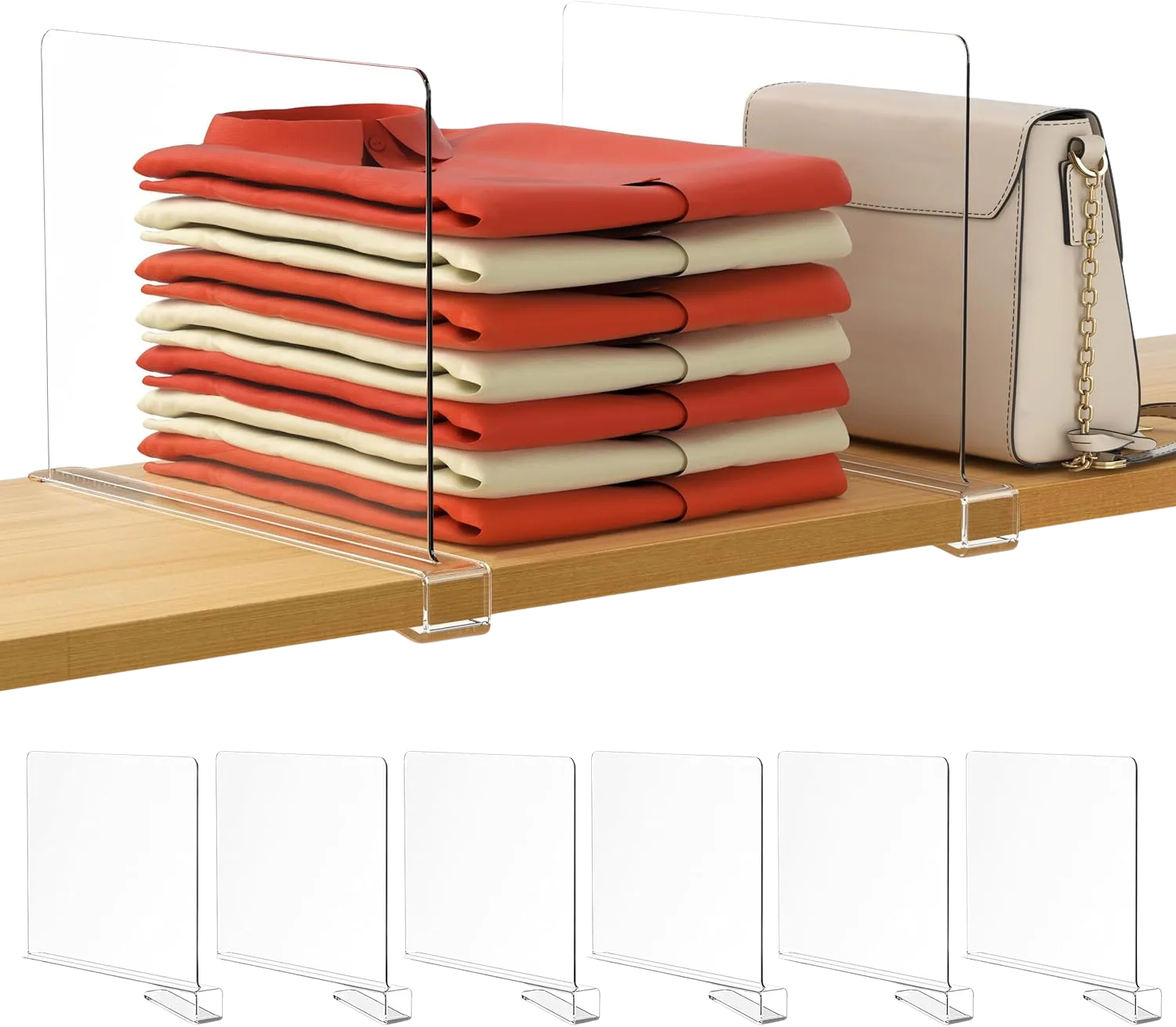
If your closet has the wire shelving standard in most rentals, you need the clip-on kind instead. The Evelots Tall Wire Shelf Dividers (8-Pack) snap onto the wire with no tools and nothing left behind at move-out, which also makes them the cheaper of the two. The tradeoff: they lock in at the wire spacing your shelf already has, so you get fixed increments rather than exactly the position you want. For the rest of the no-drill route, the no-drill closet setup that won’t cost your deposit covers the same mechanism across a whole closet.
I used to point people straight at drilled-in dividers, on the theory that clip-ons feel flimsy. Enough rental threads later, the flimsiness turns out to be theoretical and the deposit deduction does not. Clip-on first, drill only if the clip-on genuinely fails.
Group by Category, Then Contain the Loose Stuff
Categories that survive contact with a real household are boring and specific: sheet sets by bed size, bath towels, hand towels and washcloths, guest linens, bathroom backstock (backup rolls, first aid supplies, the spare soap), and one honest everything-else. Note that last one. Every closet has homeless items, and pretending otherwise is what creates the pile on top of the sheets.
The pillowcase fix, which organizing threads call the bed in a bag method, is worth doing on every set you own. Fold the fitted sheet, the flat sheet and the second pillowcase, then nest the whole bundle inside one of its own pillowcases. The set stays together, the bundle stacks square instead of lumpy, and you stop hunting for a matching pillowcase at 11pm. It comes up first in almost every linen closet thread, and it is free.
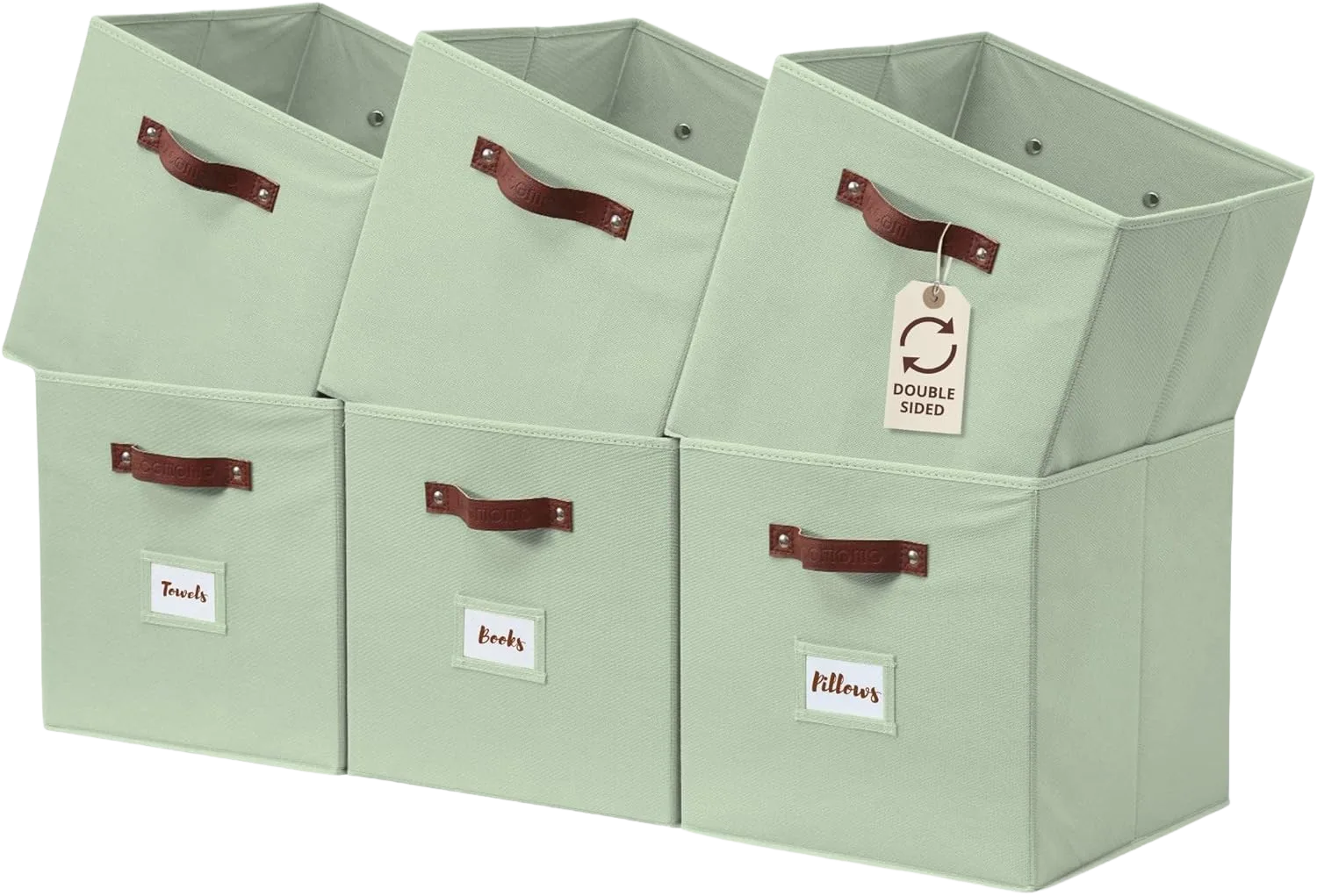
Now the bins, and here is the rule that keeps you from over-buying: bins are for the things that do not stack on their own. Hand towels, loose washcloths, bathroom backstock, the odd curtain ring. Folded sheet bundles and bath towels already stack fine once they have dividers, so putting them in bins adds a step between you and a towel.
Before you buy containers, look at what you already own. One of the most common comments under a linen closet reveal is somebody realizing the under-shelf baskets in the photo are the same baskets sitting unused in their own garage.
Shoeboxes work. Dollar-store bins work, and so do the open-top bins and the odd wire basket already sitting in a garage. Nobody sees the inside of a hallway closet.
Buy matching containers only if the closet is visible from a room where people sit, or if mismatched bins bother you enough to affect whether you use the system.
Place by Frequency, Not by Category Size
Placement runs on frequency of use, not on category size. The instinct is to give the biggest category the best shelf. Do the opposite: give the best shelf to whatever you touch most often, regardless of how much of it there is.
Chest height is prime real estate, roughly the shelf at eye level that you can see into and reach without stretching or crouching. Daily bath towels and the current sheet set go there. Below chest height, guest linens and anything weekly, because bending down is cheaper than reaching up. The closet floor is not a dead zone, just an awkward one, which makes it the right home for bulk paper goods.
Below chest height goes everything weekly: guest linens, the spare set for the sofa bed. The bottom shelf and the floor space under it take the heavy and the bulky, since bending costs less than reaching and a dropped comforter lands on nothing.
The top shelf is backstock and out-of-season only, under the weight rule from the last section. Light and bulky up high, never heavy.
A wicker basket with a lid or a soft felt basket both work up there; the lid is what matters, not the material. It is also the one zone where a lid earns its place, since anything you open twice a year collects dust the other 363 days. The HONCESTA Extra Large Woven Basket with Lid runs 18 by 18 by 14 inches, sized for the backstock zone rather than for a standard shelf, so check it against your own numbers: on a 12-inch-deep shelf it will overhang, which only works up top where nothing has to slide past it.
Bulky seasonal items are the one genuine case for compression, and zippered storage bags are the low-tech version if you would rather not own a vacuum. A spare comforter folded takes two shelves; the same comforter in SpaceSaver Premium Vacuum Storage Bags flattens to something you slide in beside the pillows. Skip these entirely if you have no off-season bedding, and know that natural down and wool should not stay compressed for years at a stretch.
Then there is door space, the most underused surface in any linen closet. A shallow over-the-door organizer turns dead air into an extra zone for washcloths, cleaning supplies and small backstock. Depth is the whole game: too deep and the door will not close on a loaded shelf, so match the rack to the gap between your door and your shelf edges rather than to the door size. An over-door organizer sized to your door covers that fit decision properly.
A tension rod across the closet opening does the same trick for anything that hangs. And if you only want a hook or a small battery light nearby and cannot drill, Command strips in the form of Command Bath Large Water-Resistant Adhesive Strips hold in humid hallway conditions and release cleanly, which is the whole point when the deposit is on the line.
Label It, Then Build the Reset That Keeps It
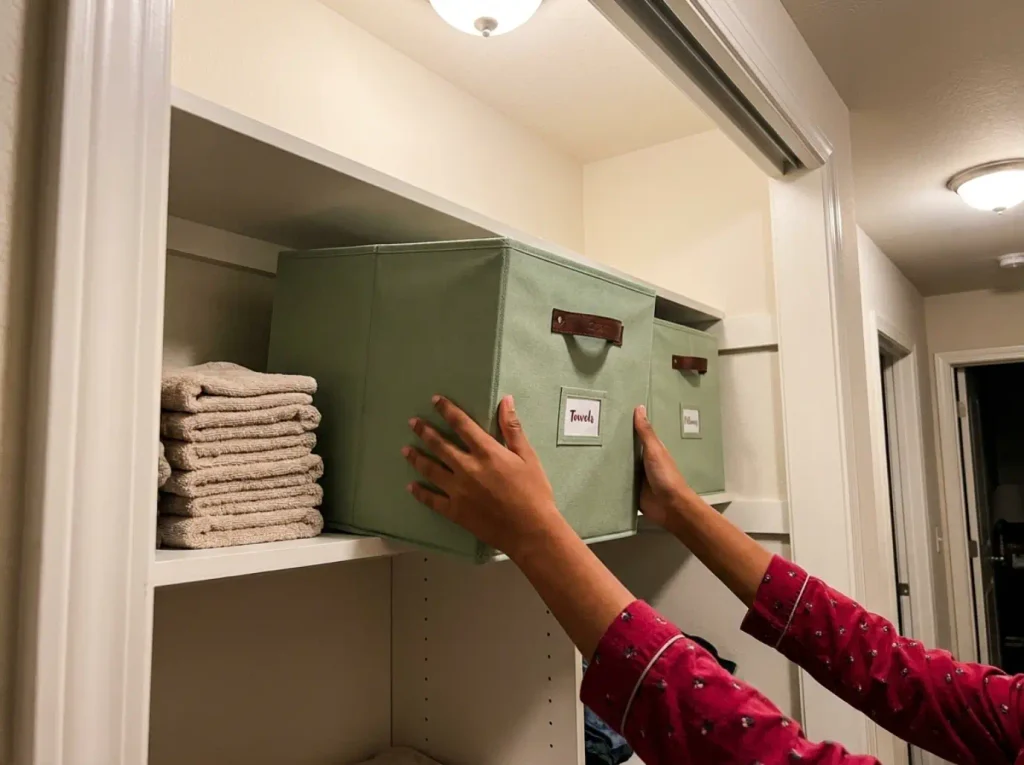
Most guides end at the finished photo. The finished photo is week one. What decides week twelve is whether anybody else in the house can tell where the hand towels go without asking, and whether there is a reset short enough that it actually happens.
Label the containers, not the shelf edges. Bins move, shelves do not, so a shelf label goes stale the first time you rearrange anything, and a stale label is worse than no label because people follow it. A label on the bin travels with the contents.
Then label for the person who does not know the system, which is everybody except you. “Guest” beats “linens.” “Queen” beats “sheets.”
The test is slightly harsh: could a houseguest put a folded towel away correctly at 11pm without opening three bins? If not, the label was written for someone who already knows the answer.
The zero-cost version genuinely works. Painter’s tape and a permanent marker, and you can rewrite a category the moment it changes, which happens more in the first month than you expect. The downside is that it looks like painter’s tape and a marker, which matters only if the closet is visible from a room people sit in.
If you want labels that read as intentional, a Brother P-Touch PTD220 Label Maker prints laminated TZe tape that survives humidity and does not peel off fabric bins the way inkjet stickers do. Buy it second, after the tape version has told you what the categories actually are.
Now the part that decides everything. The reset is a step in this process, not a virtue you are supposed to have. Attach it to laundry day, because laundry day already exists and you already walk to this closet on it.
When the clean towels go in, anything that drifted out of its bin goes back. Five minutes, no new habit, no reminder to ignore. That five minutes is also the whole of the household buy-in problem: a system nobody else has to learn is one nobody else can break.
And give the homeless items a home, because they are the leak that sinks the whole thing. One small basket on a shelf clip or bin clip clipped to a shelf, designated for loose pillowcases, the orphaned washcloth, the hotel shampoo. It costs almost nothing and does one job: it gives the unclassifiable stuff somewhere to be that is not the top of the sheet stack. Without it, those items colonize the nearest flat surface and the drift starts over.
Re-count the linens once a year, at a season change you will not forget. Quantity drift is what got this closet into trouble the first time, and it comes back quietly: two new towel sets at the holidays, one from a relative in spring, and nothing ever leaves. The count takes ten minutes and it is the only maintenance that addresses the actual cause.
Once the linen closet organization holds, the same three renter-friendly moves apply everywhere else the towels end up. The rest of the bathroom storage problem is the natural next project, and it runs on the same measure-first, place-by-frequency logic.
Conclusion
Three things carry the weight here. Empty the closet completely and cut the volume against a real number before you buy a single container, because containment for stuff you are about to donate is money spent on storing air. Measure depth, shelf spacing and door clearance, and hold 12 inches as your bin-depth ceiling on a standard shelf. Place by how often you reach for something rather than by how much of it you own, then attach the five-minute reset to laundry day so the system has a maintenance trigger that already exists.
In three months, open the door and look for the pile that has no bin. That is the category you missed when you sorted, and it takes ten minutes to give it a home now instead of another full teardown later.
Start with one shelf, the one at chest height you open every day. Get that shelf right and the rest of the closet will tell you what it needs.
Frequently Asked Questions
01What is the best way to organize a deep linen closet?
Put the back of a deep shelf inside a bin you can slide out, so the depth becomes pullable instead of buried. Group by category so each bin is one pull, and save the deepest shelves for backstock you touch seasonally rather than daily towels.
02How many shelves should be in a linen closet?
Four to six shelves fit a standard closet height, and the spacing matters more than the count: 12 to 15 inches between shelves for folded towels and sheets, 18 to 20 for bulky bedding. If your shelves adjust, give the bedding shelf the headroom and take it from the washcloth shelf.
03What are the best organizers for a linen closet?
Shelf dividers and labeled bins cover almost every linen closet problem: dividers stop folded stacks from collapsing, bins contain the categories that do not stack. Match the divider to your shelf type, with slot-in acrylic for solid shelves and clip-on wire dividers for the wire shelving standard in rentals.
04How do you organize a linen closet in a rental without drilling?
Use clip-on wire shelf dividers, drop-in shelf liners and adhesive strips rated for humid spaces, since all three install without tools and come off cleanly at move-out. A drop-in liner also solves the two problems wire shelving causes: small items falling through the gaps and bins wobbling on the ribs.
05Where do you store pillowcases so they stay with the sheet set?
Fold the full sheet set and nest it inside one of its own pillowcases. The set stays together as one bundle, the stack sits square instead of lumpy, and you stop hunting for a matching pillowcase at bedtime. It is the fix that comes up first in linen closet threads.