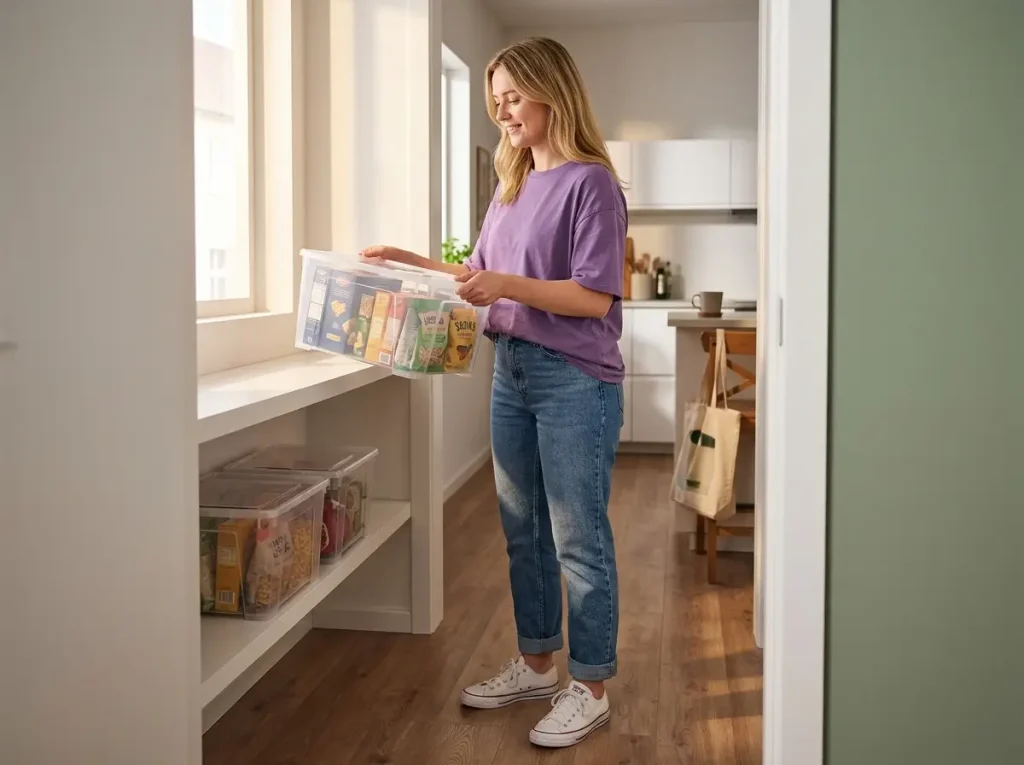
The clear bins looked perfect in the product photo. You ordered four, slid them onto the closet shelf, and watched them hang two inches past the front edge so the door wouldn’t close. The most repeated regret in storage-bin threads isn’t about cracked plastic or weak handles. It’s “I should have measured first.” Most bins sold as closet bins are built for the 16 to 20 inch shelves you find in custom closets, while rental shelves usually run 12 to 14 inches deep. This guide covers the best clear storage bins that actually fit real rental shelves, the three numbers to measure before you buy, and where clear genuinely beats opaque (and the one situation where it quietly backfires).
Quick Answer
Match the bin to the space, not the other way around:
- Pantry: open-top, roughly shoebox-sized (around 11x8x6)
- Rental closet shelf: stay under 13 inches deep
- Drawers and low shelves: small 6-quart bins
- Under-bed: measure frame clearance before anything else
- Seasonal storage: large, lidded, kept cool and dark
- Always declutter the contents before you containerize
Why Clear Bins Beat Opaque (When They Actually Do)
Everyone assumes clear bins are about looking organized. The real payoff is quieter than that, and it has nothing to do with how the shelf photographs.
The real win is visibility, not looks
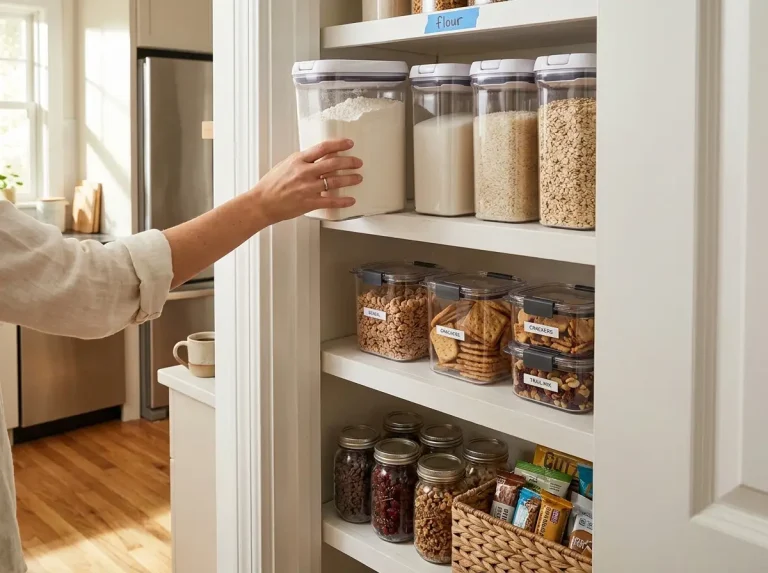
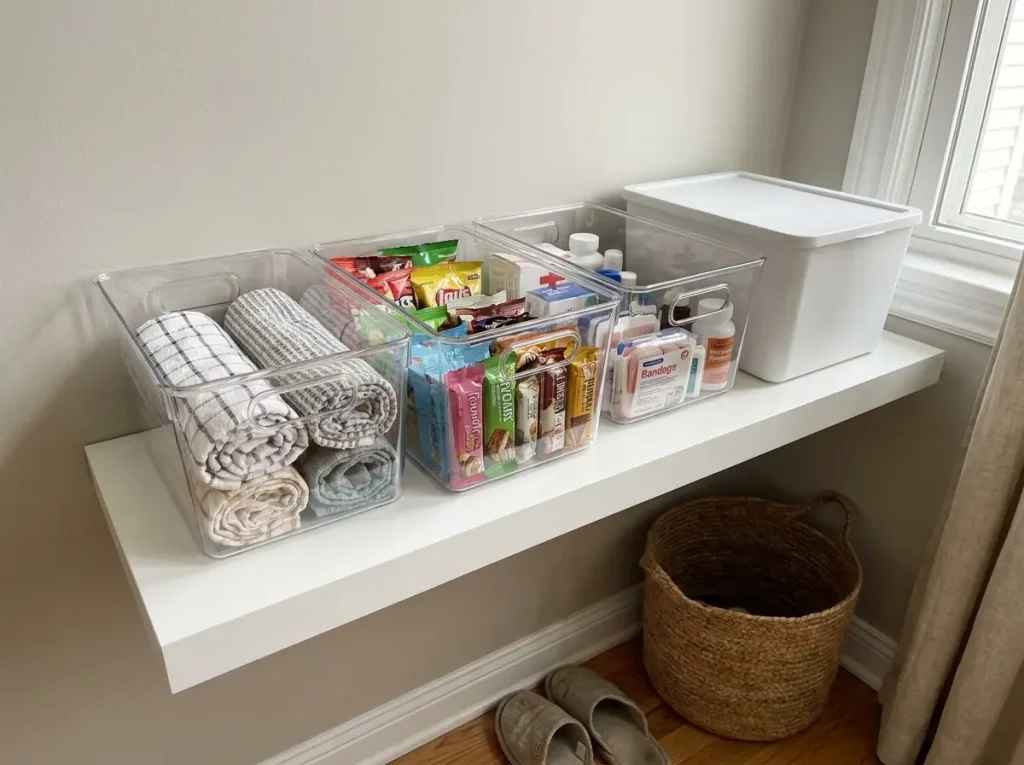
Clear bins work because they lower the effort it takes to find something. Transparent storage bins turn a shelf into an index you read at a glance, so a visual scan does the job. Nobody has to remember which label said “batteries,” nobody has to pop a lid to check, and in a shared kitchen or bathroom nobody has to ask where the spare toothpaste lives. That last part matters more than it sounds. The people who didn’t build your system are the ones most likely to break it, and a clear storage bin gives them a lower bar to clear than a labeled opaque box ever will. According to the professional organizers’ association NAPO, clear, labeled containers are a standard recommendation for pantries precisely because the whole household can see what’s inside without opening anything.
This is also why clear beats labels-on-opaque in spaces with a lot of traffic. A label tells one person where something goes. Line of sight tells everyone. If you want the deeper logic on matching a container to its job, our guide to how to choose storage bins that actually last walks through it cluster by cluster.
The one rule clear bins demand
Here’s the catch. Clear bins get recommended as the universal upgrade, and they are, right up until you put one with no assigned category on a shelf. Now everyone can see the mess instead of the system. A clear bin displays disorder exactly as well as it displays order. Organizing communities have a name for the result: the “bin junk drawer,” a see-through box that becomes a visible catch-all, which is genuinely worse than hiding the same clutter in opaque plastic.
So the precondition is non-negotiable. Declutter before you containerize. If the contents haven’t been edited down first, clear makes the shelf look worse, not better. People call this the after-photo trap, and it’s the fastest way to feel like the bins failed when really the sorting never happened.
Do the clear-bin test before you spend a dollar: empty one shelf onto the bed, sort it, and put back only what earns the space. If the keep pile fills less than a bin, you have a decluttering job, not a storage problem.
Where opaque still wins
Clear isn’t the answer everywhere. Low shelves near a window, anything that fades in light, or a bin of cables and chargers you’d rather not stare at every day are all fine in opaque. And if a bin lives somewhere bright, opaque actually protects the contents and dodges the yellowing problem we’ll get to later. Clear is a tool, not a religion.
Measure Before You Buy (The Three Numbers That Prevent Returns)
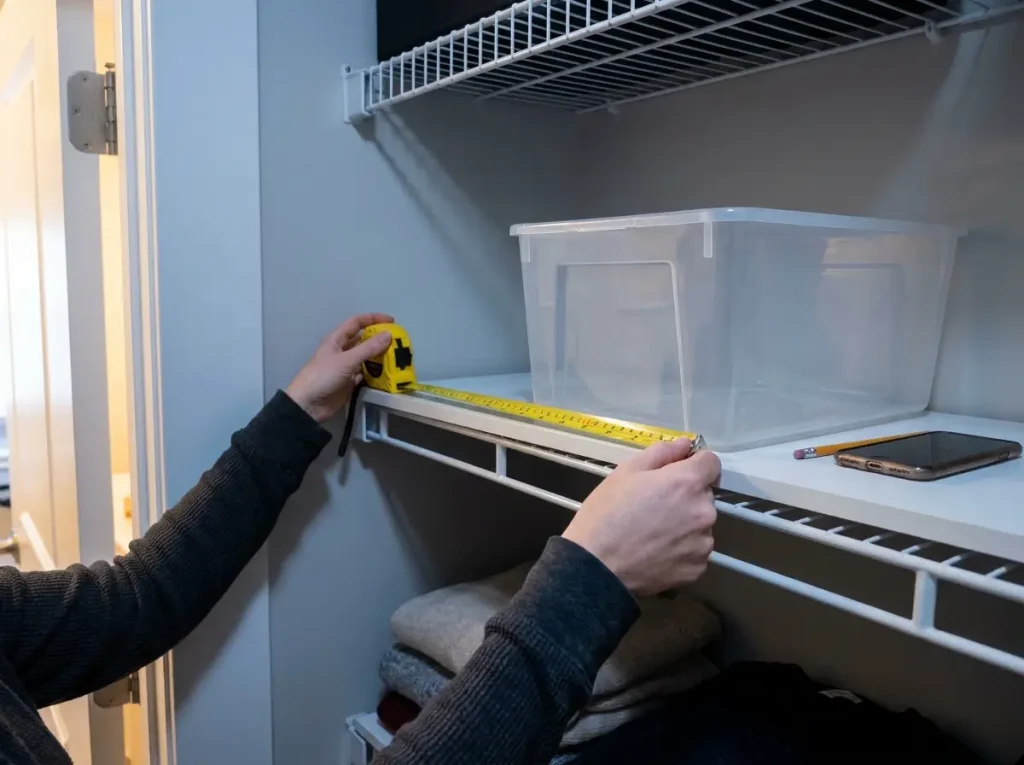
The fix for return regret isn’t buying better bins. It’s three numbers saved in your phone before you tap “add to cart.” This is the section that saves you a trip to the post office with a stack of boxes that never fit.
Shelf depth, the number that causes most returns
Rental closet and pantry shelves typically run 12 to 14 inches deep. Custom and walk-in shelves run 16 to 24. Bin makers photograph their products on the deep ones, which is why a bin that looks tidy online overhangs your rental shelf and blocks the door. The safe ceiling for a rental shelf is about 13 inches of bin depth. Go past it and the front lip juts into the doorway, the door catches, and you’re back to square one.
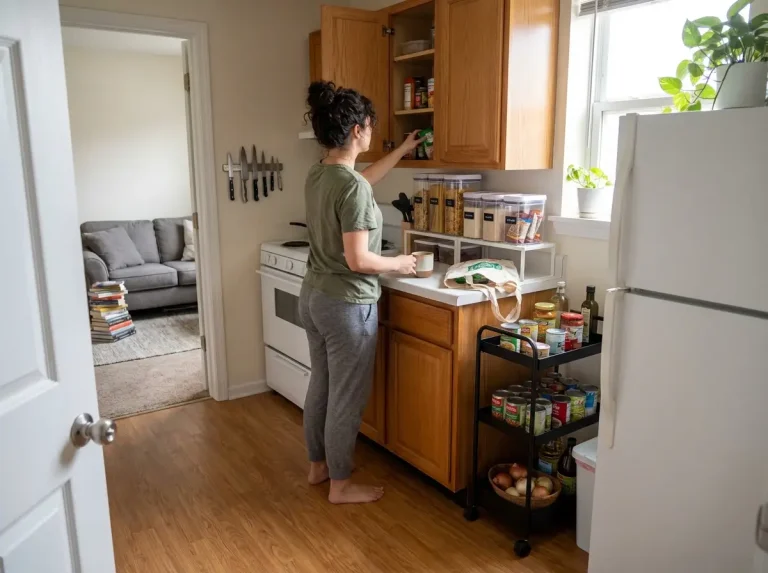
This is the same shelf-depth ceiling that makes apartment pantries so frustrating in the first place, and it’s worth reading why apartment pantries get messy again if your kitchen cabinets are the shallow 12-inch builder-grade kind. The bin math is identical.
Shelf-to-shelf clearance, the height nobody checks
Depth gets the blame, but height fails just as often. The gap between rental pantry shelves usually lands somewhere between 10 and 16 inches. A 6-inch-tall bin clears almost anything. A 7.5-inch bin fits most shelves with room to grab. An 8-inch bin starts wedging under fixed shelves, and a bin you have to wrestle out is a bin you’ll stop using by week three. Measure the gap at its tightest point, not its widest.
Bed-frame clearance, the one that ends in a stuck box
Under-bed storage is a clearance problem before it’s anything else. Platform beds give you roughly 4 to 7 inches. Standard metal frames give you 7 to 12. This single number decides whether an under-bed bin slides home or sits half-in forever. Most clear under-bed boxes need that taller metal-frame gap, so a platform-bed sleeper who orders one without measuring is the textbook return.
If a bin overhangs by just a hair, a strip of non-slip shelf liner underneath stops it from sliding off when you open the door. It doesn’t fix the depth, so size down when you can, but it’s a real safety net for the in-between cases.
The Best Clear Storage Bins by Use Case
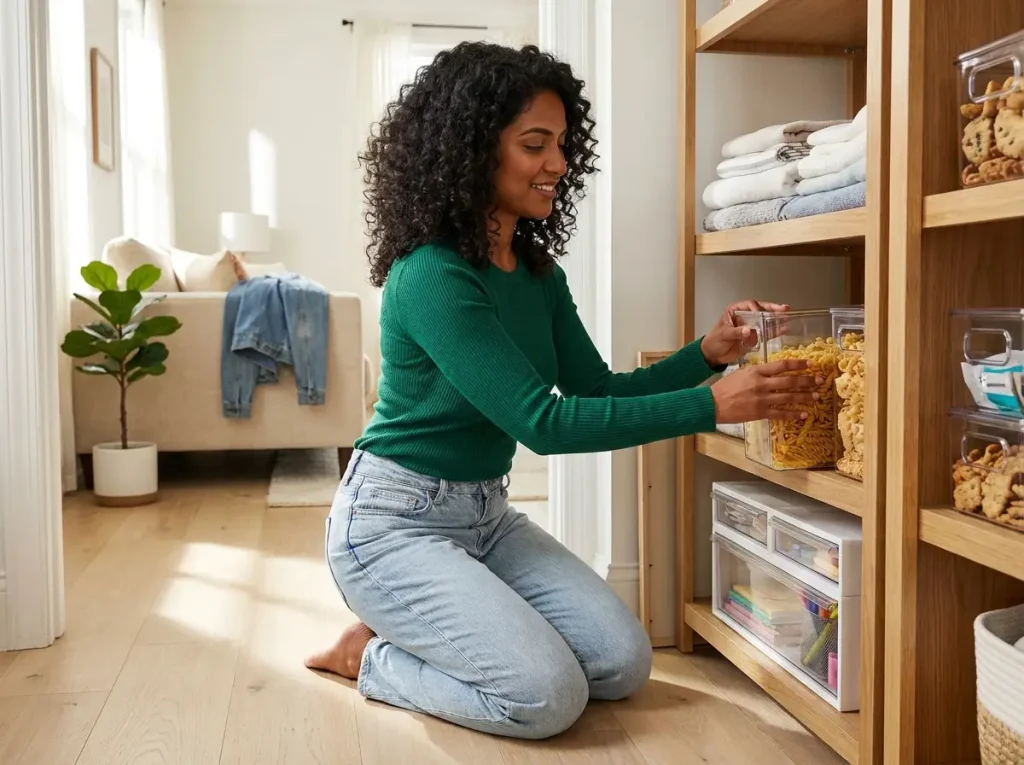
Skip the “top 10 overall” routine. The right bin depends entirely on the space it has to live in. Here’s the pick for each zone, with the dimension constraint built in so you’re not guessing.
Pantry and kitchen shelves
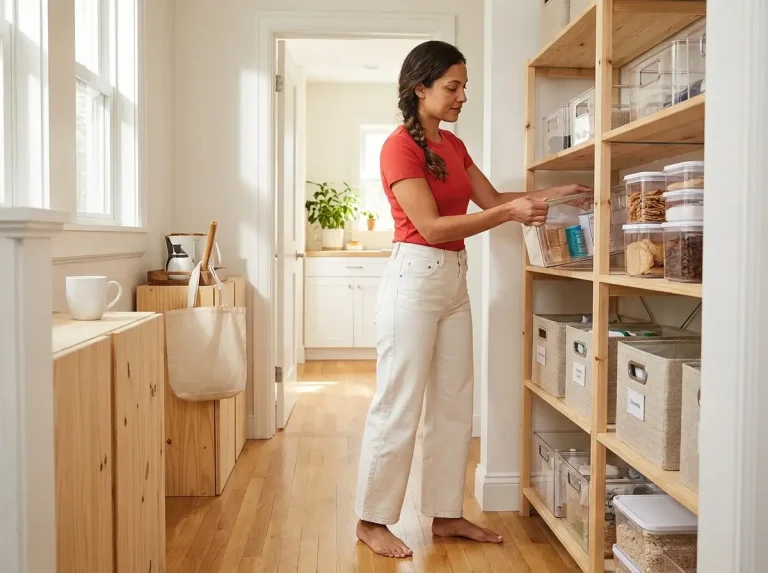
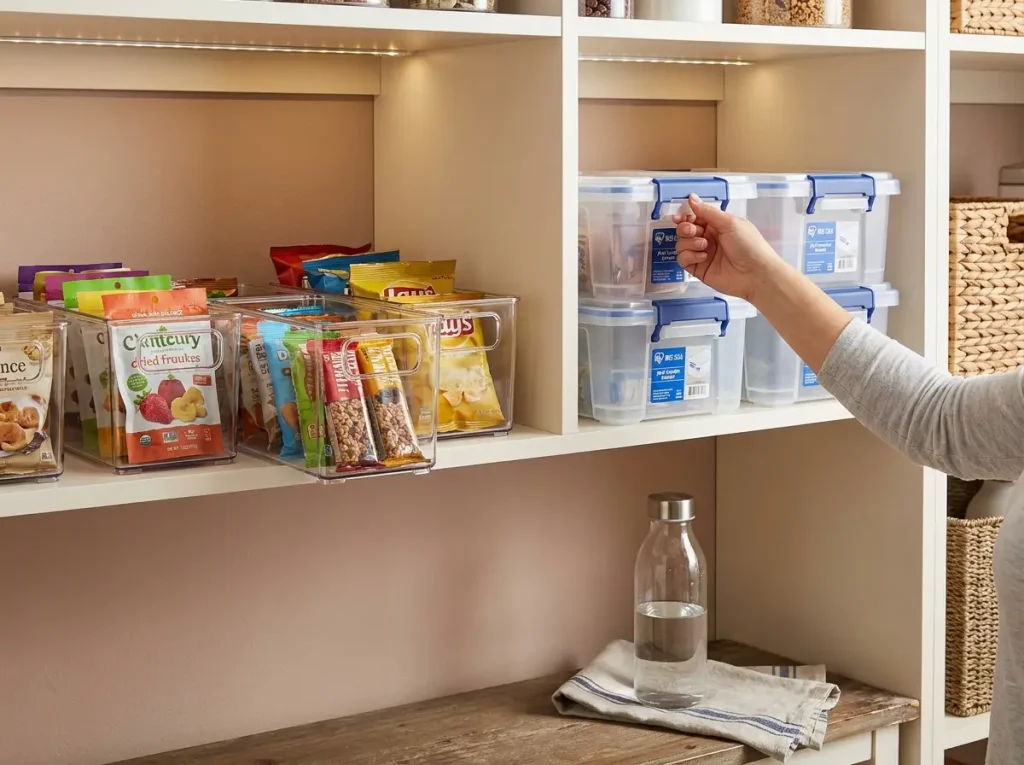
The pantry is a daily-access zone, which means a lid is friction you’ll feel every single day. Open-top is almost always the right call here. A standard pantry-fit bin runs about 11x8x6, small enough that two or three line up across a typical 30 to 36 inch shelf with the contents facing out.
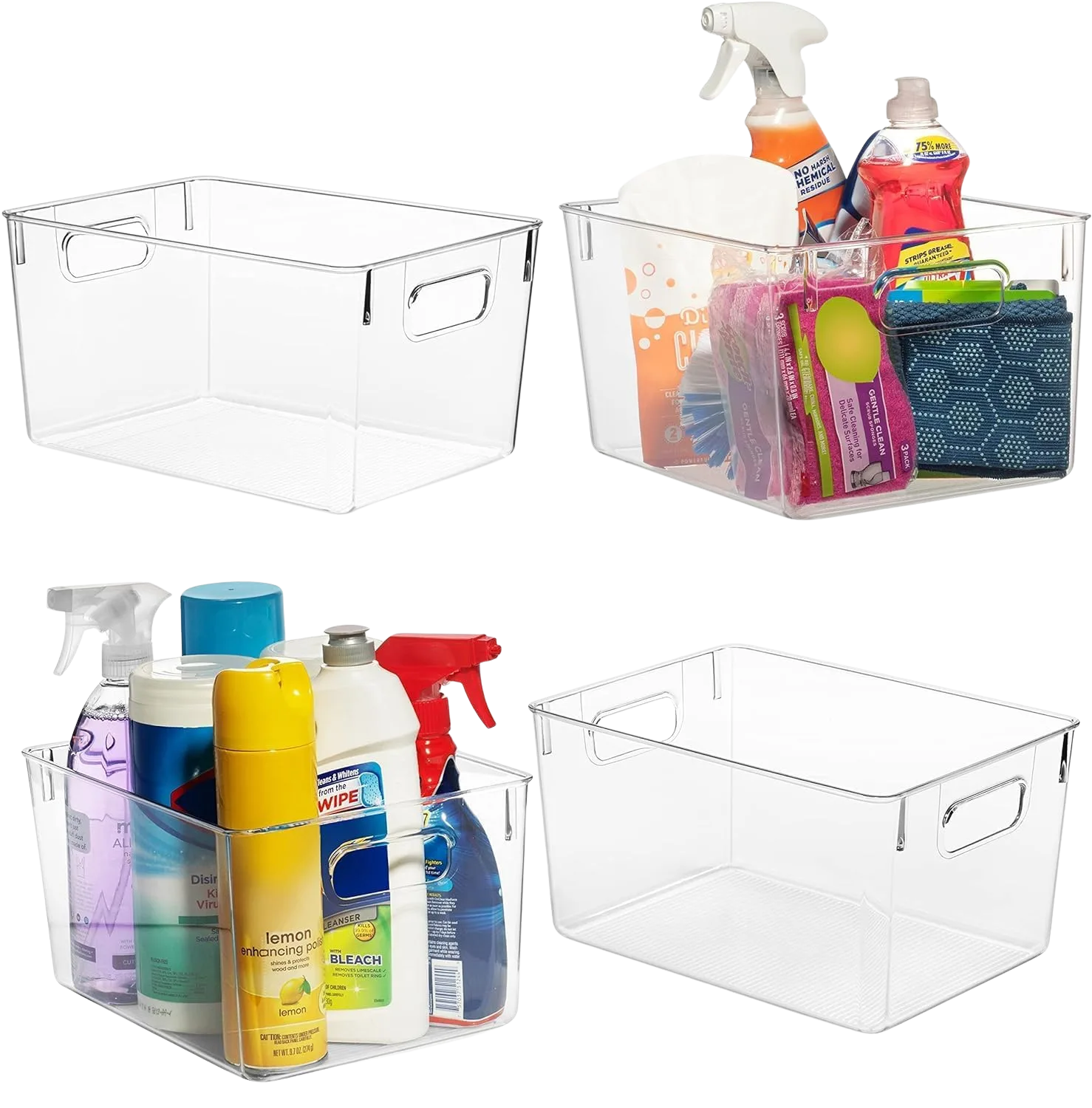
If you want the same footprint for less, the YIHONG 6 Pack Clear Pantry Organizer Bins measure about 11.2×7.5×6 and give you six bins for less than a four-pack of the premium names, with a built-in front handle that makes the back-of-shelf bins easy to pull forward. The trade-off is thinner walls, so they flex more when loaded heavy. For anyone who’d rather have a lid (dust-prone shelves, or stacking bins on top of each other), the Vtopmart 6 Pack Clear Stackable Bins with Lids run roughly 11x8x6 with handles and a snap lid, and we’ll cover when that lid helps and when it hurts in the next section. For the full rundown of containers built for food and dry goods, our breakdown of pantry storage containers goes deeper on materials and seals.
Leave a finger-width of space between pantry bins. Crammed wall-to-wall, you have to lift each bin straight up to get it out, and on a low shelf that’s the move that makes people abandon the system. A little gap lets you slide instead of lift.
Closet and reach-in shelves
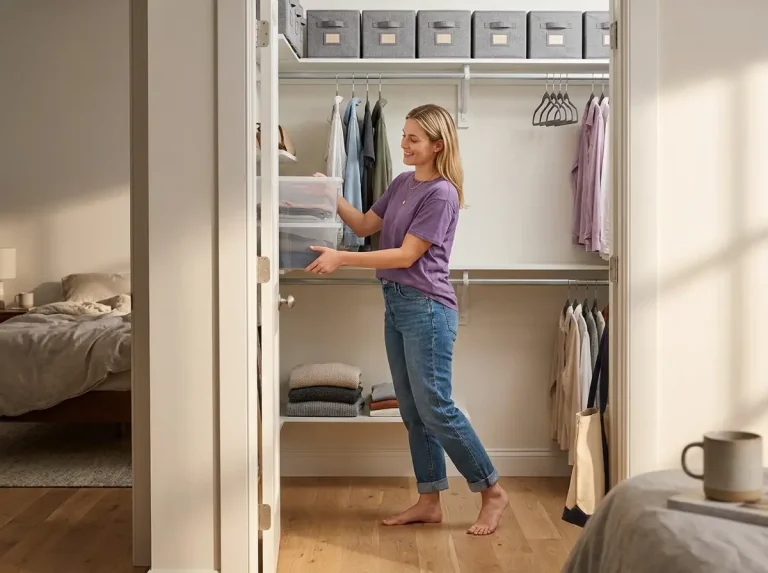
Closet shelves can take a deeper bin than the pantry, but the 14-inch rental ceiling still applies, so check before you assume you have room for the big ones. Latching lids start to matter here because closet bins often stack, and a lid that clips holds the stack together. The Rubbermaid Cleverstore Clear 32 Qt (6-pack) is the workhorse for reach-in closets with shelves 14 inches and deeper, with latching lids that lock a stack in place and see-through walls that keep folded sweaters or extra bedding visible. It’s too wide for a shallow 12-inch shelf, so this one is for the deeper closets only.
When you want to see in without fully opening, the Sterilite 6-Pack Clip Box Large splits the difference: a clear lid you can read through with tight side clips that actually stay shut. The contents read at a glance even with the lid on, which is the closest a lidded box gets to open-top convenience. If your shelf piles keep collapsing the moment you pull something out, the bin alone won’t save you, and why your closet shelf piles keep toppling covers the placement fixes that do.
Drawers and low-clearance zones
For drawers and shelves with under 10 inches of clearance, go small. And before you buy anything, raid the dollar store: small clear bins (around 7.75×5.5×3) are perfect for drawer compartments like spice packets, batteries, or craft bits, and they cost next to nothing. Start there.
When you need something sturdier that stacks, the IRIS USA Stack & Pull 6 Qt (10-Pack) is the smallest in a system that scales up. The clever part is the pull handle: the lid latches, but you slide the bin forward by the handle without taking the lid off, so you get lid protection with near open-top access. Ten bins in a pack also drops the per-bin cost well below the small-pack versions. The thin profile fits low shelves where a taller bin would jam.
Under-bed and seasonal storage
Under-bed is the clearance section from earlier made real. The IRIS USA Under Bed Storage Box with Lid runs about 32.5×17.88×6.5 on the outside, which slides under standard metal frames with their 7-inch-plus gap but will not fit a platform bed sitting 4 to 5 inches off the floor. That clearance warning is the whole ballgame here, so measure your frame before you order. It’s the proven pick when the gap is there, with a solid lid that keeps off-season clothes and spare linens dust-free. For more options sized to low frames, see the under-bed boxes that fit low bed frames.
Seasonal storage is the opposite case: low-frequency, so a lid is welcome. The IRIS USA 54 Qt Stack & Pull (6-pack) gives you large, stackable clear bins on the same pull-handle system as the 6-quart, so a closet shelf or garage corner stays accessible without unstacking the whole tower. One caution we’ll explain shortly: keep these out of direct sun and hard cold, because large clear bins are the ones most likely to yellow or go brittle where they’re often stored.
Open-Top vs Lidded (The Daily-Friction Decision)
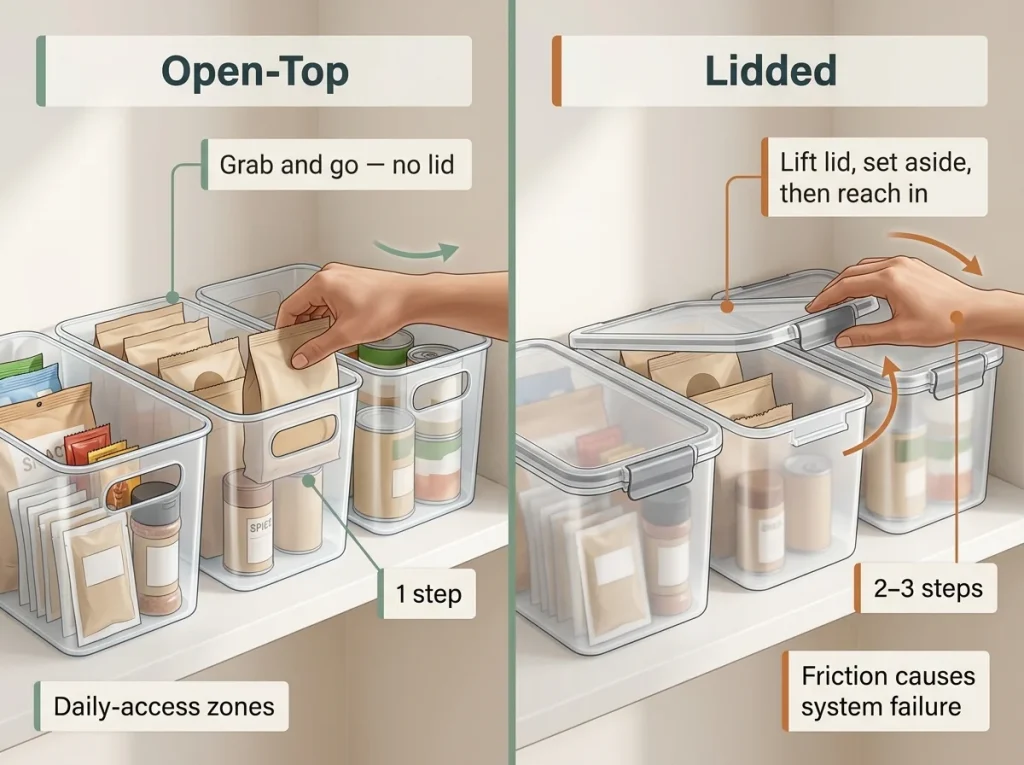
The lid is the most under-thought part of buying a bin, and it’s the variable that decides whether the system survives. Treat it as a decision about how often you reach in, not a feature on a spec sheet.
When open-top wins
In a high-frequency zone, the lid is the reason the system fails. Pantry, fridge, countertop, a kid’s snack shelf: every one of these gets opened many times a day, and an extra step of lift-the-lid, set-it-somewhere, replace-it is the step people quietly skip. Once they skip it, things land on top of the lid instead of inside the bin, and the whole thing reverts. Open-top removes the step. That’s the entire case.
The repeated story in organizing threads is some version of the same thing: someone switches one shelf from lidded to open-top and the family finally starts putting things back. The lid was the problem, not the bins and not the category system.
When a lid earns its place
Lids aren’t the enemy. In low-frequency zones they earn their keep by sealing out dust and pests. Seasonal clothes you touch four times a year, under-bed bins you reach monthly, garage storage that sits for seasons: a lid is exactly right here because the friction is rare and the protection is constant. The rule of thumb is simple. The less often you open it, the more a lid makes sense.
The hybrid middle ground
I used to default to lids everywhere because it looks tidier and keeps dust out. Then I watched a lidded snack bin go unused for a month because nobody wanted the extra step, while the open basket next to it stayed perfectly maintained. Now it’s open-top in daily zones, every time. If you want a compromise, the IRIS pull-handle bins are the honest middle: the lid stays latched for protection, but you slide the whole bin out by the handle without removing it. Clear lids like the Sterilite are a partial fix too, since you see the contents without opening, though the physical step is still there.
Why Clear Bins Yellow and Crack (and How to Stop It)
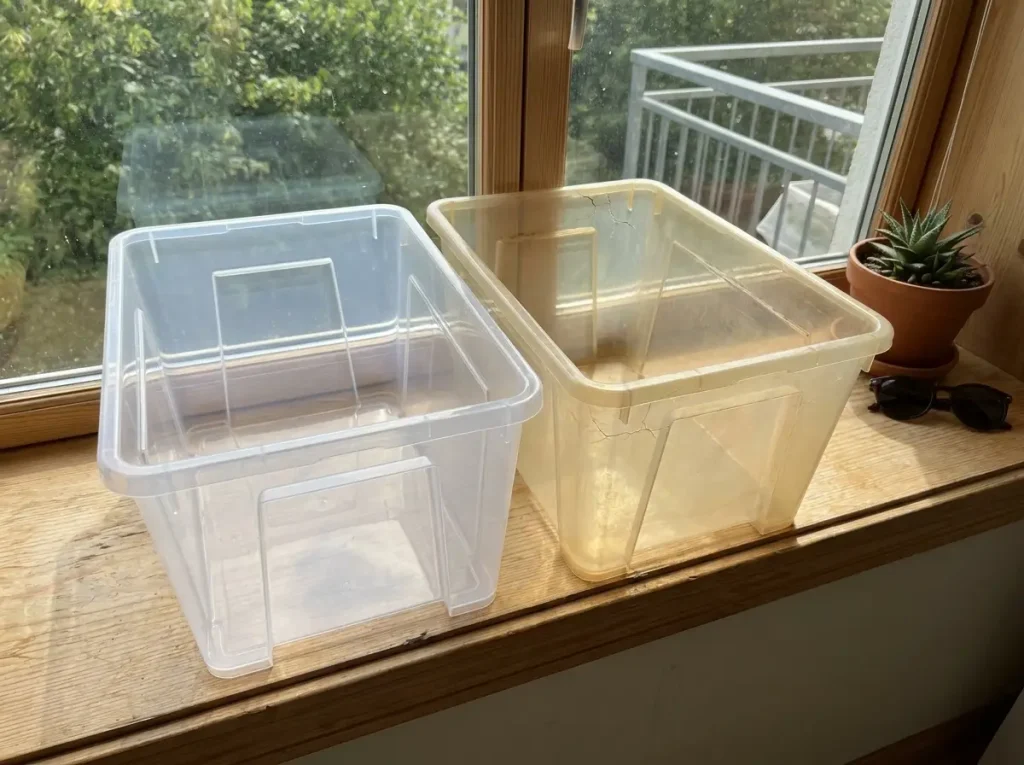
Clear bins have one failure mode the product photo never warns you about. They yellow. It’s predictable chemistry, not bad luck, and where you put the bin decides how fast it happens.
The yellowing, and why sunlight is the culprit
Most clear bins are made of polypropylene, which rates only “fair” for UV resistance, the worst of the common bin plastics. In plain terms, ultraviolet light breaks the polymer bonds and triggers the photooxidation that yellows plastic, shifting it to a yellow-amber tint, usually within 6 to 12 months on a sunlit shelf. After that you get a chalky surface haze and fine micro-cracks near the rim. Heat speeds it up sharply, so a bin in a hot garage above about 104°F degrades fastest of all.
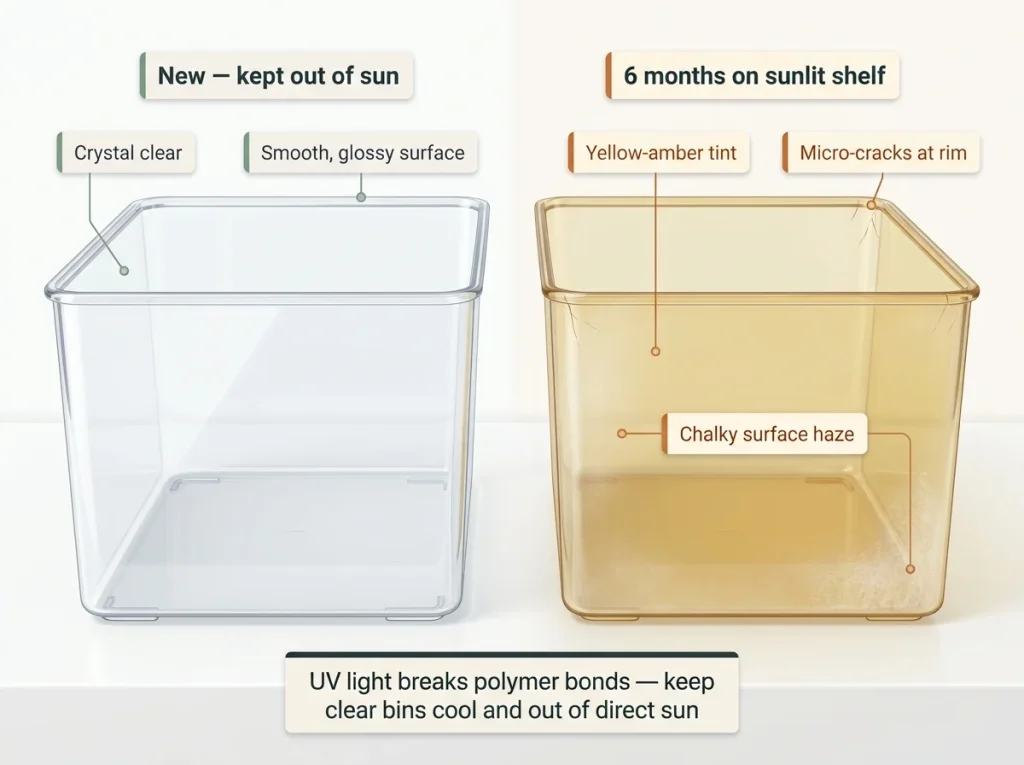
The community version of this is everywhere: the bins looked great in the store, and six months later they’re yellow, worst of all the two that sat near the window. It’s not a defect. It’s the plastic doing exactly what UV makes it do.
The cracking, and why cold is the other enemy
The opposite extreme does its own damage. Polypropylene and polyethylene turn brittle below freezing, and their impact resistance drops off a cliff. A bin you’d happily drop in summer can shatter from the same bump in a freezing garage or attic. If you’re winter-storing in an unheated space, look for bins labeled shatter-resistant, or step up to a tougher plastic rated for cold. This is the real reason to think twice before stashing your good clear bins in the garage over winter.
If a shelf gets direct sun, put your clear bins anywhere but there. Moving a bin from a sunlit spot to an interior shelf cuts its UV exposure dramatically and buys you years instead of months. When the spot is bright and unavoidable, that’s the one place opaque actually outlasts clear.
What “BPA-free” does and doesn’t tell you
One label trips people up. BPA-free is a food-safety claim, full stop. It says the plastic won’t leach that particular chemical into food. It tells you nothing about UV resistance, nothing about cold performance, and nothing about how long the bin stays clear. Don’t read it as a durability promise, because it isn’t one.
If you want genuinely glass-clear that resists yellowing, acrylic storage bins hold their clarity far better than polypropylene. The catch is that acrylic organizer bins cost more and crack harder on a sharp impact, so they’re a splurge for display shelves, not a workhorse for a packed closet.
Budget vs Splurge (When the Price Gap Actually Matters)
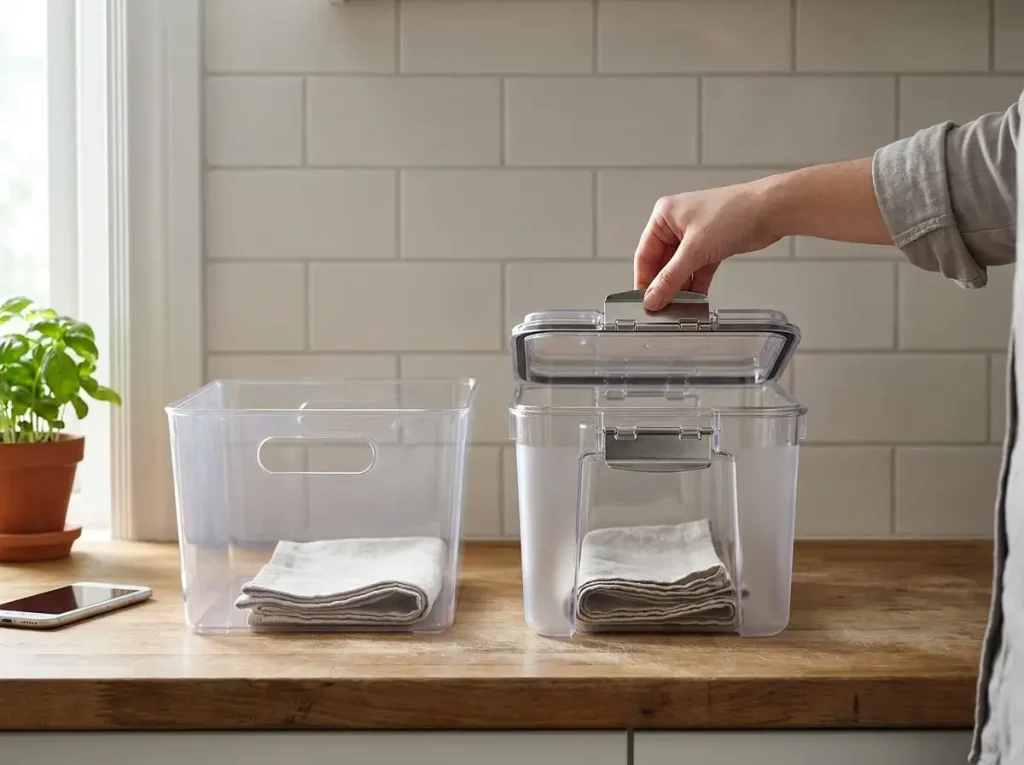
Most clear bins are nearly the same plastic with a different logo. The price gap rarely buys better material. It buys size, a better lid mechanism, and consistency across a set. Here’s when paying up is worth it and when it’s money you don’t need to spend.
Where budget bins are fine
Open-top pantry bins are the easy save. The budget six-pack and the boutique name do the identical job at the identical size, and once they’re full of pasta nobody can tell which logo is on the side. Drawer bins are the other gimme, where the dollar-store option holds up just as well for the small stuff. If the bin’s only job is to corral things on a shelf you see every day, buy the cheaper one.
Where the splurge earns it
The lid mechanism is where money shows up. A flimsy snap lid that cracks at the hinge is worse than no lid, while a real latching lid survives years of stacking. Made-in-USA consistency matters too if you’re stacking many bins, because off-brand sizing drifts just enough that the stacks don’t sit flush. And matched sizing is worth paying for only when you’re buying a lot of bins meant to stack into a tower. Otherwise, bins don’t need to match. They need to fit the shelf.
The phased-buying approach
Here’s the move that saves the most money: don’t buy the whole system at once. Buy six bins, live with them for two weeks, then buy more. Almost everyone who buys all-in ends up with half the bins unused because they misjudged their categories. The 10-pack of the small IRIS bins beats the 6-pack on cost per bin if you already know you’ll use them, but if you’re not sure, start small. And the real anti-sell: if a tension rod or a box you already own solves the shelf, you don’t need a bin at all. For a whole pantry done on almost nothing, organize a pantry for next to nothing shows how far use-what-you-have goes.
Why Clear Bin Systems Fail (and Two Habits That Keep Them Working)
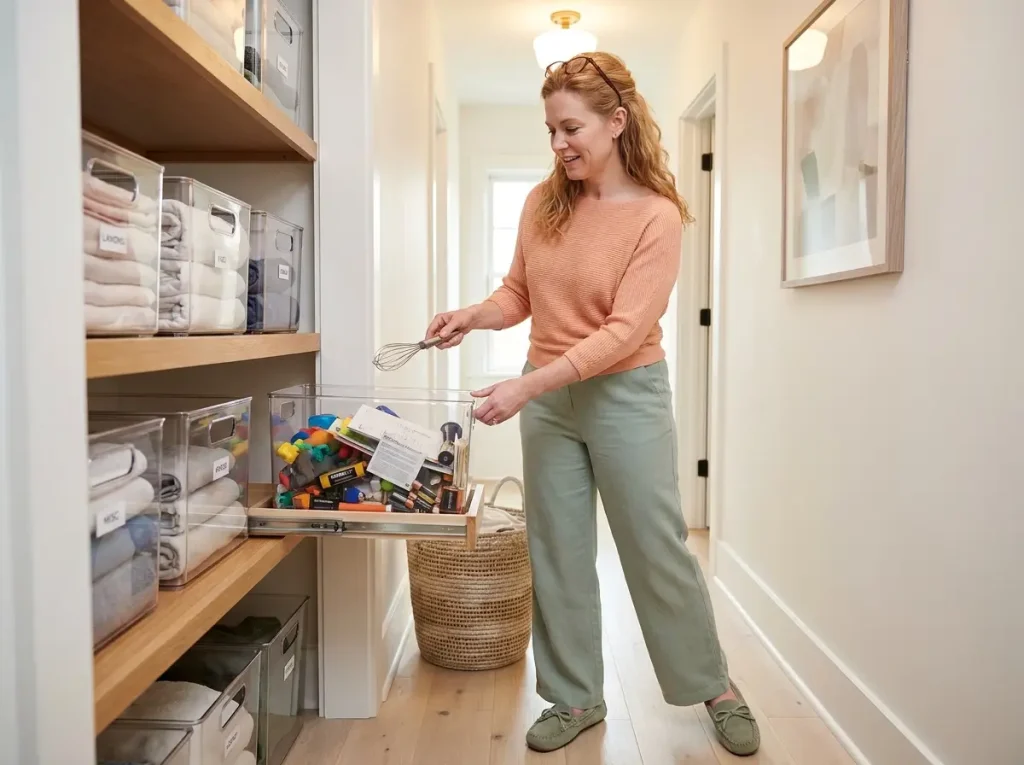
The “after” photo is not the finish line. Clear bins fail in the same predictable ways a few months in, and two small habits keep them from reverting.
The three ways they revert
The first failure is the categoryless bin. A bin with no rule becomes a visible junk pile, and because it’s clear, you get to watch it happen. Every bin needs one assigned category or it eats the shelf. This is the same trap that sinks most sorting systems, which is why a bin without a category just becomes a new pile is worth reading before you fill a single bin.
The second is skipping labels because the bin is clear. Clear reduces the need for labels but doesn’t remove it. The moment a bin goes behind another bin, or sits on a high shelf, your line of sight breaks and you’re back to guessing. A label fixes that, and a label maker (or simple dry-erase or chalk labels on bins you re-sort often) makes it painless. The trick is using ones that survive, which is its own small science covered in labels that don’t peel off in a month. The third is lid friction in a daily zone, the exact problem from earlier: the system reverts when the lid adds a step nobody wants to take.
Habit one, the monthly five-minute reset
Once a month, pull anything that drifted into the wrong bin and put it back where it belongs. Five minutes. That’s it. The drift is normal and constant, and catching it monthly keeps a small correction from becoming a full re-org. Skip it for a season and you’re starting over.
Habit two, one in, one out per bin
Give each bin a ceiling: when it’s full, something leaves before something new goes in. A full bin should signal a decision, not an overflow. In a shared household this is the habit that holds, because it turns “we’re out of room” into a clear prompt instead of a pile that creeps onto the shelf above. Pair it with both labels and clear line of sight, and the people who didn’t set up the system can still follow it.
Conclusion
Three things carry the whole system. Measure before you buy (depth, height, and bed-frame clearance), match the bin type to how often you reach in (open-top for daily, lidded for seasonal), and keep clear bins cool and dark so they don’t yellow. Give every bin one category and the shelf stays a system instead of becoming a see-through junk drawer.
In three months, check two things: any bin on a sunlit shelf for the first hint of yellowing, and any bin that’s quietly drifted into a catch-all. Move the first, reset the second.
Measure one shelf today. Buy bins for that shelf only. Get it right, then expand.
Frequently Asked Questions
01What size clear storage bin fits a standard closet shelf?
Keep the bin under 13 inches deep for a standard rental closet shelf, which usually runs 12 to 14 inches. Custom and walk-in shelves at 16 inches or more can take larger bins, but a deep bin on a shallow shelf overhangs and blocks the door.
02Do clear plastic storage bins yellow or crack over time?
Yes. Most clear bins are polypropylene, which yellows under UV light in 6 to 12 months on a sunlit shelf and turns brittle in freezing storage. Keep them cool and out of direct sun, and choose shatter-resistant plastic for cold spaces like garages.
03Are clear storage bins better than opaque ones?
Clear wins in shared and high-traffic spaces because everyone can see the contents without opening or remembering a label. Opaque is better for clutter you don’t want on display or for sunny shelves where clear bins would yellow. Clear only helps after you’ve decluttered the contents.
04What clear storage bins fit under a bed?
Measure your bed-frame clearance first. Platform beds give about 4 to 7 inches, while standard metal frames give 7 to 12. Most clear under-bed boxes need the taller metal-frame gap, so a low platform bed often needs a slim box or none at all.
05Should clear pantry bins have lids?
For daily-access pantry shelves, skip the lid. The extra step of lifting and replacing it is what makes people stop putting things back. Save lidded bins for low-frequency storage like seasonal items, where dust protection matters more than quick access.
Disclaimer: ClutterlessNest is a participant in the Amazon Services LLC Associates Program. As an Amazon Associate we earn from qualifying purchases. This article may contain affiliate links — if you buy through them, we may earn a small commission at no extra cost to you. We only recommend products we have tested or genuinely believe in.