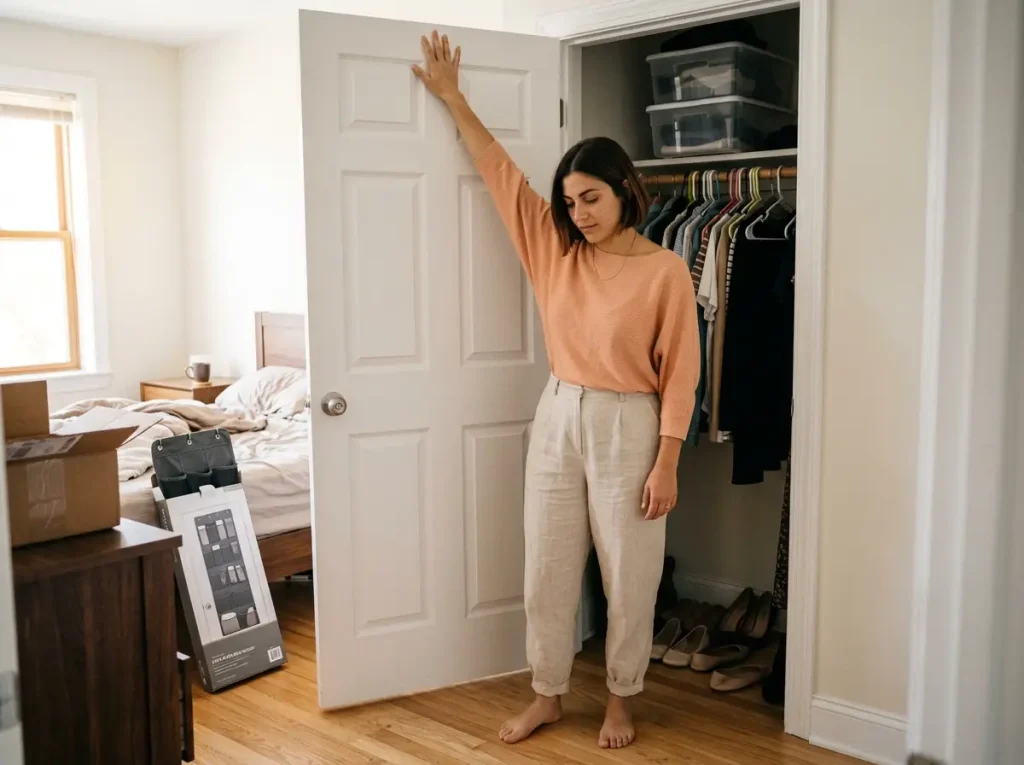
You hung the organizer on a Sunday, loaded it with cans by Wednesday, and by the end of the month the top of the door was bowing and the whole rack sat a little crooked. That story repeats across organizing threads with almost no variation, and the culprit is almost never the organizer. It is the mismatch between the rack and the door it is hanging on. A hollow-core rental door and a solid-core door are two completely different weight budgets, and nobody selling you a fifteen-pocket rack stops to ask which one you have. The best over-door organizers are the ones matched to your specific door and room, so this guide starts with how to read your door in about ten seconds, then walks through the picks that actually fit each space, from the same weight-capacity rules that govern any shelf or rack down to the humid bathroom door nobody warns you about.
Quick Answer
How to pick one in ten seconds, before you shop:
- Knock the door. Echoey and light means hollow-core, so keep the total load modest. A dull thud means solid-core and real headroom.
- Measure the top edge. Most brackets fit a standard door, but a chunky slab may not let it close flush.
- Match material to the room. Coated or stainless steel for humid bathrooms, wire or fabric for dry closets and pantries.
- Check swing clearance, not just the closed door. A deep rack can hit the wall or block the door.
- Renters: pad every hook and back bar with felt or foam.
Check Your Door Before You Buy Anything
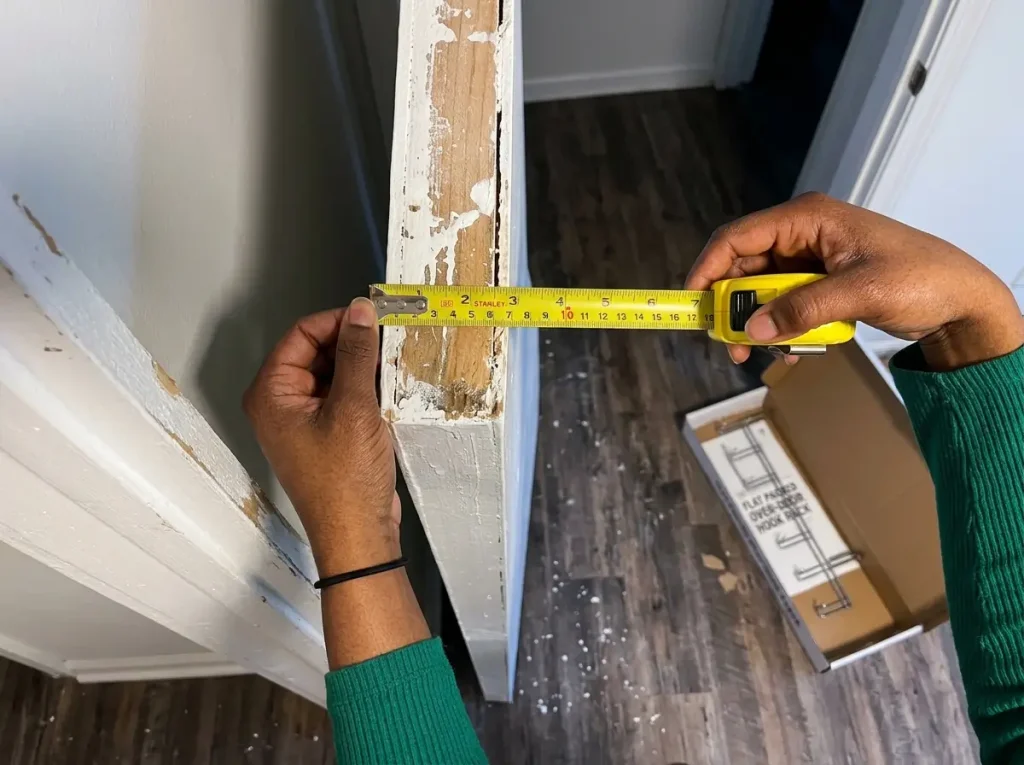
Stand in front of the door you have in mind and knock on it. That five-second knuckle test is the step that separates the organizers that last from the ones that end up on the floor, and it costs nothing. An echoey, higher-pitched, hollow-feeling door is a hollow-core door, which is what most interior and rental doors are. A dull, heavy thud is a solid-core door. You are not being paranoid here. The sound genuinely tells you which half of this guide you should be shopping from.
The 5-second knock test
Hollow-core doors are two thin sheets of wood or fiberboard over a cardboard honeycomb interior, which is why they weigh so little and sound so empty. Solid-core doors have a dense fill and feel like furniture when you knock. The reason this matters is weight. A hollow door can only grip so much before the top rail starts to flex, and once it flexes, your no-drill hooks stop sitting flush and the whole thing loosens.
Knock near the top corner of the door, not the center. The top rail is what carries an over-door organizer, and some hollow doors have a slightly denser block there for the hinges. If even the top sounds hollow, treat the whole door as light-duty.
What each door type can actually hold
Here are the numbers competitors leave out. A hollow-core door safely takes roughly 20 to 30 pounds of distributed hanging weight, and the door itself often weighs only 25 to 35 pounds to begin with. A solid-core door handles far more, generally in the 45 to 100 pound range, and a solid interior door can hold more hung weight than a hollow one by a wide margin. Now put that against reality: a tiered pantry rack can approach the hollow-core ceiling once it is full of cans, before you have added a single box of pasta. That is the whole reason these racks sag. It is the same principle behind the hollow-core door limits that cap any vertical storage in a rental.
Measure the top edge before you buy
Most over-door hook brackets are built for a standard interior door thickness, roughly one and three-eighths of an inch up to about one and three-quarters. Measure the top edge of your door with a tape before you order (thirty seconds now saves a return later), because a thick solid slab door can stop the door closing flush against the frame once the bracket is hooked over it. The Umbra Estique organizer, for instance, publishes a hard ceiling of one and a half inches, which is a useful reminder that even a good-looking hook set has a thickness limit. Well, the real lesson is simpler. Measure first, then shop, not the other way around.
Watch for Swing Clearance, Not Just Wall Clearance
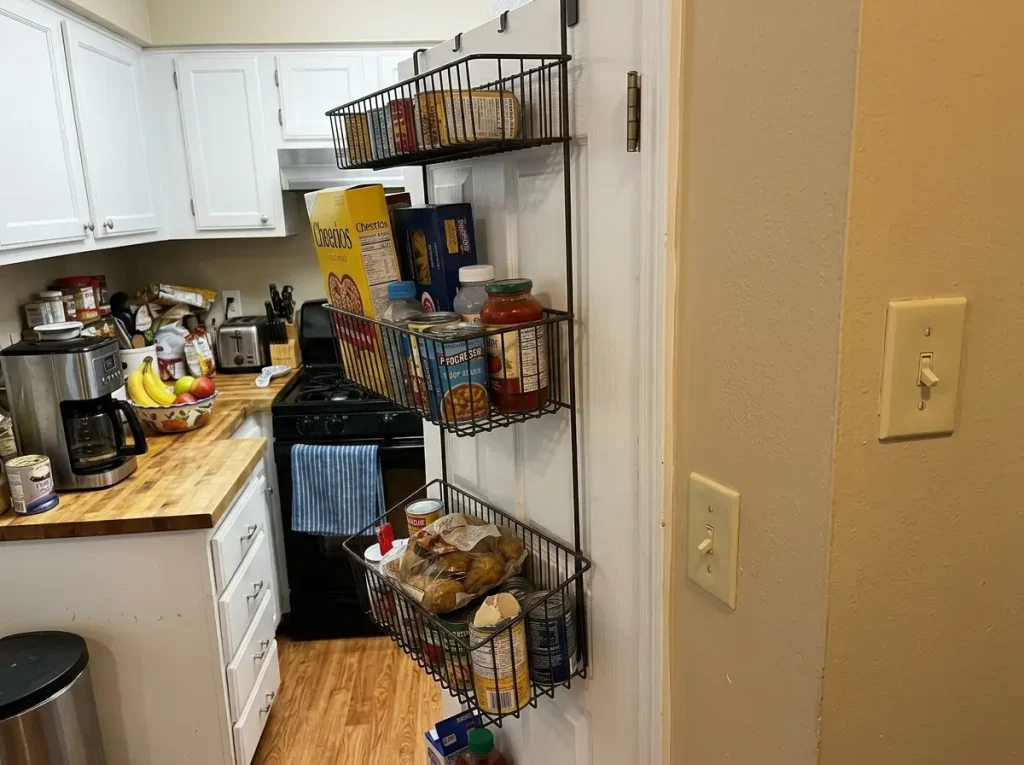
You measured the door thickness. You forgot the door moves. This is the failure nobody names in a roundup, and it catches people who did everything else right. The rack that fits perfectly when the door is shut becomes the thing that gouges the wall every single time the door swings open.
The two clearances that matter
There are two gaps to check, not one. First, does the door still close flush against the frame with the organizer’s back bar hooked over the top? Second, does the loaded organizer clear the adjacent wall, the open shelving, or the light switch when the door swings all the way open? Deep tiered baskets are the usual offenders. A rack with six-inch baskets gives you great capacity and eats straight into the swing arc, so the corner of the bottom basket meets the wall with a thud you will quickly dread.
Open the door to its widest natural position and look at where the deepest part of the organizer would land. If it stops short of the wall by less than a hand’s width, either go shallower or plan to open that door gently for the rest of your lease.
Deep racks and tight-swing doors
Bi-fold and closet doors with limited travel are the tightest case of all. A deep organizer can stop a bi-fold from folding at all, which turns a storage upgrade into a door that no longer works. On a narrow reach-in closet, the swing and the wall are often close together, so a slim profile beats a deep one even if it means fewer pockets. For a rental, there is a quieter cost too. A rack that bangs the wall on every swing leaves scuff marks that read as damage at move-out, and you will be the one explaining them.
Before you shop by room, here is the short version of which pick suits which door.
| Organizer | Best Door | Load |
|---|---|---|
| Delamu 6-Tier Pantry Rack | Pantry, kitchen | Medium |
| ULG Fabric Organizer | Closet, bedroom | Light to medium |
| CANYAVE Towel Rack | Bathroom, laundry | Light |
| Umbra Estique Hooks | Entryway, office | Light |
| ClosetMaid 8-Basket Unit | Any (converts to wall) | Medium |
Best Picks for Pantry and Kitchen Doors
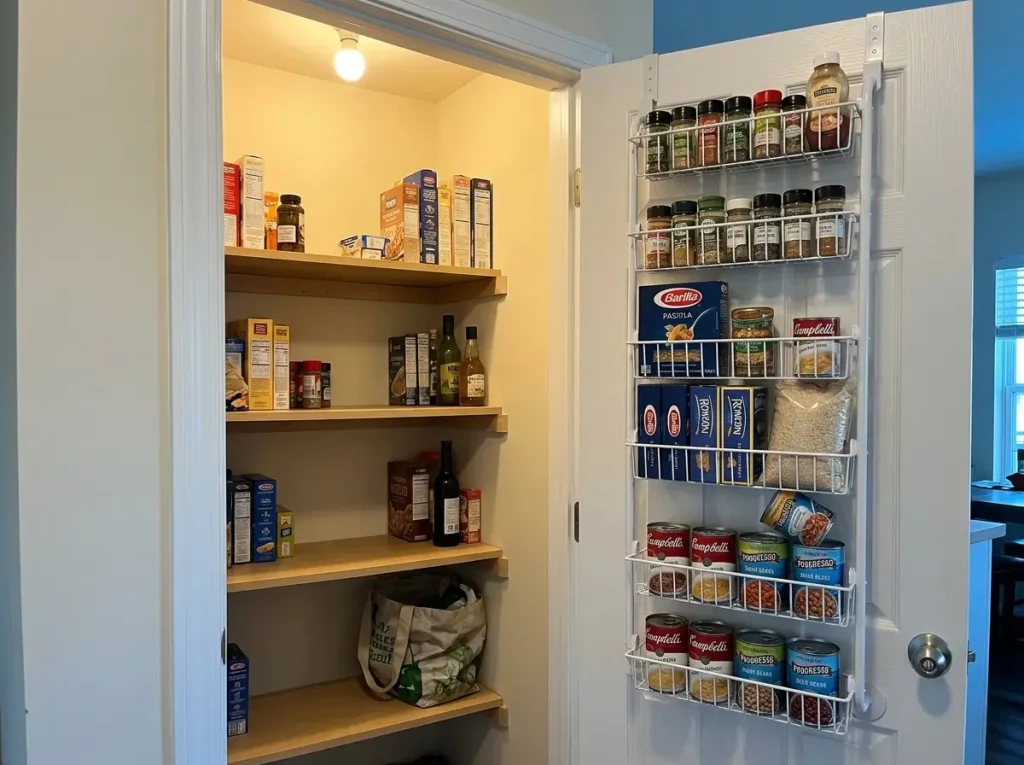
The pantry door is where people overload first. It looks like free real estate, so it quietly ends up holding twenty-five pounds of cans on a hollow door that tops out around thirty. Before you buy anything, be honest about the weight. If all you need is to corral a few lightweight boxes and packets, a couple of adhesive-backed wire baskets may do the job (the peel-and-stick kind that come off clean at move-out), and you can skip a full rack entirely on a half-empty door.
What to store on a pantry door (and what not to)
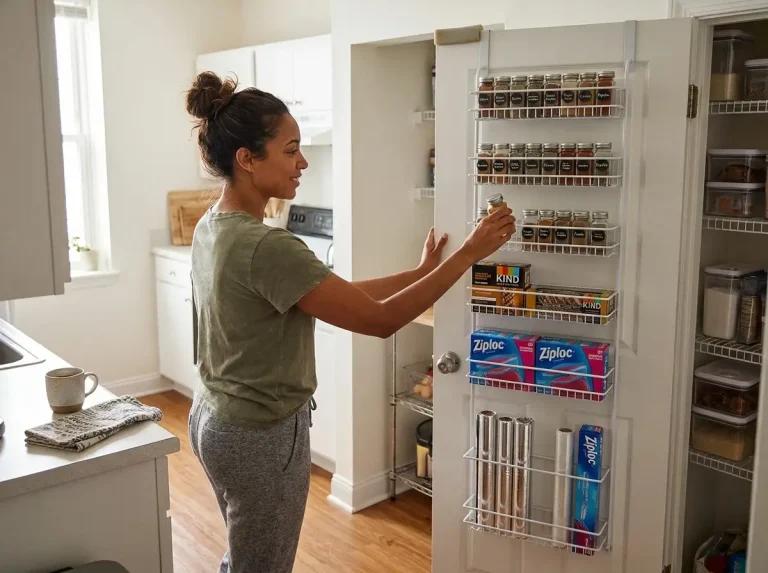
Cans and glass jars are the heaviest things in most pantries, so they are exactly what you should not pile onto a hollow-core pantry door. Keep the door for lighter, bulkier items: boxed pasta, snack bags, spice jars, foil and wrap. Save the canned goods for a low shelf where the floor carries the weight. This is the single change that keeps a door organizer from sagging by month two.
Two racks that fit a standard pantry door
For a proper tiered rack, the Delamu Over-the-Door Pantry Organizer is the workhorse. Its stepped baskets are deep enough for cans and boxes two rows back, it hooks over the door with no tools, and it is the same rack our deeper guide to pantry-door shelf clearance leans on for tight door-to-shelf gaps.
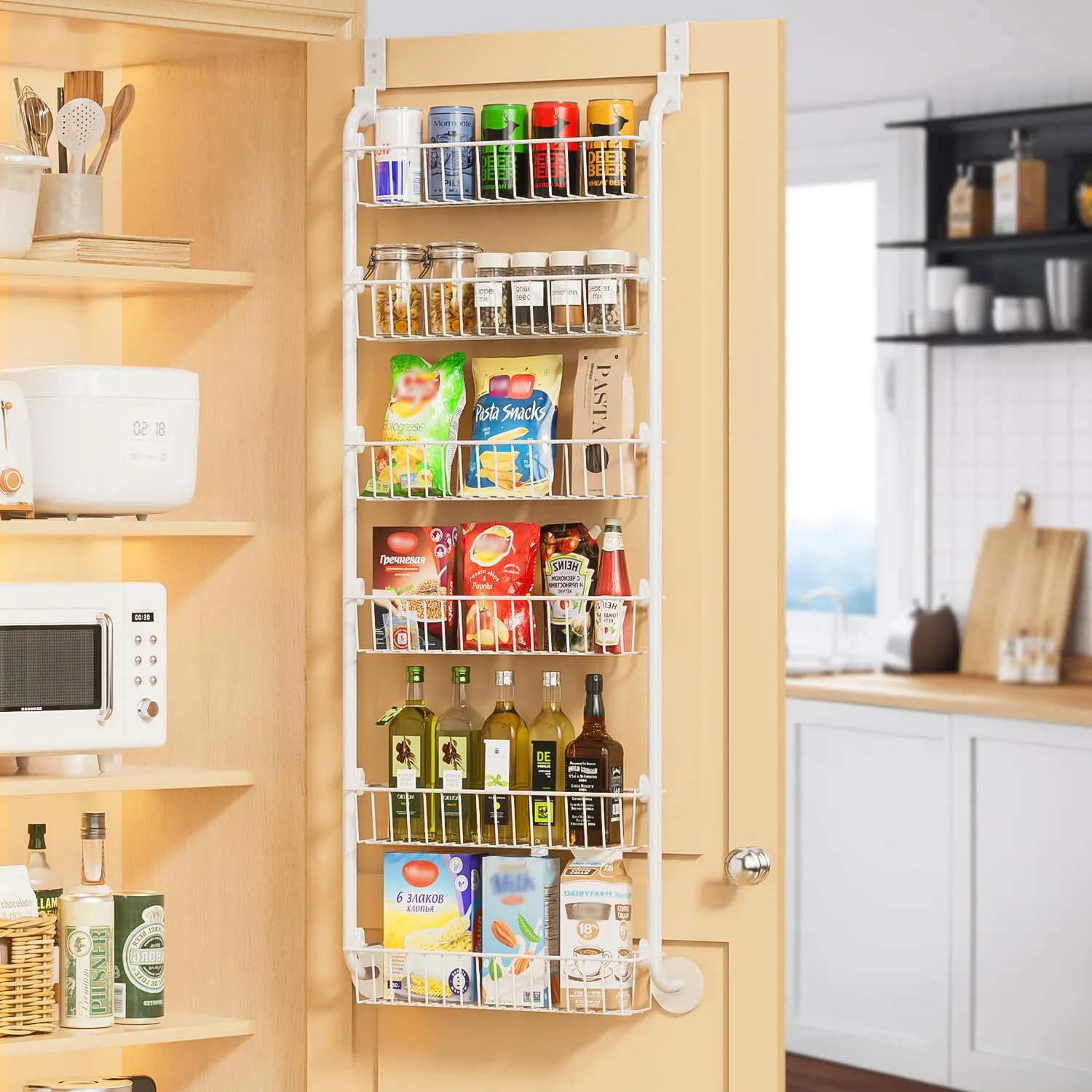
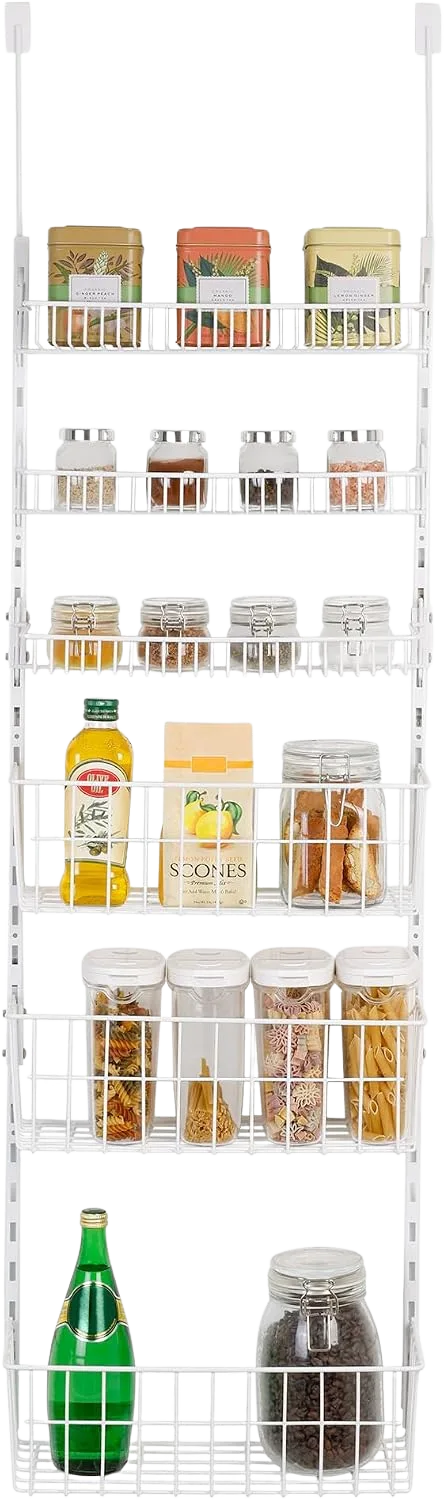
If you want the lighter, cheaper option, the Smart Design Over-the-Door Pantry Organizer Rack is a wire rack with adjustable shelves and, usefully, per-shelf weight ratings. The small and medium shelves are rated around ten pounds each and the large ones around twenty-five, which teaches the point every roundup skips: capacity is not uniform across a tiered rack, so load the bottom shelves heaviest and keep the top ones light.
Best Picks for Closet and Bedroom Doors
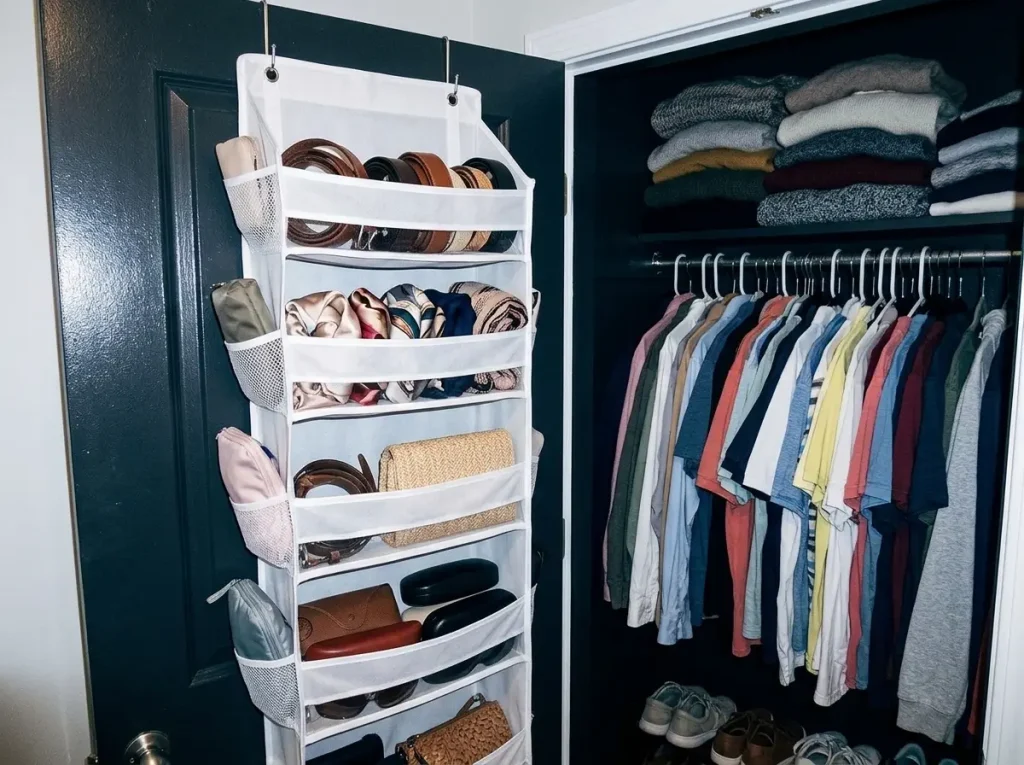
A closet door is the one place a fabric organizer really earns its keep. It is light, it is quiet, and it will not clank against the wood every time you close the door on a Monday morning. Closet accessories are the problem it solves: belts, scarves, small bins, and flats that otherwise scatter across a shelf or vanish onto the floor.
Why fabric wins on a closet door
But metal racks are loud on a bedroom door, and the noise gets old fast when the door is part of your daily in-and-out. Fabric and mesh organizers hang flat, stay quiet, and let you see what is in each pocket, which is half the point. The recurring complaint in closet threads is that opaque bins swallow small items into the back, so mesh that shows the contents is worth choosing on purpose.
A high-capacity pocket organizer (with a capacity caveat)
The ULG Over-the-Door Fabric Organizer is the high-capacity pick here, with six large pockets and twelve mesh pockets rated to around fifty pounds together. That is genuinely a lot of accessory storage. The caveat sends you straight back to the first section: fifty pounds only matters if the door can bear it, so on a hollow-core bedroom door, spread the load and resist the urge to fill every pocket with something heavy.
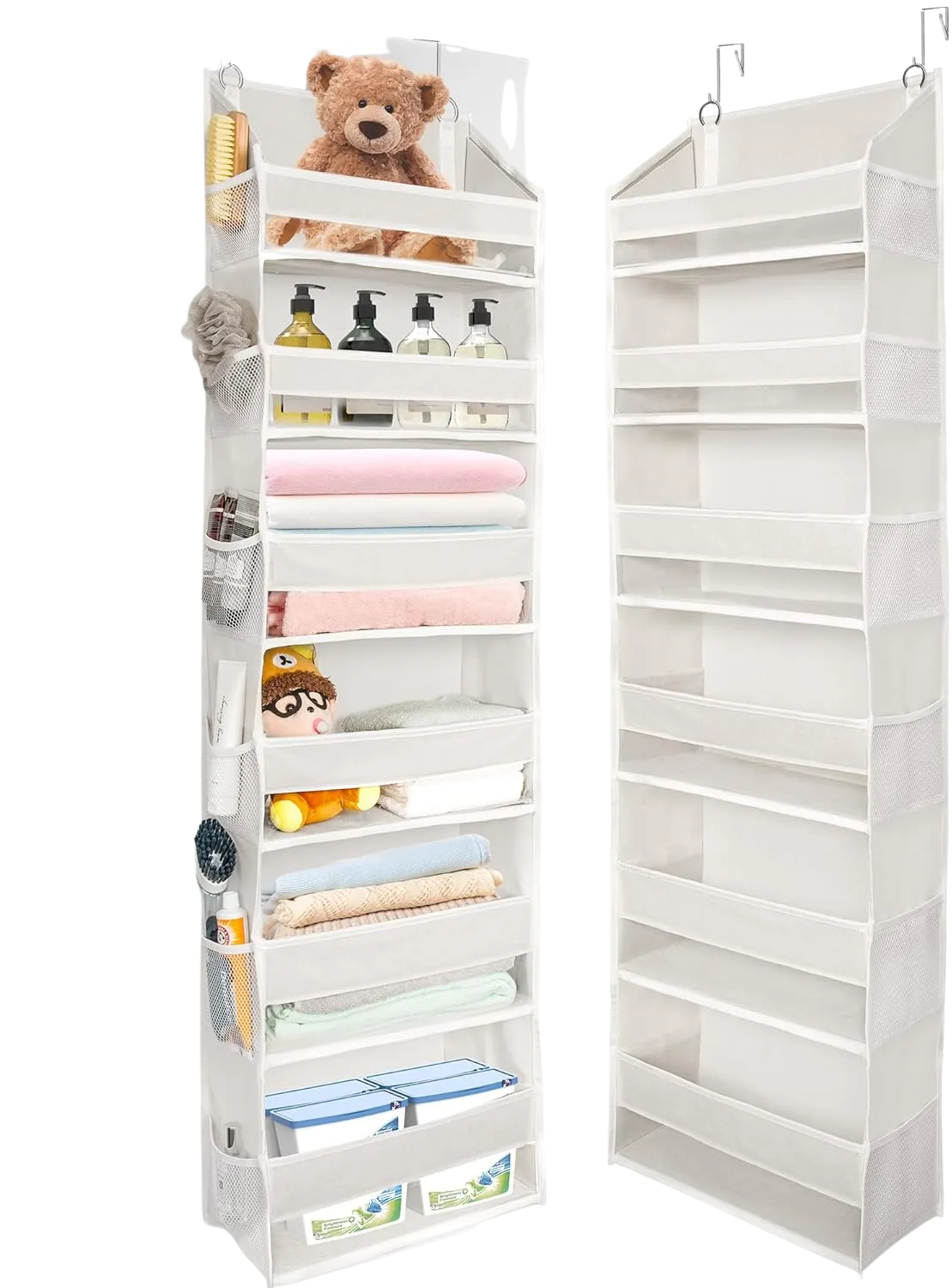
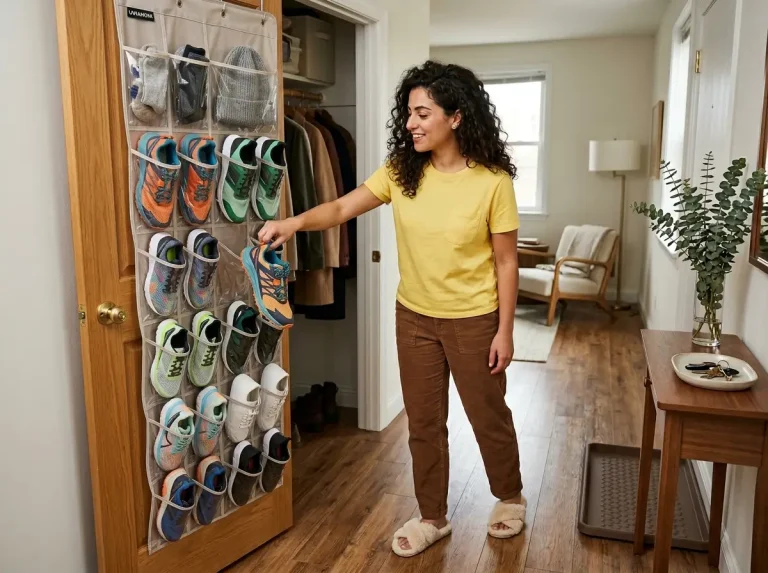
One clarification, because the searches overlap. This is not a shoe article. The pockets on a general fabric organizer are sized for accessories, not rows of sneakers, so if you are specifically after a shoe organizer, that guide covers pocket sizing and shoe capacity properly. For the rest of a renter’s setup, our take on the full apartment closet fills in the drawers and rods around the door.
Best Picks for Bathroom and Laundry Doors
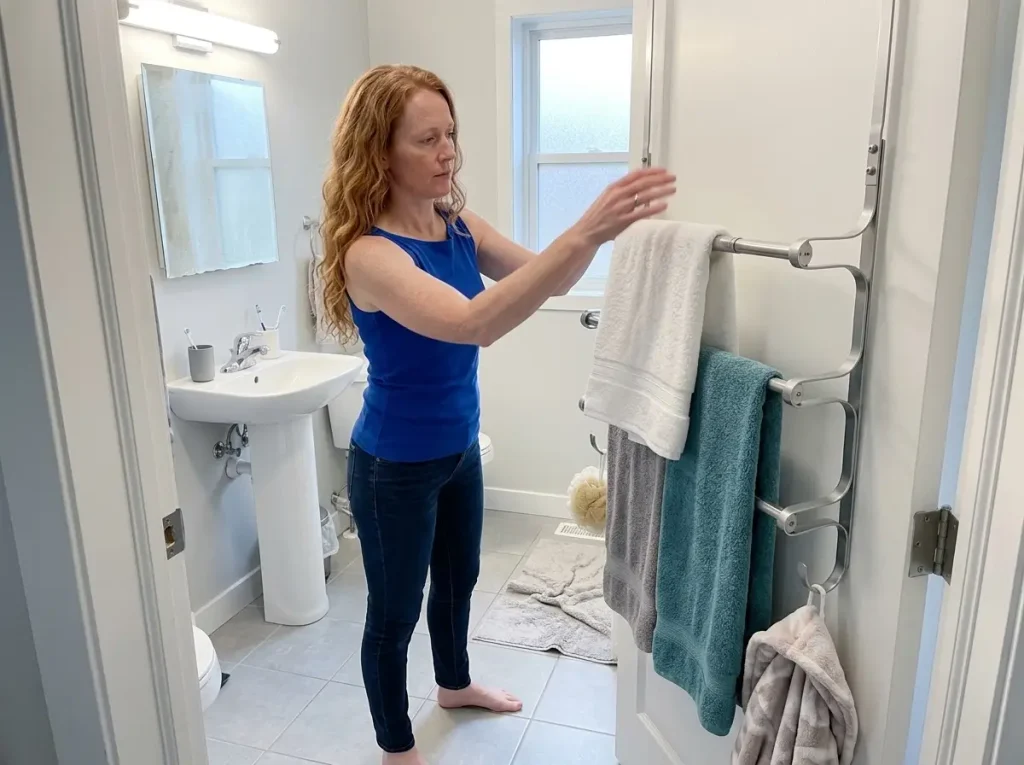
Here is the room-specific failure no roundup mentions. The organizer that looked fine in a dry closet grows rust freckles within about a month on a steamy bathroom door, and then those freckles transfer onto your paint. It is a genuine “why did this happen” moment for someone who bought based on looks, and it is entirely avoidable.
Why bathroom doors rust cheap organizers
Humidity corrodes bare or chrome-plated metal, and a bathroom door lives in humidity by definition. The word to distrust on a cheap rack is “rust-proof,” because in practice it usually means a thin coating over ordinary steel, not solid stainless. A coating chips, and once moisture reaches the steel underneath, the rust spreads. For a guaranteed-humid room, this is the one place it is worth spending a little more on real coated or stainless construction instead of the cheapest metal on the page.
Run the exhaust fan for ten minutes after every shower. Most bathroom rust problems are really ventilation problems, and cutting the standing humidity buys years of life out of any metal organizer, coated or not.
A rust-resistant towel rack that holds up
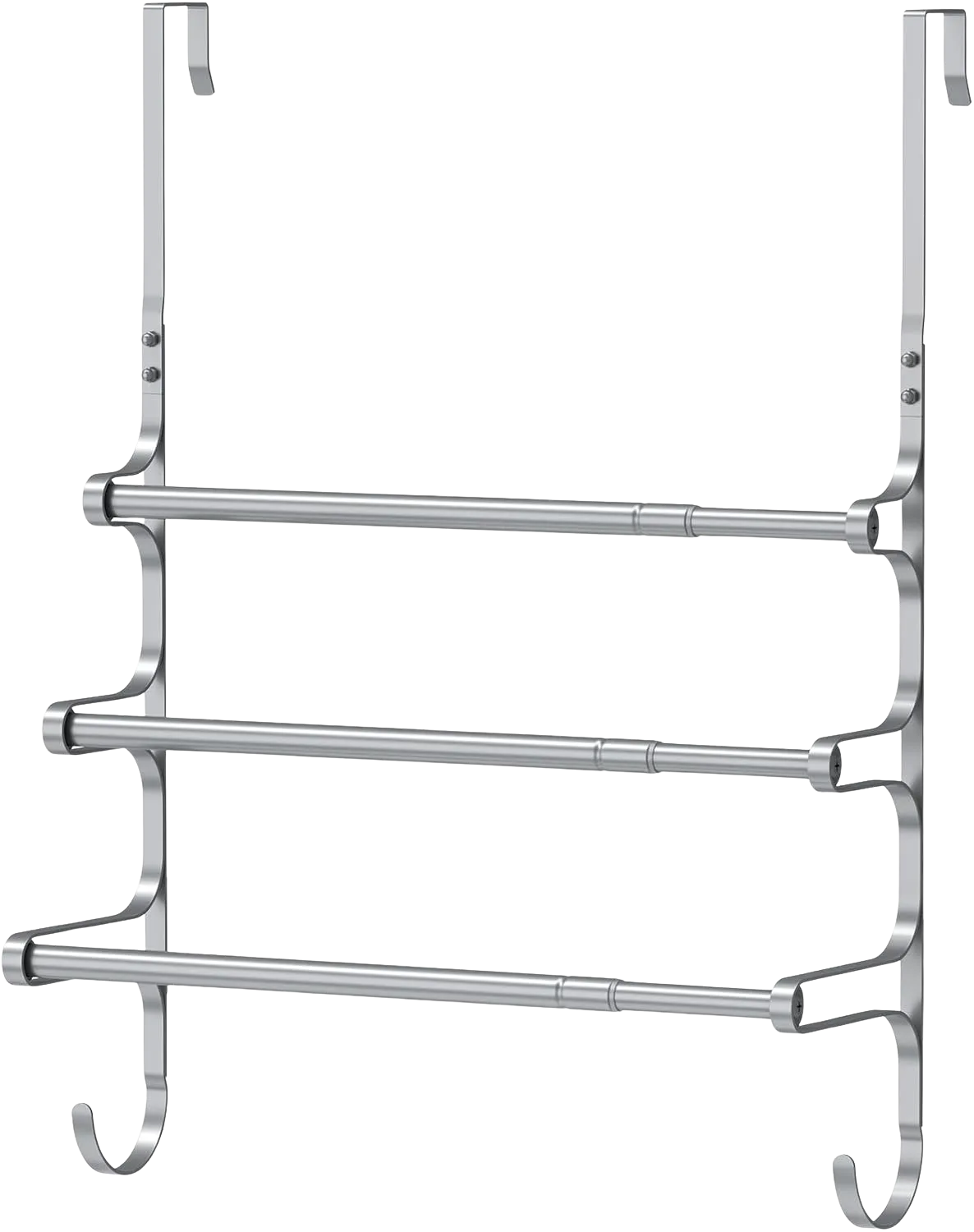
The CANYAVE Over-the-Door Towel Rack is the bathroom-specific pick, a steel triple-bar rack with end hooks marketed as rust-resistant and sized for wet towels. The same logic carries over to a laundry-closet door, where humidity from the dryer does the same slow damage. Keep the load to towels and light items, since a bar rack is not built for heavy racks of product.
For the counter, mirror, and under-sink side of the same room, our guide to the rest of a small bathroom’s storage picks up where the door leaves off.
Best Picks for Entryway, Craft Room, and Home Office Doors
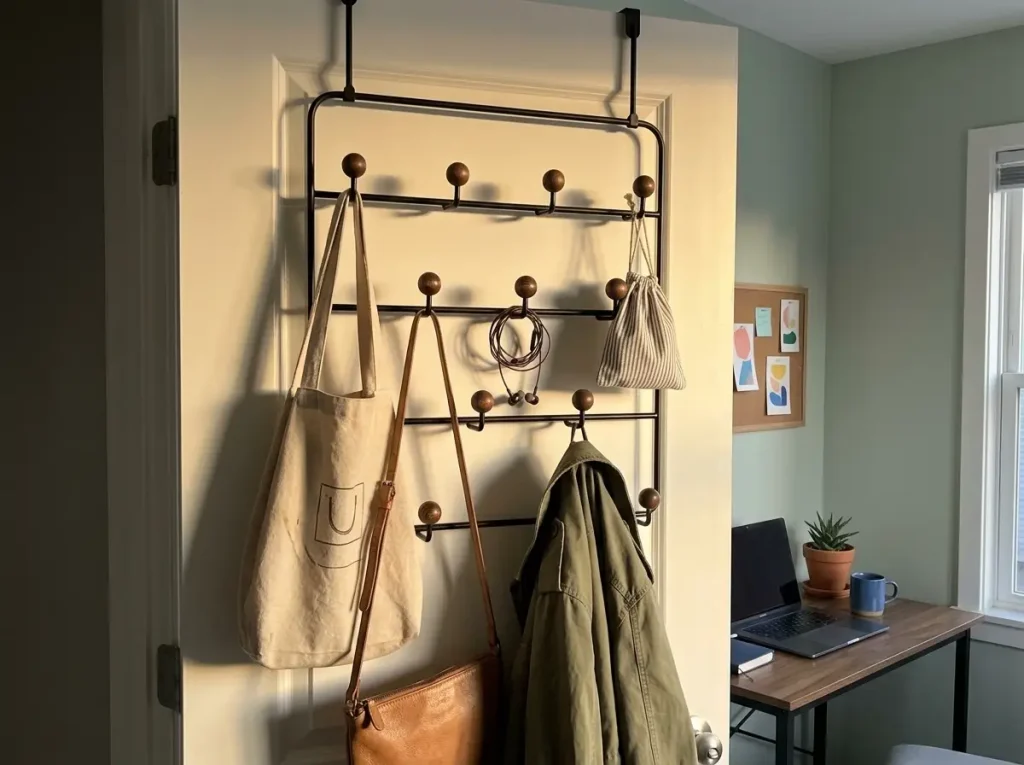
These doors do not need a heavy rack. They need the right hook density and maybe a couple of pockets, because what lands here is light and varied: bags, a jacket, headphones, planners, craft supplies. Over-building a light-use door wastes money and puts needless stress on the door, so this is where restraint pays off.
Hooks beat racks on light-use doors
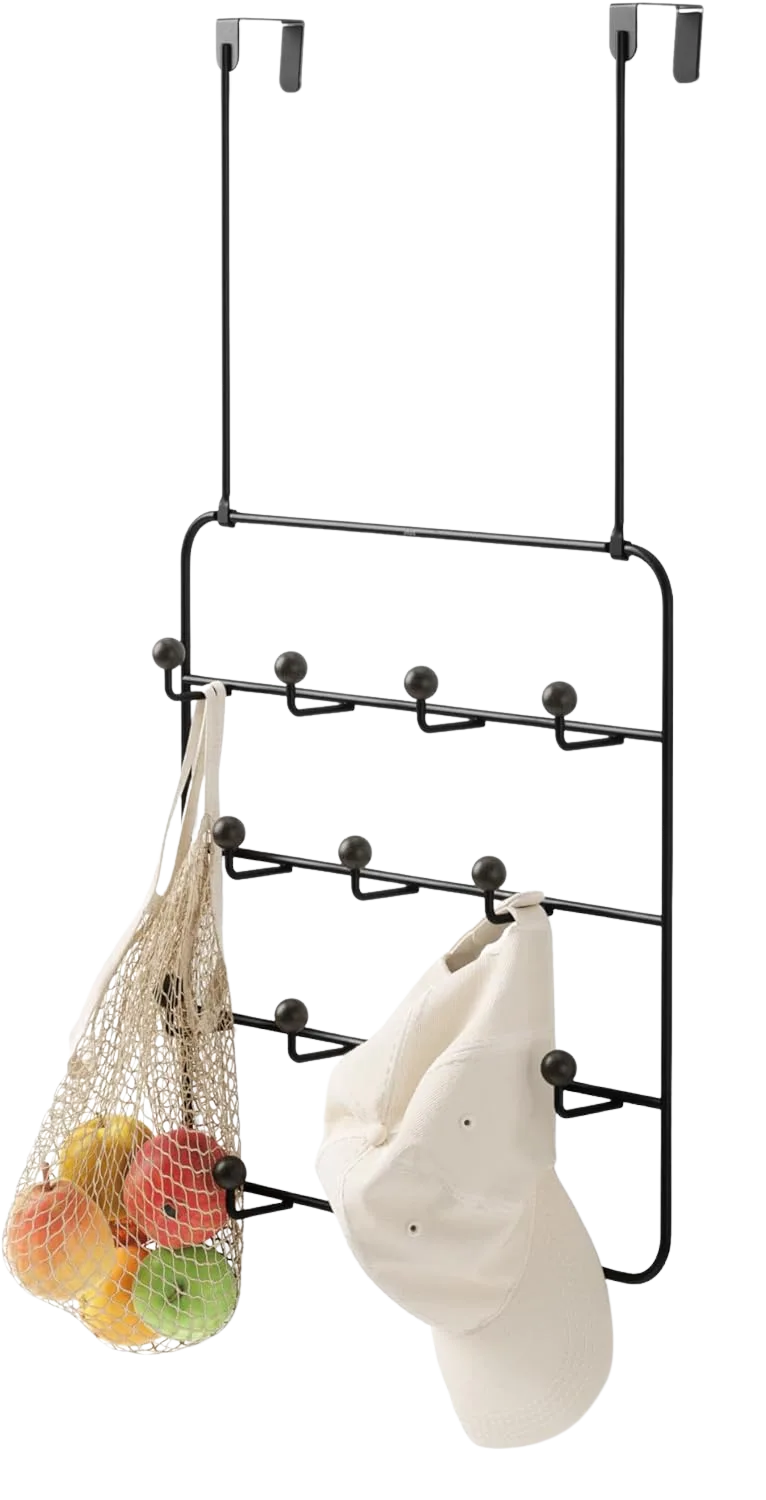
For an entryway or office door, a hook set does more than a rack. The Umbra Estique is the clean-looking option, with fourteen slim hooks and rounded wooden tips, and it is the concrete example from the opening section because it publishes a thickness ceiling of one and a half inches. If your door is thicker than that, you now know to look elsewhere before you order, which is the whole point of measuring first.
The renter-safe budget hook (and why felt matters)
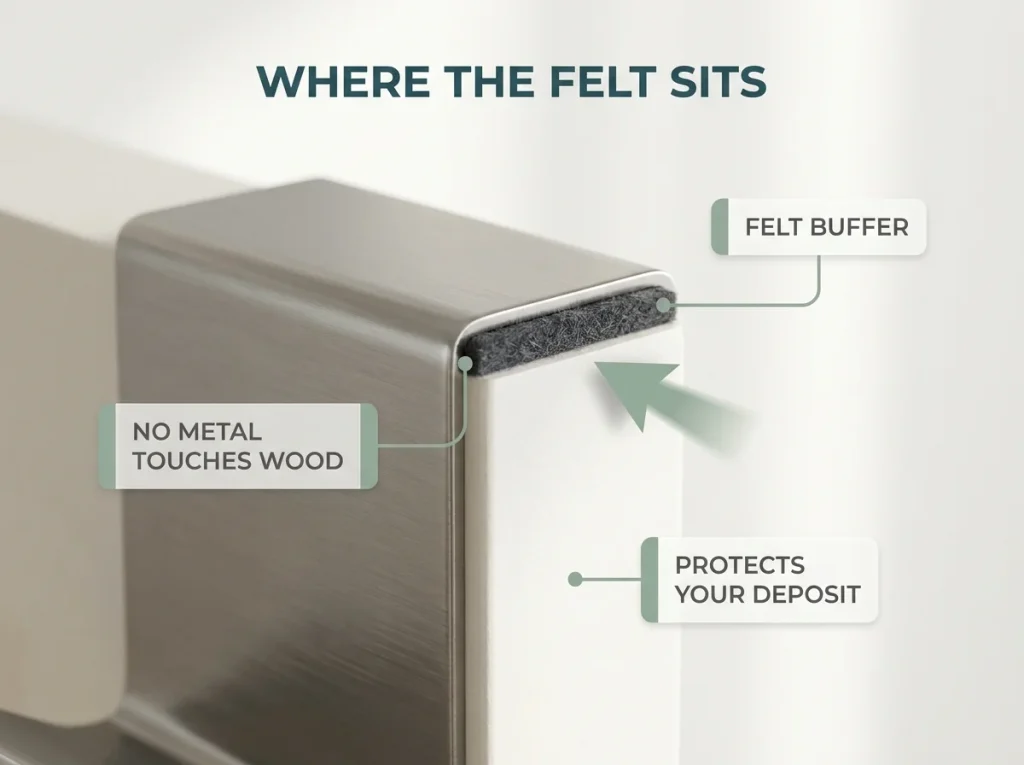
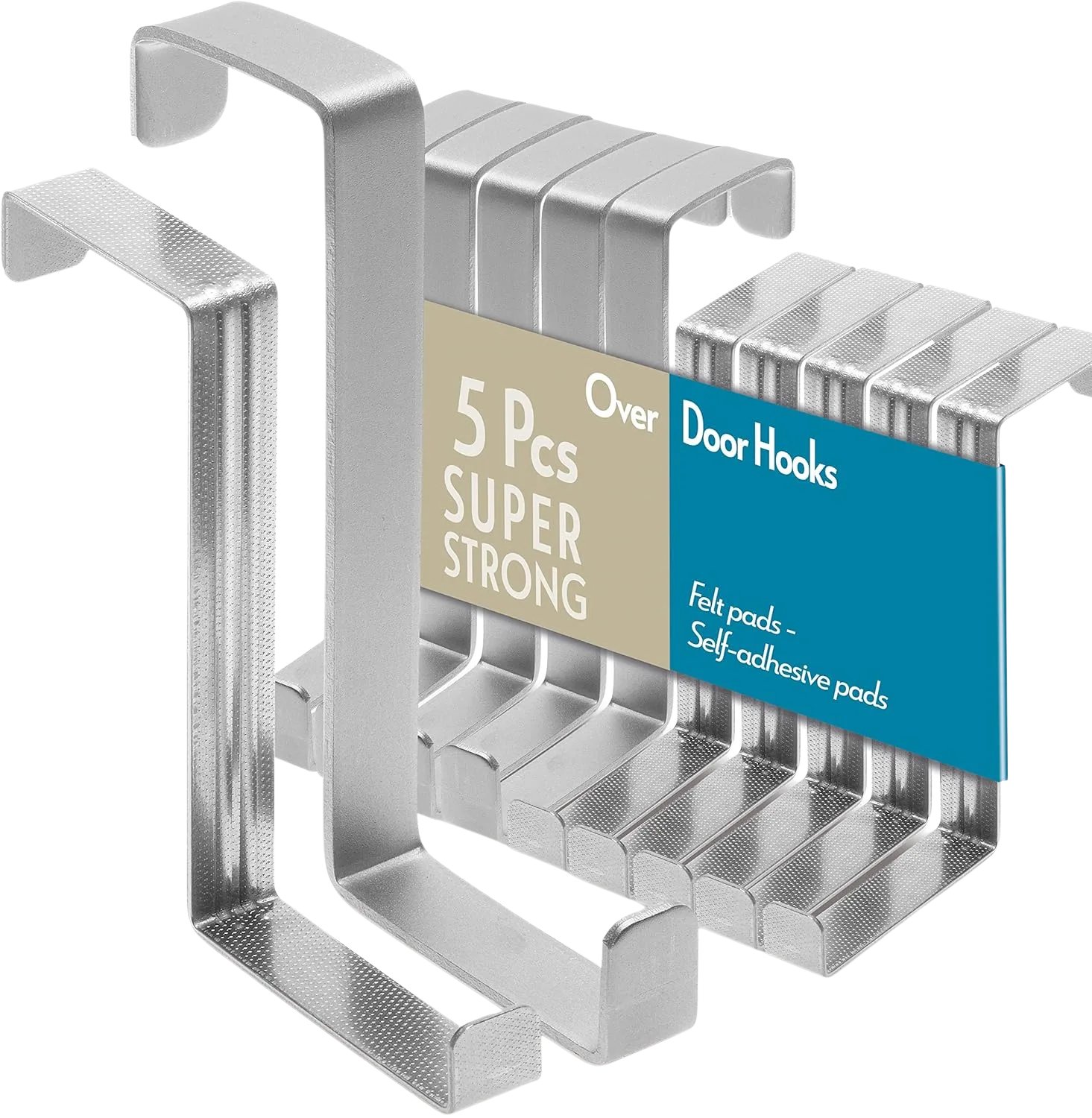
If you rent, the 4smile Adjustable Over-Door Hooks are the smarter buy, and the reason is the felt lining. Every point where those hooks touch the door is padded, which is exactly the deposit-safety move that keeps a door mark-free at move-out. Pad every contact point, on any organizer, and you avoid the friction and pressure dents that show up at the final inspection. On a hook set that comes felt-lined from the box, that work is already done for you.
A pocket organizer for craft and office supplies
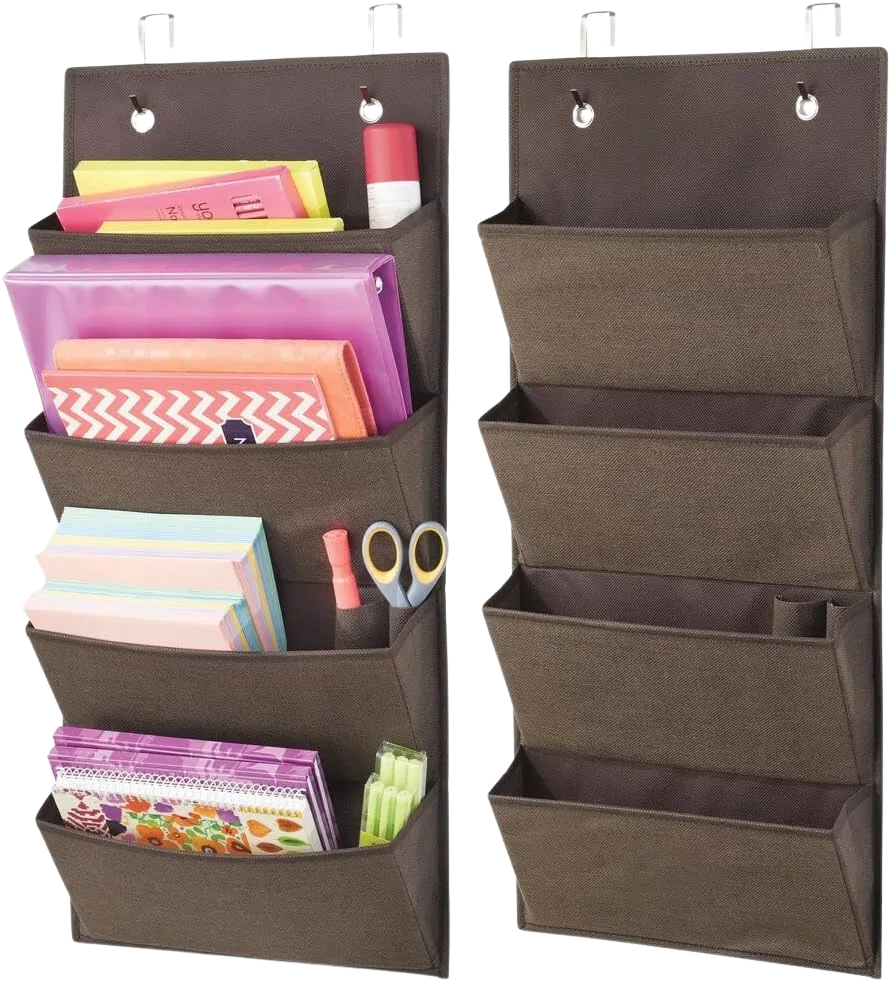
For a craft room or home office, the mDesign Soft Fabric Over-Door Hanging Organizer does something quietly smart. It is marketed for office supplies, planners, and file folders as much as for clothing, and it comes as a two-pack. That is the buy-by-function lesson in one product: the room name on a retail listing is marketing, not a structural limit, so a “closet” organizer holds craft supplies just as well and often costs less than a “craft” version of the same shape. Buy the pockets and hooks you need, not the room label.
For the shelf, bench, and hook layout of the whole entryway, our fuller entryway setup handles the space beyond the door.
When to Skip the Door and Use a Wall-Mount or Budget Fix Instead
Sometimes the honest answer is that your door cannot safely take one, and forcing it just buys you a sagging rack and a damaged door. The anti-sell matters here, because the goal is a system that still works in three months, not a purchase you regret by then.
When your door disqualifies itself
A few doors rule themselves out. A door too thin or too thick for the bracket, a bi-fold with no swing room, a hollow-core door you would have to overload to make useful, or a door you simply cannot risk marking in a strict rental. If you are checking two or more of those boxes, the smart move is to stop shopping for door organizers and put the storage on the wall instead. I used to point people toward the biggest rack that would fit any door. After enough sagging-door and bowed-top failure stories in organizing threads, the better advice is the opposite: buy the lighter unit, and if the door cannot take even that, do not use the door.
The convertible hedge (over-door or wall)
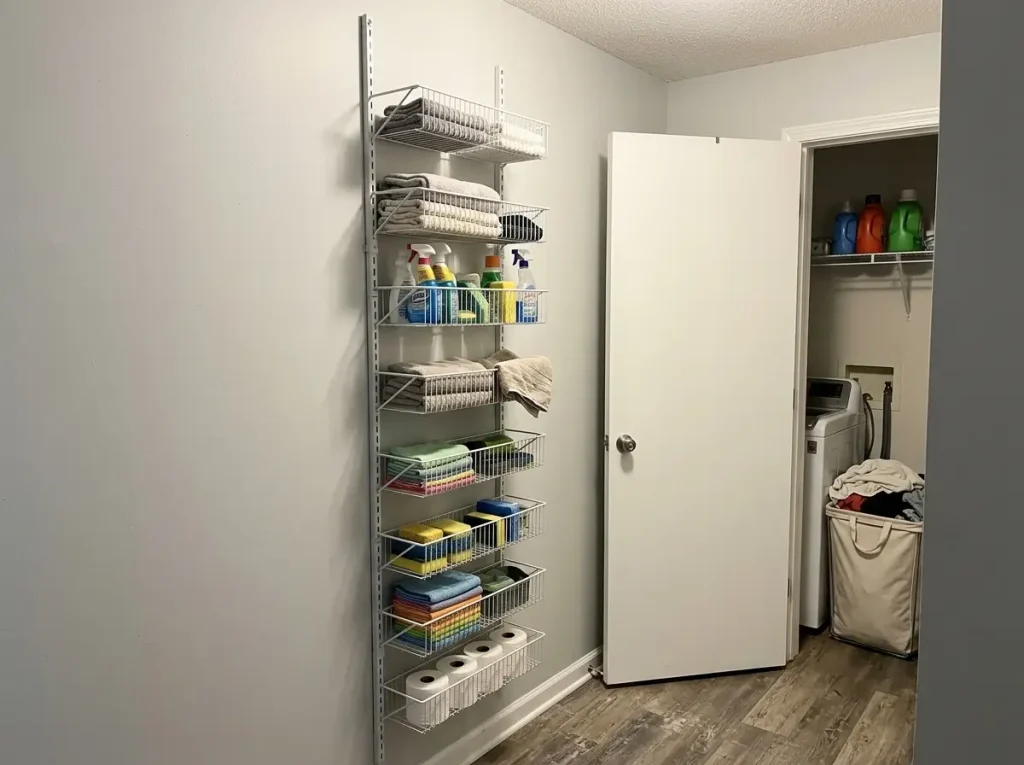
The ClosetMaid Adjustable 8-Basket Organizer is the hedge purchase, because it mounts over a door or flat on the wall using the same hardware. If the knock test or the tape measure disqualifies your door, you have not wasted the money, you just move it to the wall and keep going. That flexibility is worth more than a few extra pockets on a unit you can only hang one way.
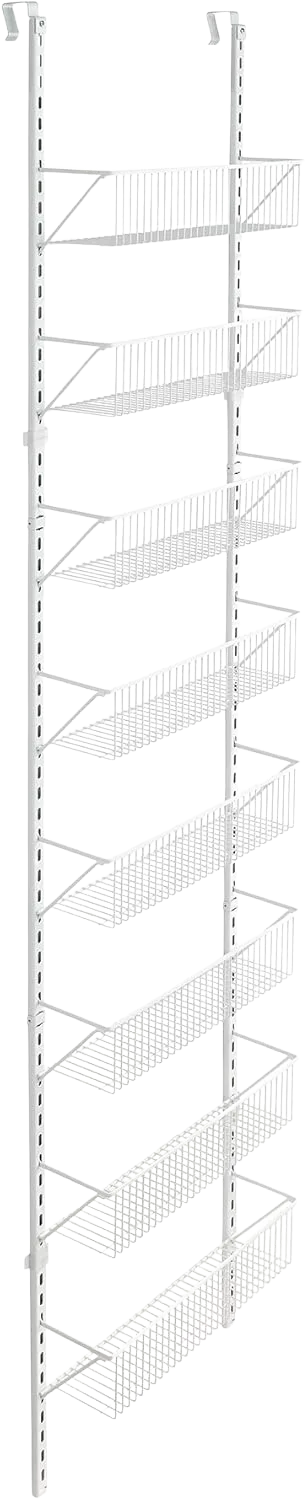
The cheaper reality check
Before any of this, ask whether you need to buy at all. If the load is light, a no-drill floating shelf or a wall rail you already own may beat every over-door product on the page. The conventional wisdom is that a premium modular system like Elfa is the upgrade to aim for. In practice, a mid-tier rack does the same job in most rooms, and the money you save is better spent on the felt pads that keep your deposit intact. If your specific need is a wall of sneakers, a dedicated over-door shoe setup handles that better than any general rack here. And a freestanding tower, if you go that route instead, carries the same tip-over caution that applies to any freestanding storage, so anchor it.
Conclusion
Three things carry the whole guide. Read your door first, its core type, thickness, and swing, before you look at a single product. Match the material to the room, especially in a humid bathroom where cheap metal rusts onto your paint. And buy for the load the door can actually hold, not the biggest rack you can find.
Put it through the three-month test. Look at the top of the door for any bowing, check whether the hooks have started to slip, and watch for hinge strain from a load that sits unevenly. If any of that shows up, you are over the door’s weight budget, so lighten the load or move the unit to the wall before the door takes lasting damage.
Knock on the door you have in mind right now. That one sound tells you which half of this list to shop.
Frequently Asked Questions
01Do over-door organizers damage the door?
They can, mostly from friction and pressure at the contact points rather than the design itself. Pad every hook and back bar with felt or foam, and avoid overloading a hollow-core door, and you prevent nearly all move-out marks.
02How much weight can an over-the-door organizer hold?
The limit is usually the door, not the organizer. A hollow-core door safely takes roughly 20 to 30 pounds of distributed weight, while a solid-core door handles far more. Check the door before you trust the product’s number.
03Will an over-door organizer work on a hollow-core door?
Yes, as long as you keep the load light and spread out. Hollow-core doors are fine for hooks, fabric organizers, and lightly loaded racks. Problems start when you hang a fully stocked pantry rack on one.
04What can you hang over a door without drilling?
Every organizer in this guide hangs over the door frame with no tools, from hooks and fabric pockets to wire racks and towel bars. Just pad the contact points and match the load to the door type.
05Do over-door organizers rust in the bathroom?
Cheap chrome-plated or bare-metal ones can, within about a month in a steamy bathroom, and the rust can transfer onto the door. Choose coated or stainless steel, or plastic, for any humid room and run the fan.
Disclaimer: ClutterlessNest is a participant in the Amazon Services LLC Associates Program. As an Amazon Associate we earn from qualifying purchases. This article may contain affiliate links — if you buy through them, we may earn a small commission at no extra cost to you. We only recommend products we have tested or genuinely believe in.