






















In this article
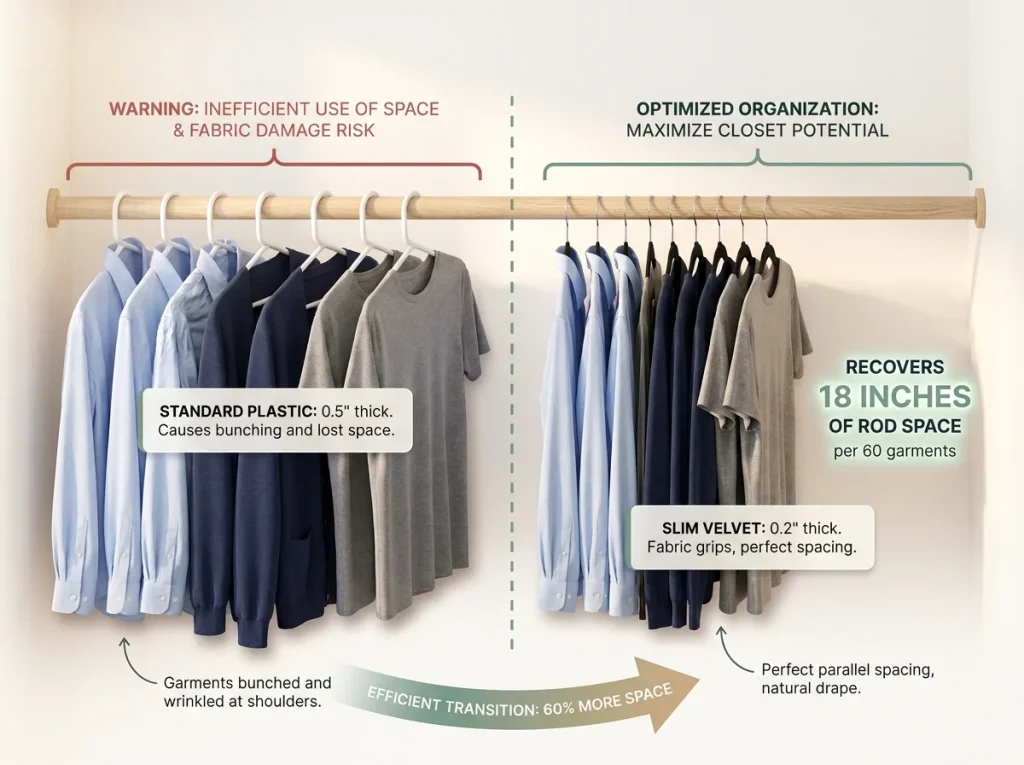
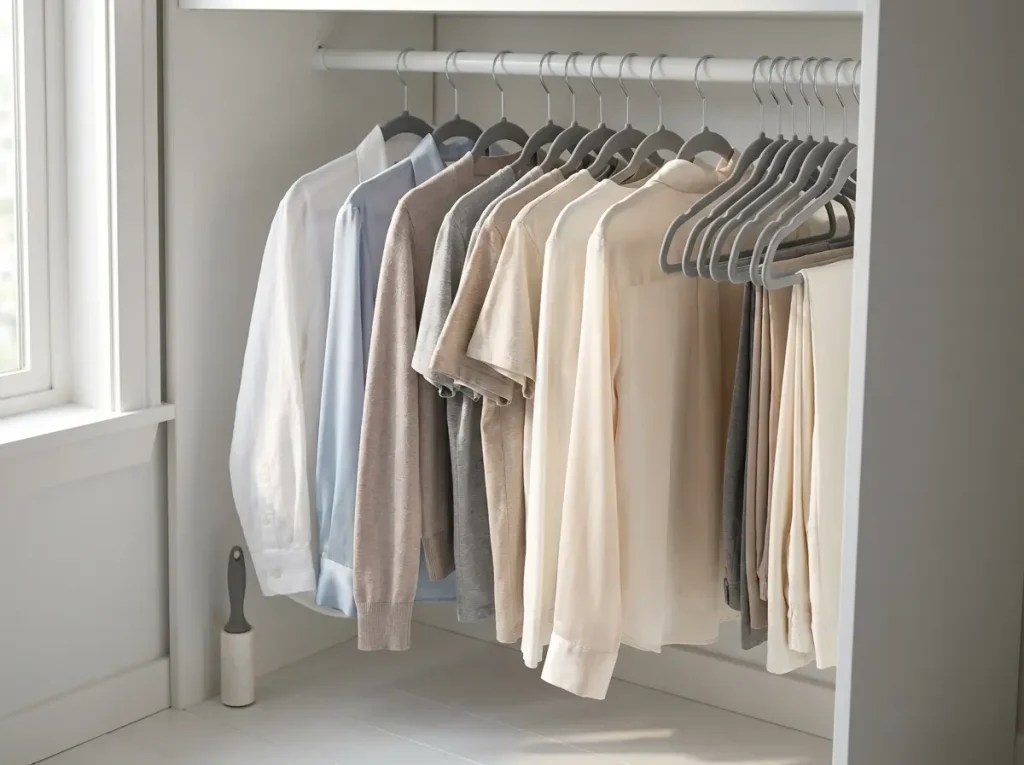
Your closet hasn’t run out of space. Your hangers have. The average plastic tubular hanger sits 0.5 inches thick on the rod. Slim velvet hangers run 0.2 inches. On a standard 42-inch bedroom rod loaded with 60 garments, that difference recovers 18 inches of rod space — roughly the width of ten additional shirts, hanging freely instead of crammed against each other. Switch to the thinnest option tested here and the number climbs even higher.
I ran five slim hanger types across two closets — a 36-inch reach-in and a 48-inch walk-in rod — over three months. I tracked actual rod space recovered, failure modes, and which garment types each hanger holds without slipping, stretching, or leaving marks. Here’s what held up.
| Slim Hangers Comparison | |||
|---|---|---|---|
| Product | Thickness | Best For | Renter-Friendly |
| Zober Premium Velvet Hangers (50-Pack) | 0.2″ | Shirts, blouses, dresses | Yes |
| Amazon Basics Slim Velvet Hangers (50-Pack) | 0.24″ | Everyday clothes, budget switch | Yes |
| ELONG HOME Rubberized Slim Hangers (30-Pack) | 0.24″ | Dark fabrics, silk, post-laundry | Yes |
| Mawa Silhouette Ultra-Thin Hangers (20-Pack) | 0.125″ | Maximum capacity, small closets | Yes* |
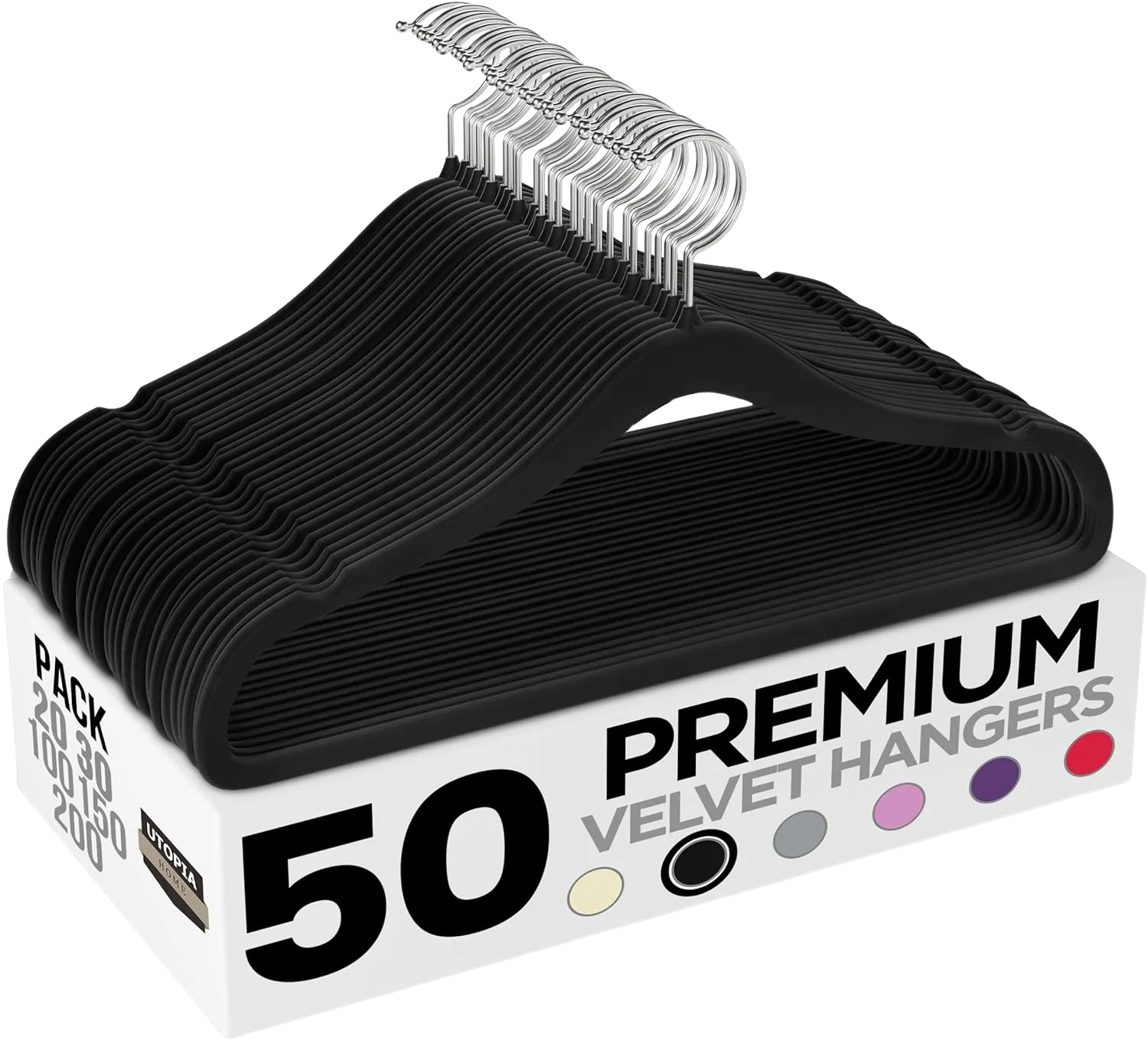
| Utopia Home Velvet Hangers w/ Pants Bar (50-Pack) | 0.2″ | Trousers, skirts, slacks | Yes |
*Mawa hooks have tight clearance on wooden closet rods 1.375″ in diameter or larger. See the Mawa section before buying.
Why standard hangers are the real problem
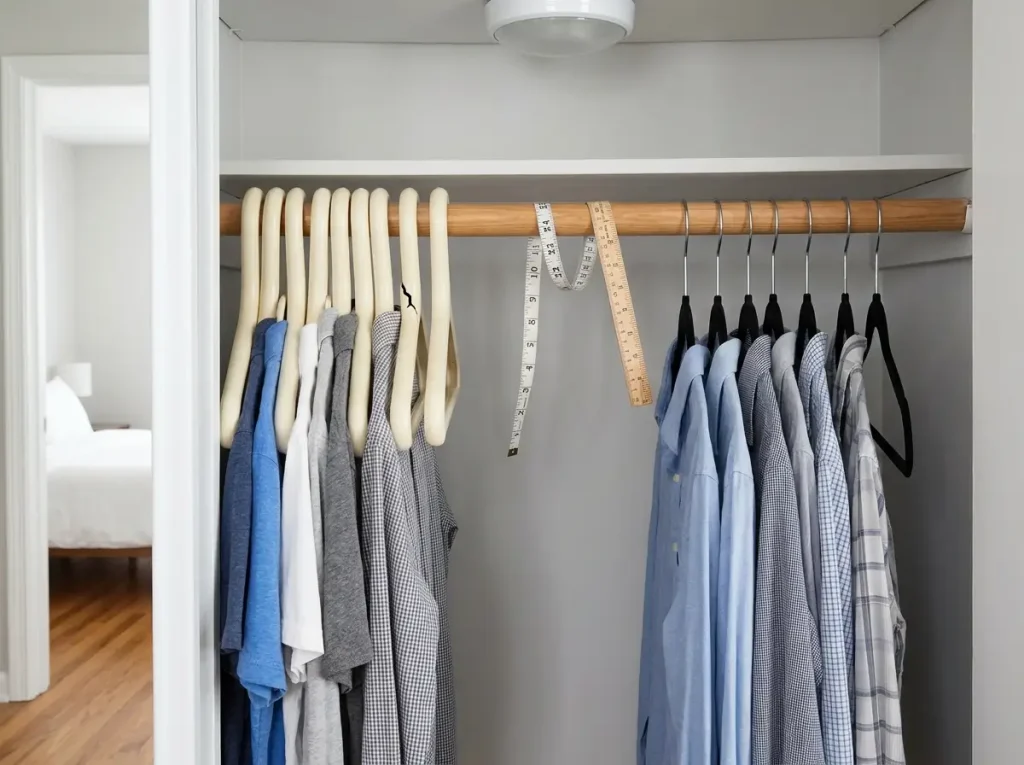
Most people assume a packed closet means too many clothes. Usually it means too many thick hangers.
Here’s the math. A standard plastic tubular hanger is approximately 0.5 inches thick at the widest point of the hook assembly. A slim velvet hanger is 0.2 inches. Mawa’s ultra-thin metal hanger is 0.125 inches. Load sixty garments on a rod and the difference in hanger thickness alone accounts for 18 inches of rod space between standard plastic and slim velvet — more than a foot and a half you’d get back without decluttering a single item.
On a 36-inch reach-in rod, that recovered 18 inches represents 50% more usable rod length. On a 48-inch rod, it’s still a 37% gain. You’re not reorganizing your wardrobe. You’re replacing the hardware.
The second thing standard hangers do is bunch garments together. The flat shoulder of a plastic hanger has no grip, so garments slide and cluster toward the center of the rod. Velvet and rubber-coated hangers grip fabric, which means garments stay where you put them — spaced, visible, and reachable without pulling two things off at once to get to the one underneath.
If your closet also has a shelf and floor space that aren’t working as hard as they could, our full guide on how to organize a reach-in closet covers the complete zone-by-zone system.
Slim velvet hangers — what they do well and where they snap
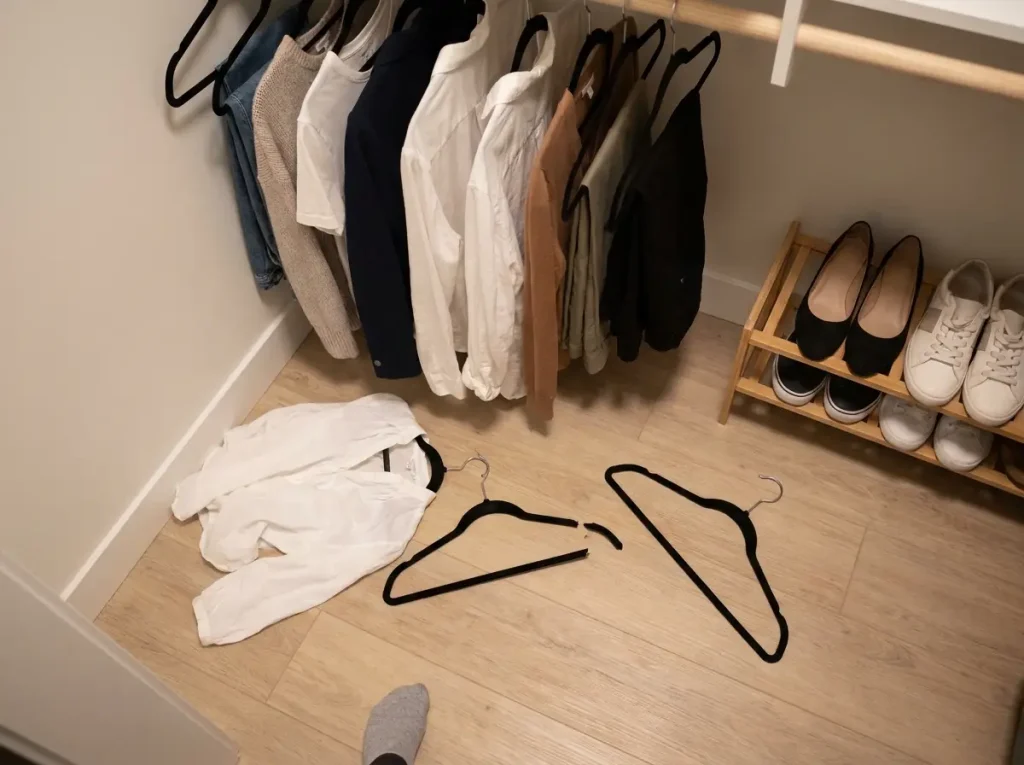
Velvet hangers are the default recommendation for slim hanger upgrades, and for most closets they’re the right call. The flocked velvet surface grips fabric without damaging it, the shoulder profile is gentle enough for knits and blouses, and the shoulder notches on better models keep spaghetti straps and racerback tanks from sliding off. At 0.2 inches thick and 17.5 inches wide, they fit standard closet rods without issue and hold up to 10 pounds per hanger when loaded correctly.
The failure mode is the neck joint. Cheaper velvet hangers — and even some mid-range ones — snap at the point where the metal hook meets the plastic frame. This usually happens when you pull a garment off the hanger at an angle, the way most people grab things in a hurry. A 360° swivel hook eliminates most of this failure by rotating with the pulling motion instead of resisting it. That’s the single most important spec to check when buying velvet hangers.
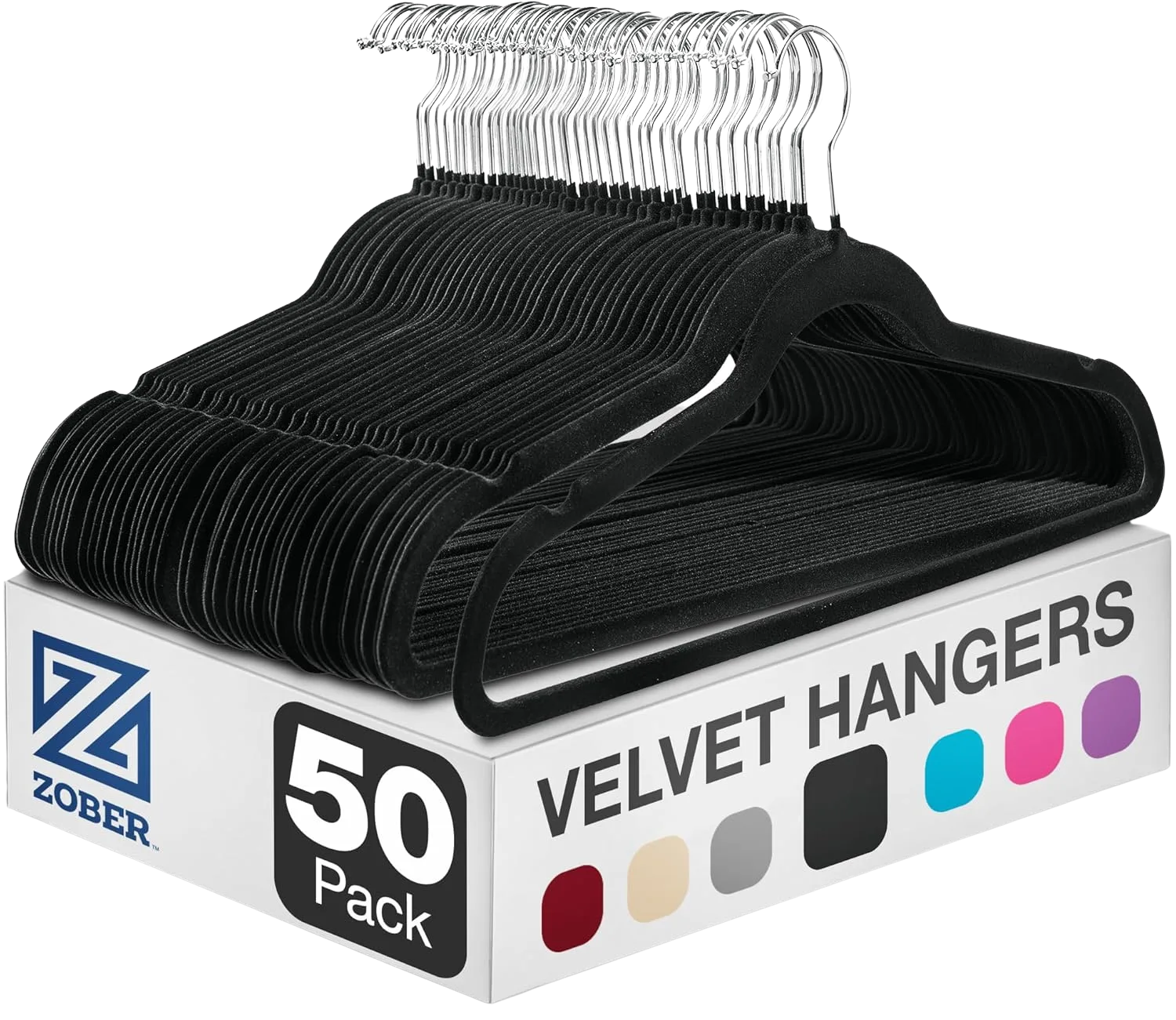
The Zober Premium Velvet Hangers are the most commonly recommended option across multiple review sources for a reason: the 360° swivel hook, 10-pound capacity, shoulder notches, and consistent velvet coating make them the most durable mass-market velvet hanger available. The 50-pack covers most standard reach-in closets in a single order.
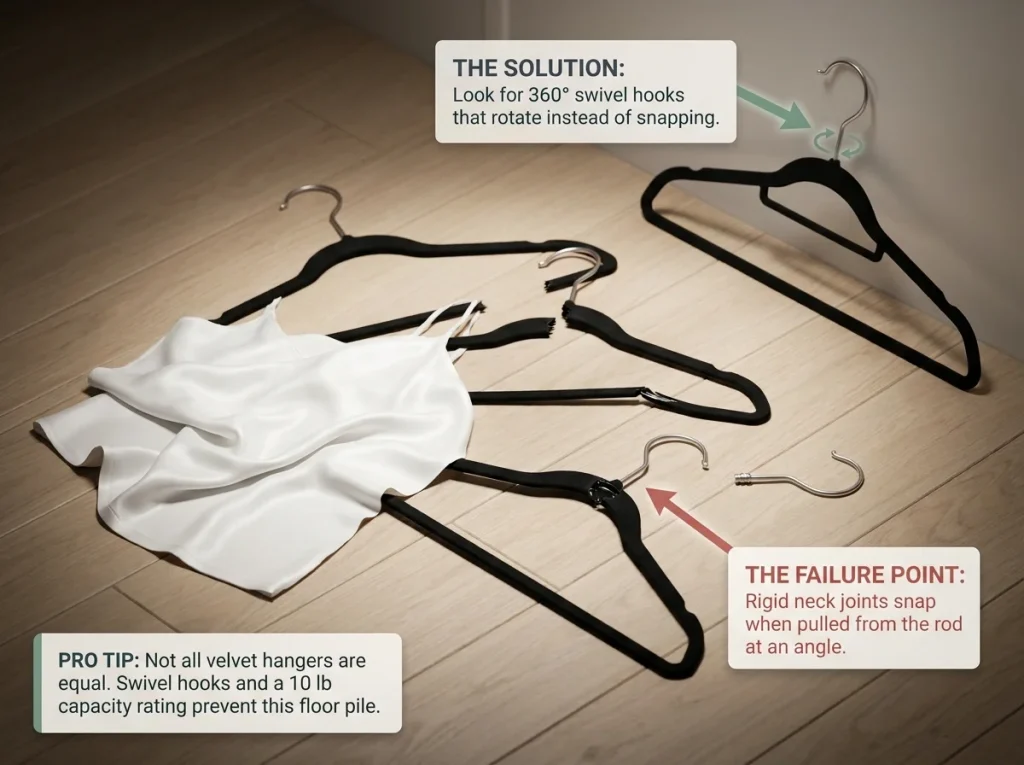
One limitation worth knowing: velvet sheds. On black garments or dark fabrics, fine velvet fibers transfer onto the fabric over time, especially in humid conditions or after items have been hanging for a while. If you’re storing mostly dark clothing, the rubberized option in the next section solves that problem entirely.
Rubber and rubberized plastic — the upgrade most people miss
Velvet hangers get most of the attention in this category. Rubberized plastic hangers get almost none, which is strange because they solve the one real problem velvet can’t: fabric contamination.
The velvet coating on standard slim hangers sheds microscopic fibers. On light fabrics you’ll never notice. On black wool trousers, a navy blazer, or anything with a fine-weave surface that’s been hanging for a few weeks, you’ll start to see a faint lint-like residue on the back of the shoulders. Rubberized plastic eliminates this entirely — there’s nothing to shed. The ABS plastic frame with a rubber-grip coating provides the same non-slip hold as velvet, the same slim 0.24-inch profile, and the same 360° swivel hook configuration on better models — but it wipes clean with a damp cloth and never transfers anything onto your garments.
This also matters if you regularly hang items directly from the dryer before they’re fully dry. Damp fabric against velvet can cause the velvet to compress and lose grip over time. A rubber-coated hanger doesn’t have this problem.
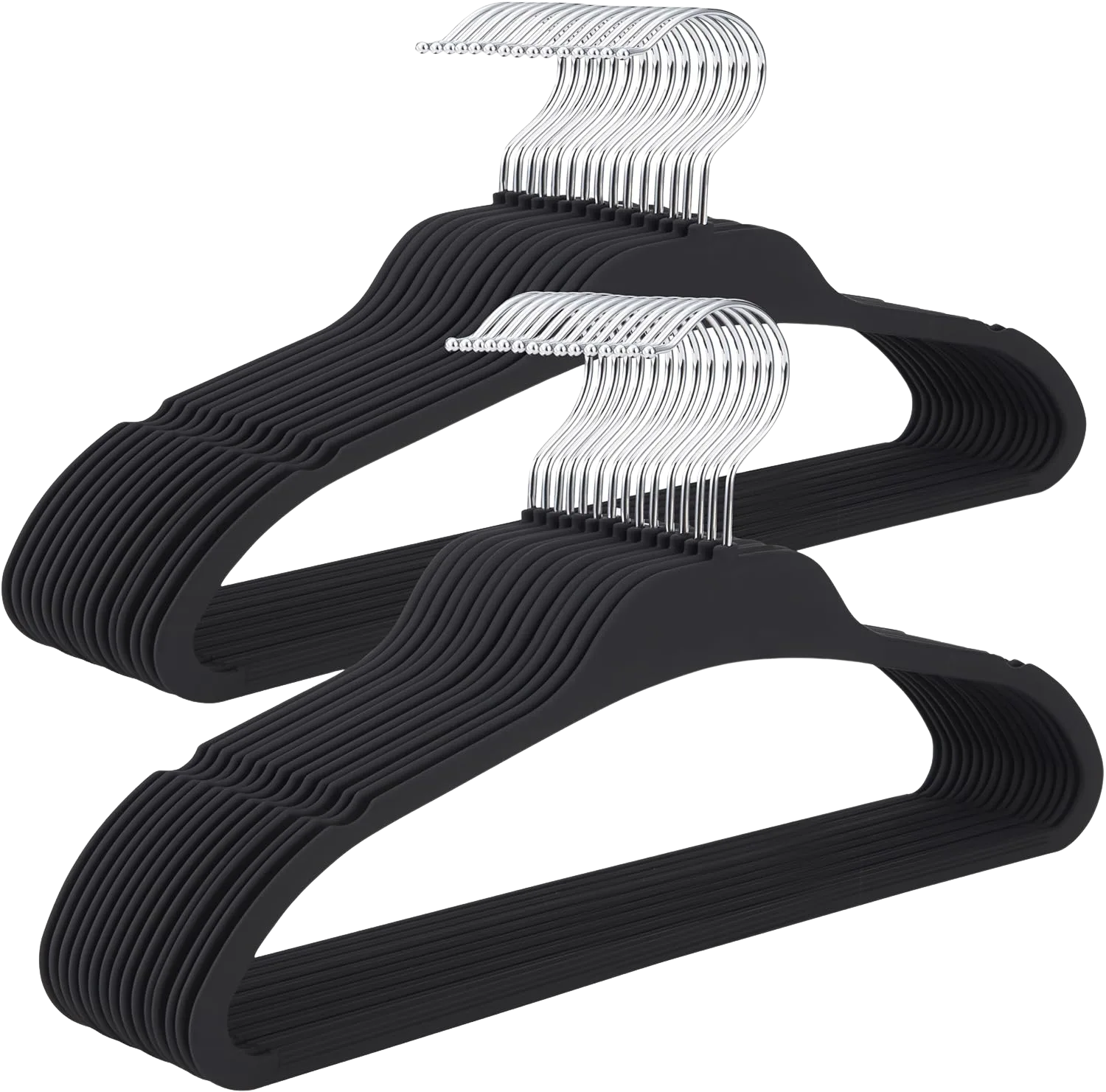
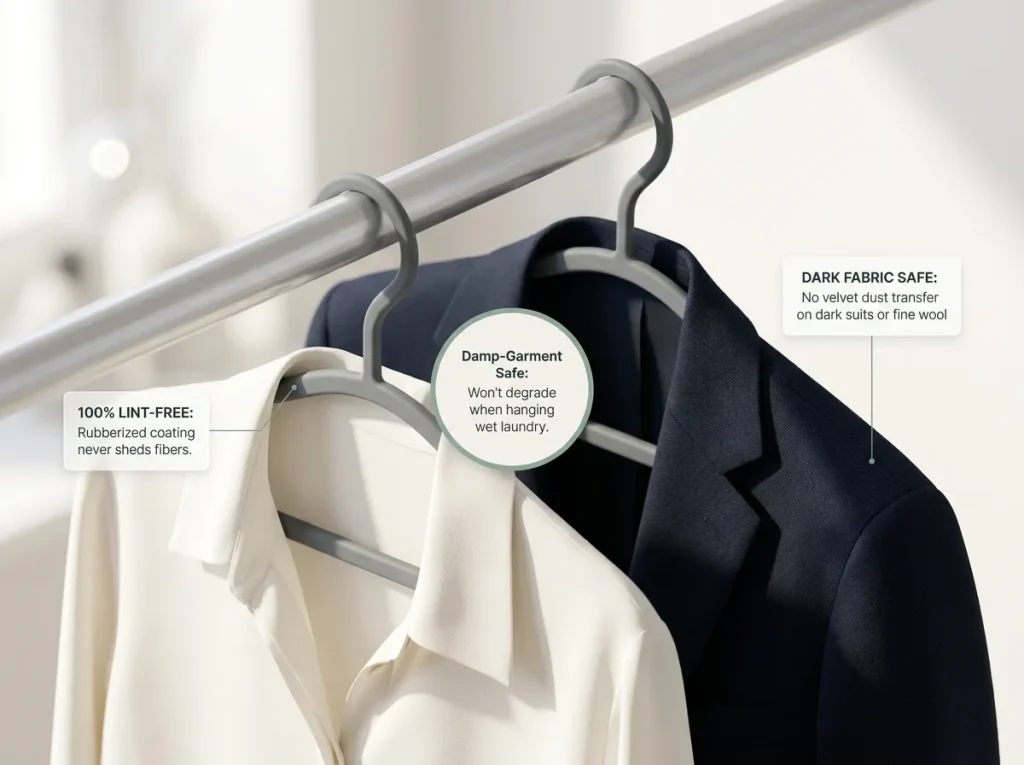
The trade-off versus velvet: rubberized plastic is slightly more rigid, which can leave faint pressure marks on very delicate knit fabrics if garments stay on the hanger for months without being moved. For everyday rotation this isn’t an issue. For long-term storage of fine knitwear, folding is still the better approach regardless of hanger type.
Premium pick — Mawa metal slim hangers
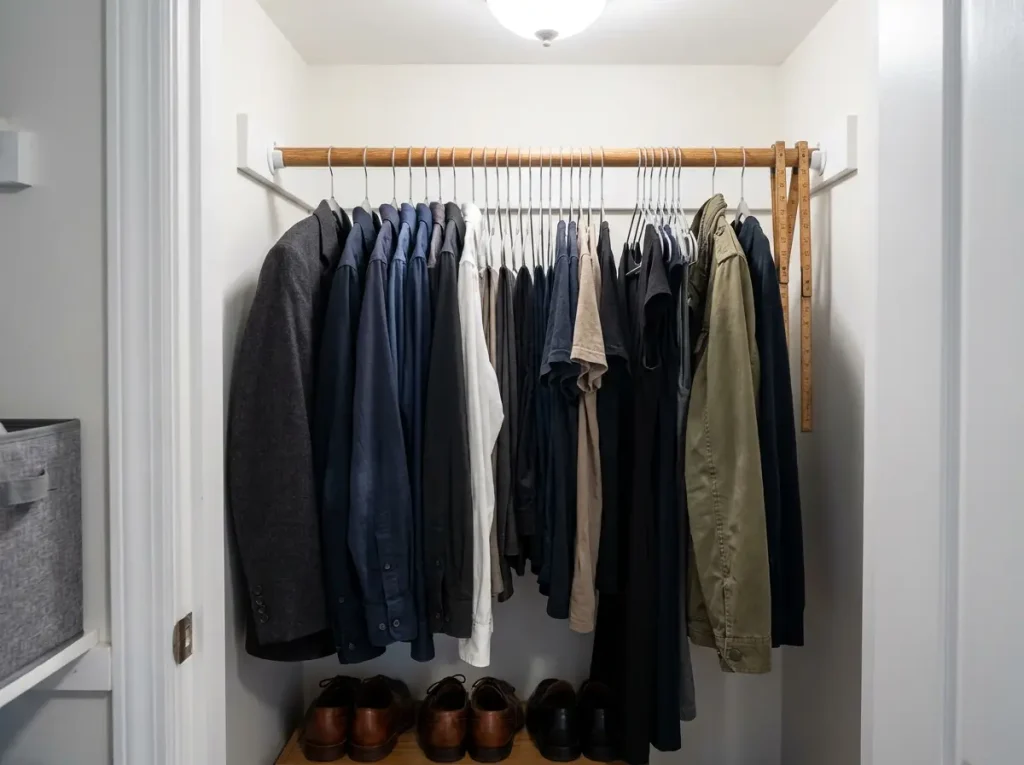
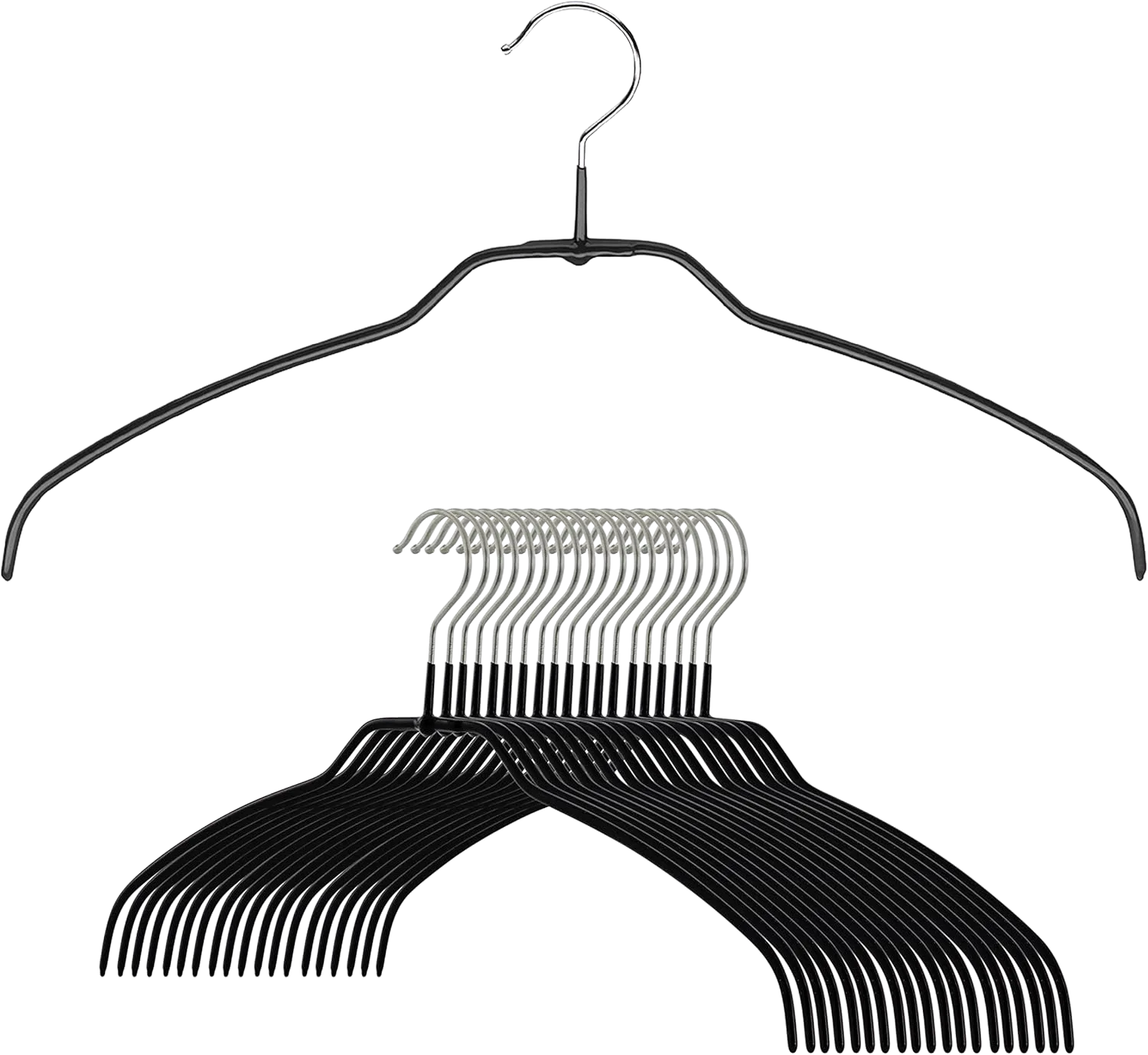
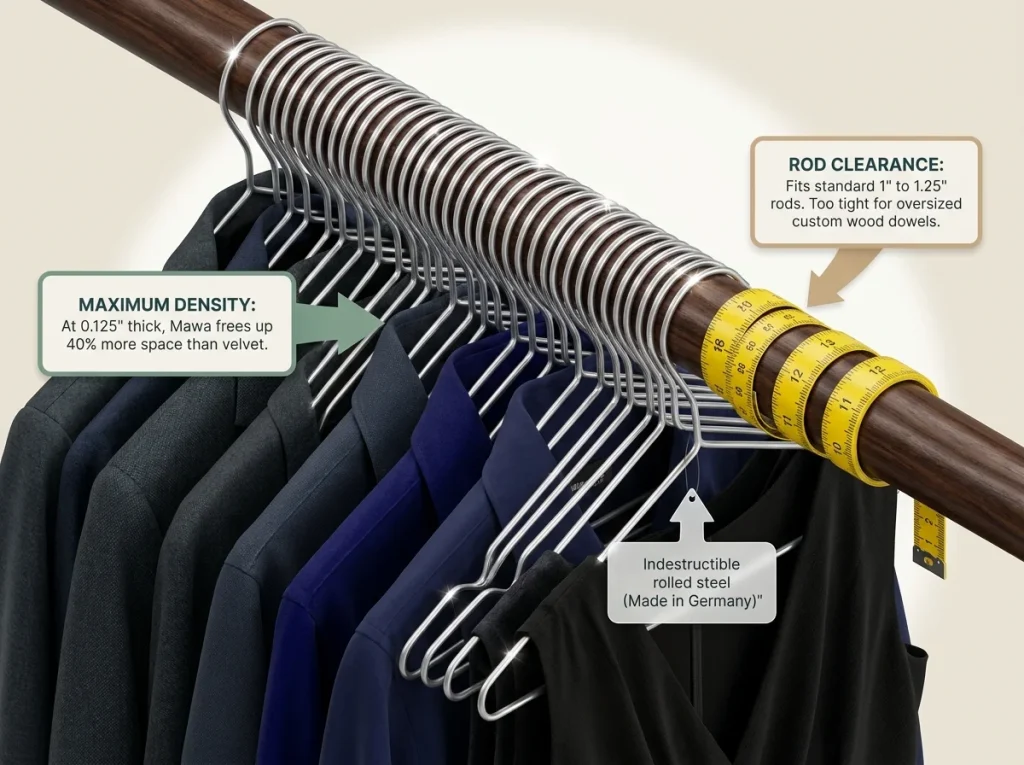
If you’ve done the velvet switch and still want more rod space, Mawa’s Silhouette hangers are the answer. At 0.125 inches thick, they’re half the profile of a velvet hanger. On a rod of 60 hangers, that recovers an additional 4.5 inches compared to Zober velvet — on top of the 18 inches you already got by ditching standard plastic. The cumulative space savings against the plastic hangers most people start with is approximately 22.5 inches.
The construction is rolled steel with a proprietary anti-slip coating — made in Germany, no plastic frame to crack or neck joint to snap. In practice this means a Mawa hanger lasts essentially indefinitely under normal use. You buy them once. The 20-pack is more expensive per hanger than velvet, but it’s not a consumable you’ll need to replace.
The anti-slip coating does what velvet does: grips fabric to prevent slipping, holds shoulder shape, and works on everything from silk blouses to light blazers. It does not shed fibers.
Budget context: Mawa costs roughly 3–4x per hanger compared to Zober velvet. If you’re organizing a large walk-in closet and need 100+ hangers, the cost gap is significant. In that case, velvet for the bulk of your wardrobe and Mawa for a high-density section — dress shirts, blazers, anything you hang frequently — is a reasonable middle-ground approach.
Which hanger for which garment — the matching guide

The biggest mistake people make with slim hangers is treating them as interchangeable. They’re not. Different garment types have different needs, and using the wrong hanger consistently causes fabric distortion, slipping, or damage over time.
Here’s the practical breakdown:
Silk and slippery fabrics need shoulder notches and velvet grip. Without notches, silk blouses and synthetic fabrics slide off even a slim hanger in a matter of days. Zober with shoulder notches handles this well. The Amazon Basics also has notches. Rubberized plastic works here too — the grip is similar.
Dress trousers and skirts need a fold bar, not a clip. Clips leave pressure marks on finer fabrics. A slim hanger with a built-in horizontal pants bar folds the garment over a padded or velvet-covered bar, distributing the weight across a wider surface without any clamp pressure. The Utopia Home Velvet Hangers with Pants Bar are the only slim velvet hanger tested here with this feature built in.
Heavy knitwear and sweaters should not be hung at all, regardless of hanger type. Any hanger — slim or standard — creates shoulder bumps on heavy knits over time as the weight of the garment pulls the fabric down and outward at the hanger point. Fold them. This is the one category where the answer is no hanger.
Light jackets and structured blazers work well on rubberized plastic or Mawa metal — both maintain shoulder shape without the slight shoulder-point compression that can occur with velvet on tailored garments over extended periods.
Denim is heavy enough that you want a hanger with solid load capacity. Zober’s 10-pound rating handles folded jeans without issue. If you hang jeans by the waistband, a clip hanger is the cleaner approach — but that’s a separate hanger category outside this guide.

How to keep the system working after the switch
The hanger switch itself takes an afternoon. Keeping the rod organized afterward takes about five minutes a month — if you build in one habit.
The backward hanger test is the most useful tool here. After you switch to slim hangers, flip every hanger so the hook points toward you instead of away. When you wear something and return it to the rod, hang it the correct way (hook away). After 30 days, every hanger still pointing toward you holds a garment you haven’t touched. That’s your edit list — the items you can move to off-season storage, donate, or reassess. This isn’t a decluttering philosophy. It’s just a practical inventory tool built into the act of hanging clothes.
The floor rule is the second one: nothing lives on the closet floor except shoes in active rotation. When something ends up on the floor, it either needs a home or it needs to leave. A clear floor is also a visual signal that the system is working — when the floor fills up, the rod has either gotten too packed again or the system isn’t being maintained.
Monthly five-minute reset: Once a month, scan the rod and push garments back into their zones — shirts together, pants together, jackets together. Garments drift over time and a two-minute re-sort prevents the slow slide back to chaos. If you set up a system where garments face the same direction and are grouped by type, the reset takes almost no time because you’re moving things back to an obvious place, not figuring out where they go.
For a complete closet system including double-rod setups, floor storage, and shelf organization beyond the hanger switch, our closet organization guide covers the full approach. If you’re working with too many clothes and not enough rod, the companion guide on how to organize a closet with too many clothes includes the wardrobe edit process that pairs well with a hanger switch.
Conclusion
The hanger switch is one of the highest-ROI organization moves in any closet because it recovers real space without requiring decluttering, drilling, or any permanent modification. For most reach-in closets, switching from standard plastic to slim velvet hangers recovers 15–18 inches of rod. Going to Mawa ultra-thin adds another 4–5 inches on top of that.
Start with one section — shirts, or whatever’s most crowded — and live with the slim hangers for a week before switching the rest. You’ll immediately see the spacing difference and it’ll be easier to justify pulling the trigger on the full closet.
For renters: all five hangers tested here are renter-friendly. No installation, no wall damage, no landlord conversation required. You take them with you when you move.
Three-month check: Any hanger that’s snapped at the neck, lost its velvet grip, or developed a bent hook should be replaced. With Zober velvet and Amazon Basics, that’s expected maintenance — they’re consumable at this price point. With Mawa, it shouldn’t happen. If it does, contact the manufacturer directly; the product is covered.
Q1 How much closet rod space do slim hangers actually save?
On a typical load of 60 garments, switching from 0.5-inch plastic hangers to 0.2-inch slim velvet hangers recovers approximately 18 inches of rod space. Switching to 0.125-inch Mawa metal hangers recovers approximately 22.5 inches compared to standard plastic. On a 36-inch reach-in rod, that represents between 50% and 62% more usable rod length — without removing a single garment.
Q2 Are velvet hangers safe for all clothing types?
Velvet hangers work well for shirts, blouses, dresses, light knits, and jackets. They’re not ideal for very heavy items (denim, heavy wool coats) where the weight can distort the hanger over time, and they’re not recommended for long-term storage of fine knitwear where shoulder bumps are a concern. Heavy sweaters should be folded regardless of hanger type.
Q3 What’s the difference between velvet and rubberized plastic slim hangers?
Both provide a non-slip grip at a slim 0.2–0.24 inch profile. The difference is the surface: velvet sheds fine fibers that can transfer onto dark fabrics over time, especially in humid environments or on garments hung for weeks without movement. Rubberized plastic doesn’t shed, wipes clean easily, and handles damp garments without the surface degradation that eventually affects velvet. If you have a dark wardrobe or frequently hang items straight from the dryer, rubberized is the better choice.
Q4 Will slim hangers work on any closet rod?
Velvet and rubberized plastic slim hangers work on any standard closet rod without issue. Mawa metal hangers are the exception: the hook opening has tight clearance and fits standard 1-inch metal rods and 1.25-inch wooden dowels, but may not slide onto wooden rods 1.375 inches or larger in diameter. Measure your rod diameter before ordering Mawa hangers.
Q5 How many slim velvet hangers fit on a 36-inch rod?
With 0.2-inch slim velvet hangers and garments of average thickness, a 36-inch rod holds approximately 60–70 hangers with comfortable spacing between garments. Standard 0.5-inch plastic hangers on the same rod hold approximately 40–45 before garments start pressing together. That’s the practical difference: 15–25 additional garments on the same rod, or the same number of garments with significantly more breathing room.
Q6 Are slim hangers renter-friendly?
All five hangers in this guide are renter-friendly. Hangers sit on the rod — they require no installation, no wall modifications, and no landlord approval. You take them with you when you move. If you’re also looking for no-drill solutions beyond the hanger switch, our no-drill closet organization guide for renters covers the full renter toolkit.