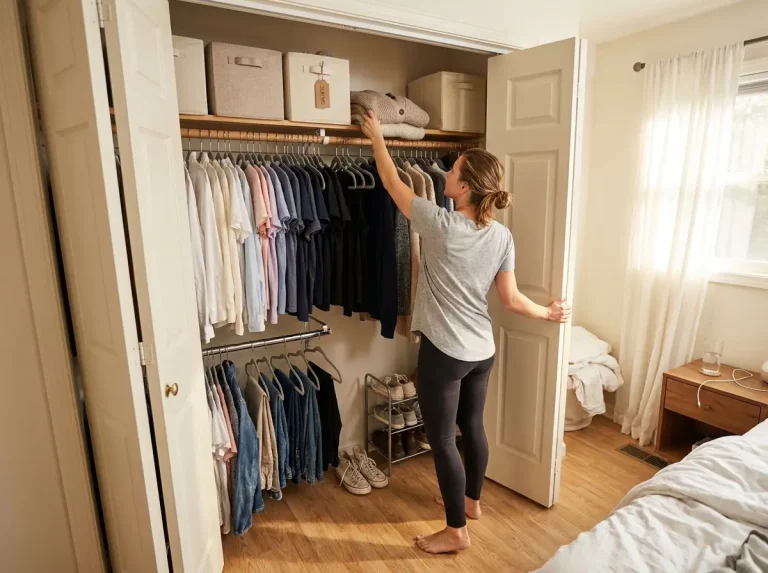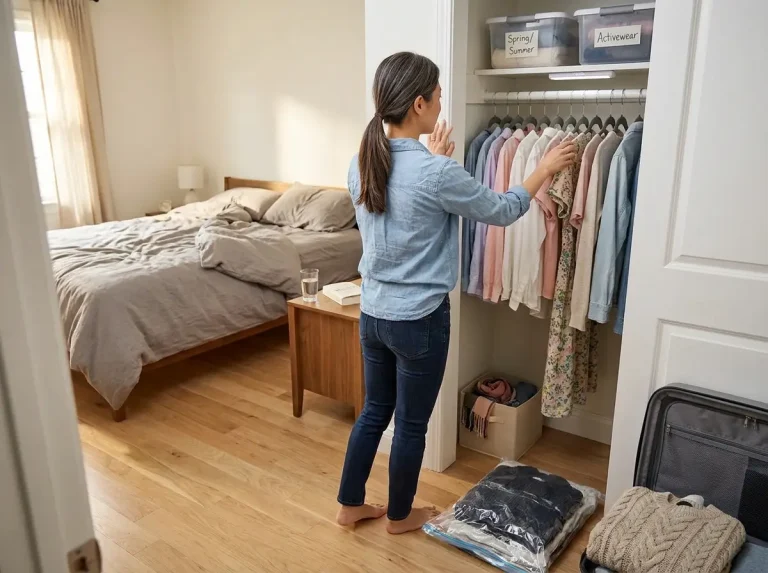
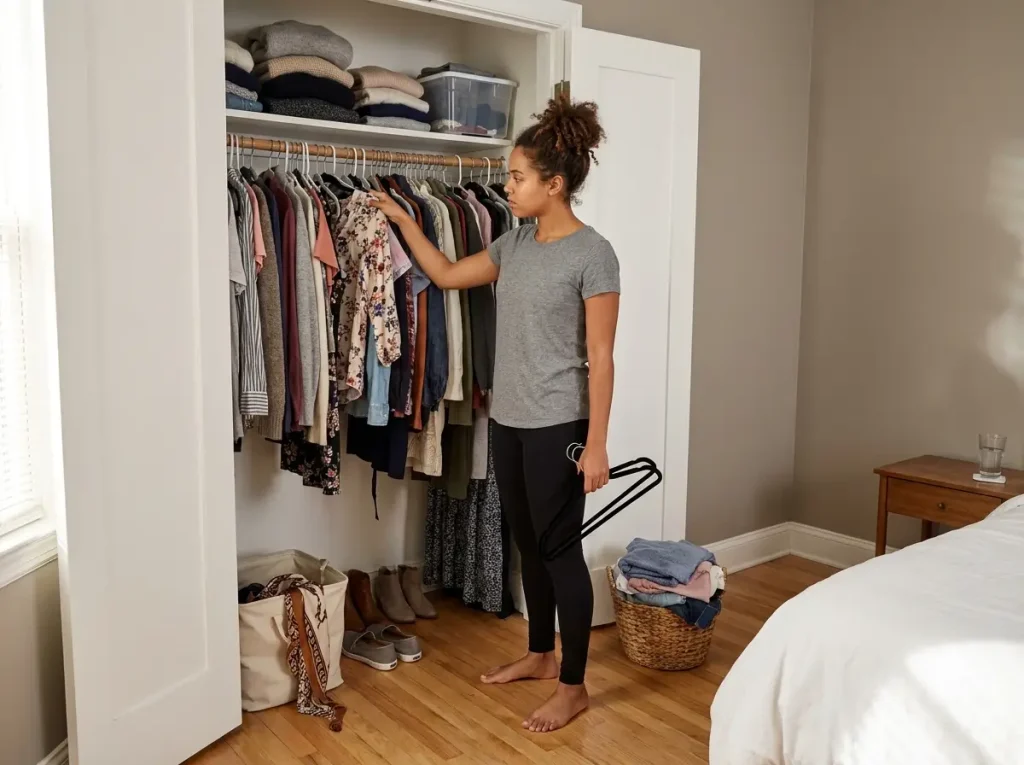
You opened the closet this morning, and three things fell out before you could grab your shirt. The rod is bowing. The shelf is a pile. The floor is buried.
You’ve tried reorganizing before — pulled everything out, put it back neater — and it looked great for about ten days. Here’s why it didn’t stick and what actually works when you have too many clothes in too little space.
I’ve organized closets in apartments where the entire hanging space was three feet wide. The system below is the same one I come back to every time, because it handles the real problem: not just the mess, but the math behind it.
Quick Answer: Here’s how to organize a closet with too many clothes so it stays neat:
- Measure your rod, shelf, and floor to understand actual capacity
- Run a 30-minute wardrobe edit using the three-pile sort
- Switch to slim velvet hangers to recover 25% of rod space
- Add a hook-over double rod for short garments (no drilling)
- Rotate seasonal items into vacuum bags under the bed
- Do a 10-minute monthly reset to prevent re-stuffing
Why Your Closet Keeps Getting Overstuffed
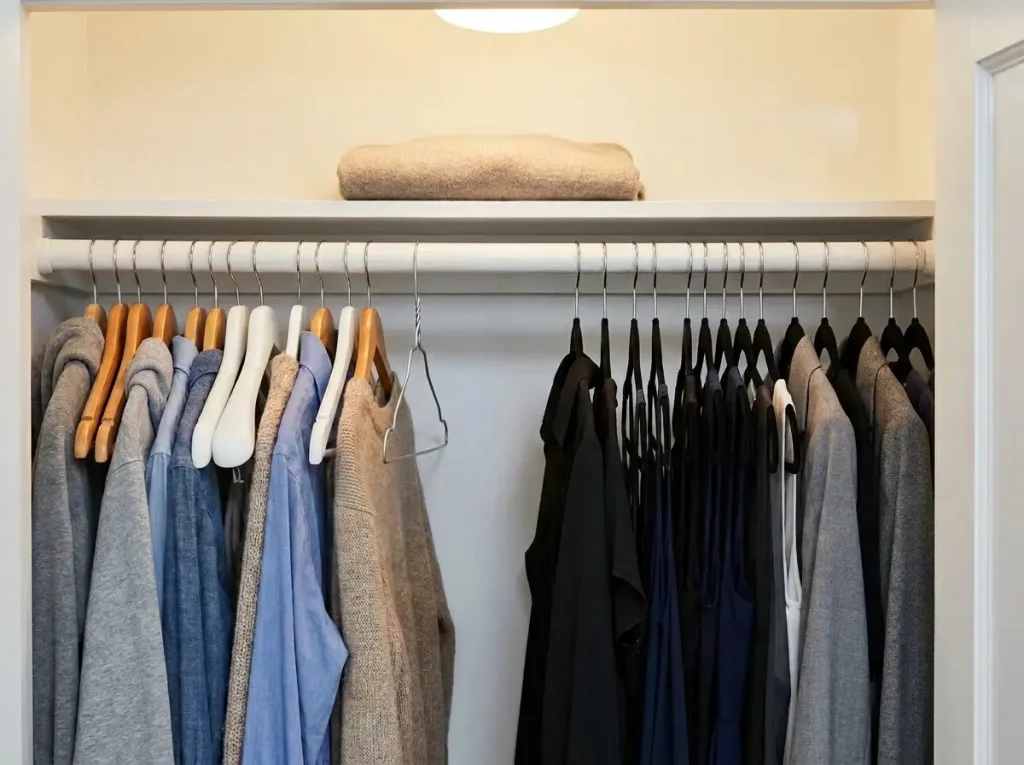
The problem isn’t that you own too much. The problem is that your closet is smaller than you think, and the hangers you’re using are eating space you don’t have. Before you purge a single item, measure what you’re working with.
Closet Rod Math
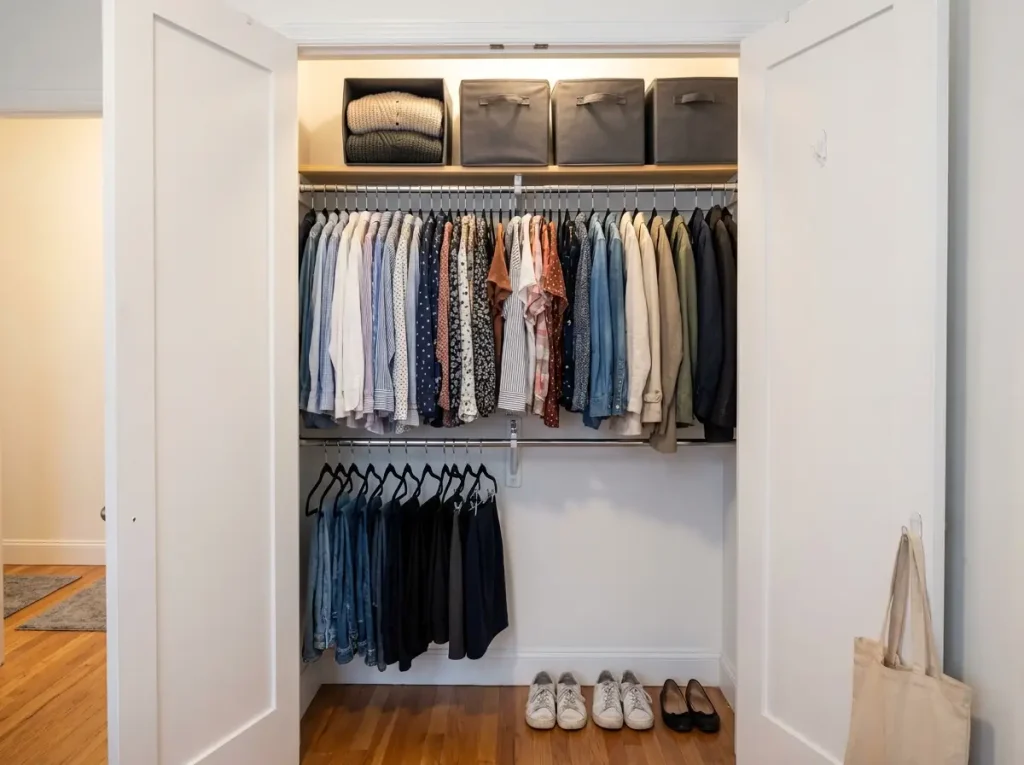
A standard apartment reach-in closet is 3 to 8 feet wide and 24 inches deep with an 8-foot ceiling. Most have one rod at 66 inches from the floor and one shelf above it. That sounds like plenty of room — until you do the math on closet rod capacity.
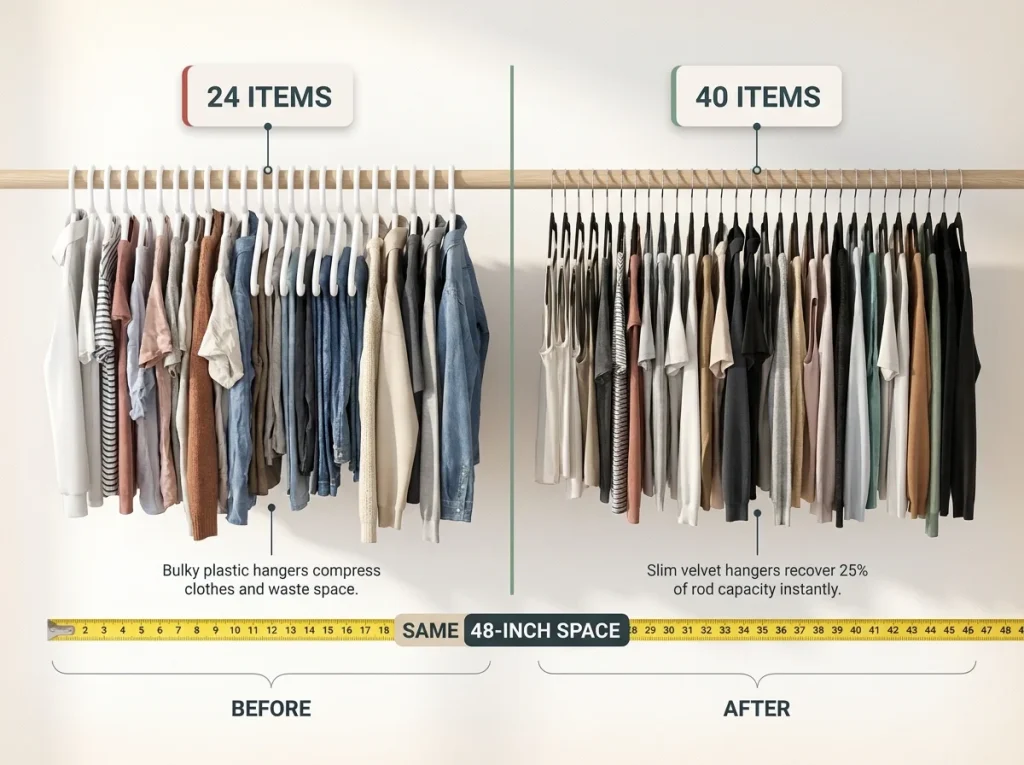
A 48-inch rod fits about 24 garments on standard plastic hangers. Each plastic hanger is roughly half an inch thick, plus the fabric of the garment itself needs breathing room. That means you’re at full capacity with two dozen items on a four-foot rod.
If you’re cramming 40 tops onto that same rod, every single one is compressed. Nothing hangs right, nothing stays wrinkle-free, and you stop wearing things because you can’t find them. A standard wood closet rod supports 30 to 40 pounds per foot, but once weight exceeds that range, the rod bows and eventually pulls from the brackets.
The Shelf-and-Floor Equation
Most people ignore the shelf above the rod and the floor below it. That single shelf is usually 12 inches deep and runs the full closet width — that’s 3 to 8 square feet of flat storage. The floor gives you another 14 inches of vertical clearance below your shortest hanging garments. If your closet floor is buried under shoes and bags, you’ve lost a third of your usable space.
Where Your Space Actually Goes
Here’s what nobody talks about in closet organization guides: the average person in a standard reach-in closet has about 48 cubic feet of usable volume. Bulky hangers, wasted shelf height, and floor clutter can consume 30 to 40 percent of it. You don’t always need to own less — sometimes you need to stop wasting the space you already have.
Pro tip: Before buying anything, measure your closet rod with a tape measure and count your current hangers. If you have more than 6 hangers per linear foot of rod, your clothes are compressed and wrinkling each other.
The 30-Minute Wardrobe Edit
Now that you know the math, you can make smarter decisions about what stays and what goes. This isn’t a full KonMari purge — it’s a fast triage that respects your time and keeps more than you’d expect.
The Three-Pile Speed Sort
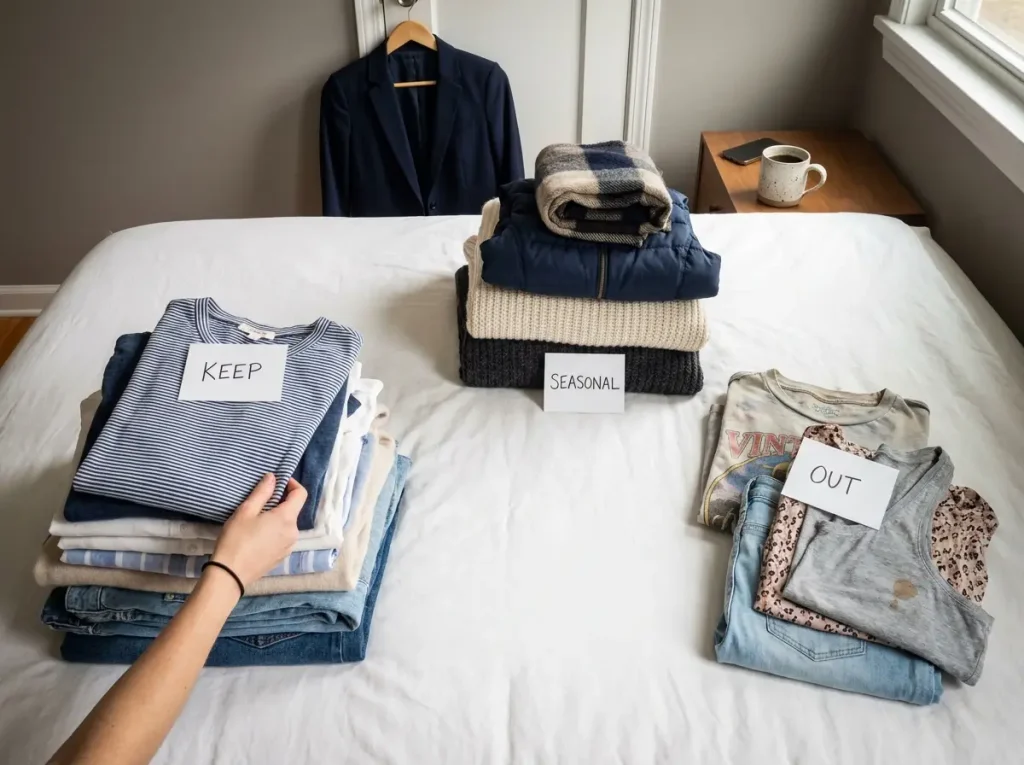
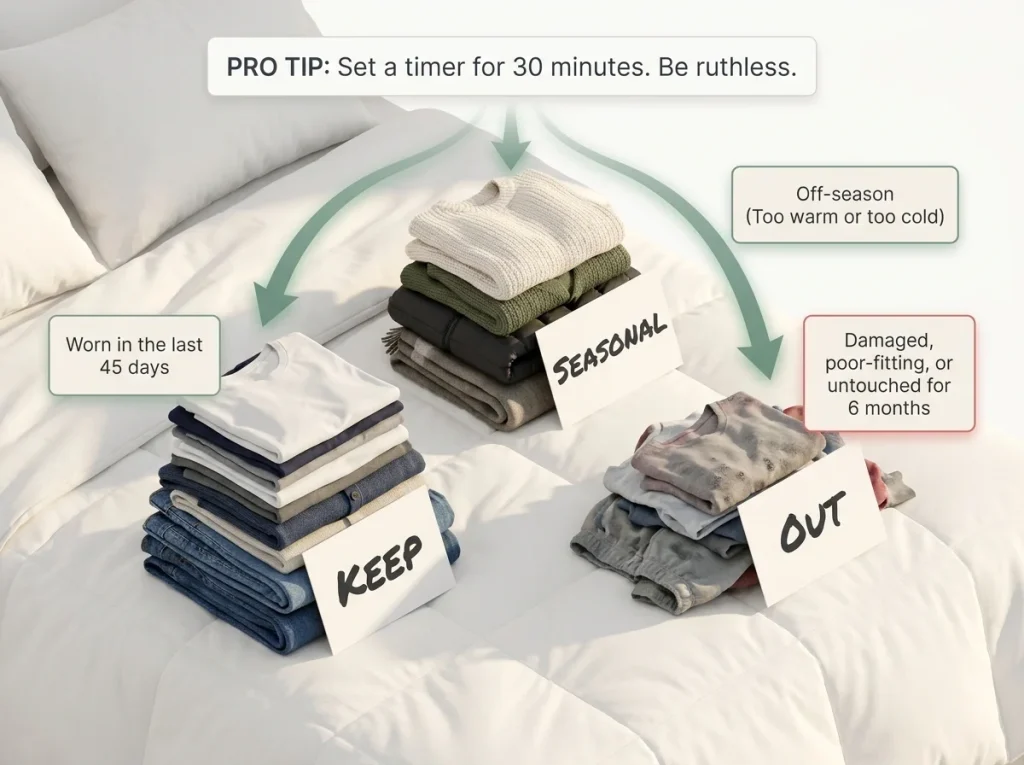
Pull everything off the rod and out of the drawers. Put it on the bed. Set a timer for 30 minutes. Every item goes into one of three piles: Keep, Seasonal, and Out.
Keep is anything you’ve worn in the last 45 days or will need this season. Seasonal is anything too warm or too cold for right now. Out is anything damaged, poor-fitting, or untouched for six months.
The Last-Worn Test
For anything you hesitate on, ask one question: when did I last wear this? If you can’t remember the season, it goes in the Out pile. If you remember wearing it last fall but it’s May now, it’s Seasonal. This test works better than “Does it spark joy?” because it’s binary — you either remember or you don’t.
What to Do With the Out Pile
Bag it and get it out of the bedroom within 24 hours. Donate, sell, or recycle — but don’t let it sit in a corner becoming a guilt pile. The longer it stays visible, the more likely items migrate back into the closet. A local donation drop-off or a ThredUp bag takes less time than re-sorting.
The Slim Hanger Switch
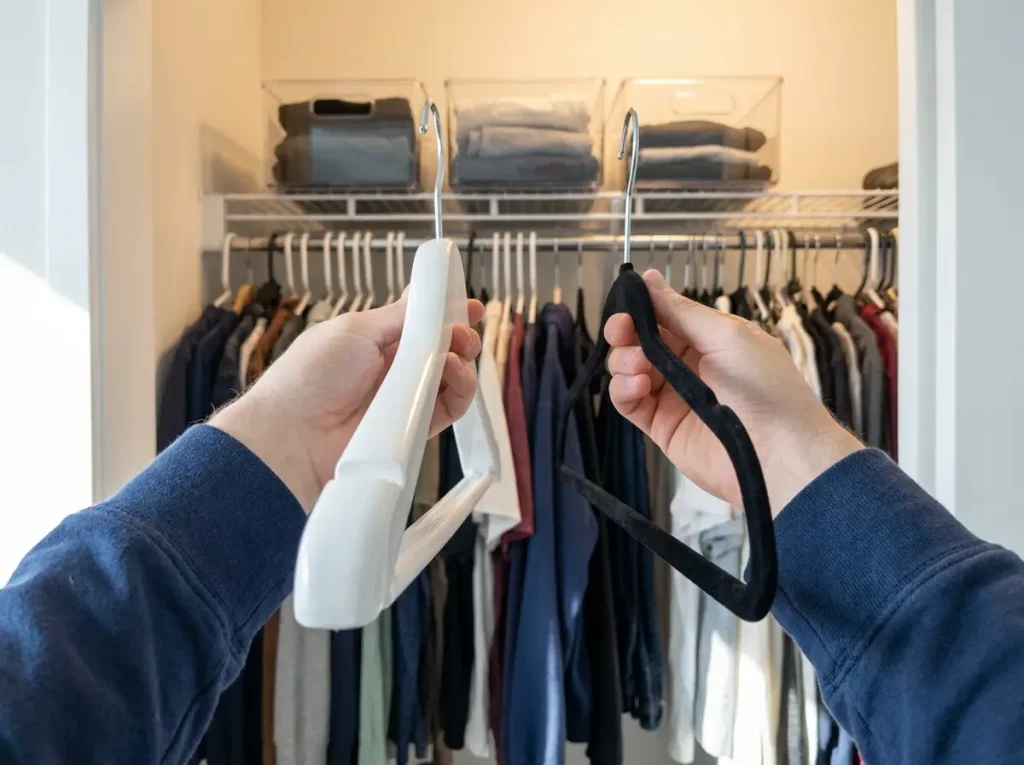
This is the single fastest space recovery you can make, and it requires no tools, no drilling, and about 20 minutes.
Why Slim Hangers Recover 25% More Rod Space
A standard plastic hanger is about half an inch thick at the shoulder. A slim velvet hanger is 0.2 inches — less than half. On a 48-inch rod, switching from plastic to velvet lets you fit roughly 40 garments instead of 24. That’s not a marketing claim — it’s geometry.
The Zober Premium Velvet Hangers (50-pack) are 17.5 inches wide with a 0.2-inch profile and hold up to 10 pounds per hanger. The non-slip velvet surface keeps silk and satin from sliding off, which cheap plastic hangers can’t do. One thing to know: the velvet surface picks up lint from fleece and wool, so keep those on regular hangers or shake them off before hanging.
Pro tip: Don’t mix hanger types. The space savings only work if every hanger is the same slim profile. One bulky wooden hanger cancels out three slim ones.
What Goes on Hangers vs. Shelves vs. Drawers
Hang anything that wrinkles when folded: button-downs, blouses, blazers, dresses, dress pants. Fold anything that stretches on a hanger: sweaters, knits, heavy hoodies. Drawers work best for items you grab by feel: underwear, socks, workout clothes. This division alone prevents the closet from becoming a rod-only system where everything competes for hanging space.
Double Your Hanging Space Without Drilling
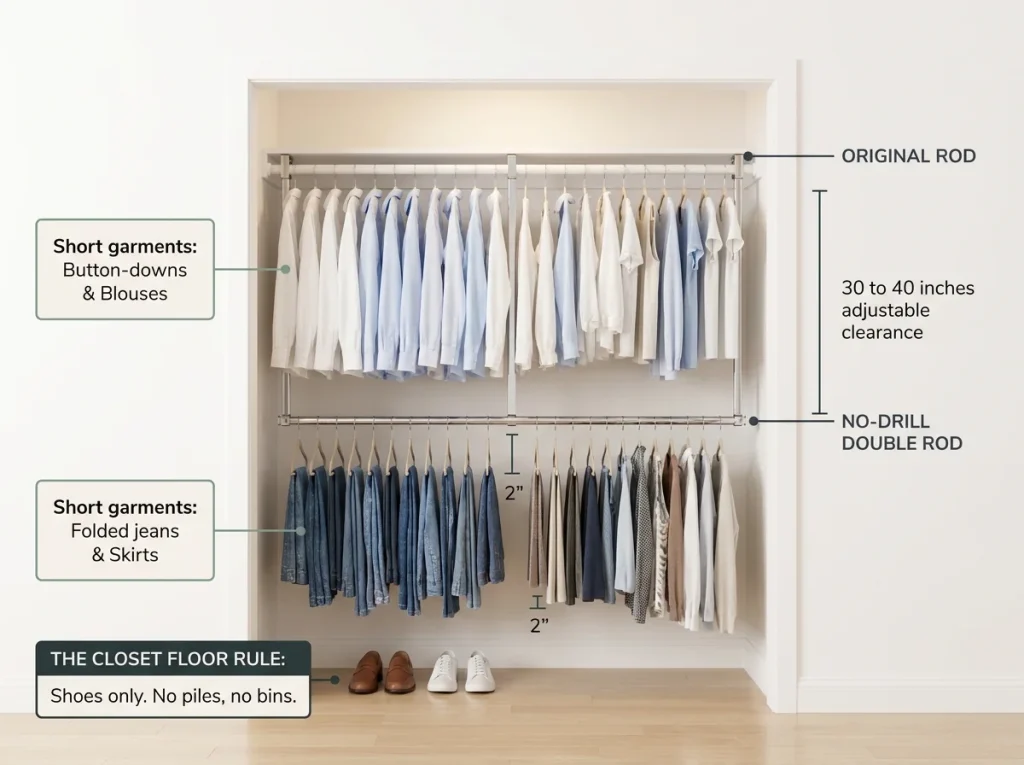
If your closet has one rod and your wardrobe is heavy on tops and short garments, you’re wasting the entire lower half of the closet. A double rod system splits that dead air into usable space — and you don’t need a screwdriver.
The Hook-Over Double Rod
The STORAGE MANIAC Adjustable Closet Double Rod hooks directly over your existing rod. It adjusts from 30 to 40 inches below the main rod, which is enough clearance for shirts on top and folded jeans or skirts on the bottom. It holds 110 pounds, which is more than a full row of everyday clothes. When you move out, it lifts off in two seconds with no marks left behind.
The budget alternative: a shower curtain tension rod between your closet walls works if your closet is under 48 inches wide. Wider than that and the tension can’t hold the weight reliably.
Over-Door and Wall Options
The SimpleHouseware Hanging Closet Organizer (6-shelf) hooks over the closet door and gives you six shelves for folded items — each shelf fits 2 to 3 sweaters or 4 to 5 t-shirts. It’s about 12 inches wide and 44 inches tall, so it doesn’t block the door from closing. The clear front lets you see contents without opening each shelf. One limitation: the shelves sag slightly under heavy items like jeans, so keep those to the bottom two shelves.
The Closet Floor Rule
Keep the closet floor to shoes only — one row, heels against the back wall. Nothing else touches the floor. If you need floor storage, one flat bin (no taller than the height of your shortest pair of shoes) for items like scarves or belts. The moment anything piles on the floor, the closet is six weeks from reverting.
The Seasonal Rotation That Prevents Re-Stuffing
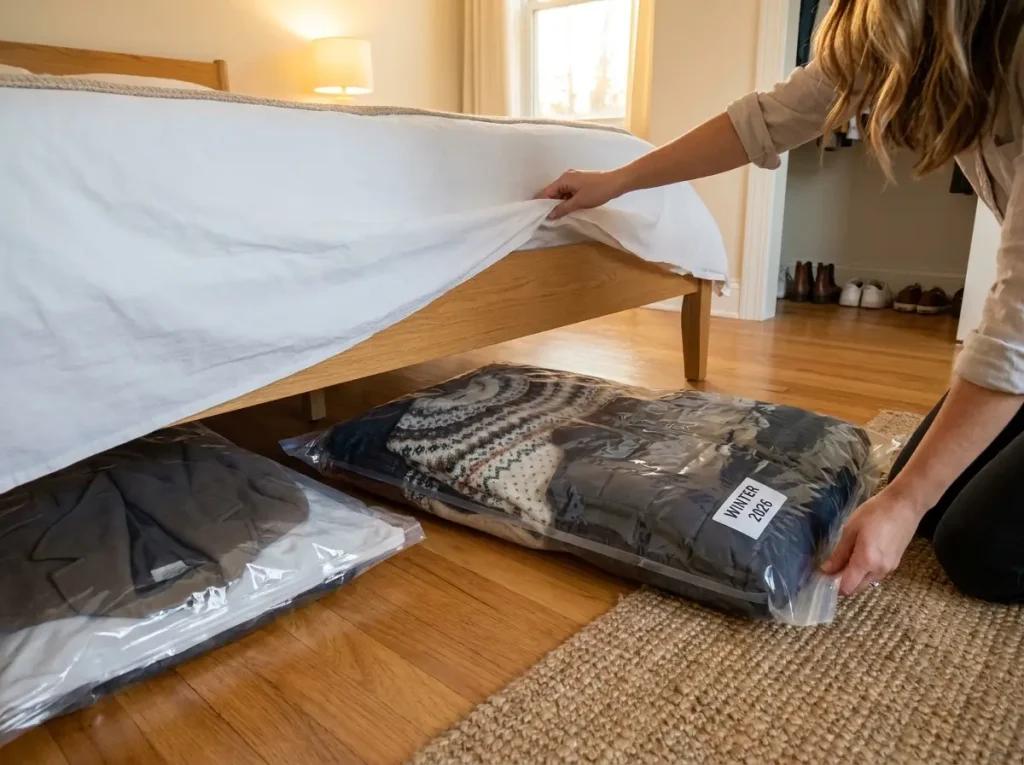
You just freed up 25% more rod space with slim hangers and doubled your hanging capacity with a second rod. That space disappears in one weekend if you keep off-season clothes in the closet.
What Goes Into Off-Season Storage
Everything you won’t wear for the next 3 to 4 months: heavy coats, thick sweaters, scarves, boots, wool pants. If you live somewhere with mild seasons, this might only be 10 to 15 items. In colder climates, it can be 30 or more. The rule is simple: if you wouldn’t reach for it this week, it doesn’t belong on the rod right now.
Where to Store It
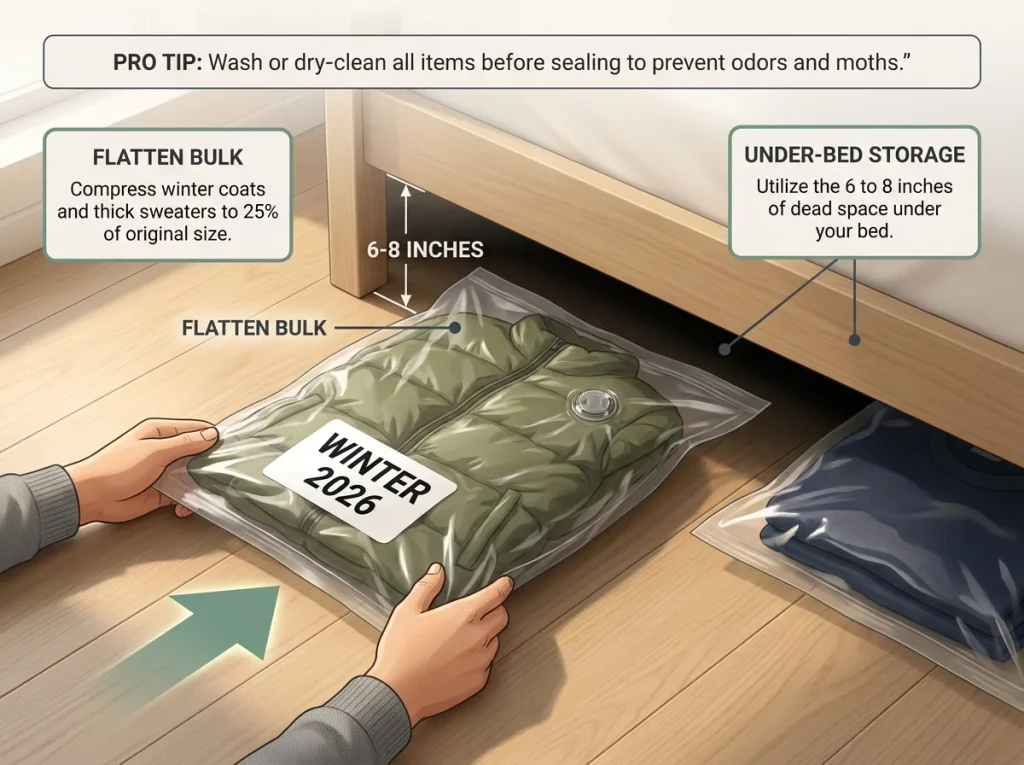
Under the bed is the best spot in most apartments — you’ve got 6 to 8 inches of clearance that’s doing nothing. The ZOBER Vacuum Storage Bags (variety pack) compress bulky winter items to about 25% of their original thickness. A puffy vest that takes up three hanger widths flattens to less than two inches. The jumbo bags (40 by 30 inches) fit a full winter coat. Slide two bags under a queen bed and you’ve stored an entire season’s worth of bulk.
If you don’t have under-bed clearance, the top closet shelf works. Stack vacuum bags flat and they become shelf-efficient. Label each bag with the season and year so you’re not opening three bags in October trying to find your fleece.
Pro tip: Vacuum-seal winter items at the end of the season, not the beginning. Wash or dry-clean everything first — storing dirty clothes in sealed bags locks in odors and attracts moths.
The Monthly Reset That Keeps It Working
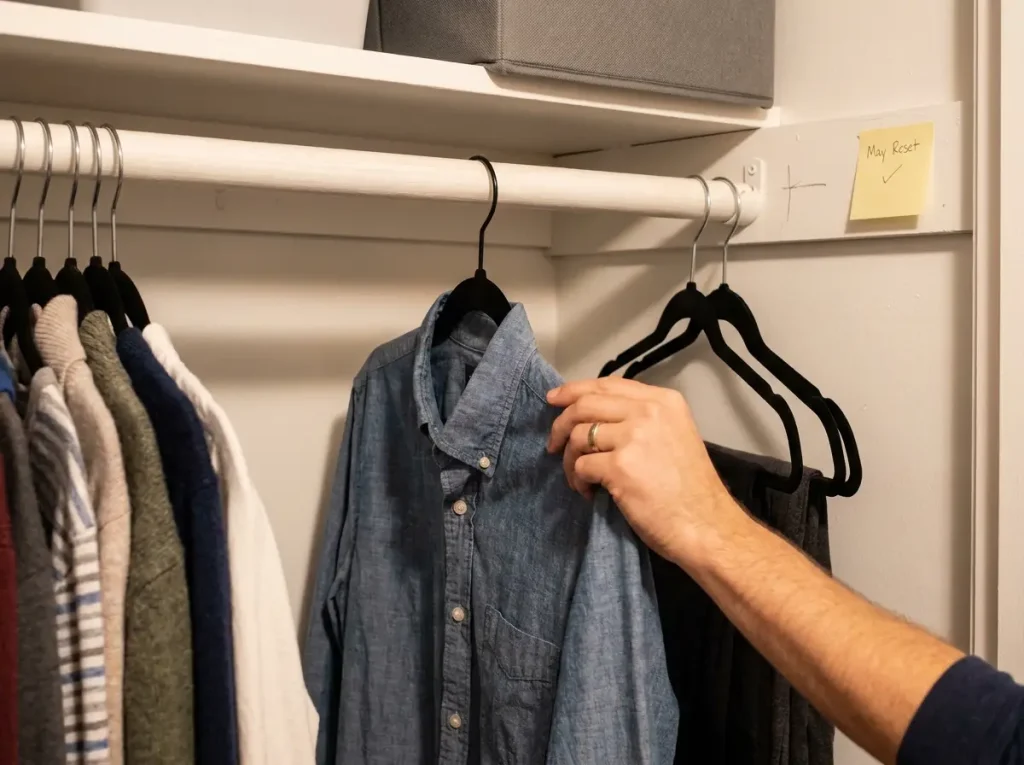
Every system reverts without maintenance. The difference between a closet that stays organized and one that doesn’t is ten minutes a month.
The 10-Minute Monthly Sweep
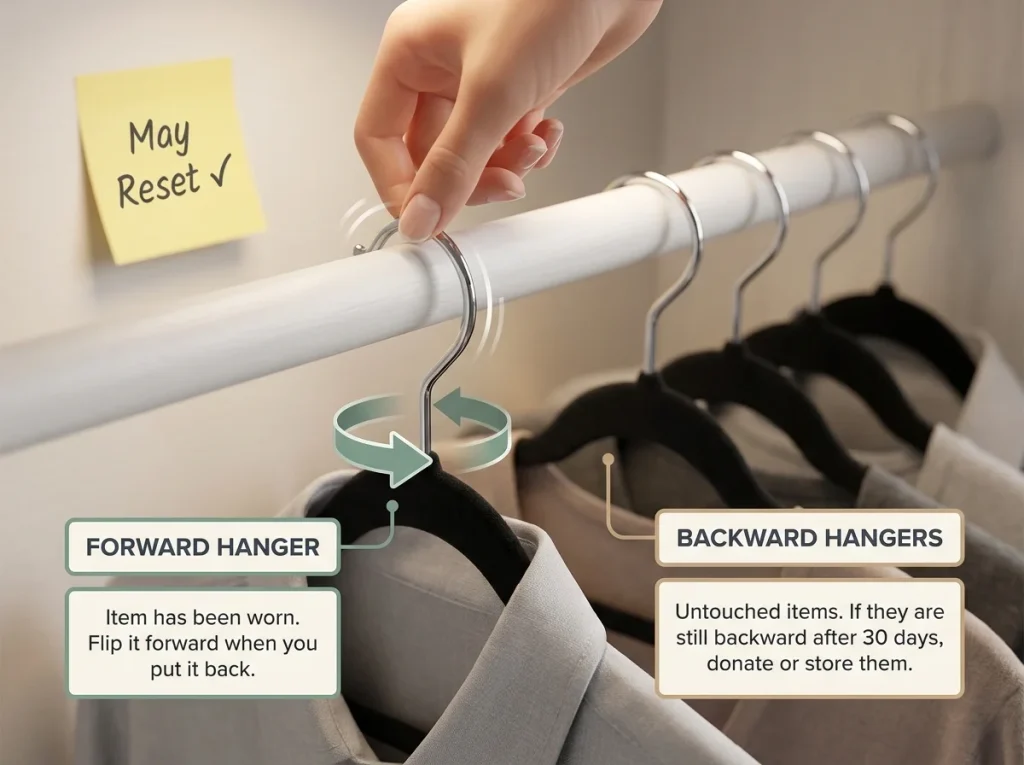
Pick one day a month — the first Saturday works. Walk into the closet. Flip every hanger backward (hook opening facing the wall). Over the next month, as you wear and rehang items, flip the hanger forward.
By the next reset, any hangers still backward are items you haven’t worn in 30 days. Those go into your Seasonal bin or your Out bag.
While you’re at it: re-fold anything on the shelf that’s collapsed, push shoes back against the wall, and check the closet floor rule. If anything other than shoes has appeared on the floor, rehome it. This entire process takes less time than making coffee.
One-In-One-Out (Modified)
The strict one-in-one-out rule sounds great but collapses in practice because purchases come in bursts — you shop once a season, not once a day. The modified version: every time you bring new clothes home, pull the same number of items from the closet before the new ones go in. If you bought five items at the store, five items leave the closet that day. Not “eventually.” That day.
This works better than the daily version because it connects the behavior to the moment — you’re already standing at the closet with the shopping bag. The mental link between buying and editing becomes automatic after three or four cycles.
Conclusion
Three things keep a too-full closet from reverting. First, slim hangers — they recover a quarter of your rod space with zero effort. Second, a seasonal rotation — off-season clothes don’t belong in an active closet. Third, the monthly backward-hanger reset — ten minutes a month catches drift before it becomes chaos.
Three-month check: at the 90-day mark, count your backward hangers. If more than 20% of your rod is untouched, those items are candidates for the next seasonal rotation or the donation bag.
Start with one thing today: count the hangers on your rod and measure the rod length. The math will tell you exactly how overstuffed your closet is — and that number makes every next step obvious.
Q1 How many clothes should fit in a standard closet?
A standard 48-inch closet rod fits about 24 garments on regular hangers or up to 40 on slim velvet hangers. Your actual capacity depends on rod length, garment type, and hanger thickness — measure your rod and divide by your hanger width for an exact count.
Q2 How do I organize my closet when I have no space?
Start by switching to slim hangers to recover 25% of rod space, then add a hook-over double rod for short garments. Move off-season clothes into vacuum bags stored under the bed. These three changes double usable space without any modification to the closet itself.
Q3 What is the best way to maximize closet space in an apartment?
Use the vertical space — a second rod below the main one holds an entire row of short garments. Use shelf dividers to stack folded items higher, and keep the closet floor clear except for one row of shoes. Slim velvet hangers and seasonal rotation free up the rest.
Q4 How often should I reorganize my closet?
A full reorganization shouldn’t be needed if you do a 10-minute monthly reset. Flip all hangers backward on the first of the month, then flip forward as you wear items. Anything still backward after 30 days gets evaluated. This prevents the slow creep that makes closets revert.
Q5 Should I fold or hang my clothes?
Hang anything that wrinkles when folded — button-downs, blouses, blazers, dresses. Fold anything that stretches on a hanger — sweaters, knits, heavy hoodies. Drawers work best for underwear, socks, and workout clothes. This split prevents your rod from becoming overloaded.
Disclaimer: ClutterlessNest is a participant in the Amazon Services LLC Associates Program. As an Amazon Associate we earn from qualifying purchases. This article may contain affiliate links — if you buy through them, we may earn a small commission at no extra cost to you. We only recommend products we have tested or genuinely believe in.