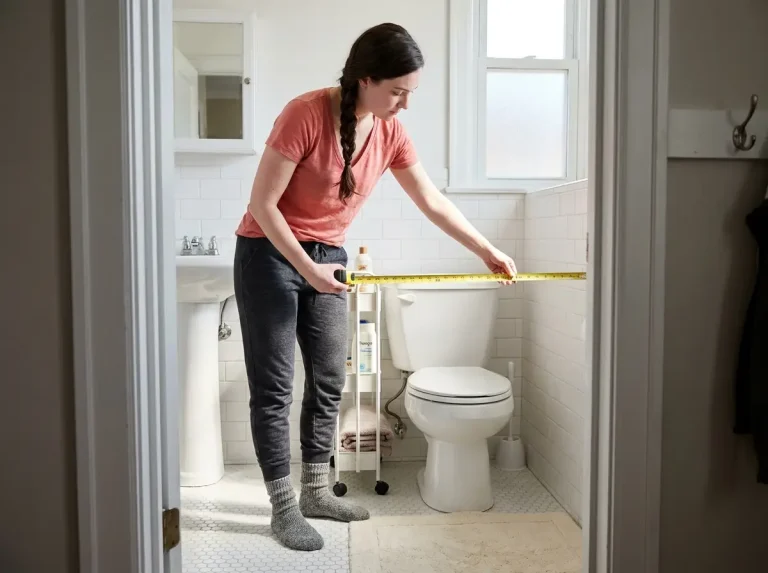
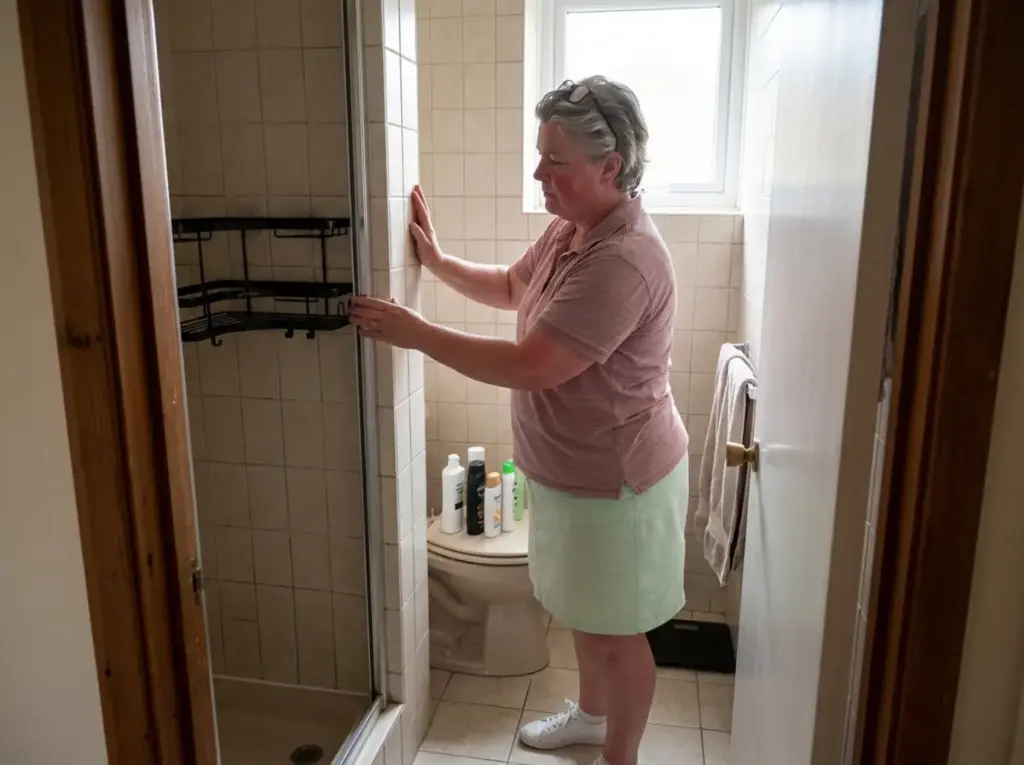
You bought the caddy that said “compact” on the box. You hung it, and it still swings three inches into the door path every time you get in. Or you’ve got the other version: one ledge, four bottles, and an elbow that knocks the conditioner into the drain most mornings.
Here’s what nobody says out loud about shower organization for small bathrooms. A small shower doesn’t hold less because it’s smaller. It clutters faster because the same bottles land on a fraction of the surface, and the margin goes with them. Measure first, claim the corner, go vertical, match the mount to your tile, then cut the bottle count.
Quick Answer
To organize a small shower, work in this order:
- Measure the corner width, the ledge depth, and the ceiling clearance inside the stall.
- Claim the corner first — it’s the surface every stall size shares.
- Go vertical, because wall height costs you zero floor space.
- Match the mount to your tile: suction needs smooth, glossy, unbroken surfaces.
- Cut the bottle count to what your storage actually holds, then stop buying.
Why Small Showers Get Cluttered Faster Than Big Ones
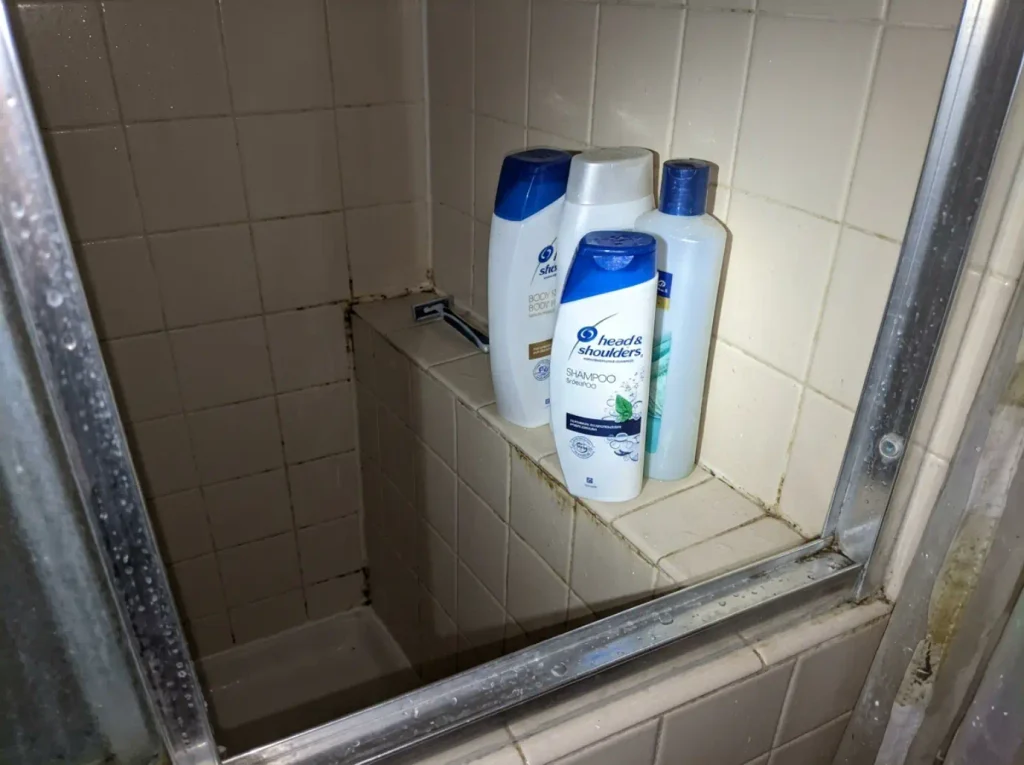
Most advice treats a small shower as the same problem in a smaller package. It isn’t, and what changes when the footprint shrinks decides whether your system holds or collapses into a floor pile by week three.
The Product Count Doesn’t Shrink With the Shower
Move into a smaller place and your shampoo doesn’t get smaller. You still own conditioner, body wash, a razor, and whatever your partner carried in and abandoned. The inventory stays the same; the surface it lives on gets cut roughly in half. That gap is the entire problem.
A standard shower stall runs 32 to 36 inches square, per standard bathroom design guidance, and the smallest size residential code allows is 30 by 30. Narrow spread, until you do the math on one wall: a 32-inch stall gives you about two fewer usable inches per wall than a 36-inch one. Two inches is the difference between a caddy that clears your shoulder and one that doesn’t. These are the standard shower dimensions every listing assumes you know.
It doesn’t get better at the top end. An ADA-accessible shower is a minimum of 36 by 36 inches, still barely bigger than a phone booth. There is no shower with storage to spare, which is the same reason small bathroom storage gets messy again after a full reset.
And here’s the detail that only shows up once you’ve lived with one: you don’t knock bottles over because you’re clumsy. You knock them over because your elbow occupies the same cubic space the bottle does.
Tip-Overs Are a Space Problem, Not a Clumsiness Problem
Everyone with a small shower knows the sound: the pop, the clatter, then something rolling toward the drain while you stand there with soap in your eyes.
It reads as bad luck. It’s geometry.
On a four-inch shower ledge, a bottle nudged half an inch is still on the ledge. On a one-and-a-half-inch ledge, the same nudge puts it on the floor. Small showers have less of that margin in every direction.
The real cost isn’t the fallen bottle, it’s what it teaches you. After the third or fourth clatter you stop putting things back and start setting them on the floor, because the floor is the one place nothing falls from. That’s the reversion, and it lands inside three weeks even for organized people with a nice caddy.
Why “Buy a Smaller Caddy” Isn’t the Answer by Itself
The most repeated moment in small-shower threads: someone measures their stall for the first time, after buying a compact shower caddy the listing called small, and finds it still hangs three inches into the door swing. Small isn’t a measurement. It’s a marketing word.
The phrase that gets closer is “compact proportions,” and the useful half is proportions: measured against a real footprint. A caddy that’s compact for a 60-inch alcove shower is oversized in a 30-inch stall, and both get listed under the same search term. So the fix isn’t buying smaller. It’s buying against three numbers you don’t have yet.
Measure Your Shower Before You Buy Anything
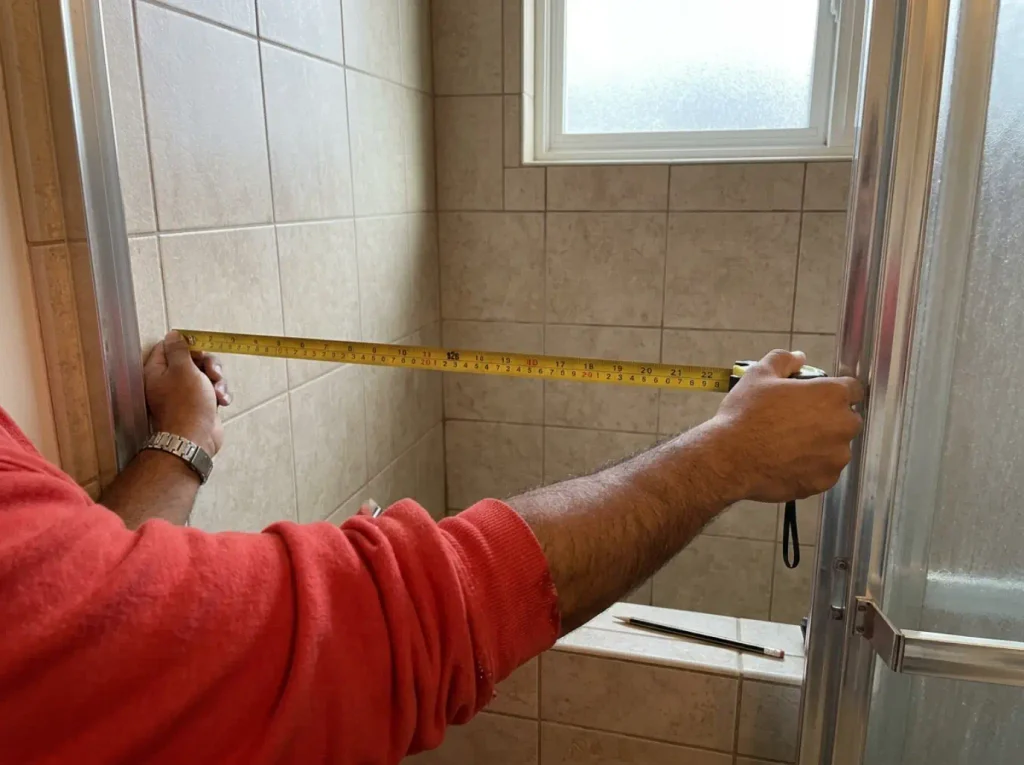
Returns pile up here for one reason: people shop for “a small shower” as a category instead of for their shower as an object. Three numbers in your phone kills most of the wrong purchases, and two of them are the ones almost nobody takes.
The Three Measurements That Decide Everything
The first is wall-to-wall width at the corner you plan to use. Not the doorway, not the widest point of the stall, but the specific corner you’ll hang something in.
The second is ledge depth, if a ledge exists at all: it decides whether anything can sit rather than hang, and under about two inches, treat the ledge as decorative. The third is ceiling clearance, floor to ceiling inside the shower. Everyone skips that one, and it eliminates entire product categories in one shot.
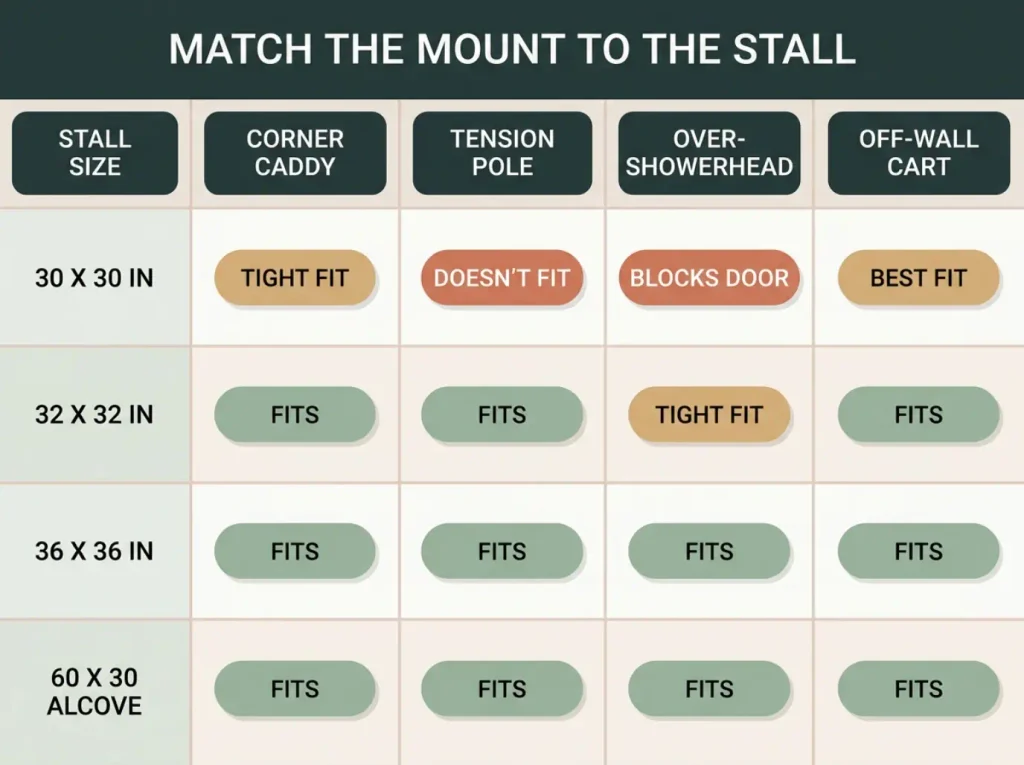
Take all three with the shower door closed. The door swing is the constraint that eats products, not the wall, and a caddy that fits the wall perfectly and blocks the door by two inches is still a return.
Write the three numbers in your phone before you open a single product page, and add a fourth line: “door swing clears at ___ inches.” Then check every listing’s depth against that number instead of against the word small. You will disqualify about eight products out of ten in under a minute, which is the whole point.
Ceiling Clearance Is the Measurement Everyone Skips
A tension pole caddy covers roughly 54 to 125 inches of ceiling range, generous enough that most people assume any pole fits any bathroom. The recurring complaint in those threads is a pole that won’t compress short enough: older small apartments have soffits, dropped ceilings over the tub, and bathrooms well under eight feet. “Adjustable” describes how far the pole extends, and buyers read it as how far it collapses.
So flip the spec you check. The number that matters is the pole’s minimum extension, not its maximum. Clearance of 78 inches against a 72-inch minimum is fine. Against an 84-inch minimum it isn’t a tight fit, it’s an impossible one. On a sloped ceiling, measure the shortest point in the pole’s footprint.
Know Your Tile Surface Before You Pick a Mount Type
This is where most small-shower storage quietly fails. A suction cup caddy needs a smooth, non-porous, unbroken surface. On textured tile, unglazed finishes, natural stone, or anywhere the cup crosses a grout line, textured tile and grout lines create the microchannels that make suction mounts fail.
Heat makes it worse. Every hot shower changes the volume of trapped air behind the cup, so thermal cycling works the seal loose a little at a time. That’s why the failure lands mid-shower rather than overnight. Small bathrooms get the worst version: mosaic and penny tile are popular precisely because small rooms look better with small-scale tile, which means grout lines every couple of inches.
Run a fingernail across your tile before you buy anything suction-mounted. If you feel texture, suction isn’t a mount, it’s a monthly chore you haven’t agreed to yet.
Claim the Corner and Go Vertical First

Every small shower has two surfaces sitting unused: the dead corner, and everything above your shoulder. Both are free, both are ignored by the products that get recommended most, and between them they solve most of the problem.
The Dead Corner Is the One Surface Every Stall Shares
The dead corner is the triangular void behind the shower door or beside the showerhead, the dead space most caddies ignore because they’re built for a flat wall. What makes it worth claiming is that it doesn’t shrink proportionally with the stall: drop from 36 inches to 32 and each wall loses two usable inches, but the corner geometry holds. That’s why corner-first scales down when nothing else does.
Before buying anything, run the free version: move the two products you use daily into the corner and live with it for three days. Plenty of people find they never missed the ledge, and the whole problem was distribution, not capacity.
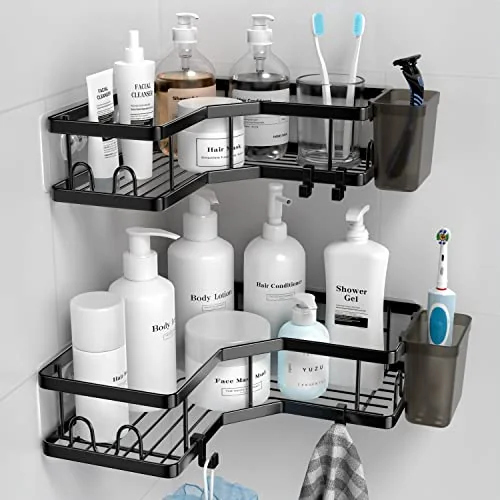
If that works and you want it off the floor, the adhesive caddy is the category, and it lets you install without drilling, which is the whole appeal of no-drill storage in a rental. Budget-tier adhesive corner shelves carry a 15 to 22 pound weight capacity, plenty for bottles, and they need the same smooth, non-porous surface suction does. A drilled wall-mounted shelf holds more, but it is a landlord conversation and a patched hole later.
The fingernail test applies here too. It’s the same weight-capacity-by-mount-type logic that governs corner shelving anywhere else in the house.
Vertical Storage Beats Floor Storage in a Small Stall
The floor of a small shower is the worst storage surface in your home. It’s wet, it’s where you stand, and in a 32-inch stall anything on it sits under your feet at 6 a.m.
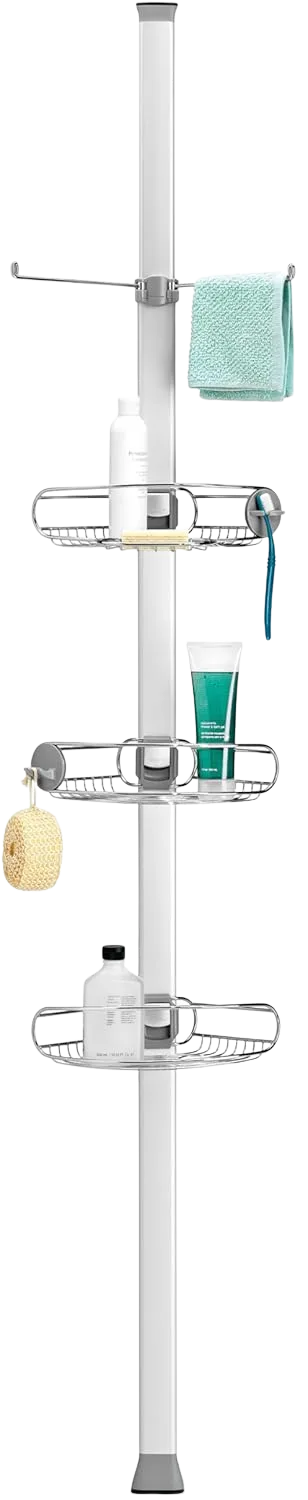
Going up the wall costs zero floor footprint, and floor footprint is the constraint that binds. A tension pole puts four shelves into the footprint of a broomstick.
Before you buy a pole, try the near-free version budget-organizing threads keep landing on. A tension rod across the corner plus a handful of curtain-clip hooks gives you a hanging caddy for lightweight bottles for the cost of a coffee. It won’t hold a full-size pump bottle, but it tells you within a week whether vertical is your answer.
I used to point people straight at over-the-showerhead caddies as the default vertical fix, since they need no mounting and no measuring. After enough glass-door failure stories in shower threads, I switched. The corner pole survives more configurations, and the over-head caddy is a conditional pick now, not the opening move.
When Your Ceiling Is Too Low for a Standard Pole
This is the case that sends poles back. Older small bathrooms often have a soffit above the tub surround hiding plumbing, or a ceiling that was never eight feet. Measure inside and you find 76 inches where you assumed 96. The spec that solves it sits at the bottom of the listing: every pole advertises how tall it goes, almost none advertise how short it collapses.
The OXO Good Grips Quick-Extend Aluminum Pole Caddy compresses to a 62-inch minimum and runs to 108, covering the low-ceiling and soffit range the simplehuman can’t reach, with four shelves you space around your own height. The trade-off is aluminum instead of stainless: lighter build, better for bottles than anything heavy. And if your ceiling slopes, measure the shortest point. The pole lives under the lowest number, not the friendly one.
What to Do When There’s No Ledge and No Niche
Here’s the configuration the entire internet skips: a fiberglass surround or a tiled box with nothing to sit on, no recessed shower niche, and a sliding glass shower door across the front. The no ledge shower is everywhere in small renovated bathrooms and newer builds, and every listicle you’ve read quietly assumes you have a ledge.
Why the Standard Advice Breaks Down Here
Two solutions dominate every shower-storage article: put it on the ledge, or hang it over the showerhead. This configuration eliminates both at once. No ledge means nothing can sit, and a sliding glass door puts the head behind a track and a panel.
What’s left is mounting to a wet wall, and if the tile is textured, that goes too. The full system for shower storage that survives daily use covers those mount-failure mechanics; they arrive faster in a small stall.
This is the shower where people give up. The bottles move to the floor permanently, and you conclude your bathroom is simply the exception. It isn’t. It needs a different category of answer.
Adhesive and Suction, and Where Each One Actually Holds
Adhesive works here, within honest limits. Command Bath water-resistant strips hold roughly 3 to 7.5 pounds depending on size, and Command’s own shower caddy line is rated near 6.5. That sounds fine until you weigh what you’re hanging: full-size shampoo, conditioner, body wash and a razor pass 6 pounds without trying. This is a capacity problem before it’s a stickiness problem.
Placement is the other half. Command’s own bathroom guidance recommends keeping adhesive mounts out of direct spray contact, a real constraint in a stall where the spray zone is most of the wall. Put them on the upper wall or the dry corner. People blame the brand for what was a placement decision; the same strip two inches out of the spray line would have held for months.
Glass doors change the math, and that’s the good news. Glass is smooth, non-porous, and has no grout lines: the best suction surface in your bathroom. If you have a glass door and textured tile, the door is your mounting surface.
LUXEAR Heavy Duty Waterproof Suction Shower Hooks come as a 2-pack rated to 11 pounds per pair and are built for it, holding a loofah, a mesh bag, or a razor. Mount them on textured tile and they’ll be on the floor by next week, which is this whole article in one object.
Load-test every adhesive and suction mount before you trust it with anything breakable. Hang it, then pull down on it with roughly the weight you plan to store, standing outside the shower. If it shifts even slightly, it’s going to fail on a wet morning instead, and you’d much rather find that out now with your hand than at 6 a.m. with your foot.
The Solution That Touches Nothing at All
If nothing mounts, stop trying to mount. Move the storage out of the shower footprint entirely and the dead end stops being one.
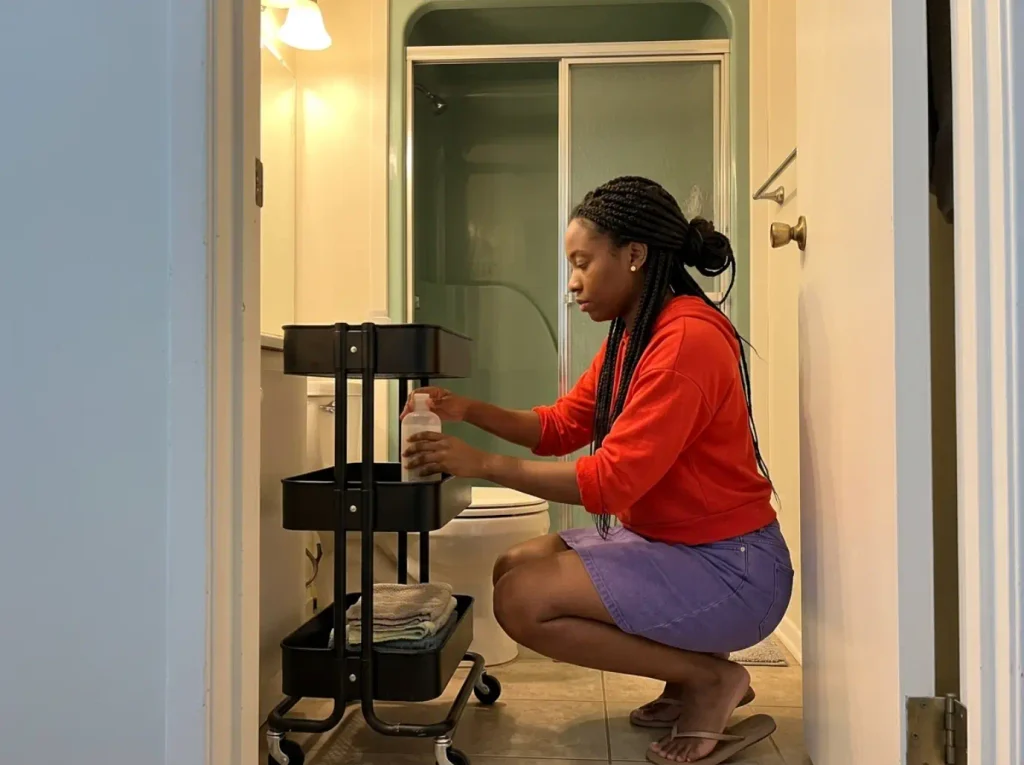
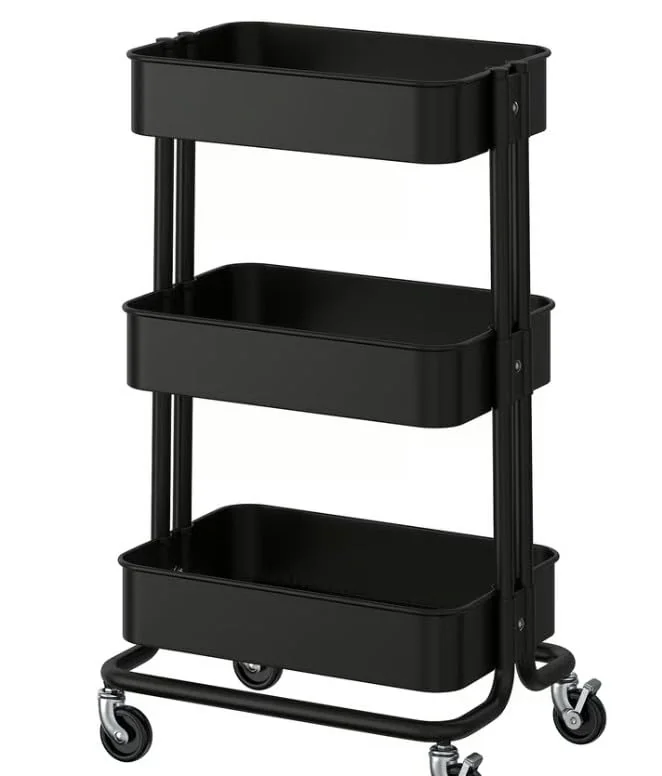
The workaround renters land on repeatedly is a slim rolling cart parked just outside the shower door, or wedged into the gap beside the toilet. Nothing touches a wet wall, nothing depends on tile texture. Try the free version first: an open corner etagere or any narrow shelf you already own, positioned just outside the shower footprint, catches your backstock without mounting anything.
One safety note on tip-over prevention. ASTM F2057 requires anti-tip hardware on units over 30 inches tall, and NAPO’s guidance is to anchor storage over 24 inches high in homes with kids or pets regardless of manufacturer claims. In a bathroom shared with children, weight the bottom tier heavily or anchor it.
The honest trade-off: you’re now reaching around a door, wet, to get your conditioner. That’s worse than a caddy in a shower where a caddy works. For a true dead end, it still beats the floor.
Buy for the Footprint You Actually Have
Two showers of identical size can hold wildly different amounts, and the variable isn’t the shower. It’s what you buy and how much you own. Stop shopping in the abstract, start shopping against the gap you measured.
Slim Beats Big, and Depth Is the Spec That Matters
Of the three dimensions on a product listing, only one is expensive in a shower. Depth is what protrudes into the space you stand in; width and height are close to free on a wall you weren’t using. That is what a low-profile organizer buys you. Comparing two caddies, the taller one that sticks out three inches beats the shorter one that sticks out five.
Drainage holes are the second filter, and they matter more in a small shower. Less airflow, more crowding, more standing water. Anything with a solid tray holds a puddle, and a mildew-resistant or mold-resistant label means nothing if the water cannot leave. A solid soap dish in a 32-inch stall grows a ring within a month; a slotted one doesn’t.
Materials do the rest of the work. Humidity-safe materials in a shower means a short list: powder-coated steel, anodized aluminum, and stainless are the rust-resistant finishes that survive a room that never fully dries out. In a small stall they matter more than they would anywhere else, because a rust streak on a caddy you pass within inches every morning is a caddy you stop using.
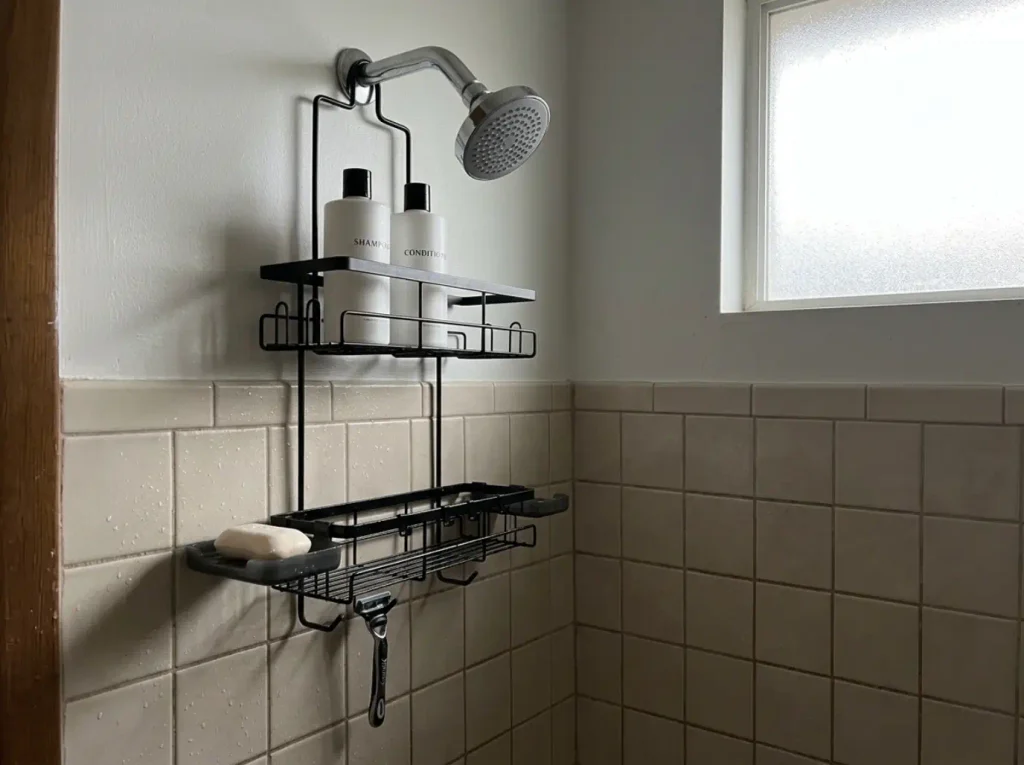
Over-showerhead caddies need no mounting, no adhesive, and no tile inspection, but only if your showerhead is exposed. A sliding glass door takes the category off the table and puts you back in the previous section. The AKTECKE Hanging Shower Caddy Over Showerhead is the pick when the head is clear: rustproof, no-drill, two tiers plus eight hooks. Its real limitation is that it loads the showerhead arm, so if yours already wobbles, hang it light. From there, which caddy type is worth it once you know your footprint is a shorter conversation.
Cut the Inventory Before You Buy More Storage
Here’s the cheapest fix in this whole article: own fewer bottles. Capacity is fixed by your walls; inventory is the only variable you fully control. Every bottle you remove is capacity you didn’t have to buy, mount, or worry about failing on wet tile.
The rule that holds is one bottle per zone, all backstock outside the shower. One shampoo, not the three you rotate between. The unopened refill goes under the sink or on the cart, not on the ledge stealing prime space for six weeks.
Decanting into travel-size containers is the next move, and in a genuinely tiny stall it alone can solve the problem. Downsizing products two out of a 32-inch stall is the difference between crowded and workable.
Keeping It That Way After Week One
A big shower forgives a lazy week. A small one doesn’t. Two extra bottles in a 36-inch stall is an annoyance; the same two in a 30-inch stall is the difference between a system and a pile. Nobody does a weekly reset on a shower, so the upkeep has to be small enough that you do it.
One in, one out, literally: a new bottle enters only when an empty one leaves. Not nearly empty, gone. That handles most of the drift, because drift in a shower is new arrivals, not existing items multiplying.
The weekly move is a thirty-second purge by frequency: send anything you haven’t used in the past week out to backstock. The face mask from March, the sample conditioner, the second razor. None of them are earning their footprint.
Mildew is a small-shower problem specifically: less airflow plus more crowding means anything wedged tight against a wall stays wet between showers. Leave a finger’s width of air behind every bottle. It sounds fussy. It’s the difference between wiping down once a season and scrubbing once a month.
If you share the shower it all compounds, and zoning the shower by person is where that gets solved.
Put a recurring three-month reminder in your phone that just says “press the mounts.” Adhesive and suction both degrade with thermal cycling, and the failure is gradual long before it’s sudden. A mount that gives a millimeter under your hand today is the one that lets go with a full bottle in about two weeks.
Conclusion
Measure before you buy: corner width, ledge depth, and ceiling clearance, all with the door closed. Work the two surfaces a small shower has in surplus, the dead corner and the wall above your shoulder, before anything needing the floor or a ledge you don’t have. And match the mount to your tile rather than the marketing, because textured tile defeats suction and adhesive alike.
In three months, press on every adhesive and suction mount before you load it. Both degrade gradually with heat cycling, and you want to find the loose one with your hand rather than your foot.
Take the three measurements this week. Buy nothing until they’re written down. Most of what didn’t fit last time will make sense the moment you have them.
Frequently Asked Questions
01How do you organize a small shower with no shelves?
Use the corner and the height, because those are the two surfaces a shelf-less shower still has. An adhesive corner caddy on smooth tile or a tension pole in the corner adds storage without an existing ledge. If your tile is textured, skip adhesive and suction entirely and move storage to a cart just outside the shower.
02What can I use instead of a shower caddy in a small shower?
A tension rod with curtain-clip hooks holds lightweight bottles for near-zero cost, and an open corner etagere just outside the shower footprint takes backstock without mounting anything to a wet wall. Both come up constantly in budget-organizing threads as the first thing to try before buying a purpose-built caddy.
03Why do my suction cup shower organizers keep falling off?
Almost always the tile, not the product. Suction needs a smooth, non-porous, unbroken surface, and textured tile, unglazed finishes, natural stone or any spot crossing a grout line lets air leak into the seal. Hot showers make it worse by changing the trapped air volume, which is why the failure usually lands mid-shower.
04How do you organize a shower with a glass door and no ledge?
The glass door is your mounting surface, since it’s smooth and non-porous, which is exactly what suction needs. Suction hooks on the glass handle lightweight items, and anything heavier goes on a rolling cart parked just outside the door, because a glass door blocks over-showerhead caddies entirely.
05What size shower caddy fits a standard shower stall?
Measure your corner width and ledge depth first, because “standard” covers 30×30, 32×32 and 36×36-inch stalls and the gap between them is a couple of usable inches per wall. For tension poles, the number that matters is the pole’s minimum extension against your ceiling height, not its maximum.
Disclaimer: ClutterlessNest is a participant in the Amazon Services LLC Associates Program. As an Amazon Associate we earn from qualifying purchases. This article may contain affiliate links — if you buy through them, we may earn a small commission at no extra cost to you. We only recommend products we have tested or genuinely believe in.