












In this article
You organized your bathroom last month — new bins, a shelf, maybe a door organizer. It looked great for about two weeks. Then the counter filled up again, the bins got shoved around, and the space under your sink went back to the pile it was before. That’s not a discipline problem — it’s a systems problem. This guide breaks your bathroom into four zones, each with a specific fix that holds up past the first two weeks.
Quick Answer: The storage ideas that last in small bathrooms work zone by zone:
- Measure four key gaps (toilet-to-ceiling, toilet-to-wall, under-sink pipe clearance, door-to-frame) before buying anything
- Use a freestanding over-toilet shelf instead of wall-mounted to avoid drilling and fit most apartment toilets
- Organize under-sink space around the P-trap pipe with an expandable shelf and a silicone drip mat
- Mount no-drill adhesive shelves rated for bathroom humidity on tile walls
- Use an over-the-door organizer for the 20+ small items cluttering your counter
- Fill the 7-inch gap beside your toilet with a slim rolling cart
Why Small Bathroom Storage Keeps Failing
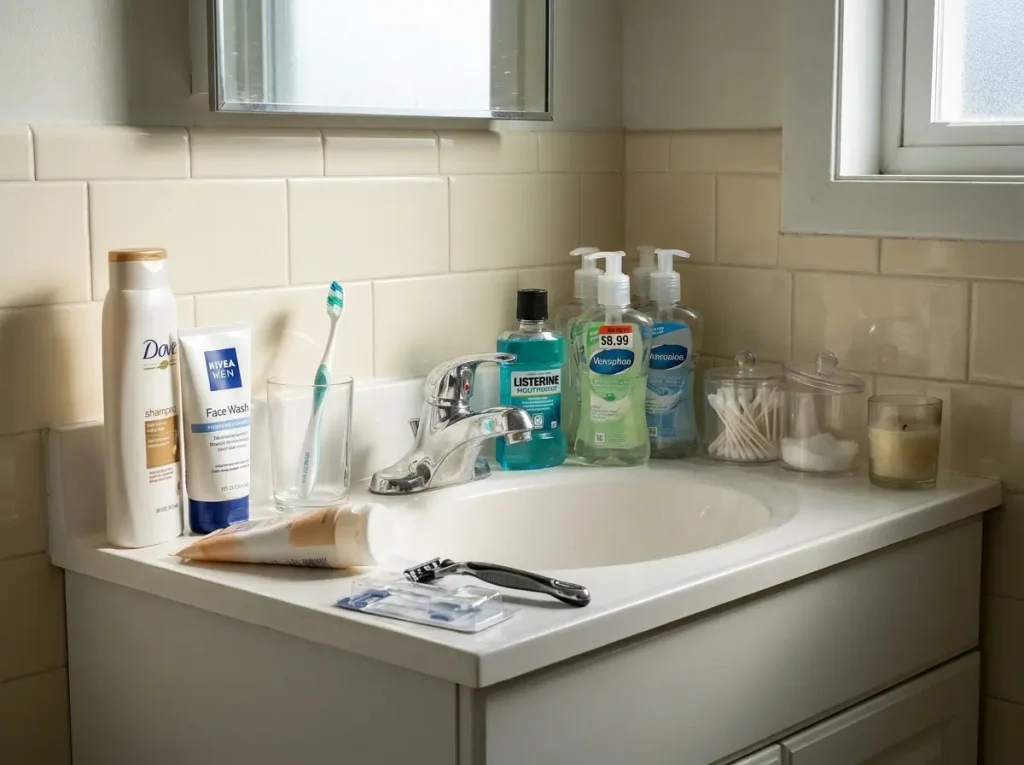
The Counter Trap
Your bathroom counter is probably a mess right now. Not because you’re bad at organizing — because you’re using the counter as a holding zone for items that belong somewhere else. Backup shampoo bottles sit next to your daily face wash. Travel toiletries share space with cotton swabs and a razor.
There’s no tray, no zones, no logic — just a surface that collects whatever you set down.
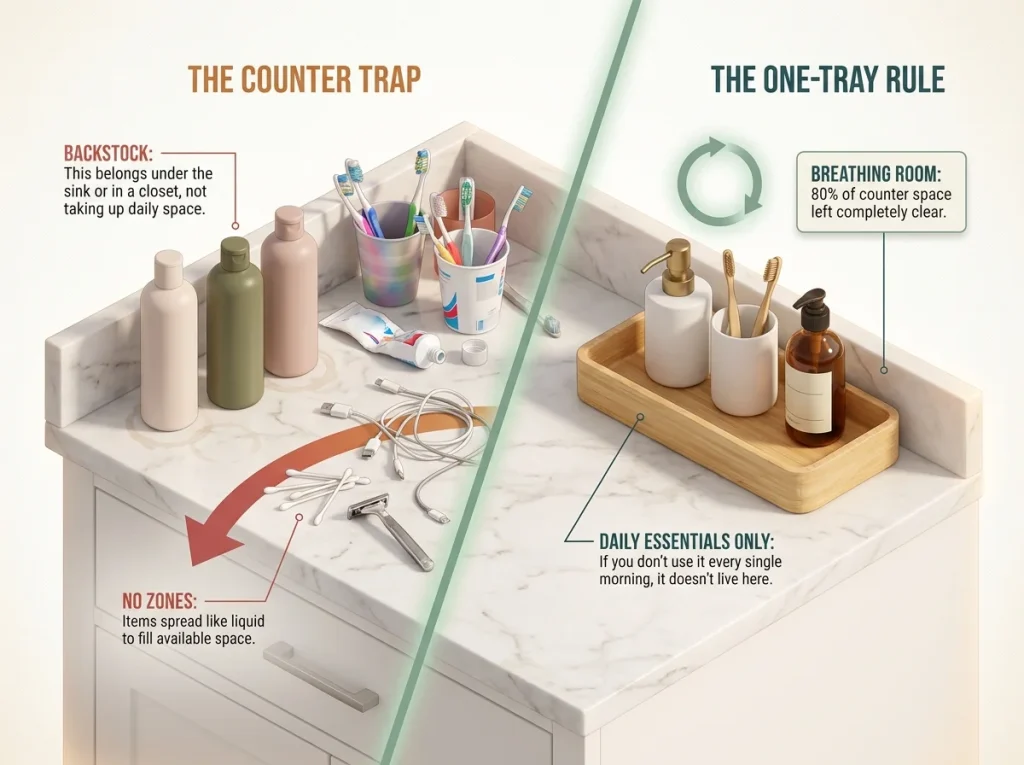
The fix isn’t buying matching containers. It’s splitting your items into two categories: daily-use and backstock. Daily items stay on the counter in a single tray. Everything else goes behind a door, under the sink, or above the toilet.
When you stop treating the counter as a warehouse, it stops looking like one.
Dead Zones You’re Not Using
Most small bathrooms between 40 and 50 square feet have three dead zones hiding in plain sight. The space above your toilet — usually 54 or more inches of vertical air between the tank and the ceiling — sits empty. The gap between the toilet and the vanity (or wall) averages 7 to 9 inches, but most people treat it as a corridor for dust. And the back of the bathroom door has roughly six square feet of surface holding nothing.
These aren’t bonus spaces. In a bathroom this size, they’re your primary storage.
Material Breakdown in Humid Air
Bathrooms run hotter and wetter than any other room. Particleboard shelves swell and warp after a few months of shower steam. Cheap adhesive gives up on damp tile. Fabric bins that work fine in a closet develop mildew spots in a bathroom within one season.
Pro tip: Before putting any organizer in your bathroom, check its material. Powder-coated steel, solid wood sealed on all sides, and polypropylene plastic survive bathroom humidity. Particleboard, raw bamboo, and unrated adhesive do not.
If your small bathroom storage system keeps failing, the products might be fine — the materials just aren’t built for the environment.
Measure Before You Buy Anything
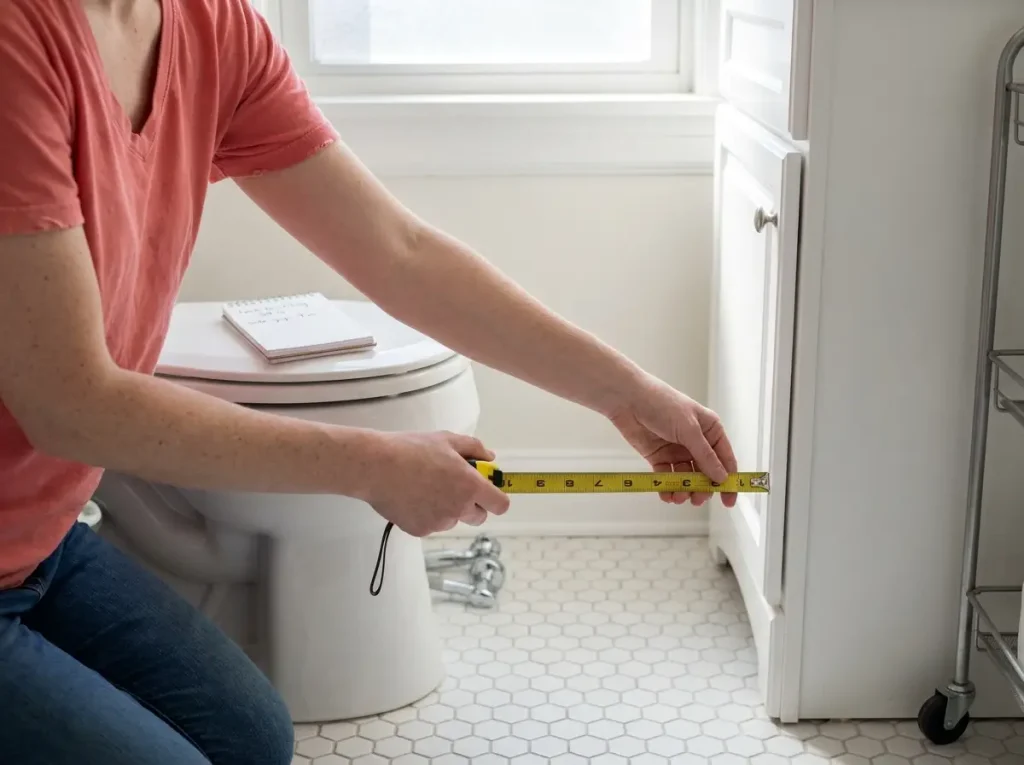
Four Measurements That Matter
Grab a tape measure. You need exactly four numbers before opening a single product page: toilet tank to ceiling (vertical space for an over-toilet shelf), toilet to wall or vanity (side gap for a rolling cart), under-sink cabinet width (usable space on each side of the pipe), and door top to frame (clearance for an over-door organizer).
Write them down. Every measurement on a notepad takes ten seconds. Every return shipment takes ten days.
The Number No One Checks
Door clearance is the measurement that causes the most returns. An over-door organizer needs 1.5 to 2 inches between the top of your door and the frame (or cabinet) above it. If your bathroom door swings under a wall-mounted medicine cabinet, measure the clearance with the door fully closed. Many apartment bathroom doors have less than an inch, which rules out most over-door hooks and organizers entirely.
Under-Sink Pipe Height
Open your vanity cabinet and look at the P-trap — the U-shaped pipe under the drain. Measure from the bottom of the P-trap to the cabinet floor. Most standard vanity P-traps sit 8 to 10 inches above the cabinet floor. That number determines how tall your under-sink organizer can be. An expandable shelf that’s 10 inches tall won’t fit if your P-trap hangs at 9.
You’ll know this matters the first time you try to wedge a shelf in and the pipe blocks it halfway — and by then the packaging is already in the trash.
Zone 1 — Over-Toilet Storage
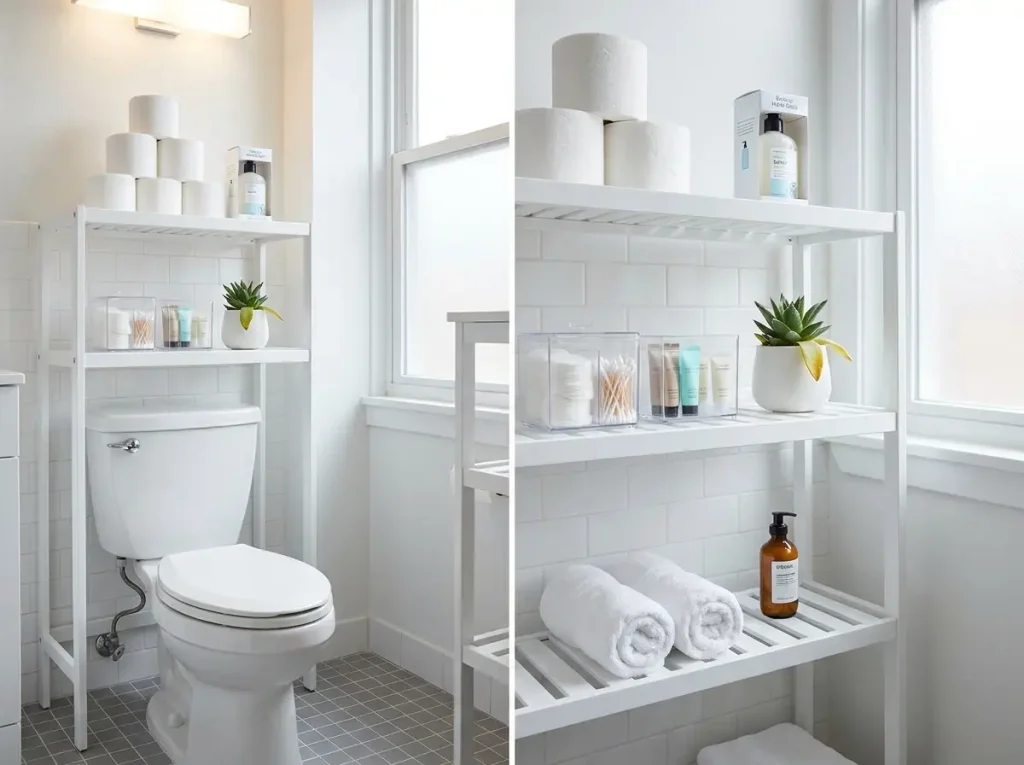
Freestanding vs. Wall-Mounted
If you rent, the answer is freestanding. Wall-mounted bathroom shelves need drywall anchors or tile drilling, both of which leave damage you’ll pay for when you move out. A freestanding over-toilet shelf straddles the toilet on two legs without touching any wall.
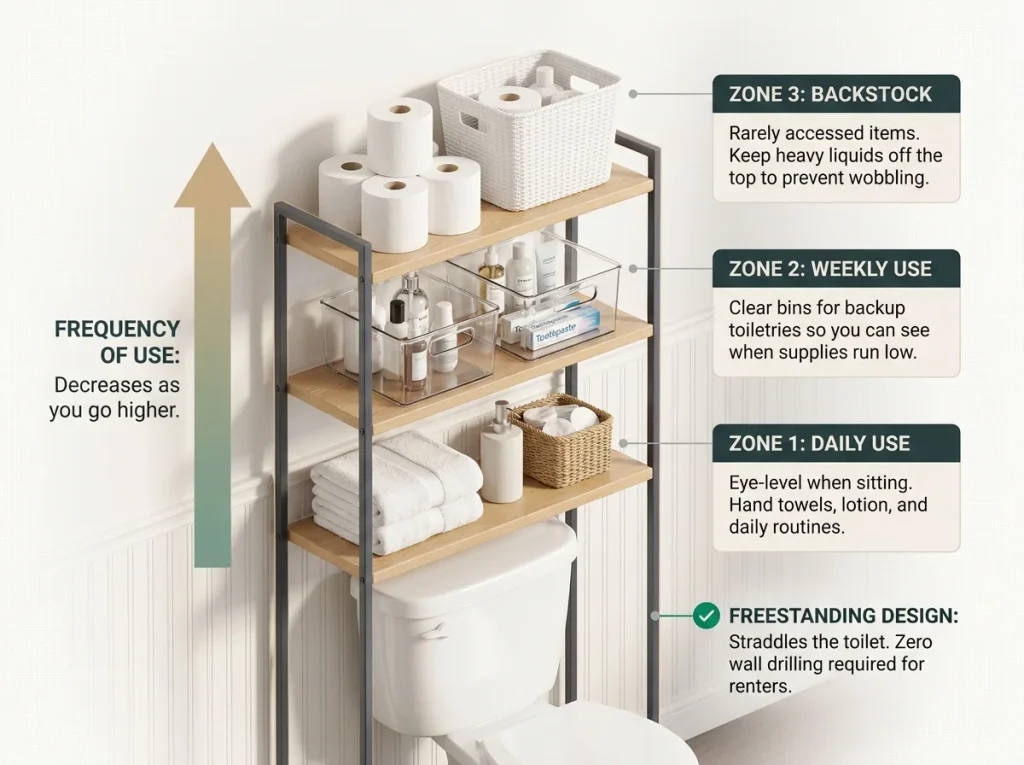
The UTEX Over The Toilet Storage Shelf is about 25 inches wide and 65 inches tall — it fits over most standard apartment toilet tanks without wall contact. Three tiers give you a clear frequency split from bottom (daily) to top (backstock). The main limitation is width: if your toilet sits in an alcove narrower than 26 inches, measure before ordering.
What Goes on Each Tier
The bottom tier is eye-level when you’re sitting. Put daily items there — a hand towel, lotion, a small bin of cotton rounds. The middle tier gets weekly items: backup toiletries in clear bins so you can see when something runs low. The top tier is backstock only — extra toilet paper, spare soap, items you won’t touch for weeks.
If you can’t reach the top tier without stretching, that confirms it’s the right spot for items you rarely grab.
Pro tip: Put heavier items on the lowest tier, not the top. A freestanding shelf with four rolls of toilet paper on the bottom is stable. The same shelf with a full shampoo bottle on the top tier wobbles every time someone bumps the toilet.
Zone 2 — Under-Sink Organization
The Pipe Problem
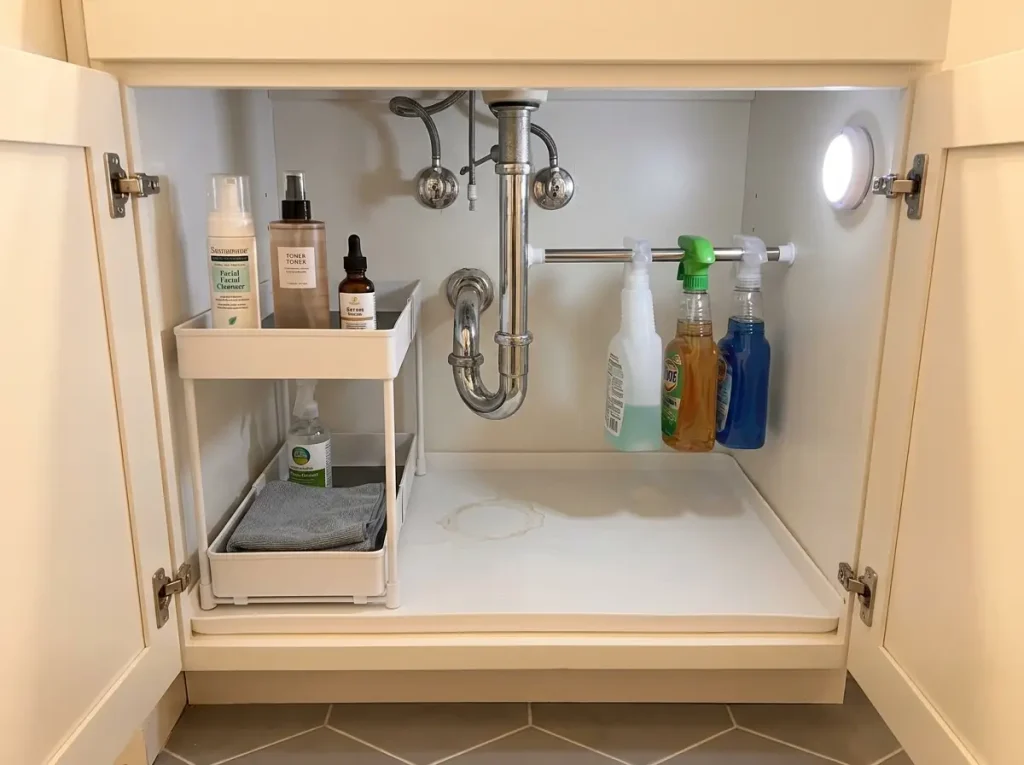
The cabinet under your bathroom sink is designed terribly for storage. A pipe runs through the center, splitting the usable area into two awkward sections. Everything slides around every time you open the door. Most people throw bottles in and close the cabinet — then wonder why they own three bottles of the same cleaning spray.
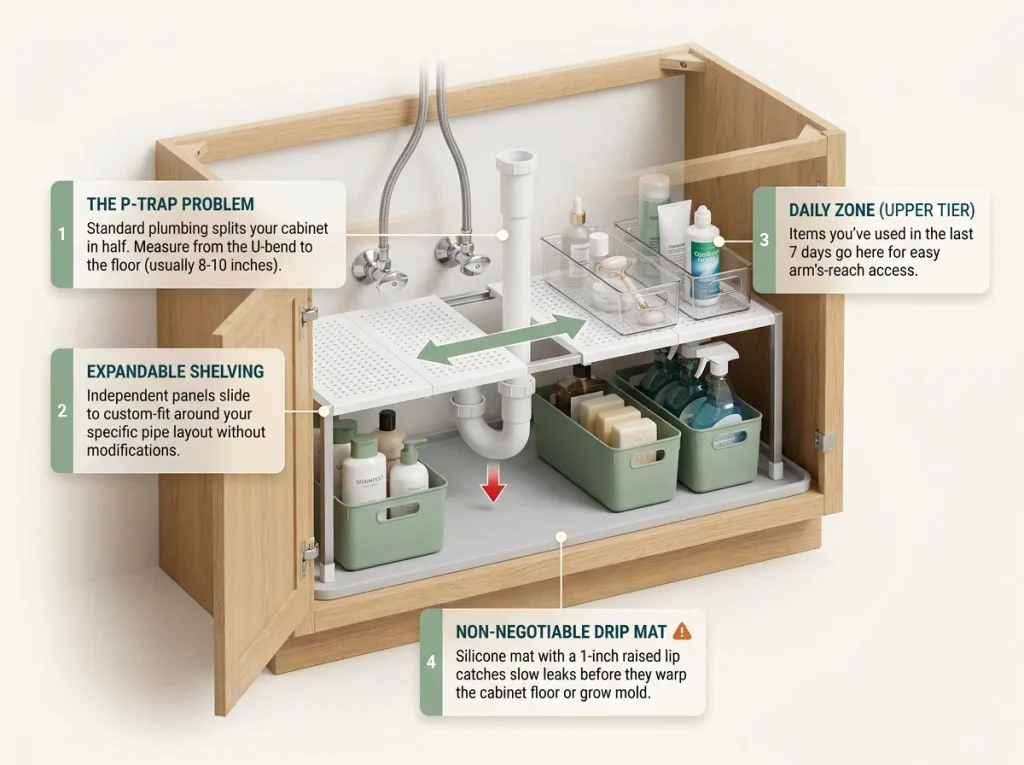
The SimpleHouseware Under Sink 2-Tier Expandable Shelf Organizer sits on each side of the P-trap pipe independently — each half adjusts to whatever width the pipe leaves you. Two tiers create a daily zone on top and a backstock zone below. It’s freestanding with no modifications needed. One limitation: if your P-trap sits lower than 8 inches from the cabinet floor, the upper tier may not clear the pipe.
If your kitchen has the same under-sink problem, the same fix works under kitchen sinks with a nearly identical pipe layout.
Two Zones Inside One Cabinet
Split your under-sink cabinet into daily and backstock. The daily zone (upper tier of the expandable shelf) holds the three to five items you reach for every morning — cleanser, moisturizer, contact solution, whatever your routine actually uses. The backstock zone (lower tier, plus the floor behind the pipe) holds refills and supplies you grab once a week or less.
The dividing line isn’t arbitrary. Pull everything out and set aside the items you used in the last seven days. Those go on the upper tier. Everything else goes below.
If something sat untouched for a month, it probably belongs in a hall closet, not taking up space under your bathroom sink.
The Drip Mat Is Non-Negotiable
Rental bathroom plumbing is old. Pipe connections loosen over months. A slow drip you don’t notice for two weeks can warp the cabinet floor and grow mold underneath your organizer.
The Silicone Under-Sink Drip Mat (34×22″, 1″ raised edges) catches slow drips before they reach the cabinet floor. At 34 by 22 inches, it fits most standard vanity cabinets. If your cabinet is narrower, any flat silicone mat works — the raised edges are what matter, not the brand.
Check the mat once a month when you do your bathroom reset. A dry mat means your pipes are tight. Water in the mat means you call maintenance before it becomes a bigger fix.
Zone 3 — Walls, Door, and Vertical Space
Adhesive Shelves in Bathroom Humidity
Standard adhesive strips fail in bathrooms. Shower steam weakens the bond over weeks until the shelf drops at 2 AM with everything on it. You’ll hear the crash, find your face wash on the floor in a puddle of lotion, and swear off adhesive shelves forever. But the strips were the problem, not the concept.
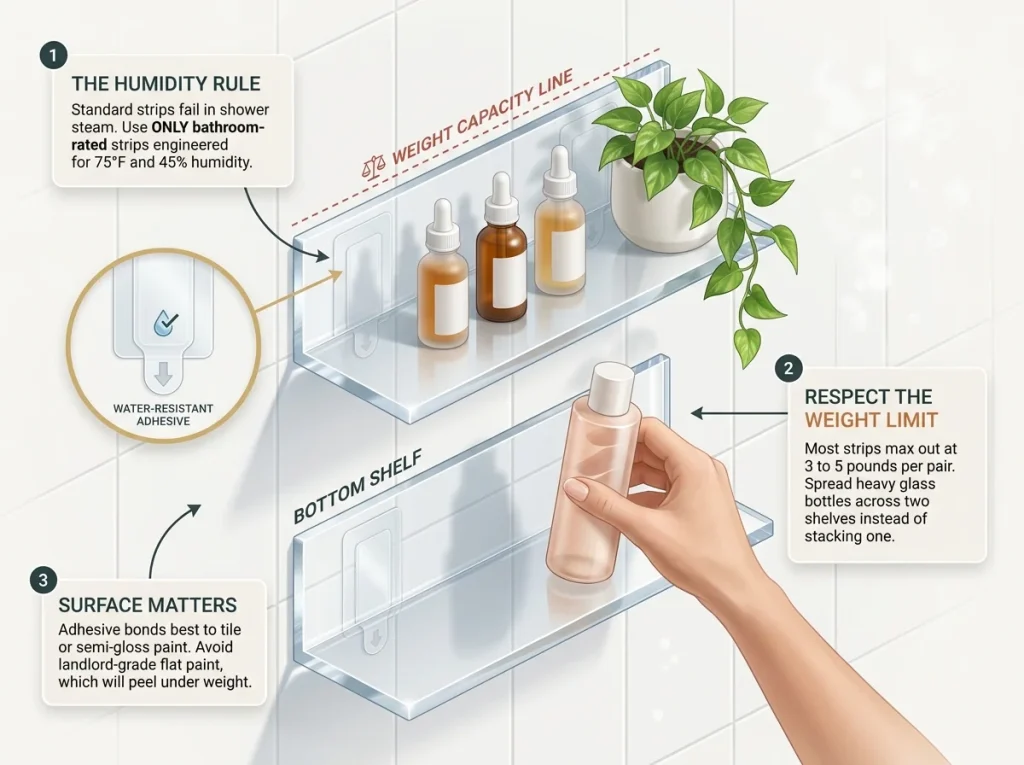
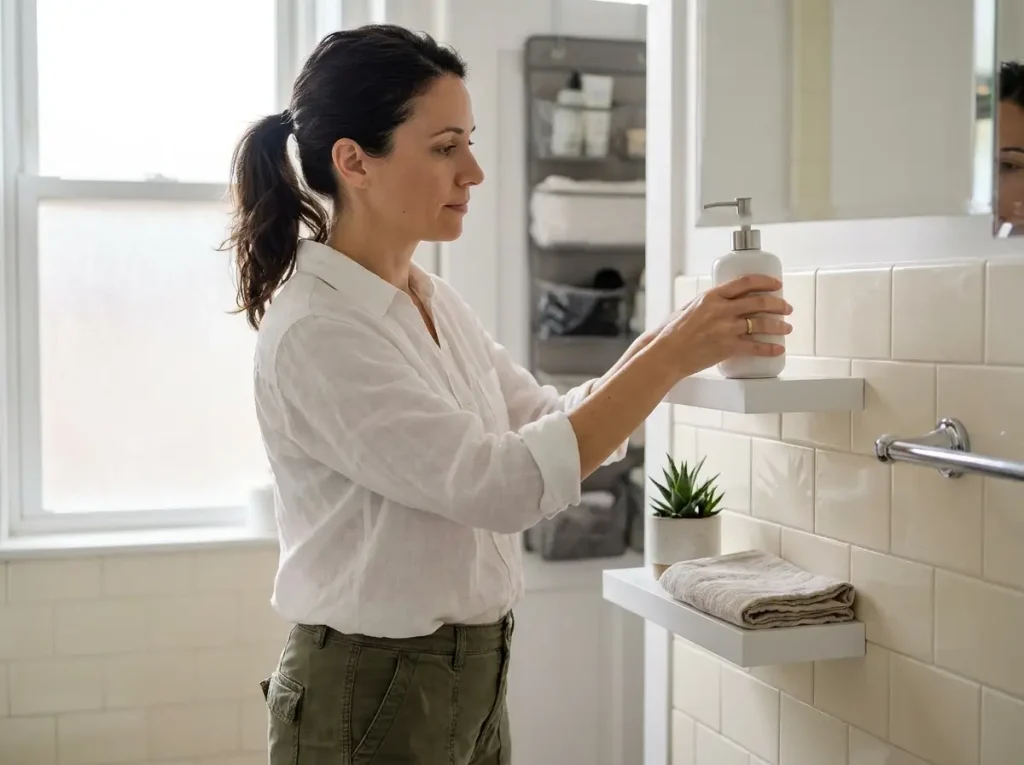
The Floating Wall Shelf No-Drill 16.5″ (2-Pack) mounts with humidity-rated adhesive strips — not the standard ones that fail in steam. At 16.5 inches wide, it fits between most bathroom fixtures without cutting into mirror or towel bar space. Two shelves create a vertical column for skincare or small items that would otherwise sit on the counter.
Mount them with Command Bath Large Water-Resistant Adhesive Strips (16-pack), which are rated for 75°F and 45% humidity — the standard Command strips are not rated for that. The 16-pack covers both shelves with strips to spare.
Pro tip: If your bathroom walls are painted drywall instead of tile, test adhesive in a hidden spot first. Some landlord-grade flat paint peels when you remove adhesive strips, even the “damage-free” ones. Tile and semi-gloss paint hold up better.
The Back of Your Door
The back of a standard 80-inch bathroom door gives you roughly six square feet of vertical storage. The SimpleHouseware Over-The-Door Organizer (5-tier) hooks over the door without drilling and holds 20 or more small bathroom items — toiletries, hair tools, backup products — that would otherwise sit on the counter. Five tiers cover the full door height.
Check your door clearance before buying. The hooks need 1.5 to 2 inches between the door top and the frame or cabinet above it. If your clearance is under an inch, the door won’t close with the organizer on it. This is the single measurement that causes the most returns.
Weight Limits on Adhesive and Hooks
Every adhesive shelf and over-door organizer has a weight limit, and most people ignore it until something falls. Adhesive strips rated for bathroom use typically hold 3 to 5 pounds per strip pair. A ceramic soap dispenser plus a plant plus a bottle of toner can push past that limit on a single shelf.
Weigh your items before loading a shelf. If you’re close to the limit, spread the weight across two shelves instead of stacking everything on one. The National Association of Productivity & Organizing Professionals recommends tracking each shelf’s weight capacity — but even without a label, just knowing the number changes how you load it.
Zone 4 — Counter and the Gap Next to Your Toilet
The One-Tray Rule
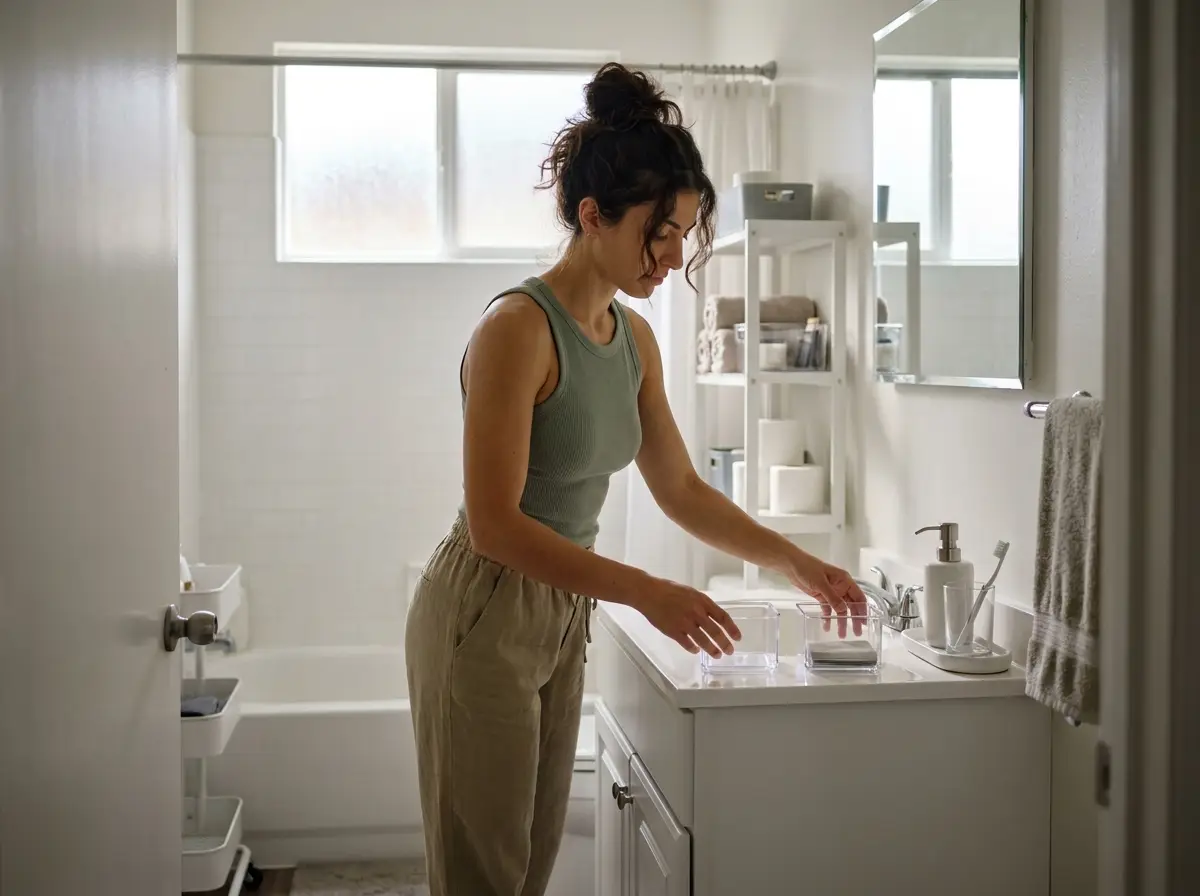
Your counter gets one tray. Everything that lives on the counter full-time — soap dispenser, toothbrush holder, one or two daily-use items — fits inside or on that tray. If it doesn’t fit, it doesn’t live on the counter.
This single constraint prevents counter creep better than any organizer you can buy.
The mDesign Stackable Plastic Storage Bins (4-pack) fit most rolling cart tiers and standard vanity shelves, creating defined sub-zones inside your tray and other organizers. Clear sides let you see contents at a glance. They’re stackable, so you can adjust the configuration as your routine changes. Dollar Tree sells similar bins if you’re using them inside a cabinet where looks matter less.
The 7-Inch Gap
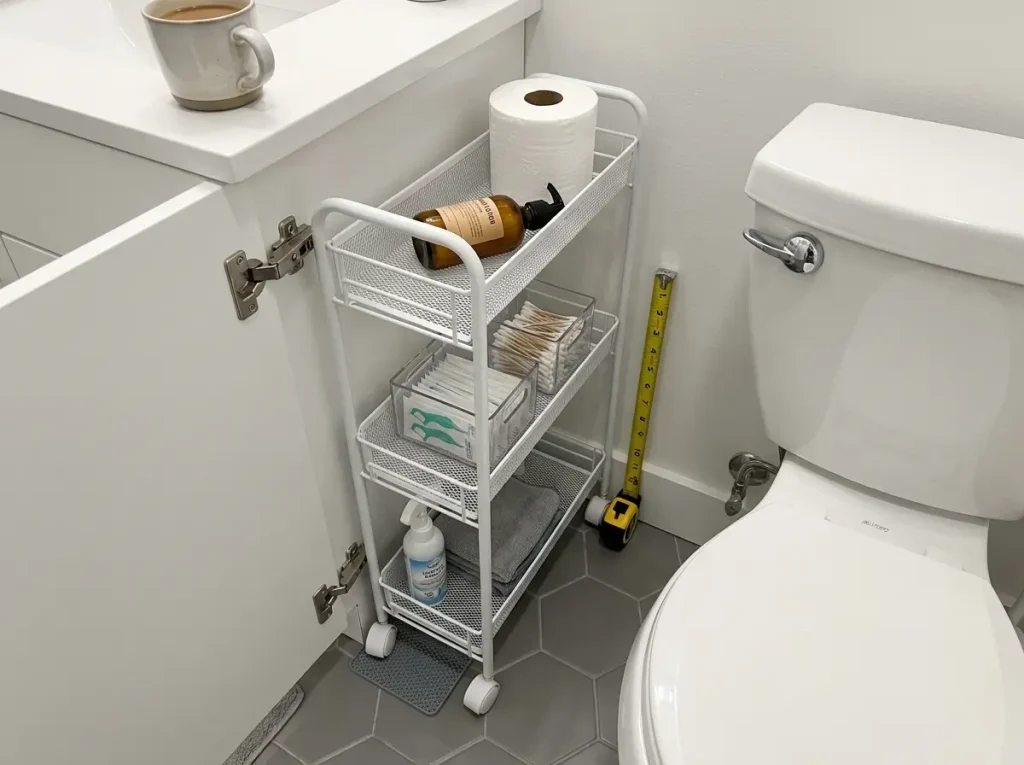
Measure the gap between your toilet and the nearest wall or vanity. In most apartments, that number falls between 7 and 10 inches. That’s dead space right now — but it’s enough for a slim cart that adds three tiers of storage in a spot most people ignore.
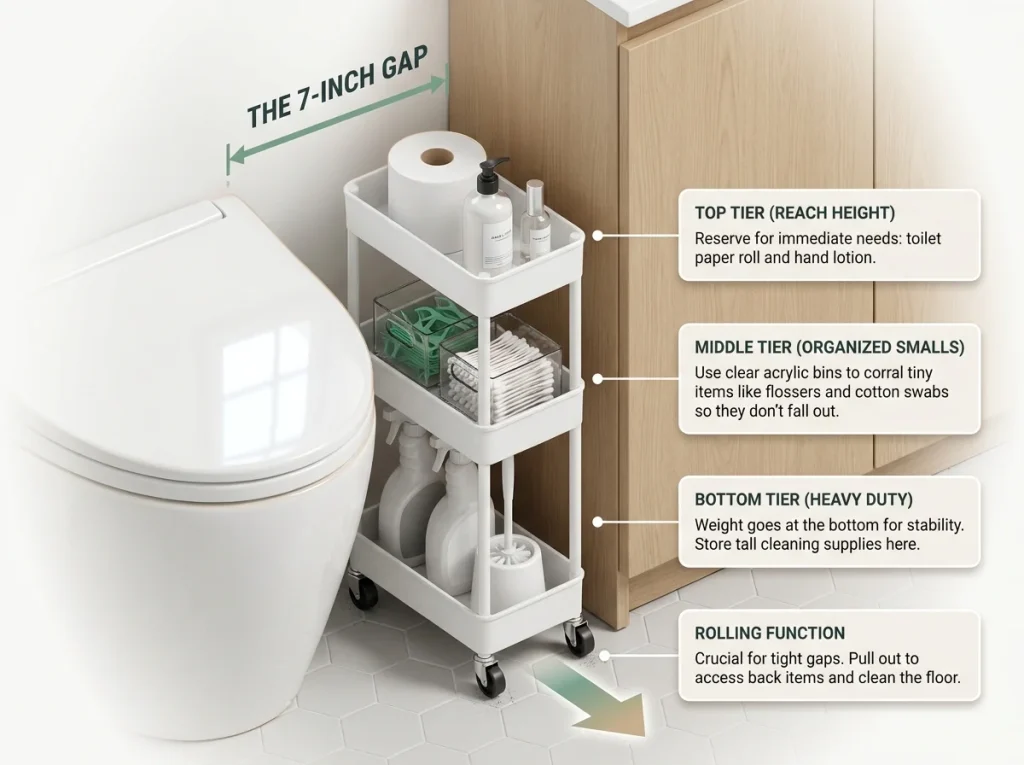
The Slim 3-Tier Rolling Storage Cart (~7″ wide) fits gaps of 7.5 inches or wider. Three tiers give you roughly 3 cubic feet of storage in space you weren’t using. It rolls out for floor cleaning.
Top tier holds a toilet paper roll and hand lotion at reach height. Middle tier gets clear bins with small items like flossers and cotton swabs. Bottom tier is cleaning supplies.
If your gap is wider than 10 inches, a narrow plastic crate stacked vertically does the same job for less. The rolling feature matters most in tight gaps where you can’t reach behind the cart without pulling it forward.
For more small bathroom storage ideas organized by zone, the companion guide covers 11 specific products matched to each bathroom area.
Conclusion
Three things keep small bathroom storage from reverting:
- Measure before you buy. Four numbers — toilet-to-ceiling, side gap, under-sink width, door clearance — prevent most wrong purchases and returns.
- Zone by frequency. Daily items stay within arm’s reach. Backstock goes up high or behind doors. When every item has a zone, putting things back takes seconds instead of decisions.
- Use materials that survive humidity. Powder-coated steel, sealed wood, and bathroom-rated adhesive last in steam. Particleboard and standard adhesive strips do not.
Three-Month Check: Pull everything off your shelves and out of your bins. If items migrated to the wrong zone — daily items ended up on the top shelf, backstock crept back to the counter — adjust the layout before the system breaks down completely.
Start with one zone. Get it working. Live with it for a week. Then move to the next.
Q1 How do you maximize storage in a small bathroom?
Split your bathroom into four zones — over-toilet, under-sink, walls and door, counter and side gap — and use organizers sized to each zone’s exact measurements. Measure your available gaps before buying anything to avoid returns and wasted space.
Q2 What is the best over-toilet storage for renters?
A freestanding shelf that straddles the toilet without wall contact works best for renters. Look for powder-coated steel or sealed wood at about 25 inches wide to fit most standard toilets. Wall-mounted options need drilling that costs your deposit.
Q3 How do you organize under a bathroom sink with pipes?
Use an expandable shelf organizer that adjusts width to sit on each side of the P-trap independently. Measure from the bottom of the P-trap to the cabinet floor first — most standard vanities leave 8 to 10 inches of clearance below the pipe.
Q4 Do Command strips work in bathrooms?
Standard Command strips often fail in bathrooms because shower steam weakens the adhesive over weeks. Use Command Bath strips, which are rated for 75°F and 45% humidity. Clean the mounting surface with rubbing alcohol and let it dry fully before applying.
Q5 How do you keep a small bathroom organized long-term?
Run a five-minute monthly reset: check that daily items haven’t migrated to backstock zones, wipe down shelf surfaces, and inspect your under-sink drip mat for water. If items shifted to the wrong zone, move them back before the system drifts further.