
















In this article
You reorganized the closet three weekends ago. It looked great. Now there’s a pile of jeans on the floor and your partner has shoved two gym bags on top of the folded sweaters. Sound familiar?
The system didn’t fail — you installed the wrong type of system for your closet, your wardrobe, or your living situation. That mismatch is what this guide fixes. Below are four closet organizer systems that hold up past the “after” photo, organized by closet type and budget so you can skip straight to the one that fits.
Here are the four best closet organizer systems, each matched to the closet type and lifestyle it serves best:
| Closet Organization Systems Comparison | |||
|---|---|---|---|
| System | Best For | Mount Type | Closet Width |
| Rubbermaid Configurations | Best overall wire | Wall-mounted | 3–6 ft |
| ClosetMaid ShelfTrack | Most adjustable | Wall-mounted | 4–6 ft |
| ClosetMaid Style+ | Best for renters | Floor-mount | 4–8 ft |
| ClosetMaid SuiteSymphony | Best with drawers | Wall-mounted | 6–10 ft |
Why Most Closet Systems Stop Working After a Month
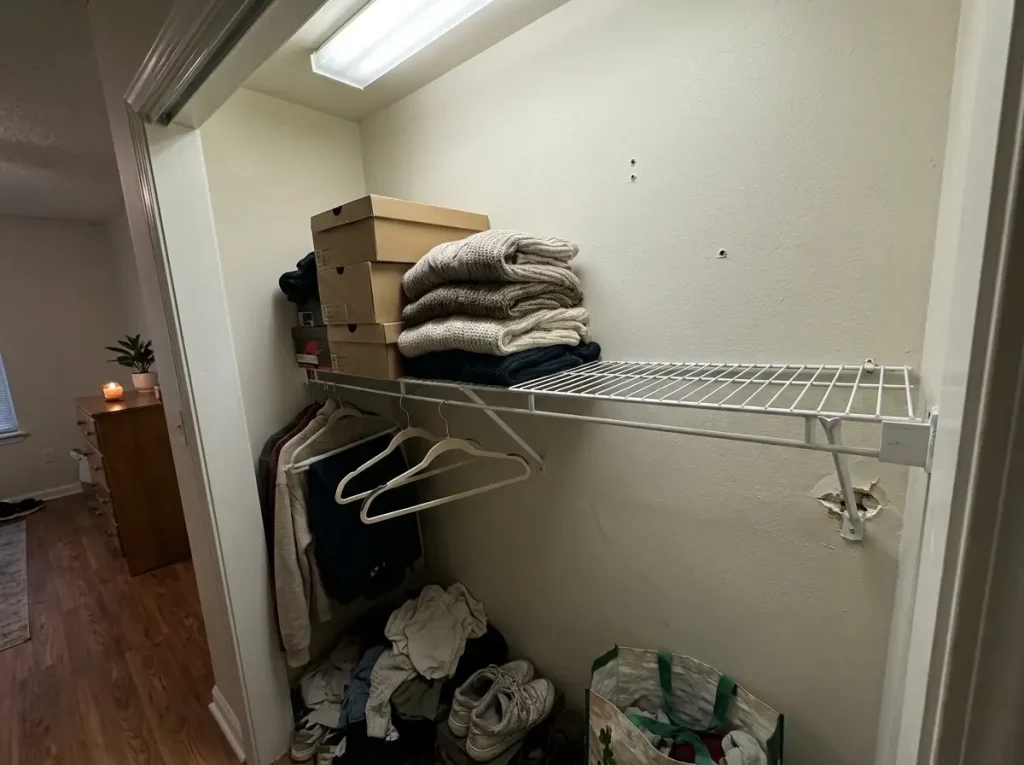
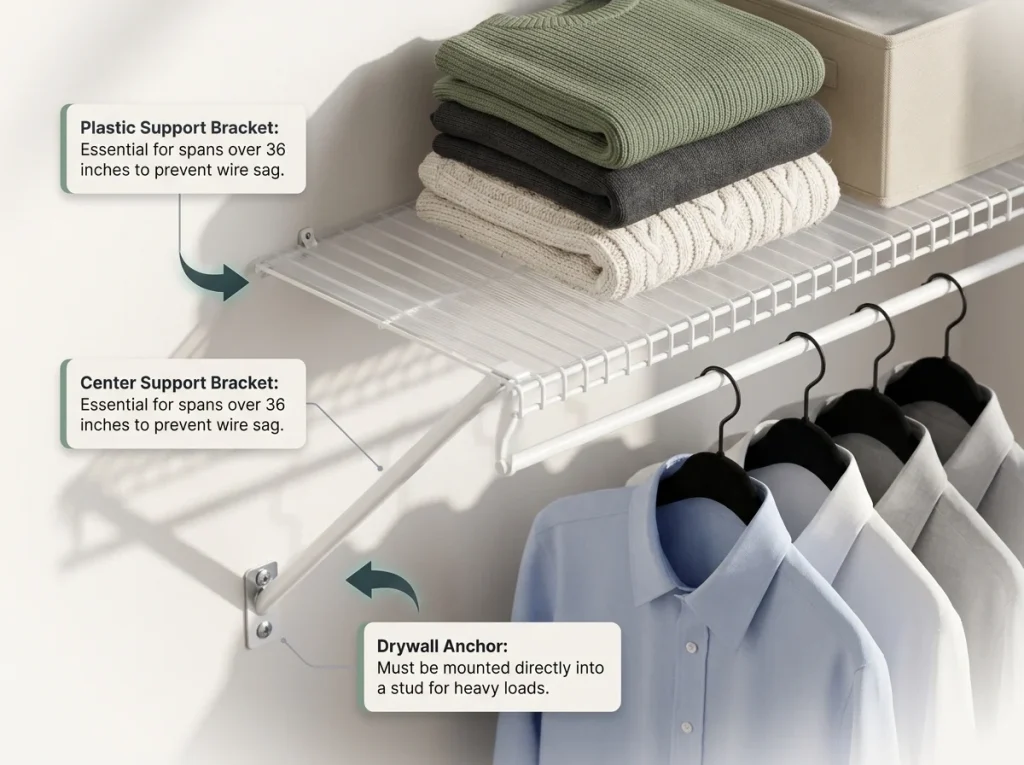
The wire shelf in your rental closet is sagging. You can see it from the doorway. That’s not a quality problem — it’s a physics problem. Wire shelving bows at mid-span when you load more than 25 pounds per linear foot without a center support bracket.
Most people stack sweaters, shoe boxes, and bags right across the middle of a shelf that spans four feet with no support. Within six months, the shelf dips. Within a year, it’s visibly bent.
But sagging wire isn’t even the most common reason closet systems fail. The real killers are three mismatches that happen before you even unbox the product. First: buying a system designed for a walk-in and forcing it into a 24-inch-deep reach-in closet — the tower sticks out past the door frame, and you can’t close the doors. Second: skipping the wardrobe edit. If you own 80 items and your closet holds 50, no system fixes that math — you need to edit your wardrobe before buying any system.
Third: cheap laminate warping in a humid environment. If your closet shares a wall with a bathroom, melamine boards under 5/8-inch thickness will bow within a year.
And then there’s the failure nobody talks about: the missing maintenance habit. The system itself is fine. You just never built a reset routine, so clothes migrate to the floor and the “floor-drobe” returns in three weeks. The National Association of Productivity & Organizing Professionals recommends starting with a full inventory before buying anything — and they’re right.
The fix isn’t always a better product. Sometimes it’s a 10-minute monthly reset where you re-hang what fell, tighten loose brackets, and check for backward hangers (items you haven’t worn since you installed the system).
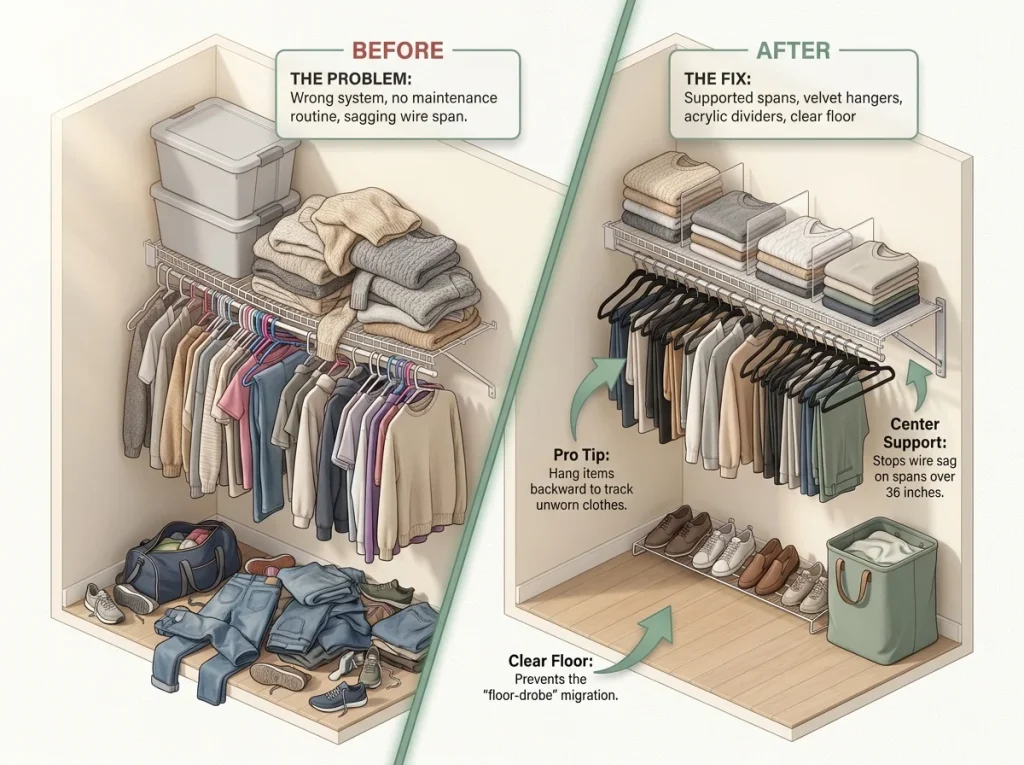
Pro tip: Hang every hanger backward after installing a new system. After three months, any hanger still backward means that item hasn’t been worn. That’s your signal to donate or store it — not buy more shelf space for it.
How to Match a System to Your Closet (Type × Budget Matrix)
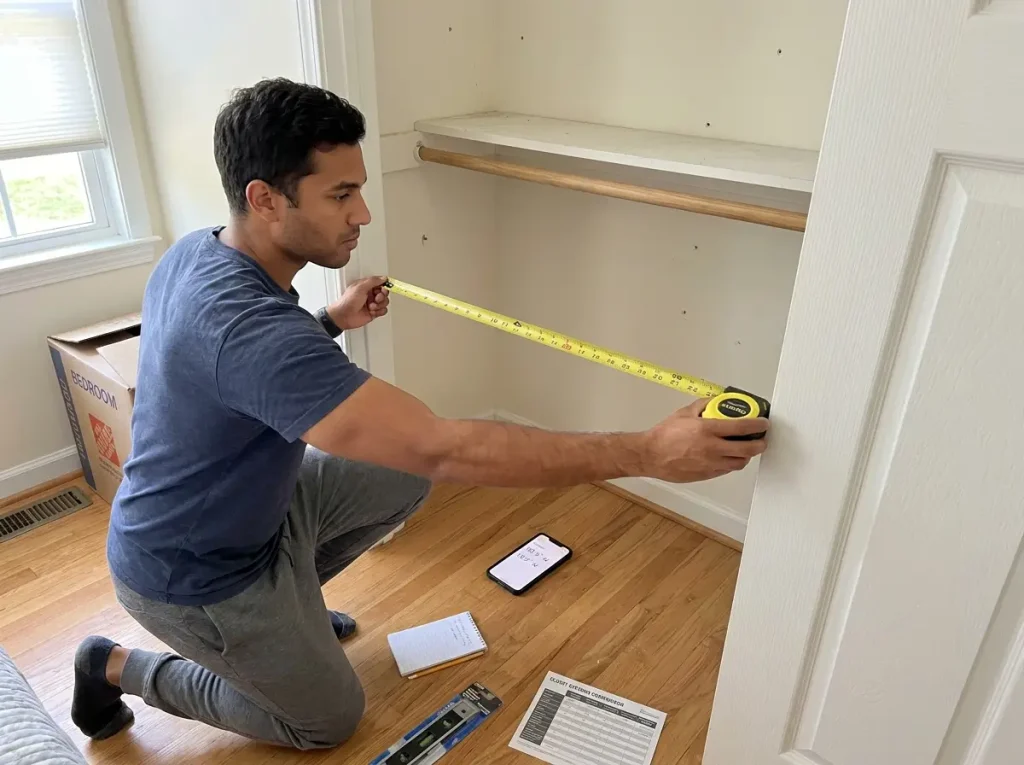
Before you pick a system, measure two things: closet width and closet depth. Those numbers eliminate half the options. A standard reach-in closet — what most rentals come with — is 24 inches deep, 2 to 6 feet wide, with one rod at 66 inches and one shelf at 68 inches. That’s 70% of the closets you’ll find in apartments built after 1980.
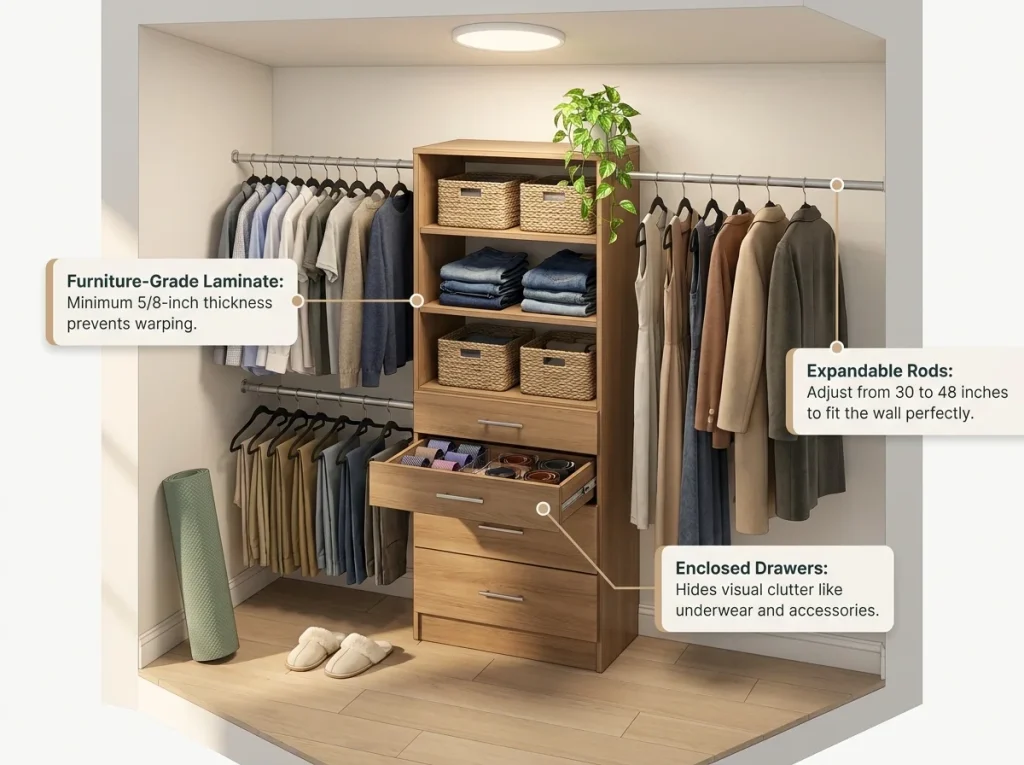
If you own your home and can drill into studs, wall-mounted wire systems like Rubbermaid Configurations and ClosetMaid ShelfTrack are the most flexible option. You screw horizontal rails into the wall and snap or clip shelves and rods wherever you need them. They work in closets as narrow as 3 feet and adjust without buying new hardware. For larger closets (6 feet and wider), the ClosetMaid SuiteSymphony adds wood-laminate shelving and enclosed drawers — a furniture-grade look at a mid-range price. You’ll need standard reach-in closet dimensions of at least 5 feet wide for a tower system to make sense.
If you’re renting, the question is simpler: can you remove it in 30 minutes and leave no holes? Only floor-mount systems and hanging solutions pass that test. The ClosetMaid Style+ tower sits on the floor with cam-lock assembly — the main unit doesn’t need wall anchoring, though the hanging rods do attach to the sidewalls with a few screws. For fully no-drill options, tension double rods and over-the-rod hanging organizers are your best bet.
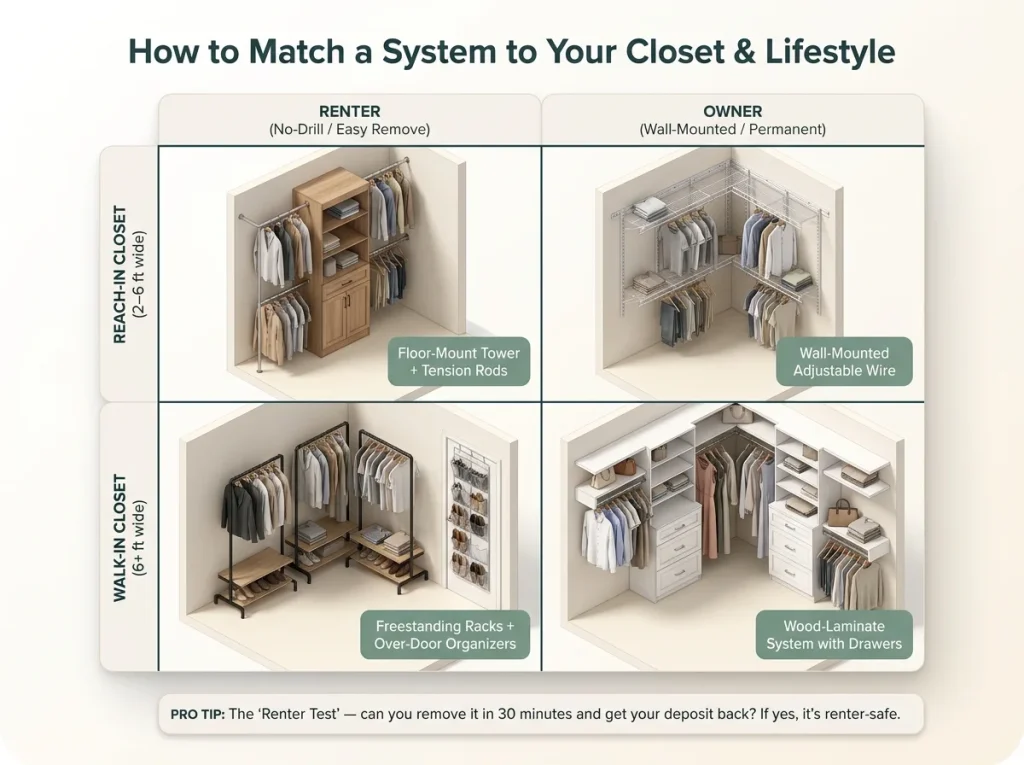
Pro tip: Measure your closet depth from the back wall to the inside of the door frame — not to the door itself. Many closet towers are 14 inches deep. If your door frame sits at 22 inches from the back wall (common in older apartments), a 14-inch tower leaves 8 inches for hangers. That works for shirts but not for coats.
Best Wall-Mounted Wire Systems
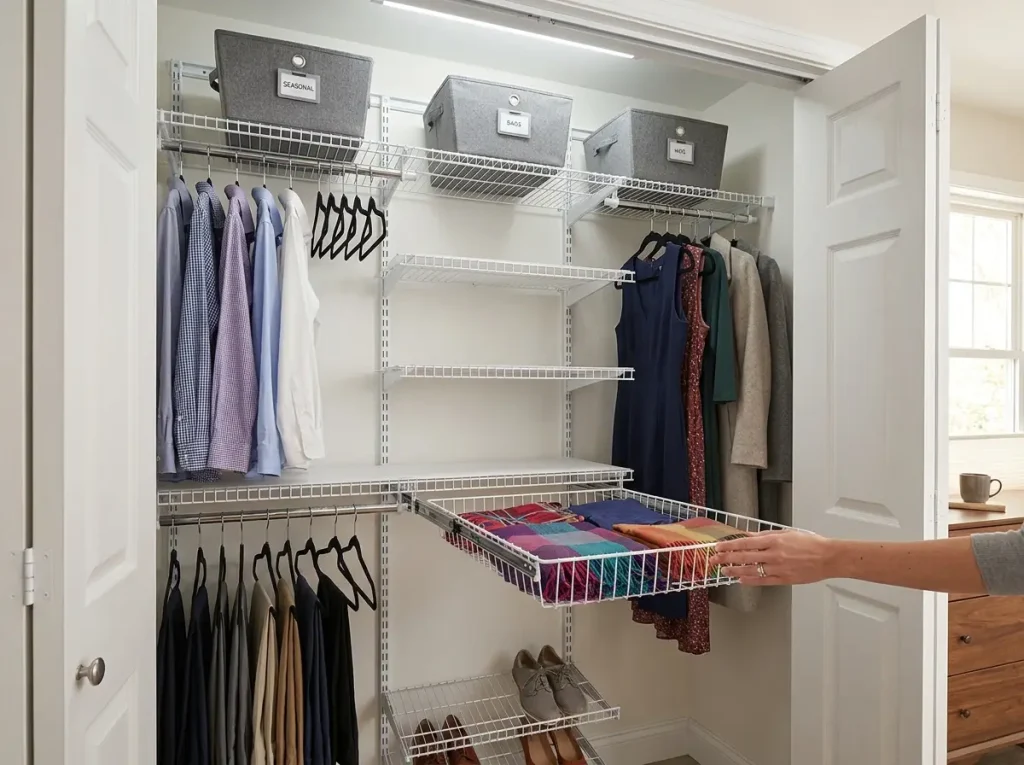
Wire gets a bad reputation because people load it wrong. Installed correctly with center support brackets on spans over 36 inches, wire systems are the most cost-effective way to double usable closet space. They let air circulate (no musty sweaters), they’re easy to wipe down, and you can reconfigure them without patching drywall.
Rubbermaid Configurations — The Snap-Together Workhorse
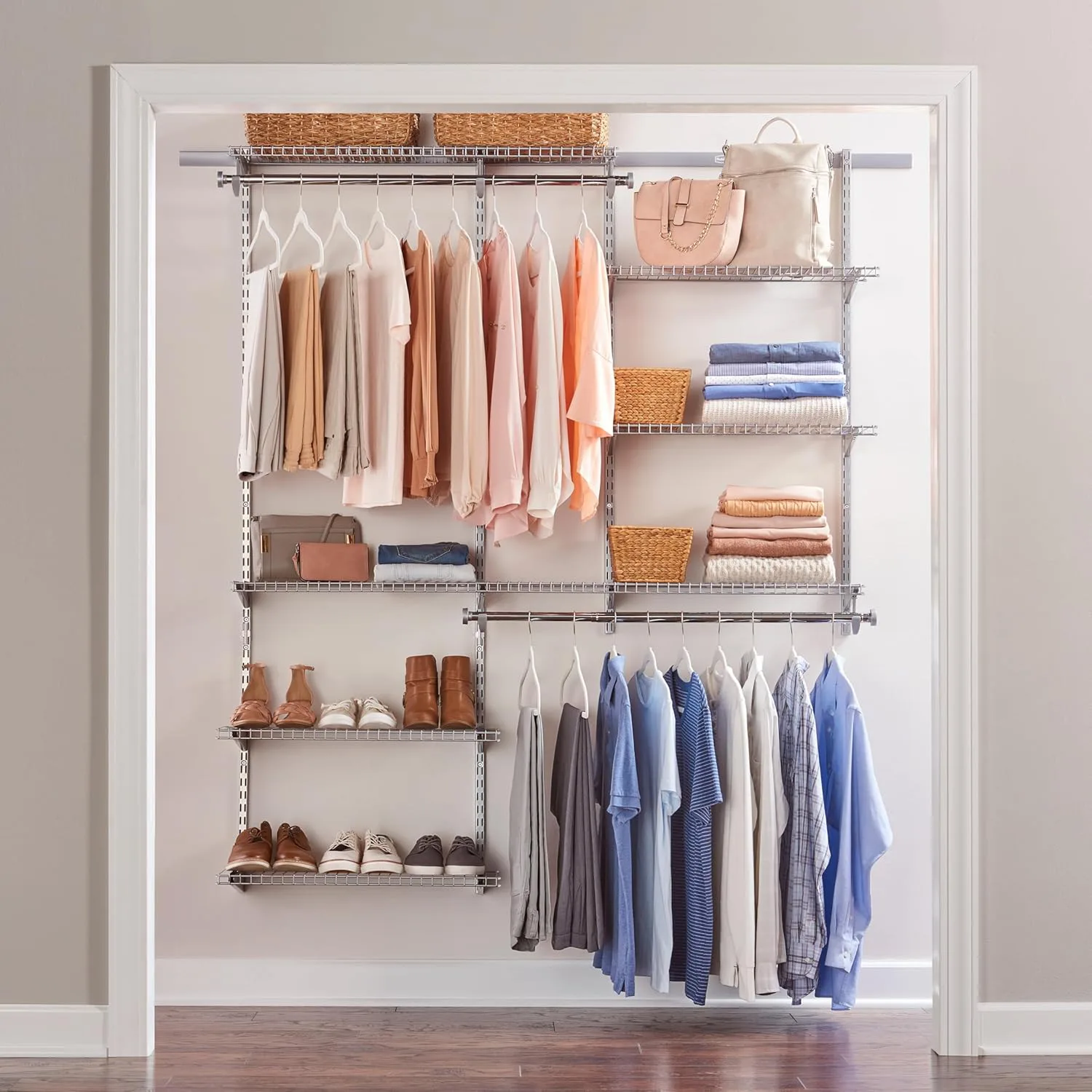
The Rubbermaid Configurations system fits closets from 3 to 6 feet wide and delivers 18 feet of shelf space plus 12 feet of hanging space out of the box. The epoxy-coated metal rails mount to the wall with screws, and every shelf and rod snaps onto those rails. That snap-on design is the real advantage: if your wardrobe changes — say you switch from a hang-heavy corporate wardrobe to a fold-heavy remote-work one — you can move shelves and rods without pulling new hardware from the wall. The wire shelves will sag if you skip center supports on spans over 36 inches, so add them upfront.
ClosetMaid ShelfTrack — The Infinitely Adjustable Option
ClosetMaid ShelfTrack takes a different approach. Instead of snap-on rails, it uses a horizontal track screwed into studs with adjustable brackets that slide along the track. Every shelf and rod clips to these brackets, so you can reposition anything by loosening a bracket and sliding it left or right. The SuperSlide hang rod system converts any wire shelf into a combination shelf-plus-rod section, which is a smart way to add hanging space without buying extra hardware. This system suits people who expect their closet needs to change frequently.
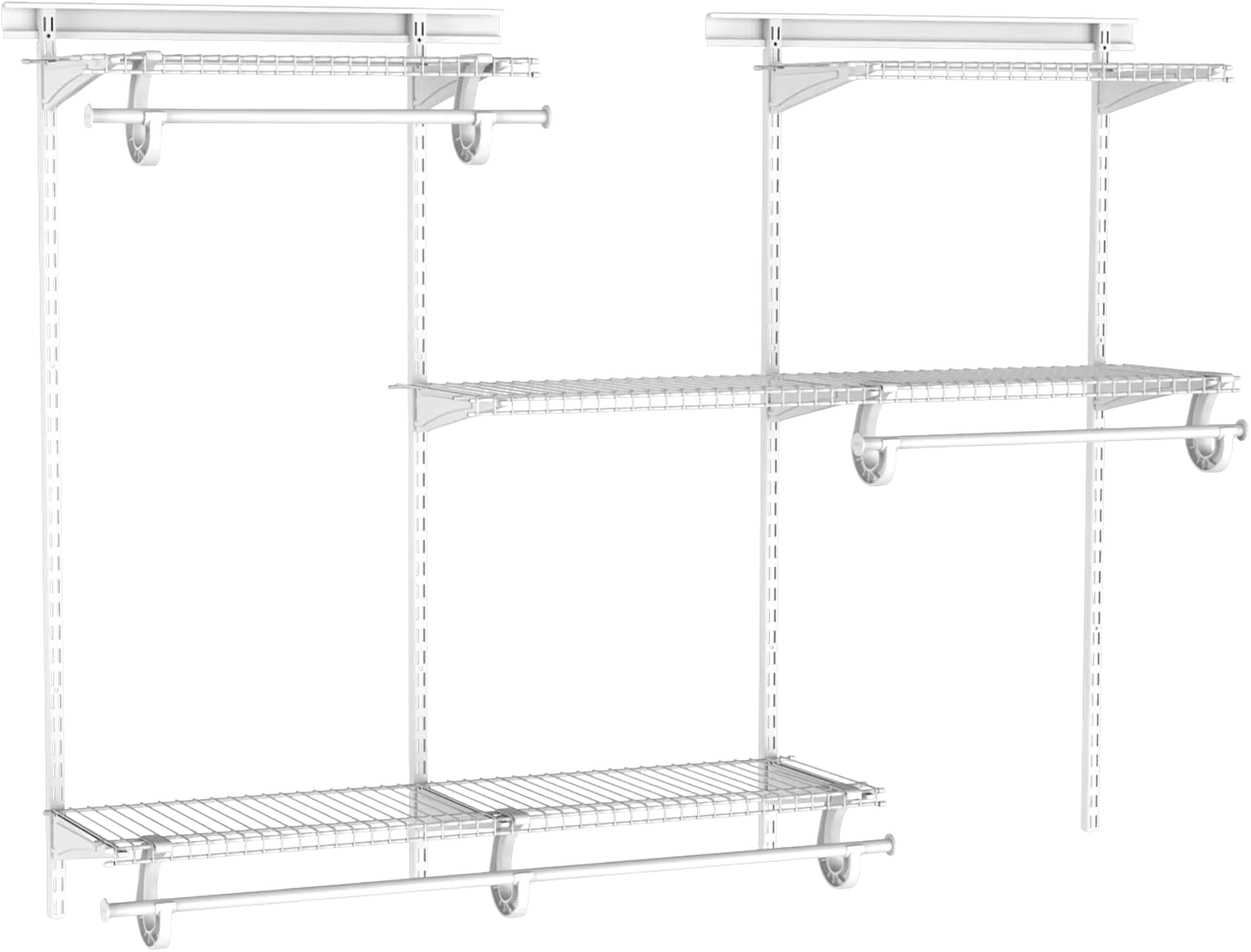
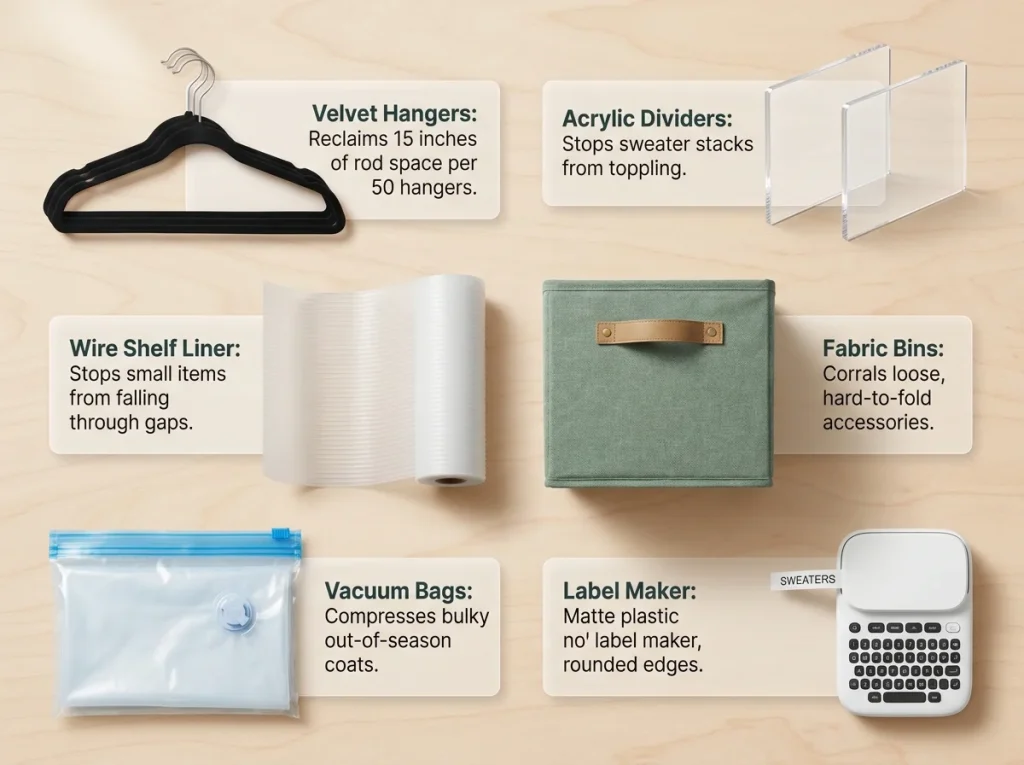
For any wire system, add a Gorilla Grip Wire Shelf Liner to keep small items from falling through the gaps — it also gives bins something to grip so they don’t slide when you open the door.
Best Wood and Modular Systems
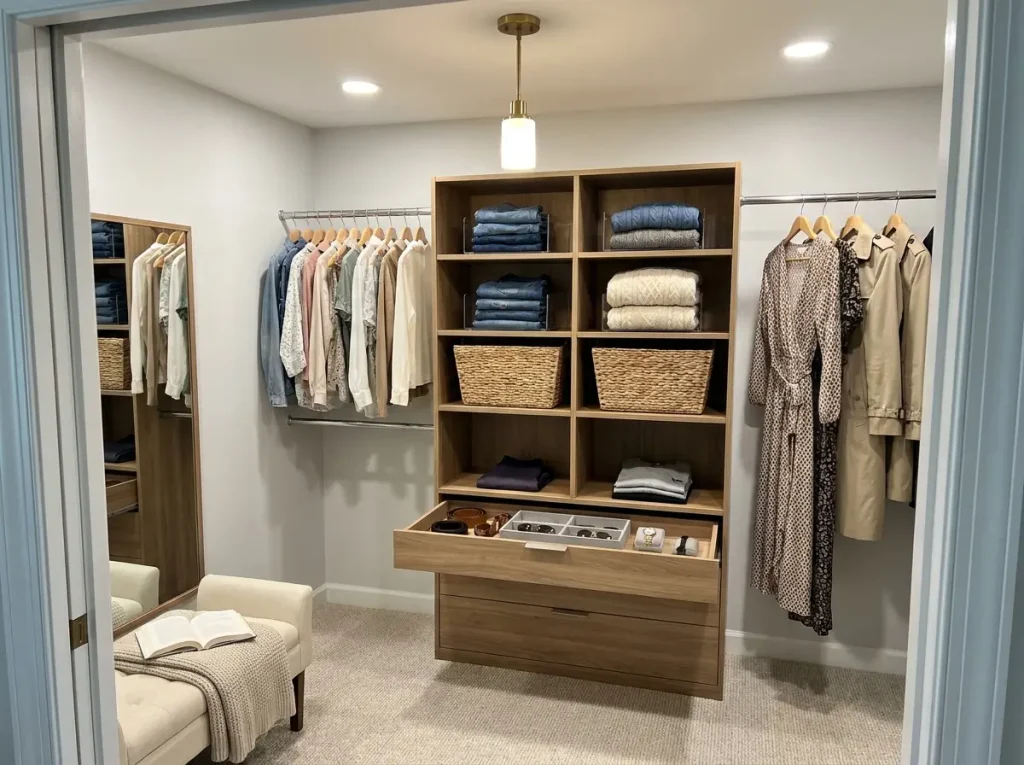
Wire works. But if you want something that looks like furniture instead of a warehouse rack, wood and modular systems are the next tier. They cost more, they’re heavier, and installation takes longer — but they last longer too, and they come with options wire systems don’t offer: enclosed drawers, solid shelves that hold sweater stacks without sagging, and finishes that make a closet feel like a room instead of a storage unit.
ClosetMaid Style+ and SuiteSymphony — Mid-Range Wood
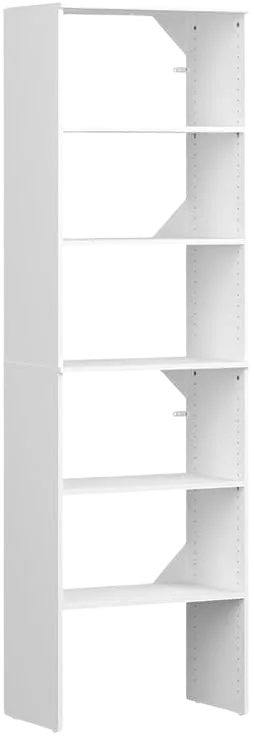
The ClosetMaid Style+ Floor Mount is the best option if you’re renting or don’t want to anchor a full system to the wall. The tower — 14 inches deep, 17 inches wide, 82.25 inches tall — stands on the floor with cam-lock assembly. Six shelves and three hanging rods come in the kit. Only the rods need sidewall screws, and those leave small holes that spackle covers in two minutes.
The engineered wood comes in a coastal teak finish that looks warmer than painted wire. If your closet backs up to a humid space, check that the particleboard is at least 5/8-inch thick — thinner boards warp.
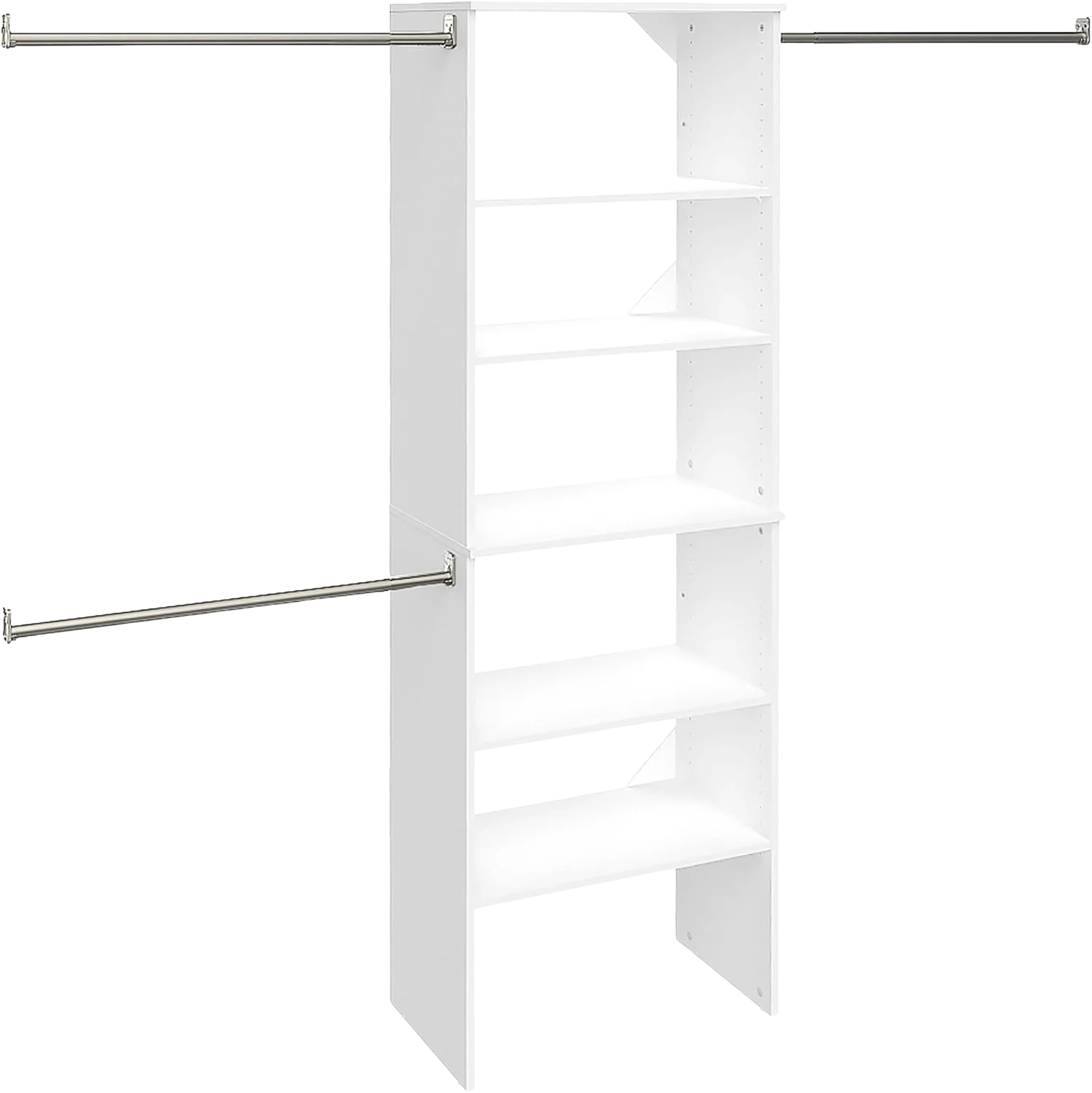
The ClosetMaid SuiteSymphony is the step up for people who want enclosed storage. It’s the only mid-range system that includes actual drawers — three smooth-glide drawers plus five shelves and three expandable rods. The wood-laminate tower fits closets 6 to 10 feet wide, and the rods expand from 30 to 48 inches. You can cut the shelves to fit a narrower space if needed. This is the system for walk-in closets or wider reach-ins where you want a furniture-grade look with practical storage.
Renter-Friendly Alternatives That Don’t Touch the Walls
Three of the four systems above require drilling into studs. If you’re renting, that leaves you with one real option from the list (ClosetMaid Style+) — and a few accessories that fill the gap.
Tension Rods and Double-Hang Systems
The single best renter upgrade is a tension double rod. The STORAGE MANIAC Adjustable Closet Double Rod creates a second hanging level for shorter items — shirts, skirts, folded pants on clip hangers — with a 110-pound capacity and zero drilling. It adjusts to fit your closet width and installs in two minutes. The catch: tension rods hold by friction, so they slip under heavy loads. Keep coats and heavy garments on the main rod above.
Hanging and Over-the-Door Organizers
A SimpleHouseware Hanging Closet Organizer hooks directly over your existing rod and adds six shelves for folded items. It’s the fastest way to create vertical storage in a closet that only has one rod and one shelf. For door storage, a SimpleHouseware Over-the-Door Shoe Organizer turns dead door space into 24 pockets for shoes, accessories, or small items. Check your door type first — hollow-core doors handle about 10 pounds less than solid doors before the hooks start bending the frame.
When to Build a Second Closet Outside the Closet
Sometimes the closet is too small and no internal system fixes it. In studio apartments and shared bedrooms, a freestanding garment rack in the room — styled as furniture, not as temporary storage — is the honest answer. Use it for items you reach for daily: the jacket, the bag, the next-day outfit. Keep seasonal and less-worn items inside the actual closet. That split reduces closet pressure and keeps the “floor-drobe” from forming.
Pro tip: The “renter test” for any closet product: can you remove it in 30 minutes, leave no holes, and get your deposit back? Tension rods, hanging organizers, and over-door products pass. Anything that needs a drill does not.
Accessories That Make Any System Work Better
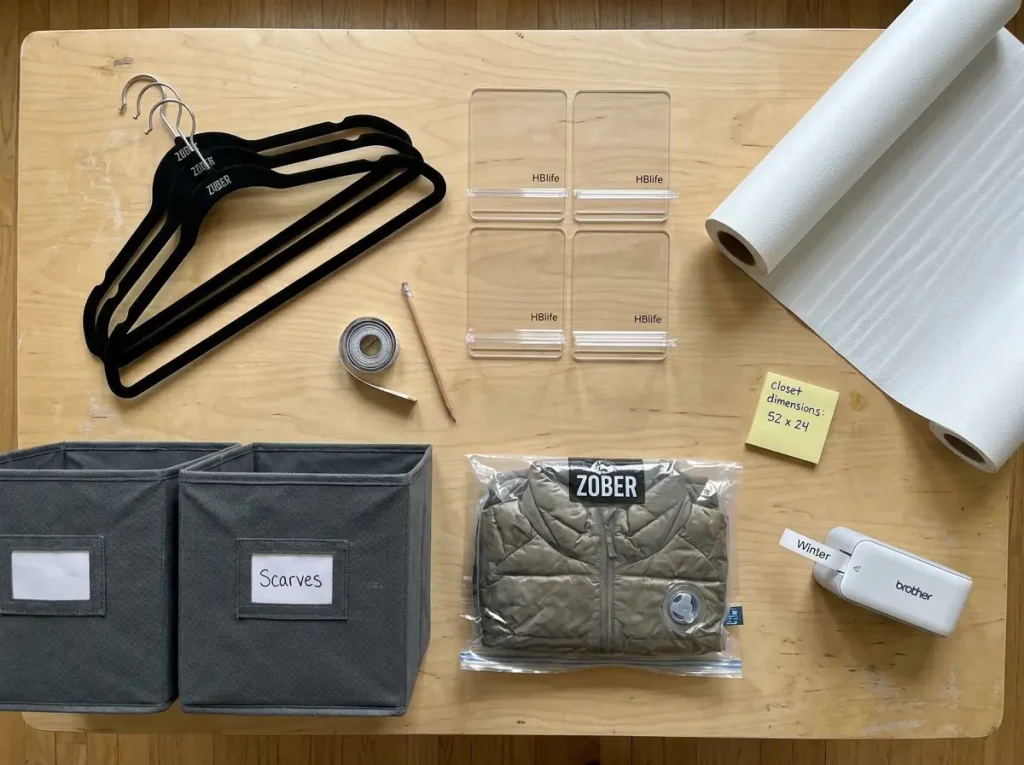
The system is the skeleton. Accessories are what keep it working after the first month. Most of these cost less than the system itself, and a few of them cost nothing.
Hangers and Rod Accessories
Start here before buying any system. Switching from plastic to velvet hangers reclaims about 15 inches of rod space per 50 hangers — that’s real estate you can feel. The Zober Premium Velvet Hangers at 0.2 inches thick versus the 0.5-inch profile of standard plastic hangers make a visible difference the same day. They also grip fabric, which means no more knit tops sliding off and landing on the floor at 2 AM.
Shelf Accessories
Open shelves need boundaries or sweater stacks topple. HBlife Acrylic Shelf Dividers clip onto wire or wood shelves and create distinct zones for sweaters, bags, and fabric storage bins. For wire shelving, a Gorilla Grip Wire Shelf Liner is non-negotiable — without it, small items fall through the gaps and bins slide every time you open the door.
Seasonal Storage and Rotation
Your closet shouldn’t hold every piece of clothing you own year-round. ZOBER Vacuum Storage Bags compress bulky winter coats and sweaters to a fraction of their size and stack flat on the top shelf during summer. Rotate twice a year. The backward-hanger trick mentioned earlier helps identify what never leaves the vacuum bag — that’s your cue to donate.
A full closet organization system that stays neat depends on these small additions as much as the big system. If you’ve used the same measure-first approach in your pantry, you already know the drill: measure, zone, maintain.
Conclusion
Three things separate a closet system that works from one that becomes a shelf for more clutter.
First, match the system to the closet. Wall-mounted wire for owned reach-ins, floor-mount for rentals, wood-laminate with drawers for larger closets. The comparison table above narrows the field in 30 seconds.
Second, edit your wardrobe before you install anything. If you need to organize a closet with too many clothes, no system fixes a capacity problem — and you’ll end up blaming the product for a wardrobe issue.
Third, build a 10-minute monthly reset. Re-hang what migrated to the floor, tighten any loose brackets, and check for backward hangers that signal unworn items. That’s the maintenance habit that makes the “after” photo permanent.
Three-Month Check: Open your closet in three months and look for three things — are the shelves still level (tighten brackets if not), have items returned to the floor (re-home them now), and are any hangers still backward from the tracking trick? Those three signals tell you whether the system is working or needs adjustment.
Start with the velvet hanger switch. It costs less than any system on this list and reclaims more space per dollar than anything else you can buy. Get that right first. Then decide if you need a full system — or if the hangers were all you needed.
Q1 What is the best closet organizer system for a small closet?
For a small reach-in closet (2–4 feet wide), the Rubbermaid Configurations or ClosetMaid ShelfTrack wire systems offer the most flexibility because every shelf and rod adjusts independently. Avoid tower systems in closets under 4 feet wide — the tower eats too much horizontal space.
Q2 Are closet organizer systems worth the money?
If your closet has one rod and one shelf — the standard rental setup — you’re wasting about 40% of the closet’s volume. A system reclaims that dead space. But if the real problem is too many clothes, start with a wardrobe edit before spending on storage.
Q3 Can I install a closet organizer system myself?
Most wire and wood-laminate closet systems are designed for DIY installation with a drill, level, and stud finder. Wire systems like ClosetMaid ShelfTrack take 2–4 hours. Floor-mount systems like ClosetMaid Style+ are simpler since the tower doesn’t need wall anchoring.
Q4 What closet system is best for renters?
Floor-mount systems (ClosetMaid Style+), tension double rods, and hanging organizers that hook over the existing rod. The test: can you remove it in 30 minutes and leave no holes? If yes, it’s renter-safe.
Q5 How do I keep my closet organized long-term?
Build a monthly 10-minute reset: re-hang items from the floor, check for backward hangers (unworn items), tighten loose brackets, and re-fold the shelf section. No system maintains itself, but ten minutes a month is all it takes.