















In this article
Your apartment closet was designed by someone who has never actually lived in an apartment. One rod. One shelf. Maybe 24 to 36 inches wide if you’re lucky. You moved in, hung up your clothes, and immediately ran out of space — because that setup was built to technically qualify as a closet, not to store a real wardrobe. The good news is you don’t need to install anything, hire anyone, or put a single hole in the wall to make it significantly better. You need the right individual organizers, in the right order.
This guide covers six products that work specifically in apartment conditions: no drilling, all available on Amazon, all sized to fit the constraints renters actually face. Four of them can be set up in under 15 minutes. All six move with you when you leave.
| Top No-Drill Closet Organization Picks | ||||
|---|---|---|---|---|
| Product | Type | No-Drill | Best For | Clearance Check |
| Zober Velvet Hangers | Hangers | Yes | Rod space | None |
| STORAGE MANIAC Double Rod | Rod doubler | Yes | Vertical space | Rod: 1.25–2″ |
| SimpleHouseware Over-Door | Door storage | Yes | Shoes + accessories | 2″ door gap |
| YOUDENOVA Hanging Shelf | Hanging shelves | Yes | Folded items | Rod-to-floor 62″+ |
| HBlife Shelf Dividers | Shelf dividers | Yes | Stack control | 9/16″–1″ shelf |
| Under-Shelf Basket | Under-shelf | Yes | Small items | Shelf ≤ 0.75″ thick |
Why Most Closet Organizers Don’t Work in Apartments
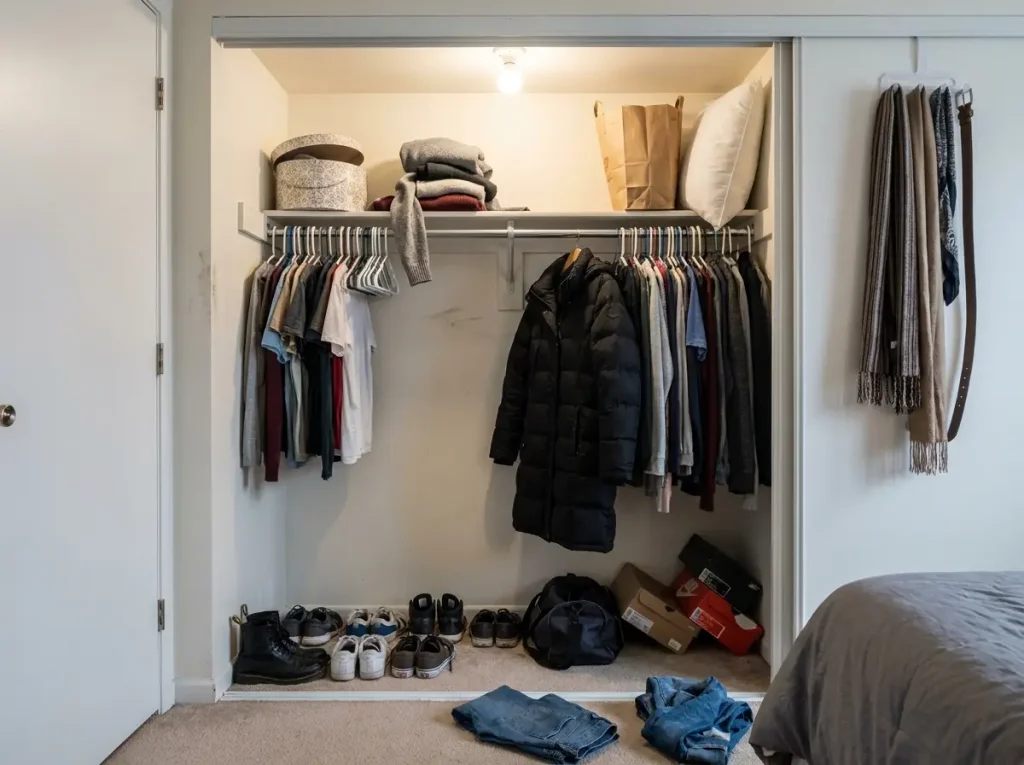
The rental standard: one rod, one shelf, no exceptions
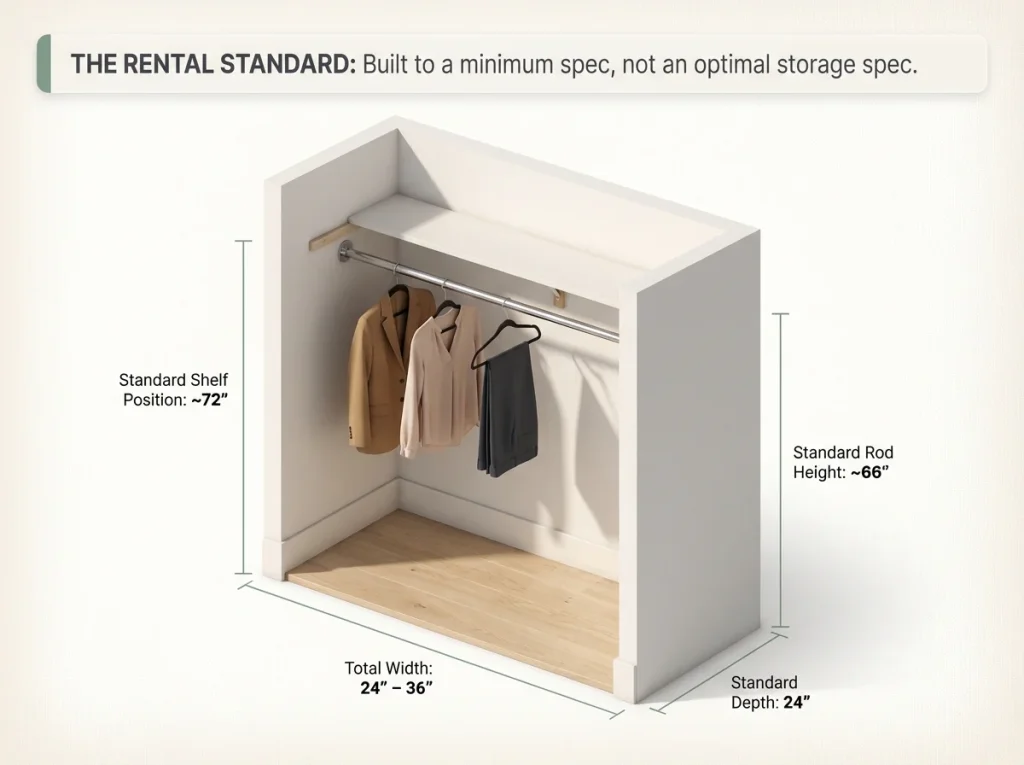
Walk into almost any apartment bedroom closet and you’ll find the same configuration: a single chrome hanging rod somewhere between 64 and 68 inches from the floor, and a single laminate shelf four to eight inches above it. The rod is often only 24 to 36 inches wide. The whole space is typically 24 inches deep. What the design ignores is that most adults have significantly more than 24 inches worth of clothing, and zero built-in options for folded items below the rod.
The problem isn’t that you have too many clothes — though a wardrobe edit always helps. The problem is that the rental closet is built to a minimum qualifying spec, not an optimal storage spec. It gives you roughly two-thirds of the hanging space a real wardrobe needs, zero shelf space below the rod, and zero shelving flexibility without drilling.
What “apartment-proof” actually means for these picks
Every product in this guide passes three filters. First: zero drilling or permanent modification — the kind of thing that costs you your security deposit. Second: available on Amazon with a real affiliate link, so you can buy it today and have it in two days. Third: fits within standard apartment closet constraints — 24 inches deep, 24 to 48 inches wide, single rod at approximately 66 inches from the floor.
A lot of closet roundups recommend full modular systems like ClosetMaid ShelfTrack or Rubbermaid Configurations. If you want a deep comparison of those, the 4 best closet organizer systems guide covers them properly. But they require drilling into studs, and most apartment leases prohibit it. This list doesn’t include them.
Measure before you buy anything
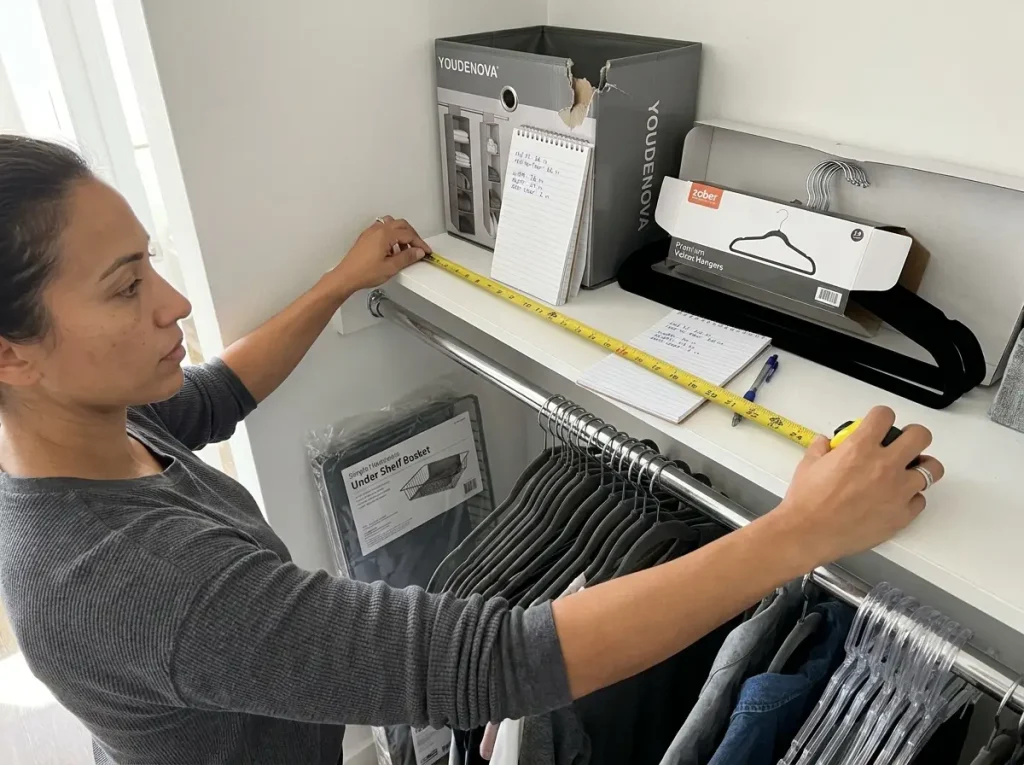
Before ordering any of these products, take three measurements: your rod-to-floor distance, your closet width, and your shelf depth. Write them down. These numbers determine which sizes actually fit.
Rod-to-floor is the most critical measurement — it determines which hanging organizer models clear the floor. Closet width determines where you can add a rod doubler. Shelf depth and thickness determine which dividers and baskets clip properly. You need a tape measure and two minutes. Do it before you spend anything.
Best Hangers for Apartment Closets
The math: what switching hangers actually gains you
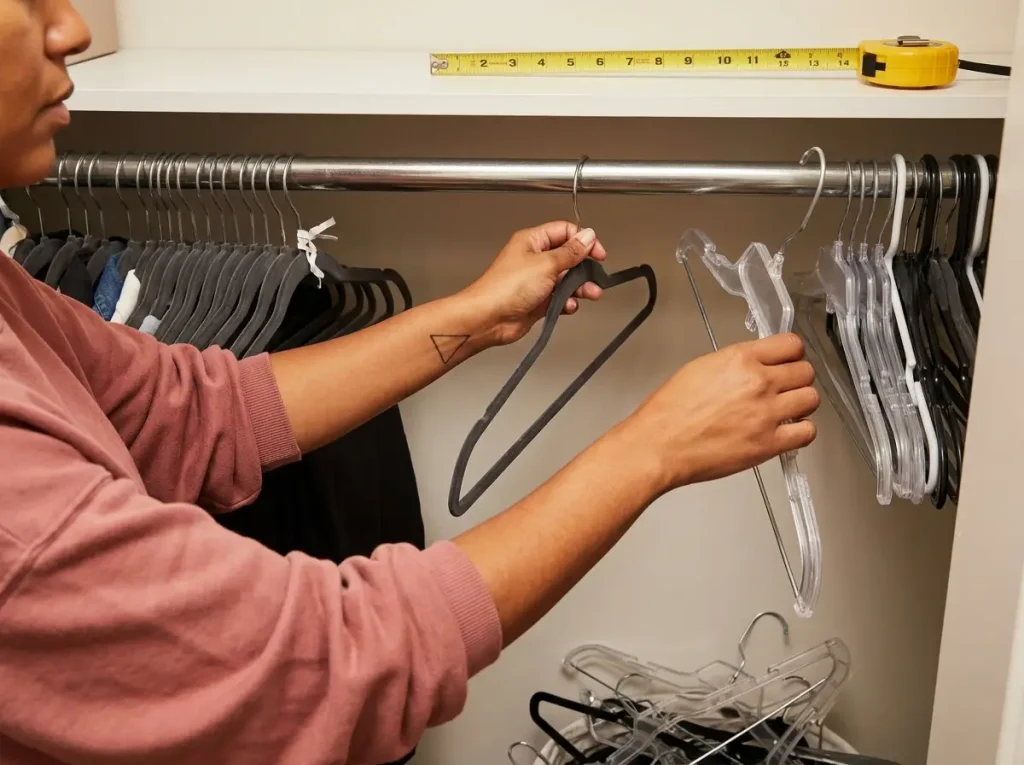
The average bulky plastic hanger is 0.5 to 0.75 inches thick. A standard velvet hanger is 0.2 inches thick. Multiply that difference by 50 hangers and you recover 12 to 14 inches of rod space on a 30-inch closet rod. That’s close to half your usable rod length, recovered without removing a single item from the closet — just from switching the hardware everything hangs on.
Switching hangers is the highest-ROI move you can make in an apartment closet. It costs less than anything else on this list, takes about 20 minutes to complete, and the results are visible immediately. The closet doesn’t look better because it’s aesthetically tidier — it looks better because the clothes are spaced apart and you can actually see what you own without pushing through a compressed wall of fabric.
For a detailed comparison of hanger types and rod-space math across five different models, the slim hangers comparison guide runs through the numbers side by side.
Our pick: Zober Premium Velvet Hangers
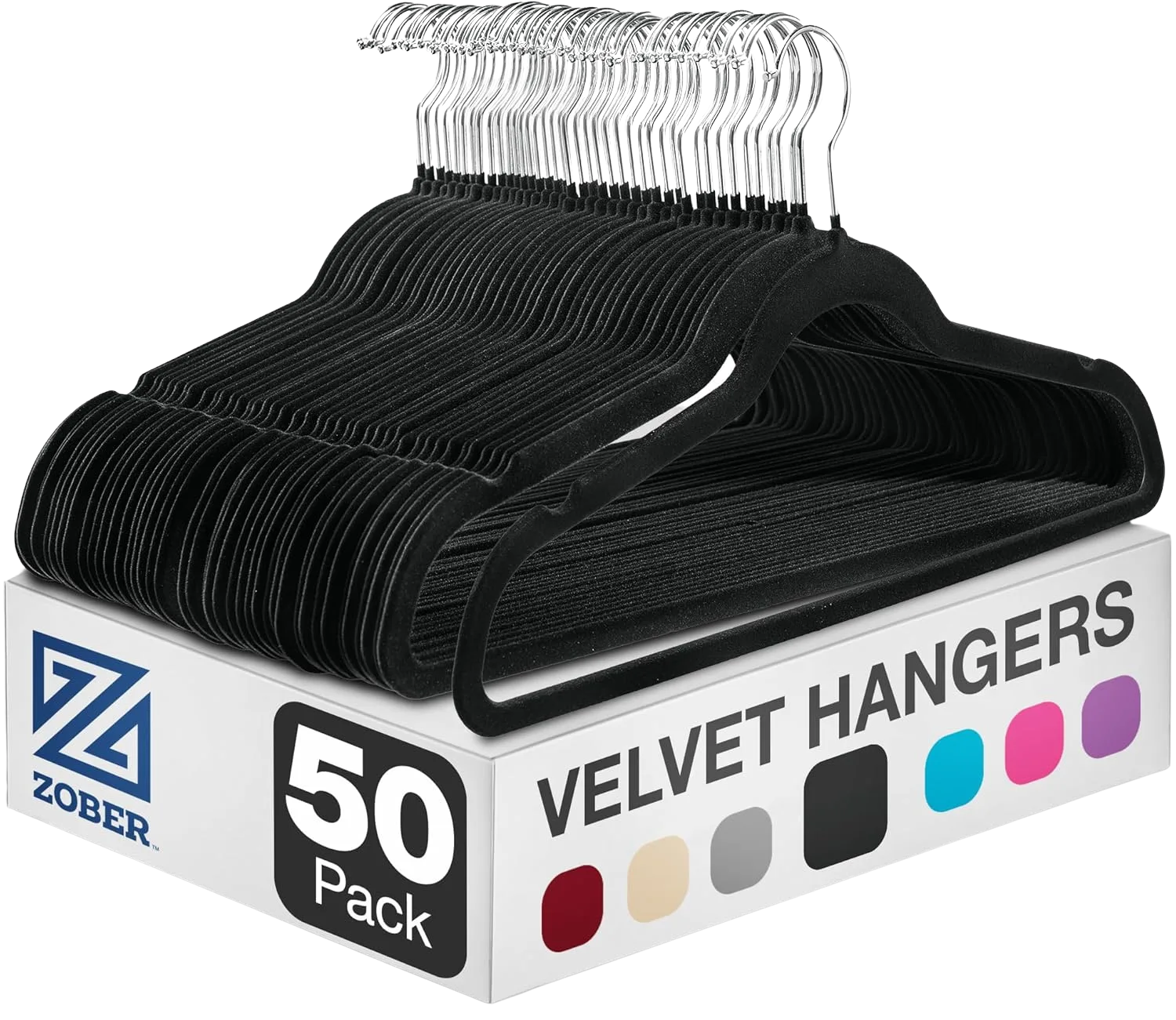
The Zober Premium Velvet Hangers are 17.5 inches wide and 0.2 inches thick. Switching 50 of these for the same number of standard plastic hangers recovers 12 to 14 inches of rod space in a standard 36-inch apartment closet. The non-slip velvet keeps silky blouses and light knitwear from sliding to the floor overnight — the one thing plastic cannot do. Two years into using them in my own reach-in, none have bent or shed. The limitation: skip these for heavy winter coats and structured blazers, which need a sturdier frame. Keep one or two padded hangers around specifically for outerwear.
Pro tip: Switch hangers during your next laundry cycle — swap everything that comes out of the dryer directly onto velvet and toss the plastic. Done in three to four cycles without ever emptying the closet at once.
Which hanger width for which garment
The standard 17.5-inch width works well for most blouses, shirts, and light jackets. Wide-shouldered blazers and structured suit jackets benefit from a wider hanger to hold the shoulder shape. Velvet hangers with a pants bar built into the middle are useful for trousers but take up slightly more visual space on the rod — worth it if you have a lot of hanging pants, not necessary otherwise. Match the hanger style to the garment type and you avoid the stretched-shoulder problem that comes from using a width that doesn’t match the garment’s cut.
Best Closet Rod Doubler for Apartments
The vertical space you’re not using below short garments
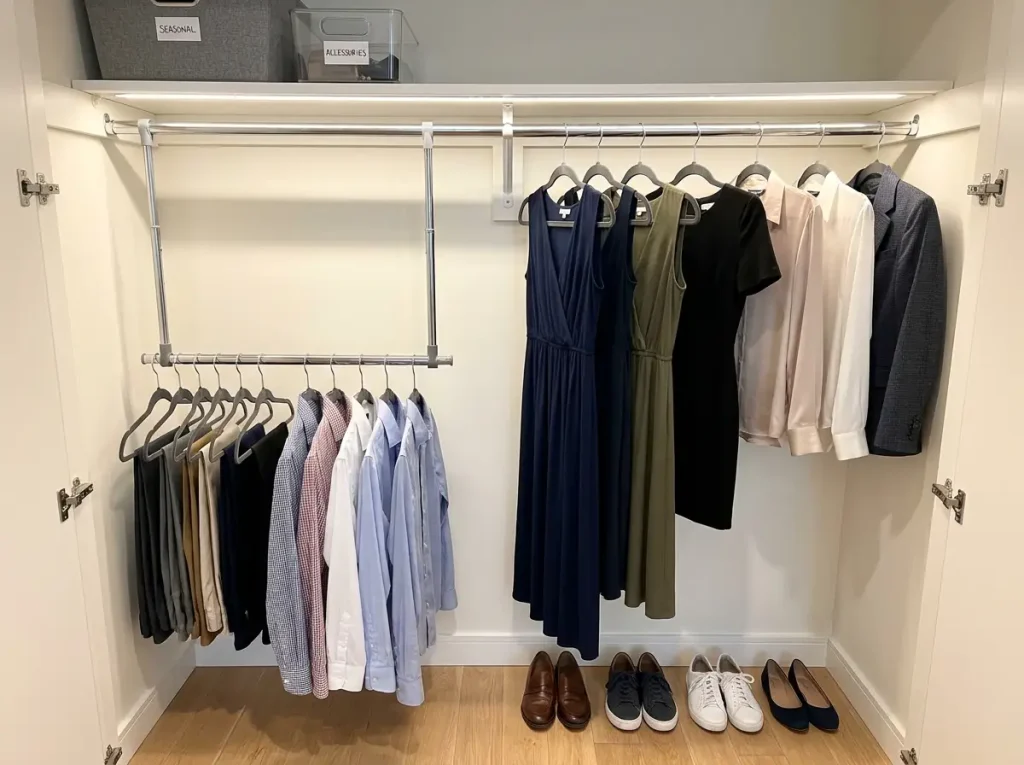
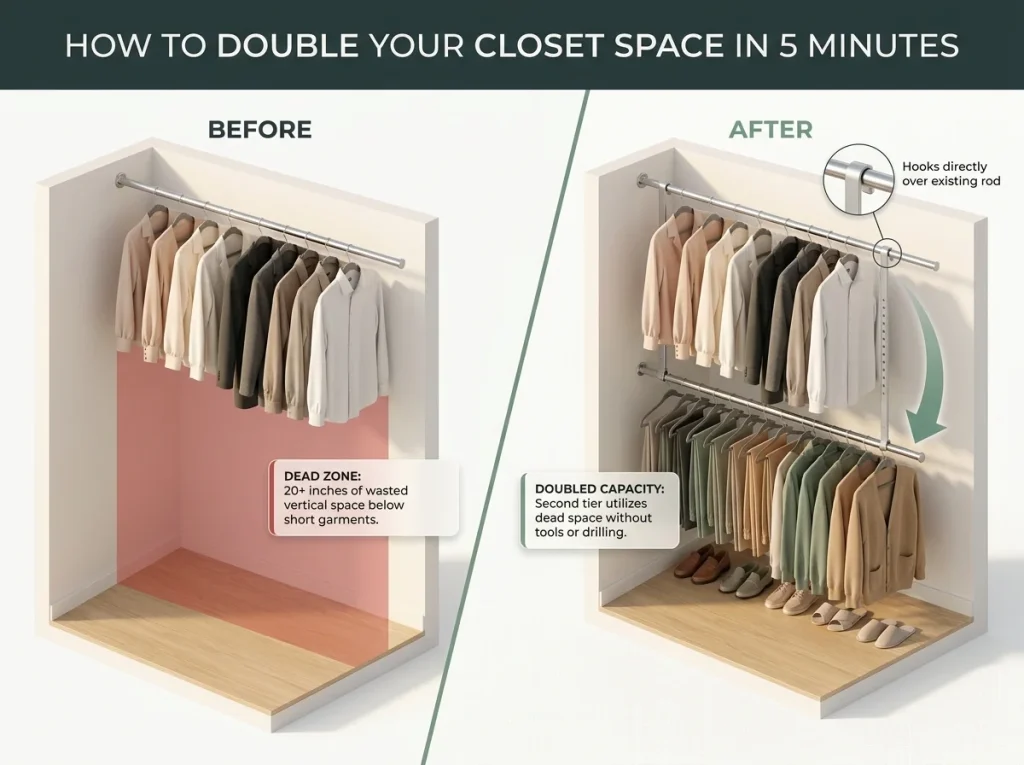
Look at your closet. Below your blouses, blazers, and folded-pants hangers, there’s probably 18 to 24 inches of empty vertical space between the bottom of your shortest hanging items and the floor. That space is real storage potential. The problem is you have no rod there to hang anything from — and drilling one in is not an option in most apartments.
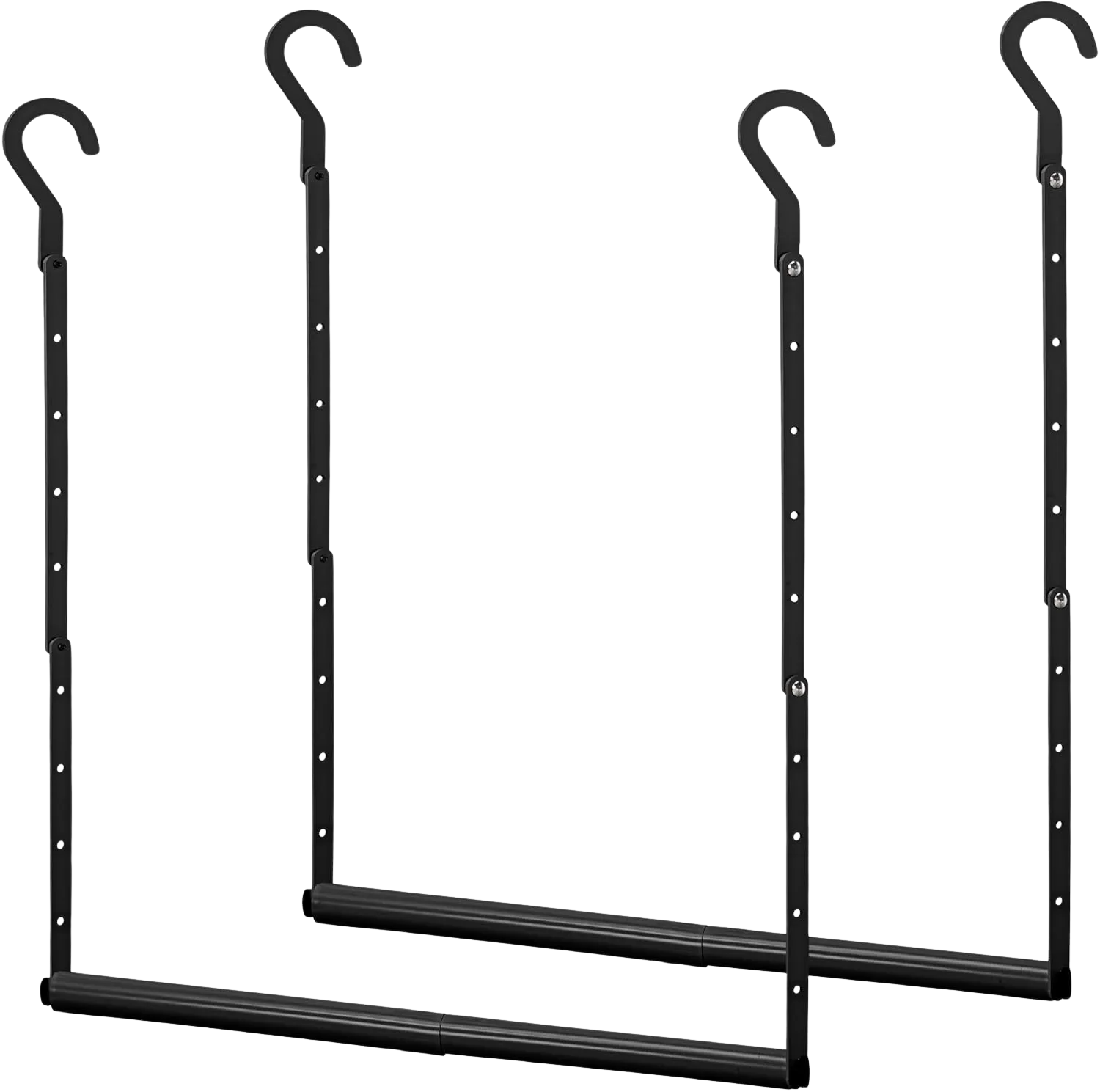
A closet rod doubler fixes this by hooking over your existing rod with no tools, no hardware, and no permanent modification. It creates a second rod below the first, adjustable in height so you can set it precisely to clear your longest items. It works because most hanging items are shorter than the full 66-inch rod-to-floor distance: blouses end around 28 to 30 inches, blazers around 26 to 28, folded trousers around 20 to 22. Everything below is wasted vertical space.
Our pick: STORAGE MANIAC Adjustable Double Rod
The STORAGE MANIAC Adjustable Closet Double Rod comes in a 2-pack and hooks over any rod between 1.25 and 2 inches in diameter — which covers the vast majority of apartment closet rods. The lower bar is height-adjustable so you can set it to clear your longest lower-tier items without them dragging the floor. The 110 lb capacity means it won’t buckle under a full row of hanging clothes. Install both pieces at opposite ends of the same short-hang section and they create a stable double-tier zone that doesn’t swing.
The one check before buying: rod diameter. Some older apartment buildings have thinner rods than standard. Measure or test with a regular hanger hook first. If your rod is under 1.25 inches in diameter, this product won’t grip securely.
How to measure before you buy
The measurement that matters: rod-to-floor distance minus the length of your shortest hanging item. If your rod is 66 inches up and your folded trousers hang 22 inches, you have 44 inches of dead vertical space below them. The double rod hangs approximately 20 to 24 inches below the main rod (adjustable), which leaves another 20 inches of floor zone beneath the lower tier — still clean and accessible.
Pro tip: Use the double rod zone exclusively for short-hang items: blazers, blouses, folded trousers, cardigans. Reserve the main rod for anything that hangs longer than 28 inches. Once you zone it this way, the visual difference is significant and the lower zone stays organized naturally.
Best Over-Door Organizer for Apartments
The door you’re ignoring
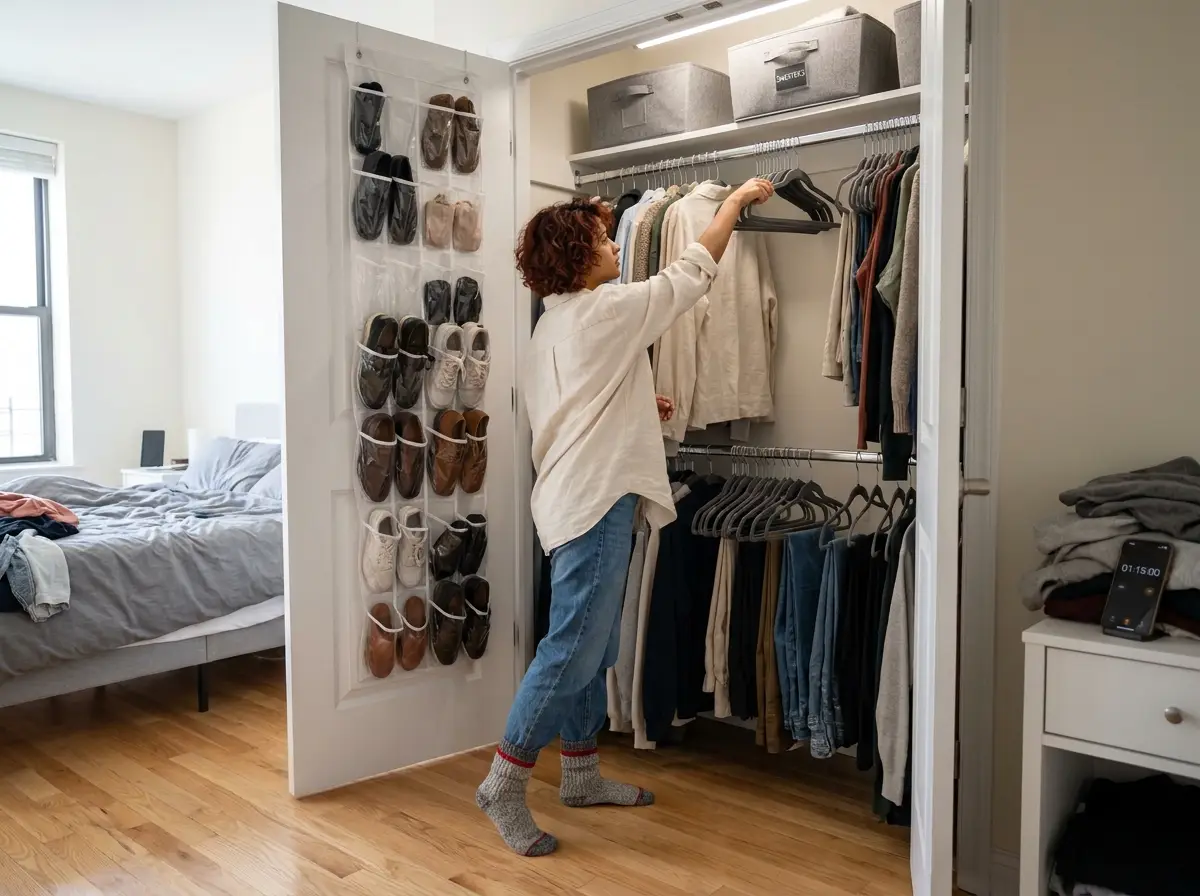
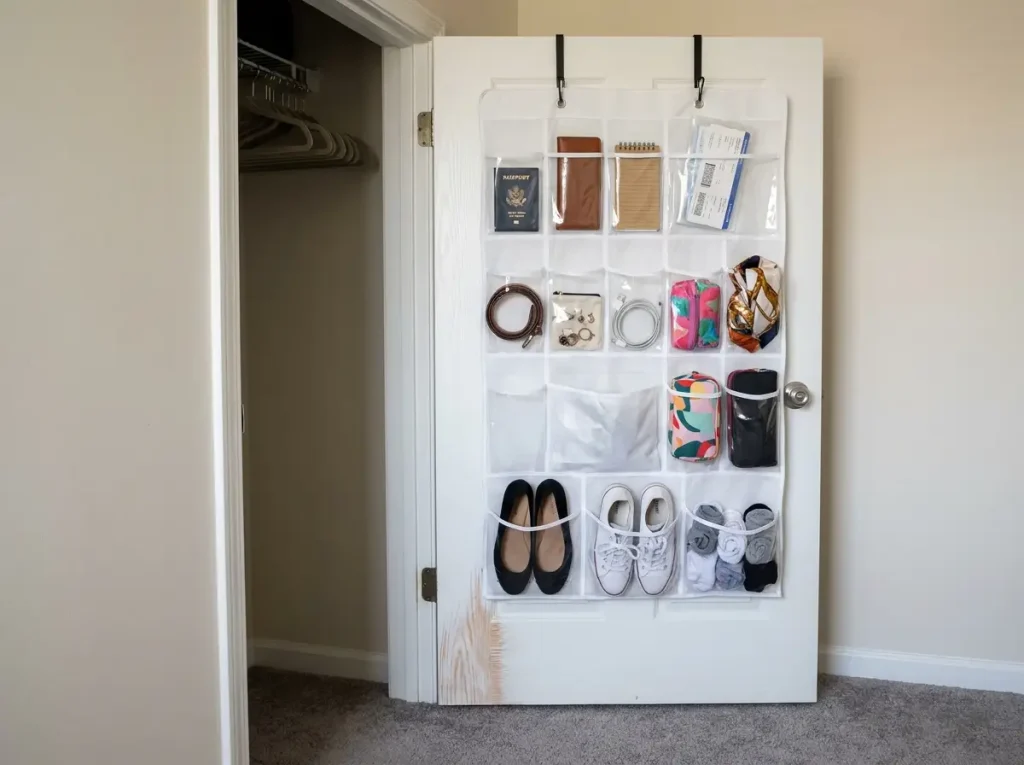
The back of a closet door is typically 18 to 24 inches wide and about 80 inches tall. That’s a legitimate storage surface most renters never use because there’s no visible way to add shelves without drilling. An over-door organizer changes that. It hooks over the top of the door — no tools, no damage — and adds storage completely independent of the closet interior. You’re not taking anything from your hanging zone or your shelf. You’re creating a new zone.
For the full renter toolkit beyond this single product, the no-drill closet organization guide covers the complete approach for rental situations.
Our pick: SimpleHouseware 24-Pocket Organizer
The SimpleHouseware Over-the-Door Shoe Organizer has 24 clear-faced pockets sized for shoes but genuinely useful for almost anything small — folded belts, scarves, phone chargers, small pouches, sunglasses cases, a spare umbrella. The clear pocket faces mean you can see the contents without pulling anything out. It hooks over any standard door without scratching the paint finish.
The limitation that matters: door-to-shelf clearance. If your closet shelf runs close to the doorframe, an 18-inch-wide over-door organizer will bind against the shelf when the door swings open. Measure the gap between your door’s inner face and the nearest shelf edge before buying. You need at least 2 inches of clearance. Most standard apartment closet setups have it — but some narrow doorframes don’t.
The clearance check you can’t skip
Open your closet door fully and hold a ruler against its inside face. Measure from the door surface to the nearest point on the shelf inside. If that gap is under 2 inches, a standard over-door organizer will prevent the door from opening fully and you’ll spend a month fighting it every morning. If you’re tight on clearance, the YOUDENOVA hanging organizer in the next section is the better choice — it uses the rod instead of the door.
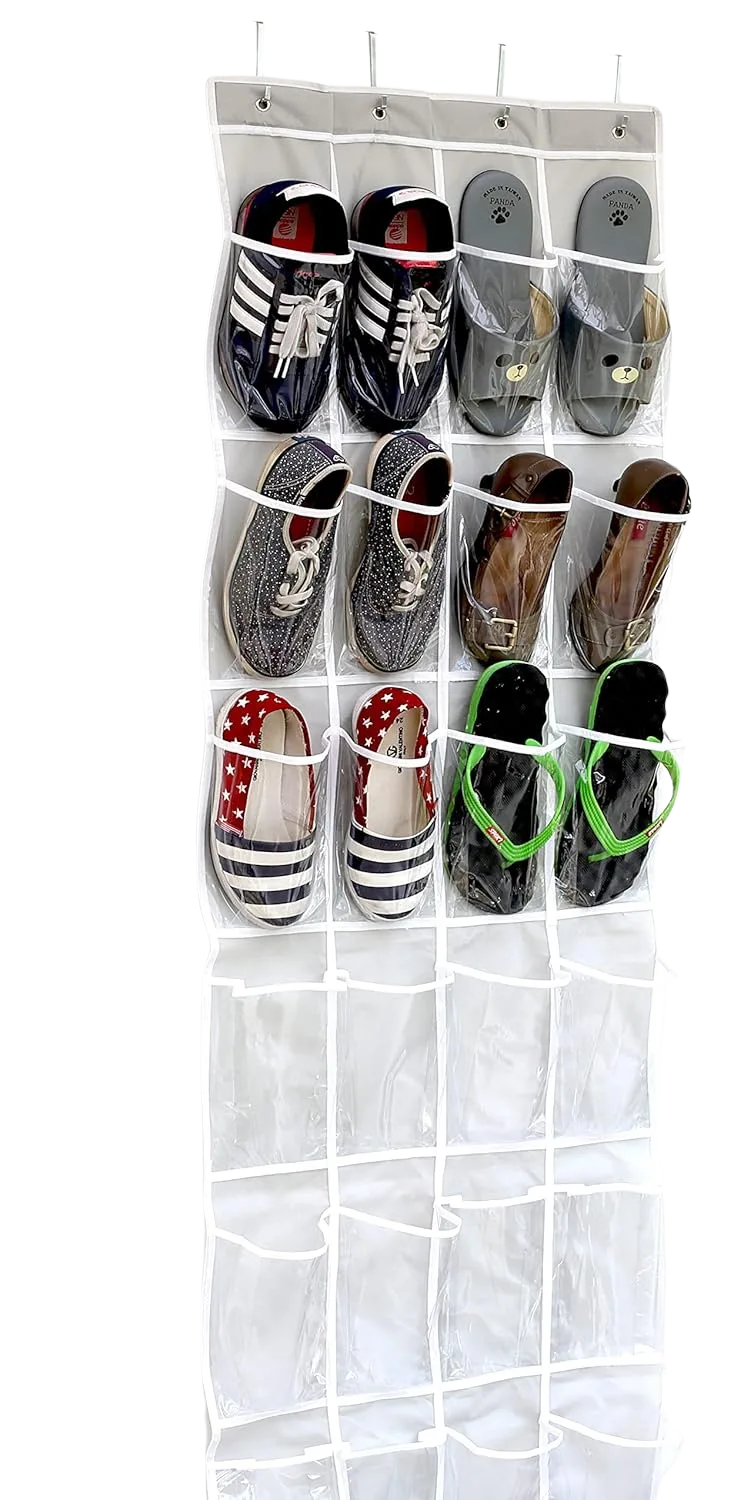
Pro tip: Use the bottom three rows of pockets for your least-accessed items — travel accessories, seasonal scarves, spare chargers. Keep the eye-level pockets for what you reach for daily. You stop wasting time scanning the entire organizer every morning.
Best Hanging Shelf Organizer for Apartments
When you can’t drill but need shelves
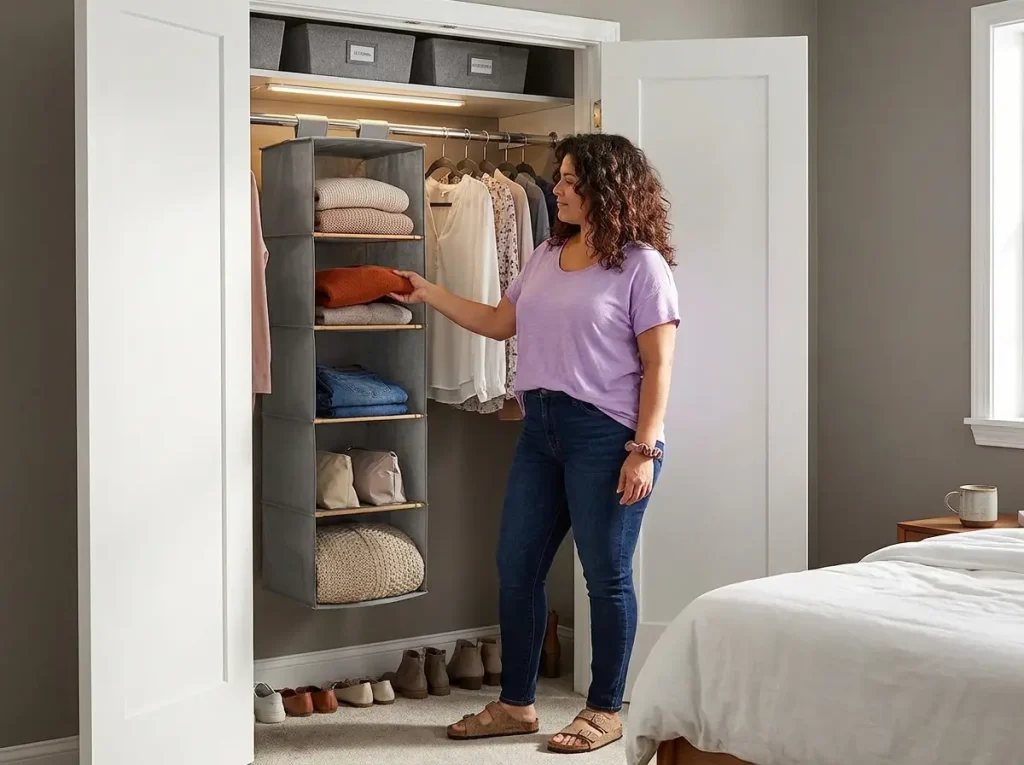
Most apartment closets give you one shelf. It’s the shelf above the rod, it’s 12 inches deep, and you can barely reach the back of it. If you want any kind of folded-clothing storage without drilling new brackets into the wall, a hanging shelf organizer is the only no-drill option that actually adds usable shelf levels.
These are fabric cubby organizers with a loop at the top that slides over the closet rod. They hang below the rod in the section of the closet where shorter items live, using space that would be dead vertical zone anyway. They don’t replace hanging space — they add stacked shelving to the section of the rod you’d use for blouses and blazers, converting a single-use zone into a dual-use zone.
Our pick: YOUDENOVA 5-Shelf Hanging Organizer
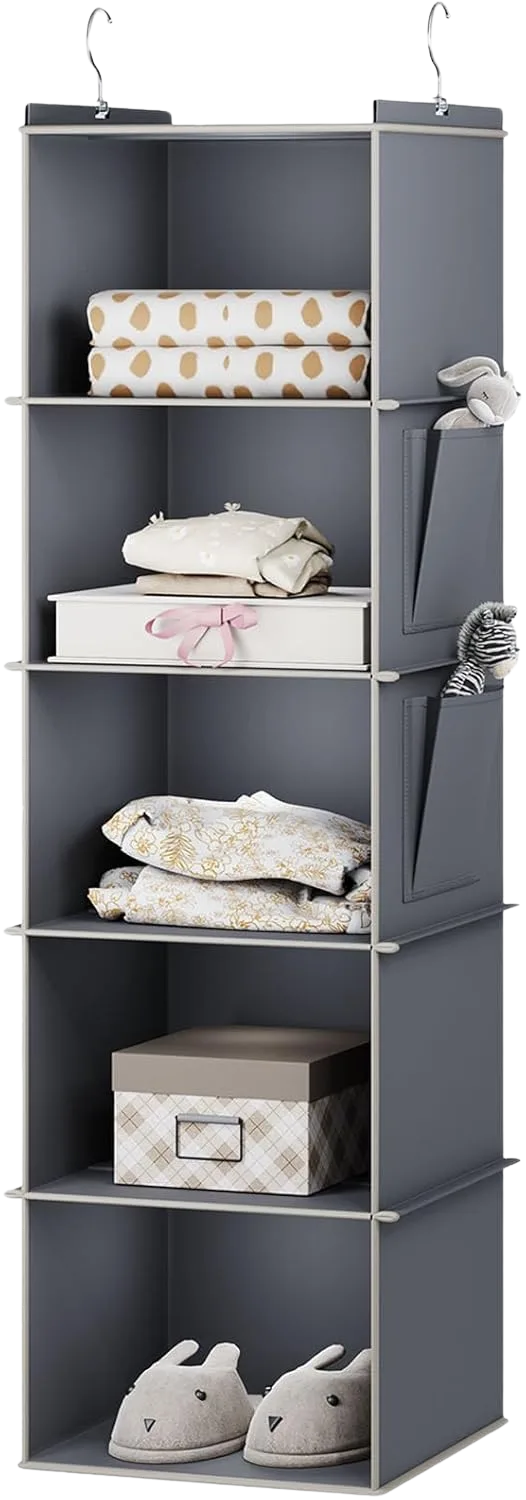
The YOUDENOVA Hanging Closet Organizer is 14 inches wide and approximately 58 inches tall when hanging, with five fabric-backed shelves reinforced with bamboo inserts that prevent the sag that collapses cheaper hanging organizers within a few months. Each shelf holds about two folded sweaters or a pair of folded jeans without bowing. The fabric base on each shelf keeps smaller items from falling through. Setup is one step: slide the loop over the rod.
What it cannot do: hold heavy items. Stacks of hardcover books or dense denim will flex the bamboo rods over time and cause the shelves to tilt. Use it for knitwear, folded linens, and soft accessories — not for heavy storage. This is the right product for folded clothes; it’s the wrong product for shoes or books.
Rod-to-floor clearance: the one measurement that matters
The 5-shelf YOUDENOVA model is approximately 58 inches long when hanging. Your rod-to-floor distance needs to be at least 62 inches for it to hang without bunching at the bottom. Standard apartment rods sit at 66 inches, so this fits in most cases. But some older buildings have rods installed lower. Measure before you order. If your rod-to-floor is under 60 inches, use the 3-shelf model instead — it hangs about 36 inches and clears lower-rod configurations without issue.
Best Shelf Accessories for Apartment Closets
HBlife shelf dividers — the stack solution
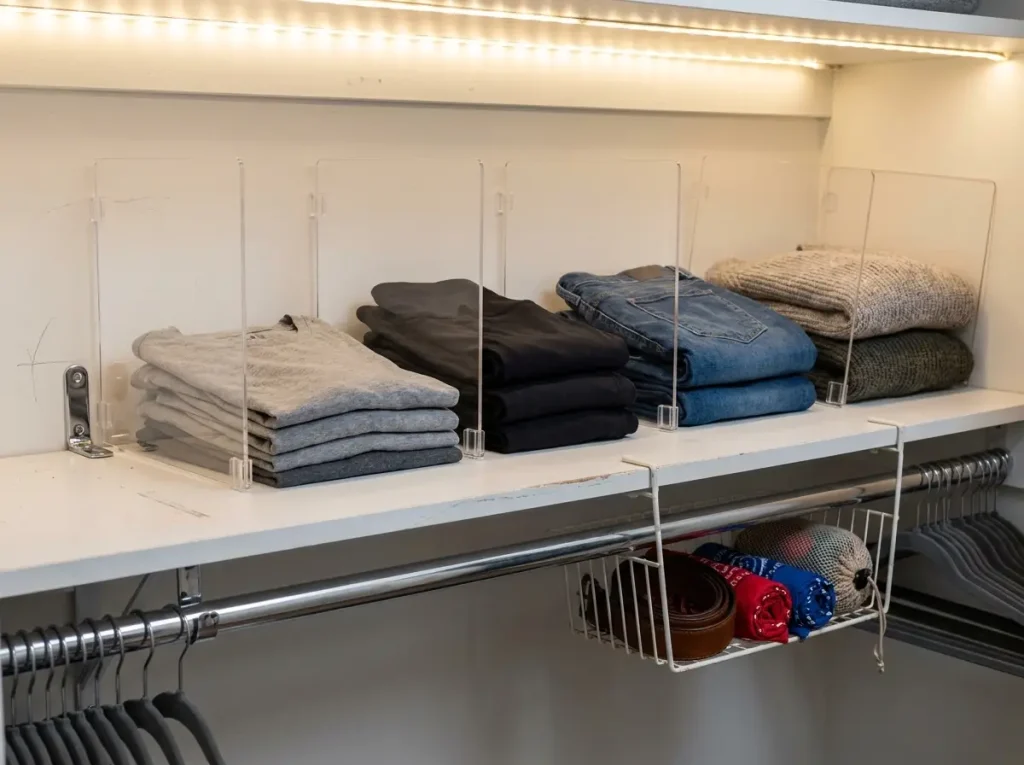
The shelf above your closet rod is the most underused storage in the space — and the most frustrating to maintain. Folded sweaters collapse into each other. Jeans stacks migrate sideways. You pull one item and two others follow it. The reason isn’t that you’re bad at folding. The reason is that nothing is containing the stacks. A shelf without dividers is a flat surface with gravity doing whatever it wants to your folded clothes.
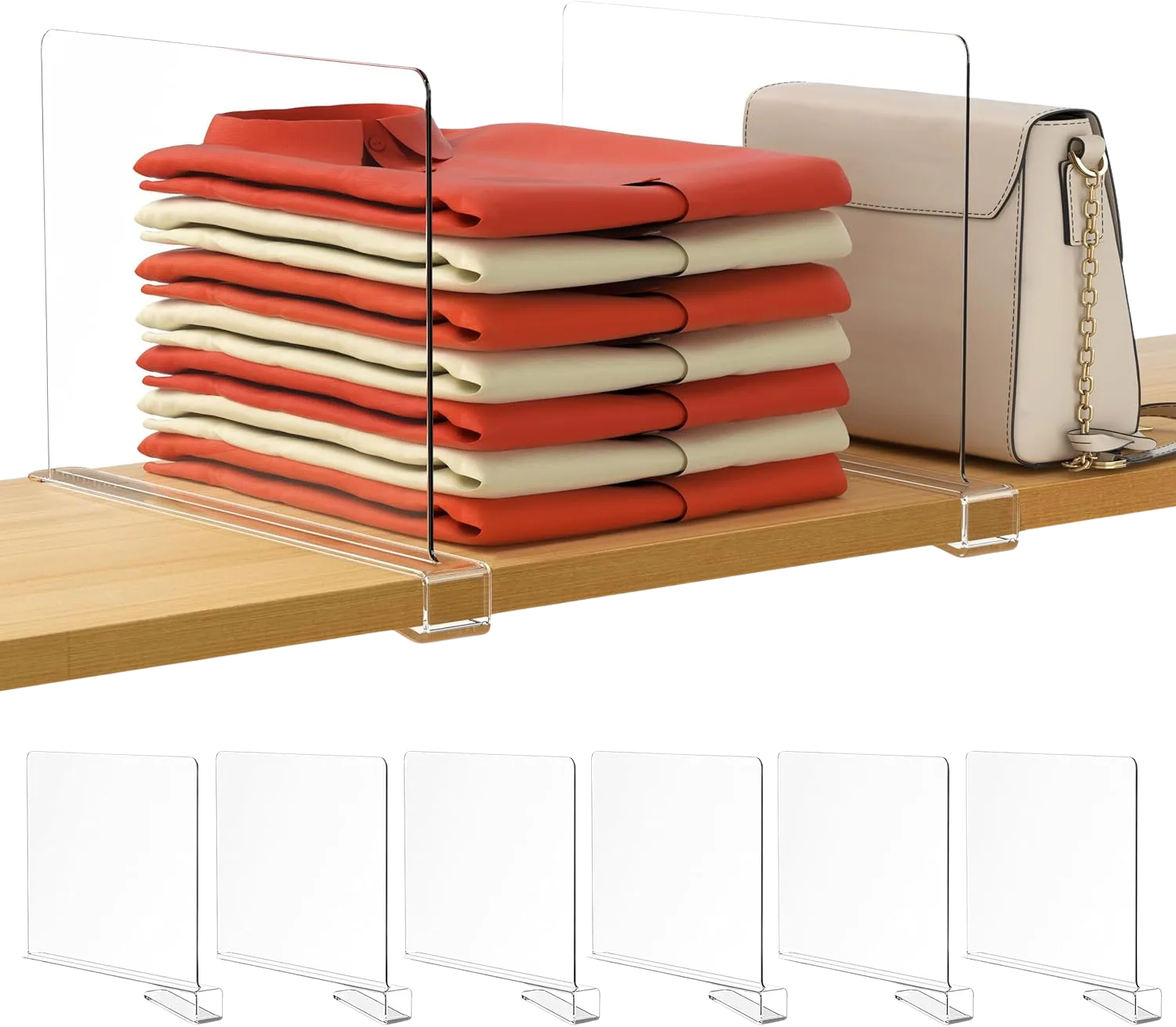
The HBlife Acrylic Shelf Dividers clip around the front and back edges of the shelf without tools, creating individual zones for each clothing stack. Clear acrylic means you see all your stacks at once without pulling anything out. Each divider holds 15 pounds — enough for any normal clothing stack. They fit shelves 9 to 14 inches deep and 9/16 to 1 inch thick, which covers standard laminate apartment closet shelves. They don’t work on wire shelving or unusually thick shelves.
For the full strategy behind shelf organization — including the fold-to-hang ratio and vertical clearance rules that make shelves stay organized — the closet shelves guide covers it in detail.
Simple Houseware under-shelf basket — the dead zone fix
Between the top shelf and the hanging rod, there’s a zone most closets never use: the underside of the shelf itself. An under-shelf basket clips to the shelf’s front edge and hangs below it, creating a wire storage pocket about 3 to 4 inches deep. It won’t hold much — but it holds exactly the right category of item: flat things that have no natural home. Belts coiled once. Scarves folded thin. Small pouches. Rolled socks. Items that currently drift to random drawers and take forever to find.
The Simple Houseware Under Shelf Basket comes in a 2-pack and clips to laminate shelves up to 0.75 inches thick. It fits most standard apartment closet shelves. Like the HBlife dividers, it doesn’t work on wire shelving — the clip needs a solid shelf edge to grip.
Which to add first
If your main problem is stacks collapsing on the shelf, start with the dividers. If your problem is running out of surface for small items, start with the basket. If you’re already using the YOUDENOVA hanging organizer, it handles most of your folded-clothing needs, which means the under-shelf basket becomes even more useful for accessories and small items that don’t have a dedicated home.
How to Build a Complete Apartment Closet System
The priority order: what to install first
All six products work independently. None require the others to function. But they compound well when you install them in a deliberate sequence, because each one changes how much space is available for the next.
Start with hangers — always. The velvet hanger switch takes 20 minutes and reveals how much rod space you actually have. That number changes what else you need. After hangers, add the rod doubler if you have a short-hang section (you almost certainly do). Then the over-door organizer. Then the hanging shelf unit if you still need folded-item storage. Then the shelf accessories last — they’re fine-tuning after the major moves are done.
The budget closet organization guide covers the full ROI-ranked approach if you’re working through the list over multiple purchases rather than buying everything at once.
The free start: edit before you organize
Before you spend anything, take everything out of the closet. Do the three-pile sort: keep, donate, decide-later. Most apartment closets have room for everything you actually wear once you remove what you haven’t touched in a year. The organize-without-purging approach is why closets look good for two weeks and then revert — you’re organizing clutter, not reclaiming space. Edit first, then buy.
The three-month reset
In 90 days, check whether any zone has started absorbing overflow from another. If the hanging shelf cubbies have items balanced on top of them, the folded-clothing zone is overloaded — not the organizer’s fault, but the system is full. Check whether the rod doubler zone has crept toward your longer garments. Check whether the over-door pockets have become a catch-all for things with no other home. All six products here are adjustable and portable. The reset takes ten minutes, not a Saturday.
Conclusion
The apartment closet problem is structural, not personal. One rod and one shelf cannot hold a real wardrobe without additional organization. The six products in this guide — velvet hangers, rod doubler, over-door organizer, hanging shelf unit, shelf dividers, and under-shelf basket — each solve a distinct piece of that structural problem without touching your walls. Start with the hanger switch. It costs the least, proves the concept, and shows you exactly what else you need. The rest compounds from there.
Three-month check: look at whether any zone has started absorbing overflow from another. If the rod doubler area has pushed into the long-hang section, the hanger zone is overloaded — rebalance before the system collapses.
Start with the one change you can make today. Get that right. Then add the next layer.
Q1 What are the best closet organizers for a small apartment closet?
For a narrow apartment closet under 36 inches wide, velvet hangers and a hanging shelf organizer give the most storage gain without needing wall space. The over-door organizer adds storage on the door surface, taking nothing from the interior. Skip the rod doubler if under 24 inches wide — the single rod gets too crowded with two tiers.
Q2 How do I organize a closet in an apartment without drilling?
Every product in this guide requires zero drilling. Velvet hangers and the rod doubler use the existing rod. The over-door organizer hooks over the door top. The hanging shelf organizer hangs from the rod. Shelf dividers and under-shelf baskets clip to the shelf edge. For the complete no-drill toolkit, the renter closet guide covers it in depth.
Q3 Are these closet organizers portable when I move?
Yes — all six are fully removable and portable. None require tools to install or remove. Take them down, pack them, and rehang them in your next apartment in under 20 minutes. The hangers travel on the clothes. Products that cost your security deposit or can’t move with you aren’t on this list.
Q4 What should I buy first to organize an apartment closet?
Buy velvet hangers first, before anything else. Switching 50 plastic hangers to slim velvet reclaims 12 to 15 inches of rod space immediately. That’s the least expensive move on this list, and it shows you how much additional space you actually need before you spend anything else.
Q5 Can I use a hanging shelf organizer in a closet with a low rod?
The YOUDENOVA 5-shelf model needs at least 62 inches of rod-to-floor clearance. Standard apartment rods sit at 66 inches, so it fits in most buildings. If your rod-to-floor distance is under 60 inches, use the 3-shelf model instead — it hangs approximately 36 inches and clears low-rod configurations without bunching at the bottom.