















In this article
The space under a platform bed looks generous until you try to put something in it. You slide a standard storage bin under there, hear it scrape against the frame, and realize a 9-inch container was never going to fit in a 7-inch gap. Most “under bed storage” articles skip this entirely — they recommend products that require 10 inches of clearance for beds with 7 inches of clearance. I’ve been through this exact problem enough times to know that the container type you can use depends almost entirely on one measurement you need to take before shopping, not after.
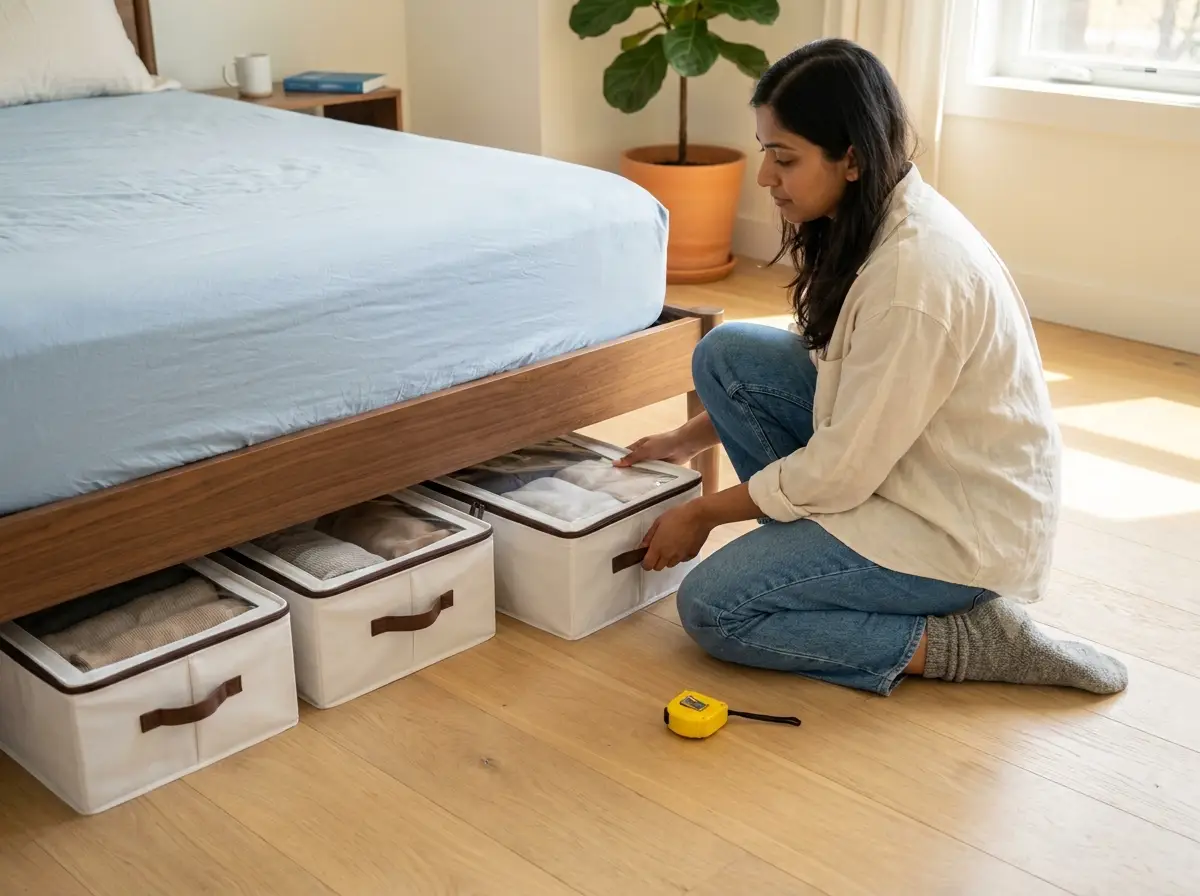
This guide covers the four container types that actually work under low-clearance beds — rolling bins, flat fabric bags, hard-sided containers, and vacuum bags — and which one makes sense depending on what you’re storing and how often you need to get to it. If you’re also building out the full under-bed system, start with how to set up under bed storage that stays organized before buying anything.
The quick answer if you’re just here for the options:
| Container type | Min. clearance needed | Best for | Top pick |
|---|---|---|---|
| Rolling bins | 8 in | Items accessed seasonally but needing easy pull-out | Aethel Rolling 2-Pack |
| Flat fabric bags | 6 in | Seasonal clothing, extra linens | Nest Neatly SmartCubePlus 3-Pack |
| Hard-sided containers | 6.5 in | Folded items, anything that needs structure | Superio Set of 3 |
| Vacuum bags | Any | Bulky soft items — duvets, heavy coats, pillows | SpaceSaver 10-Pack |
Measure this before buying anything
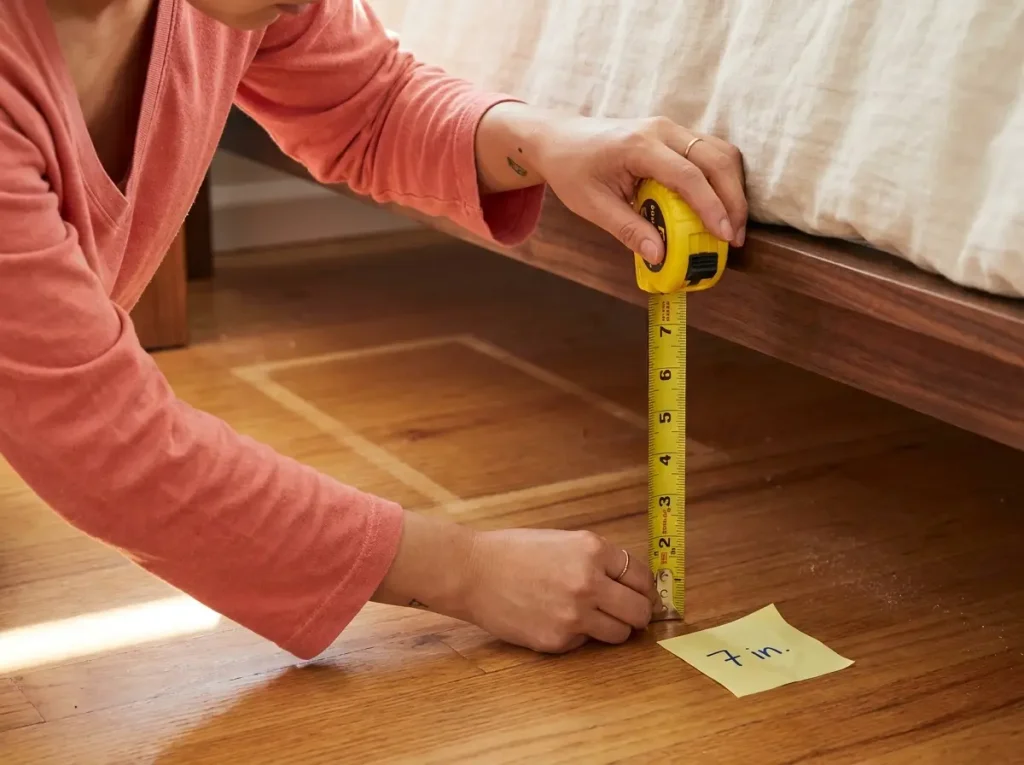
The single number you need is the vertical clearance from the floor to the lowest point of your bed frame — not the mattress, not where the slats are visible, but the actual lowest edge of the rail, leg, or center support bar. On platform beds this is often lower than it looks from standing height.
Grab a tape measure, get on your hands and knees, and measure at the foot of the bed, the middle, and the side. The lowest reading is your real clearance. A lot of platform beds have a center support beam that runs down the middle and sits lower than the side rails — that beam will stop a container before the rails will.
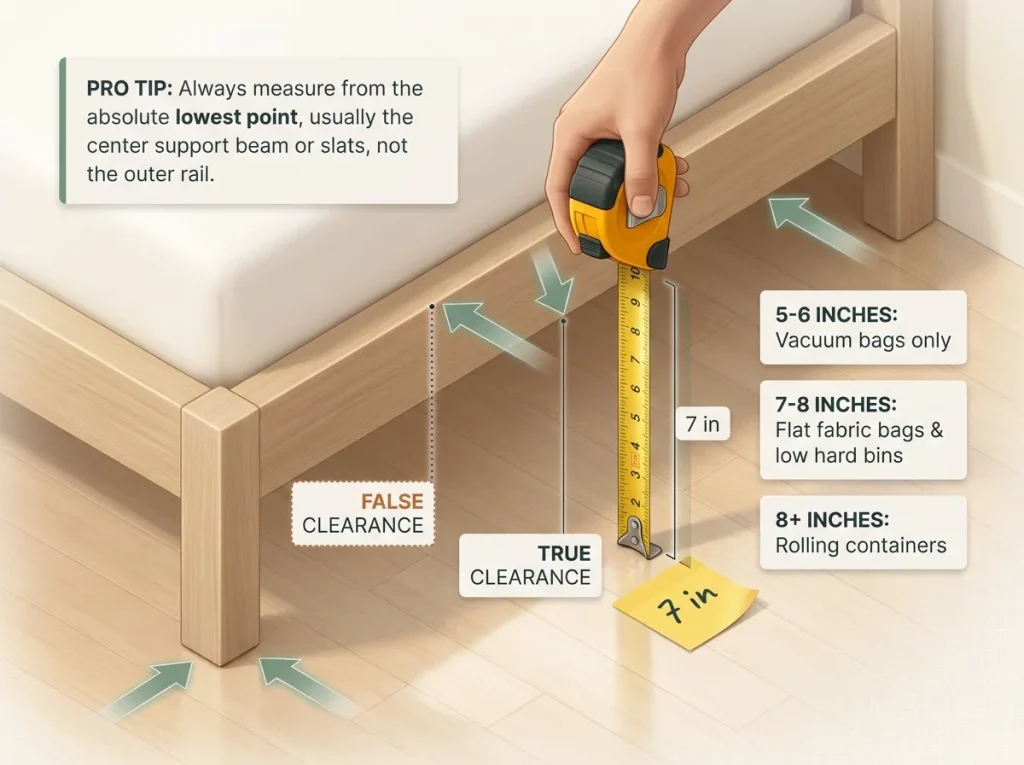
Here’s what that number means in practical terms. At 5–6 inches, standard containers are out. Vacuum bags are your only option, and they work well here because they compress to under 2 inches per layer. At 7–8 inches, you have real choices: the StorageWorks Underbed Storage Boxes run 6.7 inches tall and fit reliably at this clearance — they’re a good way to test whether fabric bins work for your specific frame before committing to a full set. At 9 inches or more, nearly everything works, including the rolling bins with wheels that add an extra inch of height.
One thing nobody mentions about low platform beds specifically: without a bed skirt, your storage is visible from across the room. That makes the clear-top containers worth the extra cost — you can see what’s inside and the bins look intentional instead of haphazard.
Pro tip: Measure in three spots, not one. Platform beds on uneven floors or frames with slight flex can vary by half an inch from foot to headboard. Use the lowest measurement as your ceiling, not the average.
Best rolling containers for frequent access
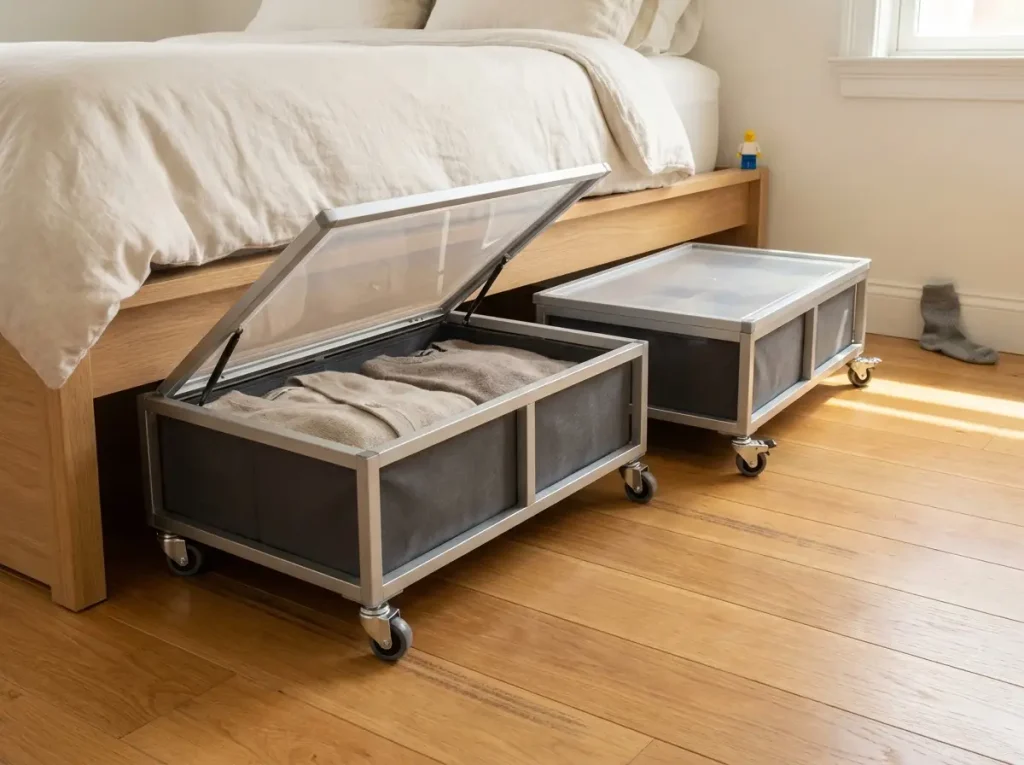
Rolling containers make sense for one specific use case: items you pull out often enough that crouching down and dragging a bin across the floor becomes genuinely annoying. If you’re storing off-season clothes you touch four times a year, wheels aren’t worth the extra clearance they cost. If you’re storing a kid’s extra blankets that come out every weekend, the wheels earn their keep.
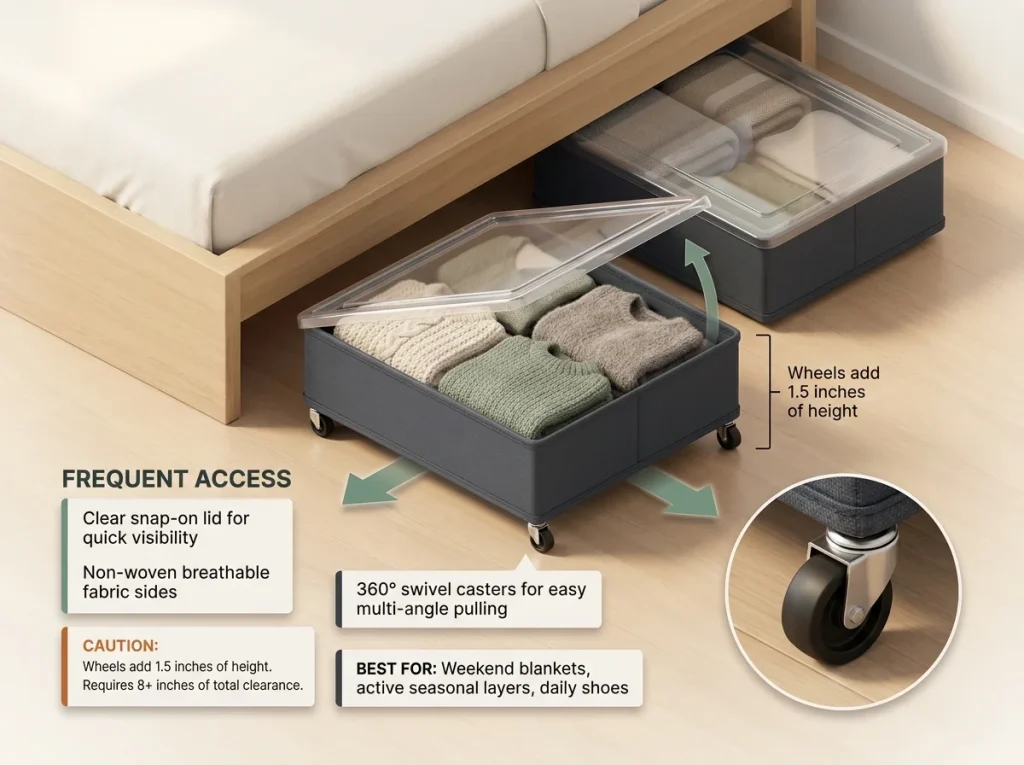
The trade-off is real. Rolling under-bed bins sit on swivel casters that add roughly 1 to 1.5 inches to the container height, which means they almost always need 8 inches of clearance or more to slide under without resistance. Check that measurement before you buy.
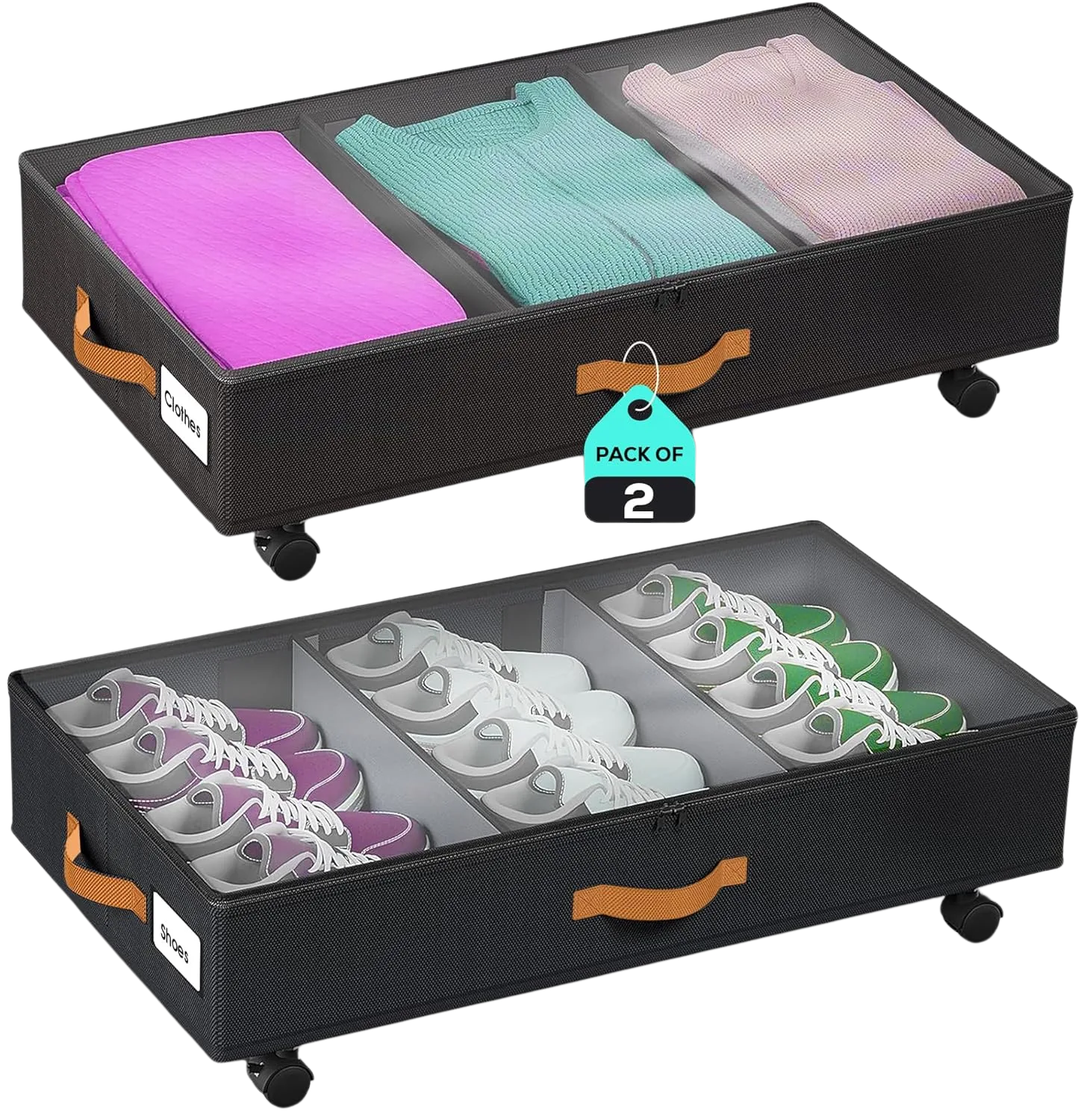
If your clearance is 7 inches — tight enough that the rolling bins won’t fit — the Superio Under Bed Storage Containers are a better fit. The hard-sided polypropylene shell runs 6.3 inches tall, which slides under most 7-inch-clearance frames with a little room to breathe. You lose the wheels, but you gain rigidity: the hard sides mean you can stack them outside the bed during laundry days without the bags collapsing. The 3-pack is good value if you’re outfitting the whole bed at once.
Best flat fabric bags for seasonal clothing
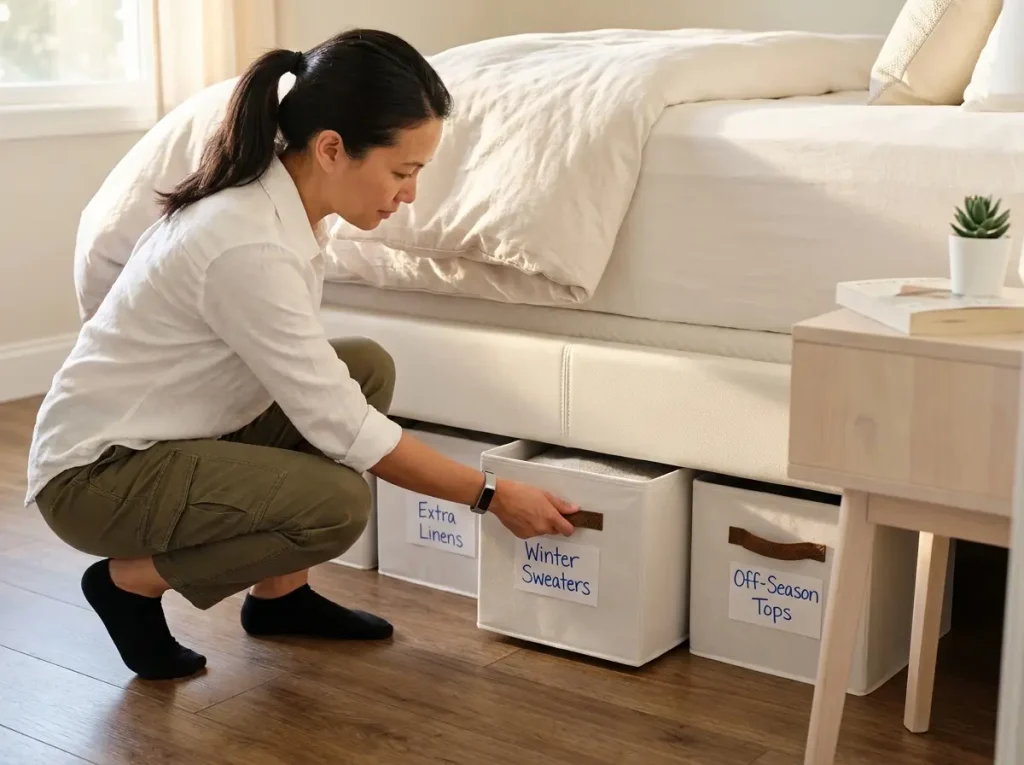
Flat fabric bags are where most under-bed storage actually lives. They’re flexible enough to work with irregular items — a sweater folded differently every time, an extra set of sheets that never quite collapses flat — and they sit lower than hard containers because there’s no rigid shell adding height. The best ones for low beds top out around 5.5 to 6 inches filled, which opens up beds where nothing else fits.
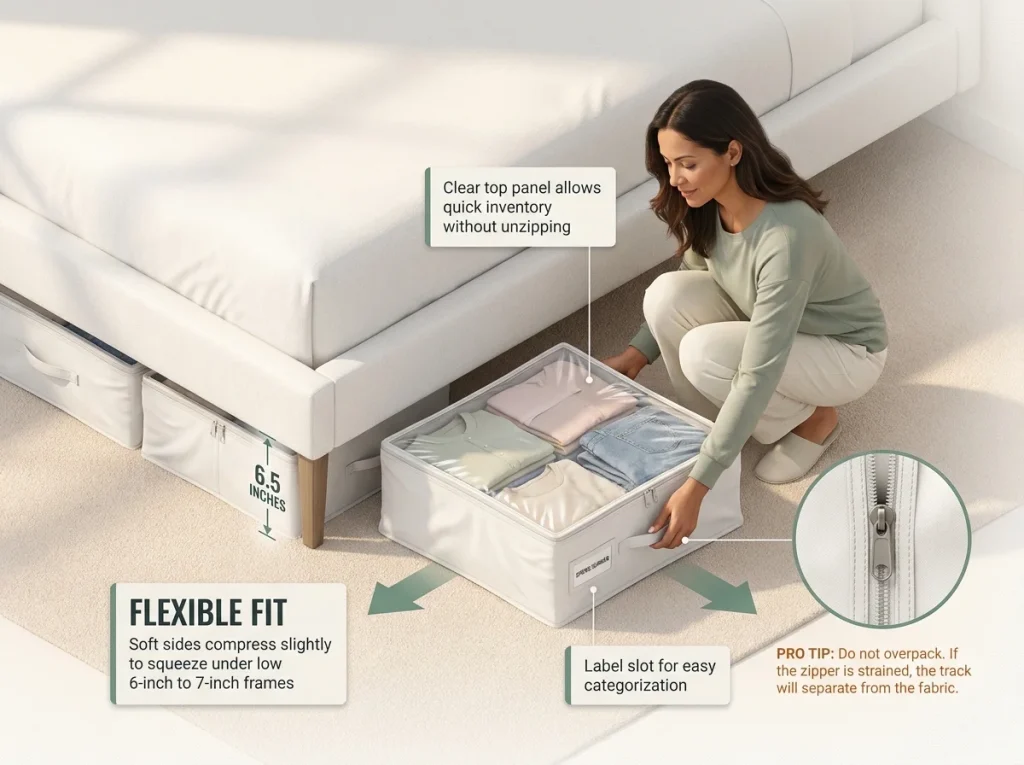
The problem with cheap fabric bags is the zipper. They last about six months before the track separates or the pull tab breaks off. After that you’re reaching in from the side, which defeats the whole point. Spend a little more on a bag with a reinforced zipper — it’s the part that fails, not the fabric.
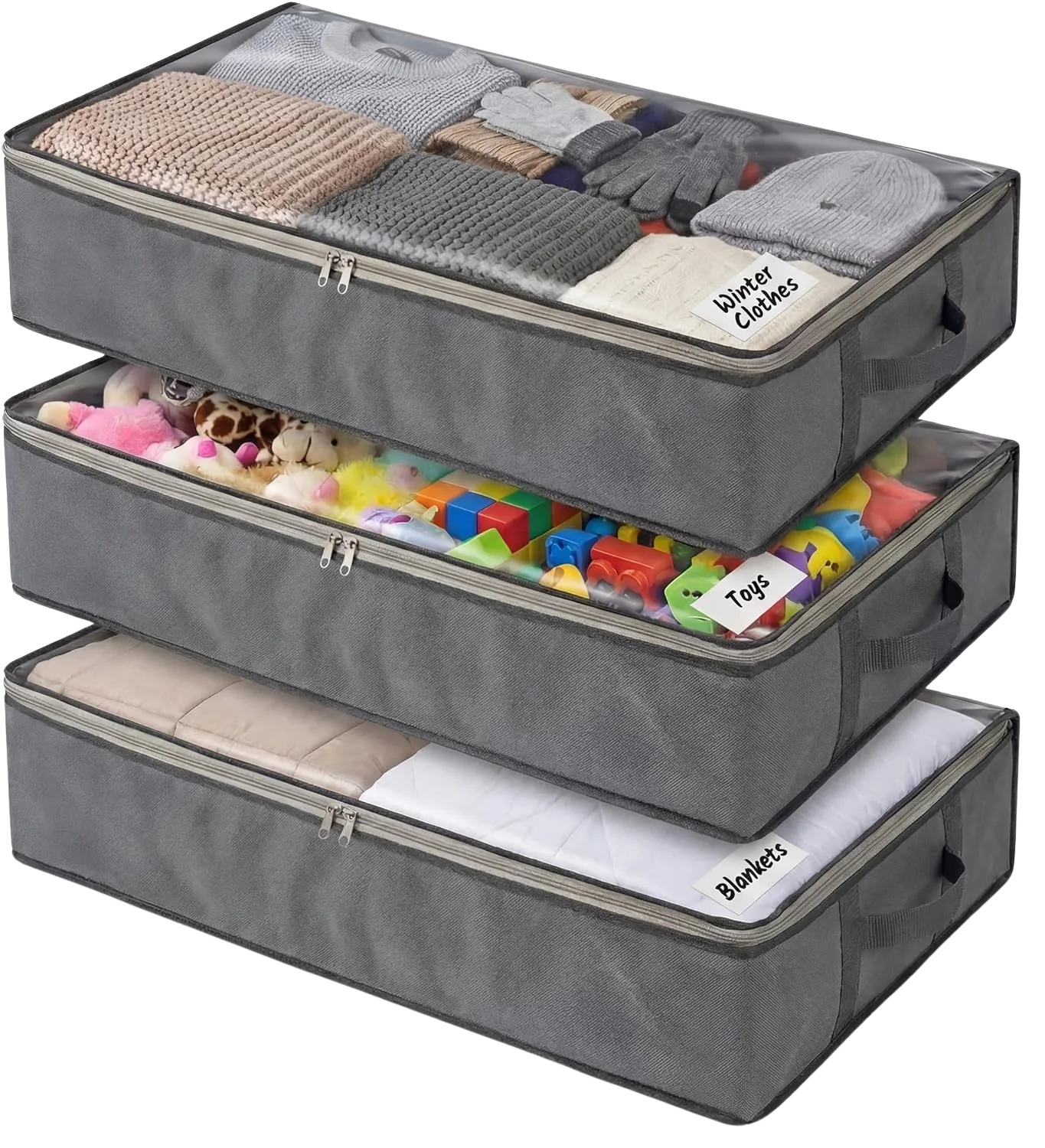
If you’re outfitting multiple beds or need more than three bags, the StorageRight Under Bed Storage Containers are a better value at four units per set. They run 29 × 17.7 × 6.1 inches — slightly taller than the SmartCubePlus but still fits comfortably at 7-inch clearance. The non-woven fabric construction is the same category, but the reinforced handles hold up noticeably better with heavy loads like denim or double-layer comforters.
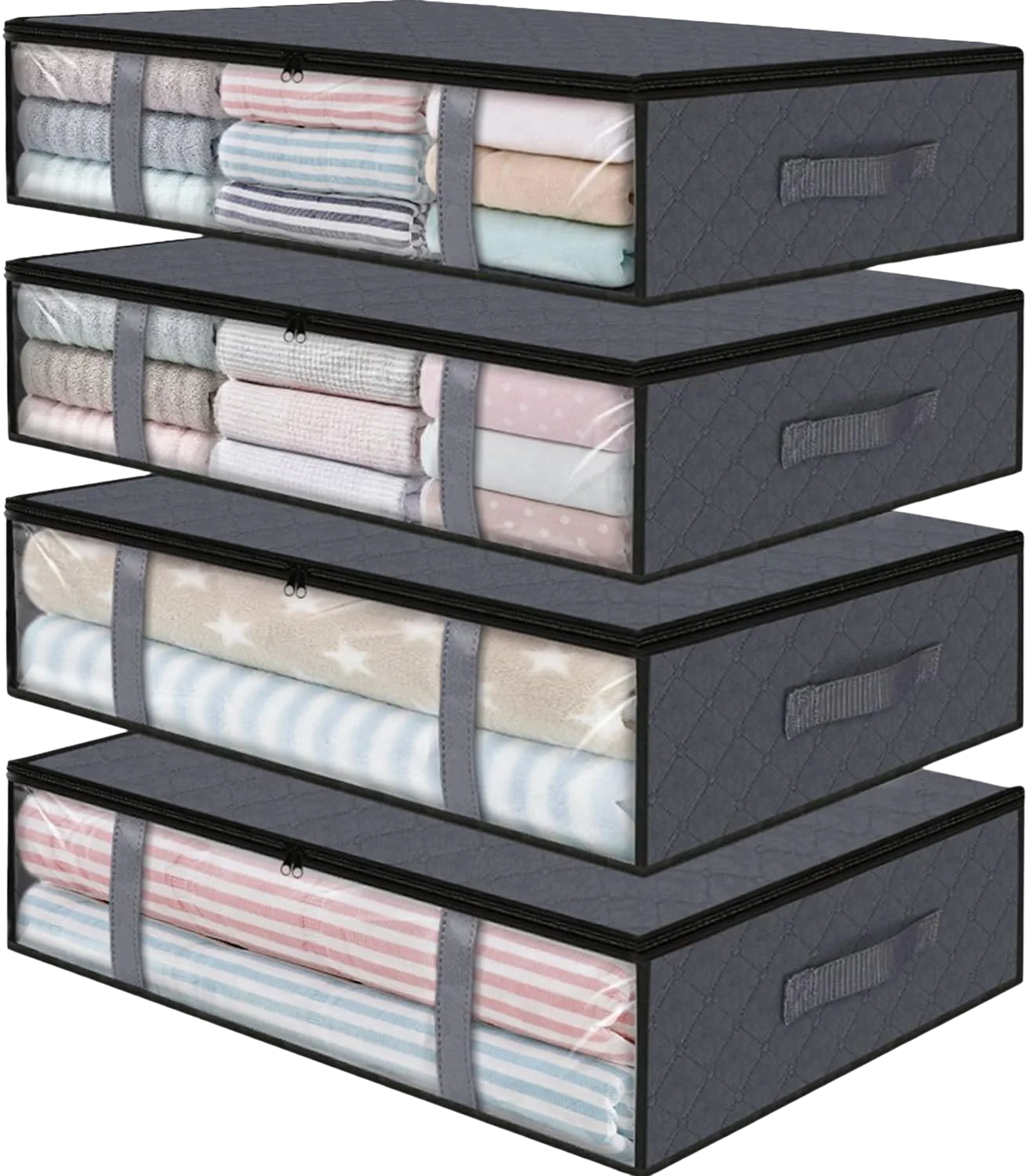
Before either of those: if you want to test whether fabric bags work for your bed before spending more, the Ziploc Flexible Totes Large 2-Pack are 28 × 20 × 6 inches and work at 6.5-inch clearance. They’re the most widely available option and the handles are surprisingly durable. Don’t let the brand fool you — these are a real under-bed storage solution, not a trash bag compromise. Most Reddit threads on under-bed storage for renters land on these eventually, usually after something more expensive broke.
Pro tip: Fabric bags fail when people overpack them. The zipper doesn’t fail — the zipper track pulls away from the fabric sidewall because the bag is stretched past its capacity. Fill to the point where the lid lies flat. If you have to force the zipper, you’ve overpacked it.
Vacuum storage bags for beds with under 7 inches of clearance
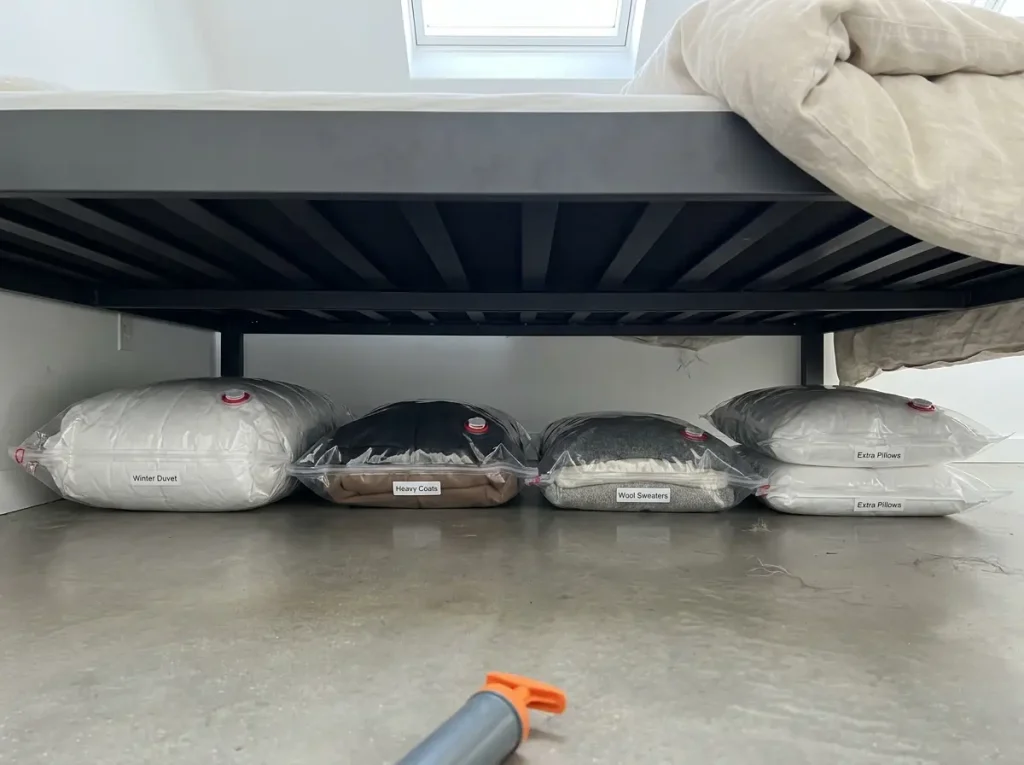
A bed with 5 or 6 inches of floor clearance isn’t useless for storage — it just needs a different approach. Vacuum compression bags compress down to under 2 inches per layer, which means a king-size down duvet that would normally take up an entire closet shelf fits under a platform bed with 5 inches of clearance and room left over for a second bag.
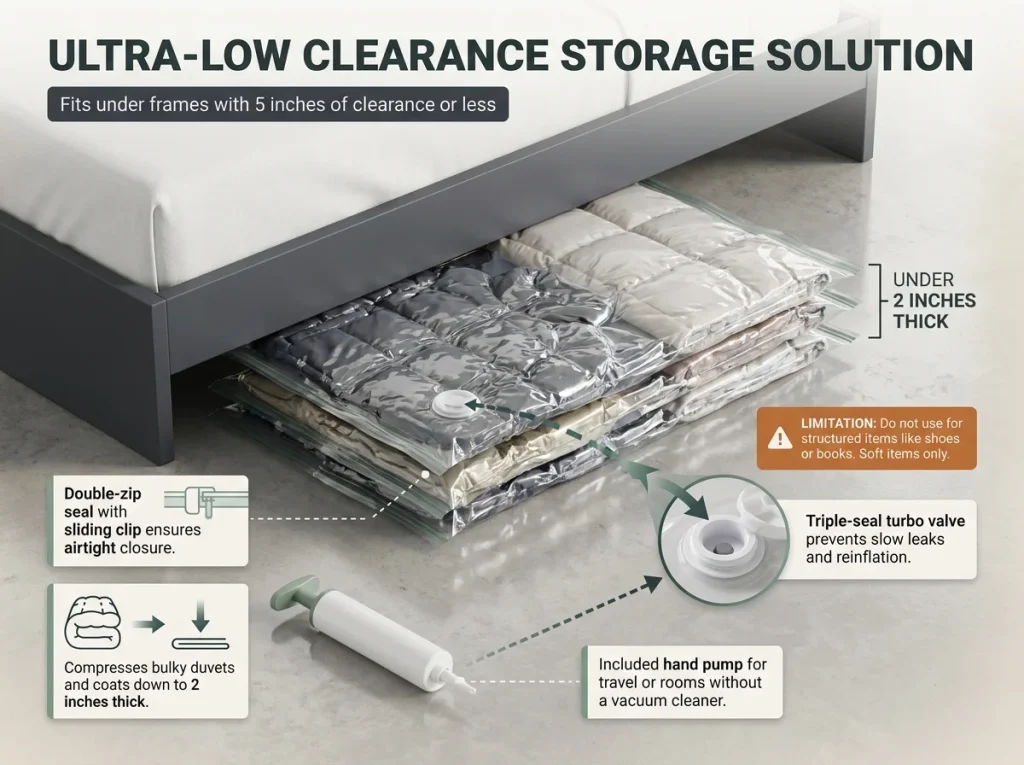
The compression is real and it lasts — but only if the valve holds. This is where cheap vacuum bags fail, often within a few weeks. The bag slowly re-inflates because the valve seal isn’t airtight. You come back in a month to find your “compressed” comforter pushing the bag against the bed frame. The spec that matters is the valve type: triple-seal valves hold vacuum reliably for months; the single-seal valves on budget bags don’t.
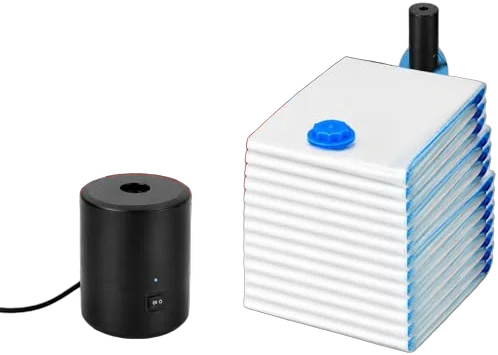
One thing to know going in: vacuum bags only work for soft, compressible items. Shoes, books, anything with a rigid shape — those need a container. If you’ve got a 5-inch bed and need to store shoes, your only real option is a flat-pack shoe box with collapsible sides, stored horizontally, one pair per box. Not ideal, but it works.
How to match the right container to your bed
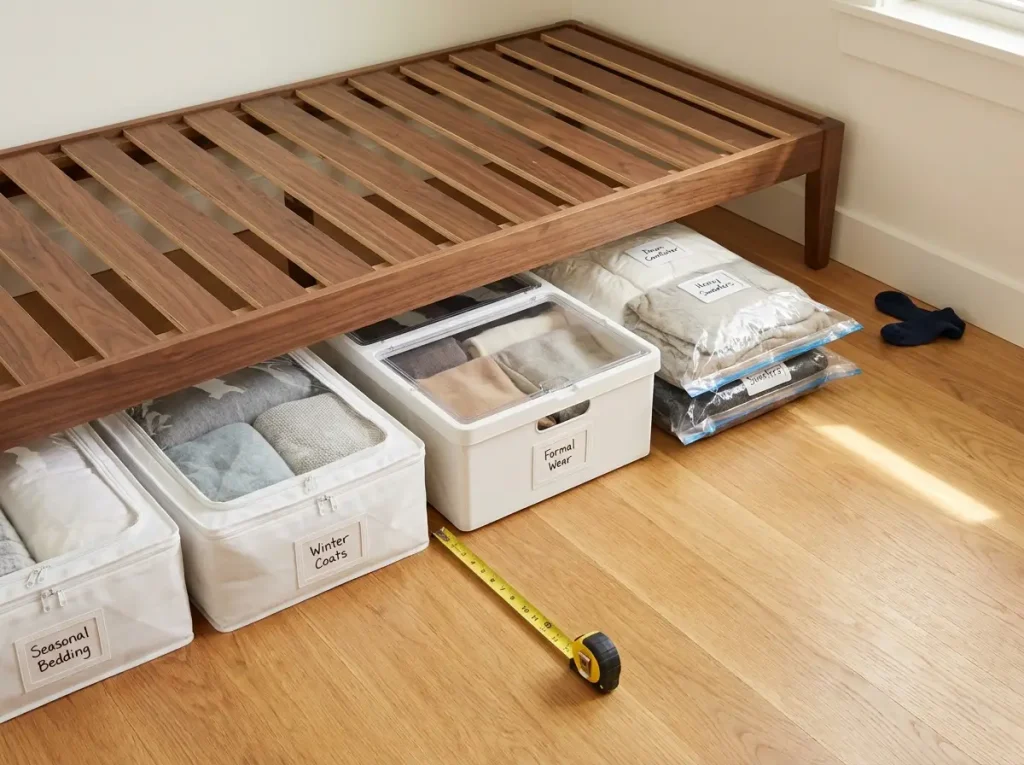
The decision tree here is simpler than it looks once you have your clearance number.
If you have less than 7 inches, vacuum bags are the move for soft items. Nothing else compresses enough to fit reliably, and hard containers will either scrape or simply not slide under at all. Pick up a set of SpaceSaver bags and use them for the duvets, coats, and extra pillows that would otherwise take up closet space.
If you have 7 to 8 inches, flat fabric bags are your main option. The Nest Neatly and StorageRight bags both work here, and for most households this is all you need — seasonal clothes in bags under the bed, cycled twice a year as part of a seasonal closet rotation. The StorageWorks fabric boxes work too if you prefer a more structured look; at 6.7 inches they fit the same clearance range with slightly more rigidity.
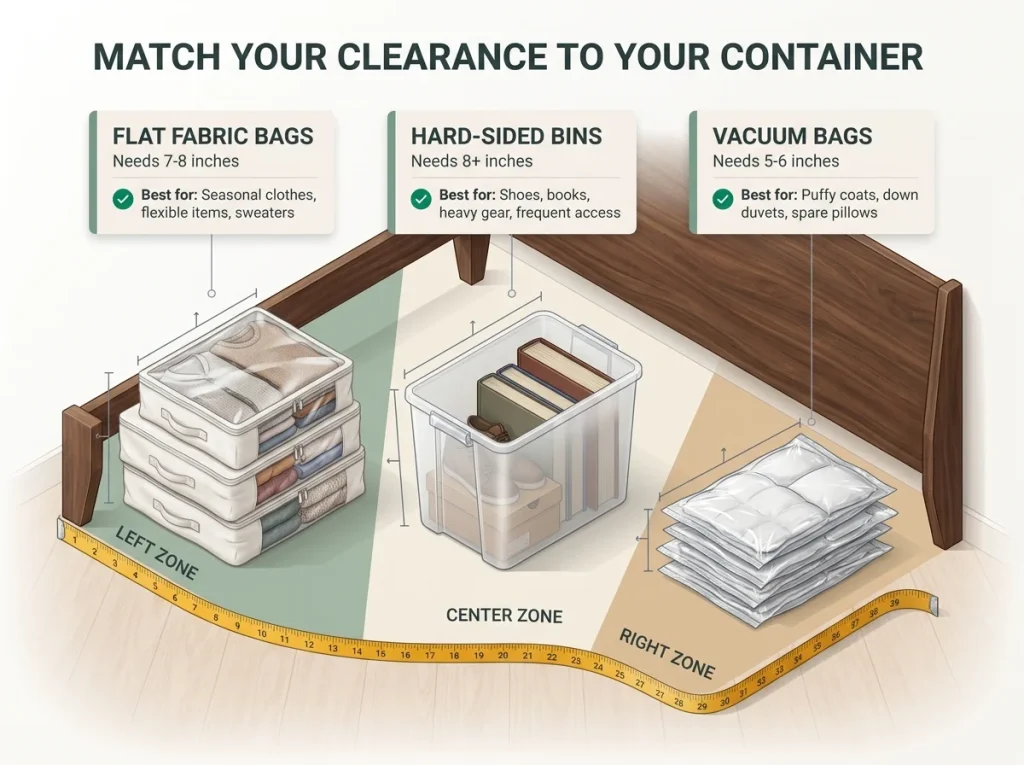
If you have 8 inches or more, you have choices. Rolling bins become practical for anything you want to access more than once a season. Larger hard-sided containers work. This is also the clearance range where the under-bed space becomes genuinely useful for more than just seasonal storage — spare bedding, luggage, craft supplies, whatever doesn’t have a good home elsewhere.
One thing that catches people off: a bed shared by two people often has different storage patterns on each side. The person who accesses their under-bed storage every week needs rolling bins or a setup close to the edge. The person who stores strictly seasonal items can use fabric bags pushed further back. You don’t have to use the same container type on both sides. NAPO — the National Association of Productivity & Organizing Professionals — frames this as “storage by access frequency”: items you touch more than twice a year need a faster retrieval system than items you rotate only seasonally.
Pro tip: Whatever container you choose, don’t fill the space edge to edge. Leave a few inches of empty space at the foot of the bed. It sounds counterintuitive, but that gap lets you pull bins out without lifting the mattress, and gives you room to check for dust buildup twice a year without rearranging everything.
Conclusion
Measure clearance first — that single number eliminates two-thirds of the decisions. At under 7 inches, vacuum bags are your practical path. From 7 to 8 inches, flat fabric bags like the Nest Neatly or StorageRight set fit well without drama. At 8 inches or more, rolling bins are worth considering if you access the space regularly. The container type matters less than getting one that actually fits your frame.
Three months from now: check whether the things you stored are actually getting used. Under-bed storage fails when it becomes a second closet for things you never touch — if you haven’t opened a bag once, move that content somewhere else and reclaim the space for something you need seasonally. If your closet is overflowing and that’s what’s driving the under-bed overflow, fixing the closet first usually solves both problems. The system only works if it turns over.
Start by measuring. Then pick one section — one side, one bag, one use case. Get that right before filling the whole bed.
Q1 What is the best clearance height for under bed storage containers?
Seven to eight inches gives you the most options, including fabric bags and hard-sided containers. With 8 or more inches you can also use rolling bins. Below 7 inches, stick to vacuum compression bags — they compress to under 2 inches and work in any clearance.
Q2 Can you use under bed storage on a platform bed?
Yes, but platform beds usually have less clearance than traditional frames — often 5 to 8 inches instead of 9 to 12. Measure the vertical gap from floor to the lowest point of the frame before buying any container. The center support beam, if your bed has one, is usually the lowest point.
Q3 Are vacuum storage bags safe for down comforters and wool?
Down and wool compress fine for a season, but shouldn’t stay fully compressed for more than a few months. Cycle them out during seasonal switches — compress in fall, unpack in spring — and the fill loft recovers normally. Extended multi-year compression can break down fill clusters over time.
Q4 What’s the best way to organize under bed storage for small apartments?
Use the bed for strictly seasonal items only — off-season clothes, extra bedding, and bulky items like spare pillows. Keep things that cycle twice a year or less under the bed, and keep frequently used items in more accessible spots. Labeling the front of each bag (even with painter’s tape and a marker) pays off every time you need something quickly.
Q5 Do rolling under bed storage containers scratch hardwood floors?
Most quality rolling containers use rubber-footed casters that won’t scratch hardwood. The risk comes from dragging a container without wheels — the fabric or plastic base can leave marks if you pull hard across wood. If your floor is sensitive, put a thin felt square under the contact points or use a container with proper swivel casters from the start.