










In this article
You spent a Saturday lining up every pair on the closet floor, heel to heel, proud of it. Two weeks later it’s a heap again, and one shoe of your favorite pair has gone missing under the hanging shirts. I’ve organized shoes in three rental reach-ins and one oversized walk-in, and the fix was never a bigger closet — it was treating the closet as a space with fixed dimensions instead of a pile to neaten. Here’s how to organize shoes in a closet so the system actually holds, whether you’ve got a 24-inch rental reach-in or a walk-in with a wall to spare, and how it fits into your whole-home shoe storage system. The goal isn’t a photo. It’s a closet that still makes sense in three months.
Quick Answer
Organizing shoes in a closet comes down to editing first, then matching storage to your closet’s real dimensions:
- Edit and pair up, then donate what you haven’t worn in a year.
- Measure your shelf depth and the gap under your hanging clothes.
- Give every daily pair one fixed slot at eye level.
- Fill the dead floor under hanging clothes with a narrow tiered rack.
- Box seasonal and dress pairs in clear bins up on the top shelf.
Why Your Closet Shoe Pile Keeps Coming Back

Before you buy a single organizer, it’s worth understanding why the last setup failed. Because it did fail. The pile came back, or you wouldn’t be reading this. The reason is almost never that you’re messy. It’s that the pile has no rules and your daily shoes are coming off in the wrong room.
No Pair Has a Fixed Address
A shoe pile re-forms because every pair is homeless. You put shoes in the closet, but no specific pair belongs in a specific spot, so the moment you’re rushing, they go wherever your hands drop them. They line up fine for a week, then sneakers, flats, and heels get muddled up into one tangled mess again. Dividers and racks only fix this if every slot has an assignment: running shoes here, work flats here, the one pair of dress shoes there.
There’s a hidden cost to the open heap, too. Shoes left loose on the floor collect dust and pet hair, take on moisture, and get squished out of shape by the hanging clothes pressing down on them. So the pile isn’t only an eyesore. It’s slowly wrecking the shoes you actually paid for. A fixed slot keeps each pair’s shape and keeps it clean.
Your Daily Shoes Never Reach the Closet
Here’s the part nobody mentions. You take your everyday shoes off at the front door, not in the bedroom. For two years, my everyday sneakers never once made it to the closet I’d so carefully organized — they lived in a heap by the entry, because that’s where my feet came off. A closet-only system is built for the wrong shoes.
The fix is to split the problem by where shoes actually land. Your daily one or two pairs need a slot at the door, so give them a landing spot by the door instead of fighting your own habits. The closet then handles everything else: work shoes, dress pairs, seasonal, and special-occasion. Putting today’s pair back in its slot takes under thirty seconds, and that single habit is the whole maintenance system. Miss it, and the heap wins.
Start by Editing the Shoes You Actually Wear
Most overflowing closets aren’t a storage problem. They’re a volume problem. You can’t fit 60 pairs into a 24-inch reach-in no matter how clever the rack is, and half that pile hasn’t touched the ground in a year. Editing first is the step everyone wants to skip and the one that does the most work.
Pull Everything Out and Pair It Up
Take every pair out of the closet and pair them up on the floor first. Pairing is how you find the lone shoe whose partner has been hiding under a sweater since spring. Once everything is matched, the orphans are easy to spot, and so is the sheer amount of it.
Then be honest about what you’re keeping. The dated pairs, the ones that have never been comfortable, the worn-through soles — those leave now, in a donation box, before you design anything. Fewer shoes beats more storage every time, and it’s free. You don’t need a system for shoes you don’t wear.
Sort by How Often You Actually Wear Them
Group what’s left by frequency, not by sentiment or color. Four buckets work: daily, occasional, special-occasion, and off-season. This sort decides everything that follows, because the daily pairs earn the eye-level real estate and the twice-a-year pairs get banished up high.
Not sure which pairs to cut? Turn every shoe so the toes point backward on the shelf. After a month, the pairs still facing backward are the ones you never reached for — that’s your donate pile, decided without the agonizing.
Once you’ve cut the collection down, measure before you assume you need to buy anything. A lot of people find the shoes they kept fit the shelf they already own, faced heel-to-toe. That’s the cheapest fix there is, and we’ll get to the geometry that makes it work next.
Measure Before You Buy Anything
The reason your last shoe rack “didn’t fit” is that nobody told you a closet shelf is deeper than a shoe is long. This is the single most useful thing to understand about closet shoe storage, and not one competitor article gives you the actual numbers. So here they are.
Your Shelf Is Deeper Than Your Shoe Is Long
A standard reach-in closet shelf runs about 12 to 16 inches deep. Most adult shoes are 9 to 13 inches long. That means on a 16-inch shelf, a single front-facing row of shoes wastes 3 to 6 inches of dead depth behind every pair. You’ve been storing shoes in a way that throws away a third of the shelf.
There are two free fixes. Face each pair heel-to-toe (one shoe pointing in, its mate pointing out) so a pair fits in the depth of one shoe. Or run a second staggered row behind the first on a riser. Closet pros put shoes on 10-to-12-inch shelves precisely so each pair sits one-deep with no overhang. That depth is the whole game.
Double a Shallow Shelf Without Buying Furniture
When facing pairs heel-to-toe still isn’t enough, you can stack vertically into that wasted back depth. Clear acrylic shoe slots hold one shoe above its mate, doubling what a single shelf row holds. The Neprock Shoe Slots adjust from 2.7 to 7.2 inches to fit anything from flats to chunky sneakers, and because they’re clear, you still see what’s in them. One caveat: they need real vertical clearance above the shelf, so they’re useless under a low fixed shelf where the shoes already graze the bottom of the one above.
Measure your single longest shoe, not an average one. The men’s size 12 boot or the platform sneaker is what blows past a shelf edge and stops the door from closing. Design for your biggest pair and everything smaller falls in line.
Reclaim the Dead Floor Space Under Your Hanging Clothes
You’re staring at a “full” closet, but there’s a column of empty air doing nothing under your shirts. In a reach-in, this is the highest-return move you can make, and most people walk past it every single day without seeing it.
Measure the Gap Between Your Clothes and the Floor
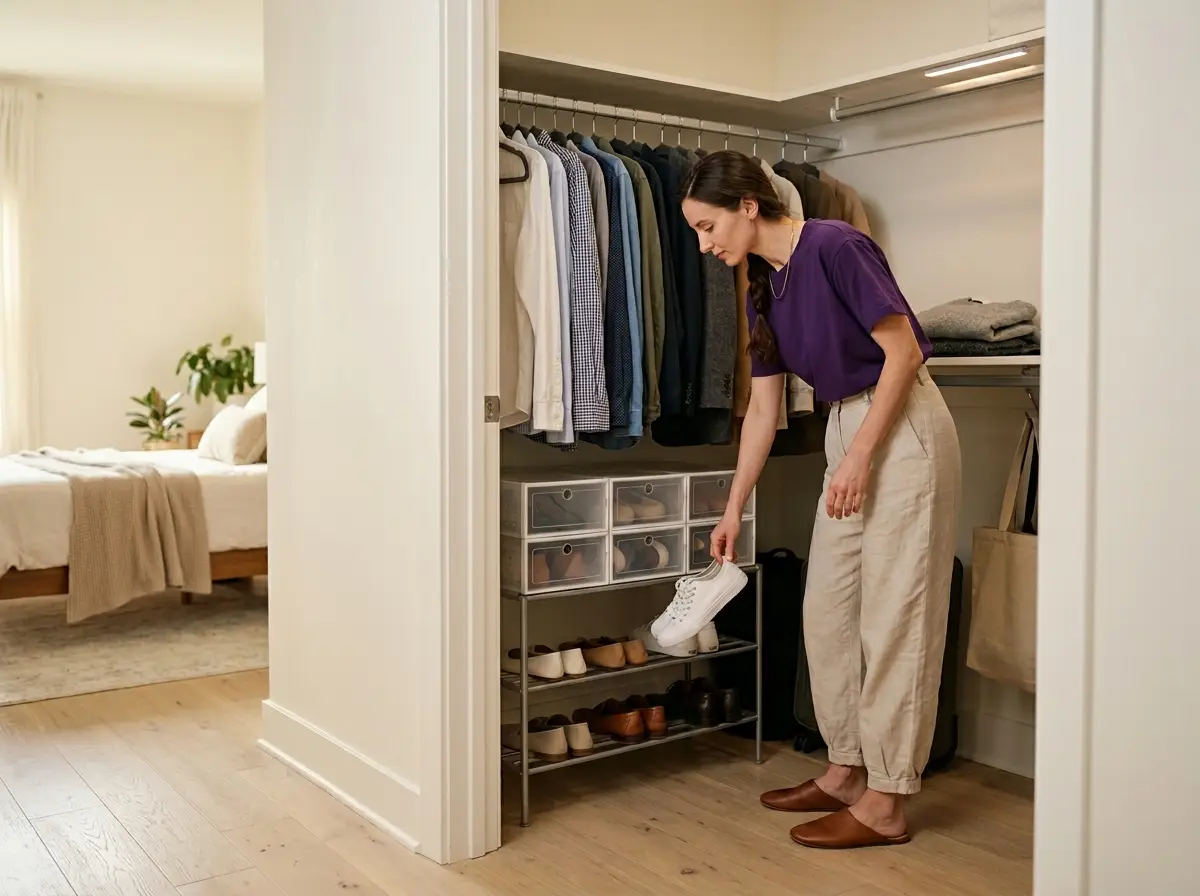
Hung shirts and jackets stop somewhere around 12 to 20 inches above the closet floor. That whole channel below them is usually wasted on a couple of tossed-in pairs. A narrow vertical rack drops straight into that gap and turns one floor footprint into 5 to 8 pairs of stacked storage.
The mistake to avoid is buying for the closet you imagine instead of the one you have. I used to tell people to just grab a tall 8-tier rack for any reach-in. Then I watched one jut three inches past the door frame in a friend’s 22-inch rental, and the door wouldn’t close — a problem that happens to everyone exactly once. Now I measure the gap and the depth first, every time.
Match the Rack Depth to Your Shelf
The rack has to be about as deep as your shelf, roughly 12 inches, or it sticks out past the door frame. The SONGMICS 8-Tier Narrow Shoe Rack is 12 inches deep and 17.6 wide, so it slots into a standard reach-in gap and stacks pairs up the dead vertical space without drilling a thing. If your rod-to-floor gap is short or your closet is genuinely tiny, the slimmer SONGMICS 5-Tier Slim Rack is only 8.3 inches wide and does the same job at a smaller scale. Both are freestanding, so they move with you when the lease ends — though neither is the right call if you’ve got a deep walk-in, where wall-mounted shelving uses the space better. If you want to compare which rack style actually holds up, the buyer’s guide breaks it down pair by pair.
And honestly, that one move, a narrow rack in the dead floor channel, reclaims more usable space than any other single thing you’ll do in a reach-in. Measure the gap. Buy to fit it.
Reach-In vs Walk-In Closets Need Different Plans
Most guides quietly pivot to a custom walk-in build halfway through, which is useless if you’re standing in a 24-inch rental reach-in. These are two different problems with two different layouts, and lumping them together is why so much shoe advice falls flat. Sort out which one you have before you spend a dollar.
The Reach-In Plan — Go Vertical, Drill Nothing
A reach-in is narrow and shallow, often just 24 inches deep with one rod, so you win by going up and using surfaces that don’t exist yet. A freestanding rack takes the dead floor. A tension rod mounted low across the closet walls becomes a no-drill second tier for sandals or a boot-clip bar. And the back of the door is free real estate. An over-the-door organizer earns its keep here for flats and slip-ons. The SimpleHouseware Over-the-Door Shoe Organizer holds 24 pockets and needs about 2 inches of door clearance, though it’s a non-starter on a louvered or mirrored door. None of this leaves a mark, which matters when your deposit is on the line — and it’s the same no-drill thinking behind the rest of a reach-in layout.
A renter with one reach-in can reclaim well over 12 cubic feet of dead closet space for the cost of a couple of racks and zero holes. That’s the part the custom-closet companies don’t want you to know.
A spring-tension rod set low across a reach-in costs less than lunch and installs in ten seconds with no tools. Hang sandals over it by their straps, or clip tall boots to it. When you move, it pops right out and leaves the walls untouched.
The Walk-In Plan — Build Zones, Not Piles
A walk-in gives you what a reach-in never can: wall space. Use it to build zones instead of one long shelf of shoes. Put a daily wall at eye level, a dress-shoe shelf, and seasonal pairs up high, so you’re never digging. Because walk-in shelves run deeper, often 16 to 20 inches, you can run two staggered rows per shelf or add angled risers that a shallow reach-in can’t handle.
This is also where dedicated cubbies or a wall-mounted shoe shelf pay off, since you own the vertical real estate to commit to it. The same zoning logic that organizes the clothes decides where the shoes go, and they just slot into it. The rule that stays constant in both closets: daily pairs at eye level, everything else sorted by how often it earns a place there.
Store Occasional and Seasonal Pairs Up High
Your strappy sandals don’t need to fight your work sneakers for the good shelf in February. The pairs you reach for twice a year should be the hardest to reach, which frees the prime eye-level space for the shoes you wear daily. The top shelf is where they go.
Clear, Vented Boxes Beat Cardboard
The conventional wisdom is to keep shoes in their original boxes. In practice, you forget which pair is in which box, the cardboard hides everything, and you never dig past the front three. Professional organizers say at least one side of any shoe container should be see-through, or it quietly becomes dead storage. The Kuject Clear Drop-Front Shoe Boxes come in an X-large size that fits up to a men’s 13, with ventilation holes so shoes breathe instead of trapping moisture, and a drop-front panel so you can grab a box from the middle of a stack without toppling the tower. The drop-front panels are on the thin side, so don’t overstuff them. One thing a box can’t fix on its own is moisture. University extension guidance on closet storage warns that closets, especially ones against an exterior wall, trap humidity and invite mildew, so let shoes dry fully before they go away for the season.
Rotate Twice a Year
Set a twice-a-year swap and the system runs itself. When the season turns, the top-shelf boxes come down and the eye-level pairs go up, and sandals and boots simply trade places. It takes fifteen minutes and it’s the difference between a closet that works in July and one that’s still full of snow boots.
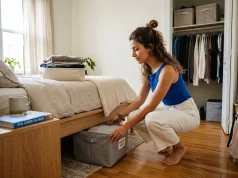
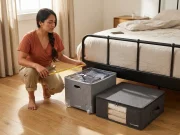
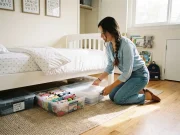
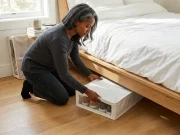
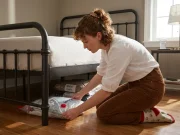
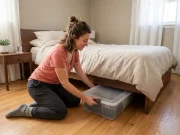
If the pairs still won’t all fit after editing and boxing, that’s your signal to send the overflow somewhere else rather than cramming the closet. Under-bed bins are the usual answer, and it pairs naturally with a seasonal rotation you do twice a year. Cramming never holds; the heap just comes back up high instead of down low.
Keep Boots Upright Without Crushing Your Clothes
Boots are the troublemakers of any closet. They flop over, crease at the ankle, and lean into your hanging clothes if you just stand them on the floor. Tall boots also have a problem no other shoe has — an empty shaft with nothing to hold it up.
Why Tall Boots Collapse and Wreck Your Clothes
A tall boot shaft is 12 to 16 inches of unsupported material, so left on its own it folds at the ankle and sets a permanent crease. I learned this the expensive way: I left a pair of tall suede boots leaning on the closet floor one winter, and by spring the shafts had folded over and the left one had a crease worn in where it rested against the rod bracket. There was no fixing it.
Crowding makes it worse. Keep boots a few inches off your hanging garments and off the walls, or the shafts scuff the wall and crease whatever they’re pressing against. Boots need a little breathing room that a packed closet floor never gives them.
Shapers, Pool Noodles, or a Low Rod
The free fix comes first, because it works. A pool noodle cut into thirds slides right into a boot shaft and holds it upright — two noodles handle three pairs. A rolled magazine or a cardboard tube does the same in a pinch, and even a flip-flop dropped into each boot buys you some structure.
If you want something tidier, boot shapers get recommended everywhere. And they work — unless you’ve got six pairs, at which point a bag of pool noodles does the identical job for the price of one shaper set. The Boot Shapers / Tube Inserts are sized for tall-boot shafts and hold their shape better than foam over years of storage, but they’re genuine overkill if you only own one pair. For a tight shelf, skip standing them entirely and clip boots by the shaft to a low rod with trouser clips, or a binder clip on a large book ring if you’re improvising.
Putting It Together
Organizing shoes in a closet isn’t about the rack you buy. It’s three moves in order: edit hard so you’re storing fewer pairs, design for your closet’s real geometry by measuring the shelf depth and the dead floor, and give every daily pair one fixed slot it returns to in under thirty seconds. Get those right and the storage almost picks itself.
In three months, watch for the one pair that keeps ending up on the floor. That’s not a discipline failure — it’s a signal that its slot is in the wrong place, or that its real home is by the door, not the closet. Move it and the heap loses its last foothold.
Start with the daily pairs and the dead floor under your hanging clothes. Get those two things right, then box up the seasonal stuff. And don’t buy anything until you’ve measured.
Frequently Asked Questions
01How do I organize shoes in a small closet?
Go vertical and drill nothing. Drop a narrow tiered rack into the dead floor under your hanging clothes, add a tension-rod second tier, and use the back of the door for flats. A small closet has more unused vertical space than you think.
02Should you store shoes in boxes or out in the open?
Keep daily pairs out and visible so you actually wear them, and box the occasional and seasonal pairs. Use clear, vented boxes for the boxed ones — if you can’t see the shoe, you won’t dig for it, and it becomes dead storage.
03How do you organize a lot of shoes in a closet?
Edit hard first. Most large collections are half unworn. Then zone by frequency: daily pairs at eye level, occasional in the middle, seasonal and special-occasion boxed up high. Send true overflow to under-bed bins instead of cramming the closet.
04How do you store boots in a closet so they don’t fall over?
Hold the shaft upright with a boot shaper or a pool noodle cut into thirds — both stop the ankle crease. Keep boots a few inches off your hanging clothes so the shafts don’t scuff or crease your garments.
05How deep should a closet shelf be for shoes?
About 10 to 12 inches fits one pair per row with no overhang, and up to 12 to 14 inches handles large sizes. Anything deeper just wastes back-of-shelf space unless you add shoe slots or face pairs heel-to-toe.