








In this article
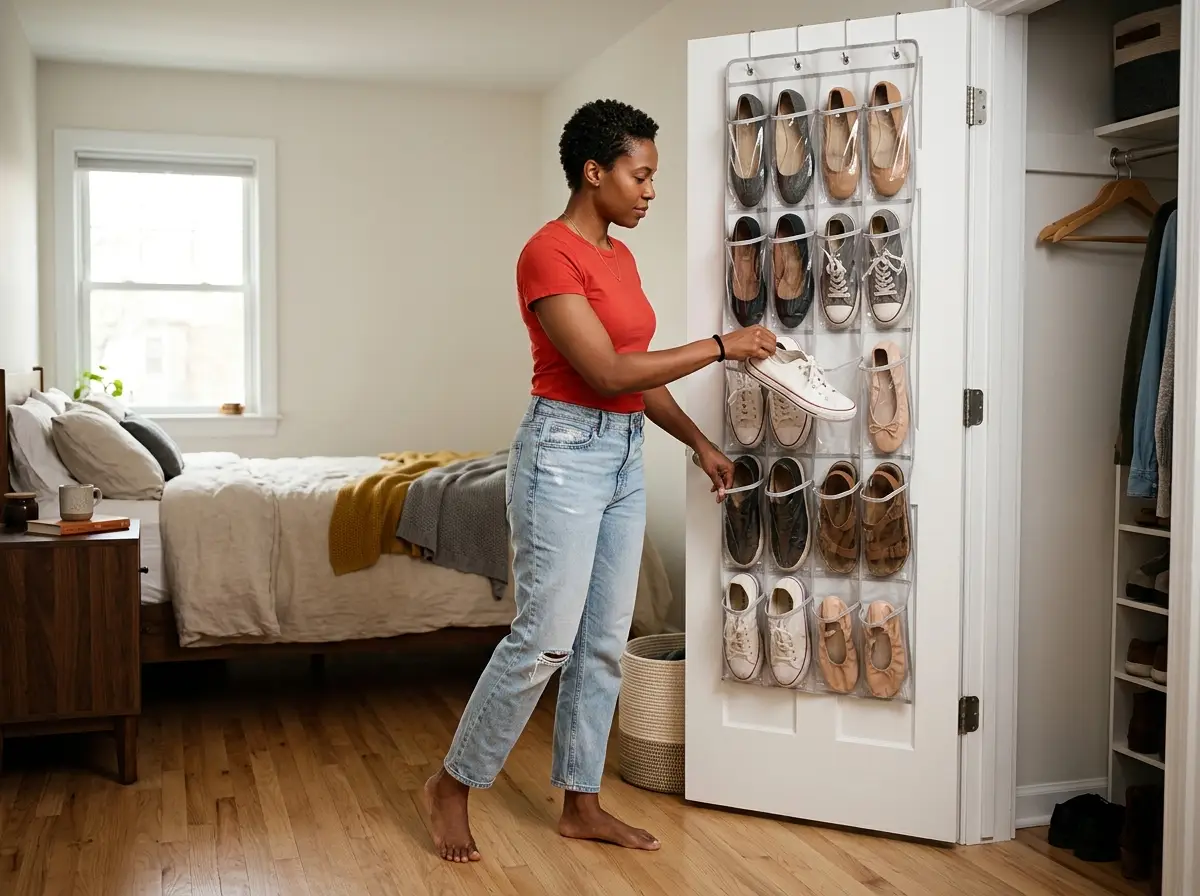
You hung the organizer to get your shoes off the floor. A month later there’s a row of little dents stamped across the top edge of the door, and if you bought the big one, the door doesn’t quite close anymore. I’ve hung these on hollow-core rental doors, solid-core bedroom doors, and one closet door I’m fairly sure was older than I am — and I’ve watched which setups survive daily use and which ones quietly cost someone a security deposit. Over-the-door shoe storage is one of the few small-space moves certified professional organizers actually back, but only when it suits the door it’s hanging on. This is the over-the-door shoe storage decision made by door-fit and failure prevention instead of pocket count: what really fits your door, how many pairs you’ll get, how to mount it so it comes off clean on moving day, and when to skip it and lean on your whole-home shoe organization plan instead.
Quick Answer
Here’s the short version before you buy or hang a thing:
- Measure the door’s edge first — most hooks fit 1-3/8″ to 1-3/4″.
- Plan on one shoe per pocket; boots rarely fit.
- Pad the hooks and the back bar to protect the finish.
- Check the door-to-jamb gap or it won’t close.
- Skip it on hollow-core, fire-rated, or constantly-opened doors.
Will an Over-Door Organizer Even Fit Your Door?

Everyone buys the rack first and measures the door never. It’s backwards. Two numbers decide whether this works, the thickness of your door and the gap between the door and its frame, and both take about thirty seconds to check with a tape measure you already own. Get them wrong and you’re either returning a rack that won’t seat or living with a door that won’t latch.
Measure the Edge Before You Add to Cart
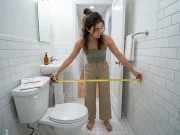
Open the door and measure the thickness of its top edge. A standard interior door in most homes and apartments is 1-3/8 inches (1.375″); a solid-core or exterior door runs 1-3/4 inches (1.75″). That half-inch matters more than it sounds. Plenty of budget racks ship with hooks built only for the 1.37″–1.65″ range, and they will not seat on a 1.75″ solid door. They perch, wobble, and pop off the first time someone shuts the door with any feeling.
If you don’t know your door thickness, or you might move the rack to a different door later, get adjustable two-sided hooks that span both common sizes. One set fits a thin closet door and a chunky solid one, which takes the guesswork out of the whole thing.
Measure the door edge with an actual tape, not your eye. The difference between a 1-3/8″ and a 1-3/4″ door is the difference between a rack that sits flush and one that rattles loose by week two — and you can’t tell them apart by looking.
Hollow-Core, Solid, or Fire-Rated — the Type Decides
Here’s the part the roundups skip. Most interior bedroom and closet doors are hollow-core: two thin panels over a cardboard honeycomb, with a narrow strip of solid wood along the top. When you hang a loaded rack on a hollow-core door, all the weight lands on that thin top rail, and the metal hooks travel a little side-to-side every single time you open and close the door.
Over a few weeks that motion bites into the finish and leaves the gouges people describe as “it chewed up the top of my door.” A solid-core door handles the same load without complaint.
Not sure which kind you’ve got? Knock on the middle of the door. A hollow-core door sounds exactly like it is, light and drum-like, while a solid door gives back a dull, dense thud. Hollow-core isn’t a dealbreaker on its own, but it changes how much you can safely hang and how carefully you pad the hooks, and both of those are coming up.
That’s also why fire-rated doors deserve a hard pause. The unit-entry door on a lot of apartments is fire-rated to slow smoke and flames in a hallway, and many leases flatly prohibit hanging anything on it.
If the door in question is your front door, check the lease before you commit. And either way, an interior closet or bedroom door is the better host. Concentrated weight pulling on the top edge of a door is the same load-concentration problem behind the CPSC’s furniture tip-over standard: it’s not the total pounds, it’s where they pull.
Everyone says over-the-door storage is the no-risk renter move. And it is — unless your door is hollow-core and you load it heavy, in which case the “no-damage” promise quietly falls apart. We’ll fix exactly that a couple of sections down.
The “Will It Close?” Check
The other failure is geometric, and it’s the one that surprises people. A rack hangs on the back of the door and sticks out toward the frame. If it sticks out farther than the gap between the door and the jamb, the door binds when you try to close it, or it won’t latch at all.
The pre-buy check is three quick measurements: the door thickness at the edge, the clearance between the closed door and the frame, and the rack’s stated depth. If the depth is greater than your clearance, the door won’t close — no exceptions.
I learned this with a heavy-duty, deep behind-the-door rack I tried on a bedroom door once. It was built like a tank, held a serious load, and it would not let the door shut. Worse, I dented the frame just wrestling it into place. Shallow racks around 3 inches deep clear most doors; anything 6 inches and deeper is a real risk you have to measure for first.
Measuring that clearance is easier than it sounds. Close the door almost all the way and look at the gap where the back of the door meets the stop molding on the frame. That gap, plus the door’s own thickness, is the working depth your rack has to live inside.
If you can’t picture it, hang the empty rack and try to close the door before you load a single shoe in. Better to find out with bare pockets than with thirty pounds of footwear already in place.
How Many Pairs You’ll Really Fit
“24 pockets, holds 40 pairs!” is a flat-shoe fantasy printed on a box. Real sneakers, men’s sizes, and anything with a shaft blow that math apart fast, and the disappointment is always the same. You fill it, you’ve still got shoes on the floor, and you wonder what you did wrong.
Nothing. The number was never honest.
A clear pocket face measures roughly 8.3 by 4.3 inches, a little more on the extra-large models. That’s one adult shoe per pocket, and only if it’s a flat, a sandal, or a low sneaker. So a “24-pocket” organizer is really about 12 pairs of slim shoes — fewer once you add chunky sneakers.
A tester at Bob Vila loaded a 12-pocket model and got exactly 12 pairs; a “10-tier, 20 to 30 pairs” rack realistically lands around 10 to 20 pairs of actual sneakers. Plan for the low end of any range and you’ll never be let down.
Pocket count isn’t even the real ceiling — the hooks are. Fabric racks are usually rated around 40 pounds, metal-hook models near 50, and heavy-duty four-hook setups up to 80.
But a rating is a maximum, not a target. An average pair of sneakers runs about two pounds, so a 40-pound rack is genuinely full at roughly a dozen pairs. Load it all the way to the printed number and you’re inviting exactly the sag and the door-gouging that the rating quietly assumes you’ll never push it to.
I used to tell people to buy the biggest rack that fit the door. More pockets, more shoes, obviously. After watching a 24-pocket unit sag and strain a friend’s door (and bind it half-closed), I changed my mind.
Two small six-pair space-savers, one on a closet door and one on a bedroom door, hold the same shoes without overloading either door. Spreading the weight beats stacking it.
For a daily-driver that’s honest about capacity, the Misslo 12-Tier Breathable Mesh Organizer (56.5″ x 22.3″ x 4″) is the one I reach for — the mesh airs shoes out instead of trapping the day’s sweat, which clear vinyl can’t do. Two caveats: the included hooks don’t fit every door thickness, so check yours, and the wide center pocket can separate a pair if you’re not paying attention.
Before you buy, lay out the exact shoes you want off the floor and count them. Not your whole collection — the pairs you actually need to store here. That number, not the pocket count on the package, is the size you’re shopping for.
The Boots Problem Nobody Mentions
Boots, high-tops, and men’s shoes over about size 9.5 do not seat in a standard pocket. They bulge out, flop over the lip, and end up back on the floor under a half-empty rack — the exact thing you were trying to fix. If boots are most of your problem, a standard pocket organizer is the wrong tool and you’ll feel it on day one.
Deeper-pocket models help. The Misslo Large-Capacity Deep-Pocket Organizer (61.2″ x 22.3″ x 4.5″) has pockets sized to swallow some ankle boots and bulkier shoes that a shallow rack rejects. It still tops out around 12 real pairs, the center pocket can split a pair, and tall riding boots are still a no.
For anything that won’t cooperate, see the last section, because sometimes the answer is a different zone entirely. If you want the full menu of organizer styles before you decide, our guide to how the organizer types stack up against racks and boxes lays them out side by side.
Pockets, Mesh, Wire, or Bamboo
Each type fails in its own way. Clear vinyl smells. Mesh sags. Wire knocks shoes off itself. Bamboo eats your door clearance.
None of that means “don’t buy” — it means pick the trade-off you can live with, because there isn’t a type that does everything. Here’s the honest version at a glance.
| Type | Best For | Door Fit | Breathes? | Renter Note |
|---|---|---|---|---|
| Clear PVC pockets | Seeing every pair fast | Shallow — closes on most doors | No, can trap odor | Pad the hooks, fits most |
| Breathable mesh | Daily sneakers, odor control | Check hook width | Yes | Solid renter default |
| Wire / metal | A no-sag, lasting frame | Heavier on the hooks | Yes, open frame | Watch tier spacing |
| Bamboo | Looks that last | Deep — clearance risk | Partly | Measure clearance first |
Clear Vinyl and Fabric Pockets
Clear PVC is the visibility champion. You see every pair through the front and grab without digging, which is the whole appeal in a dim closet. It’s also usually shallow, so it closes on most doors.
The trade-off is real, though: vinyl traps odor and dirt, clouds over, and can crack in a warm closet after a few months. You’re buying see-through convenience and paying for it in longevity.
The SimpleHouseware 24-Pocket Clear Organizer is the one I keep coming back to here, mostly because its 3-inch depth is shallow enough to clear doors that fatter racks bind.

If your door’s clearance is tight or you only need a handful of pairs, a smaller fabric model is the move. The StorageManiac 12-Pocket Fabric Organizer (35.2″ x 17″ x 6.5″) is compact and budget-friendly, and you can stack two on one door for roughly 24 pockets without the full-length sprawl. The catch is depth. At 6.5 inches it’s deeper than the clear racks, so measure your jamb clearance before you order or you’ll be fighting the door.
Wire, Metal, and Bamboo
Wire and metal racks look like the grown-up choice. No fabric to sag, no vinyl to cloud, just a frame that should last for years. The conventional wisdom is that wire is the sturdy pick. In practice, the tiers are often spaced too tightly, so shoes knock each other loose every time you grab a pair, and you spend each morning re-seating sneakers that fell.
The Whitmor Over-the-Door Metal Rack is a fair stand-in for the whole category. It’s genuinely durable, but check that the tiers give you at least four inches of vertical room before you commit, or the daily knock-off will drive you up a wall.
Bamboo is the looks-and-lasts option, and it does both. The price you pay is depth. A bamboo rack can run 10 inches deep or more, which lands it right back in the will-it-close problem from the first section. Beautiful, durable, and the first thing to bind a door if you didn’t measure. If your real goal is making the front-door zone look pulled together rather than solving a closet-door capacity problem, that’s a different job, and our take on styling an over-door rack for the entryway covers that side of it so this one can stay on the mechanics.
Hanging It Without Wrecking the Door
The rack itself almost never damages the door. The bare metal hooks do. Solve the hooks and over-the-door storage becomes genuinely no-drill and no-damage — the thing it’s supposed to be. This is the part that protects your deposit, so it’s worth the five extra minutes.
The Two Spots Damage Actually Comes From
Damage shows up in two places, and you have to address both. The first is the hook tongue where it curls over the top edge of the door. That’s the gouge.
The second is the back bar that rests against the door’s face, and that’s the rattle and the rub. Pad both and the door stays pristine.
Stick adhesive felt or silicone pads on the hook contact points, and run a thin strip of foam weatherstripping along the back bar. The felt stops the metal from biting the finish; the foam stops the 2 a.m. rattle when someone shuts the door down the hall. Felt is quieter and cheaper, but silicone grips a slick painted door better and won’t compress flat over a year. On a door I open every day I use silicone, and felt everywhere else.
Honestly, this is the cheapest insurance in the whole project, and it’s the step almost everyone skips. Then distribute the weight the smart way, with the heaviest shoes in the lower pockets and the lightest up top, so the load isn’t all hanging off the hooks at the very top edge.
Take a photo of the door’s top edge before you hang anything, and another after you take it down on moving day. Twenty seconds of phone storage is the cleanest evidence you’ll ever have that the door went back exactly as you found it.
Hollow-Core Doors Need a Gentler Trick
If your only option is a hollow-core door and you want to keep the load light, you can skip the metal hooks altogether. Run a length of sturdy ribbon over the top of the door and anchor it with a thumbtack pushed into the top edge, not the face, of the door. Two tacks, one at each end of the ribbon, keep it from sliding sideways. The pinhole is invisible and the thin top rail never takes the concentrated hook pressure that does the gouging.
It only works for a lightweight rack with a few pairs, but for a renter staring down a deposit, it’s a genuinely smart workaround. The same no-drill thinking carries across the rest of a rental — it’s the same logic that keeps a rental closet damage-free without a single hole in the wall.
Keeping Pockets From Sagging and Smelling
Over-the-door organizers don’t fail on day one. They fail at month three, when the pockets have stretched into permanent slumps and the closet has started to smell faintly of feet. A little upkeep is the difference between a rack that lasts a year and one you’re embarrassed to open.
Sag is permanent once it sets in, so the move is to prevent it: don’t cram pockets past full, and keep your heaviest shoes off mesh and fabric, which stretch under steady weight.
Odor is the other slow creep. Mesh has the edge here because it breathes. Just let damp shoes dry fully before they go back in, since a wet sneaker in any pocket is how the smell starts. For clear vinyl, which doesn’t breathe at all, tuck a small cloth sachet or a baking-soda pouch into a lower pocket and it handles the trapped air.
Wipe the pocket bottoms about once a month. Grit and dust collect in the seams and grind into the fabric every time a shoe goes in or out, and that’s what wears a rack out early.
While you’re at it, rotate seasonal pairs out instead of forcing a winter boot into a summer pocket. Over-the-door storage works best as one piece of a bigger plan, so fold the rack into the rest of your closet shoe plan rather than treating it as the whole system. If the bottom pockets are sagging or shoes keep knocking loose at the three-month mark, that’s not a defect — it’s a signal you over-bought capacity, and a few pairs need to move elsewhere.
When Over-Door Storage Is the Wrong Call
The most honest thing a shoe-storage guide can tell you is “not for you.” Over-the-door storage is genuinely useful, but it’s a specialist, not a cure-all, and forcing it where it doesn’t belong is how you end up with a wrecked door and shoes still on the floor. Here’s when to walk away.
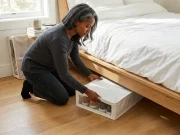
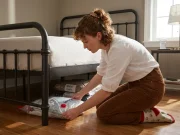
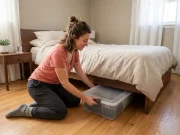
Walk away if your only door is hollow-core and you need to load it heavy, or if it’s a fire-rated entry door your lease protects, since the risk outweighs the reward, and a closet shelf or under-bed solution does the job without the gamble. Walk away if your collection is mostly boots and bulky shoes, because no standard pocket holds them; slide boots and bulky pairs into under-bed bins where they actually fit. And walk away if the door is one you open constantly, a bathroom or main entry, since the daily swing-and-bang wears out both the door and the rack faster than you’d think.
The size of your collection can settle it too. If you’re trying to get thirty-plus pairs off the floor, the hook weight limit makes the decision for you. That’s well past what 40 to 80 pounds of rated capacity holds safely, and you’ll be re-stacking fallen shoes within a season. A big collection wants a floor rack or a closet system that carries its weight on the ground, not a door edge.
There’s one more case people miss: if you have floor space or closet depth to spare, you don’t need the door at all. A simple floor rack or a set of drop-front boxes holds more and is easier to reach. The real skill isn’t owning an over-the-door organizer — it’s matching each pair to the right place, so flats and sneakers go behind a stable closet door, boots and bulk go under the bed, and your everyday pairs stay by the entry. That’s the whole game, and our guide to matching each pair to the right small-space zone walks through it room by room.
The Bottom Line
Three things carry the whole decision. Measure the door’s edge and its clearance before you buy anything. Fit decides success more than any feature on the box.
Plan on one shoe per pocket and pad the hooks, because that single step is the line between a year of quiet use and a gouged door. And if your door or your shoes are wrong for it, skip over-the-door entirely and send those pairs to the closet or under the bed.
In three months, give the rack a thirty-second audit: look at the top edge of the door for any marks and the bottom row of pockets for sag. A clean edge and crisp pockets mean you got the load right; gouging or droop means you asked too much of it, and it’s time to lighten up. Measure your door tonight — if it’s a standard interior door with clearance to spare, you’re about thirty seconds of measuring away from a floor that finally stays clear.
Frequently Asked Questions
01Do over-the-door shoe organizers damage doors?
They can, but the damage comes from the bare metal hooks, not the rack itself. The hooks gouge the top edge and rattle the door. Pad the hooks with felt or silicone and the back bar with foam, and a no-drill rack leaves no marks.
02How do I know if an over-the-door organizer will fit my door?
Measure the door’s thickness — most interior doors are 1-3/8″, solid doors 1-3/4″ — and the gap between the door and the jamb. The hooks must match the thickness, and the rack’s depth must be less than the clearance, or the door won’t close.
03How many pairs of shoes does an over-the-door organizer really hold?
Plan for one adult shoe per pocket, so a “24-pocket” rack holds about 12 pairs of flats — fewer for chunky sneakers. Boots and high-tops usually don’t fit standard pockets at all, so count your real shoe mix, not the box number.
04Can you use an over-the-door shoe rack on a hollow-core or fire door?
Be careful with both. Hollow-core doors have a thin top rail that hooks gouge quickly, so keep the load light and pad the hooks. Fire-rated entry doors often can’t have anything hung on them per lease or code — use a sturdier interior closet door instead.
05How do you install an over-the-door shoe rack without screws?
Hang it on over-door hooks sized to your door thickness — no tools needed. For a hollow-core door, steady a lightweight rack with a ribbon over the top secured by a thumbtack in the door’s edge, rather than relying on hook pressure on the thin rail.