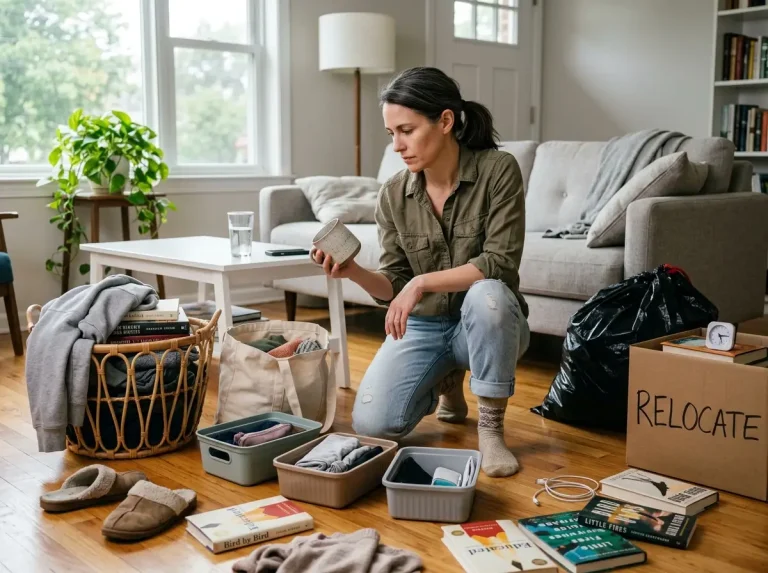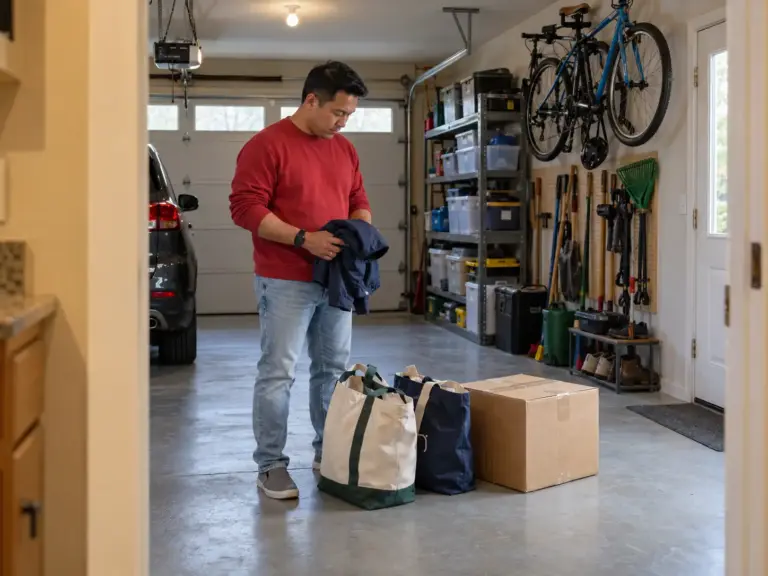

The sort is done and one box says SELL. You promised yourself a listing blitz for the weekend, and a week later exactly one item has gone, three people asked “is this still available?”, and the rest of the box sits in the spare room with the lights off. That is the usual shape of selling decluttered items online: selling clutter turns the pile you meant to get rid of into a second pile, with a to-do list attached.
A seller in a Reddit declutter thread described it almost exactly. After a week of listings from an attic holding two decades of stored things, they had sold one item, and they wrote that if people did not buy a few of the listed things, they would simply throw them out.
The thread’s own selling guide opens with a warning that your stuff is worth less than you think it is. So how to sell decluttered items online is partly a pricing question and mostly a pile-management question: what earns a listing, how big the queue is allowed to get, and the date it stops. If it does not sell by then, it moves on to what to do after decluttering.
Quick Answer
To sell decluttered items online without the pile stalling, work in this order:
- Keep only items that sold listings show actually move.
- Sort the pile into lots, cap it, and set a stop date.
- Pick one channel per lot, then list it with flaws, brand and model.
- Price from sold listings and set a floor.
- Ship only what fits one weighed box; otherwise offer local pickup.
- Reply first-come, hold your address back, and mark items sold.
Which Decluttered Items Are Worth Listing Online
You probably assume everything in the pile has value because you paid for it. But the list in your head is the purchase history, and buyers do not read it. They see a used item next to forty others like it. That is the sell vs donate decision, made one item at a time.

Check What Similar Items Actually Sold For
The r/declutter selling guide gives the test in one move: filter for sold items only and see what the thing actually went for, not what sellers are asking. Asking prices are hopes. Sold prices are the market. If you cannot find three or four recent sales of something close to yours, treat that as the answer and send the item to the donation box of your four-box method sort.
Commenters in a Facebook decluttering group add a shortcut for items you cannot name. Take a photo of the item with a photo search on your phone to identify the exact model, or use the photo feature on eBay, then run the sold filter on that name.
One commenter described the same loop on Marketplace: identify it, search that specific item, compare what similar ones are priced at, and only then decide whether it is worth your time. It takes a few minutes per item. It also stops a lot of listings before they exist, which is the point.
Count the Messages, Photos and Pickups, Not Just the Price
A listing is not one task. It is photographing, writing, answering the same three questions, lowering the price, arranging a handoff, and waiting for someone who may not show up. One commenter in that Reddit thread called selling “a part time job” they really did not want. Another refused to waste precious time haggling over old stuff and dealing with no shows.
Run your own Three-Month Test on each item: would you still be willing to do this work in week three, when the novelty is gone and the pile has barely moved? A sale only counts if the work behind it is work you will keep doing. For a lot of people the honest answer is yes for a handful of items and no for the rest.
The same Reddit thread also had a spouse who saw giving things away as losing the money paid for them, which is the sunk cost talking. The listing time is the real price of that feeling.
(If you are in a house with a garage, you can afford to keep too much for longer. If you are in a small apartment, every unsold item is sitting on your floor, so the test gets stricter where space is shorter.)
The Items That Rarely Pay for Their Own Listing
Commenters in the Facebook group were blunt about this. Knickknacks and plain appliances are plentiful at thrift stores, one wrote that unless you have really top-notch items it will not be worth the trouble, and the advice that kept repeating was to put your energy into the high-value items first and donate the rest. Decorative odds and ends, generic kitchen gadgets, anything with a dozen identical siblings on the shelf next to it: those usually belong in the donation bag, not the queue.
That is not a loss. It is a decision made in thirty seconds that would otherwise have cost you an evening and then happened anyway, a month later, with a worse mood.
Do the sold-listing check on your phone while the item is still in your hand, standing next to the box. An item you check later, from a list, gets listed on hope.
Sort the Sell Pile by Lot, Then Cap It and Set a Stop Date
This is where selling stalls, and it is rarely about the items. A listing queue with no size limit and no end date grows on its own, because every listing opens a new question (what is it worth, who asks, where do I put it until they come). The pile becomes a shop you never agreed to run.

Group Like Items Into Lots Before You List
Sorting by item feels natural and is slow. Sorting by lot is faster, because buyers often want the bundle. One commenter in the Facebook group sells the more expensive items on Marketplace and groups similar items to sell together. Another said people in their area sell clothes by the bag, listing the size and a price per garbage bag full.
The r/declutter selling guide points the same way for ordinary clothing: prepare large, low-priced lots on Facebook Marketplace rather than listing each piece. A lot sale like that beats ten separate listings for the same stack.
So build lots before the first photo: kids clothes in one size, a set of matching containers, a box of unopened candles, a drawer of one hobby’s supplies. One lot is one photo set, one description, one conversation, one handoff. Ten singles are ten of each.
Give the Pile a Size Limit and a Place to Live
No source sets a number for how much a person can list, and any figure would be a guess about someone else’s week. Measure it in yours instead.
The cap is what you can photograph, describe and answer messages for in one week of the hours you really have. If the honest answer is two lots, the queue is two lots. Everything else waits in the box or goes to donation now.
The place to live depends on the home. A house has the garage, the basement, the spare room or the porch, and the risk runs the other way, that the space is big enough to hide the problem for a year. A small apartment has none of those, so the pile gets one bin and one shelf as a small sell station, and when the bin is full, nothing new goes in until something leaves.
In a shared home, one person owns the listing and the messages, and everyone else drops items in the same spot rather than handing them over one at a time at the kitchen table. The general version of this holding spot, the dated box, lives in the parent guide; this is the sell-only version, with a size limit that is yours.
Set the Date the Unsold Pile Goes to Donation
A stop date does what willpower cannot. In the Reddit thread, one seller gave each listing an end date, wrote it in the listing, and donated the item if it had not sold. That works because the decision was made once, in a calm moment, instead of every time the item came up again.
Tie the date to the pile, not just the calendar. When the date arrives, whatever is left leaves, even the item you still feel optimistic about.
The ladder one commenter laid out is a good template: list it, wait, lower the price, wait, lower it again, then donate it or list it for free. Put each rung inside the window before the stop date. Then donate what is left, the same day, in the same car trip if you can.
Write the stop date on the box itself, in marker, and in every listing. A date that lives only in your head moves every time you look at it.
Pick the Channel for Each Lot
Open three apps, list the same lamp in all of them, and you will answer the same question three times and cancel two sales when one of them goes through. Advice to list everywhere sounds like more chances to sell. It is mostly more messages. One channel per lot is the rule, and a second channel only after the stop date has passed.
Local Pickup Apps for Bulky Items and Anything You Would Rather Not Ship
Facebook Marketplace, Craigslist, OfferUp and Nextdoor all suit what is heavy, awkward or cheap enough that postage would eat the sale. Commenters in the Facebook group say Marketplace pickups are usually from the porch, that it is the main channel in some areas and a little crowded in others, and that one reader found OfferUp easier to deal with in the US. A crowded local feed is a real condition: it means more competition, so your photos and description have to carry more.
Collectibles are the exception worth knowing. A commenter pointed out that vintage and hobby items often have a dedicated Facebook group, from mid-century furniture to sewing to car parts, and a group built around exactly that thing beats a general feed.
Shipping Marketplaces for Small, Searchable Items
eBay fits small things people look for by brand and model, because the whole site runs on search. Its sold-items filter is also your pricing tool, so the same screen does two jobs (more on that in the pricing section). The catch is the box: anything you ship has to be packed, weighed and quoted, and that is covered further down.
Consignment, Resale Apps and Garage Sales for Clothes and Mixed Lots
Clothes are the pile that stalls most. One commenter called them a nightmare to sell on Facebook, and suggested taking the better pieces to consignment shops around town. Resale apps like Poshmark and Mercari are another route, and commenters disagree about how much they take, so check the current terms yourself before you count on a number.
One commenter’s loop is worth borrowing for any soft goods: take the clothes to a local consignment shop, and whatever it does not buy on the spot goes straight to a donation drop on the way home, so none of it comes back in the house. If you are working through a wardrobe, decluttering clothes puts a clock on the resale check.
A house with a driveway can also run a garage sale or yard sale for the bulky mixed lots that no app wants. A flea-market table is the last live option. One commenter suggested renting a table and putting up a sign that no reasonable offer will be refused, which tends to cut the lowball haggling short.
Photograph and Describe Each Lot So Buyers Stop Asking Questions
Most of your message load is questions the listing could have answered.

“Is it still available?” you cannot fix.
“How big is it?” and “does it work?” you can, before anyone asks.
One Photo Corner Beats Ten Rushed Photos
A commenter in the Facebook group put the whole practice in a sentence: measure and take photos in the best light you can, and it saves time answering messages.
Good listing photos need a corner, not a studio. Pick one corner and keep it.
In a small apartment, that is the wall beside the window with a plain sheet pinned behind the lot. In a house, the garage door open on a bright day does the same job. Set the corner up once and every lot after the first takes a minute.
For a lot, photograph the whole group together, then add one close photo of the best item. That tells the buyer both how much they are getting and what quality it is.
Put Flaws, Brand and Model in the First Lines
Buyers search by brand name and model number, so those go first, and into the title too.
Then the size, with real measurements. Then the flaws, said plainly, because a scratch you mention is a non-event and a scratch they discover at your door is a refusal and a wasted trip. Then what is included: box, parts, charger, manual. Last, whether it is pickup only or shipping.
A listing that answers the questions screens out casual browsers before they ever message you, and fewer idle messages means fewer no-shows to chase.
Price From Sold Listings, Then Decide How Low You Will Go
Active listings are fantasies. The prices are what sellers hope for, many have sat there for months, and if you price against them you will wait as long as they have. Price to sell, not to hope.

Read Sold Listings, Not Asking Prices
The sold filter is free and takes seconds. Search the exact item, filter to sold, and look at the middle of what it fetched, not the highest sale. Commenters in the Facebook group also search the specific item on Marketplace to compare, with a note that selling more volume means pricing a little lower. If your item sold for a range, price at the realistic end of it.
You do not need a paid research tool for any of this. Your phone and ten minutes cover it.
Set a Floor and a Markdown Rhythm
Decide the lowest price at which the item is still worth the listing time, before you list. Below that line, the item is not a sale, it is a donation with extra steps. That floor is a rule you set per lot, and you will be tempted to move it in week three.
Then follow the ladder from the stop-date section: list, wait, lower, wait, lower. Each time you drop price, it happens on a schedule, not when you feel discouraged. (Writing the dates down once is the whole trick. You will feel more flexible in the moment than you intended to be.)
The common wisdom is to price low and move it fast, and for a bag of clothes that is right. For one item with real demand, it leaves a buyer’s money on the table, so the better call is to hold the first price for the first rung and drop only once the window says so.
Know When Free Is the Right Price
Free is also a price, and a good one. In the Reddit thread, one commenter put it simply: as soon as something is free, people will take it. Buy Nothing groups and Freecycle exist for exactly the lot that will not sell at any price you would accept, and a free item leaves your home the same day, which ends the list.
For items that nobody wants even at zero, there is a separate path. Start with what to do with the leftovers for the items that no donation center or buyer will accept.
Save a screenshot of the sold listings you priced from. When a buyer says your price is high, you can answer with what the same item went for.
Decide Whether to Ship or Keep It Local, Then Weigh the Box
The listing sells within the hour. Then the box comes out heavier than your guess, and the postage takes the sale. A size and weight rule before you list prevents that, and it takes one decision per lot.
The One-Box Rule for Shipping
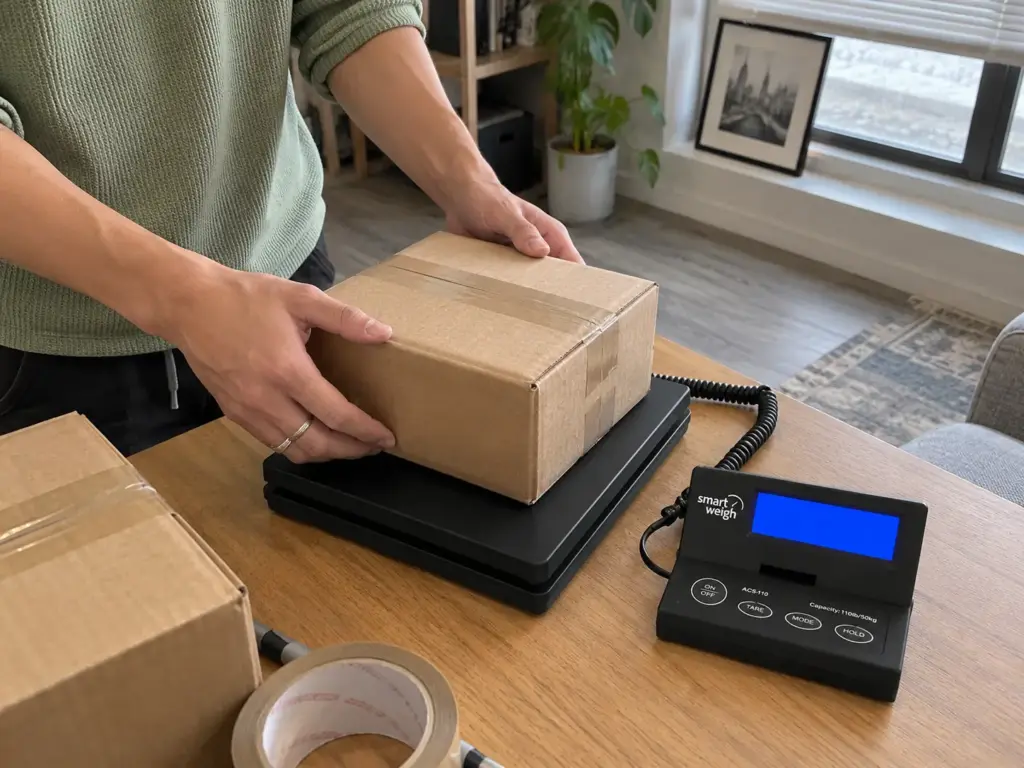
If it fits one standard box and the postage still leaves a sale worth making, it can ship. If it is too big, too heavy, or fragile in a way a box cannot fix, it is local pickup only. Keep a single shipping box in the house rather than a stack, since packing supplies are clutter too.
The hard edges come from the carrier. According to the USPS Ground Advantage size rules, “Maximum combined length and girth (girth is the distance around the thickest part) is 130 inches.” Packages can go up to 70 pounds, and USPS offers free package pickup at your home or office, with tracking included. That last part matters if you have no car: a reader without one can still ship, because the carrier comes to the door.
Why a Few Tenths of an Ounce Change the Postage
Under a pound, USPS Ground Advantage prices packages in tiers at 4, 8, 12 and 15.999 ounces, and it rounds up. A package that weighs 4.2 ounces pays the 8-ounce price. Past a pound, it is charged by the pound, rounded up, so a box that weighs 8.3 pounds is priced as a 9-pound box. The parcel a few tenths over a boundary costs the whole next tier.
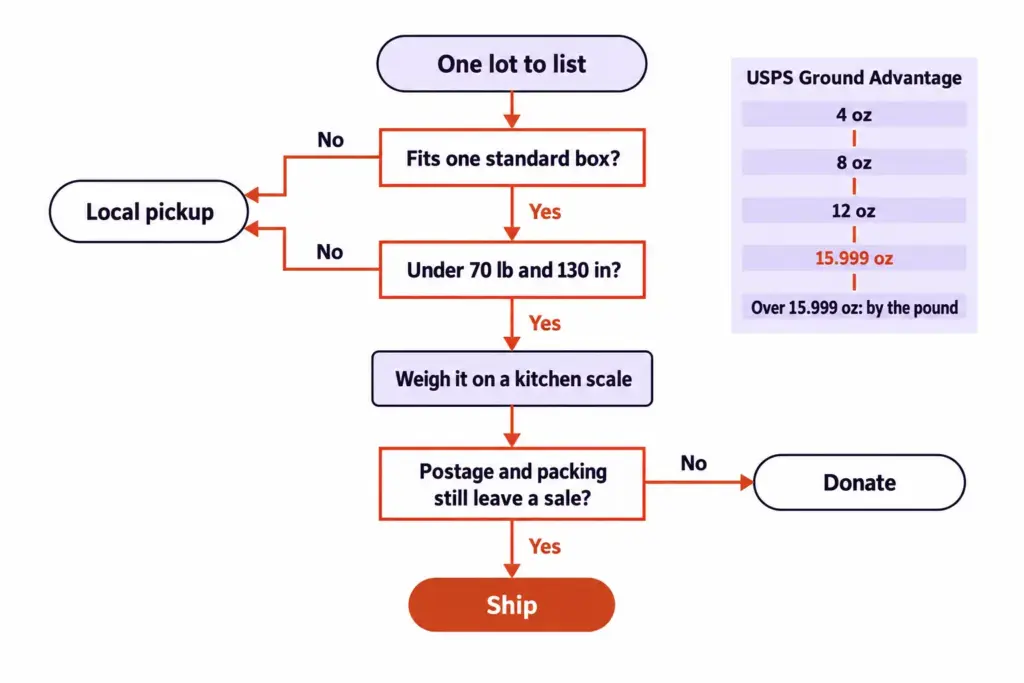
Pack the item, then weigh it, then quote. A kitchen scale handles small parcels, and the post office counter can weigh a box before you commit, so start with those. If you ship several parcels, a dedicated scale earns its place: the Smart Weigh 110 lb Shipping Scale reads in 0.1-ounce steps with a wall display and USB-C, and its 110-pound capacity covers the 70-pound package limit. It is more scale than a one-time seller needs, so skip it if you are shipping a couple of boxes in total.
What Fees and Packing Take Before You Quote
Fees and packing come off the sale (on eBay, the final value fees among them), and you should count them before you list, not after the sale closes. Either quote the shipping in the listing or ask the buyer to cover it. A commenter in the Facebook group noted that on eBay, the buyer pays shipping if you set it up that way. Commenters disagreed about how much eBay and Poshmark take, so check the current fee page for the platform you pick instead of trusting anyone’s remembered number, including this one.
If a lot only leaves a sale after you subtract the box, the tape, the postage and the fee, it was never a shipping item. Move it to local pickup, or lower your hopes and your floor.
Handle Buyers Without Giving Up Your Evening or Your Address
The buyer who says “I’ll be there at 6” and never arrives costs you an evening. The buyer who asks for your address before a single question about the item costs more. A few fixed rules handle both.
Use a First-Come Rule and Mark Items Sold Fast
Write the rule in the listing: first come first served, and the item is yours when a pickup time is confirmed. The minute that happens, mark it sold. Leaving it up invites a second round of messages you will have to turn down one by one.
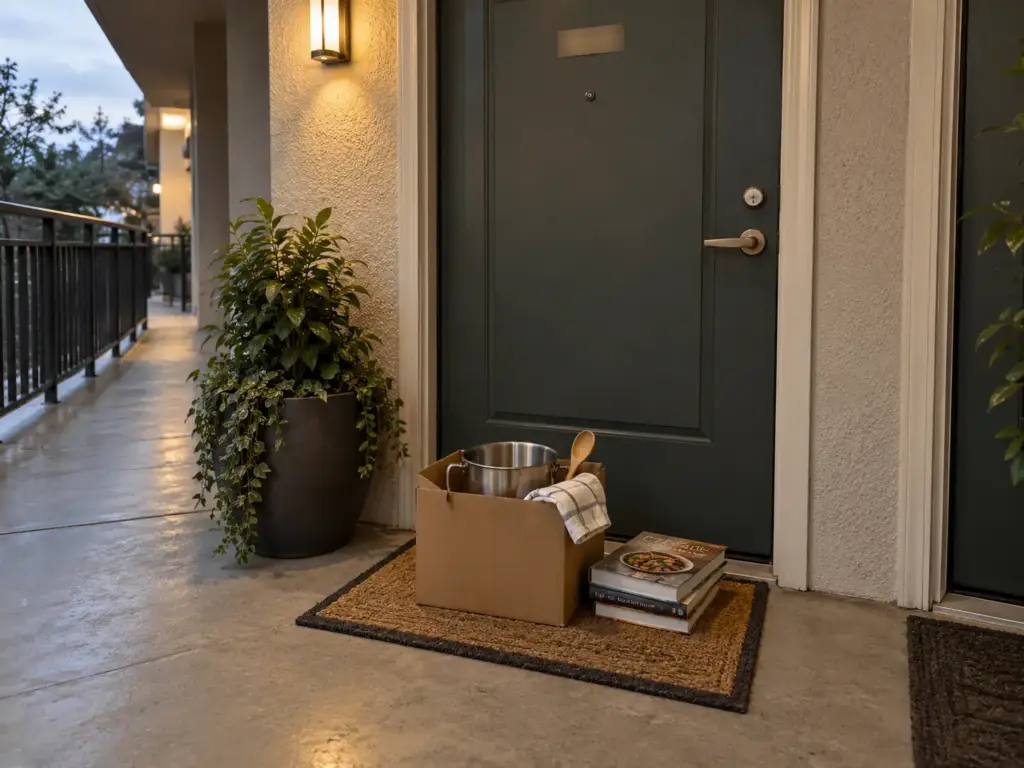
Porch pickup is the default for most Marketplace handoffs, according to commenters in the Facebook group. In a shared home, one person owns the inbox. Splitting the messages across two phones is how an item gets promised to two buyers.
Handle No-Shows, Lowball Offers and Pickup in a Small Home
No-shows and haggling over old stuff were the reason one Reddit commenter refused to sell at all. You cannot remove them, but you can shrink them.
Confirm the time the day of. Offer a pickup window rather than an open invitation. And decide the lowball answer now: a flea-market commenter put up a sign that no reasonable offer would be refused, and a short, polite “the price is firm” does the same work online.
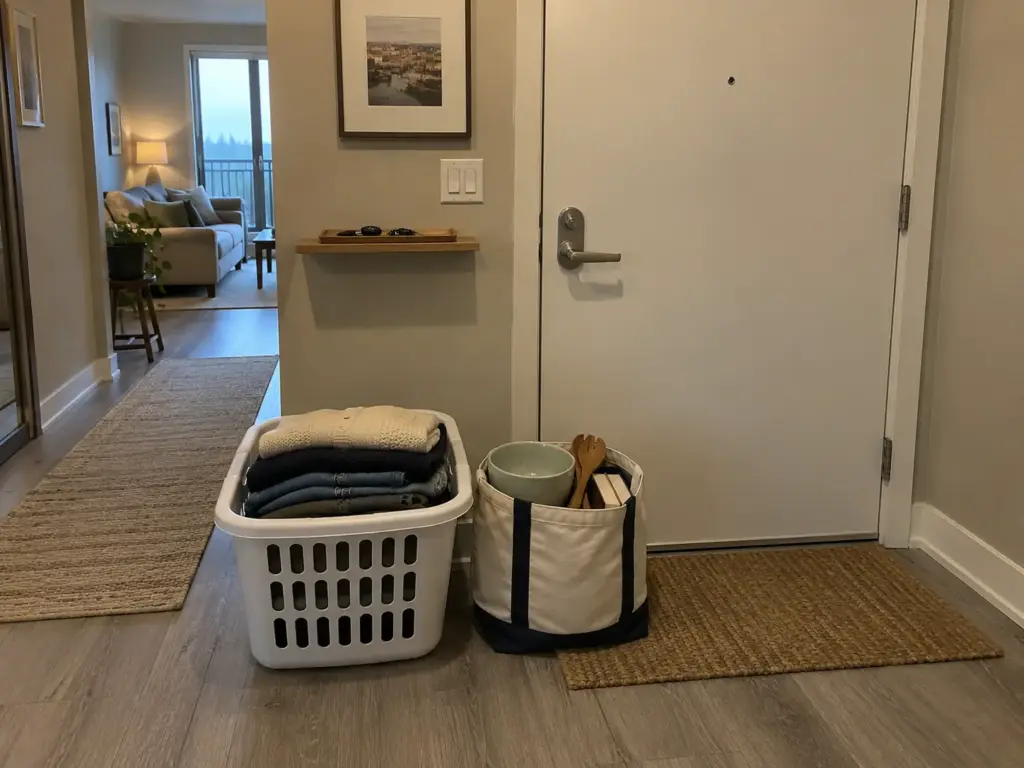
A small apartment makes pickup awkward, since the buyer has to come into a building. A front-door or lobby handoff, or an agreement to meet in public at a spot you can reach, keeps strangers out of your living room. Have the item bagged and waiting by the door so the exchange takes two minutes. If the messages are piling up and the whole project feels like too much, when the whole project feels too big is the place to reset before you drop everything.
Spot Overpayment and Address Red Flags
Two moves from a scam buyer meet a new seller first. The first is the overpayment. A buyer offers to pay with a check, writes it for more than the price, and asks you to send the difference back. The check later bounces, and you owe the bank the whole amount.
As the Federal Trade Commission’s check overpayment warning puts it: “Know who you are dealing with – independently confirm your buyer’s name, street address, and telephone number.” The same release says never to accept a check for more than your selling price, never to wire funds back, and to resist pressure to act now, because if the offer is good now it will be good when the check clears. If you do take a check, ask for one drawn on a local bank so you can visit the branch and confirm it, or consider an online payment service instead.
The second is the address request, and address privacy is the whole defense. A commenter on one decluttering blog described a buyer who wanted the seller’s address before asking about the price or the item, and called that the one to watch.
It is a community report, not a statistic, but the logic holds: a real buyer asks about the item first. Keep your address out of the conversation until a price and time are settled, and out of the listing altogether. A pickup spot at your door or in a public place is enough information for a legitimate buyer.
A buyer who pushes you to move quickly, move off the platform, or use a payment link on a site you do not know has told you what kind of buyer this is.
The Pile Gets a Limit, a Date, and a Way Out
The three things worth carrying out of this: a listing earns its place only when the sold prices and your time agree. The sell pile has a size limit and a stop date, both set before the first photo. And each lot gets one channel, with the unsold remainder going to donation on the date you wrote on the box.
Check back in three months and look at one thing: did a new sell pile form, and did it stay inside its size and its date? If it crept past both, the rule is not too strict, it is not being written down where you can see it.
Today, pick one item from your sell box and run the sold filter on it from your phone. Decide, right there, whether it earns a listing or goes in the donation bag, and notice how much quicker the second item goes than the first.
Frequently Asked Questions
01What is the most profitable item to sell online?
The most profitable items are the ones that sold recently in the sold-items filter, with a brand and model buyers type into the box. A lot of like items often beats singles. Skip trend lists, since they go stale quickly.
02How can I sell my clutter for cash?
Decide per item whether it earns a listing, then sort the keepers into lots, cap the pile, and set a stop date. Pick one channel per lot and price from sold listings. Anything unsold on the date goes to donation.
03How to sell unnecessary items?
Follow the same steps: check sold listings, bundle like items, choose one channel, and write a clear listing. Items that fall below your price floor are better listed free or donated than kept waiting.
04What is hot to resell right now?
Trend lists go stale, so check what is selling in the sold filter today. What stays in demand is searchable: named brands, specific models, and well-described lots of similar things.
05Is it worth selling decluttered items or should I donate them?
Selling is worth it for the few high-value items. For everything else the listing time costs more than it returns. A stop date settles the question: what has not sold by then gets donated.
Disclaimer: ClutterlessNest is a participant in the Amazon Services LLC Associates Program. As an Amazon Associate we earn from qualifying purchases. This article may contain affiliate links — if you buy through them, we may earn a small commission at no extra cost to you. We only recommend products we have tested or genuinely believe in.