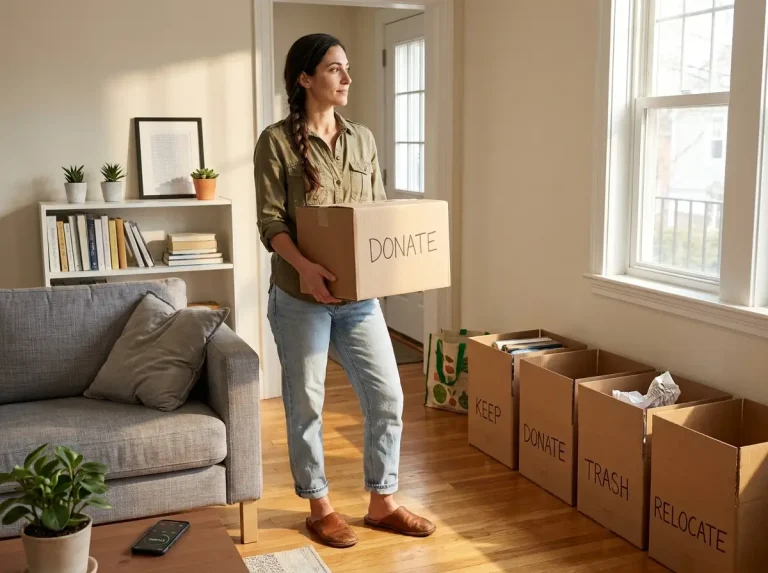
You open the top bedroom drawer to “do the bedroom,” and one handful comes out holding a phone charger, an envelope that needs an answer, a paperback and a gift card you forgot you had. Decluttering by item type ends that scramble, because it works one category at a time and each pass asks one kind of question, and this guide runs seven categories from easiest to hardest, each with a keep question and a count you can check against the drawer, rod or shelf you own. A r/declutter thread on the order of categories shows where the other road leads: the original poster writes, “I seem to pick exactly the wrong category and then get overwhelmed and frustrated,” and names starting with sentimental pieces as the mistake that keeps repeating. How you run the work itself is a separate choice, covered in this site’s guide to choosing a decluttering method, while this page is the item axis.
Quick Answer
Declutter one item type at a time, easiest first, and save sentimental pieces for the end of each type.
- Cull kitchen gadgets: keep what left the cabinet in recent months.
- Sort shoes: keep the pairs that actually leave the house.
- Pull out all clothes: keep what fits the rod and a two-thirds-full drawer.
- Pare down books to the ones you would reread or look up.
- Box paperwork with a date, then run the six-month test.
- Delete digital files you could not find in under a minute.
- Finish with toys and shared items, sorted with their owners.
Why Decluttering by Item Type Beats Room by Room
One room, seven kinds of decision
A bedroom looks like one job and is really several. Within reach of the bed you will find clothes (wear it or lose it), paper (answer it, file it or shred it), a book (reread it or pass it along), a charger (does anything still plug into this), a gift (what do I owe the person who gave it), a toy that lost its set and a photo with nothing written on the back. Each of those has a different test, and swapping tests every few seconds is how decision fatigue sets in before the drawer is half done. A kitchen, a hall closet or a garage does the same thing at a bigger scale.
What a category shows you that a room hides
Decluttering by category, the order of the KonMari method from Marie Kondo, pulls every item of one type into one spot (like with like) and judges the whole pile at once. Picture three can openers living in three different rooms. In a room-by-room pass, each one looks like the reasonable one to keep, because you only ever see it alone. Set them side by side on one counter and two of them are obviously spares.
The category is not “all clothes,” though, and this is where people stall. A commenter in that same thread told the original poster, “I think your ‘categories’ are too large and that is what is messing with you,” and the workable unit they described was one shelf, one drawer or one cupboard. So the rule is category-first, but the first unit you open is small.
When room by room is still the right call
Category-first is not the right call every time. If a room is about to change hands (a nursery turning into an office, a spare room you are about to rent out, a roommate moving out), clear that room first and apply the item-type questions inside it. The room-by-room approach has its own sequence for that situation. The real choice is category vs location, and the two axes work together: the room decides where you stand, and the item type decides which question you ask while you are standing there.
The Order: Easiest Category First, Hardest Last
Why the easy decisions come first
“Build your ‘declutter’ muscle on the easy decisions,” one commenter in the thread advised, and the logic holds. A keep rule is a skill, and practicing it on a drawer of spatulas costs you nothing when you are wrong.
The original poster described the opposite: “I often make the same mistake of starting with sentimental stuff.” You can picture it. A box of photos asks a question about who you used to be, and an hour later you are holding the same three pictures with the rest of the house untouched.
Another commenter’s order moves in the same direction, from the least personal to the most: trash first, then dishes and food, then loose clothes gathered in one place, then surfaces and bathrooms, and only then one small category at a time.
The sequence, type by type
The order runs kitchen gadgets, shoes, clothes, books, paperwork, digital files, and finally toys and shared items. Inside each type, sentimental items last: those pieces wait until the end of that type, and the guide on how to declutter sentimental items without the guilt covers what to do when you get to them.
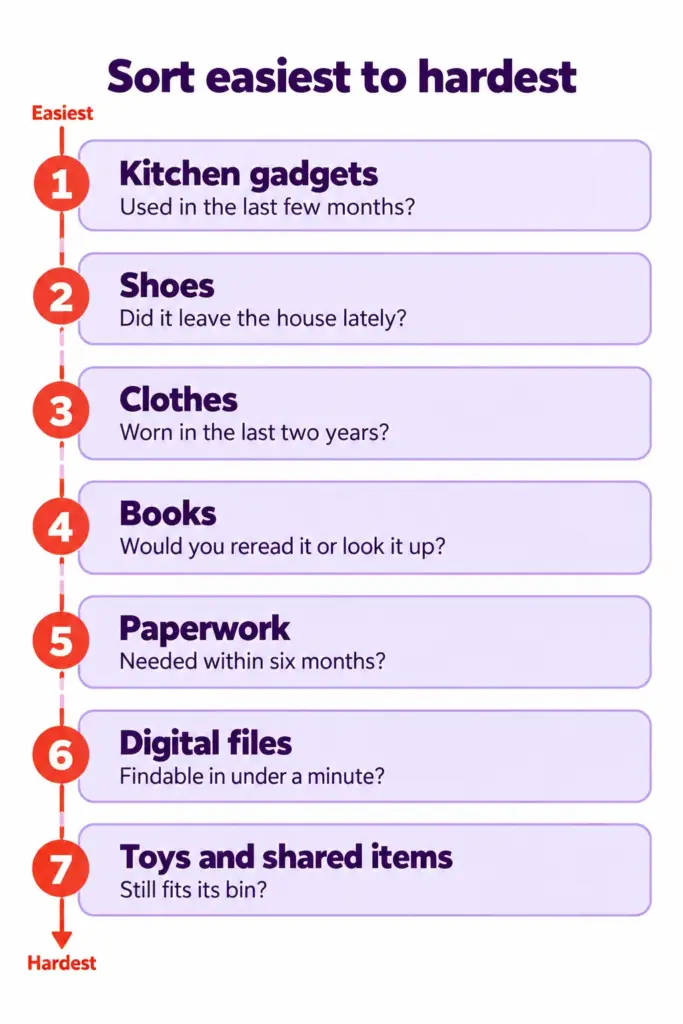
This sequence is my judgment, not a law. Kitchen gadgets and shoes come first because they carry the least memory and cost the least to replace, so a wrong call is cheap. Clothes sit in the middle because they are the biggest daily category and the one where a count matters most.
Books and paperwork ask harder questions about who you meant to be and what you might need. Digital files come late because they use the same test with no physical limit pushing back, which lets the decision slide forever. Toys and shared items go last because the owner is a child or another adult, and you cannot decide alone.
Shrink the unit until it fits fifteen to twenty minutes
The thread’s fix for categories that were too large was a smaller unit: one shelf, one drawer or one cupboard in fifteen to twenty minutes. Two named methods use the same idea at different sizes. Declutter 365 hands out 15-minute missions, and another commenter described the Dana K. White method this way: “I choose a room and focus for just one hour on that room and that room only.”
Pick the size your attention survives: a fifteen-minute session for a drawer, a one-hour session for a room. If you stall in minute ten, the unit was too big, and the next session gets a smaller one, the top drawer instead of the whole dresser.
Four Keep Questions and a Count Your Storage Can Check
The four questions
Four questions do most of the work for every type. Have you used it in the last few months? Do you like it? Does it justify the space it takes? Would you buy it again today?
A clear no on the first or the last usually settles it, and four yeses mean it stays without further debate.
The questions are the same for a spatula and a sweater. What changes is the count, and the count is where most systems fall apart.
Tie the count to the drawer, the rod or the shelf
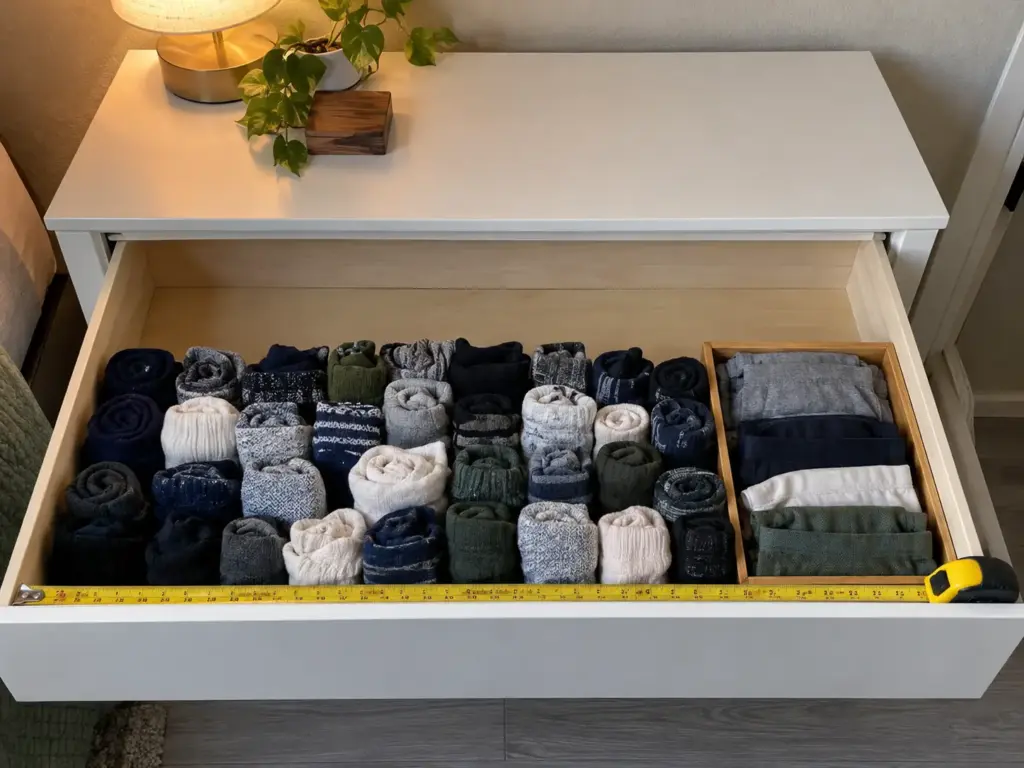
A count of ten means nothing until the drawer is full at nine, and concrete counts only help when the count knows its container. The thread has a good example of a number that knows its container. One commenter’s rule: keep no more than 14 pairs of socks you like and use regularly, then do underwear the same way, because “the drawer should be easy to use (not full to the brim, more like half to 2/3 full).” A half-full drawer is easier to use than a packed one.
The method behind that rule travels to any drawer or shelf. Fill the container to two-thirds with the pieces you like best, count what that holds, and that number is your keep count. Fourteen is where one person’s ceiling landed, not a number to copy: a shallow drawer’s two-thirds line may sit well under fourteen, and the drawer wins over the thread.
Run the two-thirds test on the drawer itself instead of guessing. Lay your favorites in until the drawer is two-thirds full, stop, and count. If your favorites run out before the drawer does, you already own fewer than the space allows and nothing needs to leave.
The 90/90 and 20/20 tests for the doubtful ones
For the pieces that survive the four questions with a shrug, two time-based tests do the deciding. The 90/90 rule asks whether you used the item in the last 90 days or will use it in the next 90. The 20/20 rule asks whether you could replace it in about twenty minutes if you turned out to need it; the replacement window is the part that does the work, and any spending figure attached to the rule can be ignored. The minimalist decluttering rules lay out both in more detail.
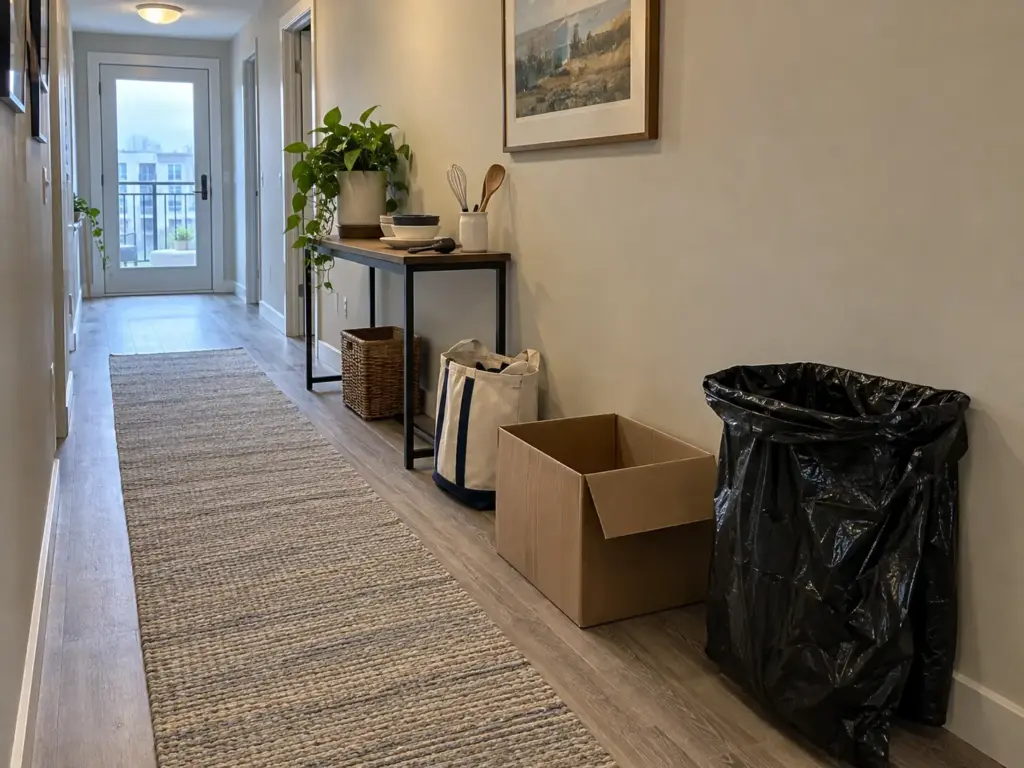
Sort whatever fails into three boxes, trash, donate and action, and skip the keep box entirely, because a keep box is where the undecided pile goes to wait. Between sessions, a concealed donation bin gives you the chance to rescue a wrong call within the week.
Kitchen Gadgets: The Easiest Place to Prove the Rule
Duplicates and single-purpose appliances
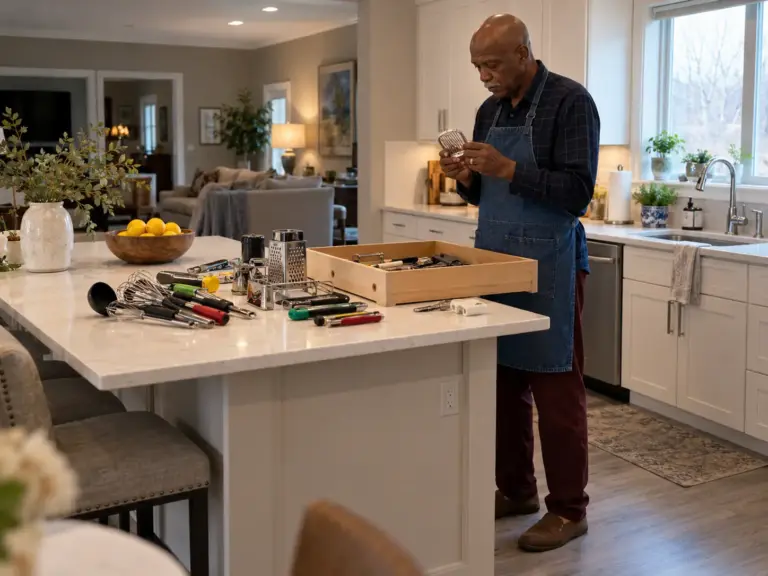
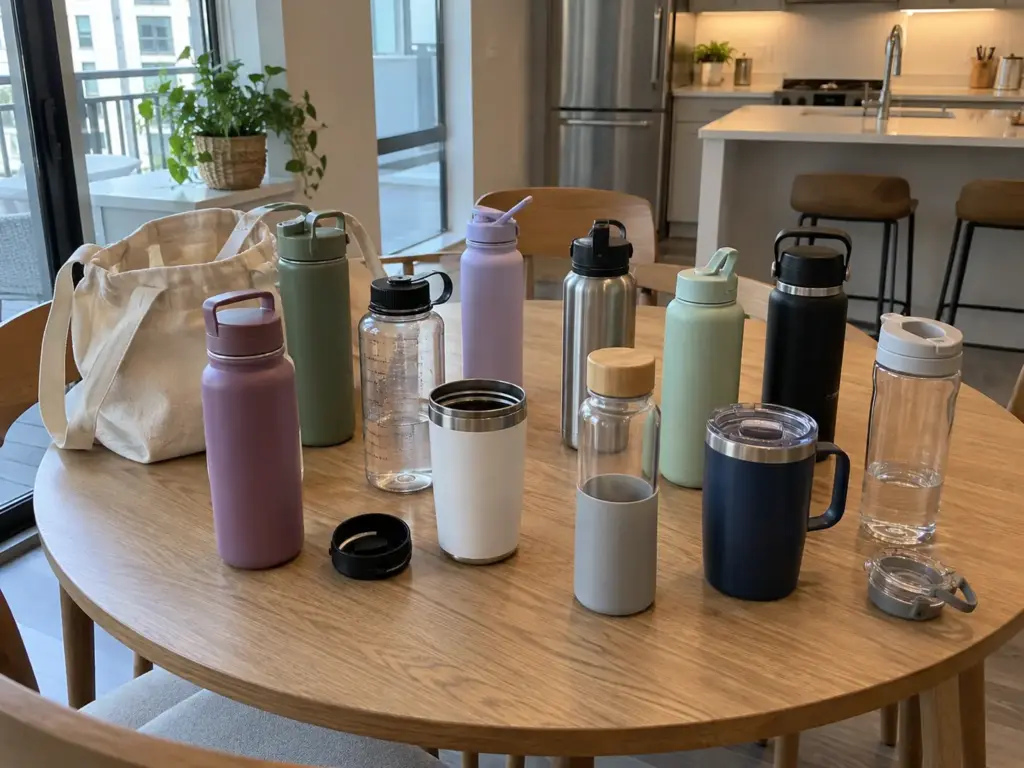
To declutter kitchen gadgets, start from the fact that almost nothing in a kitchen drawer carries a memory. The keep question is blunt: did it leave its cabinet in the last few months? Start with the single-purpose appliances, the ones that want counter space, a cord and a cleanup for a job a knife or a pan already does. Then cut duplicates, especially duplicate mugs and bottles, which multiply through gifts and giveaways.
The count here is physical: the drawer or cabinet should close without pressing on the front. If you are also working toward clear surfaces on the counters while you are in there, the full pass lives in this guide to how to declutter kitchen counters. And for the appliances that survive, where the appliances that stay should live depends on how much cabinet depth you have.
Containers: match every lid or let the container go
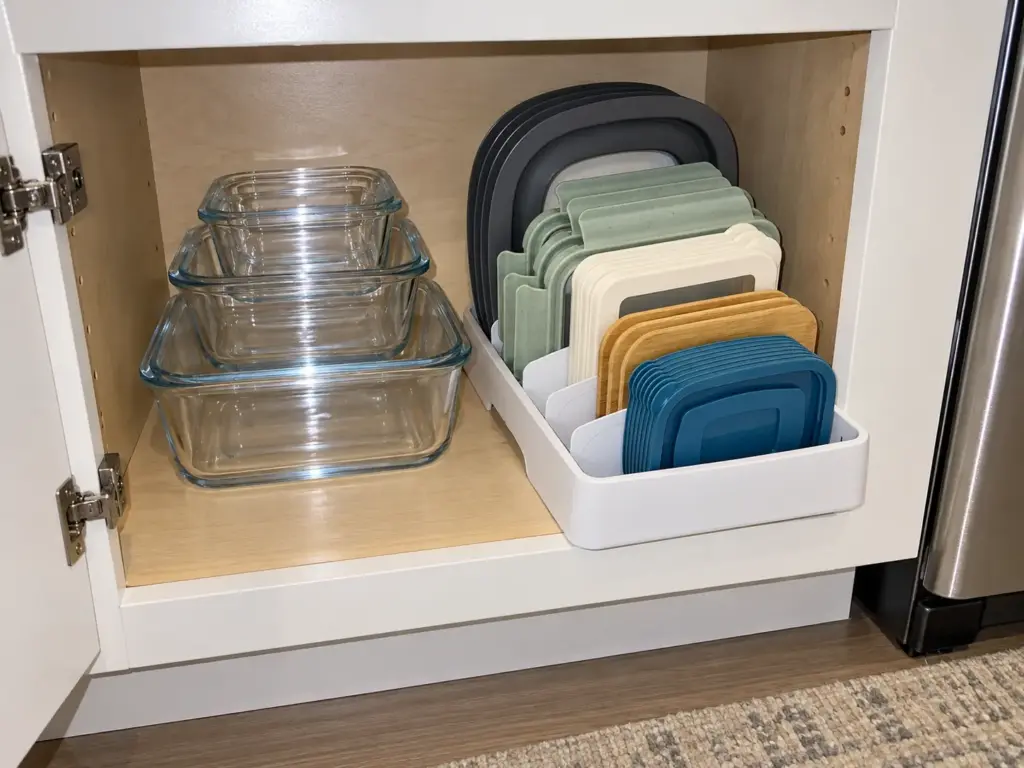
A container without its lid is only a bowl, and a drawer of mismatched pairs is a daily search. Whether they are glass food containers or plastic, match every lid to its container, recycle the orphans on both sides, and keep one set of matching lids and containers. The free fix comes first: nest the matched lids by size in a shallow bin before you buy anything.
If the lids outgrow the bin, the YouCopia StoraLid Food Container Lid Organizer, Large keeps lids paired with their containers once the mismatched ones are gone. It measures 10.5 inches deep, 13.4 inches wide and 3.3 inches tall, so measure the cabinet shelf before you order it.
What refills the drawer
Gadget drawers refill through three doors: the single-use gadget that promises one perfect result, the gift that arrives with a sentimental claim, and the promotional item that came free with something else. The free ones are the hardest to notice, because nothing was paid for and so nothing feels like a decision. Name those three doors now and you will recognize the next arrival at the front door instead of finding it in the drawer.
Shoes: Count by the Shelf, Not by the Season

Line them up and sort by how often they leave the house
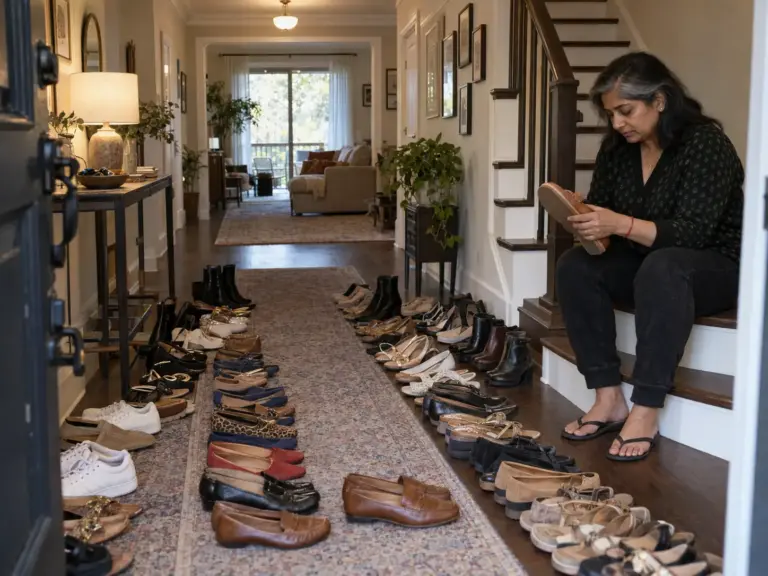
To declutter shoes, line every pair up on the floor and sort them by one question: when did these last leave the house, and did they leave with a plan to change them? The pair by the door that goes out five days a week is a keeper without discussion. The pair that has not moved since the last cold season is a candidate. That is judgment, not a community rule: the working pairs are the ones your feet already voted for.
Then tie the count to the storage. The entry shelf or rack holds the working pairs. If a pair has to live somewhere else to earn its keep, it needs a reason, and if nothing else has room, it goes.
The pairs that hurt and the pairs that look good in a drawer
Two kinds of shoes pile up quietly. One is the pair that hurts: you bought them for how they would look, tried them on twice and put them back. The other is the pair that photographs well on the shelf but stays there.
A pair you only enjoy looking at is decoration, and decoration has its own storage rules. If the keep question comes back with “I like them” and nothing else, the shoe is closer to a collectible than footwear, and a collectible gets one shelf, not the main rack.
What refills the rack
The rack refills through the sale-rack buy and the second pair “for different outfits.” Neither feels like clutter at the register, because the first one was discounted and the second has a plan attached.
The plan usually evaporates by the next season, and the pair joins the line-up you just sorted. Hold that thought at the register and the rack stays the size you set. For storing the pairs that stay, shoe storage that holds up covers the racks and shelves without repeating the sorting here.
Clothes: Hang What You Wear and Let the Rest Leave
Pull it all out and judge one piece at a time
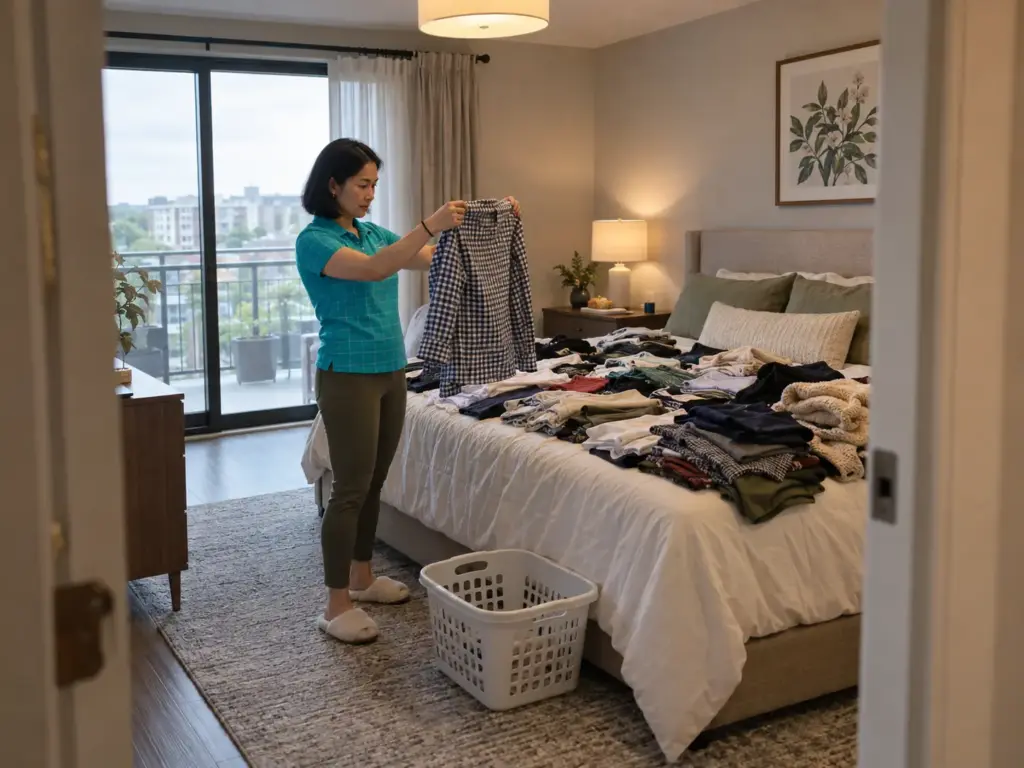
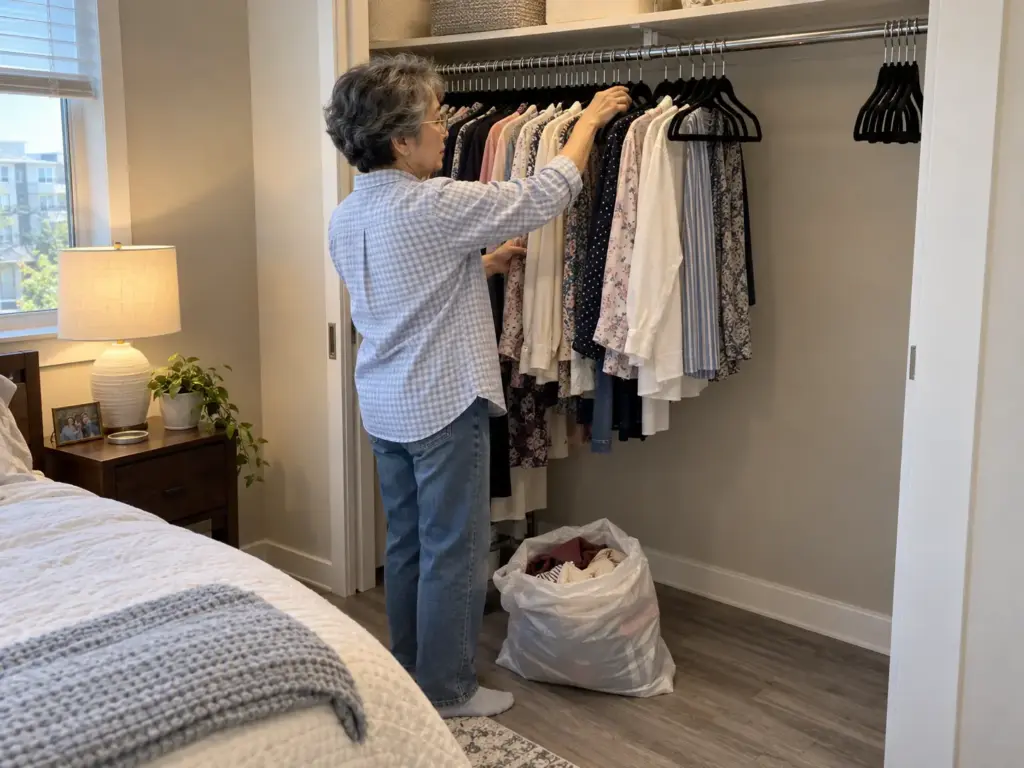
To declutter clothes, pull everything out of one unit (the closet rod, one dresser, or just a dresser top), handle each piece once, and try on anything on the shortlist. Set a target count before you begin so that the pile has a ceiling.
For the doubtful pieces, the backwards-hanger test is a free way to find out: hang everything with the hook facing backward, turn each hanger the right way after you wear the piece, and look at what is still backward after a season. A piece unworn for about two years is a piece you can let go.
The rod and the drawer set the count
The count comes from the storage, not the wish. Measure the rod, hang the keepers, and stop when the clothes slide along the rod without a shove. Fill drawers to two-thirds, as with the socks above. If you own far too many clothes for the closet you have, organizing a closet with too many clothes shows how to restructure the space without repeating this cull.
Reuse the hangers you already own once the cull is done and see how much rod you have left; that costs nothing and answers the question. If you need to recover more length, the Zober Premium Velvet Hangers, 50-Pack are 17.5 inches wide and 0.2 inch thick, slim enough to claw back rod space after the keep count is set. The 17.5-inch width is the number to check against your closet’s depth before ordering.
How the keepers are stored is its own topic, and how to organize clothes with or without a closet covers it.
Give the “might fit again” pile one bin and a date on the calendar. When the date arrives, whatever still does not fit goes, and the bin goes back to being empty instead of becoming a permanent second wardrobe.
The furniture that hides clutter (dressers, nightstands, storage ottomans)
Sometimes the problem is the furniture, not the clothes. One r/declutter commenter wrote, “I had to declutter over and over again until I got real and started decluttering the furniture that held the clutter. Dressers, nightstands, end tables, storage ottomans.” Removing those pieces made it hard for clutter to hide, and the clothes that stayed had to be hung, which pushed the seldom-worn hanging pieces into a donate bin.
If you would rather hold the count to a target than measure a rod, the capsule wardrobe approach gives you a number to aim for. And the intake for this category comes from three places: gifts, sale buys and the “might fit again” pile.
Books: Keep the Ones You Would Reread or Look Up
Reread, reference or pass along
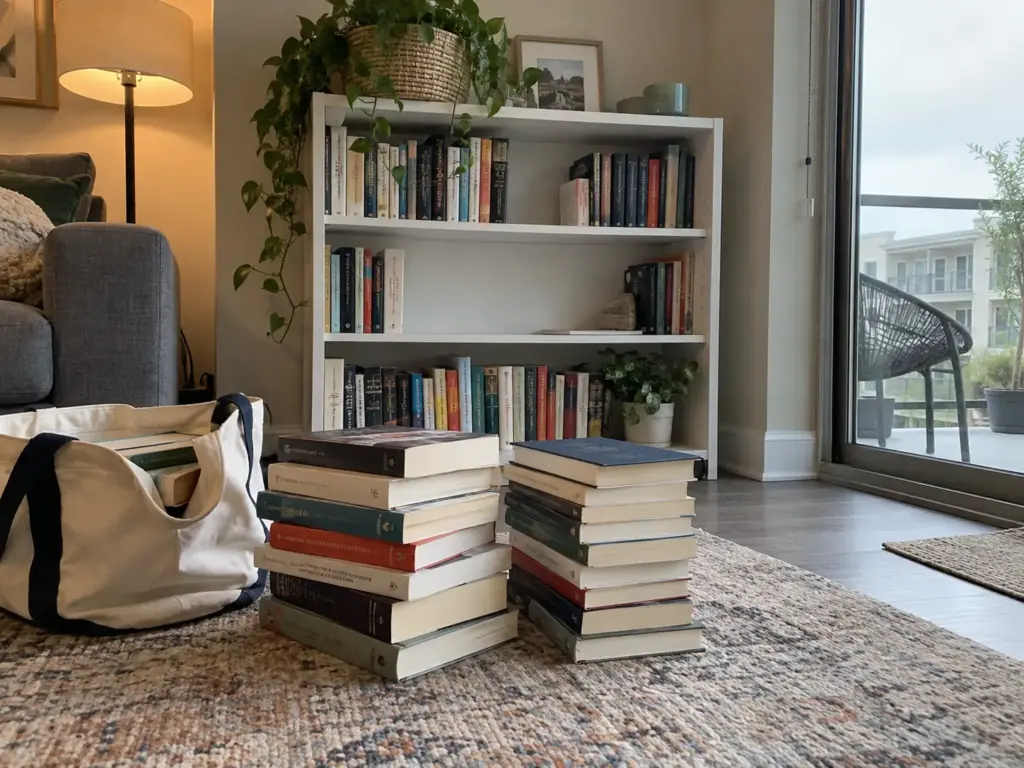
To declutter books, run one test, reread or pass along: would you reread it, look something up in it, or give it to someone who will? The same question turns up in the r/declutter threads, which shows how common the stall is. Reference books get a pass on the reread test, because a cookbook you open twice a year is working even if you never finish it. A novel you read once and loved goes to the friend who will love it too.
The count is the shelf you already own. When books begin stacking on the floor or sideways across the shelf tops, that stack is the signal that the shelf is full and something needs to go. Many local libraries take donated books, so a box can leave the house with a destination attached.
The “someday” pile and the gifted shelf
Two piles do the damage. One is the someday pile, the books you meant to read, which has a way of growing faster than you read. The other is the gifted shelf, where a book you would never have picked stays because the person who gave it might notice if it vanished. Holding a gift for the giver’s sake is a decision you can make on purpose, for one shelf’s worth, instead of by default.
Intake here is gifts, the pile of intentions and the habit of buying a new book before finishing the last one. Once the keepers are chosen, the guide to organizing the books that stay already holds the shelf-by-shelf decisions, so you do not need to repeat them here.
Paperwork: Box It With a Date and Run the Six-Month Test
Sort mail and paper into act, keep and shred
To declutter paperwork, start by noticing that paper arrives in three kinds. Some of it asks for something (a form to sign, a bill to pay), some you will need later, and some is junk that only looks official. Sort the pile into act, keep and shred, and handle the act pile first, because it is the one with a deadline. Records and warranties online can live there, and once you have saved digital copies, the paper copy is a candidate for the shred pile.
Tax and legal records follow rules set by the IRS, your state and your lender, so check their official guidance for those categories and set them aside before you run any other test.
The dated box and the six-month test
For everything else you are unsure about, use a box with a date. Seal the box, write today’s date on it, and shelve it. If you did not open it in six months, you can likely let it go. The test replaces the argument you would otherwise have with each sheet of paper, since the box does the deciding for you.
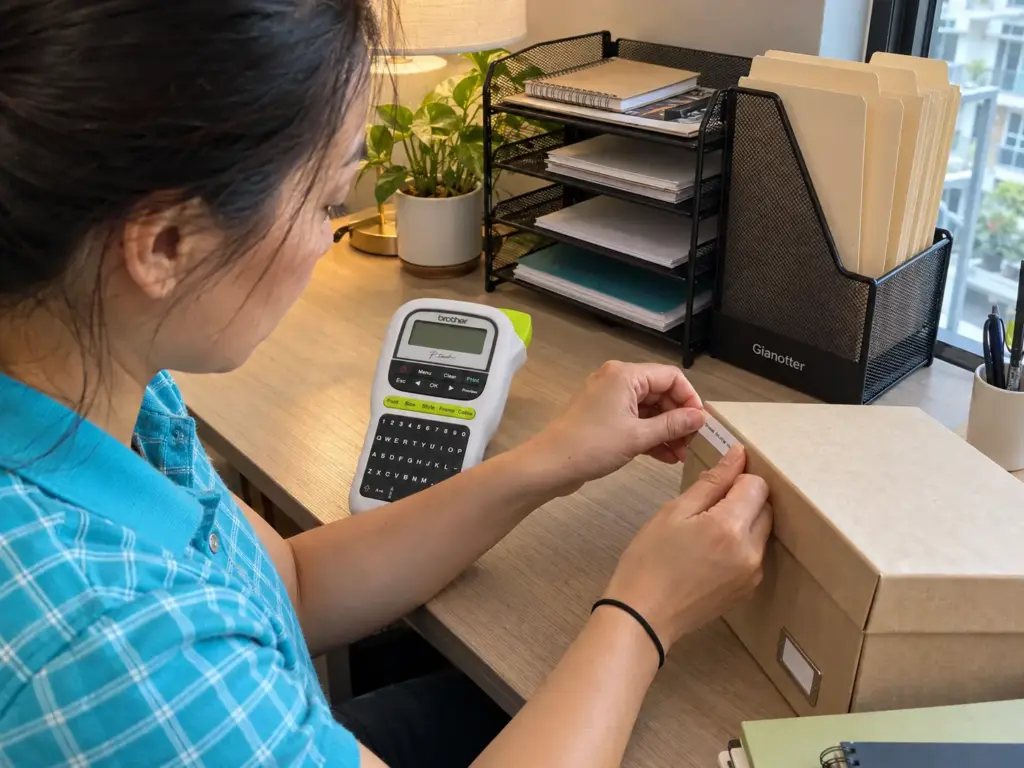
The free fix for labeling is a strip of masking tape and a marker. If you are labeling several boxes and want a clean, uniform strip, the Brother P-Touch PTH110BP Label Maker prints the contents and the date you type in for the boxes that the six-month test relies on.
The count is the keep box itself: one file box, and when the holder is full, the next piece of paper means pulling an old one out. A desk file holder such as the Gianotter 4-Tier Desk Organizer with File Holder and 2 Pen Holders, about 9.5 x 12.9 x 13.5 inches, keeps the active “keep” folders within reach; use it as a file holder only, ignore the pen cups, and measure the desk against its 13.5-inch height first. A magazine file or a box lid does the same job at no cost. For a system that lasts past the first month, the rules for paper and file organization go further.
Put the date on the end of the box that faces out, not on the lid. Once the box sits on a shelf the lid is hidden, and a date you cannot read is a date you will not check.
The intake that refills it (the mail pile, the inbox)
The paper pile refills through two doors, the mailbox and the inbox, and both are daily. An entryway drop spot catches the mail before it reaches the kitchen table, so it is sorted into act, keep and shred while you are still holding your keys. A mail organization system sets that up for the rest of the household. And the drop spot by the door covers the pocket items and mail that arrive together.
Digital Files: The Pile With No Physical Limit
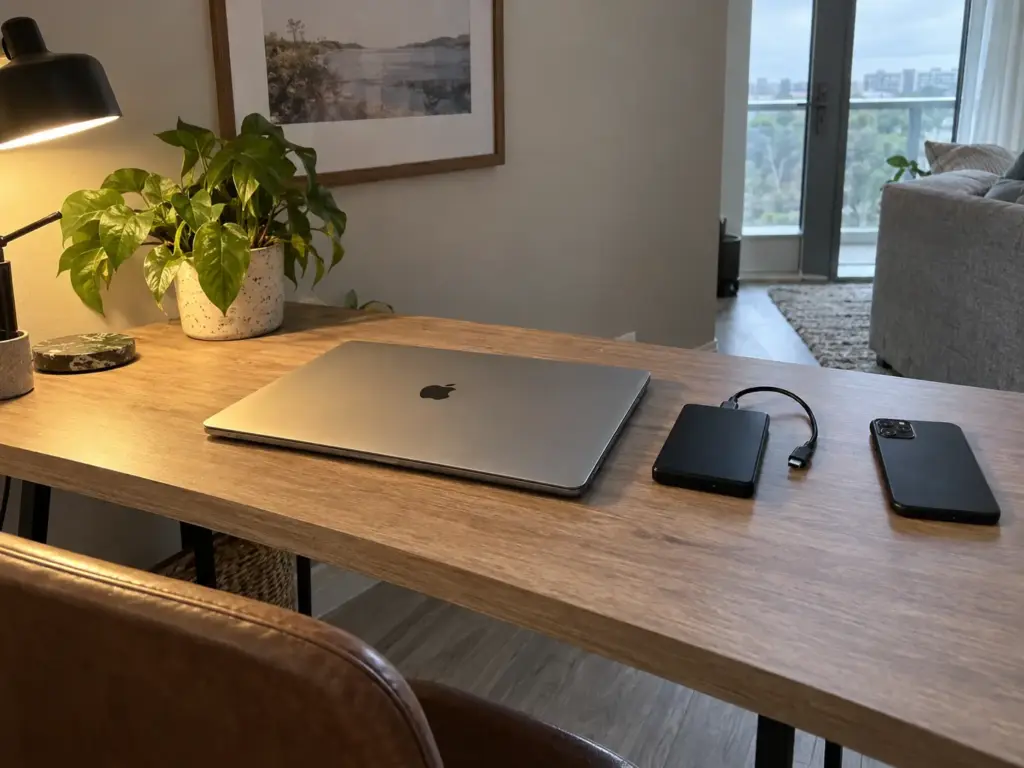
Downloads and the desktop first
To declutter digital files, start from the fact that a drawer tells you when it is full and a folder never does. That is why digital clutter grows without a decision: nothing forces the question.
So give the digital pile the limit a drawer would. Allow the Downloads folder and the desktop one screen of files without scrolling, and when the next file would need a scroll, something goes.
The keep test is two questions: would you search for it, and could you find it in under a minute? A file you would never search for is not worth the space, and a file you cannot find in under a minute is already lost. Intake here is the downloads folder, screenshots and the group-chat photos that arrive without being asked for. Sorting those by date and clearing the oldest first is the quickest way to start.
Photos and the keep-copy rule
Photos follow the same test with one extra rule: keep one copy of each, in one place.
Near-duplicates, like six shots of the same moment, are the digital version of three can openers. Choose the best one, delete the rest, and make sure the keeper lives somewhere you can reach without a search. The decision is no harder than the can openers. It only feels harder because there is no cabinet door to shut.
Toys: Sort With the Child, Then Hide the Donation Bin
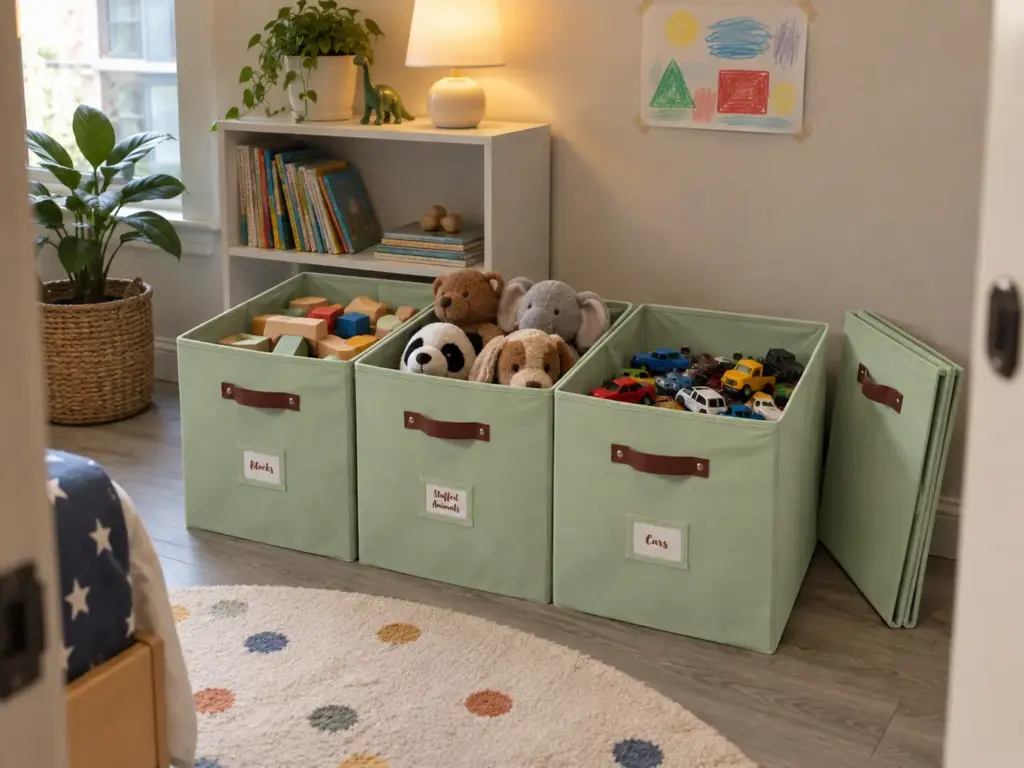
Let the child keep the first pile
To declutter toys, remember that the owner is a child, so the decision is shared. Let the child keep the first pile: the ones they pick up without being asked. That pile is the real keep list, and it is usually smaller than the adult’s guess. The rest can be sorted by you, with a second chance built in.
The bins are the cap on the count. One commenter in the r/declutter thread described a youngest child’s bin this way: “She just piles things on top and it falls to the floor.” That is the sign a bin is over its limit.
A toy without a bin is a toy to rotate out or let go. Intake here is gifts at holidays and birthdays, which arrive in bulk and need a plan before the day.
The concealed bin between sessions
Between sessions, keep a concealed donation bin so that a toy pulled out of it can be rescued within the week. Children notice what is missing within days, and a short rescue window keeps a wrong call from becoming an argument. The free version is a cardboard box with a sheet over it.
If you want something that folds away, the Collapsible Fabric Storage Bins with Labels (the DECOMOMO listing, 10.5 x 11 inches each) fold flat when empty, so the donation bin does not take space between sessions. For the toys that stay, toy storage ideas for small spaces covers where they live.
Where Each Type Goes After You Decide
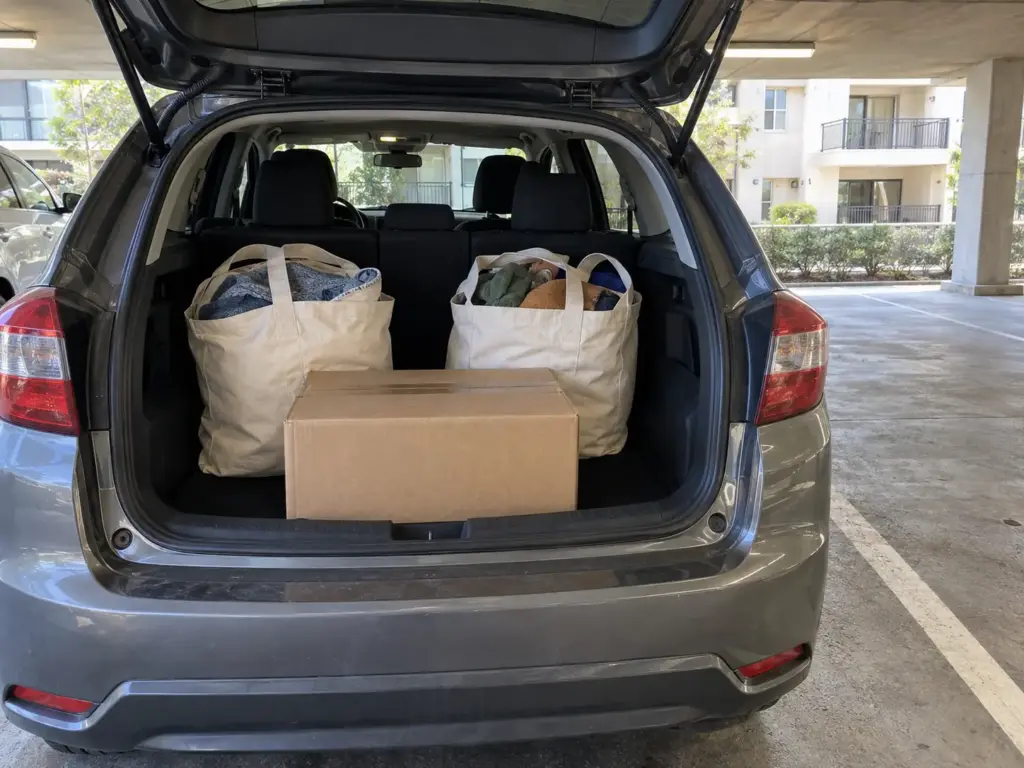
A named destination per type
A decision is not finished until the item has somewhere to go. Name a destination for each type before anything goes in a bag: sell or donate what still works, recycle what can be recycled, trash the rest. Many local libraries take books, animal shelters often ask for old towels and sheets, and some schools collect clothing, so a phone call before the car is loaded saves a second trip. Paint has its own drop-off, separate from the trash.
Write the destination on the bag in marker before you fill it. A bag that says “library” or “shelter” has a job, and a bag with no label waits by the door until it becomes part of the room.
Textiles: what the EPA numbers mean for the donation bag
According to EPA’s textiles data, “Landfills received 11.3 million tons of MSW textiles in 2018.” That was 7.7 percent of all municipal solid waste landfilled that year. The EPA put textile generation at 17 million tons, or 5.8 percent of municipal solid waste, and only 14.7 percent of textiles were recycled.
In plain English, a donation bag is not a guaranteed end. The EPA also notes that significant amounts of textiles enter the reuse market, but that reuse is not counted in the generation estimate, so no one can say how much donated clothing is actually worn again. The practical takeaway is to decide donate, sell or trash for each item, not for the whole bag.
Wipe, empty and bag: the last pass
Before anything leaves, do one last pass. Wipe phones before donating them, and check pockets, drawers and the insides of boxes for the things that were stored in them. Then bag by destination. The bag leaves the house the same day or the next, because a full bag by the door is a pile that decided to stay.
When Your Home Changes the Answer: Big Houses, Rentals and Other People’s Stuff

A large home with a garage or a basement
A big house gives clutter more places to hide. The boxes in the basement or garage are the ones never opened, and the room itself becomes a storage decision. One commenter wrote, “I wanted to declutter my basement boxes and it started in the kitchen.” Starting in the kitchen made room for the keepers, so by the time the basement boxes were opened there was somewhere for the survivors to go.
Another commenter uses collapsible totes for clothes and for what they call doom boxes: crafts, paint and a miscellaneous box, a place where the undecided items wait instead of spreading. A doom box is one of the piles that never get dealt with unless it carries a deadline, and then it is just another basement box.
A rental with no spare room for a keep-for-later box
In a rental with no spare room, a keep-for-later box has nowhere to live, so undecided items need a deadline, not a box. Give the maybe pile one bag and a date on the calendar. When the date arrives, the bag leaves, whatever is in it. It is a harder rule than a box, and it works precisely because there is no storage to hide behind.
Shared and inherited things
Shared household items and inherited things are the hardest category, because the stuff has an owner who is not you. With a hoarding partner, the guide to decluttering with a partner who hoards covers the conversation. For inherited furniture and boxes, one commenter’s rule is blunt: “Refuse to take in anything else in from your parents!” The same commenter’s estate-sale contact calls heavy older furniture “Brown Furniture” and says it is often dumped, because it cannot be resold for close to what it costs to store.
Whatever the home, intake is the maintenance: the one-in-one-out rule is how you keep the categories you just cleared from refilling.
Easiest Type, Two-Thirds Full, and a Date to Look Again
Three things carry the whole guide. Run the types in order from easiest to hardest, so the keep rule is practiced before it meets a memory. Tie one count to the storage you own: a drawer filled to two-thirds, a rod where the clothes slide, a shelf that is the cap. And name a destination before anything goes in a bag, so a decision turns into a trip instead of a pile by the door.
Put it on your decluttering schedule: in three months, open the drawers and shelves of the first two categories, kitchen gadgets and shoes, and see whether they are still at two-thirds. If they have crept back toward full, the intake doors are open, and that tells you which of the three named doors to watch.
Today, take one drawer of the easiest type you have, set a timer for fifteen to twenty minutes, fill it back to two-thirds with the pieces that pass the four questions, and put the rest in a bag labeled with where it is going. Then notice how the drawer closes, and whether you reach for anything you let go.
Frequently Asked Questions
01Should you declutter by item type or by room?
Declutter by item type when a room holds many kinds of decisions, and by room when you are about to leave that room behind. Gathering one type at a time lets duplicates meet and one keep rule apply.
02Which item type should I declutter first?
Start with the easiest type, usually kitchen gadgets, because they carry little memory, cost little to replace and teach you the keep rule before it meets a sentimental pile. Shoes come next, then clothes.
03What should I throw away when decluttering?
Let go of whatever fails the keep question for its type: duplicates, mismatched lids, shoes that never leave the house, books you would not reread, paper you never opened in six months. Anything that still works is better donated or sold.
04What is the 20/20 rule for decluttering?
The 20/20 rule says you can let an item go if you could replace it in about twenty minutes should you need it. Rule names vary, so a 20/20/20 version may mean something different elsewhere.
05How long should one decluttering session last?
Keep one session to fifteen or twenty minutes for a single shelf, drawer or cupboard, or about an hour for a whole room. Some organizers cap the whole day at three hours.
Disclaimer: ClutterlessNest is a participant in the Amazon Services LLC Associates Program. As an Amazon Associate we earn from qualifying purchases. This article may contain affiliate links — if you buy through them, we may earn a small commission at no extra cost to you. We only recommend products we have tested or genuinely believe in.