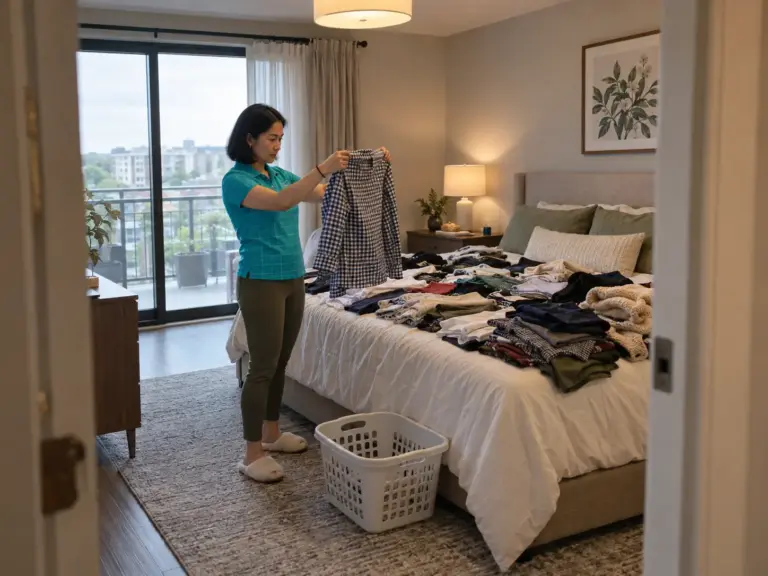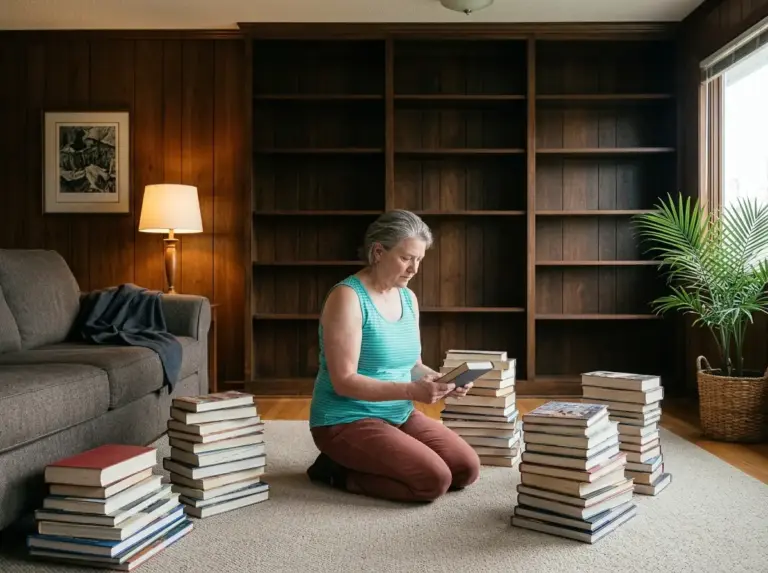

You are halfway through decluttering books. One pile is the donate pile, one is the keep pile, and a third sits on the floor between them: the books you pick up, hold and put down again. That third pile is where most people stop, and having no rule for it is usually the cause, not the books themselves. Readers who finish a cull, in r/declutter threads and on Mumsnet, describe the same order of work, and this guide follows it, from gathering and a shelf limit through the maybes, the unread pile, the books nobody takes, the photo log and the shared shelves, as one of the seven categories in the decluttering by item type order.
Quick Answer
Work through the collection in this order and the pile you cannot decide about stops being the place the job ends.
- Gather every book from every room into one place.
- Measure your shelf and turn it into a book limit.
- Ask two questions of each book and pull the easy exits first.
- Park the maybes in one dated box.
- Cap the to-read pile at what you can finish.
- Photograph the spines and name a destination before any bag leaves.
How to Declutter Books: Gather Every Book and Set a Shelf Limit
Book clutter is never only the shelf. It is also the nightstand stack, the box under the bed, the paperbacks in the car door pocket and the carton in the basement nobody has opened since the last move. Judge only the ones in sight and the rest quietly survive the cull.
Pull books from every room, not just the shelves
Carry your whole book collection to one spot, a bed or the living room floor works, and spread them out. People who report finishing a cull in r/declutter threads and on organizing blogs start exactly here, because the same books that look manageable in five rooms look like a different problem in one pile, and the second view is the accurate one. Expect to run out of floor before you run out of books. (Count the ones you did not know you owned; that number is usually the first useful fact of the whole project.)
Turn the shelf into a number
Before you judge a single book, decide how many the collection is allowed to be.
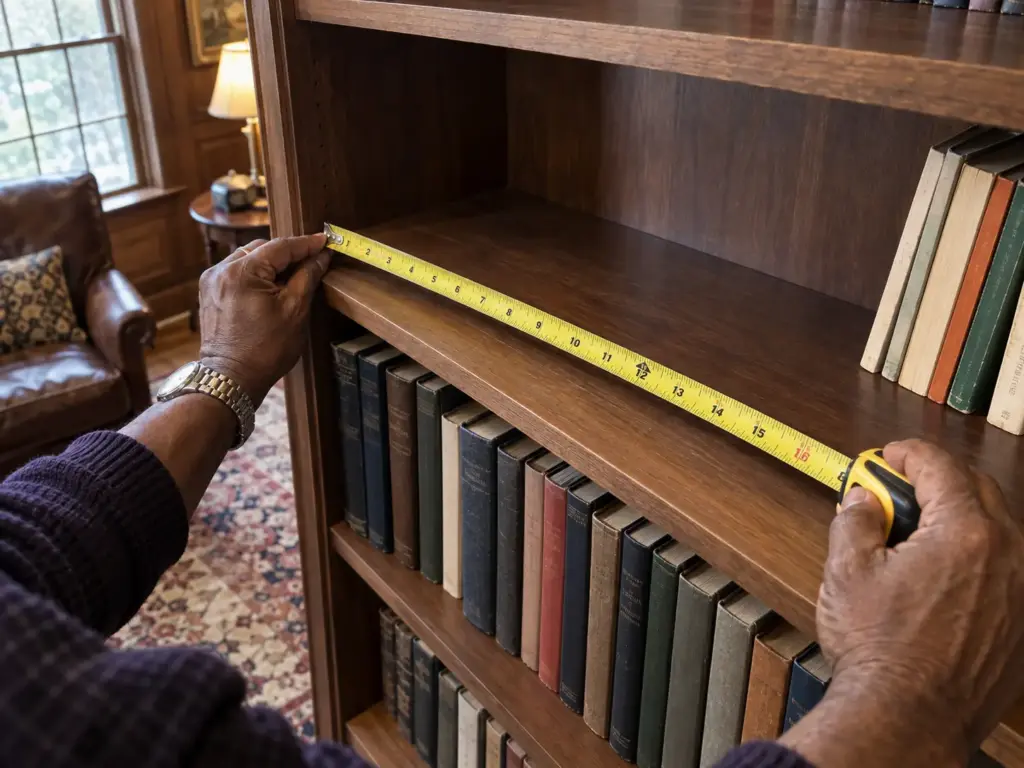
Measure the linear feet of shelf you plan to keep, because that shelf space is the boundary the rest of the cull has to respect. One organizing blogger estimates about 12 books per linear foot, which puts a 3-foot shelf near 36 books. Treat that as a starting figure and not a law: a run of thick hardcovers or oversized art books will fit fewer, a row of slim paperbacks more, so slide a handful of your own onto the shelf and see which way your collection leans. That shelf boundary is the number every later decision answers to.
The shelf sets a second limit through its width. Paper is heavy, a long unsupported span invites shelf sag, and one decluttering blogger’s kid-safety guidance keeps bookcase shelves to 24 inches wide or less. If you are unsure whether yours qualifies, how much weight and width a shelf can take has the numbers.
Put a strip of masking tape on the shelf at the point where your limit runs out. A number in your head loses to a full shelf; a piece of tape that you can see and a book that is past it does not.
Everything else about sorting the shelf itself, the four piles and the linear-inch math, lives in the bookshelf guide, so this guide does not repeat it.
When the collection is too big to start
The advice to put everything in one pile has a ceiling. If the collection runs across several rooms of shelving, one pile means a week of floor you do not have, and the project stalls before the first book is judged. In that case run the same order one room at a time: gather a room’s books, set its limit, ask the questions, then move on to the next. And if even a single room feels like too much to face, when a whole house of books feels like too much shrinks the first step until you can start it.
The Two Questions That Settle Most Books Fast
Once the books are in one place, the usual stall is the four minutes spent holding a single paperback while you try to decide which books to keep. The answer is fewer deliberations: two questions, a quick keep or donate call, and a speed rule, with the easiest first so the pile visibly shrinks before the hard ones come up.
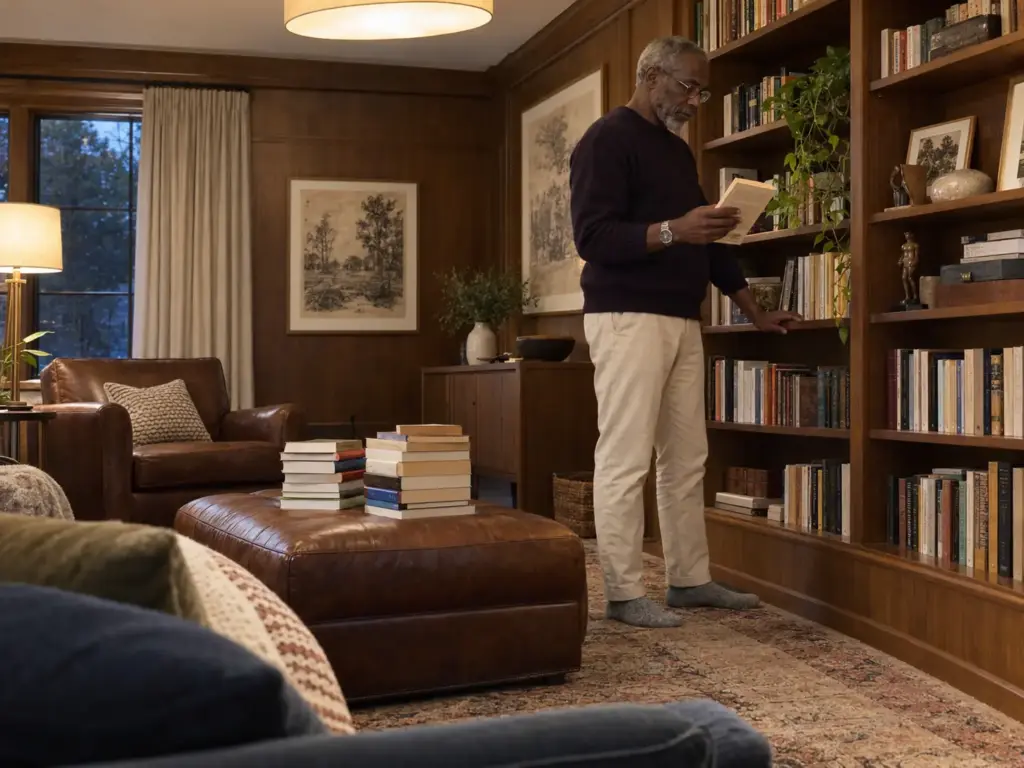
Do you love it, will you read it again
Ask yourself two things about each book: do I love it, and will I read it again? A yes to either keeps the book, and two noes send it out. The test is deliberately short.
The longer version lives in the by-item guide, including how to run the reread-or-pass-along test on novels you read once. A reread test works best on fiction: for a book you would read again only if the mood struck, the answer is usually no.
Give each book a time limit of about half a minute. A book that takes longer is already telling you it is a maybe, and the maybe box in the next section exists for exactly that.
Pull the easy ones first
Take out the duplicate books, the outdated editions, the manuals for gadgets you no longer own, the damaged copies, the books you never finished and the ones you did not enjoy.
None of them carry an argument, so they go fast, and the speed matters more than any ranking: a pile that shrinks quickly makes the hard decisions feel smaller. One Mumsnet poster describes getting rid of about 60 percent of their books over three years, missing none of them and reading just as much as before. Read that as one reader’s proof that the first cut is the one you are least likely to regret. The books you pull this way go straight onto the donate pile, with no second look.
Reference books and cookbooks get a different test
Whether you have read a reference book is the wrong question. Ask whether you still open it. A cookbook you have not opened in a year, whose recipes you could find online in a minute, is clutter; a field guide or an atlas you reach for twice a year is not.
What to Do With the Maybe Books: Gifts, Someday Reads and Sentimental Copies
The books you cannot decide about are where sorting stalls, so give them a place to wait and a date to leave. That goes double for sentimental books, which feel final the moment a bag is closed. A decision parked on a calendar is still a decision. A pile on the floor is only a pile.
Gift books and books from someone you love
A book from a friend that nobody has opened in nine years sits on the shelf and makes the whole shelf feel unfinished. Keeping the object is not the same as keeping the person, a distinction worked through in why keeping the object feels like keeping the person. Ask which part you value: the inscription, the memory of receiving it, or the book itself. If it is the inscription, keep that one copy and let the rest of that giver’s books go.
The someday pile
The someday book is the other kind of maybe: a book you fully intend to read, without a date. Those get their own treatment in the unread-pile section below, because the problem there is arithmetic and not feeling. For now they join the same single box, which some people call a limbo box. One box is the rule, because a second box is how a maybe pile becomes a storage unit.
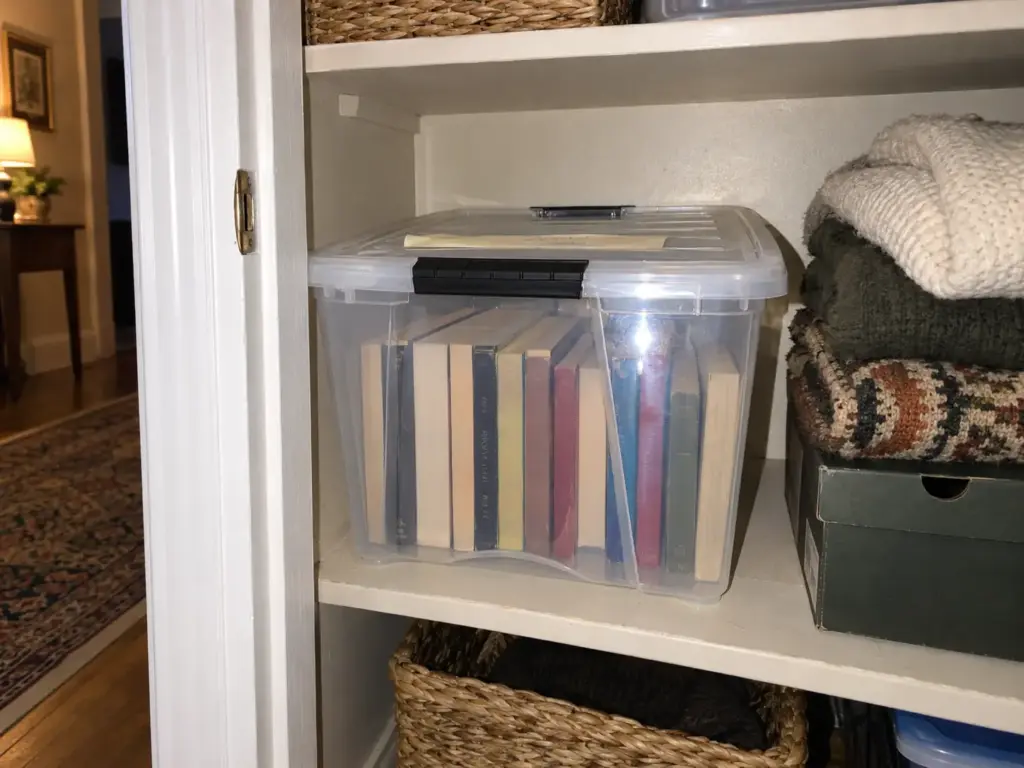
Parking the maybes in a dated, clear box
The free option comes first: any box already in the house, taped shut, with today’s date on the outside and a reopen date about three months out. If you want to see spines without opening the lid, the IRIS USA 4-Pack 32 Quart clear storage bins with lids (see it on Amazon) are the clear-sided version, and a 4-pack gives you more bins than the maybes need, so use one for the books and keep the rest for whatever else the cull turns up. A 32-quart bin full of hardcovers gets heavy to carry, so mix in paperbacks or stop short of full. Lid and handle fit varies by model, so press the lid down flat before you stack anything on top of it.
The date on the outside is the part that matters, because a taped box with no date is a storage box that quietly becomes a new pile. Boxes that hold the undecided books also beat a final bag for the unsure: a romance reader’s blog estimates that at least 75 percent of her keeper shelf was books she had bought at least twice, selling them off and then buying them back.
Put the reopen date in your phone calendar the day you tape the box, with the box’s location in the title. A date written only on cardboard gets read the day you move.
The Unread Pile Is a Math Problem
A to-read shelf, or a to-be-read pile if yours lives on the nightstand, is a promise with no due date. The sum is dull, and it is usually the first time the pile looks bigger than the years you have to read it.

Count the pile against your real pace
A Goodreads thread asking readers to run a calculator on their to-read lists collected answers from about 5 years to 40. One reader, 73, wrote that they will never read all the books they already own, partly because the pile is “growing faster then they are going.” Another reports eight thousand books on theirs.
For a benchmark, Pew Research Center’s 2015 survey of American reading habits found that the median American had read 4 books in the previous year, the mean was 12, and 27 percent had read none. The survey is more than a decade old, so use it as a yardstick, not a portrait of today. At the median pace a to-read pile of 60 books is about 15 years of reading, and at the mean pace it is about 5.
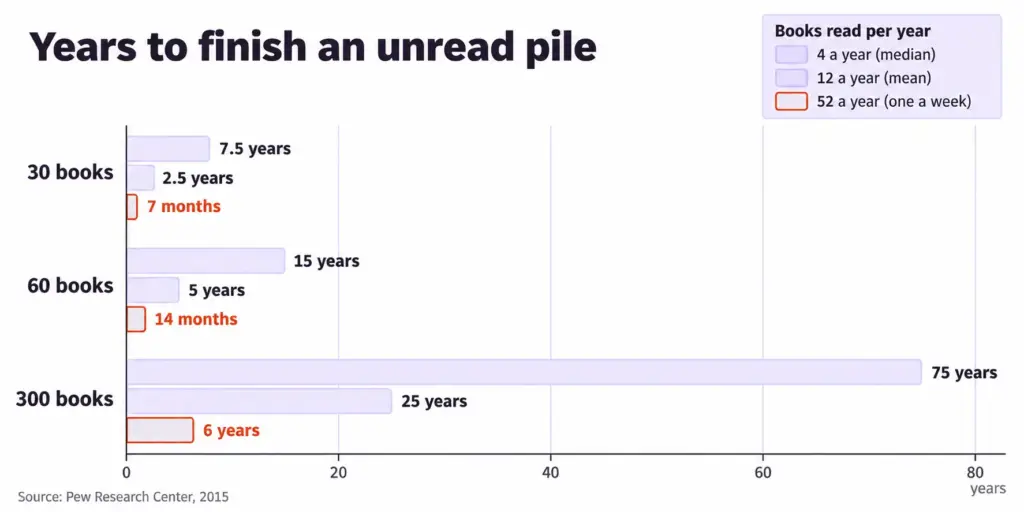
Now run it on your own numbers. Count the books you actually finished in the last twelve months, divide your unread total by that figure, and read the answer in years. Thirty unread books at 4 a year is 7.5 years, and at 12 a year it is 2.5. A Reddit r/declutter commenter did the same sum for 300 books at one a week and landed on about six years, which assumes a book finished every week with nothing new added.
Set a cap you can finish
Pick a cap tied to your pace: a year or two of reading. For someone who finishes 12 books a year, that is 12 to 24 unread books on the shelf, and everything beyond it has to justify the space. Do not borrow the median if you read more than the median reader, and do not borrow your best year either; the honest figure is the one from the last twelve months, not from the summer you were on leave.
The books past the cap do not have to disappear from your life. A library hold keeps the title reachable at no shelf cost, an ebook or audiobook copy borrowed through a library app such as OverDrive takes no room at all, and a wish list holds the same promise without the paper. If a title still matters when its turn comes up, you will know it for free.
Stop the pile from refilling
A pile comes from intake: the sale-table bargain, the gift, the book bought before the last one was finished. A cap with no intake rule is a tub with the tap still running. One-in-one-out is the usual rule, and that guide explains why it tends to slip by month three, so write the rule down where you will see it. Library holds and e-books are the buy-later slot: put the title on hold, and if it has stopped mattering by the time your turn comes, nothing was spent and nothing needs shelving.
Books Nobody Will Take, and Where the Rest Go
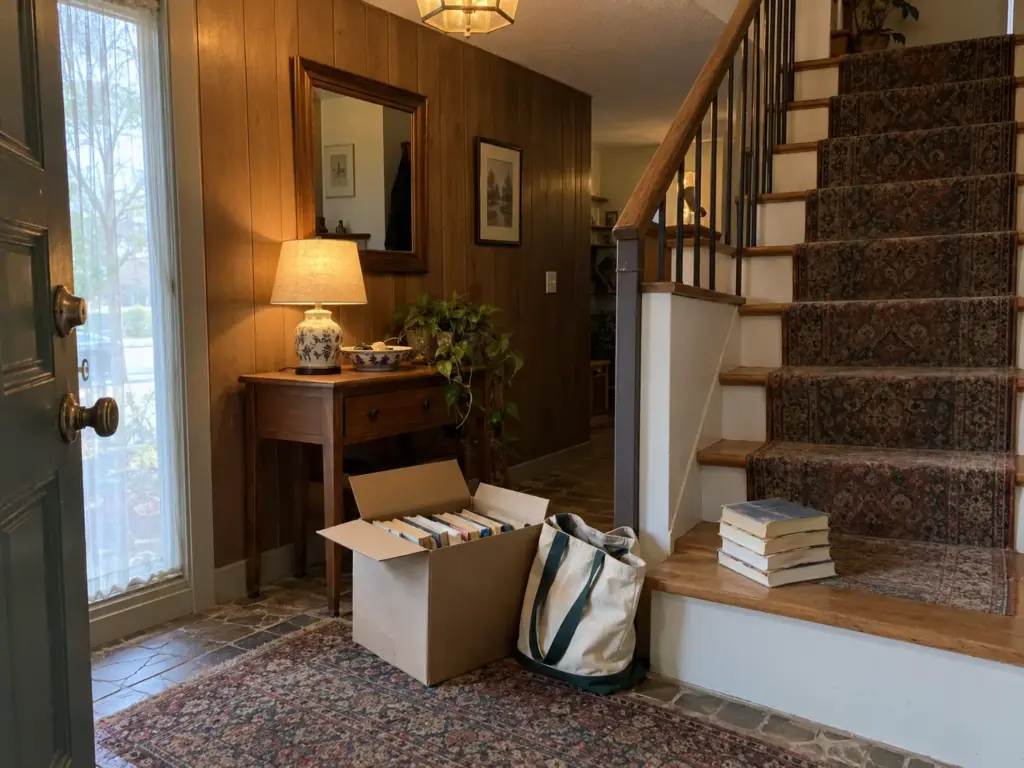
Picture loading the trunk with every book you cut, driving to the donation counter and being handed most of them back. “Donate whatever you do not keep” is the common advice, and it fails on exactly the books the counter turns away. Name each book’s destination before the bag leaves the house, and the return trip never happens.
Which books are actually donatable
A library donation goes best when the books are clean, readable and reasonably current. Those are the ones that find takers: recent paperbacks and hardcovers, children’s books in good shape, cookbooks that are not marked up. Public libraries, a used bookstore or other used-book buyers, Little Free Libraries, school libraries and historical societies each take different things, and what a library accepts varies from one to the next, so check by phone or on its website before you drive anywhere. Outdated technical manuals and heavily marked textbooks are the likeliest refusals, so plan those for a different route.
For resale, the Reddit thread’s tool is a barcode-scanning app named BookScouter, which the commenters use to see what a book would fetch before deciding. A book that would fetch very little is not worth the listing time, and it goes to a free destination instead.
Use one bag or box per destination, such as a box to the library and a bag for the used bookstore, and write the destination on the outside. A mixed bag gets dropped at whichever counter is nearest, and the books that counter refuses come home again.
Wet, moldy or pest-damaged books
Water-damaged books are a same-day job. According to the Library of Congress salvage procedures, as hosted by the American Institute for Conservation, modern books other than those with the most brittle paper absorb an average of up to 60 percent of their original weight in water, most swelling damage happens within about the first four hours, and “replacement is nearly always much less costly than salvage and restoration.” In practice that means a common in-print paperback that got soaked is usually cheaper to buy again than to dry, and the books worth the drying effort are the out-of-print or irreplaceable ones.
A book with active mold or signs of pests does not belong in a donation bag, and it should not go back on the shelf next to the books you are keeping. Ask your local program what it does with books in that condition; rules for them vary, and a guess is not worth the risk of a refused bag or a contaminated shelf. Whatever the program will not take lands on the toss pile, away from the shelf.
Where the rest go: library, swap, resale or a Little Free Library
Start with the close, free option. A Little Free Library may be a short walk away, and school and historical-society libraries sometimes want specific subjects, so ask what they would take. Whatever no one will take, check your local recycling program before you recycle books. Its rules for a paperback or a hardback vary, and any rule written here would be a guess about where you live.
Photograph the Spines Before the Box Leaves
The box is in the trunk and the doubt arrives. A phone photo of spines is the cheapest reversal there is.
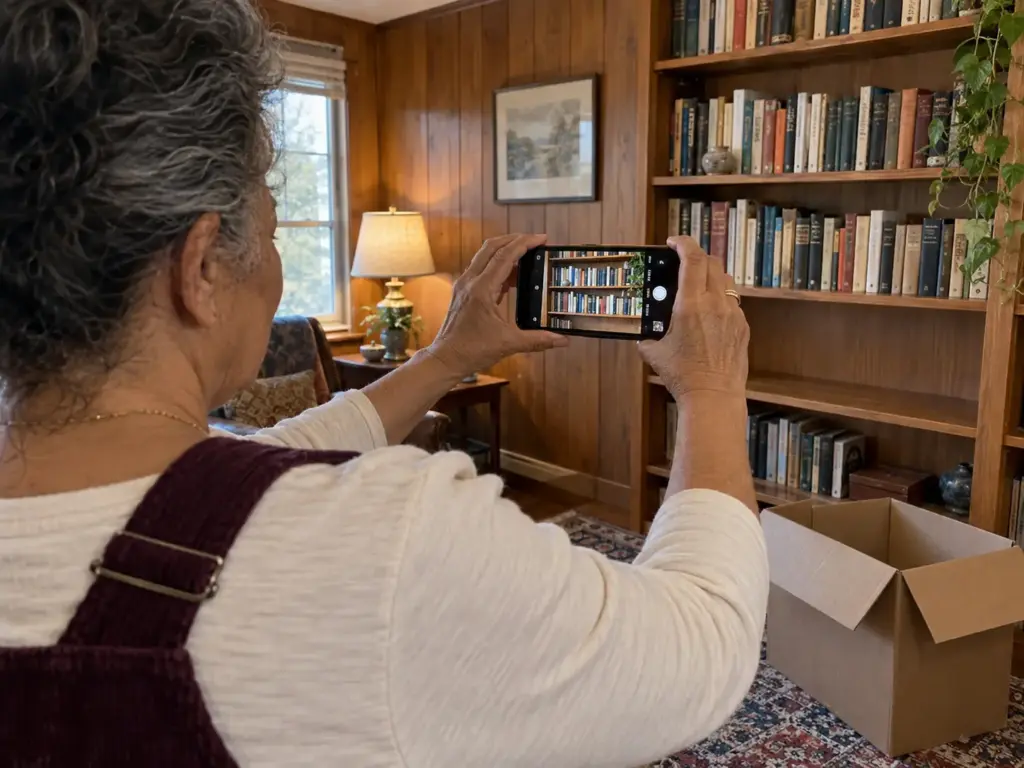
The photo log
One Reddit commenter’s procedure is simple: photograph the spines and the edition details before the box leaves, and check the library before buying a book again. Lay the books in short stacks with the spines facing up, or stand them in a row on the floor, and shoot until every title is readable. For books where the edition matters, such as textbooks, cookbooks you cook from and anything collectible, also photograph the copyright page.
Then do the step the commenter does not mention and most people skip: move the photos into one album with a name you will find in a year. Photos scattered through a camera roll are a record nobody can search. If you would rather have text, a plain edition list in your notes app does the same job.
Take the photos at the same sitting as the sorting, while the books are still lined up on the floor. A second trip to photograph a closed box means opening it, and nobody does that.
Check the library before you rebuy
The photo turns a vague regret into a short list. Before buying a title again, look it up in your library’s catalog and put a hold on it; if you read it in two weeks and still want it, then buying is a reasoned purchase, not a panic. For e-books, one blogger keeps books removed from the device in the account, so a title can be re-read without being bought again. That is one reader’s practice and not a statement of any store’s policy, so check yours before you rely on it.
How often regret actually happens
The rebuy loop is real. A romance reader’s blog describes buying a book new, selling it to the used shop and buying it again, and estimates that at least 75 percent of the keeper shelf was bought at least twice.
The Mumsnet poster who shed about 60 percent of their books over three years tells the other side: not one missed. Both are single voices, and together they point the same way. Most regret is for a handful of titles, and the regret people describe is dashing out to buy another copy a few days later. The photo log turns that dash into a library hold.
Whose Books Are These? Shared Shelves, Kids’ Books and Someone Else’s Collection
The partner’s shelf is off limits, the kids’ picture books are in the basement, and the cull stops at the edge of the other person’s side. A shelf that belongs to more than one person needs a household rule, because the personal ones do not reach it.
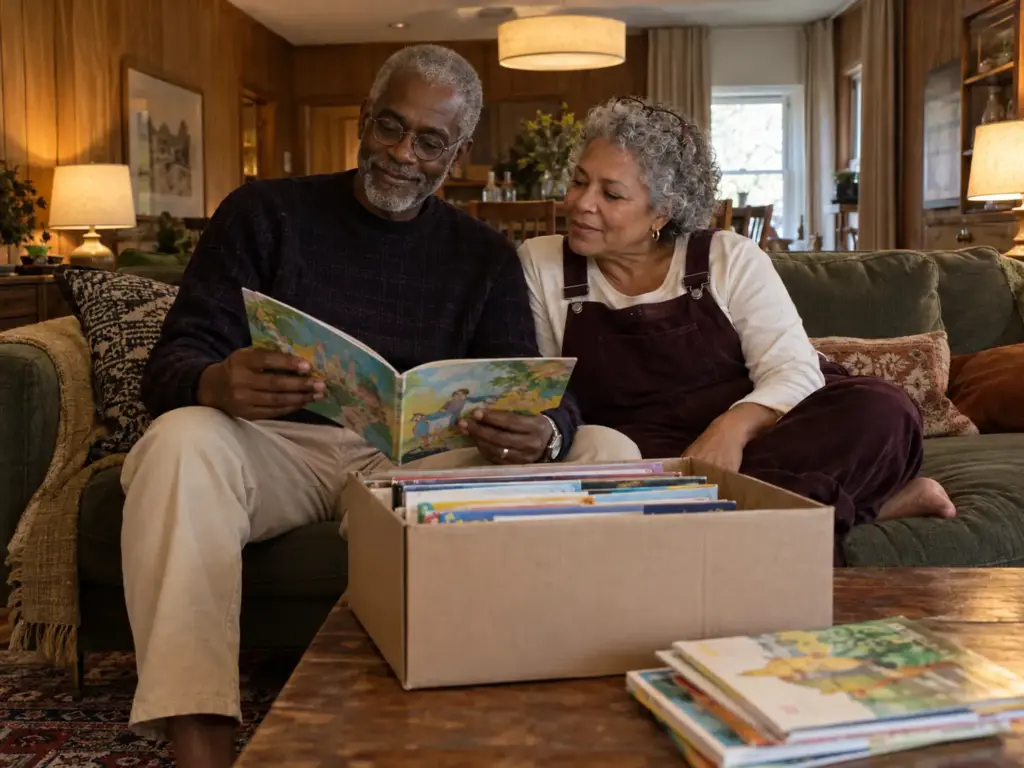
Sort a shared collection together
Book Riot’s advice for couples merging shelves is to drop both old systems and build a new one together: “Ditch your old organizational strategies and create a new one together.” The method it suggests is the sorting itself. Spread the books out, talk through which belong together and why, and let the arrangement come from the conversation and not from whoever shelved first.
Whose book is it, who decides
The same piece gives a clean rule for the argument that follows: the owner of a book is the in-house expert on it and makes the final call on where it goes. Apply it to the cull as well, so that your books are your decision and theirs are theirs. When the merged collection has duplicates, keep the copy that matters to one of you, and ask which one before you assume.
Kids’ books are a household decision more than a rule. Decide what fits the child’s shelf now, and put the books a grown child might want into the maybe box, dated like any other, so the picture books do not decide the fate of the whole shelf.
When the other person will not join in
Do your own books and the clearly shared ones, and leave theirs alone. Pressing on a collection that is not yours makes the next conversation harder, and a finished half is a better argument than a nagging one. If the objection runs deeper than books, if the other person will not let go has the longer version of the problem.
Keeping the Cull From Creeping Back
By the third month the shelf has filled with new arrivals, and the cull looks as though it never happened. The cure is a rule you set on day one, not a second cull.
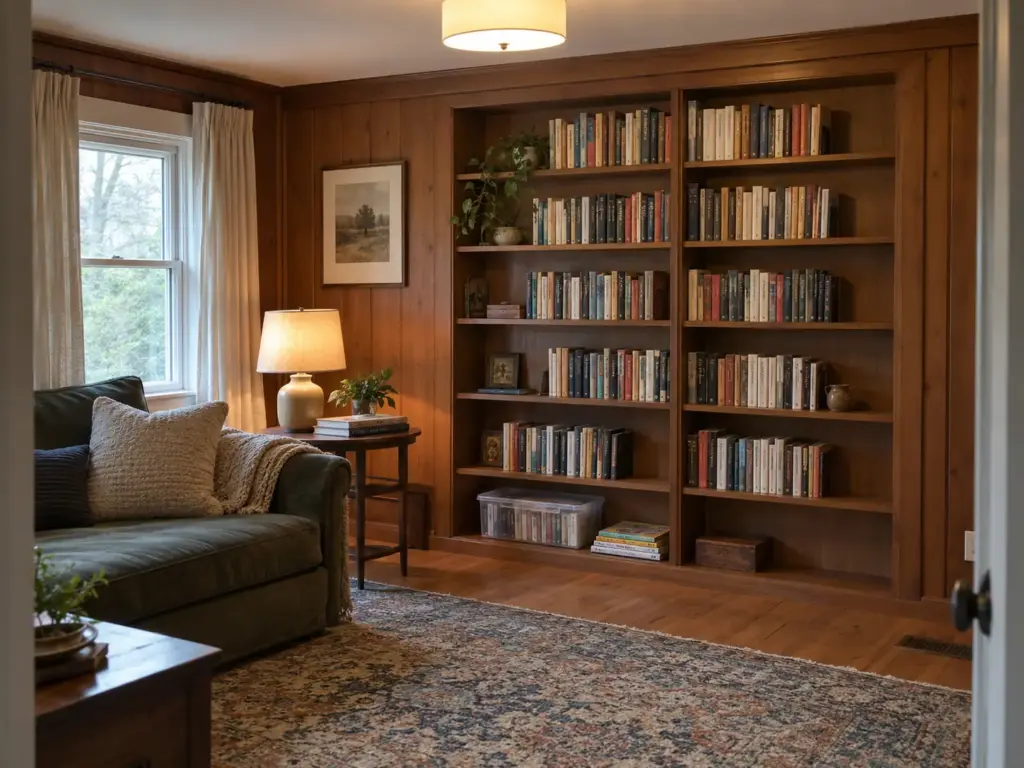
The shelf is the limit
The shelf limit from the start of this guide is the rule. When the shelf is full, something leaves before something arrives, and the tape you stuck on the shelf shows the answer without a count. If you have no shelf at all, where books go when there is no shelf covers a stack, a crate and a wall, and the same rule applies to the book boxes in a spare closet.
A short check in three months
Open the maybe box on its date, and count the basement books in the recount. What you did not reach for goes to its destination, and what you took out and read earns a place on the shelf, inside the limit. Recount the shelf at the same time. For the habits that keep a finished room finished, see minimalist decluttering tips that last.
Library holds and e-books as the buying slot
Put new titles on hold at the library first, and buy the ones you finish and still want afterward. Keep the photo album from the cull where you can find it, since it is the quickest answer to the “did I own this?” question. Reading pace changes, so recount your finished books once a year and move the to-read cap up or down to match.
A Limit, a Dated Box and a Photo Album: What Keeps the Cull Finished
Three things carry the result. A shelf limit you can see, so the collection has an edge. A dated box for the books you cannot decide about, so they have somewhere to wait without becoming a new pile. And a destination and a set of spine photos for everything that leaves, so the books go without a fear of regret following them out of the house.
In three months, open the box and recount the shelf: the books you never reached for are your answer, and a shelf that has crept past the tape is telling you where intake got ahead of you.
Today, bring the books from your nightstand and your car into one pile and count them against the number your shelf allows. Notice how many you would already skip, and let that count set the speed for the rest. When the books are done, the same sequence for a closet of clothes works the same way, and decluttering methods that work past the first week covers what to do when a different category stalls.
Frequently Asked Questions
01How do I declutter my books?
To declutter books, gather every copy into one place, set a limit from your shelf, and ask two questions of each: do you love it, will you use it again. Put the undecided books in one dated box and name a destination for the rest before any bag leaves.
02What is the best way to get rid of a lot of books?
Give every book a destination before the bag leaves: a public library, a used-book buyer, a book swap or a Little Free Library. Ask what each place accepts, because damaged, moldy and outdated books are often turned away. For those, check your local program.
03How many books should I keep?
Keep as many as your shelf holds, which one blogger estimates at about 12 books per linear foot, so a 3-foot shelf holds roughly 36. Then cap the unread books at what you can finish in a year or two at your real pace.
04What if I regret getting rid of a book?
Regret tends to be rarer than people fear, and the cheap protection is a phone photo of the spines plus a library check before you rebuy. One Mumsnet poster shed about 60 percent of their books over three years and missed none.
05Should I keep books I have not read yet?
Keep only as many unread books as you can finish at your own pace. In a 2015 Pew survey the median American read 4 books a year, so a 60-book pile is about 15 years of reading. Library holds can cover the rest.
Disclaimer: ClutterlessNest is a participant in the Amazon Services LLC Associates Program. As an Amazon Associate we earn from qualifying purchases. This article may contain affiliate links — if you buy through them, we may earn a small commission at no extra cost to you. We only recommend products we have tested or genuinely believe in.