The donation bag leaves on a Saturday. By the second Sunday after, you are stepping around a plastic fire truck and two halves of a puzzle, and the shelf you cleared is full again. That loop is what happens when you declutter toys in a single pass, because the first pile was never the real problem. Parents on r/declutter describe the same thing: a few holidays and one yard sale, and the situation rears its head all over again.
This guide on how to declutter toys follows the order that holds up, from the cuts that need no vote to a container that sets the limit, a dated exit for every maybe, and a plan for the intake that refills the house. It also covers the home with no playroom at all. If you want the wider map first, this sorting logic is one chapter of decluttering by item type.
Quick Answer
A toy declutter holds when you cut first, cap the count with a container, and put a date on every leftover.
- Pull broken, incomplete, duplicate and outgrown toys without asking anyone.
- Pick one bin or cube you already own as the limit.
- Let your child choose favorites first and store those first.
- Write an exit date on the maybe box and set a phone reminder.
- Log every toy that enters the house for one week.
Declutter Toys by Cutting What Needs No Decision First
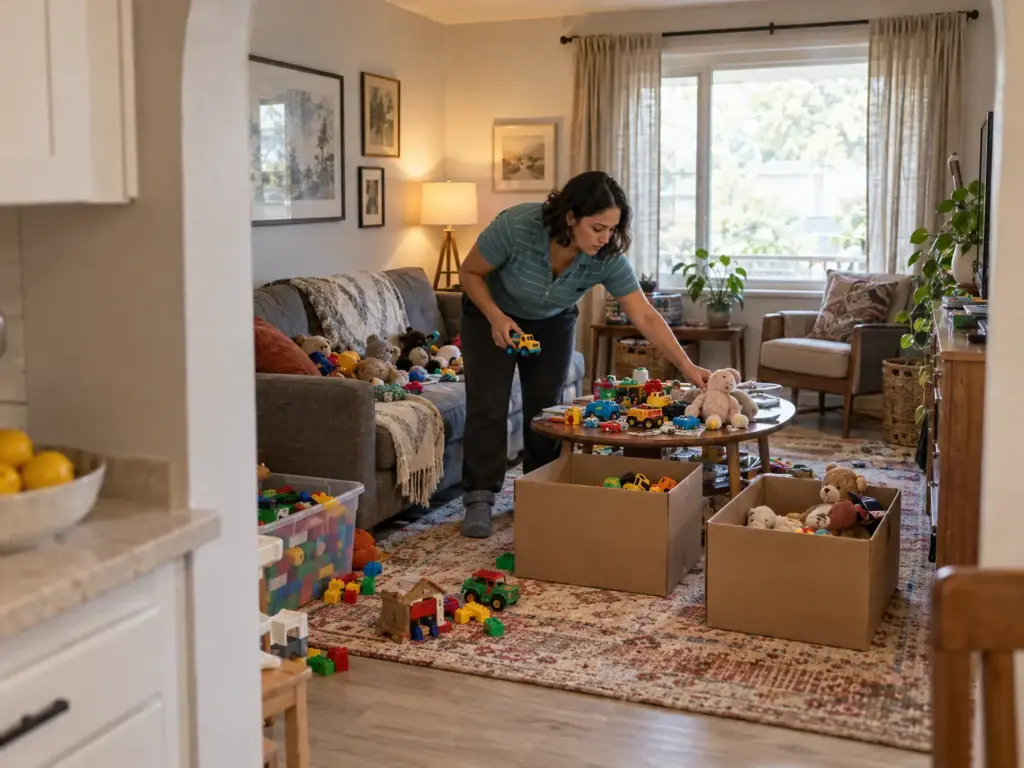
Picture the living-room floor with kids toys hauled in from three rooms and a child asking what you are doing. You are tired before the first decision, so start with the toys that need none. Decluttering toys for kids goes faster that way, because the first pile empties without a single argument.
Broken, Missing Pieces and Duplicates
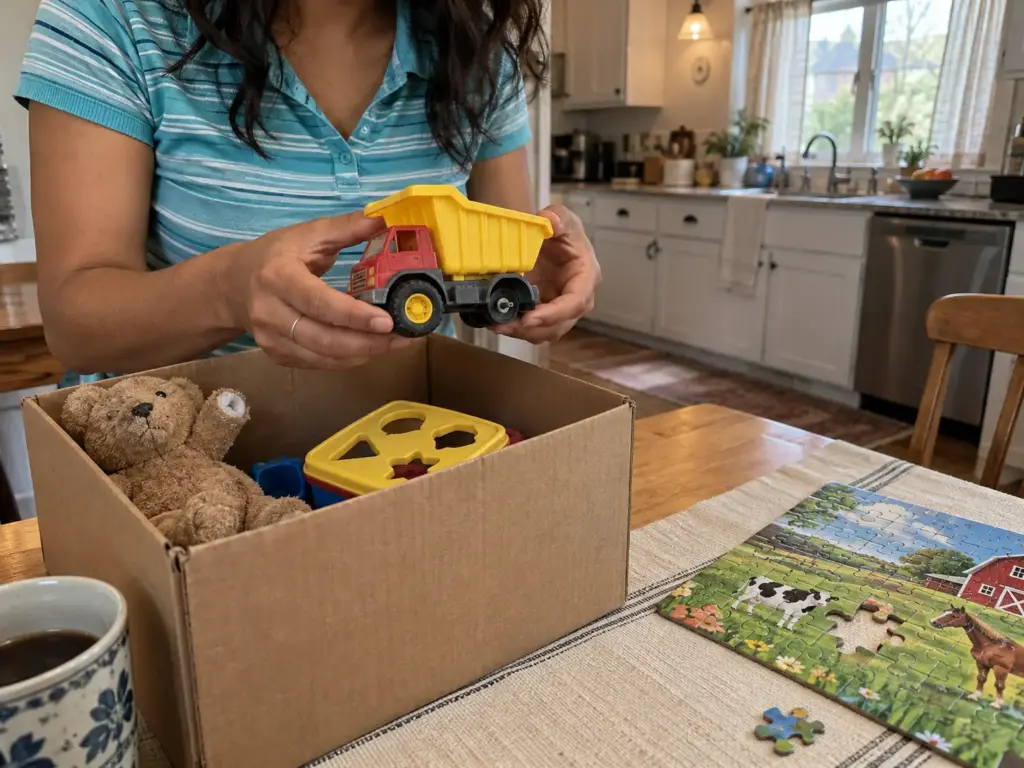
Three kinds of toy leave first, and none of them gets a vote: broken, incomplete, and the second or third copy of the same thing. A puzzle short of its puzzle pieces, a board game with no dice, a set missing half its parts: incomplete sets like these fail one test, whether anyone could finish playing with them today. If not, they go.
Parents in the r/declutter thread advise treating damaged or incomplete things as ordinary trash, said in a flat tone. Duplicates are the quiet ones: three near-identical trucks give a child no more play than one, and they triple the cleanup.
Outgrown Toys and the Age Check
Ask of each toy whether it still belongs among the age-appropriate toys for the child who lives here now. Toddler toys such as the stacker and the chunky four-piece puzzle fail that test together. Outgrown toys leave the house the way outgrown clothes do, and the clothes version of this cull pairs well with it if you plan both in one weekend.
Pile It All in One Place and Sort by Type
The sorting split is contested. One school gathers every toy into a single pile, so you see the real volume. The other works one category at a time, because a full-house pile can stall a short session before it starts. The single pile wins when you have an afternoon; one category wins when you have forty minutes and a bored child.
Sort by category, by type or by use, never by room. One parent in the thread offered a rule for the smallest items: if a toy fits in a pocket, it is small enough to toss during the sweep. Another paid out an ice cream for every standard grocery bag a child filled with things to give away.
The Limit Is a Container You Measured
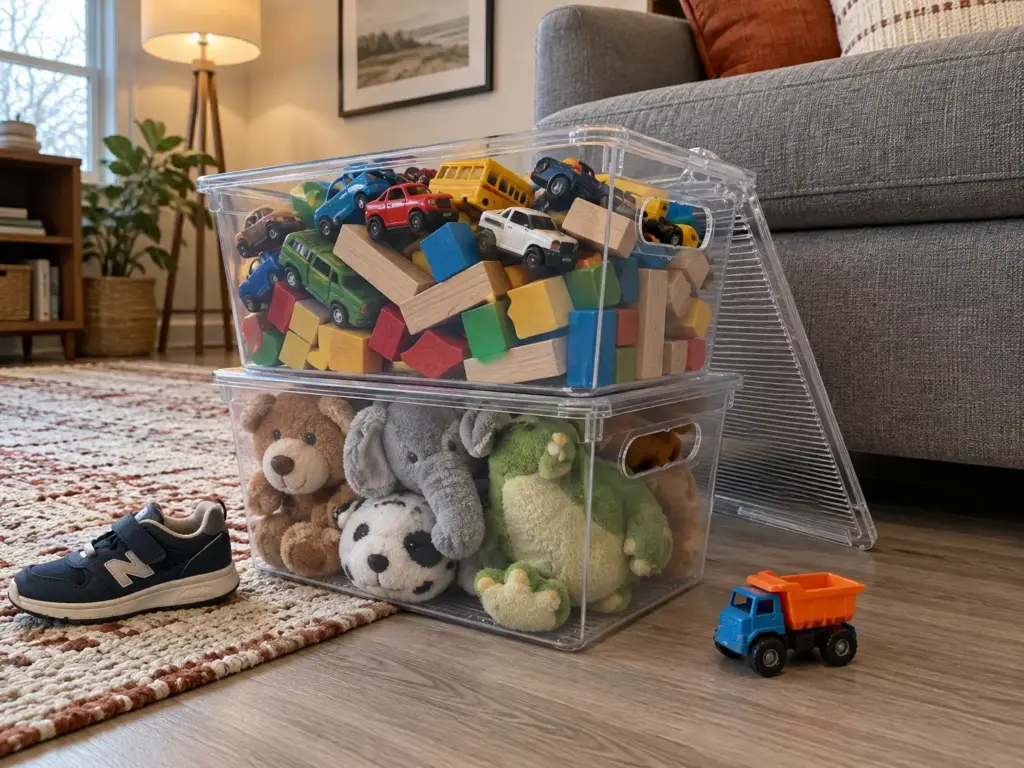
To decide how many toys is enough, a number sounds firm until you try to enforce it. Twenty cars, ten dolls, one bin of blocks: each is easy to agree to and easy to quietly exceed, because nothing in the house marks the edge. Then a bin that looked huge in the store holds half the cars once the first three trucks go in, and the rest end up on the floor.
Why a Number Alone Fails
A count has no edge you can see. When the collection creeps from twenty cars to twenty-four, no alarm sounds, and each extra toy feels harmless on its own. Counts also ignore space: ten big stuffed animals fill a shelf that thirty small figures would barely cover.
A container fixes both problems. One commenter in the r/declutter thread called it the container principle: “your kids can only keep what fits into that storage. Random piles or the floor is not storage.”
Full is a physical state. Nobody has to count anything, including your child.
Pick the Container and Let It Set the Count
Start with what you own. A sturdy cardboard box, a laundry basket, a cube in a shelf unit or a bin currently holding something less important will do, and a free container beats a bought one. Measure it on the inside, not off a label: length, width and depth from the rim to the floor of the bin, with the tape laid inside. Listed sizes are outside sizes that include the walls, and makers rarely publish an interior figure, so the inside of the one in your hands is the only number worth trusting.
If you want clear bins so contents show at a glance, the Vtopmart 6 Pack Clear Stackable Bins with Lids (Large) are shoebox-scale, clear and stackable, which suits one bin per category: cars, blocks, dolls. The lids add a step, so they suit children who can manage one; a small child will skip a bin they cannot open. On a tighter budget, the PRANDOM Large Collapsible Storage Bins with Lids do a similar job and fold flat when empty. Measure the inside of whichever one lands in your cart before assigning it a category.
Fill the container with the toys your child picked, then stop. Whatever sits beside it, on top of it or under the bed is the overflow, and the overflow is what you are deciding about, not the bin.
Sorting into a box per outcome (keep, donate, trash, maybe) is the backbone of the four-box decluttering method. Here it takes one change: the keep box is your container, and its size answers “how many.”
What Overflow Means
When the container is full and a new toy arrives, one toy leaves for every one that comes in. That is the one-in-one-out rule, and it tends to fail around month three because nothing records the swap. Give it a place to live: a note stuck to the container, or a line in your phone, where each swap gets written down when it happens.
And if the container never seems big enough, resist buying a bigger one. A bigger bin raises the limit and changes nothing about what is coming through the door.
Which Toys Your Child Votes On, and Which They Don’t
Two weeks after a bag goes to donation, your child asks for one toy by name. It was in the bag, and you knew it. Kids involvement decides whether that is a hiccup or a lasting grievance, and a simple split helps.
The No-Vote Pile
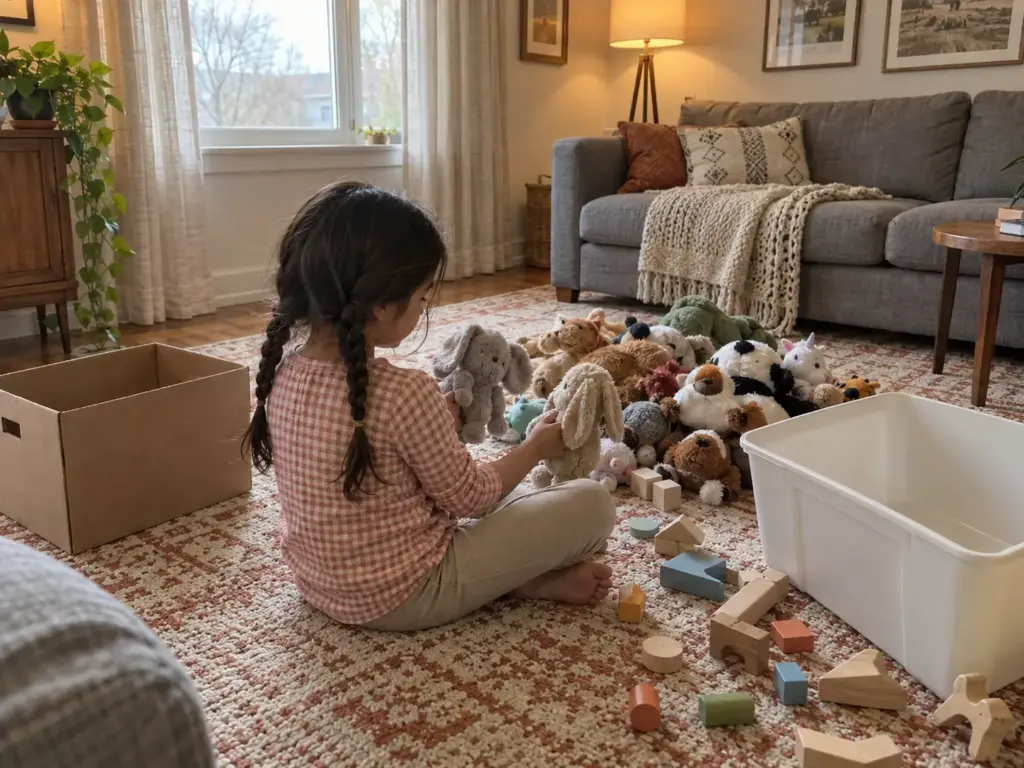
Broken, incomplete, duplicate and outgrown toys go without a vote. Favorites go to a vote, and so do gifts from family and the ones nobody can place. The child picks keepers first and those get stored first; in the thread’s words, “whatever doesn’t fit has to go.”
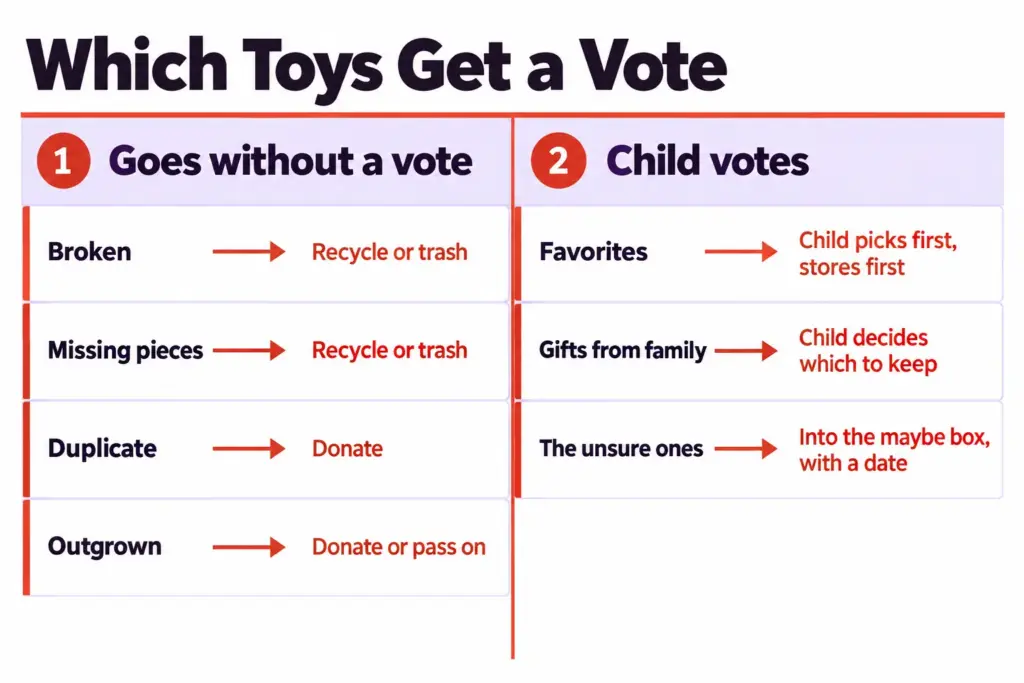
The no-vote pile saves everyone’s patience for the choices that matter. Asking a child to approve losing a cracked toy with a missing wheel spends their goodwill on something they would not defend.
The Favorites Vote: The Child Picks First
Lay the remaining toys where the child can see them and let them choose what they cannot live without, up to the limit of the container. Reverse it, deciding what goes and inviting objections, and every item becomes a negotiation. One trick from the thread: offer a choice, and quietly note which toys are never picked. Those are the first to be donated, for a reason that has nothing to do with your own preference.
Do not do it behind their backs. “They’ll resent you for this,” one commenter wrote. Another parent had forcibly disposed of a seven-year-old’s belongings and was still apologizing to that child, who was about to turn eighteen.
How Much Say at Different Ages
A rough line many parents draw is around age five. Below it, the adult makes the cuts from the no-vote pile, quietly and without ceremony, and leaves favorites alone, since a toddler cannot weigh keeping against giving away. From about five up, the child gets a real say in the favorites, and the older the child, the more it becomes a negotiation.
Sentimental toys sit outside all of this. The bear from a first birthday or the stuffed animal from a grandparent is its own category, and the guide to sentimental items covers how to decide on them without guilt.
The Maybe Box and Its Exit Date
Every cull produces maybes: not broken, not loved, not clearly outgrown. Some parents call the holding spot toy purgatory, others a failsafe box, and either way it needs a place to wait. But a place to wait is not a place to disappear into, and that difference is where most toy decluttering quietly unravels.
Why a Visible Box Fails
The most useful report in the r/declutter thread came from a parent whose daughter’s boxed toys went to the garage in a clear container. In the commenter’s words, “they kept seeing them in the garage in a container and wanting to pull stuff back out.” Their advice was to declutter away from the kids, then take the box out of the house until the donation drop.
A toy in a see-through box is still on display, just in a worse location, and a remembered toy is a wanted toy. For a maybe box, opaque and out of sight beats clear and in view.
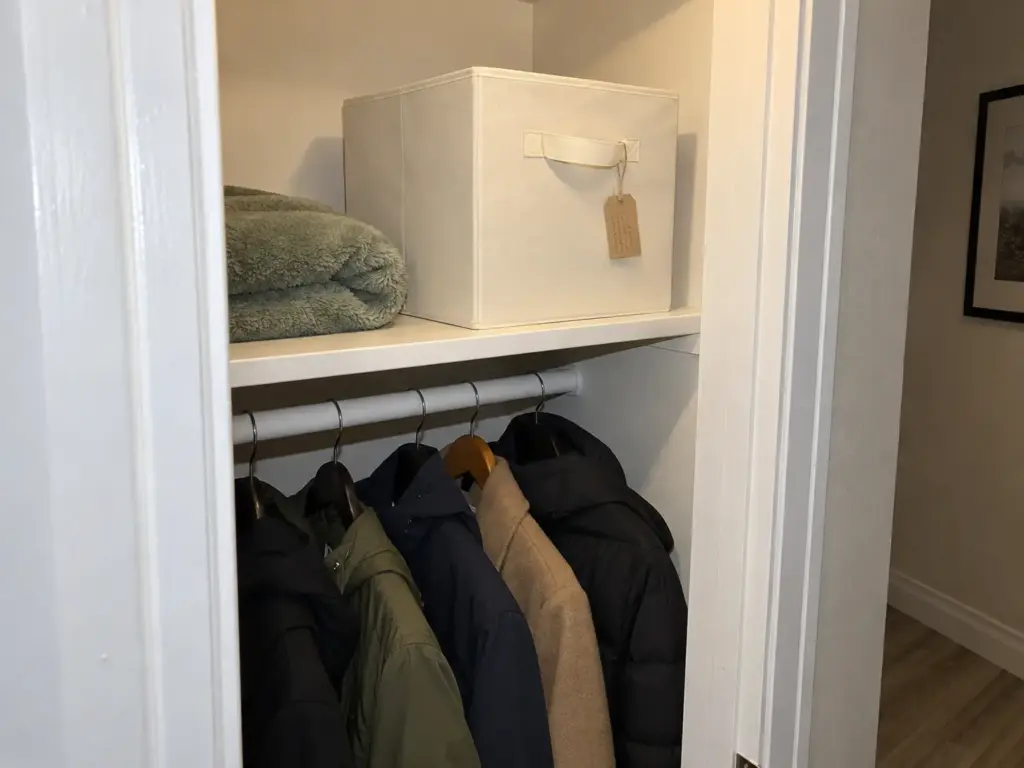
If you have a lidded box in the house, use it. Date it, put it on a high shelf or at the back of a closet, and you have spent nothing. For a soft, opaque option, the Amazon Basics Collapsible Fabric Storage Cubes come in a 13-inch size and have no lid, so there is no latch to think about. The trade-off is that a lidless cube shows its contents to anyone who looks down into it, so put it above eye level or behind a closet door.
Write the Exit Date on the Box
A common plan is to put every maybe in totes in the garage and donate after a year. It sounds disciplined, but it has no exit date, so a year later the totes are still there. The tote has become the new pile.
Here is the rule that closes the gap, and it is my own rule, not a study result: the date goes on the box in marker, the reminder goes in your phone calendar, and the box leaves the house on that date whether or not anyone asked for anything inside it. A month suits most households. A week works before a planned donation drop, and two months is as far as it should stretch.
Waiting for the child to ask fails because plenty of children never do. A box can sit for months with nobody noticing what is inside it, and that silence is the signal to let it go.
Set the phone reminder for the day before the exit date, not the day of. That leaves time to load the car, so the box leaves instead of being pushed to next week.
The Garage and Basement Stash
A hidden toy stash is the same pile in a different room. Garage toys and basement toys are the usual suspects: in a large house with spare space the pull is stronger, because nothing forces a decision, and extra room only postpones the problem.
There is also a safety point for any lidded toy chest stored in these rooms. According to the U.S. Consumer Product Safety Commission, “Lids on millions of storage chests and trunks can automatically latch shut, locking children inside and suffocating them.”
The same release says a lid support that does not hold the lid open in every position should be replaced with a spring-loaded one, and that toy chests need ventilation holes that are not blocked by the floor or by pushing the chest flat against a wall. Check the latch and test the lid at several heights before a chest goes into a garage, basement or playroom.
Where It Goes Within the Week
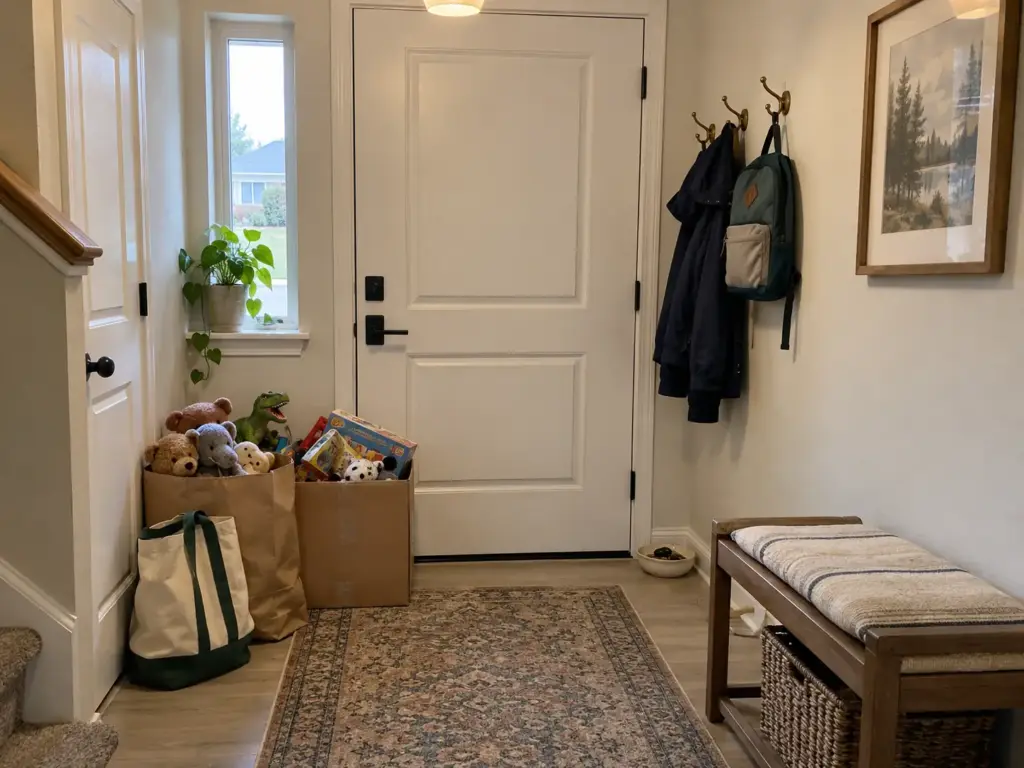
A donation bag by the front door has a short shelf life: after a few days your child has been through it, and half of what you sorted out is back in the playroom. Decide the destination before the cull begins.
Donation, Swap Group or Resale
Before you donate toys, pick where they go. Thrift stores such as Goodwill and the Salvation Army take toys, and consignment shops like Kid to Kid and ThredUp pay for the better ones. Check what each location accepts before loading the car, since policies vary. Local swap groups on Facebook and Facebook Marketplace work for the toys you expect someone to want, and a toy swap with other parents does the same job face to face.
One parent in the thread tries local Facebook gifting groups before a thrift store, and takes the leftovers there only if nobody claims them. That keeps useful toys moving, and it has a built-in deadline. Another sells the toys that might bring money and spends it on an outing, such as an arcade, a movie or skating, which gives the child a reason to like the process. Sell only if you will list the items this week; otherwise donate.
What Cannot Be Donated
Broken toys and sets with missing pieces go in the trash or a recycling program. The check is the same as before: could a stranger finish playing with it? Putting them in a donation bag hands someone else the job of throwing them away.
Put the Bag in the Car Today
The bag goes in the trunk, not the closet. A discard that waits for a convenient moment becomes a stash, and the stash is the thing this whole article is trying to avoid.
Stop the Intake That Refills the House
You can run an excellent cull and still lose to the two weeks after a birthday and a holiday. The cull removes toys; the intake brings them back, and nothing earlier in this article touches it. This section decides whether the floor stays clear.
Log a Week of What Comes In
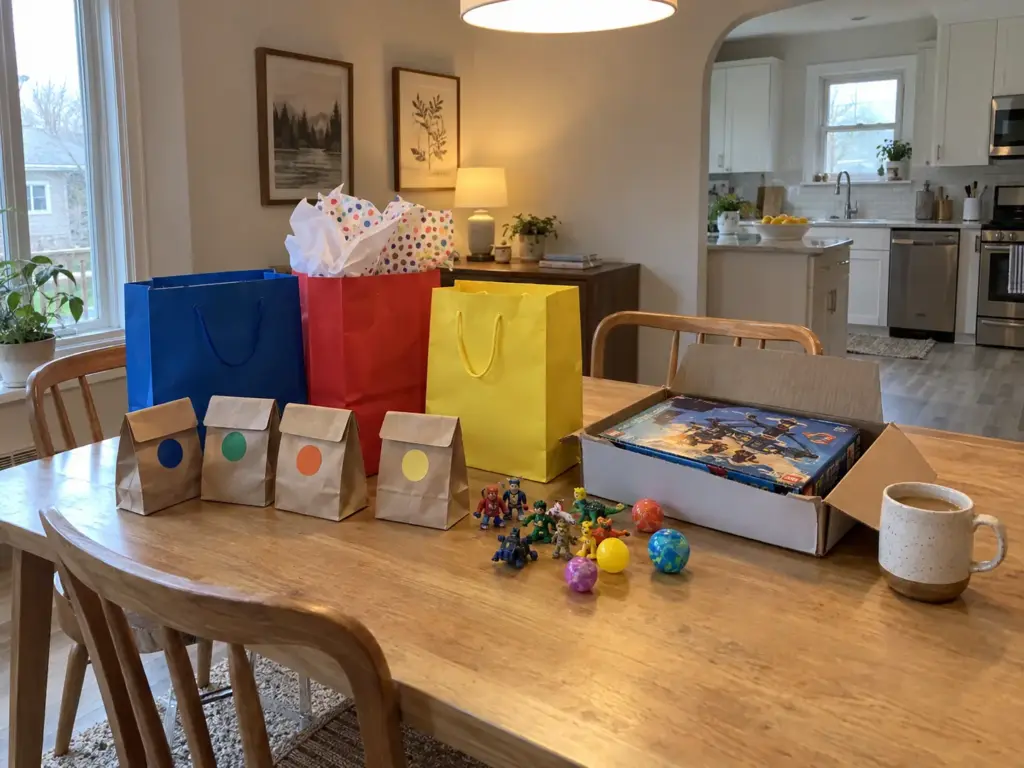
For seven days, write down every toy that enters the house: the party bag, the kids-meal toy, the dollar-store basket by the register, the relative’s gift, the thing a neighbor handed over. A note on your phone works, or a sheet taped inside a cabinet door.
The count shows the refill rate before you argue about it with anyone. A household looking at a real number has something concrete to talk about. (The small free items tend to add up faster than the gifts, because nobody counts them as gifts.)
Talk to the People Who Buy Gifts
You cannot stop a grandparent from loving a child with a trip to the toy aisle, but you can redirect it. Gift-givers respond best to a specific alternative, and the suggestion that comes up in parent threads is experience gifts, asking for experiences in lieu of things: a class, a zoo membership, a day out. The r/declutter thread adds a variation for birthday parties, where guests bring a used book “in lieu of a gift.”
Make the request before the occasion, not after the gift is bought, and offer a specific alternative instead of a general “please don’t.” Name two or three things the child needs or wants, a consumable such as art supplies, or a shared family item such as a board game. Say it kindly and once, in your own words, with the reason that the house is at its limit.
Party Bags, Kids-Meal Toys and Dollar-Store Finds
Party favors, kids-meal toys and dollar-store finds are the pocket toys: small, cheap, arriving in bulk and settling into every corner. The thread called the recurring fight over them “the toy battle.” Give them their own small cup, and let them leave first when the cup is full. A toy that fits in a pocket is small enough to toss during the sweep, and the cup makes that rule automatic.
Look at the week’s intake log for the source that appears most often. One repeat source, such as a weekly party or a standing grandparent visit, often outweighs all the others combined.
Keep What Stays Reachable
The cull only holds if the remaining toys live where a child can reach them. A shelf an adult can use and a child cannot is how everything ends up in a heap on the floor.
Reach Height and One Zone per Category
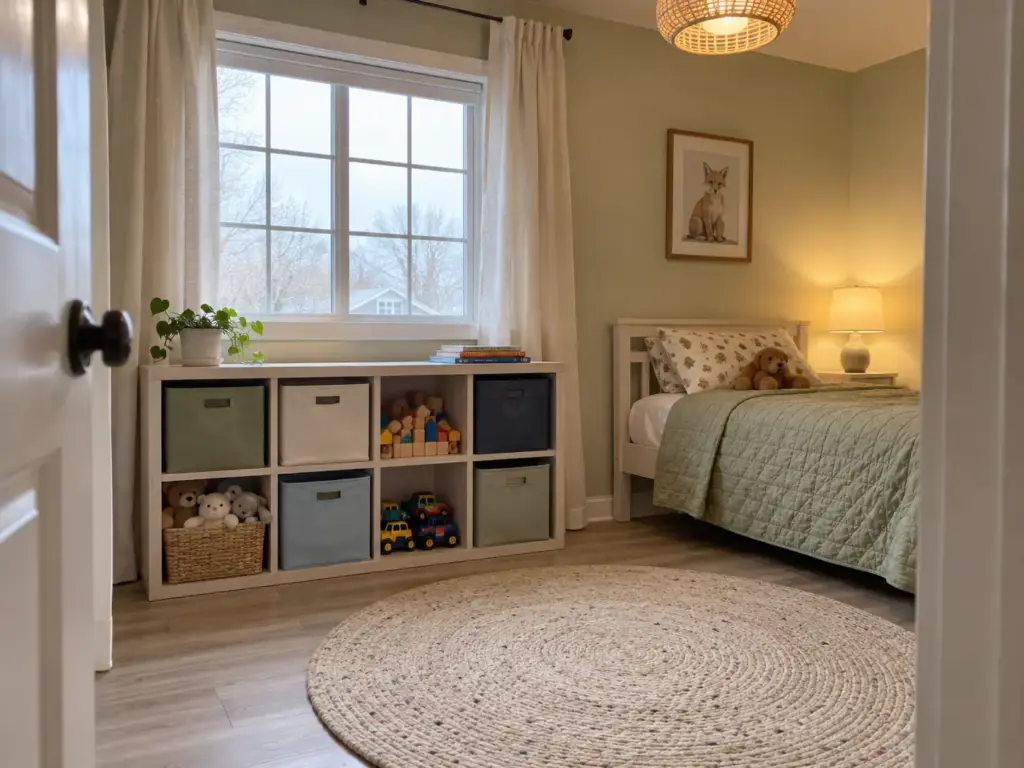
Open bins and low shelves a child can see into and reach are where toys get picked up and put away. Give each category its own zone, and keep the container in the room where the toys are played with, because a limit set in the bedroom does not hold if the toys live in the living room. For bins, shelving and layouts, toy storage ideas for small spaces covers what this article leaves out.
Toy Rotation as an Option, Not a Rule
Rotation means keeping some toys out of sight and swapping them in and out. One parent in the thread said rotating the less-favorite ones “will feel a bit like getting new toys.”
It helps when the volume stays high. It also adds a swap day, and many households skip it by the second month. If your container limit is working and the floor stays clear, you do not need it. For a one-afternoon reset that pairs a purge with containment, how to organize a kids room in one afternoon gives the timeline.
When There Is No Playroom
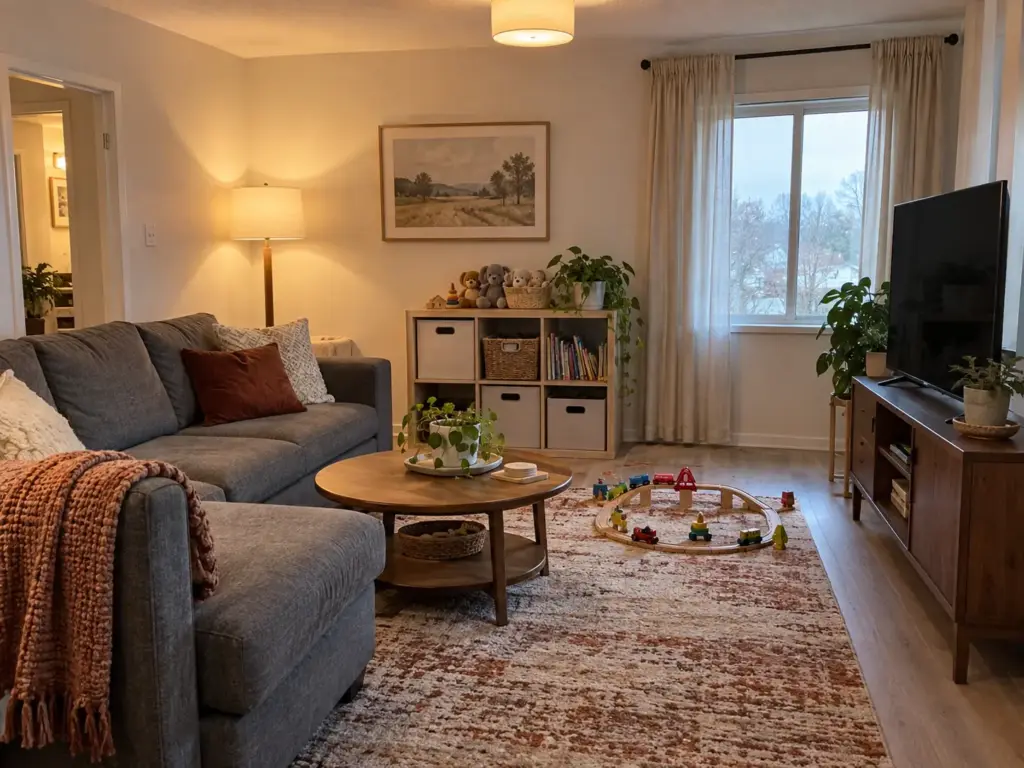
In many homes the living room is the playroom. The toys never leave it, and every evening someone clears the sofa. Here the decision gets stricter, because the toys share space with everyone.
The Living-Room Toy Zone
For living room toys, the shelf, cube organizer or basket that can stay in the room sets the limit. Decide what that one piece of furniture holds, and treat whatever does not fit as overflow. Storage that looks like furniture is easier to leave out, and living room storage ideas for small spaces shows options that do.
Small Apartment and Renter-Safe Limits
If you rent, keep everything freestanding: bins, baskets and cube units that sit on the floor, nothing screwed to the wall. What you can place without drilling is the limit. Under-bed storage tempts in a small apartment but turns into a hidden stash fast, so read why kids’ under-bed storage gets messy in a week before committing.
The Large House With Room to Hide Them
The opposite constraint is the big house, where a basement and a garage invite a stash. The same dated-exit rule applies, and the maybe box earns its label and date even if it never moves from the basement shelf it sits on. More room does not mean the toys are under control; it means the problem arrives later, usually the day someone opens a closet and finds forty bins.
What to Look at When the Toys Settle
Three ideas carry the rest: cut what needs no vote, let a measured container set the limit, and give every maybe a date. The pile does not come back for lack of willpower. It comes back because the intake went unwatched and the stash had no deadline.
In three months, check two things. Is the maybe box long gone, or is it still there with its date in the past? And would a fresh week of the intake log look like the first one? If the count is the same, the refill is the part to work on next.
Today, take the single bin or cube you already own, set it in the room where the toys live, and let your child fill it with favorites. Everything else goes in a bag by the door or into the dated maybe box. After a week, look at the floor and notice which toys your child reaches for. When this category is done, decluttering books is a good next one.
Frequently Asked Questions
01How do you get rid of toy clutter?
Remove broken, incomplete, duplicate and outgrown toys first, then keep only what fits one container you measured. Send the rest out of the house within the week, and give any maybes a written exit date.
02What is the best way to organize a lot of toys?
Cut the pile and set the limit before you organize anything, because storage cannot fix too many toys. Then give each category one reachable zone. For bins and layouts, see the toy storage guide.
03How do you declutter toys for toddlers?
The adult makes the cuts, and only from the no-vote pile of broken, incomplete, duplicate and outgrown toys. Do it quietly while the child is elsewhere, and leave the favorites alone, since a toddler cannot weigh keeping against giving away.
04Should kids help decide which toys to get rid of?
Yes, but only on favorites. Broken, incomplete, duplicate and outgrown toys go without a vote. Let the child pick keepers first and store those first, and whatever does not fit the container goes.
05What if my child asks for a toy after it is gone?
That is what the dated maybe box is for. Keep the toy out of sight until the exit date, because a visible box invites kids to pull things back out. If it is requested early, hand it back.
Disclaimer: ClutterlessNest is a participant in the Amazon Services LLC Associates Program. As an Amazon Associate we earn from qualifying purchases. This article may contain affiliate links — if you buy through them, we may earn a small commission at no extra cost to you. We only recommend products we have tested or genuinely believe in.