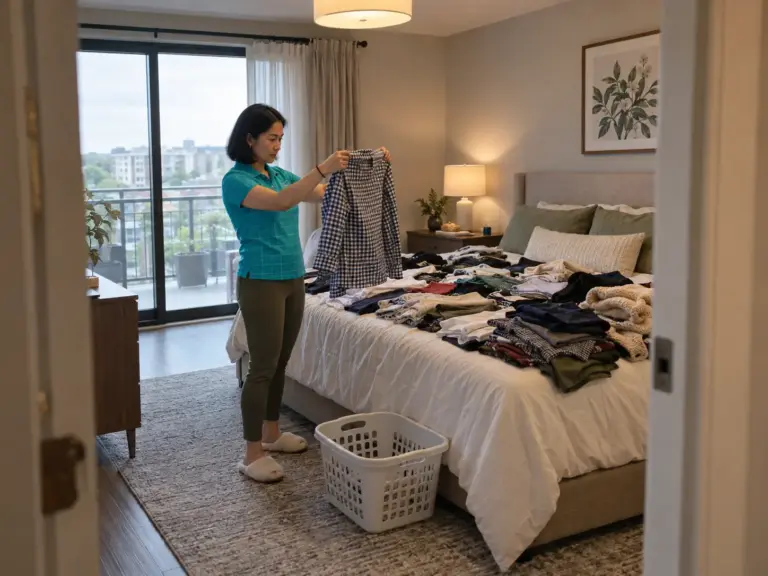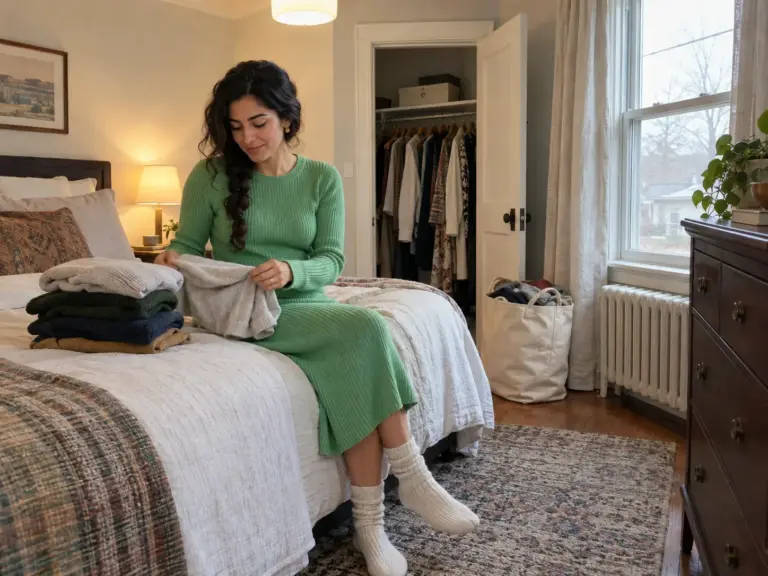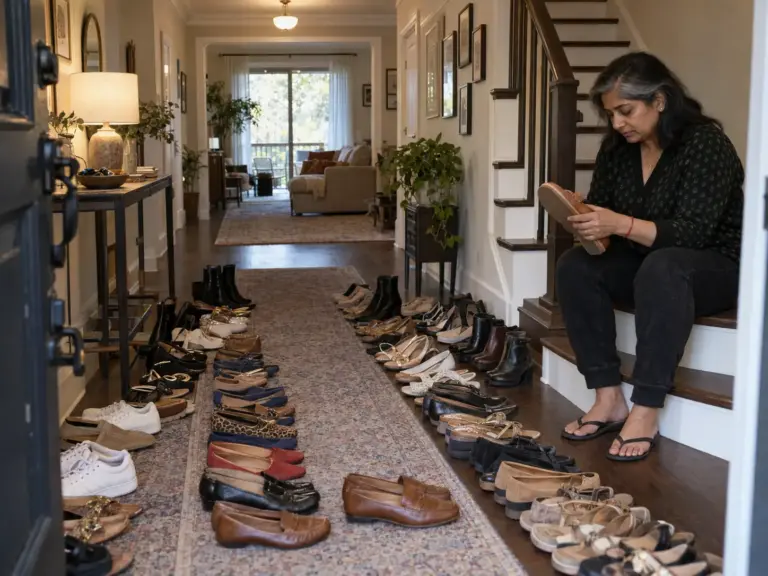
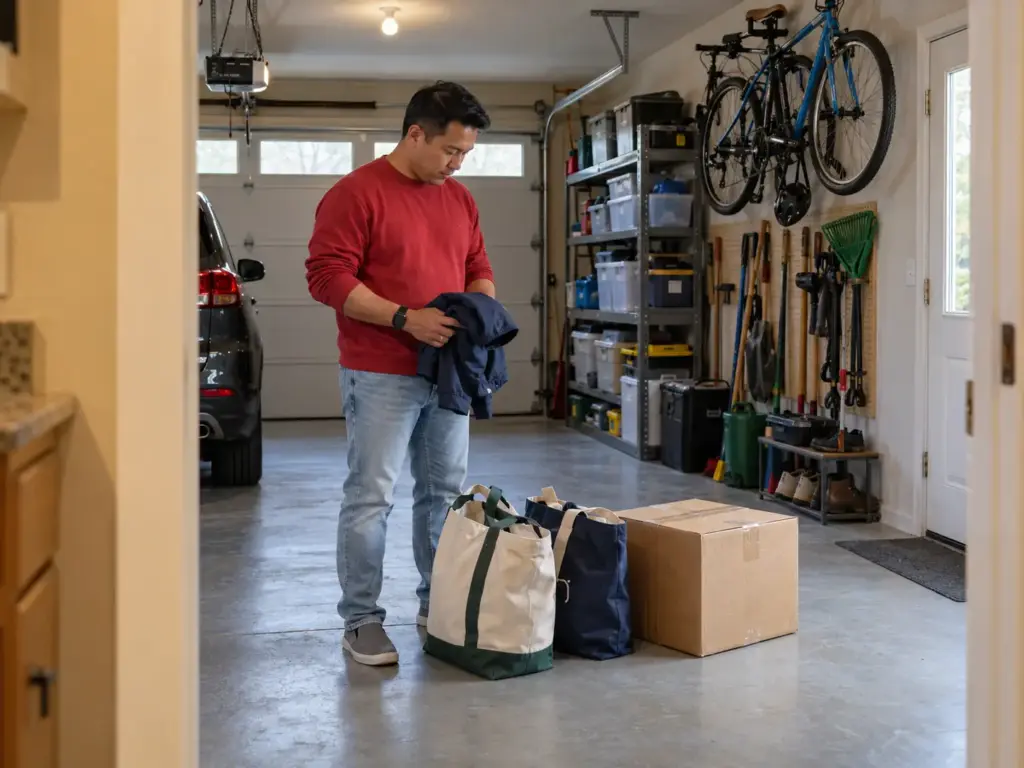
The tote has been by the front door for two weeks. It is sorted, it is tied, and it still has not left, because you cannot tell which counter will take it, and a trip that ends with “we can’t accept that” feels worse than no trip at all.
The best places to donate decluttered items are the ones that match what is in the bag, and the match is easier to make than it looks. One donor in a Reddit declutter thread picked a convenience drop-off on the way to work for a plain reason: the bag would otherwise sit in the garage for ages. The Salvation Army supplies the other half of the story, since a store that accepts something it cannot sell has to pay to dispose of it, which is why some counters refuse what you carry in. Below you match each pile to a taker, run the refusal check at the shelf, do the trip math, and settle what happens to a bag that comes home anyway.
Here is the short version, one row per kind of pile.
| What you have | Who usually takes it | Check before you go |
|---|---|---|
| Everyday clothes, housewares, books | A general thrift store (Goodwill, Salvation Army) | Clean, working, nothing broken |
| Furniture, doors, working appliances | A Habitat ReStore | The item’s age and condition |
| Work clothes, shoes, eyeglasses | A specialty charity | Its current list |
| Usable bulk a charity refuses | A Buy Nothing or Freecycle post | A pickup window |
| A TV over five years old, a mattress | Turned away by the Salvation Army | Ask first |
Best Places to Donate Decluttered Items, Matched to What You Actually Have
Picture the hall with three piles and one car. The easy assumption is that every pile goes to the same counter, and that assumption is how a sofa ends up in a thrift store parking lot and a box of paperbacks ends up at a furniture charity.
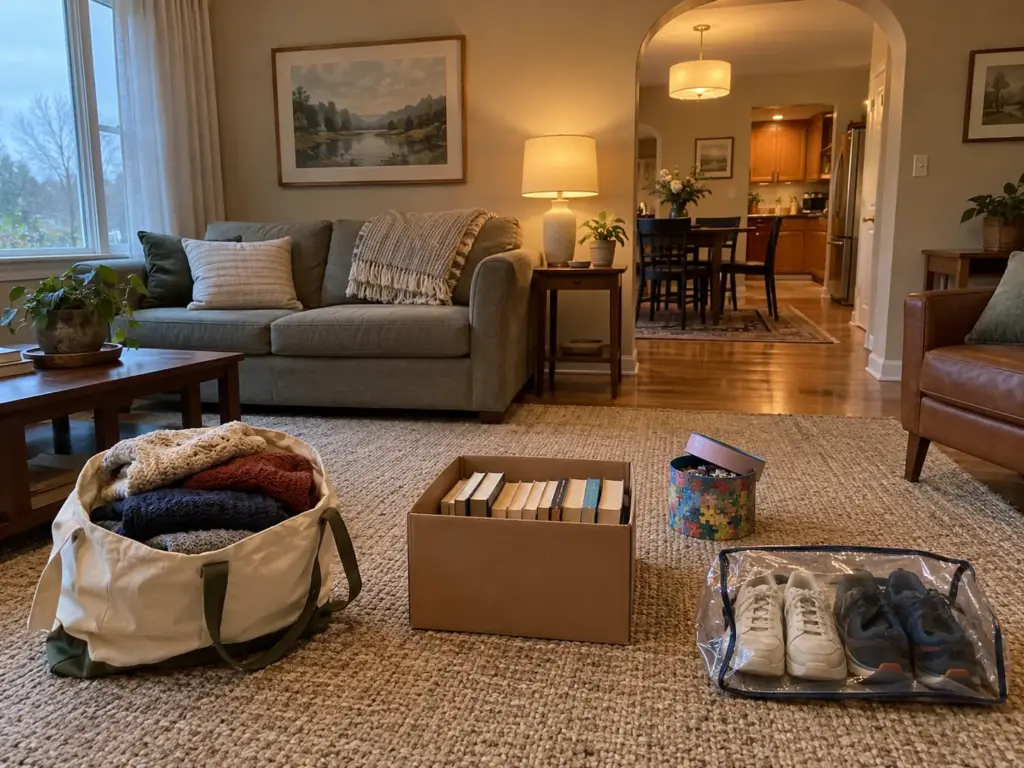
A donation destination is a match between three things: the item, its condition, and the group that can use it. Get the match right once and the trip takes care of itself. One Reddit declutter thread lands on a blunt rule: the best place is the one you will actually drive to, so a perfect specialist across town loses to an acceptable stop on your route.
General Thrift Stores for Everyday Clothes, Housewares and Books
Goodwill and the Salvation Army take everyday clothes, housewares and books, and they resell them. The sale is how they pay for their programs, which is the reason their counters care about condition: they can only take what a shopper might buy. If the bag in your hall is a mix of sweaters, mugs and paperbacks, this is the stop, and each category has its own rules before the trip, so it helps to read up on decluttering by item type once. For the clothes themselves, the guide to clothes covers the dated donation trip, and the one for books sorts out where the keepers and the rest go.
The common advice stops there: take everything to the thrift store. For soft goods that is right. For a bookcase or a working dishwasher it sends the item to a counter that is not built to resell it, and the next section gives that item a better stop.
Habitat ReStores for Furniture, Doors and Working Appliances
A Habitat for Humanity ReStore is where bulky, solid and fixable things find a buyer. Habitat for Humanity of Greater Los Angeles puts the standard in one line: “All donated items must be in good, clean, working, and sellable condition.” Plug in the lamp, wipe the shelf, and open the drawers before the item goes in the car.
Habitat LA also sets ages item by item. It takes appliances under eight years old (uninstalled and disconnected), exercise equipment that is five years or newer, and solid doors only, which rules out flat slab and hollow doors. Those numbers belong to that location, and another ReStore may draw the line elsewhere, so treat them as a pattern: every item type has an age or a construction test. Write the appliance’s year on the box lid or a sticky note before the trip, and you will know in ten seconds whether it clears the test.
Sort the garage pile into three tests before you pick a taker: does it plug in and work, is there a stain, smell or pet hair, and how old is it? An item that fails any of the three is a different decision from an item that passes all of them.
Specialty Charities for What a General Store Undersells
Some items sell for little on a thrift rack and matter a lot to a narrower group. Dress for Success takes professional clothing for people heading into interviews, Soles4Souls takes shoes (the shoes guide helps decide which pairs are worth sending), the Furniture Bank Network places furniture with households starting over, the Lions Club and ReSpectacle collect eyeglasses, hearing aids have their own programs, and Operation Paperback passes paperbacks along. Each of these keeps its own list of what it accepts and how, so the right move is to ask for its current list, and for any age limit, before you load anything.
Local needs are narrower still. A women’s shelter, a domestic violence shelter or a homeless shelter often asks for toiletries, towels and interview clothes, an animal shelter takes old towels and blankets, a food pantry takes unopened pantry goods, and a school clothing closet takes children’s clothes.
Wedding gowns and prom dresses have their own charities, and those usually want recent styles. A church donation drive can be the quiet fit for a mixed carload. The question when you call ahead is the same everywhere: what do you need this month, and what do you turn away?
Volume decides whether a specialist is worth the detour. A lot of one type, such as a closet’s worth of work clothes or four boxes of paperbacks, earns a specialist. A couple of strays do not, and they travel better in the thrift bag already going to your commute stop. This section is a map, not a directory: it points to the kind of taker, and it leaves the local ZIP-code lookup and pickup coverage to each charity’s own page.
What the Counter Turns Away Before You Load the Car
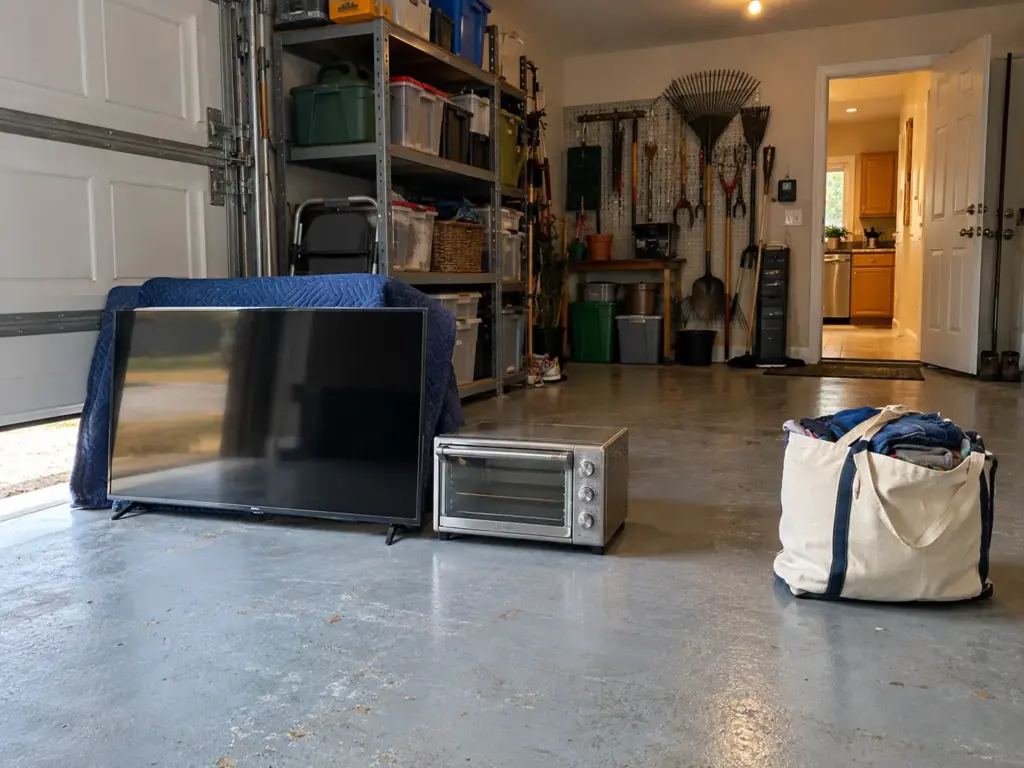
The TV has stood in the garage since the upgrade, and it feels like the most donatable thing in the house: big, expensive when new, perfectly watchable. A donation counter is allowed to say no to it, and the rules behind that “no” are the best sorting tool you have. Learn the list of items charities don’t accept, and what charities don’t want stops being a surprise. Run it at the shelf, and a refusal at the counter becomes rare.
Why a Store Says No to Something It Already Accepted
The Salvation Army explains the logic in a plain sentence: “If a store accepts an item but is not allowed to sell it, the store must pay to dispose of it.” So a counter that turns away a bag is protecting its own budget, and the rule is rarely personal. It also explains why the same store can take one lamp and refuse another. Each item on the refusal list is something the store cannot put on a shelf.
Age and Condition Tests for TVs, Appliances and Furniture
The Salvation Army’s list is concrete. It turns away a TV older than five years, small appliances older than ten years, and built-in appliances such as ovens and dishwashers. It does not take mattresses or box springs. And it refuses broken furniture, and furniture with rips, stains, odors or pet hair.
The pet-hair sofa is the instructive case, because you can check it at the door of your house rather than at the counter, and the answer will not change on the drive. Habitat adds a different rule: the driver and the donation staff decide at pickup or drop-off, based on inventory and condition, so an item that passes your check can still be turned down on a day the store is full. Asking for ground-floor pickup keeps that decision from also becoming a stairs problem.
The check takes one minute per item and has four parts: how old is it, does it work, is there a stain or a smell, and then bag it or hold it. Anything that holds goes to a free post (see the last section) or the leftovers route instead of the trunk.
Put a sticky note on anything you are unsure about and write the question on it (age? stain? working?). Answering it takes less time than carrying the item to the counter and back.
Toys and Baby Items: “Toys” Is Too Broad a Word
At the Salvation Army counter, toys and baby items are turned away.
Baby clothes are the exception, and they come with their own condition: no drawstrings and no raised lettering. So split baby clothes from baby gear before the bag goes in the car, and keep them in separate totes so one refused item does not take the clothes back with it. For car seats and cribs, ask the organization for its current rule before either goes in the car. A refused toy still has somewhere to go, and the toy declutter guide covers the toy side of the cull.
Pickup or Drop-Off: The Trip Math
The second trip is the one that hurts. The bag went to one place, the box was refused at that place, and the box came home. A rule for when a run is worth the time keeps the second trip from happening.
What a Drop-Off Actually Costs
A drop-off costs a trip: the drive, the line, the unloading, and the drive back. For a few bags that cost is small, particularly when the stop is on a route you already take. That is the logic behind the commute drop-off in the Reddit thread, where the donor reasoned that a stop on the way to work beats a better stop that needs its own errand. The cost grows with the load and with how far off your route the stop sits, and it grows again if the counter refuses part of what you carried.
One stop also usually beats three. When the combined value of what you are giving is small, splitting it among a thrift store, a shoe charity and a book sale buys you more driving than it returns. The exception is volume of one type, as the previous section noted.
When a Pickup Is Worth the Fee
A free pickup trades the trip for a day on the calendar, and some places charge a fee for it. Habitat LA’s pickup carries a flat pickup fee, while a drop-off at any ReStore is free, and a cancellation made at least 48 hours ahead is refunded. Other charities structure pickups differently, so read the terms on the one you pick.
A pickup earns its fee in two cases.
The first is a load that will not fit in one car trip. The second is items of the kind a ReStore wants at the door, such as a solid door or a good bookcase, which are awkward to lift into a trunk and easy to scratch. A few bags go to the stop on your commute, and a pickup for them costs more than it saves. If you do book one, carry everything to ground level before the truck arrives, because that is what Habitat LA asks of donors.
Loading the Trunk So the Run Goes the Way You Planned
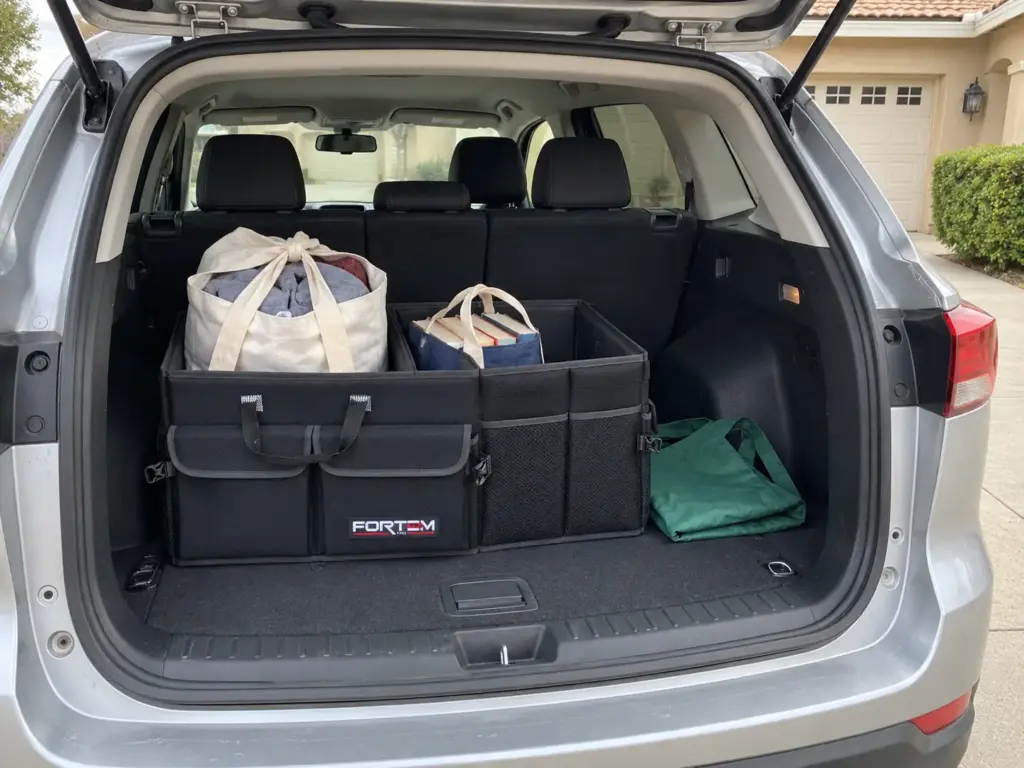
Bags that slide arrive wrinkled, and a tote that tips over in the car trunk spills onto the cargo floor. The free fix is a laundry basket or a sturdy box you already own, wedged against the seat back so the bags stand upright. If that does not stay put on a run with turns in it, a trunk organizer gives the bags fixed places.
The FORTEM Trunk Organizer measures 20.49 x 14.5 x 10.51 inches, holds 50 liters across three compartments, and folds flat when the donation run is over. It keeps tote bags upright and separates a bag of clothes from a box of books, which matters when the two go to different counters. Its weak point is the build: one reviewer calls the cover “just a large piece of material” held shut with Velcro, and another says only one panel is stiff, so a second panel would be needed to use both sides. Use it for bags and light boxes, and put heavy items directly on the cargo floor.
Load in reverse order of your stops. The bag for the first counter goes in last, on top, so you are not unpacking the trunk in a parking lot to reach it.
Which Stop Fits a Small Household, a Full Room or No Car
Two readers hold the same bag of sweaters and get opposite answers. One drives past a thrift store every morning. The other lives on the fourth floor with no car. The best stop changes with volume and with transport, and each situation below gets one named stop and one reason it fits.
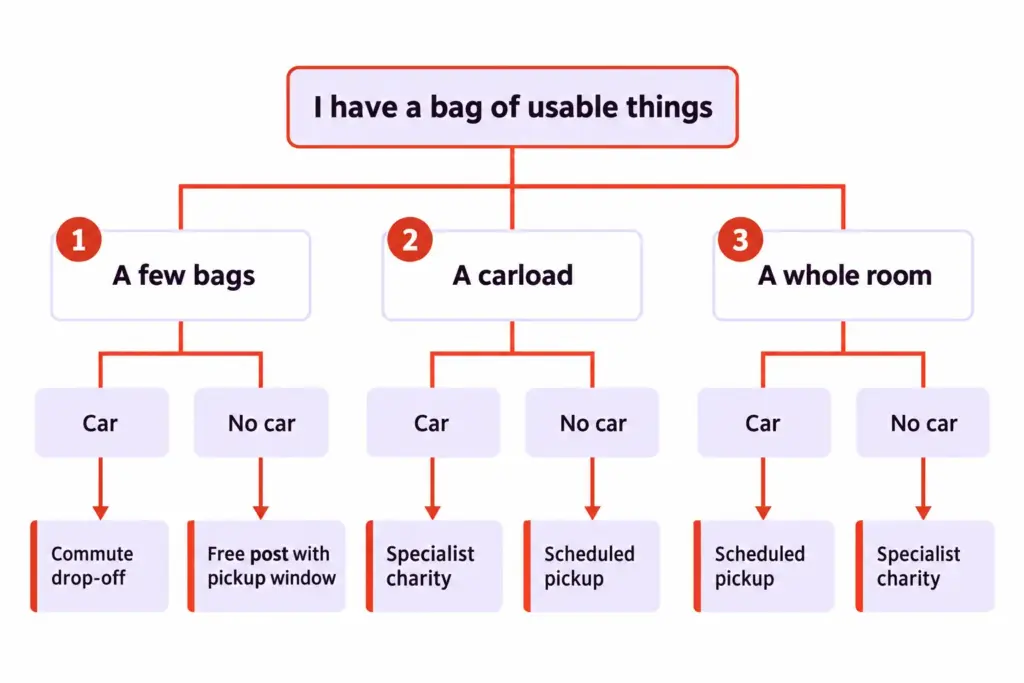
A Few Bags a Month: The Stop on Your Commute
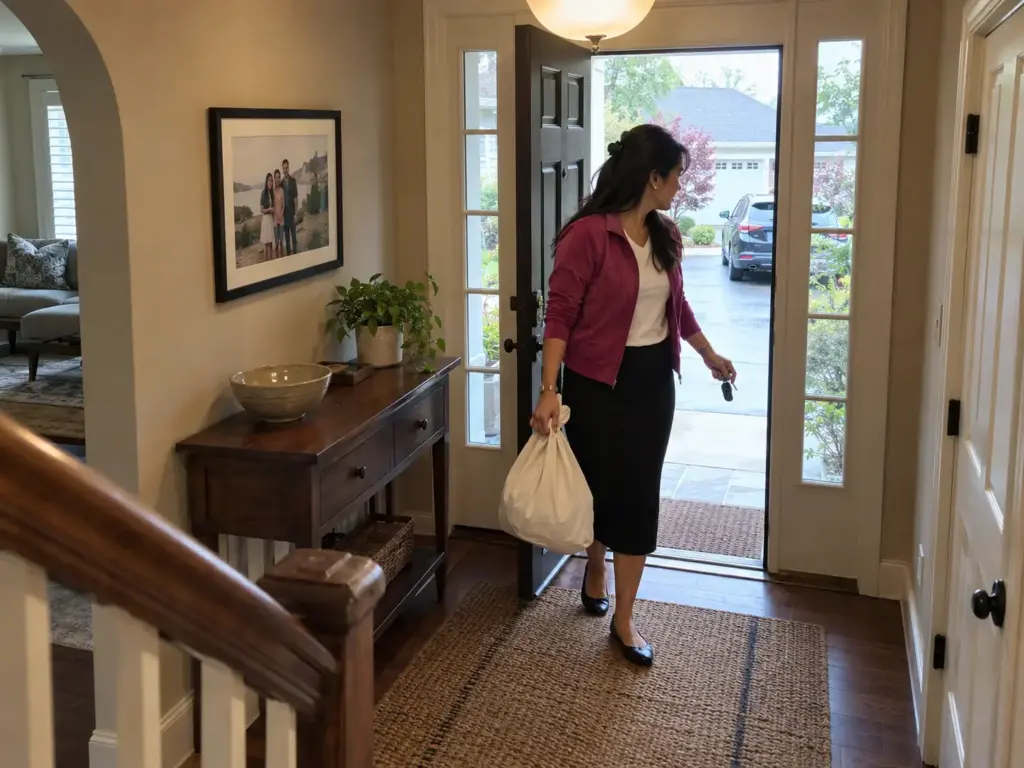
If you clear a few bags at a time, the convenience drop-off wins: a general thrift store on the route you already drive. It beats a specialist across town because it removes the errand entirely, and a bag that leaves on Tuesday is better than a perfect match that leaves in March. Keep a tote in the car, add to it when the hall bag fills, and empty it when you pass the store.
A Full Room Cleared Out: Pickup or a Specialist
A cleared room changes the answer, because volume does. A pile of one type, such as a whole wardrobe of work clothes, boxes of shoes or a stack of furniture, earns a specialist or a scheduled pickup. A couple of strays do not earn either, and they ride with the commute bag. Pickup works best for the furniture-sized part of the room: Habitat LA asks that items be out at ground level before the truck arrives, so move them to the garage or the curb-side entry the day before.
If you own a house with a garage and a truck, the garage is also where a refused load waits, which is the problem the next section takes apart.
No Car or No Garage: Let the Item Leave the Building First
Without a car, dropping off is the cost, so the time moves to your front door. Two routes work: a pickup that a charity offers, or a free post with a pickup window, where the neighbor does the driving. The full set of no-car options, along with every other pickup for the leftovers no charity takes, lives in a sibling guide, so this article stops at the pointer.
For apartment dwellers with a shared elevator, set the items by the door the evening before, because a pickup window that opens at nine is easy to miss when the load is still inside.
Why the Refused Bag Ends Up Back in the Garage
A bag comes back from a counter that said no. It rides around in the trunk for a few days, and then it moves to the garage because the trunk is needed. This is the garage stall the commute-drop-off donor was trying to avoid, and it is the reason a refusal costs more than one trip: it turns a donation bag into garage storage.
The Return Trip Nobody Plans For
A refused bag has no named place to go.
So it goes back to the trunk, then to the garage floor, and within a few weeks it is part of the pile again, only now it has been to a counter and returned, which makes it feel even less like a decision. The system in the donation bag and the dated box gives the bag a date and a holding spot at home, and this article adds the piece that system leaves open: a destination, picked before you leave the house.
A Bin With a Destination, Not a Pile
A donate box becomes storage whenever its label is a category and not a place. The four-box method has a donate box for a reason, but a box labeled “donate” with no stop attached is a polite name for a pile. The label that works is a destination: the thrift store on the commute, the ReStore run, the shoe charity, the free post.
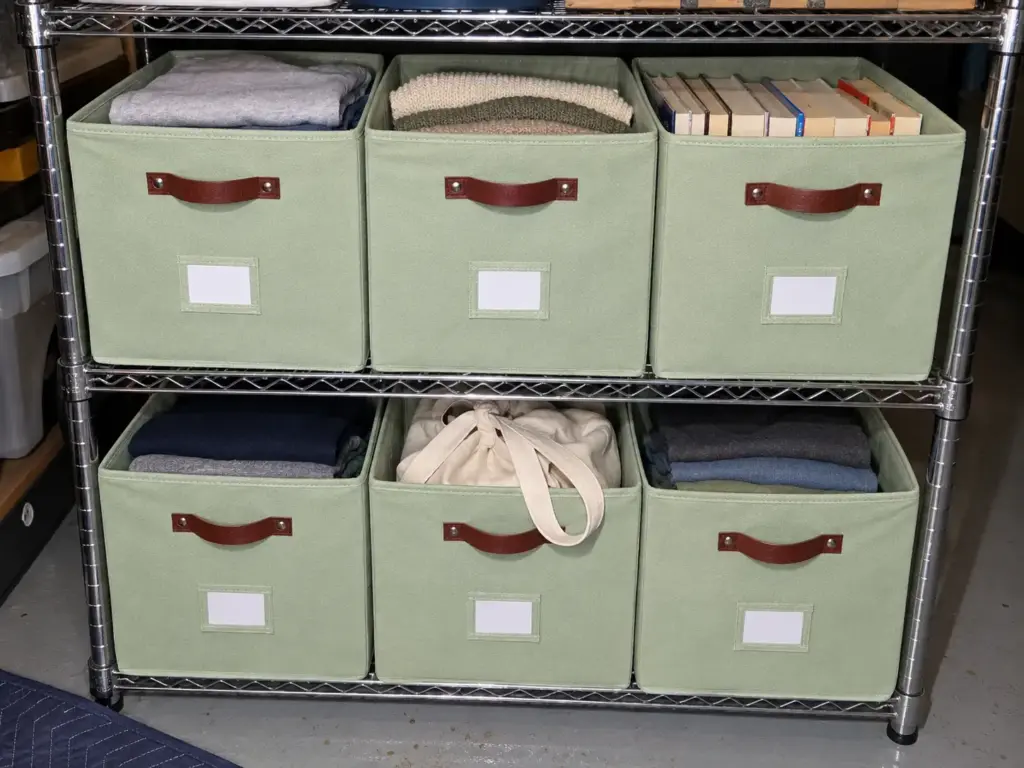
The free version of this is cardboard boxes and masking tape you already have, one box per destination, labeled in marker. If the garage needs something sturdier, the DECOMOMO Fabric Storage Bins come as a set of six collapsible cubes, 10.5 x 11 inches each, with label holders, so one cube per destination fits on a lower shelf and a refused bag has a named place to go back to. They fold flat when a destination drops off the list. Their flaw is thin walls: a 2-star Amazon review of a different size in the same line calls them very thin, so treat them as holders for soft goods and paperbacks, not for heavy loads.
Write the stop’s name and the day you plan to go on the label, not just “donate.” A label with a date on it gets emptied. A label that only names a category gets stacked.
The Second Stop Is Decided Before You Leave
Pick a backup stop before the car backs out of the driveway. If the first counter turns away a box, the second one is already in your head, and the box does not make the round trip home. For a bag of mixed clothes that might be the store next door; for a box the thrift counter will not take, it might be the free post you wrote while waiting in line.
The Receipt and the Deduction, Without the Guesswork
The tax receipt is blank where the value goes, and many donors assume the charity fills it in. It does not. Ten minutes at the counter decide whether a gift is tax deductible on paper later.
What to Ask for at the Counter
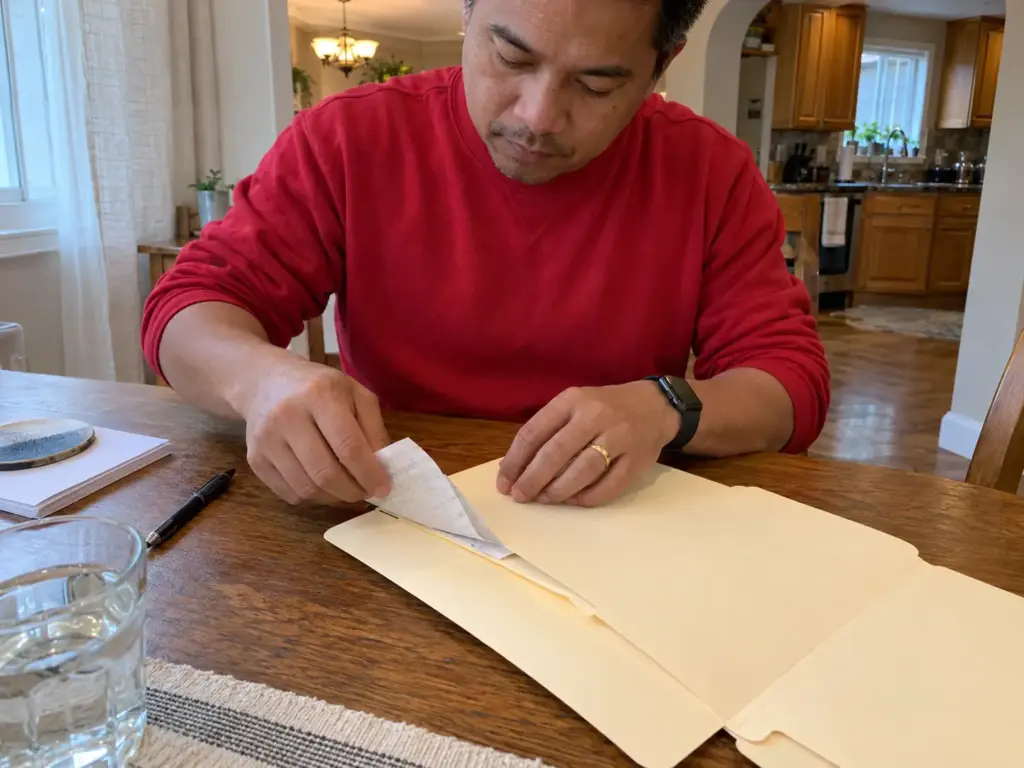
When you hand items to a person at the counter, ask for a receipt. Keep it with the date and a short list of what went in the car, which the dated box from your declutter system may already hold.
Writing the Value Yourself
Habitat LA says it cannot legally appraise a donation, so the donor writes an estimated value for the donated items on the receipt. That puts the number on you, and the number is the fair market value: what the item would sell for in its condition today, not what you paid. IRS Publication 526, Charitable Contributions says the deduction is generally the fair market value of the property on the day you give it. A sweater you bought new and wore for years is worth a used-sweater price, and that is the figure to write.
When No Charity Is the Right Answer
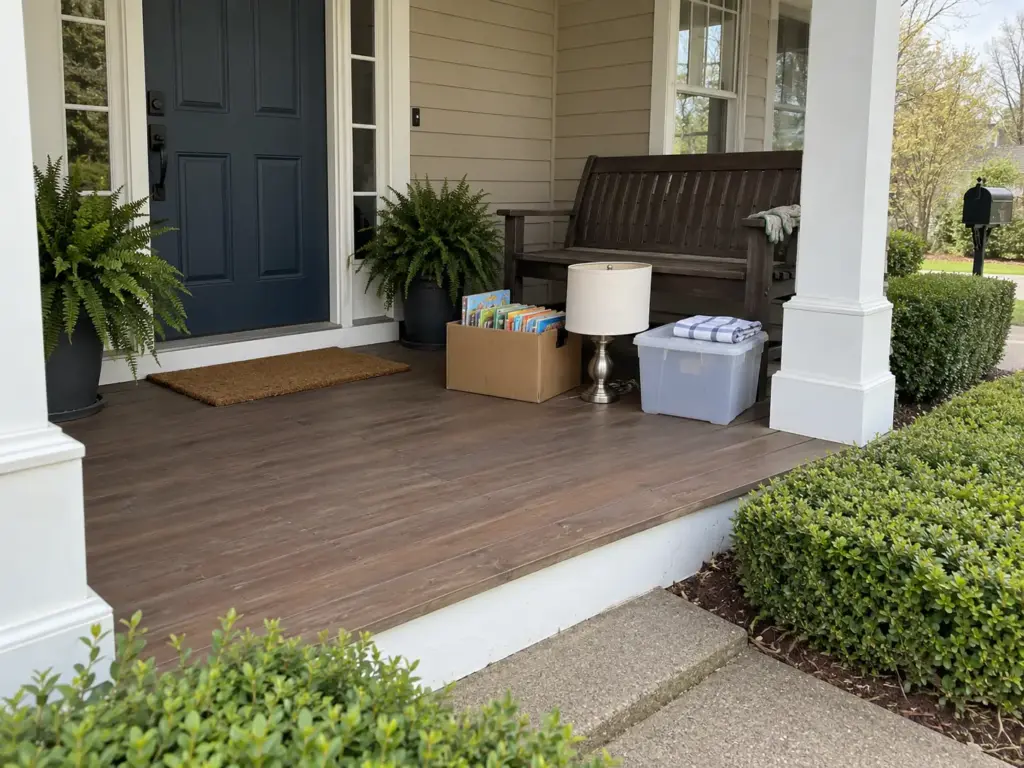
The working lamp, the heavy bookcase and the set of mixed dishes were all declined by every counter. They are usable, and they still have somewhere to go.
Free Posts With a Pickup Window
A Buy Nothing group, Freecycle and the Nextdoor app take bulk and awkward items that a charity turns away, and posts on those platforms are the usual route for them in the Facebook decluttering group and the Reddit threads. The part that keeps it from becoming the new garage pile is a pickup window of a day or two: post with the window written in, and if nobody claims the item inside it, it moves on. A duplicate gadget in good shape is a post, not a bag, and the kitchen gadgets guide is where the duplicates get picked out.
Little Free Libraries, Tool Libraries and Other Niche Takers
Books can go to a Little Free Library, tools to a tool library, and a shelter’s online wishlist names the exact items it wants, though each of these takers decides what it wants, so ask before you carry anything over. Whatever nobody claims goes to the leftovers route in the sibling guide linked earlier.
Post the free item with a photo, the exact size and a two-day pickup window. Those three details cut the back-and-forth messages and give you a clear deadline for moving it along if nobody replies.
Match the Item, Run the Check, Name the Second Stop
Three habits keep a donation from coming back.
Match the item to the taker before you load the car. Run the refusal check at the shelf, where a no costs nothing. Pick the stop by volume and transport, and have a named second stop ready. The thrift counter, the ReStore and the specialist each want something different, and the match is what prevents the wasted trip.
In three months, look at the trunk and the garage floor. If nothing from this round is waiting in either, the system held, and if a bag is still there, check its label: it probably names a category, not a stop.
Today, take the bag by the door, run the age-working-stain check on what is in it, and write one destination on its tag. Then notice how much easier the next pile is to sort when each bag already knows where it is going.
Frequently Asked Questions
01What is the best charity to donate household items to?
It depends on the item. A general thrift store suits everyday goods, a Habitat ReStore suits furniture and working appliances, and a specialty charity suits work clothes or shoes. Ask whichever you choose for its current accepted list before you load the car.
02What should I do with decluttered items?
Sort them by who could take each piece, run the refusal check on age, condition and smell, then pick the stop by your volume and transport. The full system for the bag and the dated box is in what to do after decluttering.
03Does Goodwill throw away most donations?
This article has no verified percentage, so it does not repeat one. What is documented is the mechanism: the Salvation Army says a store pays to dispose of an item it accepts but cannot sell, which is why counters refuse some items. Donating clean, working goods keeps that cost down.
04Is it worth paying for a donation pickup?
A pickup is worth the fee when the load will not fit in one car trip or when the items are what a ReStore wants at the door, such as solid doors or good furniture. For a few bags, a commute stop costs less.
05Where do my donations actually go?
At general charities, donated goods are resold in the store, and the sale funds the organization’s programs. Specialty charities pass items directly to the people they serve. Ask the charity you choose how its donations are used.
Disclaimer: ClutterlessNest is a participant in the Amazon Services LLC Associates Program. As an Amazon Associate we earn from qualifying purchases. This article may contain affiliate links — if you buy through them, we may earn a small commission at no extra cost to you. We only recommend products we have tested or genuinely believe in.