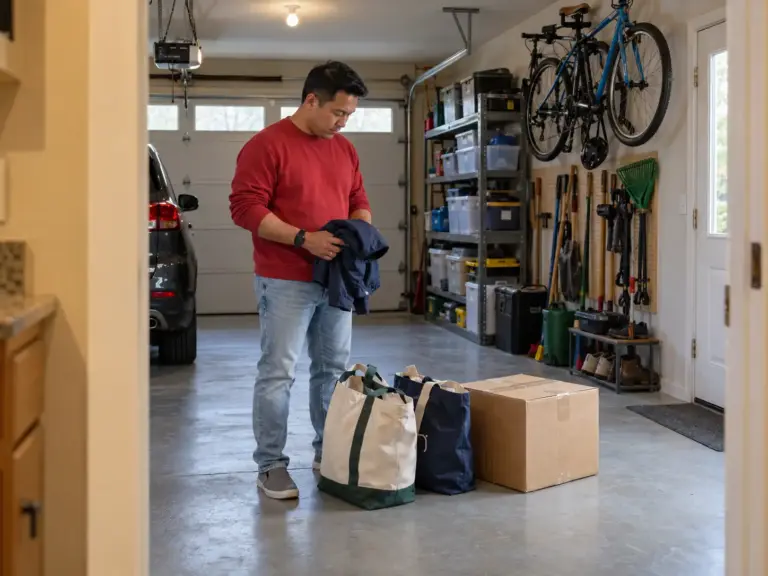
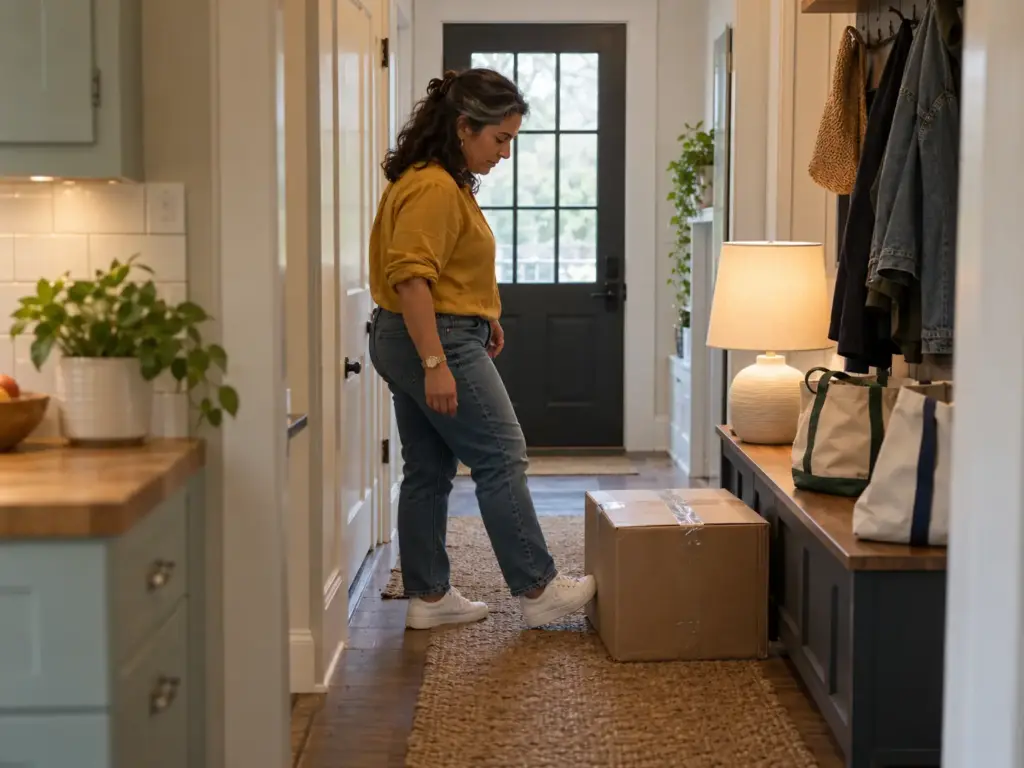
Your clothes are in a tote by the door and your books are in a box, and what is left on the hall closet floor is the stuff no donation bag takes: a drawer’s worth of mixed batteries, a half can of paint, a laptop that stopped charging, a chair nobody asked for. Knowing what to do with stuff after decluttering gets harder at exactly this point, because the easy exits are spent and every leftover seems to need its own phone call.
A Reddit thread from a few years back shows how it usually ends: a poster with four tubs in a closet, each marked “I’ll deal with later,” and nothing decided about any of them. The EPA adds a wrinkle, since federal law lets household hazardous waste go out with the household trash while a state may not, so even a can of paint has no single answer. Sort the pile by who could take each piece, work through batteries, paint, electronics, bulky items and the no-car, no-curb case, and put a date on whatever is left.
Quick Answer
The leftovers that stall are the ones no donation bag takes, so each group gets its own exit.
- Sort leftovers by who could take them: city program, free post or bin.
- Read your city’s hazardous waste page before any chemical, paint or battery is binned.
- Keep rechargeable and button batteries in a lidded case until trip day.
- Post bulky items free with a window of a day or two.
- With no car or curb, ask the city or building about pickup first.
- Bin whatever is still unclaimed when the window closes.
What to Do With Stuff After Decluttering When the Easy Exits Are Used Up
The five everyday decluttering exits are mapped in what to do after decluttering, so this guide starts where that one stops: with the pile that fits none of them. These are the items with no obvious taker, and they stall for a reason that has nothing to do with willpower.
The Four Tubs Marked “Later”
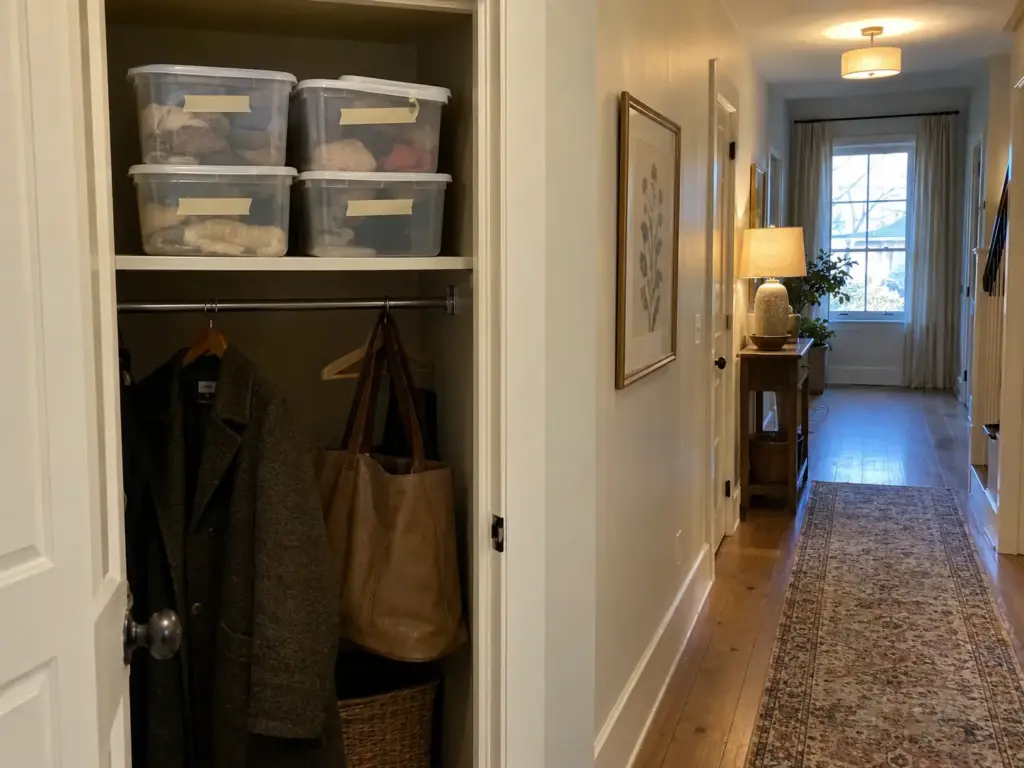
In that Reddit thread, the original poster had four tubs of stuff in a closet, each one filled with a quick “I’ll deal with later.” Nothing was decided about the contents, so the tubs became storage. A container with no decision attached is just a shelf, and shelves fill. In a house the tubs drift to the garage or the basement and are forgotten; in a small home there is no door to close on them, so they sit in sight and nag.
The Small-Value Freeze
The same thread describes a second stall: the item worth very little that you do not need but suspect a donation center would refuse. One doubtful item can freeze a whole bag, because the bag now feels unfinished. The pile does not shrink while you wait for certainty about a thing that costs almost nothing.
Permission Not to Keep It
The thread’s permission line comes down to this: it is not your job to keep something because it has no obvious taker. Nobody assigned you the role of storage unit for the world’s unwanted objects. The rest of this guide gives each leftover a place to go, and the last sections give the unclaimed ones a date to leave.
Sort the Leftovers Into Three Piles, Then Find Who Takes Each
Spread the pile on the floor and ask one question of every piece: who would actually come get this? Whoever could take it is the exit, and a piece with no possible taker is already answered.
Keep, Trash or Pass On
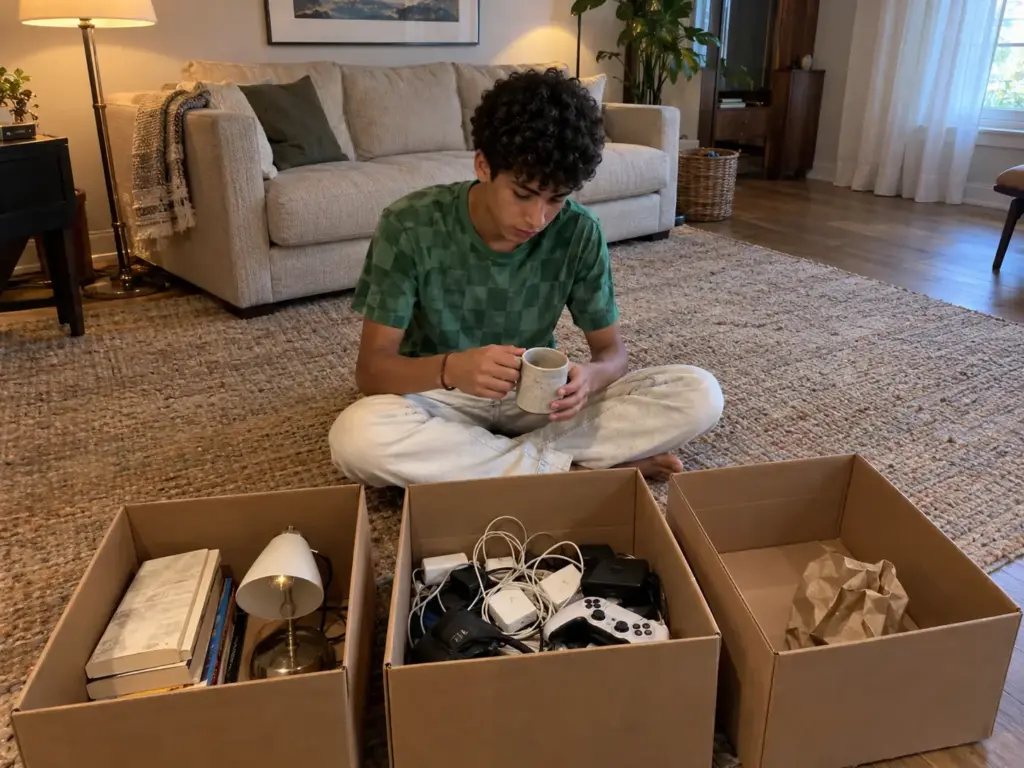
One commenter in the thread runs on “3 piles, and 3 only”: Goodwill or Buy Nothing, trash, keep. A second commenter’s version asks whether you use the item, then whether it is still usable, and only then lets it go to donation or the trash. Either way the sort is keep, donate or trash, and there is no fourth pile called “maybe later.” (That pile is how the tubs got there.)
Clothes and books have exits of their own, including the call between donate or sell, so they stay out of this pile: see clothes and books for those. What remains after the sort is the four stubborn groups in the sections below.
Bundle Small Things as One Unit
Small odds and ends stall because nobody knows where a single pen or a lone binder clip goes. A commenter’s answer was to treat a shoebox of office supplies as a unit of one, then give the whole box away or bin it. Teachers came up for stationery. Small kitchen leftovers can ride in a bundle too, and the guide to decluttering kitchen gadgets covers which ones leave the drawer.
Post Free Items in Small Batches
Local Buy Nothing groups work best in small batches, according to the thread. One commenter reports a stranger collecting a shirt and two pairs of pants the same day they were posted. Post three things at a time, not the whole closet.
Why Your City Decides What Counts as Household Hazardous Waste
The can in the garage cabinet raises a question the trash bin cannot answer for you: is it even allowed in there? No national answer exists, and the reason sits in how the rules are layered.
What the EPA Counts as Household Hazardous Waste
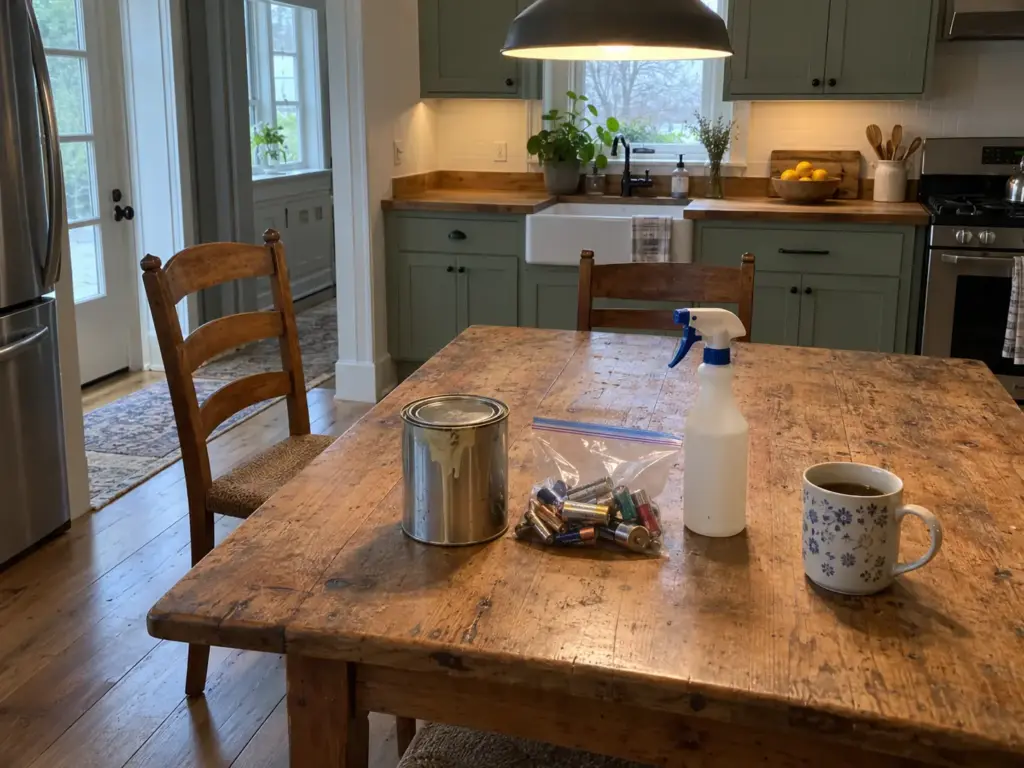
The EPA defines household hazardous waste, or HHW, as household waste that is toxic, corrosive, ignitable or reactive. Its examples include automobile batteries, paints and solvents, household cleaners, drain openers, pesticides and compressed gas tanks. If a product has a warning label and a lid, assume it belongs on this list until a city page tells you otherwise.
Federal Law Says One Thing, Your State May Say Another
According to the U.S. EPA’s household hazardous waste guidance, “While federal law allows disposal of HHW along with other household wastes, your state may not.” So the trash bin can be an option in one place and off the table in the next, and the page that settles it is your city’s or county’s, usually titled “household hazardous waste” or “e-waste.”
Save a screenshot of the program’s accepted list and its open dates on your phone before you load the car. A full trunk and a shake of the head at the gate is a wasted trip, and the list takes two minutes to read.
Proof of Residence and Other Fine Print
Free does not always mean free for everyone. In Westbrook, Maine, the household hazardous waste drop-off is for residents only and asks for proof of residence: a driver’s license, a utility bill or a tax bill. A renter’s utility bill counts there, which matters for anyone whose name is on no deed. That is one city’s rule, not a national one, and your city’s page is where the equivalent lives.
Batteries: The Same Battery Gets a Different Answer in Each City
The junk drawer holds every battery size and every year at once, tossed in together, which is why batteries, and battery recycling rules, are the first stubborn group most people hit. The first job is to stop treating them as one thing.
Alkaline, Rechargeable and Button Cells
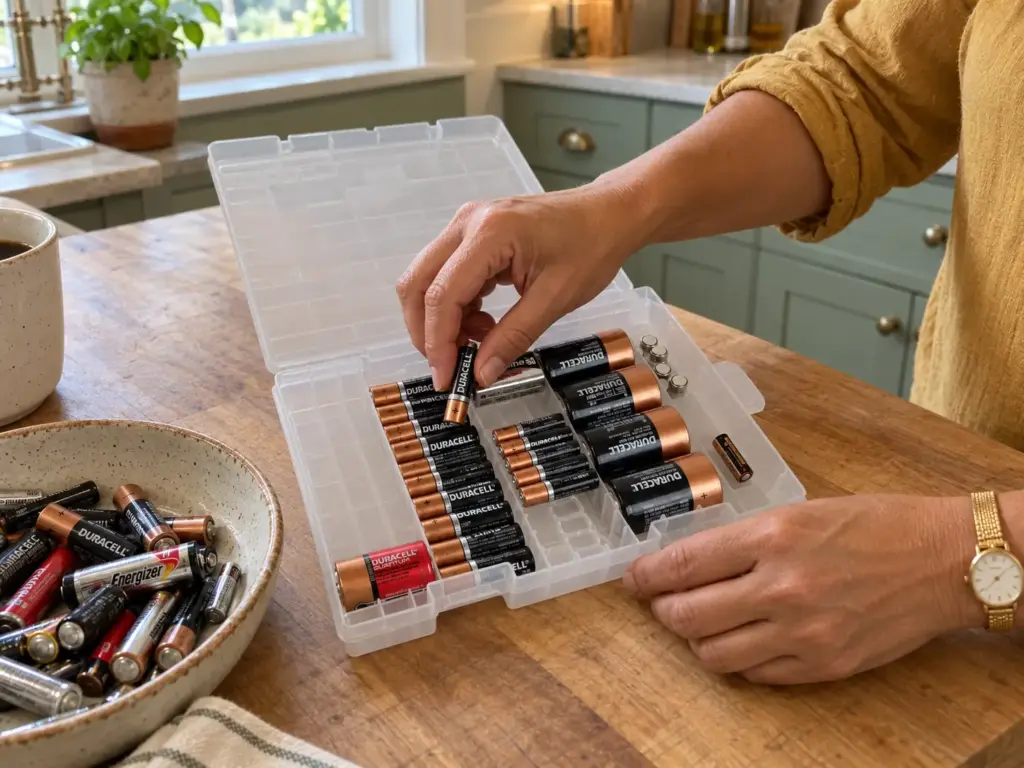
In Westbrook, non-rechargeable household batteries can go in the household trash, while rechargeable and button batteries go to the free drop-off. Sort the drawer by type first, because the type decides the exit. In that city, the rechargeable packs and the coin-shaped button cells are the ones that wait for the drop-off run.
Three Cities, Three Rules
Alkaline in the bin is the advice that gets repeated, and it holds in Westbrook. It breaks in Solana Beach, California, where Solana Beach’s battery and e-waste guidance says used batteries are hazardous waste and should never go in the curbside trash, recycling or organics carts. Lighthouse Point, Florida, lands in between: its page says rechargeable batteries cannot go in regular trash, while common household alkaline batteries are safe in the regular garbage. Same AA, different answer, depending on the street you live on.
Where Batteries Wait Until Trip Day
Start free. A labeled jar or a shoebox with a lid holds a handful of batteries for weeks without a purchase, and the label is the only part that matters. A case earns its place only when the stock is large and mixed.
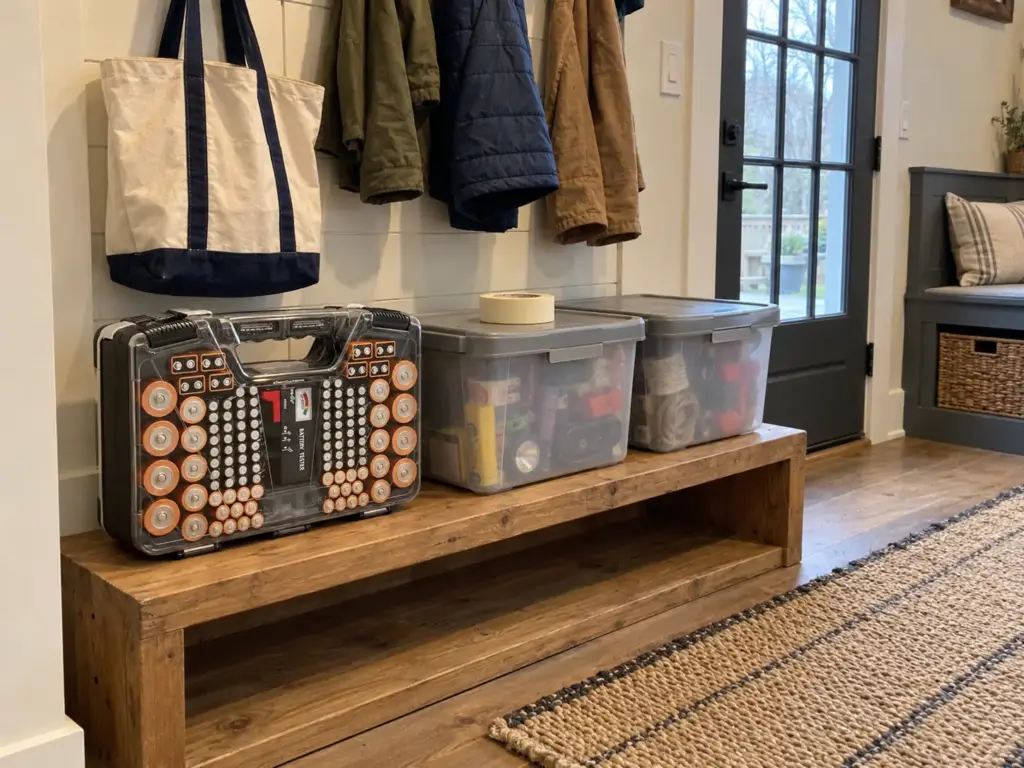
The Home-X Battery Organizer Storage Case has a clear lid over fitted slots that separate the sizes and a secure latch for carrying, so the rechargeable and button cells can wait there until the drop-off run. Reviewers flag its limits: one 2-star review says the batteries did not all fit, and a 4-star review says the D-cell row wastes space and the slot indents keep AA and AAA from lying flat. Check the Home-X case on Amazon if your drawer is mostly AA and AAA.
Keep the rechargeable and button cells in their own row, away from the alkaline ones. On trip day you grab only the row that needs the drop-off, and the rest follows your city’s rule for ordinary batteries.
If you keep a large stock, the Ontel Battery Daddy is the bigger option. Its listing says it holds 180 batteries (76 AA, 72 AAA, 8 9V, 10 C, 12 coin and 8 D) and it has a built-in tester that checks the charge on single-use and rechargeable cells, which tells you whether the “dead” ones in the drawer are really dead.
The flaw is the lid, which some buyers find hard to keep shut, and a 5-star reviewer wished it had more room for D cells. See the Ontel Battery Daddy on Amazon if you need the tester. For a smaller stock, the Home-X case or the jar does the job.
Paint and Chemicals: What Never Goes in the Bin
The half can of paint kept “for touch-ups” through two moves is the classic leftover, and paint disposal comes with the same city-by-city catch.
Oil-Based Paint and the Truck Fire Risk
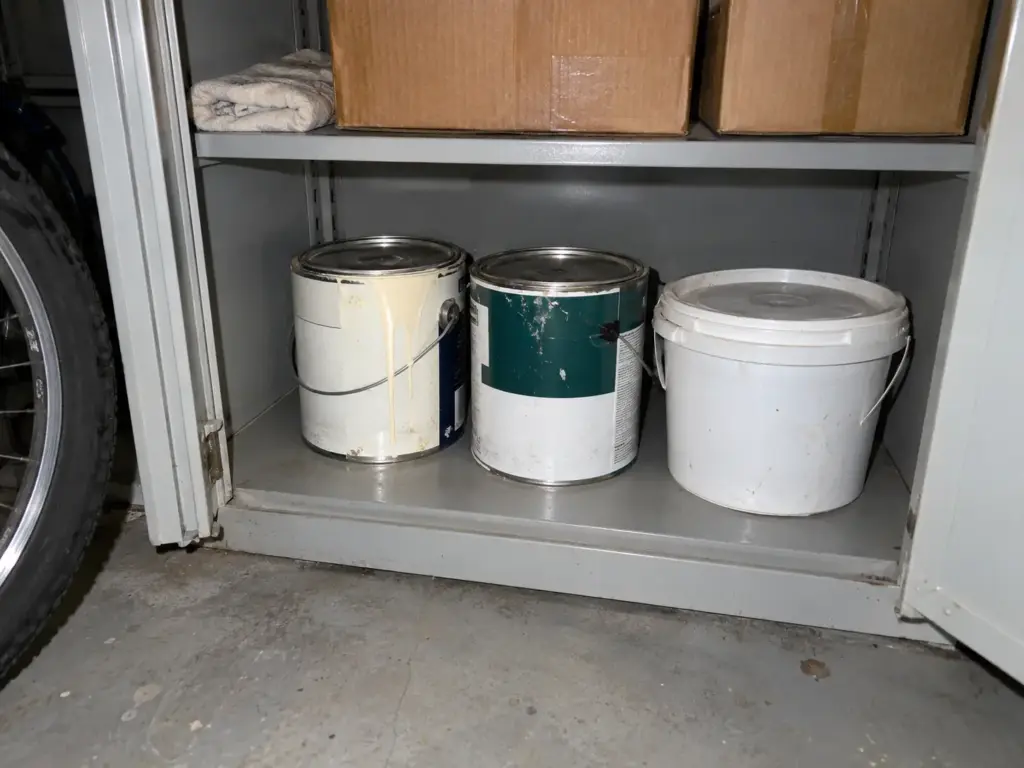
According to the city of Westbrook, Maine’s hazardous waste rules, “Never place oil based paints in your curbside trash bin as they can cause a fire in your bin or the collection truck.” The EPA lists paints and solvents as household hazardous waste, so the fire risk is one reason oil-based paint sits on the drop-off side of the line.
Dried Latex Versus the Liquid Kind
Westbrook says dried latex paint can go in the curbside trash bin. Its page also says latex paint is not accepted at its drop-off event, so do not assume a liquid can has a drop-off home there. What to do with a can that still has liquid in it is a question for your own city’s page, and the answer may differ from Westbrook’s.
Cleaners, Drain Openers and Gas Tanks
The EPA’s list also names household cleaners, drain openers, pesticides and compressed gas tanks. Read your city’s accepted list for each one, because a program may take the gas tank and refuse the cleaner, or the reverse. While these wait for trip day, keep them closed and upright in a spot away from family traffic, and do not combine products to save space.
Old Electronics and Cords: When the Free Drop-Off Isn’t Free
The drawer of old laptops, phones and tangled chargers that “might still work” is the group people carry longest, because it feels too useful to bin and too complicated to move, and electronics recycling rules differ from city to city as much as the battery ones do.
Check the Accepted List Before You Box It
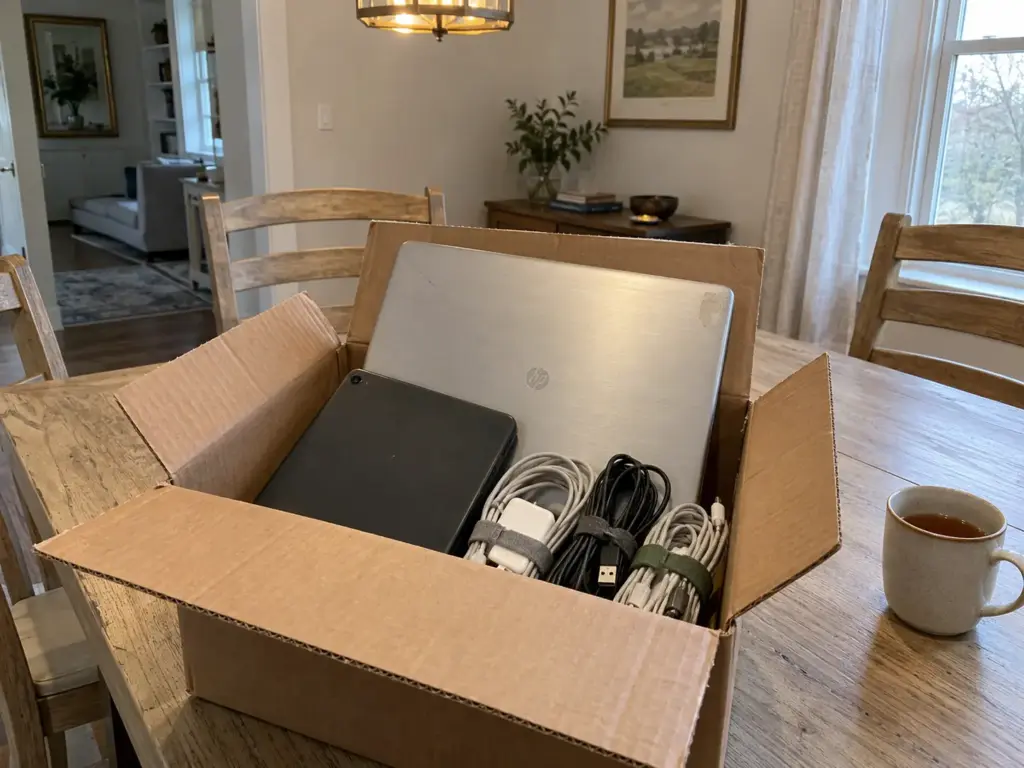
The obvious pick is the city’s hazardous waste day, and it stops being obvious in Westbrook, where the page says there will be no free drop-off of electronic waste at the event. It lists computers, printers, TVs, VCRs, cell phones and stereos as the e-waste in question. Cords and chargers are not a separate category that I can promise a program takes; they go in the same box only when the program’s accepted list names them, so read the list.
A Truck That Comes to Your Door
Some cities remove the car from the problem entirely. Solana Beach offers a door-to-door home collection for household hazardous waste and e-waste to its residents, with no charge for e-waste pickup, scheduled by phone. That is one city’s program, not a national service, but it is worth a search of your city’s page for something similar.
Weight Caps and Receipts
Regional e-waste sites have limits too: Solana Beach’s page caps pick-ups or drop-offs at 125 pounds, which means a garage full of old electronics may need more than one trip. The same page says Goodwill accepts computers, televisions and related electronics free of charge and provides a receipt for tax purposes, as the city describes it. A device that still works can also move through the free channels like any other item, with a free post. Wipe your personal data before it leaves your hands, because that job is yours, not the next owner’s.
Bulky Items and the Free Curb Route
The chair or table nobody on the street asked for tends to sit in the garage because the car trip never quite fits. For homeowners there is a free route with a clear order, and a paid one for the item that beats it.
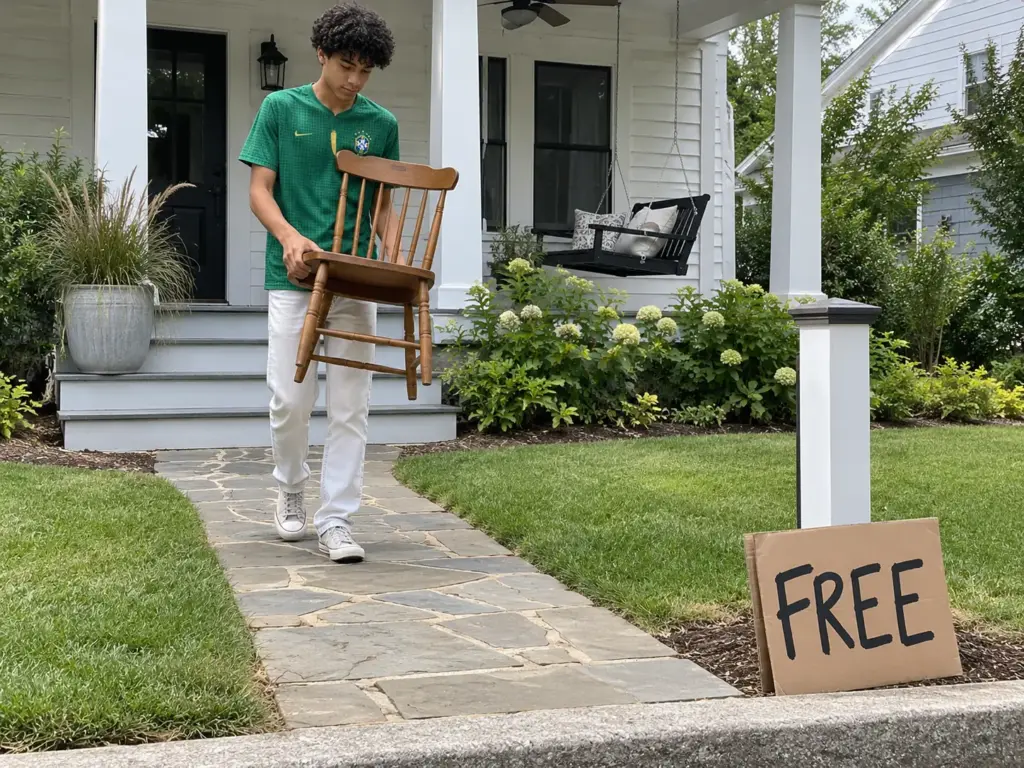
The Curb Alert, Step by Step
In the Reddit thread, one commenter’s rule is to leave bulky items at the curb on a nice day and post them on Nextdoor as a “curb alert,” and says they will be gone by late afternoon. It is community practice from a homeowner setting, not a rule, but the order is simple enough to follow:
- Pick a dry day when you can watch the item.
- Set it at the curb and post the curb alert on Nextdoor or a neighborhood app.
- Give it the window of a day or two described in the section on deadlines below.
- Bring it in or bin it when the window closes.
Charity Pickup by Appointment
Another commenter names Purple Heart and the VA as charities that pick up bulky items by appointment, “depends on your area.” So the useful move is a call, not an assumption: ask whether they serve your address and what they will take. A confirmed appointment beats a pile on the curb that may get rained on.
When Paid Removal Is the Honest Answer
Free first is the right default, but it has a limit. One commenter describes a piano nobody would take that went to a junk removal company, called “pricey” but “worth it” for clearing the whole load at once. That is the honest case for paying: the item has no free taker and the alternative is another year in the garage. Mattress and bulky-furniture rules are set city by city, so check your city’s bulky-item page before you decide.
The curb alert assumes you have a curb. If you do not, the next section is for you.
No Curb, No Car: Where Leftovers Go From an Apartment
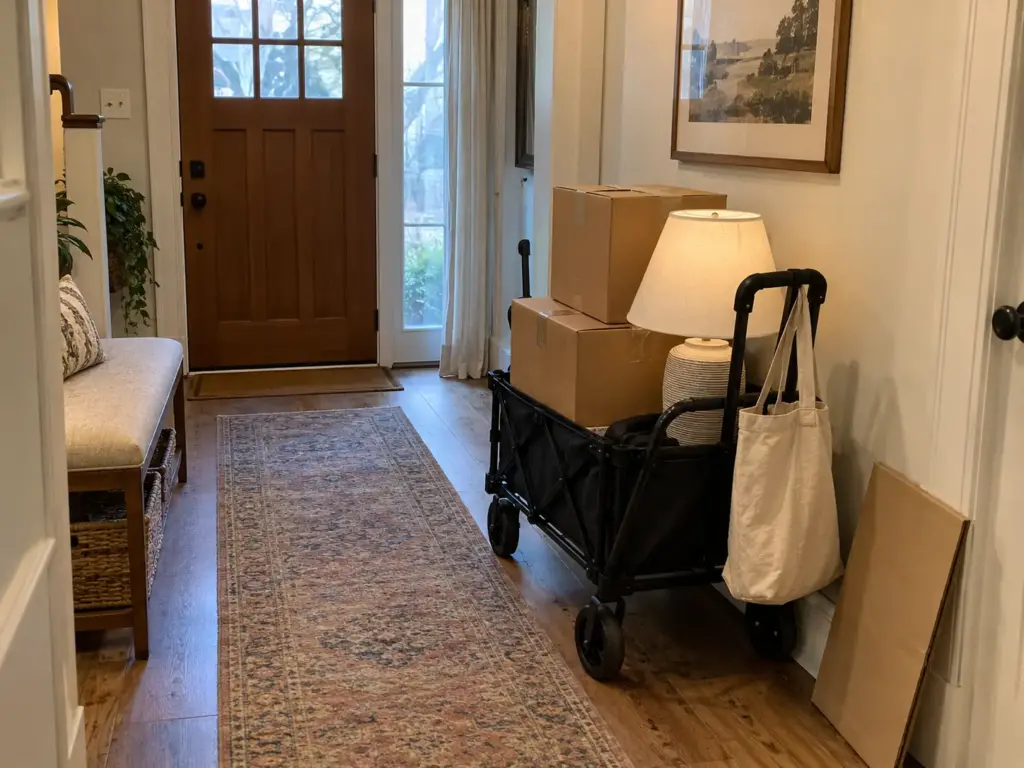
Picture the hallway outside your door. The lobby has no bin, the car belongs to someone else, and the leftovers have been standing there since the weekend. The curb alert is a homeowner’s move, and it does not translate to a fifth-floor walk-up.
Ask Before You Haul
For a renter without a curb, the first free move is a question, and it goes to two places. Ask the property manager or the building whether bulky or hazardous items can go in a common area and whether there is a bulky item pickup. Then check your city’s page for the same. Building policies vary and I will not guess at yours, so treat these as questions, not as settled facts.
Send your property manager one message with all the questions in it: where bulky items can go, whether a bulk pickup exists, and where hazardous items belong. One reply beats three rounds of back and forth.
A Pickup That Comes to the Door
Solana Beach is a city that comes to you, with its door-to-door collection for household hazardous waste and e-waste. It is a single city’s program, so the move for everyone else is to look for the same service on their own city’s page.
Other free fixes need no car either. A free post works as a free pickup: it puts the work on the person who wants the item (the thread’s shirt-and-pants pickup is the model). Where a charity picks up by appointment, that works from an apartment too. And a bundle given to a neighbor never has to leave the building.
A Staging Zone With a Deadline
The risk in an apartment is that the hallway becomes the new closet. Give the leftovers one spot, a set limit on how much it holds, and a date when it empties. The seven-day staging idea in the guide to the one-in-one-out rule is a good model to borrow.
Hazardous items should wait somewhere closed and out of the way, not in the walkway. Without the date, the staging zone is the tubs again, only with less floor.
Give Every Unclaimed Item a Fallback Deadline
The free item at the curb on day three is still a free item, and guilt is not a reason to carry it back inside. “Somebody might want it” needs a window that ends.
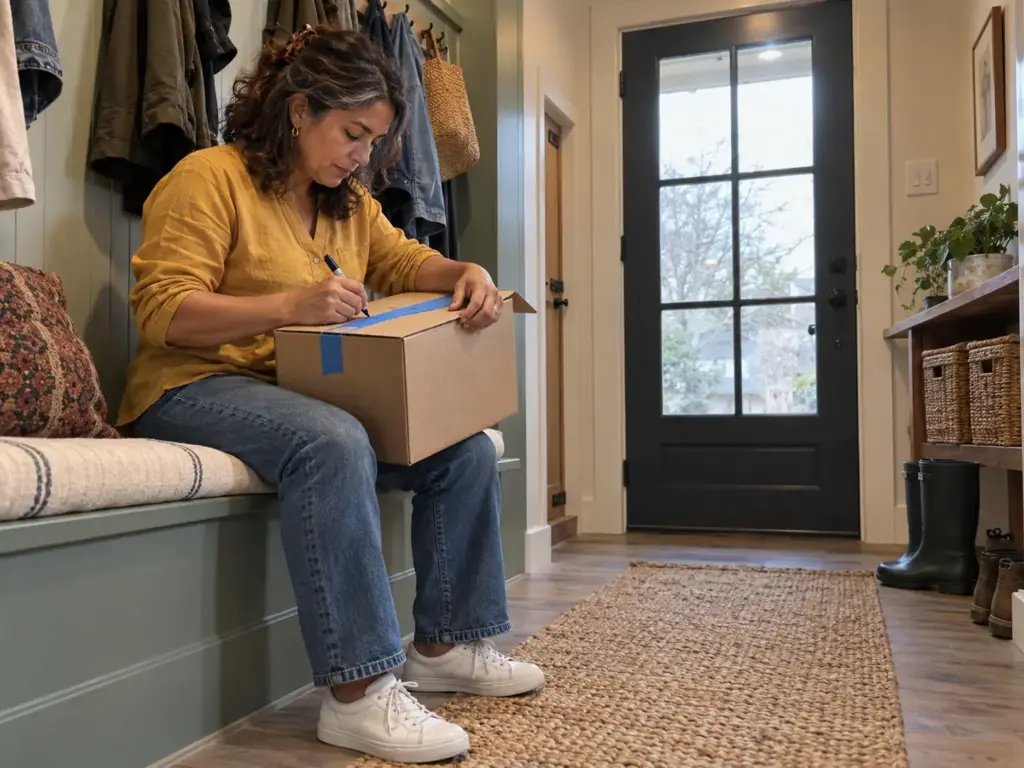
The Free-Sign Window
One commenter in the thread puts items out with a “Free stuff” sign and, if they are not gone after a day or two, disposes of them. It is community practice, but it is a clean rule: the item gets a fair chance and then it is done.
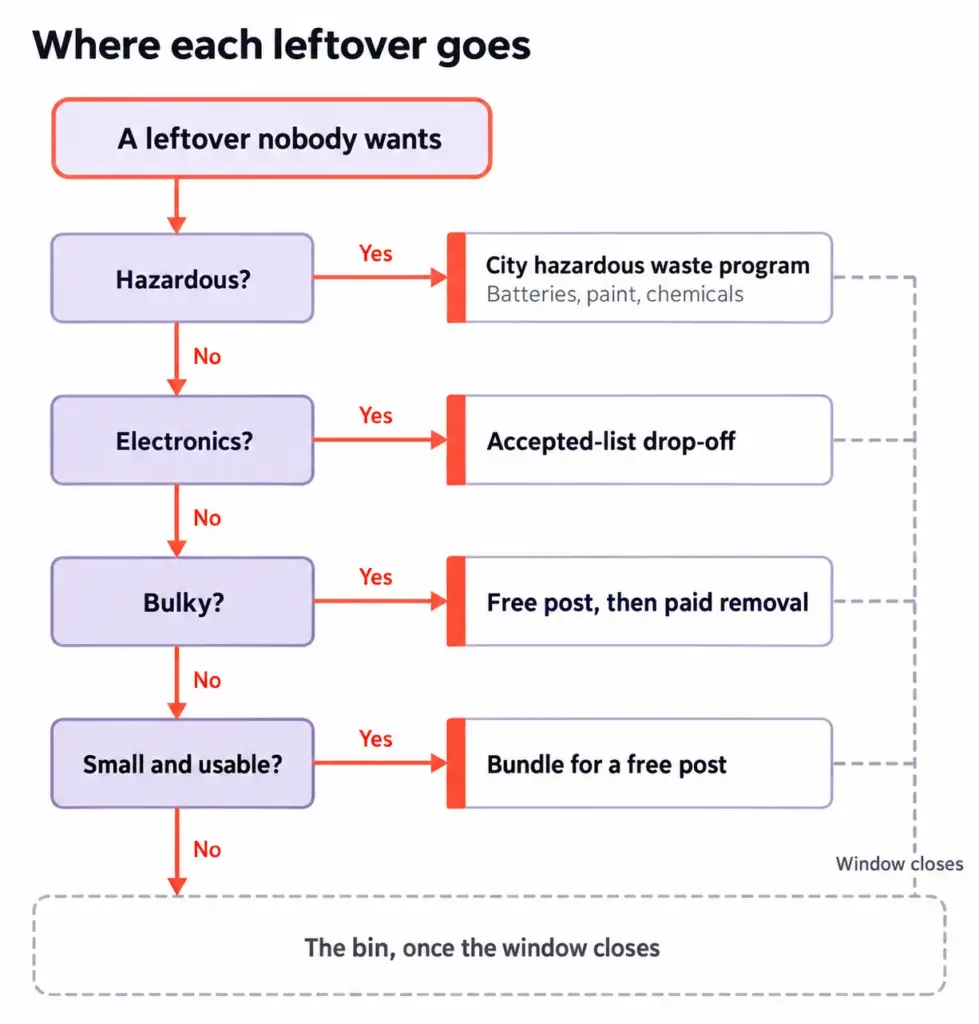
The order for the whole pile follows one ladder: hazardous items and electronics go to the city program, anything usable goes to a free post, a paid removal is only for what nobody takes, and the bin takes the rest.
The Dated Maybe Box
A commenter’s version of the dated box is a “maybe bin with a date”: the date is set, and the bin goes when the date comes. Without that date, a storage box turns into a new pile with no destination, which is exactly the failure described in the four-box method. Use the date as the end of the ladder, not a place to park what you could not decide.
When the Deadline Passes
After the window, the item goes. The permission line applies: nobody has to keep something because it was hard to place. The relief is real, and it is faster than most people expect.
Keep the Waiting Spot From Becoming the New Closet Tubs
The hazardous items need a place to wait that is safe and not forgotten. That place can slide into the old tubs if nothing marks it.
One Labeled Spot
Pick one shelf or one low cabinet away from foot traffic, keep what is on it upright and closed, and label it. This is the holding spot for everything waiting on a trip, and the battery case sits here. A labeled spot makes it obvious when something has been waiting too long.
Trip Day on the Calendar
Pick the date the program is open, not “someday.” Put it on the calendar the day you set up the spot, and the stubborn four finally have a deadline. For the easy item types, each has its own exit in the guides on decluttering by item type.
Write the trip date on a sticky note and put it on the shelf itself, next to the items. The calendar reminds you; the note makes the pile feel temporary every time you walk past it.
The Three-Month Look
Three months from now, look at the spot. If something is still there, ask what changed (the program’s hours, your access to a car, the item itself) before you decide it needs a new pile. A shelf that is empty or has a date beside every item means the system held.
Open Your City’s Page, Then Set the Date
Three things carry this whole guide. Sort the leftovers by who could take them. Let your city, not a national rule, decide the stubborn four. And give every unclaimed item a window that ends.
In three months, the waiting spot should be empty or have a date on every item; if it has neither, the plan needs a new trip day, not a new pile.
Today, find your city’s household hazardous waste page, copy the accepted list and the next open date, and stick them on the shelf where the leftovers wait. Then notice whether the pile feels less like a project once every piece has a date next to it. For the five everyday exits that this guide leaves out, the full picture is in what to do after decluttering.
Frequently Asked Questions
01What to do with items after decluttering?
Sort the leftovers by who could take them: hazardous items go to the city program, usable things to a free post, the rest to the bin. Put a date on whatever is still unclaimed, and when it passes, the item leaves.
02Can I put old batteries in the trash?
Sometimes, but it depends on the battery type and on your city, so read your city’s household hazardous waste page before anything goes in the bin. Westbrook, Maine allows non-rechargeable ones in household trash; Solana Beach, California says used batteries never go in curbside trash, recycling or organics carts.
03What do I do with stuff nobody will take?
Bundle small things into one unit, post the bundle free, and give it a window of a day or two before it leaves. If nobody claims it, it goes in the bin. Bulky or hazardous pieces follow your city’s route instead.
04How long should a free post stay up before I toss the item?
A day or two works, which is the window a Reddit commenter gives items left out with a free sign before disposing of them. That is community practice, not a rule, so shorten it if the item is in the way.
05What if I rent and have no car or curb?
Ask the property manager and your city’s page about bulky or hazardous pickup before booking a ride, because some cities come to the door. Solana Beach, California, for one, offers an e-waste pickup with no charge for residents. A free post with pickup at your door needs no car either.
Disclaimer: ClutterlessNest is a participant in the Amazon Services LLC Associates Program. As an Amazon Associate we earn from qualifying purchases. This article may contain affiliate links — if you buy through them, we may earn a small commission at no extra cost to you. We only recommend products we have tested or genuinely believe in.