You reorganized the laundry closet three weekends ago. The detergent is back on top of the dryer, the drying rack is leaning in the hallway, and there is a pile on the bed that has been there since Tuesday.
The reason it reverted is not discipline. An apartment breaks a laundry system at three points a house never has to think about: you cannot drill freely, you did not choose the machines, and about half the time the machines are not even in your unit. This walks the whole sequence, dirty pile to put away, in both apartment layouts.
Quick Answer
Organizing laundry in an apartment works in this order, not as a list of ideas:
- Identify your layout: in-unit closet or shared building room.
- Build around the sequence: sort, wash, dry, fold, put away, restock.
- Mount nothing you cannot remove: magnets, tension rods, over-door hooks.
- Give each of the four zones one defined home, folding included.
- If the machines are shared, make the system portable: one trip, one container.
- Add a weekly restock check. That is the step that makes it survive.
What Makes Apartment Laundry Different (and Why the Ideas Lists Fail)
Every laundry organization list on the internet photographs a room. A room with a window, a counter, and a wall the homeowner is allowed to put holes in. So if you are standing in front of a stacked pair wedged into a hallway closet, or holding a basket at the top of the basement stairs, you are reading advice addressed to somebody else’s building.
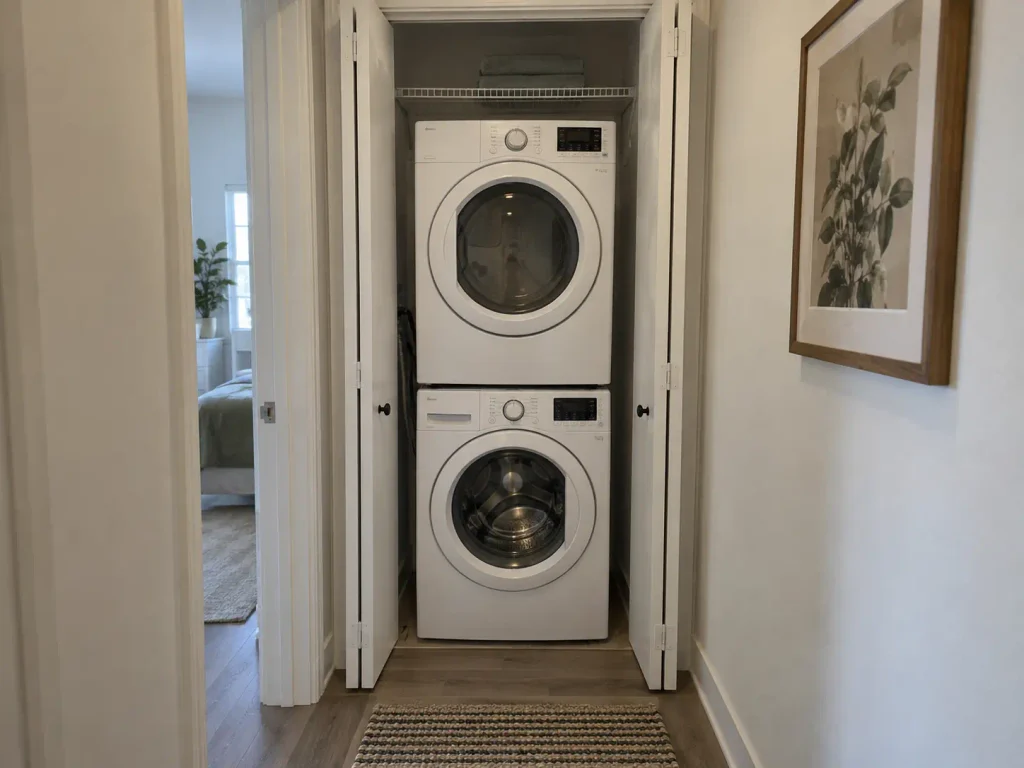
There are really only two apartment laundry room layouts, and naming yours changes almost every decision that follows. The first is in-unit: a stacked washer and dryer behind bifold doors, a nook off the kitchen, a hookup in a bathroom corner. You own the workflow but not the hardware. The second is the communal laundry room, a basement space with four machines the whole building rotates through, where you own nothing but what you carry down the hall and the organizing problem is transport instead of storage.
Three constraints hold in both. You cannot modify freely, a security deposit being a real number attached to holes in real drywall. You did not pick the machines, so the top-loader whose lid swings up into the shelf you wanted is a fact of the unit. And the building writes lease restrictions you never voted on.
Here is the structural reason the “26 ideas” format fails you, and it has nothing to do with the quality of the ideas. A list has no sequence. You read twenty-six numbered items, implement three, seven and fourteen because those fit, and skip the one that connected them.
Renters describe the reversion the same way: the closet looks great, then one load comes out of the dryer at 9 p.m., there is no surface to fold on, and it goes to the bed “just for tonight.” Folding was idea nineteen and you never got there.
If what you need is the number, the shelf depth and how much room the lid needs to swing, that lives in the sibling piece with the clearance math for a stacked closet. The rest of this stays at workflow altitude.
Build the System Around the Sequence, Not the Shelf
Ask somebody where their laundry system breaks and they will name a place. The closet. The counter.
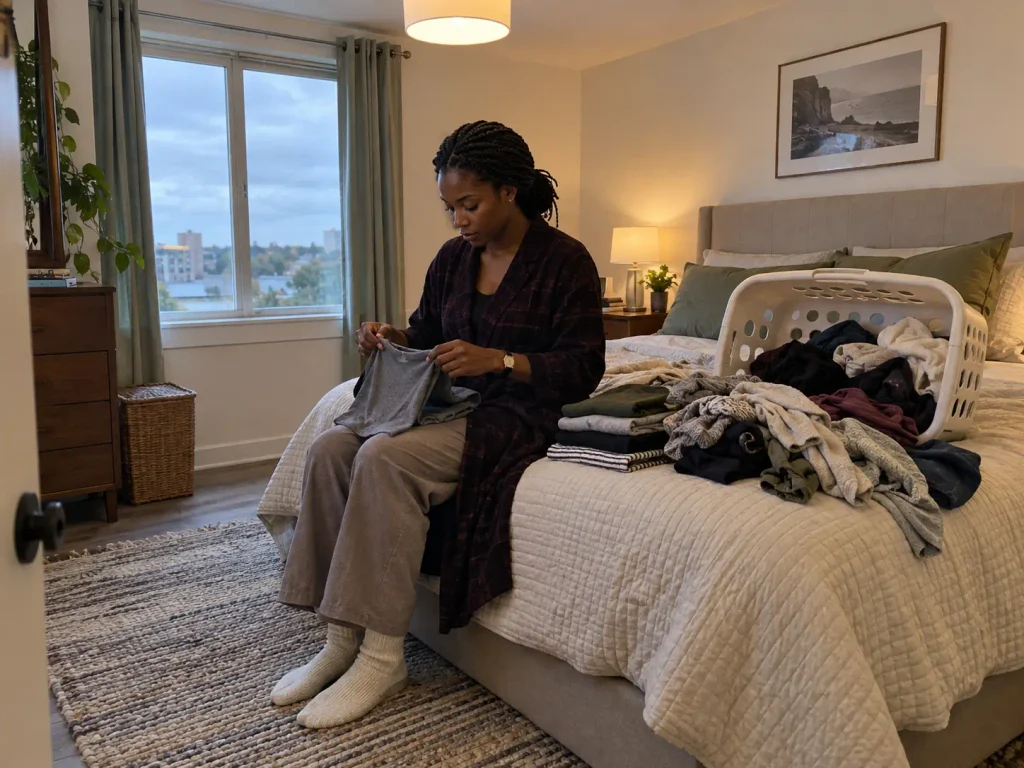
It is almost never a place. It is a step, and usually the same one: everything runs fine until “fold,” then stalls on a bed.
The laundry routine has six steps: sort, wash, dry, fold, put away, restock. Naming them is not the useful part. What it lets you see is that the system is only as strong as its weakest step, and in an apartment that is nearly always fold or put away. Both sit downstream of the washer, which is why a better hamper system never fixes them.
Put away is the one people drop, for a mechanical reason rather than a character one: it is the only step that happens in a different room. Everything else happens within arm’s reach of the machines, so proximity does the remembering for you.
It needs a trigger instead of willpower, and the trigger that works is small. The folded stack does not get set down anywhere except on the dresser it belongs in. If it lands on the bed, it has entered a holding pattern, and holding patterns in apartments last four days.
So diagnose instead of shopping. Walk to wherever your laundry is and find the pile: whichever step it sits in is the step with no defined home.
Clean and unfolded means fold has no surface. Folded on the dresser instead of in it means put away has no trigger. Dirty on the closet floor means sort has no container.
Run that diagnosis on a normal week, not a reset week. A setup you just tidied has no piles in it, so it will tell you nothing. Wait until Thursday.
The conventional wisdom is that a small laundry space needs better ideas. It needs the ideas it already has put in order, because the same ten fixes work once you know which step each serves. This blog covers the ideas that actually hold up in a small laundry space separately, as parts rather than as a plan.
And restocking supplies is the step almost nobody lists at all. A setup without one works beautifully for six weeks, then dies the first morning you reach for detergent and there is none.
Mount Nothing You Cannot Take Down
Every renter-friendly list stops at “no drilling,” which is the beginning of the problem rather than the answer to it. A laundry space is humid, the surfaces are painted drywall and sheet metal, and adhesive behaves differently there than in a bedroom. For the fixes sorted by what you are actually allowed to drill, the sibling piece splits them that way from the start. What follows is no-drill storage only.
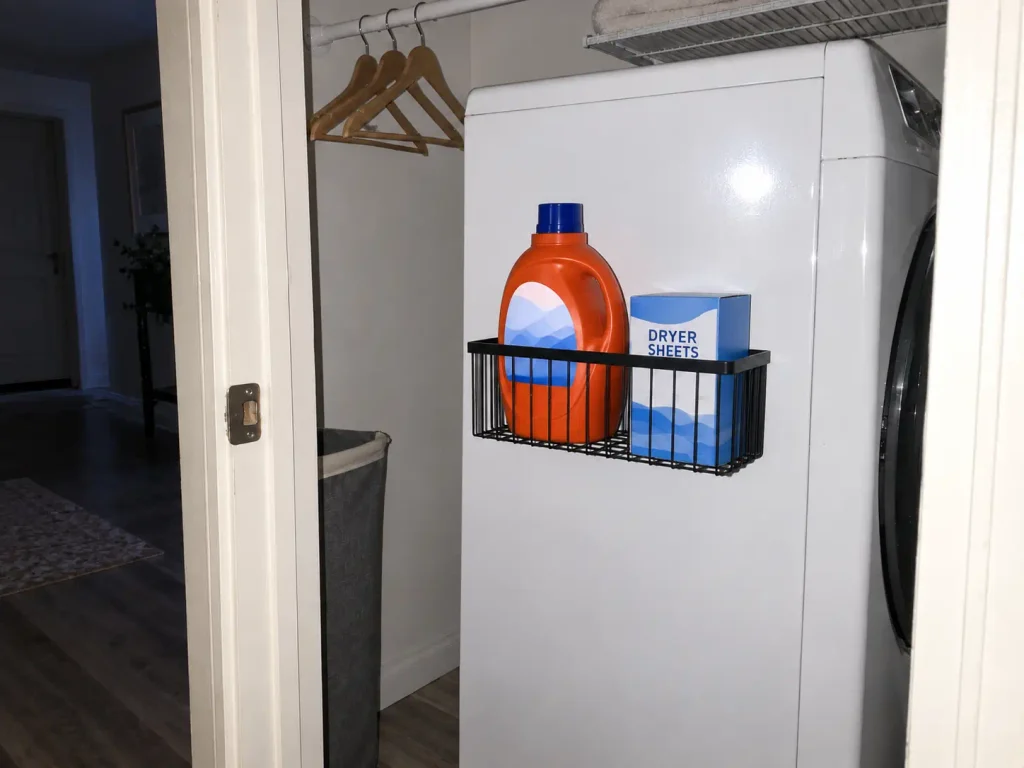
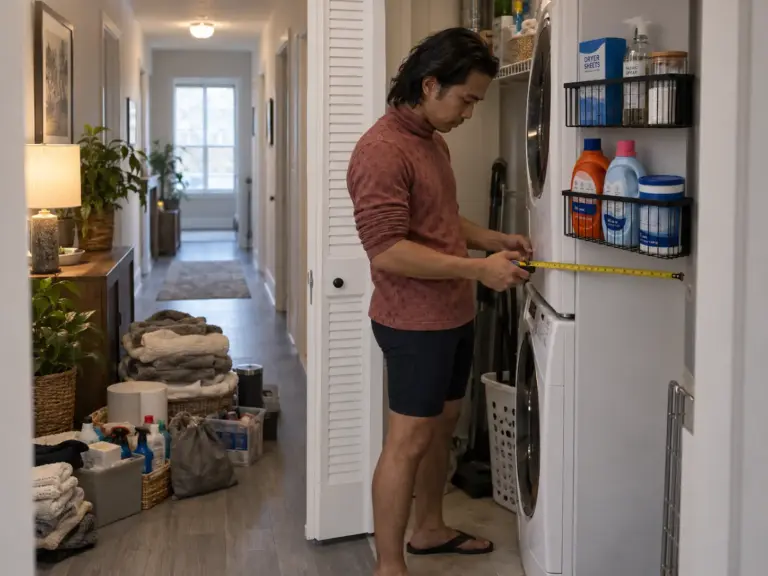
Start with the best mounting surface in the room, which almost nobody uses: the side of the machine. Steel, vertical, right height. Magnetic hooks and shelves go here and need no permission from anybody, because a magnet leaves behind nothing.
Already own a magnetic spice rack from a kitchen reorganization that did not stick? Move it to the washer today and skip the purchase. If not, the AMZFAWO 2-Pack Magnetic Laundry Organizer Shelf mounts straight to the casing and takes the detergent storage and dryer sheets storage that otherwise colonize the top of the dryer. One caveat: it is a small-items surface, and a full jug on a magnet mount will slowly slide.
One wrinkle nobody writes down: if the machines belong to the building, so does the casing. Magnets are still fine, because removing one leaves no trace, but adhesive on a communal machine is not. Attach while you are standing there, take it with you when you leave.
Command strips deserve a specific warning. The ratings on the package are real, but they were not measured next to a running dryer. Humidity degrades adhesive bond over time, so budget roughly half the printed number: a strip rated around sixteen pounds heavy-duty is an eight-pound strip after a season in ambient moisture. That matters most for anything holding wet fabric, which weighs far more than the dry version you pictured.
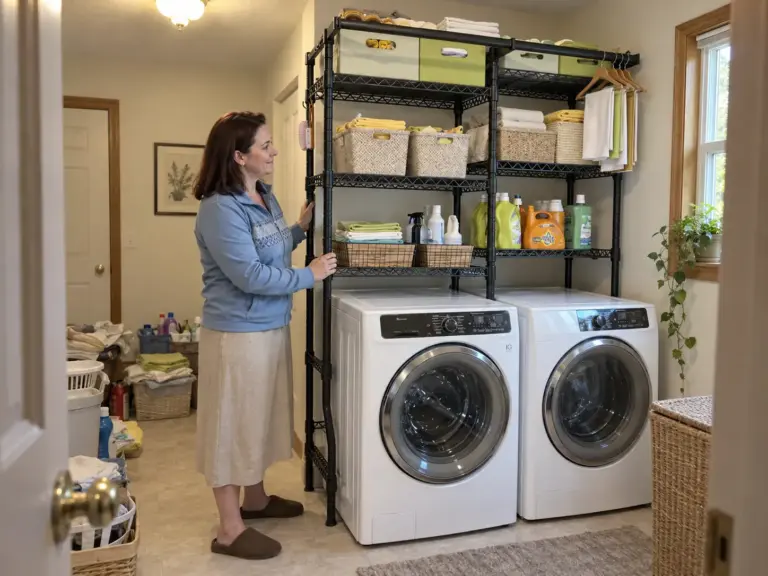
Tension rods are the other zero-hole surface, and the most repeated low-cost fix here. A rod wedged between two closet walls becomes a shelf support, a hanging rod, or a drying line depending on what you put on it, which makes it the cheapest vertical storage in the room. Before buying anything, go find the rod you already own (the one in the window you never use, or the one from the last apartment still in a box). If you need the full version, Home in Bold Tension Rod Shelving expands to fit a nook or the span over a stacked pair with no hardware. It is load-limited the way all tension mounts are, so keep the heavy jug on the floor and the light bottles up top.
Install a tension rod, load it, then push up on it hard with one hand. If it shifts at all, it is too short for the span and will drop its load at 2 a.m. instead of now. Better to find out while you are standing there.
The last free surface is the door, if your laundry closet has one. A line of adhesive hooks on the inside face handles light items, mesh wash bags and a hand brush, for almost nothing. When you have outgrown hooks, the ULG Over Door Organizer with five large and ten mesh pockets turns the door into over-door storage with no tools. Check one thing first: loaded, it needs clearance to swing past the machines, and on a bifold it must not foul the track.
Then there is anything tall and loaded near a vibrating machine, which is where this stops being about deposits. A rolling laundry cart or a narrow wall shelving tower beside a washer on spin gets nudged a few thousand times a year.
ASTM F2057-23 became a mandatory federal standard in September 2023 under the STURDY Act because leaning furniture keeps going over. According to the CPSC, “CPSC recommends that consumers anchor furniture, including dressers, securely to the wall,” and the CPSC’s tip-over guidance for clothing storage units treats anchoring hardware as a safety fixture rather than decor. Most leases do not put a tip-restraint bracket in the same category as a decorative hole. Anchor it, or keep it low.
The Four Zones an Apartment Laundry Setup Needs
You do not need a laundry room. You need four spots, and three of them can be smaller than a shoebox: a sort zone, a supply zone, a drying zone, and a defined folding station. That is zone organization applied to the six-step sequence, so every stage has somewhere to happen.
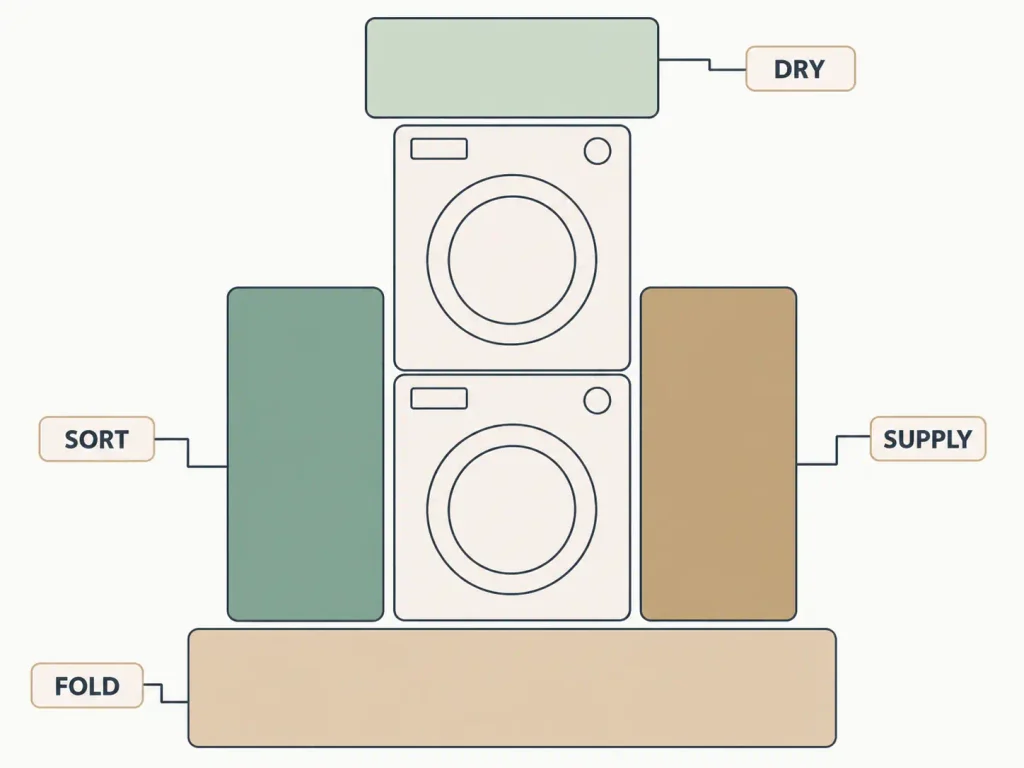
The Sort Zone (and Why One Hamper Is the Problem)
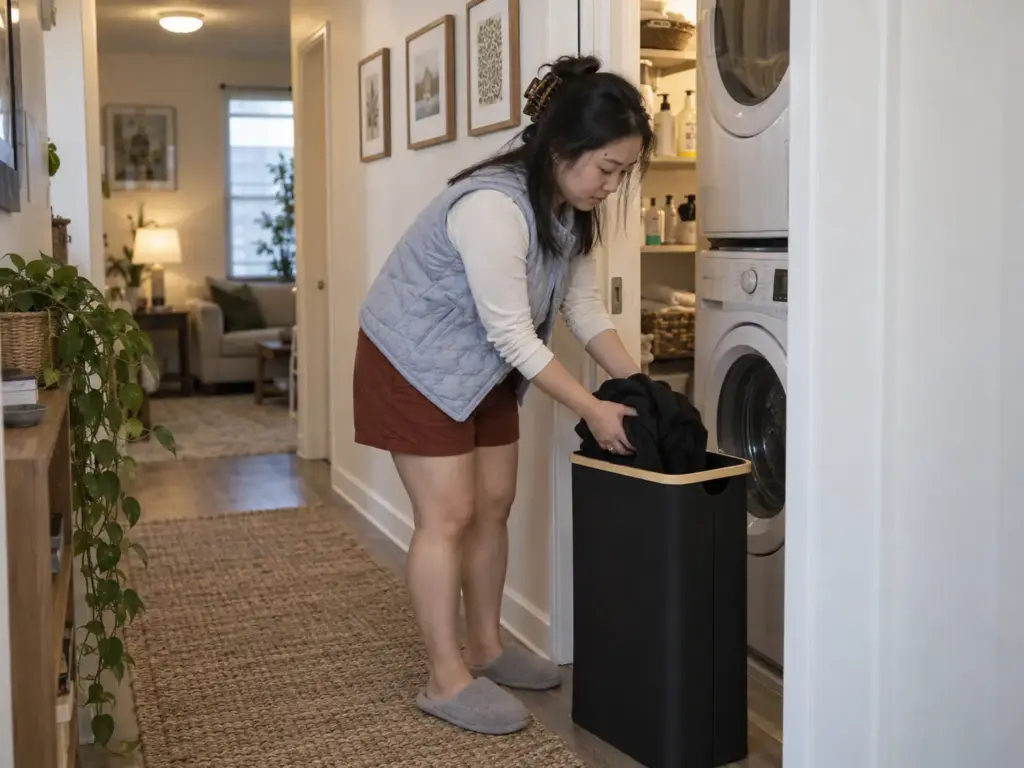
A single hamper does not eliminate laundry sorting. It postpones it. With one container the sorting happens at the machine, standing up, on the floor, at the exact moment you least want to make decisions about fabric. With two, it happens the moment you take the clothes off, which is the only time it is free.
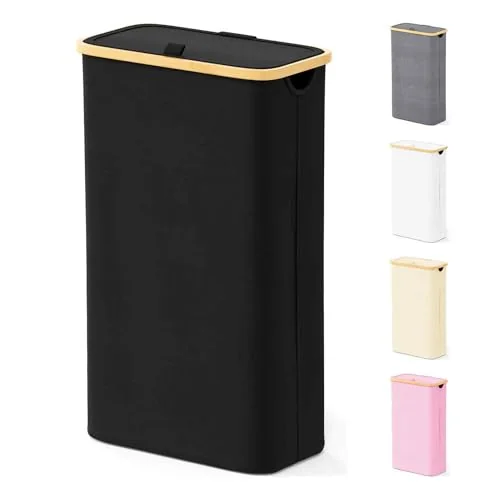
Whites and colors is the default split, but sort by category however your actual cycles run. The constraint on the second container is footprint, not capacity: slim and vertical wins even when the wide one holds more, because the wide one ends up in the hallway. Two labeled bins or wicker baskets you already own do this job completely.
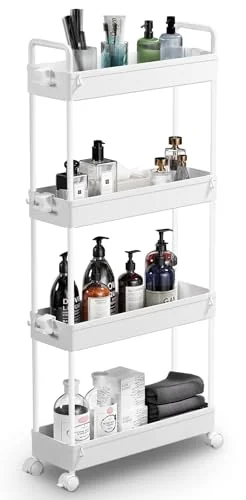
The Supply Zone (the Gap Beside the Machines)
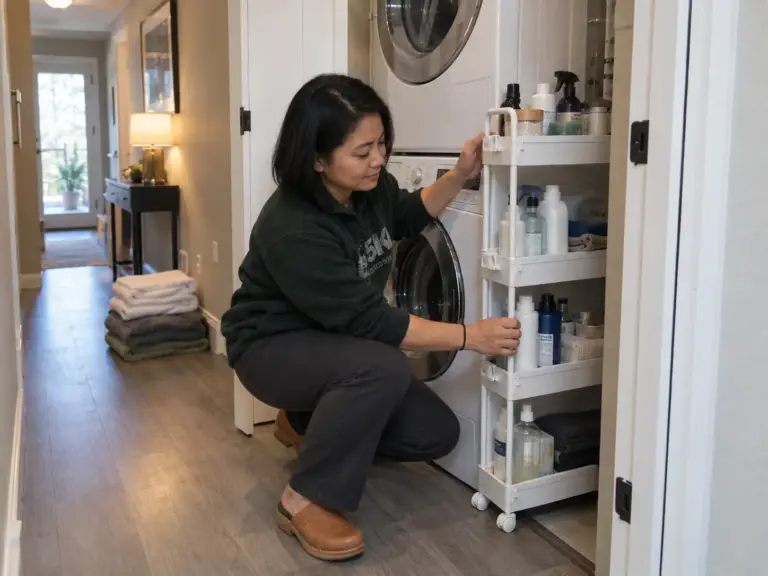
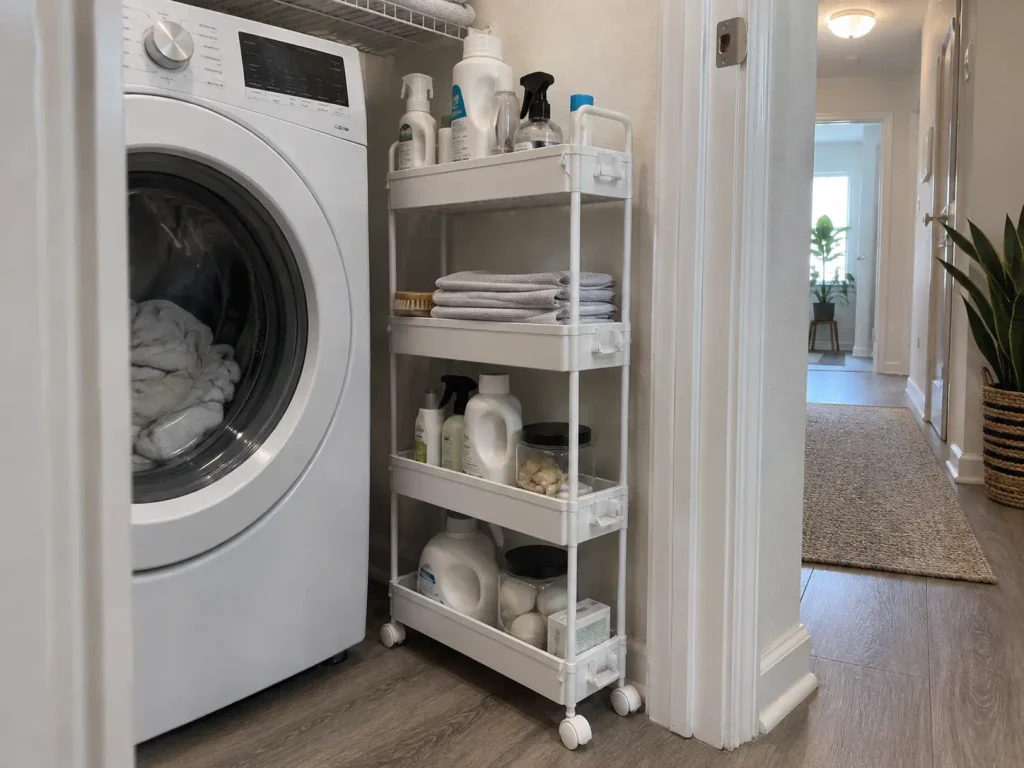
Every apartment laundry nook has a narrow dead gap. Beside the machines, between them, or between a machine and the wall, currently holding one orphan sock and a dryer sheet from last spring. That machine gap storage is the highest-value space in the room, because it is the only one you are not already using.
A slim rolling cart there does what a fixed shelf cannot: it comes out, you take what you need, it goes back and the walkway returns. If your machines are downstairs, the cart that lives in the gap is also what carries supplies to the elevator.
If there is no floor gap at all, and in some nooks there genuinely is not, the budget path is a repurposed over-door shoe organizer: the pockets hold bottles upright, which is the only thing supply storage has to do. For the closet-specific version, this blog covers organizing the closet itself without drilling in more detail than a workflow piece should.
One rule for whatever holds your supplies: nothing glass. Decanting into matching clear containers looks better than retail bottles, but glass jars on a shelf attached to a machine that vibrates every spin cycle is a broken jar with a timeline on it. Save the glass for the pantry.
The Drying Zone (for Everything That Cannot Go in the Dryer)
Air-drying in an apartment is arithmetic, not a lifestyle choice. There is no floor space to donate to a clothes rack, and if the dryer downstairs charges by the load, every sweater you hang is money you keep. A freestanding rack is either in use or in the way, and in a small unit it is in the way far more hours of the week.
Which is why folding and wall-mounted beats freestanding: not because it holds more, it usually holds less, but because it disappears when empty. Start with the free version, a tension rod spanning two points as a retractable clothesline without the hardware.
When you want the rack that holds sweaters flat and folds away, the Vikaqi Wall-Mounted Drying Rack collapses nearly flat against the wall at 32 inches wide. It does need actual wall mounting, so check your lease first and load it against its real rating. Wet laundry is heavy.
The Folding Surface (the Zone Everybody Skips)
This is the break point from the sequence section, and the mechanism deserves to be blunt. Without a defined surface, fold happens on a bed. Once it does, put away becomes a second decision you make later, while tired, in a room you were about to sleep in. So the folded clothes move to a chair, the chair becomes the pile, and the pile is a missing surface expressing itself downstream.
It also has the loosest requirements in the whole system, which is why skipping it is so unnecessary. The top of a front-loader counts. A butcher block countertop offcut across a side-by-side pair counts. A shallow board that folds down off the wall counts.
It does not have to be big, because you fold one garment at a time. It has to be defined, meaning folding is what happens there and mail is not. A folding counter with two jobs has one job, and the other job always wins.
The free move is skipping a step rather than buying a surface for it. Wrinkle-release spray and a hanger handles most of what people believe they need to iron. If you do press things, or there is genuinely no horizontal surface in the room, the Xabitat Wall-Mounted Ironing Board at 36.2 by 12.2 inches folds flat to the wall and gives you that defined process surface. Same caveat as the drying rack: check what you are allowed to mount before ordering.
When the Machines Belong to the Building
Half the people searching for this do not have a laundry closet. They have a basket, a hallway, a stairwell, and a room downstairs with four machines and somebody else’s towels already in three of them. Almost nothing written about laundry organization speaks to that person, and it is a different problem rather than a smaller version of the same one: everything has to be portable, and about half the system is timing.
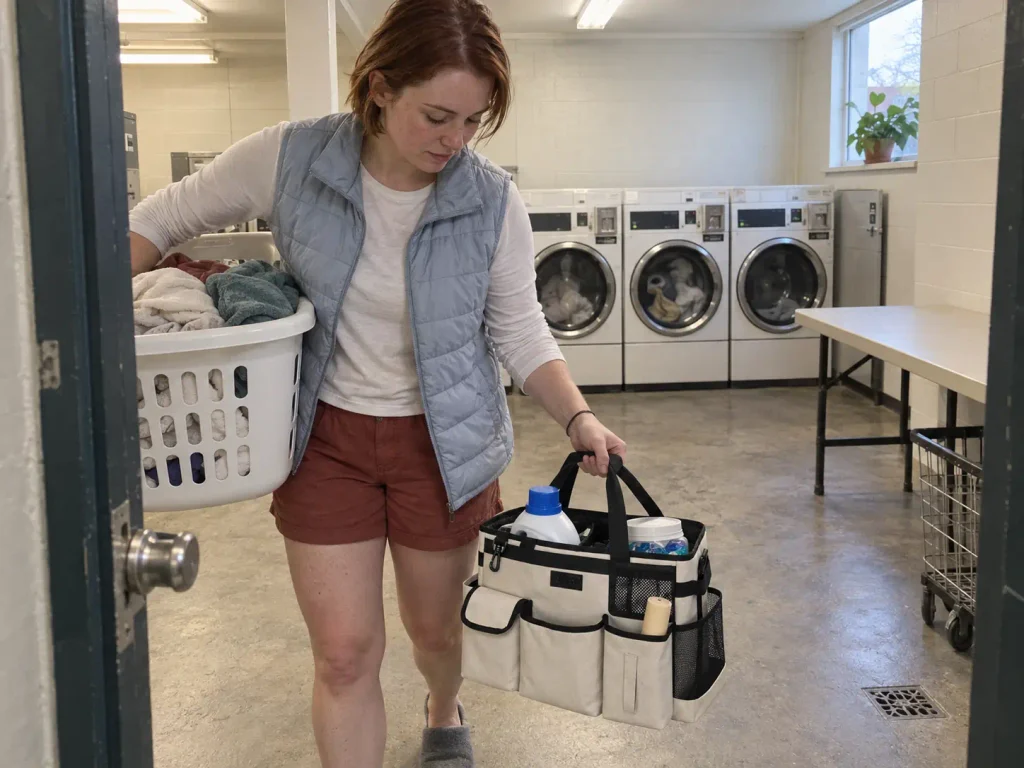
One Trip, One Container
Transport has a hard limit: anything you cannot carry in the hand that is not holding the basket does not come.
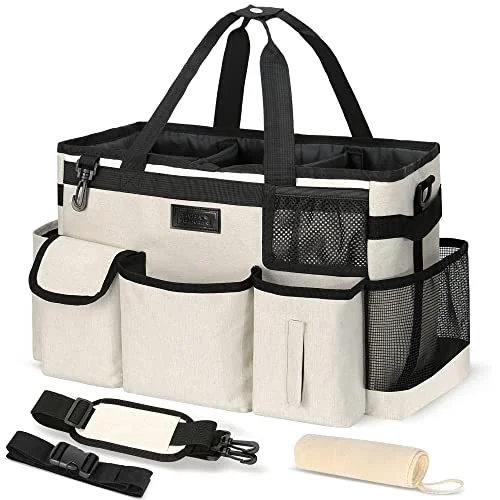
What actually needs to travel is short. Detergent, pods or sheets, a stain stick, your payment method, whatever you are reading for the next forty minutes. One container’s worth.
Start with the tote or basket you already own, because it does this job. All a dedicated caddy adds is a handle: on a hallway walk the tote is fine, but with stairs and a door you have to pull open, the handle earns its place.
Timing Is Part of the System
In a shared room, when you do laundry matters more than any organizer you own, and the busy windows are boringly predictable: Sunday afternoons and weekday evenings right after work. Moving your laundry day off those two does more than any supply caddy, because the problem on a Sunday at 3 p.m. is not your supplies. It is that all four machines are running and two finished twenty minutes ago.
The lease constraint here is also not about drilling, which catches people who came in worried about the wrong thing. Building laundry etiquette gets posted as rules, and those are the enforceable ones: hours of operation with a quiet-hours cutoff, commonly around 9 or 10 p.m., load-size limits, and a prohibited-items list that usually includes rugs and pet bedding. Read the sign properly once, before you plan a routine the building does not allow.
Photograph the posted rules sign the first time you use the room. You will not remember whether the cutoff is 9 or 10, and the sign is three floors away from where you are standing when the question comes up.
Starting a load at 11 p.m. in a building with shared walls is not a time-saver, it is a noise complaint with a delay on it. Noise reduction here is a matter of scheduling rather than padding: a spin cycle transmits through thin floors better than almost any other household sound. That holds for an in-unit machine too.
The Unwritten Rules (and the Grace Period)
A shared laundry room runs on trust, and that is not a sentimental framing: residents leave personal clothing unattended in a room anyone in the building can walk into, so what keeps it functional is social rather than physical.
The grace period is the norm worth knowing by number, because it generates every dispute. Roughly five to fifteen minutes after a cycle ends is the window before it becomes broadly acceptable for someone else to move your finished load. So you protect your own laundry with a timer set for the cycle length, not a plan to come back “later.”
The most repeated complaint in shared-laundry guidance is exactly that: the finished load sitting in the machine while three people wait. The other half of the rule runs in your favor and is not negotiable in any version of the etiquette. Never interrupt a cycle that is still running, no matter how tight your schedule.
Then there is the maintenance that reads as courtesy but is also fire safety. Clear the lint trap after every single cycle, since lint buildup in a dryer is a genuine fire risk rather than a tidiness concern. Wipe spilled detergent before it sets. And take your supplies home every time: belongings left in a shared laundry room get thrown out by management eventually, and that is within their rights.
And because none of it lives near the machines, the real storage question becomes the whole apartment rather than the laundry space. That is the rest of the apartment the laundry pile spills into, where small space organization takes over from laundry.
The Restock Routine That Keeps It Working
Nobody’s laundry system fails on day one. It fails the first Tuesday you reach for detergent and there is none, so you use the travel-sized emergency bottle from under the bathroom sink, and it does not fit the spot the good one lived in, so it goes on top of the dryer. Then the fabric softener storage joins it, because that is where things go now. The failure started with an empty bottle, not a bad habit.
The Weekly Check
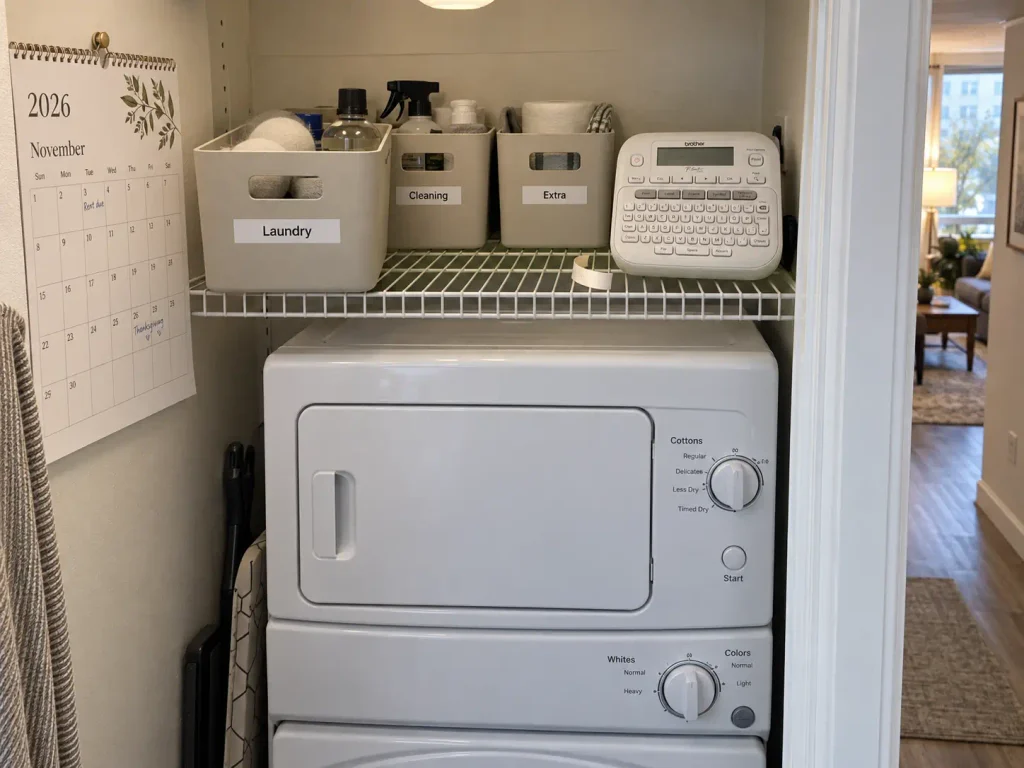
Pick the moment you already do laundry and add thirty seconds. While the machine is filling, look at the supply zone and ask one question: is anything below half? That is the whole routine. Anything below half goes on the list right then, on your phone, while you are looking at it.
A maintenance routine beats a reminder to buy detergent, because the failure is not forgetting to buy it. You know you need detergent. The failure is discovering you are out at the moment you need it, already committed to a load. A check done while the machine fills moves that discovery a week earlier, to a moment when it costs you a note on your phone.
Call it the three-month test: a setup that has survived to month three has been through at least one restock, and one that has not has simply not been tested yet. Which matters when you look at a closet that still looks right after six weeks and conclude you nailed it. Maybe. Or maybe the detergent jug is still the original one.
On what fails in this environment and when, the sibling piece on the organizers that survive the heat and humidity covers it.
Labels, and Why They Are for the Other Person
Labeling a bin you fill yourself and empty yourself is mostly theater. You know what is in it. The reason to label anything is that somebody else in the apartment has to put things back into it: a label is how you tell a roommate or a partner where things go without having the conversation again every week.
The system breaks when the other person does not follow it, and it is usually not defiance. They were never told. The bin that reads obviously to you because you built it reads as a generic bin to everybody else, so they guess, the guess is wrong, and now the dryer sheets live with the stain removers. Six guesses later the zones have dissolved.
Start with washi tape and a marker, or a dry-erase calendar magnet if the contents rotate. It is free, it comes off cleanly, and honestly it is the right answer for most bins. Where it stops being right is the container you relabel more than once: swap a supply out, and hand-lettered tape starts looking like a system nobody maintains.
For those, the Brother P-Touch PTD220 Label Maker prints laminated tape that survives a humid laundry space and peels off without residue when the bin changes jobs. For four bins, tape wins.
Label the empty spot, not just the container. A label on the shelf where the detergent lives tells the other person where to put it back while the jug is still in their hand. That is the moment the label is actually needed.
The Step Your Pile Is Sitting In Is the Step to Fix
Your laundry setup is a sequence, not a shelf. Find the step with a pile sitting in it and fix that step instead of buying storage for a different one. Mount nothing you cannot take down: the machine casing, a tension rod, and the inside of the door cost you no deposit and no permission. And if the machines belong to the building, the system is portable and half of it is timing.
In three months, go look at where the piles are. If one has moved to a new step, that step is the one with no defined home yet. It was never a discipline problem. So pick the step your pile is sitting in right now, give it one defined place this weekend, and leave the rest alone.
Frequently Asked Questions
01How do you organize laundry in an apartment with no laundry room?
Build four zones instead of a room: a sort container, a supply spot in the gap beside the machines, a folding drying rack on the wall, and one defined folding surface. Three of the four can be smaller than a shoebox. The folding surface is the one that decides whether clothes reach the closet.
02How long should you wait before moving someone else’s laundry in a shared machine?
Roughly 5 to 15 minutes after the cycle finishes is the widely cited grace period in a shared laundry room. Never interrupt a load that is still running, even if you are on a schedule. Shared-laundry guidance is unanimous on that one.
03Can you put shelves above a washer and dryer in a rental?
Not with anchors, unless your lease allows it. Use a tension rod shelf between the closet walls, magnets on the machine’s metal casing, or an over-door organizer, since all three leave nothing behind. Treat adhesive mounts as about half their rated weight in a humid laundry space.
04What do you need to take to a shared laundry room?
Detergent, pods or sheets, a stain stick, your payment method, and something to do during the cycle, all in one container you can carry in one hand while holding a basket. If it takes two trips, the routine will not hold for long.
05Why does my laundry organization keep falling apart?
Almost always because one step in the sequence has no defined home, and it is usually folding. If clothes get folded on a bed, putting them away becomes a separate decision you make while tired. That is where the pile comes from.
Disclaimer: ClutterlessNest is a participant in the Amazon Services LLC Associates Program. As an Amazon Associate we earn from qualifying purchases. This article may contain affiliate links — if you buy through them, we may earn a small commission at no extra cost to you. We only recommend products we have tested or genuinely believe in.