






















In this article
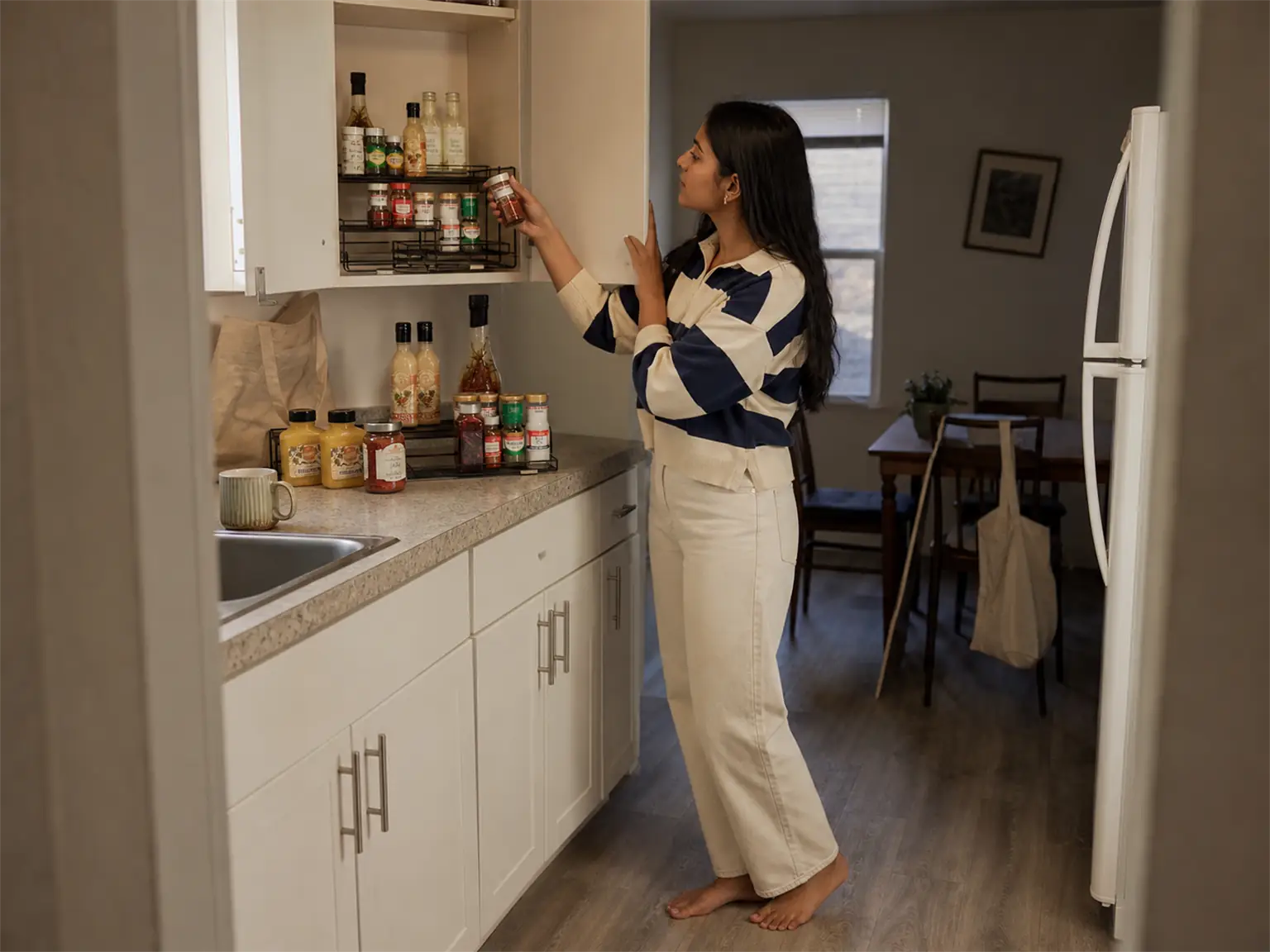
You reach past the front row for the paprika, and three jars come down with it. The rack is doing its job in the narrowest sense. It is holding spices. It just isn’t holding them anywhere you can see or reach.
Most roundups of the best spice rack organizers quietly assume the rack will still be on the wall in six months. The ones that fail rarely fail because they were bad products. They fail because the mount never suited the surface, or the shelf run was too short, or the lease said no holes and somebody drilled anyway.
So this one is written from the mounting mechanics up: what a standard cabinet actually measures, what the CPSC’s own testing of adhesive hooks showed, and why a screw driven into a hollow-core rental door has almost nothing to bite into. Measure and check your lease first, then work through the six rack types in order of where they mount, from wall to cabinet door to shelf to drawer to counter to fridge. Each one comes with the failure to watch for and one pick worth paying for. If you want the layer underneath this article, jars, decanting, labeling and frequency grouping, that all lives in the broader spice organization system.
Here is the short version, sorted by the surface you actually have.
| Rack type | Best for this space | Renter-friendly |
|---|---|---|
| Wall-mounted strips | A narrow strip of free wall, usually beside the range | Yes, if you use the adhesive mount |
| Cabinet door / over-the-door | Cabinets with shelf clearance to spare behind the door | Yes, if it hooks or sticks instead of screwing |
| Expandable tiered rack | A shelf at least 14.5 inches wide with real height above it | Yes, nothing is mounted |
| Drawer insert or liner | A shallow drawer near the stove you can give up | Yes, nothing is mounted |
| Countertop turntable | A clear circle of counter about the size of a dinner plate | Yes, nothing is mounted |
| Magnetic tins | A fridge, hood or panel that a magnet actually sticks to | Yes, only on a magnetic surface |
Measure First, Then Check What Your Lease Allows
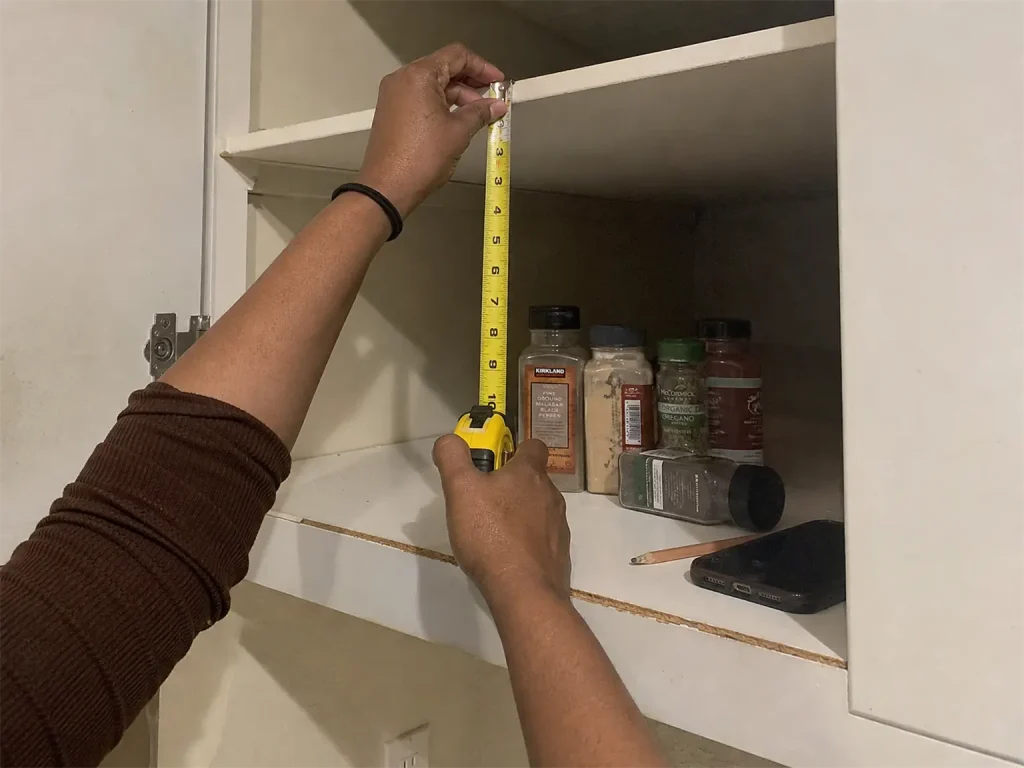
Nobody returns a spice rack because it was ugly. They return it because the cabinet door wouldn’t close over it, or because pulling it off the rental door left four holes and a conversation with a landlord. Three minutes with a tape measure and one fridge magnet eliminates most of the catalog before you spend anything, and it is the part almost every review skips straight past.
The four numbers that decide everything
Upper cabinets run about a foot deep. In practice that means the standard 12-inch depth of most upper kitchen cabinets, give or take a few inches depending on the house. Base cabinets are roughly double that, which is the whole reason jars disappear into the back of a lower cabinet and never come out again without a turntable or a slide-out spice rack to bring the back row forward.
Write down four numbers before you shop: usable shelf width, shelf-to-shelf height, cabinet depth, and the clear span of wall or door you could give up. A shelf-standing rack generally wants a footprint somewhere around 12 to 15 inches wide, 10 to 12 inches deep, and 4 to 6 inches tall to clear whatever is above it.
Two of those numbers surprise people. Expandable racks have a minimum as well as a maximum, so a rack rated 14.5 to 29.1 inches will not sit on a 12-inch shelf at all, and stretched across a very wide one it just looks sparse. And a turntable is measured in front of the backsplash, not along the counter: it needs a clear circle about the size of a dinner plate, and your toaster is probably already standing in it.
Your door material is a mounting decision, not a detail
A hollow-core door, which is what most interior and rental doors are, is a thin skin over a honeycomb or foam core with a narrow band of solid frame around the perimeter. Drive a screw into the face of one and it has almost nothing to grab. Either it catches the frame edge and holds, or it strips out, and you cannot tell which from the outside. That is the actual mechanism behind the recurring complaint that over-the-door racks “pull loose within weeks” in a rental, and it is why the same rack can be rock solid in one kitchen and on the floor in another.
So rank your mounts in this order. A top-hanging over-the-door rack puts zero holes in anything. Adhesive comes next, with the load spread across several points rather than one. Screws come last, and only into a solid-core door or a wall stud. Renters in organizing threads describe the goal in almost exactly the same words every time: getting the thing off the door later without it costing them the security deposit. That is the standard the mount has to clear, not “does it hold today.” If you are working under the same constraint everywhere else in the kitchen, no-drill cabinet organization for renters covers the whole-cabinet version of this problem.
The fridge-magnet test (do this before you buy)
Plenty of modern refrigerator panels that look and feel like stainless steel are not magnetic at all. Magnetic tins slide right down them.
Take any magnet already stuck to your fridge and try it on the exact door panel you were planning to use. Thirty seconds. It is the single most avoidable return in this entire category, and it is the one nobody tells you to run.
How to judge a rack nobody has reviewed
Half the racks worth buying have a brand name you have never heard and forty reviews. You can still read them:
- Solid base beats slatted shelf. Slats let jar bases rock, and small jars tip over the gaps when you pull a neighbor out.
- Tiered beats flat. A flat shelf hides the back row completely, which is how people end up owning three jars of cumin.
- Find the printed weight rating. “Holds 20 jars” is a capacity claim, not a load rating. Glass adds up faster than you expect.
- Read the material line, not the product title. Genuinely kiln-dried bamboo holds up near a stove or a sink. Bamboo-look plastic composite gets none of that benefit and plenty of the marketing.
Measure your tallest jar, not the standard spice bottle size the rack was designed around. Most collections have one outlier, a tall oregano or a wide-mouthed chili flake tub, and that one jar is what decides whether a three-tier rack fits under the shelf above. If the outlier is a single jar, leave it out of the rack entirely and stop letting it set the rules.
Wall-Mounted Spice Racks
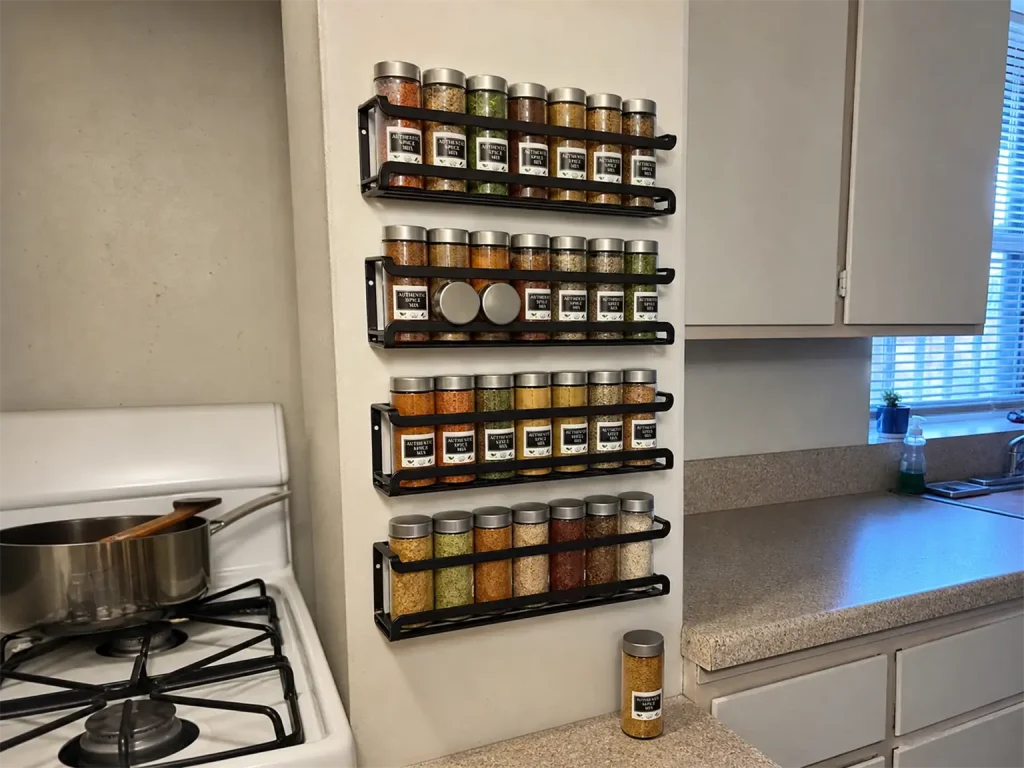
Wall racks are the ones people install once and then move twice. In a small apartment kitchen, the sliver of wall next to the stove is often the only vertical storage left unclaimed, which is exactly where the pretty open-shelf photos put them. It is also the hottest, greasiest spot in the room, and nobody mentions that part.
The space is there if you look for it: the strip beside the range, the inside edge of a pantry doorframe, the run of wall under a wall cabinet. A strip-style rack only needs a couple of inches of depth, which is why it fits where nothing with a shelf will.
Start with the failure, though. One loaded strip is nowhere near any limit. Twenty full glass jars hanging off a single adhesive point is a completely different load, and that is where these come down. The CPSC’s own testing of adhesive-mounted hooks found they held roughly 20 pounds of pull force before failing, which sounds generous until you remember the agency also notes that long-term adhesive durability is unknown. In a kitchen that runs hot and gets a film of cooking grease on everything, “unknown” is not a comfortable word. Spread the load across several mounting points, and re-check them a couple of times a year instead of assuming.
This is why a rack that installs with screws or adhesive is the honest renter buy. Adhesive now, screws later if you ever own the wall.
Before you buy anything at all: a Command-style adhesive hook and a small basket already in your house holds four jars for nothing. That is not a placeholder. A fair number of renters run exactly that setup permanently and never think about it again.
Cabinet Door and Over-the-Door Spice Racks
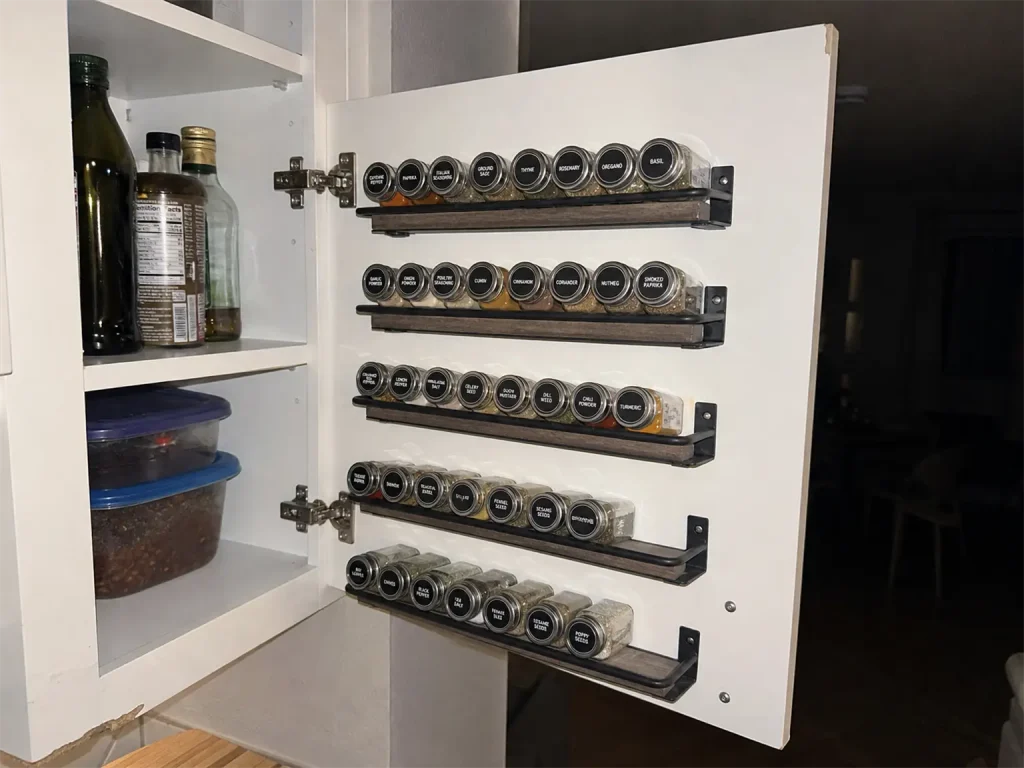
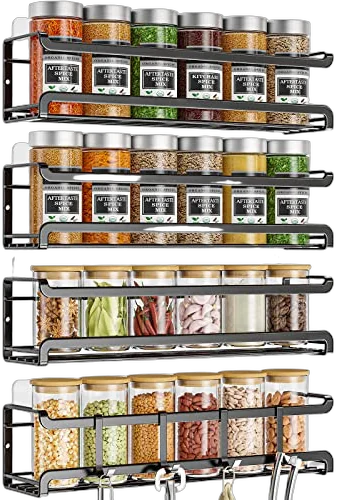
The inside of a cabinet door is the most under-used vertical surface in any kitchen. It is also the one people most often ruin. This is where the hollow-core problem from the last section stops being theoretical and starts costing money.
The clearance test nobody runs
The rack has to clear the shelf edges when the door swings shut. That means measuring the gap between the inner face of the door and the front edge of every shelf, not the shelf depth and not the cabinet depth.
If the rack is deeper than that gap, the door closes onto your jars. You will hear it before you see the damage, usually as a soft knock every single time somebody shuts the cabinet. The same clearance-and-weight math applies one door over, which is why what to check before buying a pantry door organizer is worth reading if the pantry is your real target.
Screw, adhesive, or hook over the top
Three mounts, in descending order of strength and ascending order of renter safety:
- Screw-through is the strongest by a wide margin, but only into a solid-core door. It is also the one that leaves holes.
- Adhesive is renter-safe when the load is spread across several clips rather than concentrated on two. Consumer Reports’ anchor and mounting-hardware tests make the same point about mounting hardware generally: buy a rating well above what you plan to hang on it, because the printed number is a laboratory ceiling, not a working load.
- Top-hanging over-the-door puts zero holes anywhere. The trade is that the door may not close flush on a shallow cabinet.
The way renters describe this category is remarkably consistent: the win is not having holes in the door. That single phrase ranks the three mounts for you in about two seconds.
Labels are what makes a door rack work
A door rack shows you lids, not the fronts of jars. Without something written on top, you are looking at twelve identical circles and opening them one at a time.
A chalk marker works. A label maker works. Masking tape and a Sharpie works, and honestly it survives a greasy kitchen better than most adhesive labels do. The jars just have to be readable from above.
Before you buy: adhesive spice clip strips hold individual jars straight against the door with no shelf and no drawer given up. They are the cheapest way to find out whether you will actually use the back of that door.
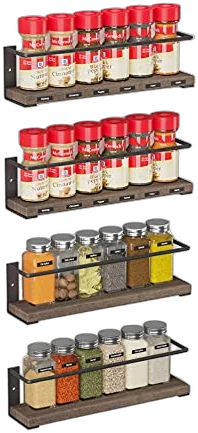
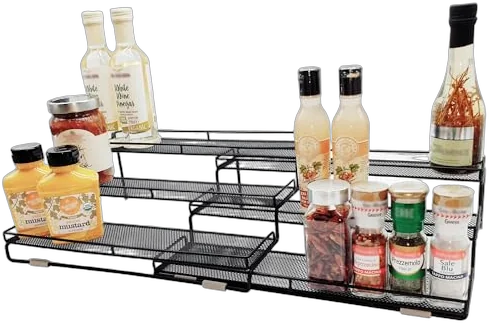
Expandable Tiered Cabinet Racks
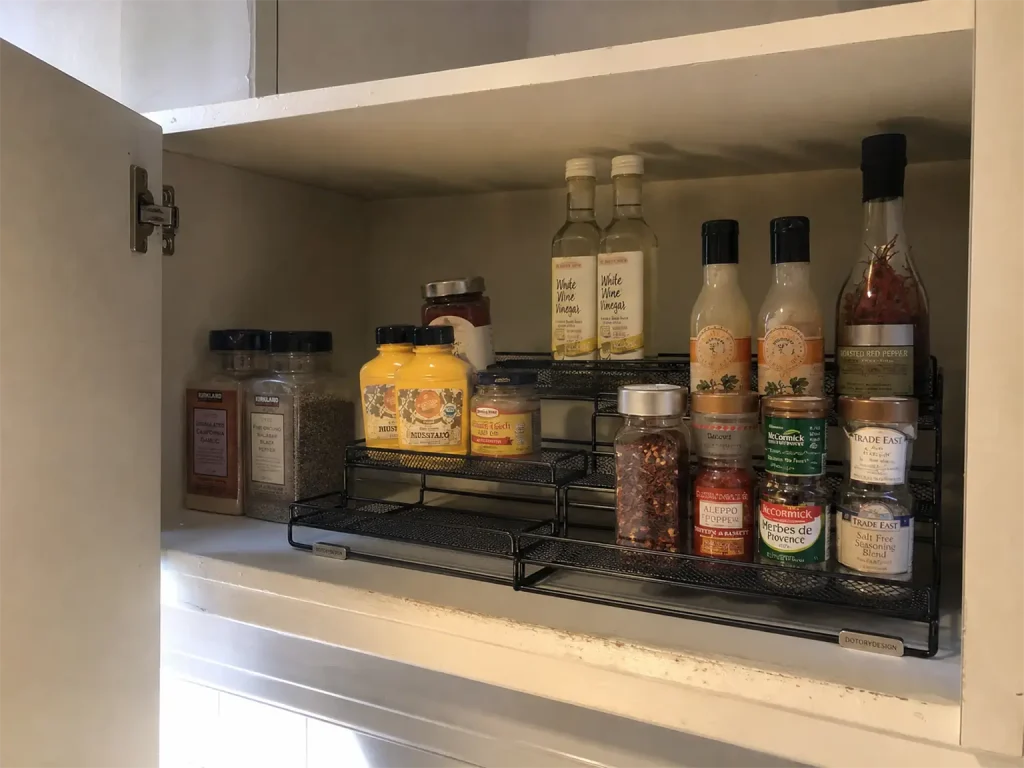
This is the rack type every roundup recommends. It is also the one most likely to be sitting unused in the back of somebody’s cabinet a year later. That is not the product’s fault. People buy for the shelf’s width and forget its height.
Why tiers beat a flat shelf
A flat shelf puts every jar on the same plane, so the back row is invisible from the first day. The stadium-style riser exists for exactly one reason: to lift the back labels above the front ones. Everything else about it is packaging.
Slatted shelves are the other quiet failure. Jar bases rock on the gaps, and small jars tip when you pull a neighbor out. A solid base fixes it and costs nothing extra.
Measure the height, not just the width
The expandable range is a floor as much as a ceiling. Below the minimum span the rack will not sit at all, and far above it the tiers stretch thin and you have paid for air. It is the same measure-the-shelf-first approach used for cabinet organizers generally, applied to a product category that advertises only its maximum.
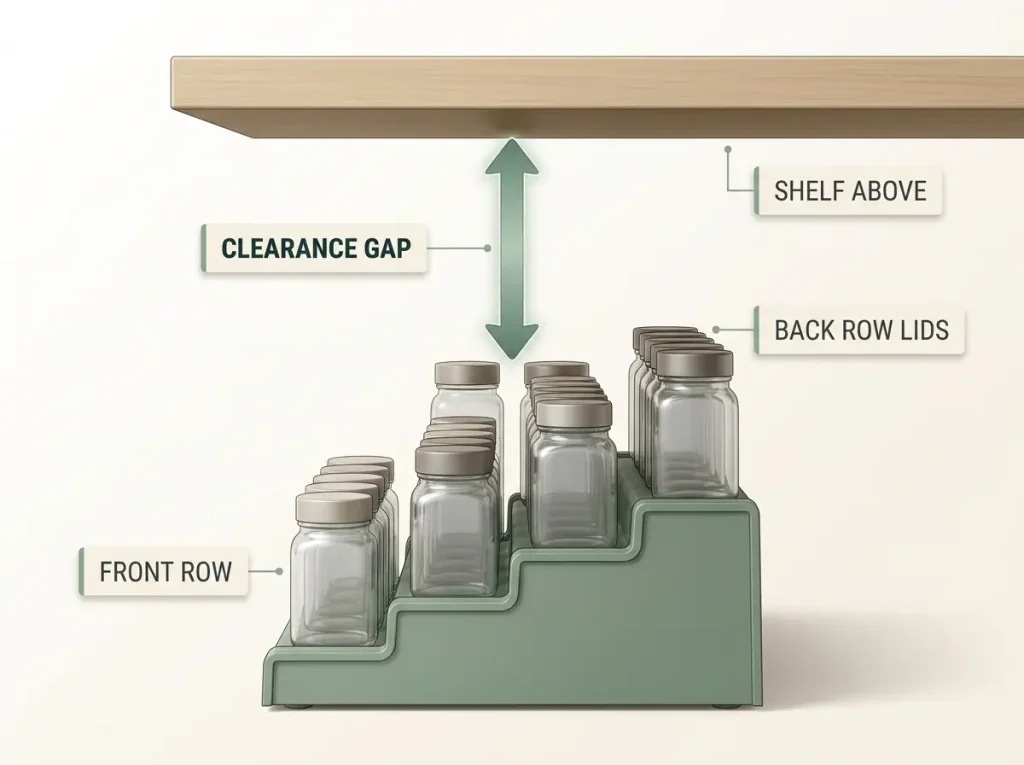
Shelf-to-shelf height is the number that actually kills these. Three tiers of jars need vertical room the shelf above may simply not leave, and there is no version of this rack that folds down. Before you spend anything, try a cheap kitchen tension rod wedged front-to-back across the shelf. It is the crudest DIY spice rack there is, and it tells you in one evening whether raising the back row is even the fix you needed. In a narrow cabinet, where a full expandable rack would not fit at its minimum span anyway, the tension rod may be the permanent answer rather than the test.
What it looks like after a year
Kiln-dried bamboo handles kitchen humidity. Bamboo-look plastic composite yellows, gets brittle at the edges, and looks tired fast. Either way, a turmeric spill stains porous wood permanently, which is worth knowing before you buy the pretty one.
On plastic tiers, the failure point is the joint where the tier meets the frame. That is the stress line to zoom in on in the listing photos, because a crack there drops the whole back row.
Drawer-Insert Spice Racks (and When a Drawer Beats Any Rack)
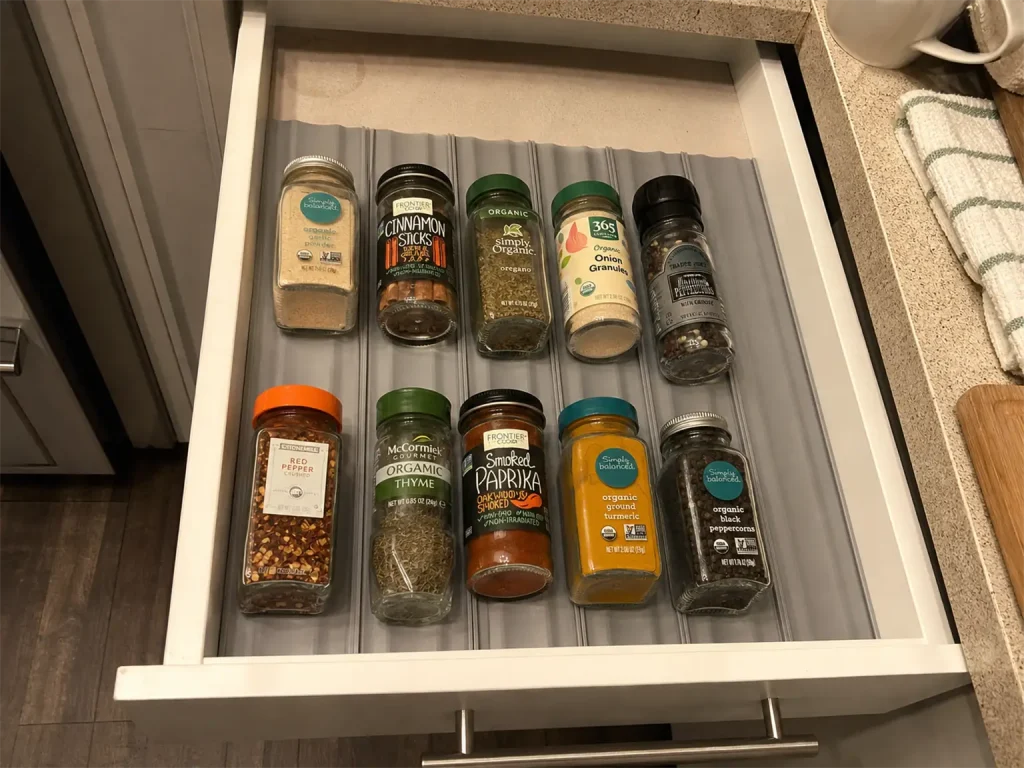
If you have a shallow drawer near the stove, you may not need a rack at all. That is a real fork in this decision, so it earns a section, but it is a short one, because the drawer mechanics live somewhere better.
One number decides it: drawer interior height. Below roughly four and a half inches of clearance, a tiered in-drawer riser will stop the drawer closing, and the answer becomes a flat liner instead. A drawer wins on visibility, because you look down at every lid at once with nothing hiding behind anything. It loses on capacity, because you are giving up an entire drawer to spices in a kitchen that probably has four (and if you had to stop and count them just now, you don’t have a spare).
The daily annoyance nobody mentions in the product photos is jars rolling every time you open the drawer. A liner or a trimmed insert stops that, and a YouCopia SpiceLiner is the low-commitment version: it trims to fit whatever drawer you have, so you can test the idea without buying a system. If you want the option that holds its shape under real use, the same logic runs through drawer organizers that hold their size.
And if you are now leaning toward a drawer, stop here and go read the full version: how to set up a spice drawer that stops jars from rolling has the clearance thresholds, jar sizing and the restock rule that this section deliberately does not repeat.
Countertop Racks and Turntables
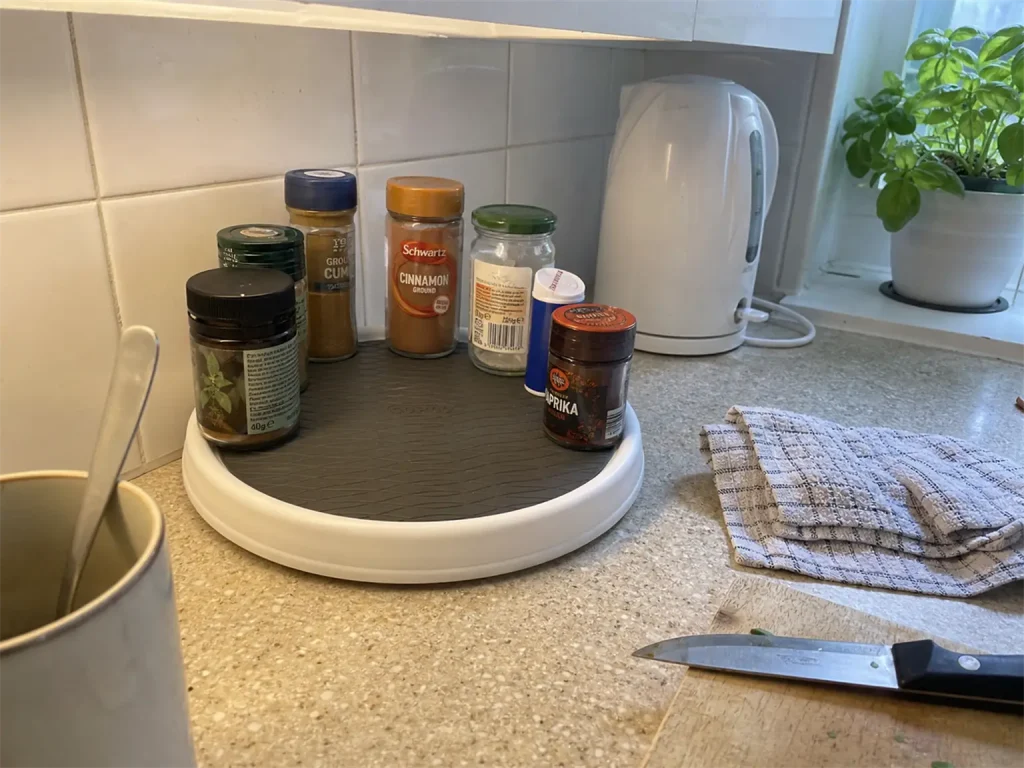
A turntable is the one spice solution that is genuinely instant. Nothing to mount, no door to measure, no lease to consult. It just charges rent in the scarcest space in a small kitchen.
The counter-space trade
Measure the depth in front of the backsplash, not the length of the counter. A turntable needs a clear circle roughly the size of a dinner plate, and the coffee maker, the knife block and the fruit bowl have already eaten most of that depth in most kitchens. Counter space is the resource you notice last and miss most, which is why small kitchen counter storage that fits first is worth sorting out before you add anything.
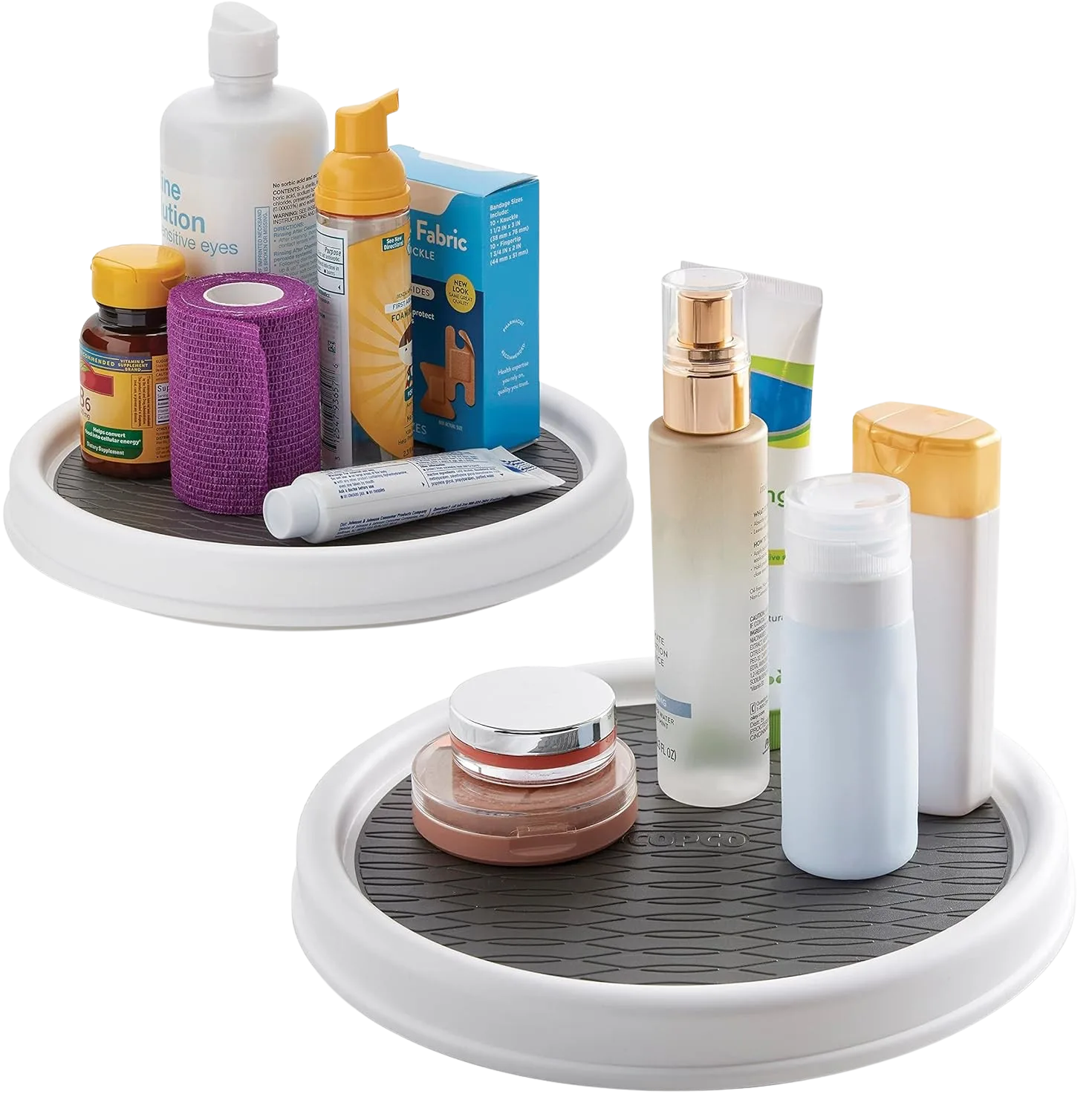
The same turntable also works inside a cabinet or on a shelf. Identical product, zero counter cost, and the only price is that you have to open a door to use it. That is also how turntables in a corner cabinet rescue the least usable storage in the room.
The blind spot in the middle
Every turntable has one. Jars parked in the center never rotate into view, so they slowly become invisible in a rack you bought specifically for visibility.
The fix is a rule, not a product. Single ring only, tallest jars along the back edge, nothing parked in the middle. Actually, nothing in the middle except the one jar you reach for daily, because that is the only one you will never lose track of. It feels wasteful the first week and then you stop noticing.
A non-skid base matters more than the spec sheet makes it sound. Without one, the whole ring slides across the counter the moment you spin it one-handed with a pan going.
Before you buy: a dinner plate or a cake stand you already own is a turntable minus the spin. For a dozen jars, that is often the end of the problem.
Put the turntable in the corner where two counter runs meet, not along a straight stretch. A corner is dead depth anyway, you can reach it from two directions, and the backsplash on both sides keeps jars from being knocked off the edge when you spin it too hard.
Magnetic Spice Racks
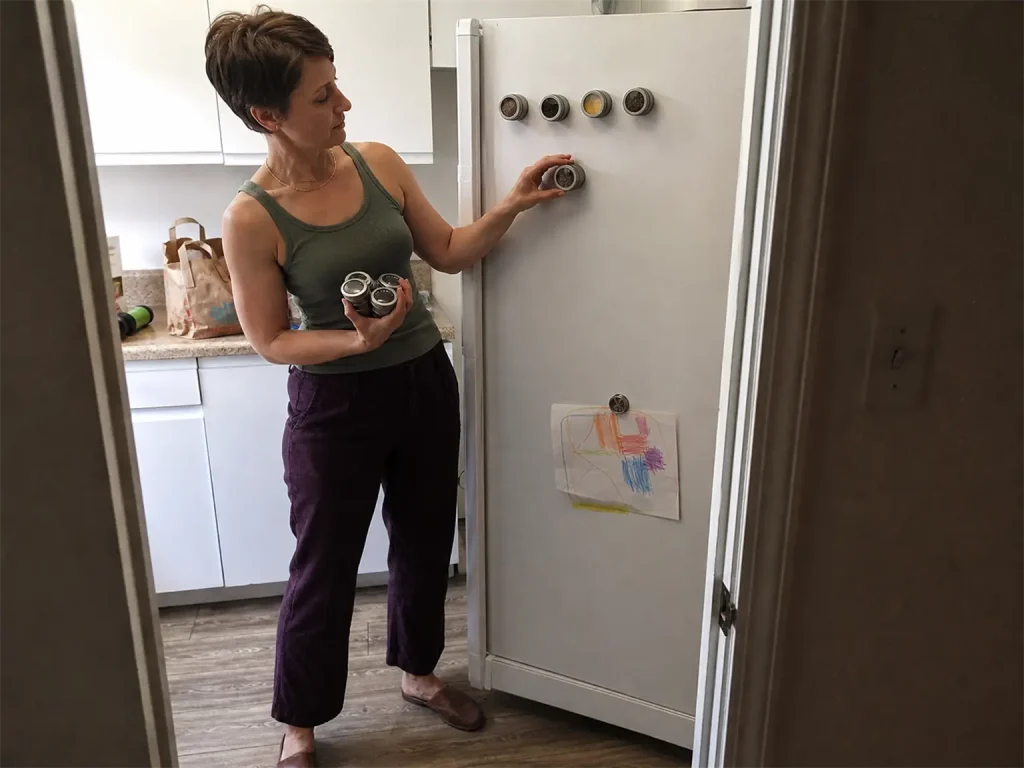
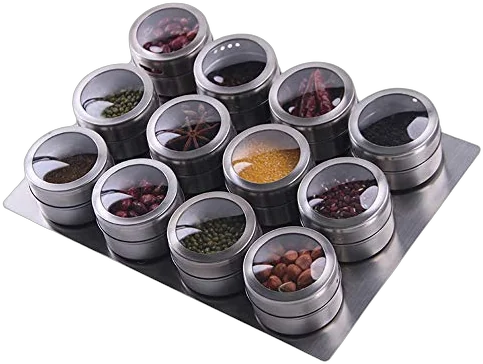
Magnetic is the only rack type that needs zero holes, zero adhesive and zero shelf space. That is exactly why renters keep reaching for it, and exactly why the returns pile up. Half the time the surface simply is not magnetic.
Test the surface before you buy
Plenty of modern stainless refrigerator panels have no magnetic response at all. A magnet you already own settles it in seconds, and you should run that test on the specific panel you intend to use, because doors and side panels are not always the same material.
If the fridge fails, you still have options. A range hood is usually steel. So is the side panel of many fridges even when the front is not. And a steel plate mounted to the wall turns any surface into a magnetic one, which is a bigger project but a permanent answer.
What it costs you visually
Spices on the fridge door are always in view. That is the point, and it is also the problem: twelve tins on a fridge front reads as visual noise in a small kitchen in a way that twelve jars behind a cabinet door never does.
There is a preservation cost too. Sunlight and stove heat both cut the shelf life of ground spices, so a fridge front next to a window is close to the worst place in the room for anything you cook with every week. Whole spices hold up far longer than ground ones under the same conditions, so if you buy small and use fast, this barely matters. If you are storing a bulk bag of paprika for a year, it matters a lot.
The shared-kitchen reality
Fridge height is toddler height. A magnetic rack at knee level is a row of removable, shakeable, openable containers sitting within easy reach of somebody who cannot read the labels. Mount high, or skip the fridge entirely in a house with small kids.
Here is the part that surprised me most about this category, though. A magnetic wall has no slots, which means there is no wrong place to put a tin back. Every slotted rack carries an implicit filing system, and every housemate or partner who does not care about your filing system breaks it inside a week.
The magnetic wall cannot break that way, because it was never sorted to begin with. That forgiveness is the real reason it survives in shared kitchens, and it is a big part of why a minimalist kitchen setup stops sticking when more than one person lives there.
Before you buy: small tins you already own plus adhesive magnetic strips get you the same wall for a fraction of the outlay, assuming the magnet test passed.
If the magnet test passes, run a second one before you load the tins: stick the magnet on, then push down on it. On some painted panels a magnet holds against gravity but slides under any downward pressure, which is what happens every time somebody closes the fridge door hard. A tin that slides an inch a day ends up on the floor by the weekend.
The Short Version
Three things to take with you.
Measure the shelf height and the door gap before you shop. Those two numbers eliminate more products than any review can, and they take three minutes.
Match the mount to the surface and to the lease. Hollow-core door means no screws. Non-magnetic fridge means no tins. A shelf rack needs permission from nobody.
Check the budget-zero option first. A tension rod, a dinner plate, or an adhesive hook and a basket you already own solves this for a real share of the people reading it, and none of them cost a deposit.
In three months, open the cabinet and look at the back row. If you are still reaching past jars instead of seeing them, the rack type is wrong for the space and rearranging will not save it. If anything is adhesive-mounted, press each point and refresh whichever one has started to lift, because the lifting always starts before the falling.
Pick one surface. The wall strip, one cabinet door, or one shelf. Get that one working through a full grocery restock, the moment when four new jars arrive and the system either absorbs them or collapses, before you buy anything else.
And the honest ending is that a fair number of people will finish this article, measure their shelf, and realize the tension rod already sitting in the hall closet does the job.
Frequently Asked Questions
01Are spice racks worth it?
A spice rack is worth it when your spices are stored somewhere that hides them: a deep shelf, a crowded cabinet, a bag on the fridge.
You are buying visibility, not storage. If you can already see every label without moving a jar, a rack adds nothing but one more surface to wipe.
02What kind of spice rack works in a rental without drilling holes?
Three types need zero holes and zero adhesive: a shelf-standing tiered rack, a countertop turntable, and magnetic tins on a genuinely magnetic surface.
The next tier down is adhesive wall strips and over-the-door racks. Both come off at move-out without patching, which is the standard most renters actually work to.
03Do magnetic spice racks work on all refrigerators?
No. Many modern stainless steel refrigerator panels have no magnetic response at all, and magnetic tins slide straight down them instead of holding.
Test a magnet on the exact panel before you buy. If it does not hold, try a range hood, a steel side panel, or a steel plate on the wall.
04How much weight can an adhesive-mounted spice rack hold?
Less than the jar count suggests: CPSC testing of adhesive-backed hooks found they held roughly 20 pounds of pull force before failing.
The agency also notes long-term adhesive durability is unknown. Spread a loaded rack across several points instead of one strip, and re-check it twice a year.
05Should spices go in a drawer or on a rack?
Drawer, if you have a shallow one near the stove to spare: looking down at every lid at once beats any vertical arrangement, and nothing hides behind anything.
Rack, if drawers are scarce or too shallow for a tiered riser under the counter. The full breakdown lives in the spice drawer guide.