
















In this article
You pumped the bag flat, slid it under the bed, and felt great about reclaiming that space. Three weeks later it’s a pillow again. That puffy-bag morning is the most repeated complaint in storage threads, and here’s the part nobody on the roundup lists tells you: the bag almost never failed because it was cheap. It failed because of how it was sealed or what went inside it. A nine-dollar multi-layer bag routinely out-holds a “premium” one, so this guide ranks the best vacuum storage bags (also sold as space saver bags) by the only thing that matters in three months, walks you through matching size to your space, and names the three reasons bags re-inflate with the fix for each. And before you compress anything, it’s worth taking time to declutter and thin the pile first if your closet is already overstuffed.
Here’s how the five picks stack up at a glance.
| Bag | Best for | Pump type | Renter-friendly |
|---|---|---|---|
| SpaceSaver Premium Jumbo | Best overall, bulky bedding | Hand pump included | Yes |
| HIBAG 10-Jumbo | Best value, longest seal | Hand pump included | Yes |
| GONGSHI 24 Combo | Big seasonal swaps | Electric pump included | Yes |
| Spacesaver Set of 6 | Mixed sizes, tight shelves | Hand pump included | Yes |
| Ziploc Space Bag XL | Travel, trusted name | Vacuum hose | Vacuum needed |
What Makes a Vacuum Storage Bag Hold Its Seal
Most “best bags” lists rank by pack count or price tier. Neither one tells you whether the bag will still be flat at the next seasonal swap. Three parts decide that, and the cheap bags and the expensive bags are not split the way you’d expect.
The seal is two parts, not one
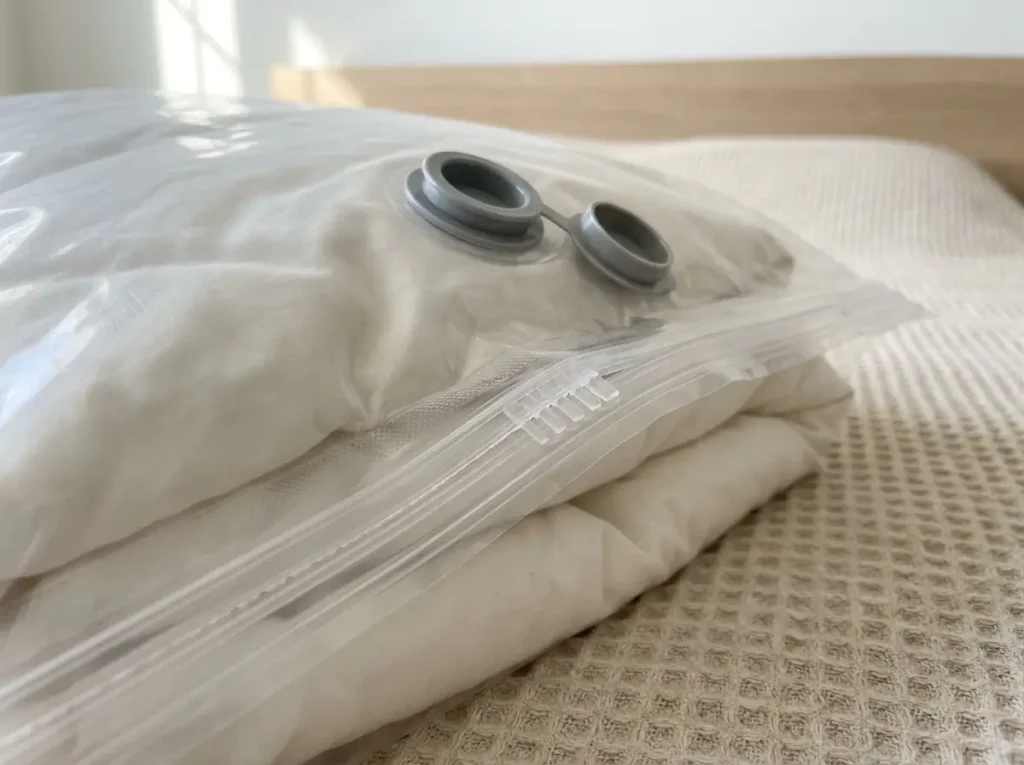
Every vacuum storage bag relies on two separate systems, and people only think about one of them. The first is the double-zip seal, the ridged zipper track you press closed with a little clip or your fingers. The second is the one-way valve, the round port you pump the air out through, with a cap that snaps down on top. The zipper keeps air from sneaking back along the seam, and the valve keeps it from rushing back through the port. If either one isn’t fully engaged, the bag re-inflates no matter how good the plastic is.
That’s why two bags with identical materials can perform completely differently. One has a wide, easy-to-align double track that any tired person can close at 11pm without checking. The other has a fussy single zip that looks closed but isn’t. When you’re comparing compression bags, the seal mechanism is the first thing to judge, not the headline space-savings number.
Material is what holds air for months
Thin, single-layer polyethylene bags feel lighter and cost less to make, and they lose air faster. The bags that actually hold use a multi-layer PA+PE construction, nylon bonded to polyethylene, which resists the slow micro-leaks that flatten a cheap bag over weeks, so it can hold air for months. This is the single biggest predictor of long-term seal integrity, and it’s also where the price-equals-quality assumption breaks down completely. That same multi-layer plastic is effectively waterproof, which matters if you store bags in a damp basement or garage.
A bag’s compression ratio depends on this too. A quality bag with an airtight seal pulls textiles down to roughly a fifth of their loose volume and holds it. A flimsy one might hit that number on day one, then creep back to two-thirds as air seeps in. The material is invisible on a product page, so check the listing for “PA+PE” or “multi-layer” language before you trust any 80% space savings claim.
Press on a sealed bag with your palm and wait ten seconds. If it pushes back like a slow cushion, the valve cap isn’t snapped or the zipper isn’t fully closed. A bag that holds feels firm and stays put, not springy.
Pump Type, Hand, Electric, or Your Vacuum Hose
How you remove the air decides who a bag is right for. A hand pump needs no outlet and no vacuum cleaner, which makes it the renter and dorm pick, though it takes a few minutes of pumping per jumbo. An electric pump (often rechargeable) seals fast, which matters when you’re doing twenty bags in one afternoon. And some bags expect you to use your vacuum cleaner hose, which works well but ties you to owning the machine and finding the right nozzle.
None of these is wrong. They just match different lives. If you don’t own a vacuum, a bag that only seals with a hose is a bad buy for you, full stop, no matter how it ranks elsewhere.
The Best Vacuum Storage Bags We’d Actually Buy
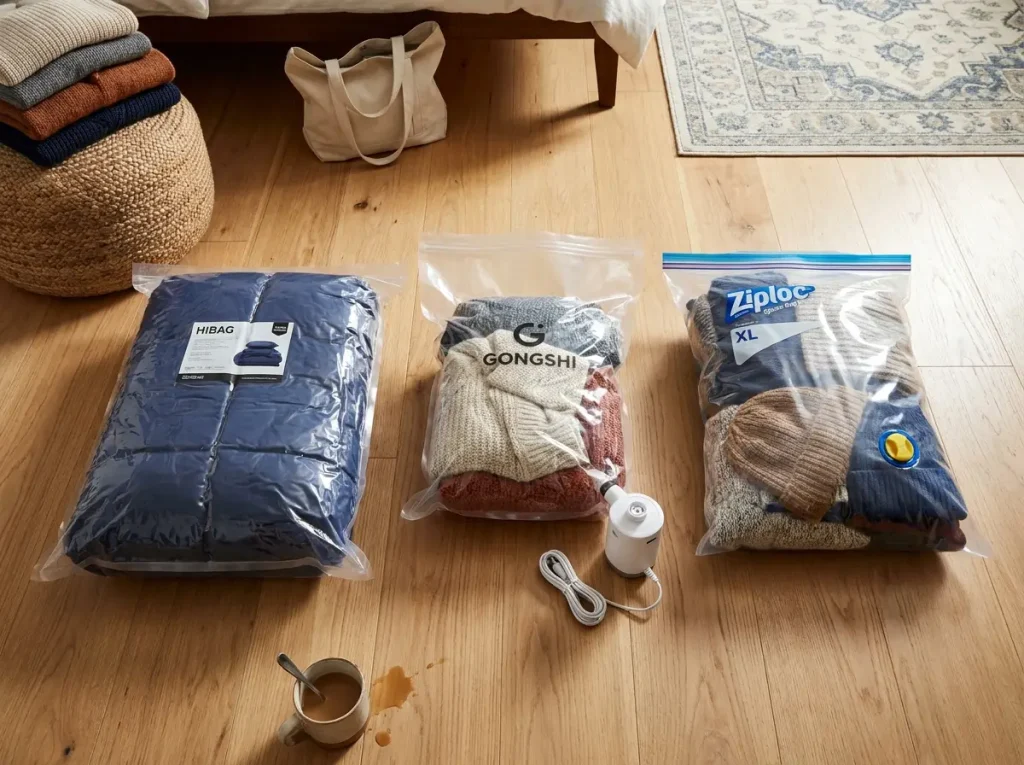
Four bags, four different buyers. The best-overall pick isn’t automatically the right one for your closet, your budget, or your patience for pumping. Here’s who each one is for.
Best Overall — SpaceSaver Premium Jumbo
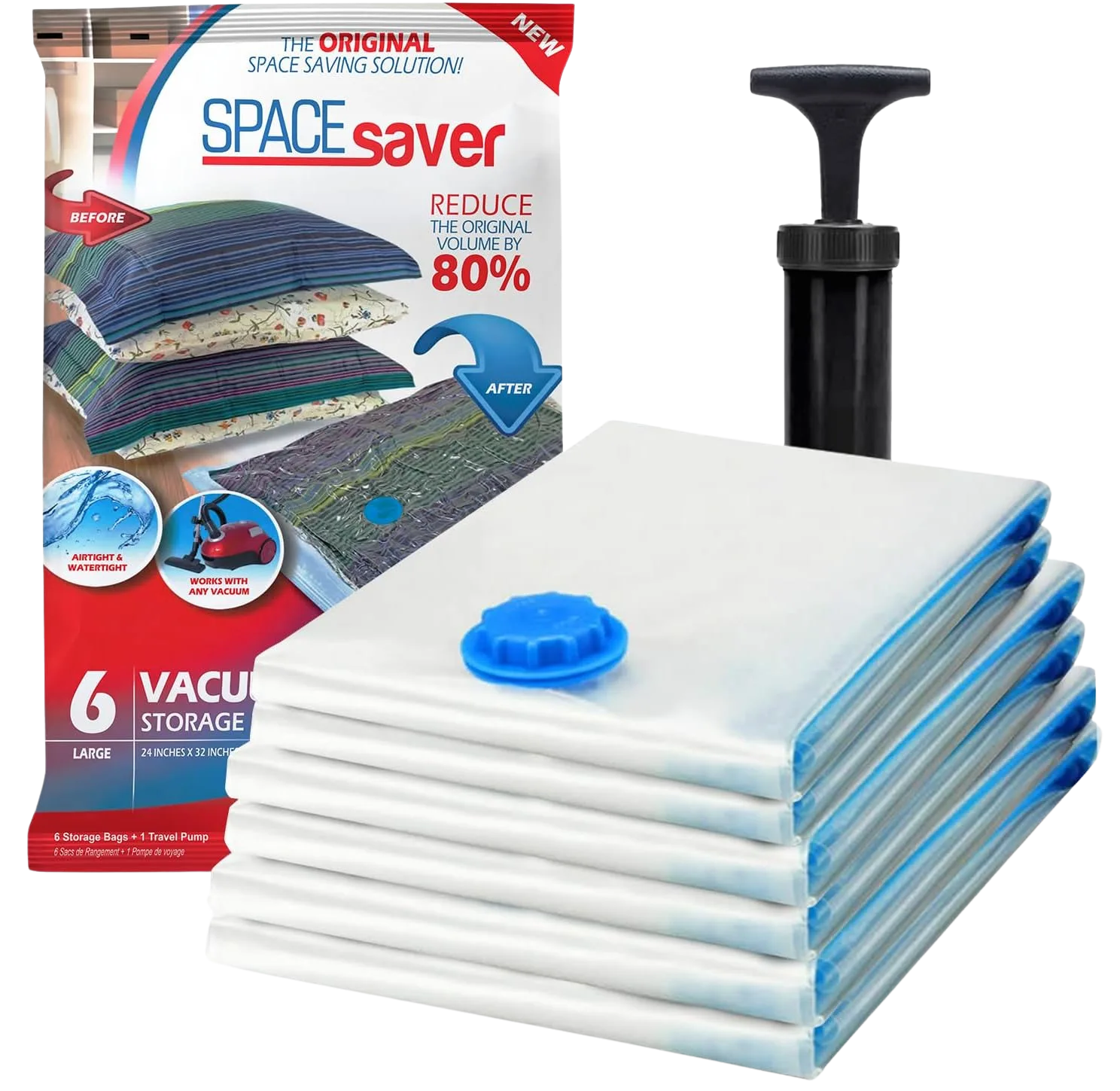
If you want one bag to handle bulky bedding without thinking about it, this is the safe call. The jumbo size swallows a duvet and a couple of pillows, or a full queen set, and the included hand pump seals it as tightly as a vacuum cleaner would. That last part is the quiet advantage: you get vacuum-level compression with nothing to plug in.
Best Value — HIBAG 10-Jumbo
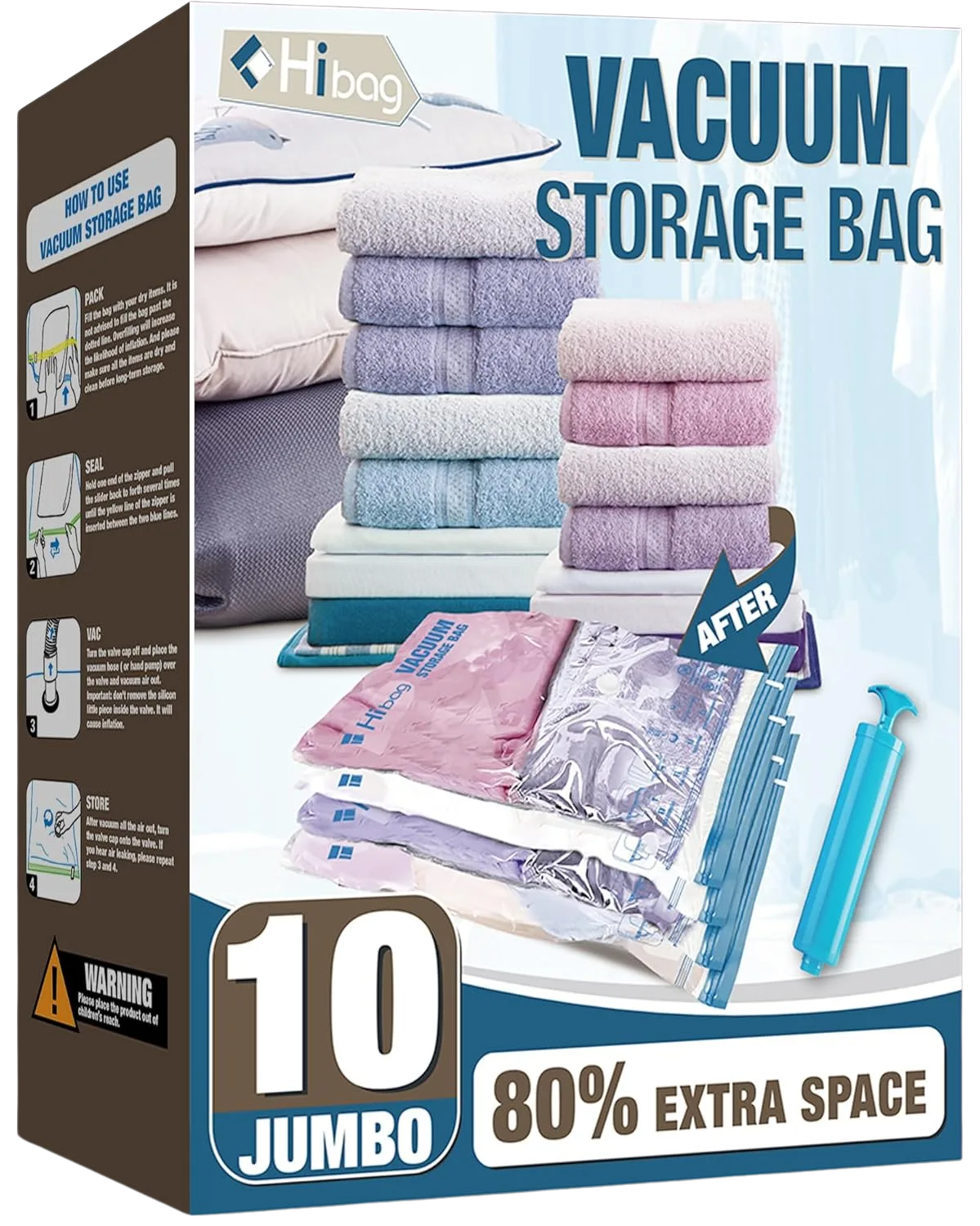
I used to point people straight to the premium bag. After watching how often a budget multi-layer bag out-holds it, I stopped. The HIBAG is the proof: storage testers found it held roughly 98% of its compression after eight months, around 40% better than the field, on budget-friendly PA+PE plastic that costs a fraction of the “premium” names. Material beats brand, and this is the bag that demonstrates it.
Best for Electric Pumping — GONGSHI 24 Combo
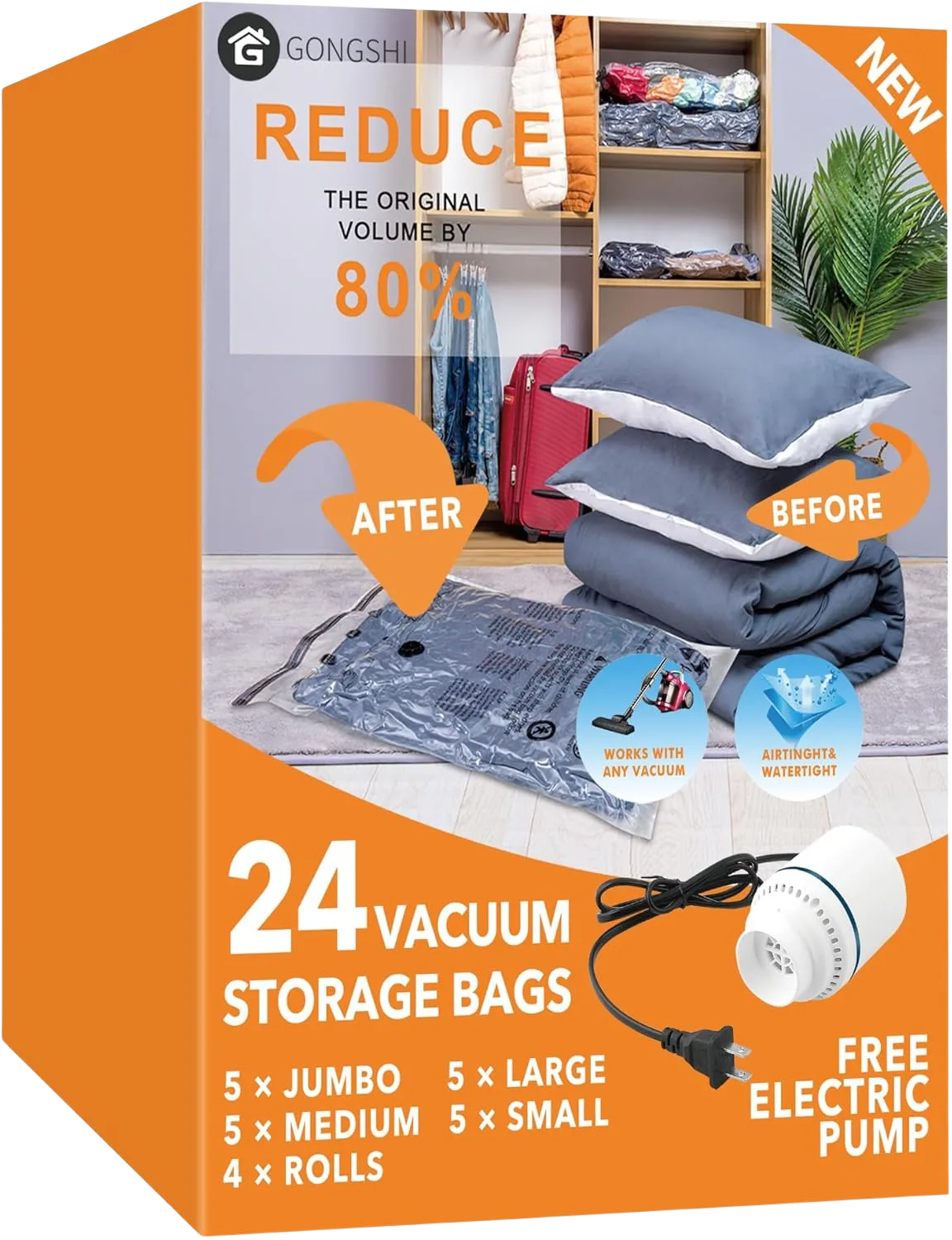
Pumping twenty jumbo bags by hand for a full seasonal swap is the kind of chore people start and never finish. The GONGSHI combo solves that with a rechargeable electric pump that seals each bag in seconds, plus a mix of sizes so you’re not forcing socks into the same bag as a comforter. If you do two big wardrobe rotations a year, the speed pays for itself in saved forearm cramps.
Best for Travel — Ziploc Space Bag XL
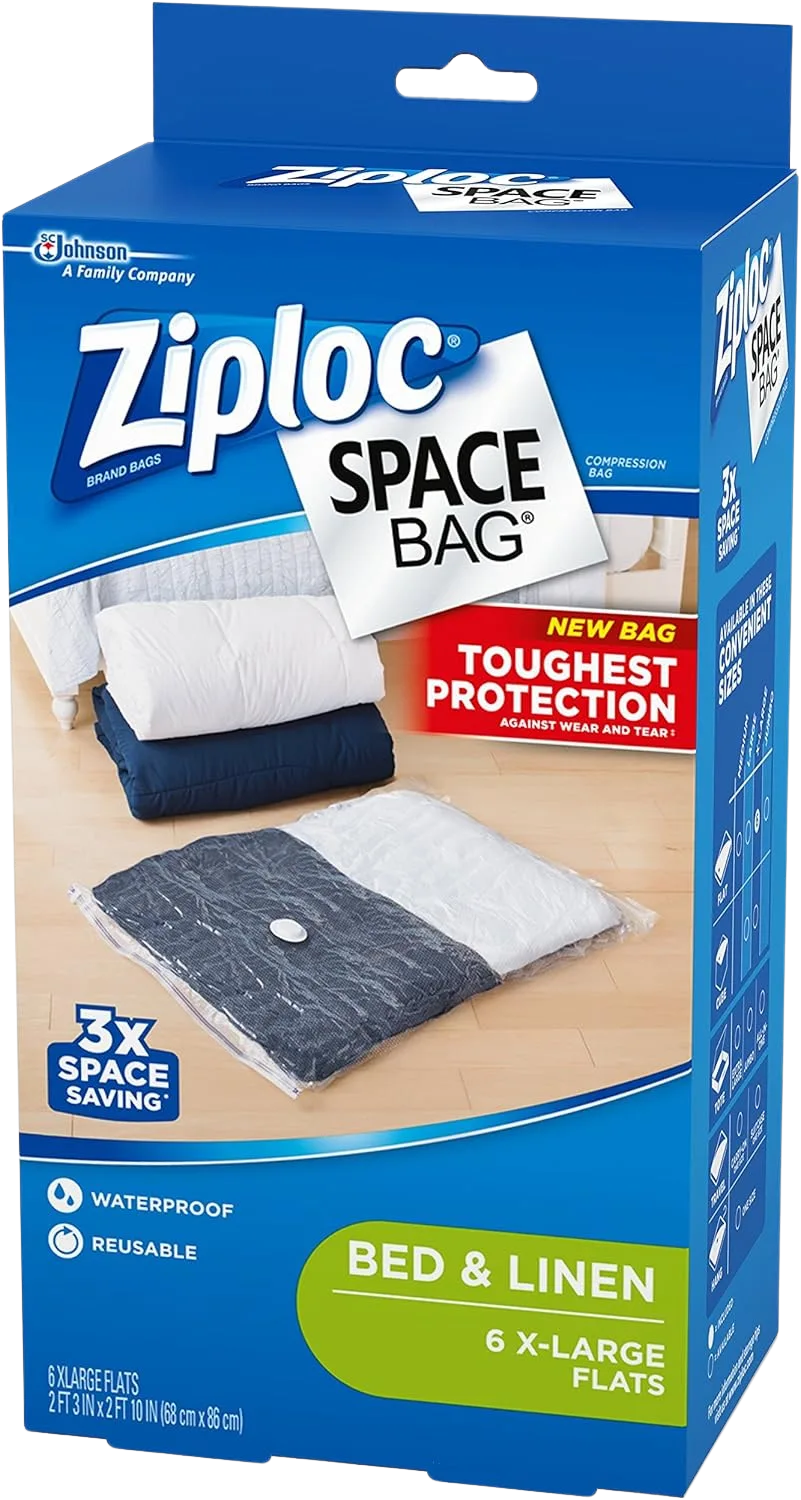
Sometimes you want a name you already trust, especially for a suitcase. The Ziploc Space Bag XL uses the brand’s familiar double-zip seal plus a valve, and it’s a reasonable travel pick because you can press the air out by rolling when there’s no vacuum nearby. The catch is that these are built around using a vacuum cleaner hose at home, so they shine less for renters without one.
Why Your Bags Puff Back Up and How to Fix Each Cause
The bag isn’t defective. When a bag re-inflates, it’s almost always one of three things, and you can fix all of them in under a minute once you know what to look for. This is the part that turns a frustrating product into a reliable one, so it’s worth reading even if you already own bags you’ve given up on.
It’s overstuffed — respect the fill line
The most common reason a bag puffs back up is that it was packed past the point where the seal can close. Leave about an inch of clear space between your folded contents and the zipper track. If fabric is crowding the double-zip seal, the zipper looks closed but never fully locks, and air walks right back in overnight.
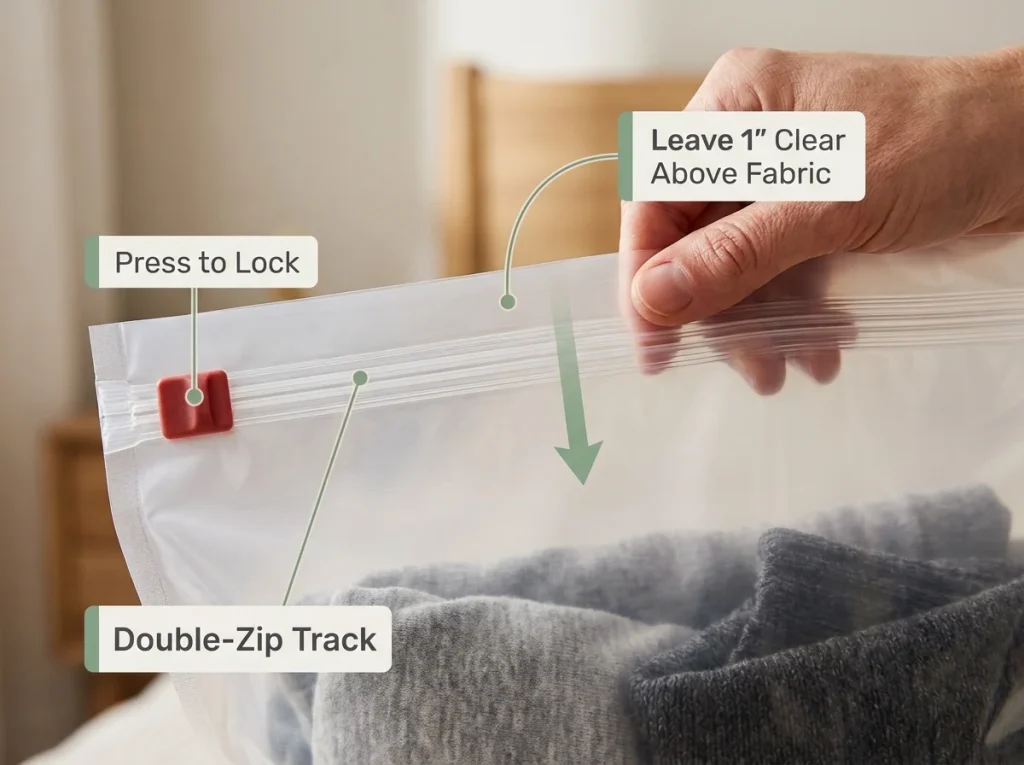
This is why a smaller load in a bigger bag often outperforms a jammed one. People assume the goal is to cram in as much as possible. The goal is a seal that holds, and that needs room at the top.
There’s lint or a hair in the zipper track
A single thread, a strand of hair, or a bit of lint lodged in the zipper channel is enough to break the seal over a few hours. You close it, it looks perfect, and by morning it’s soft. Run a finger along the inside of the zipper lock before you seal, and wipe the track clean if you’re reusing a bag from last season.
This one is sneaky because the bag passes the press test at first and fails slowly. If a bag deflates over hours rather than instantly, a contaminated track is the usual suspect.
The valve cap isn’t snapped — or there’s a hidden puncture
People pump the air out through the one-way valve and walk away without snapping the cap down. The valve slows the leak but doesn’t stop it, so the bag re-puffs gradually. For anything you’re storing longer than a day, snap that cap tight.
The rarer cause is a small puncture from a button, zipper, or hook inside the bag pressing against the plastic under compression. If a bag fails fast and clean every time no matter what you do, check for a pinhole near a hard object. And honestly, if you find one, retire that bag for long-term storage and demote it to short trips.
Matching Bag Size to Your Space
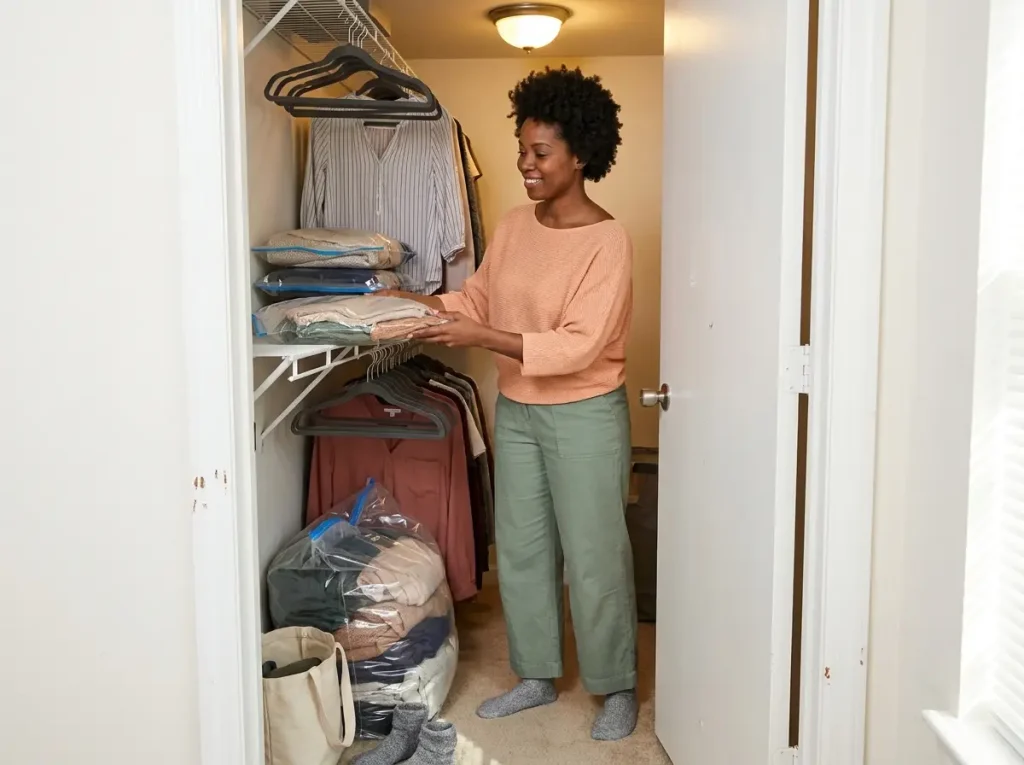
The conventional move is to buy the biggest jumbo pack you can find. In practice, the bag that fits your gap beats the bag that holds the most. A sealed jumbo bag isn’t a flexible pillow, it’s a rigid slab around forty inches long that won’t bend around a doorframe or wedge into a shallow gap. Match the size to the space first. In a small apartment, a vacuum bag is a no-drill way to reclaim dead space under a bed or above a closet rod.
The size tiers and what each actually holds
Vacuum bags come in small, medium, large, jumbo, and travel sizes, and they’re not interchangeable. A jumbo holds a comforter plus pillows or a queen set. A large takes a couple of sweaters and a throw. Mediums are right for a single bulky jacket or a stack of shirts, and travel sizes are for a few outfits in a carry-on. Buying one size for everything is how you end up with half-empty jumbos that won’t seal and overstuffed mediums that won’t close.
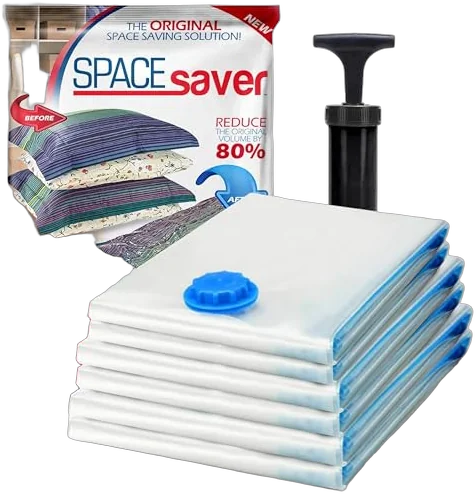
A mixed-size set is the easiest way to stop fighting this. The Spacesaver Premium Vacuum Storage Bags Set of 6 gives you several tiers in one box so you can match each tier to its contents instead of forcing everything into jumbo. It uses the same hand pump across sizes, which keeps the whole seasonal wardrobe rotation to one tool.
Measure before you buy a jumbo (the brick problem)
Here’s the thing people learn the hard way: a stuffed jumbo bag goes stiff. Sealed and full, it holds its shape like a board, so the under bed storage gap you eyeballed at “probably enough” needs to actually be measured. Vacuum bags fail under low beds for a specific reason, and it’s almost always that the rigid sealed slab is taller than the clearance under the frame.
Measure two things before buying: the clearance under your bed or the depth of your rental closet shelf, and the flat dimensions of the bag. If the bag is wider than your shelf is deep, it’ll hang off the edge and tip. That same decision overlaps with whether a rolling or flat container suits the gap.
Seal a jumbo a little less than completely if it has to slide under a low bed. Leaving it slightly soft lets it flex over the frame lip instead of catching like a board. You lose an inch of compression and gain a bag that actually fits.
For under-bed and narrow shelves, skip the jumbo
When the gap is genuinely tight, the answer is a smaller bag, not a cleverer fold. A set of medium and large bags like Vacuum Storage Bags for Clothes and Bedding fits low under-bed clearances and narrow shelves where a jumbo wedges and tips. They hold less per bag, which is exactly the point in a shallow space, and they stack flat for vertical storage on a closet top shelf.
The catch with smaller bags is that you’ll use more of them, so the count matters more than the headline size. For a low platform bed or a half-depth closet shelf, two mediums that slide in flat beat one jumbo you have to wrestle. Works every time.
How to Seal a Bag Without a Vacuum Cleaner
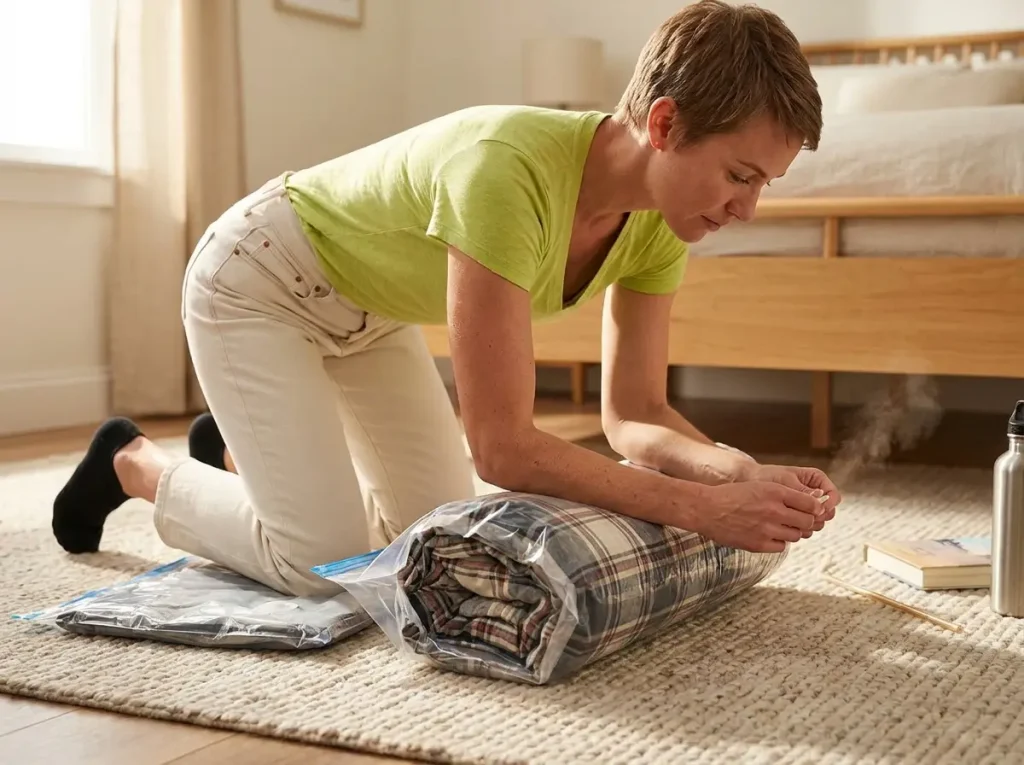
No vacuum, no electric pump, no problem. You can get most of the compression with your own body weight and a drinking straw, which is the whole reason these bags work for renters and dorm rooms. This is genuinely the gap most roundups skip, because they assume everyone owns a vacuum cleaner.
The roll-and-kneel method (no pump at all)
Zip the bag almost all the way closed, leaving a small opening at one end. Lay it flat, then roll it firmly from the sealed end toward the open end, pressing down with your knees and palms so the air is forced out ahead of the roll. Finish the zip while the bag is still rolled, then press once more over the valve to push out the last pocket of air.
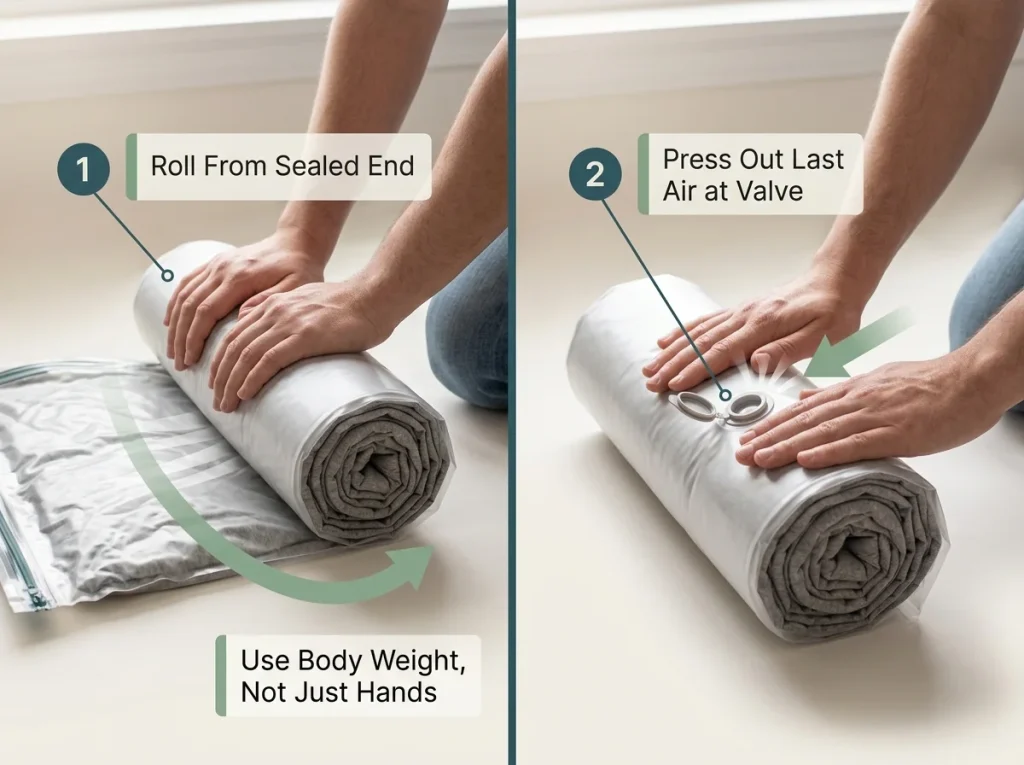
It’s not quite vacuum-level, but it gets you most of the way, and it costs nothing. The trick is rolling from the closed end so the air has only one way out.
The straw-in-valve trick for small bags
For a small or travel bag, slide a clean drinking straw into the one-way valve, press the bag flat, and suck the air out through the straw, pulling it free and snapping the cap as you go. It sounds silly. It works surprisingly well for anything sweater-sized or smaller, and it’s saved more than a few packing nights when there was no pump in the bag.
Why a good hand pump equals a vacuum
Don’t assume you need the machine. In hands-on testing, a quality hand pump sealed a bag as effectively as a vacuum cleaner did, and the bag stayed sealed just as long. The machine is faster, not better. If a bag comes with a decent pump, that’s all the equipment most people need.
Roll, don’t fold, before you seal. Rolled garments leave fewer set-in creases than folded ones, so your clothes come out of storage looking less like an accordion. It also packs more evenly, which helps the bag lie flat.
How Long Clothes Can Stay Sealed (the 6-Month Rule)
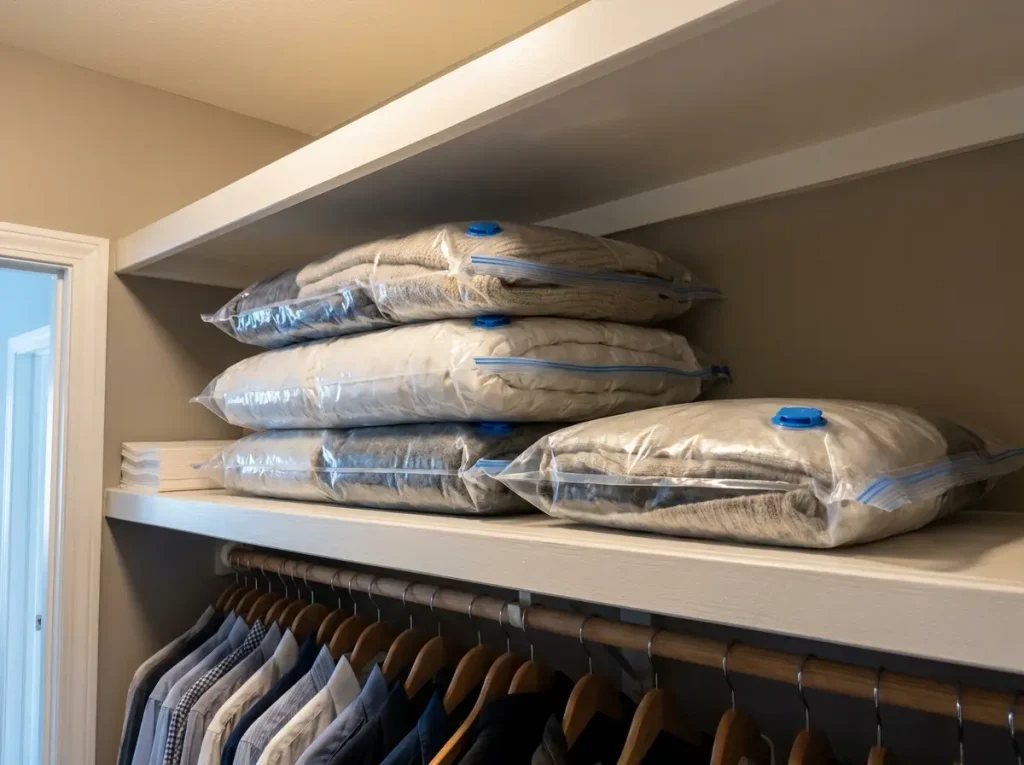
Vacuum bags are a seasonal tool, not a long-term vault. Treat them that way and they’re great. Forget about a bag for two years and you’ll regret it, because compression stops being fully reversible after a point.
What happens to fabric past six months
About six months is the practical ceiling for keeping textiles compressed in seasonal storage. Past that, fibers start to set in their crushed shape, and recovery can take nearly as long as the time they spent sealed. A wool blanket flattened for a year doesn’t bounce back in an afternoon. This is the reality competitors gloss over when they imply you can seal something and forget it indefinitely.
The fix is simple: think in seasons, not years. If you’re storing winter bedding, it comes out in spring anyway, which keeps you well inside the safe window without trying.
The re-air and reseal cadence (treat it as rotation)
Build the bags into a rhythm you’ll actually repeat. At each seasonal swap, open the bags, let the textiles breathe and loft back up for a few hours, refold, and reseal for the next stretch. Textile conservators at the Smithsonian recommend changing the fold position each time you re-store an item so permanent creases don’t set along the same lines. This re-airing is what keeps fibers healthy and extends the bag’s lifespan across years of reuse, and it folds neatly into a seasonal rotation you actually repeat instead of a one-time project that quietly falls apart.
“A little soft” vs “actually failed”
Set your expectations correctly so you don’t toss a good bag. Even quality bags allow a tiny amount of air back over months, so a bag that’s slightly soft at the three-month mark is normal, not broken. Full re-inflation within a week is the real failure, and that points back to one of the three causes from earlier. Soft and slow is fine. Puffy in days is not.
When a Vacuum Bag Is the Wrong Choice
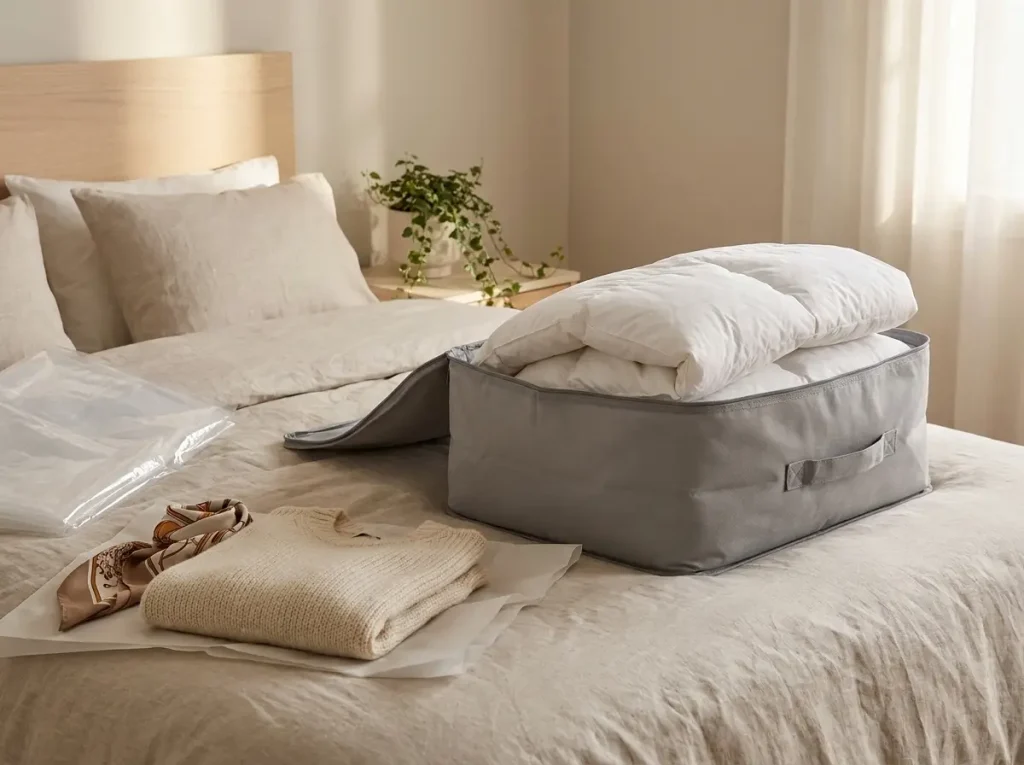
Vacuum bags get recommended for everything. And they work, unless you’re storing the fabrics that need air to survive. The honest part of any buying guide is telling you when not to buy the thing, so here’s the short list of what not to store in these bags.
Fabrics that need to breathe (down, wool, leather, silk)
Some textiles are damaged by long compression. Down and feather items, like a puffer or a duvet, rely on loft, and flattening them for months makes the fill clump and lose its warmth. Wool and cashmere crush and recover slowly. Leather and suede can crease permanently or dry out, and silk sets wrinkles that are hard to release. If you’ve ever pulled a lifeless, flattened down comforter out of storage in October, you already know why this list matters. The same caution applies to bulky down puffer jackets, which need a different approach.
These fabrics aren’t ruined by a short trip in a bag. It’s the months of compression that does the damage, so a weekend in a travel bag is fine while a season is not.
The breathable alternative for delicate textiles
For the fabrics that need air, a breathable fabric bag is the right tool. Something like the Amazon Basics Collapsible Fabric Storage Bag gives down and wool room to keep their loft while still keeping dust off, which is what those delicate fabrics actually need. It won’t shrink your storage footprint the way a vacuum bag does, and that’s the correct trade for a comforter you want fluffy next winter.
Sometimes the best bag is the one you already own
Before buying anything, check what you have. A clean old pillowcase makes a perfectly good breathable cover for a wool sweater, and a cardboard box you were about to recycle stores a folded duvet fine for one season. You can spend nothing and still free up the shelf if the goal is dust protection rather than maximum compression. The vacuum bag earns its keep on bulky synthetic blends and bedding. For everything else, the free option is often the right one.
Conclusion
Three things separate a vacuum storage bag that works from one that disappoints you. Buy for the seal system and the multi-layer material, not the price tier, since a budget PA+PE bag routinely out-holds a premium one. Match the size to the gap you’re filling, not to the biggest pack on the shelf, because a sealed jumbo is a rigid slab. And treat the bags as a seasonal tool, not a long-term vault, keeping bulky synthetics and bedding in and leaving down, wool, leather, and silk out.
At your next seasonal swap, around three months from now, open one bag and check it. If it re-inflated, the cause is overstuffing, a hair in the zipper, or an unsnapped valve, not a bad product.
Start with one jumbo of off-season bedding. Get the seal right. Then do the rest.
Frequently Asked Questions
01Do vacuum storage bags actually stay sealed long-term?
A quality multi-layer bag holds its seal for months, with only slight softening that’s normal. Full re-inflation in days means overstuffing, a hair in the zipper track, or an unsnapped valve cap, not a defective bag. Multi-layer PA+PE plastic holds far better than thin single-layer bags.
02What should you never put in vacuum storage bags?
Keep down, feather, wool, cashmere, leather, suede, and silk out of long-term vacuum storage. These fabrics need air, and months of compression flattens down, crushes wool, and sets permanent creases. Use a breathable fabric bag for them instead.
03Do vacuum storage bags damage or ruin clothes?
Sturdy synthetics and cotton bedding handle vacuum storage fine for a season. Rolling instead of folding before you seal leaves fewer set-in wrinkles. Damage mostly happens with delicate natural fibers or when bags stay compressed well past six months.
04How do you use vacuum storage bags without a vacuum cleaner?
Use the included hand pump, which seals as effectively as a vacuum. With no pump, zip the bag almost shut, roll it firmly from the sealed end while kneeling to force air out, then finish the zip. A straw in the valve works for small bags.
05How long can you keep clothes in vacuum storage bags?
About six months is the practical limit. Past that, fibers set in their crushed shape and recovery can take nearly as long as the time sealed. Open bags at each seasonal swap, let textiles breathe and loft back up, then refold and reseal.