





















In this article
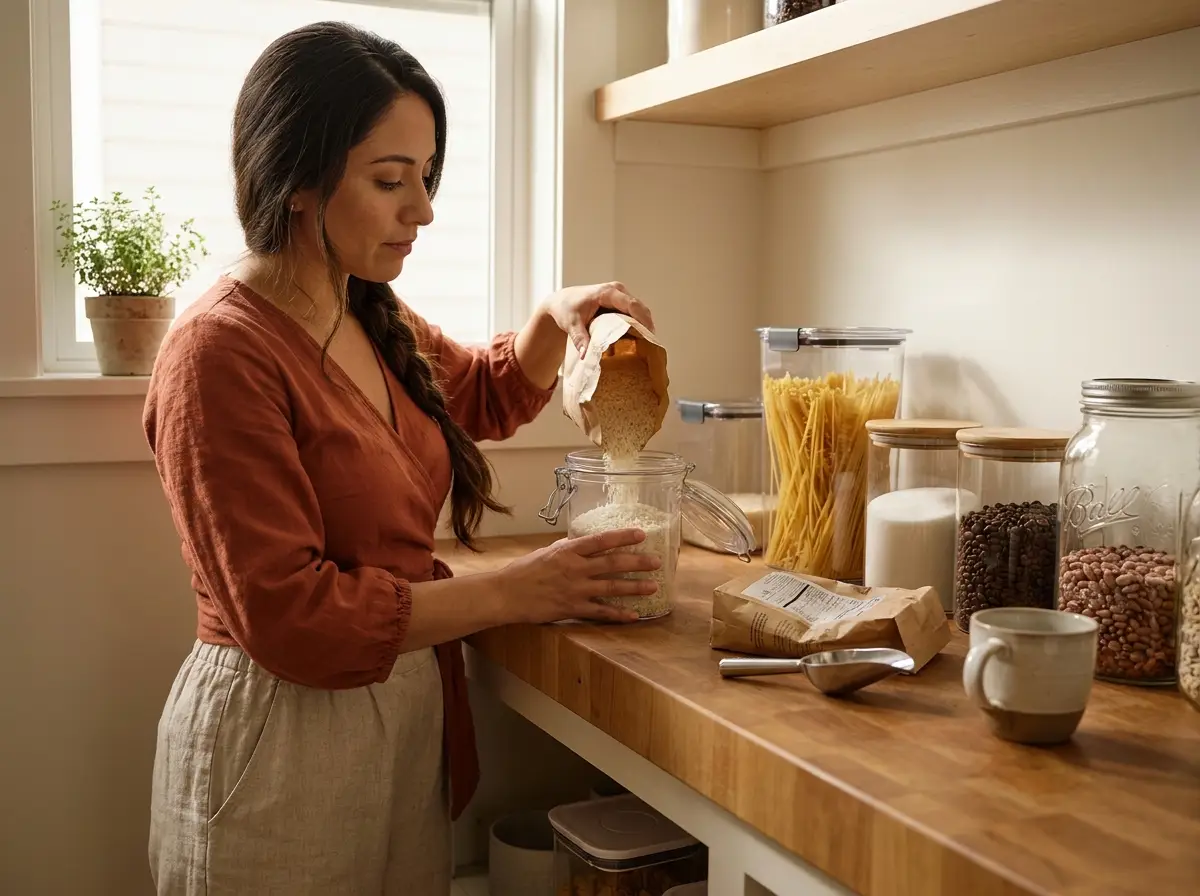
You spend a Saturday decanting the whole pantry into matching canisters. It looks incredible. Three weeks later there are tiny moths in the flour anyway. The word “airtight” is doing a lot of unearned work on most product pages, and the seal is the only part that matters. It’s also the one thing roundups test on day one and never check again. Here’s which containers actually seal, how to match the material to the food you’re storing, and how to buy for the shelf you have instead of the pantry on the box.
Here’s the short version before the details.
| Pick | Best for | Material | Renter-friendly |
|---|---|---|---|
| Rubbermaid Brilliance | Best overall seal | Tritan plastic | Yes |
| OXO Good Grips POP | Daily-access goods | BPA-free plastic | Yes |
| ComSaf Glass | Staining or microwaved goods | Borosilicate glass | Yes |
| Rubbermaid Flour 16-cup | One bulk staple | Tritan plastic | Yes |
| Ball Wide-Mouth Mason Jars | Budget long-term storage | Glass | Yes |
What “Airtight” Really Means (and the 30-Second Test That Proves It)
Most people assume a lid that clicks is sealed. The click is marketing. The seal is whether the gasket actually compresses against the rim all the way around, and a surprising number of “airtight” containers only manage leak-resistant. That distinction is the whole article. Leak-resistant keeps a tipped container from spilling in your bag. Airtight keeps oxygen and humidity out so your flour doesn’t go stale and pantry moths can’t move in. The same rule that decides any good storage bin or container decides this one: judge the closure, not the look.
The click is not the seal
What you’re paying for is the gasket and how the lid clamps it down. A removable silicone channel gasket paired with a lid that locks on all four sides beats a simple clip-on or snap lid every time, because four points of pressure compress the gasket evenly instead of pinching it at one edge. Silicone holds its shape far longer than the thin rubber rings on cheaper sets. And here’s the part nobody mentions on the listing: wall thickness is almost irrelevant. A thick, sturdy-feeling container with a weak lid still goes stale. Judge the seal, not the heft.
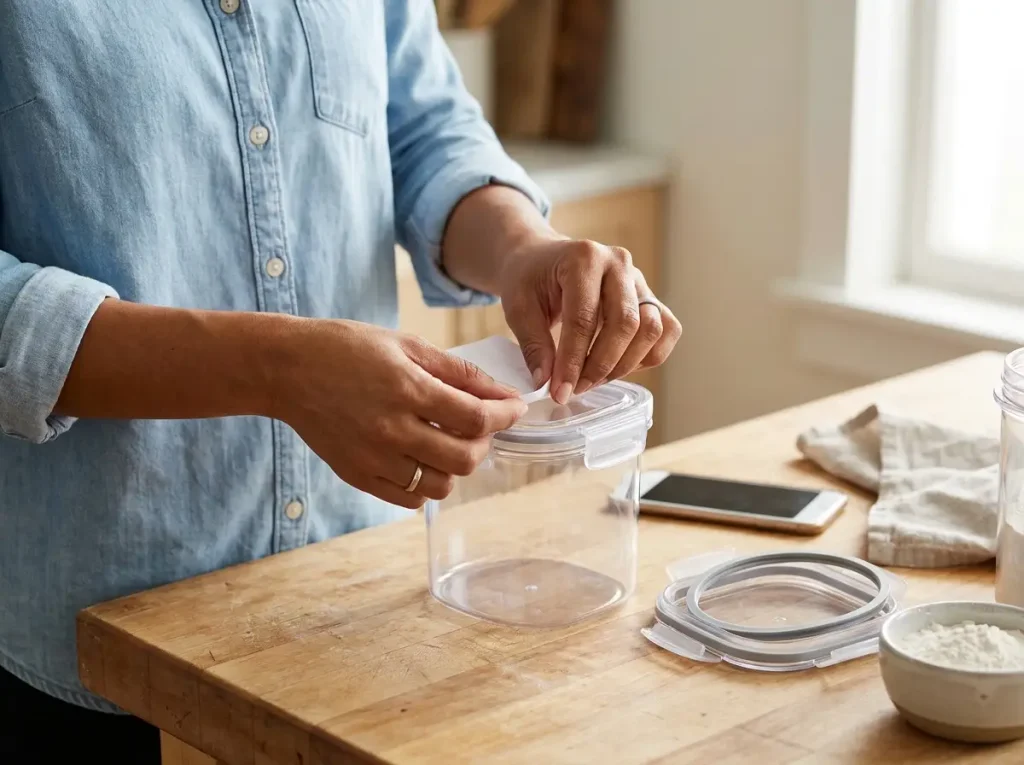
The paper test and the water test
You can check a seal in under a minute, and you should do it before you trust a lid with a five-pound bag of flour. Close the lid on a single sheet of paper so part of it sticks out, then tug. If the paper slides free easily, the gasket isn’t compressing, which means air gets in and so can a moth. For a container you already own, fill it with water, lock the lid, and turn it upside down over the sink. A drop or two is leak-resistant. Bone dry is airtight. It’s a thirty-second test that tells you more than any product description.
Run the paper test on the lid you’ll open most, not a random one from the set. Manufacturers often use the same lid across sizes, but the larger the opening, the more the gasket has to do, and that’s where a seal usually fails first.
Silicone channel gaskets versus snap-on lids
If you’re shopping by photo, the difference is hard to see, so look for two things in the description: a gasket that’s described as removable (you’ll need to pull it out to clean it) and a lid that latches at multiple points rather than just pressing on. A pretty bamboo lid with a thin gasket that only rests on the rim looks the part and fails the paper test. Keep in mind that even a perfect seal only slows the clock on dry goods rather than stopping it, so the container buys you months, not immortality.
The Containers That Actually Seal — Our Top Two
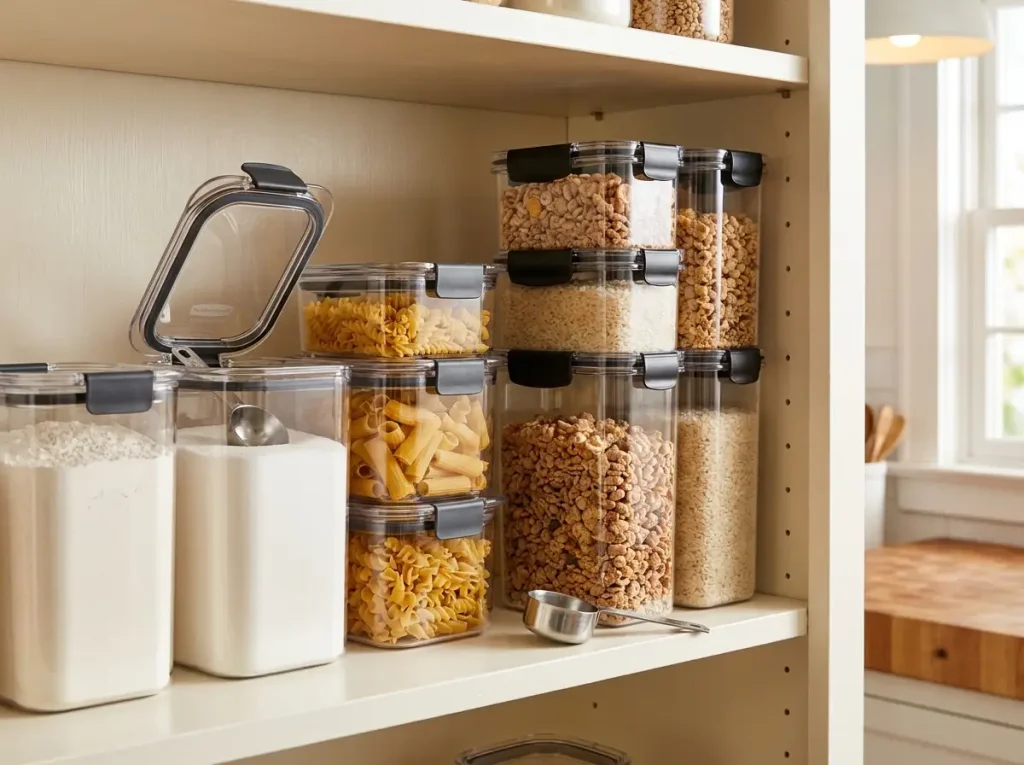
If you only want to buy one system and move on, start here. Both of these pass the seal test that most sets flunk, but they’re good at different things, and knowing which is which saves you from over-buying. The conventional move is to grab the biggest matching set on sale. In practice, most of those lids end up in the back of a drawer, which is exactly why the value pick comes with a caveat.
Best overall — Rubbermaid Brilliance
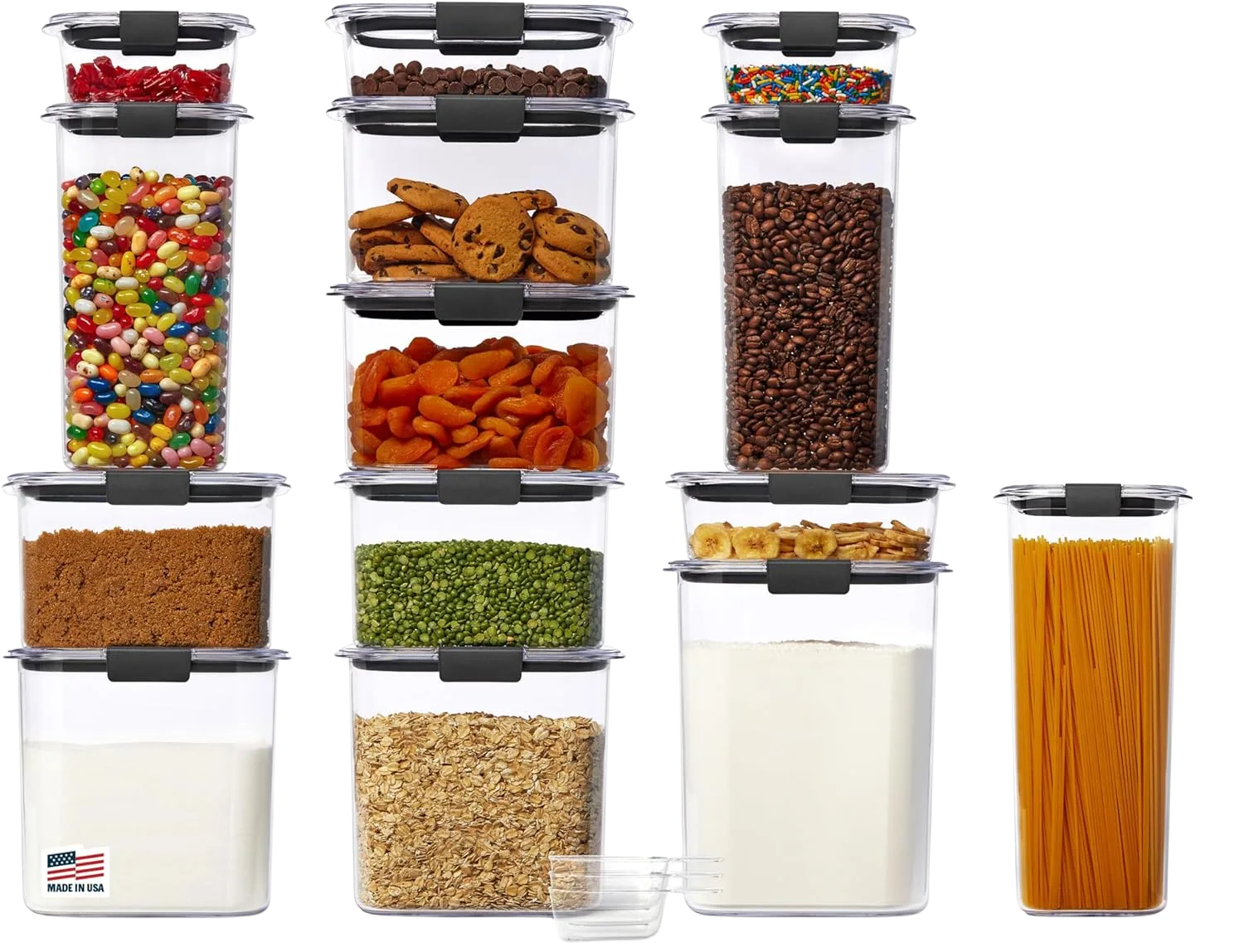
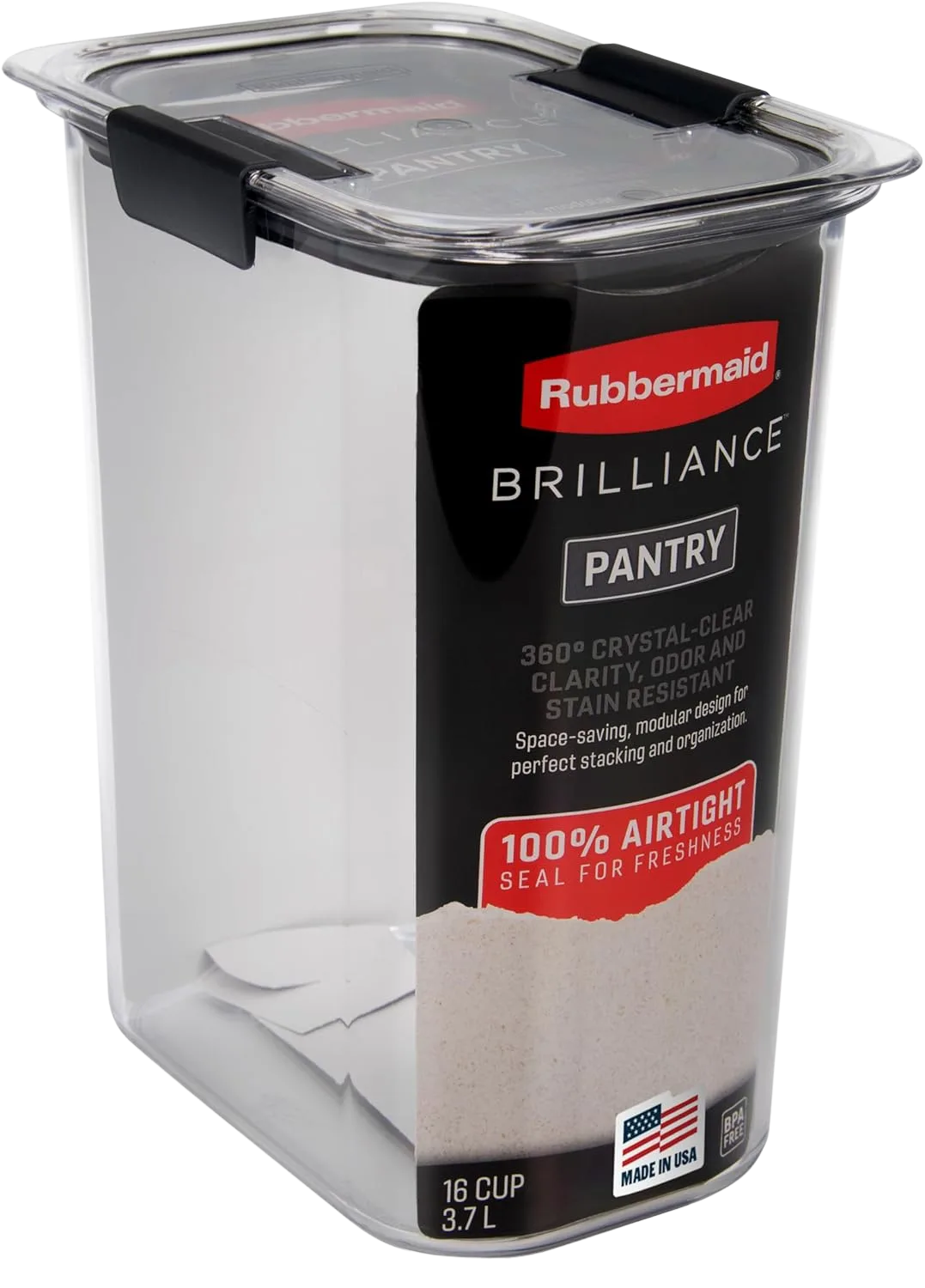
When the seal is the test, Tritan plastic is the benchmark. The Rubbermaid Brilliance line has been tested fully leakproof and stays clear instead of clouding, so you can still see what’s inside after a year of use. The four-side latching lids compress the gasket evenly, and the plastic resists the tomato-and-turmeric staining that ruins cheaper containers. It seals like glass without the weight, which matters more than it sounds once a container lives on a high shelf.
Best value — Vtopmart, with one caveat
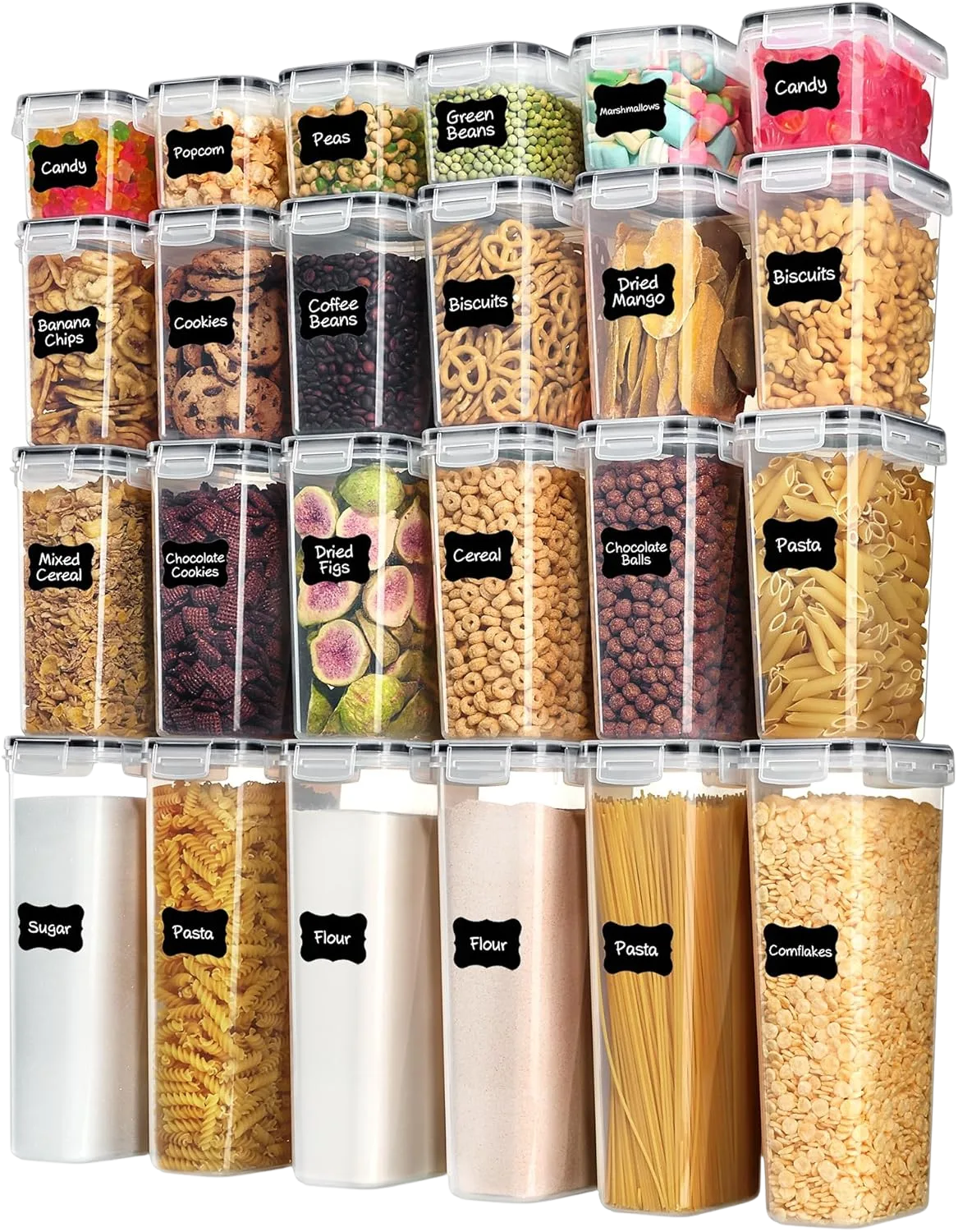
The Vtopmart set is the value pick per piece: silicone gaskets, flip-lock lids, and enough sizes to decant a full pantry without spending a fortune. It seals well and stacks cleanly. But a twenty-four-piece set is also where the matching-set tax starts. You don’t have twenty-four dry goods you go through quickly, and the smallest containers tend to become the junk-drawer of the pantry. Treat it as a starting point you’ll pull the useful pieces from, not a mandate to fill every shelf.
Match the Material to the Food, Not the Aesthetic
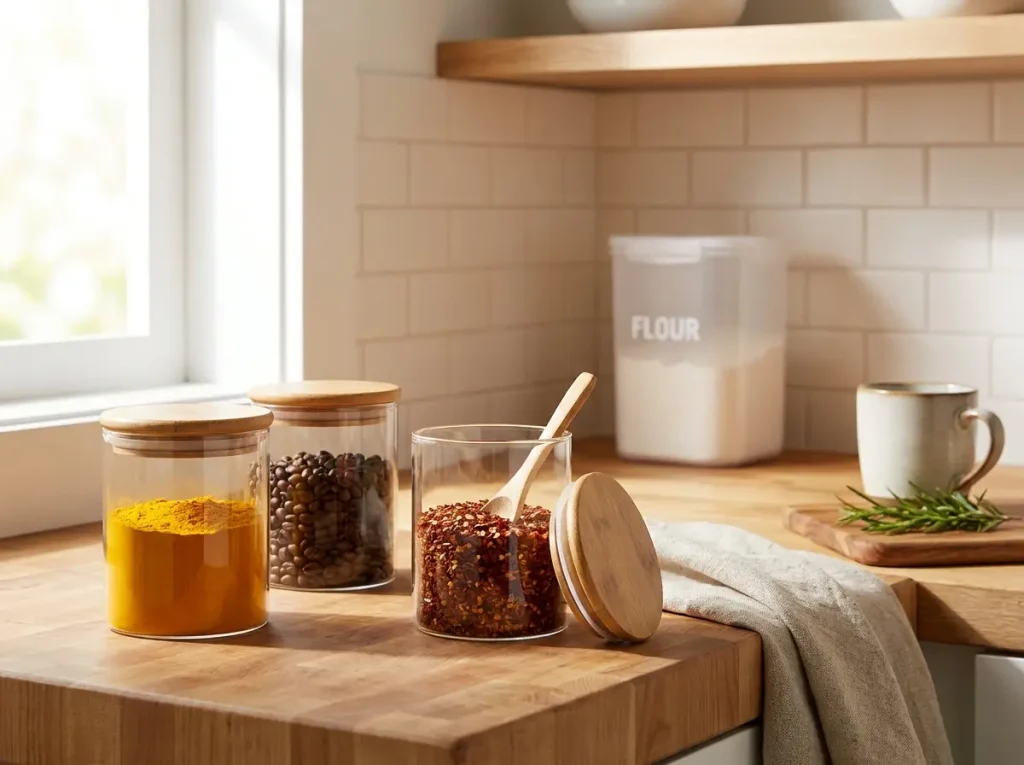
The all-glass pantry photographs beautifully and weighs a ton on a high shelf. Material is a function decision, not a styling one, and getting it right is the difference between a system that lasts and a chipped jar on the kitchen floor. Three materials cover almost everything: glass, plastic, and stainless steel. Each wins for specific foods in specific spots.
Glass for staining, microwaved, and frozen goods
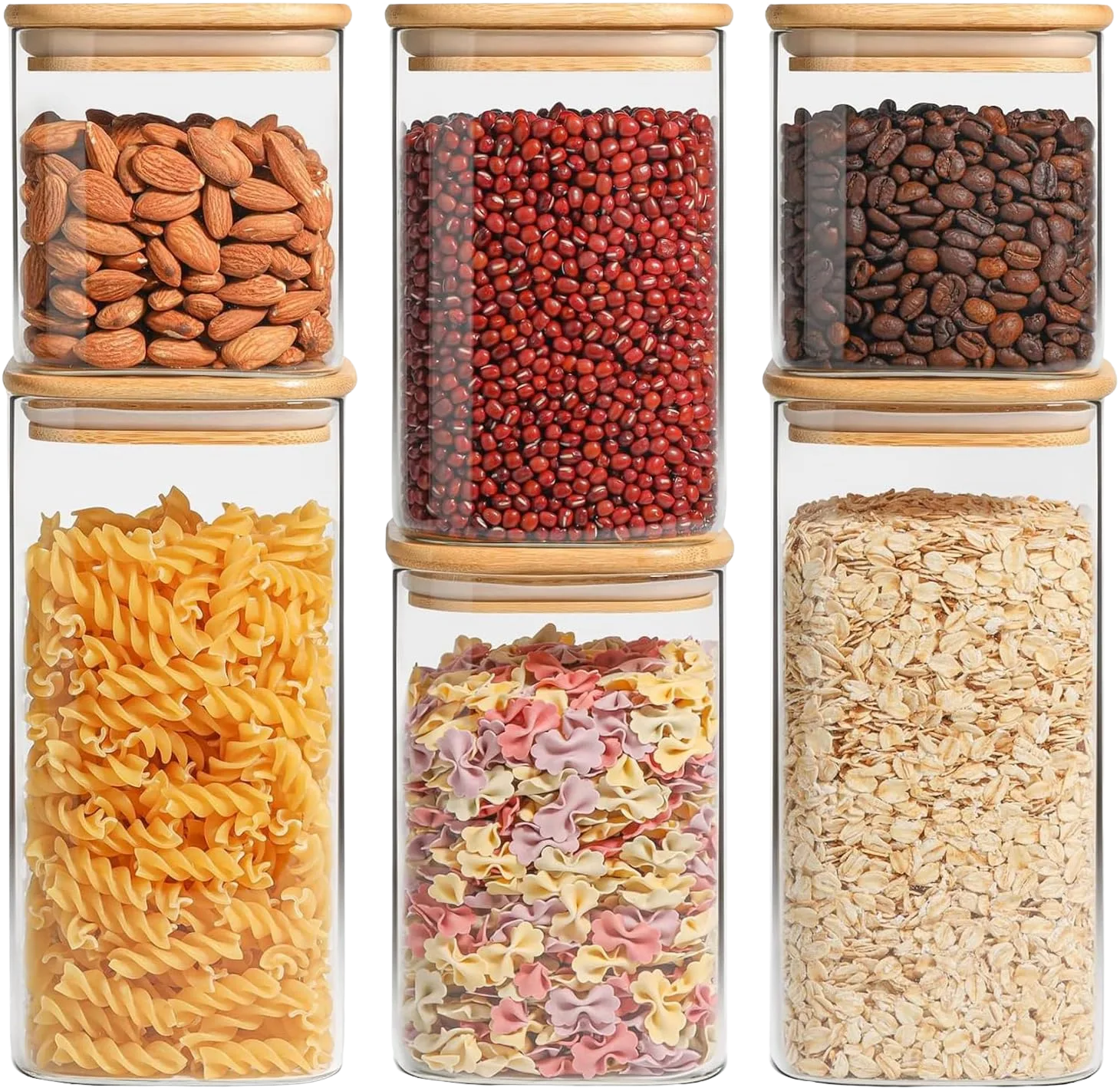
Borosilicate glass is non-porous, takes a wide temperature swing without cracking, and never holds onto odor or color. That makes it the right call for anything that stains (turmeric, paprika, tomato-based mixes), anything microwave safe you’ll reheat straight from the container, and anything that goes in the freezer. It also won’t absorb the smell of last month’s coffee. The ComSaf set pairs borosilicate jars with bamboo lids, which look great but need their own care: don’t submerge the wood, and dry it fully or it’ll warp and crack over a season.
Plastic for weight and high shelves
Tritan and other BPA-free plastics are light and shatter-resistant, which is exactly what you want overhead. A glass canister of flour on a top shelf is a drop risk every time you reach for it. Put glass low or on the counter where you’ll handle it safely, and send the lightweight plastic up high. This is the trade-off competitors skip entirely: they rank glass higher for being “premium” without mentioning that premium gets heavy at shoulder height.
Stainless and the visibility trade-off
Stainless steel blocks light completely, which is genuinely useful for light-sensitive goods like certain grains, nuts, and ground spices that go rancid faster in the light. The cost is obvious: you can’t see what’s inside or how much is left, so you’re back to labeling and guessing. For most pantries it’s a niche pick, not a default. The same material-versus-environment logic applies to bigger fabric and plastic storage bins, where what you store and where you store it should drive the choice.
Measure Your Shelf Before You Buy Anything
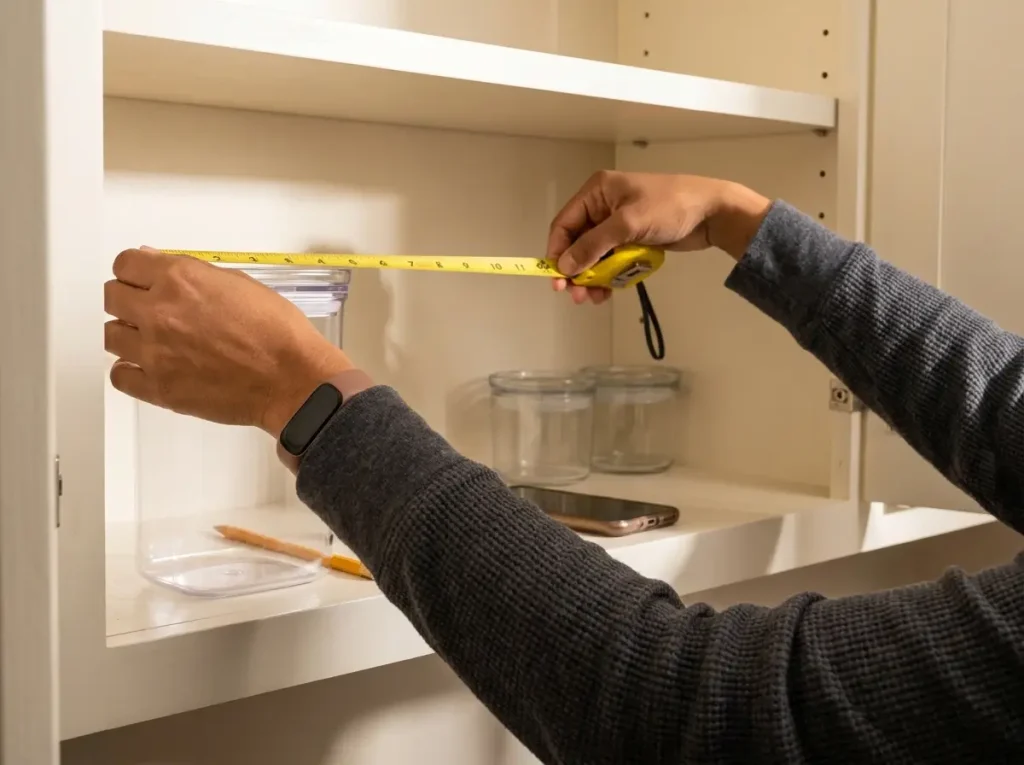
Here’s the regret that fills return bins everywhere: the matching set that looked perfect in the listing overhangs the cabinet by an inch in real life. The most repeated decanting story online ends the same way. Someone spends a Saturday transferring everything, then discovers the lid won’t clear the shelf above. Before you buy a single container, measure your cabinet depth and your shelf height. Canister sets are sized for deep pantry shelves, not the standard shallower ones most kitchens actually have.
Depth and height, measure both
Depth decides whether the container fits front to back without its lid catching the shelf edge. Height decides whether you can even get the container in and out without tilting it, which you can’t always do once it’s full. Write both numbers down and shop to them. This one habit prevents the single most common container mistake, and it costs you two minutes with a tape measure.
The matching-set tax in a small kitchen
In a galley kitchen or an apartment, a twenty-four-piece set is a storage problem, not a solution. You end up storing the containers that were supposed to store your food. The fix is to start with one large container plus two mediums, all sized to the shelf you measured, and add more only when you know you’ll use them. Good pantry organization starts with containers that fit, not the ones that match. If you’re working with an apartment pantry, the constraint isn’t your fault and it isn’t permanent, but the container has to fit the cabinet you’ve got, not the one you wish you had.
Measure the usable height to the shelf above, not the shelf’s own depth, then subtract an inch for the lid and your knuckles. The container has to clear with room to lift it out one-handed while it’s full, or you’ll stop using it by week two.
Shape matters, tall goods versus square canisters
Cereal, granola, and long pasta waste space in a square canister. They need height, not footprint. A tall, narrow dispenser shape fits more of these awkward goods in less shelf real estate, and a pour spout beats digging with a scoop. For exactly this job the OXO Good Grips POP Cereal Dispenser works well: the tall 4.5-quart shape holds a full cereal box’s worth of capacity, and the POP lid pours without coming all the way off. It’s the one shape a standard canister set usually gets wrong.
For What You Open Every Day
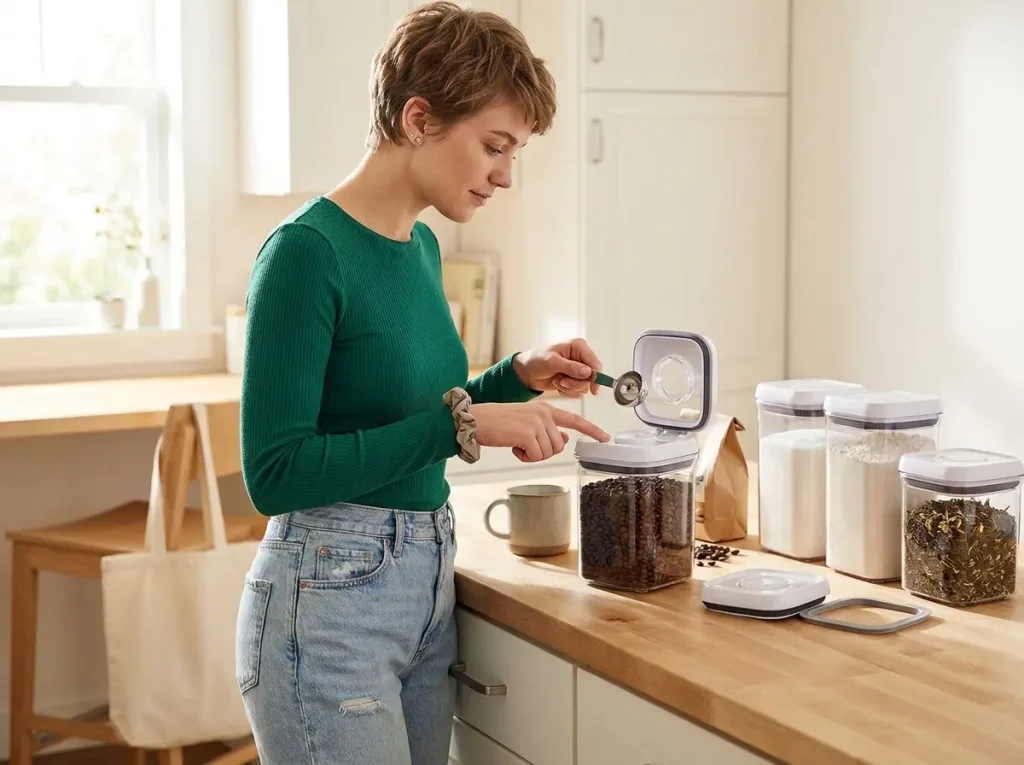
A four-side latching lid is fantastic for long-term storage and genuinely annoying for the coffee you reach for every single morning. Match the lid to how often you open it, not to how sealed it looks. The latched lids that photograph as the most “airtight” are the worst for daily access, and that’s the trade most roundups never name.
Why one-handed opening matters for daily goods
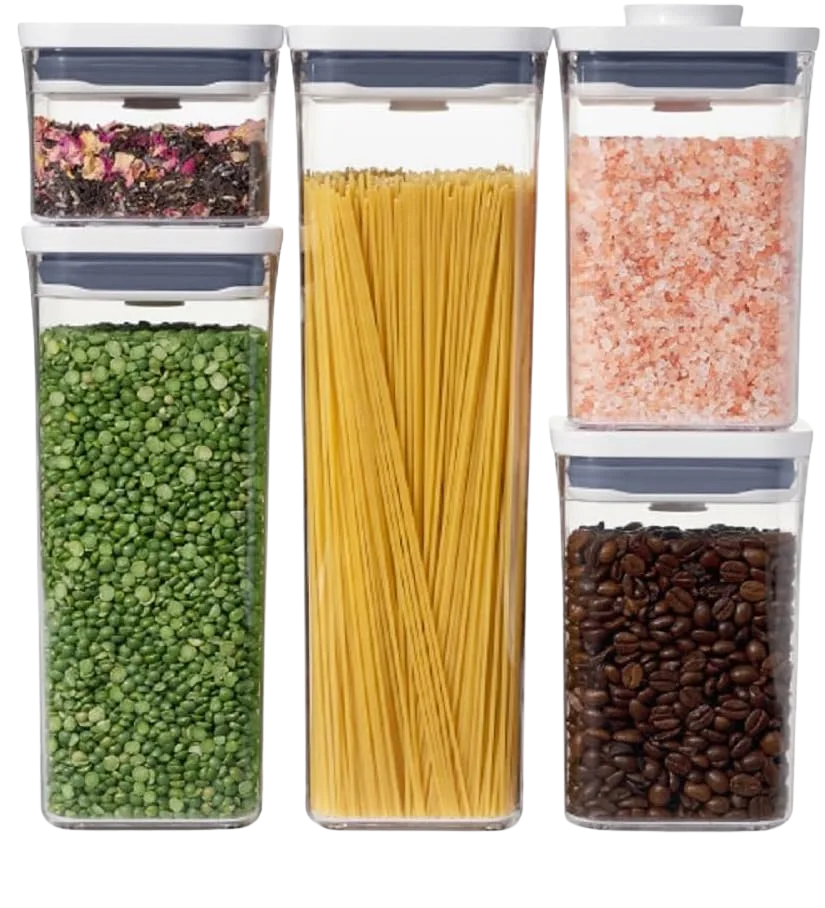
For the things you open daily (coffee, sugar, the flour you bake with every week), a push-button lid you can work with one hand wins. You’re usually holding something else: a mug, a measuring cup, a kid. The OXO POP line presses closed and opens with a single button, which sounds minor until it’s the difference between using the container and leaving the bag on the counter.
The POP lid care rule
I used to recommend tossing every lid in the dishwasher for convenience. After seeing how often the POP buttons stop sealing when water gets trapped in the mechanism, I changed my mind. The gasket is dishwasher-safe; the lid is not. Pop the gasket out, wash it, and hand-wash the lid. It’s an extra minute that keeps the seal working long past the point where a dishwashed lid would have quit.
Latched lids are for storage, not daily use
Save the four-side latching containers for the stuff you open occasionally: bulk rice, dried beans, the holiday baking flour. The extra few seconds it takes to unlatch all four corners is fine once a week and maddening twice a day. Putting your daily coffee in a latched container is how you end up not using the container at all. For the wider picture of pantry containers beyond dry goods, the same lid-to-frequency rule applies.
Skip the Set, Buy One Big Container First
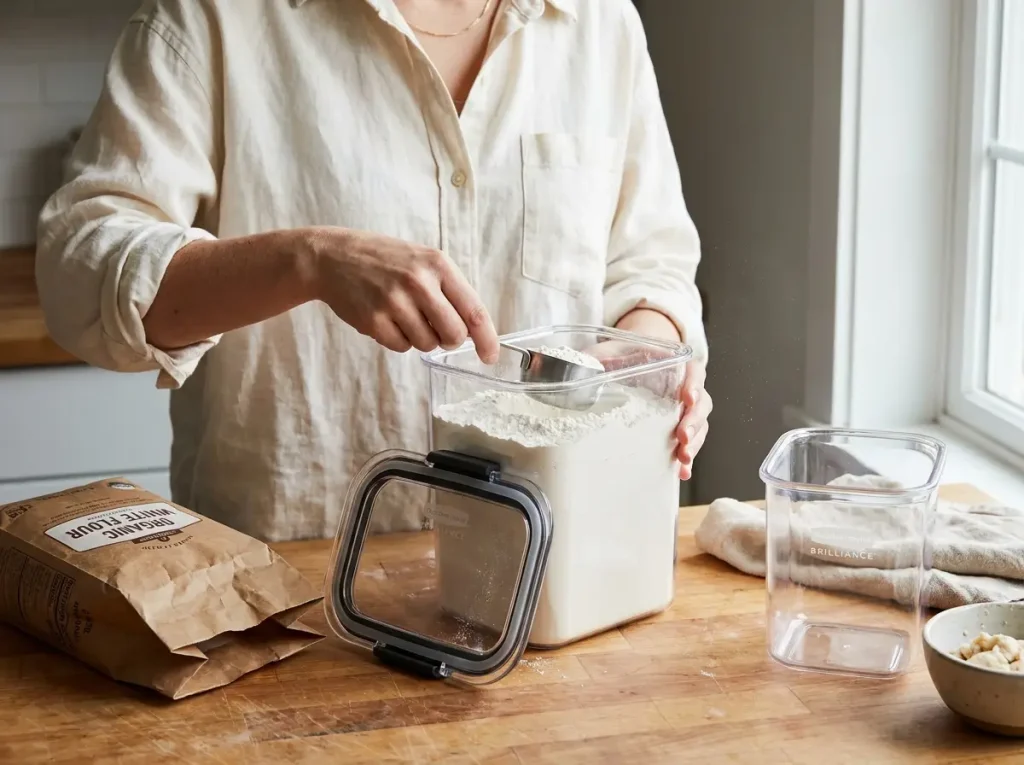
Here’s the anti-sell the affiliate roundups won’t lead with: most people don’t need a set. You don’t go through ten dry goods quickly. You go through flour, maybe sugar, maybe rice. Buy for those, and skip the rest until you’ve proven you need it. The single best upgrade for most kitchens is one large container for the staple you actually burn through, not a full pantry overhaul where half the pieces sit empty.
The one ingredient you actually go through
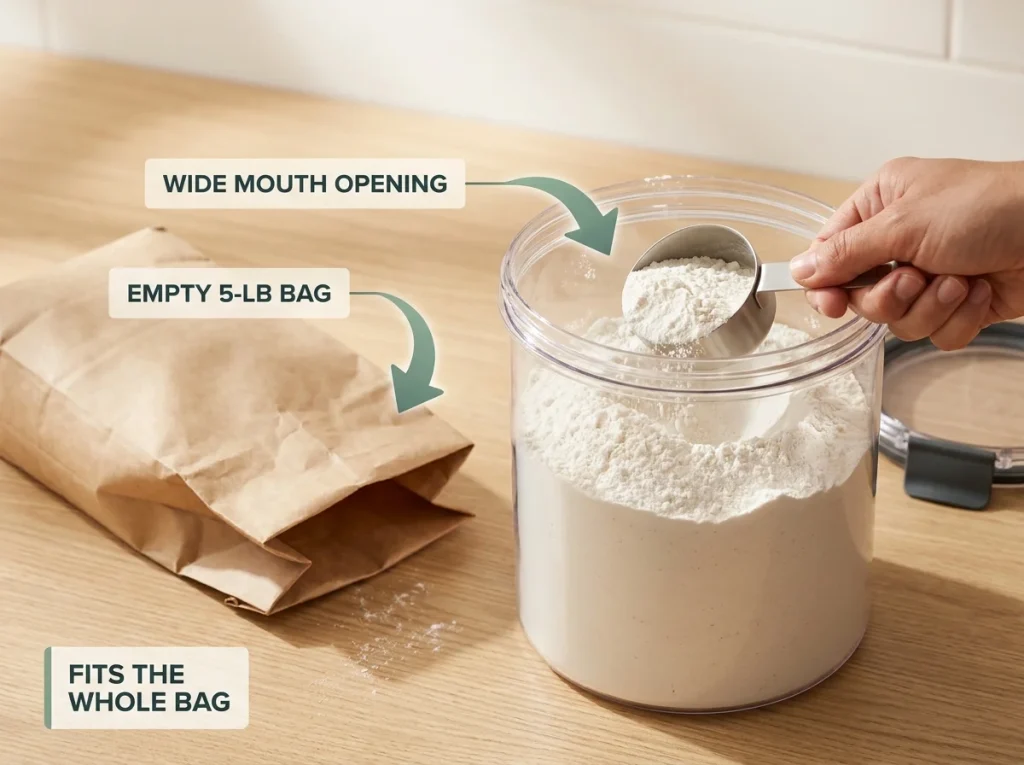
Be honest about your kitchen. For most people who bake, it’s flour, and a big wide-mouth canister for it changes the daily experience more than any matching set. The Rubbermaid Brilliance flour container holds a full five-pound bag with room to scoop, and the wide mouth means you can reach the bottom and wipe it clean instead of fighting a narrow opening.
Wide-mouth and the 5-lb bag test
A wide mouth isn’t a luxury, it’s what makes a flour container usable. You scoop, you don’t pour, and you can get your whole hand in to clean it between bags. The five-pound test is simple: if the whole bag doesn’t fit in one go, you’ll leave the leftover in the bag, which defeats the point. Buy the size that takes the bag whole.
Try it free before you buy
Before you spend anything, decant your staples into whatever sealed containers you already own, even mismatched ones, for a couple of weeks. You’ll learn fast which sizes you reach for and which goods actually need decanting. Then buy to that, not to a guess. It’s the cheapest way to avoid the half-used set, and it costs nothing but a little counter clutter for two weeks.
The Budget Move Nobody Mentions
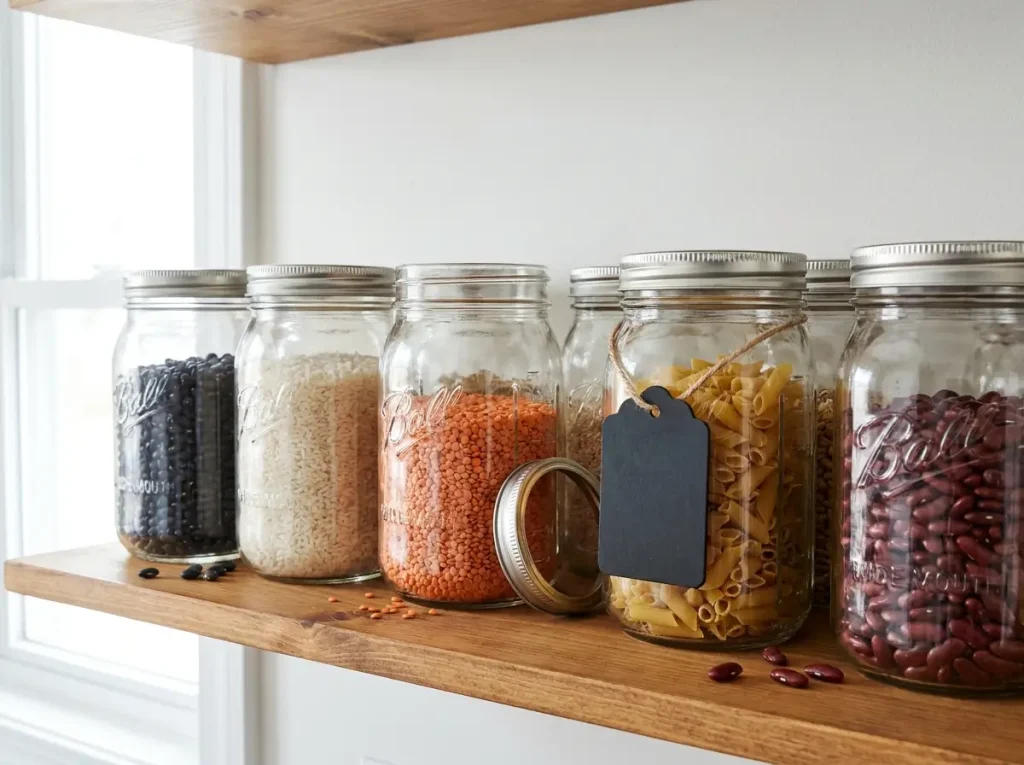
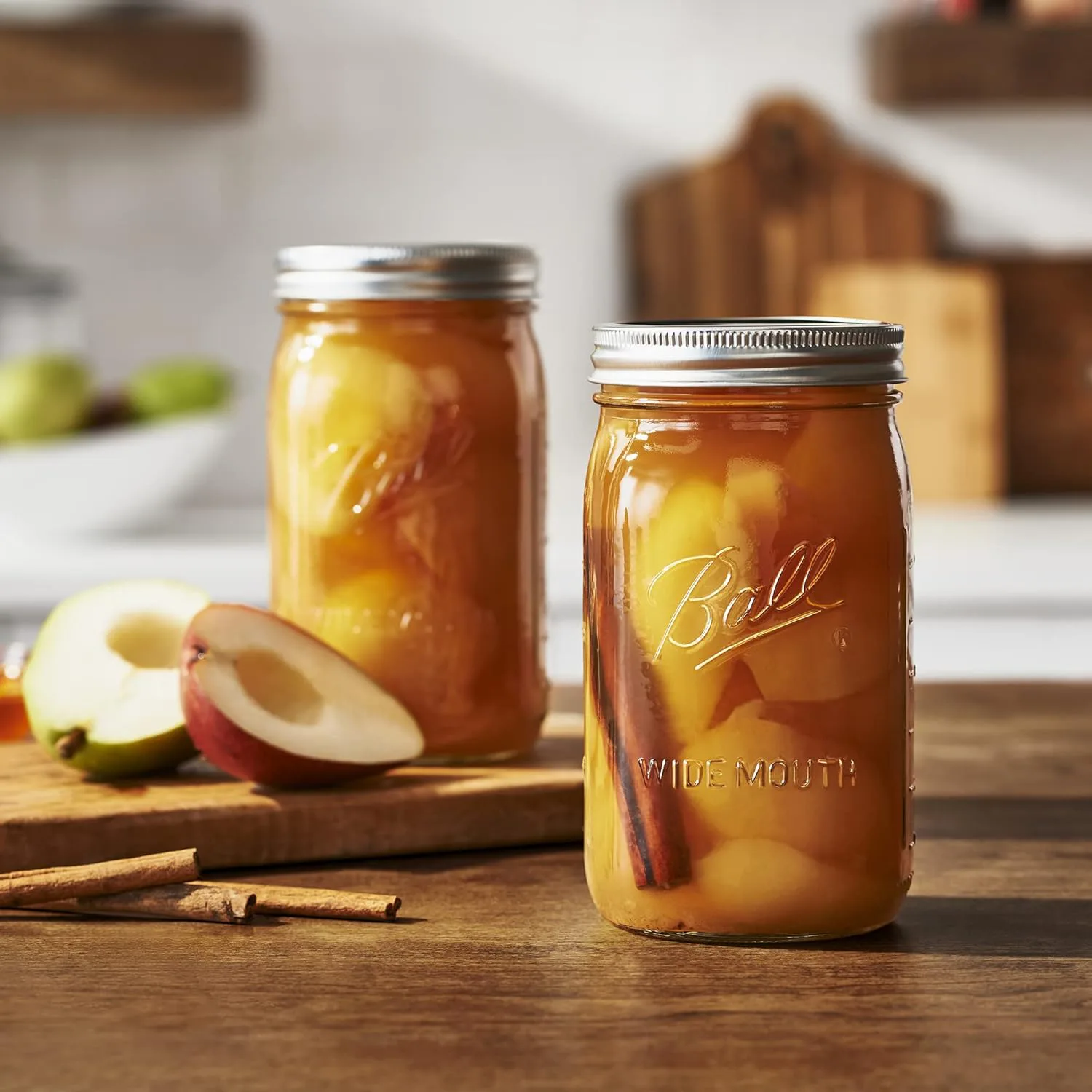
The container secret nobody selling you a matching set will bring up: a wide-mouth mason jar seals dry goods beautifully for a fraction of the cost. The two-piece lid creates a real airtight seal, the glass doesn’t stain or hold odor, and you can replace a lid for pocket change instead of buying a whole new container. For long-term, low-traffic storage, it’s hard to beat.
Why a mason jar seals as well as a canister
The two-piece mason lid (flat disc plus screw band) compresses against the glass rim the same way a gasket compresses against a canister. Tightened down, it passes the paper test. Dried beans keep for years in a sealed jar, which makes a row of them genuinely set-and-forget. And you can usually find a few jars already in the back of a cabinet, so the starter cost is often zero.
Best for long-term, low-traffic goods
Mason jars shine for the back-of-the-pantry staples: dried beans, lentils, rice, spices you buy in bulk. These are the goods you seal and forget, where a one-handed lid doesn’t matter and the long shelf life does. Line them up where you can see the levels and you’ve got a working system for almost nothing.
The honest downsides
They’re not perfect. There’s no quick one-handed open, the glass is heavier than plastic, and a tall stack of full quart jars gets unwieldy. For daily goods or anything going on a high shelf, the plastic picks above are safer and easier. But for the long-term staples that just need to stay sealed, the humble mason jar quietly outperforms containers that cost many times more.
Why Airtight Seals Fail (and How to Keep Bugs Out)
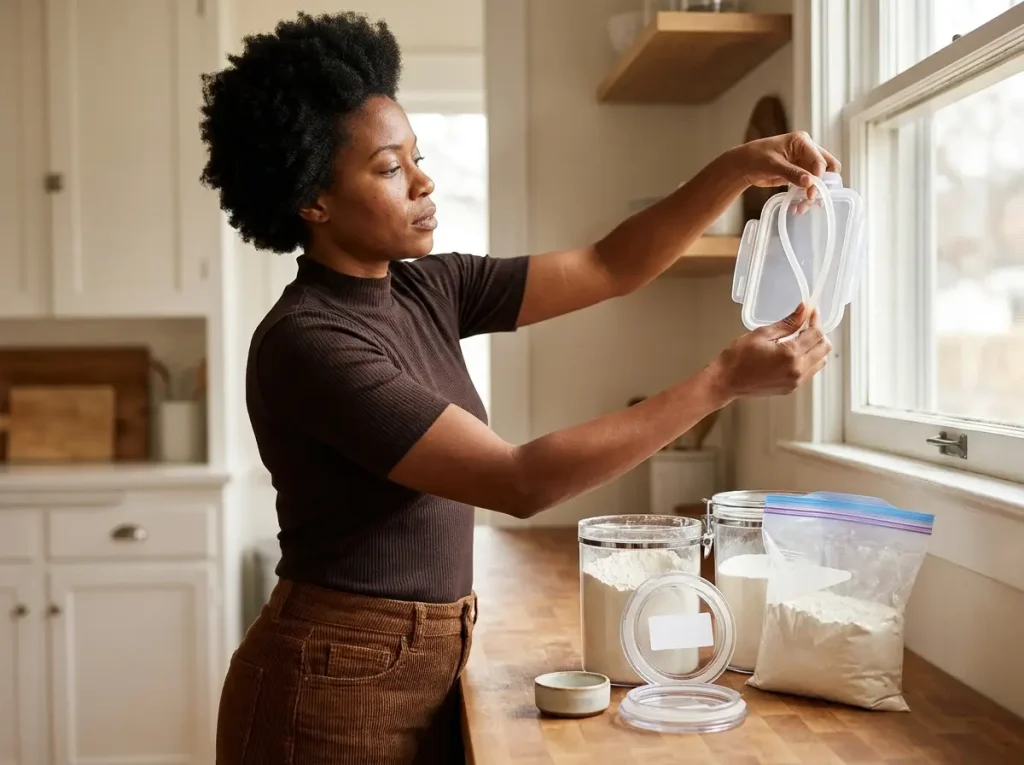
The seal that worked in month one often stops working by month four, and the moths you blame on the container frequently rode in with the flour. This is the part the day-one product tests never cover, because you can’t see it on day one. A container is a system, and like any system it needs a little upkeep to keep doing its job.
The three-month seal check
Gaskets dry out, warp, or go missing in the dishwasher. Push buttons weaken. Flip-locks crack at the hinge. None of this happens fast, which is exactly why it sneaks up on you. Every few months, pull the gasket, look at it, and re-run the paper test on the lids you use most. A gasket that’s gone stiff or flattened isn’t sealing anymore, and most brands sell replacement gaskets for far less than a new container.
Store gaskets dry. The most common quiet failure is a gasket put back wet, which grows mildew in the channel within weeks. After washing, let the gasket and the lid channel air-dry fully before you seat it back in, and your seals will outlast the containers.
Freeze first, the moth problem containers can’t fix
This is the reframe that saves people a lot of grief: pantry moths usually hatch from eggs that are already in the flour or grains when you bring them home. No container can fix a problem that’s already inside it. The move the experienced bakers swear by is to freeze new flour, grains, and cornmeal for about 72 hours before decanting, which kills any eggs that hitched a ride. Then your airtight container does its real job, keeping new pests out, instead of sealing a problem in.
Dry gaskets and label-and-rotate
A sealed container slows spoilage but doesn’t stop the calendar. According to Ohio State University’s extension service, flour, grains, and spices each keep for different windows, with whole spices lasting around two years and ground spices closer to one even when sealed. So date what goes in and rotate older stock to the front. A simple write-and-erase labeling system makes this painless, and it’s the difference between a pantry that looks organized and one that actually stays fresh. Label, rotate, and the system holds.
Conclusion
Three things carry the whole decision. Judge the seal with the paper and water tests instead of trusting the word “airtight.” Match the material to the food and the shelf, glass low for staining and reheating, plastic high for weight. And buy for what you actually go through, one big container for your staple before any set. Get those right and the containers earn their space.
In three months, re-run the paper test on your most-opened lid and check the gasket for mildew or warping. That ten-second habit is what keeps the seal sealing.
Start with the one ingredient you go through fastest. Seal that right. Then decide if you even need the rest.
Frequently Asked Questions
01What type of container keeps food fresh the longest?
A true airtight container with a compressing gasket keeps dry goods freshest, and non-porous glass has a slight edge because it never absorbs odor or moisture. The seal matters more than the material, though. A glass jar with a loose lid loses to a plastic one that actually seals.
02Are airtight containers really airtight?
Many labeled “airtight” are only leak-resistant. The difference is the gasket and how the lid clamps it. Test yours by closing the lid on a sheet of paper and tugging, or by filling it with water and inverting it over the sink. No slide and no drips means it’s genuinely airtight.
03Is glass or plastic better for airtight food storage?
It depends on the food and where it lives. Glass wins for staining, microwaved, or frozen goods and resists odor. Plastic wins for weight and high shelves because it’s light and won’t shatter if it drops. Use glass low and plastic up high.
04Do airtight containers keep pantry moths and weevils out?
Only if the seal is genuinely airtight, and only if the bugs weren’t already inside. Pantry moths often hatch from eggs in the flour itself. Freeze new flour and grains for about 72 hours before decanting, then a true seal keeps new pests out.
05Can you put airtight containers in the dishwasher?
The container and the gasket usually are, but some lids are not. On push-button lids like OXO POP, dishwashing traps water in the mechanism and degrades it, so hand-wash the lid. Bamboo lids should never be submerged. Always dry the gasket before resealing.