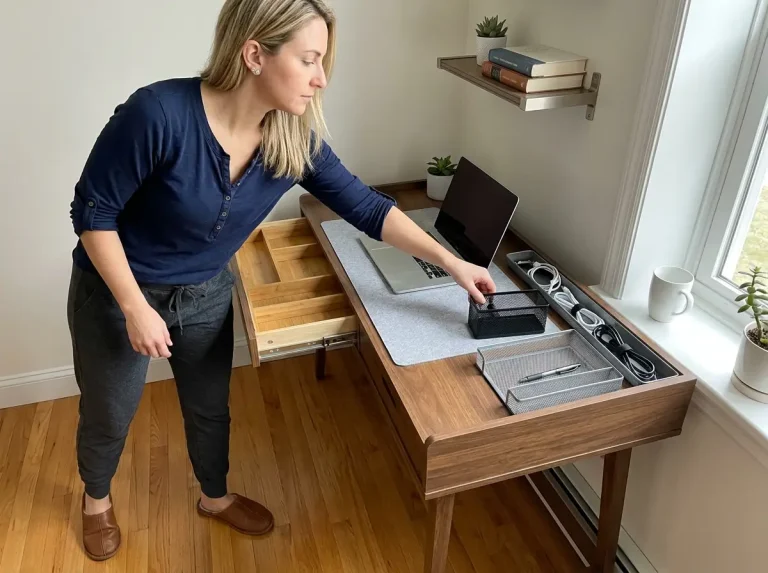

The desk is bare on move-in day, a lamp and a laptop on a clear pad, and by week three the same surface holds a mug, two chargers, a stack of loose paper and the bag you dropped on the corner nearest the door. Dorm room desk organization breaks down at that point for a simple reason: no dorm desk organizer can fix a desk where nothing was ever given a place, and a hall that bans sticky hooks and screws removes most of the shelf fixes you would reach for. This guide covers what your hall allows, how to give every object one spot, which organizers earn their footprint, and how to share the surface and reset it through finals. Everything here sits, clamps or straps, and nothing sticks.
Quick Answer
A dorm desk stays clear when every object has an assigned spot and nothing depends on adhesive. Work through these in order:
- Check your hall’s rule on adhesives, nails and screws.
- Measure the desk surface and the drawer’s inner width, depth and height.
- Give every object one spot in three reach zones.
- Put the drawer to work with an insert sized to it.
- Bundle cables with a clamp or a strap, never tape.
- Reset the surface once a week, front corner first.
Why Dorm Room Desk Organization Slips Back Into a Pile
A cleared desk does not stay cleared, and the reason is mechanical, not a matter of discipline. Three things push it back toward a pile: no fixed spots, a drawer that hides the overflow, and one surface doing three jobs.

Nothing on the Desk Has a Fixed Spot
A desk reverts for a mechanical reason. An object with no assigned spot settles wherever the hand puts it down, and the hand puts things down at the nearest flat edge. A desktop organizer with open compartments does not change that. It hands the pile a container, and the container fills with whatever is closest, whether it belongs there or not.
Watch where the desk pile restarts. It is almost always the front corner nearest the door, because that is where the bag lands on the way in, and the mug, the charger brick and the day’s loose paper stack up against it.
Clear that corner on Sunday and by Wednesday it holds a small drift again. But the corner is only where the habit shows up. The same pile grows on any cramped desk, and why a small desk gets messy again follows that version of it through a small apartment.
The Drawer Hides What the Surface Cannot Hold
The drawer is where the pile goes to hide. Sweep the surface into it before a visit and the desk looks clear for a day, but now the drawer is a miscellaneous drawer: tangled chargers, dead pens, receipts, a stapler with no staples in it. Nothing in there has a place either, so the next time you need a charger you tip the whole thing out onto the desk, and the surface is back where it started.
A drawer that works follows the rule the surface follows: one kind of thing per compartment. Until it does, the drawer is a delay, not a storage system, and the pile it hides is usually bigger by midterms than it was in September.
A Dorm Desk Also Does Three Jobs at Once
In a residence hall the student desk is study table, meal table and landing strip for the bag, all within arm’s reach of the bed. That makes its surface the busiest square foot of the room, with a laptop, a notebook, a bowl or a takeout box and a phone on charge competing for it in the same afternoon. It is also a desk you did not choose and often cannot swap, so the system has to fit the desk you were given, not the one in a product photo.
So the work is less about buying storage and more about deciding which objects earn space on a surface that three activities share. For the rest of the room’s dorm storage, the full room-by-room dorm order starts at the bed and works outward. This guide stays on the desk.
What Your Hall Allows and What Your Desk Can Hold
Two checks come first: what your hall lets you fix to the desk and the wall, and what the desk and its drawer physically hold. Both take a few minutes, and both change what is worth buying.
Read the Adhesive and Fixing Rule First
The shelf riser or sticky hook sitting in your cart may be the one thing your hall bans. Housing rules differ from campus to campus, and one university shows how strict they can get. According to Western Kentucky University’s housing adhesives agreement, “The use of adhesive material of any kind on drywall is prohibited.” The ban reaches strips sold as drywall-safe, it also rules out adhesives on furniture, and nails, screws and staples are out on walls, doors and furniture alike.
That is one university’s rule, not a universal one. In the same school’s concrete-wall halls, light adhesives are allowed but can still draw a damage charge if they are used badly, so even a permitted strip carries a risk at move-out. That is a lot of exposure for one hook. Read your own housing page, or ask the residence life office, before you order anything that sticks, screws or hangs, and ask about furniture separately from walls.
The usual advice is to go vertical with a desk hutch, a wall organizer, a pegboard or adhesive hooks above the desk, and in a hall like that one it is the advice most likely to cost you part of your deposit. The better call is a riser that sits on the surface and a clamp that grips the edge, since neither leaves a mark when you move out. Where the answer is no, the rule for everything below stays the same: fix by sitting, clamping or strapping.
Measure the Desk, Not the Product Page
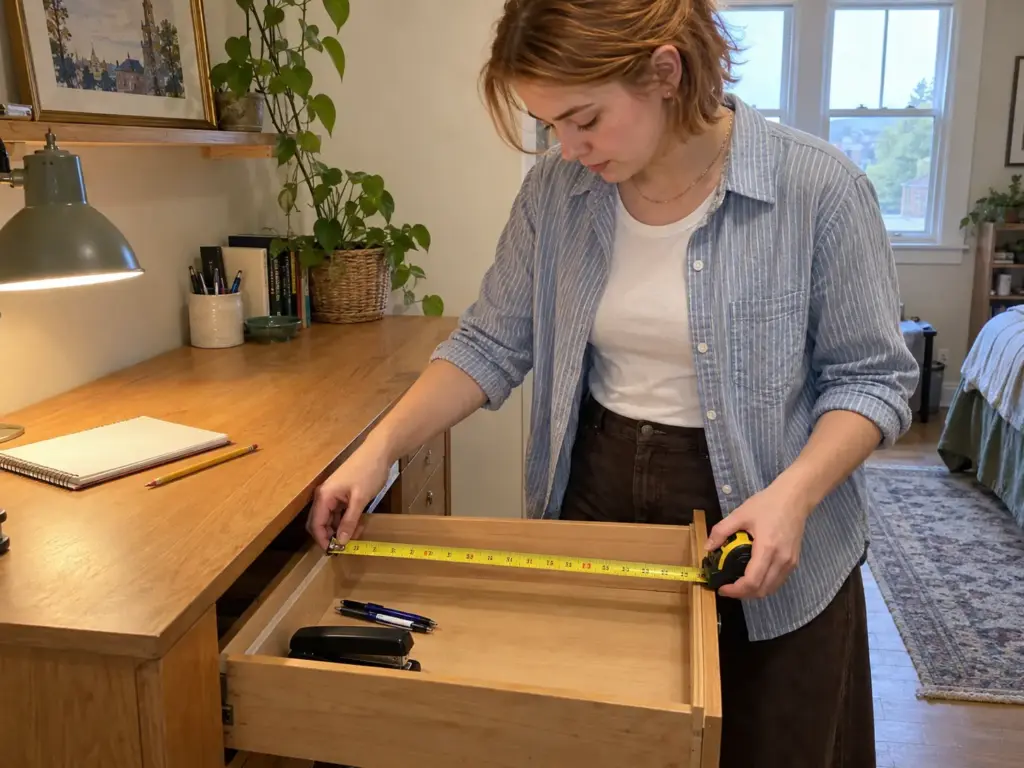
A product page gives the product’s size and says nothing about your desk. So measure yours: surface depth and width, the drawer’s inner width, depth and height, and the gap under any shelf that sits over the desk. Desks differ from one building to the next, and a number copied from someone else’s room is how a riser ends up hanging over the front edge.
Then compare. The Marbrasse pen organizer below runs about 7.5 x 5.5 inches, the Kichvoe stand about 10.8 x 7.9 x 3.7 inches, and the Umilife insert 12 x 9 inches. The test is simple: once the footprint goes on the desk, you should still have room for the laptop and an elbow that moves.
The width is the number most people check first, because inserts are sold by width. The measurement that settles more purchases is the drawer’s inner height, since an insert that fits side to side but stands too tall keeps the drawer from closing. Measure at the lowest point of the opening, because that is where the insert has to clear.
Type the drawer’s inner width, depth and height into a note on your phone. Those three numbers are the ones you will want when a product page loads and you cannot remember whether the drawer is deeper than it is wide.
Sort What You Already Own Before Buying Anything
Start with the drawer you have. Empty it onto the bed, bin the dead pens, and sort the rest by kind.
A mug works as a pen cup, a shoebox lid works as a drawer tray (the low rim is the point), and a takeout lid keeps stamps and tape from sliding to the back. Some desks need no insert at all once the pile is sorted. And finding that out costs nothing.
If the desk is also standing in for a nightstand or a closet shelf your room never came with, what the room does not come with at all covers those gaps so the desk is not asked to do their job.
Give Every Object One Spot on the Desk
Once the rule and the measurements are known, the desk needs a plan, not a product. The plan is simple: every object gets one spot, chosen by how often your hand goes there.

The Three Zones Around Your Reach
Think of the surface as arcs of reach, one desk zone per arc, not a flat rectangle. The first zone is the study zone, directly in front of you, and it holds the laptop and whatever you are writing on; nothing else lives there. The near-reach zone, a forearm to either side, holds the few daily objects: pens, one charger or a wireless charging pad, a desk lamp. The far zone, plus the vertical space above it, holds books and anything you use weekly.
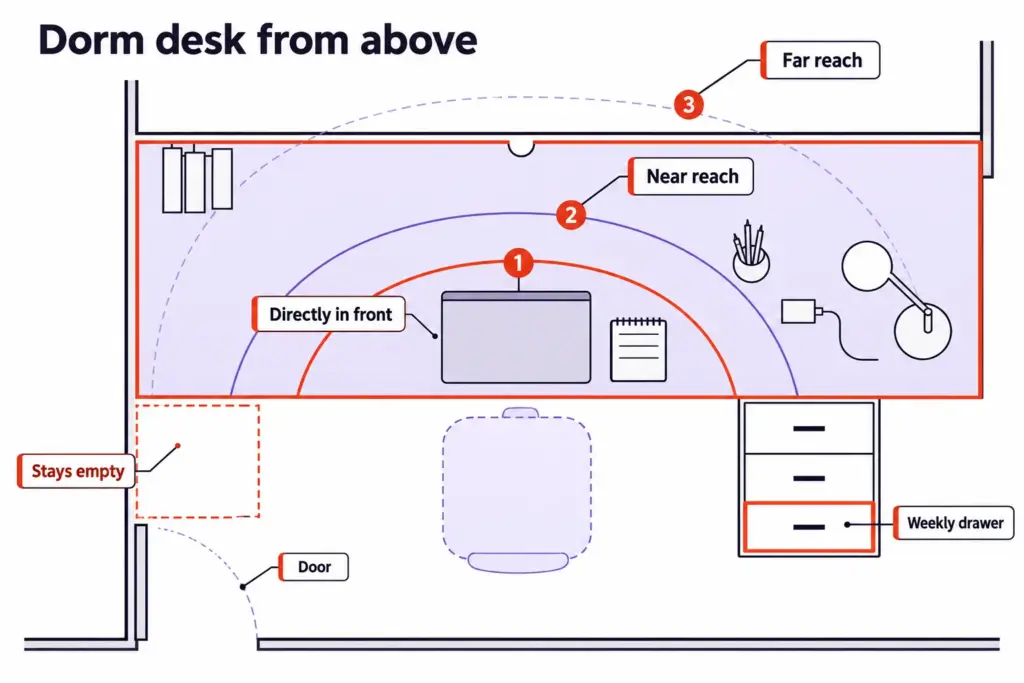
Each object’s spot is decided once, by how often your hand goes there: daily things on the surface, weekly things in the drawer, termly things in the closet or under the bed. A calculator you reach for twice a semester does not belong within arm’s length, and neither does the third marker in a pack.
For the near-reach zone on a tight desk, the Marbrasse Mesh Pen Organizer with 2 Drawers (Black) covers about 7.5 x 5.5 inches, so it leaves the front zone free, and its two small drawers close over the clips and spare leads that a plain pen holder leaves loose. Its limit follows from that size: it holds a day’s supplies, not a semester’s.
The same logic scales up to a full workstation, and how a full-size desk is organized so it stays neat past the first week shows how the zones stretch when the surface does.
Why the Front Corner Stays Empty
The front corner by the door stays empty on purpose. It is the landing spot for the bag, so the bag needs somewhere else to go: a hook on a freestanding or over-the-door fixture where your hall permits one, the back of the chair, or a fixed place on the floor beside the desk leg. Give the bag that address and the corner stops filling.
For two days, notice where your hand sets the bag, the keys and the day’s mail. That spot is where the pile starts. Claim it on purpose with a tray or a hook that clamps, instead of letting it claim the desk.
What Goes in the Drawer and What Stays Out
The drawer takes what you reach for weekly, one compartment per kind: spare pens, a stapler, tape, stamps, the chargers you swap. The chargers are the borderline case, though: one you swap daily moves up to the near-reach zone. A miscellaneous compartment is the one that fails, because it is the one that grows, and a drawer with a catch-all section is a pile again by midterms. What stays out of the drawer is the daily kit, which belongs in the near-reach zone, and anything bulky enough to stop the drawer from closing.
Open compartments fill with whatever is nearest, so a closed drawer is the feature that keeps desk clutter off the surface. A deeper desk can take the Simple Houseware Desk File Organizer w/Drawer, a mesh organizer that packs upright sections for pencils and a phone, a drawer and a tray into one footprint. The trade is surface: it claims room a laptop needs, so check its listing dimensions against your desk depth first, and pick the small pen organizer instead if the numbers are tight.
The Organizers Worth Buying Once the Zones Are Set
With the measurements in hand, buying stops being a guess. The free fixes go first, and what is left comes down to two jobs: a drawer insert, and a way to hold cables that does not stick.
Drawer Inserts That Fit the Drawer You Have
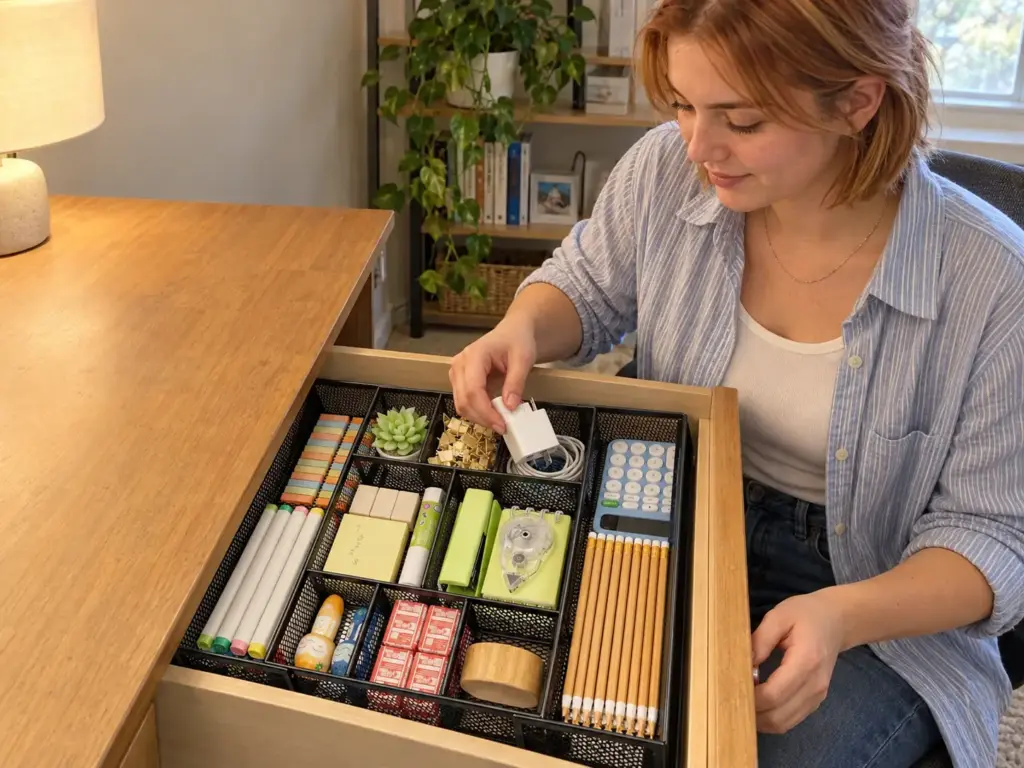
The sorted drawer with a lid as a tray is the free version. If things still slide around once it is sorted, an insert gives each kind of object a fixed compartment, and the width you measured earlier decides which insert it can be.
The adjustable insert is the right one when you have not settled what lives in the drawer yet, or when the desk may change next year. The fixed-size insert wins in one case: a drawer whose inner width matches it, where nothing needs adjusting and the cheaper route does the same job. Both depend on the inner height check from earlier.
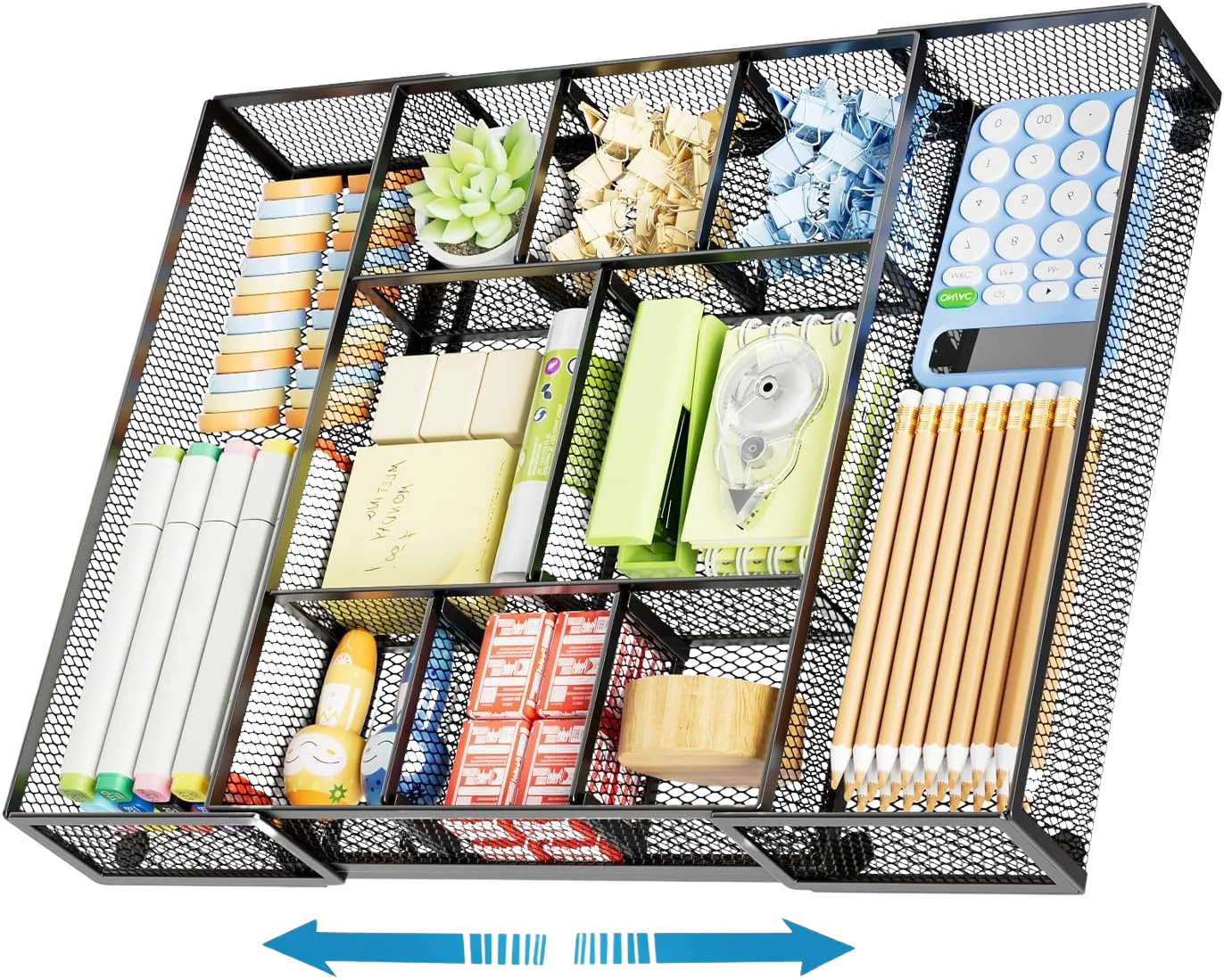
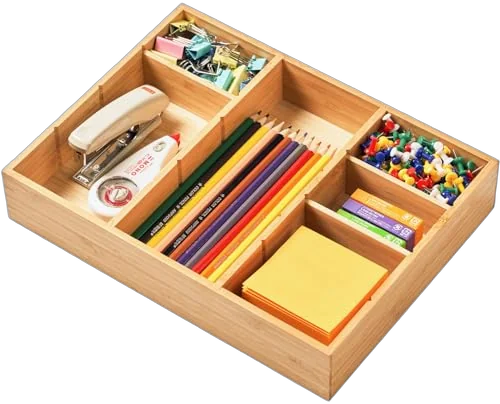
Those two cover the drawer. For lamps, bed caddies and the closet, organizers sorted by what fits in a dorm takes the rest of the room by buying category.
Cable Fixes That Clamp or Strap, Never Stick
Cables are where the no-adhesive rule bites hardest, because the usual fix is a sticky cable clip under the desk edge. Where the hall bans adhesive, two options remain: clamp or strap. The cable tray is for the cables behind the desk; the ties act as a cable holder for the bundle on the surface.
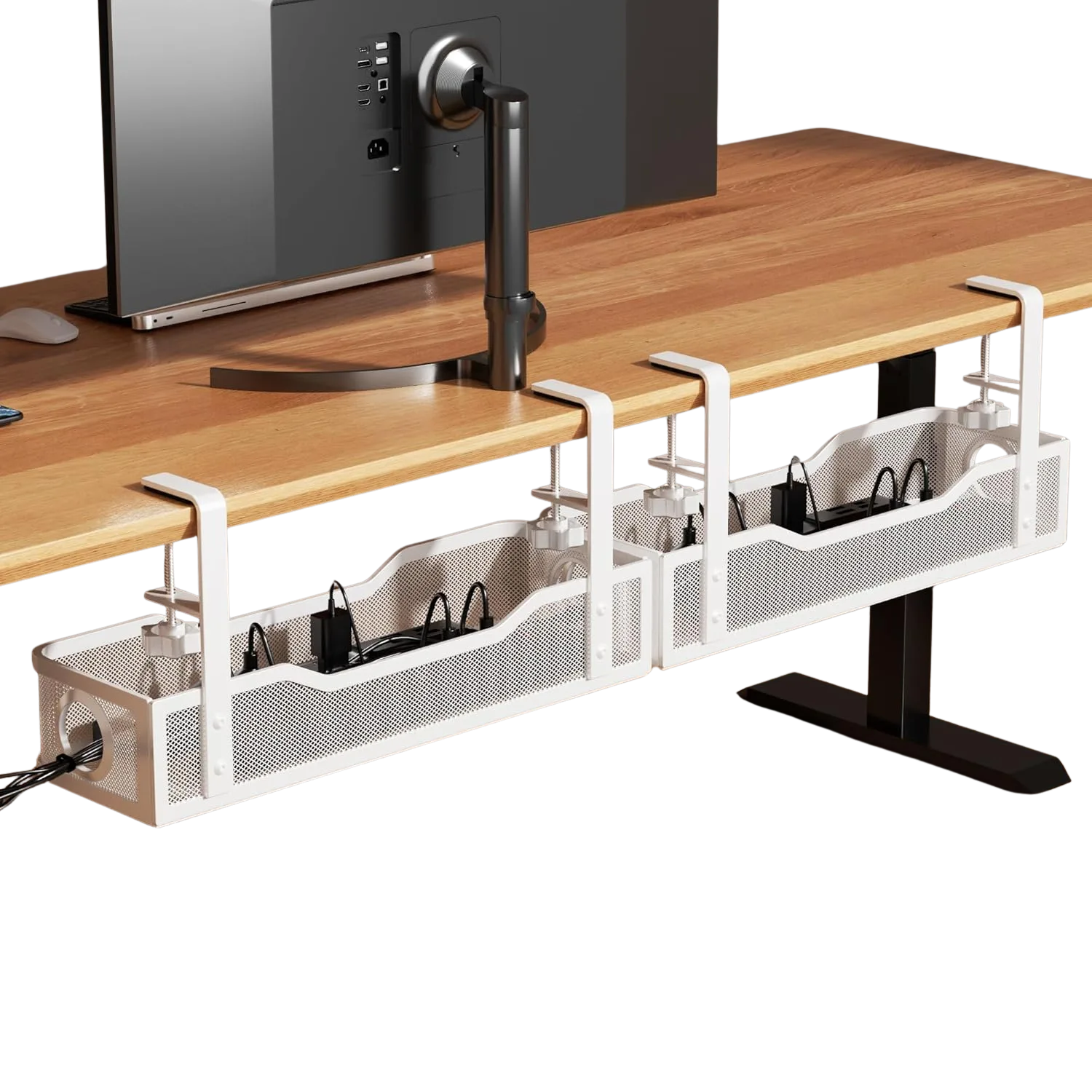
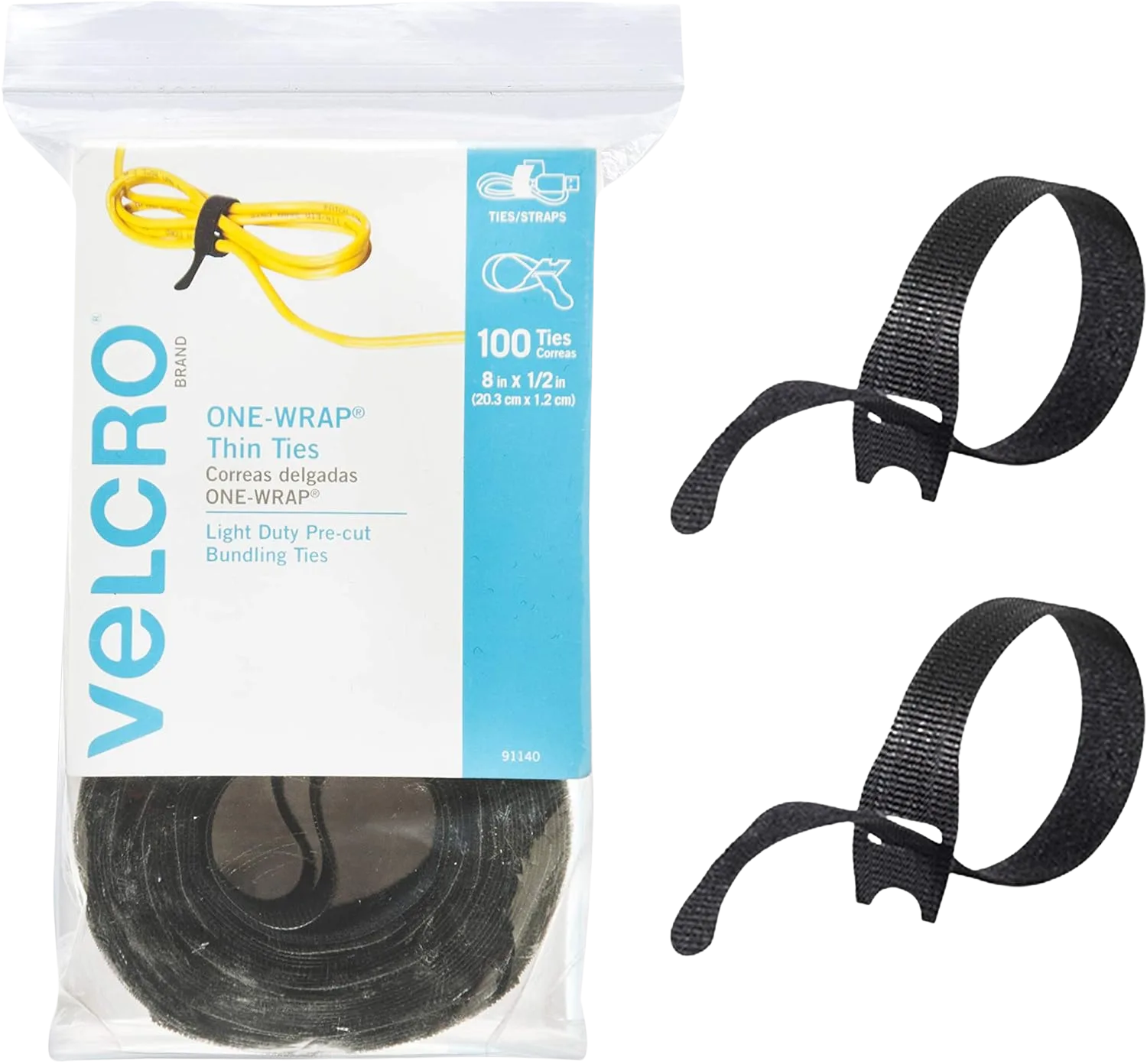
Bundle only the cables that stay put, such as the lamp, the monitor and the power strip. Leave the laptop charger loose, because a cable you unwrap every morning is a cable that ends up unbundled by Friday.
Desks bigger than a dorm table raise the same cable problem, and more ways to tame desk cables goes through the options.
What to Skip on a Hall Desk
Skip anything that mounts to the wall or the desk with adhesive where your hall bans it, such as a memo board, a wall organizer or a pegboard, whatever the packaging says about leaving no marks. The reason is the rule: one wrong strip means a damage charge. Skip a deep desktop organizer on a shallow desk as well. The Kichvoe stand at about 8 inches deep is already a real share of a small surface, and anything deeper starts pushing the laptop toward the front edge.
Sharing One Desk With a Roommate, and the Reset That Keeps It Clear
Two people on one surface need an agreement before they need organizers. Settle the split first, then the private drawer, then the reset that keeps both halves clear.

Split the Surface Before the Stuff Spreads
Two people, two sets of chargers, one shared desk. Agree the line once: left and right halves, or one desk each when the room has two. Each half gets its own near-reach zone and its own drawer, and anything shared, like printer paper or a single power strip, gets one named spot so nobody has to ask where it went. A pencil cup on each side or a freestanding divider marks the line, and neither needs adhesive.
Settle the cable corner first. The outlet is shared, so the line breaks where one person’s charger crosses into the other’s half, and if that corner is solved the rest of the roommate split tends to hold. The same agreement works for the closet, and the same split for a doorless shared closet shows where the line goes there.
A Lockable Drawer for What Stays Private
Some things belong on neither half of the desk: a passport, a prescription, a spare key, the cards you would rather not leave in view. The Kichvoe Wood Monitor Stand with Lockable Drawer gives whoever owns it a closed, locking drawer and works as a monitor riser or laptop stand at the same time. At about 10.8 x 7.9 x 3.7 inches, this monitor stand with drawer has a small footprint, so the base of your device has to fit it, and the drawer is shallow, so it suits flat items, not a bulky box. But for a passport and a spare key, flat is all it needs to be.
Pick the reset day by attaching it to something that already happens every week, like laundry or the Sunday call home. A reset with no anchor gets skipped the first week a deadline lands.
The Ten-Minute Reset Before Finals Week
Once a week, on a fixed day, spend ten minutes (set a timer, so the tidy-up does not turn into a project) and run three steps: return every object to its zone, empty the miscellaneous compartment, and clear the front corner. Nothing here needs a product. It needs the spots you assigned earlier, because a reset is only a matter of putting each thing back where it already lives.
Before finals, give it a longer pass, since that is when the desk takes the most abuse: extra paper, energy drinks, a second charger for the borrowed laptop. If you are starting from a desk that has already buried itself, a reset order for a desk that has already piled up walks through what to move first.
Pick Your Daily Objects and Give Them a Spot Tonight
The hall’s rule decides what you can buy, the measurements decide what fits, and the zones decide where each object lives. The drawer insert and the clamp or strap take over the jobs of the shelf and the sticky hook, and the weekly reset is what keeps the front corner clear after the novelty of a tidy desk wears off.
What to look at later is that corner and the miscellaneous compartment: if either has started to fill, an object has lost its spot. Look at them every week through the term, and do the longer pass before finals.
Tonight, pick the daily objects you actually reach for, most likely the laptop, one pen cup and one charger, and give each a spot you will not have to think about. By the weekend, notice whether the front corner stayed clear without you managing it.
Frequently Asked Questions
01How do you organize a small dorm desk?
Give every object one spot in three zones by how often your hand goes to it: daily on the surface, weekly in the drawer, termly in the closet. Check your hall’s rule on adhesives first, then measure the surface and the drawer first.
02Can you put a desk shelf or desk hutch on a dorm desk?
Only if your hall allows it and the desk takes it. Some halls prohibit adhesives, nails and screws on furniture, so a freestanding dorm desk shelf or riser that sits on the surface is the safer route. Check the housing page or ask the residence life office before attaching anything.
03What goes in a dorm desk drawer?
The things you use weekly: the chargers you swap, spare pens, a stapler, tape and stamps. Give each kind its own compartment and skip a miscellaneous one, because that is the compartment that grows.
04How do you share a dorm desk with a roommate?
Agree the line down the surface once, give each half its own near-reach zone and its own drawer, and give shared items one named spot. Settle the cable corner first, because the shared outlet is where the line usually breaks.
05How often should you reset a dorm desk?
Once a week for about ten minutes on a fixed day, with a longer pass before finals. Return every object to its zone, empty the miscellaneous compartment, and clear the front corner.
Disclaimer: ClutterlessNest is a participant in the Amazon Services LLC Associates Program. As an Amazon Associate we earn from qualifying purchases. This article may contain affiliate links — if you buy through them, we may earn a small commission at no extra cost to you. We only recommend products we have tested or genuinely believe in.