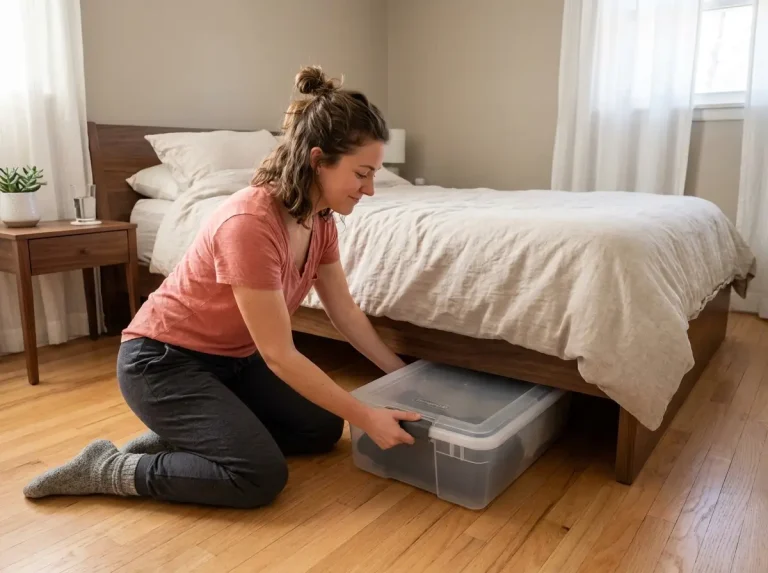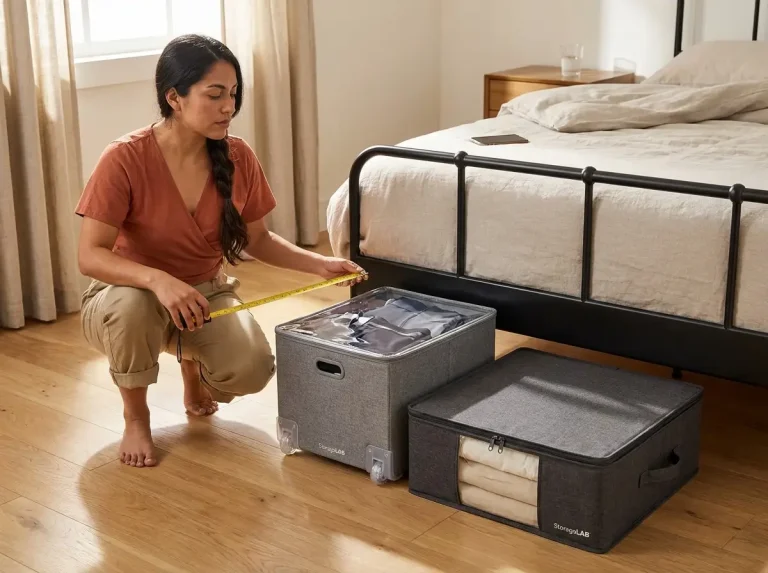

You walk in with a phone full of saved dorm storage ideas, and the first problem shows up before the first box is open: no nightstand, a closet with one bar, and a bed whose legs end in drawers. Half the list is already out.
That is the trouble with dorm room storage: a dorm storage workaround only works if the room has the piece it leans on, and every room is missing something different. Six missing pieces follow, one section each, with the built-in piece first, the workaround second, and the condition that breaks it last (the housing limits come from named university housing pages, and the failure patterns come from common dorm storage problems). For the full dorm room system and the buying list and the three to skip, go to those two articles, and use this one to pick a fix by what your room lacks.
Quick Answer
Pick the fix by the piece your room lacks, and check the free, built-in version of each piece before buying anything.
- Check what your bed frame already gives you before buying a riser.
- Hang a shelf from the bed rail where there is no nightstand.
- Add a second rod under the first if your closet has one bar.
- Sort the desk drawer by what it holds before buying trays.
- Park a slim rolling cart beside the mini fridge instead of hunting for a counter.
- Dry towels over the door first, and read the adhesive rule before any hook.
Dorm Room Storage Starts With the Bed Clearance You Lack
Say you order under bed storage bins for a frame you picture as tall. Move-in day shows a bed that sits low, or has under-bed drawers built into its base, or turns out to be a bunk, and the bins stay in the box. The first move costs nothing: find out what the frame itself does.
What the Frame Already Gives You
Some dorm beds are raised, some have drawers built into the base, and some lift in steps. You may not even get to pick. At Bowling Green State University’s bed delofting page, the standard loft is 72 inches from floor to the top of the bed with 57 inches of clearance under it, which the school says fits a desk, a chair and a tall dresser. The same page says students can only choose from the bed heights their residence hall offers.
That is one school’s standard, not a rule of dorms. But it shows how much a lofted bed can do before any product gets involved: at that height, the under-bed question turns into a furniture question.
Planning from photos is where this goes wrong. Online pictures give no information on dimensions, and a plan built on a bed you have never seen is a guess.
Slide a shallow latching tote under a low frame before you order any lift. If the tote clears with room for your fingers to grip it, the bins you planned will clear too, and the riser order can wait.
Risers, and the Four Legs They Need
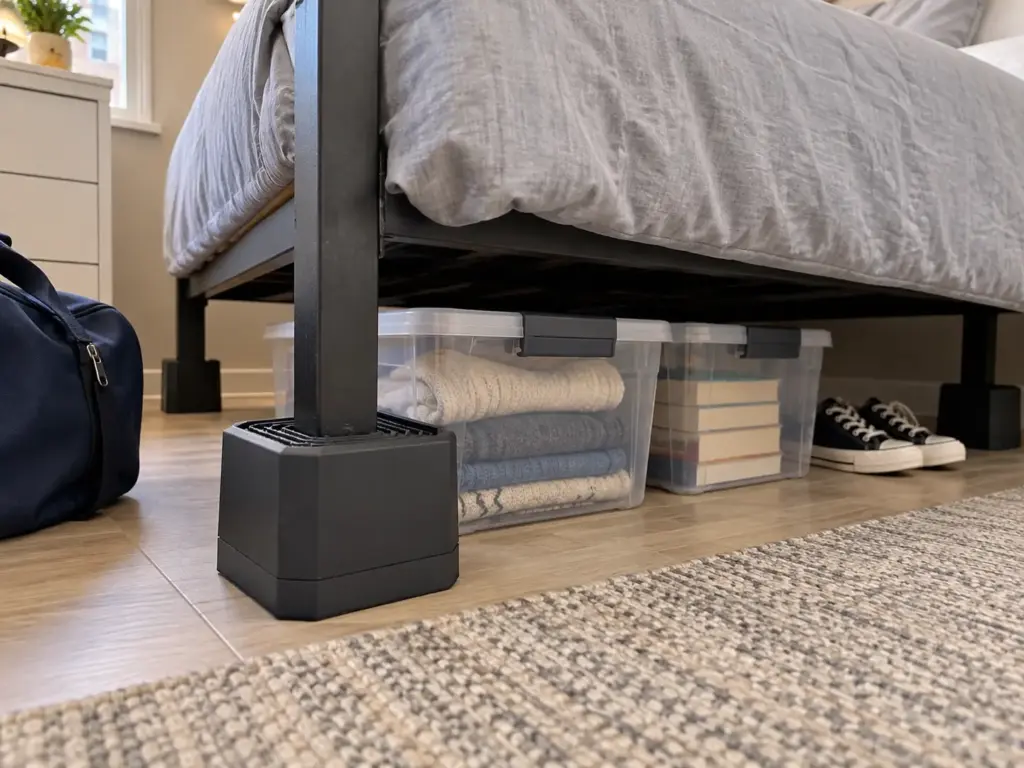
If the tote scraped and you still want the room, a riser is the usual answer, and it works under exactly one condition: the bed needs four free legs to stand on. The EclatBain Bed Risers come as a set of four and lift a frame by 3, 4.3 or 5.3 inches, with a 4,000 lb rating on the live listing, far more than a dorm bed and its sleeper will ask of them. Choose the height from the bin, not the other way around: measure the bin, add a little room to slide it out, and see which of the three steps closes the gap. Once the dead space under the bed becomes usable, under-bed ideas that fit a small bedroom cover what to put in it.
Risers do nothing for a bed without free legs, though, and plenty of dorm beds have none.
When the Bed Rules Risers Out
The standard fix fails on two kinds of beds. A bunk stands on posts, so bunk bed clearance depends on the posts and not on a lift, and a bed with drawers in its base stands on the drawer unit. Bed lifts can be ruled out for that reason: in some rooms the beds are bunks, and in others they have drawers where free legs would be. The workaround for a bunk was to hang clothes on the rails and the ladder, which needs the roommate’s permission before the first hanger goes up.
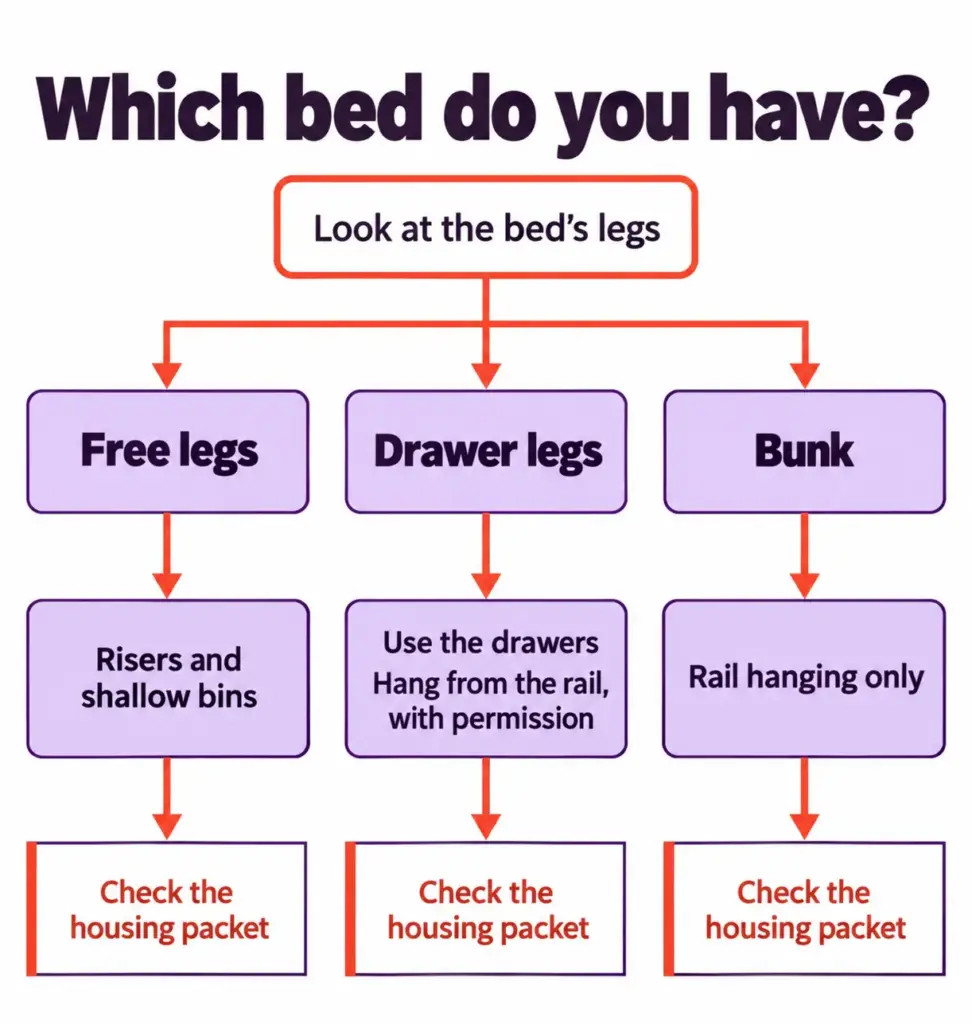
Built-in under-bed drawers are storage you already own, so fill those before anything else. If they are full and you still need bins, the choice moves to rolling or flat under-bed bins, where the flooring in your room decides whether a rolling under-bed bin glides or drags. The bed is settled. Next, the piece it should have come with: somewhere to put the phone and the water at night.
The Nightstand Your Room Never Came With
A nightstand sounds like the one thing every bedroom includes. Some rooms have them, and some simply do not come with them. So night one is a phone and a glass of water on the floor.
Check What Sits Within Reach
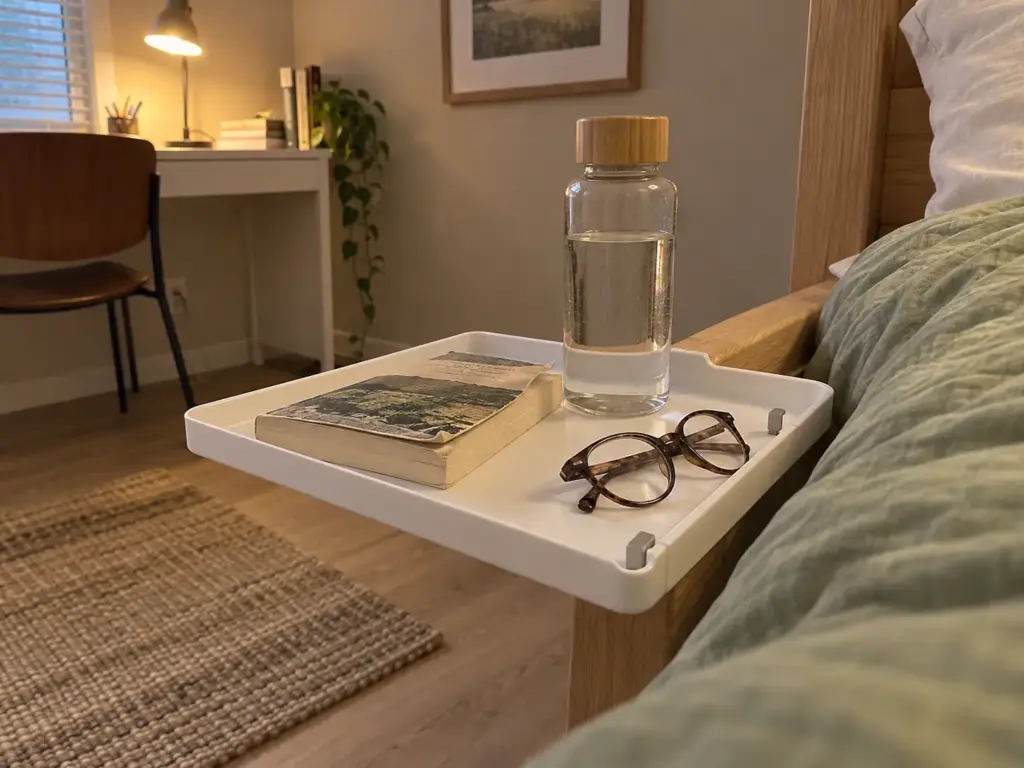
Look at what already sits near mattress height: the end of a desk shelf, a windowsill, a ledge on the headboard. Raised dorm frames are commonly described as running from roughly 25 to 43 inches off the floor, so measure your own, because a bedside surface works best near the top of the mattress. A windowsill that lines up beats a new piece that does not. Whatever lives on those spots gets the phone, the glasses and the charger, and anything that fits there is a purchase you skip.
A Shelf That Hangs From the Rail
When nothing lines up, a bedside caddy that hangs from the bed rail takes no floor space at all. The BedShelfie Bedside Shelf with Cable Catch is built for that job, with a cable catch so the charger cord stays put. The listing gives no dimensions worth quoting here, so the rail is your check: its thickness and its shape, before the order goes in. The method for measuring the bed rail gap sits in the organizers roundup.
Two situations rule it out. A bed side that is a flat board has no rail to hang from, and a roommate who needs the same side will take the space you just claimed.
A Cart or Drawer Set When the Rail Says No
A rolling cart or a plastic drawer set can stand in for a nightstand. One bought a cart at a craft store, and it held textbooks and charged a phone overnight. The weak point is the gap beside the bed: a bedside cart in a narrow gap blocks the path to the door, and it becomes the thing everyone bumps at night. For the room-level options beyond these two, see nightstand alternatives for small bedrooms.
The Closet Hang Space You Do Not Have
Before planning, check where everything goes in a wardrobe you have never seen. You can end up in the same spot with a duffel of clothes and a bar that holds about a third of them.
Use the Shelf and the Floor Before the Rod
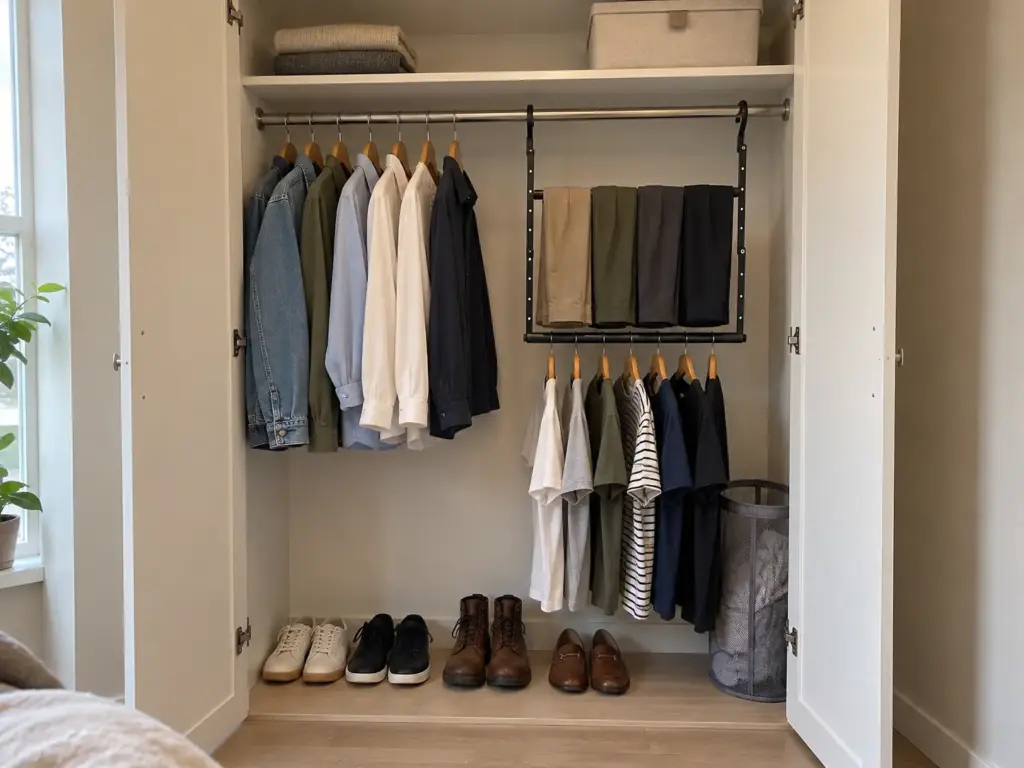
The interior of the closet is a bigger job, and the closet method that holds past finals owns it; this section only adds hang space. A closet with a shelf above the closet rod already has two tiers. The shelf takes folded stacks, and the closet floor takes shoes and a laundry hamper, with room for several pairs of shoes lined up in a wardrobe. Fill those before the rod, because hanging space is the most expensive kind to add.
A Second Rod Under the First
For shirts and folded-over pants, a second rod hung below the first doubles the hang space without a drill. The STORAGE MANIAC Adjustable Closet Double Rod comes as a 2-pack and fits over the rod you have, which makes the rod’s diameter the number to check against the listing before ordering. Pair it with no-drill closet fixes that leave your deposit alone and the closet changes in a renter-friendly way, with no mark on the wall.
It has one hard limit: the space below the first rod. Long coats and dresses reach the floor and collide with whatever hangs under them, so this suits short items only.
Hang your longest garment from the first rod, then hold a short shirt against it at the height where the second rod would sit. If the two overlap, the double rod will not work for that wall of the closet, and you have learned it for free.
When the Wardrobe Is Only a Third of a Closet
Some rooms get a freestanding wardrobe instead of a built-in closet. Treat it as a minimal wardrobe, much smaller than a normal closet, and check your room type, since sizes vary a lot between buildings. The only fix is editing: keep the season’s clothes, and send the rest home. A second rod is no help in a wardrobe with no rod to hang from, and for those closets, a hanging closet organizer or closet systems that leave no holes are the next product-level option.
The Drawer You Do Not Have
A desk with three drawers and a bag of mixed trays is a common setup, and the trays take over one and a half of the drawers while the other half is still a heap.
Sort Before You Buy a Tray
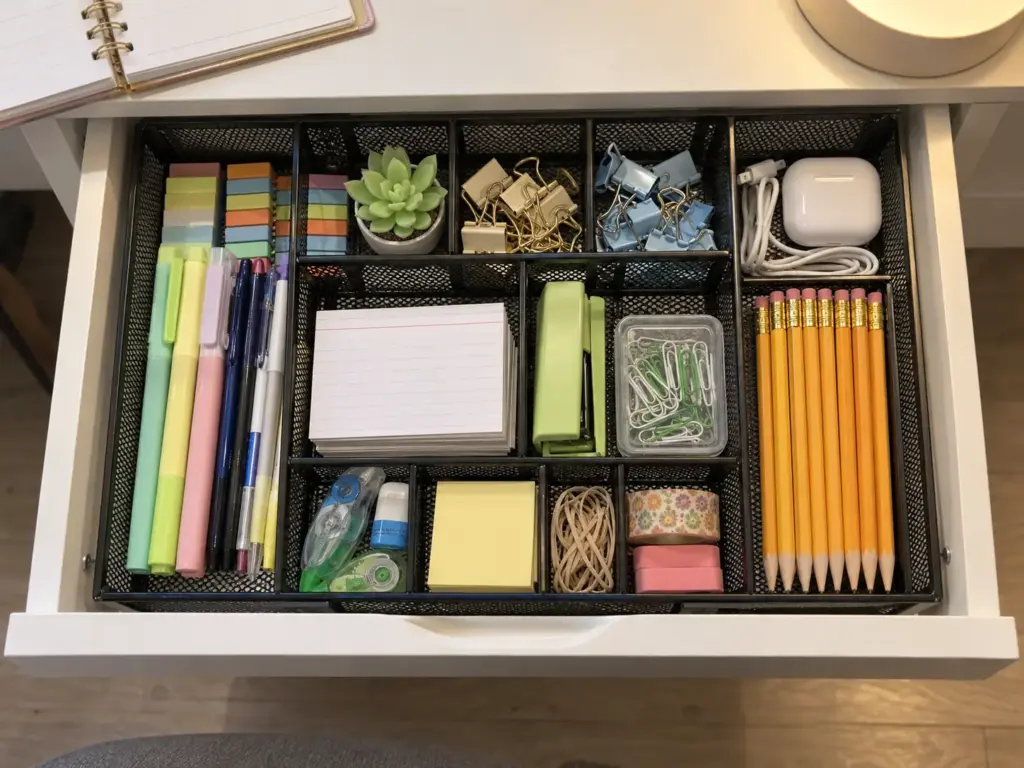
Deep desk drawers are storage you already have. Desks can have three drawers deep, with a tall one at the bottom, so count yours before buying a single organizer or a set of drawer dividers. Then empty them onto the bed and sort by use, not by item type: what you reach for daily, what you reach for weekly, what you keep in case.
The failure patterns below are the ones that keep showing up in dorm rooms. A 20-pack of mixed clear organizers filled about one and a half to two drawers in one room, which means a bag of small pieces can eat the whole drawer and still leave things loose. More pieces is not more storage.
Keep one flat spot in a drawer for chargers and cables, so they stay off the desktop. A flat spot works like a free cable organizer, and it stops the cord pile from creeping back across the desk.
One Adjustable Tray Beats a Bag of Small Ones
Once the piles are sorted, one adjustable tray covers a drawer’s width without a pile of small parts. The Marbrasse Expandable Desk Drawer Organizer is a mesh tray with 10 adjustable compartments that spans 13.8 to 17.5 inches wide, so measure the drawer’s width first and check that it sits inside that range. The piles you sorted decide how many compartments to open up. For the wider comparison, see desk organizers worth buying and the two to skip.
When the Bottom Drawer Is Tall
A tray sized for a shallow drawer wastes a tall one. Use the tall bottom drawer for what the tray cannot hold: a tall bin for bulky items, or folded clothes stood on edge. That drawer is closer to a small dresser than a desk drawer, and it works best when treated that way.
The Counter Your Mini Fridge Needs
The mini fridge sits on the floor with a box of snacks on top of it and a bag of noodles on the desk. A room with no counter can use a rolling cart as its surface.
Use the Top of the Fridge and the Desk Edge First
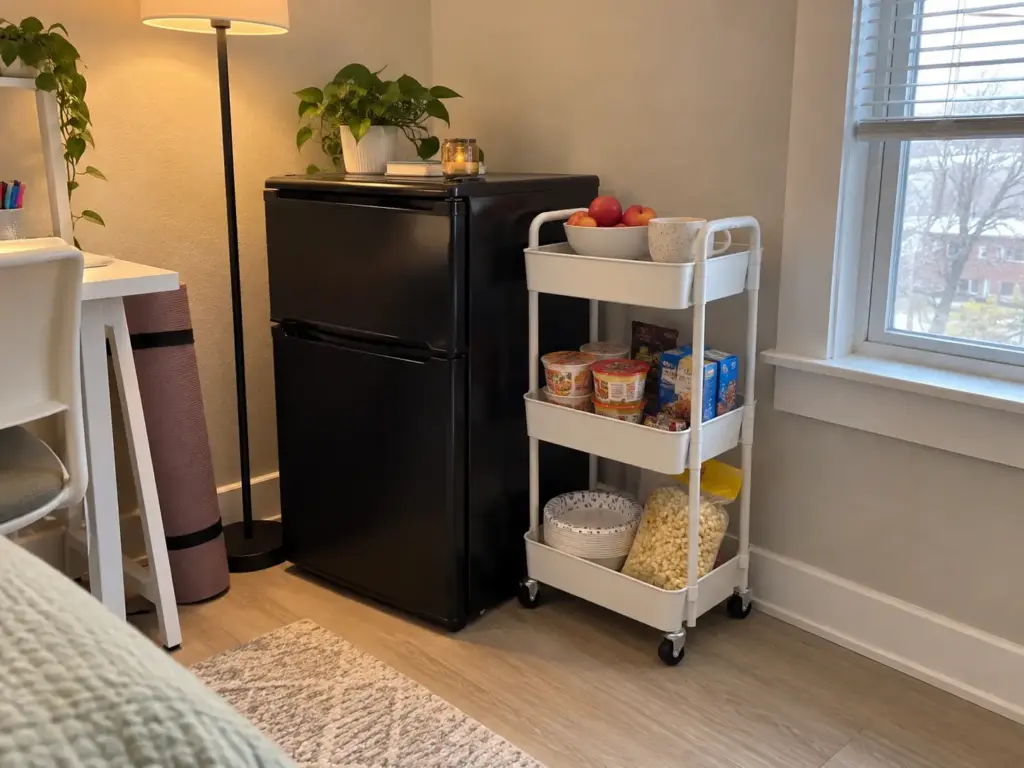
Whatever can stay on the fridge top, which doubles as a mini fridge shelf, or on the desk edge, stays there. A mini fridge station doubles as a snack station, a fixed spot for each thing instead of a pile, so give every item one place and stop when the surface is full. If your fridge is small and bins do not fit inside it, organizing a small fridge when bins do not fit covers the inside. Check your hall’s appliance rule before buying a fridge at all; the full dorm room system covers the room-level rules, so this article does not repeat them.
A Slim Cart Beside the Fridge
When the surfaces run out, a slim three-tier rolling cart parks beside the fridge and rolls out of the walkway when you need the floor. Read the width on the listing against the floor between your bed and the wall, because the cart’s width is the number that decides whether it fits.
What Blocks a Cart
A cart only helps if the floor beside the fridge is free. In a narrow room it blocks the door swing or the roommate’s path, and then it gets pushed into a corner where it does nothing. Measure the walkway first, and if the cart leaves less room than you need to open the door fully, drop the cart and keep the desk edge.
The Drying Space and the Wall You May Not Use
A drying rack looks like a simple answer to wet towels. Some rooms are different: a rack will not work over a dorm door, and stored in the closet it can almost entirely block the closet.
The Free Fix Comes First
In a room with no towel hook, a towel can hang over the door or the desk chair, which is a workable fix in shared-bathroom halls. Rotating towels through the week keeps any one from staying damp. For the shared bathroom itself, a hanging shower caddy travels with you and needs no wall, and shower caddies for shared baths covers which kind survives a communal shower.
Why a Drying Rack Fails in a Dorm
A rack needs floor and door the room may not have. When the door will not take the hooks, the rack lands in the closet, and a closet that is already short on space loses the little it had. If your door can take an over-the-door organizer, over-door organizers that fit your door sorts out which ones clear a dorm door, but test the clearance before you rely on it.
What Two Schools Say About Adhesive
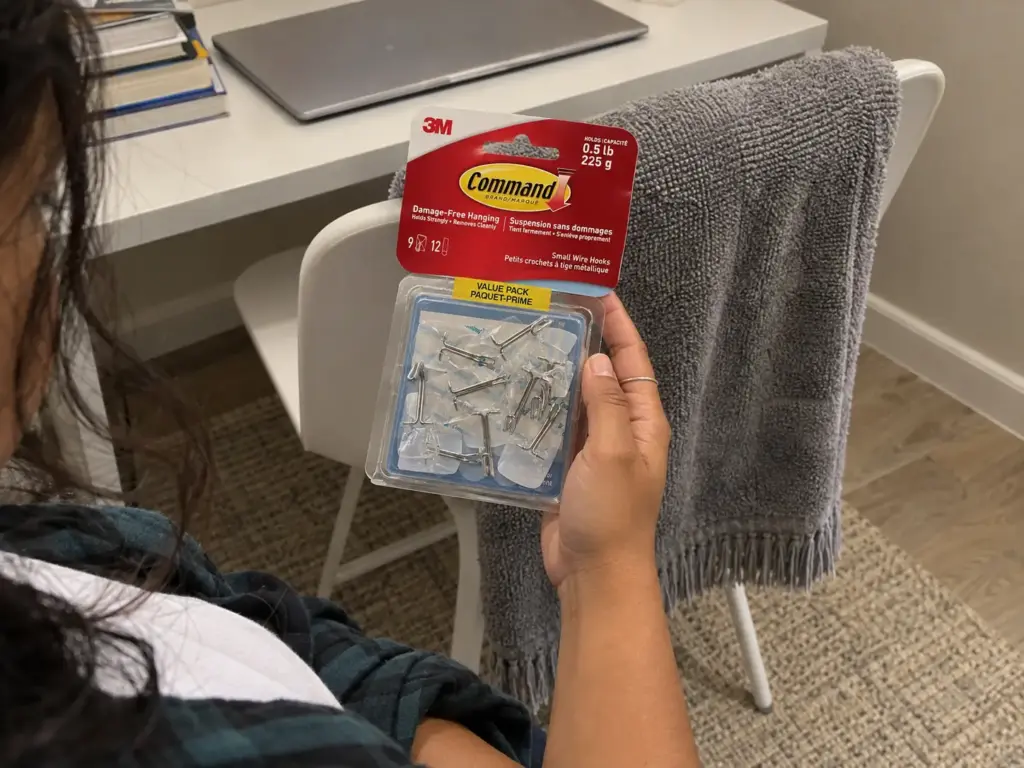
The wall is where this gets rule-bound. According to Western Kentucky University’s housing adhesives agreement, “The use of adhesive material of any kind on drywall is prohibited.” That includes drywall-safe 3M Command Strips, and the school allows light adhesives on concrete walls. Students are charged for damage and must record any existing damage at check-in.
Texas A&M’s rule is narrower and more specific. Texas A&M Residence Life’s decorations policy says Command Strips and poster putty will damage the walls in Hullabaloo Hall and the White Creek Apartments. Same product, different rule, depending on the building.
At check-in, photograph every mark already on the walls and log it in writing before a single hook goes up. A school that bills for damage will not remember which marks were there first, and your photos are the only record.
If your hall allows adhesive, the Command Large Wire Hooks are the complement to the towel-over-the-door habit: adhesive hooks on a wall that permits them, only after the housing rule is read. Where the rule says no, tension rod shelving that holds real weight gives you a place to hang things without touching the wall. And if the wall is off limits altogether, vertical storage ideas that last shows how to go up without it.
Find the Missing Piece Before You Order Anything
Three habits cover all six sections. Check what the room already has before buying anything: the frame, the drawer, the shelf, a towel. Read one rule per piece before it goes in the cart: the bed’s legs, the rod’s width, the adhesive policy. And buy the single item that fixes the piece you are missing, and nothing else.
Around midterms, look at which workaround is still in use and which one went back in its box, check that the roommate split of the closet and the door still holds, run a weekly reset on the drawer and the snack cart, and reread the housing packet for any line about hooks that got skipped on move-in day.
Today, walk the room and find the one missing piece that annoys you most this week. Use the built-in or free fix for it before ordering anything, then notice whether the problem is still there in two days.
Frequently Asked Questions
01What are some effective storage workarounds for a college dorm?
Start with what the room already gives you: the bed frame, the desk drawers, the closet shelf and a towel over the door, then fix only what is missing. A rail shelf replaces a missing nightstand, and a second closet rod doubles hang space.
02What are some good storage options for a dorm closet?
A second rod under the first doubles hang space for shirts and folded pants. A shelf over the bar takes folded stacks, and the floor takes a few pairs of shoes. Check your rod’s width before buying anything that clips on.
03What is the best under-bed storage for a dorm room?
It depends on the bed, because the frame decides what fits under it. Free legs take risers and bins; drawer-leg beds use the drawers; a bunk takes neither. Check how high your hall’s bed sits before buying.
04Can I use Command hooks in my dorm room?
Only where your hall allows adhesive. Western Kentucky University bans it on drywall and allows light adhesives on concrete, and Texas A&M names Command Strips as damaging in two halls. Read your housing packet first.
05What if my dorm bed is a bunk or has drawers under it?
Risers need four free legs, so a bunk or a drawer-leg bed rules them out. Use the built-in drawers, and with your roommate’s permission hang clothes on the bunk rails.
Disclaimer: ClutterlessNest is a participant in the Amazon Services LLC Associates Program. As an Amazon Associate we earn from qualifying purchases. This article may contain affiliate links — if you buy through them, we may earn a small commission at no extra cost to you. We only recommend products we have tested or genuinely believe in.