
The boxes are in the car, the organizers are already ordered, and the bed rail in a room you have only seen on a floor plan hangs a few inches lower than the product page assumed. That gap is why the best dorm room organizers are not the ones with the longest feature lists but the ones sized to a bed that cannot move, a door the hall may not let you hang anything on, a drawer of unknown width and a wall that may reject every adhesive.
This guide sorts dorm room storage by organizer type, gives each type the single measurement that decides whether it fits, and ends every call with a buy or skip and the failure to watch for by week three. Housing rules change from hall to hall, so each rule below belongs to the school that wrote it, and your own handbook has the final word. Measurements come first, then under the bed, the closet and door, the desk and the floor, and the full dorm room system covers the move-in checklist and the roommate rules in one place.
The whole decision fits in one grid before the detail starts: one organizer type per row, the number that settles it, the hall-rule check and the call.
| Organizer type | The measurement that decides it | Hall-rule check | Our call |
|---|---|---|---|
| Bed risers | Gap under the rail against the 3, 4.3 or 5.3 inch lift | No policy cited here names risers, so ask housing | Buy only if the gap is low |
| Rolling under-bed bin | Gap, with room for wheels plus a lid | Not named in the policies cited here | Buy if the gap allows |
| Soft under-bed bag | A gap near 6 inches; listed at roughly 5.5 inches tall | One hall’s furniture list names fabric items, so ask | Buy for low gaps |
| Over-door organizer | Door thickness against the hooks; 64 inches tall | Prohibited at Vanderbilt, so check first | Buy only if the hall allows it |
| Adhesive wire hooks | Wall type: drywall or concrete | Adhesive of any kind is barred on drywall at Western Kentucky | Buy only after the wall check |
| Desk drawer organizer | Inside drawer width against 13.8 to 17.5 inches | Nothing to install | Buy if the drawer is at least as wide as the low end of the range |
| Rolling cart | Width of the spot beside the bed or desk | Add its dimensions to the 80-inch sum some halls use | Buy for light loads |
| Cube organizer | 11.8 inch cubes, up to 11 pounds each | Same 80-inch sum; no drill, no adhesive | Buy as a shelf for light things |
The Five Measurements That Decide Which Dorm Room Organizers Fit
The order confirmation arrives, and the first tool you need is a tape measure, not the shopping cart. A product page shows a bin on a white background. It cannot show the rail of your bed, the thickness of your door or the width of the drawer you will open every day, and each of those can turn a good product into the wrong one.
The Gap Under the Bed Rail
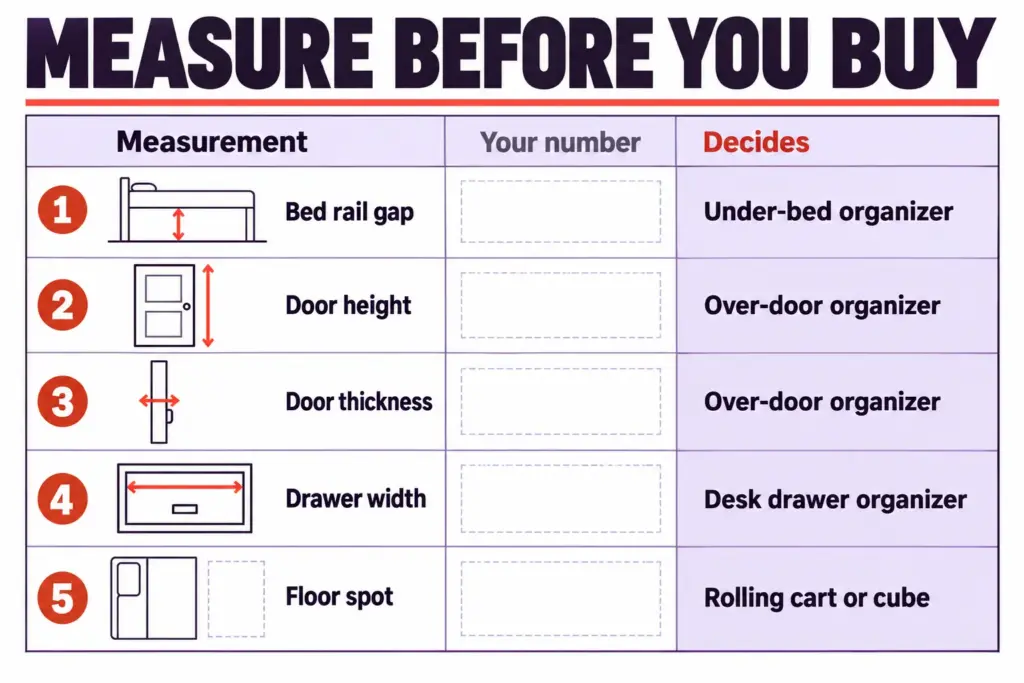
Five numbers settle nearly every purchase in this guide: the gap from the floor to the bed rail, the height and thickness of the door, the inside width of the desk drawer, the width of the floor spot beside the bed or desk, and the type of wall where a hook would go. Each number belongs to one organizer type, so write them all down once and the product pages stop being a guessing game.
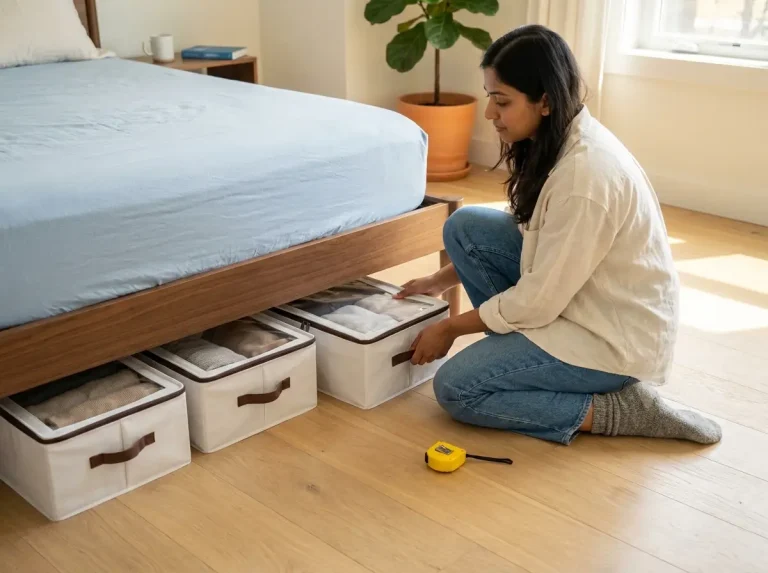
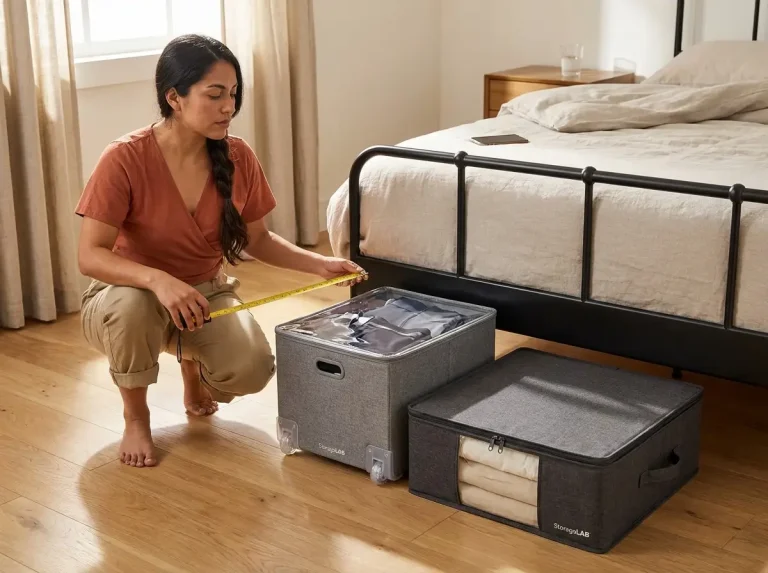
Start with the bed rail clearance, the gap under the bed. Storage Scholars, a dorm storage service, puts typical clearance between the floor and the bed frame at 12 to 30 inches, says it varies by school and hall, and tells students to measure or call the housing office. Read that range as a reason to measure, not as a number to shop by: a 12 inch gap and a 30 inch gap want different products, and a student at each end of the range is shopping for a different room. Measure from the floor to the lowest thing a bin has to pass, which can be a rail, a leg or a crossbar, and write the smallest number down.
Door Height, Door Thickness and Drawer Width
The door is two measurements. The over-door organizer in this guide is 64 inches tall and 19 inches wide, so the door has to clear that height, and its hooks have to fit over the door’s thickness. Hooks can be too small for a thick door, and hanging hooks of your own is a workaround that depends on what your hall lets you attach to a door.
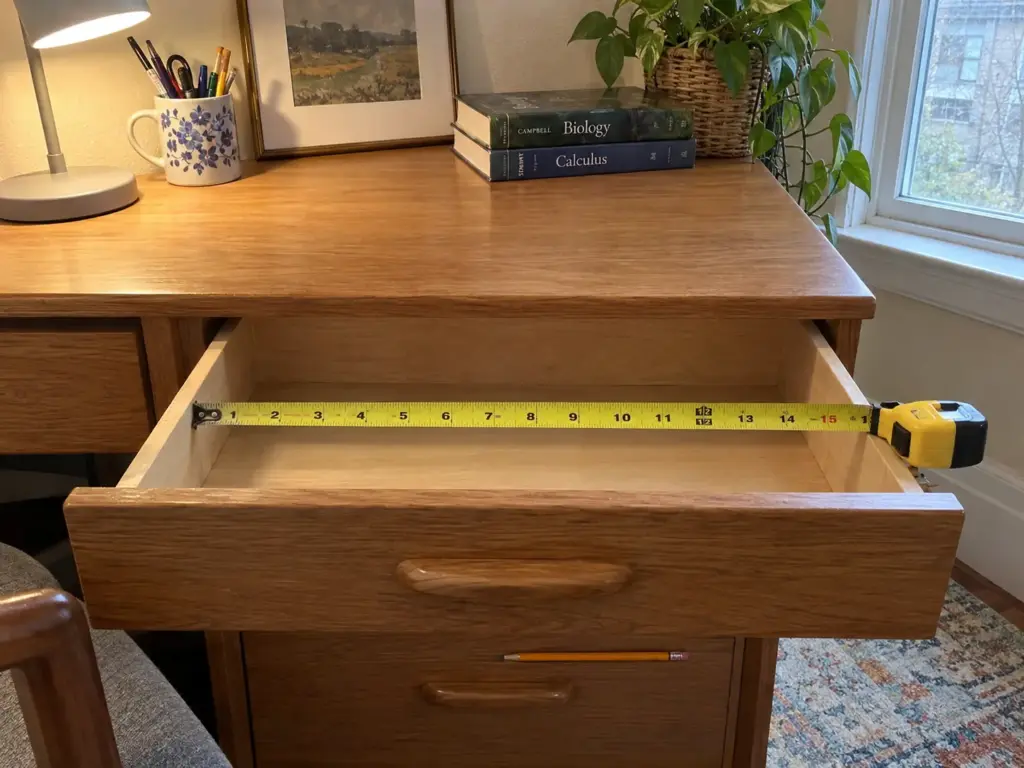
The drawer is one measurement: the inside width, edge to edge, not the front panel. The expandable drawer organizer in this guide spans 13.8 to 17.5 inches, so a drawer inside that span works and one narrower than the low end does not.
The Floor Spot and the Wall Type
The floor spot is the gap beside the bed or the desk where something on wheels or legs will live, and it is the one measurement you can only take in the room. Students who regret their dorm purchases often say the same: don’t buy storage before you get to the room, since furniture is sometimes hard to move, and wait to see what storage the room already has. The wall type is a question for the handbook, because adhesive rules follow the wall. Drywall halls and concrete halls get different answers, and the closet section below spells out how.
Wall and floor placement is a topic of its own, and the wall and floor ideas worth buying for cover it without repeating the product choices here.
The 80-Inch Rule Some Halls Use
One hall’s furniture policy turns a size problem into a math problem. Vanderbilt’s housing policy on furnishings prohibits personal furniture whose length plus width plus height, fully extended, adds up to more than 80 inches, and it names “large shelving or container units” in the examples. The same list prohibits fabric and upholstered items, with upholstered chairs, couches, futons and headboards as its examples. That is one hall’s policy, so ask yours.
The number to remember is 80, and the number that matters is the sum for the piece you are about to order. A unit 40 inches long, 15 wide and 30 tall adds up to 85 and fails the rule, however small it looks in a photo.
Add the length, width and height of anything freestanding on the same sheet as your five measurements, and run the sum before checkout. A sum written down in advance is a return you never have to ship.
The housing rules and the move-in checklist the whole room depends on live in our main dorm room guide, so this one stays on the products.
Under-Bed Organizers Sorted by the Gap Under Your Bed Rail
A student slides the new bin under the bed and it stops at the first leg, or an inch short of the rail. Both are the same mistake: the product was picked before the gap was measured.
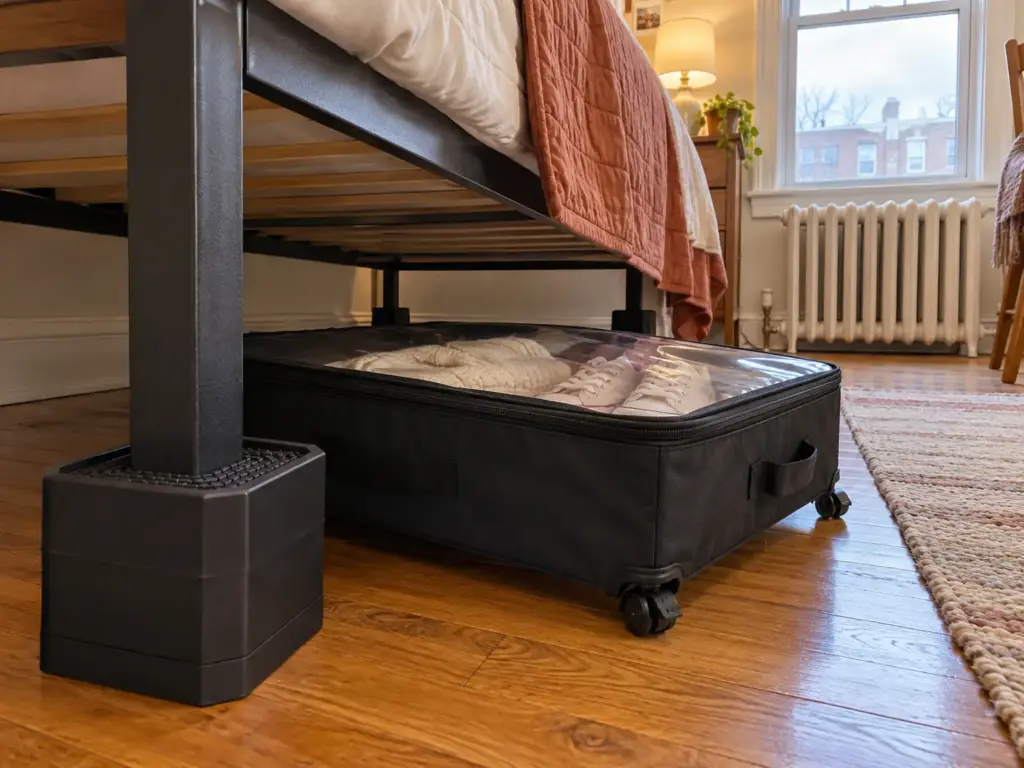
The gap picks the type. With a low gap, a soft bag is the piece that fits. With more room, a rolling bin can work. And at 18 inches or more, Storage Scholars says you can skip risers entirely, which leaves the budget for containers.
Soft Bags for a Low Gap
A bag with soft sides is the only under-bed piece that bends to the gap instead of demanding it. The NestNeatly Under Bed Storage Bags come as a three-pack, listed at roughly 5.5 inches tall, so they suit a gap near 6 inches and not much lower. That height is a listing figure, and the live page does not repeat it in the title, so check the live page before ordering. For hard-sided options sorted by clearance, see these containers for low beds.
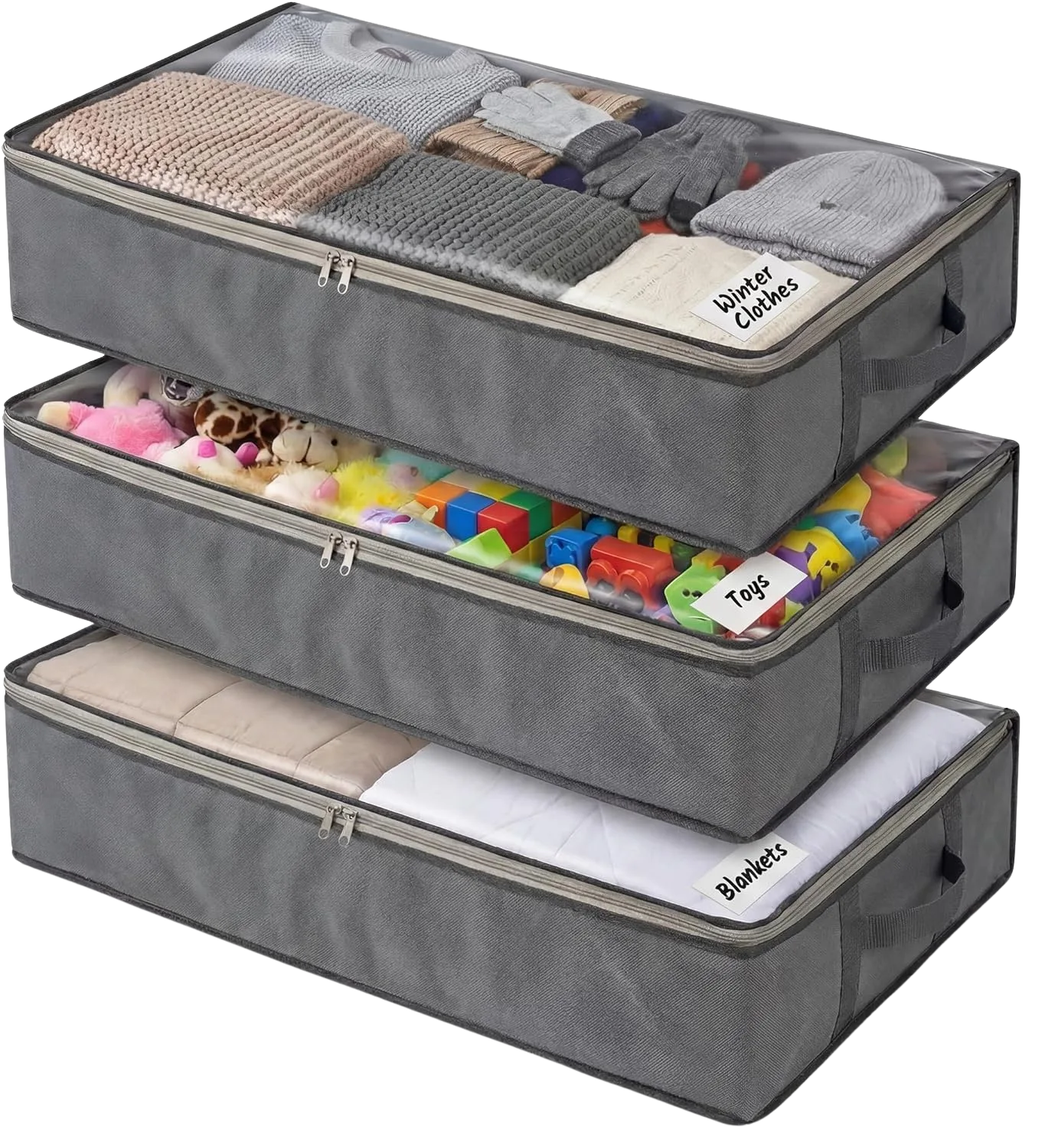
Soft sides also raise a housing question. Vanderbilt’s furniture list names fabric and upholstered items, written with chairs and headboards as the examples, and whether a hall reads that as covering a zippered bag is a one-line email to the housing office.
Rolling Bins When the Gap Allows
A rolling underbed organizer is the pick people name first for under a bed, and a gap near 6 inches is where they stop being the right pick: wheels plus a lid need more height than that, and a flimsy bag that fits beats a sturdy bin that does not. The clearance math is laid out in rolling versus flat under-bed storage, and it comes down to adding the wheel height to the bin height to the lid before comparing with your number.
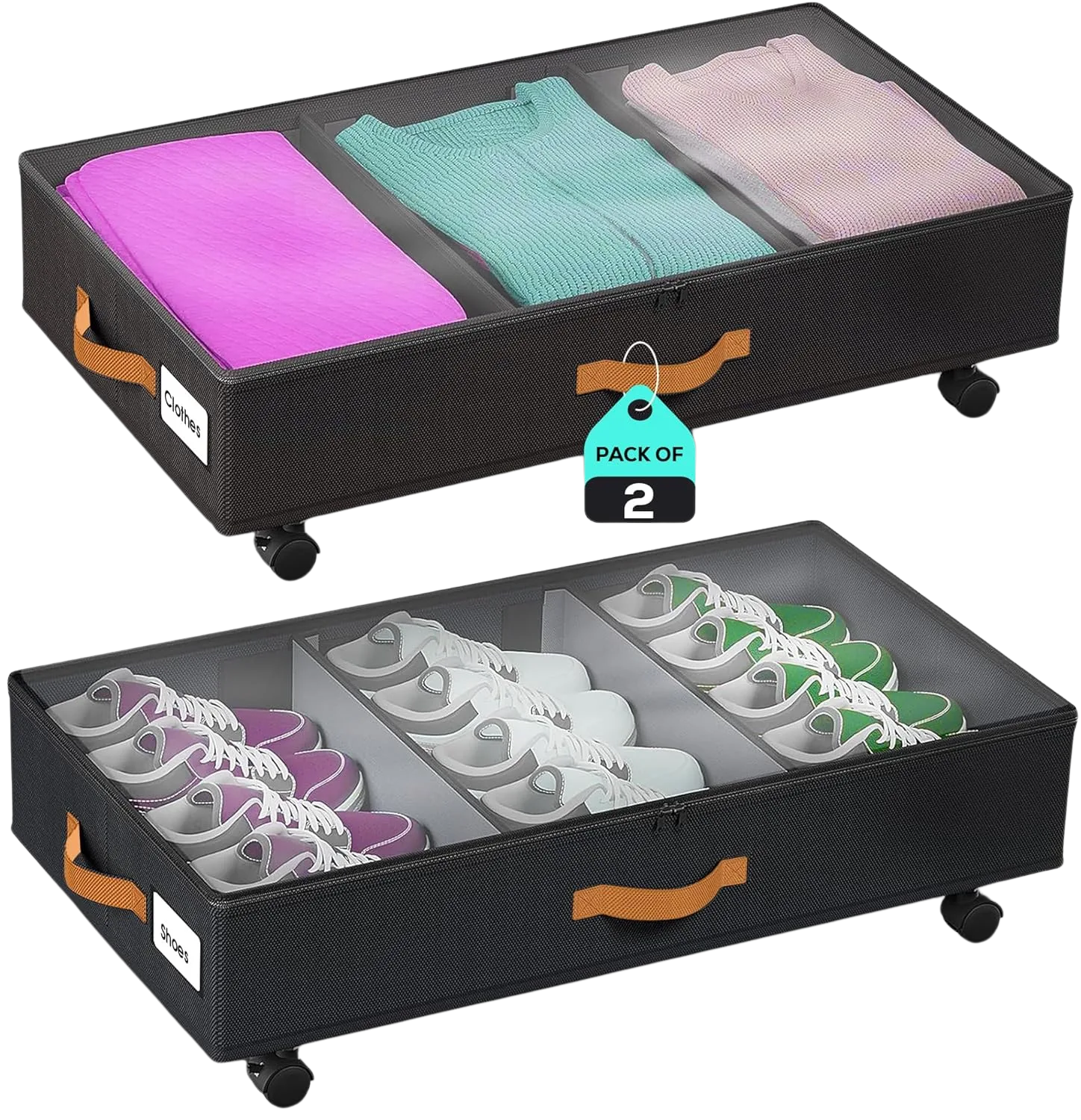
The Aethel Under Bed Storage with Wheels is a two-pack of wheeled bins for the things you reach for weekly. The listing’s title gives a capacity (36L each) but not a height, so find the height on the live page and hold it against your gap. Assembly is the weak step: parts can arrive missing, and the plastic cover can arrive wrinkly or with a hole in it. Once assembled, the bins fit in the bottom of the closet and very easily under the bed as well.
Bed Risers: What This Set Lifts and When to Skip Them
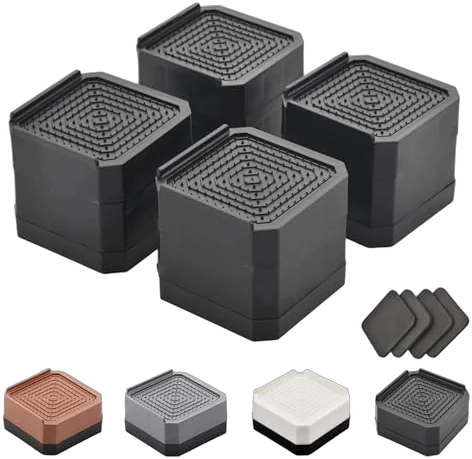
Risers are the usual answer to a low bed, and with this set the lift stops short of what the answer promises. The EclatBain Adjustable Bed Risers come as a set of four, and the live listing offers three heights: 3, 4.3 and 5.3 inches. One vendor says risers add 6 to 12 inches in general, so a bed that needs the bigger end of that range is not solved by this set. The call is simple: the gap you need to reach, minus the gap you have, has to be 5.3 inches or less, and under that math the risers are still worth it only when a low gap is the problem.
Stability is the weak spot. On the listing, many of the mentions are negative, and risers can become dislodged when furniture is moved. Plan for that by setting them once, with the bed in its final place, and treating a bed shuffle as a reason to check each foot.
Whether a hall allows risers is a question for the housing office. None of the policies quoted in this guide mention them, so a rule on lofts, bed frames or furniture is a different thing from a rule on risers, and the answer has to come from your own handbook. Once the type is chosen, you can set up under-bed storage so it stays organized with whatever you bought.
Closet and Door Organizers Your Hall May Ban
The organizer arrives, the hooks do not clear the door, and a line in the handbook says over-door hangers are not allowed in that hall at all. Door pieces and wall hooks are the usual way to stretch a dorm closet, and the policy decides before the product does, so read the rules first and shop second.
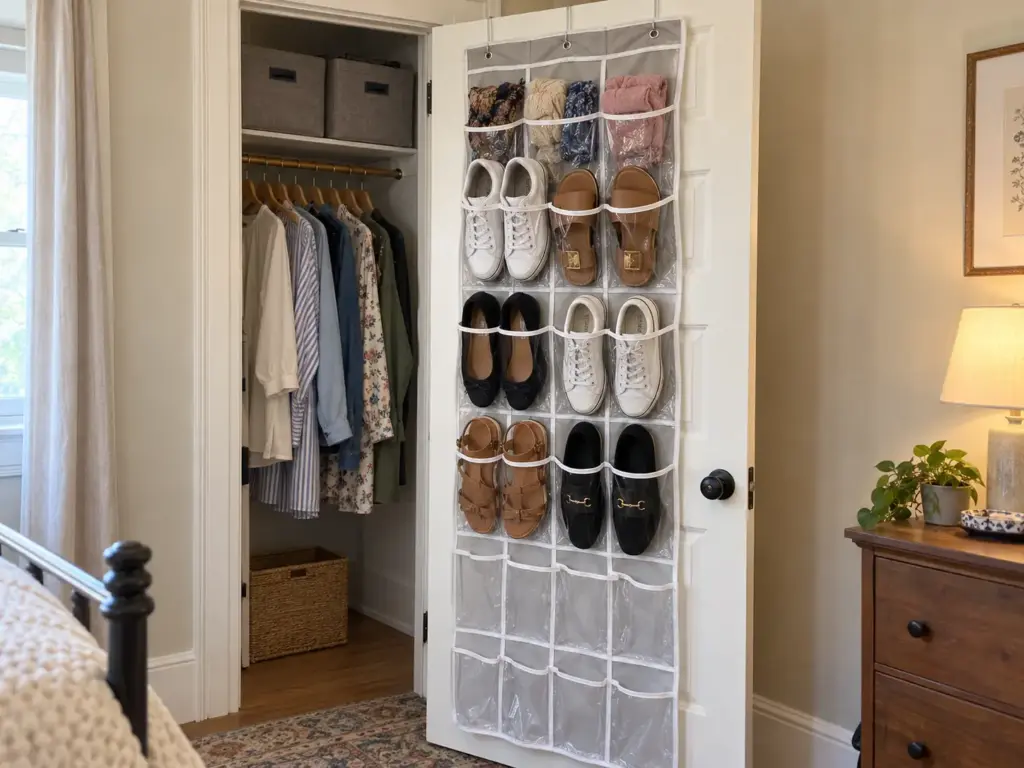
Over-Door Organizers: Check the Door and the Policy
A hanging closet organizer on the back of the door looks like the obvious dorm closet answer, and it is also the first piece a hall can rule out. Vanderbilt’s rules on over-the-door hangers state that they are prohibited because of the damage they cause. That is one hall’s rule, and another hall may allow them, but it is the reason to check before the order goes in rather than after the box arrives.
If your hall allows them, the door decides the fit.
The SimpleHouseware Over-the-Door Shoe Organizer has 24 pockets, stands 64 inches tall and 19 inches wide, and hangs on four metal hooks. Hooks can be a little small for a thick door, and some people hang hooks of their own. Measure the door’s thickness against the hook opening first.
For the door-fit method in more detail, see these over-door organizers that fit your door. And if the hall bans them, this is the piece to skip, not to hide.
Wall Hooks: The Wall Decides
Hooks go on the wall, so the wall type is the first answer. According to Western Kentucky University’s housing adhesives policy, “The use of adhesive material of any kind on drywall is prohibited.” The same policy lets halls with concrete walls use light adhesives, so the same hook can be fine on one floor and a charge on another.
Washington University’s residential life guidelines on decorating go a step further: “Velcro, double–sided tape, hooks with double–sided tape, etc. will damage surfaces and are prohibited.” Vanderbilt lists tape, adhesive holders, screws, tacks and nails as prohibited, allows non-staining putty, and calls Command products generally acceptable while adding that they may cause damage.
Three halls, three answers. Hold the product until you have read yours.
The Command Large Wire Hooks are the no-drill option once the wall and the policy agree. On painted drywall, the strip can come off without damaging the paint, which tells you about the paint and nothing about the policy, because a hall can still have an adhesive ban.
For the numbers on hook weight limits and hollow-core doors, the vertical storage guide goes deeper. Buy only after the wall check.
When Both Are Off the Table
When a hall bans over-door hangers and adhesive both, the work moves to the floor and to the closet itself. Non-staining putty is on Vanderbilt’s allowed list for light items, floor-standing pieces from the cart and cube section below need no wall at all, and closet rod extender ideas add hanging space without touching anything on the wall or the door.
Take photos before you hang anything. Vanderbilt says a resident will not be charged at check-out for damage that was reported at move-in, and Western Kentucky asks students to record existing damage on a check-in room inspection through the housing portal.
On move-in day, photograph the door, the wall where a hook would go and the underside of the bed frame before anything is attached or stacked. Those three photos answer most of the questions a move-out inspection asks.
Desk Drawer Organizers That Fit a Dorm Desk
The organizer is the right idea in the wrong width, and the drawer slides open onto a loose tray. A dorm desk drawer is small enough that an inch decides it.

Inside Width First
Measure the inside width of the drawer, edge to edge. The Marbrasse Expandable Desk Drawer Organizer spans 13.8 to 17.5 inches wide, a mesh tray with ten adjustable compartments in black, so a drawer inside that span works and a drawer under 13.8 inches does not.
Outside the range, the reviews point to problems: the metal can feel cheap, it may not fit a drawer, and it can arrive without pieces to secure the fittings. That one review holds both failures, the fit and the flimsy. Buy it if your drawer is at least as wide as the low end of the range, and expect a mesh organizer, not a rigid one. There is no cheaper twin worth recommending.
For the rest of the desk, see the desk organizers worth buying and the two to skip.
If the Drawer Is Narrower Than the Range
When the drawer is narrower than 13.8 inches, or shallow, an expanding organizer is the wrong tool and no product is the right one. A small tray, a few loose drawer dividers or two loose boxes will hold pens and chargers without the organizer’s fittings, and a shallow drawer may be best left for paper. For a desk that cannot take an organizer at all, small-desk organization lays out the system.
Carts, Cubes and Bins: What to Buy and What to Skip
The cart rolls into the one gap beside the desk, and nothing about the gap was measured. In a small space, freestanding pieces earn their floor space only when they fit a spot you can name.
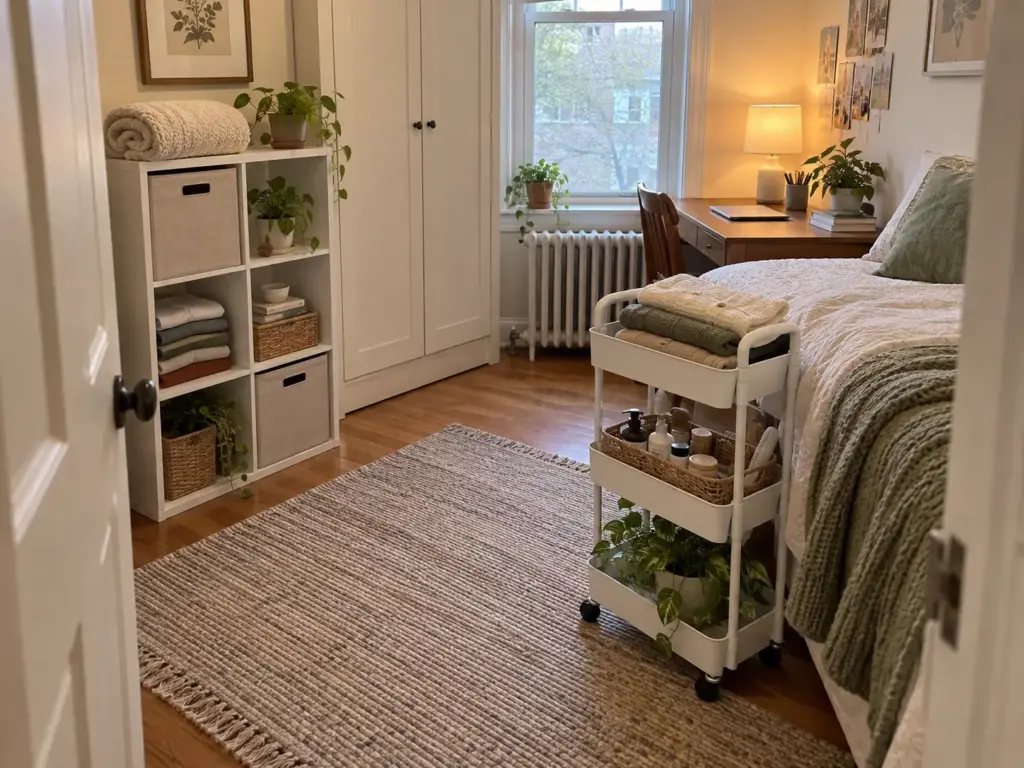
Rolling Carts: The Parking Spot Decides
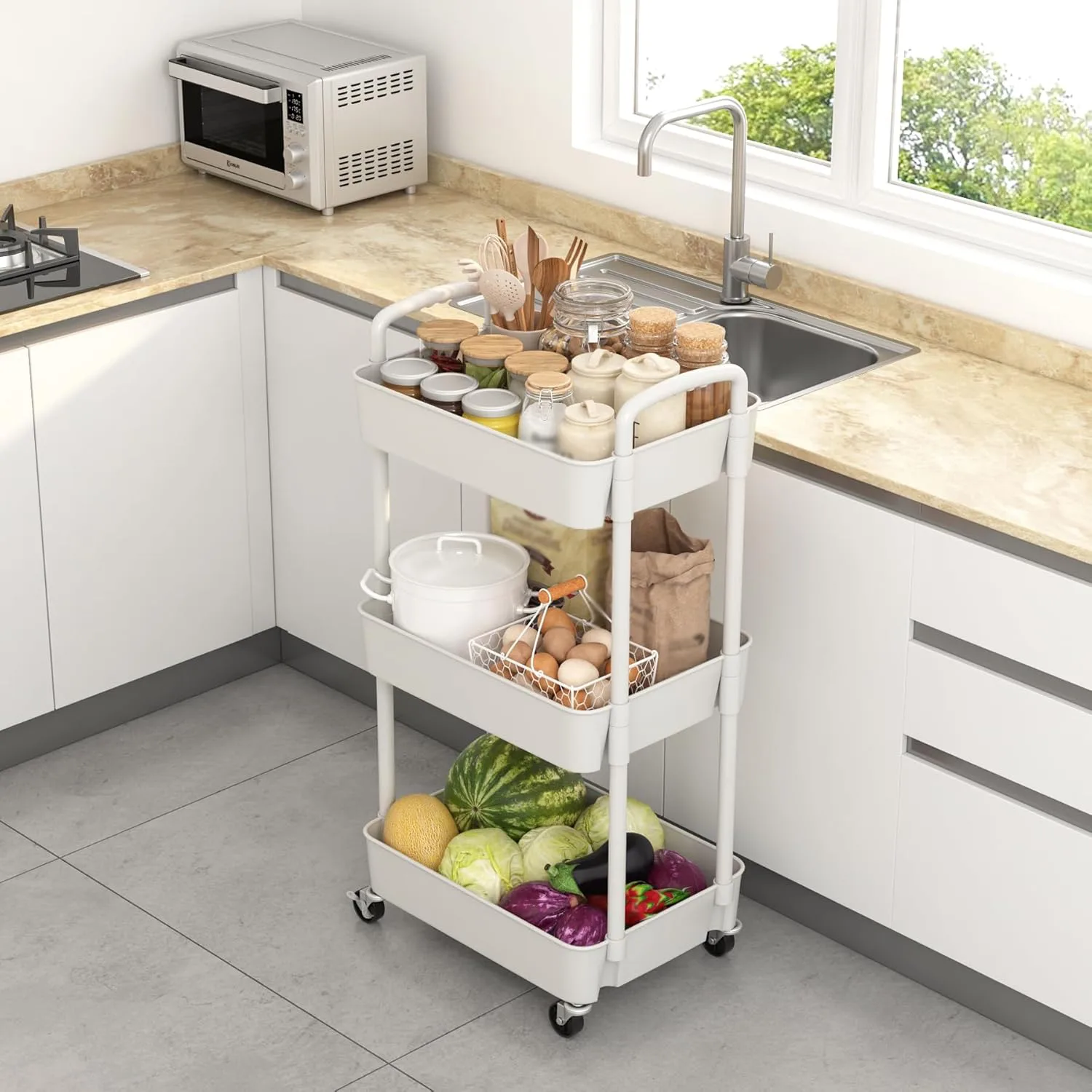
The measurement is the width of the gap beside the bed or desk, because the cart will live there. The Slim 3-Tier Rolling Storage Cart is sold by Sywhitta as a rolling utility cart in a 7 inch wide model, but the live page does not make the width easy to find, so read it on the live listing before you rely on that figure.
Stability is the flaw most often raised: the unit can feel wobbly and lopsided, so things slide to one side, and Amazon lists stability among the things to consider. It is not the sturdiest option, so it is a poor choice for particularly heavy items. Use it for light things, not books.
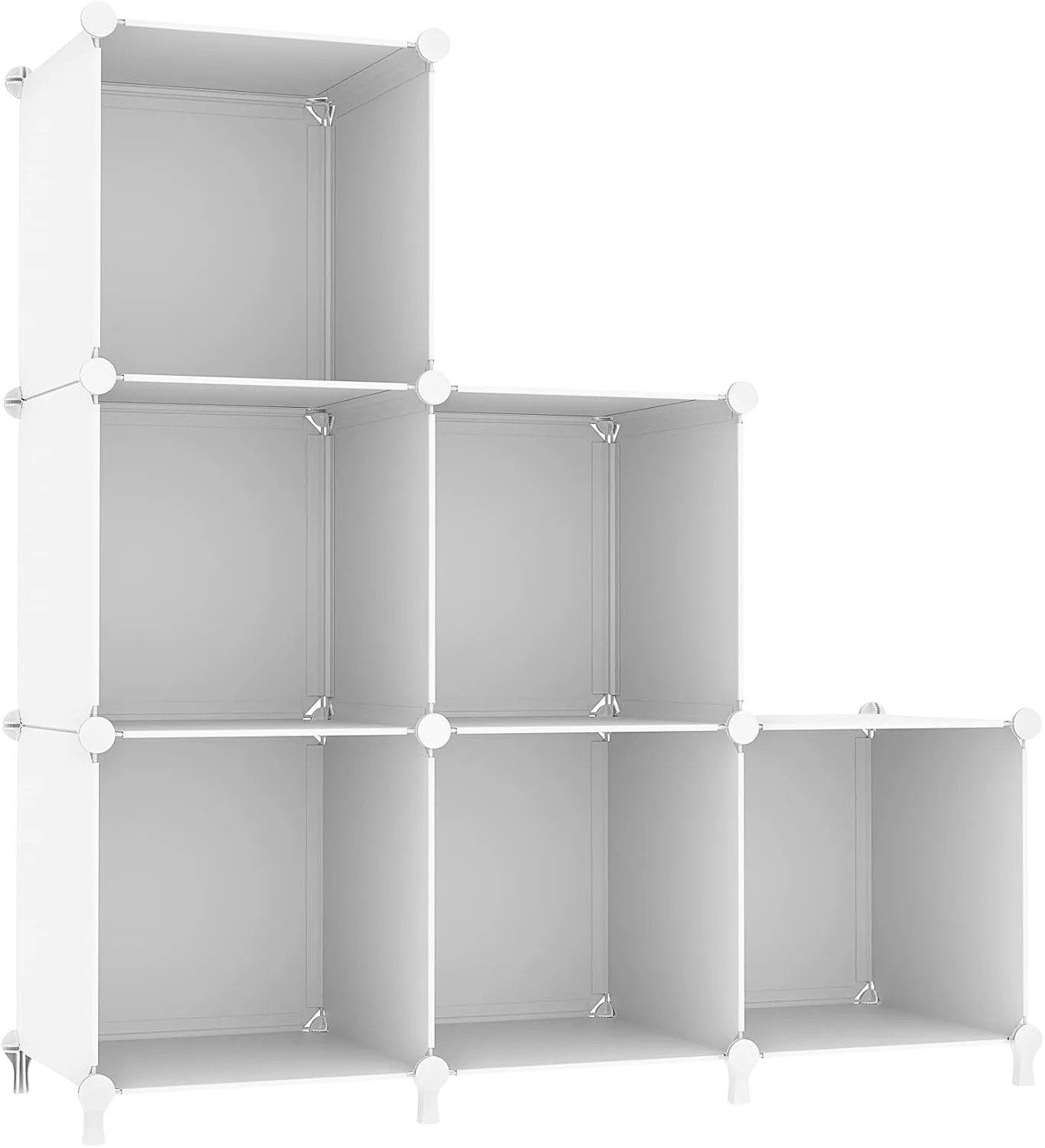
Cube Organizers: A Shelf for Light Things
A storage cube organizer is no-drill storage with no adhesive to argue about, which makes it the easiest piece to get past a hall. Each cube on the AWTATOS Stackable Cube Organizer is 11.8 inches on a side, and the listing’s weight rating is up to 11 pounds per cube, so a six-cube unit is a shelf for light things and not a dresser. It suits collectibles, but it can feel flimsy, with boards that keep coming apart however securely you attach them. Add its dimensions to the 80-inch sum before you stack it high.
Skip the Trunk and the Bulky Furniture
A storage trunk can be super bulky and heavy, and it is often not needed, so for any storage chest the advice is to wait until you see what storage you have.
Upholstered storage, such as a storage ottoman, sits on Vanderbilt’s prohibited list as fabric furniture, so ask before you order one. The same hall allows plastic crates as substitutes for concrete blocks and bricks, which are prohibited, as long as their use does no damage, so a plain crate is the floor piece to consider before a trunk. The same warning covers the clip-on bedside caddy: a small tray that attaches to the bed to hold a phone can go unused if a bookshelf already stands right next to the bed. For furniture decisions beyond the dorm, see furniture that earns its floor space.
Why Dorm Room Organizers Stop Working by Week Three
The room worked on move-in day. By the third week the riser has crept, the cart leans and the hook is somewhere on the floor. The failures have an order, and it follows from what reviewers on these listings describe and from what the housing policies charge for.

Week One: What Shifts
The first thing to move is whatever sits loose under weight. Risers can become dislodged when furniture is moved, and a dorm bed gets moved. Rolling bins and soft bags shift the same way: nothing holds them but the floor. Check each foot of the bed, and slide each bin out and back once, before the first week is over.
Week Three: What Comes Loose
Connectors go next. Some carts would be steadier with screws, since handles and layers can get loose and pop out of the joints, boards on cube organizers can keep coming apart, and adhesive hooks can let go after a few weeks while the hook itself holds. Nothing here is a manufacturing mystery. These are pieces held together by friction, and friction wears.
A weekly pass of ten minutes catches most of it: press each hook, nudge each cart, square each cube unit. The weekly reset that keeps a dorm room working builds that pass into a routine.
Keep the heaviest things on the lowest shelf of any cart or cube unit. A top-heavy stack on a piece that reviewers call wobbly is the fastest way to turn week three into a spill.
Move-Out: What You Pay For
Move-out is where the earlier choices show up on a bill. Under Vanderbilt’s check-in and damage rules, residents inspect the room at move-in and report damage, and “A resident will not be charged for damage upon check out that was reported at move in.” The same policy says residents must remove non-university furniture at move-out or be charged for its disposal.
For the packing problem, take home anything you did not use before the end of the academic year, because your needs change and you may be amazed how much more you acquire as the year goes on. Moving out is easier with fewer pieces to carry.
Who Buys What When the Room Is Shared
Two carts arrive for one gap beside the window. This section is editorial judgment, not a statistic, and it is a sensible split, not a rule.
Buy Alone: Anything Measured to Your Own Bed or Drawer
The pieces tied to one bed or one piece of furniture are bought alone: the under-bed bag or bin, the riser, the desk drawer organizer, and whatever goes on your side of the closet. Nobody else’s measurement matters to them.
Buy Together: The Floor Pieces and the Fridge-Side Shelf
The pieces that share floor, such as a cart, a cube unit, a fridge-side shelf or anything else standing, are agreed first. The 80-inch sum and the floor spot belong to the room, not to one person, and a roommate’s furniture arrives too. The advice to wait until you see the room matters twice in a shared room, because it applies to both of you.
Agree on the Floor Spot Before Either Cart Arrives
Decide who gets the gap beside the window, or whether it should hold one cart both of you use. For the full roommate system, see the roommate split in the dorm room system.
Measure First, Buy the Measured Pieces, Wait on the Rest
Three things carry the whole guide:
- Take the five numbers first, because the bed gap, the door, the drawer and the floor spot each pick the type.
- Let your hall’s policy decide the hooks and the over-door piece, because the same product is allowed in one hall and prohibited in another.
- Treat carts and cubes as shelves for light things, not as furniture, and add up the 80-inch sum before you stack.
Around the middle of the term, pull the cart out and see whether it still sits square, look at whether a riser has crept toward the wall, press a thumb on each adhesive hook, and make a pile of what you have not touched to take home before move-out.
Today, with the tape measure and the bed rail, write down the gap from the floor to the lowest rail, then notice which of the organizers above that single number rules out.
Frequently Asked Questions
01What are some good organizers for college dorms?
A good dorm organizer is sized to a measurement: the under-bed piece to the gap, the drawer organizer to the drawer, the cart to the spot beside the desk. Read your hall’s rules on adhesives and over-door hangers before anything goes in the cart.
02Are Command hooks allowed in dorms?
It depends on the hall: Vanderbilt calls Command products generally acceptable but says they may cause damage, while Western Kentucky prohibits adhesive of any kind on drywall. Read your own policy and check whether your walls are drywall or concrete before ordering.
03Do over-the-door organizers damage dorm doors?
Some halls ban them for exactly that reason: Vanderbilt prohibits over-the-door hangers because of the damage they cause, so check your policy first. Then measure the door’s thickness against the hooks, since hooks can be too small for a thick door.
04Should I buy dorm storage before move-in?
Buy only the college dorm storage you have measured, and hold the rest until you see the room, since waiting is the usual advice. Furniture is sometimes hard to move, and the room may already have storage.
05Do I need bed risers in a dorm?
Only with a low gap under the bed rail; Storage Scholars says to skip risers when you already have 18 inches or more of clearance. Check the lift the set actually offers, since the EclatBain listing tops out at 5.3 inches.
Disclaimer: ClutterlessNest is a participant in the Amazon Services LLC Associates Program. As an Amazon Associate we earn from qualifying purchases. This article may contain affiliate links — if you buy through them, we may earn a small commission at no extra cost to you. We only recommend products we have tested or genuinely believe in.