You cleaned your apartment last weekend. It looked great for about four days. Now the counter has a mail pile, the closet door won’t close, and the entryway is a shoe graveyard again. The problem isn’t your effort — it’s that most organization advice skips the part about what actually keeps working after the first week. I’ve organized apartments under 500 square feet with rental restrictions, zero closet space, and budgets that ruled out custom anything — and the systems that last all share a few structural principles. This guide covers each one, room by room, with specific products and methods that hold up past month one.
Quick Answer: To organize a small apartment that stays neat, follow this sequence:
- Edit first — remove what you don’t use before buying storage
- Add multi-functional furniture that hides storage inside daily-use pieces
- Use vertical space with floating shelves and over-door organizers
- Organize zone by zone — bedroom, kitchen, bathroom, entryway
- Set up a weekly ten-minute reset to prevent slow drift back to chaos
Why Small Apartments Feel Like They Never Stay Organized
The Stuff-to-Space Math
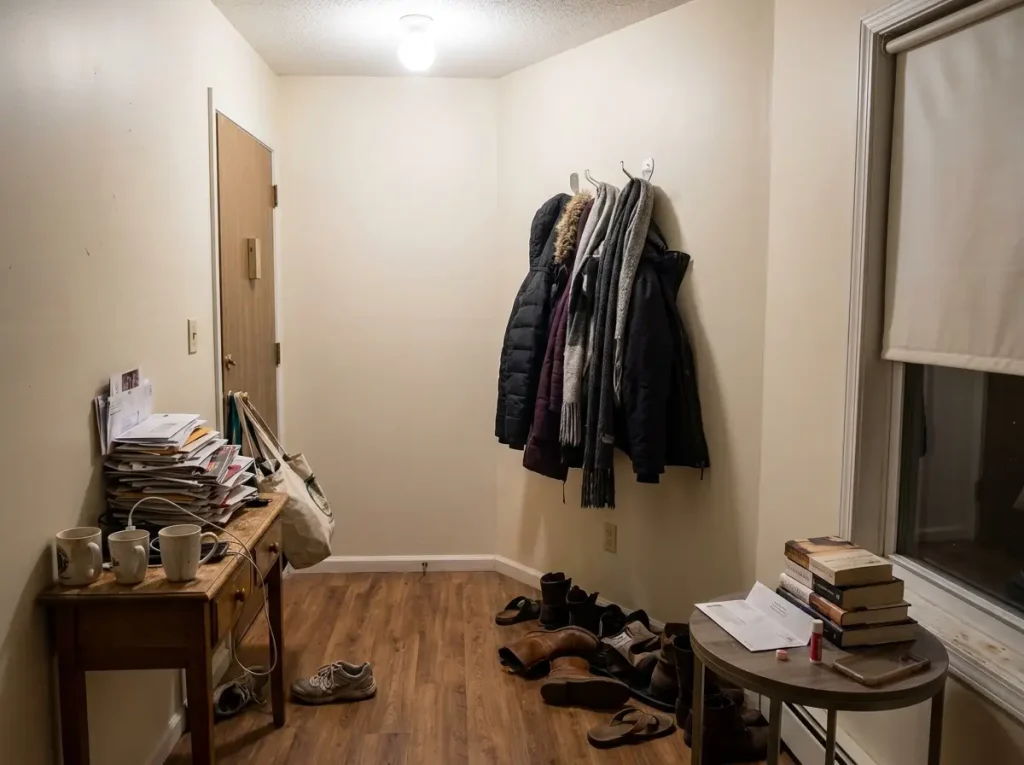
The average American apartment is roughly 750 square feet, according to the National Apartment Association — but that number includes hallways, the bathroom, and the kitchen. Your actual livable storage space in a one-bedroom is closer to 400 usable square feet once you subtract fixed furniture and walking paths. That means every item you own competes for a shrinking pool of surface area and shelf space.
Here’s the part nobody calculates: storage capacity and living space are the same square footage in a small apartment. In a house, the garage absorbs overflow. In an apartment, the overflow sits on your kitchen counter or the floor next to your bed. When your stuff exceeds your available spots, the system doesn’t fail — you never had a system to begin with.
Why Systems Without Rules Revert
A bin on the shelf is not a system. A system has rules: what goes in, what stays out, and what happens when the bin is full. Most apartment organization reverts within two to three weeks because the original setup had containers but no protocols. You organized by appearance — everything looked neat — instead of organizing by behavior — everything has a rule.
Pro tip: If you can’t explain to someone else where a specific item goes in five seconds or less, the system is too vague. “It goes in the living room bin” isn’t a rule. “Remotes and chargers go in the left bin, blankets go in the ottoman” is.
The Edit-First Rule: Organize What You Actually Need

The Three-Pile Sort
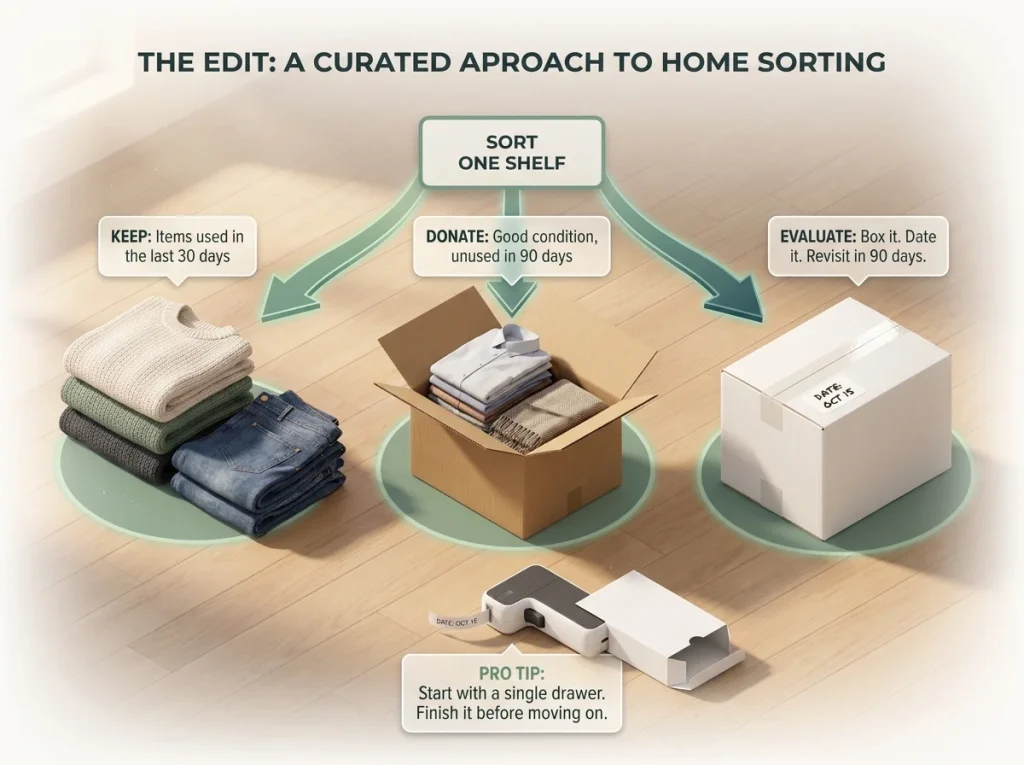
Before you buy a single bin, you need to reduce what you’re storing. Pull everything from one area — a closet, a set of drawers, one shelf — and sort into three piles: keep, donate, and evaluate. The evaluate pile is for things you’re unsure about. Box those items, write today’s date on the box, and store it. If you haven’t opened the box in 90 days, donate it without looking inside.
This is the part where most people stall. The problem isn’t indecision — it’s that you’re trying to sort everything at once. Start with a single drawer or one shelf. Finish it completely before touching anything else. Momentum comes from completion, not ambition.
If you want a structured approach to the sorting process, the decluttering methods guide covers eight different frameworks — from the KonMari method for emotional attachment to the four-box method for speed.
One-In-One-Out
Once you’ve edited down, the one-in-one-out rule keeps the balance. Every new item that enters the apartment means one existing item leaves. This sounds simple, but it breaks down the moment you don’t have a designated exit point. Keep a small donation bag inside your front closet or behind the bedroom door. When it’s full, it leaves the apartment. No negotiation.
Pro tip: The exit bag works better hung on a hook than sitting on the floor. On the floor, it becomes invisible. On a hook at eye level, it’s a reminder every time you walk past.
Multi-Functional Furniture: The Entry Point to More Space
Living Room Double Duty
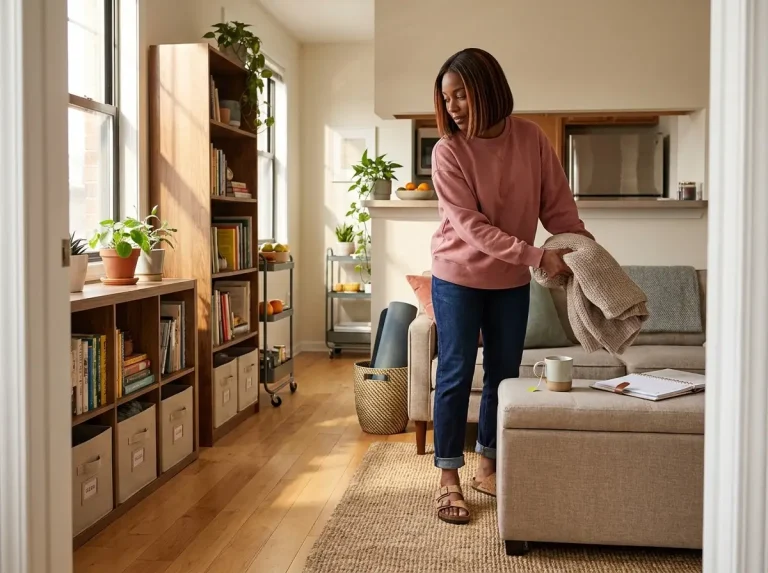
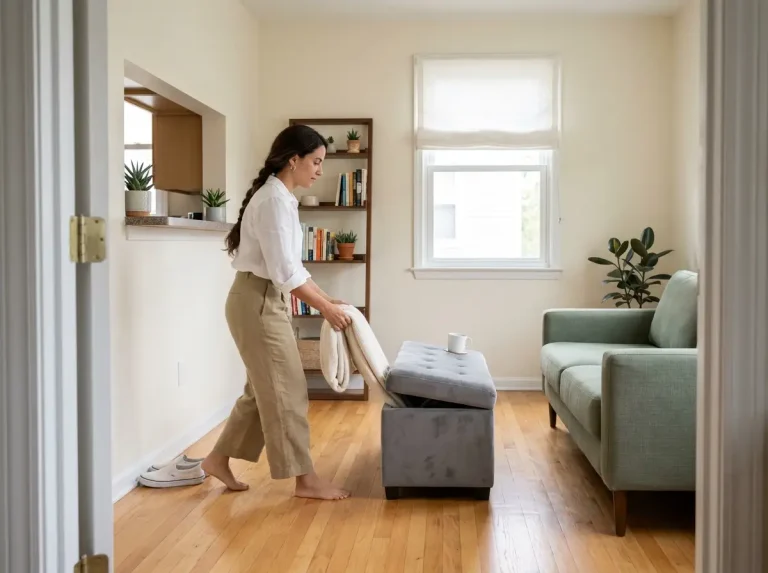
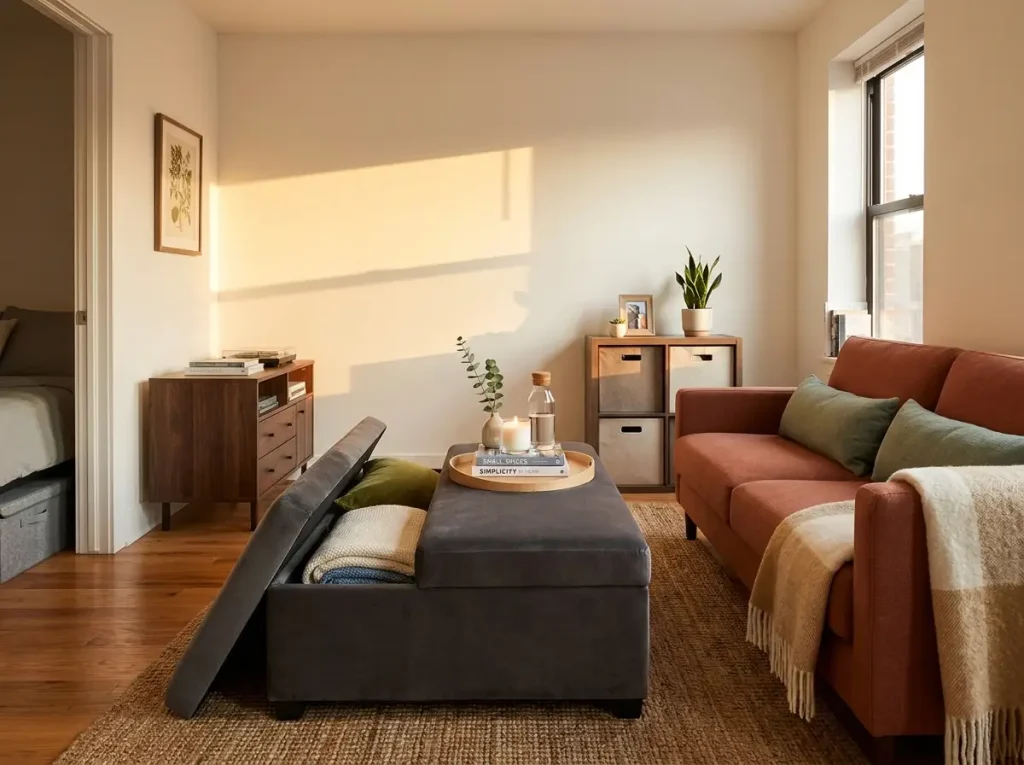
In a small apartment, every piece of furniture should do at least two jobs. The coffee table that’s only a coffee table is wasting its footprint. A storage ottoman replaces it — you get a surface for drinks and remotes, a seat when friends come over, and a hidden compartment for throws, board games, or spare linens underneath.
The SONGMICS Storage Ottoman Bench fits the standard small living room at 43 inches wide, holds up to 660 pounds on the lid surface, and the interior stores about four folded throws or two spare pillows and a stack of books. The one limitation: if your room is under eight feet wide wall-to-wall, this bench will feel tight. In that case, look at the 30-inch version, which gives you the same dual function in a smaller footprint.
Bedroom Pieces That Store
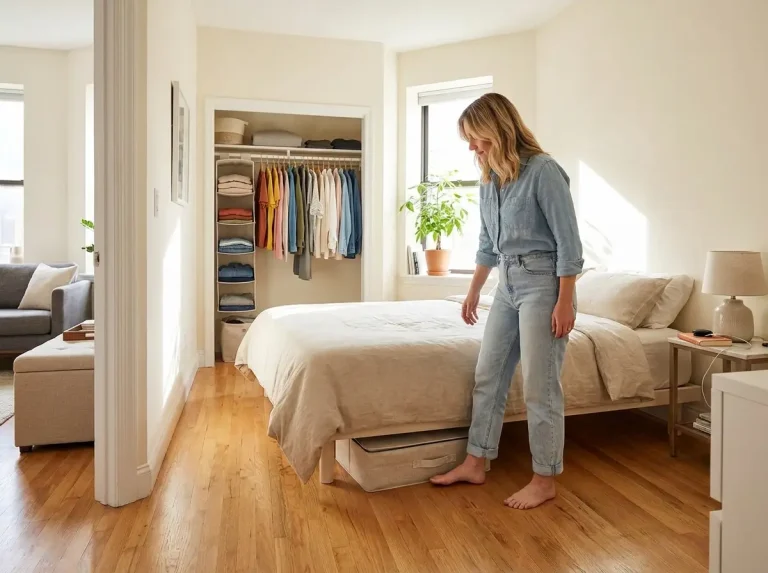
A platform bed with built-in drawers replaces both the bed frame and a dresser in a small bedroom. If you already have a bed frame without storage, risers can create enough clearance for flat containers underneath — but only if you measure first. More on that in the zone-by-zone section below.
What Multi-Functional Really Means
Here’s the test: if removing one piece of furniture would force you to buy two separate items to replace its functions, it’s genuinely multi-functional. If it just looks clever in photos but you never actually open the storage compartment, it’s furniture with a gimmick. Buy based on the function you’ll use daily, not the one that sold you on the listing.
Vertical Storage: The Space Most Small Apartments Waste
Floating Shelves Above the Sight Line
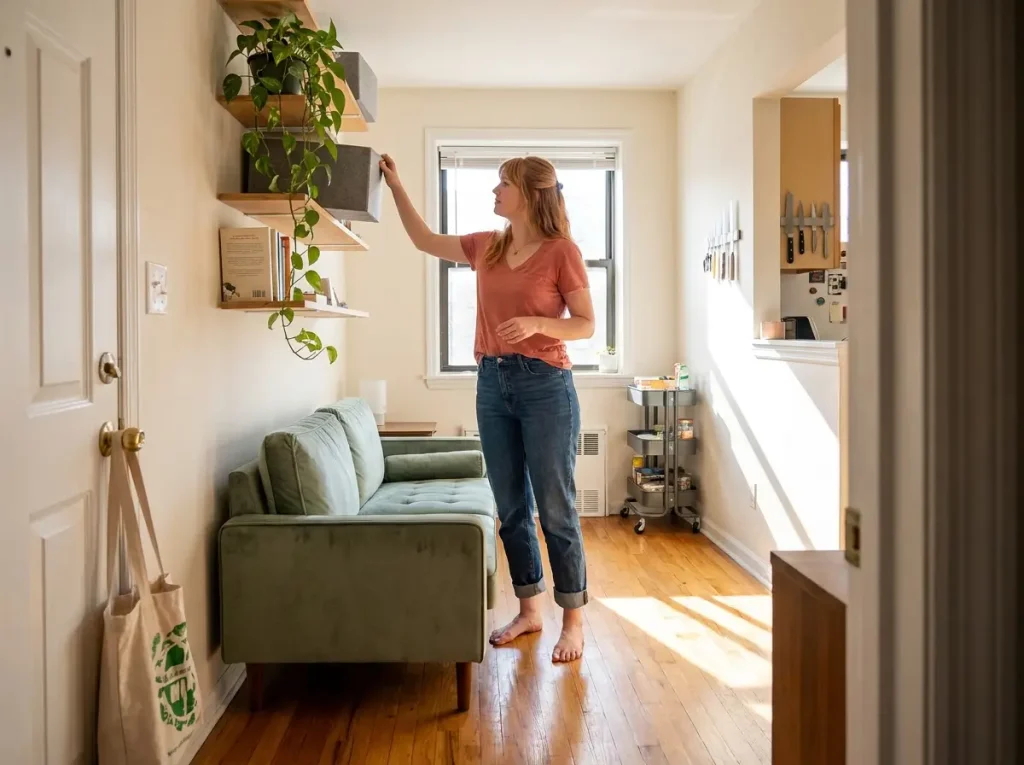
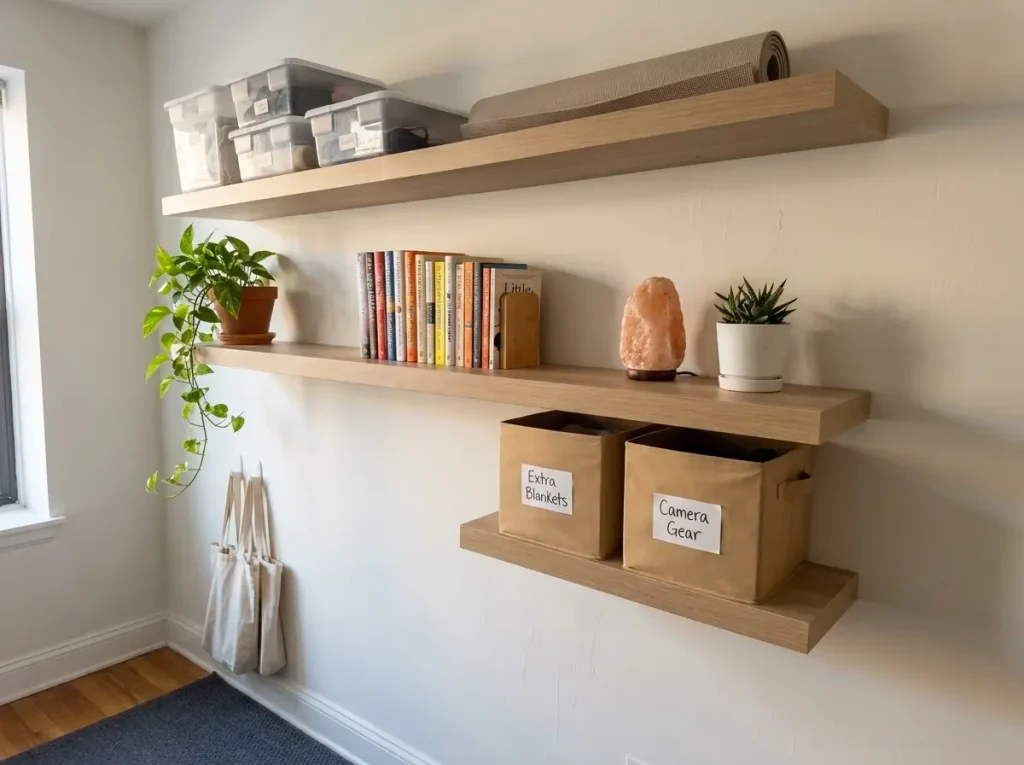
Most apartments have nine-foot ceilings. Most people stop putting things on walls at five and a half feet. That’s three and a half feet of vertical real estate — per wall — doing nothing. Floating shelves mounted between five and seven feet handle books, labeled bins, and plants without taking any floor space at all.
The Floating Wall Shelf No-Drill 16.5″ uses adhesive mounting rated for 22 pounds per shelf, so it works on painted drywall without leaving holes. Two of them stacked 14 inches apart create a visible storage zone above a sofa or desk. The trade-off: adhesive shelves work on smooth walls, but textured walls reduce the bond. If your walls have heavy texture, test one shelf for 48 hours before loading it.
Over-Door Storage
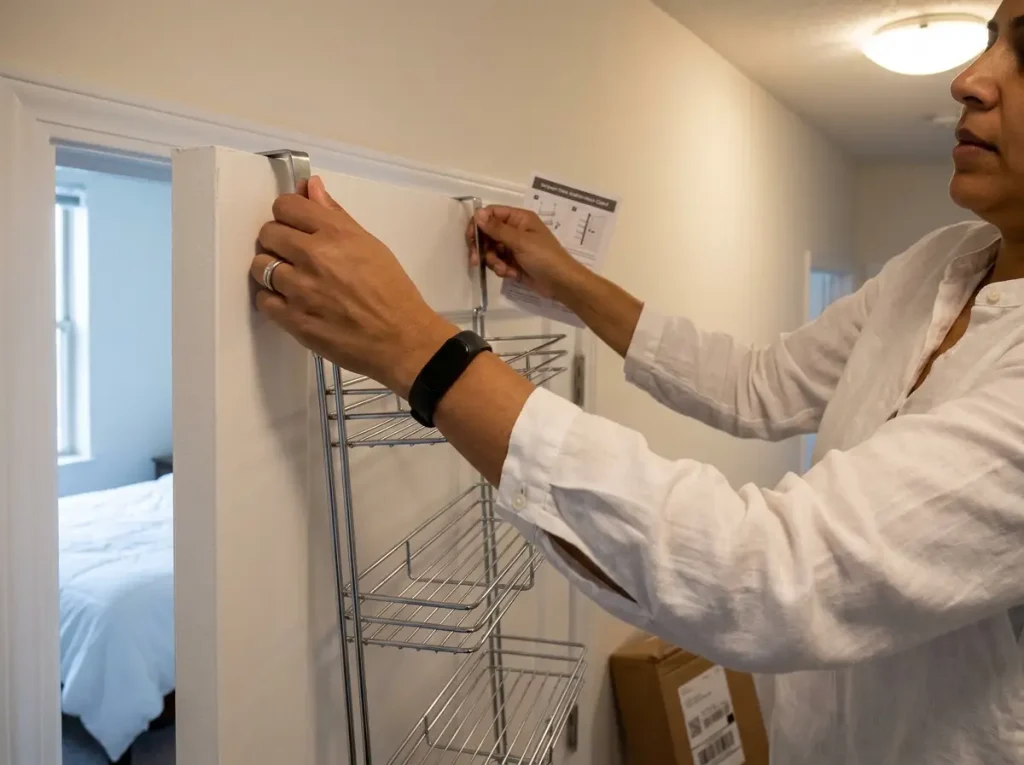
Every interior door in your apartment is a storage surface. Bedroom doors, bathroom doors, pantry doors, the closet door you keep closed — each one holds an organizer that adds shelf space without touching the walls.
The SimpleHouseware Over-The-Door Organizer fits doors up to 1.75 inches thick and adds five tiers of usable shelf depth. It works for bathroom bottles, pantry overflow, bedroom accessories, or entryway essentials. One thing to watch: if your apartment has lever-style handles on the inside of the door, the organizer can block the handle’s rotation. Check the clearance before you hang it.
The Height Rule
Here’s a practical rule: daily-use items go between knee and shoulder height. Weekly-use items go above shoulders. Seasonal items go at the ceiling. This keeps the grab zone efficient and moves infrequent items to spaces you only access with a step stool. You’ll find the right shelf height the first time you stack bins so high you can’t reach the top one without knocking the middle one off — that’s your ceiling.
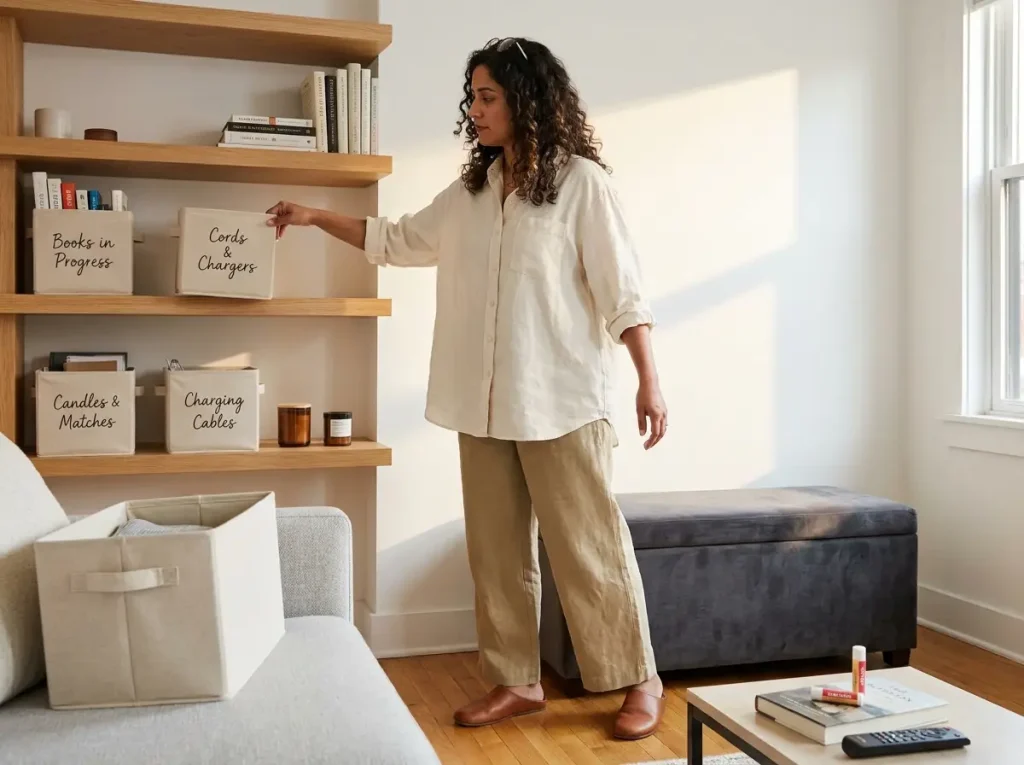
Pro tip: Label every bin on the front face, not the top. In vertical storage, you’re looking straight at the shelf from below. Top labels disappear the moment the bin is above eye level.
Zone-by-Zone: A Room-by-Room Organization Framework
Bedroom: Closet and Under-Bed
Most apartment closets have one rod and one shelf — and they waste the entire lower half of the hanging space. The STORAGE MANIAC Adjustable Closet Double Rod hangs from the existing rod and adds a second hanging tier below, rated for 110 pounds. No drilling, no hardware, and it fits rods between 1.25 and 2 inches in diameter. The catch: you need at least 68 inches of total rod height for a double rod to work with standard-length tops and pants. Measure before you order.
For under-bed space, measure the clearance between the floor and the bottom of your bed frame first. Platform beds leave as little as four inches. The storageLAB Under Bed Storage Container at 33 by 17 by 4.5 inches is one of the thinnest rigid containers available — it fits under frames with just five inches of clearance. Use it for seasonal clothes, spare bedding, or off-season shoes. For a deeper look at options by clearance height, the under-bed storage guide covers every frame type.
Kitchen: Fill the Dead Gaps
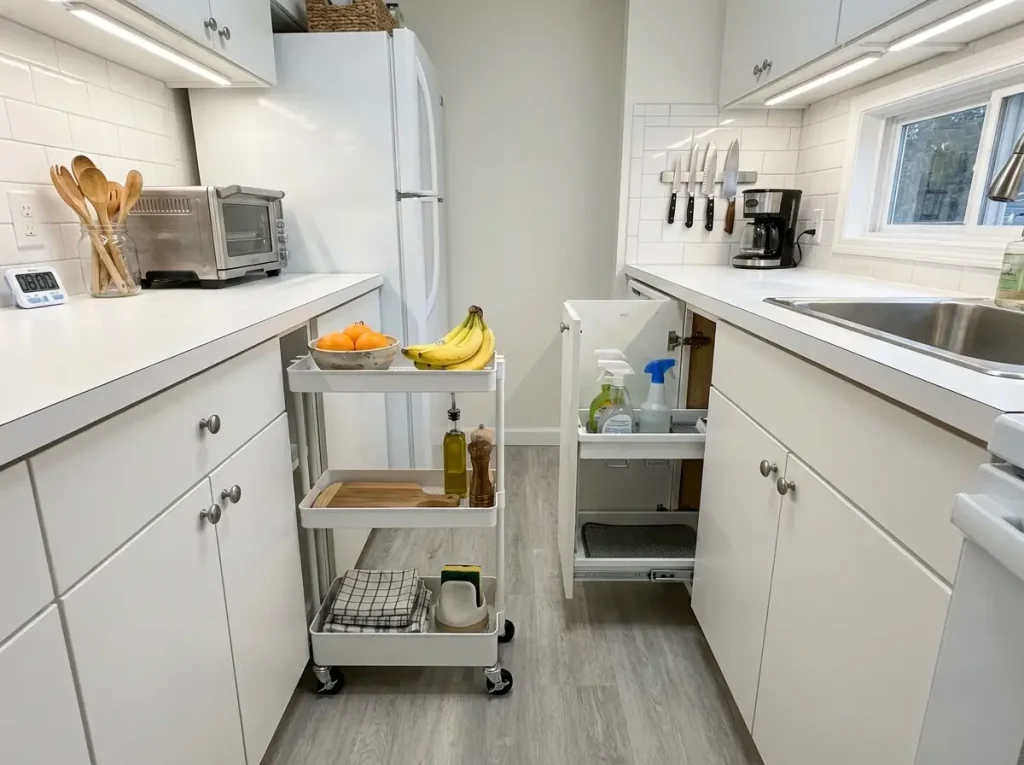
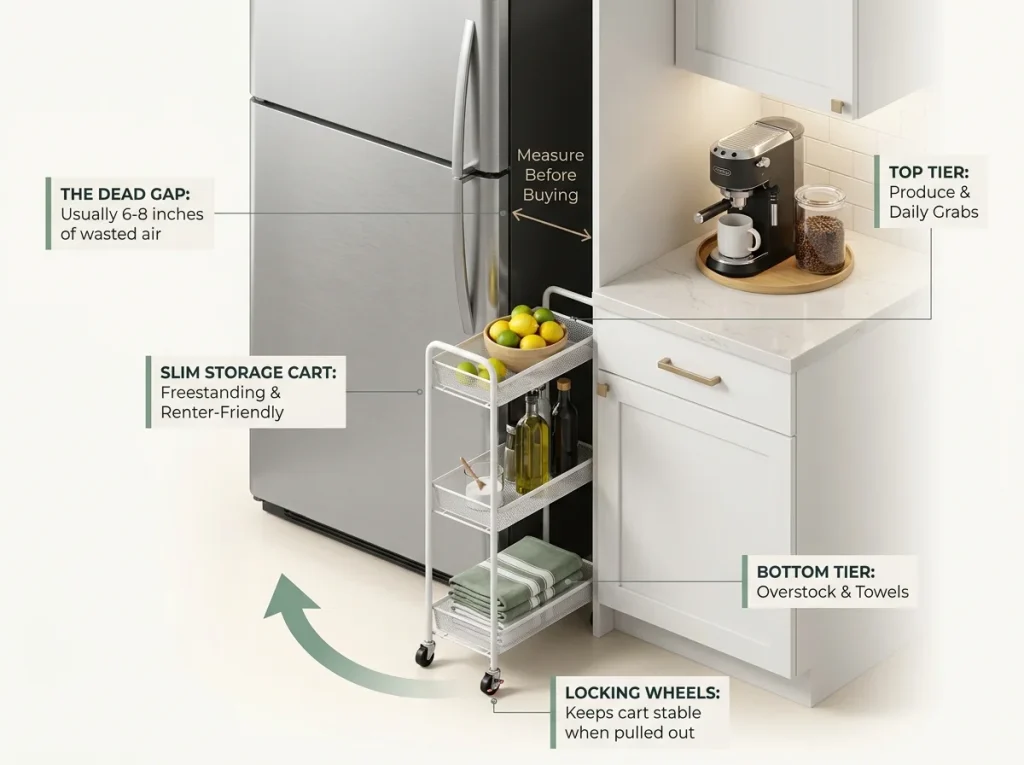
Every apartment kitchen has a gap between the refrigerator and the cabinets — usually six to eight inches of empty air. A Slim 3-Tier Rolling Storage Cart at roughly seven inches wide fills that dead space with three visible tiers. Use the top tier for produce, the middle for cooking staples, and the bottom for dish towels and cleaning supplies. Rolling carts are freestanding and renter-friendly — no installation required.
If your kitchen has deep cabinets that swallow items, the kitchen cabinet organization guide covers zone-by-zone solutions for uppers and lowers. And for apartments with no dedicated pantry, the pantry organization for small apartments guide walks through how to build a pantry zone using your existing cabinets and a slim cart.
Bathroom: Work the Walls and the Door
Small apartment bathrooms average 35 to 45 square feet. You’re not going to find floor space — so go up. Adhesive shelves above the toilet, an over-door organizer on the bathroom door, and a slim caddy in the shower cover your daily products without crowding the counter. For a zone-by-zone bathroom plan, the small bathroom storage guide walks through seven storage zones specific to rental bathrooms.
Entryway: Stop the Mess at the Door
If your apartment opens into the living room with no entryway, you need to create one. A narrow console table, a wall-mounted hook strip, and a small shoe tray define the zone. The rule: everything that enters the apartment gets processed at the door — keys on the hook, shoes in the tray, bag on the hook, mail in the basket. If it bypasses the entryway zone, it ends up on the couch. You know this because it’s already happening.
Renter Constraints: What to Know Before You Buy or Install
The Drill vs. No-Drill Decision
If your lease says no holes, it means no holes — even if you plan to patch them. Some landlords deduct for any wall repair, patched or not. Before you buy anything that requires mounting, read your lease’s modification clause. If it’s ambiguous, ask in writing and save the response.
The No-Drill Toolkit
The three tools that solve 90% of renter mounting problems: adhesive hooks rated by weight (Command brand, 3M strips), tension rods for any gap between 15 and 48 inches, and over-door hooks that use gravity instead of hardware. Between these three, you can build a full closet system, wall storage, and door storage without a single hole. For the full breakdown, the no-drill closet organization for renters guide covers weight ratings, surface compatibility, and product picks.
What Your Lease Actually Covers
Standard apartment leases prohibit permanent modifications — which means screws, nails, and anchors in most cases. But freestanding furniture, adhesive-mount items, and over-door organizers are almost always allowed because they leave no trace. When in doubt, document the apartment’s condition with photos before you start and after you move out. That photo set is worth more than any deposit argument.
The Maintenance System: How to Stay Organized Past Month One
The Weekly Reset
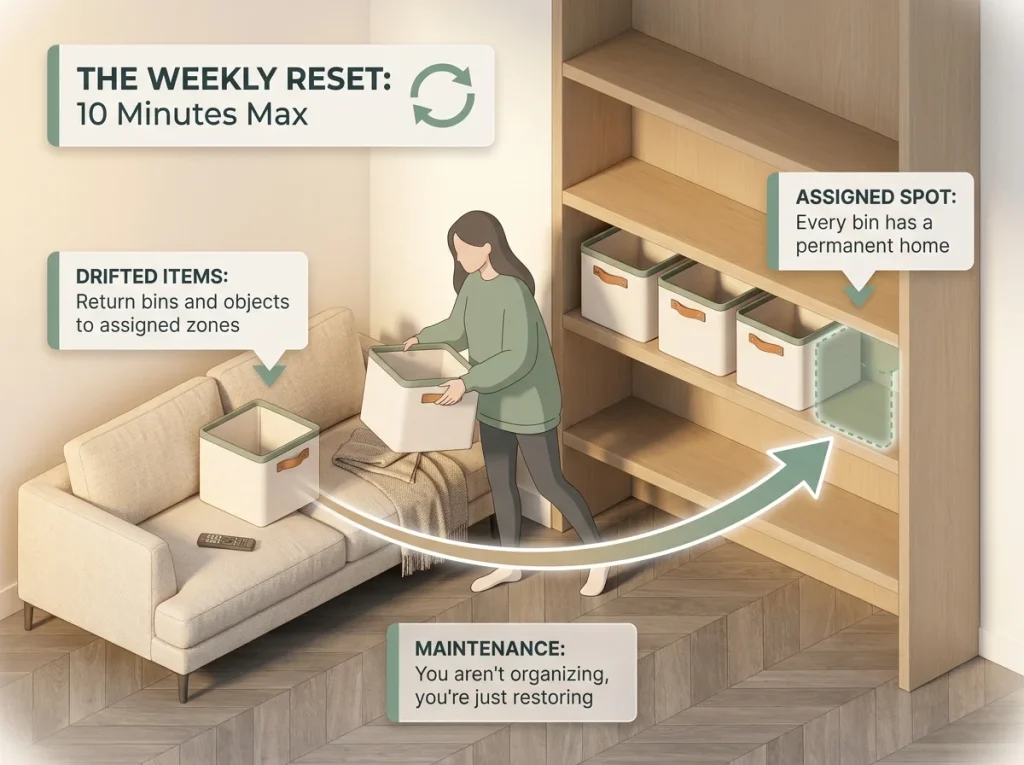
Every system needs a reset rhythm. Ten minutes, once a week, same day every week. Walk through each zone — entryway, living room, kitchen, bedroom, bathroom — and return every item that drifted. Put the remotes back. Clear the counter. Empty the donation bag if it’s full. The weekly reset isn’t organizing — it’s restoring. The system already exists. You’re just putting things back where they go.
The first time you do the reset, it might take 25 minutes. That’s normal — it means the system is new and some items don’t have assigned spots yet. By week three, you’ll hit ten minutes consistently. By week six, you’ll do it without thinking about it. That’s when the system is actually working.
The Monthly Zone Check
Once a month, pick one zone — just one — and evaluate whether the system still fits your life. Did your kitchen workflow change because you started meal prepping? Does your closet rod need seasonal rotation? Is the under-bed container holding things you forgot about? The monthly check keeps the system aligned with how you actually live, not how you lived when you set it up.
When to Reorganize vs. When to Re-edit
If a zone keeps reverting, the problem isn’t maintenance — it’s design. You either have too much stuff for the space (re-edit), or the storage layout doesn’t match how you use the items (reorganize). The difference matters. Reorganizing with too much stuff just rearranges the clutter. Re-editing with a bad layout throws away things you actually need. Figure out which one you’re dealing with before you start pulling things off shelves.
Pro tip: If every bin in a zone is full and items are sitting in front of or on top of them, that’s a volume problem — you need to re-edit. If bins are half-full but items end up on the counter anyway, that’s a placement problem — you need to reorganize.
Conclusion
Three things keep a small apartment organized long-term. First, edit before you organize — removing what you don’t need is the single highest-impact step. Second, use every surface that’s already there — vertical walls, door backs, under-bed clearance, furniture interiors — before buying new storage. Third, build a weekly reset habit that takes ten minutes and prevents the slow slide back to clutter.
Three-month check: revisit your zones around the 90-day mark. Some will be running smoothly. Others will need a swap — a different bin size, a relocated shelf, or another round of editing. That’s not failure. That’s the system working exactly how it should, adjusting to how you actually live.
Start with one zone. Get it right. Live with it for a week. Then move to the next one.
Q1 How do I organize a small apartment with no closet space?
Use a freestanding garment rack with a shelf, over-door organizers on bedroom and bathroom doors, and under-bed containers for seasonal items. Vertical wall storage and a multi-functional dresser replace most closet functions. The key is distributing storage across the apartment instead of centralizing it.
Q2 What is the best way to organize a 500 square foot apartment?
Edit possessions down to what you use weekly, add multi-functional furniture, and organize zone by zone — bedroom closet, kitchen gaps, bathroom walls, and entryway. A weekly ten-minute reset prevents reversion. The sequence matters more than the products.
Q3 How do I keep my small apartment from getting cluttered again?
Set a weekly ten-minute reset on the same day each week and enforce the one-in-one-out rule for all new purchases. A monthly zone check catches storage setups that no longer match your routine. Systems revert when they lack a maintenance rhythm.
Q4 What are the best renter-friendly organization products?
Adhesive-mount shelves, over-door organizers, freestanding rolling carts, tension rods, and under-bed containers with lids. All of these install without drilling and leave no wall damage. Match every product to a specific space measurement before buying.
Q5 How do I maximize storage in a one-bedroom apartment?
Measure every unused gap — above shelves, under the bed, beside the fridge, behind doors — and fill each one with a size-matched container or organizer. Vertical space above five feet and interior door surfaces are the two most wasted storage zones in one-bedroom apartments.
Disclaimer: ClutterlessNest is a participant in the Amazon Services LLC Associates Program. As an Amazon Associate we earn from qualifying purchases. This article may contain affiliate links — if you buy through them, we may earn a small commission at no extra cost to you. We only recommend products we have tested or genuinely believe in.