






















In this article
You pull the bin out for the first real cold snap in October, and the wool coat smells like a basement that isn’t even yours, the cashmere sweater has a small hole near the hem, and the winter scarves are somewhere in a container you can’t find. None of that is bad luck. Almost every guide to seasonal clothing storage assumes you have an attic, a basement, or a spare room, and that advice quietly falls apart when you rent a small apartment with one closet and a bed shoved against the wall. The real problem is rarely the clothes. It’s that the storage plan was written for a house you don’t live in, which is also why it helps to think of this as one piece of your whole clothing organization system. Here’s how to store off-season clothes so they come back in good shape, even when the only space you’ve got is under the bed and a top shelf.
Quick Answer
Store off-season clothing in the right order, and small-space limits stop mattering:
- Edit first, and pack away only what you’ll wear next season.
- Wash everything before it goes in a bin (dirty clothes draw moths).
- Match the container to the fabric, not the other way around.
- Add cedar and a moisture pack; keep it cool and under 50% humidity.
- Store low and dark, under the bed, top shelf, or a suitcase you own.
- Label the front face and set a calendar reminder for the swap.
Edit Before You Store a Single Sweater
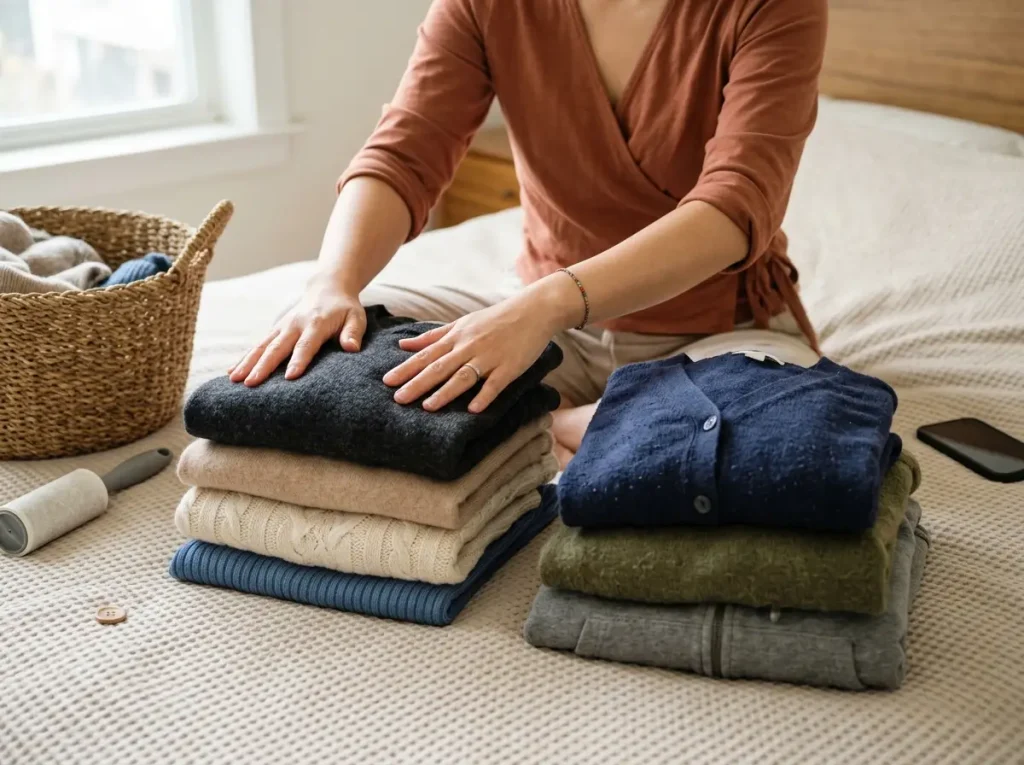
The fastest way to make next season worse is to pack away everything you own, including the three sweaters you didn’t touch since the last rotation. Seasonal storage works as a filter, not a hiding place. Whatever goes into the bin disappears from your life for six months, so the bin is your last good chance to decide what actually deserves the space.
Pull the pieces you didn’t wear all season
Go through the category you’re about to store and pull anything you didn’t put on once. Be honest about it. If it didn’t make the cut during the season it was made for, it isn’t going to earn a spot when it resurfaces, and storing it just turns your limited space into a holding pen for clothes you’ve already stopped choosing. This is also the natural moment for a quick wardrobe purge, the declutter-before-storing step that keeps you from packing away clothes you’ve outgrown, and to move those pieces to a donate or resale pile instead of back into a container.
Wash everything, even the stuff that looks clean
Wash and fully dry every piece before it goes away, including items you only wore once. This feels like overkill. Do it anyway. Moth larvae feed on the sweat and skin oils left in worn fabric, so a sweater that looks clean but went unwashed is essentially packed lunch sealed in a dark bin for months. Clean fabric is far less interesting to them, and you remove the food source instead of hoping a repellent does all the work.
Repair now, not in October
Fix the broken zipper, sew the loose button, and run a sweater stone over the pilled knits to de-pill them before anything gets folded away. The version of you unpacking in fall is in a hurry and wants to wear the thing today, not run it to a tailor. Handle it now while the pieces are already out and you’re already in the sorting mindset.
Keep one “weather wildcard” set out of storage year-round: a light jacket, a couple of layering pieces, one warm option. It saves you from tearing open a sealed bin the first week the weather can’t decide what season it is.
Why Off-Season Clothes Come Out Damaged
Nobody opens a storage bin expecting cream-yellow stains and a sweater that feels like a different, thinner sweater. The damage isn’t random, though. It’s predictable physics, and once you understand the mechanism behind each common mistake, the rest of the rules in this guide stop feeling fussy and start feeling obvious. This is the part most guides skip, and it’s the part that makes the advice actually stick.
Plastic traps moisture, and moisture wrecks fabric
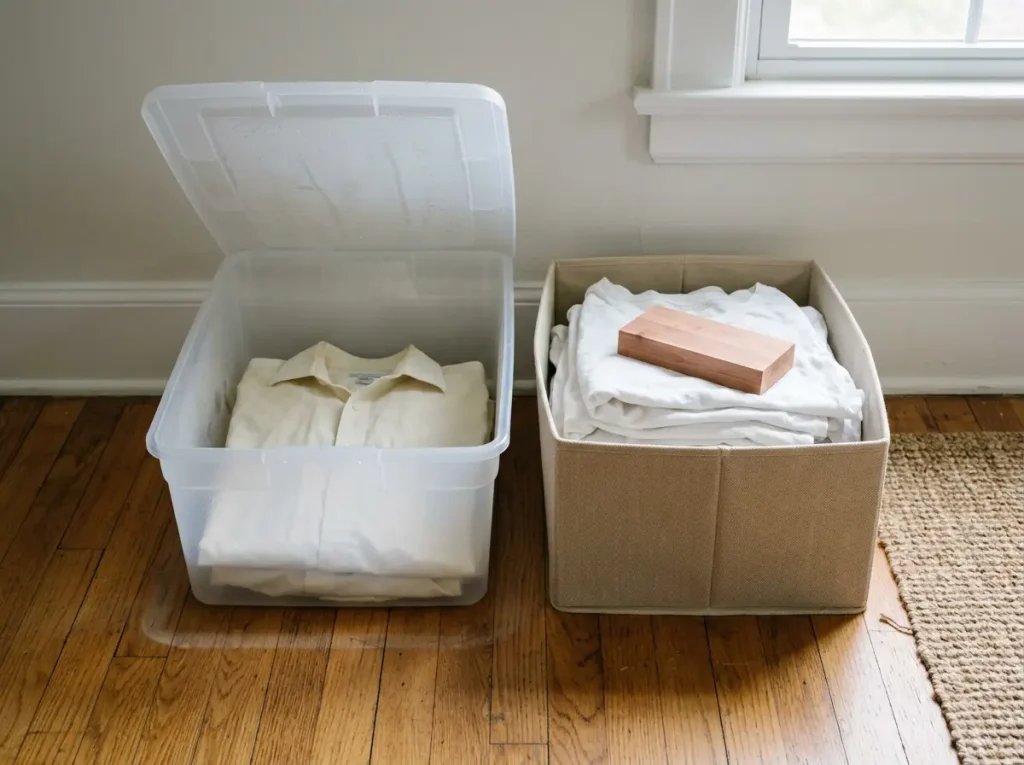
A sealed plastic bin is a tiny sealed climate. As the room warms and cools, humidity inside the bin can’t escape, and it condenses on the fabric over weeks and months. Give it long enough and that damp, stagnant air is also how mold and mildew take hold. On pale cotton and linen, that trapped moisture oxidizes the dyes and you get a faint cream-yellow cast along the folds. On protein fibers it causes brittleness, so the piece comes out stiff instead of soft. You open the bin in fall expecting a white linen shirt and find something closer to antique ivory, and it wasn’t a defect in the shirt.
Vacuum bags crush wool and cashmere for good
Wool gets its warmth from the crimp in the fiber, all those tiny air pockets that trap heat. Sustained compression flattens that crimp, and the loft doesn’t bounce back on its own. The maddening part is the recovery timeline: a sweater squeezed flat for six months can need close to that long of regular wear and washing to recover, so it feels thin and lifeless for an entire season. Textile conservators at the Smithsonian store fabrics with air movement rather than sealed airtight, for exactly this reason. Your cashmere needs to breathe the same way a museum’s textiles do.
Dirty clothes are moth food, not just messy
It’s worth being precise here, because the detail changes how you store things. The adult moth doesn’t eat your sweaters; its larvae do, and they feed specifically on keratin, the protein in animal-based fibers like wool, silk, and cashmere. A single female can lay dozens of eggs, and the larvae can keep feeding for weeks, sometimes well over a year, in a dark, undisturbed container. Which is a perfect description of a storage bin nobody opens until next season.
Overpacking makes it worse, so fill bins to about ninety percent and let the lid close without a fight, or you’ll set permanent crease lines you can’t steam out later.
The musty smell when you open a bin isn’t dirt, it’s trapped humidity that never had anywhere to go. If a bin smells, the container was wrong, not your apartment. Switch that load to breathable storage next season.
Pick the Right Container for the Job
There are really only four container types worth knowing for seasonal clothing storage, and most people get into trouble by using one for everything. Grabbing whatever clear tote is on sale and stuffing in wool, cotton, and a down coat together is how good clothes come out ruined. Match the container to what’s going inside, and the rest gets easy.
The four container types and what each one is for
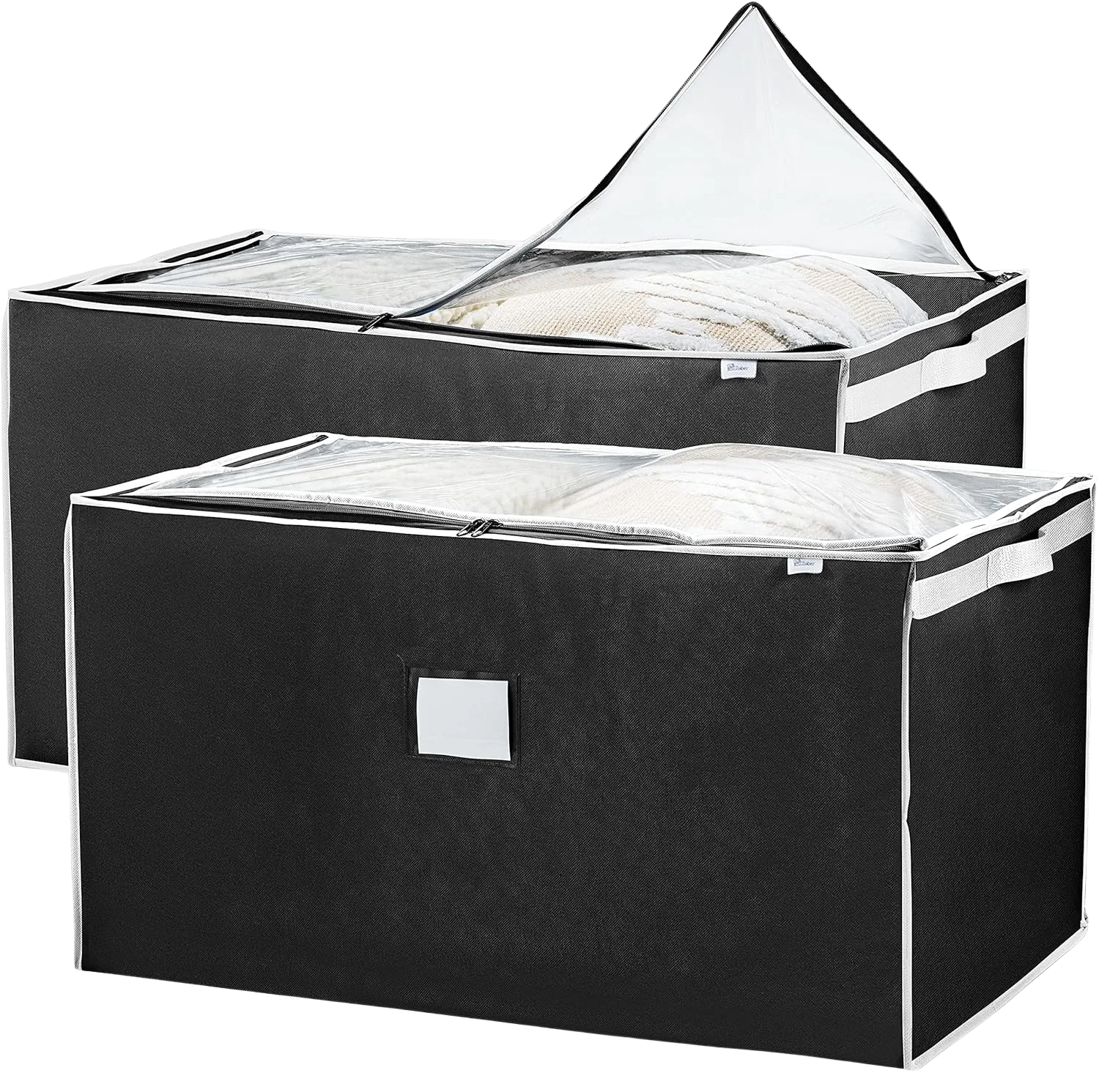
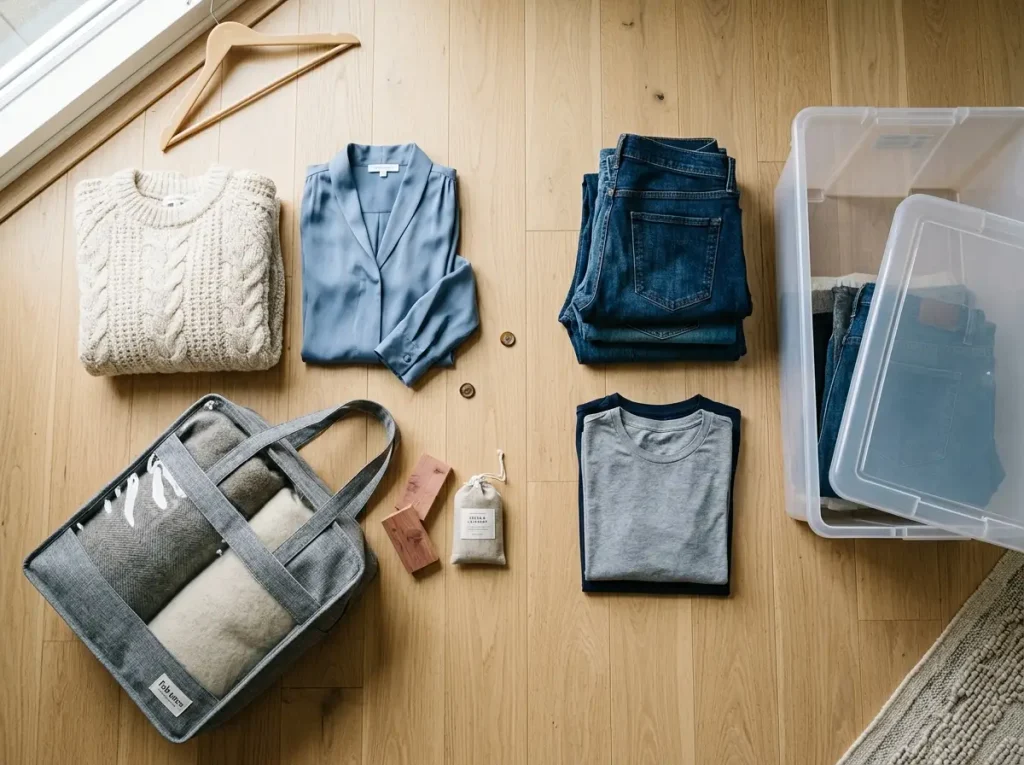
Clear plastic bins and totes are for durable fibers that tolerate a sealed environment. Breathable fabric bins are for anything that needs air, which is most natural fibers. Vacuum storage bags are space-savers for synthetics only. And garment bags are for the hanging pieces, which get their own section below. Before you buy anything, check what you already own. Large trash bags tied loosely work fine for synthetic puffer jackets at zero cost, and old pillowcases make a genuinely good breathable bin for knits.
Vacuum bags, used the way they actually work
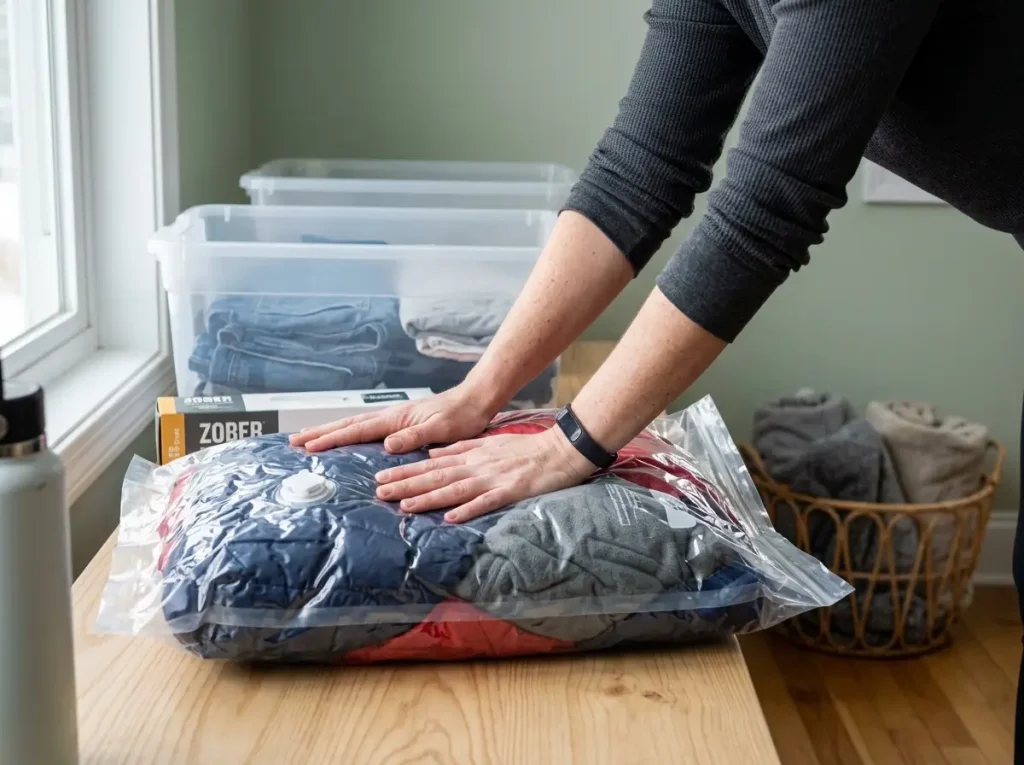
Vacuum storage bags compress their contents by up to eighty percent, which is real and useful when you’re trying to slide a season of fleece into a thin gap. But they leak. The valve slowly lets air back in, so you need to re-vacuum about every four months or the bag re-expands, sometimes splitting a seam or pushing itself out of the tight under-bed space you wedged it into. If you’ve ever found a “flat” bag puffed back up under the bed, that’s the leak at work, and it’s worth knowing before you rely on them for the season.
When not to reach for a vacuum bag
Here’s the rule that protects your nicest pieces: a vacuum bag is a tool for cotton, denim, and synthetics, and nothing else. Wool, cashmere, silk, and down do not belong in one for long-term storage, full stop. For the fabrics that can take it, a sturdy variety pack covers the different categories you’re packing without forcing you to guess at sizes.
Match the Container to the Fabric
This is the part competitors gloss over with a vague “don’t vacuum-seal your delicates.” That isn’t a system, it’s a shrug. What you actually need is a decision you can make in two seconds while holding the garment, so here’s the grid. Find the fabric, read across, and you know the container, the spot, and roughly how long it’ll keep.
| Fabric | Container | Where to store | How long |
|---|---|---|---|
| Wool | Breathable bin or cotton bag + cedar | Cool, dark, under 50% humidity | Up to 12 months |
| Cashmere | Breathable cotton bag, never vacuum | Cool, dark, dry | Up to 12 months |
| Silk | Acid-free tissue + breathable bin | Cool, dry, away from light | Up to 12 months |
| Down | Large breathable bag or hung, never compressed | Dry, with full loft | Up to 12 months |
| Cotton & denim | Clear plastic bin or vacuum bag | Any dry spot | 12+ months |
| Linen | Breathable bin or fabric bag | Cool, dry, dark | Up to 12 months |
| Synthetics | Vacuum bag or plastic bin | Any dry spot | 12+ months |
Natural fibers need to breathe
Wool, cashmere, silk, and linen all regulate moisture by absorbing and releasing it, and sealing them shut stops that cycle cold. They want a breathable container, somewhere cool and dark, and humidity on the lower side. The free version is the one that’s been working for generations: fold two or three sweaters into a clean king pillowcase, tie off the open end, and label it with masking tape. If you’d rather have something structured that stacks, a breathable fabric bin does the same job with a clear window so you’re not guessing.
The Fab totes 6 Pack Storage Bags are foldable breathable totes with a clear panel and a handle, which makes them an easy fit for wool and linen that can’t sit in sealed plastic. A six-pack covers a full seasonal wardrobe, and they collapse flat when you’re not using them. The trade-off is that soft-sided bins don’t protect against a crush the way a rigid box does, so don’t stack heavy things on top of them.
Cotton, denim, and synthetics can take the squeeze
This is the easy group. Cotton, denim, and anything synthetic tolerates compression and a sealed bin without complaint, because there’s no animal protein for moths to target and no delicate crimp to crush. These are the fabrics you put in the vacuum bags and the clear totes, the ones where saving space costs you nothing. Down looks like it belongs here because a puffer is mostly synthetic shell, but the fill is the exception, so keep real down out of long-term compression.
Can’t remember whether a fabric can be sealed? Ask one question: did it come from an animal? Wool, cashmere, silk, and down all need air. If it didn’t come from an animal, you can usually seal it.
Know What to Fold and What to Hang
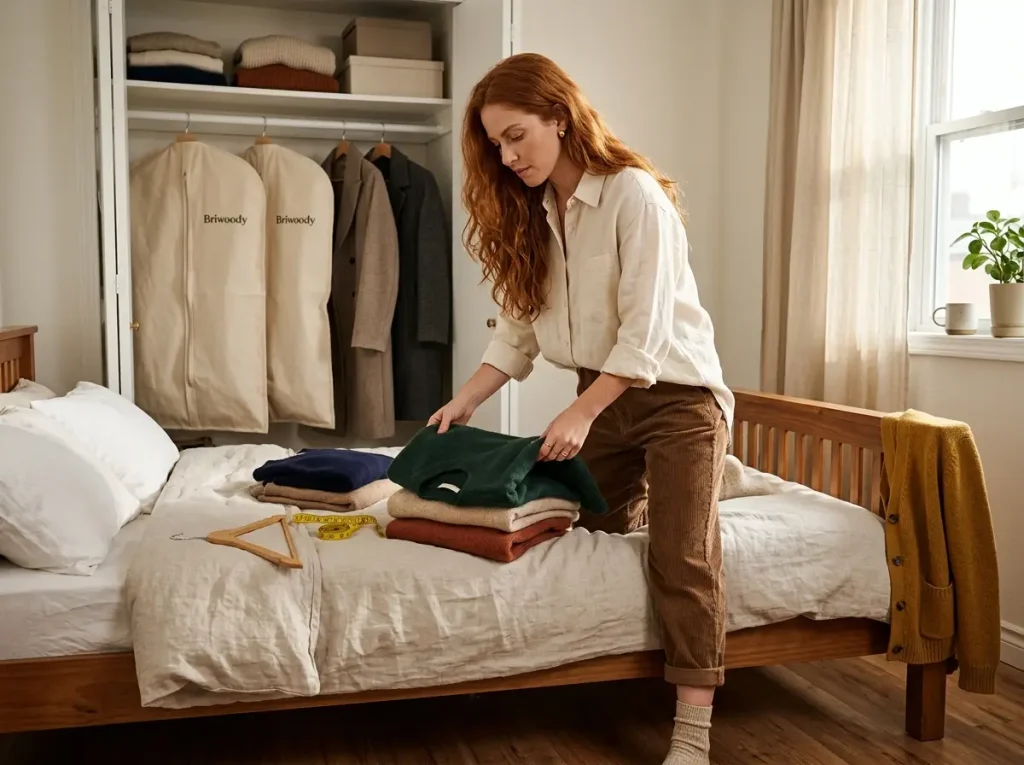
Position matters as much as the container. Hang a heavy sweater for six months and it comes out with stretched shoulders and a drooping neckline. Fold a structured wool coat into a bin and it comes out with creases set into the lapels. Each piece has a right way to wait out the season.
Fold the knits
Anything that stretches under its own weight gets folded: sweaters, cashmere, chunky knits, heavy cardigans. Gravity is the enemy here, and a hanger gives gravity a six-month head start on deforming the shoulders. This is the same logic behind the right way to store sweaters in everyday rotation, just applied to the long haul.
Hang the structured pieces
Tailored coats, blazers, and formal dresses go the other way. These hold a shape you don’t want to crease, so they hang on sturdy wooden or padded hangers, ideally inside a breathable cloth garment bag rather than the thin plastic film from the dry cleaner, which traps moisture against the fabric. The free move is a clean cotton pillowcase pulled over the shoulders of one or two pieces on the hanger. If you want something purpose-built that also handles pests, the Briwooody 4 Pack Cotton Garment Bags are breathable cotton and come with a cedar block in each bag, so protection and deterrent arrive in one step. They hang on the existing closet rod, so renters don’t need to mount anything, and the only real limit is length, since a floor-length gown will outrun a standard bag. The same approach scales up if you’re working out bulky winter coats in a small space.
How to fold a sweater so it survives storage
A good storage fold keeps the bulk even and avoids one deep crease down the middle. Lay the sweater face-down, fold each arm straight back, then fold it in thirds from the hem up to the collar so it ends in a tidy rectangle that stacks flat.
Keep Moths and Moisture Out
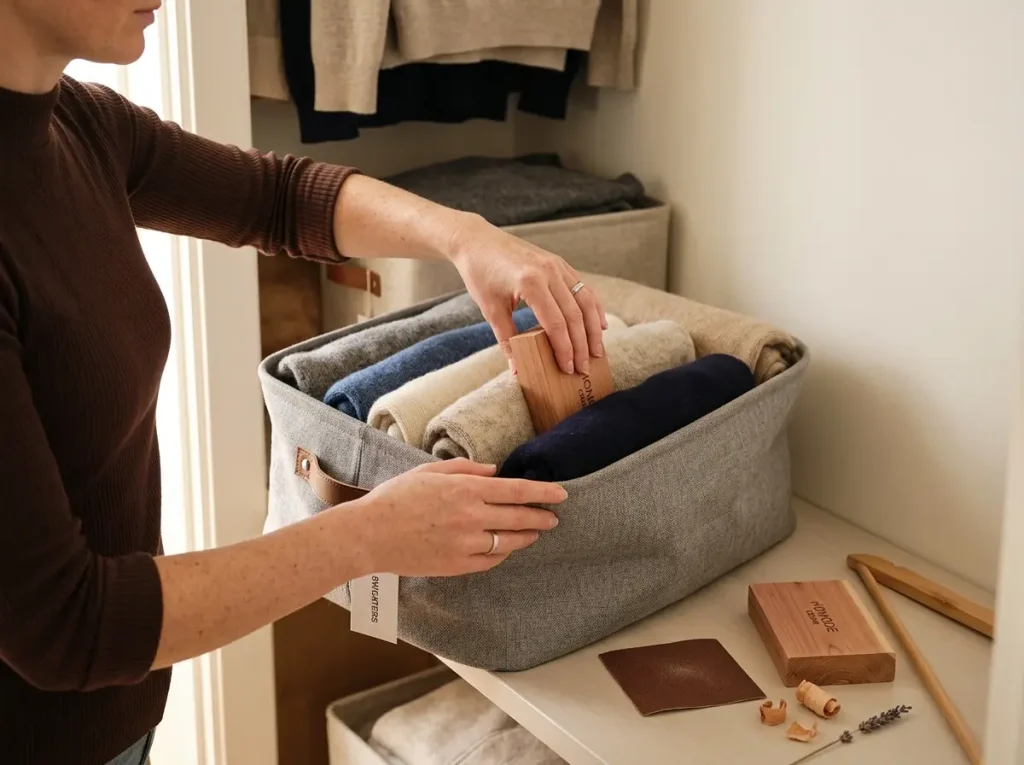
Two things quietly destroy stored clothes: fabric pests like moths and carpet beetles, and humidity. Block both and almost nothing else can go wrong inside the bin. The good news is that the fixes are cheap and don’t involve the chemical smell most people associate with their grandmother’s coat closet.
Cedar works, but only while it smells
Cedar repels moths from laying eggs by scent, which means it’s only doing its job as long as you can smell it. After a season or so the aromatic oils fade and the block becomes, functionally, a piece of decorative wood. The conventional advice is to just add more cedar. In practice, washing your clothes before storage does more to stop moths than any amount of cedar, because it removes the larvae’s food source in the first place. Use both, but lead with clean.
The trick most people miss is that cedar can be revived. The Homode Cedar Blocks 40-Pack includes sandpaper for exactly this, and a quick sanding reopens the wood and brings the scent back. Forty pieces is enough to salt through several bins and a closet rod, and the only catch is remembering to actually sand them each season, which is on you, not the cedar.
Pull the humidity out
Tuck a silica gel packet or a dehumidifier pack into each bin to keep the air dry, aiming for under fifty percent relative humidity. This matters most in the breathable containers, since they don’t seal moisture out on their own. In a damp apartment, this one cheap step is the difference between sweaters that smell fresh in October and sweaters that smell like the inside of the bin.
Skip the mothballs
You can leave the mothballs at the store. Most people genuinely hate the smell, it lingers in the fabric long after, and the combination of clean clothes, breathable storage, cedar, and a moisture pack handles the problem without making your winter coat announce itself from across a room. For a free pest option, dried lavender or a handful of dollar-store cedar sachets cover the first season; just plan to replace them yearly instead of sanding.
Cedar isn’t dead when it stops smelling, it’s just gone quiet. Thirty seconds with fine sandpaper brings the scent back. Buy cedar that comes with the sandpaper, or you’ll never get around to it.
Where to Store It When You Have No Attic
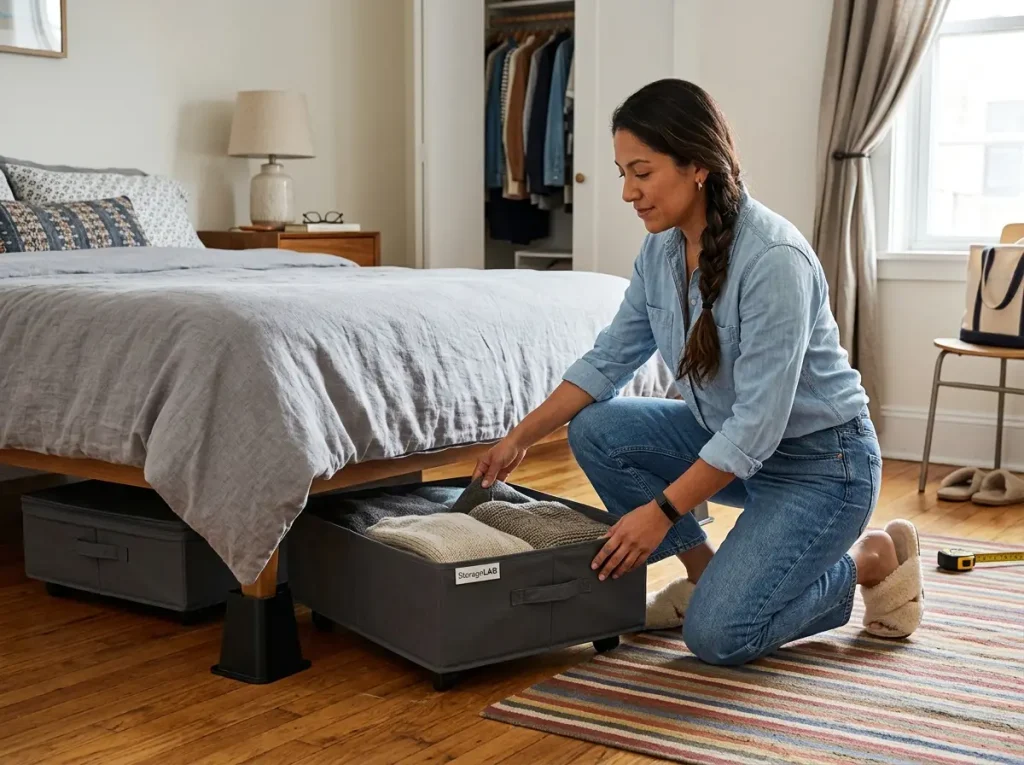
Every other guide ends with “store it somewhere cool and dry.” Cool and dry where, exactly? You don’t have a basement, the coat closet is full, and the spare room is the kitchen table. This is the question that actually matters in a rental, so this is where the real answers live: the specific spots in a small apartment that can hold a season of clothes, with the measurements that decide whether a bin fits or tips.
Under the bed is your best zone, if you measure first
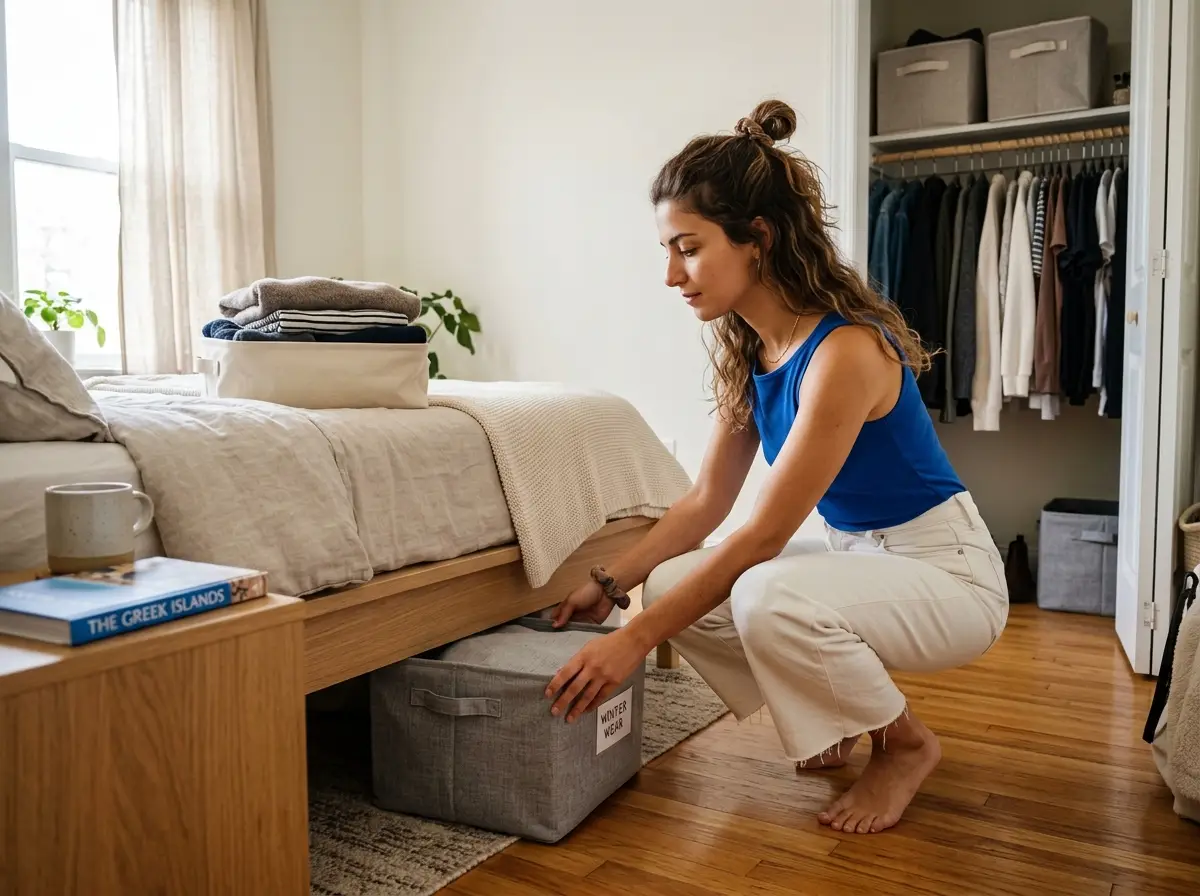
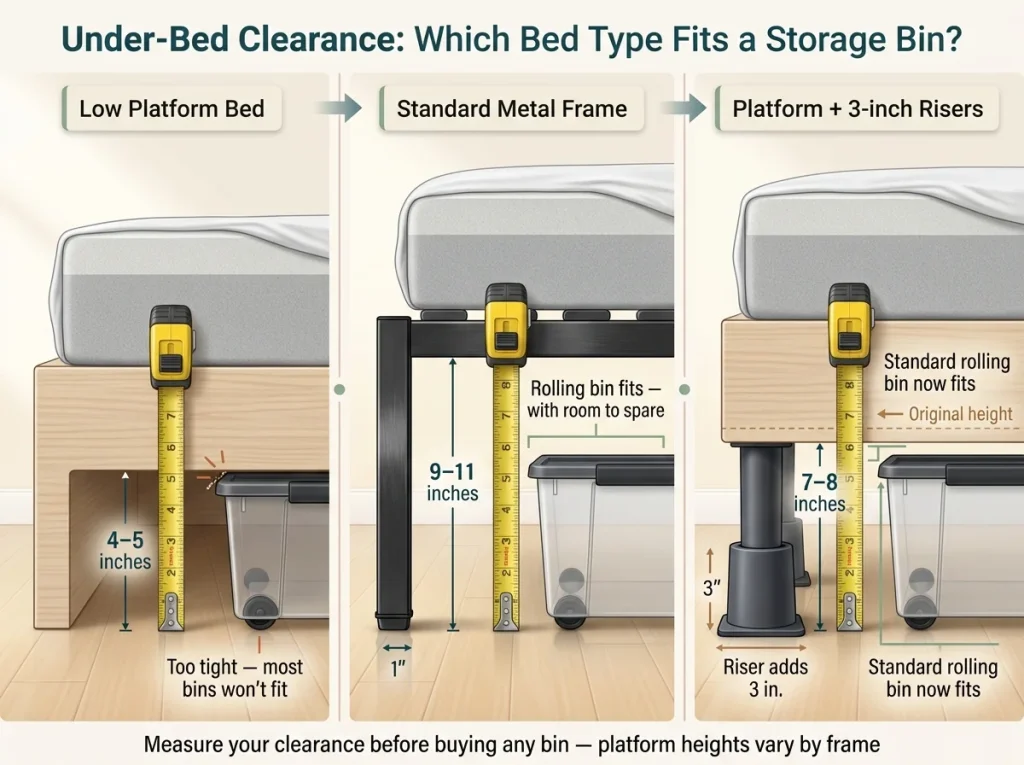
Under the bed is the number one storage location for renters, and it’s almost always underused. The catch is clearance, and it varies a lot. Platform beds typically leave only four to seven inches underneath, while metal frames leave seven to thirteen. Measure the gap before you buy a single bin, because the most common under-bed mistake is buying a container that’s an inch too tall and now lives in the hallway.
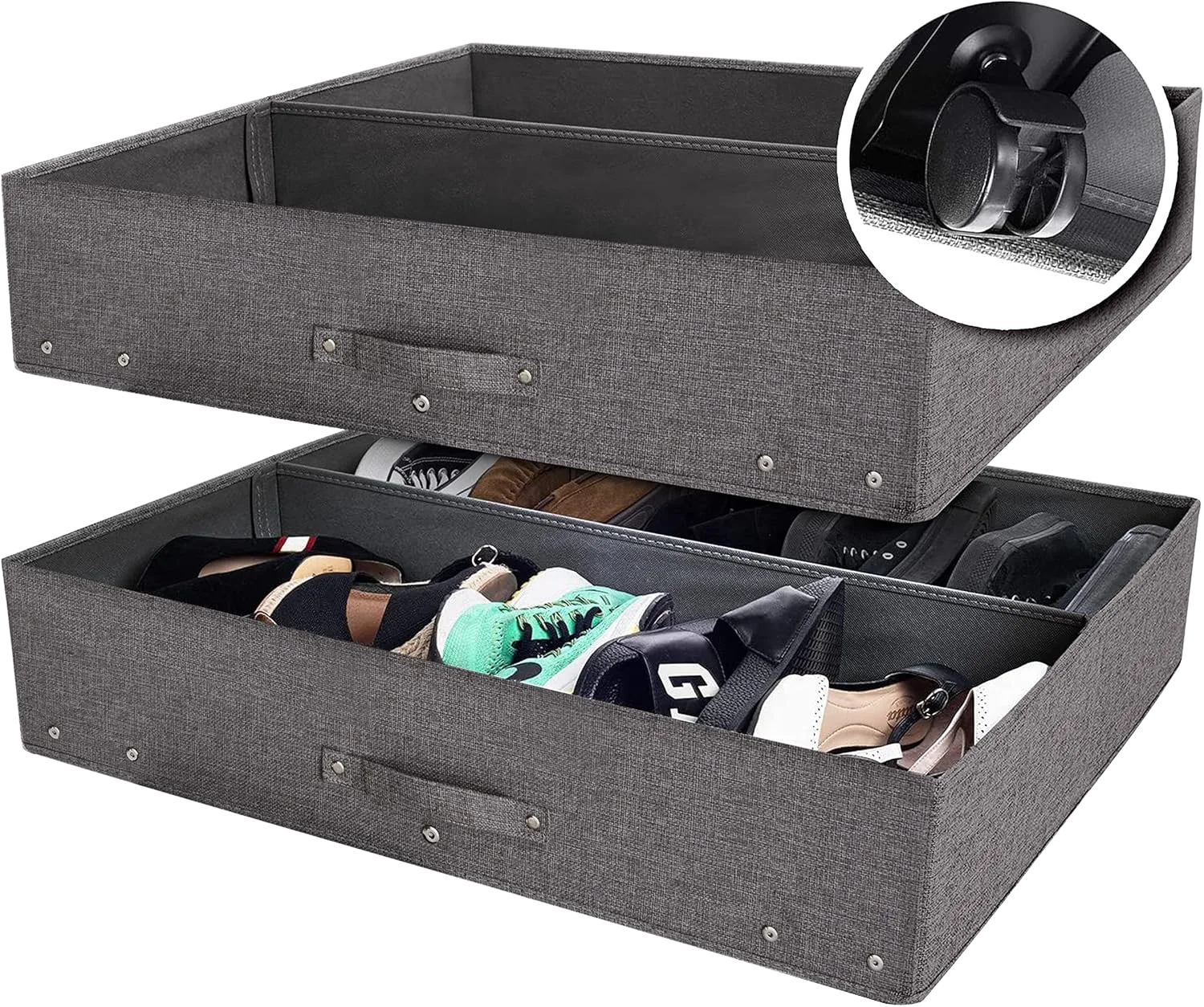
For a standard metal frame, a rolling container does two jobs at once: it fits the clearance and it pulls out without you lying on the floor reaching into the dark. The StorageLAB Under Bed Storage Containers come as a set of two with wheels, sized to slide under most metal frames, and the wheels are the part you’ll appreciate every single swap. It’s a setup that works just as well for the under-bed zone in any small bedroom, seasonal clothes or not.
Free Up a Low Platform Bed With Risers
If your platform bed sits too low for a rolling bin, you have two ways out. The first is a flat, low-profile container: the storageLAB Under Bed Storage Container is only about four and a half inches tall, which slips under a tight platform that taller bins can’t touch, though you trade away some depth for the lower height. The second move opens up far more space. A set of bed risers lifts the whole frame a few inches, and the math is simple: the EclatBain Bed Risers add three, five, or eight inches, so a three-inch riser on a four-inch platform gives you seven inches, which is suddenly enough for a standard rolling bin. No drilling, no damage, fully reversible when you move out, which is the whole point for a renter.
The top shelf and the free storage you already own
The top closet shelf is the other obvious spot, with one rule: standard reach-in top shelves are wide but only about twelve to fourteen inches deep, so a deep bin overhangs the edge and eventually tips. Use shallow or collapsible fabric bins and label them on the front face where you can read them.
Beyond that, look at what you already own. An empty suitcase is free storage you bought for something else: a carry-on swallows three to five sweaters, and a checked bag takes a whole haul of bulky knitwear. A guest or linen closet shelf, an over-door organizer for scarves and light layers, a storage ottoman at the foot of the bed: each one absorbs part of the load without costing a thing. It’s the same logic that keeps a small apartment livable everywhere else.
Why Your Seasonal Swap Falls Apart by Year 2
Here’s the part nobody warns you about. The system works beautifully the first year. The second year you half-do it because the full swap took most of a Saturday. By the third year you’re cramming everything onto the top shelf unsorted and calling it done. The seasonal swap doesn’t collapse because you got lazy. It collapses because it was built to require perfect execution every single time, and real life doesn’t run on perfect.
The swap that takes all day is the swap you’ll quit
If the rotation takes three or four hours, it won’t survive a busy season. Aim to get it under an hour, and the way you do that is to pre-sort while you pack: group each bin by category as it goes in, so next season the bin opens into organized sections instead of a single jumbled pile you have to re-sort on the bedroom floor. A leaner wardrobe helps too, which is the quiet argument for a simple one-in-one-out rule and a capsule wardrobe that cuts the swap in half.
Label the front, and photograph the inside
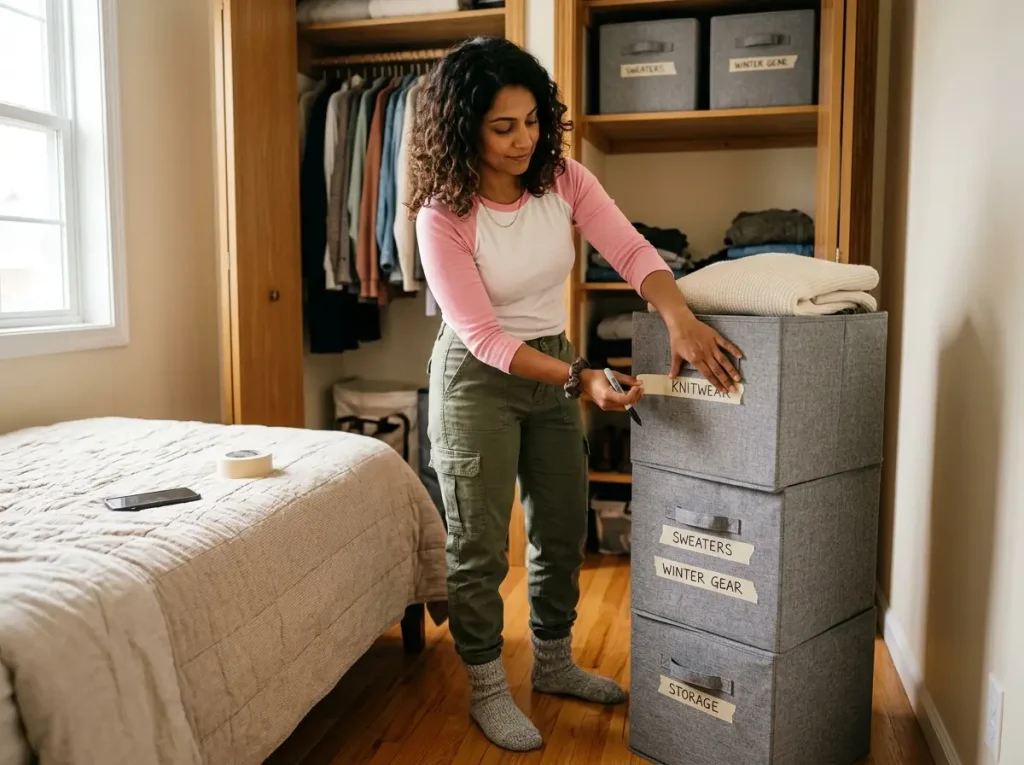
Identical bins are mystery bins, and opening all four to find the heavy sweaters is exactly the friction that kills the habit. Label each bin on its front face, the side that faces out in the closet, not just the lid you can’t see when it’s stacked. The usual next suggestion is a detailed written inventory, but honestly nobody maintains a clothing spreadsheet. A front-face label plus one phone photo of the open bin does about ninety percent of the job with none of the upkeep. This kind of repeatable seasonal rotation system is what separates a setup that lasts from one that quietly dies in Year 2.
Put the swap on the calendar
Out of sight becomes out of mind fast, and the cost is buying a third black turtleneck because you forgot you stored two. A dependable seasonal wardrobe rotation runs on calendar alerts, not memory. Set recurring phone reminders for roughly mid-March and mid-September, with a buffer week built in for weather that won’t commit. Professional organizers recommend reviewing your seasonal wardrobe twice a year for the same reason, and a calendar alert is what turns that good intention into a thing that actually happens. Design the whole system for lazy execution, because an eighty-percent swap beats a perfect plan you abandon.
Take one phone photo of each bin’s open contents before you close the lid. When October hits, you scroll your camera roll instead of unstacking four bins onto the bedroom floor to find one scarf.
Putting It All Together
Good seasonal clothing storage comes down to three habits, none of which require more space than you have. Edit before you store, so you’re only protecting clothes you’ll actually wear. Match the container to the fabric, so natural fibers breathe and only synthetics get sealed. And store low, dark, and labeled in the space you already own, so the bed and the top shelf do the work a basement would.
In three months, open one bin and check for any musty smell or moisture beading on the lid. That’s the early warning that the container or the spot was wrong, and it’s an easy fix before any real damage sets in. Start with the one category you’re packing away first, get the container right for it, and let the rest follow. The same approach carries straight over when you store your seasonal shoes at the same time.
Frequently Asked Questions
01Should you vacuum seal clothes for storage?
Only synthetics, cotton, and denim, which tolerate compression. Never vacuum-seal wool, cashmere, silk, or down, because sustained pressure permanently flattens the fibers and collapses down clusters so they lose their warmth.
02How do you store winter clothes in an apartment with no extra space?
Use the space you already have. Slide bins under the bed after measuring the clearance, fill the top closet shelf with shallow bins, pack an empty suitcase, and hang an over-door organizer for light layers and accessories.
03How long can you store clothes before they get damaged?
Most clothing keeps safely for up to 12 months in the right container and spot. Re-air natural fibers once a year, and re-vacuum any synthetic bags about every four months so they don’t slowly re-expand.
04What’s the best container for storing seasonal clothes?
It depends on the fabric. Use breathable fabric bins or cotton bags for wool and silk, and clear plastic bins or vacuum bags for cotton and synthetics. Match the container to what you’re packing instead of buying one type for everything.
05How do you keep moths out of stored clothes?
Wash everything before storing, since larvae feed on sweat and skin oils rather than clean fabric. Then use breathable storage, add cedar and refresh its scent each season, and keep humidity under 50% to make the bin an uninviting place to settle.