





















In this article
You spent a Saturday on the pantry. You pulled everything out, wiped the shelves, lined up a row of matching bins, and stepped back feeling like a slightly better version of yourself. Three weeks later it looks exactly like it did before, except now there are also fourteen empty bins stacked on the floor. That reversion isn’t a willpower problem, and it isn’t because you bought the wrong containers. Minimalist organization fails on a predictable timeline for mechanical reasons, and once you can name them, the fix is almost never a better bin. This guide covers what it actually is, why most systems collapse around the three-month mark, and the principles, renter-friendly and personality-aware, that make one stick.
Quick Answer
Minimalist organization isn’t a look, it’s a sequence. Do it in this order:
- Reduce what you own before buying a single container.
- Give every item one fixed home.
- Keep categories visible, not hidden in opaque bins.
- Build a five-minute daily reset into a habit you already have.
- Stop the intake, or the clutter comes back.
- Match the system to your space and your brain.
What Minimalist Organization Actually Means
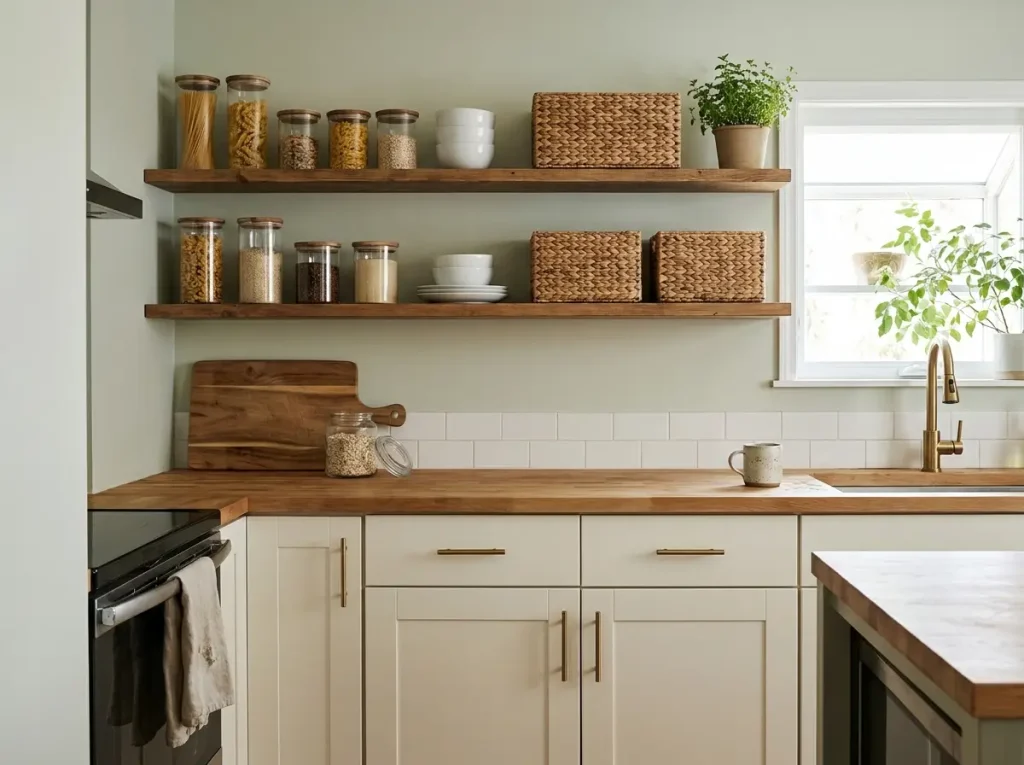
Ask ten people what minimalist organization looks like and most will describe a photo: white bins, glass jars, labels in a tidy font. That’s the aesthetic, and the aesthetic is maybe the last five percent of the job. The other ninety-five percent is a set of decisions about what you keep and a set of rules about where it lives. A shelf of coordinated containers holding things you never use is just clutter with better lighting.
It’s Decisions, Not Decoration
The core move is reduction, then assignment: own less, then give what’s left a place. Containers come dead last, if at all. According to the National Association of Productivity and Organizing Professionals (NAPO), the large majority of household clutter is a disorganization problem rather than a shortage of space, which is another way of saying you probably don’t need more storage. You need fewer things and clearer rules about where they go.
Why Buying Bins Feels Like Progress
There’s a reason the bin aisle is so tempting. Buying containers feels like doing the work without the harder part, which is deciding what leaves. Organizing communities have a name for the result: “organizing the clutter,” meaning you sorted things into pretty boxes that you should have purged first. The standard advice is to buy your bins before you start. In practice, that’s the single move that guarantees you revert, because the volume of stuff never changed.
Function Is the Only Test That Matters
A system that photographs beautifully and collapses on a Tuesday night is a failed system. The question isn’t whether it looks calm in good light. The question is whether you can put something away one-handed while holding a phone, and whether it still works in three months when nobody’s trying anymore. That last one is the three-month test, and it’s the bar every room has to clear, whether you’re setting up a minimalist kitchen, a minimalist bedroom, or a minimalist living room. Everything below is built around it.
Why Minimalist Organization Fails After a Few Months
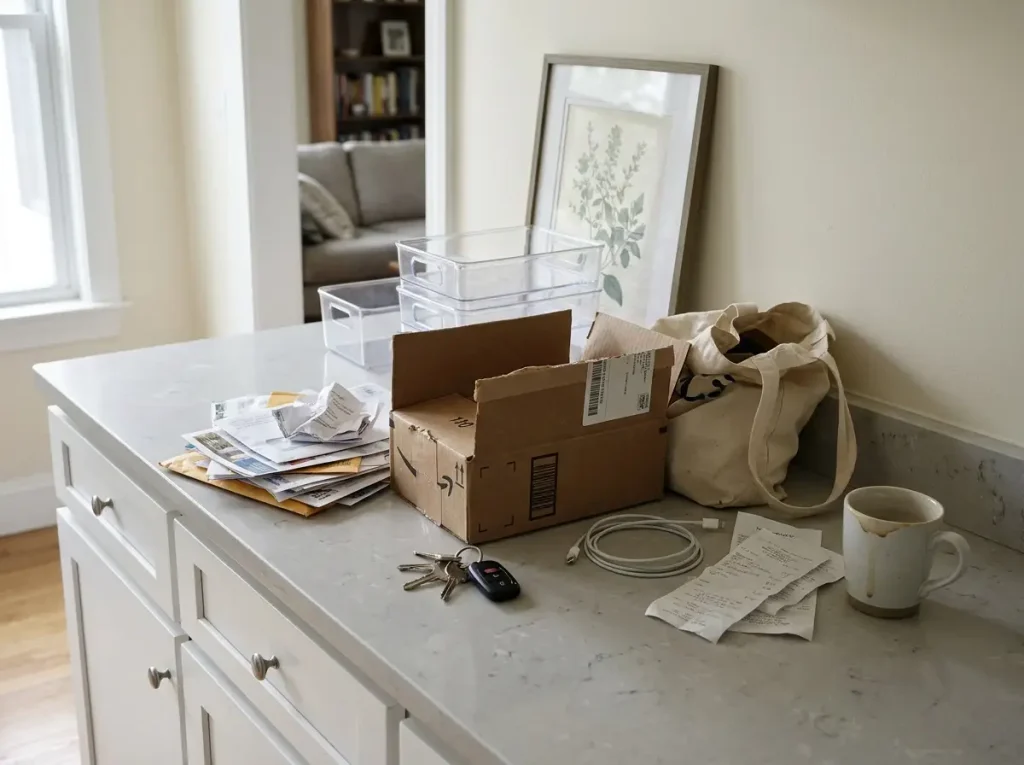
Here’s the part nobody puts in the “after” photo. The after photo is a starting line, not a finish line, and a minimalist system that looks perfect on day one tends to fail in three predictable ways. Name the failure first, and the fixes in the rest of this guide will make a lot more sense.
Cause One: The Intake Never Stopped
The most common failure is also the quietest. You declutter once, hard, in a single weekend, and then new things keep arriving at the exact same rate they always did. Deliveries, gifts, impulse buys, the free mug from a work event. Within three to six months the volume is right back where it started, sitting on top of your new system. Decluttering is an event. Intake is a faucet, and nobody turned it off.
Cause Two: Nobody Else Got a Vote
If you share the space, a system you designed alone has a structural weakness built in. You decided where everything lives, which means the “homes” feel obvious to you and arbitrary to everyone else. Your partner doesn’t know the new rule, the kids never agreed to it, and you end up maintaining the whole thing by yourself until you burn out. This is one of the most repeated stories in organizing threads: the one person who set it all up, quietly giving up around week six. A home that needs another person to learn a brand-new habit is carrying a dependency it usually can’t survive. (More on the dynamic of the other person in the house not following the system later.)
Cause Three: Too Many Steps to Put It Away
Watch how a system actually gets abandoned and it’s almost always friction. To put one item back you have to lift a lid, sort it into a sub-category, and reseat the lid on the right shelf. Your brain does the math instantly and decides the counter is easier. So the item lands on the counter, “just for tonight,” and within a few weeks the flat surface is the real storage system. Organizers call the slow version “clutter creep,” the way disorder rebuilds so gradually you can’t remember how the counter got that bad.
What works instead is boring and reliable: open bins, broad categories, one-step returns. The fewer the steps, the longer the system lives.
Declutter Before You Organize (Always)

You cannot organize your way out of owning too much. Every project that skips this step is just buying containers for things headed to the donation pile, which is why the order matters more than the method.
Reduce First, Contain Last
The sequence is purge, then categorize, and only then assign homes and think about whether you even need a container. Most people run it backward. If you want a method to keep the purge moving past the first weekend, pick a decluttering approach that survives past week one and stick with it rather than freestyling. The point of reducing first is simple: organizing a smaller pile of stuff is fast, cheap, and far harder to mess up.
Start With the Low-Stakes Zone
Decision fatigue is real, and it’s why people start in the garage and quit by noon. Work one room at a time, and start with the lowest-emotion zone you’ve got, a linen closet or a bathroom drawer, not the box of photographs. There’s a reason this feels harder than the magazines make it look: psychologists call it the endowment effect, the way we overvalue things simply because we already own them. It’s not that you’re sentimental or messy. Your brain is wired to resist letting go, so you stack the easy wins first and let momentum carry the hard ones.
Shop Your House Before the Store
Before you buy a single organizing product, walk through what you already own. Most homes are full of baskets, jars, and bins that can be repurposed the moment you’ve reduced enough to see them. And a standing donation bag in the closet (a permanent outbox), filling continuously, beats a once-a-year decluttering marathon, because reduction becomes a habit instead of a project.
Schedule the donation pickup before you start decluttering, not after. The recurring story in decluttering threads is the four bags that sat by the front door for three months because nobody booked the pickup. Bagged clutter by the door is still clutter.
The Five Principles That Make It Work

These five are the whole game. Get them right and the room barely matters, which is exactly why the room-specific guides build on top of them. Get them wrong and no container saves you.
Give Everything One Designated Home
NAPO’s research is blunt about the cost of not doing this: we lose roughly a year of our lives, spread out, looking for things. A fixed spot for every item is what ends the search, and the place it breaks down first is always the drawer, where small things go to become a pile. Before you buy anything, cut a couple of cardboard shoeboxes down to the height of the drawer and test whether compartments actually fix it. If they do, SpaceAid Bamboo Drawer Dividers are spring-loaded and adjust from about seventeen to twenty-two inches, which covers most kitchen and dresser drawers with no measuring and no tools. They won’t rescue a drawer that’s simply too full, though. That’s a reduction problem, not a divider problem.
Store Things Where You Use Them
Proximity beats category every time. Store things by where you actually reach for them, not by what type of object a blog says they are. Coffee lives next to the mugs and the kettle, not in a “beverages” zone across the kitchen. It sounds obvious, and it’s the rule people break most, usually in the name of a tidier-looking grouping.
Contain Categories (and Keep Them Visible)
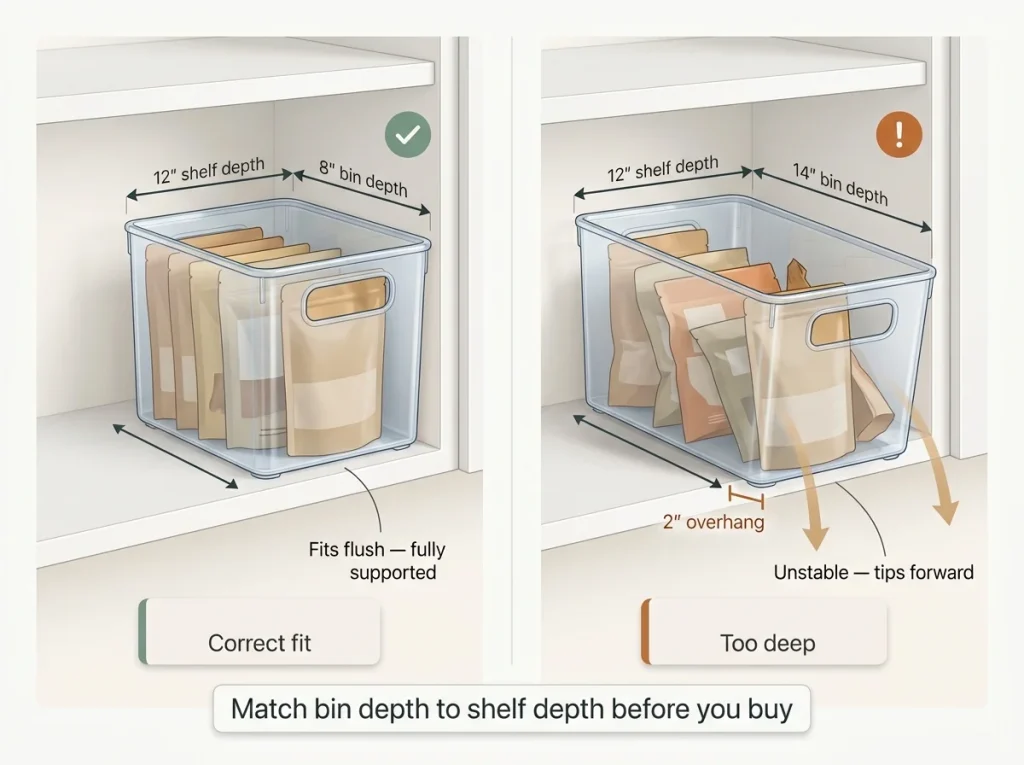
A closed, opaque bin is where categories go to be forgotten. The fix is visibility: clear bins or open storage that lets you see the category at a glance, so you actually use what’s inside. mDesign Stackable Plastic Storage Bins are clear for this exact reason, and at roughly eight inches square they sit flush on a standard twelve-inch upper shelf instead of hanging over the lip and tipping. If you’re not even sure bins will hold in your space, the clear ones from the dollar store test the idea for next to nothing first.
Never Fill a Container Past 80%
A container is a limit, not an expansion pack. If a bin has to be packed to the lid to hold everything, the bin isn’t too small, you have too much, and you’re back to the first principle. Leaving a little air in every container is what keeps the system usable, because you can see what’s there and put things back without a fight. The dividers and bins above are only as good as the reduction you did first.
Measure the shelf before you buy the bin, not the other way around. Upper kitchen cabinets run about twelve inches deep and most closet shelves about fourteen. A bin deeper than the shelf disappears to the back and you’ll never reach what’s behind it.
Daily Maintenance That Actually Sticks
A system without a reset built into it is a system waiting to fail. Maintenance isn’t motivation and it isn’t a deep-clean weekend. It’s a few minutes chained to something you already do, every day, without thinking about it.
The 5-Minute Daily Surface Sweep
Pick a trigger you can’t skip, like the moment the coffee is brewing or right before you turn off the kitchen light. For those few minutes, you reset the hot spots, the surfaces where things land by gravity and habit: the entry table, the kitchen counter, the top of the dresser. Five minutes a day beats an hour on Sunday because the pile never gets big enough to feel like a project.
The 15-Minute Weekly Zone Reset
Once a week, give one zone a slightly deeper reset, again tied to a fixed moment like Sunday evening. Not the whole house. One zone, fifteen minutes, then you stop. Rotate through the zones over the month and nothing ever drifts far enough to need a real overhaul.
Make the System Self-Explanatory
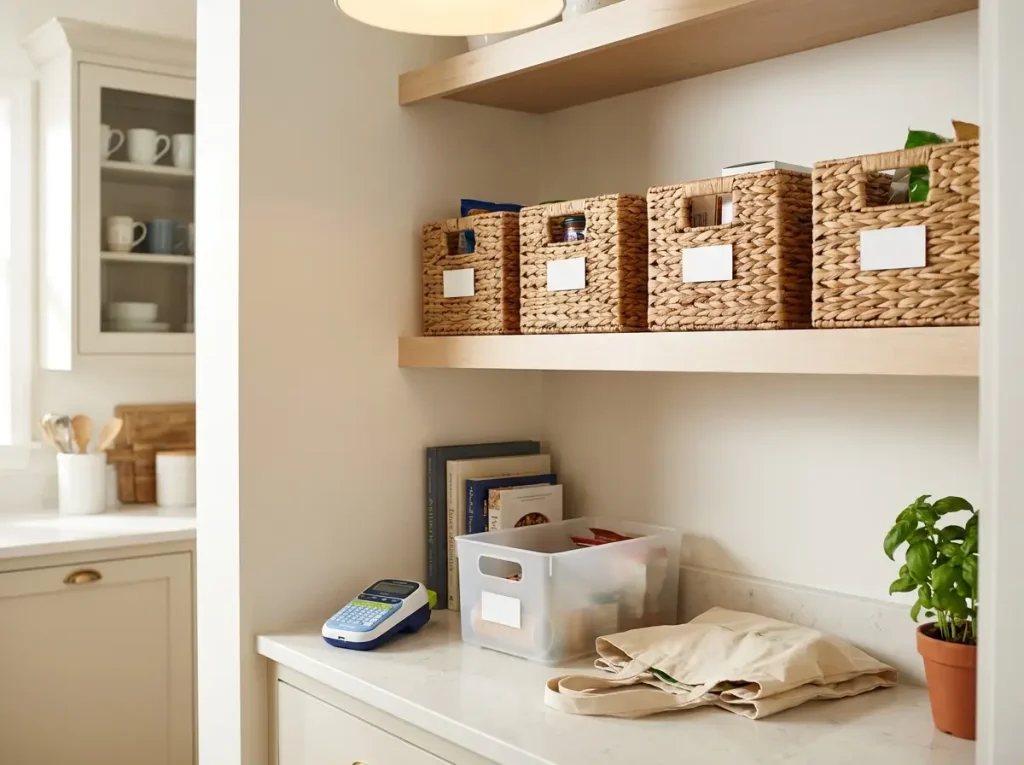
If you share the space, the system has to be readable by everyone, or you’re back to maintaining it alone. Labeling is what turns “where does this go” from a decision into something a partner or a kid just reads off the shelf. A Brother P-Touch PTD220 Label Maker does this cleanly for pantries and storage bins, and honestly that’s where it belongs. Organizing threads are full of the same arc: label everything, feel incredible, then three months later half the labels have peeled off in the bathroom and others no longer match what’s inside. For most drawers, masking tape and a marker do the identical job for free.
Attach the reset to a habit you already never skip, not to a time of day. “After I start the coffee” sticks. “At 7 p.m.” does not, because the day moves and 7 p.m. quietly becomes 9 p.m. becomes tomorrow.
The Intake Problem Nobody Talks About
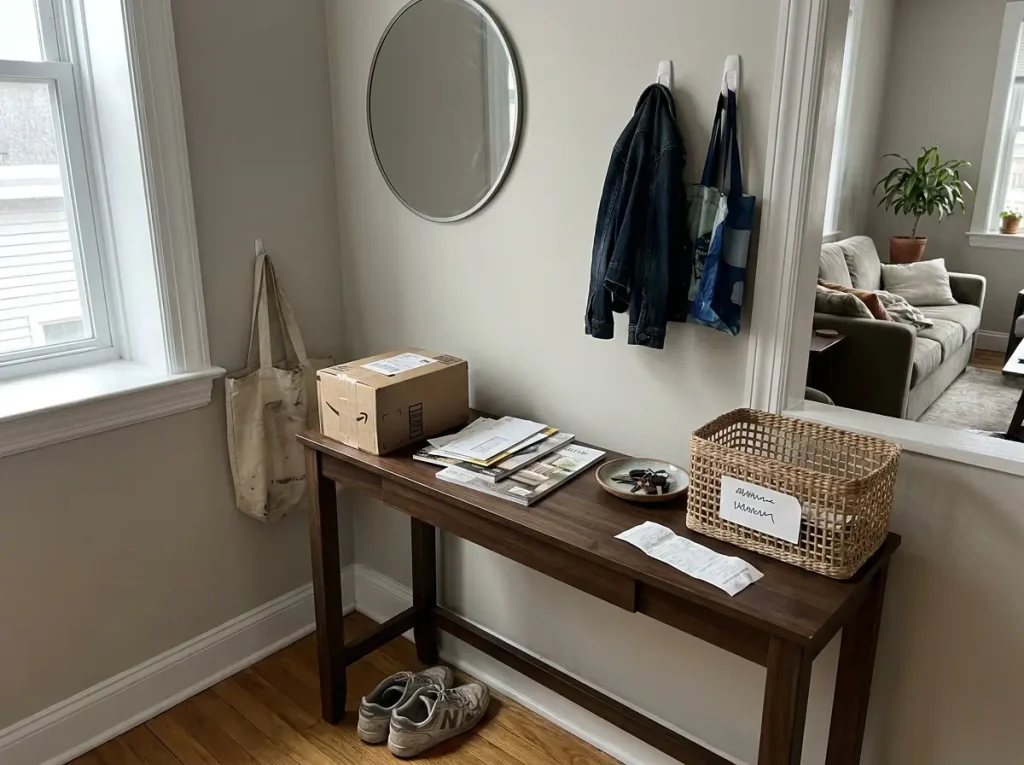
The real problem usually wasn’t the bathroom counter. It was the box that arrived every Tuesday. Every minimalist guide on the first page of results obsesses over reducing what’s already in your home, and almost none of them address the thing that actually breaks the system: what keeps coming in. You can’t out-declutter an open faucet.
Audit What Comes In, Not Just What’s There
Spend fifteen minutes once and cut the supply lines. Unsubscribe from retailer marketing emails, which kills most impulse purchases at the trigger, and delete your saved payment details from shopping sites so buying takes one annoying extra step. That small bit of friction is doing more work than another afternoon of purging ever will.
One-In-One-Out as a Buying Rule
Most people use one-in-one-out as a cleanup tactic, applied long after the stuff is already home. That’s why the one-in-one-out rule stops working on its own. It works far better as a pre-purchase question asked in the store or the cart: what leaves the house when this comes in? If you can’t answer it, that’s usually your answer.
Cut the Triggers
For anything non-essential, give it the 72-hour rule. Add it to the cart and wait three days. If you’ve forgotten about it by then, you didn’t need it, and you just avoided a future decluttering decision. Stack a few of these habits and the intake faucet finally drops below the rate you can let go of things, which is the only point at which a system actually holds.
Minimalist Organization When You Rent

Almost every minimalist guide assumes you own the walls. They tell you to install floating shelves and mount hooks and build in a closet system, which is useless advice if drilling a hole costs you your deposit. The same principles apply when you rent. You just build every “home” out of freestanding, over-door, and pressure-mounted solutions that pack up and move with you.
Create Storage Without Drilling
A few tools do most of the work. Command strips hold a genuinely useful amount, up to around sixteen pounds with proper prep, which is plenty for hooks, a mail organizer, or a small shelf, though not for anything heavy or anything over a stove. An over-door organizer hangs on a standard interior door with no hardware at all (check for about an inch of clearance on the hinge side, and keep hollow-core doors under their weight limit), turning the back of every door into vertical storage you weren’t using. And a set of Home in Bold Tension Rod Shelving wedges inside a cabinet or under the sink with nothing but pressure, then comes apart and moves with you.
The catch with pressure-mounted shelving is load: keep it to light things like cleaning bottles, linens, and snacks, not your cast iron. For an entire no-drill closet setup that won’t cost your deposit, the same freestanding logic scales up.
Reclaim the Space You Already Have
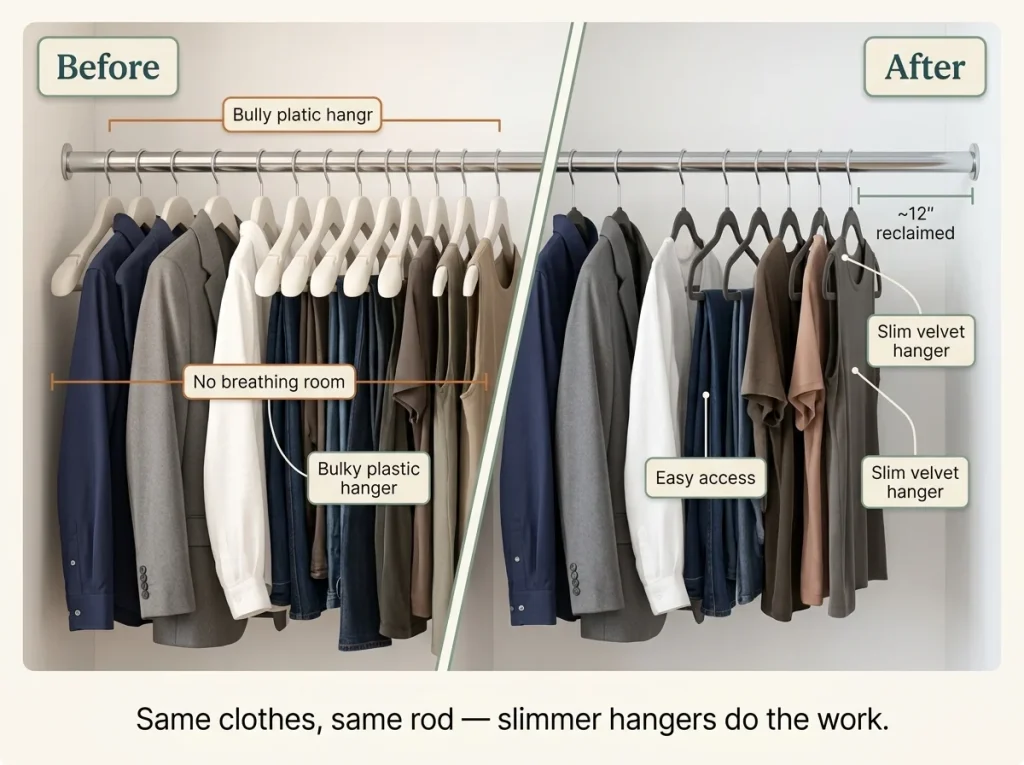
The highest-return move in any minimalist closet, rental or not, costs almost nothing and installs in zero minutes: swap your hangers. Zober Premium Velvet Hangers are barely thicker than a piece of cardboard, thin enough to reclaim roughly a foot of rod space in a standard closet, and the flocked surface keeps silk and rayon from sliding to the floor. One honest caveat: this is already the budget move. There’s no cheaper hanger worth buying, and the ultra-thin knockoffs snap under a winter coat.
Why Renting Actually Helps
Here’s the reframe most renters miss. The portable constraint is on your side. Because you can’t build anything permanent, you’re forced to keep the system light, and because you move every year or two, you get a built-in audit: every move makes you decide all over again what actually deserves a home in the new place. Owners go a decade without that reckoning. The same logic carries through the rest of a small apartment, where limited square footage does the editing for you.
The weight rating on a pack of adhesive hooks assumes a smooth wall. On textured or freshly painted walls it holds far less, and renters learn this when a loaded hook lets go at 2 a.m. Degrease the spot, press for a full minute, and wait an hour before you load it.
Match the System to How Your Brain Works
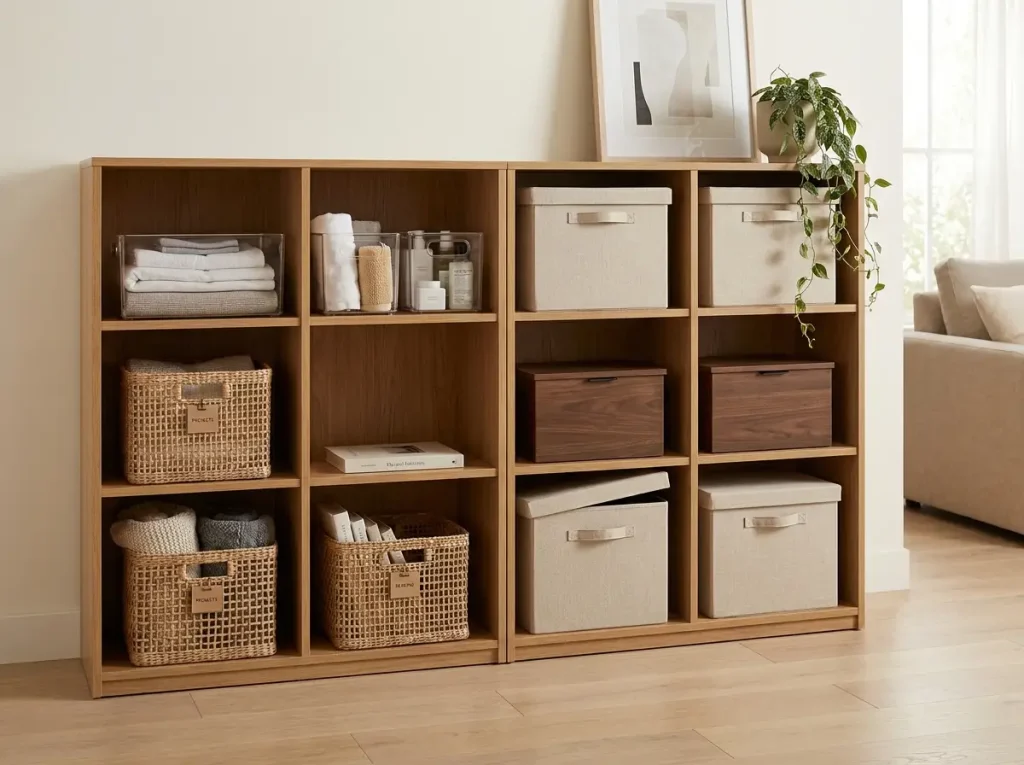
“Minimalist” does not mean everything hidden in matching containers. This is the piece that explains why two people follow the identical guide and only one of them succeeds. Force a visual person into closed opaque bins and they’ll forget what they own and quit in two months. The principle is fewer things with a home for each, not uniform concealment.
Why Hidden Storage Backfires for Some People
There’s a recurring story in organizing communities: someone pours their whole kitchen into matching opaque canisters because every blog said to, and two months later they can’t remember which jar holds what, so they stop using the system entirely. The fix wasn’t better labels. It was clear containers, because some brains run on what they can see. Out of sight genuinely means out of mind for a large share of people, and no amount of discipline overrides it.
Visible vs. Concealed: Pick Your Default
The widely used Clutterbug organizing style quiz developed by Cassandra Aarssen splits people, roughly, into four types along two axes: do you prefer your stuff visible or hidden, and do you want simple or detailed systems. A visual-and-simple person needs open shelving and clear bins. A hidden-and-simple person wants a few big closed bins with lids and nothing fussy. Neither is wrong, and both can be genuinely minimalist. Pick your real default, not the one in the photos.
Simple vs. Detailed Categories
Match the granularity to the person, too. Some people maintain a finely sorted, labeled system effortlessly and feel calmer for it. Others need exactly three broad bins (“kitchen stuff,” and that’s the whole label) or they won’t keep it up. The conventional wisdom is that more sorting equals more organized. In practice, a detailed system handed to a simple-system brain falls apart faster than no system at all. If you want this matched to how you actually live, these minimalist decluttering tips that fit the way you live go a level deeper.
The Bottom Line
Minimalist organization sticks when you treat it as a sequence, not a shopping trip. Reduce before you organize, every time. Build the daily reset and the intake rule into your week, because the system and the maintenance are two different things and the second one is what fails. And adapt the principles to your space if you rent and to your brain if hidden storage makes you lose track of what you own.
In three months, check your hot spots. If things are landing on surfaces again, the problem is almost always the intake faucet or too many steps to put things away, not the bins you chose. Start with one drawer. Reduce it, give everything a home, and see if it’s still that way in a week. Then move to the next one.
Frequently Asked Questions
01What is minimalist organization?
Minimalist organization is owning less, then giving what remains a fixed home, with containers playing a minor supporting role. It’s a set of decisions about what you keep, not an aesthetic of matching bins. The look is the last five percent; the reduction is the work.
02What should I declutter first to start?
Start with the lowest-emotion zone you have, like a linen closet or a bathroom drawer, never the box of photos. Easy wins build momentum and train the decision muscle before you hit the hard, sentimental stuff. Save the garage and the keepsakes for last.
03Why does my minimalist organization keep falling apart?
Usually one of three things: new stuff kept arriving after the purge, the system needed too many steps to put things away, or other people in the house never agreed to it. Fix the intake, cut returns to one step, and involve everyone who uses the space.
04Do I have to buy matching bins to organize like a minimalist?
No, and buying them first is the most common mistake. Reduce what you own before spending anything, then shop your house for containers you already have. Matching bins are optional decoration, not the system, and buying them before you purge just hides the clutter.
05How do minimalists keep their homes organized long-term?
Two habits do the heavy lifting: a five-minute daily reset chained to something you already do, and an intake rule that slows what comes in. The organizing system is the easy part. The reset and the intake control are what keep it from reverting.