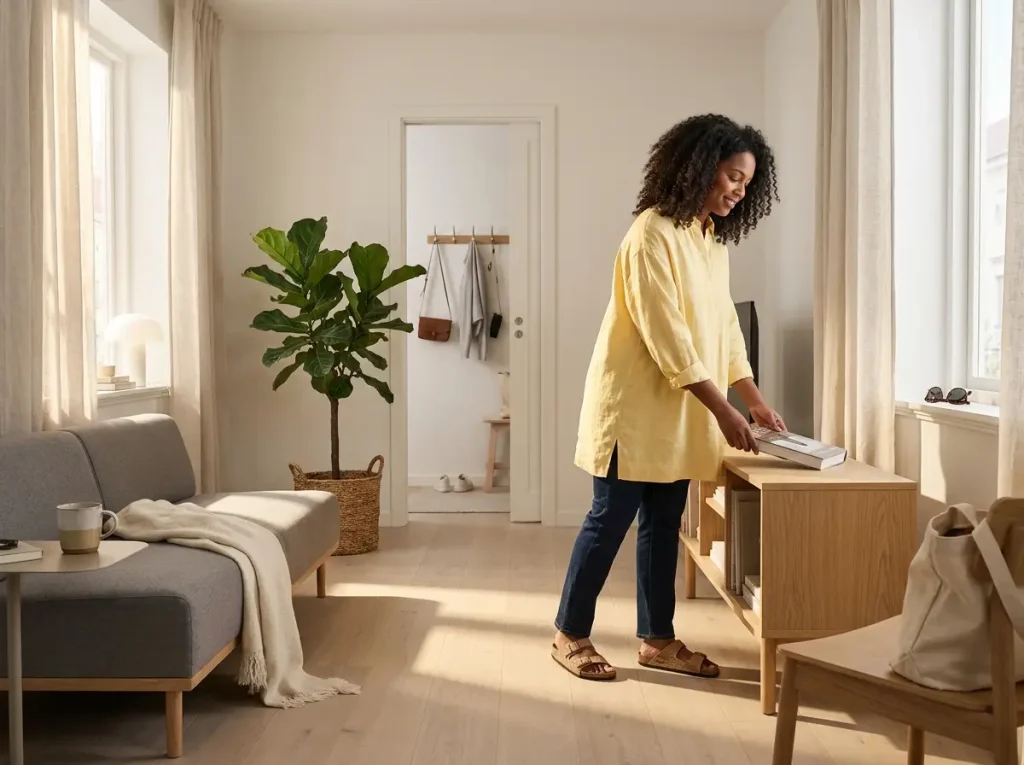
You spent a whole weekend on it. You pulled everything out, filled the donation bags, wiped down the empty surfaces, and stood in the doorway feeling like a different person. Two weeks later, the counters were covered again and the entryway chair had quietly gone back to being a pile. If that sounds familiar, the problem was never your willpower. Becoming a minimalist at home isn’t a weekend event, it’s a system that changes what comes IN, not just what you haul out. This guide walks through what minimalism at home actually means, why the clutter keeps coming back, the room order that builds momentum, and the gatekeeping habits that finally make it stick.
Quick Answer
To become a minimalist at home in a way that lasts, work in this order:
- Decide why you want less, not just a tidier look.
- Declutter one room fully before you organize anything.
- Start small with the bathroom, save storage areas for last.
- Give every item you keep one fixed home.
- Set up an outbox and a daily two-minute reset.
- Guard what comes in so clutter can’t creep back.
What Becoming a Minimalist at Home Actually Means
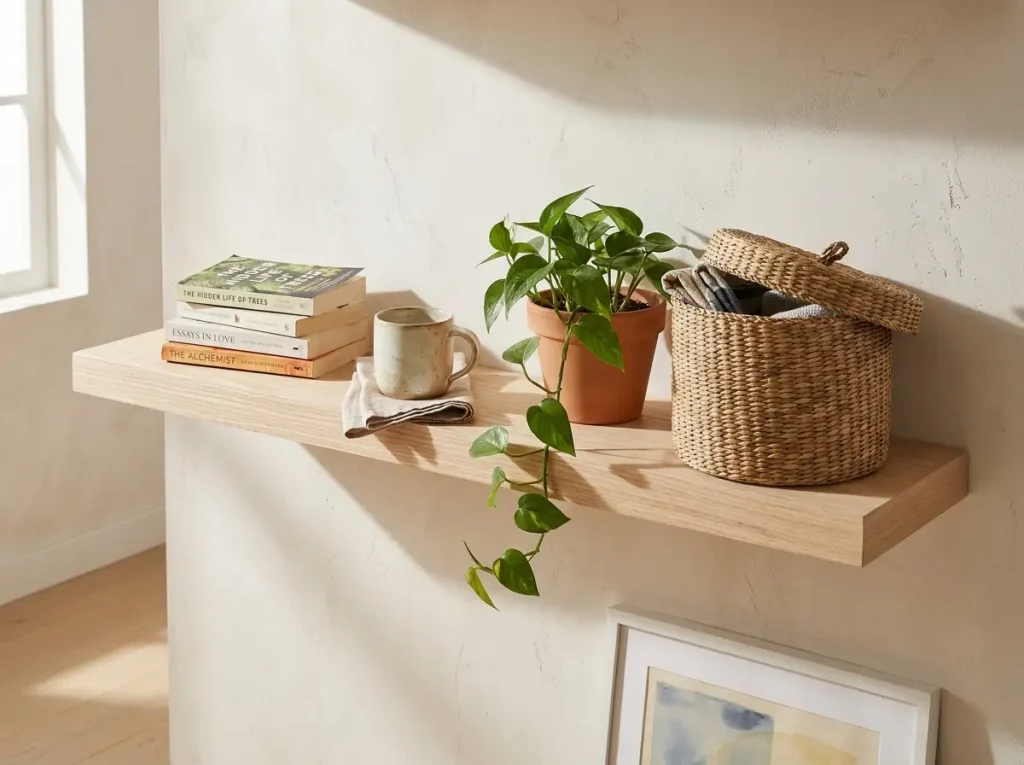
Most people picture a bare white loft with one chair, a single plant, and absolutely nowhere to put your keys. Then they look at their actual apartment, their kids, their partner who collects mugs, and decide minimalism isn’t for them. That picture is the reason most people never start. And it’s wrong.
It’s intentional ownership, not an empty room
Minimalism at home means owning what earns its place, not hitting some furniture quota. A home full of things you genuinely use and love can absolutely be minimalist. The number isn’t the point. The intention is. You’re not trying to own as little as possible, you’re trying to stop owning things on autopilot.
The biggest driver of a cluttered home is what organizers and decluttering communities call the “just in case” mindset, the stuff you keep for scenarios that almost never arrive. The spare cables for devices you no longer own. The “good” bags saved inside other bags. Naming that category honestly is more than half the work, because once you see how much of your home is built on hypothetical futures, letting go stops feeling reckless.
The goal is a home that resets itself
Here’s the shift that matters: a minimalist home is defined by what it does, not how it photographs. Can you reset the main rooms in a few minutes? Does every item have somewhere to go? Can you clean a surface without relocating a small civilization of objects first? That’s minimalism doing its job. The clear-counter look is a side effect, not the goal.
This also makes minimalism a genuine quality-of-life upgrade, not an aesthetic hobby. Research from the Rocky Mountain College of Art and Design on the psychology of clutter ties cluttered environments to measurably higher stress, especially for women. So a calmer home isn’t just nicer to look at. It lowers the daily mental load of living there.
What it looks like in a real, lived-in home
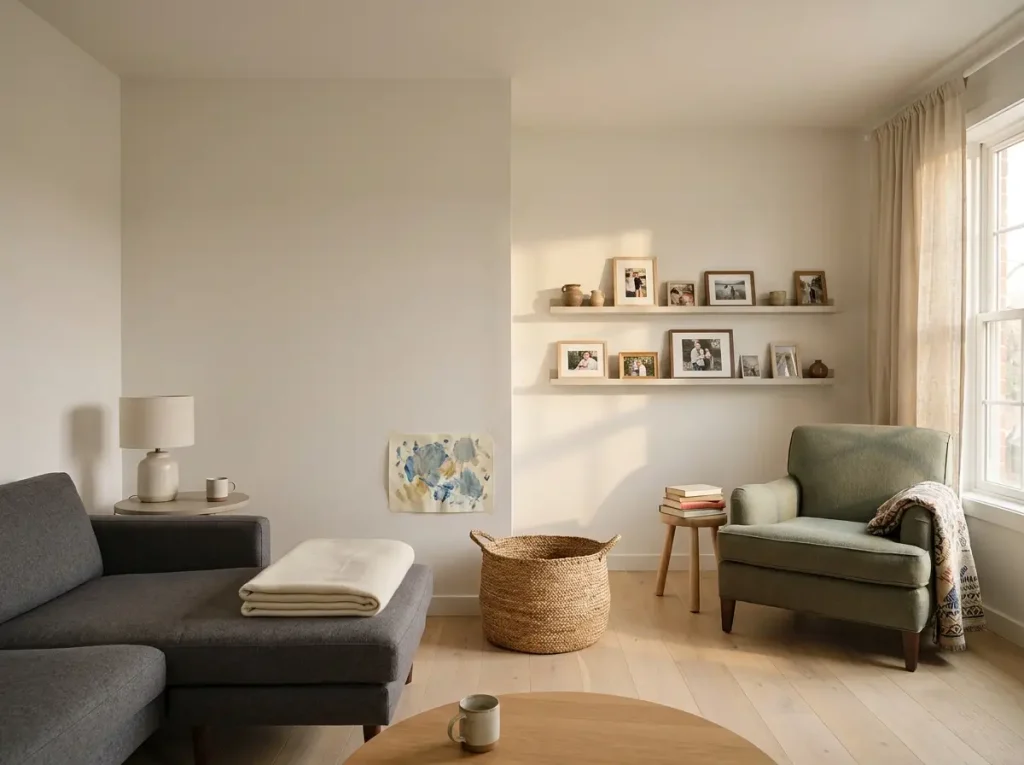
You don’t need a design-magazine apartment, and you definitely don’t need to own the place. A minimalist home with a renter’s lease and a family of four looks like this: surfaces that stay mostly clear because everything has a job, a couple of baskets that contain the genuinely random stuff, and a household that can find the scissors. There’s a mug on the counter and a jacket over a chair. That’s not failure. That’s a home where people live, run by a system that absorbs normal life instead of collapsing under it.
Why Your Home Keeps Filling Back Up
Nobody re-clutters a whole house in a weekend. It happens one Amazon box, one impulse buy, one “I’ll deal with this later” at a time, so slowly you never notice until you’re right back where you started. Decluttering communities have a name for it: clutter creep. And understanding the mechanics of it is the single thing that separates people who become minimalists from people who just declutter every spring forever.
Storage is permission to accumulate
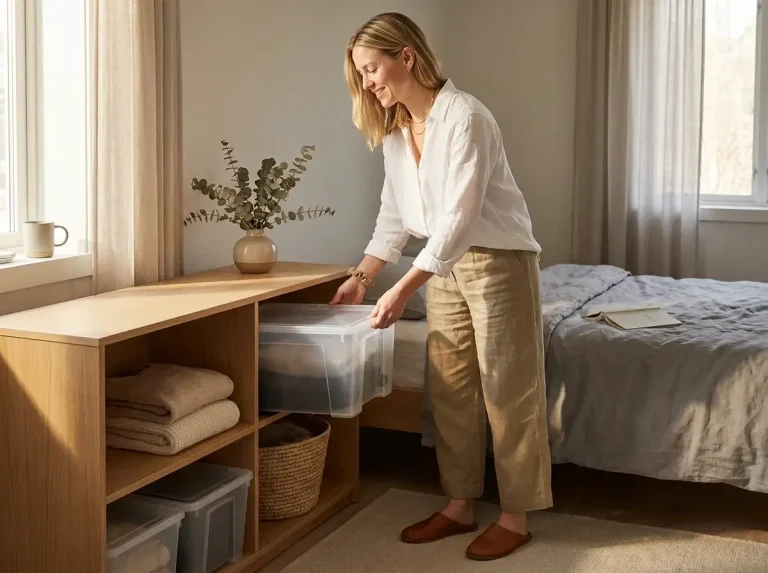
This is the trap almost nobody warns you about. The instinct, the moment you decide to get organized, is to buy bins. More storage feels like progress. But empty storage capacity is an invitation, and the invitation always gets answered. You buy a six-pack of bins, and within a month you own a six-pack of bins full of stuff you’d otherwise have let go.
Buying containers before you’ve decluttered is counterproductive by design, which is exactly why so many minimalist setups quietly revert by month three. The container didn’t reduce your stuff. It just gave it a nicer place to hide and a reason to multiply.
Put a one-month freeze on buying any organizing product. If you still want a specific bin after you’ve finished decluttering the space it’s for, buy it then. Most of the time, the space you cleared turns out to need far less than you thought.
You changed the exit, not the entry
The weekend purge is an exit event. You moved a pile of things out the door, felt the relief, and called it done. But shopping, gifting, mail, free samples, and the general inflow of modern life never stopped. You optimized the one moment stuff leaves and ignored the hundred moments stuff arrives. That asymmetry is why the home refills. The exit was a project with an end date. The entry is a daily habit you never changed.
Every empty surface is a magnet
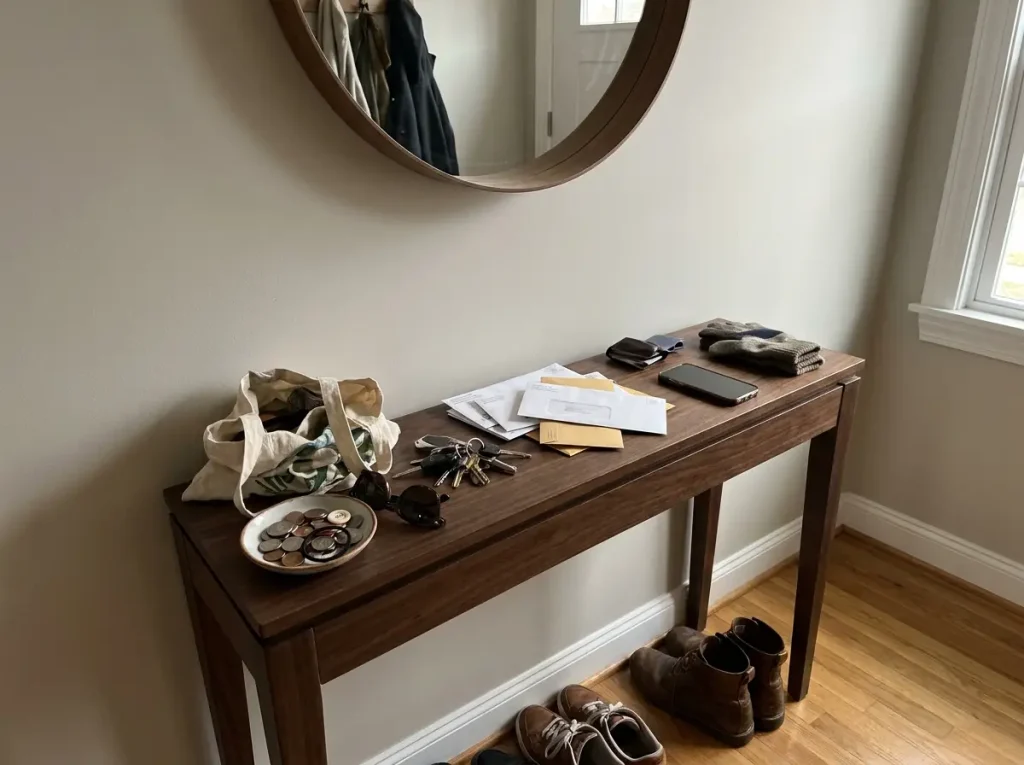
There’s a reason the entryway chair became the dumping ground. No one decided it would. It just had a flat top and no assigned job, so it collected whatever was in your hands when you walked in. Any horizontal surface without a specific purpose becomes what organizers call a flat-surface magnet, and a home is full of them: the dining table, the kitchen island, the dresser top, the bench by the door.
Professional organizers, including the trade association NAPO, frame it the same way: clutter isn’t a moral failing, it’s what happens when items don’t have homes and surfaces don’t have rules. The fix isn’t discipline. It’s giving every surface a job so it can’t quietly volunteer for clutter duty.
Start Here, the Room Order That Builds Momentum

Standing in the middle of a cluttered home trying to “become a minimalist” is paralyzing because the whole house is the task. The fix isn’t more motivation. It’s sequence. You start where the win is fast and the emotion is low, and you end where the volume and the feelings run highest, because by then you’ve built the muscle to handle them.
Begin with the bathroom
The bathroom is the best first room and almost nobody picks it. It’s small, it’s low-emotion (nobody weeps over an expired sunscreen), and you can finish it in a single focused session. Everything in it is yours, so there’s no negotiating with a partner. And the payoff is immediate and visible, which is the fuel you need for the next room. Toss the expired products, the hotel samples, the dried-out nail polish. You’ll clear half of it without a single hard decision.
That early, total win matters more than its size. It teaches your brain that finishing a room feels good, and that feeling is what carries you forward.
Then the entryway and the kitchen
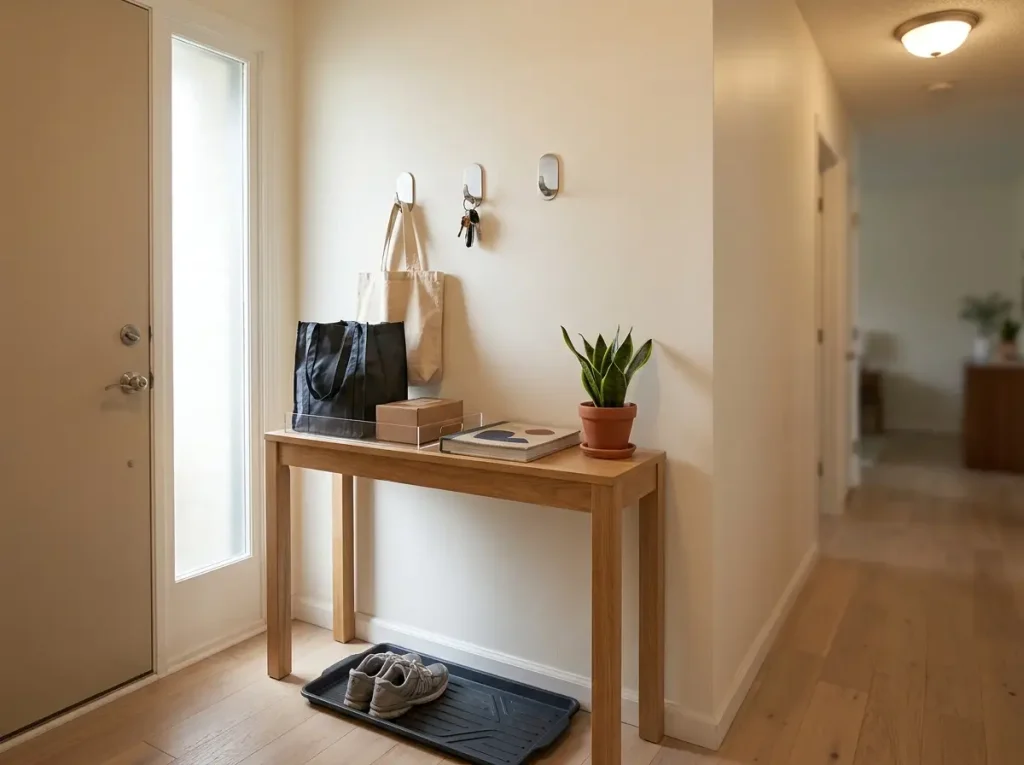
The entryway is next because it delivers the highest visual impact per square foot in the entire home, and it’s the room that sabotages every other one when it fails. A working entryway also stops clutter at the door before it spreads inward. The move here is to give incoming stuff a designated landing spot instead of the nearest flat surface.
For renters, the no-drill version is a few adhesive hooks at the right height for bags, coats, and keys. The Command Large Wire Hooks hold a loaded tote without pulling off the wall and leave zero damage when you move, which makes them deposit-safe. Before you buy anything, though, check whether a hook you already own or an over-the-door rail does the job. The landing spot is the point, not the hardware.
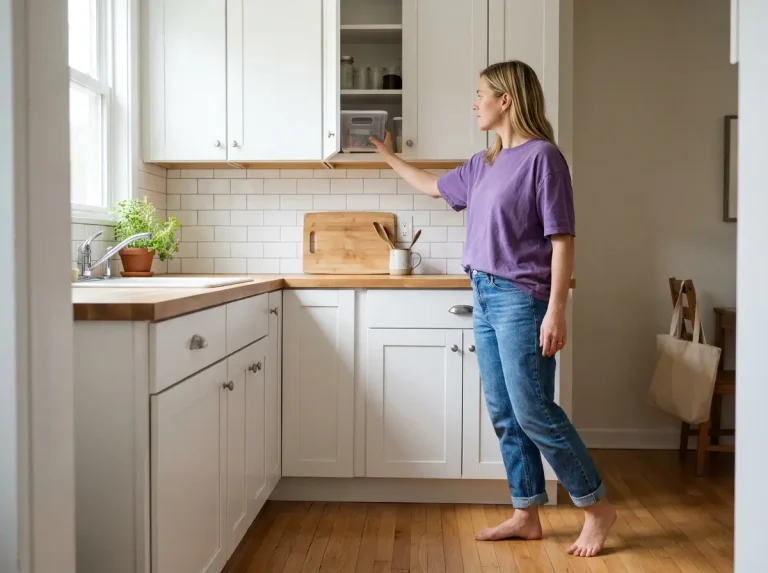
The kitchen comes next: complex, but mostly low-sentiment and high-frequency, so clearing it changes how the whole home feels day to day. It also has its own reversion traps worth knowing before you start, since kitchens refill faster than almost any other room.
The closet, then the shared and emotional rooms last
By the time you reach the bedroom closet (room four), you’ve got momentum. Start with what decluttering communities call the backward-hanger audit: turn every hanger backward, and over the next month or two, flip it forward only when you actually wear the item. What’s still backward come spring is your answer, and it costs nothing.
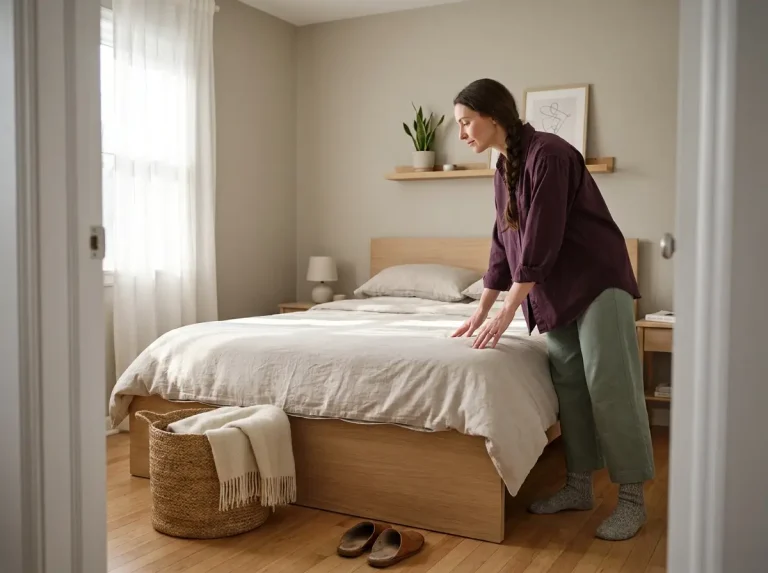
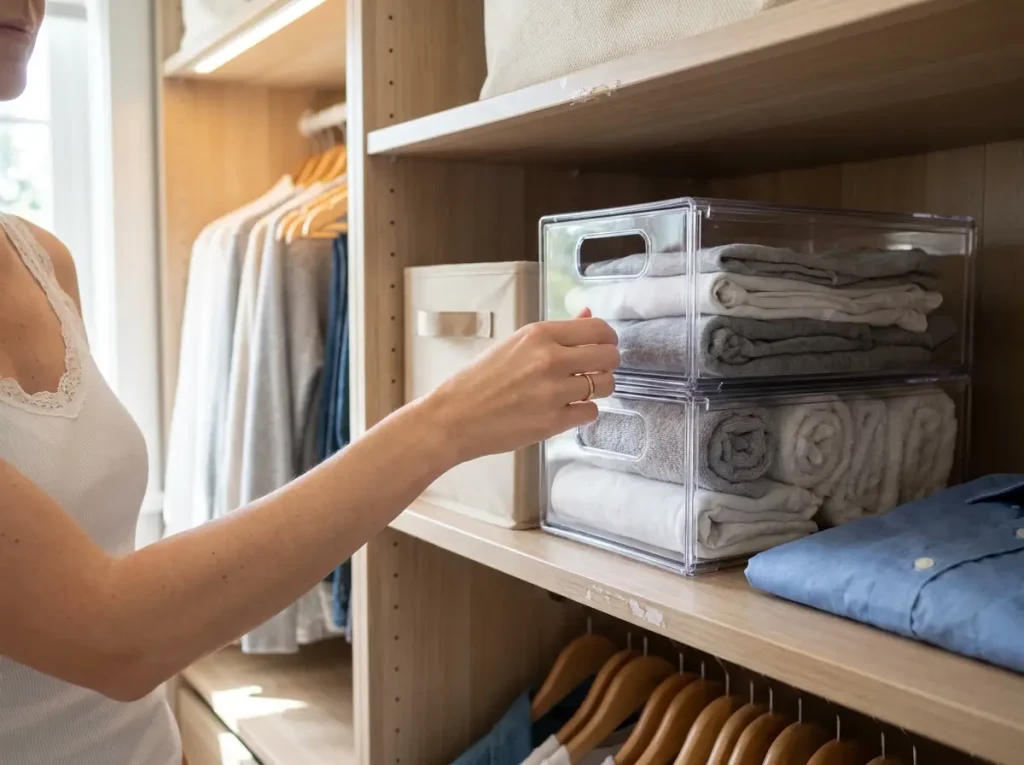
After the audit, do the wardrobe edit. Switching to uniform slim hangers reclaims a surprising amount of rod space and finally shows you your real closet capacity. The Zober Premium Velvet Hangers grip fabric so tops stop sliding off, and because they’re thin, the same rod holds noticeably more without crowding. If the cost adds up, the Amazon Basics slim velvet version does the same job for less. To take the closet further, a capsule wardrobe is just the container limit applied to your clothes, a fixed set you actually wear and rotate by season. A minimalist bedroom is one of the highest-payoff rooms in the house, so if yours still feels cluttered after you organize it, the closet is usually the culprit.
Save the living room, the home office and digital files, and the storage areas (garage, attic, the box closet of doom) for last. These are either shared, decision-heavy, or emotionally loaded, and they’re the rooms where most attempts stall out. The popular advice is to declutter by category, KonMari style, pulling every item of one type from the whole house at once. And it works. But for most people staring down a fully cluttered home, room-by-room is simply easier to actually finish, because each room gives you a door you can close on a completed job.
Finish one room completely before opening the next. A half-done house in six rooms feels like failure and kills momentum. One fully finished room, with the door you can close on it, is proof the method works, and proof is what keeps you going.
Declutter First, Why Organizing Before Purging Always Backfires
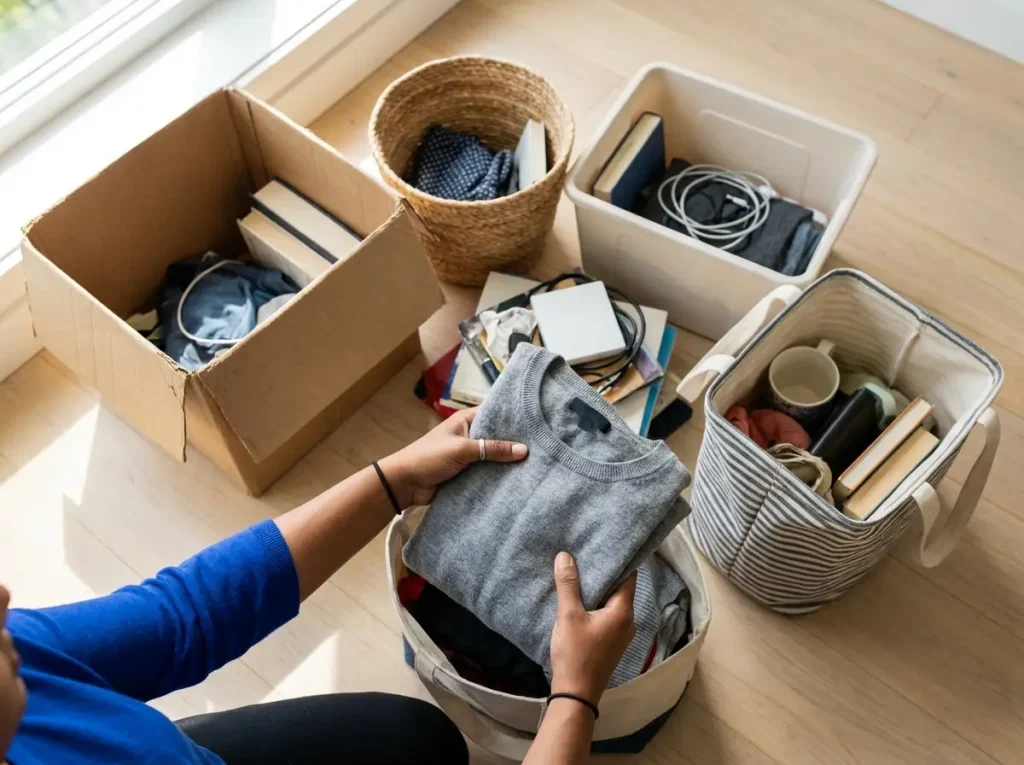
The order of operations is non-negotiable: you reduce, then you contain. Reverse it and you fail, every time. The instinct to buy organizers and “get organized” is the most common wrong move there is, because organizing a pile of things you don’t use just produces a neater pile of things you don’t use.
You can’t organize your way out of too much stuff
Containing excess doesn’t remove it, it hides it, and hidden excess still costs you space, money, and the low hum of knowing it’s there. This is the same bin trap from earlier, just aimed at your willpower instead of your wallet. Until the volume comes down to what you actually use, no system will hold, because the system is being asked to manage a quantity it was never built for. Subtract first. Always.
The four-box method keeps you moving
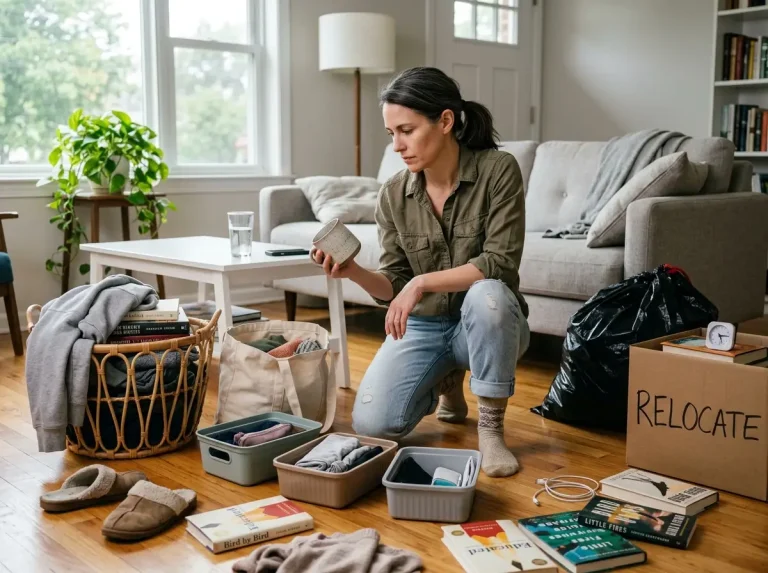
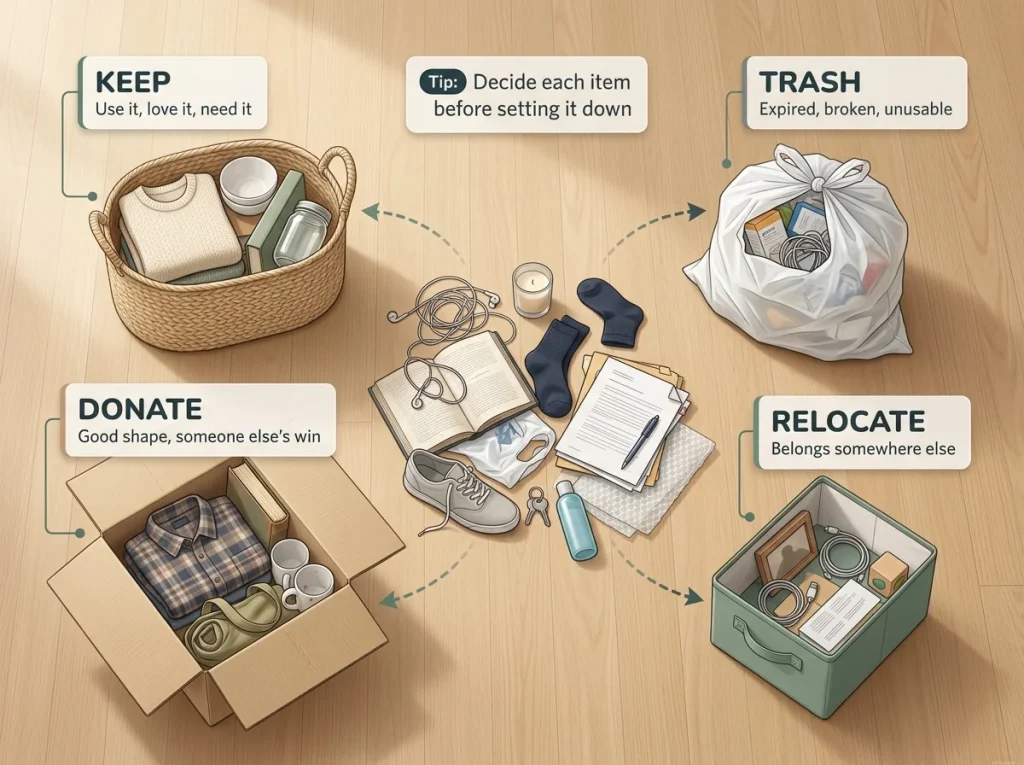
There are plenty of decluttering methods, but the simplest way to keep decisions flowing is the four-box approach: as you work through a room, every item goes into keep, donate, trash, or relocate. The magic is that it forces a decision on each thing instead of letting you shuffle items into a vague “deal with later” zone, which is how the doom pile is born. If you want the full mechanics (and the one box that quietly sabotages the whole thing), the four-box decluttering method has a complete walkthrough.
There’s one logistics rule that real people learn the hard way: schedule the donation pickup before you start. The most repeated confession in decluttering threads is the bags of donations that sat by the front door for three months because nobody booked a pickup or drove to the drop-off. Unscheduled, those bags become furniture.
Cap your sessions so you don’t burn out
Decluttering is constant decision-making, and decision fatigue is real. This is why people quit halfway through a closet and never go back. Work in short blocks, roughly two hours at most, and stop while you can still think clearly. If even starting feels impossible, that’s normal, and there’s a way through when the whole house feels like too much to begin.
Set realistic expectations on the timeline, too. A studio or one-bedroom can reach a clean baseline in about four to six weeks of these short sessions. A three-bedroom home is a three-month-plus project for the first full pass. Emotional categories (sentimental items, inherited things, your kid’s mountain of art) take longer, and they should. Don’t rush the parts that actually hurt.
Build the System, Rules Not Just a Clean Look
A clean room is a snapshot. A system is what makes the room clean itself again next Tuesday. Once you’ve decluttered to baseline, this is where becoming a minimalist actually becomes permanent: a handful of rules that quietly do the work so you don’t have to keep re-deciding everything.
One home for every item
The core rule is simple and unforgiving: every item you kept gets one fixed home. An item without a home is homeless, and homeless items become surface clutter by default, because they have nowhere else to go. When you can’t find something, it’s almost always because it never had a home, just a series of temporary resting spots.
Labeling makes the system visible and, more importantly, repeatable for everyone else in the house, which is the difference between a system that’s yours and a system the household actually runs. A label maker like the Brother P-Touch PTD220 makes shelf and bin labels legible enough that nobody has to guess where things go. You don’t need the machine, honestly. A pack of chalkboard label stickers or even painter’s tape and a marker does the same job. The labeling matters more than the tool.
The container is the limit
This is the rule that defeats the bin trap for good, the heart of what’s often called the Container Method: the container IS the category ceiling. When a bin overflows, you don’t buy a bigger bin, you edit what’s inside back down to fit. The container becomes a built-in limit that stops a category from quietly expanding forever. It’s the single most useful rule in the whole reduce-before-you-contain approach to a minimalist home.
Before you buy a single container, shop your own home. Shoeboxes, baskets, mason jars, and the boxes things already came in all work fine as category limits. When you do want something sturdier and stackable for a cabinet or pantry, the mDesign Stackable Plastic Storage Bins give you a clean, visible ceiling per category. For open closet or living-room shelves, and especially if you move often, the collapsible Fabric Storage Bins fold flat when you relocate, which makes them genuinely renter-friendly. Either way, the bin is the boundary, not a license to keep more.
The one-finger rule and the daily reset
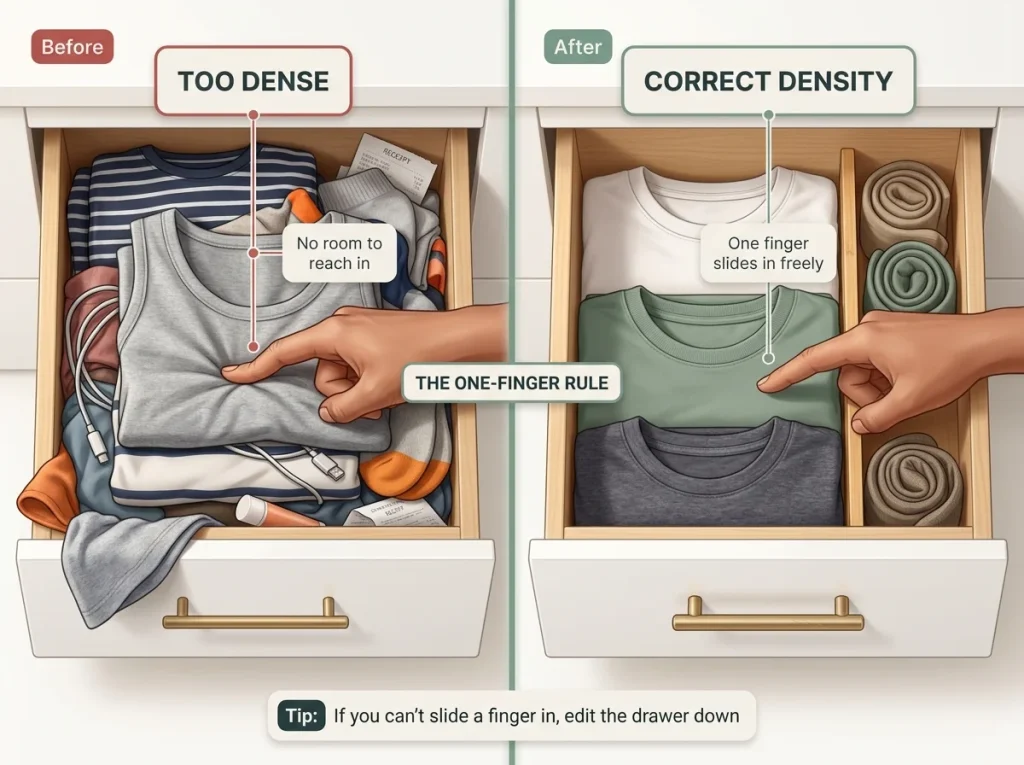
Two small habits hold the whole thing together. First, the one-finger rule: if you have to wrestle items aside to reach what you need, the space is too dense, so thin it out. A drawer or shelf you can slide a finger into with room to spare is a drawer that stays usable. Second, the daily two-minute reset: at the end of the day, scan the high-traffic surfaces and return anything stranded to its home. Two minutes, every day, beats a four-hour reset every month. That daily pass is the keystone habit that keeps the whole system from sliding back.
Keep New Clutter Out, the Gatekeeping Habits
You cleared the home. Now comes the real skill, the one nobody talks about: keeping the inflow from refilling it. Gatekeeping is the entire difference between a before-and-after photo and a home that’s still minimalist next year. This is the entry side you ignored during the purge, and it’s where permanence actually lives.
Install an outbox by the door
Give departing items a designated launch pad. An outbox is a tray or basket near the exit where anything leaving the home waits, the thing you’re returning, the gift to re-gift, the donation, the library book. Without it, those items join the “I’ll deal with it later” pile and never leave. With it, they’re already by the door when you head out.
Any flat tray you already own works for this, so start there. If you want something low-profile that doesn’t disrupt the clean look you just built, a clear acrylic outbox tray sits quietly on a console and keeps the departures visible without becoming an eyesore. The product is optional. The habit of a designated exit point is not.
Put a recurring monthly reminder on your phone to empty the outbox: book the donation pickup, mail the returns, drop the bag in the car. An outbox that never gets emptied is just a smaller, fancier clutter pile by the door.
One-in-one-out, the honest version
You’ll see one-in-one-out recommended everywhere as a decluttering tool. I used to repeat that advice myself. It’s wrong. One-in-one-out is a maintenance rule, not a reduction tool, and it only works after you’ve already hit baseline. Apply it to an overstuffed home and you’re just shuffling overcapacity, swapping one item for another while the total never drops. Once you’re at baseline, though, it’s a quiet, powerful guard: a new sweater means an old one leaves. If you’ve watched the rule fizzle before, here’s why one-in-one-out quietly stops working by month three and how to make it hold.
Audit the inflow
Most clutter is bought, not accumulated by accident. Be honest about whether shopping has become a form of entertainment, what communities bluntly call shopping as a hobby. You don’t have to quit buying things. You just have to make it a decision again instead of a reflex. For the “just in case” items that drive fear-based keeping, a useful filter is the 20/20 rule: if you could replace it cheaply and quickly should you ever actually need it, you don’t need to store the hypothetical. Let it go, and let the gate do its job.
When Your Partner or Family Isn’t On Board
Here’s the failure point no one prepares you for: you can control your own stuff, but you can’t decree minimalism for an entire household. The most common collapse is the shared-space version, where you minimize your half and the shared surfaces refill from someone else’s. It’s the single biggest reason home minimalism attempts fall apart, and it has real workarounds.
Start with your own stuff, your own zones
Lead by example, not by lecture. Declutter your closet, your nightstand, your side of the bathroom, and let the calmer, easier-to-use result make the argument for you. As decluttering communities put it, you won’t nag anyone into a life of less. People come around when they see the payoff in person, not when they’re handed a manifesto. And if you live with someone who genuinely can’t part with anything, that’s a deeper dynamic worth handling gently, the way you’d approach decluttering with a partner who hoards.
Negotiate shared spaces, don’t dictate them
Draw a clear line between personal zones and shared ones. Your closet needs no one’s agreement. The living room does. So in shared spaces, negotiate instead of imposing: designate one zone, a shelf, a chair, a basket, as the non-minimalist’s sovereign territory, and let it hold so the rest of the room can stay calm. The living room is usually where this tension shows up first, which is why a shared minimalist living room takes its own approach to keeping the peace and the surfaces clear.
For kids, skip the rules nobody remembers and use container-level limits instead: the toys fit in this bin, and when it’s full, something rotates out. A physical boundary a four-year-old can see beats an abstract rule every time.
Frame it as a trial, not a conversion
“Let’s become minimalists” sounds like a personality transplant and triggers resistance. “Can we try clearing just this one shelf for thirty days and see how it feels?” sounds like a small, reversible experiment, and people say yes to experiments. Low stakes, short window, easy to walk back. Most of the time, the calmer shelf sells itself, and the trial quietly becomes the new normal. For what it’s worth, the relationship always matters more than the empty counter. Say that out loud, and mean it.
Conclusion
Becoming a minimalist at home comes down to an order most people get backward: subtract before you organize, build the system before you expect it to hold, and guard the inflow before you celebrate. Start where the win is fast and save the hard rooms for when you’ve earned the momentum. And remember that the home that resets itself in two minutes beats the home that photographs well and falls apart by Tuesday.
In three months, run one check: look at your flat surfaces and your outbox. If the surfaces are creeping and the outbox is empty, your inflow gate slipped, not your discipline. That’s a habit to tighten, not a reason to start over.
So pick the bathroom. Give yourself ninety minutes this weekend. That one finished room is the entire method in miniature, and it’s the proof you needed that you can actually do this.
Frequently Asked Questions
01What does it mean to be a minimalist at home?
Being a minimalist at home means owning only what you genuinely use or value, so every item has a purpose and a place. It’s about intentional ownership, not empty rooms or a specific number of possessions.
02How do I start becoming a minimalist if I have too much stuff?
Start with one small, low-emotion room like the bathroom and finish it completely before moving on. Declutter using a four-box system (keep, donate, trash, relocate) before you buy any organizers. One finished room builds the momentum for the next.
03How long does it take to become a minimalist at home?
A studio or one-bedroom usually reaches a clean baseline in four to six weeks of short sessions, while a three-bedroom home is a three-month-plus project. Emotional categories like sentimental items take longer, and maintenance becomes a permanent habit.
04Can you be a minimalist with kids or a partner who won’t declutter?
Yes. Declutter only your own items and personal zones first, and let the results make the case. Negotiate shared spaces instead of dictating them, give kids container-level limits, and frame changes as a 30-day trial rather than a permanent rule.
05Do I need to buy storage bins to become a minimalist?
No, and buying bins first usually backfires. Extra storage becomes permission to keep more, so declutter first and shop your own home for containers like shoeboxes and baskets. Only buy bins for what’s left, after you know what you actually need.
Disclaimer: ClutterlessNest is a participant in the Amazon Services LLC Associates Program. As an Amazon Associate we earn from qualifying purchases. This article may contain affiliate links — if you buy through them, we may earn a small commission at no extra cost to you. We only recommend products we have tested or genuinely believe in.