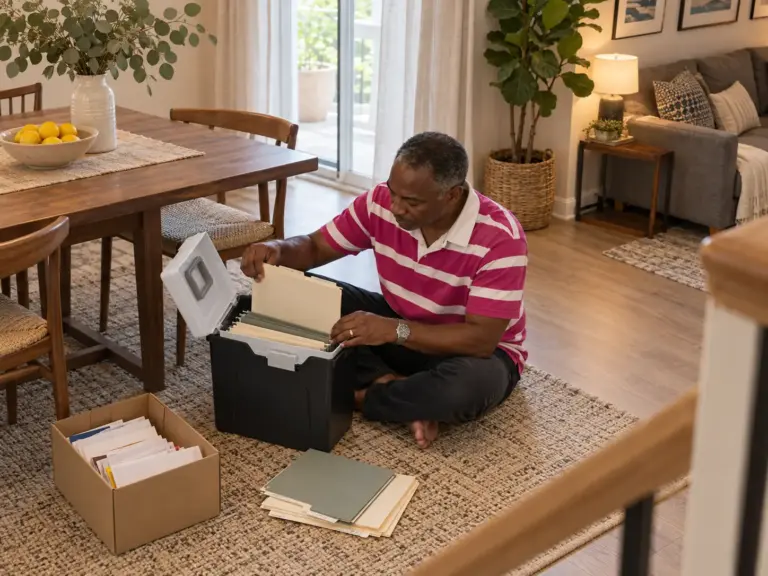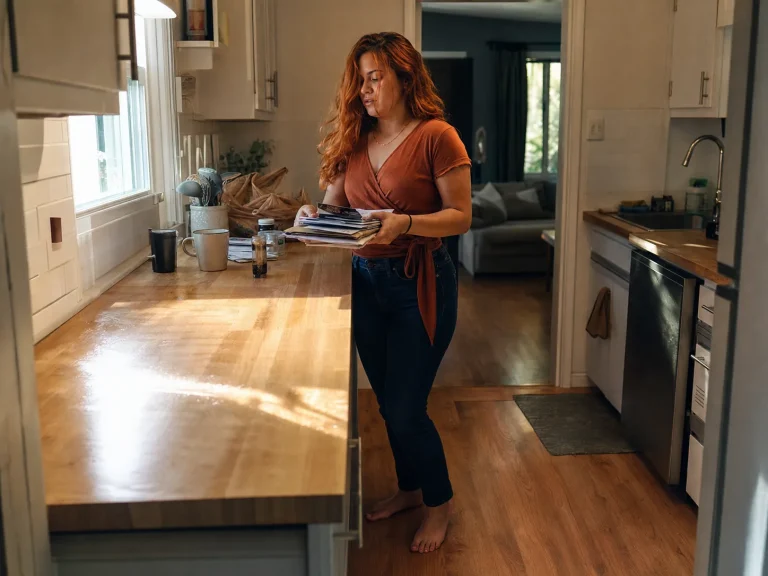
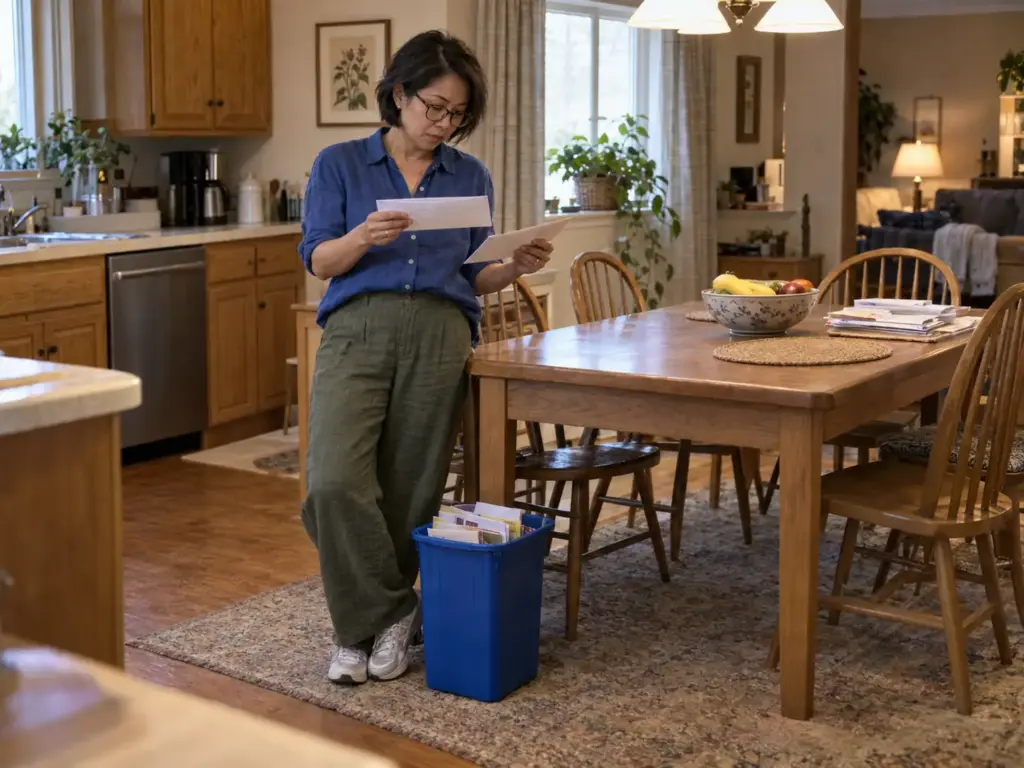
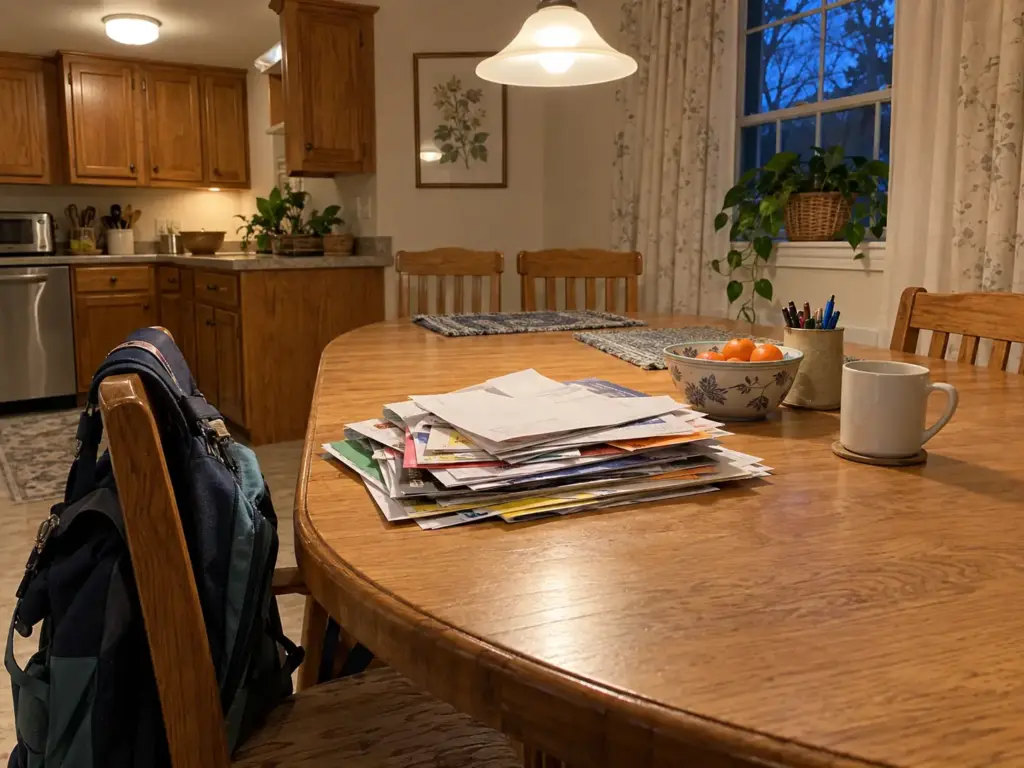
The mail comes in from the box, lands on the kitchen table “for now,” and a week later it is still there with a permission slip and two school flyers on top. One r/declutter poster described where that road ends: a table covered in mail that nobody had eaten at in a long time. If you want to know how to organize paper clutter so it stays organized, treat the pile as what organizers say it is, a stack of decisions no one made when the paper walked in. This guide works in a fixed order: a gate for new paper first, then one pass through the backlog, then a container small enough to cap what you keep (the keep-for dates and the set of papers worth guarding live in our paper organization guide, so this one stays on the pile itself).
Quick Answer
Paper clutter stays gone when new paper meets a decision at the door and the papers you keep live in a container that cannot grow.
- Set up where new paper lands before touching the backlog.
- Gather every pile in the house into one room.
- Sort in one pass, one touch per page: toss, shred, act, or keep.
- Cap the keep pile with a box or drawer that cannot grow.
- Give the inbox one fixed weekly slot to empty it.
Why Paper Clutter Comes Back Every Time You Organize It
You have probably sorted this pile before: a good weekend, a clear counter, and then the same stack rebuilt itself on the same corner within a month. That is not a willpower problem. Nothing in the house asks “what happens to this sheet?” at the moment it arrives, so every sheet arrives without an answer.
A Pile Is a Postponed Decision
Organizer commentary in ADDitude keeps landing on the same idea: paper clutter is postponed decision-making. The National Association of Productivity and Organizing Professionals frames the job the same way, saying professional organizers “support evaluation, decision-making, and action around objects, spaces, and data.” Tidying is not on that list.
Every sheet carries a small question. Pay it or file it? Keep it or toss it? Does someone else need to see it?
A sheet that gets its answer at the door is gone in seconds. One that does not goes onto the nearest flat surface to wait for a better moment, and by the time that moment comes it is buried under twenty other sheets asking their own questions. That is how paper piles form.
The r/declutter threads have names for what grows out of this. The “odds and ends pile” is the papers too few and too random to deserve a folder, so they never leave. The “doom pile” is the stack everyone walks past while waiting for the motivation to deal with it. Same problem, two angles: decisions stacked up with nowhere to go.
Why a Flat Surface Becomes the Filing System
Follow one envelope. It comes out of the mailbox, rides in under your arm with the groceries, and lands on the table because your hands need to be free. A catalog lands on top of it, then a school form, then a pharmacy receipt, and by Friday the envelope sits four inches down in a stack that has become the household’s filing system, sorted by date of arrival with the most urgent bill at the bottom.
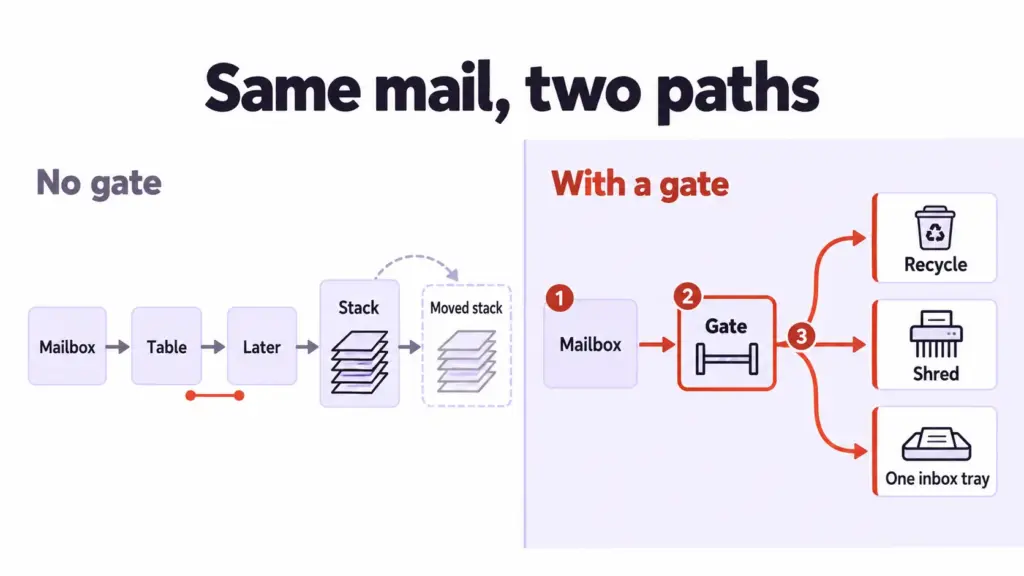
The surface wins because it is the closest open space between the door and wherever you were headed, which is why paper behaves like the same pile on your kitchen counters. A counter has no edge that says “full.” The blogger behind A Slob Comes Clean traces the same gap in the containers people try: they had no limits, so the paper kept swelling.
Why Going Paperless Does Not Clear the Stack by Itself
Switching to online statements is the first advice most people hear, and it does shrink the flow. But it misses the paper that cannot go digital: the form that needs a signature, the warranty card, the letter from the county. One r/declutter poster had bills paperless, junk tossed and no school papers at all, and still had a two-inch stack that kept getting moved around the house.
That stack is the tell. A pile with no home does not disappear when the inflow drops; it relocates from counter to dresser to desk, carrying the same unmade decisions. Paperless is worth doing, but it only reduces how much paper shows up.
Set Up the Incoming-Paper Gate Before You Touch the Backlog
Picture the afternoon: two hours on the floor sorting the old pile, a real dent in it, and when you stand up, today’s mail is sitting where the last pile used to be. Set up the gate first, and the backlog can wait a day.
Why the Gate Comes First
A Slob Comes Clean puts the incoming system ahead of the backlog, and the confidence comes from handling each day’s mail in it. An r/declutter commenter called a plan for stopping the paper from piling up “Step 1” and the most important one. The reason is arithmetic: if paper arrives faster than the sort removes it, the sort never finishes.
One day of incoming mail is a handful of pieces, and most of them are headed for recycling. A few days of handling it proves the gate works before you bet a weekend on the old pile, and the backlog becomes a finite job instead of a moving target.
Give the gate three days before you sort anything old. If the table stays clear of new mail for three days running, the gate holds. If it does not, move the bin closer to where the mail actually comes in before you spend a weekend on the backlog.
Open the Mail Over the Bin
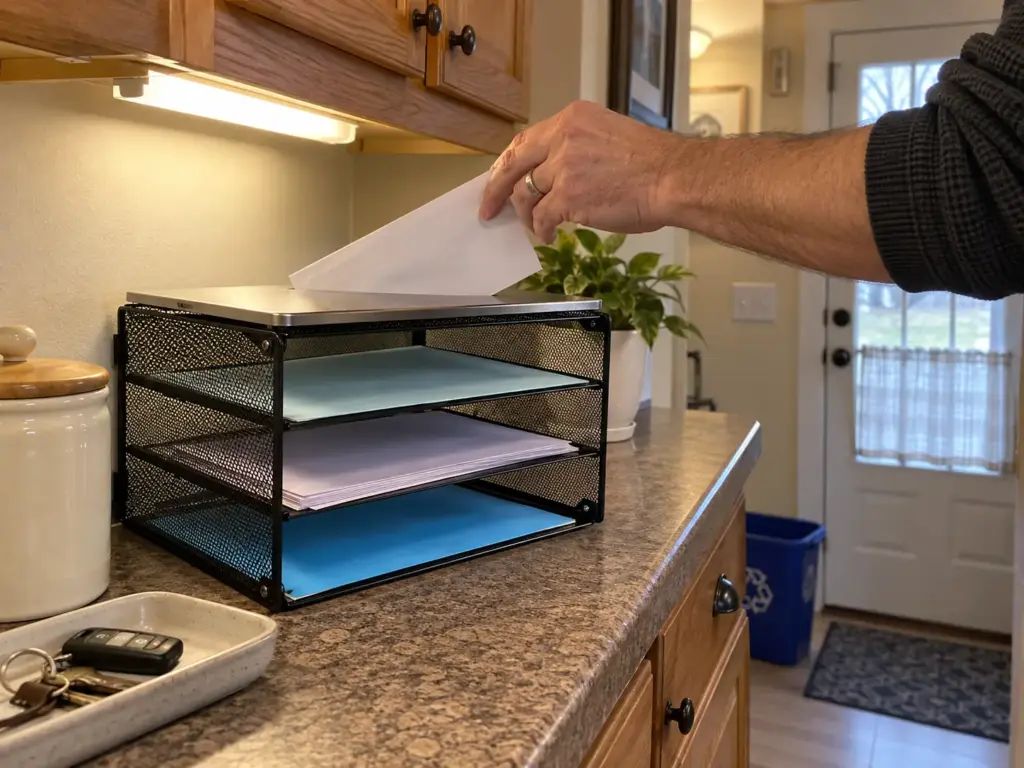
ADDitude’s organizing coach Leslie Josel sorts every paper over the recycling bin or the shredder before it gets any farther into the house. That means the bin lives where the mail enters, not under the kitchen sink. The outer envelope, the insert, the return envelope and the “you may already be approved” letter go before you take another step, and what is left is usually one or two sheets that need something.
A mail organizer by the door gives those sheets somewhere to wait without a trip to the table. One r/declutter poster went stricter: mail only comes in from the box when there is time to “open it, pay it, file it.” That is a lot to ask on a weekday (most people have five minutes at the door, not twenty), but the principle holds. Paper should not cross the threshold without a decision.
Cut the Flow: Prescreened Offers and Promotional Mail
The cheapest paper to organize is paper that never arrives. Credit card and insurance offers are the worst of it, because they carry your name and need shredding. Per the FTC’s guide to opting out of prescreened offers, you can stop them for five years at optoutprescreen.com or 1-888-5-OPT-OUT; a permanent opt-out needs a signed form. Requests are processed within five days, but the mail can take several weeks to stop, and offers not based on prescreening keep coming regardless.
Catalogs are a separate list. According to the FTC’s page on stopping junk mail, “DMAchoice will stop most, but not all, promotional mail.” It charges a small processing fee, and mail addressed to “occupant” or sent by local merchants needs separate action with each sender. Neither opt-out empties the mailbox, but together they take a real share out of what reaches the bin.
One Inbox With Three Buckets
Whatever survives the bin needs one place to wait, split into three broad buckets: To Do, Wait and See, and Read. A Slob Comes Clean argues for short lists on purpose: fewer buckets mean fewer wrong guesses, and if you have to stop and think about which folder a sheet belongs in, it goes back on the counter.
Use what you own first. A shoebox lid, a magazine holder or any shallow tray works as an inbox for a week while you find out whether you use it. If it sticks and you want something that stacks, the DALTACK 3 Tier Letter Tray Organizer gives you three letter-size or A4 sliding mesh trays, one per bucket, with no drilling, so it suits renters and anyone who will not put holes in a wall. One Amazon reviewer of the pink version complained that the drawer and shelf slide out together, so steady the frame when you pull a tray.
If you can drill and want the counter clear, vertical filing on the wall moves the inbox into empty air. The EasyPAG 5 Tier Wall File Holder measures about 12.75 x 4.1 x 16 inches and comes with screws. Its pockets run roughly 4 inches deep, enough for letter-width folders and opened mail but not binders or wide folders, and it has to be screwed into the wall. For more tray and file-holder options, see our roundup of desk organizers worth buying.
Sort the Backlog in One Pass Without Stopping to Decide
Most backlog sorts end the same way: you read a letter, make a pile for it, read the next one, and by hour two there are six sub-piles and no energy left. One poster summed it up as reading everything, trying to put it in different piles, and then getting tired. Sorting and doing have to be separate jobs.
Gather Everything Into One Room
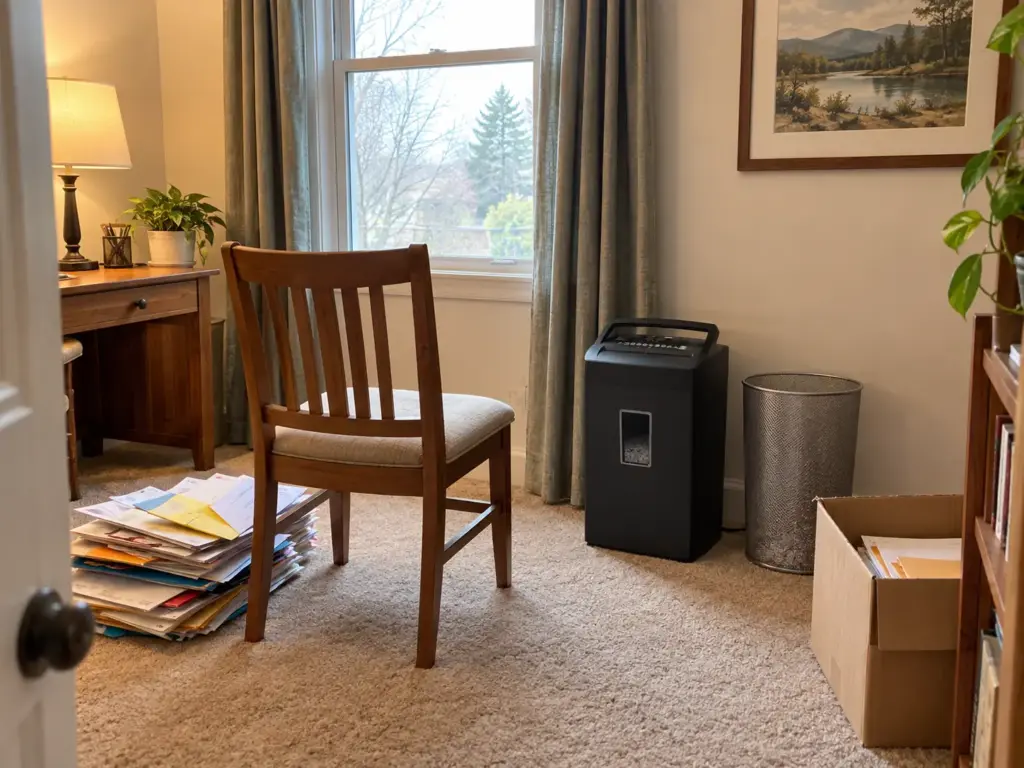
Collect every pile into one place first: the table stack, the desk drawer, the bag of mail by the bed, the box in the closet. Gathering first is also KonMari’s paper rule, and the reason is practical. You cannot see the size of the job while it is spread over four rooms.
An r/declutter commenter laid out the setup in one line: “a chair, the shredder, a waste basket, and something to hold the keep items.” Put all four within arm’s reach. Every trip to another room is a chance to quit.
Touch Each Page Once and Sort Into Four Exits
Each page gets one touch and one of four exits, which makes the whole sort a kind of triage:
- Recycle for paper with nothing personal on it.
- Shred for anything with an account number, a signature or your full name and address.
- Act for paper that needs something from you, which goes into the inbox’s To Do bucket.
- Keep for paper you need to hold onto, which goes into the keep container.
Read only enough of each sheet to know its exit.
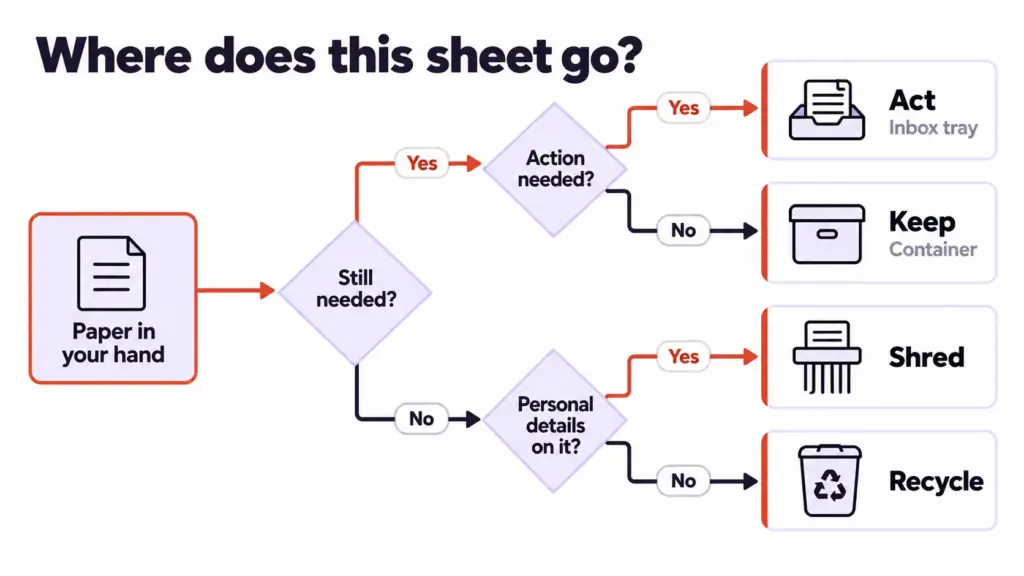
It has the same shape as the four-box method, and the same weak point: the moment you stop to pay the bill in your hand, the sort is over. That is what the Act bucket is for. Start with the easy wins (junk mail, old catalogs, expired coupons) so the pile visibly shrinks in the first ten minutes.
What Goes Straight Out
Most of the backlog can go without much thought: junk mail, scrap notes, old catalogs, papers from a job you left, statements you can pull up online, most receipts, product manuals, and business cards from people you will never call. How long to keep the papers that matter is a separate question with real dates attached, and it belongs in the seed guide, not in a sort you are trying to finish tonight.
Anything personal needs cross-cut shredding, never the recycling bin.
For a one-time backlog of a box or more, r/declutter posters point to the UPS Store, which shreds by the pound and spares you buying a machine for one weekend. That sounds like the obvious call for a big pile. But another poster pushed back: the service is not cheap, and waiting for time to make the trip is how a sorted box sits in the hallway for a month. If paper with account numbers keeps arriving every week, a home shredder keeps the gate moving.
The Bonsaii 12-Sheet Cross Cut Paper Shredder 5.5 Gal takes twelve sheets per pass in cross-cut, the cut you want for account-number mail. A ShopSavvy digest of its reviews says the 5.5-gallon bin needs emptying about every two days and the motor is loud. Budget shredders also run a few minutes and then need a long cool-down, so plan for pauses on backlog night.
For receipts you do keep, one budget trick from the threads costs almost nothing: a metal receipt spike on the desk, emptied into a zip bag at year’s end, one bag per year.
Time-Box It and Stop at the Bottom of One Drawer
The same commenter suggested working an hour or until you reach the bottom of the drawer, with a 30-minute timer if an hour is too long. Both are stop rules, and knowing where the session ends makes starting much easier.
A drawer is a better finish line than the whole house: it ends with something you can see, and it leaves the rest for another day without making today a failure. If even one drawer feels like a lot, our guide for when the backlog feels like too much breaks it down further.
End every session by clearing the shred pile, not by starting one more stack. A bag of unshredded paper left by the chair is tomorrow’s pile. Shred it, or bag and label it for the service, before you stand up.
Build a Keep System With a Built-In Cap
Think of the last filing system that failed: twelve categories, a “miscellaneous” folder as thick as a phone book, and nothing that ever said “enough.” The papers that survive the sort need a small home whose size does the limiting for you: a finite container, not a system you promise to keep trim.
Let the Container Set the Limit
One r/declutter poster spent two and a half months clearing a paper backlog and came out with one rule: everything has to fit in two desk drawers, and when the drawers start getting full, it is time for another shredding party. The space makes the keep decision for you. If you are working out of the desk drawers you are already using, clearing two of them for paper is a reasonable line.
Inside the cap, keep the buckets few. The same threads warn about a general bucket that grows until it is the only one that matters, and the split they land on is two keep piles: “save (general)” and “save (may be imminently needed).” The odds and ends pile goes into save (general), and the drawer’s size keeps it honest.
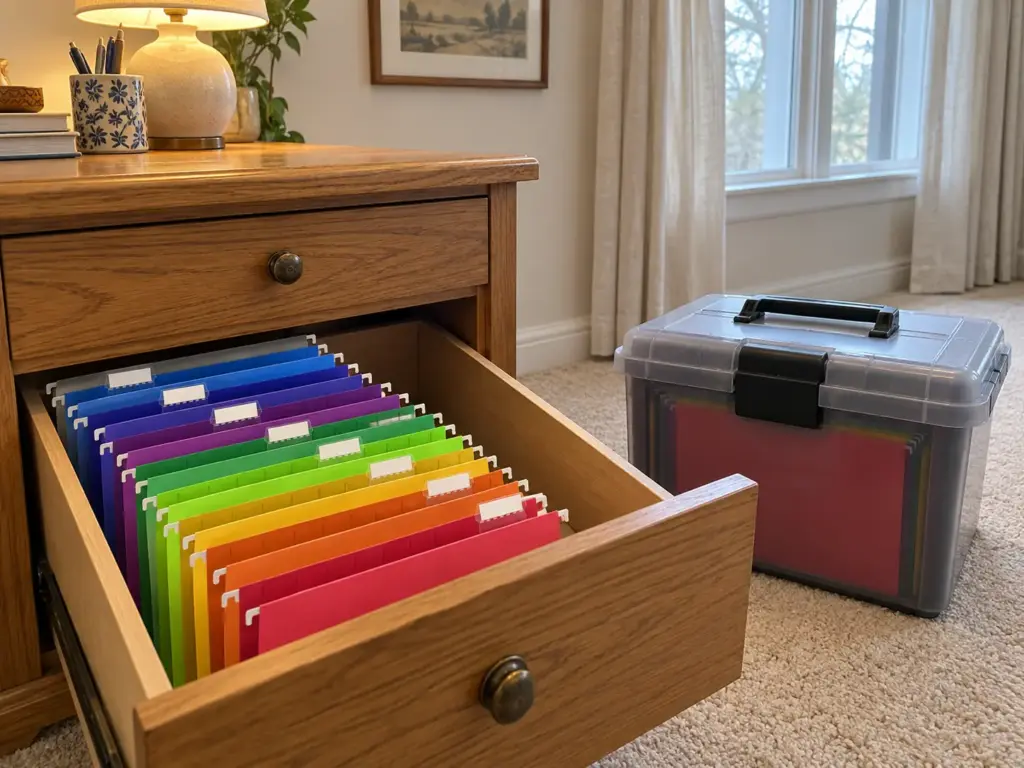
Hanging File Folders 50 Pack Letter Size with 1/5-Cut Tabs turn a drawer or box with hanging rails into that system, 8.5 x 11 inches with tabs staggered across five positions so labels do not hide each other. They only fit a frame built for letter-size hanging files, so a drawer without rails or a stack of legal-size documents needs something else. Fifty is a lot, actually more than this system should hold. Put ten in the drawer and leave the rest in the package, because empty folders invite new categories.
Filer or Piler: Match the System to Your Hands
ADDitude’s filer vs piler test is the most useful question here. If you pull papers out of folders without thinking about it, hang them. If you pile, folders in a drawer go out of sight and out of mind, and open baskets or inbox trays where the paper stays visible will work better.
There is no wrong answer, only a wrong match. A piler with a nice filing drawer ends up with a nice filing drawer and a pile on top of it.
The No-Filing-Cabinet Version
With no filing cabinet in the house, you still have options. Manila folders standing in any lidded box or a desk drawer you already have do the same job, and the box’s size is the cap. An accordion file works for a small household, and a wall file covers papers you need to see.
If you want a dedicated file tote for hanging folders, the Staples File Folder Tote Portable Filing Box for Letter Hanging Files takes letter-size hanging files and stores in a closet, which suits a studio and a four-bedroom house alike. Portable file boxes from other brands draw complaints about flimsy latches and lids that pop off, so if yours will travel full, check how the lid closes when it arrives. For what belongs inside and how long each paper earns a folder, the seed guide has the dates.
When Several People or Several Rooms Feed the Pile
A system built for one person tends to collapse the first afternoon someone else drops a backpack on the table. The answer is not nagging. It is one landing spot, a bin beside it, and a bucket for each person, set up so the right move takes less effort than the old habit.

One Shared Drop Zone With a Bin Beside It
Pick one spot where everyone’s paper lands, put the recycling bin next to it and keep the shredder within a step or two, so junk is gone before it reaches the table. Then give each person their own inbox bucket with their name on it, which settles “whose is this?” without a conversation. If the spot is by the front door, an entryway drop zone can hold it without eating floor space.
One drop zone is the right number when everyone comes in the same door. In a house where half the family enters through the garage and the rest through the front, one station means one group walks past it daily, and two smaller stations, each with its own bin, will get used where one would not. A budget version from the threads works almost anywhere: a decorative bowl on the coffee table and a hand shredder beside it, with mail opened and shredded during TV time.
School Papers and a Partner’s Mail
Kids’ paperwork splits into two kinds that should never share a bucket. Backpack papers that need a signature go into the act tray the day they come home. Artwork and keepsakes go into a separate box with a size cap, and when it fills, the choice of what stays follows the same logic as other sentimental items like kids’ artwork.
A partner’s mail is harder because you cannot sort it for them. Keep the shared part minimal, one bucket with their name on it, and leave what happens inside to them. If you live with a partner who will not part with paper, that is a longer conversation, and a bucket with a visible edge at least keeps their pile off the shared table.
Inherited Paper and Years of Boxes
Boxes from a parent’s house are the hardest backlog, because each sheet comes with someone else’s reasons attached. One r/declutter poster raised by a parent who hoarded wrote about never being taught how to be functional or organized. The advice that came back was simple: keep only what needs action now or has current relevance, and let old job papers go.
Use the same four exits, in separate sessions from your household paper, so a box of a parent’s letters does not stall the weekly mail. Expect these to go slower.
Piles in a Bigger House
In a bigger home, paper does not stay put. Posters describe stacks that travel from the kitchen table to the den, and the migration is the clue: a pile that moves has no home. More rooms means more flat surfaces, and none of them asks for a decision.
Gather everything into one room before sorting, exactly as in a small home, then pick the single room where the keep container lives. If paper is only one of many things piling up, go room by room once the paper pass is done.
Keep the Gate Working Week After Week
Week three is where paper systems wobble. The bin is still by the door, but the inbox has not been emptied since the Sunday before last, and a small stack is forming beside it. The routine that lasts is tiny and fixed.

One Weekly Slot for the Inbox
A first week that is hard to fail:
- Day 1: set up the gate, with bin and shredder at the door and one inbox with three buckets.
- Every day: open the mail standing over the bin and drop what survives into its bucket.
- Once a week: one short session that empties To Do and checks Wait and See.
Attach the weekly reset to something you already do, like Sunday breakfast. And since the prescreened opt-out can take several weeks to show, keep the shredder near the door for the first month.
When the Container Fills
A full drawer or box is the signal for a shredding party, not for a second box. Go through save (general) first, since that is where stale paper settles, and shred until the folders close easily. It is the one-in-one-out rule applied to paper, and the cap only works if it never moves.
If the Pile Comes Back Anyway
When a stack starts forming, ask which step is missing a decision before you blame yourself.
Paper on the table near the door means the gate sits too far from where the mail comes in. Paper next to the inbox means the weekly slot slipped. Paper on top of the keep box means it hit its cap. And if the paper holds but the rest of the house keeps fighting you, other decluttering methods may suit how you live better.
Look at where a new stack forms, not how big it is. By the door points to the gate, by the tray to the weekly slot, on the box to the cap. Repair that one step and leave the rest of the system alone.
Gate First, One Pass, Then a Box That Says When
Three moves carry the whole system. Build the gate before you touch the backlog, so the pile stops growing while you work. Sort the old paper in one pass with four exits and a stop rule, so the job ends. Keep what survives in a container whose size is the limit, so it cannot swell back into a stack.
Three months from now, check whether the inbox empties on its weekly day, whether the keep container has needed a purge, and whether any surface has started collecting paper again; each answer points to the step that needs work.
For today, leave the old pile alone. Find the one surface where paper lands in your home, put a bin or a shallow tray there with whatever you have on hand, and by the end of the week look at what collected on it and what never made it past the bin.
Frequently Asked Questions
01What is the best way to organize paper clutter?
Set up where new paper lands, gather the backlog into one room, sort every page once into recycle, shred, act or keep, then cap the keep pile with one container. The gate stops new mail from refilling the table while you sort, and the container’s size keeps the system from swelling again.
02How do you organize paper clutter without a filing cabinet?
Use a file box or tote with hanging folders, an open inbox tray, or a wall file, and let the container’s size act as the limit. Two desk drawers or one letter-size box covers most households, and when it fills, you purge instead of buying a bigger box.
03How do you stop junk mail from coming?
Opt out of prescreened credit and insurance offers for five years at optoutprescreen.com or 1-888-5-OPT-OUT, and register with DMAchoice for most promotional mail. Neither stops everything, and both take several weeks to show, so keep the shredder handy meanwhile.
04Where do you start when you have years of paperwork?
Start by setting up a gate for new mail, then gather the old paper into one room and work through it one drawer or one hour at a time. Keep only what needs action now or still has current relevance, and check a retention guide before shredding tax or legal records.
Disclaimer: ClutterlessNest is a participant in the Amazon Services LLC Associates Program. As an Amazon Associate we earn from qualifying purchases. This article may contain affiliate links — if you buy through them, we may earn a small commission at no extra cost to you. We only recommend products we have tested or genuinely believe in.