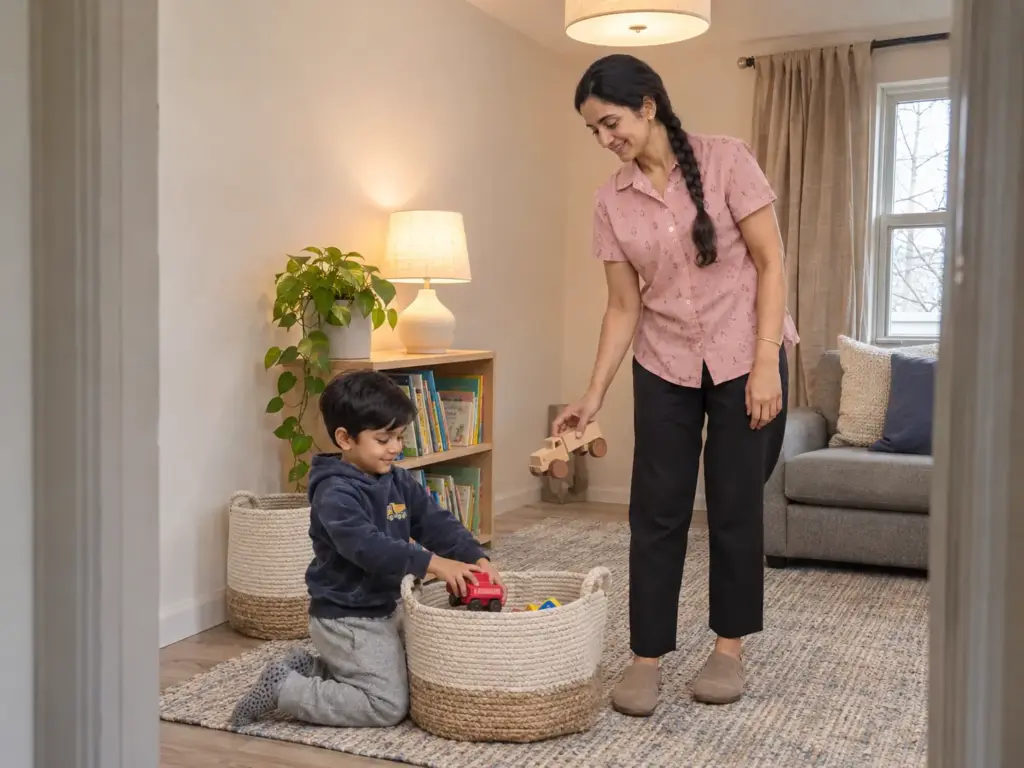
You are standing in a bedroom or a corner of the living room with a tape measure, a door swing on one side, a window on the other, and a cart full of toy storage units that all promise to be space-saving. The best toy storage for small spaces comes down to two numbers, the clear wall run and the depth a bin needs to pull out into the room, and most listings bury both. The safety standard written for children’s furniture, ASTM F2057-23, starts at units 27 inches tall and explicitly leaves shelving out, so the tallest pieces on any list answer to a wall strap rather than a label. Below, eight pieces of kids toy storage, from low tiered organizers to a corner hammock, are sized against real walls, with the way each one fails.
Here is the short version, sorted by the footprint each format asks for.
| Format | Footprint it needs | Best for | Where it fails |
|---|---|---|---|
| Low tiered bin organizer | 26 in wide x 16 in deep for the 9-bin; 42 in wide for the 16-bin | A preschooler who puts toys back alone | Bins crack; the 16-bin blocks a door or switch on a short wall |
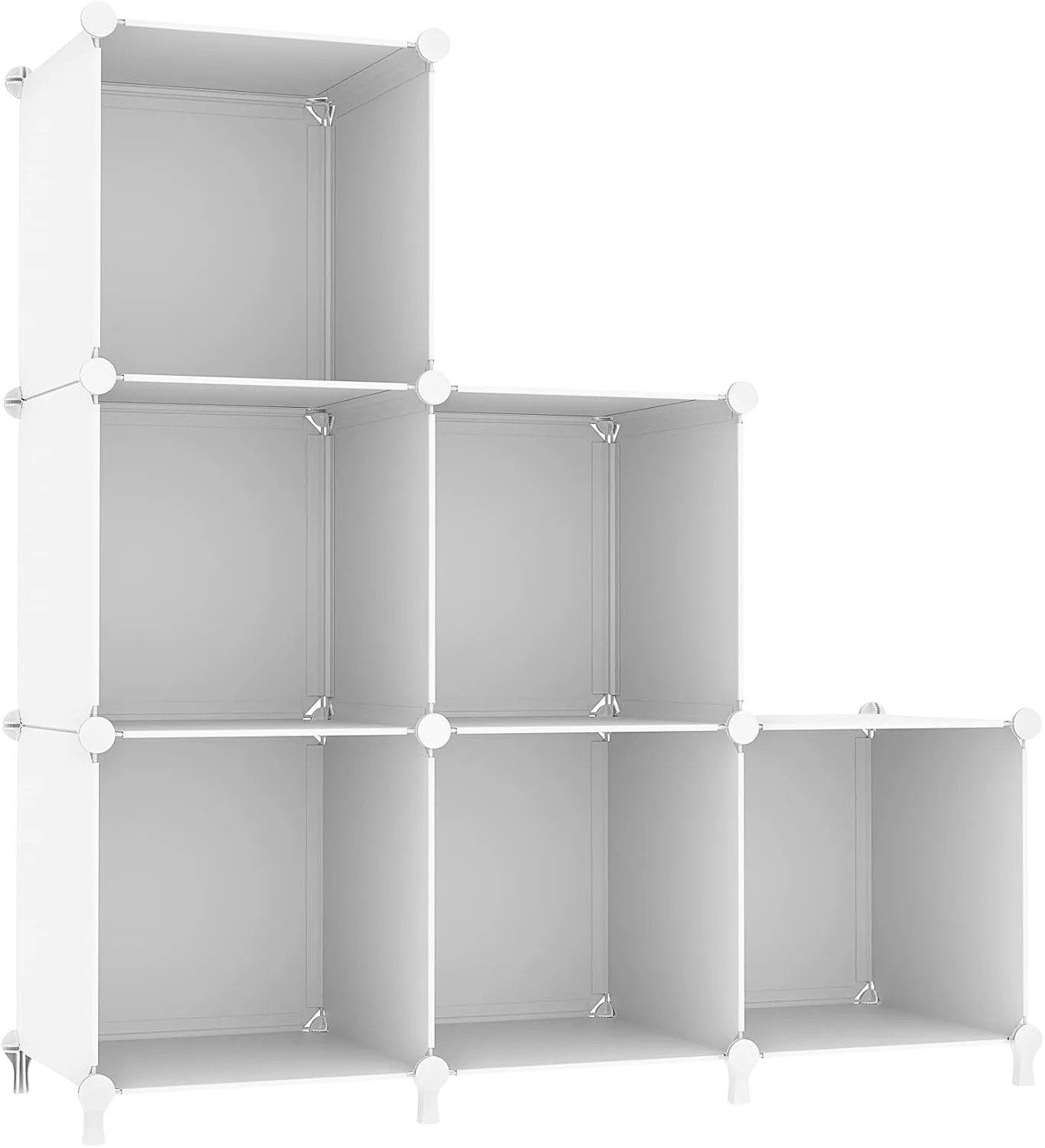
| Freestanding cube shelf with fabric bins | 35.5 in wide x 11.8 in deep | Hallways, landings and the strip behind a door | 37.5 in tall, so it needs a strap; connectors loosen under heavy loads |
| Lidded chest | 33 in wide x 17.9 in deep | Toys that are out of rotation | Buries the bottom layer; the lid will not seat for some |
| Corner rotating shelf | 14.5 in square of floor | Rooms with no wall run left | 31.25 in tall and needs anchoring; runs smaller than the photos |
| Wall-corner hammock plus clear small-piece organizer | A wall corner above reach; 12 x 9 in of shelf for the organizer | Plush animals and building-brick sets | The net stretches near its 12 lb rating; trays and lids are thin |
Best Toy Storage for Small Spaces Starts With Two Measurements
Small space toy storage goes wrong at the tape measure. A unit looks narrow in the listing photo, then it arrives and the closet door stops two inches short of opening. Or it sits against the one wall where the light switch lives. Both mistakes come from measuring the room instead of the wall, and both are cheap to avoid with a tape measure and ten minutes.
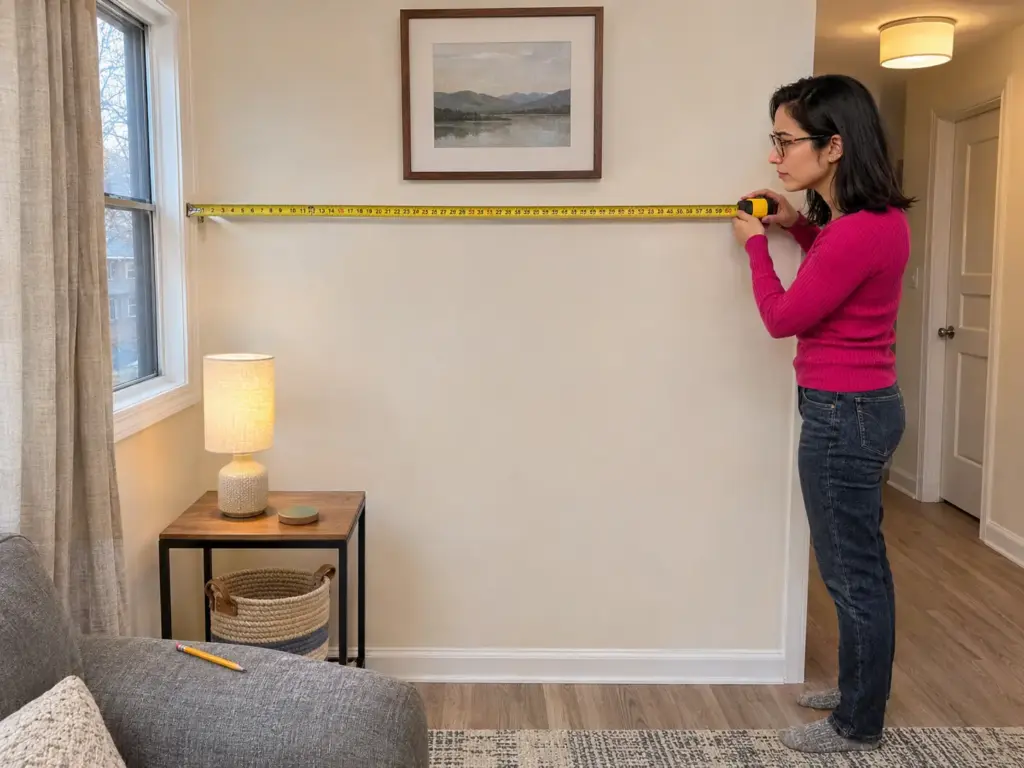
The clear wall run, not the room size
The clear wall run is the straight stretch of wall between the door casing, the switch plate and the window trim, with the door open as far as it actually swings. A unit has to clear all three, with a little air on each side so a hand can get in, and a unit that fits under a window still needs its sill height checked if that is where it will sit. Room square footage tells you almost nothing here.
The dimensions of the units in this article give you the numbers to hold against that stretch. The 9-bin tiered organizer is 26 inches wide, the 6-cube shelf is 35.5 inches, and the 16-bin organizer runs 42 inches. The corner rotating shelf is the odd one, a 14.5-inch square, which is why it works where none of the others will.
If your clear run is 30 inches, the 9-bin fits with room to spare and the 16-bin never will. And if the run is longer than you think, check it again after you move the beanbag that has lived there since the baby arrived.
One trap: a wall can be long and still be unusable if a baseboard heater or a vent sits at the bottom. Put the tape at floor level, not at hip height. For kids bedroom storage across a whole room, including the cubby rule, see the wall math for a kids’ bedroom, which goes further than this page needs to.
The depth that decides whether a bin pulls out into the room
Depth is the second number, and the one a listing photo hides. The cube shelf is 11.8 inches deep, both tiered organizers are 16 inches deep, and the lidded chest is 17.9 inches deep. A bin that slides toward you needs that depth plus clear floor in front of it, so a 16-inch unit with a bin that is 12 inches long really needs a floor patch about 28 inches front to back before anyone can lift a bin out and set it down. Leave a foot as the floor rule of thumb and add more if a toddler will be kneeling there.
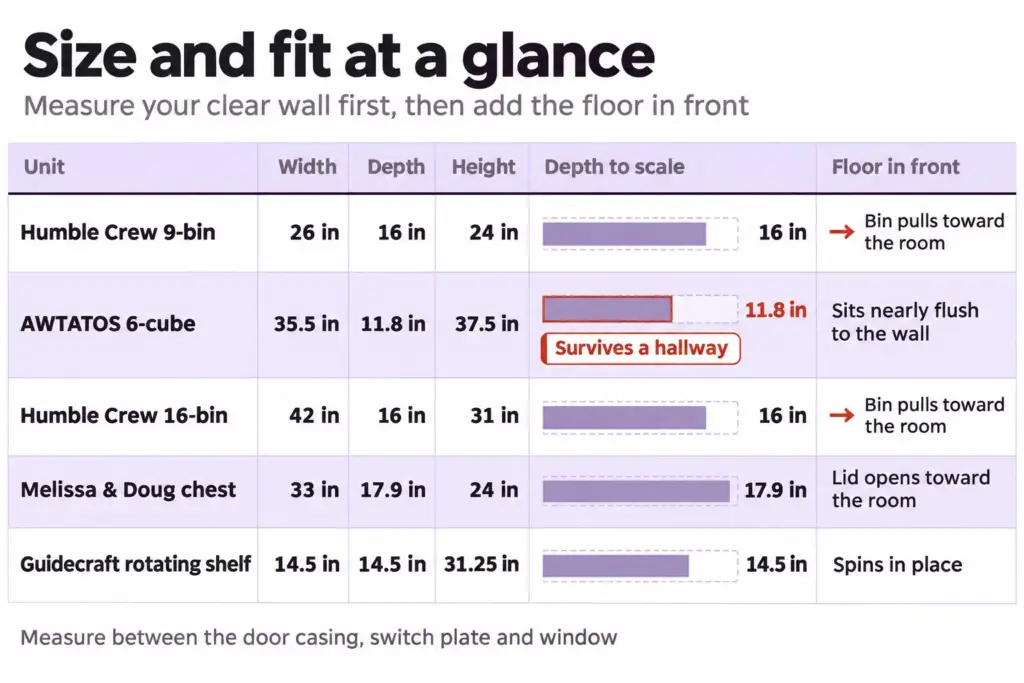
That is why the 11.8-inch cube shelf is the one that survives a hallway or the strip behind a door: it sits almost flush with the wall, and a bin pulled from a shallow cube barely reaches into the walking path. Anything near 16 inches asks the room for a lot more than the footprint on the box.
The 13-inch cube is also worth knowing. Most cube shelves are built around it, and fabric bins are sold at 13 x 13 x 13 to match. A bin of any other size either flops inside the cube or refuses to slide in. A few shelves, including one in this article, use a slightly smaller cube, so measure the opening before you pick a bin.
The free version to try first
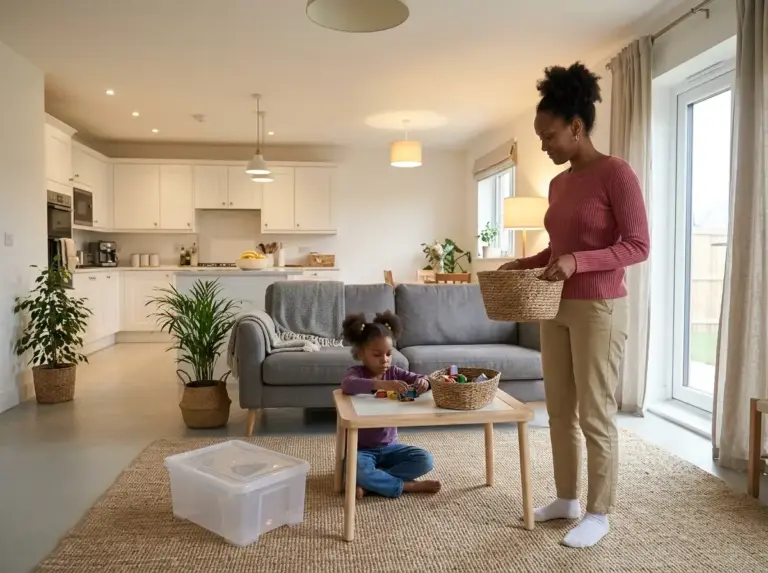
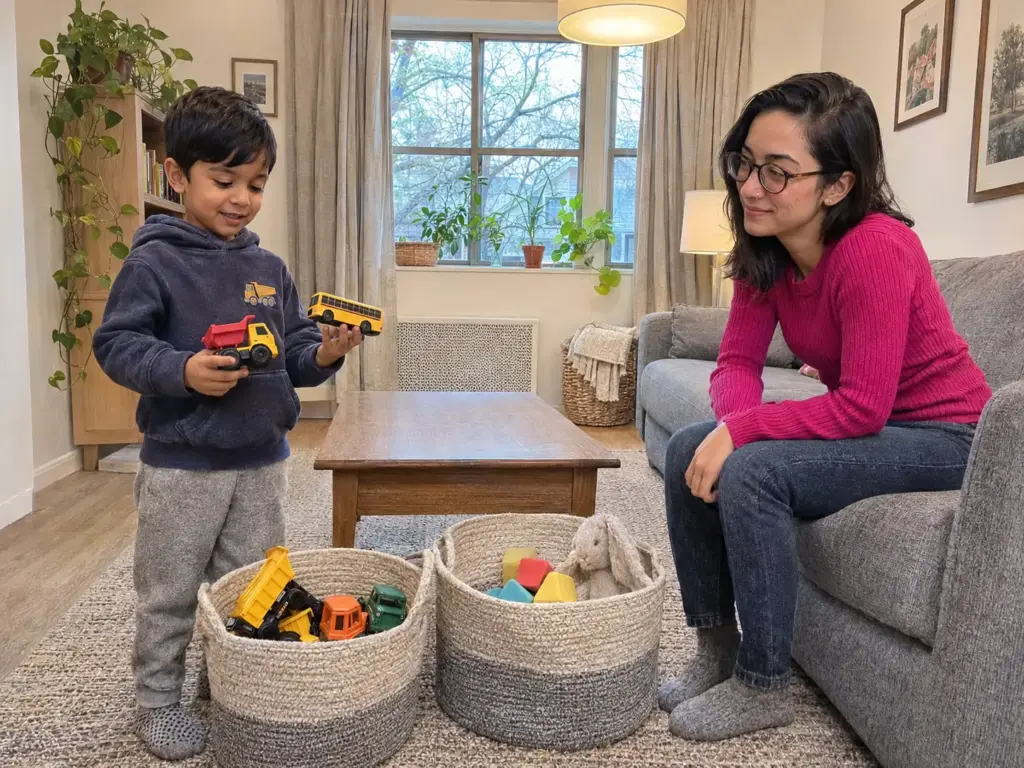
Before any unit goes in the cart, try a floor basket or two, a woven basket, a wicker basket or a rope basket, on the floor under a table the household already uses. A storage ottoman or a long footstool with hidden storage does the same job and doubles as seating. Baskets lined up inside a media console or a TV cabinet, or toys parked in the oven and fridge of a play kitchen, take the same idea into rooms where nothing new will fit, and a basket under the coffee table, the cheapest living room toy storage there is, catches the daily pile.
Treat it as a two-week trial with one rule: one bin per category, not one bin per toy. If a single category, say the cars or the plush, is what overflows, the cheap fix does most of the job, and you have learned which category the permanent unit is for. If three baskets fill up in a week, the collection has outgrown the free version and the wall run you just measured is now the number that picks the unit.
Tape the footprint on the floor with painter’s tape, width and depth from the listing plus a foot in front, then open the door and flip the switch. If the tape square is in the way of anything, the unit will be too.
Low Tiered Bin Organizers Give a Child the Most Reach
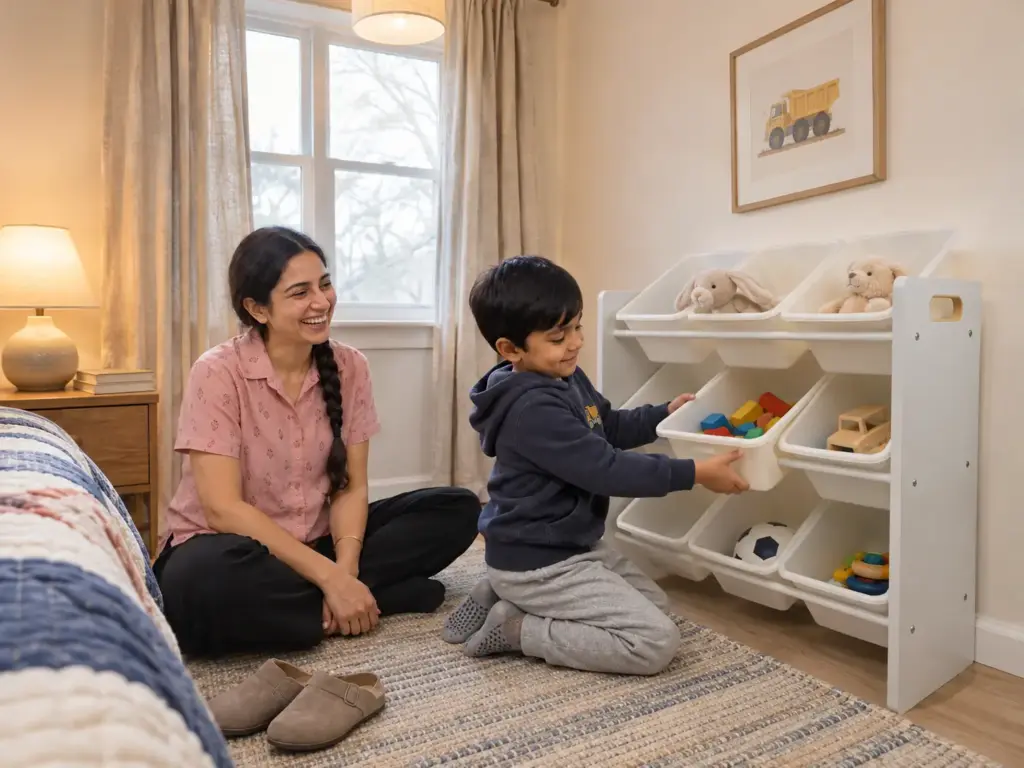
The toy storage system that works for a three-year-old is the one at child height: open fronts, bins they can carry, and nothing to climb. Independent cleanup only happens when every bin is kid accessible, so putting toys back turns into a game at that height instead of a chore handed to an adult. A Saturday of clean-up shrinks to a few minutes because the storage bins live where small arms can reach them.
Why the 9-bin fits a 26-inch wall
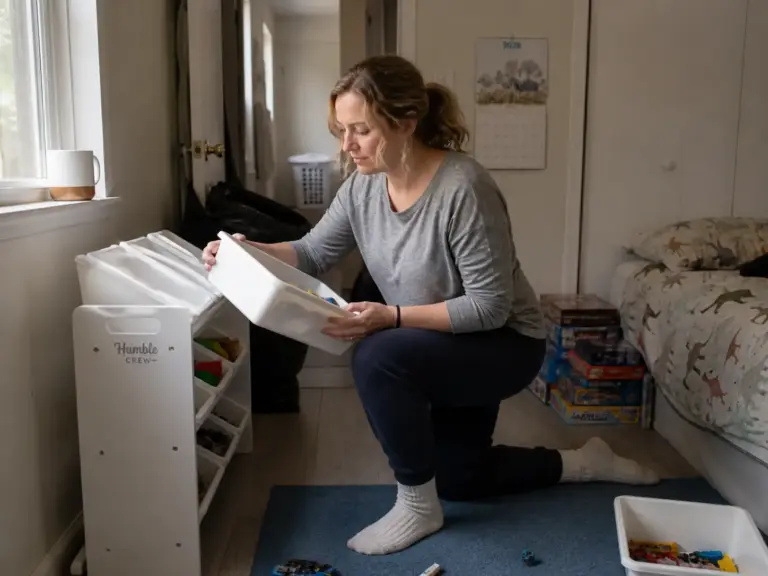
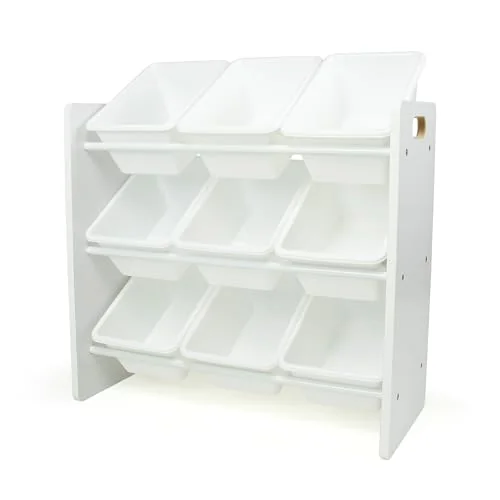
The Humble Crew 9-bin, 3-tier organizer is the smallest true tiered unit in this lineup: 26 inches wide, 16 inches deep and 24 inches tall. At 24 inches the top row sits at a preschooler’s eye level, so the child sees every bin and reaches every one without a stool. Each bin measures 12 x 9 x 6 inches, and each tier is rated for 20 lb. An anchor kit comes in the box, which matters later when we get to tip-over rules.
If your clear wall run is 26 inches or more, this is the first unit to price. If it is under that, step down to a basket system or the corner options in the last section.
When the 16-bin earns its 42 inches
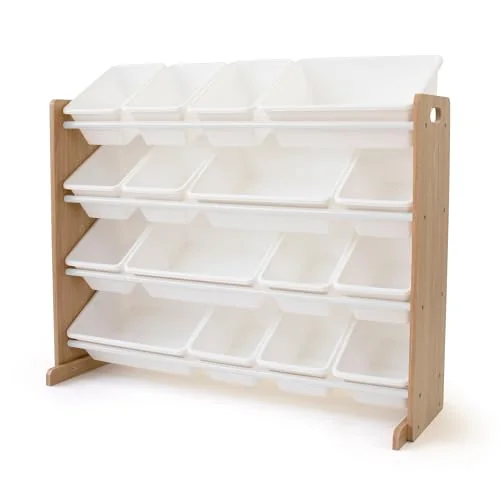
The same system scaled up is the Humble Crew 16-bin, 4-tier organizer, which holds twelve standard bins and four large ones in a frame 42 inches wide, 16 inches deep and 31 inches tall. It nearly doubles the capacity, and it needs a 42-inch clear wall to do it. On a shorter run it is the unit that blocks the door swing or covers the switch plate, and no amount of rearranging toys fixes that.
Buy it only where the wall is long and the collection is big enough to fill sixteen bins without a single catch-all. In a small room a better move is usually the 9-bin plus a chest for the overflow. The extra bins also bring the problem covered in the next section: more containers mean more decisions at clean-up.
What breaks first
Open-front plastic bins fail at the corners and the lip where small hands grab them. The bins crack, usually where a child pulled one out by the edge instead of the handle slot, and a cracked bin is a bin that stops being used. Plastic is also less forgiving than fabric when a bin is dropped, though fabric has its own failure, which is to slump, and why a fabric bin slumps and a plastic one cracks comes down to what the bin is asked to hold.
Two things reduce the damage. Fill bins to about two thirds so nothing forces the sides, and keep the heavy categories, blocks and wooden trains, on the bottom tier where the weight limit and the floor do the work.
Why Toy Storage Stops Working and What a Child Can Do Alone
Most storage fails the same way. The unit is fine, and the system around it is too hard for the person who has to use it every day. At the age these units are bought for, that person is three or four years old, and the clean-up is judged by whether an adult can reset the room in the time it takes the kettle to boil.
The twenty-bin system collapses first
A wall of small bins looks organized in a photo and multiplies decisions in practice. A three-year-old holding a toy dinosaur is overwhelmed by twenty possible homes for it, and every wrong answer starts a conversation with an adult. A parent in that spot gives up within a few weeks and switches to two big baskets, and the bins become decoration.
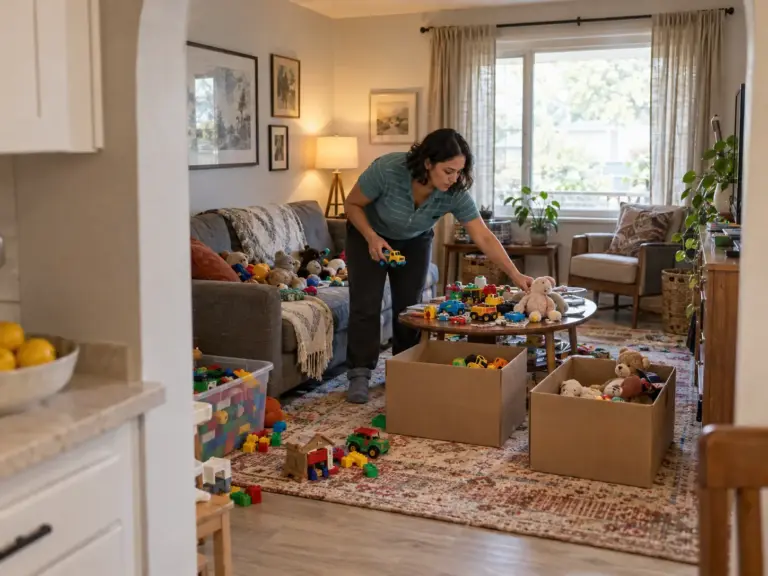
The living room that looks like a preschool is rarely a storage problem. In a home with no playroom, where the family room doubles as the play space, toy clutter is a visible-volume problem, and the answer is fewer, larger decisions. A small room can carry about as many bins as the child can name categories for, and no more.
Deep boxes turn into landfill
The deep toy box is the other purchase that undoes a system. Whatever goes in first sinks, the toys at the bottom can be reached only by climbing in or dumping the lot, and a chest ends up holding the broken crayon bucket and the one puzzle with a missing piece. A lidded box works only for toys that are out of rotation, which is the job given to it later in this article.
For daily play, open and shallow beats deep and closed. If a toy cannot be seen, it is not played with, and if it cannot be reached, it is not put away.
One bin per category, sorted two ways at a time
A toddler cannot sort by ten categories, but a toddler can sort trucks versus not-trucks. That two-way sort is what sorting toys looks like in a real house, and it is what one bin per category means in practice: start with two big bins, and split one of them only when the child does it for you by starting a second pile.
Pre-readers need picture labels, a photo or a cut-out of the toy taped to the front of each bin, since a word on a label means nothing at three. Sets with many pieces, such as play food, board games or art supplies, go into mesh bags or mesh bins inside the bigger bin, and tiny parts into a divided compartment tray, so the whole set travels together instead of spilling across the floor.
Sliding-tub frames add a failure of their own. The tubs are made to slide on rails, not to be tugged sideways, and a child yanking a tub free stresses the grooves, the part that gives out first. If a rail-and-tub frame is on your list, teach the pull-straight-out habit on day one.
The last piece sits before the cart, not after it. With toys, less is more: too many in view overwhelm a child and produce less play, so the move to declutter before buying is the most affordable storage upgrade there is, and too many toys is the first thing to fix in playroom storage of any size. The toy collection comes back after a purge if the volume is the problem. If the bins are overflowing on arrival, read why the pile comes back after you declutter toys and take the donation bag to the car first.
Test any new system by asking the child to clean up with you out of the room. If the toys do not land in the right bins without help, the system has too many choices, whatever the unit’s footprint.
Cube Shelves Fit the Narrowest Walls if the Bins Fit the Cubes
When the wall is narrow and the hallway is tighter, cube storage is the format that survives. A multipurpose organizer of this kind is shallow, it divides toys, books and plush into six or eight clear zones, and the cubes accept almost any bin that fits the opening. The catch is the bin, and most of the regret on this format comes from buying it wrong.
Eleven inches of depth in a hallway or behind a door
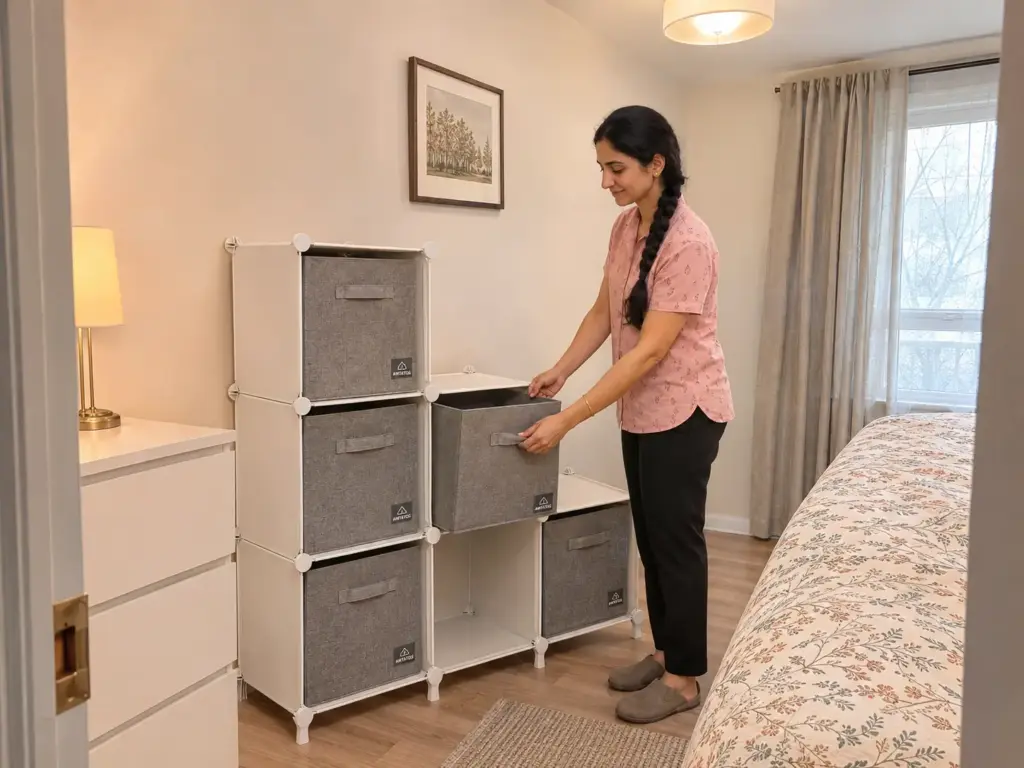
The AWTATOS 6-cube organizer is 35.5 inches wide, 11.8 inches deep and 37.5 inches tall, and each cube measures 11.8 inches. That depth is the whole point: it sits almost flush with the wall on a landing, in a hallway or in the strip of wall behind a door, where a 16-inch unit would block traffic. Six cubes hold six categories, each in a fabric bin that goes in and out.
The 37.5-inch height is the number to respect. It is the tallest unit here, and once the upper cubes are loaded it has the shape that tips, so it gets a wall strap regardless of the room, as the next section explains. The connectors also loosen under heavy loads, so keep blocks and dense toys low and off the top row.
Bins sized to the cube, not to the shelf
Pick the bin for the cube opening, not for the shelf’s overall size. A bin that is a half inch too wide will not slide in, and one that is an inch too small flops sideways and spills at the first grab. Match the number from the earlier measurement: a 13-inch cube takes a 13 x 13 x 13 bin, and the AWTATOS cubes at 11.8 inches take a smaller one.
The 3 Sprouts cube bin is cut at 13 x 13 x 13 inches, so it belongs on a standard 13-inch cube shelf or on the floor as a stand-alone basket, and a freestanding 11.8-inch cube needs a smaller bin, whether the bin is fabric, canvas or felt. It folds flat when empty, which makes it easy to store, and it gives you one bin per category at a budget level. Its tabs rip before the bin does, so teach a lift-by-the-base grip instead of tugging the tab.
The exact-fit habit applies to every bin in the house, and the exact-fit rule for bins covers measuring a shelf opening properly, in case the first bin you buy is wrong.
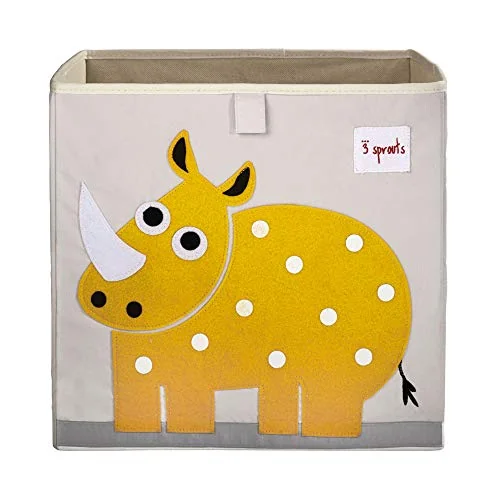
Fabric bins have one more habit worth planning around. Below half full they slump, and a slumped bin in a deep cube turns into a dark cubby where categories mix. Either fill the bin to the top with a single category or fold it flat and put it away.
Laying a cube unit flat for a play surface
A cube unit does not have to stand. Laid on its side, it becomes a low, wide shelf with storage below and a play surface on top, at a height a toddler can use for a train table or a tea party. The tall tower becomes an 11.8-inch-high bench, and the tip-over question goes away with it, because a low and wide shape does not have a high center of gravity.
Check the connectors before you commit. A unit that comes apart when loaded will do it flat, too, and a play surface that wobbles teaches nothing. It is also worth remembering that a flat unit takes more floor, roughly the old height as its new width, so run the tape measure again.
Which Units Need a Wall Strap and What a Renter Can Do Instead
Every tall piece in a child’s room is a tip-over hazard when a child climbs it, and the safety rules are written for exactly that. This section covers which units fall under them and what changes when the lease says no drilling. It does not cover installation, because the maker’s instructions do that job.

What the safety standard covers and what it leaves out
ASTM F2057, the safety specification for clothing storage units, covers freestanding units that are 27 inches tall or taller, 30 pounds or heavier and 3.2 cubic feet or larger. It explicitly excludes shelving units and bookcases. The standard’s own purpose, in its words, is “to reduce injuries and deaths of children from hazards associated with tipover of clothing storage units.” The age group is the one these toys are bought for: about 80% of tip-over fatalities involve children five and younger.
For anchoring, the guidance comes from Anchor It!, the CPSC’s furniture tip-over campaign. According to the campaign, “Anchoring all furniture with drawers, doors, and shelves to the wall prevents tip-over injuries and deaths.” It assumes a kit, a drill and bit, a screwdriver and a stud finder, which is a two-person job and the exact job a renter is told not to do.
The tall cube shelf is the piece that needs anchoring
Put the two together. The 37.5-inch cube tower is shelving, and shelving falls outside the standard’s scope, so nothing in that specification speaks for it. It needs an anti-tip strap into a stud, with a wall anchor suited to the wall, regardless of what the listing says, because a 4-year-old pulling on an open cube is the load the whole standard is written around.
The Guidecraft rotating shelf at 31.25 inches is in the same boat, tall enough to need anchoring even with a small footprint. The Humble Crew 16-bin at 31 inches is as well. The 9-bin at 24 inches and the chest at 24 inches sit under the 27-inch line the standard starts at, and they are the sensible low and wide picks. The 9-bin still ships with an anchor kit, and using it is cheap insurance where the wall allows.
If a unit needs a strap and the wall is plaster over lath or has no stud where the unit stands, buy a lower unit instead. A strap that cannot find a stud is a decoration, and a low, wide shape never needs one.
The low, wide formats a renter can skip the drill for
A renter friendly plan has two honest options when drilling is off the table. One is a heavy-duty strap into a stud where the wall has one, a hole the size of a screw that fills with spackle at move-out. The other is to choose the formats that never need it: the 9-bin at 24 inches, the chest at 24 inches, a cube unit laid on its side, or baskets on the floor.
Skip the 37.5-inch tower unless a stud is within reach. In a rental the pick that keeps the deposit and the child safe is low and wide. Where siblings share a room and one is old enough to climb, organizing a shared kids’ room shows how the layout changes which unit goes where.
When the Wall Is Gone: Corners, Lids and a Home for the Tiny Pieces
Some rooms run out of wall before they run out of toys. The corner, the space above the reach line and the shelf in the closet are what remain, and each has a format built for it. Vertical storage is how a small apartment or a shared room gets its floor back, and a corner is not wasted space, only unused dead space.
A rotating shelf for a corner
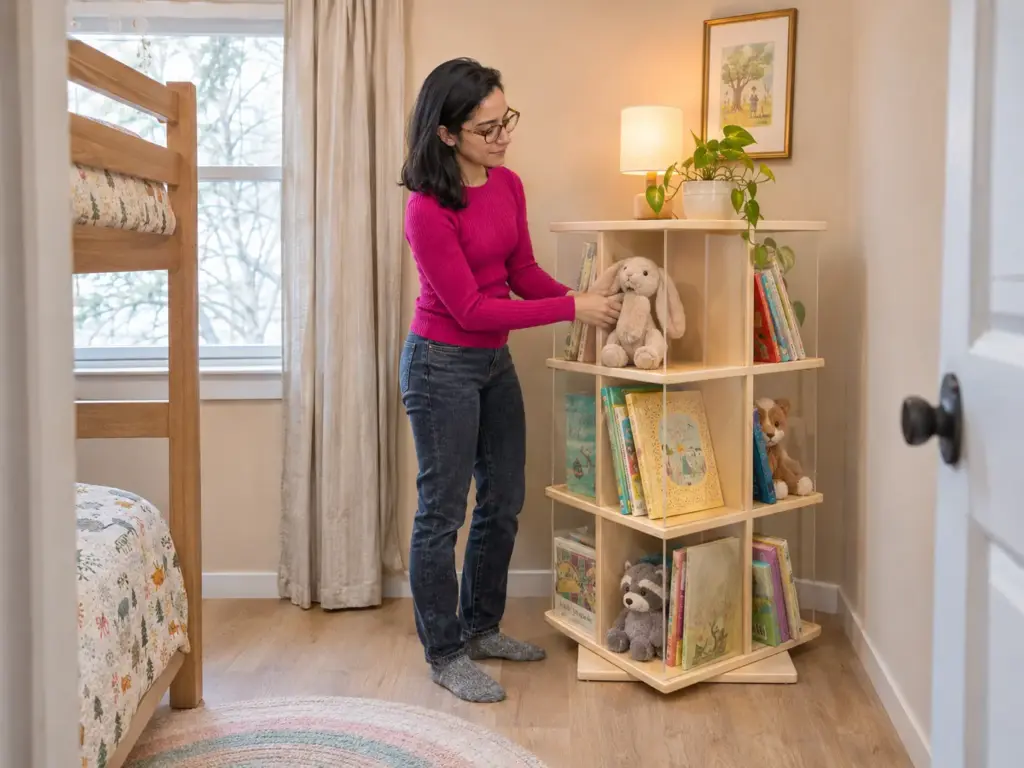
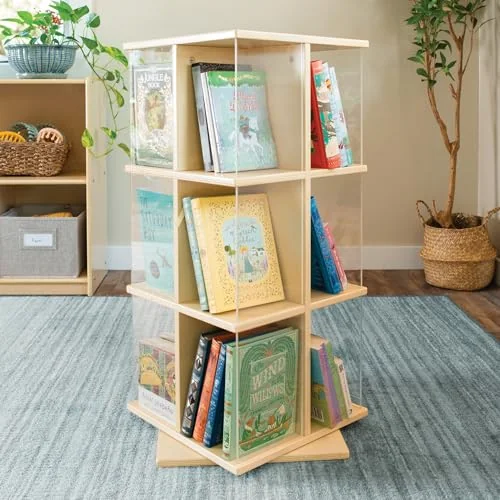
The Guidecraft EdQ rotating bookshelf is 14.5 inches square and 31.25 inches tall, with twelve compartments of 6.9 x 6.9 x 9.5 inches. That is about 1.5 square feet of floor for twelve cubbies, the best ratio on this list, and the shelf spins so a child never has to rummage in the back of a cubby. It is the answer when the clear wall run is zero.
The downsides are real. It is smaller in the room than the photos suggest, assembly is a job and not a five-minute task, and at 31.25 inches it needs anchoring like any tall piece.
Plush off the floor, and a lid for what is out of rotation
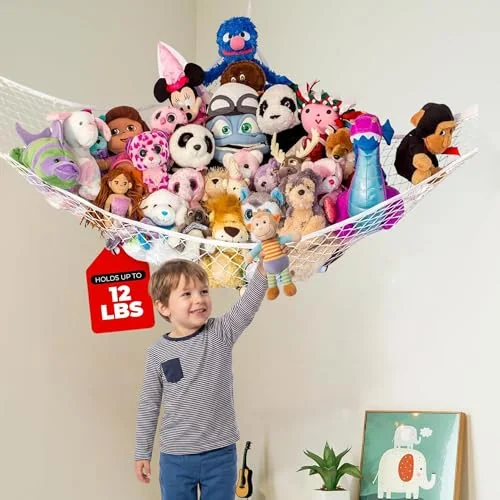
Plush animals take more floor than any other category, and they are light, which makes them the best candidate for the wall. Stuffed animal storage works best as wall mounted storage: a toy hammock strung across a wall corner above the reach line pulls them off the floor, and an over the door organizer with pockets does the same job on the back of a bedroom door. The Lilly’s Love large hammock is rated for 12 pounds, roughly 20 to 25 medium plush animals, and it comes with anchors and hooks.
The small screw holes cover with spackle on move-out, so a renter can use it. The net stretches near its limit, so do not treat 12 pounds as a target.
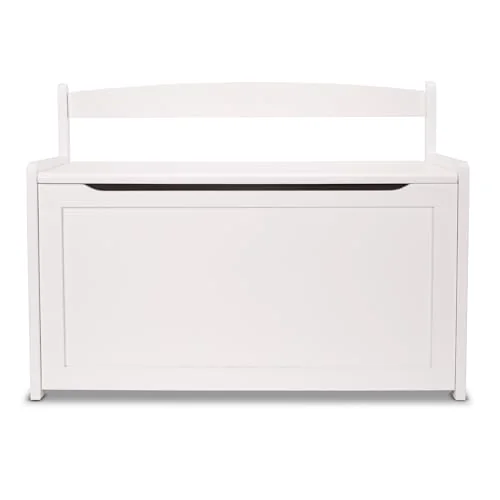
For everything else that is out of rotation, a lid helps. The Melissa & Doug wooden toy chest is 33 inches wide, 17.9 inches deep and 24 inches tall, holds 8.25 cubic feet and is weight-tested to 81 lb, with a safety-hinged lid and a top that doubles as a lidded bench for the family room.
Used for what the child plays with every day it becomes the landfill described earlier. Used for the seasonal set, the toys in the next rotation and the gifts that arrive in bulk, it is a good lidded home. The lid will not seat properly for some, so check the fit the day it arrives.
The one category that escapes every other bin
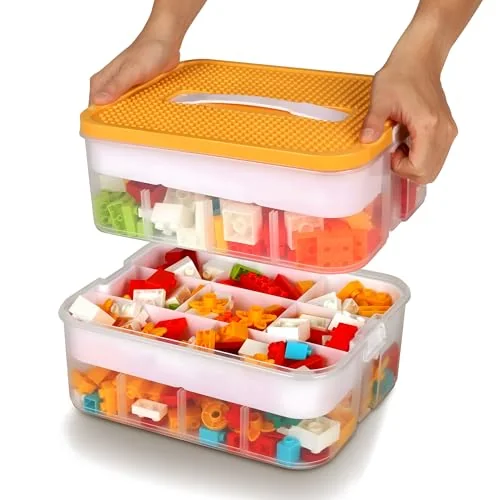
Building blocks migrate, and so do Duplo, Magna-Tiles and the action figures and toy cars that come with them. They end up in the plush hammock, under the couch and in the chest, because no bin that holds trucks holds a thousand small pieces without a spill.
They need their own contained home. A stackable clear organizer with two latching tiers, adjustable compartments and a lid that doubles as a building baseplate is the version that keeps the category in one place. Each tier measures 12 x 9.06 x 9.06 inches, small enough for closet storage on a shelf or a bookcase shelf, and no anchoring applies. For the rest of the tiny parts, an acrylic drawer set or small storage drawers and shoebox size bins sort them by type.
The trays are thin and the lids do not stay on if the unit is carried by the top, so lift from the base. If you are weighing clear acrylic against plastic for this job, where acrylic is worth it and where it is not lays out the trade.
Keeping a Small-Space Toy System Working Month After Month
A system gets bought once and lived with daily. What keeps it alive is a short loop of rotating, purging and resetting, not another purchase. A morning dump is normal; the daily treasure hunt through a bin is how a child plays. The measure of the system is how fast an adult can reset it after the dump.
A rotation that makes the unit smaller
Toy rotation is the cheapest way to shrink the unit you need. Rotate toys by keeping a third in reach and the rest out of sight, and swap them every few weeks. Books work the same way, with a few out at a time on a child height shelf, the Montessori shelf approach. The out-of-rotation set lives in the lidded chest, on a closet top shelf or under a bed, and the swap itself feels like new toys arriving, with no purchase.
A smaller visible collection also asks for a smaller unit, so rotation can turn a 42-inch wall decision into a 26-inch one.
The monthly purge of broken and outgrown toys
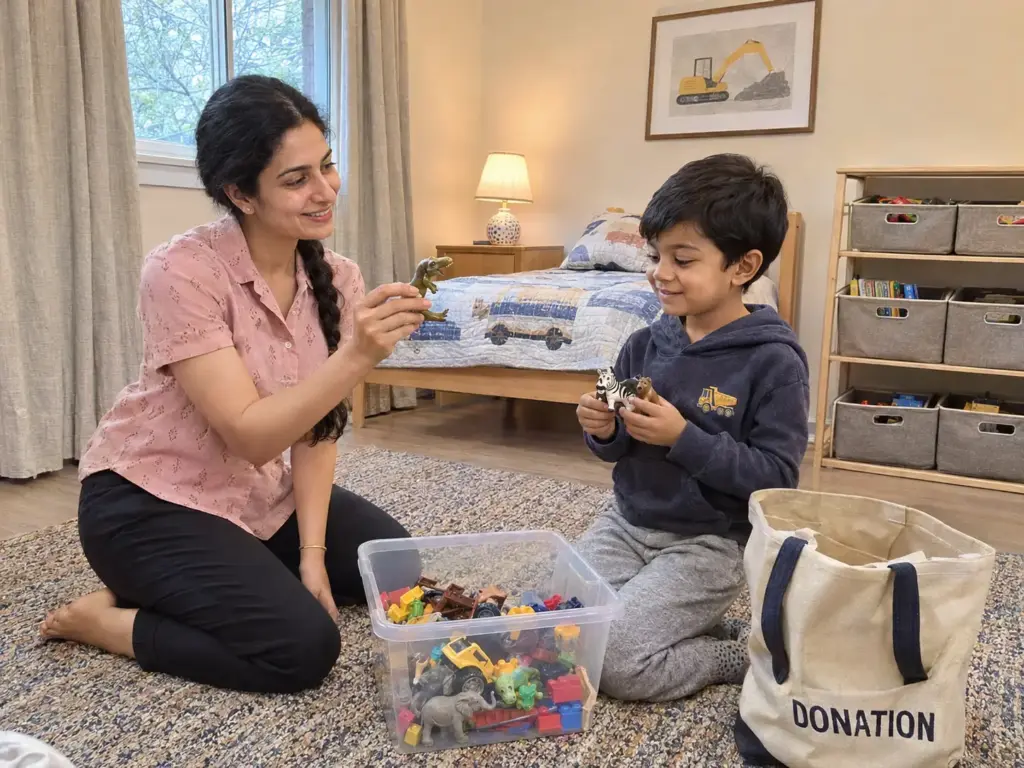
Once a month, take ten minutes to purge toys: the broken pieces and the outgrown ones. Broken goes first, because a broken toy is the one a child never plays with and an adult always trips over. Bag the toys you donate, put the bag in the car trunk out of the child’s sight, and drop it at the next errand. A purge done in the child’s view turns into negotiation.
The pile you purge is a signal. If one category fills up first month after month, it needs a bigger home, or a lower cap on how many arrive.
Buying for the next size, not today’s
Buy for the collection a year from now, within the limits of the wall. A family with a toddler needs an open, low unit now and shelving later, and the 9-bin or the cube shelf both grow with a child. A unit sized exactly to today’s pile is a unit you replace in a year.
Overflow needs a place too, even if the answer is just stacked bins in a closet. Under bed storage and under couch storage behind a dust ruffle hold seasonal toys without showing, and baskets under a coffee table take the daily pile. In a living room or a small apartment, the other half of the same problem is in toy organization ideas for a living room, and why kids’ under-bed storage gets messy in a week explains how to keep that overflow zone from filling up.
The full system view, with reach bands and the rest, lives in toy organization systems families actually keep using, the guide this one hangs from.
Put the donation bag by the front door the same day you fill it. A bag that waits in the closet becomes a second storage unit.
The Tape Measure Decides First, the Strap Decides Last
Two numbers pick the unit: the clear wall run and the depth plus the floor a bin needs to pull out. A low, open format matches a young child’s reach, a tall cube shelf or rotating tower gets a strap or does not get bought, and the bin has to match the cube it goes in. Free baskets come first, and the deep box and the twenty-bin taxonomy are the two purchases that undo a system.
Check the setup after the first full week of school clothes and laundry piling into the same room. Look at whether the bins are still back in their places without a nudge, and whether the unit still clears the door and the switch with the laundry basket beside it. If a bin has been abandoned, that category needs a different home, not a bigger one.
Today, put one basket under a table and drop a single category into it, the cars or the plush. By tomorrow afternoon, notice whether the child fed that basket without being asked. If they did, the format works, and the unit you pick next only has to repeat it. Organizing a kids’ room in one afternoon walks the reset sequence for the day the unit arrives.
Frequently Asked Questions
01What is the best toy storage for small spaces?
The best toy storage for small spaces is whatever fits your clear wall run and lets a child put toys back alone. Use a low tiered bin organizer on a short wall, a shallow cube shelf in a hallway, and baskets under a table for the free version.
02How much floor space does toy storage actually need?
A unit needs its own width and depth plus clear floor in front for a bin or lid to open. A 16-inch-deep organizer wants about 28 inches front to back. An 11.8-inch cube shelf needs far less, so it suits hallways.
03Do toy storage cube shelves need to be anchored to the wall?
Yes, tall cube shelves should be anchored. They are shelving, which the clothing-storage safety standard excludes. Where a lease bans drilling, choose low, wide formats or lay the cube unit on its side.
04Is a toy chest a good idea in a small room?
A toy chest works only for toys that are out of rotation. A deep box buries the bottom layer, so toys played with daily belong in open, shallow bins at the child’s height.
05How many toy bins does a small room need?
Fewer than the listing suggests: one bin per category the child can name. Start with two sorts, such as trucks versus not-trucks, and split a bin only when the child starts a second pile.
Disclaimer: ClutterlessNest is a participant in the Amazon Services LLC Associates Program. As an Amazon Associate we earn from qualifying purchases. This article may contain affiliate links — if you buy through them, we may earn a small commission at no extra cost to you. We only recommend products we have tested or genuinely believe in.