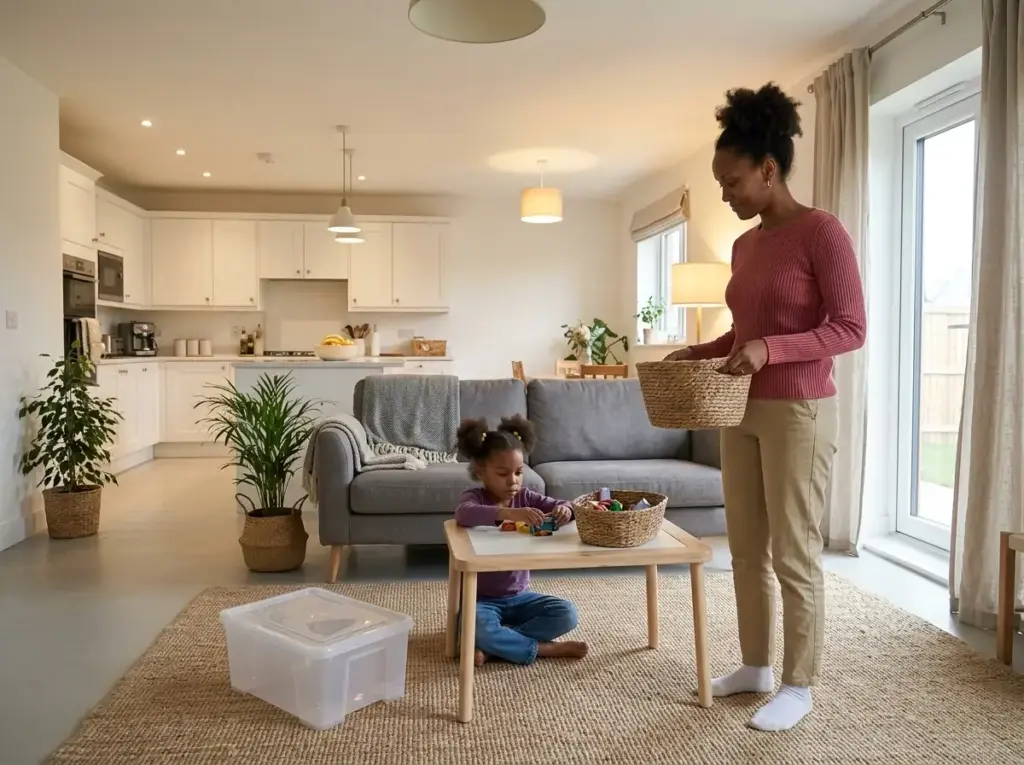
Three weeks after you set it up, the “out” bin is still the same bin, the stored bin sits behind a closet door or down a flight of stairs, and swapping has become a job nobody scheduled. A toy rotation system guide usually stops at the setup, and the setup is the easy part.
What does the work is small and well supported: in a controlled study of 36 toddlers, children given four toys played longer and in more varied ways than children given sixteen. Matching bins, themed sets and a color-coded toy rotation schedule are optional extras. This guide covers how many toys to keep out, the bins, labels a non-reader can use, where the stored half lives, when to swap, why rotations die and when to stop.
Quick Answer
A rotation that keeps running is built in this order.
- Gather every toy in one place and cull what is broken, outgrown or ignored.
- Sort what stays into bins by play type.
- Put out only 8 to 10 items, or 4 to 6 per play space.
- Store the rest where you can reach it without climbing a staircase.
- Swap one bin when play goes flat, not on a fixed date.
How a Toy Rotation System Works and Why Fewer Toys Out Helps
A playroom that holds everything gets used for almost nothing, and overstimulation is part of why. The child circles the floor, picks up six toys, drops each one after a minute and announces there is nothing to do. The shelves are full, and that is the problem: all of it is on offer at once.
What a rotation system actually does
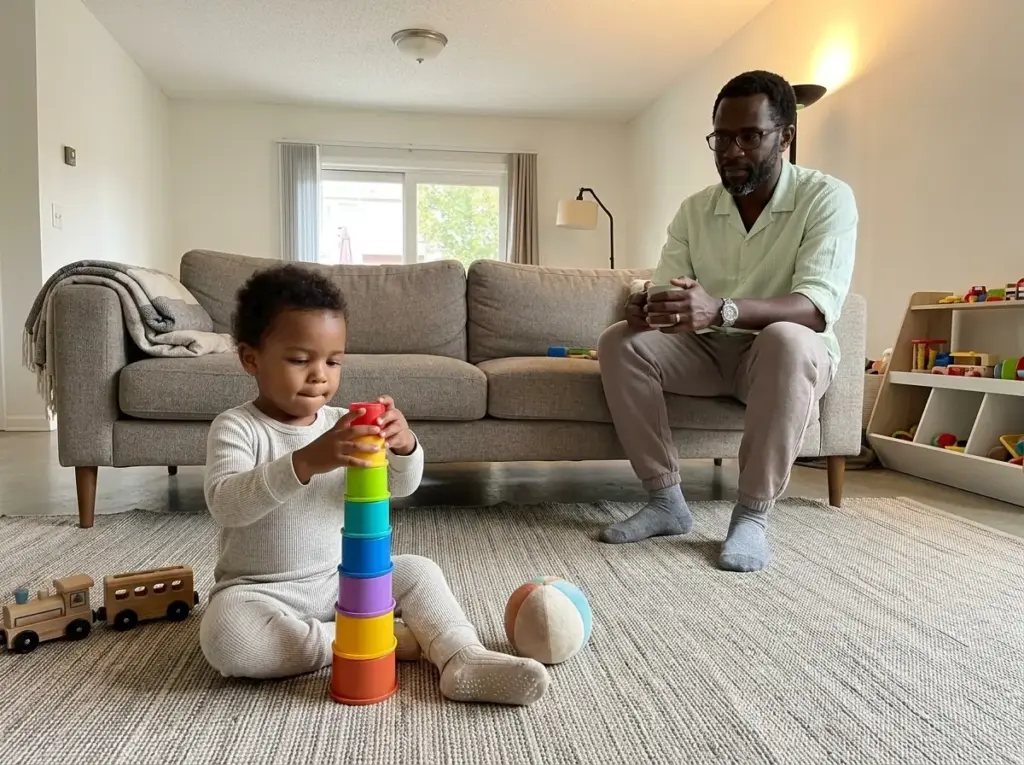
A toy rotation system has three parts: a small set of toys out where the child plays, the rest stored out of sight, and a rule for swapping one for the other. The point is fewer accessible toys. It is not a styled display shelf with a theme and matching baskets. A rotation that needs a schedule, a color scheme and a themed set to run is carrying decoration, and the only piece that changes how a child plays is the smaller out-set.
Sixteen toys on the floor read as a pile to a two-year-old. Four read as a choice.
With the pile, play turns into grazing: pick up, shake, drop, move on. With the choice, a child settles in. Rotation adds a bonus for free, which is novelty without spending anything, because a truck that spent three weeks in a closet comes back as a new truck.
Rotation is a habit layered on top of storage, and it is the answer to toy clutter that bins alone do not stop. Toy storage systems that families keep using cover the storage half.
What the toddler play study found
The evidence is thinner than the blogs imply, but it points the right way. According to a 2018 toddler play study in Infant Behavior and Development, “With fewer toys, participants had fewer incidences of toy play, longer durations of toy play, and played with toys in a greater variety of ways.” The researchers watched 36 toddlers in supervised free play, once with four toys in the room and once with sixteen.
Read that result carefully. It is about toys within reach, not about a calendar.
Nothing in it says that a weekly swap, a bin per play type or a stored inventory improves play. It says that fewer toys on the floor does. And a lab with four toys is not a living room, so treat the number as a direction, not a target. The counts in the next part of this guide show where real homes land.
What it does not fix
More storage is not the lever. Bins give the surplus somewhere to hide, but they do not reduce what is on offer, and a “stored” half that lives in a closet that will not close is just a pile with a lid on it.
A sizing test needs no counting at all. If your child can name what is on the shelf, it is about right. If they cannot list it, there is too much on it. (You can run this test standing at the shelf in under a minute, without touching a single toy.)
How Many Toys to Keep Out: Counts by Age and the Rules People Quote
Look the question up and three different pages hand you three different right numbers. They are not contradicting each other. They answer different questions: how many toys a child can handle, how many fit on one shelf, and how many to keep in the house at all.
Counts by age that hold up
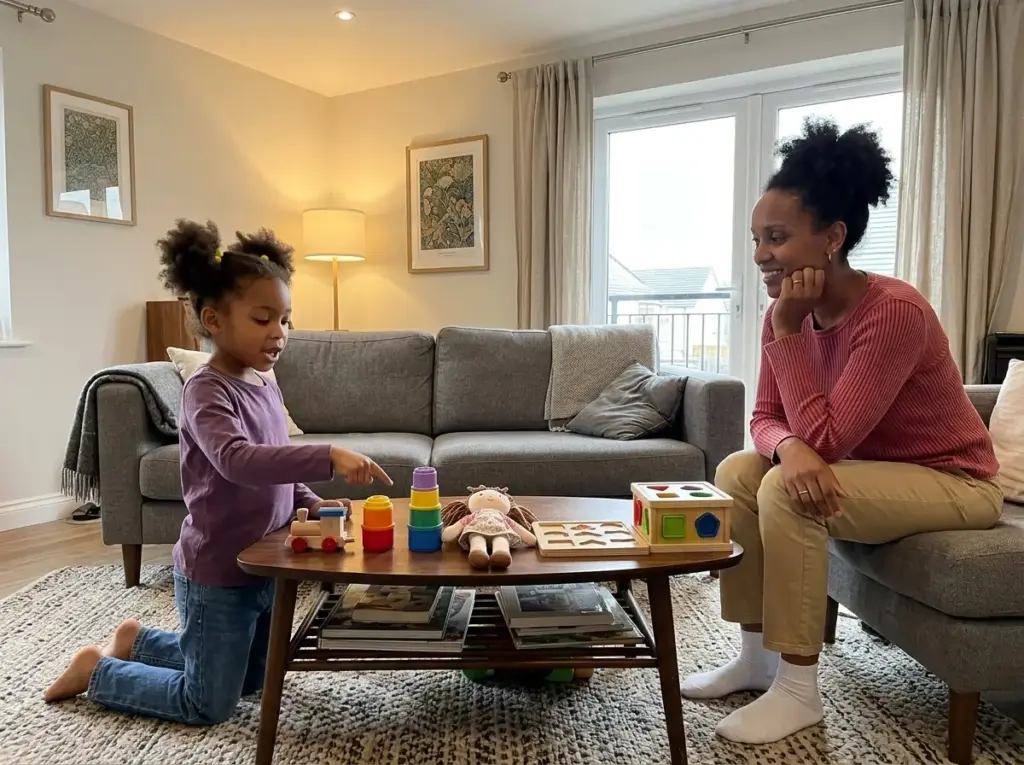
The ranges that circulate in the field are 4 to 8 toys for infants under a year, 8 to 16 for toddlers, and up to about 20 items for preschoolers aged 3 to 5. A Montessori toy rotation guideline puts 8 to 10 activities on one low shelf, a common household version is 4 to 6 toys per play space, and plenty of families settle on 5 to 10 toys out for rotations of two to four weeks.
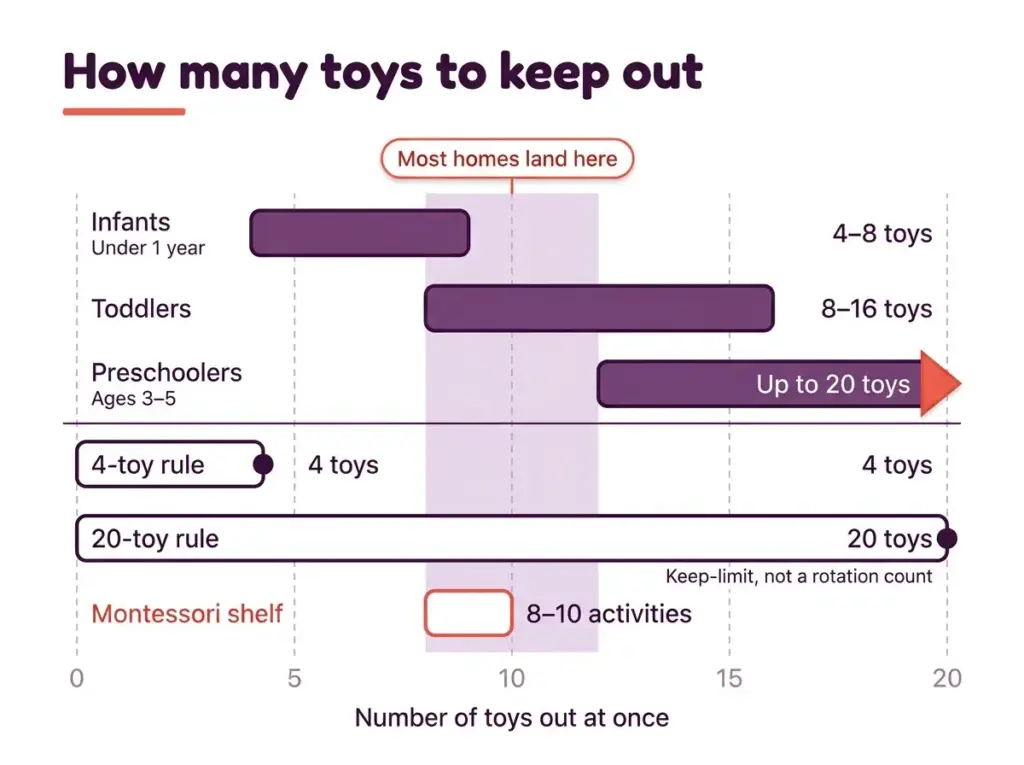
Pick the low end of your child’s range, not the high end. Adding a bin back takes seconds, while taking toys away from a child who has already seen them is a negotiation.
The top of the toddler range deserves a second look too: sixteen is exactly the number the study used as its crowded condition. Treat it as a ceiling. Eight to ten is the range most households can hold without fighting it.
The 4-toy and 20-toy rules, sorted out
The 4-toy rule means only four toys are available at a time. The rest become rotation slots that swap in when the child wants something else, and it does not mean getting rid of them. The 20-toy rule is a different animal: the child picks about twenty toys to keep, and the rest are donated or retired. It is a keep-limit, not a rotation count.
The two get mixed up constantly, and then neither one works. Use the 20-toy rule to decide what stays in the house, and the 4-toy rule (or its 8-to-10 cousin) to decide what is out today.
Per room, not per house
Count per playspace. A family with a living room, a bedroom and a kitchen corner that each hold 4 to 6 toys has roughly 12 to 18 out in total, and it still feels like four to six from wherever the child is standing. Decide once whether books are counted, because a shelf of picture books can quietly double the number.
When the main play space is the living room, the out-set needs a home that does not take over the room. Living-room toy setups that fit the furniture show how to give it one.
Set Up the Bins: Gather, Cull, Sort and Fill
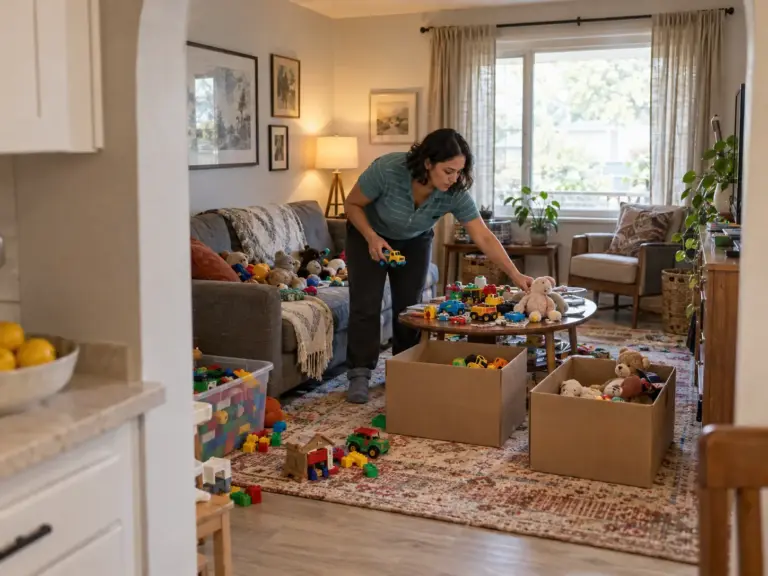
You will find toys in places you forgot to look: under the bed, behind the couch, in the pocket of the car door. The pile on the floor looks worse before it looks better, and that is normal. One afternoon covers the whole setup.
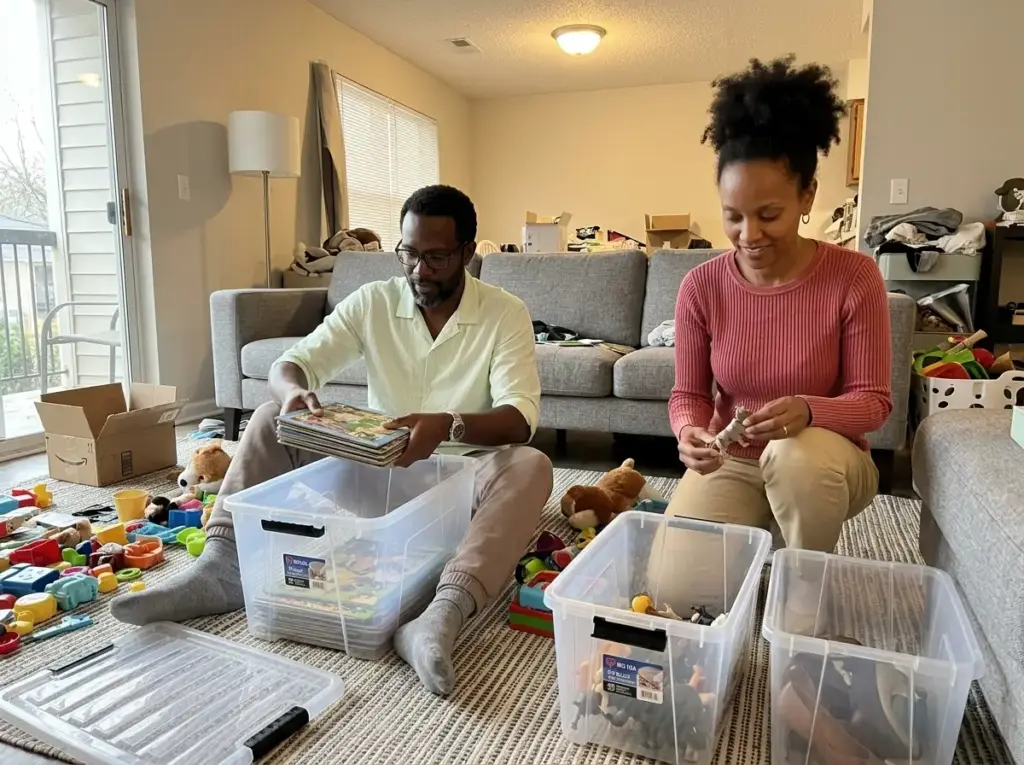
Gather every toy first, then cull
Bring every toy into one room, including the ones in the car and the dress-up bin. You cannot design a rotation around toys you have not seen.
Then sort into three piles: keep, rotate, and donate or trash. Outgrown toys and duplicates go to the pile to donate toys, and secondhand toys are an easy way to fill a gap later without buying new. Broken pieces get a short grace period in a set-aside spot (a shoebox by the door works), and then they go, because a rotation that includes a puzzle missing three pieces also includes an argument.
That toy declutter is its own project, and why the pile returns after a toy purge covers the intake that refills it.
Sort by play type, not by room
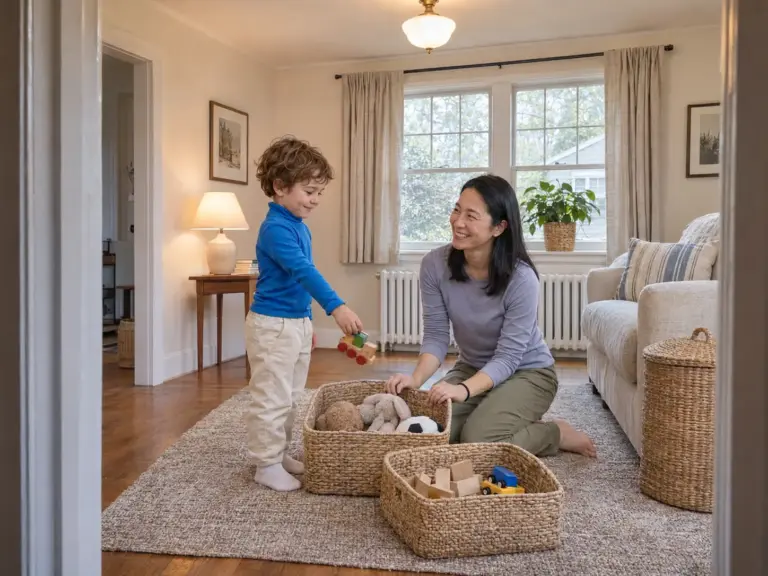
Sort what is left by how it is played with, and fill the toy rotation bins from those groups. Toy categories that work: building toys and fine motor toys, pretend play with dress-up clothes, gross motor toys for active play, creative and music, puzzles and games, and vehicles. Magnetic tiles and wooden toys land in building; sensory toys land with creative. Books, stuffed animals and electronic toys get decided once instead of rotating, and stuffed animals often stay out all the time.
Sorting by room sounds tidy and leaves every bin lopsided, with the bath toys in one place and the kitchen toys in another. Balance is the goal. One bin per toy type leaves a theme missing the week that bin is in storage, so mix each bin so a single swap brings variety: something to build, something to pretend with, something to move.
Fill each bin to about two-thirds. A bin packed to the brim gets dumped on the floor to find the one toy underneath, and a dumped bin is how a rotation turns back into a pile.
Build the bins and keep small sets together
Start free. Cardboard boxes, or the bins sitting in the garage, work for a rotation as long as the child can carry the container.
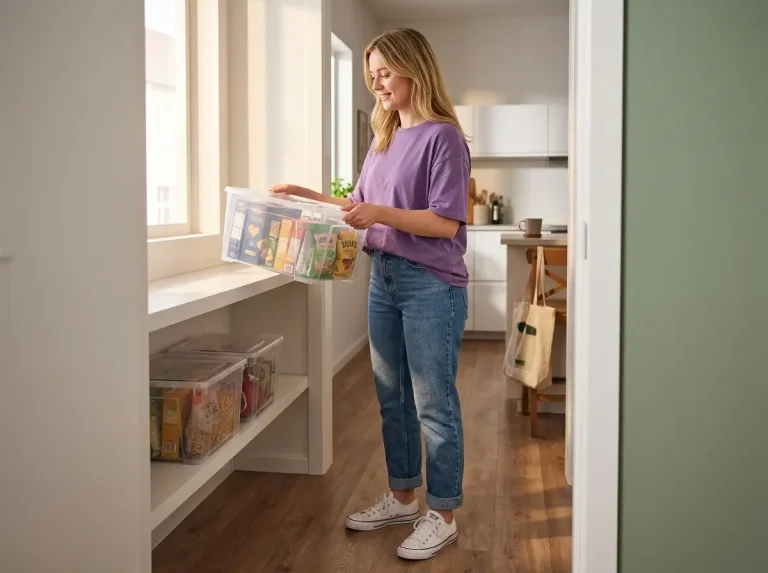
When you want something that stacks and shows the category, the IRIS USA 54 Quart Storage Bins with Lids come as a 6-pack at 22 x 16.5 x 13 inches, big enough to hold a whole category, and the clear sides let a child who cannot read see what is inside. They are closet and garage bins, not cube-shelf bins. The weak spot is the hardware: handles crack and latches loosen with use, so lift from the base. If you are weighing clear against opaque, clear bins compared by size lays out the options.
A rotation also breaks quietly when small sets get mixed. Puzzle pieces, play food and a few building sets end up together in one bin of loose parts, and the next swap becomes an excavation.
Group each set in its own bag inside the bin so a swap moves a set, not a handful of pieces. A zip bag or a shoebox does it for free. The 16-piece mesh drawstring bag set comes in three sizes (12 x 8, 12 x 14 and 12 x 17 inches), and the mesh shows what is in each bag. Building sets are the strictest case, since pieces from different sets cannot be mixed, and keeping LEGO sets complete goes deeper on that one.
Labels a Child Who Can’t Read Yet Can Use
Picture four opaque bins on a shelf. The child cannot read, and by Thursday you cannot remember which one holds the trains either. A label has to work for both of you.
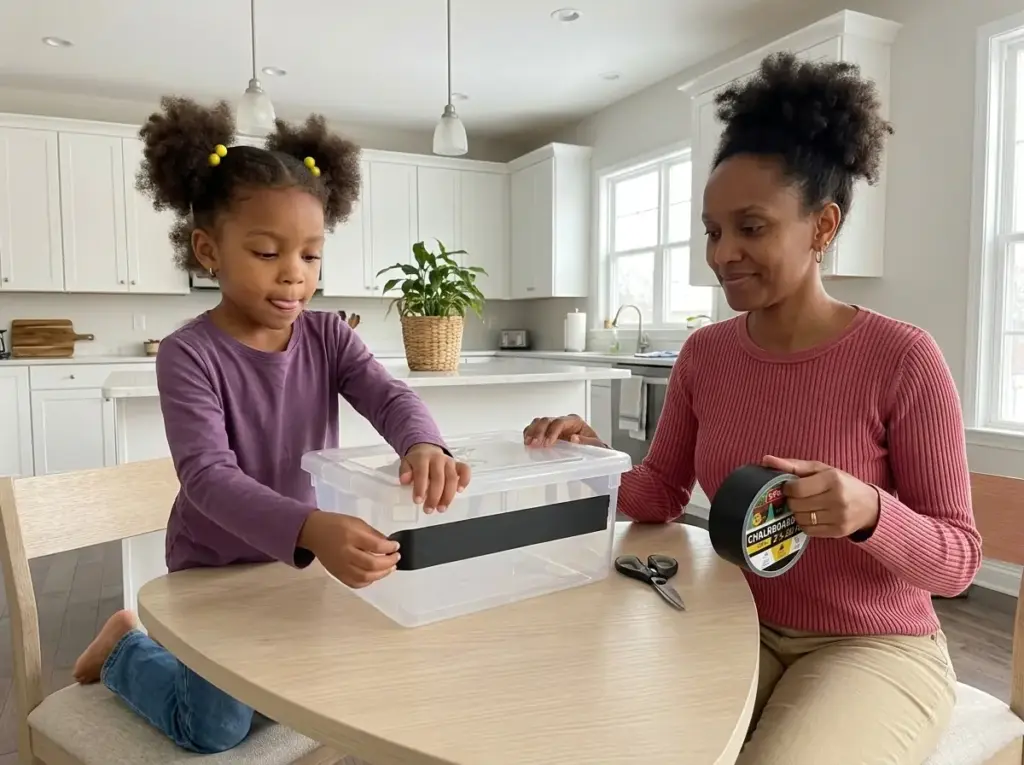
Picture or color first, words second
Pre-readers sort by picture, by color or by the toys they can see. A clear bin with a drawn symbol on the face beats printed words, and a colored dot beats both for a very young child. Label the stored bins too. Without labels the swap turns into opening every lid, and a swap that takes ten minutes is a swap that slides to next month.
Skip the scannable-label inventory, the kind with QR codes and an app. It is heavier than the system this guide argues for, and a rotation that needs data entry will not outlast the first busy week.
The chalkboard-tape setup (and what the marker does badly)
The free version is masking tape and a marker. Write or draw the category on the tape, and you are done. The upgrade is chalkboard tape: the XFasten Black Chalkboard Tape is 2 inches wide on a 30-foot roll, turns any bin face into a writable label and peels off clean at the end of a lease. One roll covers a whole rotation with tape left over.
Pair it with a white chalk marker. The Uchida 483-C-0 chisel tip marker writes on the tape and wipes off, mostly. Erasing is where it gets mixed: some surfaces come clean and some leave a ghost, so do not count on a perfect reset. A permanent marker under a strip of clear tape is the workaround for a label you want to change rarely.
Once the labeled bins land on a shelf run, toy storage matched to wall width helps you pick bins that suit the wall they will sit against.
Where the Stored Toys Go With No Basement, Playroom or Spare Closet
A rotation needs somewhere to put the half that is not out, and a lot of homes have no basement, no playroom and no spare closet. The answer comes down to two numbers: the height of the space and the height of the bin. One rule sits above both. The out-set lives in the room where the child plays, and the stored half lives where an adult can reach it without carrying anything up or down a floor.
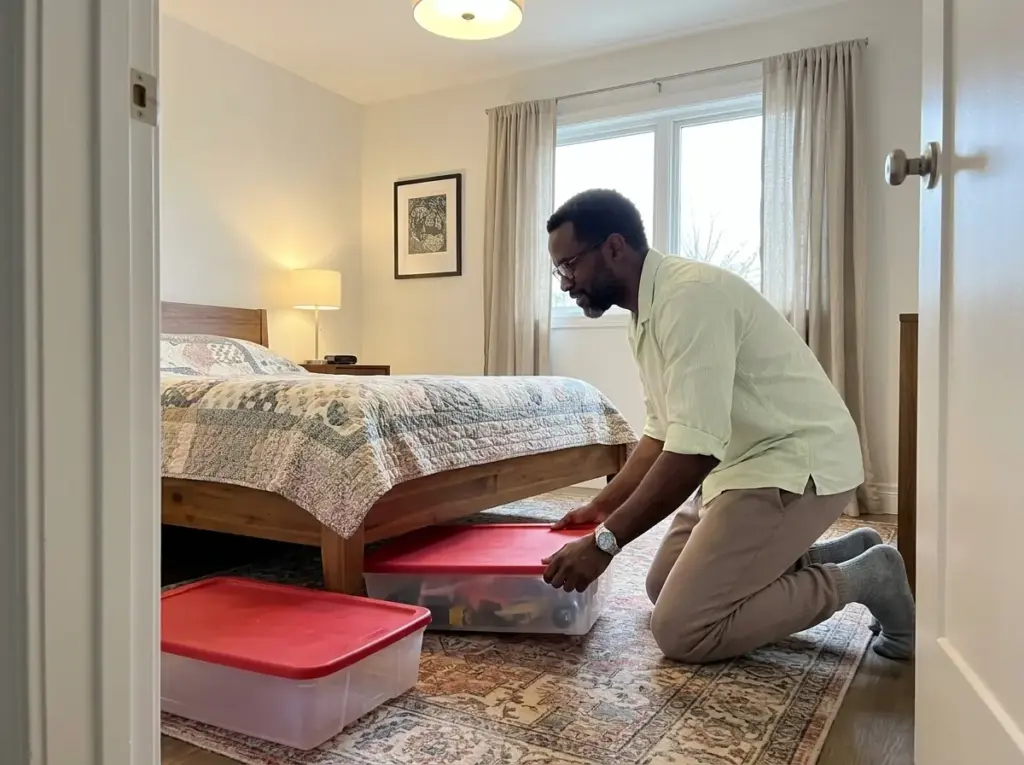
Under the bed: the 6-inch number
Under a bed, the clearance is the frame, not the bin. Measure from the floor to the lowest point under the frame, including slats and support legs. A bin about 6 inches tall clears the low frames, anything taller needs bed risers, and past 7 inches many standard frames stop it outright. A flat bin with a fitted lid that is already in the house does the job at no cost, and under-bed storage is the easiest stand-in for a storage closet, so measure the gap before looking at anything else.
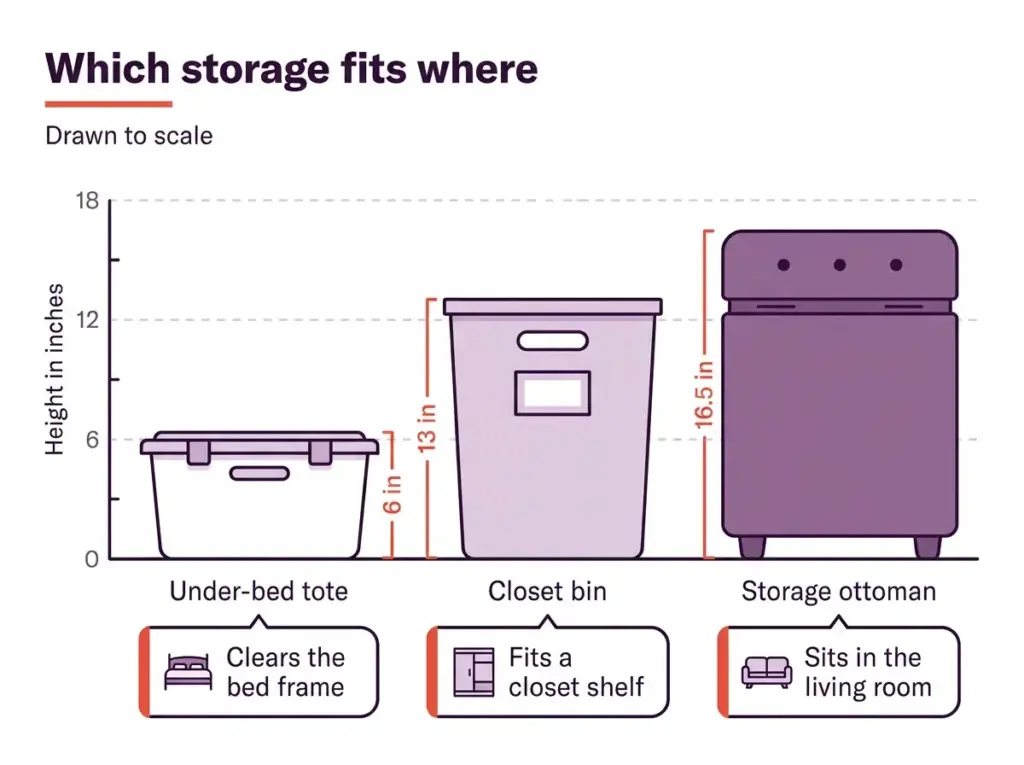
If nothing flat in the house fits, the HOMZ 41-quart holiday totes measure 34.38 x 15.5 x 6 inches and ship as a 2-pack, so they slide under a standard frame and hold a full category apiece. The lids do not always clip shut and a few units arrive cracked, so open the box when it lands and test both lids. One more condition: under-bed bins in the child’s own room are within the child’s reach, which is the exact situation that ends a rotation, so a parent’s bed or a guest bed is the better spot. How kids’ under-bed bins go wrong shows the clearance numbers in a kid’s room.
Measure the clearance at the lowest point under the frame, not at the open side you see from the doorway. A center support or a side rail is usually the part that stops the bin.
The cube shelf: the opening is the constraint, not the bin brand
Big clear bins are the obvious pick for stored toys, and in a cube organizer the second choice wins. The cube opening is what limits the bin, not the brand on it.
Openings vary by unit, and a 13-inch-tall bin is tight at best in most of them, so measure yours first. That is why the 54-quart bins from earlier belong on a closet shelf or the top of a wardrobe. Use the cubes of the toy shelf for the out-set instead, with small baskets or shallow bins that sit comfortably inside the opening.
Any low shelf or cube unit a child can pull on gets anchored to the wall, in a rental too. The CPSC’s Anchor It! campaign recommends anchoring all furniture with drawers, doors and shelves, and the screw holes patch easily at move-out.
The living room with no playroom: closed seating
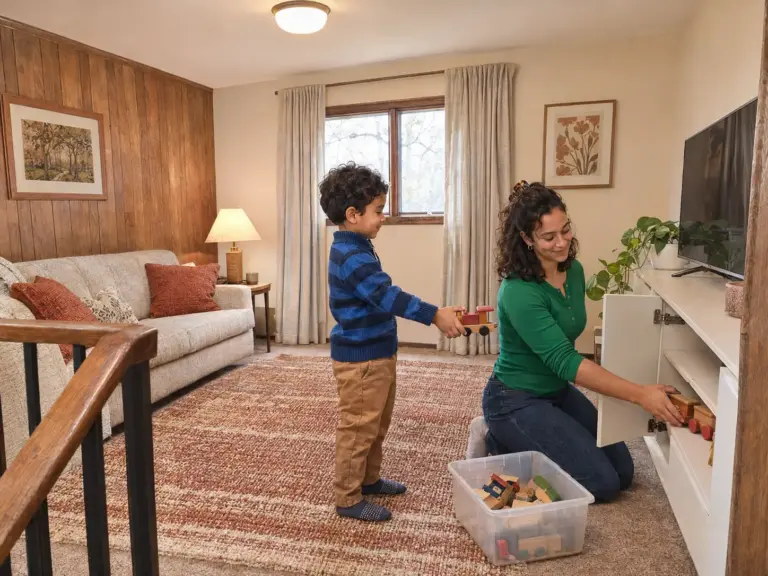
With no playroom, the toys live in the room where the family sits, and closed storage beats open shelving for the stored half. A chest or a lidded basket you already have is the cheap version of this idea.
For something upholstered that hides a whole rotation, the BELLEZE 47-inch storage ottoman measures 48 x 17 x 16.5 inches, seats up to 300 pounds and doubles as a bench. It runs smaller inside than the outside suggests, so measure your largest bin before ordering. At 16.5 inches it is bench height, not coffee-table height, which suits a seat and rules it out as a place to set a drink.
The garage and the second floor: why they fail
A garage works as a second playroom, not as storage. A toddler follows you out there, pulls toys off the shelf, and carries them back inside, so you end up refereeing a game in a room full of tools. Plastic boxes with lids on a living-room shelf work better, and nobody has to leave the house to swap them.
A floor between the two halves is the other quiet way a rotation ends.
The swap becomes a trip down and a trip up, with a bin on each leg, and it drifts to once a month. A monthly swap re-creates the clutter it was meant to prevent. Humidity decides the material for anything in basement storage or the garage: sealed plastic for a basement or garage, fabric only for a dry closet shelf. When fabric bins fail explains where fabric gives out first.
How Often to Swap and How to Tell It’s Time
The Monday rotation works for three weeks and then becomes the thing nobody has time for. The calendar was never the right trigger.
Weekly, every few weeks or monthly: what each age needs
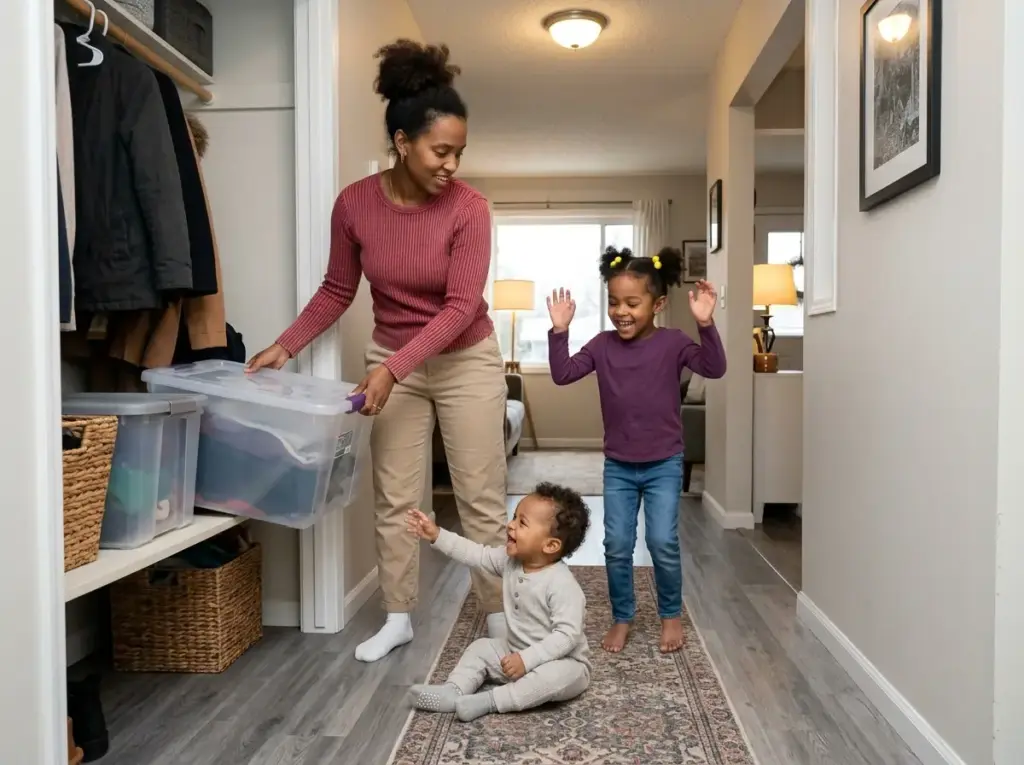
Advice on a weekly rotation, a monthly rotation and everything between all circulates. The rhythms in circulation run from every 5 to 10 days (the Montessori guideline) to two to four weeks (most families), with every other week for toddlers and monthly for preschoolers and older children. The number that depends is yours: a weekly swap assumes a parent with a free hand, a short trip to the stored half and a child whose interest turns over fast. Take away any of those and weekly becomes a promise you break.
A rigid Monday swap is the first thing to fail. Follow attention instead of the calendar, and let the signs below set the date.
Signs the out-set has gone stale
Watch for toys that are ignored or only dumped, a fight over the same two things, a refusal to clean up, and the word “bored” arriving before the child has touched anything on the shelf. One sign is noise. Two in the same week is a swap.
A child who plays deeply with the same two toys for three weeks does not need a swap. They need to be left alone with them.
Swap with the child, or after bedtime
There are two ways that survive. In the first, you swap in front of the child with baskets and announce a trip to get more toys, which turns the swap into the event instead of the interruption. In the second, you swap after bedtime, which only works when the stored toys are already in the child’s room or close enough to fetch in one trip.
Either way, swap one bin at a time: pull one, put one back, and never rebuild the shelf. Add a trading rule for requests. If the child asks for a stored toy, trade toys: one from the out-set goes back in exchange. The child’s own room is the natural place to rotate toys together, and organizing a kid’s room in one afternoon covers the whole-room system around it.
Tie the swap to something that already happens, like the Sunday laundry load or the first rainy afternoon, instead of to a date. A swap with no trigger gets forgotten by the second week.
Why Rotation Systems Quietly Die and the Version That Survives
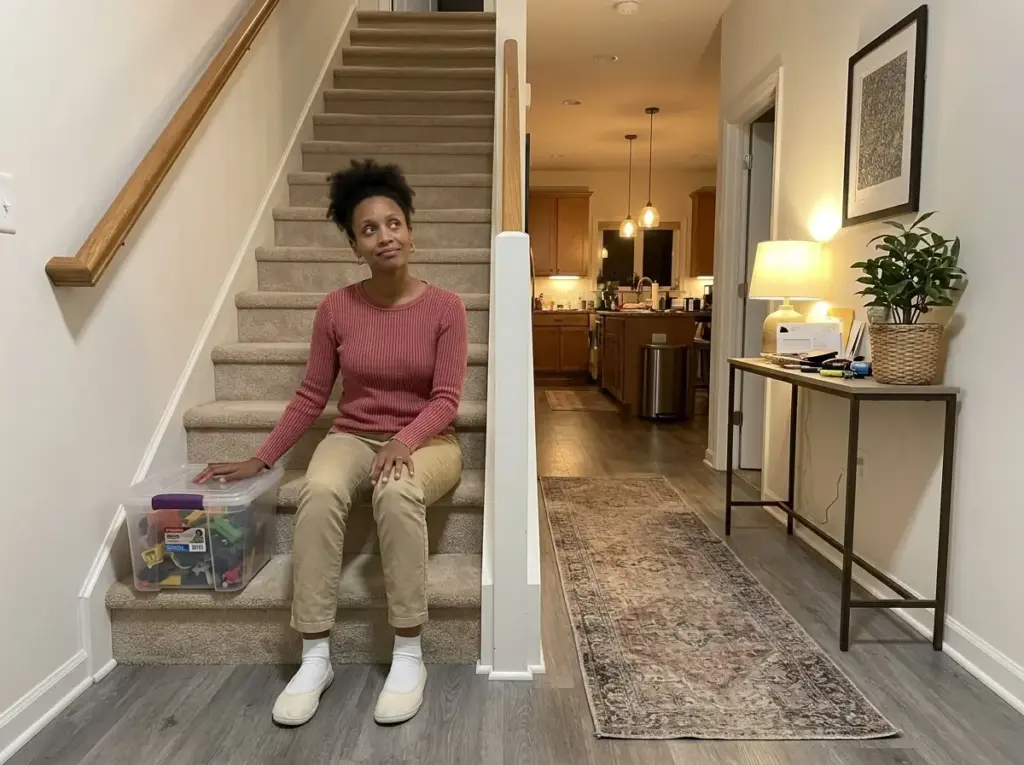
Picture the parent who built the beautiful four-bin system and is now carrying one up from the basement at nap time, wondering when the whole thing became another job. That is the usual ending, and it has little to do with discipline.
The load is the remembering, not the swapping
Moving a bin takes a minute or two. The load sits around it: deciding it is time, remembering which bin comes next, finding the one window when the child is asleep or out of the room, and then doing it. That is the mental load, and it is invisible, so a rotation can feel exhausting when the physical work is tiny.
The load also lands unevenly. In a household with two caregivers, one of them usually becomes the person who knows what is in the stored bins, and the system stalls on the days that person is away.
The three ways a rotation ends
The first is a staircase between the two halves. Stored toys live downstairs, the swap needs a trip down and a trip up, and the interval stretches to a month. Then everything comes out at once during the swap and the room is a mess again. More bins make it worse, because more bins mean more trips.
The second is the day the child can reach the bins. A four-bin system that ran smoothly at one age stops the week the child is tall enough to open them: a bin the child can open is a toy box, and a toy box is the thing the rotation was built to replace.
The third is out of sight, out of mind, and it cuts both ways. It is the reason rotation works for the child, and it is the reason a parent forgets the stored half exists. For a parent who struggles with exactly that, the effort belongs in setting the system up, not in keeping it going. Toys that sit downstairs long enough end up fermenting there until they are donated by default.
The version that needs no schedule
The low-effort version has a few moving parts and no calendar. Each play space gets one reachable bin and one cube or basket that gets swapped by feel. There is no matching set, no schedule and no labels required. A two-floor house gets one shelf and one toy box per floor, and the swap changes the contents of those shelves instead of tracking an inventory.
A few weeks in, you pull a handful of toys from the bottom of the box and put them on the shelf, and the old ones go to the bottom.
Two other versions work for the same reason. Three big bins can rotate by dumping the old set in and snapping the lid, with donation decisions made on the spot if it will not all fit. Or you adopt a policy of “what’s out stays out” unless the child asks for something stored, and then they make a trade.
It is worth saying one more thing about expectations. A toddler who is content with two toys does not need a classroom, and a rotation can slip into being a project for the parent more than a need of the child. If the child is playing well, the system is already done. Keeping a kid’s bedroom system going past the first month covers how the room holds together after the novelty fades.
When to Skip Rotating, or Stop
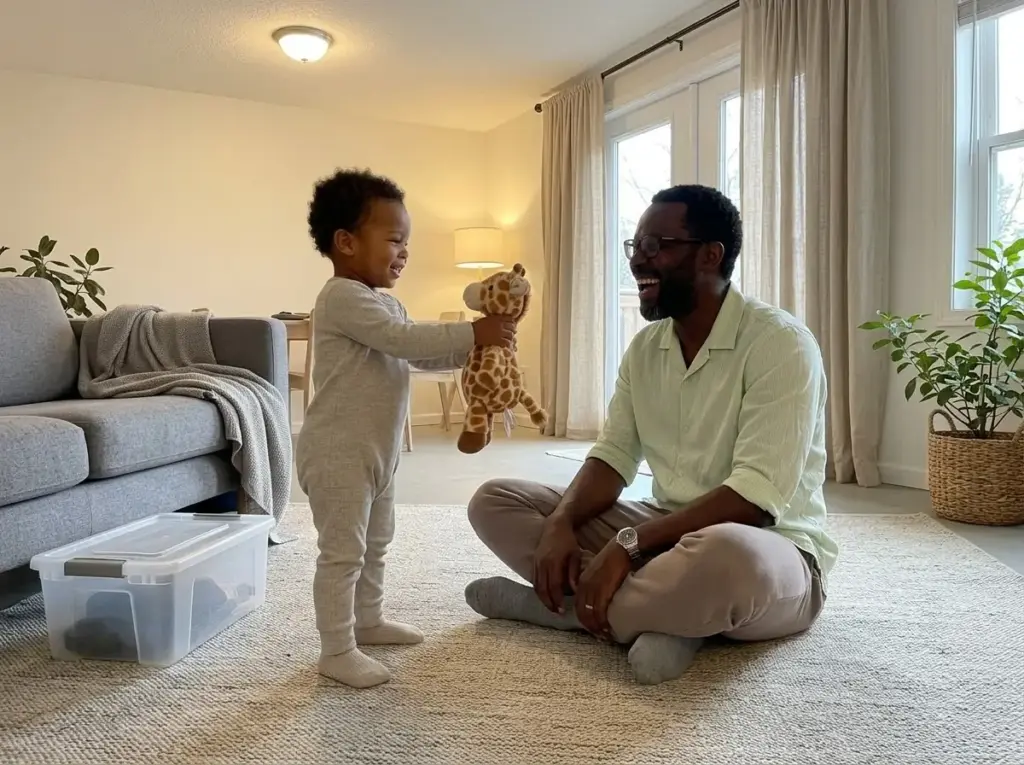
Imagine a toddler who asks for the giraffe by name. It has been in the closet for two weeks, and now you are deciding whether to admit it. That moment is where the case for rotating, and the case against, both get tested.
Under three and multi-age homes
Some categories stay out permanently, which also helps independent play: stuffed animals, the play kitchen, a favorite. The system covers the rest. For a baby under a year, a handful of toys is already the whole rotation, and there is nothing to optimize yet. For stuffed animals, what holds up for stuffed animals shows how to keep them out without taking over the room.
A multi-age house rotates as a pair, not per child.
A three-year-old and a five-year-old share the out-set, because the younger one plays with whatever the older one is playing with. One family with three children runs twenty bins, rotated by category instead of by child, with only about a third of them out at any time.
There is a safety rule here too. The CPSC’s toy safety guidance explains that small parts are banned in toys for children under three (16 C.F.R. part 1501), so a stored bin meant for an older sibling cannot simply be handed down to a toddler.
The child who remembers the hidden toy
A child who remembers will ask. The rule that keeps trust intact is the plain one: say the toy is stored and will come back, or trade it for something from the out-set. Hiding the toy and denying it exists is what breaks the arrangement, because the child learns that the shelf is not telling the truth.
Toys a child finds in the donation box tend to go straight back into circulation. A box the child has seen is no longer a decision made quietly.
When the answer is fewer toys, not a better system
Several signals say to stop rotating.
The child can reach the bins. The child asks for specific stored toys over and over. The child plays mostly with open-ended toys, which do not benefit from novelty the way single-purpose ones do. Or the donation pile is the real answer, and the stored half has become somewhere toys wait before leaving.
There is a simple test for that last case. If a toy can be taken away without a toddler noticing, the toy can probably go. Some families land on fewer toys with no rotation at all, and the study that opened this guide supports them. It measured toys within reach, not a swap schedule.
What to Set Up First and What to Look at in a Month
Keep fewer toys out than feels right. Store the rest where you can reach it without carrying anything between floors, in bins the child cannot open. Swap one bin when play goes flat instead of when the calendar says so, and trade instead of hiding when a stored toy is requested.
After about a month, look at the out-set. Is the child still touching most of it, and did the last swap actually happen? If the answer to the second question is no, the problem is the distance between the two halves, not the child.
Today, pull the toys your child ignored this week into one box and put the box out of sight. Over the next few days, notice what they reach for.
Frequently Asked Questions
01What is the 20 toy rule?
The 20 toy rule is a keep-limit where a child picks about twenty toys to keep and the rest are donated or retired. It cuts clutter and builds attention to what they have. It is not a rotation schedule.
02How many toys should be out in a toy rotation system?
Most households do well with eight to ten toys out, which works out to four to six per play space. Use fewer for infants and more for preschoolers. Start at the low end, because adding a bin is easier than taking toys away.
03What is the 4 toy rule?
The 4 toy rule means only four toys are available at a time, and the rest are rotation slots swapped in when the child wants something else. It does not mean getting rid of the others.
04What are the categories for toy rotation?
The usual categories are building and fine motor, pretend play, active and large-motor, creative and music, puzzles and games, and vehicles. Books and stuffed animals are decided once instead of rotating. Mix each bin so one swap brings variety.
05What if my child asks for a toy that is in storage?
Say the toy is stored and offer a trade from the out-set. Do not deny it exists, because hiding it and denying it is what breaks trust. The toy comes back and another one goes in.
Disclaimer: ClutterlessNest is a participant in the Amazon Services LLC Associates Program. As an Amazon Associate we earn from qualifying purchases. This article may contain affiliate links — if you buy through them, we may earn a small commission at no extra cost to you. We only recommend products we have tested or genuinely believe in.