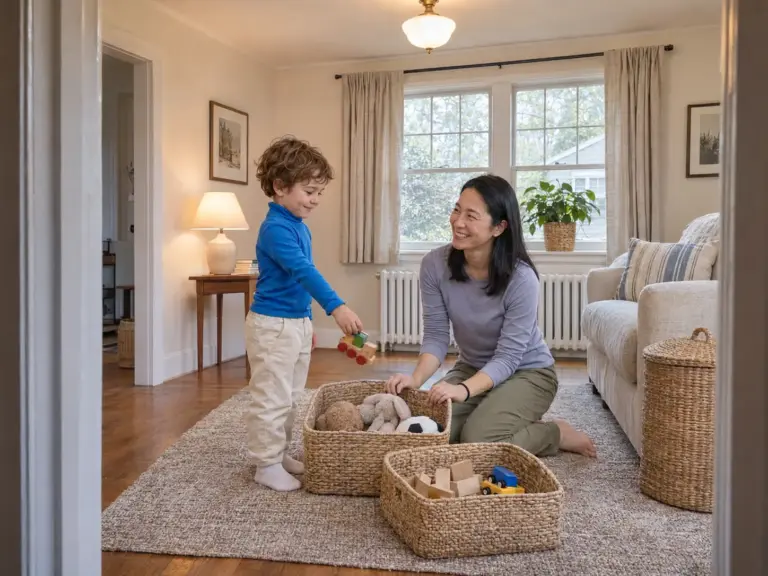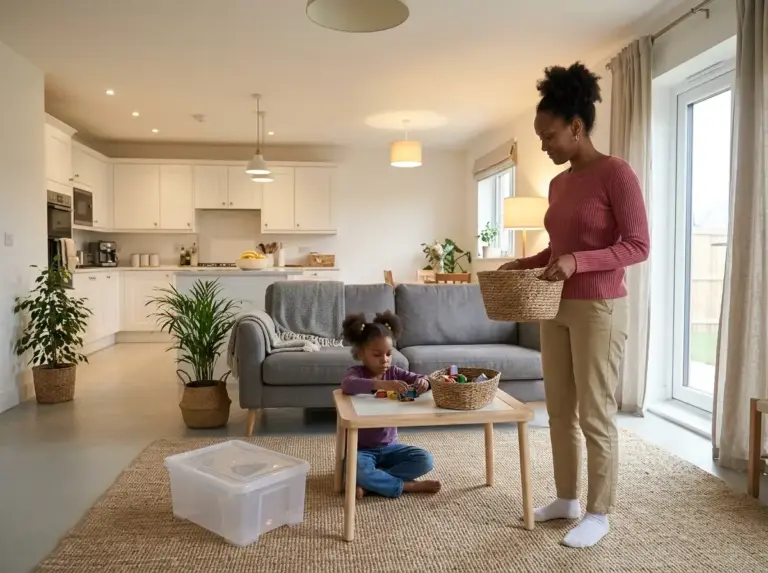
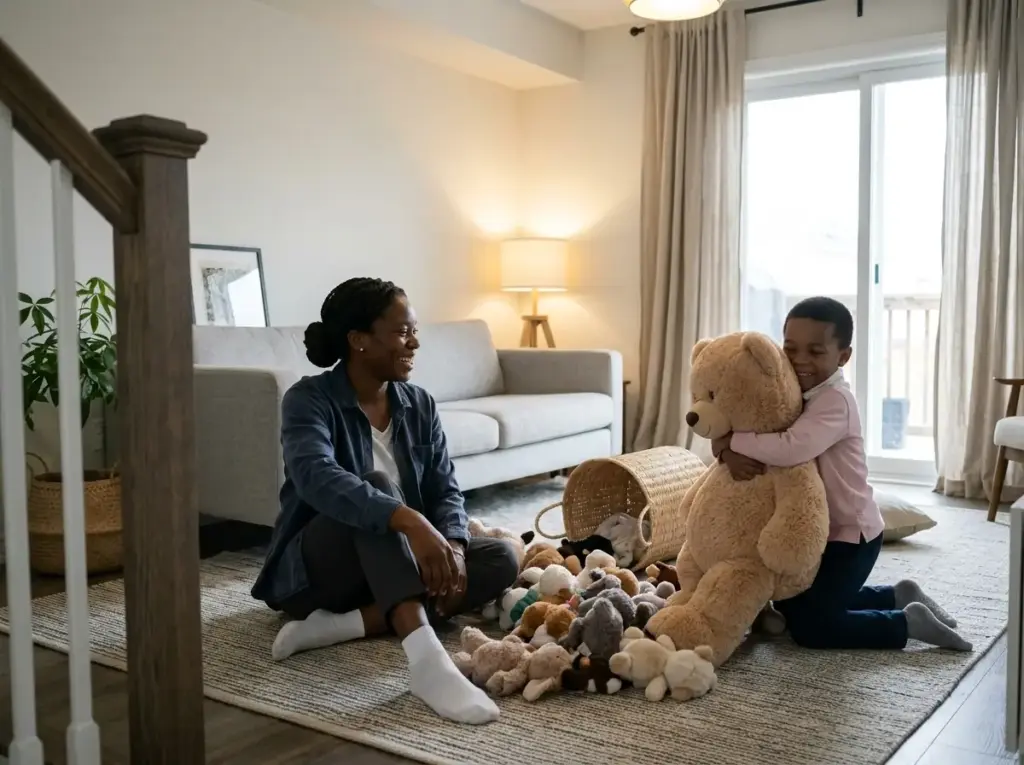
The floor pile mostly works, so it stays until the afternoon you step on a plush giraffe for the third time, and then you come home with a corner net sold as a toy hammock, a bean bag cover or a cage-style shelf. Three weeks later the pile is back, and the purchase is either sagging under it or sitting full in a corner you can no longer move it out of. Most stuffed animal storage ideas fail for a plain reason: a plush weighs half a pound to two pounds, so every hanging or shelf idea is a weight problem before it is a style problem. Below is why each piece of plush toy storage gives out and which one fits your pile, your wall and your lease, with the broader room-by-room picture in toy storage that a whole family keeps using.
Quick Answer
Pick the idea whose weak point you can live with, and check the one constraint that decides it in your home.
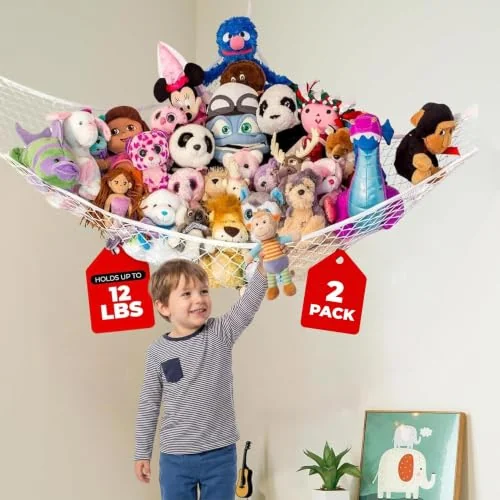
- Corner net: holds roughly a dozen medium animals per net, but only on hooks rated for that weight and set into studs or proper anchors.
- Bin or chest: the quickest way to give the pile an edge; fabric folds flat for renters, wood holds far more but needs a permanent spot.
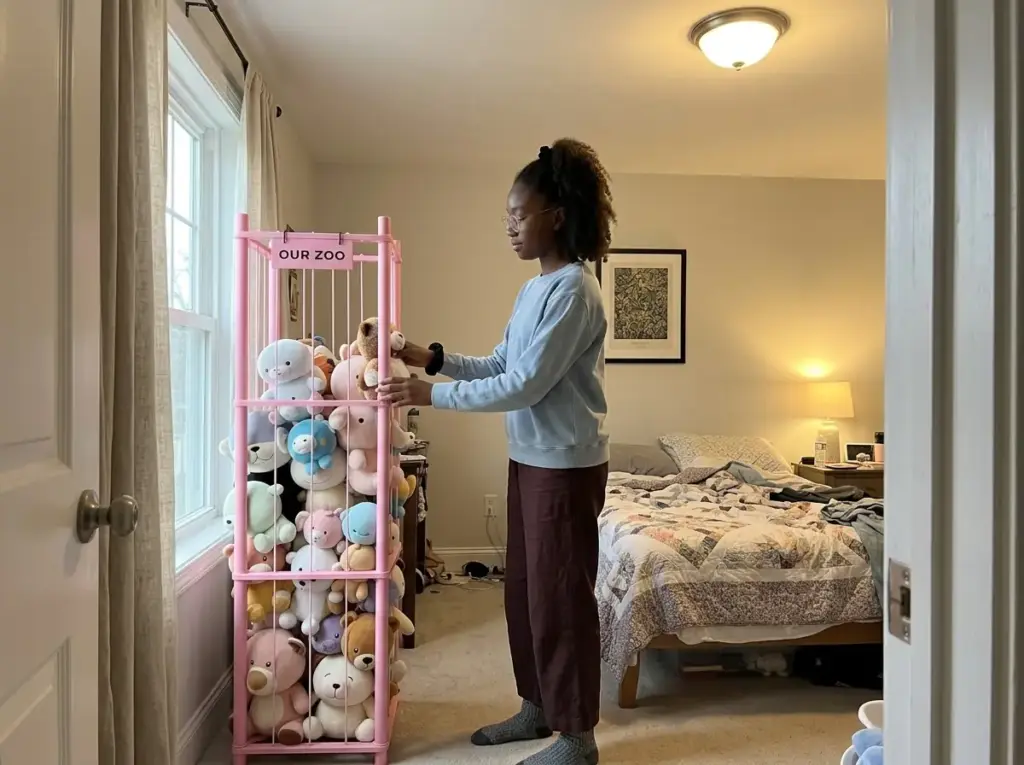
- Open stuffy zoo: 40 or more animals on a 16-inch square of floor with no tools, as long as it is anchored or out of a climber’s reach.
- Bean bag cover: turns the pile into a seat, but a full one stays wherever it lands.
- Over-door organizer: no drilling and no floor space, for the small animals only, capped near 5 pounds.
- Display shelf: for the favorites, with a dusting routine; everything else goes into one lidded container.
Why Stuffed Animal Storage Ideas Fail Within a Month
Every popular fix has one specific way of going wrong, and it is almost never the way the product page implies. Knowing the mechanism ahead of time lets you choose the weakness you can tolerate: a net that needs real hardware, a bin that needs dry contents, a cover that needs a permanent corner.
The net that sags and the hooks that bend
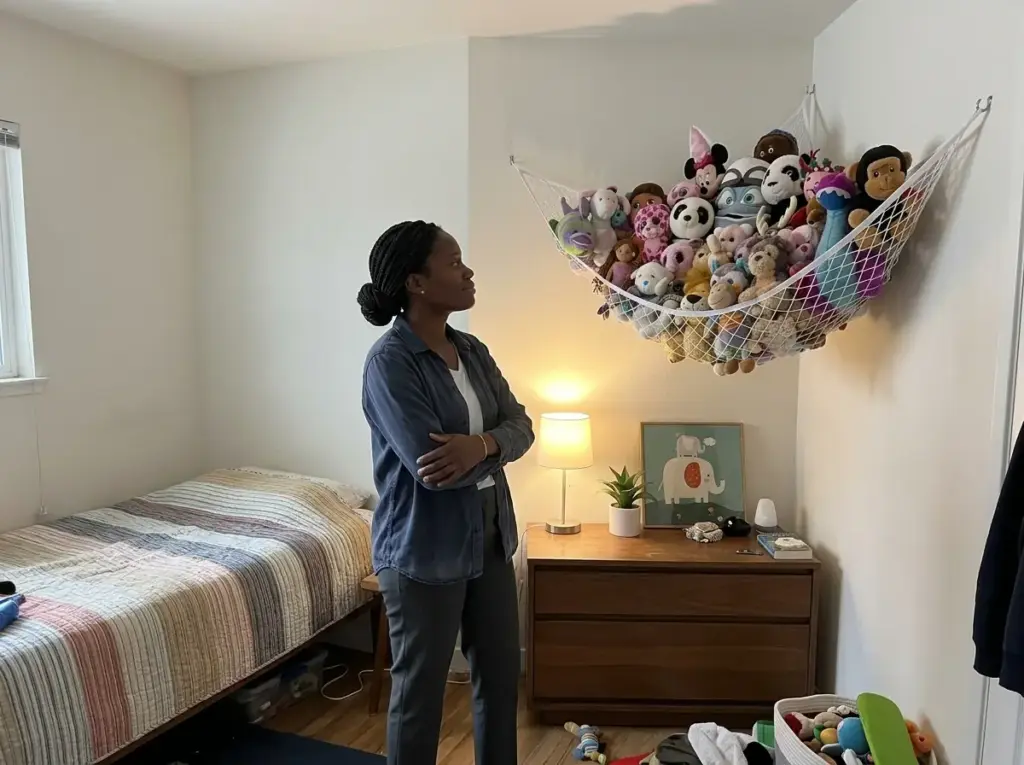
A corner net looks like the smart move because it uses space nothing else wants. But as it fills, the animals settle into the sag at the bottom, and the ones down there are the ones nobody reaches. The net turns into a one-way bin: stuffies go in, almost none come out, and rotation falls to whichever adult remembers to do it.
The hardware is the weak link, and it fails before the net does. The hooks in the box bend under a full load or one good tug, and the plastic anchors lose their grip in drywall faster than anyone expects. Hang the net low and a child climbs into it, which puts the whole weight on screws that were never going to hold a person. Most of the damage happens in the wall, not in the netting.
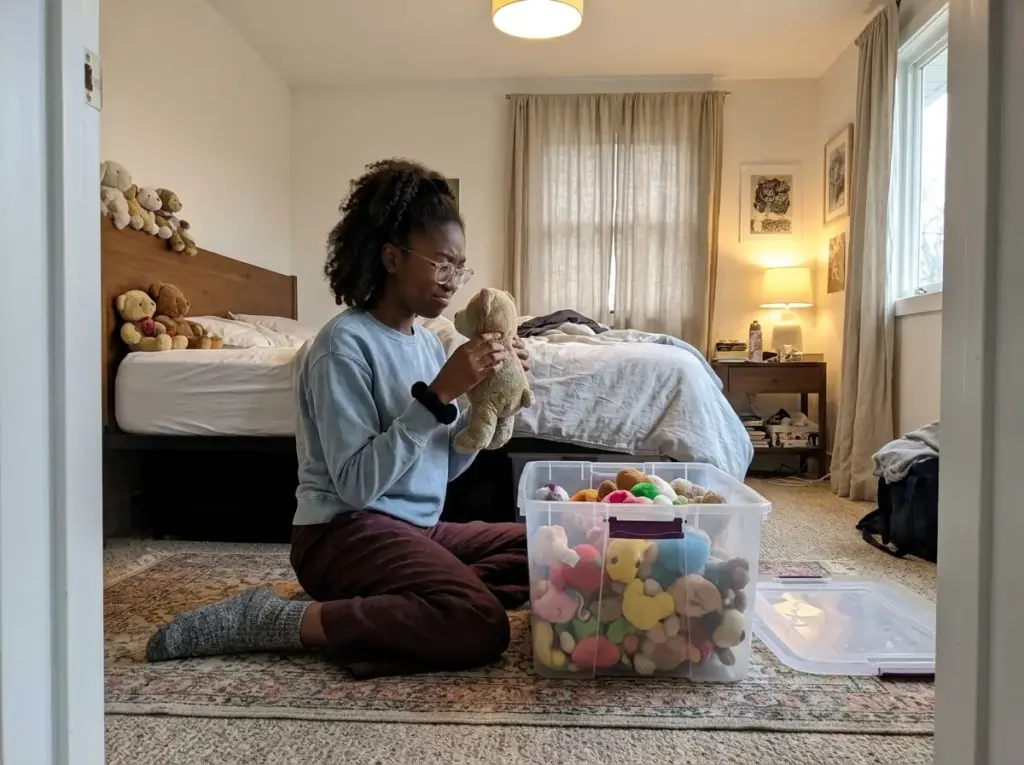
The sealed bin that turns musty
A lidded, airtight bin sounds like the tidy answer, and for animals nobody asks for it is exactly right, but only if everything goes in bone dry. Picture a plush that came out of the wash slightly damp in the seams, or one that sat through a humid week on a bed. Seal it in and the bin holds that moisture against the stuffing, and dust mites do well above roughly 50 percent humidity. According to Nationwide Children’s Hospital’s dust mite guidance, “If you have stuffed animals, make sure to hot wash them regularly.”
A musty plush is usually a damp one, not a dirty one, and damp stuffing left sealed long enough can grow mold. The bin did not cause the smell; the lid just kept it in.
The bean bag you cannot move and the pile nobody sorts
A bean bag cover swallows an enormous number of animals, and that is the trouble. A full cover is heavy enough that nobody drags it across a room, so it becomes furniture that stays wherever it landed the first day. In a bedroom you reorganize twice a year, that is a problem you notice the first time you try to vacuum. A playroom with floor to spare can absorb it; a small bedroom cannot.
The floor pile fails in a quieter way. It mostly works because nothing is sorted and nothing has a limit, and a pile with no limit has no reason to let anything leave. Every container below fixes that only if it also gives the pile an edge.
Count the Pile Before You Pick a Container
Most people buy a container for the pile they picture, and it turns out to hold half the pile they have. Numbers settle it: how many animals, how heavy, how big. Ten minutes on the bed with a laundry basket beats an afternoon of browsing.

Weigh a sample, then count
Grab ten animals at random, put them on a bathroom scale (stand on it holding the bundle, then subtract your own weight), and divide by ten. That average is the number every hanging idea in this guide has to be checked against.
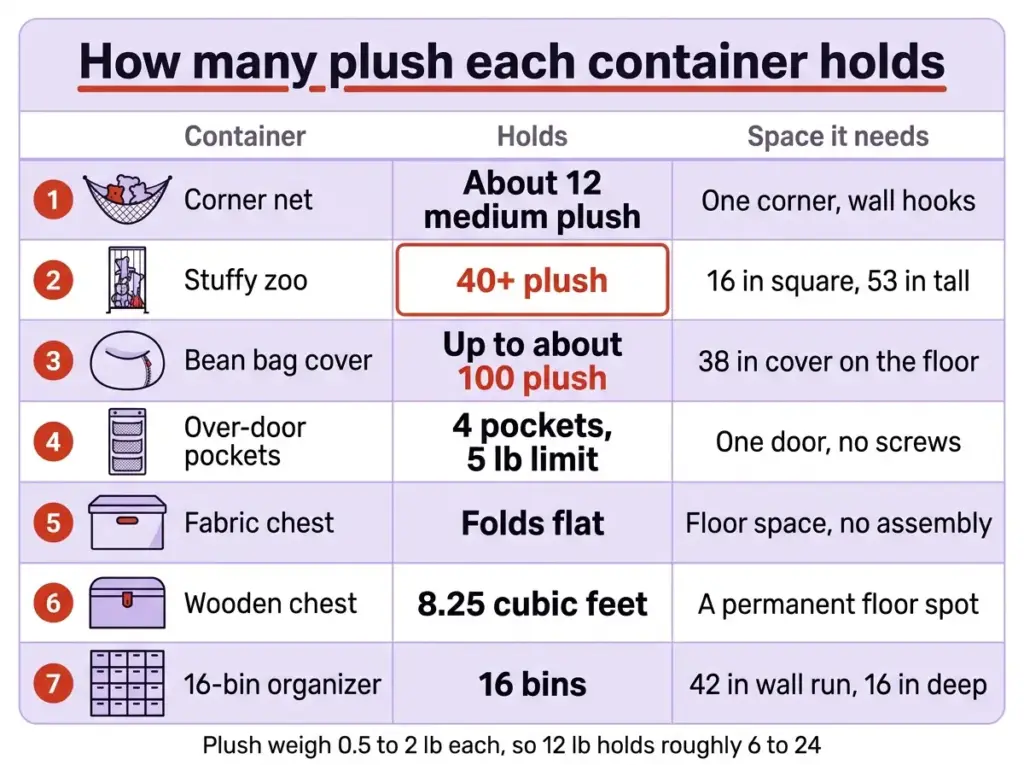
Most plush weigh somewhere between half a pound and two pounds each, so a net rated for 12 pounds holds roughly 6 to 24 animals, depending on size. A net rated for 25 pounds holds about double that, which sounds generous until you remember the hooks have to carry it.
Count the whole pile next. Use the biggest laundry basket in the house as the “everything” test, and a second, smaller basket as the “keep” test. Whatever does not fit in the second basket is the real decision, and it has nothing to do with which container you buy.
Weigh the full keep basket the same way you weighed the sample. If it comes out near the rating of the net you had in mind, the net is already at its limit before the first birthday gift arrives.
Sort by size before you sort by anything else
Split the pile into three groups: jumbo, medium and palm-sized. The jumbo plush decide the container, because they do not fit net corners, door pockets or most bins, and they belong on a bed, in a chest or on a bean bag. The small plush, the palm-sized ones, are what open shelves and over-door pockets are actually for. It is the same logic as when you sort by size first with outgrown clothes: the biggest category sets the system and the small ones fill the gaps.
And if one jumbo bear takes the space of twelve small animals, that bear is a separate decision. It is allowed to be the one that goes on the bed.
How big a keep pile can actually get
A one-in-one-out rule works only when the keep pile has a physical edge, which means a container that is full. “We will try to keep it down” is an intention, and the pile ignores intentions. A full chest is a rule anyone in the house can see: something new comes in, something leaves.
Toy rotation takes the pressure off the edge. A small display set stays out where it can be loved, the rest goes into one container, and you swap them on a schedule that fits the household, after birthdays, at the change of season or whenever a favorite goes missing from the display.
The Corner Net Works Until the Hardware Decides Otherwise
The cheap net in the listing is rated for a dozen animals, and the hooks in the box are rated for a handful. You find out which number matters at the moment the screws pull. What a net needs from the wall, and who can safely give it that, is a different question from whether the net is any good.
What the hooks and anchors have to carry
Standard adhesive hooks hold roughly 2 to 4 pounds. Anything over about 10 pounds needs wall anchors or screws driven into studs, and a net that is full of medium animals passes the adhesive limit at around a dozen toys. The net can hold 12 pounds all day; the question is what is holding the net.
So a rating on the netting is the wrong number to shop by. Look at the rating of what touches the wall. A stud is the sound option, a rated drywall anchor is the fallback, and the little plastic anchors that come bagged with a cheap net are the part to replace with something better before the first animal goes in.
Hang the empty net first and load it in small batches over a week, checking the anchors for any movement after each batch. A bad anchor shows itself at four pounds, not at twelve.
Where a net should and should not hang
Hang it where you can reach it without a stool and never over a bed or a walkway. Too low and a child climbs in; too high and the animals might as well be in the attic, because nobody gets them down. The usual advice says to tuck it into the highest corner to keep it out of reach, but a net that needs a stool is a net that only gets used on cleaning day, so the better call is a height an adult reaches standing flat-footed and a climber cannot step into from furniture.
Nets collect household dust too, and the animals in them are the ones that never get touched. A basket on the top of the closet or a deep shelf holds the same animals for nothing, so try that first. It carries the same weight problem, though: the wardrobe top takes a small group, and the collection grows past it.
The no-drill options for a lease or an HOA
If the lease or the HOA says no holes, the net is out and the strategy changes. The over-door pockets in the section on doors and furniture below need no screws at all. A freestanding zoo on wheels can be pushed to the wall instead of fixed to it, the top of a wardrobe takes a small group, and removable wall hooks, the Command strips kind, work if you keep an honest weight budget: a handful of light animals, never a full net.
A tension rod across a closet or an alcove with plastic shower rings on it also holds a short row of the lightest animals, clipped on and off in seconds, and a pair of bungee cords hooked across the same alcove does a rougher version of the job. The weight limits for each hanging method are worth checking before you trust any of these with a full load.
Floor space is the other constraint that decides this. If the room is a small space with no spare wall, more kids’ room toy storage that fits a small floor covers what to do when the net and the zoo are both too much.
Bins, Chests and the Rule That Keeps Them From Overflowing
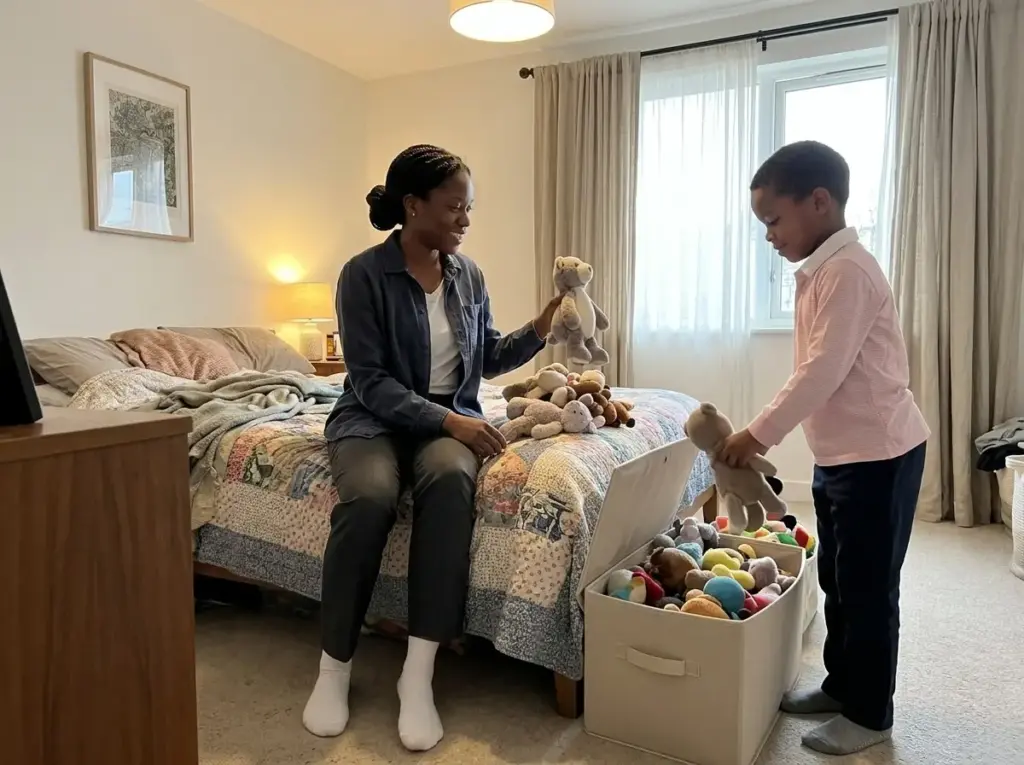
The classic toy chest becomes a bottomless hole: the lid is closed, the pile is invisible, and it just keeps filling. A container only helps if it makes the pile countable and gives it an edge, so the choice between fabric, wood and bins is really a choice about how much of that you want.
Fabric, wood or bins: what each one does to the pile
A fabric chest folds flat when empty and moves from room to room, and it is the budget pick of the three. The 3 Sprouts Large Toy Chest measures 24 x 15 x 14.5 inches, needs no assembly and suits a rental. The lid is soft, so it bends and loses its shape over time and will not survive being sat on.
A wooden chest costs more and lasts longer. The Melissa and Doug Wooden Toy Chest is solid wood with a safety-hinged lid, 8.25 cubic feet inside, roughly the volume of eight laundry baskets, and it is weight-tested to 81 pounds. It also needs a spot to stay. Check that the lid seats flat when the box comes out of its packaging, because some do not close properly and a lid that will not close defeats the point.
Bins sit between the two on cost, and they do the one thing a chest cannot: they make the pile countable, one bin, one kind of animal.
One in, one out only works if the container has an edge
State the rule out loud as a household rule, not a vague intention: when the container is full, something leaves before anything new goes in. A chest is a good edge because everyone can see it is full. A pile on the floor has no edge to point at.
The number everybody quotes for a bin system is the bin count, and that number depends on the pile. Sixteen bins sounds like plenty, but if the jumbo animals outnumber the palm-sized ones, the four large bins fill in a weekend and the other twelve are mostly air. Count by size, as in the section above, before you decide how many bins you need.
The Humble Crew Kids Toy Organizer with 16 Bins is 42 x 16 x 31 inches with 12 standard and 4 large removable bins, rated for 20 pounds per tier, and it needs a 42-inch wall run and 16 inches of depth. The wall-anchor kit in the box is not optional once a child can climb it: furniture tip-overs injure children, and the CPSC’s Anchor It! campaign exists to push exactly that prevention. For a wall run that fits, how wall width decides which storage fits walks through the measuring.
Open bins for a child, lidded for the rest
Open bins are for the five animals a child reaches for every day, at a height where they can reach in without help. Lidded containers are for the animals nobody asks for, the ones that stay in rotation. A lid on the daily favorites guarantees they end up on the floor again, and an open bin for the long-term overflow just collects dust.
The Stuffy Zoo for Piles You Want to See
The pile everyone says “mostly works” gets a shape here. In a stuffed animal zoo the animals are visible, nobody has to dig, and a child can put one back without asking. The tradeoff is a frame that is light and tall.
What a stuffy zoo holds and what it needs
A freestanding frame about 16 inches square and 53 inches tall takes the floor footprint of a small stool and uses the height a dresser would. One holds 40 or more animals with no bin to dig through, and it is the clearest example of an idea that earns its floor space by holding a single visible layer of the pile. It does not hold the jumbo animals, which belong on a bed or in a chest.
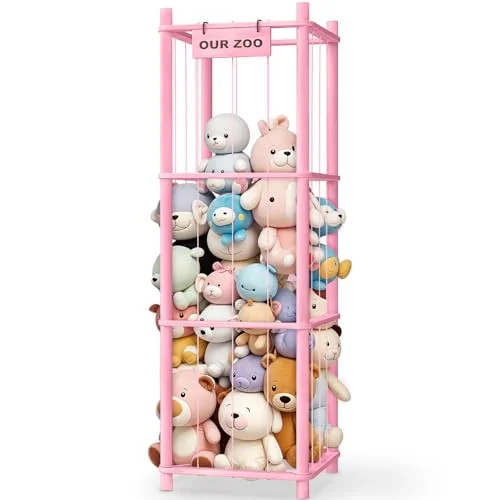
If the frame is the right idea but the budget says otherwise, a three-tier version on locking wheels does the same job for less, and it can be rolled out of the way to vacuum. A child will roll it too, so lock the wheels once it is parked.
The tip-over catch and the wheels
The catch is physical: a tall, light frame full of animals sits with its weight high up. The same anchoring logic as the bin organizer applies. A strap to the wall is ideal, and where drilling is off the table the next best move is placing it in a corner, back against the wall, so a climber cannot get leverage from the open side.
Load the lowest sections first and keep the heaviest animals down there. Weight stacked in the top rows is what lets a light frame start to rock.
Wheels solve a different problem than they create. They make the frame easy to move for cleaning, and they make it easy to shove. In a house with a toddler who treats furniture like a push toy, the fixed version is the safer one. For the room itself, kids bedroom organization that survives week three covers where a frame like this fits among the bed, the closet and the floor.
Furniture, Doors and Beds That Double as Storage
The room is full, the floor is not available, and the only unused surfaces are the back of the door and the space under the bed. Furniture that stores animals without adding another object to the room is the quietest answer, with its own set of weak points.
A bean bag cover swallows the pile and then won’t move
The obvious pick for a big pile is a bean bag cover, and it works for a corner that stays put. The WEKAPO Stuffed Animal Storage Bean Bag Chair Cover is 38 inches across, cotton canvas with a 17-inch YKK zipper, and rated for up to about 100 plush. The count is the number to be careful with: a hundred medium animals weigh somewhere between 50 and 100 pounds, so a full cover is heavy and stops being movable.
In a room that gets reorganized, the second choice wins. A cart or a bench moves when you do; the bean bag does not.
The back of the door and the rolling cart
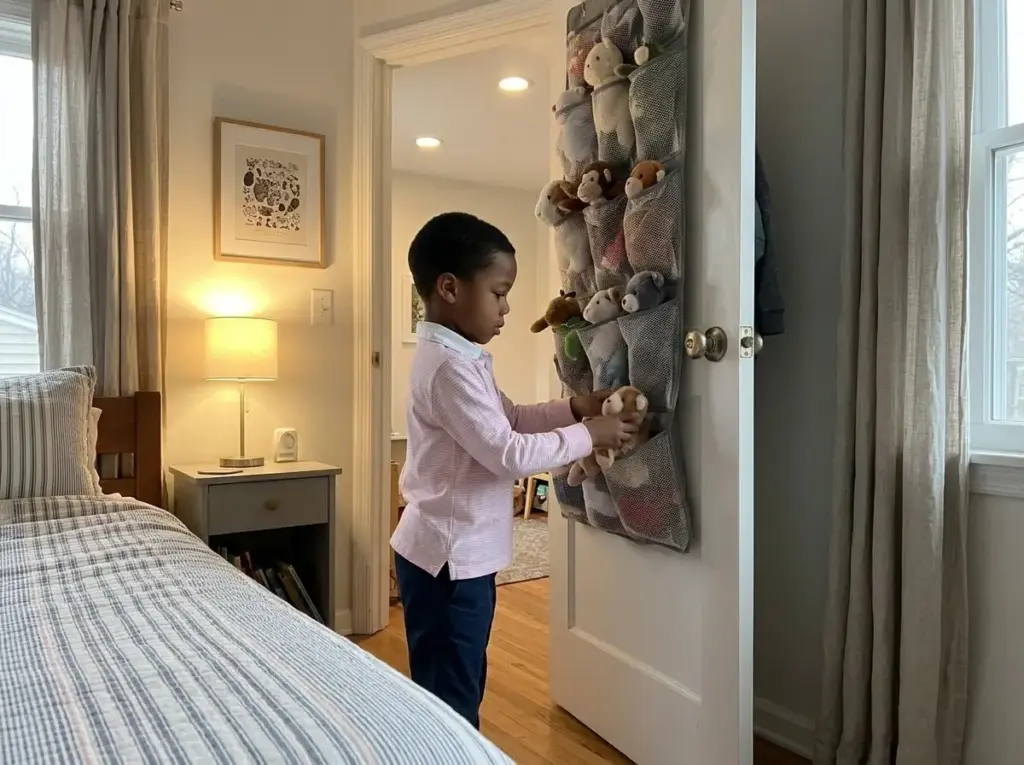
An over-door organizer is the renter’s route because it needs no screws, and a shoe organizer already hanging in the hall closet makes the cheapest test of the idea. The Honeyera The Original Stuffed Animal Storage is 65.7 x 23 inches with four mesh pockets and a 5-pound rating, so it holds the palm-sized animals and not the plush bear. The hooks slide off the door if you overfill it, which is why the small ones go in the pockets and the rest stay elsewhere.
A rolling cart carries the overflow between rooms. The Simple Houseware 3 Tier Heavy Duty Rolling Utility Cart is 17 x 12.5 x 31.5 inches with three baskets and locking casters. It is smaller than it looks in photos, and the wheel mounts can break under weight, so treat it as a carrier for a rotation set rather than a permanent home for a hundred animals.
Under the bed and in the closet
Under bed storage with vacuum space bags saves a great deal of room, but they flatten the stuffing and the animals do not always spring back, so release the seal every six months when you swap the display set. A low rolling bin keeps them dry and reachable, and a bottom dresser drawer given over to the rotation set costs nothing and keeps it out of sight. The trouble with most under-bed setups is clearance, covered in why kids’ under-bed storage gets messy within a week.
A storage ottoman or storage bench in a shared room takes a few and keeps the living room from filling with them. The best of them are furniture that holds more than it looks like it can, and the inside of an ottoman is a natural home for the long-term rotation set.
When the Collection Is Not a Toddler’s
The teenager who still has every animal she was ever given and the adult who never gave theirs up are asking a different question. It is not “where do they go” but “which ones deserve a shelf.” That changes the whole approach, because storage hides things and display shows them, and a collection someone cares about needs both.
Display shelves, cubes and the dust that comes with them
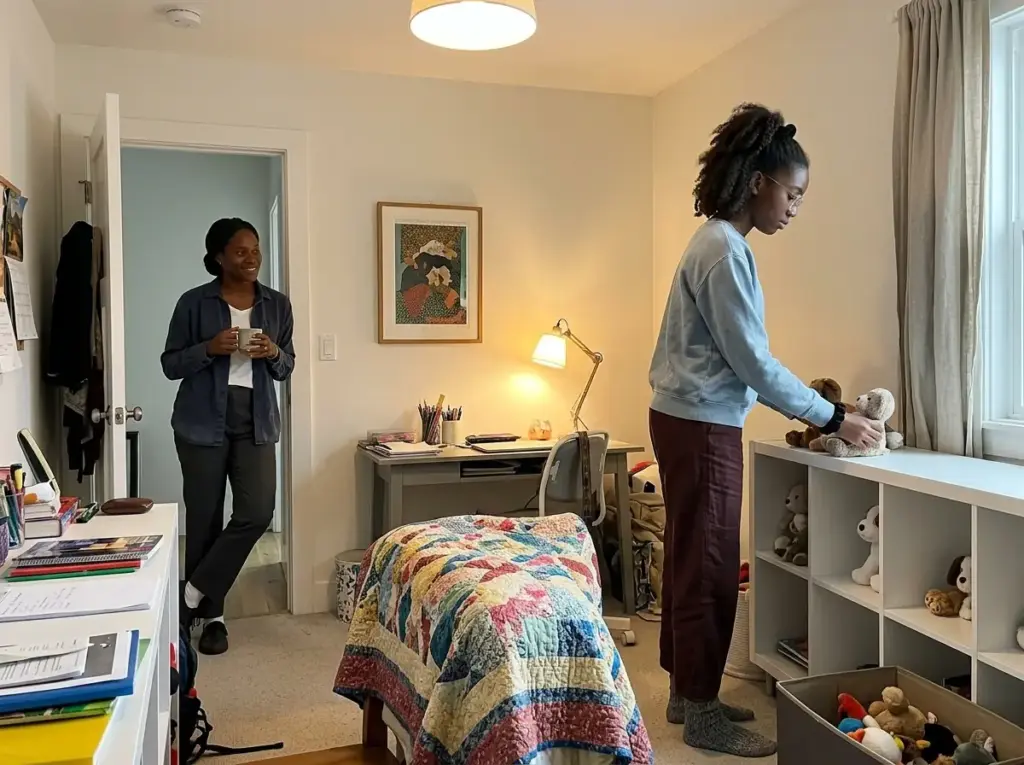
Collections in a teen room or an adult’s room can run to hundreds. A large one tends to spread onto clear shelves around the top of the walls, with a net in one corner and short totes under the bed holding the rest. Wire cube storage is the cheap route to display, and cardboard display boxes do not hold up.
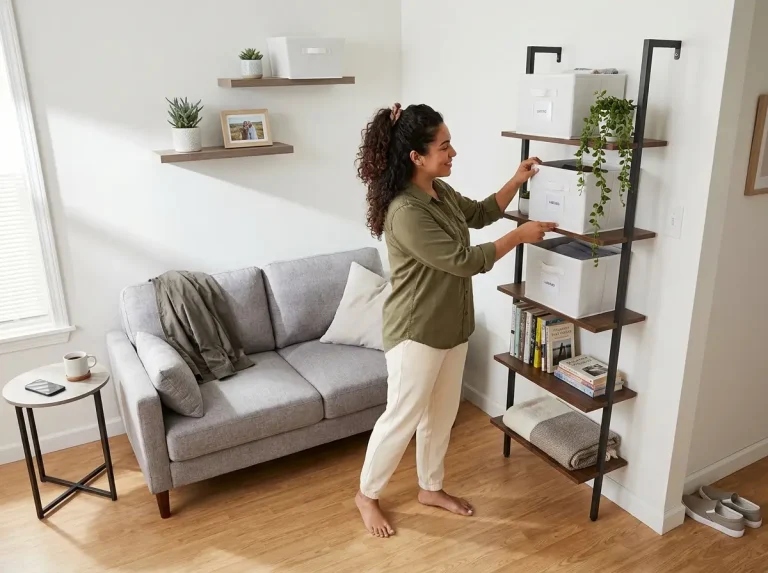
Open display collects dust and fades in direct sun. Keep the shelf out of the window light and run a lint roller or a soft brush over the animals once a month. For wall-mounted display, floating shelves and their real weight limits covers what a bracket will actually carry, and plush are lighter than books but not weightless.
Let the shelf be the edge. If it holds eight, then eight is the display set, and a ninth favorite means one swaps back into the lidded container.
How to thin a collection you actually care about
To declutter toys without a fight, go through the pile in three passes: favorites first, then duplicates, then the ones with no story. Duplicates are the natural candidates to donate stuffed animals from, and sentimental items such as the first bear or a grandparent’s gift go into the keep pile before anything else. The favorites pass is the easy one; the duplicates pass takes a minute of judgment; the third pass is the one where people stall, so move on and come back to it.
A child’s collection thins by letting the child pick, not by clearing it out quietly. The animals are not clutter to them, and a pile that disappears teaches the wrong lesson about what gets kept. An adult collection thins the same way: the display shelf says what is most loved, and the rest goes into the lidded container until a reason comes up to bring one out. When two siblings share the room, two collections in one room shows how a split works.
Washing and drying before anything goes into storage
Care applies to every pile, from the toddler’s to the collector’s. Dust mites die at 130 degrees F, so wash stuffed animals hot where the care label allows, and freeze the ones that cannot be washed for 24 hours. Then dry them completely, all the way into the seams, before anything goes into a bin. A sealed lid over damp stuffing is where the musty smell in the first section starts.
Skip the shortcut of stuffing a fresh-from-the-dryer animal straight into storage. Let it sit open for a few hours first and check the heaviest spots by hand.
Give the Pile an Edge, Then Check the Bottom Layer
The pile has a weight and a count before it has a container, so weigh a sample and count the keepers first. For anything hanging, the hardware decides the outcome, not the net. Give the pile a physical edge, a full chest or a shelf of eight, so something has to leave when something arrives. Display what you love, and store the rest dry.
To see whether it held, look at the bottom of the net or the back of the container after the next birthday or holiday round of new animals. If the ones at the bottom were never touched, the system has become a bin, and it is time to swap the display set.
Today, grab the laundry basket and fill it with the animals you could not part with. Notice which ones refuse to fit, and let that tell you which container you actually need.
Frequently Asked Questions
01How do I store stuffed animals in a small room without drilling?
Use an over-door pocket organizer, a freestanding stuffy zoo, a storage ottoman or a basket on top of the wardrobe. All need no holes. Adhesive hooks hold only 2 to 4 pounds, so keep them for a few light animals.
02How many stuffed animals does a hammock or corner net actually hold?
Most plush weigh half a pound to two pounds, so a net rated for 12 pounds holds roughly 6 to 24 animals. A 25-pound net holds about double. Check the hooks too, since they usually fail first.
03Is it safe to store stuffed animals in vacuum bags?
Vacuum bags save space under a bed, but they flatten stuffing and can break hard parts, so they suit only fully dry, durable plush. Release the seal every six months to let the animals recover.
04How do I clean stuffed animals before storing them?
Wash them hot, around 130 degrees F, where the care label allows, the temperature at which dust mites die. Freeze unwashable ones for 24 hours, then dry everything completely before it goes into any bin.
05What are good stuffed animal storage ideas for teens and adults?
Display the favorites on wire cube shelves or wall shelves, kept out of direct sun and dusted monthly. Keep the rest in one lidded container. The shelf sets the limit on how many stay out.
Disclaimer: ClutterlessNest is a participant in the Amazon Services LLC Associates Program. As an Amazon Associate we earn from qualifying purchases. This article may contain affiliate links — if you buy through them, we may earn a small commission at no extra cost to you. We only recommend products we have tested or genuinely believe in.