
You reach under the kitchen sink for the glass cleaner and pull out a bottle with a finger’s worth left, then find a second one of the same cleaner behind the washer and a third in the bathroom cabinet. A caddy and a few bins will not stop that, because nothing decided where each kind of supply lives before the containers showed up. The EPA and the CPSC set the safety rules that any cleaning supply organization has to respect, and cleaning supplies storage is where they apply (original containers, out of reach of children and pets), and the layout below is built around them. What follows works in a house with a utility closet and in an apartment with none: where the kits go, how to split the weekly kit from the reserve, how to label it, and how to keep it alive past the first tidy month.
Quick Answer
The order that works for any home, closet or no closet:
- Pull everything out and sort it by job, not by where it sat.
- Pick the zones first: one kit per floor or use area.
- Split each zone into a small weekly kit and a separate backstock store.
- Label the bin, not the bottle.
- Set a ten-minute weekly check so the loop keeps running.
Cleaning Supply Organization Fails Before the Bins Arrive
Picture a first multi-floor home with four levels and three candidate spaces for the chemicals: a coat closet, a pantry, an upstairs linen closet. The boxes are half unpacked, bottles are scattered across every floor, and any choice is a guess about where the cleaning will actually happen. That guess is where most systems go wrong, long before the first bin gets bought.

Why the Same Cleaner Gets Bought Three Times
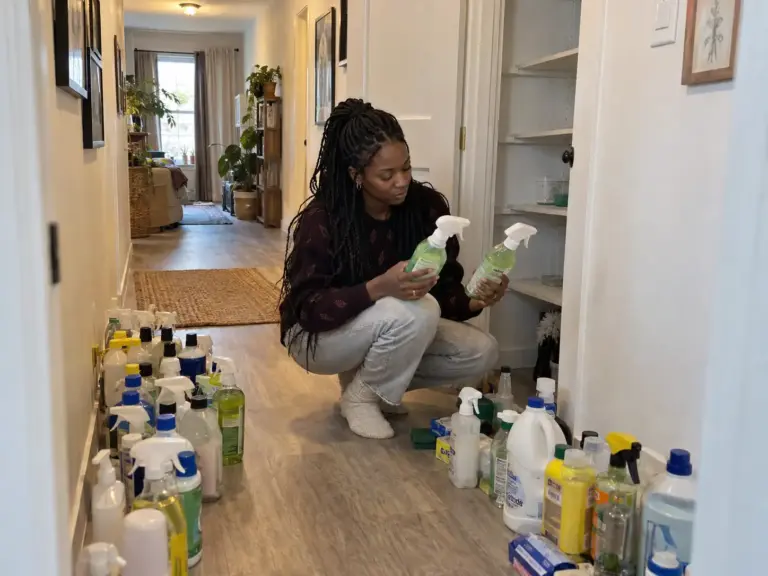
Supplies end up split across a house whatever the plan says: a bathroom cabinet, the laundry area, the space under the kitchen sink, a garage shelf. Nobody remembers which of those spots owns the spare bottle, so the glass cleaner gets bought again at the exact moment the others cannot be found. Three half-used bottles on three floors is the usual result, and each one was a reasonable purchase.
The loop is easy to see once it has a name. A cleaner runs out, the replacement is not where the reader expects it, and the store aisle has no memory of what the cabinet at home holds. With no agreed place for the reserve, buying again is the only fix on offer.
One Pile Doing Two Jobs
The mechanism is quieter than the rebuying. One shelf is being asked to hold what gets used this week and what is kept in reserve, and those two jobs fight each other. The reserve bottles bury the weekly ones, the weekly ones get shoved forward to stay reachable, and the shelf reads as full while the one product needed is missing.
Depth makes it worse. The back of a deep shelf disappears, and whatever sits behind the front row is forgotten until it expires, the same way shelf piles that keep falling over swallow whatever got stacked last at the rear of a closet shelf. Two jobs need two places: an active kit that is small and within reach, and a backstock store that lives somewhere else. Everything below follows from that split.
Bins Bought Before the Space Is Lived In
A set of bins bought on day one rests on an assumption about where the cleaning happens. When the assumption is wrong, the bins sit in the wrong room and the old habit comes straight back. A week of paying attention costs nothing: note where each job really starts (the shower, the counter, the entryway floor) and place the kits there.
The pantry deserves a warning of its own. It becomes the default shelf for chemicals in many homes simply because it is empty, and it is the one place cleaners should not go. The safety reason is spelled out in the zone section further down.
Pull Every Bottle Out and Sort by Job
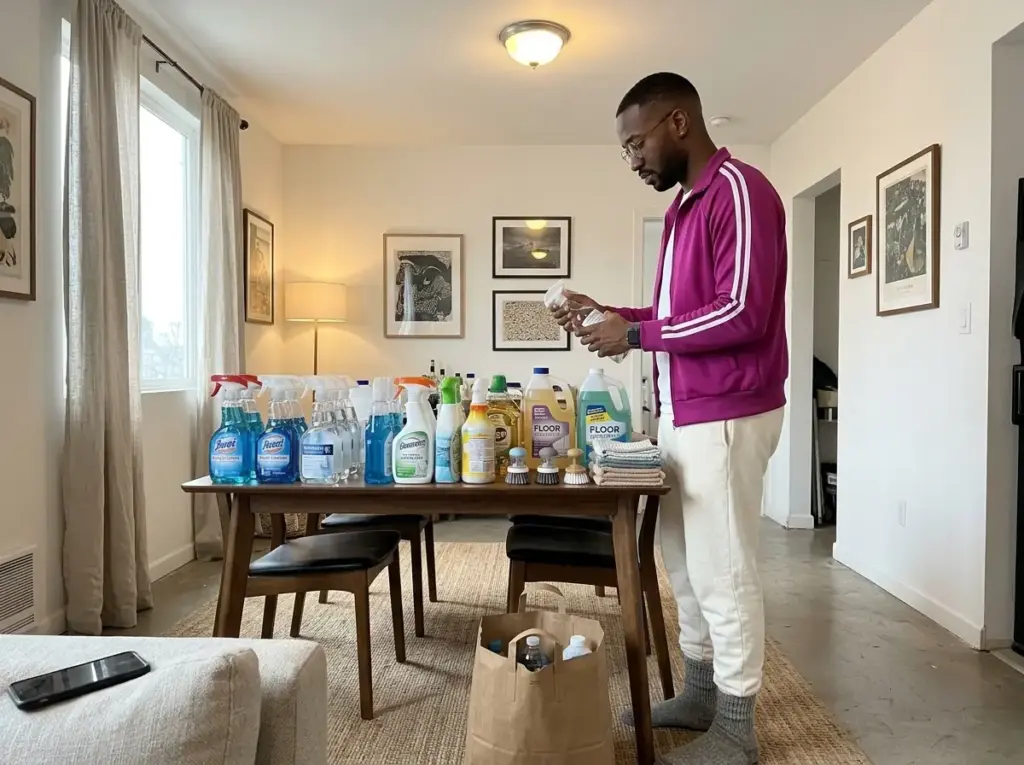
This is the declutter step of the system. Every cleaner in the home goes onto one table or one patch of floor, from every floor and every room. It is the first moment anyone sees how many of the same thing they own, and it should happen before a single container is chosen. A cabinet that is only half sorted gets re-stuffed by the same logic that filled it.
Group by What It Cleans, Not Where It Sat
Sort by job: glass, bathroom, kitchen surfaces, floors, laundry, and a last group for tools and cloths. A group by job makes the duplicates visible at once, and it also shows which zone each group belongs to, a question the next stretch of the article answers. Where a bottle was found tells you nothing, because bottles migrate. For a longer walk through the sorting itself, there are six ways to sort by job and stop rebuying.
Duplicates, Mystery Bottles and Expired Products Go First
The purge has an order. Unlabeled or mystery bottles leave first, since nobody can use a product without knowing what it is. Duplicates come next, keeping the fullest bottle of each. Then go the expired or separated products, and last the half-empty bottles of cleaners nobody likes using.
Nothing needs buying in this step, and a budget version of the whole system starts right here, with what is left on the table. What is left after the purge is the real inventory, and it splits cleanly into the weekly kit and the backstock described below.
Every Cleaner Stays in Its Original Container
The temptation, once everything is on the table, is a matching set of tidy bottles. Resist it.
The label is the emergency instruction sheet, and a repurposed juice bottle reads as a drink to a small child. According to the EPA’s rule for keeping cleaners in their original containers, “It is very dangerous to put products in food and beverage containers.” Looks are not worth that risk. Keeping chemicals away from food starts with the container they came in.
Sort with a paper grocery bag standing on the floor beside the table. Anything unlabeled, expired or duplicated goes straight into it, so the pile on the table only ever shrinks and nothing gets a second look.
One Kit Per Floor Beats One Big Closet
The shower cleaner lives in the kitchen, so the third trip upstairs of the week starts with the wrong bottle in hand. The rule that people actually follow is where you use it: a small kit on each floor or in each wet room (each one a cleaning zone of its own), plus one separate backstock store, instead of every supply in a single place. In a house with two or four levels this removes the stairs. In an apartment it removes the walk to the other end.
Decide the Zones Before the Containers
The zone map is short. Kitchen cleaners live in the kitchen, every bathroom keeps its own kit, the laundry room holds its own supplies, and bulky or outdoor items go to the garage. A large home gains the most from this, because the distances are longer; a small space gains it too, in steps instead of stairs. It works because it copies the route the reader’s hands already take.
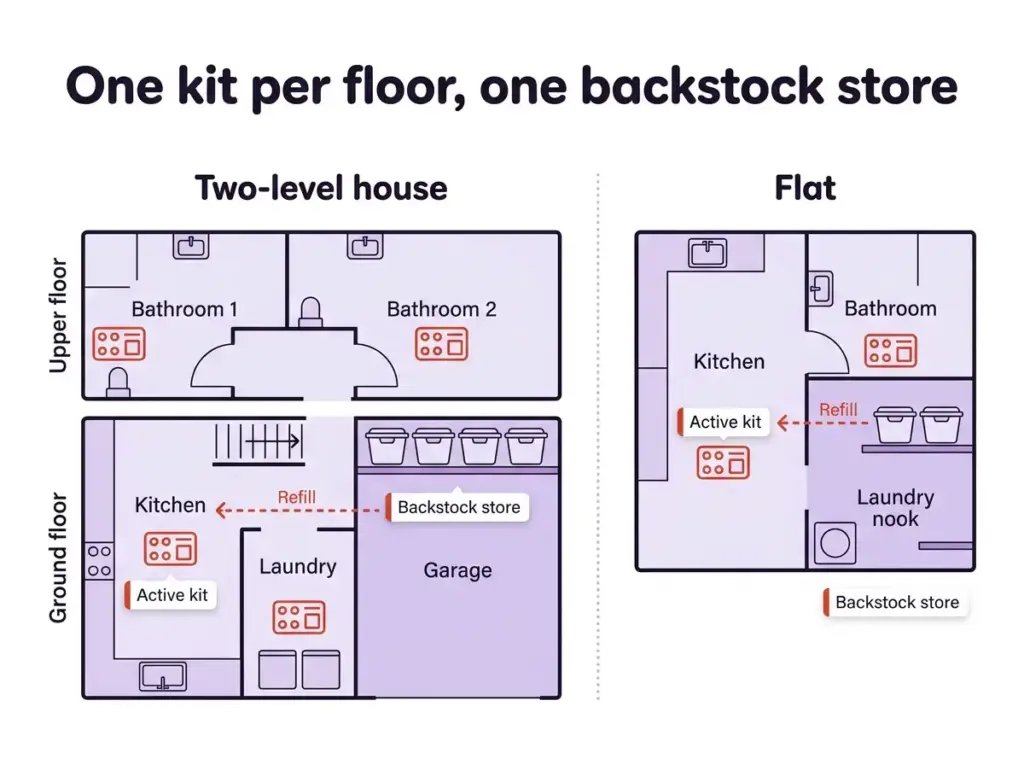
Advice to give the supplies one closet holds up when a deep utility closet sits in the middle of a small house. It falls apart the moment the home has stairs, or the only closet is at the far end of an apartment, because every clean-up then starts with a walk and the supplies that sit far away get bought again nearby. In that layout the better call is a kit at each point of use, with the closet, if there is one, demoted to backstock.
Keep a sticky note by the sink for a week and make a pencil mark each time a cleaner has to be fetched from another room. The room with the most marks is the one that needs a kit first, and the note settles arguments about where the kits belong.
Kitchen, Bathroom and Laundry Each Keep Their Own
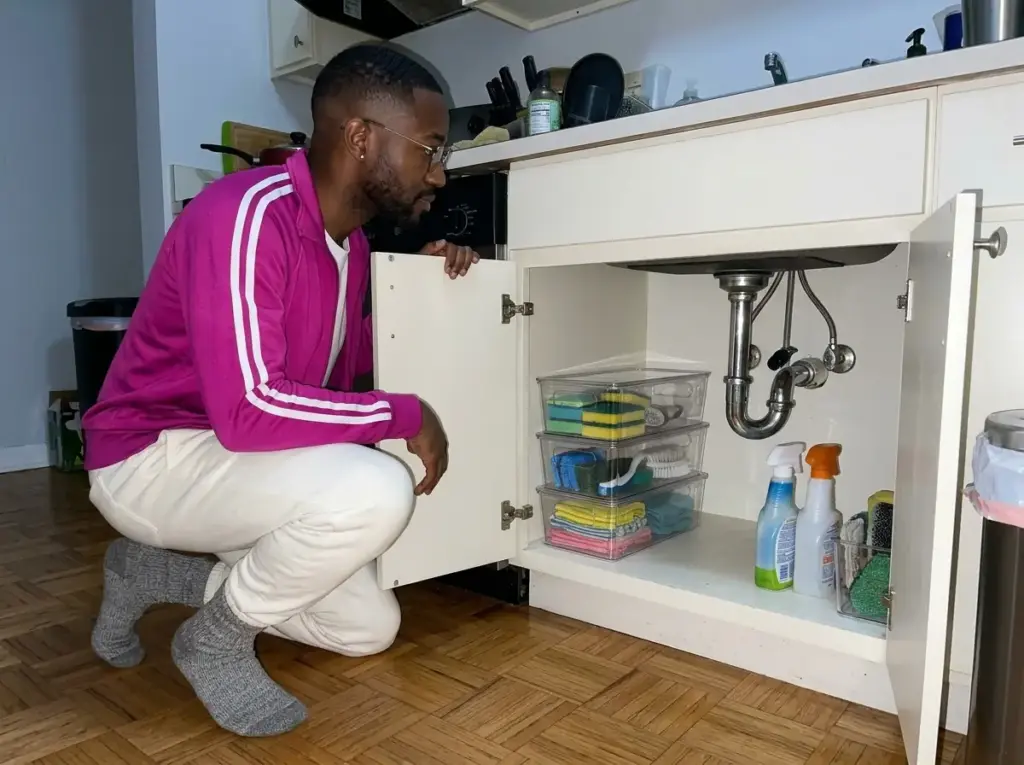
The kitchen kit sits under the kitchen sink, and a kitchen under-sink setup built around the real pipes shows how to fit it around the plumbing. Each bathroom keeps its own kit under its own sink, which stops the glass cleaner from migrating there. The laundry area holds laundry supplies, and in a tiny laundry cupboard the mop bucket can stay put with its interchangeable heads stored inside it.
Under a sink the cabinet is shallow and the P-trap runs through the middle, so what fits is low, lidded and stackable. The Vtopmart 8pcs Clear Stackable Storage Bins with Lids measure 12 x 6 x 3.4 inches, low enough to stack three high without burying the back row, and the 12-inch depth clears a standard shelf. The catch: the lids arrive stuck together and take patience to separate, and a few cabinets turn out too small for them, so measure the usable depth of the opening first, since the pipe and the door frame eat the cabinet depth printed on any listing. Reused clear takeout containers with lids are the free version of the same idea.
Where Cleaners Must Never Go
The pantry is wrong even when it is empty and handy, because a cleaner on a food shelf is a mix-up waiting to happen. The low shelf beside the pet bowls is wrong too. The EPA says not to spray or store cleaning products near pet food or water dishes, and the EPA’s pet guidance leaves no exception for the handiest spot.
Child-resistant caps are a delay, not a lock. What the Poison Prevention Packaging Act actually requires is special packaging that is significantly difficult for children under 5 to open within a reasonable time while staying usable for adults, so the bottle still goes up and away. A child lock on the cabinet door, a magnetic lock for instance, adds a second barrier, and kid-safe and pet-safe placement is a matter of height and distance, not of the label. For which products can share a cabinet at all, there is a separate guide on which cleaners can sit next to each other under a sink.
Garage and Basement: Heat and Bulk
Garage storage and a basement shelf make a fine backstock room and a poor home for anything that dislikes heat or a freeze. Heat and humidity are the price of that cheap spare space, so bulky jugs and tools go out there while the temperamental products stay indoors; a garage shelf also wants some ventilation, so jugs do not sit sealed in trapped heat. The tradeoffs are laid out in laundry-room storage that survives the heat.
The Active Kit: What Rides in the Carry Layer
Cleaning a bathroom should not need a trip to the kitchen for the glass cleaner, another to the hall for a cloth and a third to the laundry for the brush. That is what happens when the kit was never assembled, and it is what the first tier of the system fixes.
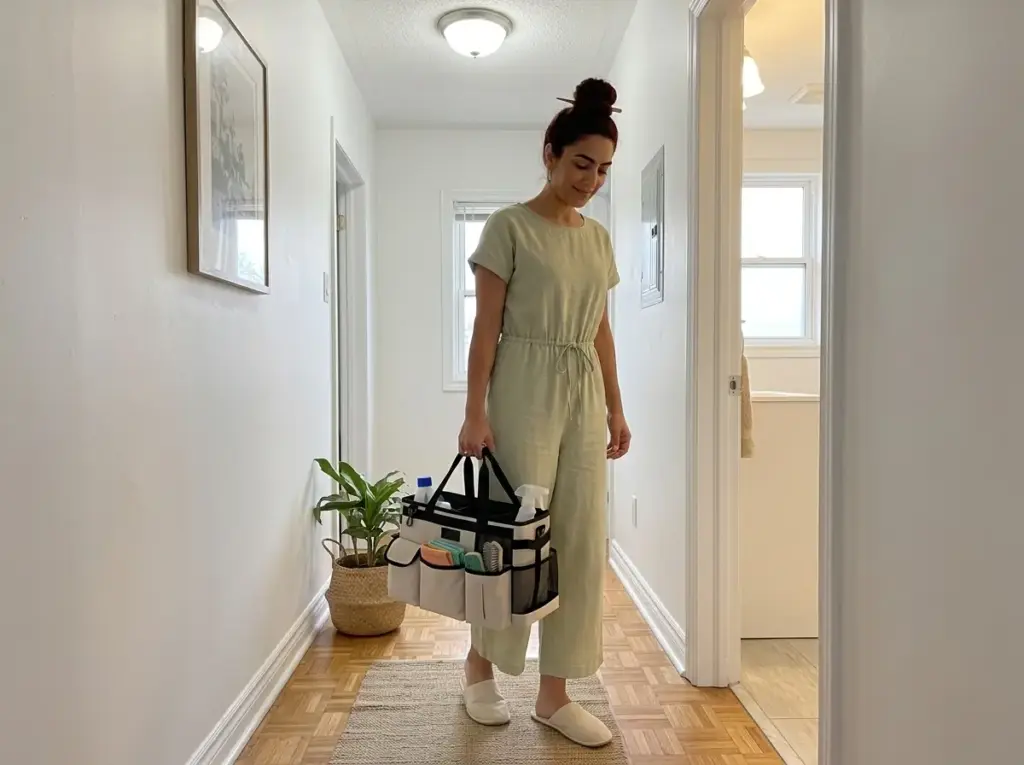
What Goes in the Caddy and What Stays Out
Keep the kit at eye level or at least within easy reach, and let it hold only what this floor uses weekly: one all-purpose cleaner, one glass cleaner with a trigger sprayer, one bathroom cleaner, a scrub brush and two or three cloths. Everything else is backstock. A kit that holds more than a week of use has become a second backstock, and it buries the bottle that was needed.
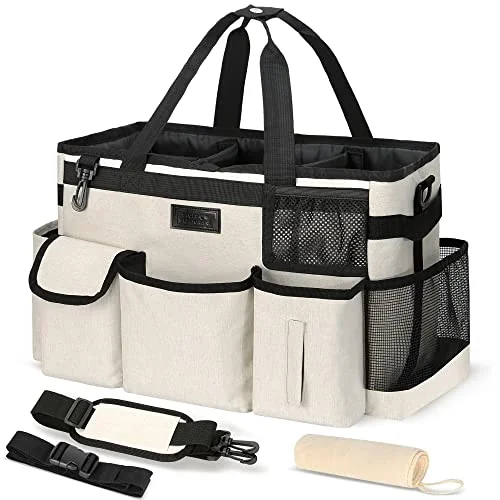
A bucket or a clear stackable bin from the cupboard does the same carrying job at no cost, so the caddy is a convenience, not a requirement.
One Color of Cloth per Zone
Give each zone its own cloth color (bathroom, kitchen, glass, floors) so a bathroom cloth never wipes a kitchen counter; color-coded cloths are the cheapest part of the whole system.
A pack like the MR.SIGA Microfiber Cleaning Cloths comes as twelve microfiber cloths at 12.6 x 12.6 inches, enough for four or five zones with spares. A cloth that size folds to fit a caddy pocket and still covers a counter pass. Some packs run thinner than the listing suggests, so a thin cloth gets folded in two. Cut-up cotton t-shirts do the job for free.
Measure the Shelf Before the Caddy
A typical closet shelf is about 12 inches deep, so anything deeper than about 11 inches hangs off the front. The cleaning closet in a normal home is often a narrow box around 20 inches deep, and the standard closet and shelf depths put the comfortable depth at 24, with 20 as the narrowest that still works. A tape measure settles it faster than a product description.
Cut a piece of cardboard to the shelf’s depth and width and carry it to the store. Any caddy or bin that will not sit flat on the cardboard will not sit on the shelf, whatever the label claims. For a full match of container to space, see which container fits which spot.
Tall Tools and the Vacuum Belong Off the Floor
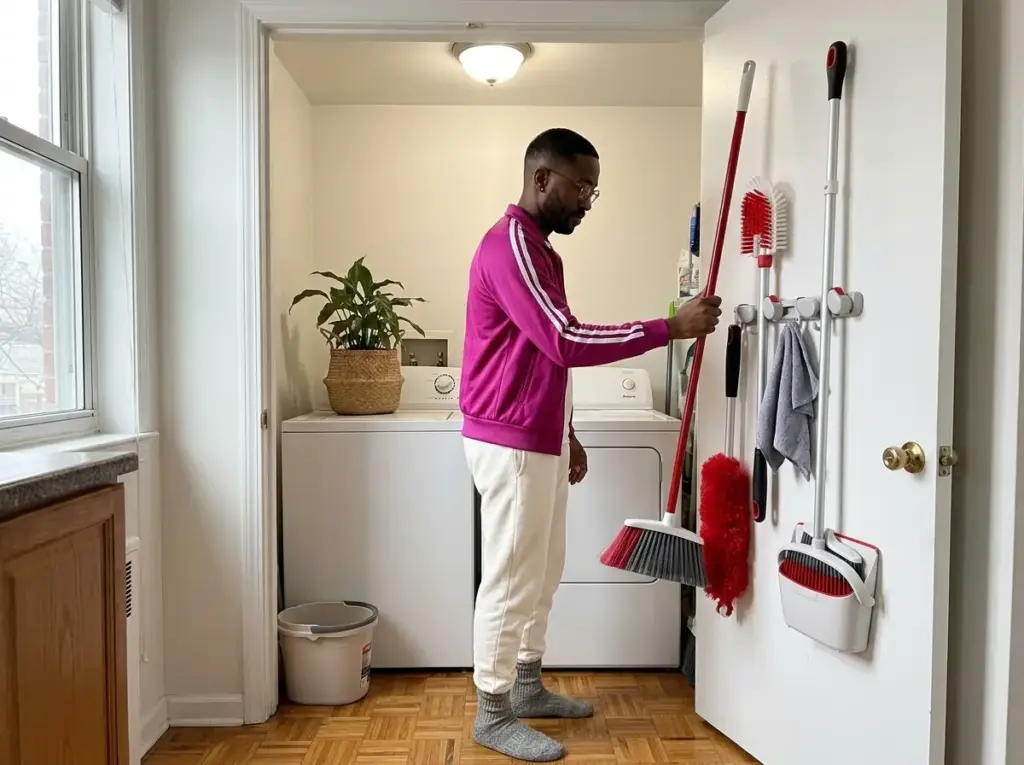
Open the closet and the broom slides out onto a foot, because the handles lean on each other and nothing holds any of them. Tall tools are what overflow every cleaning corner. A broom leaning in a corner eats the floor space the vacuum needs and slides whenever the door opens.
Door Strip, Wall Strip or Corner
A broom and mop holder, a strip with hooks on the back of a door or on a wall, holds the broom, mop, duster and squeegee in a row, off the floor, and a few extra wall hooks beside it take the dustpan and the spray bottle that would otherwise end up on the floor. The OXO Good Grips Wall-Mounted Mop and Broom Organizer is 17 inches wide, expands from 15 to 24 inches and holds up to five tools. It is priced above a tension rod and a few hooks, and five hooks is either plenty or too few depending on the household.
The obvious pick stops being obvious in a rental or on a hollow-core door, since the strip is a mounted product and needs a door or wall that can take it. There the second choice is the one that works: a tension rod with S-hooks, an over-the-door rack or a free-standing option, none of which leaves a hole. For sizing the whole arrangement to the tallest handle, see sizing a broom closet to your tallest handle.
The Vacuum, the Bucket and the Squeegee
The bucket goes to the laundry area or the garage, with the small tools stored inside it. The vacuum gets the floor space the tall tools no longer take, or a vacuum dock on the wall. If the closet has to keep its door closing, a utility closet that still shuts covers door clearance in detail.
When You Cannot Mount Anything
The tallest handle and the door swing set the clearance, so measure both before choosing a spot. Where nothing can be mounted, the tension rod, the over-the-door rack and a free-standing bin for handles all work, and the broom sits head up in whichever one is chosen.
Backstock: The Reserve Store, Kept Apart
The last spray bottle of the all-purpose cleaner runs dry, and the thought arrives that a refill exists somewhere in the house, though not which floor. That gap is what the second tier closes.
Why the Reserve Lives Somewhere Else
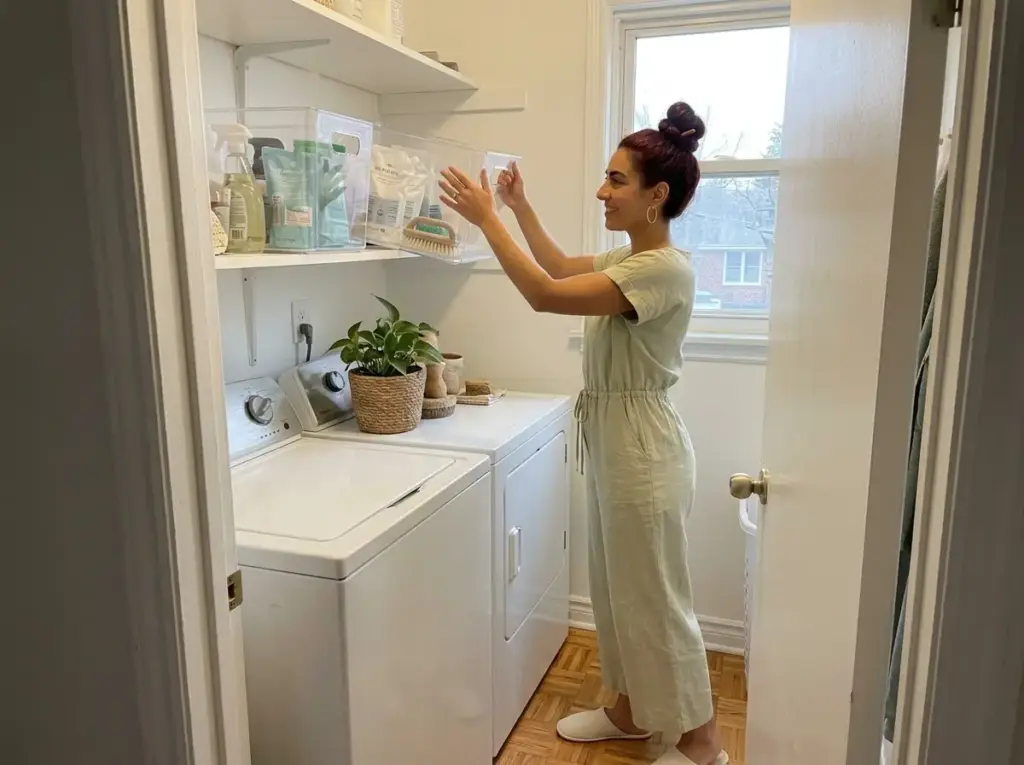
Backstock is what the kit is restocked from: the spare bottle, the refill pouch, the concentrate, the seasonal products. It lives in one place for the whole home (a garage shelf, a laundry-area shelf, a high closet shelf) and never inside the active kit. The active kit depletes and backstock refills it, a loop the last section of this guide turns into a routine. Keep one spare for each bottle in the kit, not a case.
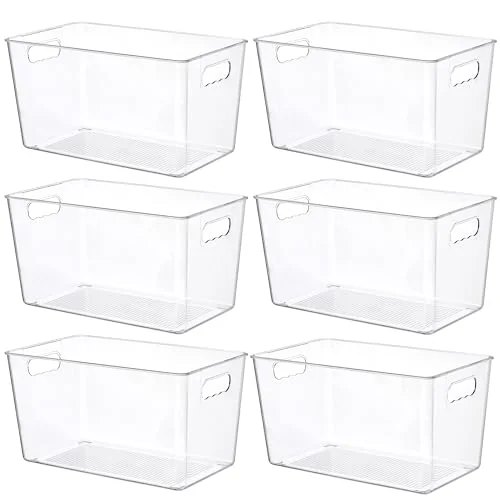
Shoe boxes, or the boxes the products arrived in, hold a reserve just as well, and they can be swapped for clear bins later if the system survives.
Where the reserve sits depends on the home. A house puts it on a garage shelf, an apartment on one shelf in the laundry nook, a home with a closet on its highest reachable shelf. Heavy jugs stay off the top shelf and go on the lowest level that stays out of children’s reach, because a gallon of cleaner on a high shelf is awkward to lift down and worse to drop.
Bins Sized to a 12-Inch Shelf
The XL handled bin measures 13 x 7.4 x 7 inches, so at 7.4 inches deep it fits a standard 12-inch shelf with room in front, and two bins placed next to each other still leave a finger gap for pulling one out. That finger gap is easy to lose: a bin that fits with a quarter inch to spare on paper jams in practice, because the handle and the lid add width the tape measure did not see.
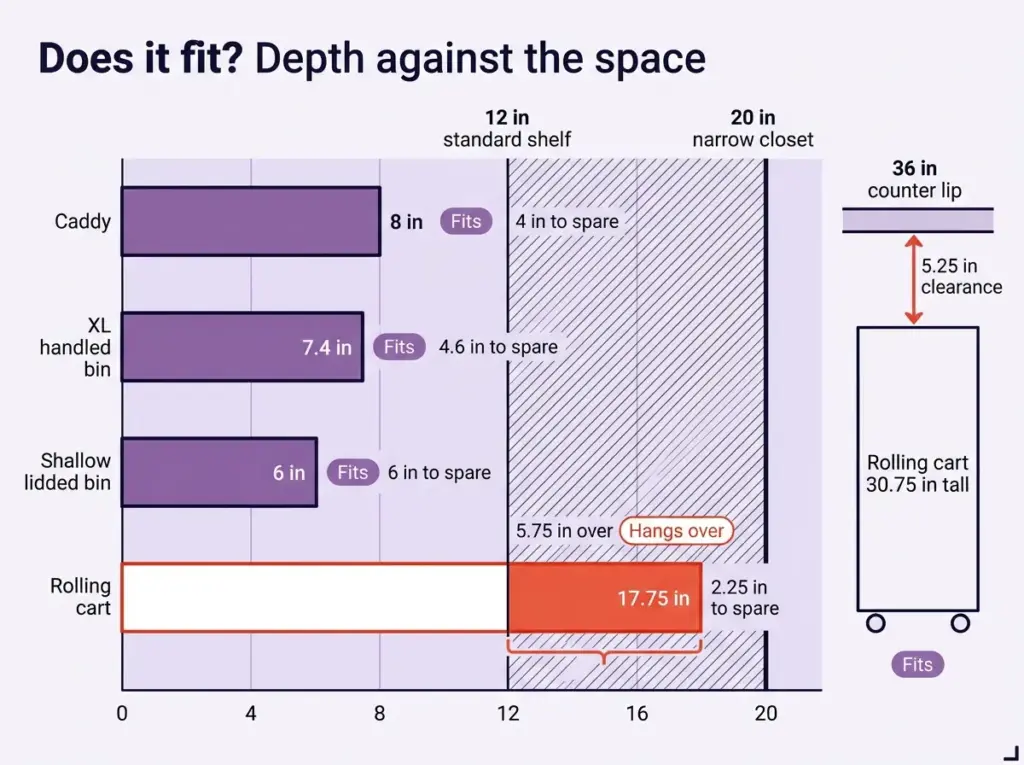
The same arithmetic applies in the wet rooms, where the cabinet is shallower than any closet shelf. Container depth for that zone is covered in under-sink bins sized to the cabinet.
A Rolling Cart for the Rarely Used
A cart carries the rarely used and the heavy to wherever the job is. The RASKOG Utility Cart is a three-tier cart in steel measuring 13.75 x 17.75 x 30.75 inches. At that height it rolls under a 36-inch counter lip but not into a low under-sink cabinet, and in a narrow 20-inch closet its 17.75-inch footprint barely clears the door.
It runs smaller than it looks in photos, so check the dimensions against the spot it must roll into. A used three-tier cart does the same work for less.
Labels and a Visible Inventory Stop the Rebuying
Standing in the store aisle trying to remember whether the glass cleaner is already at home is the moment a duplicate gets bought. The label layer exists to answer that question for anyone in the household, not just the person who built the system.
Label the Bin, Not the Bottle
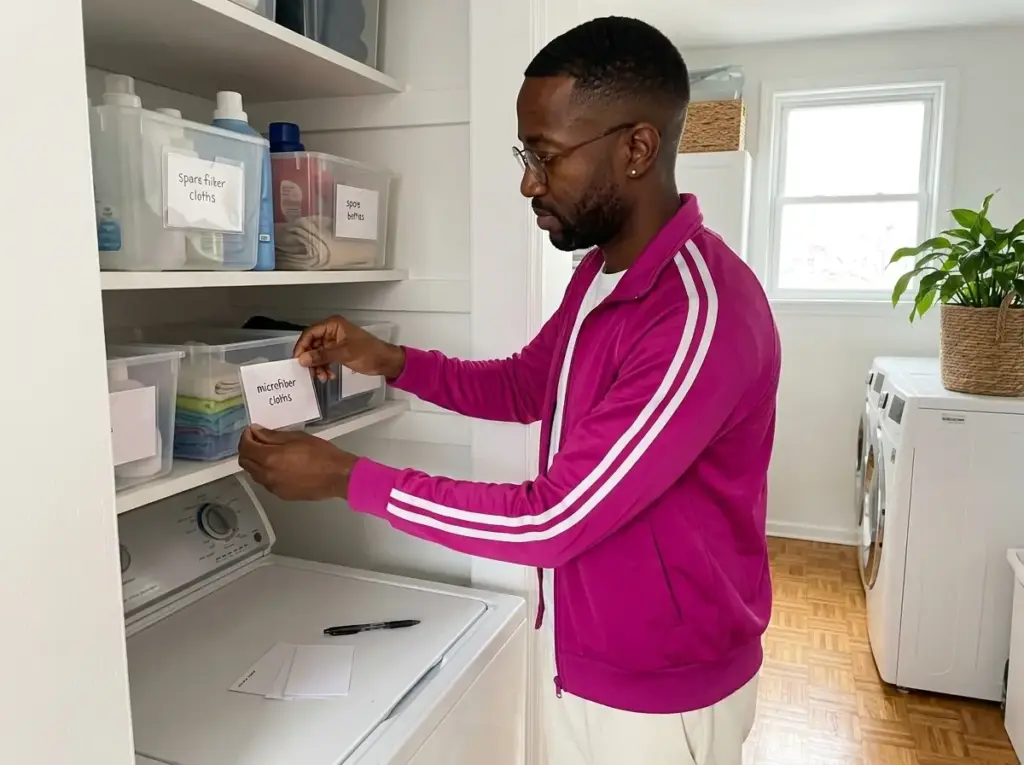
Put the label on the bin or the shelf edge, because bottles change and bins stay. The Chinco 30 Pcs Self Adhesive Clear Index Card Pockets measure 3.1 x 3.9 inches each; these adhesive pockets stick to the front of a bin, so the card slides out and a new one slides in with no residue.
The pockets rip up after a while and are not true 3 x 5 card size, so cut the card to fit the pocket. A label maker works just as well, and masking tape and a marker cost almost nothing and work until the pockets arrive. For tips on labels that stay stuck to a container, the pantry guide covers the adhesive side in depth.
Write the month of purchase on the cap of each backstock bottle with a marker. When a kit bottle runs out, the oldest spare goes in first, and a bottle that has outlived its use shows up long before it separates or expires.
A One-Line Inventory Where You Restock From
A short dry-erase sheet or a card inside the backstock bin lists what is in reserve. Cross a line out when the last spare moves to the active kit. It is a prompt to restock, not a record, so it stays short enough that nobody skips it.
Word the label in the household’s own words, not the product’s brand name. A housemate who has never read the back of a bottle can still find the thing called bathroom spray.
No Closet? Build the Whole System Without One
Looking at an apartment with no closet, it is easy to conclude that a cleaning system is for people with a utility room. That conclusion comes from assuming there is a room or closet to convert. The two tiers do not need one.
Under-Sink Cabinets Carry More Than You Expect
The kitchen kit sits under the kitchen sink and the bathroom kit under the bathroom sink. Both cabinets are shallower than the 24-inch standard everyone quotes for closets, and in an apartment that number does not apply anyway, because the only depth that counts is the opening in front of the reader. A tape measure on the cabinet tells more than any closet guide, and using vertical space in a small apartment shows how to use the height above the pipes.
The Back of a Door
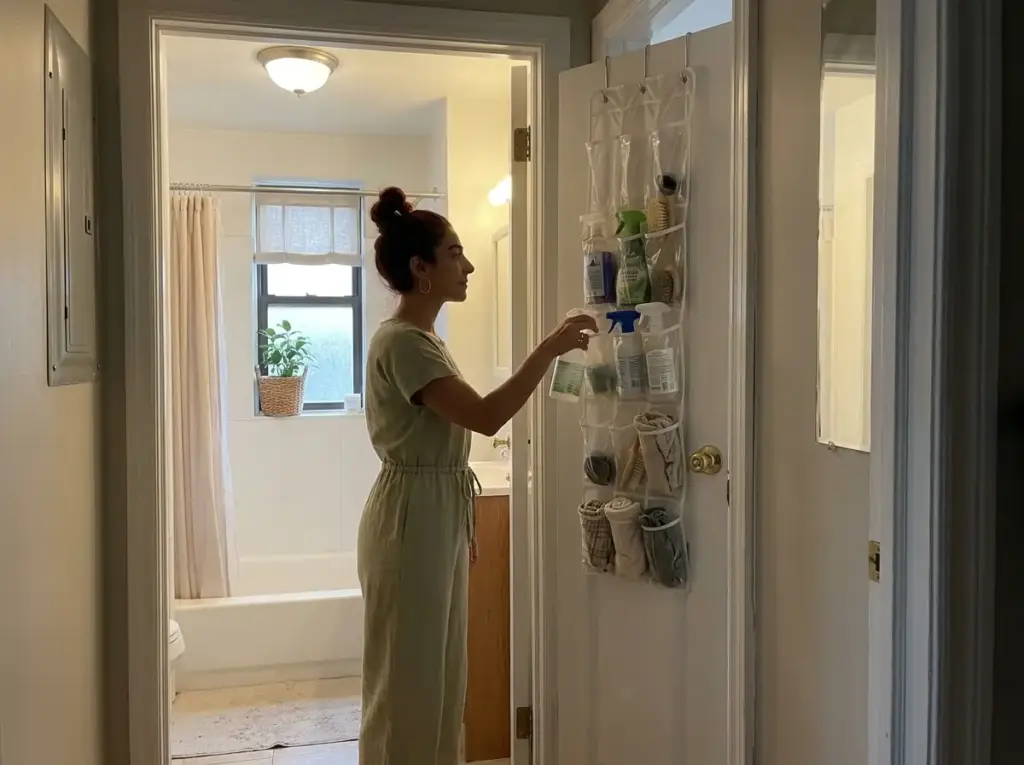
Tall tools hang on the back of a door, and the renter route mounts nothing: an over-the-door rack, a tension rod with S-hooks, a free-standing cart, the bins already in use. No-drill ways to add shelf space in a rental cover the options that leave the deposit intact.
An open-plan apartment or a shared house needs a few extra rules. Keep one backstock shelf that the whole household knows, give each bathroom a kit, and label the bins so a housemate stops buying the same cleaner a second time.
A Laundry Nook as the Reserve
The laundry area is where bulk and refills usually live already, so the backstock fits there. Keep it to one shelf so it does not turn into a second dumping spot. For a small home the whole system comes down to two caddies and one bin. A laundry closet without drilling shows how to set up that shelf without touching the walls.
The Reset Loop That Keeps It Working Past Month One
No cleaning schedule on the fridge is needed, only a repeatable check. The cabinet looks perfect in week two. In month three it often looks like the cabinet before the project, because nothing was set up to keep it that way.

Active Depletes, Backstock Refills
Cleaning supplies organization lives or dies on this loop, which is the two-tier mechanic. When an active bottle runs out, the reserve bottle replaces it and the inventory sheet gets a mark. When the reserve is empty, the item goes on the shopping list. Nothing is bought until the reserve is out, which is what ends the three-bottle problem.
This is a method built from the split described above, not a studied result.
For readers who do have a utility closet, utility closets and why they fail explains what usually goes wrong inside one.
The Ten-Minute Check
Once a week, walk the kit. Return anything that wandered to another room, restock the cloths and note what is nearly out. The cadence is a recommendation, not a statistic, and ten minutes is a ceiling, not a target.
The system is only as good as what the least careful person in the household puts back. The label and the inventory sheet are what make it work for a housemate or a partner who never read the plan.
What to Re-Sort Each Season
Each season, or on moving house, pull the backstock out, discard what is old and check whether the zone map still matches the floor plan. If the kits ended up where the cleaning no longer happens, move them. For the wet rooms in particular, why bathroom storage gets messy again explains how frequency of use decides where things drift.
Put the weekly check on the same day as something that already happens, like taking out the bins or the first load of laundry. A habit attached to an existing one survives longer than a reminder on its own calendar.
Put Each Kit Where the Work Happens, Then Let a Short Check Run It
Decide where each kit lives before any container goes in a basket. Keep the weekly kit and the reserve apart, label the bin and let a ten-minute check do the maintenance, and the three-bottle problem stops by itself.
Look again after a few weeks of ordinary cleaning. Notice which kit runs short of what, and which backstock bin never gets opened, because that bin is either too far away or holding the wrong things. Today, take the one bottle you reach for most and put it in a bin or bag at the point of use, then see how the next clean goes. The sink cabinets are a good place to continue, and the under-sink guide for the cabinet itself goes through the pipes and the fit.
Frequently Asked Questions
01What is the best way to organize cleaning supplies?
Sort everything by job, give each floor or use zone a small weekly kit, and keep spares in a separate backstock store. Label the bin, not the bottle, and run a short weekly check so the system holds.
02Should cleaning supplies be stored in the pantry?
No, keep cleaning supplies away from food and out of reach of children and pets, because a cleaner on a food shelf invites a mix-up. The EPA also advises against storing them near pet food or water dishes.
03Do I need a utility closet to organize cleaning supplies?
No, a kit under each sink, a strip on the back of a door and one shelf in a laundry area or an existing closet carry the same two tiers. For a small apartment, that comes to two caddies and one bin.
04Is it safe to put cleaning products in other bottles or jars?
No, keep each product in its original container, because the label is the emergency instruction sheet. The EPA warns that it is very dangerous to put cleaning products in food and beverage containers.
05What should I get rid of first when sorting cleaning supplies?
Unlabeled bottles go first, then duplicates, then expired or separated products and half-empty cleaners nobody likes using. Keep the fullest bottle of each duplicate and let the rest go.
Disclaimer: ClutterlessNest is a participant in the Amazon Services LLC Associates Program. As an Amazon Associate we earn from qualifying purchases. This article may contain affiliate links — if you buy through them, we may earn a small commission at no extra cost to you. We only recommend products we have tested or genuinely believe in.