

Saturday afternoon you style the pantry shelf, step back, and take the photo. By Friday there is a grocery bag parked beside the jars and a granola box that never fit its container. Instagram-worthy organization ideas fail this way for a reason that has nothing to do with discipline: a 2023 piece in The Conversation by researchers Abarashi and Hikmet follows a couple whose remarkably organised home was back to messy within days.
The same research found that systems built to keep a home tidy can create disorder of their own. Most saved organization ideas stop at the photo, so this guide builds the look from space and restraint first and containers second. Below you get the visual rules that make a shelf, closet or vanity read as styled, where matching containers earn their place, why labels come last, and what keeps the whole thing standing after the photo.
Quick Answer
A space reads as styled when it is edited, not when it is full. These are the moves that do it:
- Leave part of every shelf empty so the eye has somewhere to rest.
- Hold the palette to two or three tones.
- Match containers only where they show, and hide loud packaging in a closed or matching bin.
- Use the jars and bottles you have first, and decant only what you open every week.
- Label last, with wide tape, once the system has held for a few weeks.
- Run a one-shelf reset each week instead of re-styling the whole room.
Why Instagram-Worthy Organization Ideas Look Styled in a Photo
Open any saved photo of a pantry or a closet and count the empty inches. The shelf in the picture is mostly negative space, and the shelf in your kitchen, once it is filled to the edges with everything you own, reads as stock on a shelf. The reflex is to buy another set of bins. The move that works is taking things out.
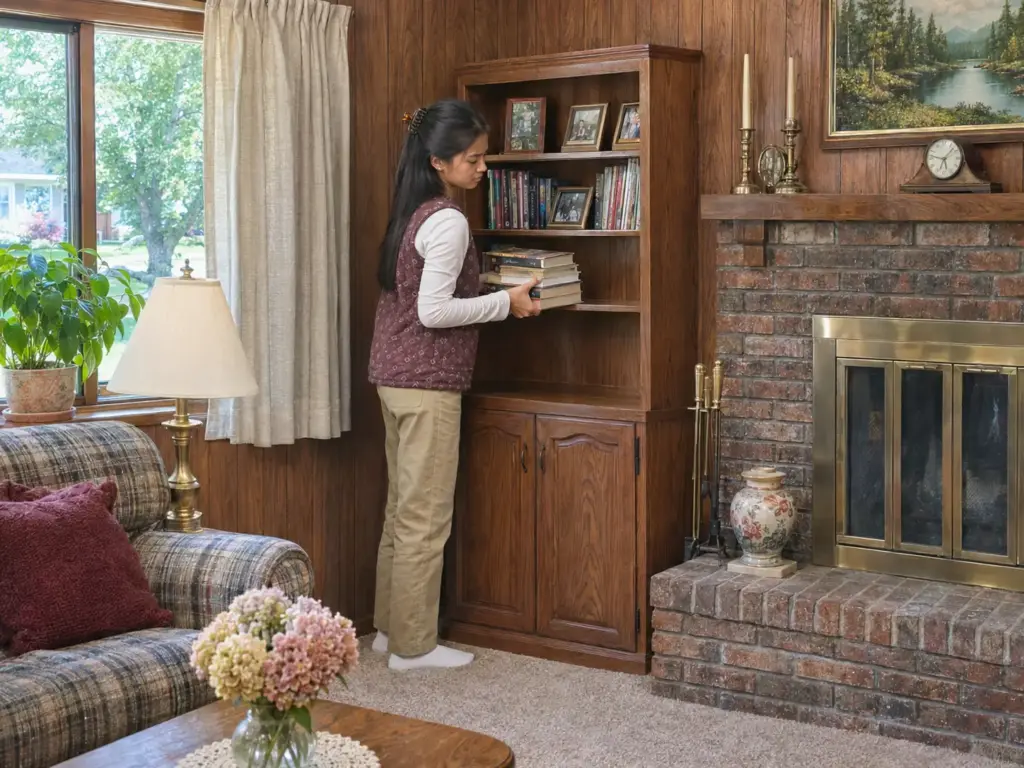
Why a shelf photographs better when part of it stays empty
An open stretch of shelf gives the eye a place to land, and without one even a perfectly sorted shelf looks crowded. Treat the shelf like a page: group the items, then leave a hand’s width of bare board at one end. That empty stretch is also where next week’s groceries go, which keeps the arrangement from collapsing the first time you shop.
Judge the shelf from the doorway, not from arm’s length. If the bare board still shows from there, the gap is wide enough to read as a choice and not as a shelf you forgot to fill.
The research on tidy homes backs the same instinct from another side. Replacing several small items with one larger one means fewer categories, and fewer categories is what keeps a neat-looking shelf neat. Three little jars of similar spices become one wider jar, and there is one spot to maintain instead of three. These rules work in every room, and the full aesthetic organization system shows how they stack together across a whole home.
Clear storage bins and glass pantry jars are the functional half of the Home Edit look, and it is easy to dismiss them as an expense that only buys looks. Then the shelf turns visible and you can finally see that two bags of flour are hiding behind the one you were about to buy a third of. Decanting for vibes, with no gain in visibility or airtightness, is where the aesthetic turns into chores.
How many colors a styled shelf can hold
Two or three tones. Pick a neutral for the containers and the shelf, one wood or metal accent, and let a few chosen items carry the color. A pantry of white lids, clear glass and one bamboo tone looks deliberate; the same pantry with six lid colors looks like a clearance aisle.
The restraint matters more than the shade. A shelf with a strict palette forgives the odd off-brand cereal box, because everything around it is quiet enough to absorb it. The same item-cap logic carries to a workspace, and keeping a desk to a few chosen items shows it with a monitor, a lamp and one tray.
What stays in view and what goes in a closed basket
Make the call per object. Anything good looking that you reach for daily stays out: the oil bottle, the glass jars, a plant. Anything with a loud package, a logo or a tangle of cords goes in a closed basket or a bin that matches the one beside it. Shelf risers earn a spot only where the back row hides behind the front.
That decision is the whole trick of a styled bedroom too. A lidded basket on the dresser can hold actual chargers and hair ties, which is different from a decorative one that holds nothing. Styling a bedroom with things that hold real stuff walks through the visible-versus-closed choice room by room.
One Container Family, Only Where It Shows
The matched-jar pantry is the image most pantry organization ideas start from, and it is also where the setup breaks first. Fill every shelf with identical jars on a Saturday and by Thursday a granola box that does not fit its jar sits beside it permanently, the overflow bag. The cure is a rule for what earns a jar, not a bigger jar.

Start with the jars and bottles you already own
Spaghetti-sauce jars, pickle jars and the tall bottles from last month’s groceries give you the same visual result for nothing. Strip the labels (warm water and a little oil lifts most adhesive), line the jars up by height and the shelf looks planned. Some people build a whole set by buying one container every other month, which spreads the cost and lets you learn which sizes you actually fill.
Glass pantry jars that are going to sit on open shelves is worth buying only after that test. If the reused jars survive a few weeks of real cooking, you know which sizes to add.
Square jars line up where round ones leave gaps
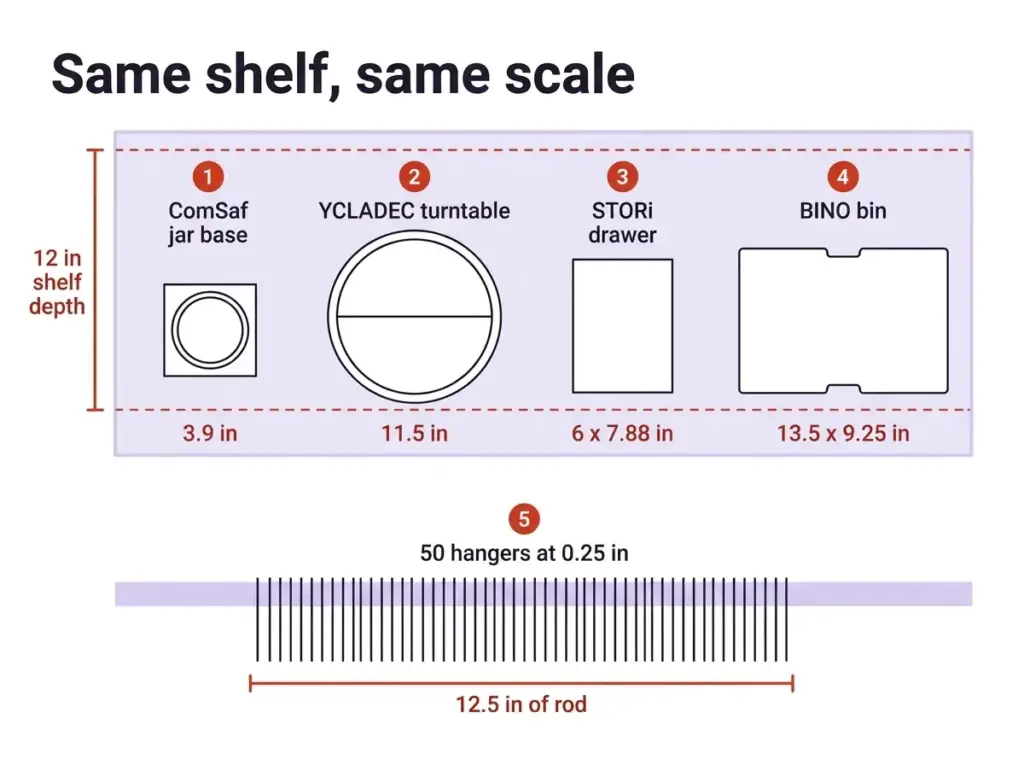
Round jars leave a crescent of dead space between them, and the eye reads those crescents as clutter. A square footprint lines up edge to edge, which is why one container shape does so much for a shelf.
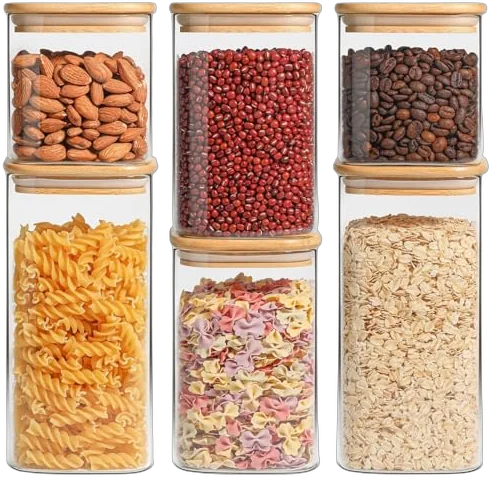
If you want the cheaper route, a six-jar KTMAMA glass set covers the same square shape. Either way, the full pantry version of this look covers where this setup starts to slip after the first week.
Decant only what you open every week
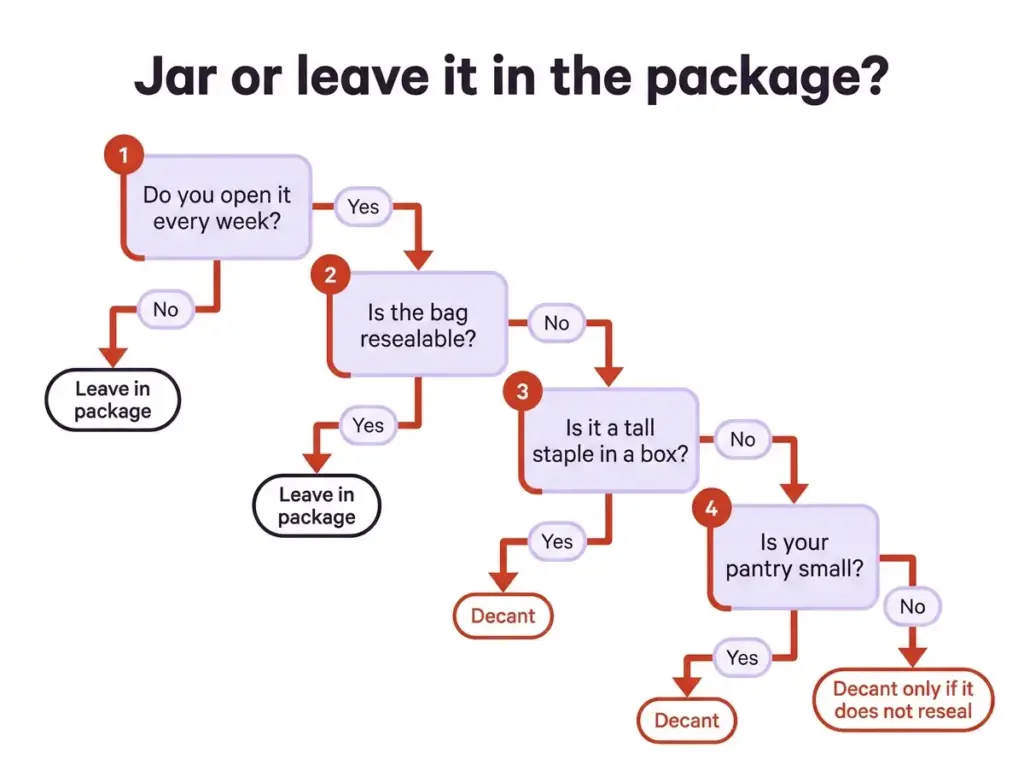
Decanting is daily work, and it competes with the dishes and the laundry. That is the reason most styled pantries get abandoned: the effort of pouring everything into jars outlasts the enthusiasm for it. Decanting also stops paying the moment the jar is smaller than the package. Granola bought in a big box against a smaller jar leaves a permanent overflow bag, and now you have two containers to manage for one food.
So set a rule. Anything that already comes in a resealable bag keeps its packaging. Decant only what comes in bags that do not reseal, and in a small kitchen with no pantry, decant the tall staples and leave long pasta in its box, because a jar tall enough for it eats a whole shelf. Which pantry foods earn a container sorts the rest by how often you open them.
Write the fill date on a strip of masking tape before the jar gets a real label. If you are still refilling it a month later, the jar has earned its place on the shelf; if not, the packaging goes back.
There is one functional reason to decant that has nothing to do with looks. Airtight jars are how people get past pantry moths, so when pests are the problem, seal properly rather than prettily and wash the lids by hand.
A turntable for the shelf deep enough to spin it
A turntable earns its place in fridge organization and in a deep pantry cupboard, because it brings the back row to the front with one turn. The catch is depth: an 11.5-inch tray needs a shelf at least 12 inches deep, or the bottles catch on the frame mid-spin.
The YCLADEC 2 Pack Lazy Susan 11.5 inch Clear Turntable is 3.5 inches high with a deep rim that keeps bottles upright, and the pair covers one pantry shelf and one fridge shelf from a single purchase. Test the spin the day it arrives, because a tray can show up that will not turn, and wash it by hand. For a single shelf, a 12-inch Copco turntable does the same job, and how to size a turntable to the shelf shows the math behind the 12-inch rule.
Hide the Ugly Stuff in Matching Bins
Every room has a few things that cannot be made pretty: the laundry pods, the shoe pile, the bag of cables. The mistake is trying to style them. The move is to give them one bin shape and put the bin where the eye passes over it, whether that is a shelf, a closet floor or under-bed storage.

Why one bin shape beats a shelf of mismatched baskets
A row of baskets in six weaves and four colors does the opposite of hiding, because each one asks to be noticed. A set of matching storage bins reads as one object, and one object disappears into the background of the room.
The rooms that need this most are the ones that fail most often. NAPO’s survey of where clutter builds up asked 1,001 US homeowners which rooms they find most disorganized: the home office led at 42%, then the kitchen at 35%, the laundry room at 33% and the master bedroom at 30%. The laundry shelf and the kitchen are exactly where a styled look gets tested hardest.
Before any bin comes home, edit what goes in it. A bin smaller than the pile forces the decision about what leaves, and that decision does more for the photo than the bin does.
Open-top white bins for the laundry area and the entryway
An open top lets the contents show and makes grabbing easy, which suits a laundry shelf or the shelf above a coat rack. The BINO Soho Plastic Storage Bins Large 2 Pack White measures 13.5 x 9.25 x 5.5 inches with side handles, in shatter-resistant white plastic. That size takes a stack of folded towels or a pile of scarves and gloves, and the matching pair makes the shelf look like one decision.
Because there is no lid, dust settles on whatever sits inside, so these suit things you use weekly, not things you store for the season. You can find them here, and a StorageWorks wicker 2-pack is the budget alternative if you want the warmer texture of woven baskets.
The same bin works as an entryway drop zone for hats and mail, and setting up a drop zone by the door covers it for an open floor plan where there is no wall to hang anything on.
Edit what goes in the bin before you buy the bin
Think of the restock video: food already in plastic goes into more plastic, and the shelf looks identical to what it was before. That is the moment the look turns into a purchase rather than a habit, and the bins are not at fault. Decide what leaves first, because methods for deciding what leaves first work better when the container is the last purchase and not the first.
The Same Two or Three Materials in Every Room
The closet photographed as a rainbow of hung and folded pieces is the picture everyone saves, and plenty of people try to copy it for every type, every season and every color at once. Then they cannot keep it up. The part that carries over from room to room is simpler: repeat the same two or three materials and each room reads as part of one home.
Edit the rod before you buy a single hanger
Pull everything you have not worn off the rod. The closet looks emptier before you have spent anything, and it is the same effect the hanger swap finishes. If the shelf below holds folded pieces, KonMari folding stands each one on its edge so the stack reads as a row. If a rod is stuffed so tightly that hangers cannot move, no hanger matches well enough to rescue the photo.
Matching hangers make a closet read as half empty
Identical hangers do more for a closet photo than any box. The Zober Black Velvet Hangers 50 Pack with Pants Bar is 17.75 inches wide and 9.25 inches tall, only 0.25 inch thick, and the listing says it holds a coat of 10 lb. At a quarter inch each, 50 hangers take about 12.5 inches of rod, and the velvet grips silky tops that slide off wire.
Durability is mixed, so some hangers may snap before the rest of the set shows wear, and heavier coats are better on something sturdier. Zober velvet hangers are the pick here, with Amazon Basics slim velvet hangers as the cheaper alternative.
Swap hangers one zone at a time, starting with the rod you see first when the door opens. The closet photographs well long before the whole set is done.
How much rod slim hangers really free up works through the hanger math for a rod that is already full.
Clear drawers for the vanity and under the sink
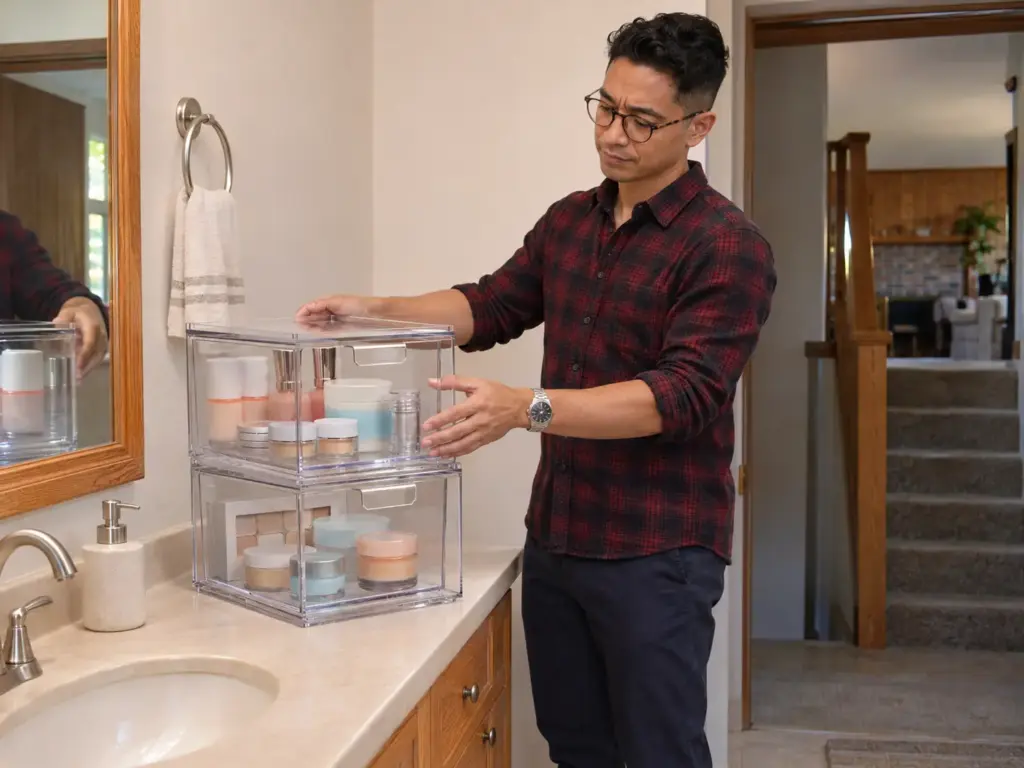
The same clear material in the bathroom ties it to the closet and the linen closet. The STORi Audrey Stackable Clear Bin Drawer Organizer 2 Piece Set gives you two drawers, each 6 inches wide, 7.88 long and 4.5 high, in BPA-free clear plastic. Two fill a vanity shelf and divide it the way drawer dividers divide a drawer; the same pair works for under-sink storage, and as stackable bins they double the height without taking more floor. The weak spot is the plastic, which cracks easily, so keep the set off a shelf where it gets knocked around.
A six-pack of Vtopmart clear bins is the cheaper way to get the same look across more shelves, and you can see it here. Bathrooms slip back into a pile faster than any other room, and where a small bathroom’s storage slips back into a pile explains the pattern. When you are shopping for the rest of the room, which bathroom organizers are worth buying and which to skip sorts the shelf.
Color order by hue only, not also by type and season
A color-coded closet in rainbow order, ROYGBIV, is one rule: red to violet, left to right. The trouble starts when you add a second and a third, sorting each color again by garment type and by season. The research on tidy homes names this exact failure, a wardrobe where every garment had a spot by color, type and season, which proved too difficult to maintain and undermined the whole system. Pick one axis, hue, and let the rest fall where it falls.
Labels Are the Last Ten Percent
Labels finish a system that already holds. Put them on a pantry that is still changing and you will relabel every time the system shifts, which is the fastest way to start resenting your own jars.
Label after the system holds, not before
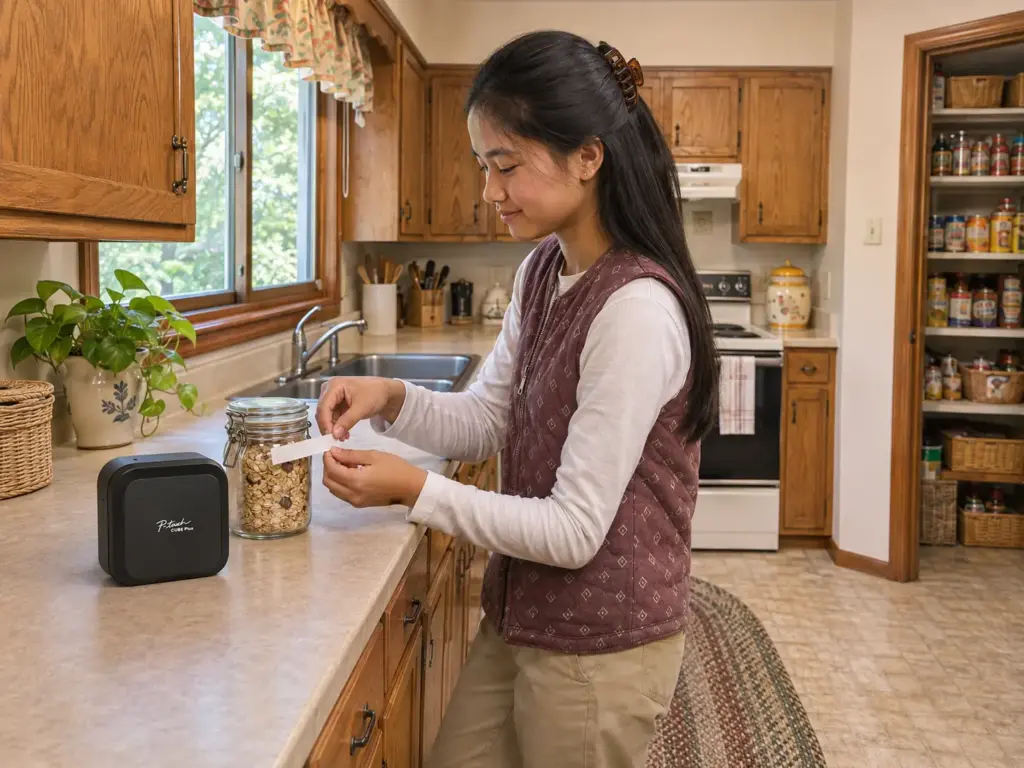
A strip of masking tape and a marker tells you what needs a label before you spend anything on a machine, and baskets that cannot hold tape take bin clip labels instead. Wait until the jars have held their positions for a few weeks, then label only the ones where the contents are not obvious from outside.
Why one-inch tape reads from across the room
The label width is the part that shows in a photo. Thin tape disappears at any distance, while a one-inch label reads from across a pantry and reads as a deliberate design choice. The Brother P-touch Cube Plus Label Maker PT-P710BT prints on laminated TZe tape up to 24 mm wide (about one inch) from a phone over Bluetooth, and one consistent width and font across every container makes the shelf read as one system.
The machine is not where the money goes. The running cost is the proprietary TZe tape cartridges, and the machine itself sits at the premium end of home label makers. If that bothers you, the Brother PTD220 uses the same tape family at a lower entry point, and you can find the Cube Plus here.
Keeping labels on containers that get washed
Labels placed where a wipe-down misses them last longest. Put the expiration date on the bottom of the container and the label on a flat panel where a sponge does not reach. Why pantry labels peel off within a month covers the moisture and adhesive side of it.
Why the Styled Version Reverts and the Version That Survives
The photographed setup does not collapse because you are careless. It collapses because it was designed for a single moment, and a busy week asks things of it that the photo never did. Treating the overflow bag, the broken pop top and the unlabeled bin as a personal failing misses the point.

Why the decanted look dies in a busy week
How researchers found lasting tidiness works comes down to one finding. According to The Conversation, “And the very organisation systems used to maintain tidy and clutter-free homes can contribute to disorganisation.” The couple who described a remarkably organised home saw it slide back to messy within days.
The researchers’ four strategies are simplify, create groups, manage numbers and adapt. The prettier and more granular the system, the faster it dies.
Decanting everything is the clearest example. It is maintenance that has to be repeated every time a package runs out, and it competes with dishes and laundry in a week when neither can wait. The expensive parts fail first too: a pop top that cracks after a month, or a stackable drawer that splits at the corner. When a piece of the system breaks, the whole look breaks with it, because every container was chosen to match.
So build in slack. Fewer containers, fewer categories, and one that can be replaced from a store shelf without redoing the set.
A reset that survives a busy week
Make the reset routine small: one shelf, not the whole home. On Friday, put back the one shelf that slipped, return the overflow bag to its original package, and remove one thing for each thing you added (the one-in-one-out rule). That is about ten minutes, and the shelf is back to the version you photographed.
Review the whole system after a few weeks, not on day one; day-one verdicts punish a setup that has not had time to settle. A pantry setup that is still working after the first week walks through zone organization so the reset knows where each item belongs.
The renter and budget version of the same look
Floating shelves and pegboards need a drill, and a rental often rules that out. The version that reads the same in a photo uses a tension rod, Command hooks or other adhesive hooks, a leaning pegboard and an over-door piece. Follow the maker’s stated weight limit on the package for every hook and rod, because that number varies by product and surface.
Budget organization is shorter than it looks. Reuse the jars and bottles you already own, buy one container at a time until the set is complete, and keep resealable packaging as it is. A renter with a tension rod and a handful of recycled jars can get most of the look for almost nothing, and the no-drill versions of small-space storage shows which of these moves hold up in a small apartment.
Leave Gaps, Keep One Shelf Honest
In aesthetic home organization, what carries the look is space left empty, a short palette, matching containers only where they show and labels added last. What carries the keeping is the one-shelf reset: a styled home is a habit of small corrections, not a finished state.
Look at one shelf again after two weeks of real use. If the gaps are still there and the jars still hold what they were bought for, the system is working. If the bag is back beside the jar, that tells you which container to retire.
Today, take everything off one shelf and put back only what you use daily and what looks good. Notice how much of the shelf stays bare, and notice that you have not spent anything.
Frequently Asked Questions
01How do I make my pantry look Instagram-worthy without decanting everything?
Decant only what you open weekly and comes in a bag that does not reseal. Anything in a resealable bag keeps its packaging, and long pasta stays in its box. Leave part of each shelf empty and the pantry still reads as styled.
02Do I need matching containers to make a space look organized?
No. Matching containers help only where they show, and reused jars give the same look for nothing. If you want a matched set, buy one container at a time and keep the same shape and lid color across the shelf.
03How do I keep an aesthetic setup from falling apart after a week?
Run a one-shelf reset each week instead of re-styling the room. Put back what slipped, return the overflow bag to its package, and remove one item for each one added. Fewer categories keep a tidy shelf tidy.
04Can I get the same look in a rental without drilling?
Yes. A tension rod, adhesive hooks, a leaning pegboard and an over-door piece read the same in a photo as drilled shelves. Follow the maker’s stated weight limit on each package, since it varies by product and surface.
05How many colors should a styled shelf use?
Two or three tones: a neutral base, one accent material, and a few chosen items carrying color. In a closet, sort a closet rainbow by hue only, not also by garment type and season.
Disclaimer: ClutterlessNest is a participant in the Amazon Services LLC Associates Program. As an Amazon Associate we earn from qualifying purchases. This article may contain affiliate links — if you buy through them, we may earn a small commission at no extra cost to you. We only recommend products we have tested or genuinely believe in.