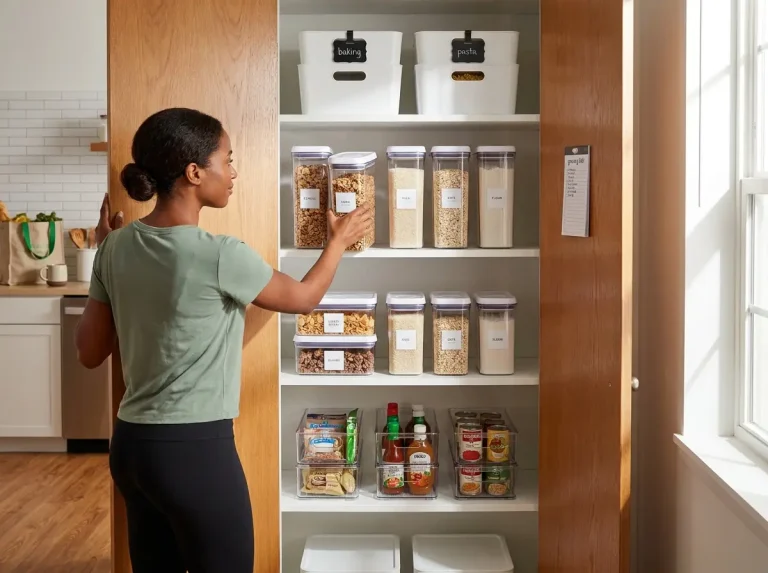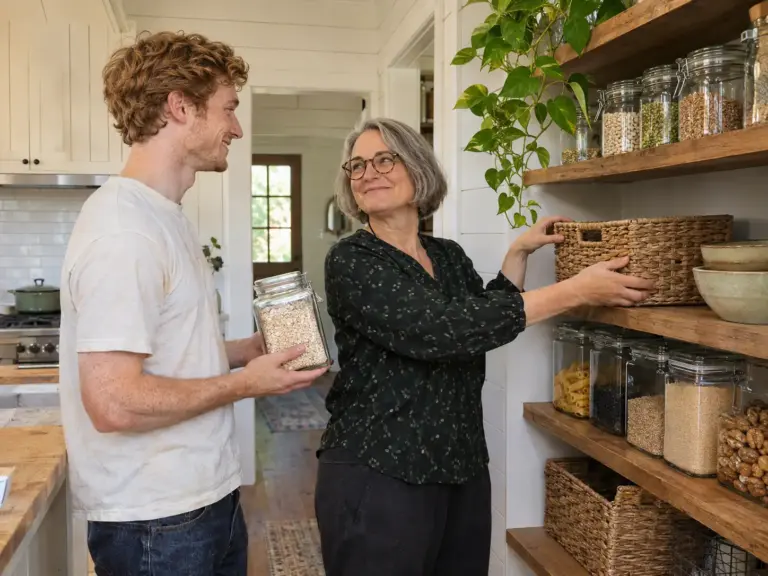

The set looked calm on the product page. On your shelf, one lid sits a half-inch taller than its neighbor, the row stops short of the back wall, and a half-empty bag of rice is still leaning where a jar was supposed to go. Matching container organization ideas have almost nothing to do with color: a set matches when the footprints butt together, every lid has a base and the material suits the weight. That is the version that keeps a neutral home looking calm without fighting the shelves, and below it comes in the order to use it, starting with a tape measure.
Quick Answer
Containers match when they fit the shelf and each other, not when they share a paint chip:
- Pick square or rectangular footprints that butt together and leave no dead crescent between jars.
- Stay with one product line, two at most, so every base finds a lid that fits.
- Keep one material family: rigid glass or hard plastic for heavy and stacked, light plastic for light dry goods.
- Measure the gap between shelves first, then leave a couple of inches to lift a jar out.
- Start with about six containers and add one at a time.
- Use one label style on everything; it does more for the look than one color.
Matching Container Organization Starts With the Shelf, Not the Set
You are standing at the open cabinet with the new tall jars in one hand, and the shelf above them sits an inch too low. The set matched everything on the product page: the lids, the labels, the pale wood. It did not match the shelf, and a shelf has no say in a product photo.
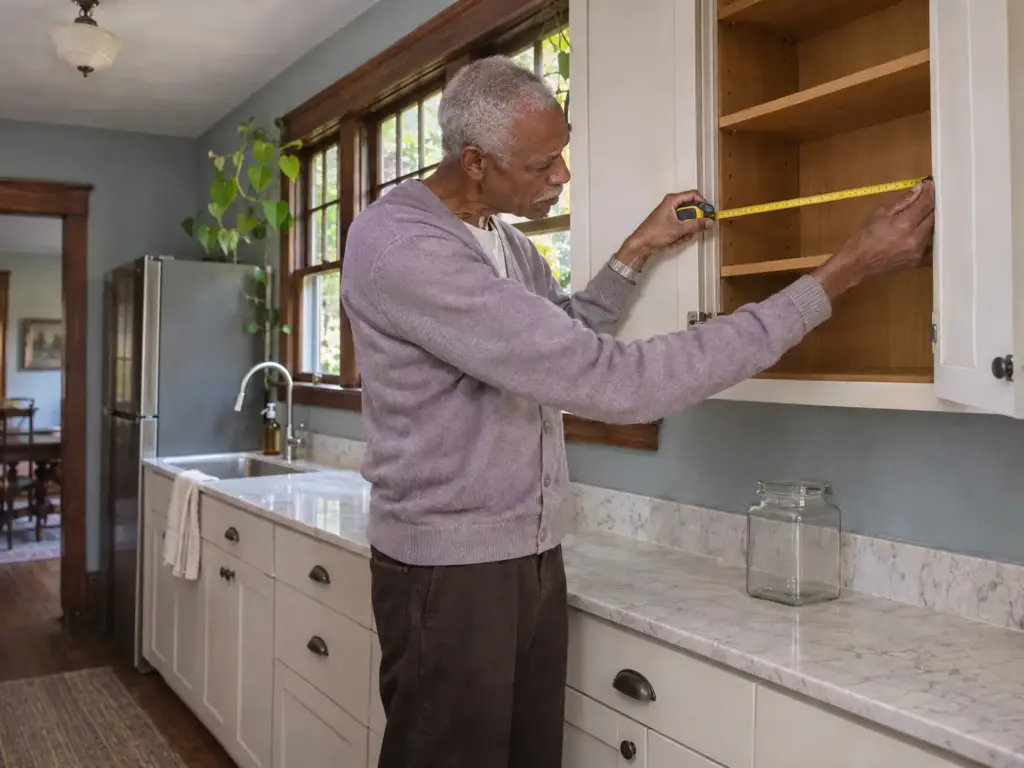
Why the set that looks right on the page doesn’t fit
A product photo is shot against a white backdrop with nothing overhead. Your cabinet has a shelf two inches above the jar’s head, a door that has to close and a back wall that may sit closer than the listing assumed. Matching storage containers only work when they are chosen against that space, and most sets are chosen against a mood.
Round jars are the usual casualty. Lined up on a square shelf they leave a crescent of wasted space at every corner, and the square sets that avoid it often run so small that one staple ends up split across three of them. Then there are the bags. Half-filled bags that flop and slide down the shelf are the reason most people go shopping in the first place, and a jar too small for a whole bag does not end that problem, it only moves it to the counter.
The four numbers that decide a shelf
Take four measurements at the shelf itself: usable depth, clear height, clear width and the opening you reach through. Clear height is the one people get wrong, so measure shelf height from the shelf surface up to the underside of whatever sits above it, not the nominal spacing: it is smaller once you subtract the shelf’s thickness and any front lip. For the tape work step by step, see how to measure an opening before a pale piece is ordered, then take a couple of inches off the clear height so a jar can actually be lifted out.
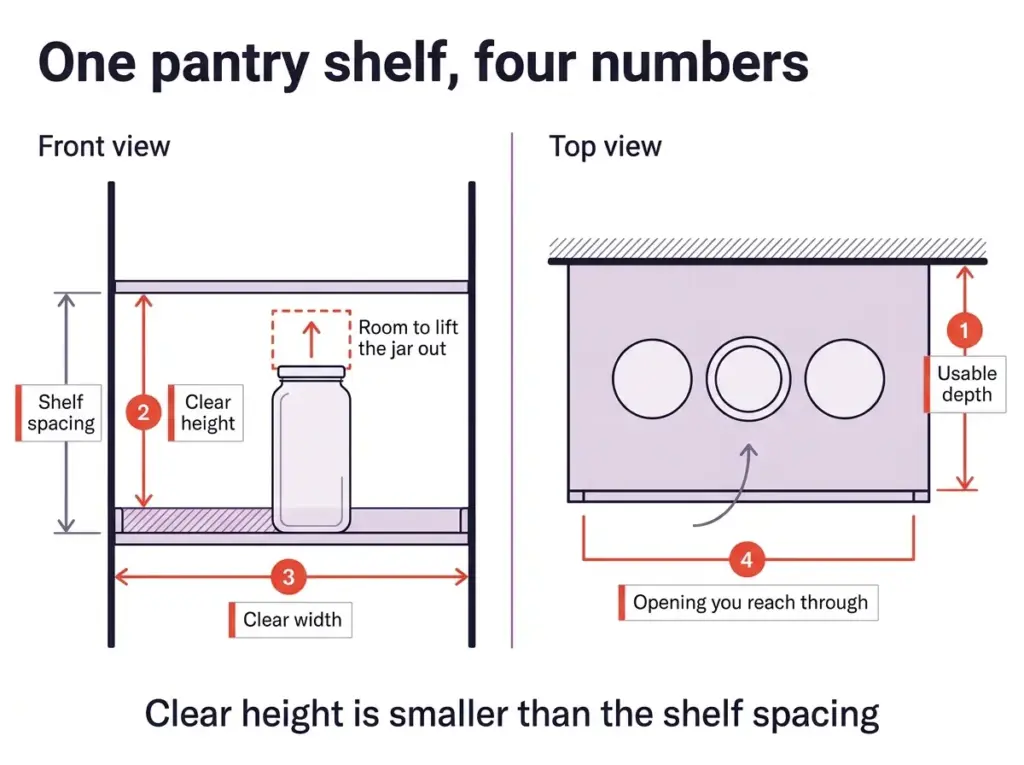
If a shelf riser is part of the plan, add its own height to the tallest jar (or to the full stack height, if jars stack) and compare the sum with the gap you measured, not with the shelf’s nominal height. A two-tier riser needs 8 to 10 inches of clear height by itself, and tension rods in a drawer sit 2 to 3 inches apart.
Cabinet, pantry or drawer: the standard depths to compare against
Upper kitchen cabinets run about 12 inches deep and base cabinets about 24. Pantry shelves for everyday food run 12 to 16 inches, and 20 to 24 for bulk food and appliances. On a 16-inch shelf the back row disappears behind the front one, a 24-inch shelf turns into a storage unit that wants a bin of its own, and a bin deeper than 12 inches will stop an upper door from closing.
Those are cabinet numbers, though, and the one to trust is the one you read yourself. Face frames, hinges and a door that closes over the bin all eat into the nominal depth, so measure from the back wall to the edge of the opening and plan the jar to that figure (a tape costs less than a return).
Cut a cardboard box to the jar’s footprint and height (the product page lists both), set two of them on the shelf front to back and close the door. If the door shuts and a hand still fits over the top, the real jar will too.
Purge First, Because Orphan Lids and Warped Bases Match Nothing
The lid drawer refills itself. Lids drift in one dishwasher cycle at a time, and a new matching set that lands on top of the old mismatched one makes the drawer worse, not better.
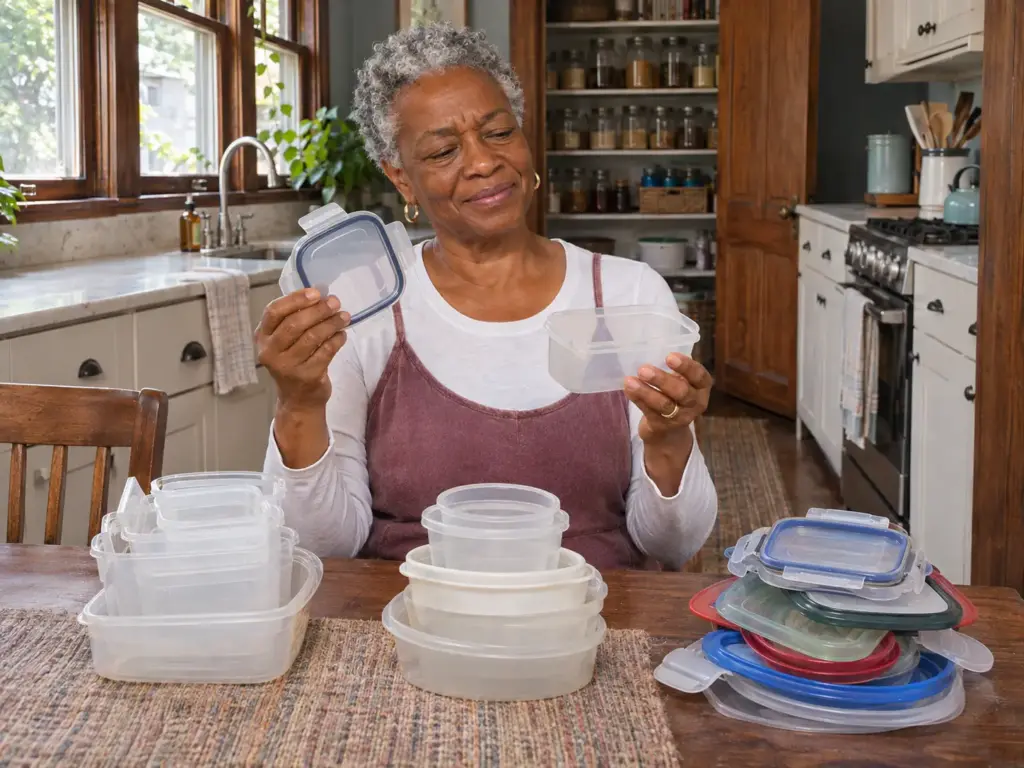
Count what you own before you plan the shelf
Pull every container onto a table, bases and lids both. People under-count what they own by a wide margin, and the order that works never changes: sort, cull what is not used, look at how much space the remainder takes, and only then plot the storage. The shelf plan comes last because it depends on a number you do not have yet.
The three piles: keep, recycle, donate
Keepers go back in the cabinet. Cracked or stained plastic goes to recycling where the local program takes it, and anything whole that you will not use goes to donation. Takeout containers sit outside the system on purpose; they do not match anything, and they are the first thing to refill the drawer.
The food that lived in those containers needs a home too, and a pantry setup that still works after the first week picks up where the shelf sorting leaves off.
Keep only bases with a lid that fits
The test for a keeper is short: the base is not warped, the lid snaps on and stays, and nothing is stained or smells of what it last carried. A base with no lid is not a container, and a lid with no base is not a lid, so both go. The cheapest matching set is the pairs that already work, and matching what holds up beats replacing it.
Buy only for the gap the purge leaves. If that gap is a whole pantry’s worth, the Rubbermaid Brilliance Pantry Set (14 pieces) is the clear-lidded family that lets one shape hold flour, cereal and leftovers. It costs more per piece than it looks, which is a reason to buy it for the gap and not to fill the shelf.
One Shape, One Lid Logic, One Material Family
Picture the round jars lined up on a square shelf, a crescent of dead space at every corner, and a quiet suspicion that the pretty set looks tidier than it is. Three criteria settle it, and none of them is a color.
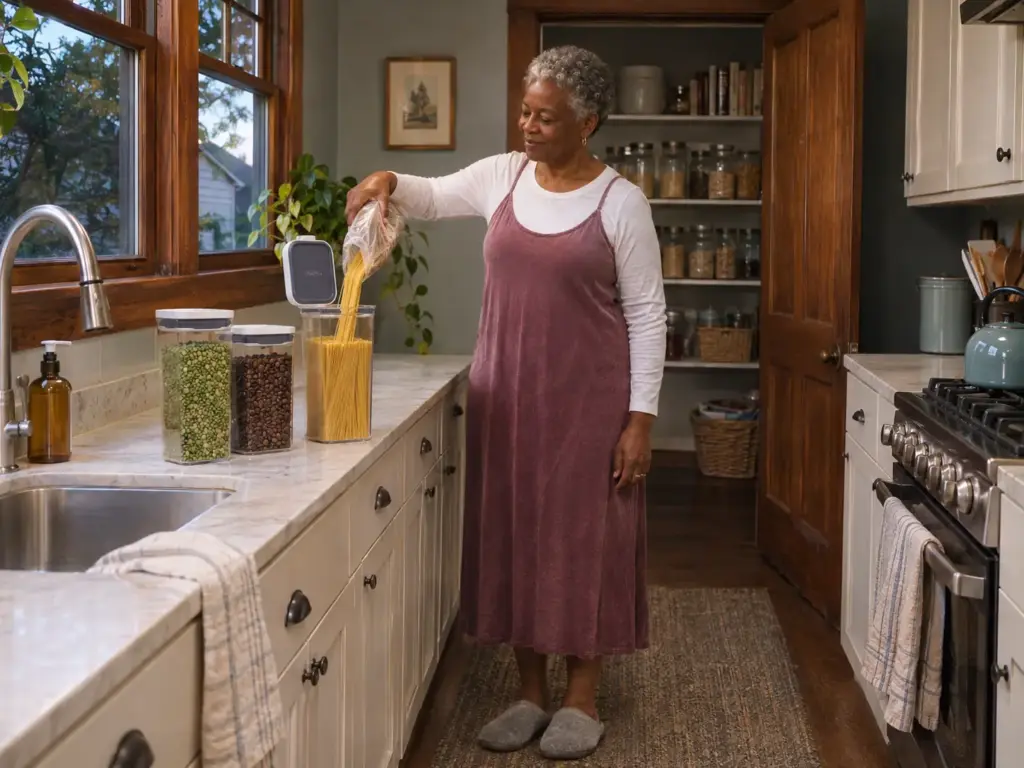
Why square and rectangular beat round on a shelf
Square footprints butt against each other, and round ones do not. The maker’s spec gives you a sum to copy: a ComSaf square jar measures 3.9 by 3.9 inches and stands 8.1 inches tall, and the maker says two fit front to back. Two footprints come to 7.8 inches, so check that against the depth you measured, and remember an 8.1-inch jar wants a gap of roughly 10 inches to clear a lift.
Do the sum on your own shelf.
One product line, or two, and why
Uniform containers from one maker share a lid logic, so any lid finds its base without a trial fit. One line is the cleanest rule, and it breaks the day that line does not make the size you need. A second line works fine when its lids close the same way; a third is where the orphan drawer begins.
Material follows weight: what rigid, what light
Glass, and anything stacked tall, wants a rigid plastic or hardwood lid. Light dry goods can live in light plastic, BPA-free if the label says so. The makers of these sets do not publish a stack load limit, so treat stacking as a rule of thumb: the heaviest, lowest jar carries the least tall tower.
The neutral look, and the visual calm that goes with it, comes from the family, not the tint. Keeping one material family across a neutral home means one shape and one lid style in clear or frosted, with a single wood tone if the lids are wood.
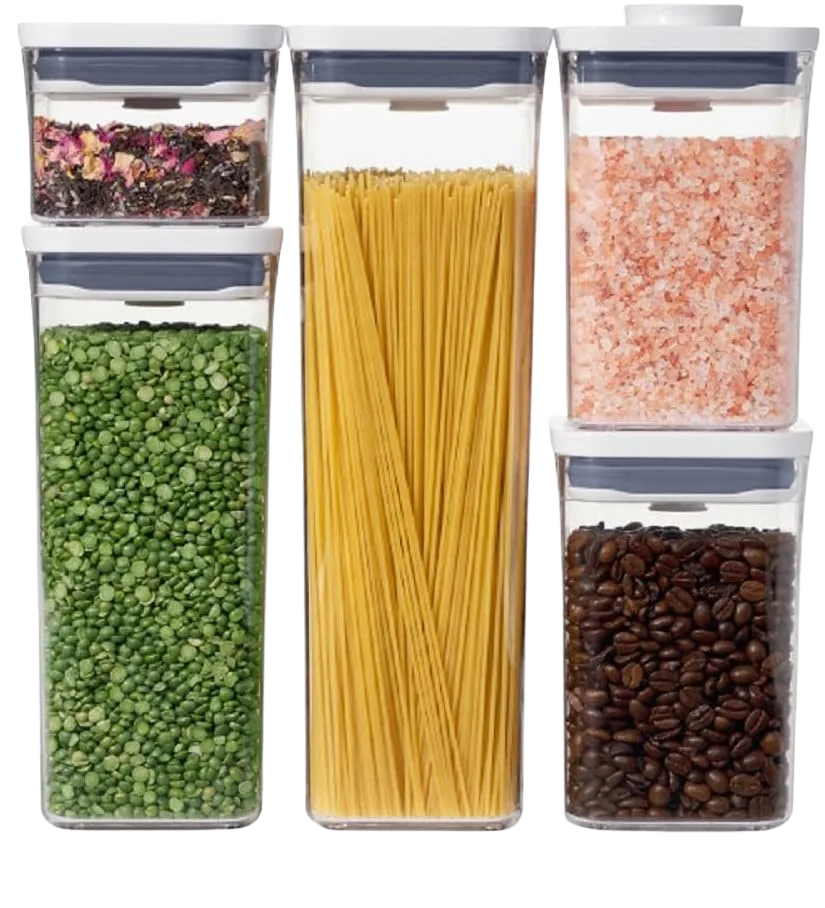
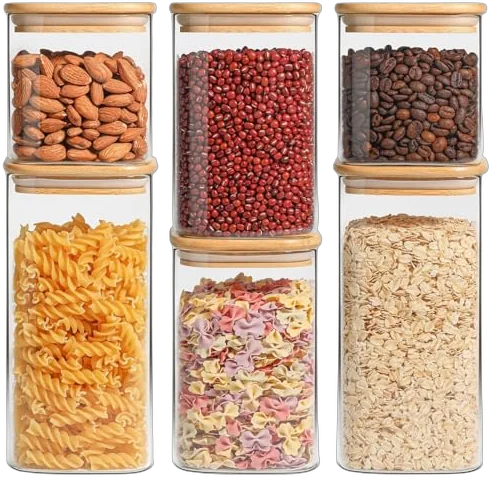
Two families worth starting from
The cheapest way to match is slow and starts at home, and the next section lays it out before any cart comes into it. When a full family is the right call, these two are the starting points.
Build the Matching Set Slowly From What You Already Own
A jar of pasta sauce or peanut butter has quietly been doing the job of the ten-piece set for a year. The belief that matching means buying everything on day one is the expensive part of this whole topic, and it is wrong more often than it is right.
Start with six and let the rest wait
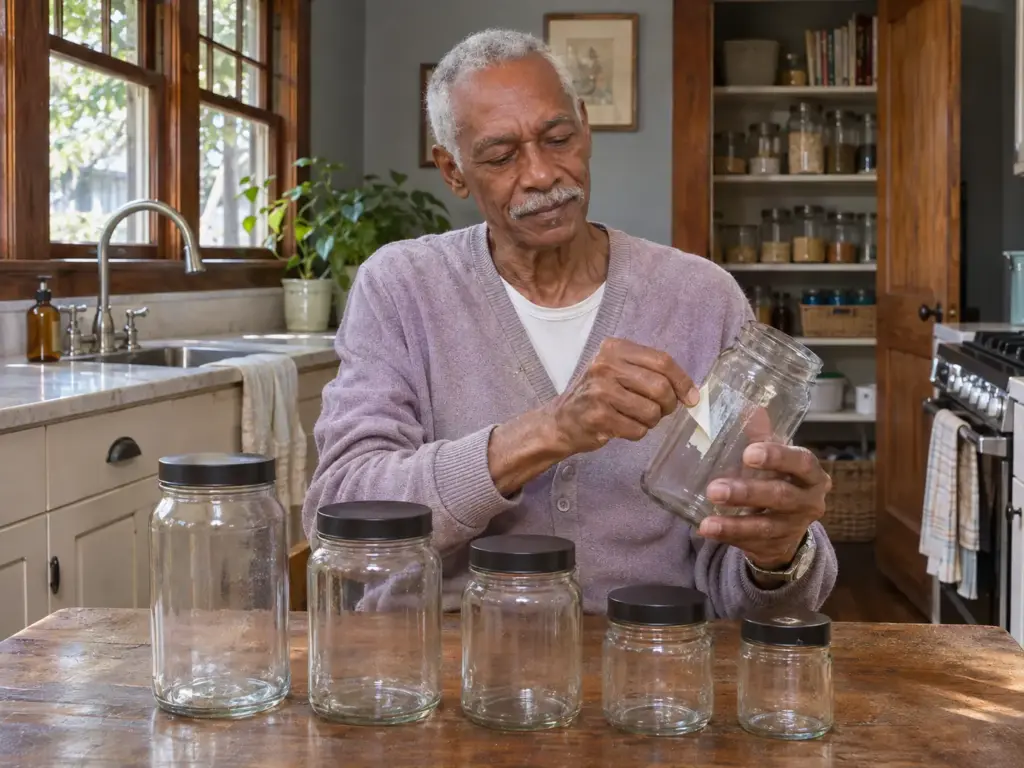
Six containers is a starter set, not a compromise. The things you actually decant are few: flour, sugar, rice, pasta, cereal, maybe oats. Fill six, live with them, and see which sizes empty first before anything else enters the cart. The low-cost pantry reset that keeps working follows the same slow logic on a thin budget.
The jars you already own, made to look like a family
Sauce, peanut butter and preserve jars arrive free with the food, and a thrift store sells more by the dozen (jar hoarding is a habit that finally pays). Soak off the labels, then unify the batch with one lid color and one label style, and a row of unlike jars reads as a set. Match by shape and material before brand, since a second line is fine when its lids work the same way.
Bowls with no lids do not need a new set either. Silicone stretch lids cover what is already in the cupboard.
Give each reused jar a label before it holds anything. A jar with no label is still a mystery jar, and mystery jars are how the back of a shelf fills up again.
Add one piece at a time, and when to buy the big set
Buy one piece when a size runs out of room, not on a schedule. The big set is the right call only when the household truly has nothing that fits and wants one lid logic everywhere. The Vtopmart Airtight Food Storage Containers (24-piece set) is the budget way to a matched pantry: one shape in four sizes plus 24 reusable labels, and no cheaper option shares its lid logic. Its snap lids are hard to separate, so expect to pry a little the first week.
The Lid System That Keeps Every Base Paired
The cabinet that opens on a slide of lids is a lid problem, not a cabinet problem. Somewhere there are three bases and no matching lid in the whole drawer.
Why lids go missing
Lids come off for the dishwasher, bases go in a different spot, and after a while the drawer holds more mismatched lids than bases. Sorting alone cannot fix that, and a lid-by-lid method for sorting what is already in the drawer only holds if the system underneath has fewer shapes and one lid logic. The second half of the cure is a place for lids that is not the same drawer as the bases.
Pick one brand family so lids stay paired
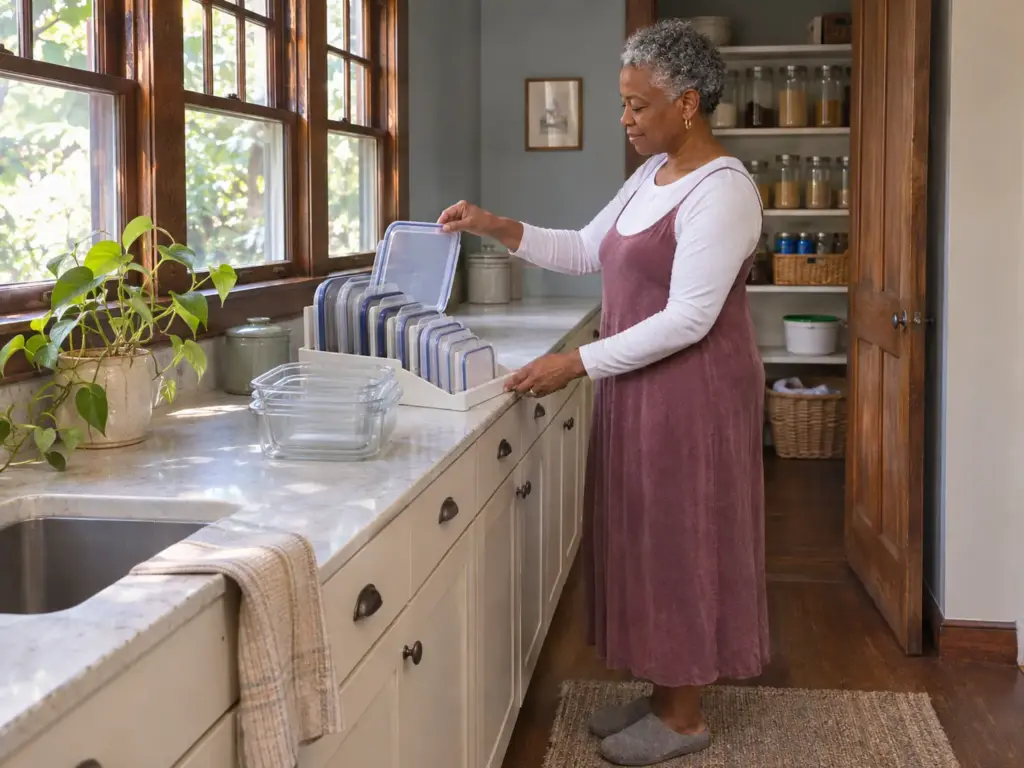
Base and lid pairing starts before any purchase: nest the bases together by size and keep each lid with its size. That free step alone ends half the hunting.
When glass is the plan, the Pyrex Simply Store nine-pack (nine bases and nine lids, 18 pieces) gives one brand across every size, from a 7-cup round down to a 1-cup round with rectangles between, so the lids stay paired. It replaces the takeout box instead of joining it. The lid seal is the weak point, so it suits the fridge shelf better than a bag headed across town.
Stand the lids up by size
A cutlery tray or a magazine holder stands lids upright for nothing, and the cue is size, upright, never stacked flat. Once a drawer has outgrown them, a tray with adjustable dividers is the purchase that earns its place. The YouCopia StoraLid (large) holds lids up to 9 inches wide in five adjustable compartments and measures 10.4 inches deep by 13.2 wide by 3.3 high, which clears a 12-inch cabinet with room to slide, and its center channel keeps round lids from rolling. It is hand-wash only.
Put the lids in the tray in the same left-to-right order as the nested bases. A base with no lid in its slot then shows up at a glance, before it turns into a drawer of strays.
What Moves Into the Matching Jar and What Stays in the Bag
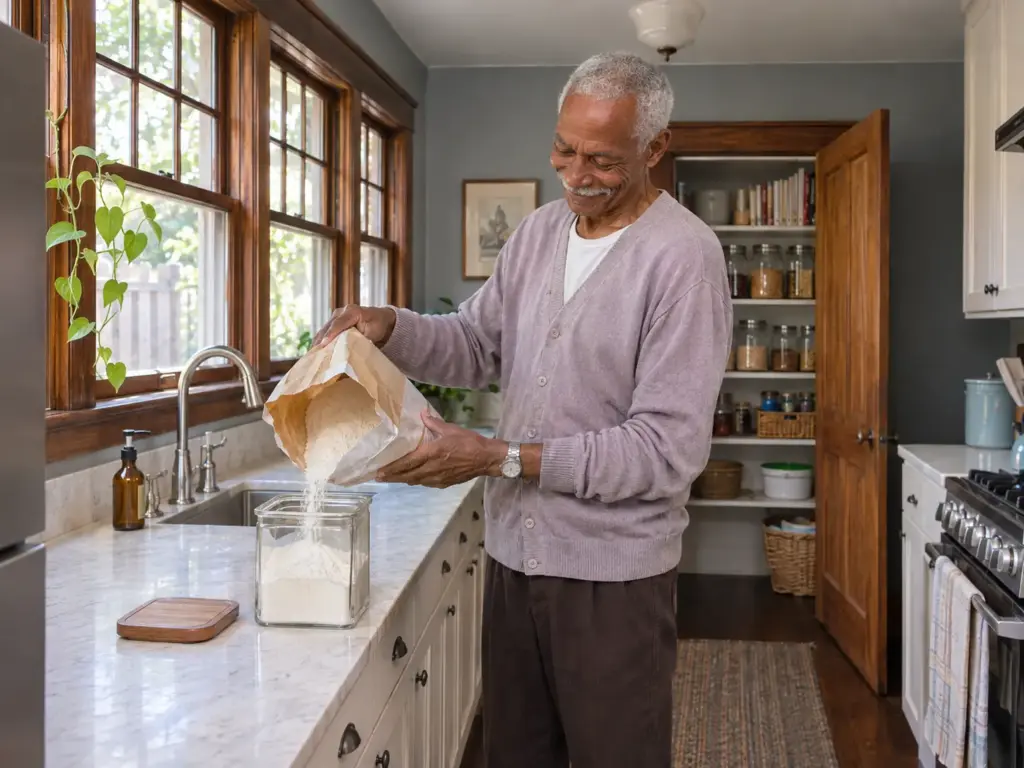
You decant the flour, and the bag with the last cup left stands beside the jar for a month because it does not fit, with the next bag open on the shelf too. The jar was sized for the shelf and not for the bag.
The last quarter of the bag
Nobody plans for the last quarter, and it is the part that litters the counter. Either the jar is sized to hold a whole bag, or the last quarter stays in the original bag with a clip and goes into the jar only when the next bag arrives. A second small container for the leftover is how a pantry ends up with more containers than staples.
What a jar can and cannot fix
Storage never improves the quality of a food, and Clemson Extension’s pantry food-storage factsheet sets the rule that matters at the jar: “Since bacteria can frequently enter into food through careless food handling, keep everything – hands, pantry, shelves, and storage containers – clean.” A matching jar preserves what goes into it and cannot rescue a stale bag, so check the date before decanting.
Time and temperature do the rest. Per the USDA’s refrigeration and food-safety guidance, bacteria multiply fastest between 40 and 140 °F and can double in as little as 20 minutes, so anything perishable decanted into a handsome container and left out all afternoon undoes a week of careful work. The jar goes back to its shelf.
What stays in the bag, the box or the freezer
The obvious move is to decant everything, and the better call is the opposite for anything that came in a good airtight bag or box and gets used up within a week. A jar adds a step and removes nothing. Backstock, the second bag, belongs in a lidded bin above or below, not on the counter.
Choose the container for what goes in it: flour goes in airtight containers with a scoop-wide mouth, cereal a pour spout, snacks a clear front. The guide to which container suits which food goes food by food.
Matching Containers Room by Room, Beyond the Pantry
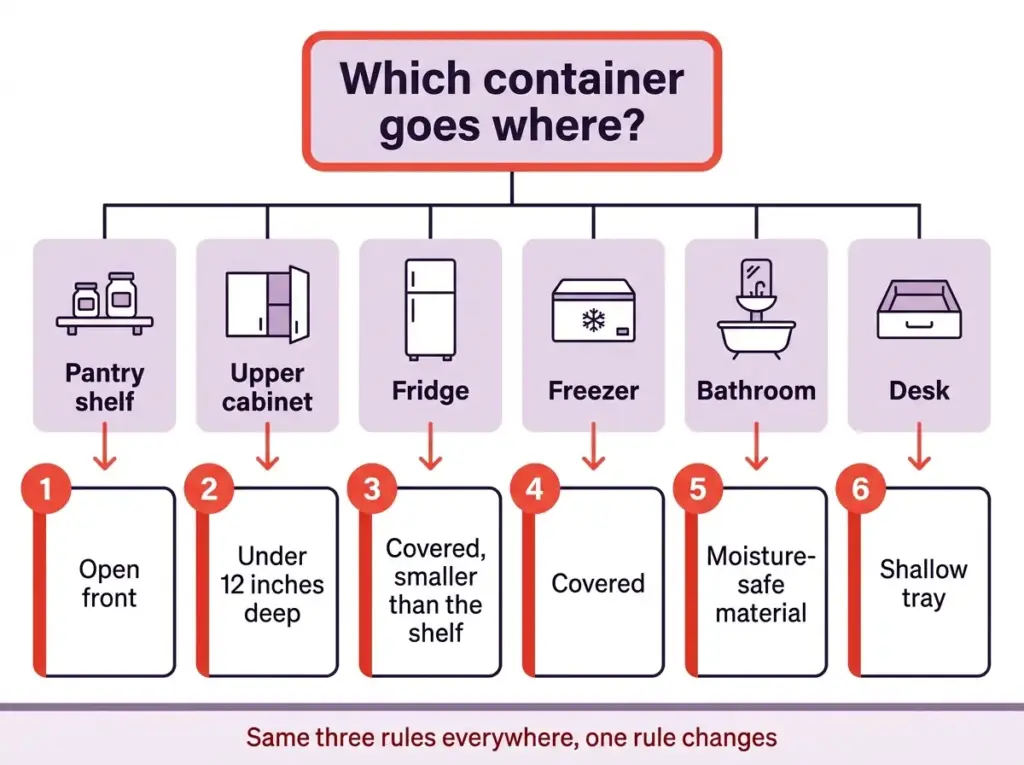
The pantry finally matches, and then you notice the bathroom shelf, the desk drawer and the closet shelf are still a mix. The same three rules travel, and each room changes one of them.

The pantry shelf and the upper cabinet
An open-front bin lets you grab from the front instead of unloading the shelf, and clear bins keep a neutral palette quiet. On open shelving the jars are the decor, so the family matters most. The upper cabinet’s 12-inch depth is the limit, so the bin has to be shallower than the shelf it sits on. The Sorbus Clear Pantry Organizer (open front, 4-pack, medium square) fits that job, with one caveat: the stacking is inconsistent, so treat them as single-layer bins.
The fridge and freezer
Containers stay covered, and food stays covered. According to the FDA’s guidance on keeping stored food cold, “Keep It Covered: Store refrigerated foods in covered containers or sealed storage bags, and check leftovers daily for spoilage.”
Cold air has to circulate, and a bin that fills a shelf edge to edge blocks it. So choose bins sized to fridge shelves instead of the other way round, smaller than the shelf, with a gap around them. And a container does not make food safe; the temperature behind it does, 40 °F or below for the fridge and 0 °F for the freezer.
Closet, bathroom and desk
The same footprint rule carries to the closet shelf, the bathroom vanity and the desk drawer, with one change in each. A wet room wants one material family that tolerates moisture, plastic or acrylic bins and not cloth. A desk drawer wants one tray or bin family cut to its depth. A closet shelf wants matching bins sized to the shelf’s measured gap.
For the bathroom specifically, bathroom organizers that handle the damp are worth reading before a family is picked. And a matching set in a wet room is for what lives there, not for the whole house’s overflow. Sort what is in the bathroom drawer first; sometimes the sorting is the whole fix.
Label style is what makes mixed brands read as one system: one script, one color, one position on the jar, whether it comes from a label maker or a vinyl sheet. The Talented Kitchen Pantry Labels (157-piece, black script vinyl) are the cheapest item in this article, and the labels are on the large side, so check the jar’s face before applying.
Why the Matching Set Falls Apart and the 10-Minute Reset
It does not fall apart the day it was styled. It falls apart the week a takeout container comes home and the lid drawer starts filling again.
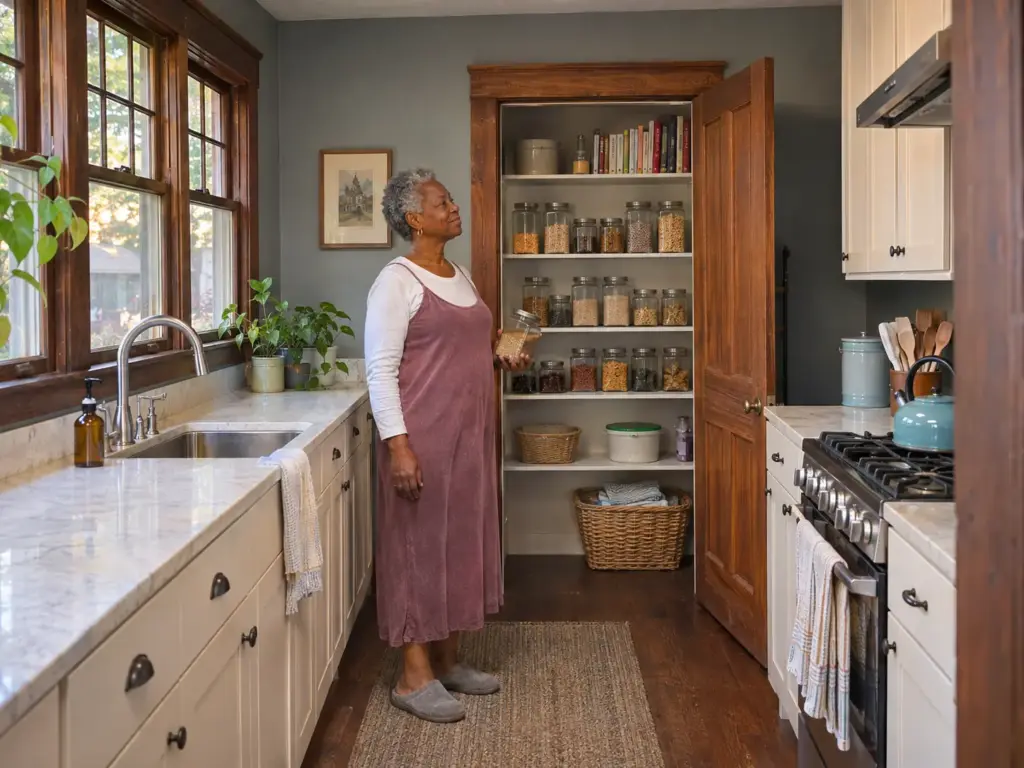
What breaks the set first
The set breaks when something unlike enters it: a takeout container, a free jar, a set bought for the color and not the gap. Each one is cheap alone, and all of them together are the old drawer. Dark cabinets add their own failure, because a label you cannot read in that light is not a label. Go lighter on the ink, or pick a clear front.
The 10-minute reset
The reset is short, and every step has one job.
- Give each zone one shape and one lid logic.
- Stand the lids in the tray, in the order of the nested bases.
- Keep one container family per shelf so a stranger shows at a glance.
- Use one label style everywhere.
- Take every orphan out at the source.
No new purchase unless a whole size has emptied. In a big home with a deep pantry, the set gets swallowed at the back, so the reset starts from the front row and the back row is where the matching ends. Give the deep shelf its own bin, not another jar.
When to add, when to stop
Zone organization works here at shelf scale, with a one-in-one-out rule: add a piece when a size has run out, and retire one when it joins. A seasonal reset, after the holidays or a big grocery run, is all the upkeep it needs. Stop when the lids pair and the shelf reads as one family. The system holds if the same person can put everything away without thinking about it, and that, not the look, is the test.
Measure One Shelf, Pair Every Lid, Reset When a Stranger Moves In
Matching is a measurement problem: measure the shelf, choose by footprint and lid logic, clear out what cannot pair, build slowly, give the lids a home, and decant only what a whole jar can take. When a mixed line returns, run the reset instead of buying around it.
Look at the lid tray and one shelf after a season, or after the next big grocery run, and ask whether every lid still finds its base and whether the labels can be read in that light.
Today, measure the gap on the shelf that bothers you most, sort that one lid drawer and notice whether anything in it still pairs. That small count tells you what to keep and what the shelf actually needs.
Frequently Asked Questions About Matching Containers
01What makes containers match in a pantry?
Containers match when they share a shape, a lid logic and a material family, measured against the shelf instead of a paint chip. Square footprints, one or two product lines and a single label style do the visible work.
02How many container lines should I use?
One line is ideal, and two is fine when the lids work the same way. One lid logic is what lets any lid find its base, and a third line is usually where the orphan-lid drawer begins again.
03Are square or round containers better for a pantry shelf?
Square or rectangular, because the footprints butt together while round jars leave a dead crescent at every corner. Do the sum with the footprint against your measured shelf depth before choosing a set.
04Do matching containers keep food fresh longer?
No, storage never improves quality; it preserves what goes in. A stale bag stays stale in a jar, so check dates before decanting, keep jars clean and put anything perishable back on its shelf.
05How do I get matching containers on a budget?
Start with about six containers, reuse sauce and peanut butter jars, and unify them with one lid color and one label style. Add one piece at a time, and buy a big set only when nothing at home fits.
Disclaimer: ClutterlessNest is a participant in the Amazon Services LLC Associates Program. As an Amazon Associate we earn from qualifying purchases. This article may contain affiliate links — if you buy through them, we may earn a small commission at no extra cost to you. We only recommend products we have tested or genuinely believe in.