























In this article
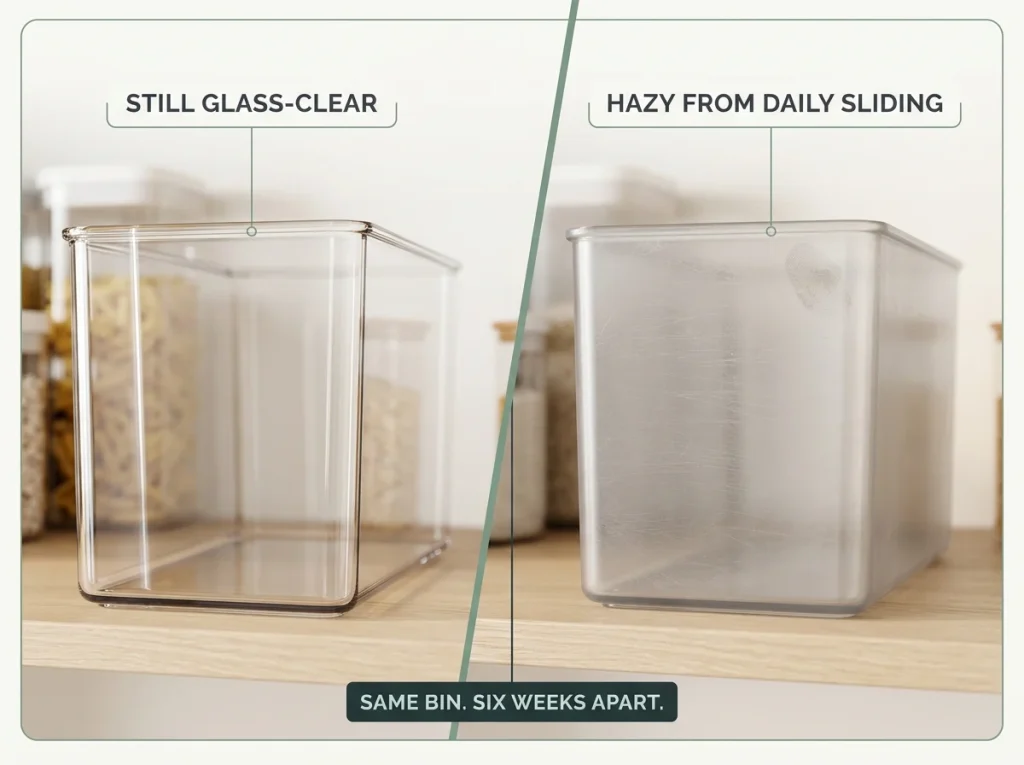
Picture two clear bins bought the same week. One sits on a vanity holding perfume and earrings, and two years later it still looks magazine-perfect. The other went on a pantry shelf, got slid forward every day to reach the pasta, and looked grubby by week six. Same material, opposite outcome.
The most repeated regret in organizing threads is buying acrylic organizer bins for the wrong spot, watching them haze over, and deciding clear storage was a waste. It wasn’t a waste. It was a placement problem, and this is where acrylic actually earns its keep versus where you’re better off spending less.
Quick Answer
Acrylic organizer bins are worth it for low-traffic, visible display like a vanity, jewelry, or a desk caddy, where their clarity is the whole point and nothing wears them down. For pantry or fridge bins you slide and wipe daily, they scratch cloudy within months, and clear polypropylene lasts longer for far less.
What Acrylic Organizer Bins Are and Why They Sell
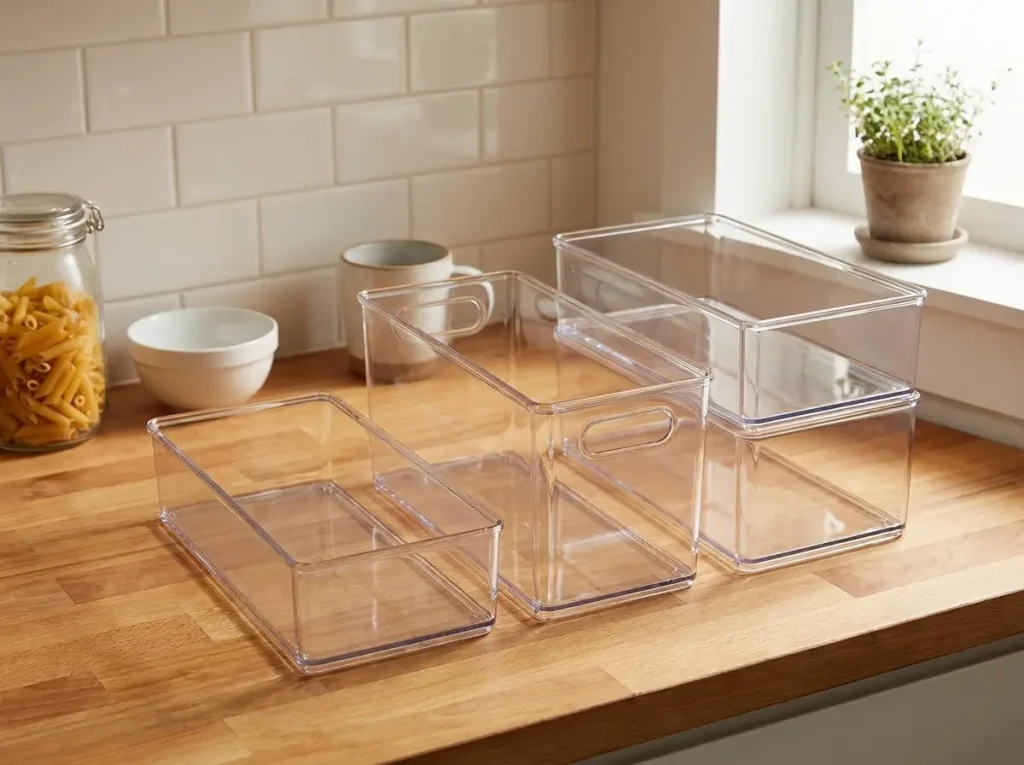
You don’t buy acrylic because you read a spec sheet. You buy it because the clear ones look calm on a shelf and you can see what’s inside without opening anything. That instinct is sound. It just has a narrow lane, and most people drive way outside it.
The see-through appeal (and why it’s a real benefit)
Acrylic is the everyday name for PMMA (polymethyl methacrylate), a rigid, lightweight, glass-clear plastic that’s far more transparent than most other plastics. The transparency is the entire point. You find the thing you’re looking for at a glance, the bin reads modern instead of cluttered, and it’s light enough to lift a full one off a high shelf with one hand.
None of that is hype. It’s a genuine benefit, as long as you remember what you’re paying for.
PMMA vs “clear plastic” — not all transparent bins are acrylic
Here’s the catch most listings bury: plenty of “clear” bins sold as acrylic aren’t PMMA at all. They’re a cheaper, more brittle plastic that looks identical in a product photo and behaves nothing alike six months in. The clarity that justified the price is also the first thing to go once a bin starts getting scratched.
So the value of an acrylic bin is fragile in a literal sense. The moment it stops looking clear, you’ve lost the only reason you spent extra.
The one rule that decides everything
Before you buy any acrylic bin, ask one question: does this spot stay still, or does it get handled every day? Static and visible means acrylic can shine. Slid, stacked, and scrubbed means it’s the wrong tool.
That single question sorts almost every buying decision in this article, and it’s the lens behind the broader framework in how to choose storage bins and containers that last. Acrylic is a display material, not a workhorse material. Keep that straight and you’ll never regret a purchase.
Where Acrylic Bins Actually Earn Their Keep

The vanity that still looks perfect after two years isn’t lucky. It’s low-traffic. Nobody drags a perfume bottle across an acrylic tray fifty times a week, so the surface never gets the micro-scratches that cloud it. This is the lane acrylic was built for.
Vanity, jewelry, and the bathroom counter
Small, uniform items that get placed and admired more than they get grabbed are the sweet spot. Makeup, rings, perfume, a stack of folded scarves behind glass. Before you buy anything, though, check what you already own. A ceramic dish or a small tray you have in a cupboard corrals jewelry for free, and the anti-sell rule here is simple: buy acrylic for the look, not because you have no other option.
If you do want the clear tiered look on a vanity, a clear riser like the mDesign 2-Tier Freestanding Countertop Corner Shelf lifts the back row into view and stays put, so the clarity holds. The one caveat is footprint. Measure your counter corner first, because a two-tier riser eats more depth than people expect.
A low-profile tray is the most foolproof acrylic purchase you can make, because it does exactly one job in exactly the spot acrylic likes.
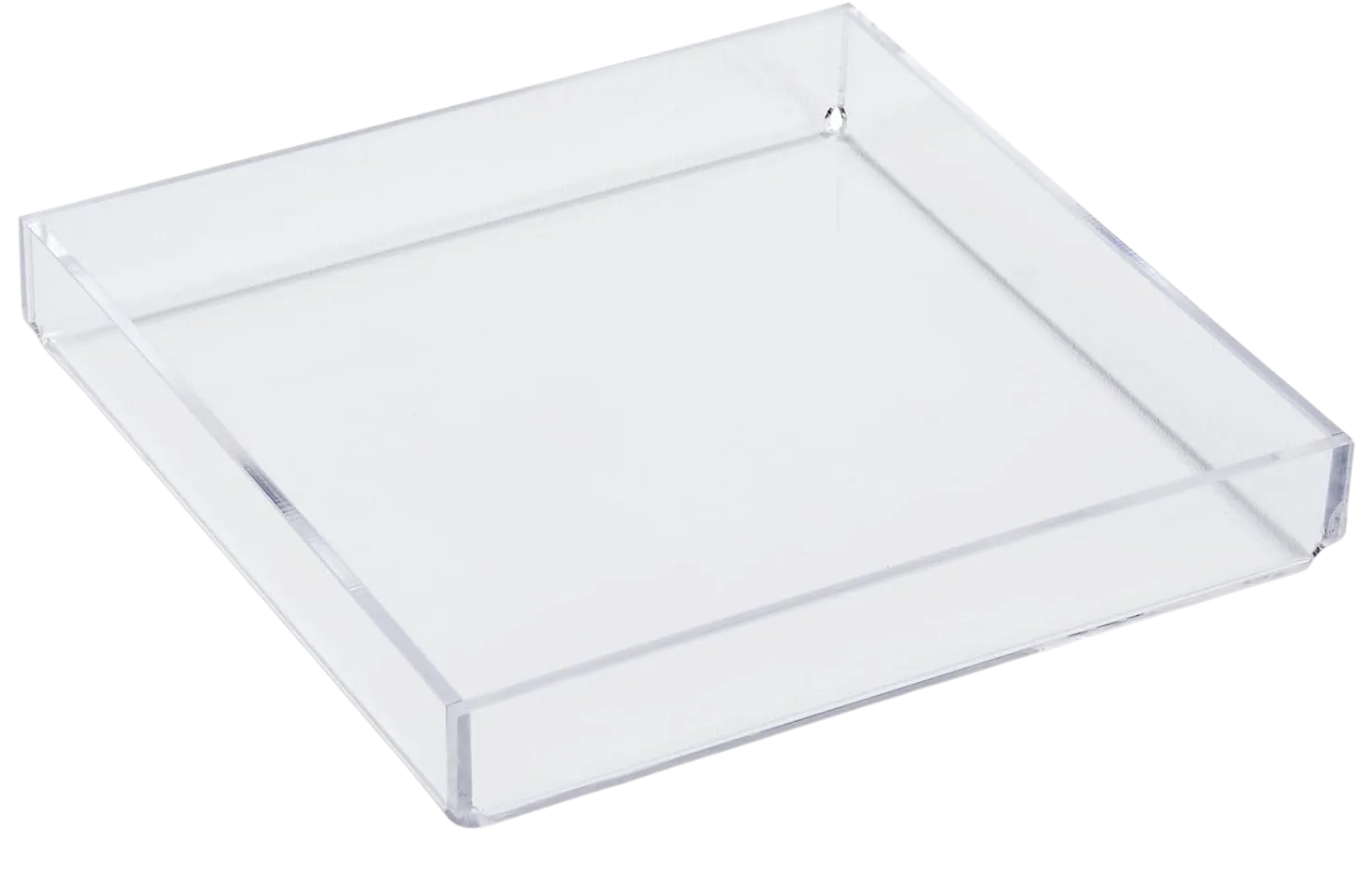
The desk and home-office caddy
A desk is another low-traffic display spot, which is why a clear caddy works there. Pens go in upright, stay upright, and the caddy itself barely moves. The NIUBEE Acrylic Pen Holder holds pens and small tools in separate compartments and reads clean on a desk you actually keep clear.
The honest limit is that a caddy only helps if you don’t pile loose paper around it, which is a separate problem covered in our desk organization ideas. The bin can’t fix a paper habit.
When the free version is the smarter call
Acrylic gets recommended for anything that needs to look tidy and clear. And it works, right up until you ask it to do a job it wasn’t built for. If the item is small and you already own a dish that fits it, you don’t need to buy anything. Save the acrylic budget for the one spot where the clarity genuinely earns it.
Where Acrylic Falls Apart (the High-Traffic Trap)
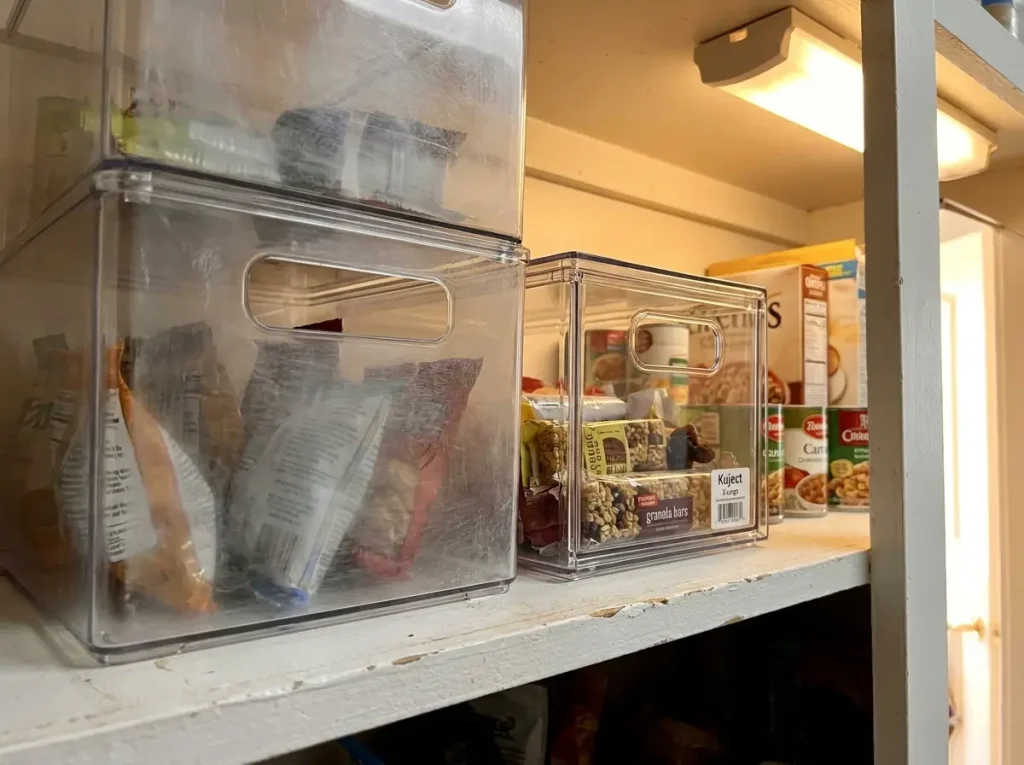
The pantry bin you slide forward every single day is the worst possible job for acrylic. Six weeks in, it reads grubby, and here’s the cruel part: hazed clear plastic looks worse than opaque plastic ever would, because you can see the damage from across the room.
The pantry workhorse bin (the slide that scratches)
Acrylic is brittle and micro-scratches with friction. Every time a bin slides across a shelf, grit and the shelf surface leave tiny scratches you can’t see individually. Pile up a few thousand of those and the surface scatters light instead of passing it through, so the bin goes permanently cloudy. The contents you used to spot at a glance now read blurry.
This is the high-traffic trap, and it’s why “looked great for a month” is the single most repeated acrylic complaint in organizing threads.
The fridge drawer (why pros use PET, not acrylic)
The “clear fridge bins” you see in every organized-fridge photo are usually PET plastic, not acrylic. There’s a reason. Acrylic isn’t rated for the constant cold-and-wipe cycle of a fridge, and the repeated wiping is exactly the friction that hazes it. PET shrugs that off.
So if you’re chasing the clear-fridge look, you’re not actually shopping for acrylic at all, even when the listing waves the word around.
If a bin is going anywhere cold, wet, or wiped daily, don’t buy acrylic. Acrylic also can’t go in the dishwasher, so a fridge or pantry bin that needs regular deep cleaning is fighting the material from day one. Match the spot to PET or polypropylene instead.
“Grubby by week six” — what micro-scratching actually does
If you want clear storage somewhere it gets handled, like a closet shelf or a stack of shoe boxes, reach for tougher PET stackers instead of acrylic. The Kuject Clear Drop-Front Stackable Shoe Boxes give you the see-through payoff without acrylic’s tendency to scratch and crack, and the drop-front means you grab a pair without unstacking the tower. They’re not as glass-clear as premium acrylic, which is the trade.
But in a spot that gets touched daily, tough and slightly less pristine beats clear-for-a-month every time. For more options that survive real use, our guide to the clear bins that hold up where acrylic can’t goes deeper.
Acrylic vs Cheaper Clear Plastic — When PP Wins for Less
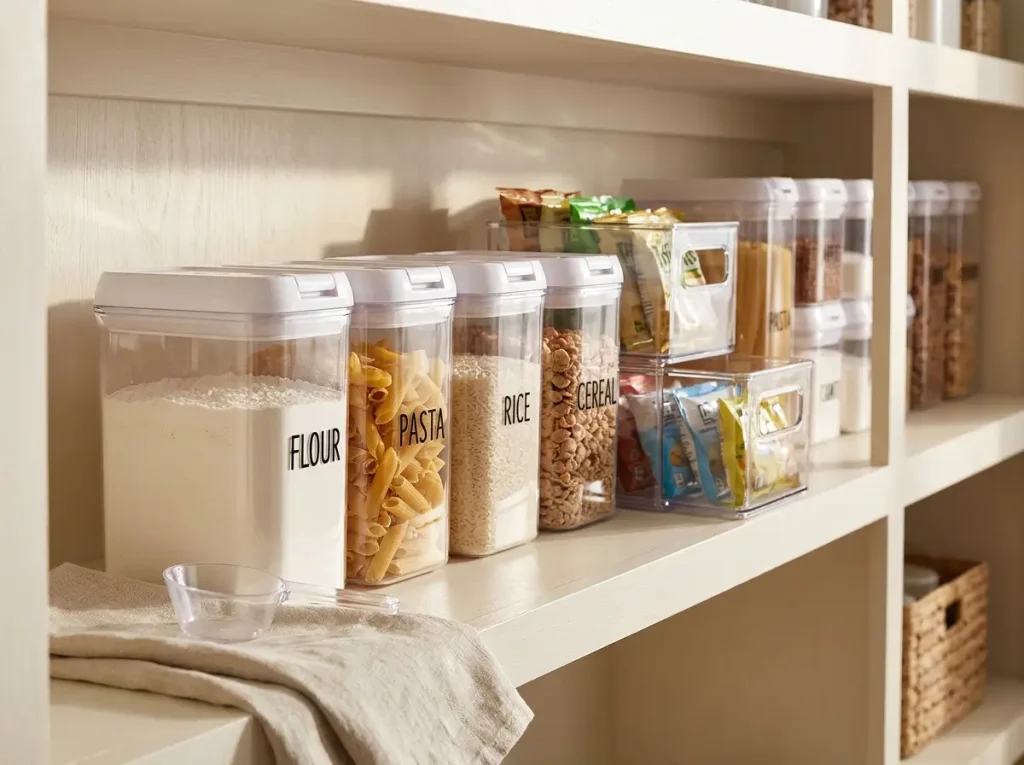
For the pantry, the cheaper bin is also the better bin. That’s the part nobody selling acrylic wants to say out loud, so it’s worth saying plainly.
Why clear polypropylene outlasts acrylic in the pantry
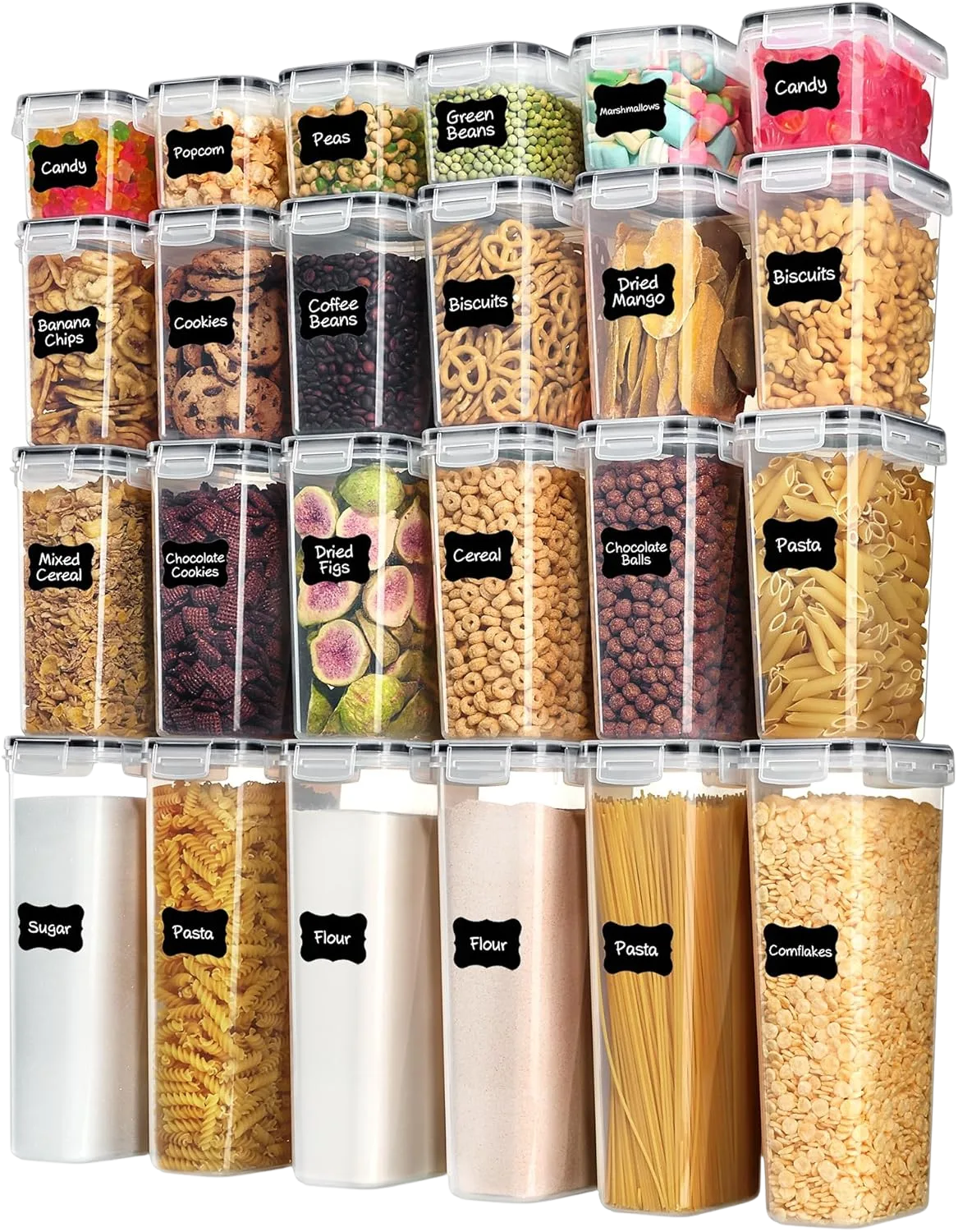
Clear polypropylene (PP, the #5 plastic) flexes under stress instead of shattering, and it handles temperature swings that make acrylic brittle. Where acrylic cracks under a knock or warps near heat, PP just bends and recovers. For anything you slide, stack, drop, or store near a warm wall, that flexibility is the whole ballgame. PP is also the workhorse material behind most clear food canisters, it’s usually BPA-free, and it costs a fraction of comparable acrylic.
The conventional move in pantry organization is to buy matching bins in acrylic for the entire shelf. In practice, clear PP does the daily job better and you stop replacing hazed bins.
The price gap and when it’s actually worth paying
Acrylic runs roughly double the cost of basic clear plastic. The premium is real, and it only pays off where the clarity survives, which means low-traffic, carefully handled spots. For the cabinet and pantry shelves that take daily abuse, a clear stackable plastic bin like the mDesign Stackable Plastic Storage Bins takes the slide so acrylic doesn’t have to, and you won’t wince when one gets bumped.
Reserve the acrylic spend for the vanity. Run plastic everywhere else. People who split it that way stop buying the same bin twice. The deeper pantry-specific picks live in which pantry containers actually earn shelf space.
Declutter before you containerize
Professional organizers warn that buying bins before you declutter is money down the drain, and they’re right. A clear bin doesn’t reduce what you own; it just makes the pile visible. Purge first, then buy to fit what’s left, not to hide what you should have tossed. Buying acrylic to contain clutter you haven’t sorted just gives you expensive clutter you can see through.
Shop your own house before you shop Amazon. Glass jars, a tray from a cupboard, a shoebox you can label. Half the time the “missing organizer” is already in the kitchen, and you’ll buy fewer, better bins once you know what’s actually left after a purge.
Real Acrylic or Cheap Styrene — How to Tell Before You Buy
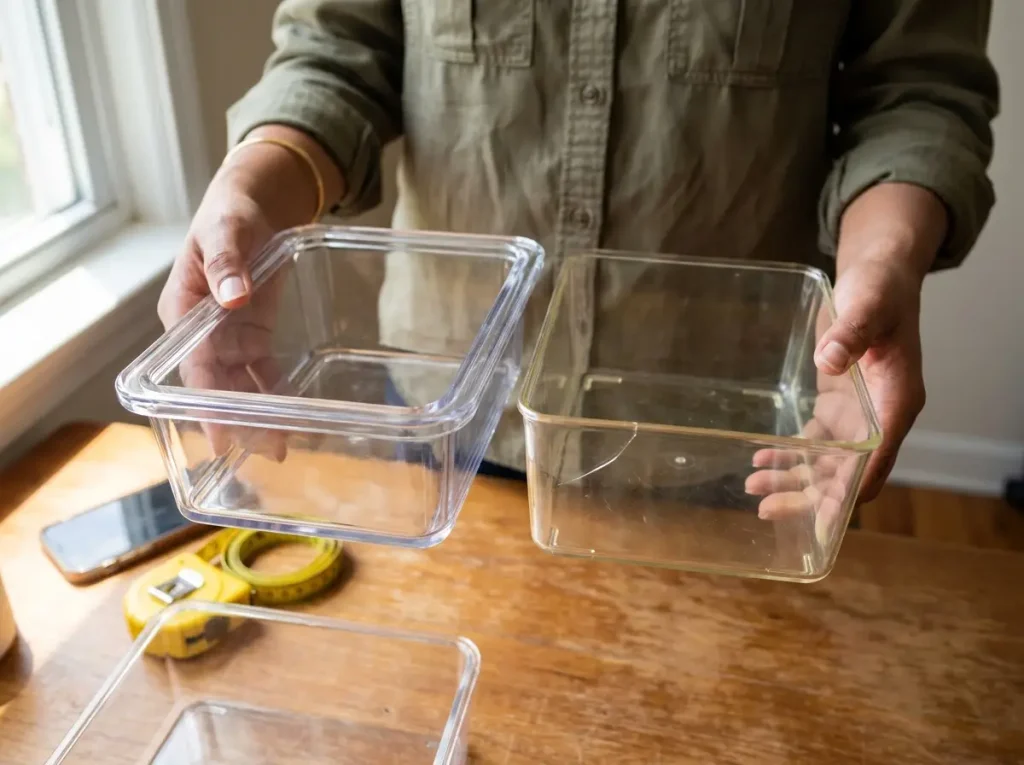
The bin that yellowed on a sunny counter in one season was never acrylic. Real PMMA doesn’t do that. You bought styrene with an acrylic label, and that swap is the source of most “acrylic is junk” reviews.
The heft-and-thickness test (real acrylic feels glass-like)
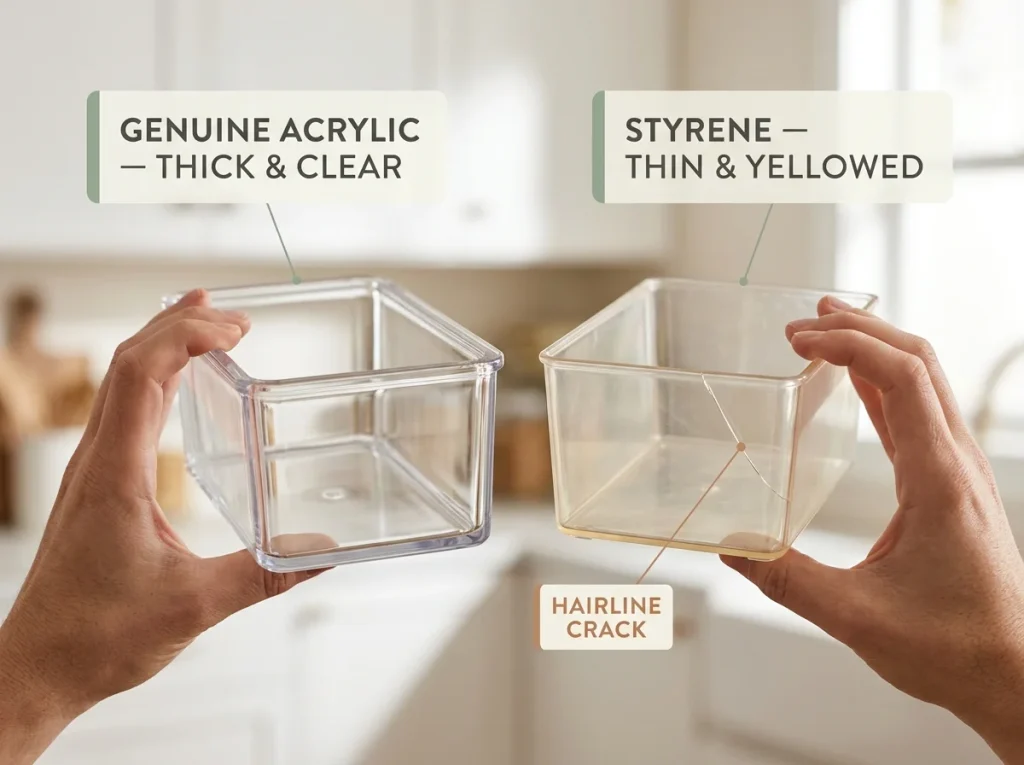
Genuine acrylic has a glass-like heft. Pick it up and it feels substantial, the walls are noticeably thick, and the clarity is deep rather than filmy. Polystyrene (styrene), the cheap stand-in, feels thin and light, smells sharper out of the package, and the rim is flimsy enough to flex between two fingers.
In a store you can judge this in five seconds. Online you’re reading between the lines: complaints about cracking, a price that seems too low for the size, and photos where the walls look paper-thin are all tells.
Read the one-star reviews before you buy, not the five-star ones. Search the reviews for “cracked,” “yellow,” and “thin.” If those words show up repeatedly within the first few months of ownership, the bin is styrene wearing an acrylic label, and no cleaning routine will save it.
Why styrene yellows and cracks (and acrylic doesn’t)
Real PMMA resists UV yellowing, which is why a quality acrylic piece looks much the same years later as it did on day one. Styrene breaks down in sunlight within months, going yellow and brittle until it cracks at the corners under normal use. So the sunny-windowsill bin that turned the color of weak tea was telling you what it was made of. Acrylic in that same window would have stayed clear.
The safe bet — acrylic in a job nothing touches
The lowest-risk way to buy acrylic is for a role where nothing handles it. Shelf dividers are the perfect example, because they sit between stacks of sweaters or plates and never get dragged. The HBlife Acrylic Shelf Dividers slot onto a shelf and keep a tall stack from toppling, and since they live a completely static life, durability stops being a worry.
That same trick works on a closet shelf, which is why they show up in clear dividers that keep shelf stacks from toppling. Static job, genuine acrylic, no regret.
Measure First So the Bins Actually Fit
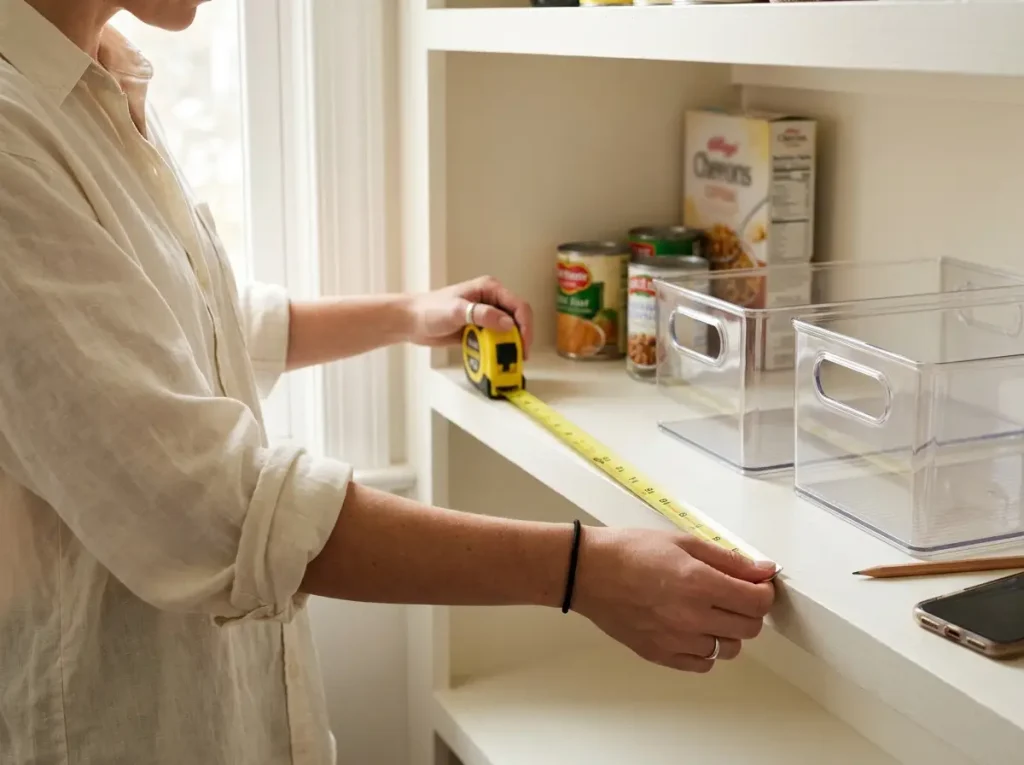
“Didn’t fit my shelf” is the most common acrylic-bin return, full stop. Five minutes with a tape measure beats a return label every time, and it’s the step people skip in the excitement of a clean-pantry plan.
Shelf depth and the “grab-it” gap
Standard pantry shelves run roughly 14 to 20 inches deep, with the top shelf often closer to 12. The mistake is buying a bin as deep as the shelf, which leaves nothing to grip. Buy a bin a couple inches shallower than the shelf so you can still hook a finger over the front and pull it out. On deep shelves, a pull-out bin with a built-in handle saves the front face from the fingerprints and scratches that grabbing leaves behind, and the iDesign Linus Lazy Susan Wedge Organizer Bin is sized to slide out cleanly while you hold the handle instead of dragging your hand across the clear front.
The handle is the detail that keeps a clear bin clear.
Height clearances (so a bin doesn’t block the shelf above)
Match the bin’s height to what you store, not the other way around. Cans need around 6 to 7 inches of clearance, cereal boxes closer to 14 to 16, and you want at least a couple inches of breathing room above the tallest item. I’d have told you to buy the tallest bin that fits the gap. Actually, go one size shorter, because a bin packed to the brim blocks the shelf above and you lose more storage than you gained.
Measure the opening AND the door swing, not just the shelf. A bin that fits the shelf but won’t clear the cabinet frame as you pull it out is still a return. Check that the bin can come all the way forward without catching the hinge or the door edge.
Renter shelves and the handle that saves the finish
Acrylic needs no drilling or mounting, so it’s renter-safe by default, which is a real advantage when you can’t touch the walls. The catch is that apartment kitchen cabinets often run around 12 inches deep, shallower than a standard pantry and a common small-space constraint, so measure before you assume a bin will fit. And don’t over-stack tall clear bins on a single rental shelf, because a wobbly tower is how a brittle bin meets the floor. For more no-drill, fits-real-shelves options, stackable bins that fit real shelves is a good next stop.
Keeping Acrylic Clear (and When to Retire a Bin)
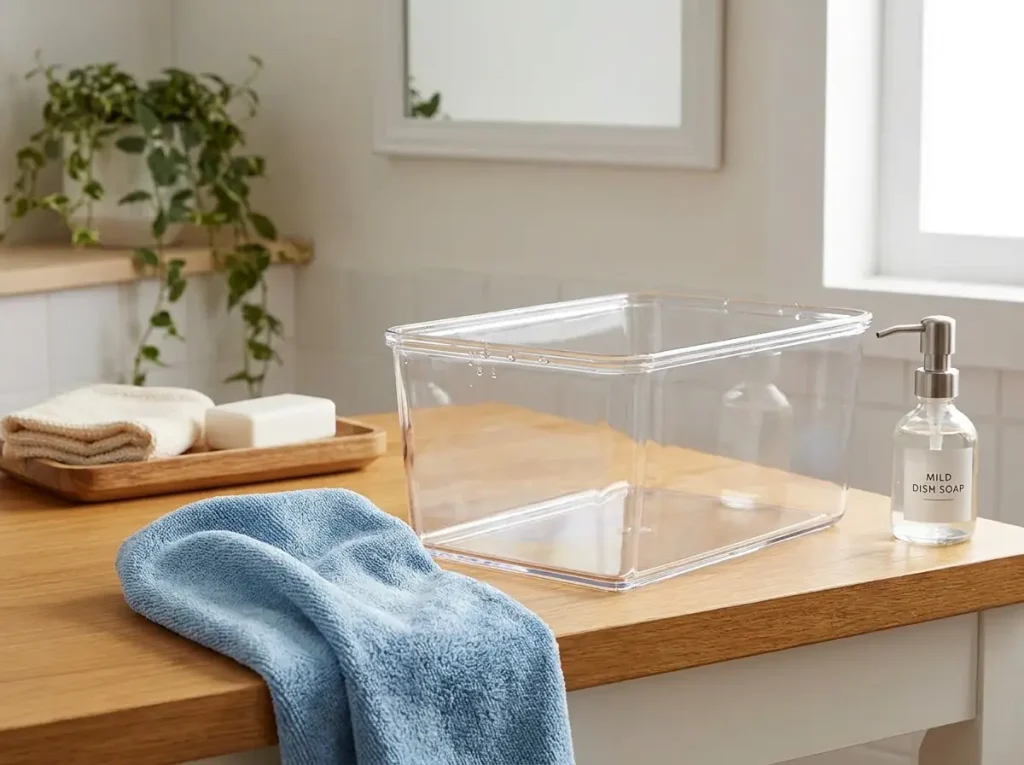
The fastest way to ruin an acrylic bin is the dishwasher and a paper towel. Keep it clear and a display bin lasts years. Let it haze and no spray brings it back.
The whole routine — microfiber and dish soap, nothing harsh
Hand-wash only, with mild dish soap and warm water on a soft microfiber or lint-free cloth. That’s the entire maintenance routine. Skip the dishwasher, where heat warps acrylic, detergent clouds it, and the water jets scratch the surface.
And skip ammonia, alcohol, bleach, and scouring pads, all of which fog or scratch it. Even paper towels micro-scratch over time, which surprises people, so the humble microfiber cloth is doing more work than it looks.
Keep one microfiber cloth just for acrylic. The grit a kitchen rag picks up is exactly what scratches a clear bin, so a dedicated soft cloth that never wipes a counter is the cheapest way to keep acrylic looking new.
Buffing out scratches (and when it won’t work)
Light surface scratches can be buffed out with a dedicated acrylic scratch remover worked in small circular motions with a soft cloth. It genuinely revives a display bin that picked up a few marks. What it can’t fix is deep, all-over hazing, the kind a pantry bin earns from months of daily sliding. Once the clouding is in the whole surface rather than a few lines, polish won’t reach it.
Knowing when a bin is done
When a bin reads permanently cloudy no matter how you clean it, it’s past saving as a clear bin. Demote it to a spot where you don’t need to see through it, or recycle it. And resist the reflex to replace it with another acrylic bin for the same high-traffic job, because you’ll be back here in six weeks. That’s where the one-in-one-out rule that keeps bins from breeding earns its place: one bin in, one bin out, and you stop accumulating clear plastic you don’t need.
The Bottom Line on Acrylic Organizer Bins
Acrylic earns its premium in exactly one situation, and it’s a money-waster nearly everywhere else. Keep three things straight and you’ll never regret a purchase.
Buy acrylic only for low-traffic, visible display, like a vanity, a jewelry tray, a desk caddy, or static shelf dividers. For pantry, fridge, and cabinet workhorses, clear polypropylene or PET lasts longer for less. And always check for genuine PMMA over bargain styrene, then measure your shelf before you buy.
In three months, look at your acrylic. If a bin has gone hazy, it was in the wrong spot, so move a clear-plastic workhorse into that high-traffic job and keep the acrylic somewhere it stays looked-at, not handled. Start with one spot, the vanity or the desk, and get the clear bin that genuinely earns its place there. Skip it everywhere it would only scratch.
Frequently Asked Questions
01Are acrylic organizer bins worth it?
For low-traffic, visible display like a vanity, jewelry, or a desk caddy, yes; the clarity is the point and nothing wears them down. For high-traffic spots you slide or wipe daily, no, because they scratch cloudy fast and clear polypropylene lasts longer for less.
02Do acrylic organizer bins scratch or turn cloudy over time?
In handled spots, yes; friction micro-scratches the surface and it reads permanently grubby within months. In static display spots they stay clear for years. Hand-washing with a microfiber cloth instead of paper towels slows the clouding dramatically.
03Can you put acrylic organizer bins in the dishwasher?
No. Dishwasher heat warps acrylic, the detergent clouds it, and the water jets scratch it, so one cycle can ruin a bin permanently. Hand-wash with mild dish soap and a soft microfiber cloth only.
04Acrylic vs plastic bins, which lasts longer?
For everyday workhorse storage, clear polypropylene lasts longer because it flexes instead of cracking and shrugs off temperature swings. Acrylic only wins in low-traffic display spots where its clarity is the whole reason you bought it.
05Why did my acrylic organizer bins turn yellow?
Real acrylic (PMMA) resists UV yellowing, so a bin that yellowed was almost certainly cheap styrene sold as acrylic. Styrene breaks down in sunlight within months; heavier, glass-like heft is the quickest way to spot genuine acrylic before you buy.