


















In this article
You found the perfect bin online. It looked great in the cart, it arrived, and you slid it onto your closet shelf. Then the front lip hung past the edge by a hand’s width and the door wouldn’t close. Almost nobody warns you about this, because the problem was never the bin. It was that the bin was never sized to the shelf you actually have. The bins worth buying for a closet are the ones that fit your zone, so this guide sorts the best storage bins for closets by where they go (eye level, above the rod, shelf cubbies, sealed off-season) and starts with the measuring step that makes any of them work. If you want the bigger picture on bin types and materials first, our guide on how to choose storage bins and containers that last covers the fundamentals.
Quick Answer
Measure the shelf first, then match the bin to the zone:
- Eye-level daily grab → clear open-front stackable bin
- Above-rod top shelf → handled fabric bin with a front label
- Shelf cubbies → pull-drawer stackable bin
- Sealed off-season → latching gasket box
- Bulky bedding → vacuum bag
- Light soft goods on a budget → collapsible fabric cube
Measure the Shelf Before You Buy a Single Bin
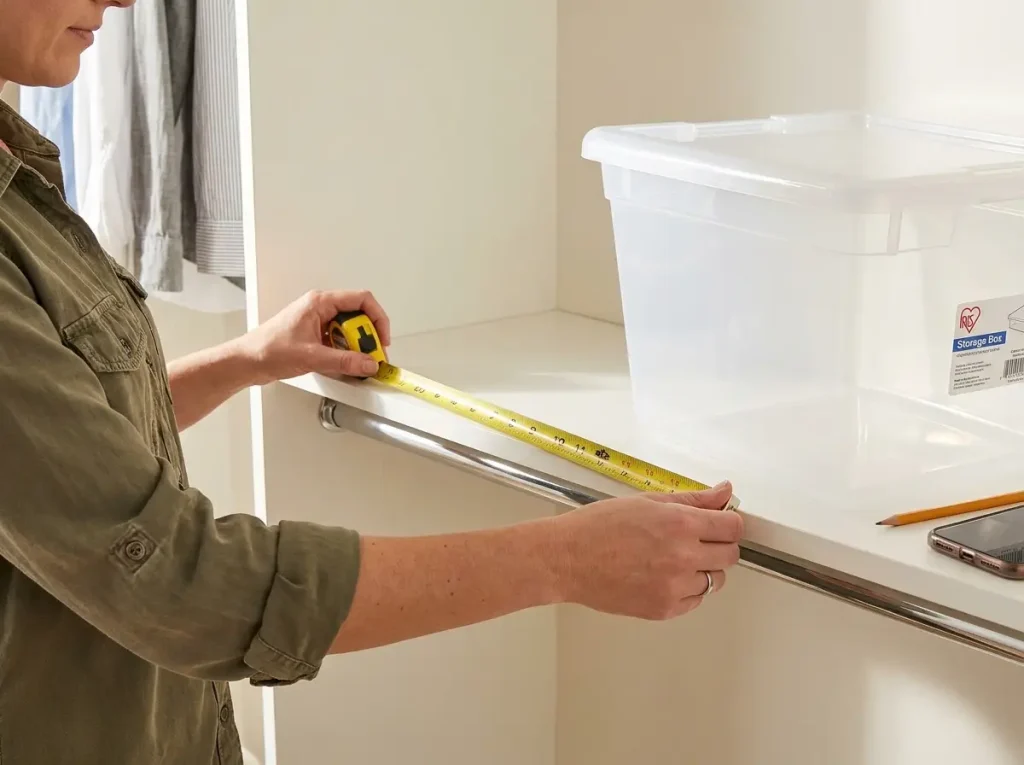
Here is the mistake almost everyone makes exactly once: buying to the bin you liked online instead of to the shelf you already own. The bin shows up, it overhangs the front of the shelf, and now the closet door catches on it every time. You return it, or you live with a door that won’t shut. Neither is a great Tuesday.
The reason this happens so often is a gap between two numbers that look like one. A standard reach-in closet is a deep box, roughly two feet from the back wall to the door frame. But the shelf you actually set bins on is usually far shallower, most often twelve to sixteen inches in a rental. The box is deep. The shelf is not. A bin sized to the closet depth will hang right off the front.
Match the Bin to the Shelf, Not the Closet
Shelf depth tells you which bins are even in the running. A twelve-inch shelf suits folded clothes and small bins. Fourteen to sixteen inches handles towels and linens. To seat a genuinely large storage bin flush, you usually need an eighteen-to-twenty-four-inch shelf, which is custom-closet territory, not rental territory. As Bob Vila puts it, don’t buy more storage bins until you’ve measured and decluttered first.
Here is the worked example, because the math is the whole point. A popular large clear box like the IRIS USA 40 Qt Nestable Clear Storage Box (3-pack) measures about sixteen inches deep. Set it on a fourteen-inch shelf and a couple of inches hang past the edge, enough to stop a bifold door from folding shut. On an eighteen-inch shelf it sits flush and works beautifully. Same bin, two completely different outcomes, decided entirely by a shelf you can measure in thirty seconds.
Why Height Sinks More Purchases Than Depth
Depth gets all the attention, but height is the quieter dealbreaker. A tall lidded bin needs vertical clearance to slide onto the shelf, and a lot of closet shelves leave only about fourteen inches of headroom for a folded stack. Measure that gap before you fall for a tall tote. And measure width too, while you’re at it, because a bin that fits the depth but not the run of the shelf is just as useless.
There’s one more reach-in quirk worth knowing. The door overlap eats into your maneuvering room. A sixteen-inch shelf sounds roomier than a twelve, but the door opening leaves only a narrow gap to angle a bin past the frame, so deeper isn’t automatically better here. The way a reach-in closet wastes half its depth is usually a clearance problem, not a square-footage one.
Measure the shelf depth and subtract a one-to-two-inch buffer before you buy. Write that number on your phone and shop to it. The buffer is what keeps the bin from grazing the door and lets you actually pull it forward without scraping your knuckles on the frame.
Match the Bin to the Closet Zone
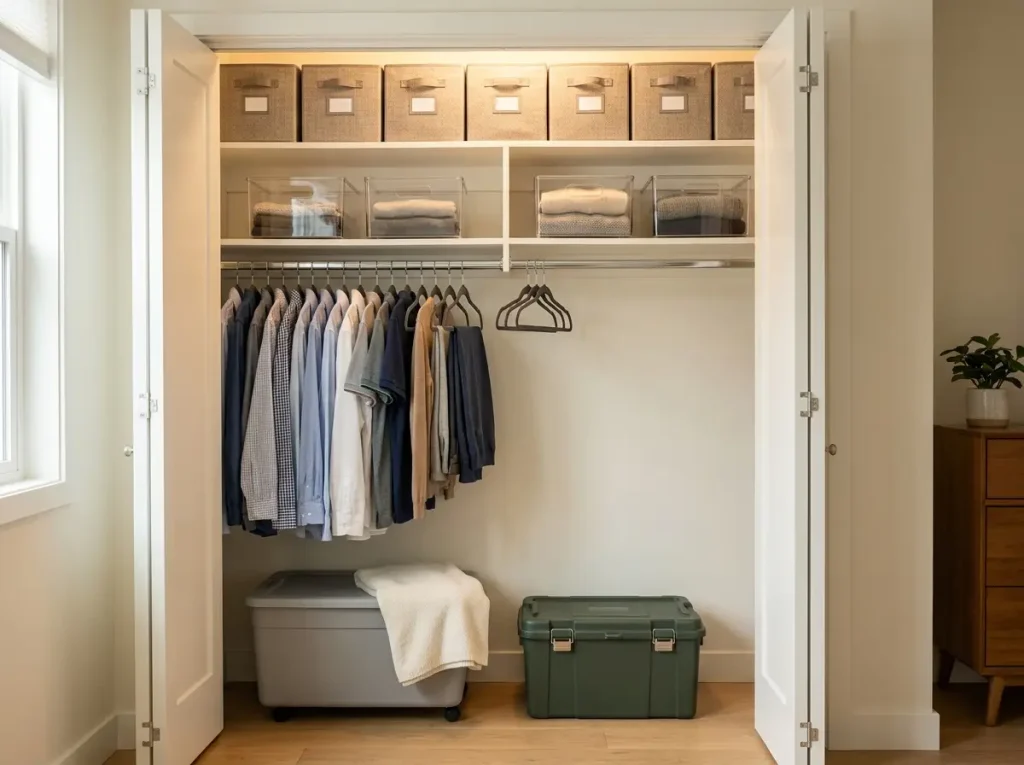
A closet isn’t one storage problem. It’s four, stacked on top of each other, and each one has a different right answer. Most roundups treat a closet as a single shelf and hand you the same bin for all of it. That’s why people end up with a tidy-looking system that fights them daily, which is its own kind of failure.
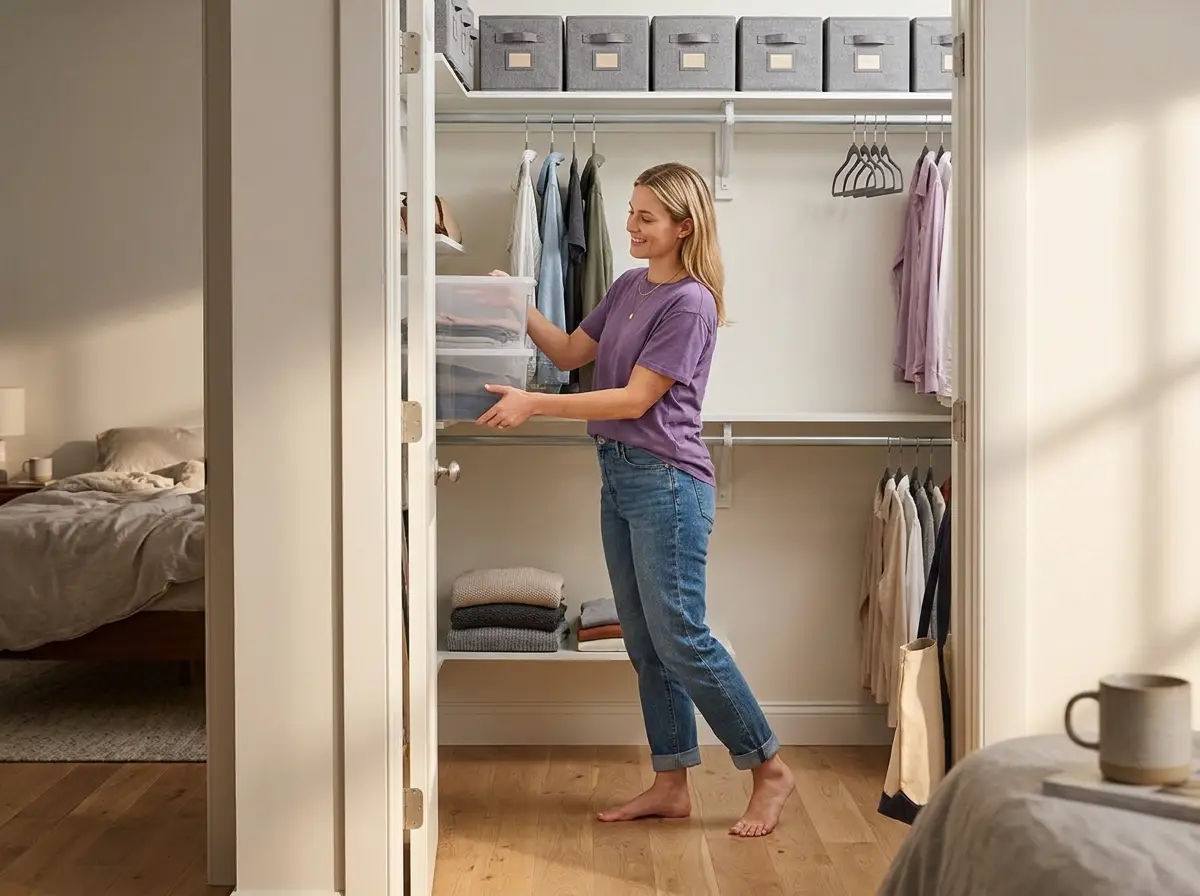
Think of your closet in zones, top to bottom. The eye-level shelf is prime real estate, the spot you reach without thinking, so it wants clear bins you can see into and grab from. The above-rod top shelf is the dead space renters ignore, perfect for labeled fabric bins you pull down by a handle a few times a year. The shelf cubbies in the middle want stackable bins that open from the front so you’re not unstacking a tower. The closet floor under the hanging clothes takes low lidded or rolling bins. And anything truly off-season wants a sealed latching box or a vacuum bag.
The Zone Map at a Glance
Here’s the whole thing in one place. Match the type to the location and most of your decisions are already made.
| Closet Zone | Best Bin Type | Renter-Friendly |
|---|---|---|
| Eye-level shelf | Clear open-front stackable | Yes |
| Above-rod top shelf | Handled fabric, front-labeled | Yes |
| Shelf cubbies | Pull-drawer stackable | Yes |
| Closet floor | Low lidded or rolling bin | Yes |
| Sealed off-season | Latching box or vacuum bag | Yes |
The dead space above the rod deserves a special mention, because it’s free vertical storage that costs nothing and moves with you. If you’re working a rental, that top shelf is your no-drill win, and organizing a walk-in closet by zones follows the exact same logic on a bigger canvas.
Best Bins for Eye-Level Daily Access
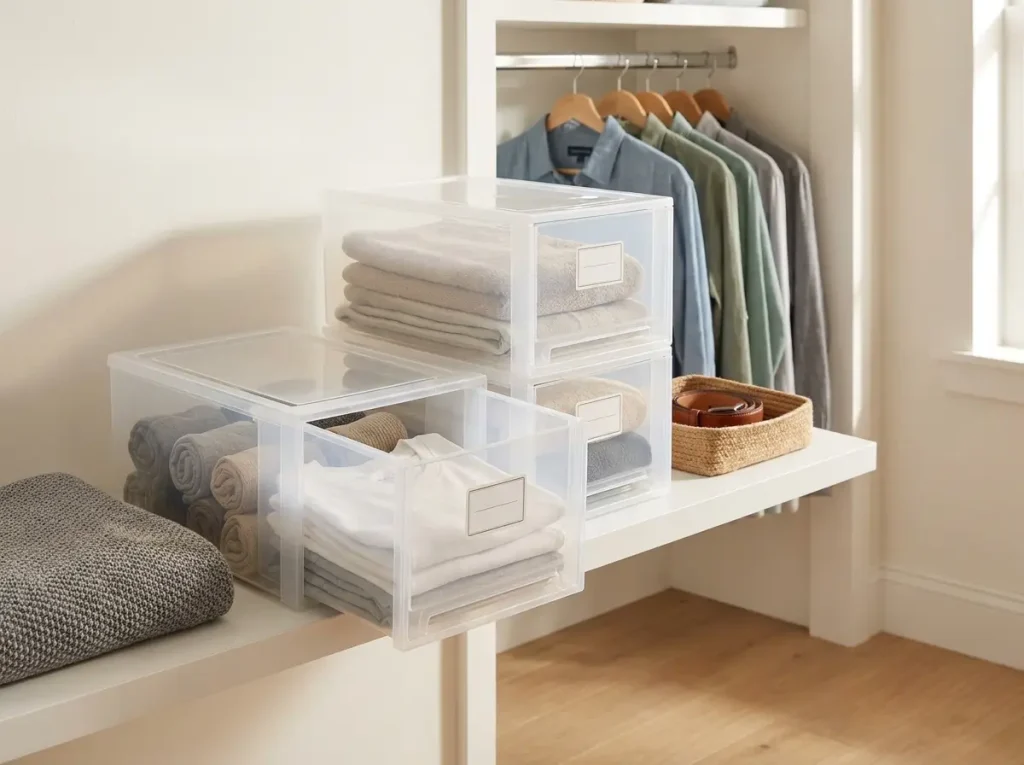
The front of your eye-level shelf is the most valuable storage in the entire closet. It’s the spot your hand goes to on autopilot, so it should hold the things you reach for daily, in bins you can see into without opening. This is where clear walls earn their keep. Professional organizers stress that clear bins paired with visible labels are what keep a closet system working long-term, and at eye level that payoff is immediate.
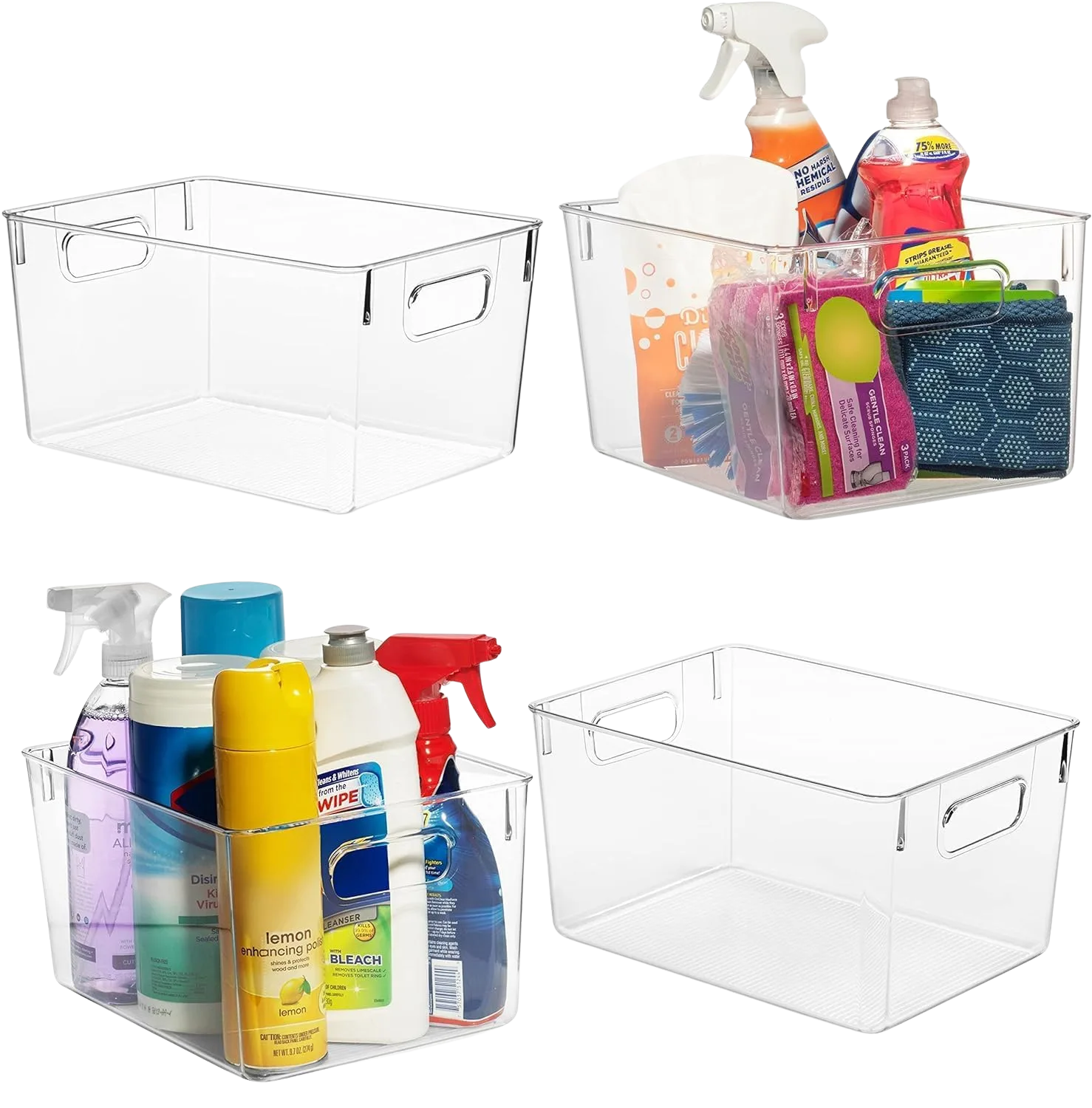
For pure see-at-a-glance storage, clear plastic is the move. The ClearSpace Clear Plastic Storage Bins are sized for a standard shelf and the transparent walls mean you spot what you need before you touch a thing. If you want the same clarity for less, the budget swap is the Rubbermaid Cleverstore Clear, which does the same job with slightly thinner walls.
The Open Front That Fixes the Buried-Bin Problem
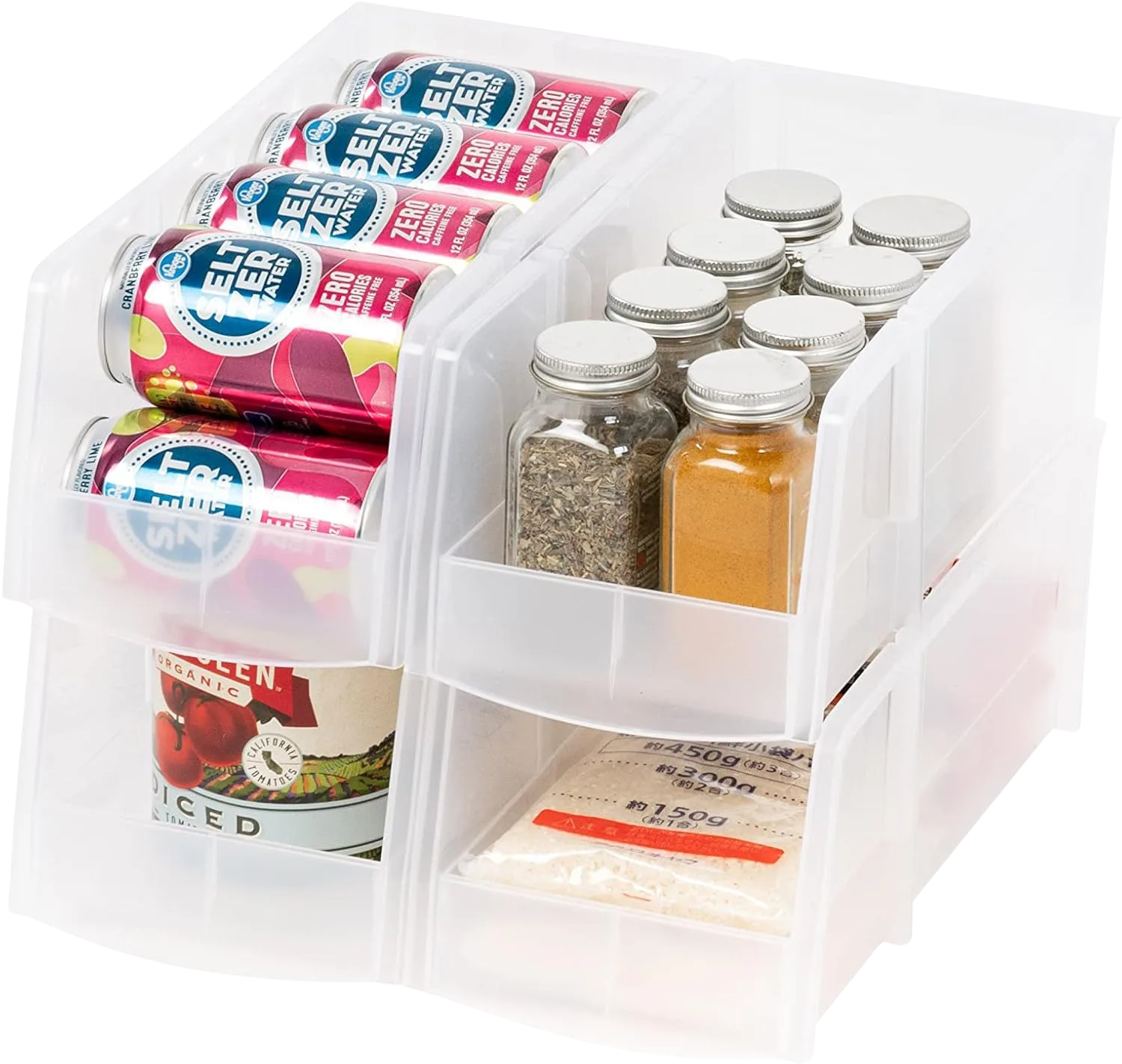
Stacking clear bins saves shelf space right up until you need the one on the bottom and have to lift the whole tower to reach it. Clear didn’t help much once the bin was buried. The fix is a front opening, so you grab from any bin in the stack without unstacking. The IRIS USA Open Front Stackable Bin is built exactly for this, with an angled front cutaway and an interlocking lip that keeps the stack from sliding.
One rule holds even for clear bins: once they’re stacked, label the fronts. You can’t read the contents of the bottom bin in a stack, so visibility alone doesn’t solve retrieval. For more on getting this zone right, our pick of clear storage bins that actually fit rental shelves goes deeper on sizing.
Best Bins for the Above-Rod Top Shelf

The gap above the rod is the storage renters forget they have. It’s high, it’s awkward, and it’s perfect for the off-season things you touch twice a year. But it only works if you can read the bin from the floor and pull it down without the whole stack tipping onto your head. Two features make or break this zone: a front label and a real handle.
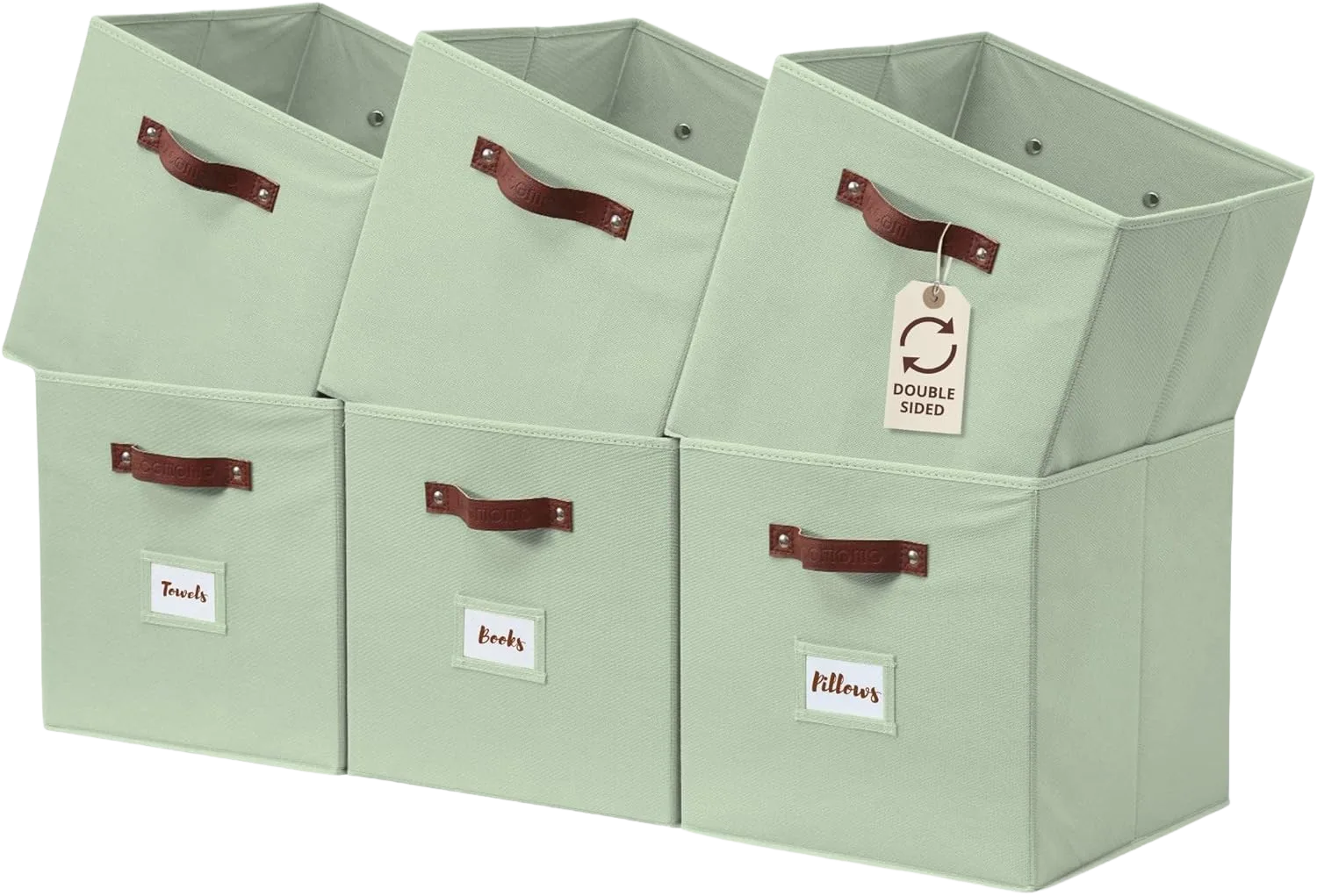
The front label is non-negotiable up high. You’ll never read a lid from the floor, so a bin labeled only on top is a mystery box you have to take down to identify. A front-facing label window solves it, whether you fill it with a label maker strip or a handwritten card. The Fabric Storage Bins with Labels set is built around exactly that, with a clear label slot on the front of each bin so you know what’s up there at a glance.
Handles Are Reachability, Not Decoration
A bin on a shelf above your head with no handle is functionally useless. You can’t get a grip to lower it, so you end up two-hand-shoving it off the edge and hoping. A side handle or a cut-out handhold lets you pull the bin down with control. Treat handles as a requirement for anything above shoulder height, not a nice-to-have.
The other thing that makes this zone work is uniformity. Matching bins on the top shelf, labeled by season and category, beat a row of random boxes and piles. There’s a real reason for it beyond looks: a folded pile without a bin becomes a leaning tower of garments that slumps and topples the first time you pull something from the middle. A bin contains it. This is the no-drill move that beats installing shelving, and it’s the backbone of no-drill ways renters reclaim closet space without losing a deposit.
Best Stackable Bins for Shelf Cubbies
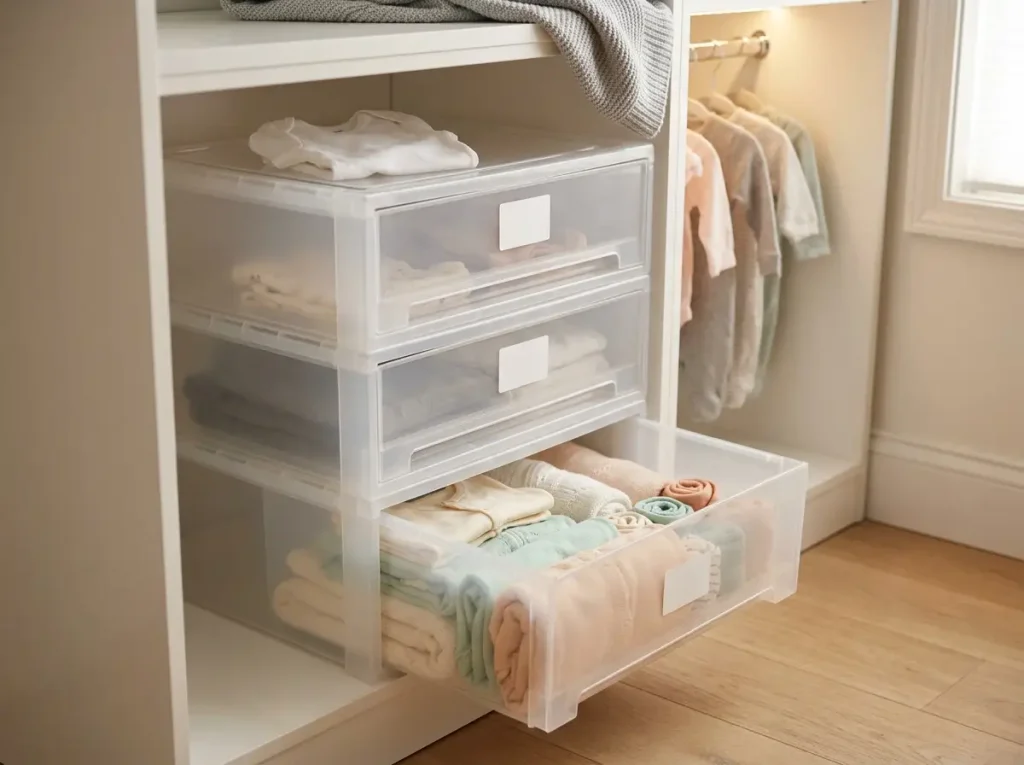
Stacking doubles your shelf. That’s the appeal, and it’s real. The catch is the same one that sinks clear bins: the moment you need the bin at the bottom, you’re unstacking the whole tower to get to it, and after the third time you stop bothering and the bottom bin becomes dead storage.
The fix is a bin that opens like a drawer. Pull-drawer stackables let you slide the front of a stacked bin open and reach in without lifting anything off the top. Rigid polypropylene holds its shape under a stack the way soft fabric never will, which is exactly why these belong in a busy cubby. The IRIS USA Stack & Pull bins are the SERP-favorite version of this, and the pull action is genuinely the difference between a stack you use and a stack you ignore.
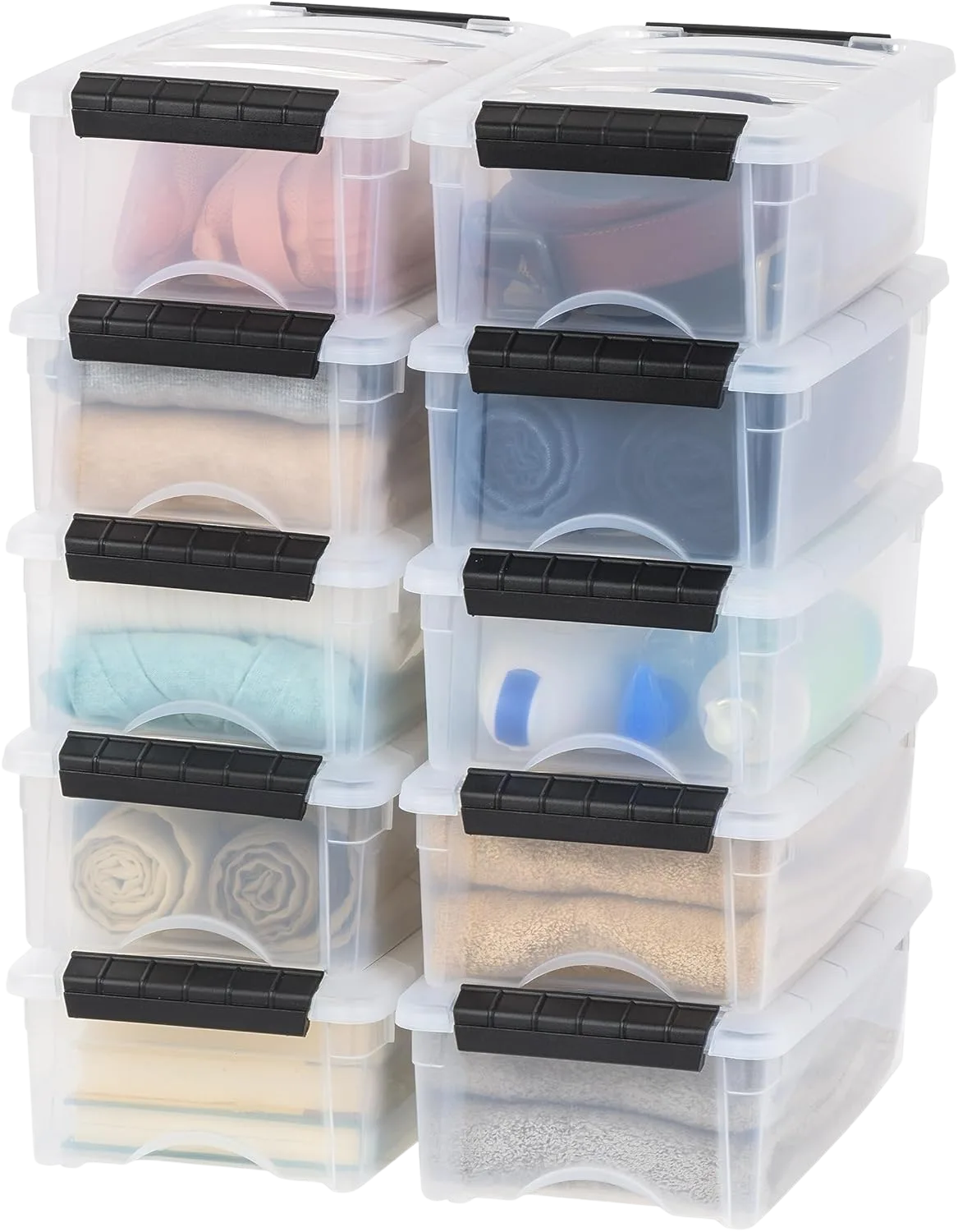
What actually holds a stack together is the interlocking lip, where each bin nests into the one below instead of just resting on it. Bins that only sit on each other slide apart the first time you bump the shelf. If stackability is your main concern across the whole closet, our roundup of stackable bins that actually lock together compares the lip designs side by side.
Put your heaviest, least-used bin on the bottom of a stack and your daily-grab bin on top. People stack in the order they buy, then fight the system forever. Two minutes of planning the order saves you a year of lifting.
Best Bins for Sealed Off-Season Storage
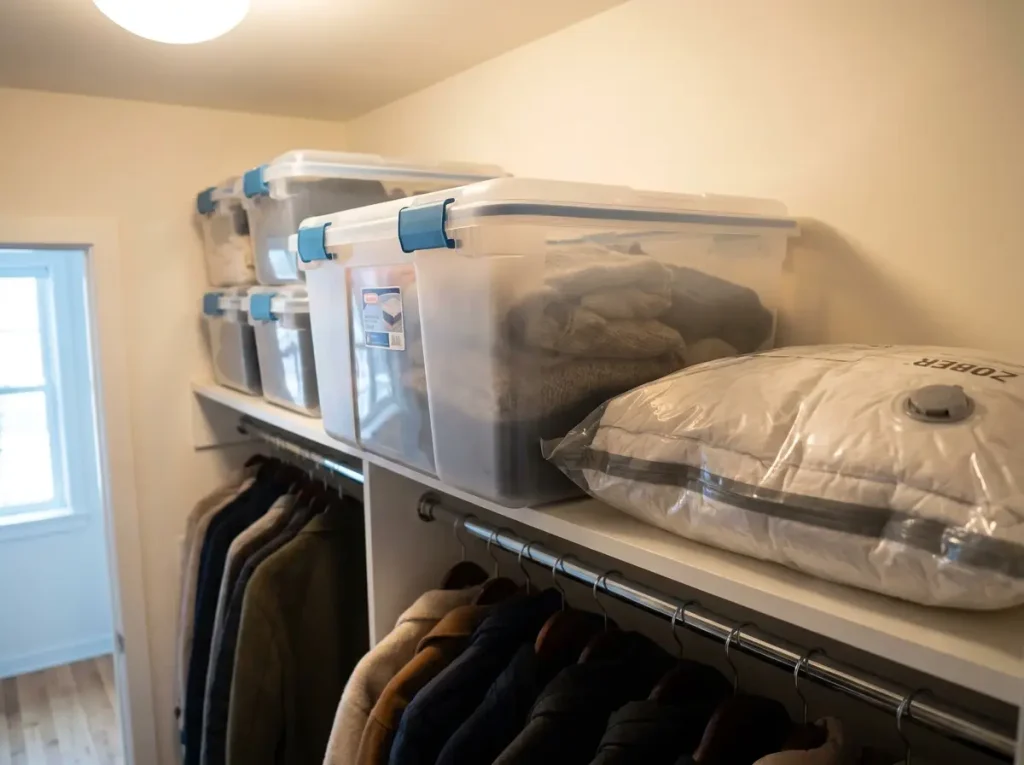
Off-season storage is the one zone where a lid genuinely earns its place. The sweaters, coats, and comforters that leave the closet for half the year are exactly what dust, humidity, and time go after, and an open bin offers none of them protection. A near-airtight lid is the difference between pulling out fresh linens in spring and pulling out a dusty, musty pile. A lidless bin shoved on a high shelf quietly becomes a dust graveyard, collecting a season’s worth of grime on whatever’s inside.
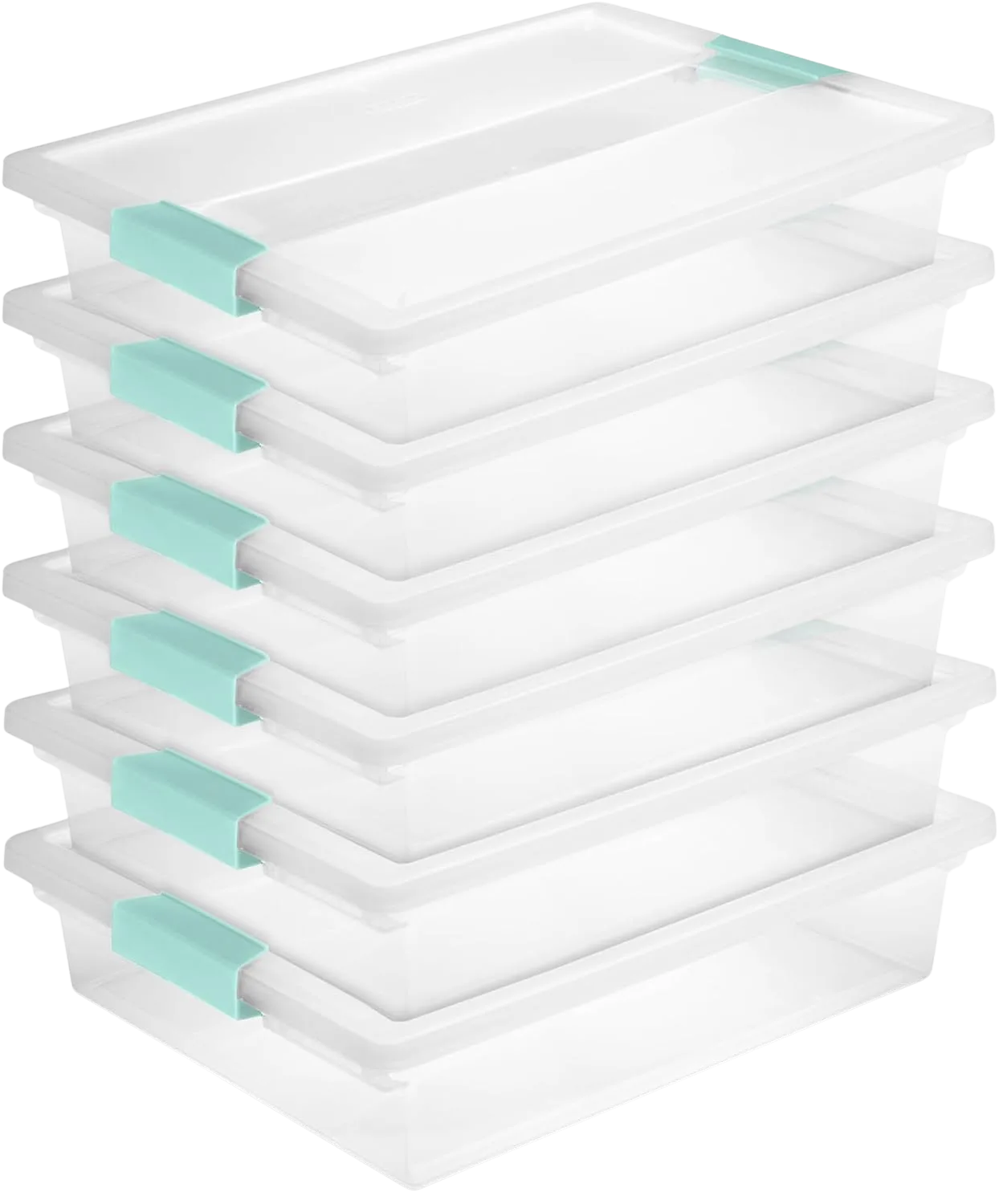
For sealed, stackable, weight-bearing storage, a latching gasket box outperforms an open tote or a fabric cube. The Sterilite 6-Pack Clip Box is the workhorse here, with side clips that hold the lid down and a body sturdy enough to stack and to take heavier contents than fabric ever could.
When to Reach for a Vacuum Bag Instead
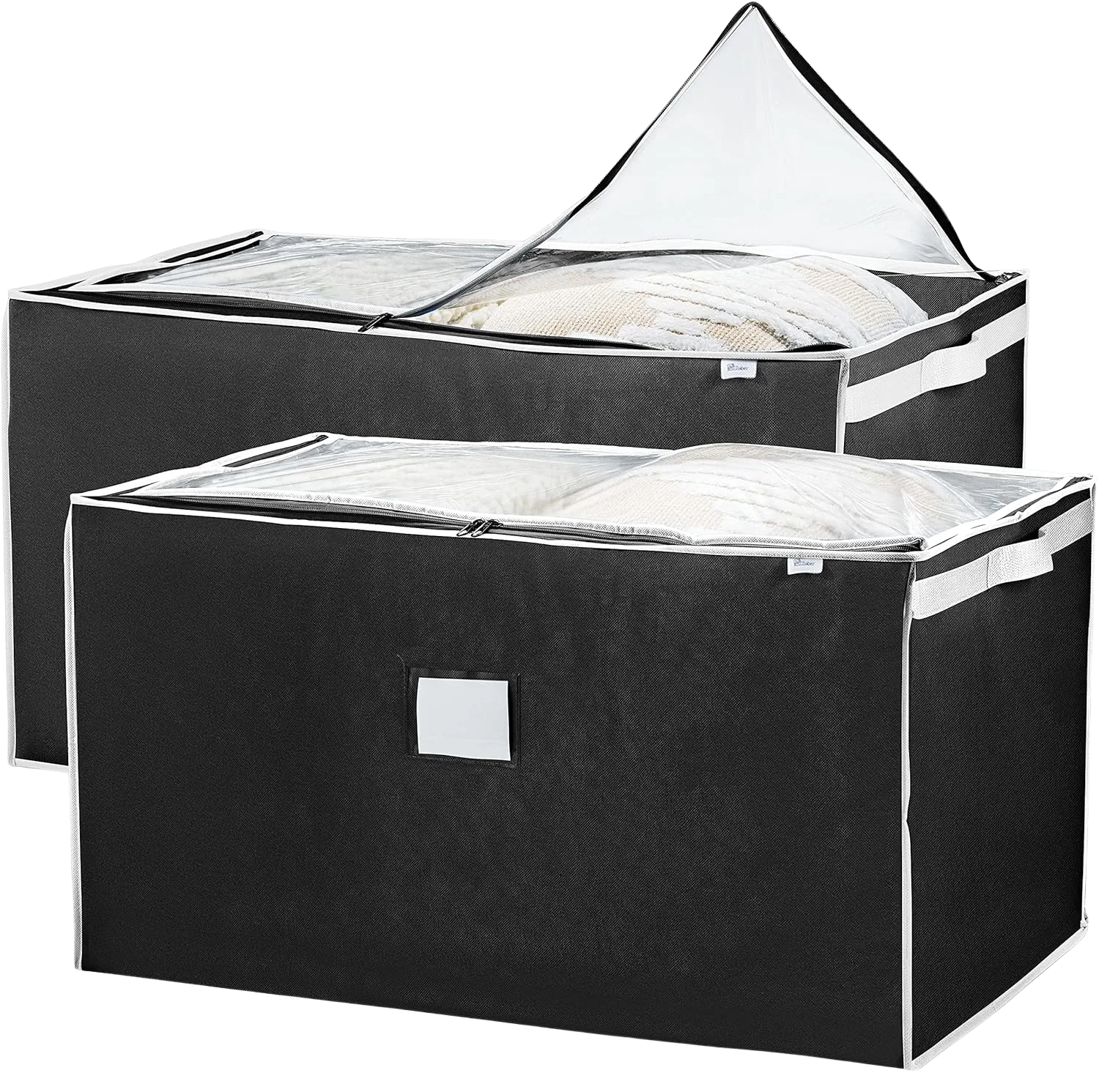
Bulky bedding is its own problem. A single comforter or a couple of puffer coats can eat a whole shelf, and that’s where vacuum bags pull their weight, compressing the bulk down to a flat slab that slides onto a shelf with room to spare. The ZOBER Vacuum Storage Bags variety pack covers the common sizes for bedding and outerwear.
The conventional move is to vacuum-bag everything bulky. In practice, wool and down are the exceptions that prove the rule, so those two stay in a sealed box while the synthetics get compressed. If you rotate your closet by season, the vacuum bags that actually hold their seal matter more than you’d think, and pairing them with a real seasonal closet rotation that doesn’t fall apart keeps the whole system honest.
Best Budget Bins and When to Skip the Splurge
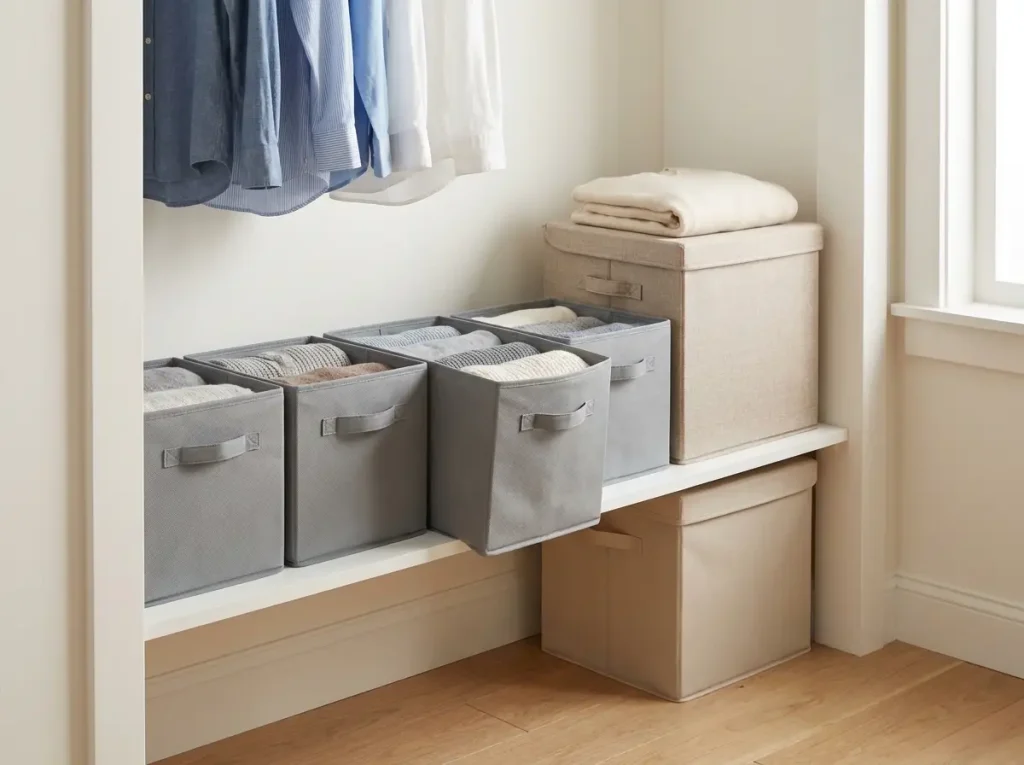
Here’s the honest save-vs-splurge part nobody selling bins wants to say out loud: for light soft goods, the cheap fabric cube does about eighty percent of the branded job. The splurge, a pricier mDesign-style cube, buys you stiffer walls and cleaner seams, not better function for storing T-shirts. I used to point people straight to the premium cubes by reflex. After watching how often the budget version holds up fine for light items, I changed the advice: buy cheap first, and only upgrade the specific bins that actually fail you.
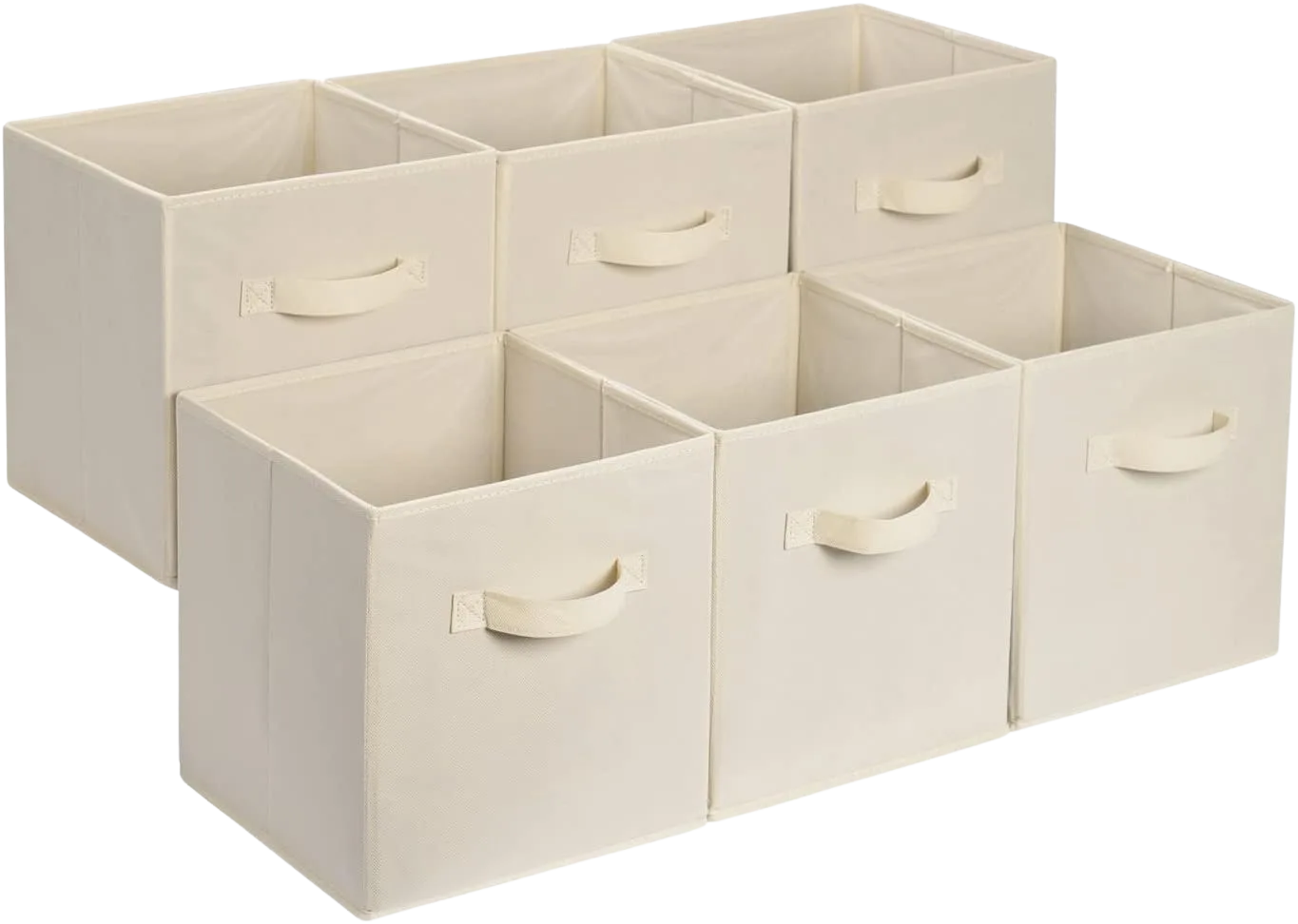
The Amazon Basics Collapsible Fabric Storage Cubes are the honest budget pick. Six matching cubes, and the matching is the part that reads as organized, more than any brand name ever will.
The One Upgrade Worth Paying For
If there’s a place to spend a little more, it’s a lid. A lidded fabric bin blocks the dust-graveyard problem on a high shelf and adds a flat top you can stack onto, which an open cube can’t offer. The PRANDOM Large Collapsible Storage Bins with Lids are the mid-tier step up that earns its keep specifically for stored-and-forgotten items.
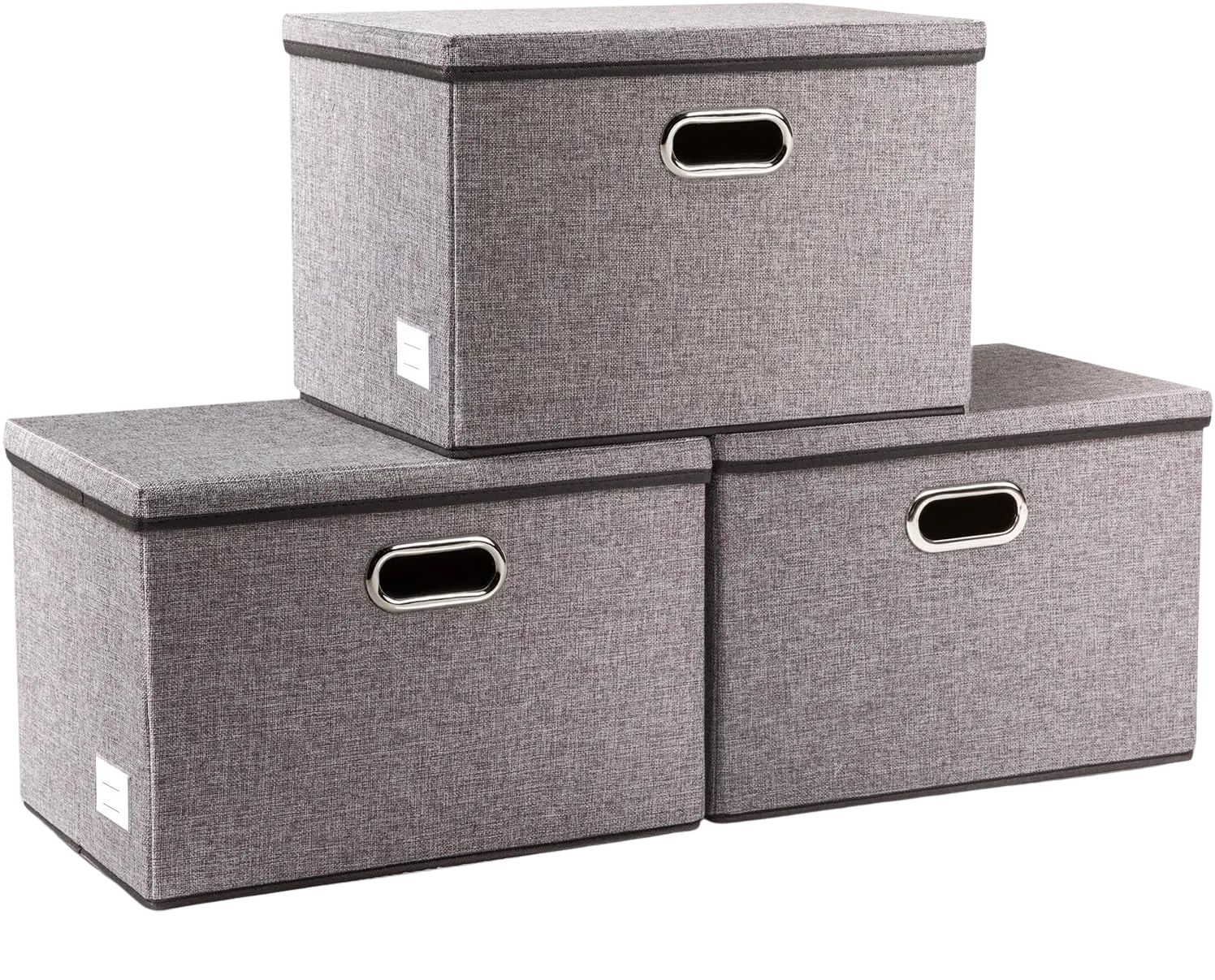
Before you buy anything, though, the most honest recommendation is to use the matching bins you already own. Uniformity does the heavy lifting, not the price tag. If you want the full breakdown on which material wins where, our fabric-versus-plastic comparison settles it by environment, and our take on a budget closet setup that doesn’t revert keeps the whole project cheap.
Buy one pack of bins, not the whole closet’s worth, and live with it for a month. You’ll learn which zones actually need more and which fabric cube you overpacked and need to swap for rigid. Buying in stages costs the same and wastes far less.
Why Closet Bins Fail After Three Months

Every closet looks organized on install day. The honest test is three months later, after normal life has had its way with the system. That’s when the bins that were wrong for the job start to show it, and a closet that photographed beautifully in March is a mess again by June. Here’s what breaks, and how to buy against it from the start.
The most common collapse is fabric. A fabric-over-cardboard cube looks crisp and square the day it arrives. Overpack it and leave it a season, and it slumps into a sagging trapezoid, the cardboard base warping and the sides bowing out. You discover it at the seasonal swap, when the sweaters you packed in April come out creased from a bin that lost its shape in May. The fix isn’t a better fabric cube, it’s matching the bin to the load: rigid plastic for anything with weight, fabric only for light soft goods.
The Failures You Can See Coming
Three more failures show up like clockwork, and all of them are predictable enough to design around:
- Dust graveyards. A lidless bin on a high shelf collects dust on everything stored for a season. Anything you won’t touch for months wants a lid or a fabric cover, full stop.
- The buried clear bin. Stacked clear bins still need front labels, because you can’t read the bottom one without unstacking the tower. Clear walls help you see in from the side, not from underneath three other bins.
- Crushed lid corners. Overload a fabric bin, stack a heavy one on top, and the lid corners fold inward and crush the box below. Keep stacked loads reasonable and put the rigid bins at the bottom.
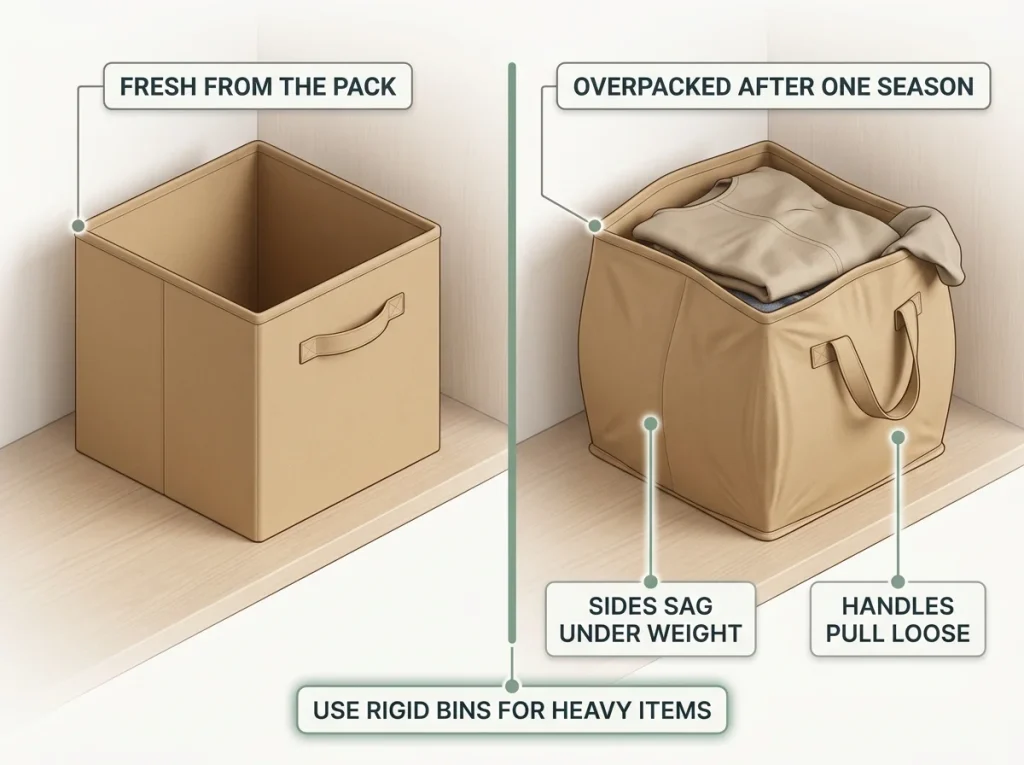
Buy against these and the system holds: weight goes to rigid plastic, dust goes under a lid, and retrieval gets solved by front labels and open fronts. The same logic that keeps a closet working keeps your closet shelf piles from falling over, and it’s the foundation of a closet system that still works in three months.
Conclusion
The best storage bins for a closet aren’t the prettiest ones or the most reviewed ones. They’re the ones that fit. Measure the shelf and subtract a buffer before you buy. Match the bin to the zone instead of the trend, clear at eye level, handled and labeled above the rod, pull-drawer in the cubbies, sealed for off-season. And buy against the three-month failure: rigid for weight, lids for dust, front labels for retrieval.
Three months from now, at your next seasonal swap, check every fabric bin for slump and every high bin for dust. That’s the moment you catch a failing system before it spreads back through the whole closet.
Measure one shelf today. Buy one bin that fits it. Get that right before you containerize the rest.
Frequently Asked Questions
01What size storage bins fit on closet shelves?
Measure your shelf depth first, since most closet shelves run twelve to sixteen inches, then subtract a one-to-two-inch buffer. Height matters more than people expect, so check the vertical clearance for any lidded bin before buying.
02Are clear or fabric bins better for closet storage?
Clear bins win at eye level where you grab things daily and want to see in. Fabric bins suit soft seasonal goods you store and forget on a high shelf. Match the bin to the job rather than picking one for the whole closet.
03Do storage bins for a closet need lids?
Only where dust or stacking demands it. A lidless bin on a high shelf becomes a dust graveyard over a season, so anything stored long-term wants a lid. Eye-level grab bins you use daily are fine left open.
04How do you store seasonal clothes in a closet?
Use a sealed latching box or a vacuum bag on the top shelf, labeled on the front so you can read it from below. Keep wool and down out of long-term vacuum compression, since it crushes the loft and can trap moisture.
05What are the best storage bins for a small reach-in closet?
Low-profile clear stackable bins that fit the shallow shelf, plus handled fabric bins above the rod for off-season items. Size everything to the shelf depth first, because a reach-in door overlap limits how big a bin you can angle in.