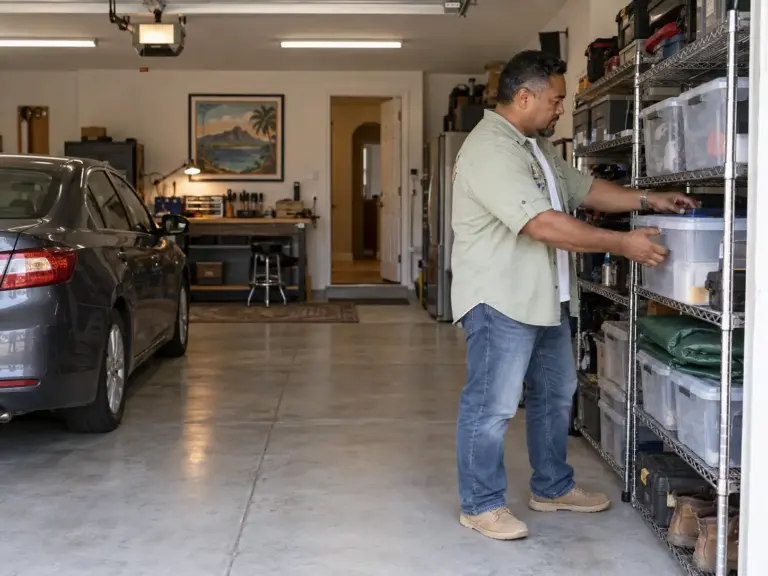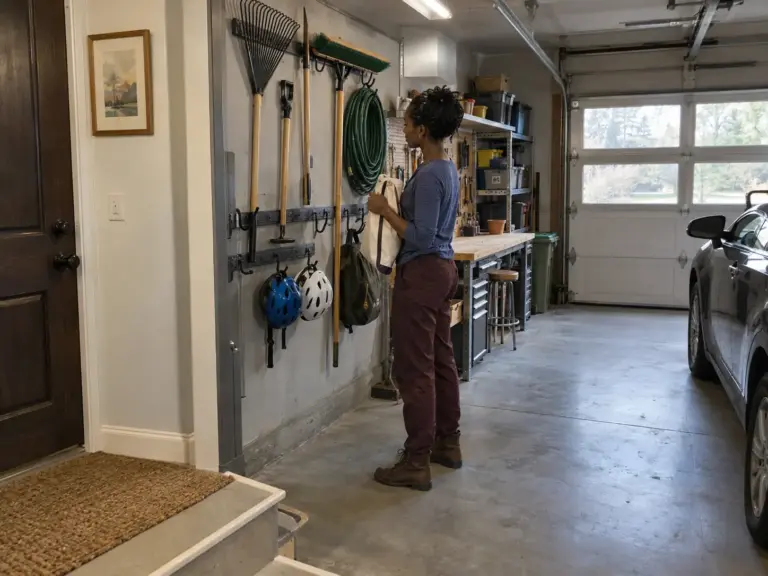

Your car has been parked in the driveway “just for this week” for a month now, and the garage behind it is a pile that is half things you meant to deal with and half things you forgot you owned. The pull is to shop first, and the threads where people trade cheap fixes show where that leads: tubs bought before anything was sorted, hooks that drop the hammer the moment you touch it. These garage organization ideas on a budget follow a budget build order, cheapest move first: sort, rehearse in cardboard, then spend on a shelf, a wall system and the ceiling, in that sequence. Think of this as the budget path through the bigger full garage reset, which covers the whole room.
Quick Answer
A cheap garage build goes in five moves, and each one makes the next one smaller.
- Sort the garage into four piles and stage what leaves.
- Test the layout in cardboard and scrap for a few weeks.
- Buy metal floor shelving before any wall system.
- Pick wall storage by what it must hold.
- Go overhead last, after measuring against the car.
Garage Organization Ideas on a Budget Start With What Leaves
You have probably already pictured the bins. A cart full of matching totes feels like progress, but a garage is a holding area first and a storage room second, and containers bought before sorting end up holding things that were never meant to stay. In a r/HomeImprovement thread on cheap garage fixes, one commenter’s advice was to buy twice as many tubs as you need.
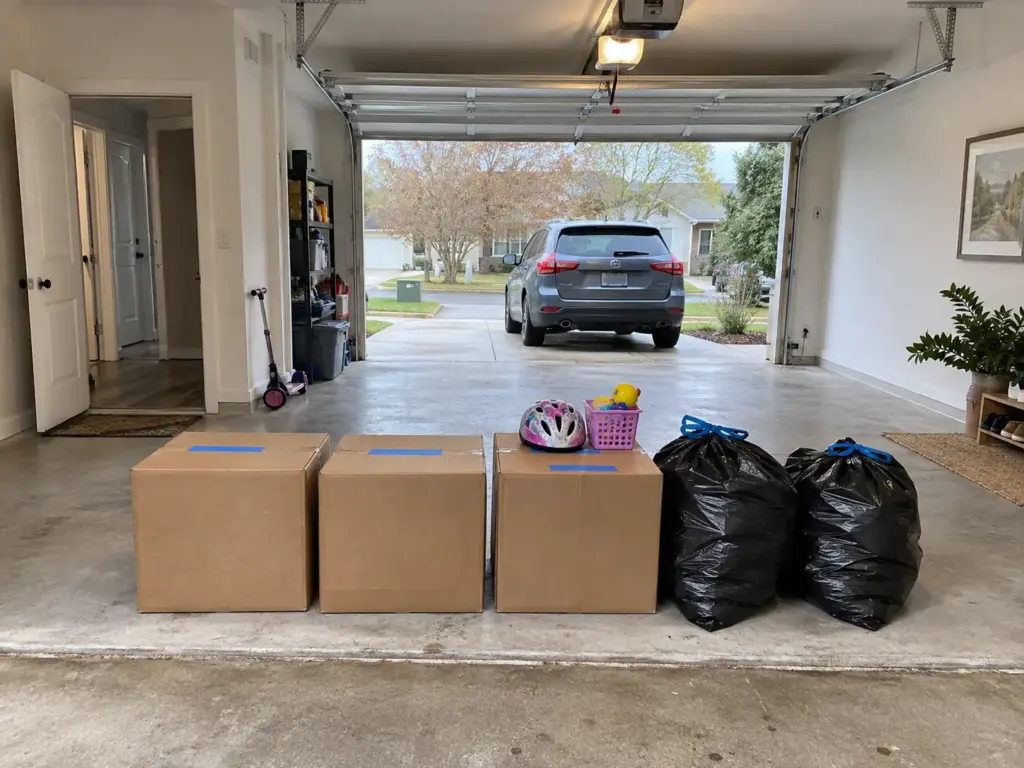
That is the move to skip. Purge before buying, or you pay for containers around stuff that will be gone by the weekend.
Sort Into Four Piles Before You Open a Cart
Sort first, then shop. Make four piles on the floor or the driveway: keep here, keep somewhere else in the house, donate or sell, and trash. The method is the same one you would use anywhere else, so borrow the steps from the guide to declutter room by room and let the garage be the last stop.
Be strict with “keep somewhere else” (it is the pile that quietly turns back into garage clutter). If an item has no home inside the house either, it belongs in another pile.
Only after the piles are final do you know how much has to be stored at all, which is the number every purchase later in this article depends on. The same rule holds for containers, so it is worth reading why you should measure and declutter before you buy bins before any of them goes in a cart.
Stage the Leaving Pile Where You Cannot Ignore It
The three leaving piles do not go to “the corner for now.” A corner is where a pile becomes the new floor. Put the trash at the curb, load the donation boxes into the trunk, and write a date on the sell pile that ends in a listing or a drop-off.
Stage the donation boxes in the trunk before you stop for the day. The next errand then carries its own deadline, and nothing has to be decided twice.
What Does Not Belong in a Garage at All
A garage swings from a hot summer to a damp winter, and some things do not survive both. Paper, photos, some fabrics and anything that mildews belong inside the house, and so does anything whose label names a storage temperature range (read the label before it goes back on a shelf). Moving them out is free, and it shrinks the pile you still have to house. Why damp is the enemy comes up again in the section on why cheap storage fails.
Now measure. The floor, the wall and the car bay all change once the purge is done, and these numbers decide which shelf fits and how much wall you actually have left.
Free and Scrap Materials Hold More Than You Expect
The fear that stalls most cheap garage organization is buying the wrong system and living with it. Free and repurposed storage answers that fear, because a trial system lets you rehearse the layout before a dollar goes to a rack.
Run a Cardboard Trial for a Few Weeks
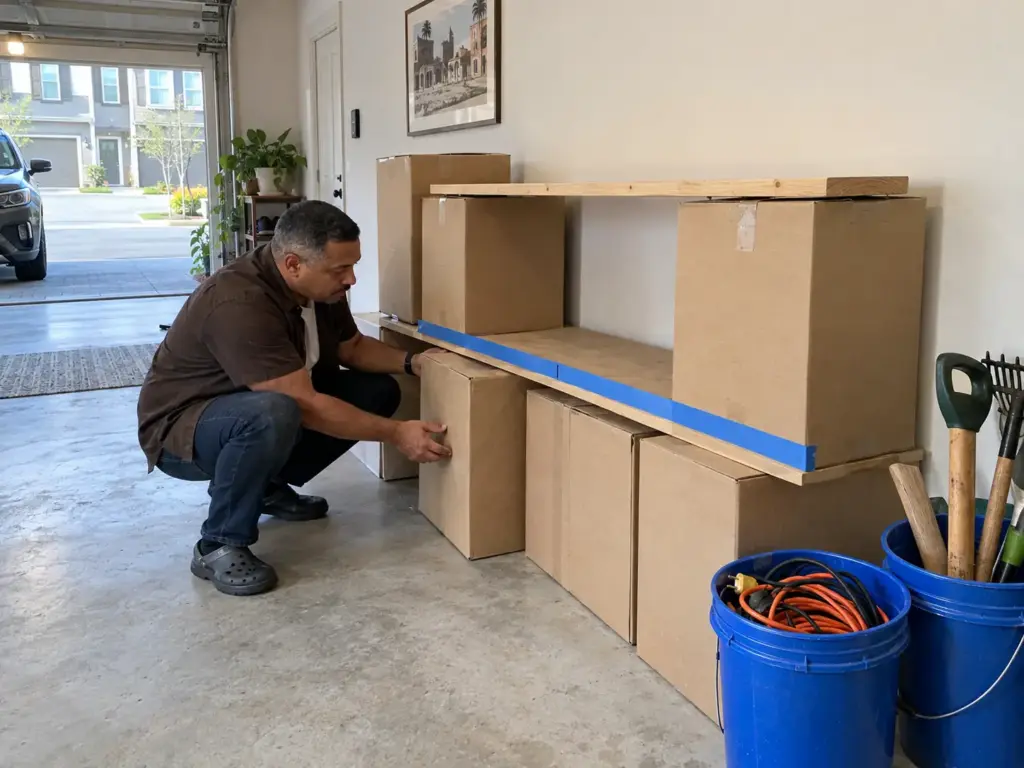
Of all the garage storage ideas in this article, this one costs the least: stack cardboard boxes where shelves might go and live with them. One commenter in the same thread called this a way to figure out what system suits you “without making a huge investment on a system that might not be your flavor.” The trial shows which items you reach for weekly, which ones you only dig out in spring, and where you tripped.
Keep the boxes off bare concrete, because cardboard on a garage floor soaks up whatever the car drips in. And set an exit rule up front: after a few weeks, buy only what the cardboard proved you keep reaching for.
Scrap Wood, Buckets and Painter’s Tape
Reclaimed wood from bulk-trash night, plus screws and brackets, becomes a shelf, which is the route another commenter in that thread took. Cat litter buckets handled the small stuff for a third: “Fits tool, attachments, cord. Ready to go.” Habitat for Humanity’s ReStore came up as a source of used kitchen cabinets for wall storage, and it is worth a look before you price anything new.
For labels, a commenter’s verdict was that the best investment is blue painter’s tape and a marker. Marker labels on tape fit a trial, since the tape comes off when the zone changes.
The 2×4 Rail (Owners With Studs Only)
Screw a 2×4 horizontally into two studs and basic hooks can sit anywhere along it. A commenter called that “sturdier than a pegboard for shovels and larger tools,” and the reasoning holds: the load goes into the framing, not into a thin board. The common advice is to start with pegboard, and it is the wrong call for anything with a long handle.
But the rail needs studs, so it is an owner’s route. If you rent or cannot screw into the wall, the guide to no-drill weight limits by mount type shows what each kind of mount can carry.
Why Cheap Garage Storage Fails in Heat, Damp and Heavy Loads
Picture a shelf that looked fine in August and sagged by spring, or a hook that lets go of the wrench each time the wrench is touched. Neither failure is random. Budget garage storage breaks for reasons you can check before you buy: the load, the climate and whether the hardware matches the board.
Particleboard and Cardboard Meet Humidity
Rain and slush off the car pool on a garage floor, and anything porous beside that puddle drinks it. According to EPA’s guide, A Brief Guide to Mold, Moisture and Your Home, “It is important to dry water-damaged areas and items within 24-48 hours to prevent mold growth.” Cardboard and particleboard on the floor are the first things that cannot be dried in that window.
Climate varies, and so does the damage. A commenter in Ohio put the humidity where they live at around 75 to 80 percent (their own figure, not a measurement we took) and reported that pegboard rusts. So coat or paint pegboard, keep cardboard off the concrete, and treat fabric as porous too, which is where it tends to give out; the comparison of when fabric bins fail explains how the material decides it.
Hooks That Fall Off, Clips That Break
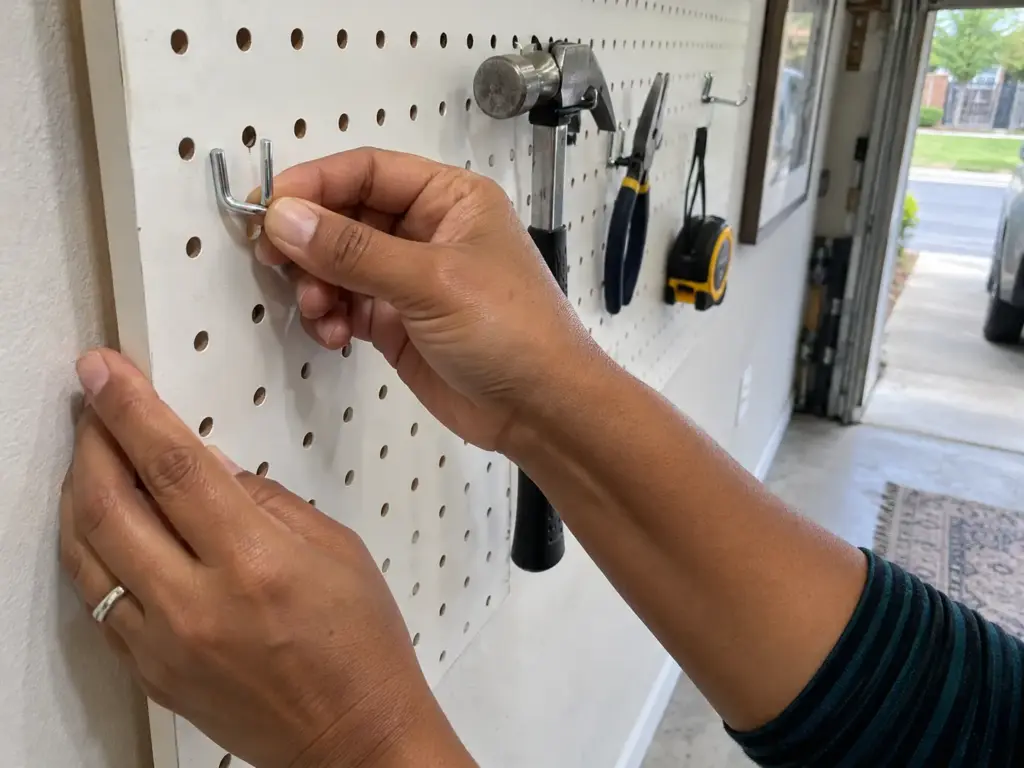
“The hooks always fall off on mine when I touch or move the tools, super annoying” is how one commenter described the standard complaint. A poster on the Sawdust Zone forum traced it to a mismatch: hook kits that say they fit 1/8 or 1/4 inch holes are made of 1/8 inch metal, so they sit loose in 1/4 inch board. A Garage Journal poster countered that with 1/4 inch board and matching hooks, the hooks never fall off. Put together, the hook is the failure, not the wall.
Clip locks are the other weak spot. One commenter found them close to single-use because the only way to remove them is to break them, and thin wire locks were called “pretty much useless.” So replace the hook and the lock before you replace the board.
Hold a hook against an empty hole before you buy a kit. If the wire looks clearly thinner than the hole, it will wobble and work itself loose.
Match the Load to the Material
On the Garage Journal forum a poster put the limit plainly: the regular peg “has a hard time with heavy yard tools.” Pegboard suits hand tools. Shovels, rakes and anything with weight at the end of a handle go on a rail or stay on the floor.
The rule, then, is to choose by load and by damp, not by price tag. A heavy load needs metal or framing behind it, a damp spot rules out anything made of paper, and a light, dry spot can use the cheapest thing on the shelf.
Floor Shelving and Bins Before Anything Else
The matching bins sit in the cart, and then they do not fit the shelf. Or the wall of boxes goes unopened because nobody can reach the back row. The floor holds most of a garage’s volume, so it gets the first real purchase.
Metal Over Particleboard in a Garage
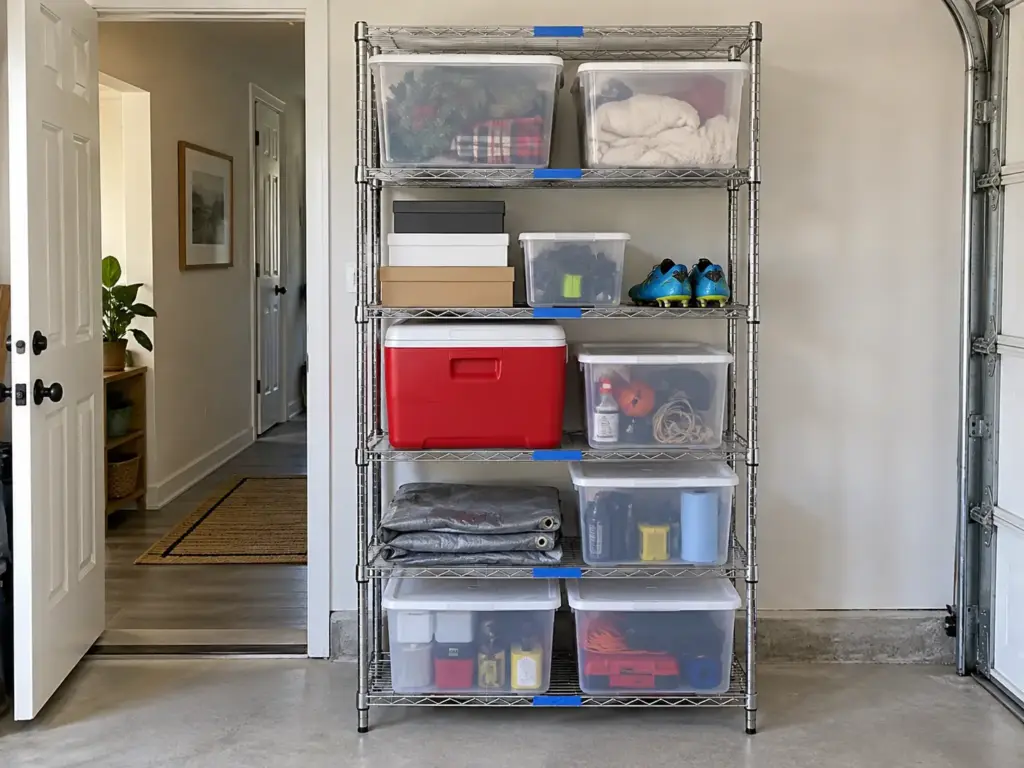
Metal wire garage shelving answers the heat and damp problem from the last section, and it is the sturdy base for shelving that holds up where you live. If a free shelf from scrap wood works for your load, use it first. When it does not, a steel unit is the next step.
Shelf Depth Decides What Fits
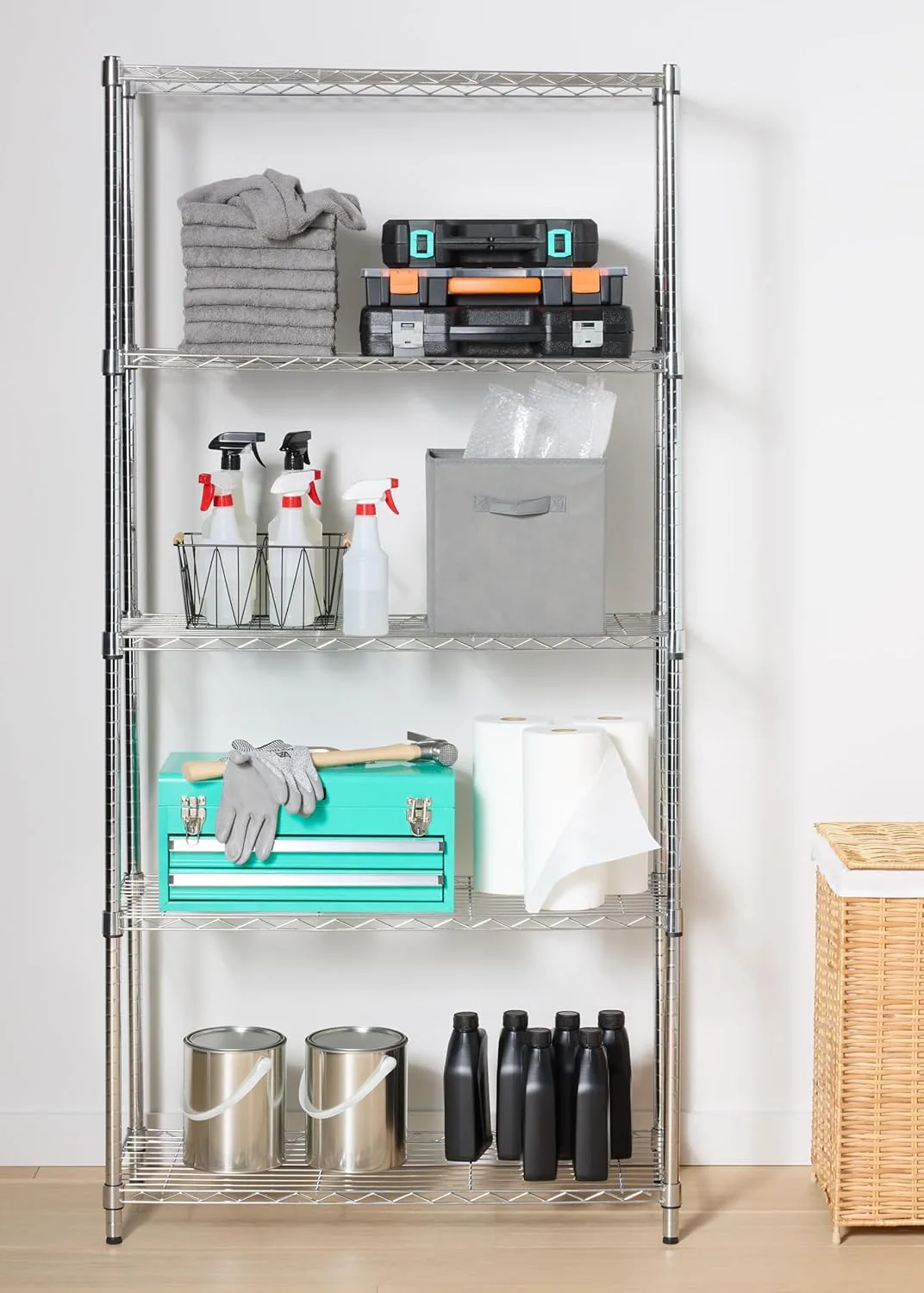
Shelf depth is the number that decides whether your cart of bins was a good idea. A 14 inch deep unit takes boxes and standard bins and does it well. For bulk, the answer changes: a 24 inch deep shelf holds the big totes that a shallow one cannot. The slim unit is the easy default because it tucks against any wall, and it is the wrong call when the pile is mostly large, awkward things.
The deeper option here is the WorkPro 5-Tier Metal Storage Shelving Unit, 48 inches wide, 24 deep and 72 high, with adjustable shelf heights. Check the per-shelf weight capacity on the listing before you load it, since the figure is the one thing to confirm yourself. Measure the bay first, because 24 inches of depth takes a real bite out of the floor beside a car.
Use lidded totes over open boxes on both units, since a lid keeps dust and damp out. Pick storage bins that match the shelf depth you measured: clear bins for what you look for often, opaque bins for the rest, and label bins with marker labels on tape so anyone in the house can find the contents. Heavy things go on the bottom shelf, seasonal ones on top, and your reach decides what sits in between.
Anchor It Even on a Budget
A budget does not remove this step. The U.S. Consumer Product Safety Commission’s Anchor It! campaign says, “Anchoring all furniture with drawers, doors, and shelves to the wall prevents tip-over injuries and deaths.”
A tall steel unit loaded top-heavy is exactly that kind of furniture.
If you rent, there is a no-drill way to hold a unit steady, and the guide to freestanding units that will not tip walks through it. The anchor is the last piece of the shelf, so budget for it with the shelf.
Wall Storage for Hand Tools That Stay Put
The tool that drops off its hook in the middle of a job is the reason many people give up on walls altogether, and the fear of a wall full of holes does the rest. Fix the hook problem first, and the wall becomes the cheapest storage in the garage.
Pegboard Works When the Hook Matches the Hole
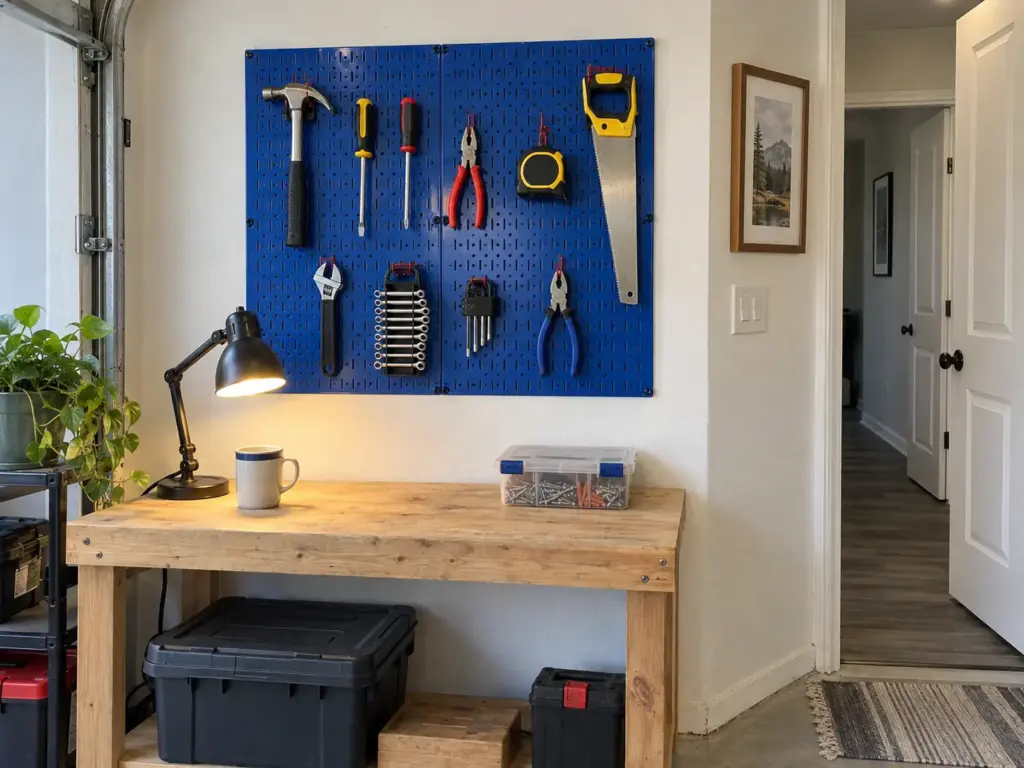
Apply the rule from the failure section: match the hook metal to the hole size, then judge the board. A steel panel also answers the rust complaint from damp garages. A commenter’s advice was simply to “get the new metal pegboard,” and the Wall Control Kitchen Pegboard Organizer is a 32 x 16 inch steel panel that fits that description. One plain limit: it is sold for pots and pans, not for tools, so judge it as a steel panel and not as a garage kit.
And because the hole size on the listing is not confirmed, compare a hook against the hole before you commit to a hook set.
At 32 x 16 inches it covers a bench-sized patch of wall, not a whole one. For a cheaper start, a commenter in the thread used a plain board with screw-in hooks.
A Track Wall for Adjustable Shelves
A track system lets shelves and hooks sit at any height, which helps a garage whose contents keep changing. The Tandefio 12 inch Dual Track Upright Wall Shelving System is a notched dual-track set; check the piece count in the listing before you plan the wall around it. Mount it into studs or with the anchors in the kit, so it is an owner’s option.
Brackets set into studs are what carry the load, not the shelf. The same logic applies to every wall system, and the guide to wall-mounted shelves that actually hold weight explains how the mount decides capacity.
What Stays Off the Pegboard
Heavy yard tools stay off it: the standard peg gives out under them, and the 2×4 rail or the floor is where they go. Keep to hand tools, tapes and small gear.
For a renter-friendly garage, the weight limit comes from the mount, not the shelf. The laundry room guide to what you can and cannot drill lays out the same decision for another room that runs warm and damp.
Lawn Tools, Sports Gear and the Workbench
Lawn and garden storage belongs nearest the garage door, because that is where the mower and the rake come in and go out. Long-handled tools hang from the 2×4 rail if you own and have studs, or stand in a bucket or a lidded bin if you do not. Sports equipment gets an open bin low enough for kids to reach, which settles the argument about where the soccer ball lives.
Workbench storage is the cheapest square footage in the garage. Under-bench storage takes lidded bins, and a shelf below the bench keeps screws and small parts out of the heap that one commenter said a plastic tub turned them into. Keep the hose coiled on a hook near the door, and leave the bench top clear for the next job.
Overhead Storage Without Losing the Car Bay
If the car has not been inside for years, the ceiling is where the bay comes back, whether you have a one-car garage or a two-car garage with a second bay full of boxes. It is also the section where a wrong measurement costs the most, so the numbers here come from a tape measure, not from this page.
What Belongs Overhead
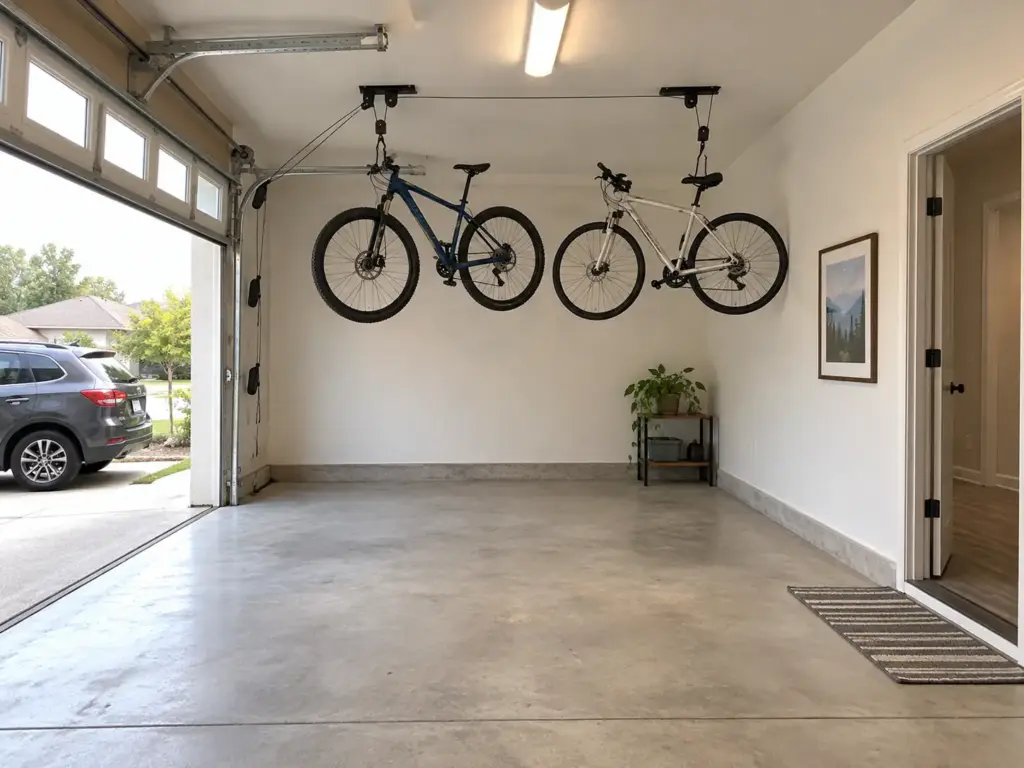
Overhead storage keeps the floor clear. A commenter in the thread hung shelving from the ceiling, put everything in plastic totes, and noted that you can “walk under it without any obstructions.” It works for items you touch twice a year and for light things in sealed totes. Heavy things stay low, and nothing goes up that you could not lift back down safely.
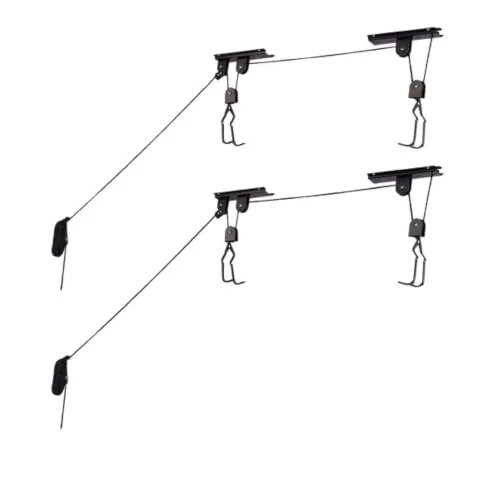
Bikes are the other overhead candidate. A ceiling lift raises them out of the way, but a ceiling lift needs enough height to work, and in a low garage a wall rail with hooks is the better call. A commenter’s 2×4 rail on studs is the budget version of that idea.
Measure the Car Bay First
No clearance figure appears here, because the right one is yours. Take these four measurements with the car inside:
- the roof height of the tallest vehicle you park there
- the height of an open hatch or trunk lid
- how tall a bike hangs from the lift or hook you chose
- the path the garage door travels along the ceiling when it opens
Compare your bike height against the hoist listing’s ceiling requirement and leave a margin. Anything overhead that sits in the way of the open door or the hatch is in the wrong place.
Put a strip of painter’s tape on the wall at the height where the lowest part of a hung bike would sit. Then open the hatch and the garage door and see whether either touches it.
Keep the System Alive When the Whole Household Uses the Garage
A tidy garage reverts by month three when the kids and the partner never got the memo. In a shared garage, the build only counts if people who do not follow the map can still use it.
Zones by How Often You Reach for It
Zone organization here means sorting the garage by use frequency. The lower and nearer the door, the more everyday the item; the higher and farther, the more seasonal. Name the zones in plain words, like “daily”, “weekly” and “seasonal,” and make one decision per zone so nobody has to remember a map.
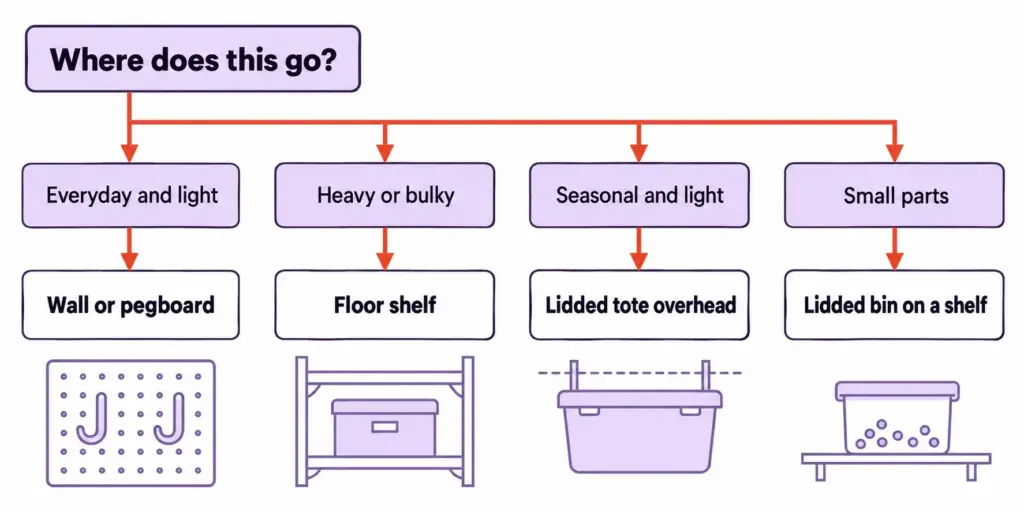
Zones also solve ownership in a shared space. The ground rules in rules for sharing a closet carry over: whose zone is whose, and who may move what.
A Drop Zone for Everyone Else’s Stuff
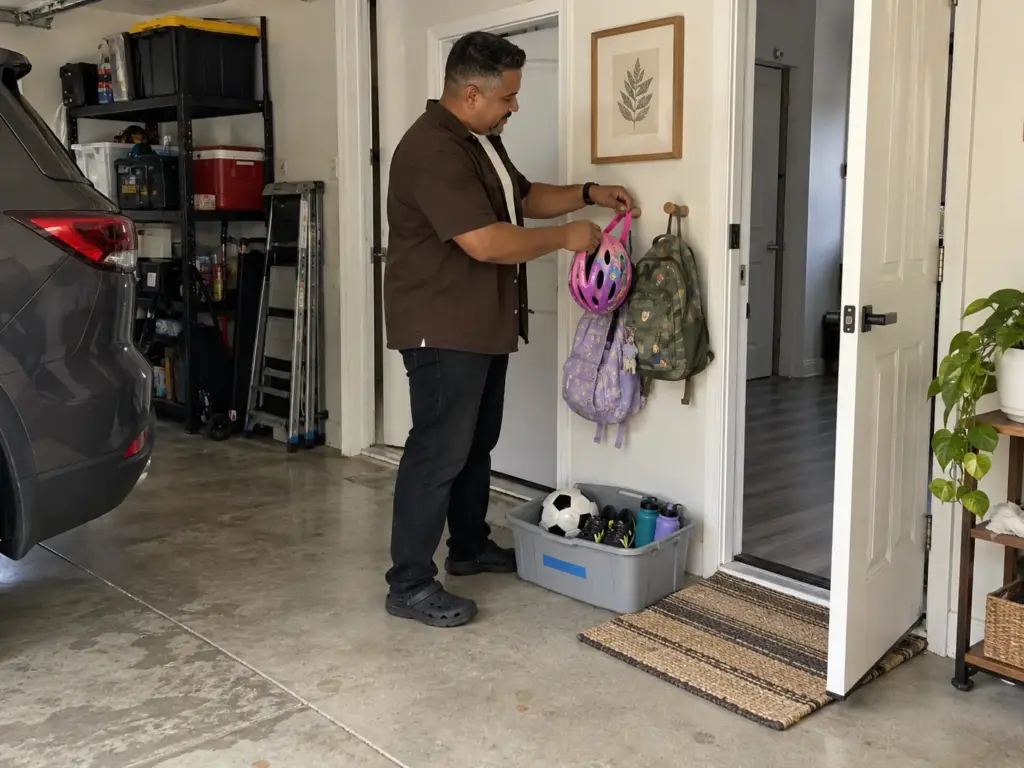
Incoming gear lands wherever the person happens to stand. Give it a place by the interior door: one open bin and two hooks at kid height, so the lowest-effort option is also the right one. The logic is the same as a drop zone by the door inside the house, moved out to where the sports gear and bikes actually arrive.
The system that survives is the one with the shortest walk. A bin at the back of the garage will lose to a corner of the floor every time.
The Ten-Minute Reset
Make the reset routine a short pass on an ordinary day: put back what drifted and check that the zones still match how you use them. That small bit of maintenance is what keeps the system working past month three. Labels stay painter’s tape for now, because the trial is not truly over; relabel when a zone changes. No rule survives forever, and the reasons why one-in, one-out stops working by month three apply to a garage too.
The Order to Follow, and What to Check in Three Months
Three things carry the whole plan. Sort before you buy, so you shop for what stays. Rehearse in cardboard and scrap, so the first purchase is one you have already proven you need. And buy in order: metal on the floor first, a wall system chosen by what it holds, and the ceiling last and measured against the car.
Three months from now, look at which zone has stopped working, which hook has stayed put, and whether the leaving pile is truly gone. Whatever has drifted tells you which step to redo.
Today, pull two boxes from your own recycling, tape a strip of painter’s tape on each, and stack them where the first shelf would go. Notice over the next few days what you reach for and what you step around.
Frequently Asked Questions
01How do I organize my garage cheaply?
Sort out and remove what leaves first, then trial a layout in cardboard and scrap, then buy metal shelving for the floor before any wall system or ceiling storage. Spend on the wall only for what the trial shows you reach for most, and go overhead last, after measuring the car bay.
02What should not be stored in a garage?
Anything that suffers from heat, cold or damp should leave the garage, including paper, photos, cardboard on the floor and some fabrics. Read the label on anything with a storage warning. The EPA advises drying water-damaged items within 24 to 48 hours to prevent mold.
03What is the best organization system for a garage on a budget?
The best budget system is built in order: zones by use, metal shelves on the floor, a wall system matched to its load, then overhead. No single product wins. The order and your own measurements do the work.
04Why do pegboard hooks keep falling off?
Pegboard hooks fall off when the hook metal is thinner than the hole, which happens often with 1/8 inch hook kits in 1/4 inch board. Match hook to hole on 1/4 inch board, and keep heavy yard tools on a rail or the floor instead.
05Can I organize a garage without drilling?
Yes, freestanding metal shelving with a no-drill anchor method carries the heavy items, and adhesive hooks can take light ones. Skip the 2×4 rail, the track wall and the ceiling lift, which all fix to the building. See the guide to no-drill weight limits by mount type.
Disclaimer: ClutterlessNest is a participant in the Amazon Services LLC Associates Program. As an Amazon Associate we earn from qualifying purchases. This article may contain affiliate links — if you buy through them, we may earn a small commission at no extra cost to you. We only recommend products we have tested or genuinely believe in.