The shelf went up for a few paperbacks and a plant. Now it carries the bag of pet food, a box of bins with everything still inside them, or a tool somebody set down “just for now” and never moved. A no-drill mount should be judged by how it gives way (it peels, it slips or it tips) and by what it is really holding, not by the promise on the package. Here is how each mount fails, what to put under a heavy load, how the garage and basement change the answer, which tall pieces still need an anchor, and what to re-check once the mounts have settled in.
Each kind of mount carries a different load and fails in a different way, so the quickest way to choose is to start from the failure you can live with.
| Mount | What it suits | What it needs | Where it gives way |
|---|---|---|---|
| Adhesive hook or strip | Light to medium loads on a smooth wall | A clean, dry surface and the pack’s rating respected | Peels off the wall, faster when the load pulls outward |
| Adhesive ledge or shelf | Small, light items at eye level | The same surface prep and a load that stays well inside the rating | Peels from the outer edge, where the shelf levers away from the wall |
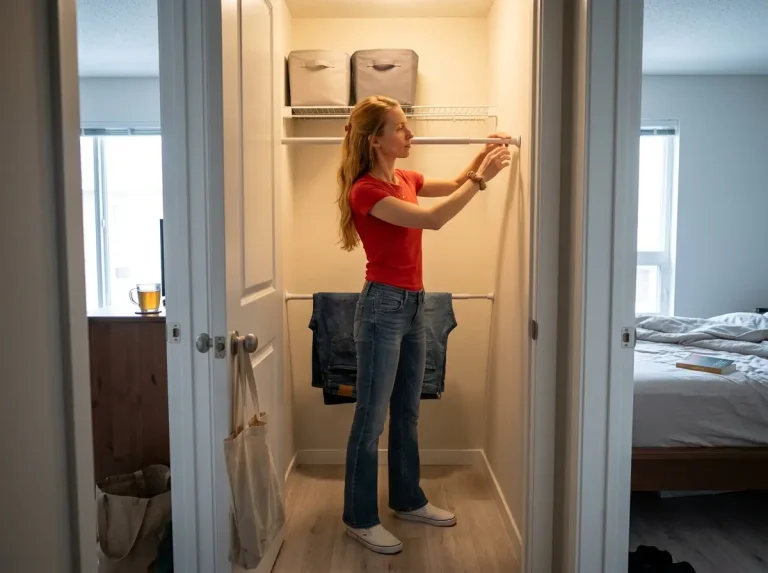
| Tension rod or pole | A span between two firm, parallel surfaces | A span inside the rod’s range and a surface that is not slick | Slips down when stretched near its limit or set against a smooth, damp wall |
| Over-the-door organizer | Coats, bags and light daily items | A door with clearance at the top and a latch edge that still closes | Sags and strains the door when overfilled |
| Freestanding unit (shelving, cart, cube) | The heavy and bulky loads | Floor space and, for anything tall, an anchor | Tips, and the taller it is the sooner |
No-Drill Storage Solutions Give Way in Three Ways: Peel, Slip or Tip
A shelf can hold for a week and then start to lean, because the first bottle was never the heavy one. The rod above the closet can sit a little lower each time the door opens and nobody notices until the clothes brush the floor. Every no-drill mount has one signature way of failing, and knowing which one you bought tells you what to watch.
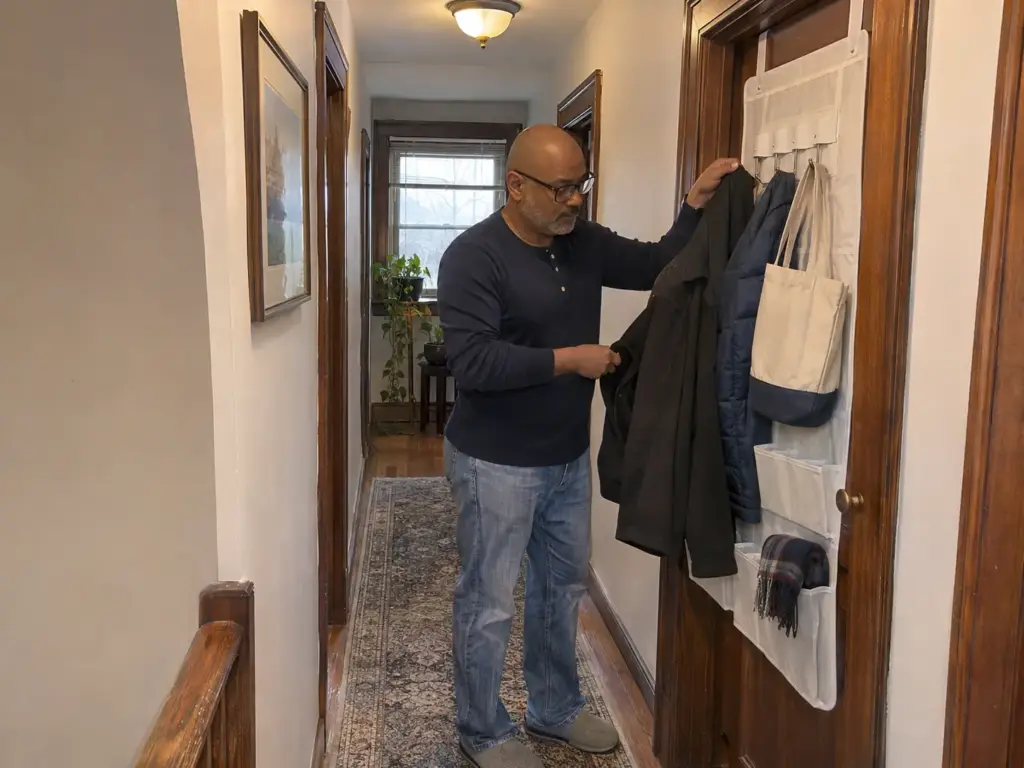
Peel: Adhesive Hooks, Strips and Ledges
Adhesives let go by peeling away from the wall, and they peel fastest when the load pulls outward and down on a small contact patch. That is the weak point of no drill shelves and of any adhesive floating shelf: the outer edge levers away from the wall long before the middle gives up. A dirty, dusty or textured wall gives the strip even less to grip, so the usual prep is a wipe with rubbing alcohol and time to dry.
The surface often decides before the load does. The same hook behaves one way on fresh flat paint over drywall, another on glossy paint, another on tile and another on wallpaper, which can come away with the strip. Command strips, picture-hanging strips and mounting tape all share this weak point. If you want every mount compared by what it costs you at move-out, the full rental-friendly organization guide goes through them one by one, and this guide stays on how they fail.
Rehearse the load before you trust the mount. Put a folded towel on the floor beneath it, load the shelf or hook with the real items for a day, and watch for any lean or lift at the edge. A mount that is going to fail will usually say so while the fall is still cheap.
Slip: Tension Rods and Poles
A tension rod or pole stays up on pressure alone, which makes it the clearest example of a mount that slips instead of peeling. It slides when the span is stretched close to its limit, when the wall is smooth, and when the air is damp enough to take the grip out of the contact points. A bathroom adds all three, and wet conditions are where a pressure mount loses ground first.
The ALLZONE Corner Shower Caddy Tension Pole is a four-tier stainless pole built for exactly that shower corner, and like any pole it earns its place only if you leave room in its range, never use it fully stretched, and keep the heavy bottles on the lowest tier. For rods inside a closet or cabinet, tension rod shelving that holds real weight shows how far a pressure mount can be pushed before it stops being reliable.
Tip: Tall Freestanding Units
A freestanding unit does not fail by coming off the wall, because it is not on the wall. Its failure is tipping, and the taller and more top-heavy the load, the earlier it happens. A narrow rack with the heavy things on top is the worst arrangement; a wide, low unit with the weight near the floor is the best. That is why the heavy loads belong on the floor in the first place, and why the anchoring part further down matters even though nothing in this house gets drilled.
When the Load Is Heavy, Move It to the Floor
Nobody weighs the tool bag, the sack of pet food or the box of bins until the shelf starts to bow. By then the shelf is “full” and the wall is the part that is still fine. Once the load is heavy, the right question changes from “which mount is strongest?” to “why is this on the wall at all?”
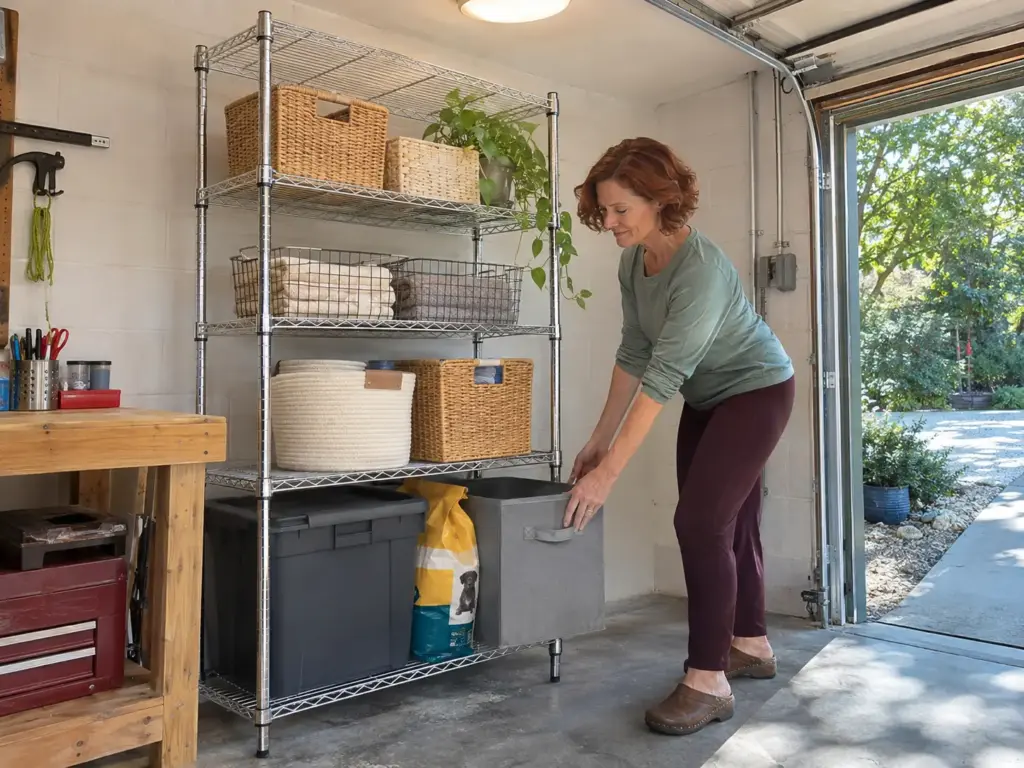
What Makes a Load Heavy for a No-Drill Mount
Heavy is a property of the whole load, not of any one item. A box of bins weighs the bins plus everything inside them, and a shelf of jars adds up faster than the eye expects. Put the full box on a bathroom scale before you pick the mount, and compare that number with the weight rating printed on the package.
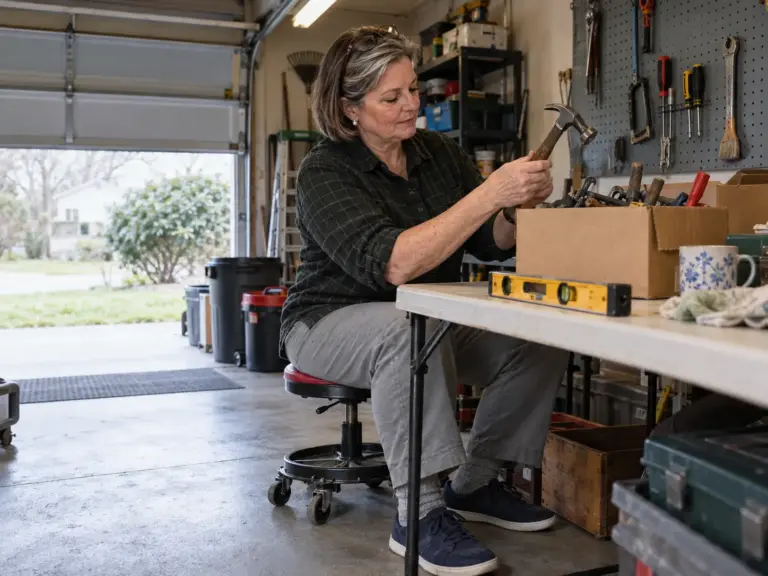
The rating is the weight limit for adhesive and pressure mounts, a ceiling and not a target, and a load that pulls outward is harder on them than one that presses straight down. Tools are the usual surprise: one wrench is nothing, a tool bag is a different question, and tool organization that fits each tool is worth reading before anything gets stuck to a wall.
Why Floor-Standing Steel Takes the Weight Off the Wall
The obvious answer to a heavy load is a stronger adhesive, and it is the wrong one. A stronger strip only asks the wall to carry more, and the wall is the weakest link in the chain: paint layers, plaster, a thin finish.
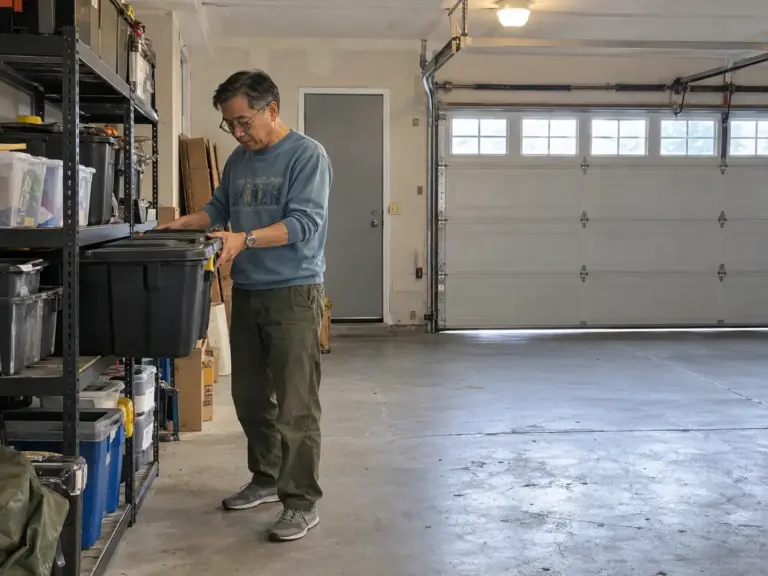
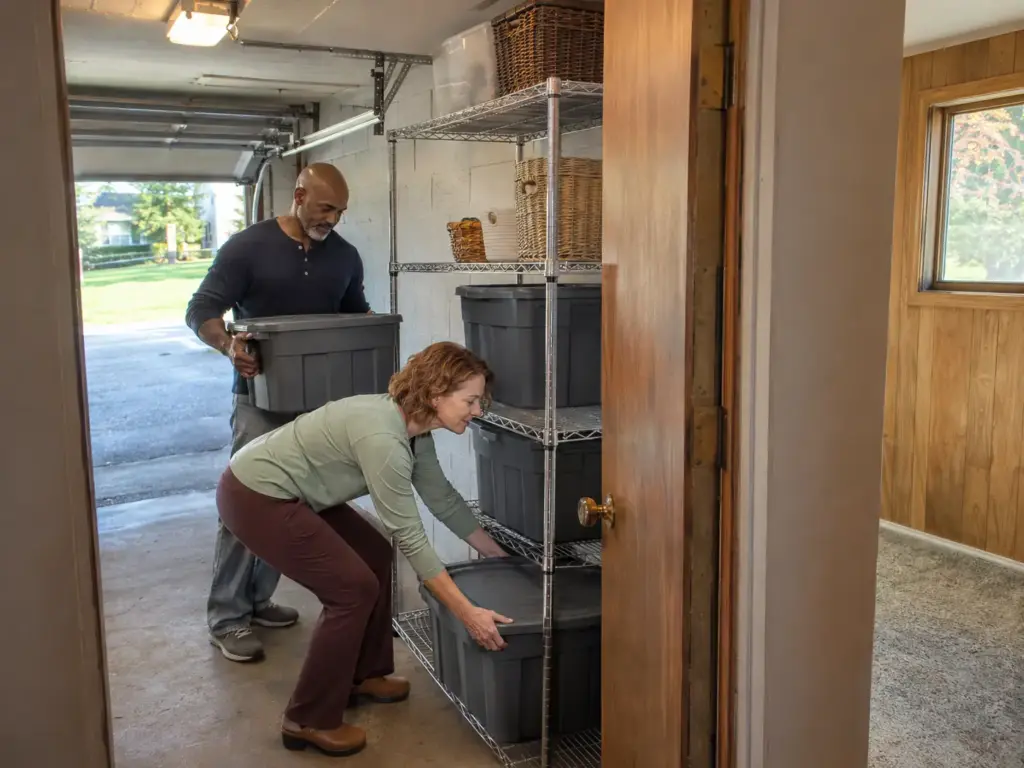
A steel wire shelving unit stands on its own feet, sends the weight into the floor and leaves with you when you go. A freestanding shelf like that, a rolling cart for lighter loads or cube storage for bins all work on the same principle. Put the heaviest things on the lowest shelf and keep the light baskets up top. For the garage in particular, garage shelving units that fit your totes covers how to match a unit to what is going on it.
Not every freestanding piece is equal. Stacked plastic drawer sets look like a clean answer and behave worse the more you load them: the drawers get harder to open as they fill, and stacked and full they are close to unusable. For a heavy load, open steel shelving with nothing to jam is the better call.
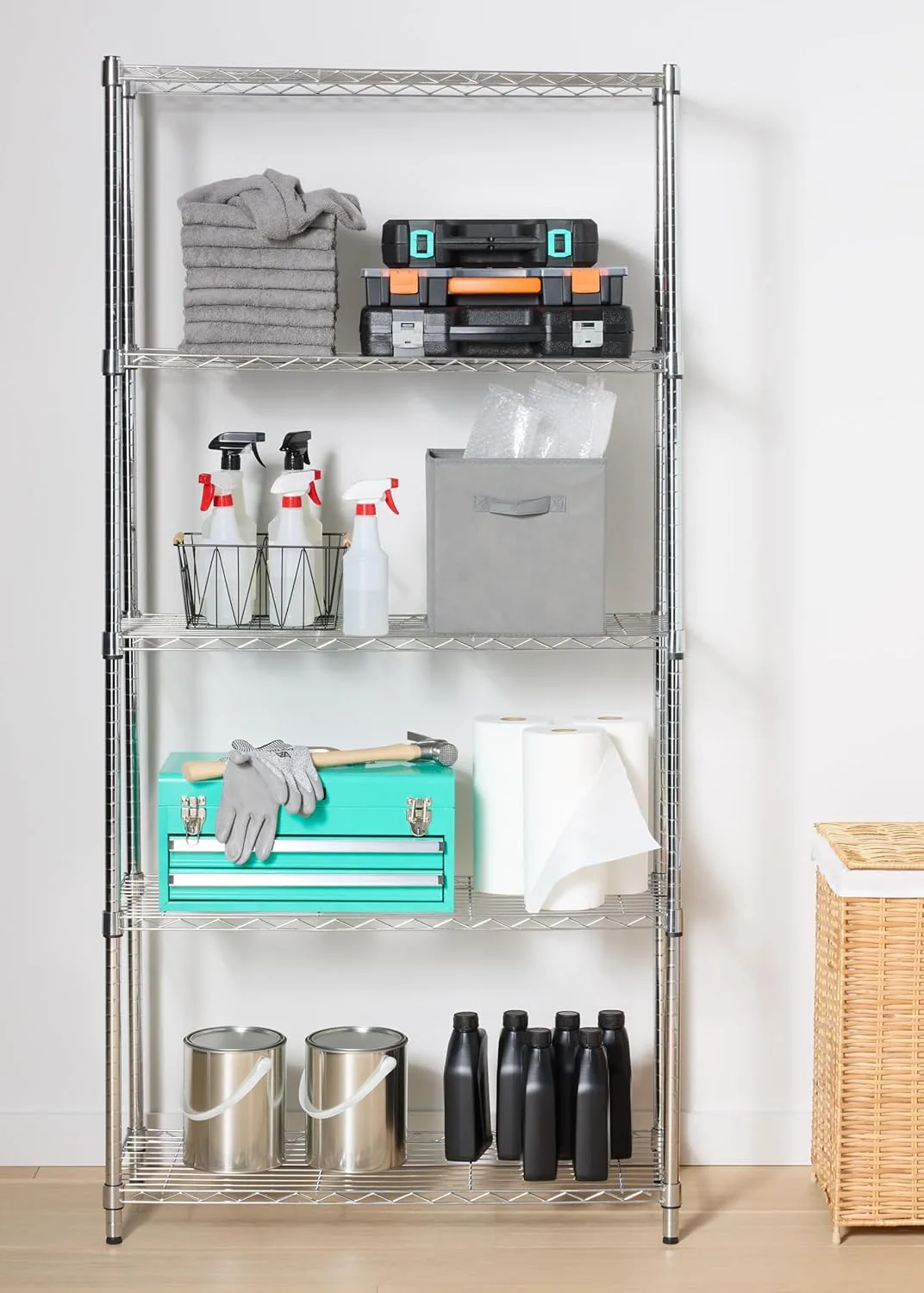
Read the Listing Before You Fill the Shelf
A shelf’s load capacity is the maker’s figure for that shelf, printed on that listing, and it applies to an evenly spread load, not to one heavy box dropped in the middle. Read the rating, compare it with the number the bathroom scale gave you, and leave a margin. Then spread the weight: heavy on the bottom, even across the width, nothing hanging over the front edge. If the weighed load fits comfortably under the smaller unit’s ceiling, the smaller unit costs less floor space and the same stability; if it does not, the big one is the only honest answer.
Garage, Basement and Shed: Where No-Drill Is a Choice, Not a Lease Rule
The reader whose space is bigger than a bathroom has a different problem. The garage wall is painted block that bounces a drill, the shed is thin siding that cannot take a screw, and the basement is cold and damp for half the year. Here no-drill is often a decision about the wall, not about a lease.
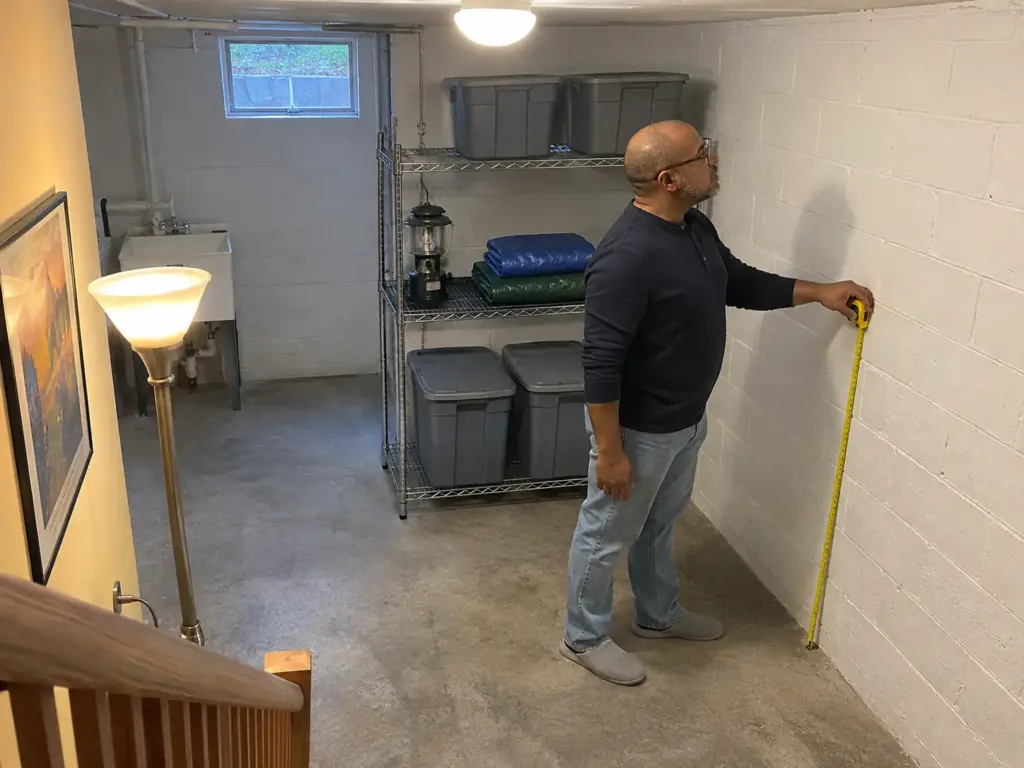
Walls That Fight a Fastener: Block, Tile and Siding
Some walls resist a fastener for reasons that have nothing to do with who owns them: painted block or concrete, ceramic tile, thin siding, plaster that crumbles at the edge of a hole. On those surfaces the mount that does not penetrate is often the sensible one, or no wall mount at all.
The usual pick for a garage wall is a rail of hooks for the tools, and it is a fine idea on a wall that takes a screw. On block, the second choice works: a steel unit that stands against the wall and carries the tools on its shelves, with the wall holding only the light things like a hat or a small clip. How to organize a garage wall that holds up lays out the zones for it.
Before any adhesive goes on painted block, run your palm across the spot. If a chalky film comes off on your hand, the strip would be gripping powder, not paint, and it will let go at the first real pull.
A Rented Garage or a Lean-To: When You Cannot Fasten at All
When the structure cannot take a fastener, or the building rules out holes, the plan is a unit that stands in the space and lines the wall. A lean-to is the extreme version: the siding is thin, the frame is not meant to carry a shelf, and anything heavy that is hung from it will pull the wall with it. Stand the shelving on the floor, keep the heaviest items on the lowest shelf and let the wall take nothing more than a light bag.
The Owner’s Case for Skipping the Drill
An owner can drill and still choose not to. Tile cracks, plaster crumbles, a finish is worth keeping, and a layout that will change in a year makes every hole a small debt. No-drill is a judgment about the house you have, not only a rule from a landlord.
Humidity and cold change the picture too: an adhesive in a damp basement or an unheated garage behaves differently from the same strip in a dry bedroom, so the re-check there comes earlier. For the whole garage in sequence, garage organization ideas in the right order takes it from the floor up.
The Anchoring No-Drill Rules Don’t Cancel
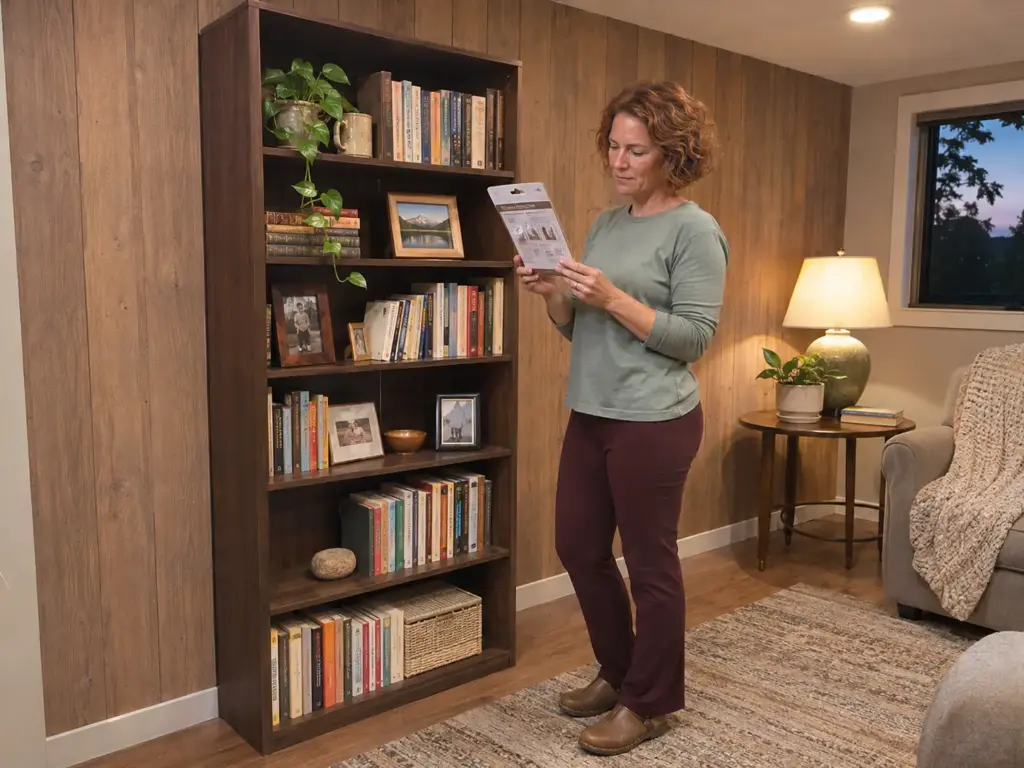
“Freestanding, so no problem” is true until a drawer is pulled open or a child decides a shelf is a ladder. A lease that bars drilling does not change how furniture tips. This is the one part of a no-drill home that still needs a fastener or a stand-in for one.
Which Furniture Needs Anchoring Even When Nothing Is Drilled
According to the U.S. Consumer Product Safety Commission, tip-overs of clothing storage units account for 234 fatalities between January 2000 and April 2022, 199 of them children, and sent an estimated 84,100 people to emergency departments between 2006 and 2021. Its advice is plain: “CPSC recommends that consumers anchor furniture, including dressers, securely to the wall.”
The rule the agency wrote covers dressers and other clothing storage furniture 27 inches or taller made after 1 September 2023. It makes manufacturers test for open drawers, loaded drawers, a child pulling or standing on the unit and carpeting, and it requires a warning and an anchor kit. A shelf or an over-toilet rack is not what that standard covers, but the agency’s tip-over card extends the advice to other furniture with doors, drawers and shelves.
The agency’s test simulates children up to 60 pounds. That is the load a tall unit has to survive: a child pulling on the front, not the weight of what is on the shelves.
A tall, narrow piece like the UTEX Over The Toilet Storage Shelf is the case in point. It stands free over a toilet, it is built tall and slim, and it belongs on the anchor list. Bathroom storage that actually lasts is the guide to pair with it for the rest of the room.
What a Child Pulling on a Shelf Does to a Tall Unit
The mechanism is leverage. A child hanging on the front of a unit moves its center of gravity forward, and an open drawer or a loaded top shelf moves it forward faster. Those are the conditions the agency’s test is built around: open drawers, loaded drawers, a pull or a climb, and carpet underneath.
The weight you put on a high shelf matters for the same reason. Keep the heavy things low, and the tip risk drops before any anchor is involved.
When the Lease Forbids Anchors: Three Ways Out
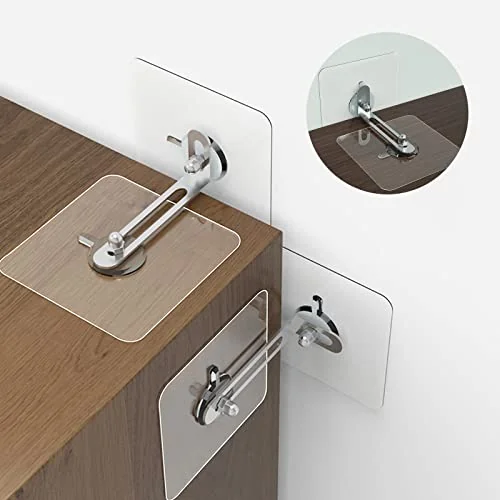
A lease that bars anchors leaves three ways out. Ask the owner in writing and offer to repair the hole at move-out; a small, neat fix is an easy request to grant. If the answer is no, use an adhesive anti-tip anchor and read its rating on the listing before trusting it. Or choose a lower, wider unit that is harder to tip in the first place.
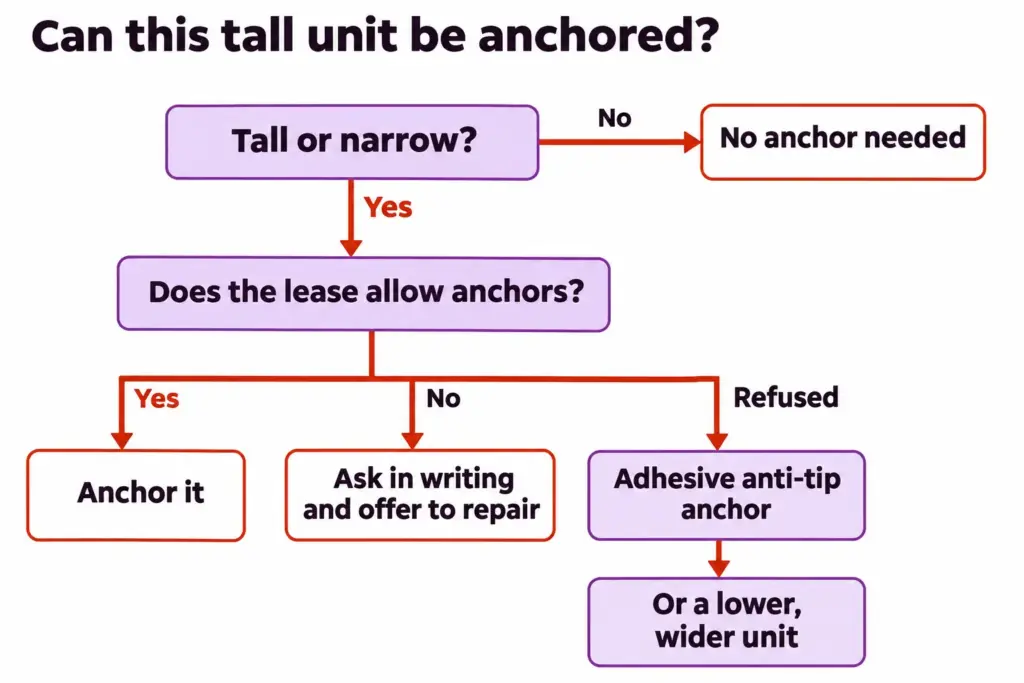
Be clear about what the no-drill route is. An adhesive anchor is the fallback, not the equal of a fastener, and a tall unit on rental carpet is the case that needs the most care. The first choice is still the written request.
What to Re-Check on a No-Drill Mount After the First Few Months
The shelf is fine in week one and a little off in the bathroom by month three. The strip that came off easily in the test comes off with the wall finish on removal day. Mounts that do not penetrate need a second look, because the failure is slow.
Adhesives Creep Under a Steady Load
A steady load plus damp air or temperature swings changes how an adhesive bond holds over months. The mechanism has a name, creep, and a University of Waterloo thesis on adhesive anchors tested it on 82 specimens under sustained tensile load with environmental exposure. The work covers anchors set in concrete, not hooks on a bathroom wall, so it proves the mechanism and gives no rating for a strip. Its point is that a load that stays put for a long time, with moisture added, is a different test from a load applied once.
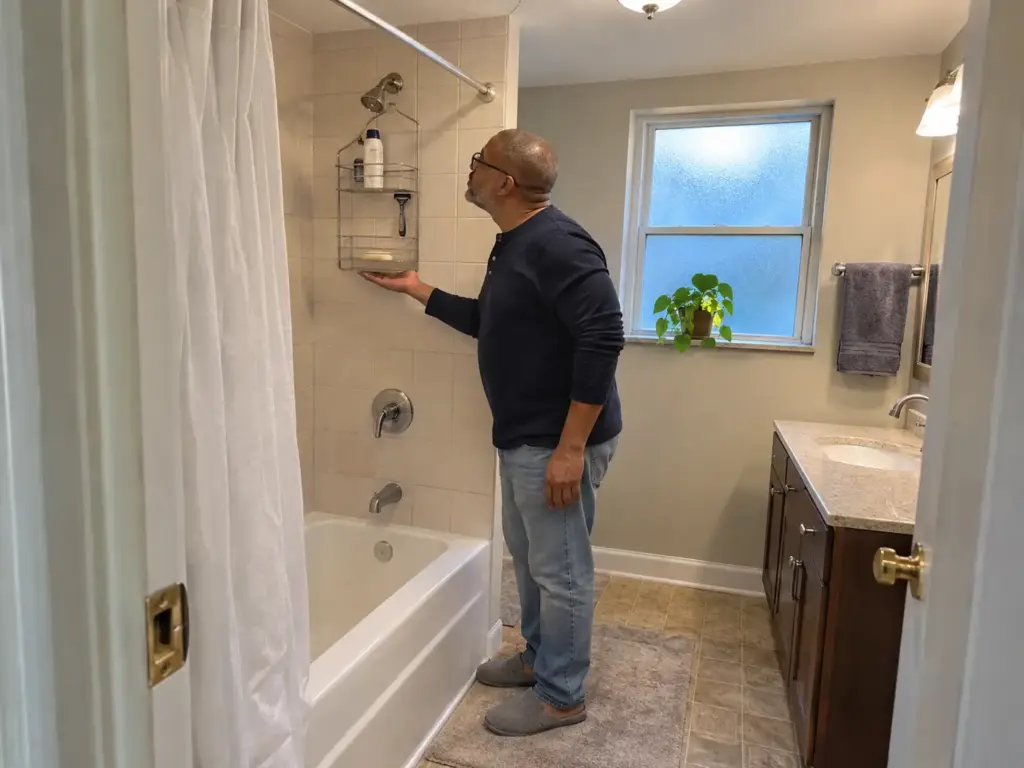
The practical routine is short. Look at every adhesive mount and every pressure mount after the first heavy use and again after a damp season. Ask three things of each: has it moved, has the edge lifted, does the load still sit where it did. A hook or a ledge that has shifted is telling you it is ahead of schedule.
Photograph each mount straight on the day it goes up, with a door frame or a window edge in the shot as a reference. Take the same picture at the first check. A slide of a few millimeters is invisible in the room and obvious when the two photos are open side by side.
Humid Rooms and Slow Slides
Bathrooms are where slow slides show up first. A pressure pole in a shower corner sits in warm, wet air for hours a day, and a caddy on a strip hangs in the same air. If your problem is the bathroom, bathroom storage ideas for renters covers what to hang and what to leave on the floor. For the closet, no-drill closet organization for renters has the version that does not ask the wall for anything.
Taking a Strip Off Without Taking the Wall With It
Removal is where the wall gets its say. Adhesive strips and hooks have taken paint with them, and in a rare case, more of the wall finish, brand name or not. An old tub or a thin finish is the worst case: a few strips pulled from an aged tub can leave a hole where the surface used to be, and the repair costs far more than the shelf ever saved.
The Command Bath Large Water-Resistant Adhesive Strips are the refills a bath mount uses, and removal on an old finish is exactly where their flaw sits. Stretch-release strips come off by easing the pull tab out slowly, in the direction the pack shows, with the maker’s directions in hand. A damage-free removal is what protects the security deposit; if the surface is old, thin or already cracked, choose a floor-standing option instead.
When the first re-check is done and the mounts have held, the reward is a room that works without anyone thinking about it. To keep going, organization ideas for renters that reclaim dead space maps the spots that still have room.
Match the Mount to the Load, Then Re-Check It
A no-drill mount is only as good as the match between what it grips and what it holds. Know how each one gives way: adhesives peel, poles slip, tall units tip. Weigh the real load, and when it is heavy, put it on steel that stands on the floor with the heaviest things low. Anchor anything tall, ask in writing before reaching for the adhesive version, and leave the wall to the light things.
Check each adhesive and pressure mount after the first heavy use and again after the first damp season, looking for movement, a lifted edge or a load that has shifted. Today, find the heaviest thing hanging from a no-drill mount in the house and compare it with the rating on its pack, then notice what has moved since you hung it.
Frequently Asked Questions
01What are the best no-drill storage solutions for heavy items?
A floor-standing unit that carries its own weight beats any adhesive shelf for heavy items. Put the heaviest things on the lowest shelf, and read the rating on the listing against the full load you weighed on a bathroom scale.
02Do I still need to anchor furniture if I can’t drill?
Yes for tall units, because the Consumer Product Safety Commission advises anchoring dressers and other tall furniture to the wall. Ask the owner in writing and offer to repair, use an adhesive anti-tip anchor as a fallback, or pick a lower, wider unit.
03How do I hang tools in a garage without drilling into the walls?
Stand a steel shelving unit against the wall and put the tools on its shelves, so the wall holds only light items. Keep the heaviest tools on the lowest shelf.
04Why does my no-drill shelf come loose after a few weeks?
A steady load, damp air and a dirty or textured wall all work against an adhesive over time. Check each mount after the first heavy use and again after a damp season.
05Is no-drill storage worth it if I own my home?
Yes where the wall resists a fastener, such as tile, block or plaster, or where the layout will change. Heavy loads still belong on the floor, not on adhesive.
Disclaimer: ClutterlessNest is a participant in the Amazon Services LLC Associates Program. As an Amazon Associate we earn from qualifying purchases. This article may contain affiliate links — if you buy through them, we may earn a small commission at no extra cost to you. We only recommend products we have tested or genuinely believe in.